Clocks Around the World: How Other Languages Tell Time
When we start learning a language, we soon find ourselves practicing how to ask for the time. This can feel like a pointless exercise today, when each glance at our phone tells us the hour and minute with precision, but it can be justified as a practical way of getting the language’s numbers down in a familiar context. Yet not every culture’s way of time-telling is equally familiar: in Tanzania, for example, so near the equator that “the sun rises around the same time every morning, six in the local time zone,” and “everyone’s up and starting their day at seven. With such a reliable standard time-keeper, that winds up being 1:00 Swahili time.”
“Swahili time” is just one of the concepts introduced by Youtuber Joshua Rudder, creator of the channel Nativlang, in the video above.
He also touches on the medieval six-hour clocks of Italy; the Thai time-tellers who “count the hours from one to six, four times a day”; the ancient Egyptian method of letting the length of hours themselves expand and contract with the amount of daylight; the Nahua division of dividing the “daylight day” into four parts and the night into seven; the bewilderingly many Hindustani units of time, from the aayan, ruthu, and masa to the lava, renu, and truti, by which point you get down to “divisions of microseconds.”
To a natively English-speaking Westerner, few of these systems may feel particularly intuitive. But most of us, from whichever culture we may hail, will see a certain sense in the Japanese way of allowing late nights to “stretch to twenty-five o’clock, twenty-nine o’clock, all the way up to thirty. Maybe you feel like if you’re up past midnight, it’s not tomorrow yet, not really, and you haven’t even gone to bed.” Hence this extended clock, whose last six hours “overlap with what will have been the technical start of your twenty-four hour day when you wake up tomorrow” — but, with any luck, don’t overlap onto any early-morning language classes.
Related content:
How Clocks Changed Humanity Forever, Making Us Masters and Slaves of Time
Why Time Seems to Speed Up as We Get Older: What the Research Says
The Rarest Sounds Across All Human Languages: Learn What They Are, and How to Say Them
Was There a First Human Language?: Theories from the Enlightenment Through Noam Chomsky
Based in Seoul, Colin Marshall writes and broadcasts on cities, language, and culture. His projects include the Substack newsletter Books on Cities, the book The Stateless City: a Walk through 21st-Century Los Angeles and the video series The City in Cinema. Follow him on Twitter at @colinmarshall or on Facebook.
Read More...Steely Dan’s “Do It Again” Performed on the Gayageum, a Korean Instrument Dating Back to the 6th Century
Every now and then, we check in on the fascinating musical world of Luna Lee–a musician who performs Western music on the Gayageum, a traditional Korean stringed instrument which dates back to the 6th century. Over the years, we’ve shown you her adaptations of Jimi Hendrix’s ‘Voodoo Chile;’ David Bowie’s “The Man Who Sold The World;” Leonard Cohen’s “Hallelujah;” blues classics by John Lee Hooker, B.B. King & Muddy Waters; and Pink Floyd’s “Comfortably Numb,” “Another Brick in the Wall” & “Great Gig in the Sky.” To keep the tradition going, we bring you today Luna’s take on Steely Dan’s 1972 classic, “Do It Again.” The original recording featured an electric sitar solo by Denny Dias. Above, you can hear how Lee translates that same solo to the gayageum. Enjoy!
If you would like to support the mission of Open Culture, consider making a donation to our site. It’s hard to rely 100% on ads, and your contributions will help us continue providing the best free cultural and educational materials to learners everywhere. You can contribute through PayPal, Patreon, and Venmo (@openculture). Thanks!
Related Content
Pakistani Musicians Play a Wonderful Version of Dave Brubeck’s Jazz Classic, “Take Five”
Watch Rare Videos Showing Steely Dan Performing Live During the Early 1970s
A‑ha’s “Take On Me” Performed by North Korean Kids with Accordions
A Middle-Eastern Version of Radiohead’s 1997 Hit “Karma Police”
Read More...
How the Human Population Reached 8 Billion: An Animated Video Covers 300,000 Years of History in Four Minutes
Having come out less than two weeks ago, the American Museum of Natural History video above incorporates up-to-date information on the number of human beings on planet Earth. But what’s interesting here isn’t so much the current global-population figure (eight billion, incidentally) as how we reached it. That story emerges through an animated visualization that compresses a period of 300,000 years — with all its migrations, its growing and declining empires, its major trade routes, its technological developments, its plagues, and its wars — into about four and a half minutes.
“Modern humans evolved in Africa about 300,000 years ago,” says the video’s explanatory text. “Around 100,000 years ago, we began migrating around the globe,” a process that shows no signs of stopping here in the twenty-first century.
The same can’t be said for the way our numbers have increased over the past few hundred years, at least according to the projection that “global population will peak this century” around ten billion, due to “average fertility rates falling in nearly every country.” For some, this is not entirely unwelcome, given that “as our population grows, so has our use of Earth’s resources.”
It’s been a while since the developed world has felt a widespread fear of overpopulation, which had a climate change-like power to inspire apocalyptic visions in the nineteen-seventies. Nowadays, we’re more likely to hear warnings of imminent global population collapse, with low-birthrate countries like South Korea, where I live, held up as cautionary demographic examples. From another perspective, the patterns of humanity’s expansion thus far could also be used to illustrate calls to explore and colonize other planets, not least to secure our species a path to survival should something go seriously wrong here on Earth. However our population graph changes in the future, we can rest assured that we’ll always think of ourselves as living at one kind of decisive moment or another.
Related content:
Hans Rosling Uses Ikea Props to Explain World of 7 Billion People
How Humans Migrated Across The Globe Over 200,000 Years: An Animated Look
Colorful Animation Visualizes 200 Years of Immigration to the U.S. (1820-Present)
Who Is the World’s Most Typical Person?
Based in Seoul, Colin Marshall writes and broadcasts on cities, language, and culture. His projects include the Substack newsletter Books on Cities, the book The Stateless City: a Walk through 21st-Century Los Angeles and the video series The City in Cinema. Follow him on Twitter at @colinmarshall or on Facebook.
Read More...Brian Eno on the Loss of Humanity in Modern Music
In music, as in film, we have reached a point where every element of every composition can be fully produced and automated by computers. This is a breakthrough that allows producers with little or no musical training the ability to rapidly turn out hits. It also allows talented musicians without access to expensive equipment to record their music with little more than their laptops. But the ease of digital recording technology has encouraged producers, musicians, and engineers at all levels to smooth out every rough edge and correct every mistake, even in recordings of real humans playing old-fashioned analogue instruments. After all, if you could make the drummer play in perfect time every measure, the singer hit every note on key, or the guitarist play every note perfectly, why wouldn’t you?
One answer comes in a succinct quotation from Brian Eno’s Oblique Strategies, which Ted Mills referenced in a post here on Miles Davis: “Honor Your Mistakes as a Hidden Intention.” (The advice is similar to that Davis gave to Herbie Hancock, “There are no mistakes, just chances to improvise.”) In the short clip at the top, Eno elaborates in the context of digital production, saying “the temptation of the technology is to smooth everything out.”
But the net effect of correcting every perceived mistake is to “homogenize the whole song,” he says, “till every bar sounds the same… until there’s no evidence of human life at all in there.” There is a reason, after all, that even purely digital, “in the box” sequencers and drum machines have functions to “humanize” their beats—to make them correspond more to the looseness and occasional hesitancy of real human players.
This does not mean that there is no such thing as singing or playing well or badly—it means there is no such thing as perfection. Or rather, that perfection is not a worthy goal in music. The real hooks, the moments that we most connect with and return to again and again, are often happy accidents. Mills points to a whole Reddit thread devoted to mistakes left in recordings that became part of the song. And when it comes to playing perfectly in time or in tune, I think of what an atrocity would have resulted from running all of The Rolling Stones’ Exile on Main Street through a digital audio workstation to sand down the sharp edges and “fix” the mistakes. All of its shambling, mumbling, drunken barroom charm would be completely lost. That goes also for the entire recorded output of The Band, or most of Dylan’s albums (such as my personal favorite, John Wesley Harding).
To take a somewhat more modern example, listen to “Sirena” from Australian instrumental trio Dirty Three, above. This is a band that sounds forever on the verge of collapse, and it’s absolutely beautiful to hear (or see, if you get the chance to experience them live). This recording, from their album Ocean Songs, was made in 1998, before most production went fully digital, and there are very few records that sound like it anymore. Even dance music has the potential to be much more raw and organic, instead of having singers’ voices run through so much pitch correction software that they sound like machines.
There is a lot more to say about the way the albums represented above were recorded, but the overall point is that just as too much CGI has often ruined the excitement of cinema (we’re looking at you, George Lucas) —or as the digital “loudness wars” sapped much recorded music of its dynamic peaks and valleys—overzealous use of software to correct imperfections can ruin the human appeal of music, and render it sterile and disposable like so many cheap, plastic mass-produced toys. As with all of our use of advanced technology, questions about what we can do should always be followed by questions about what we’re really gaining, or losing, in the process.
Note: An earlier version of this post appeared on our site in 2016.
Related Content:
Brian Eno Creates a List of 20 Books That Could Rebuild Civilization
Brian Eno Shares His Critical Take on Art & NFTs: “I Mainly See Hustlers Looking for Suckers”
Josh Jones is a writer and musician based in Durham, NC. Follow him at @jdmagness
Read More...Watch Rare Videos Showing Steely Dan Performing Live During the Early 1970s
The band performing in the video above is Steely Dan. Yet it doesn’t sound quite like Steely Dan, an impression partially explained by it being a live show rather than the kind of perfectionist studio recordings for whose meticulous construction (and repeated reconstruction) the group’s very name has long been a byword. But its founding masterminds Walter Becker and Donald Fagen hadn’t yet settled into that complexly pristine aesthetic at the time of this appearance, which aired fifty years ago next week on The Midnight Special. Back then, having put out only their first couple of albums, they could still present their project as a relatively conventional early-seventies rock band.
It helped that they had a relatively conventional frontman in singer David Palmer, who handles lead vocals on their Midnight Special performance of “Do It Again,” Steely Dan’s first hit. That he didn’t do so on the studio recording underscores that the band is genuinely playing live, not miming to a backing track, as was standard practice on other music shows.
It also constitutes another reason this version sounds “off” to a serious Danfan, but it would take a truly blinkered purism (a condition widespread among the ranks of Danfans, admittedly) not to appreciate this performance, especially when it gets around to the solo by the band’s original guitarist Denny Dias — another of which comes along in “Reelin’ in the Years,” played in the video just above.
Not that one guitarist could suffice for Steely Dan, even in this early lineup: they also had Jeff “Skunk” Baxter, now regarded as one of the finest studio players in the subgenre of “yacht rock.” Baxter appears prominently in their live rendition of “Show Biz Kids,” albeit as just one element of the full stage necessary to reproduce that song live. Unlike “Do It Again” and “Reelin’ in the Years,” two singles from Steely Dan’s album Can’t Buy a Thrill, “Show Biz Kids” comes from their then-newly released follow-up Countdown to Ecstasy, which offered a richer realization of both Steely Dan’s distinctive sound and even more distinctive worldview. To the refinement of that sound and worldview Becker and Fagen would devote themselves less than a year after their Midnight Special broadcast, when they quit live performance entirely for the comforts and rigors of their natural habitat: the recording studio.
Related Content:
Deconstructing Steely Dan: The Band That Was More Than Just a Band
How Steely Dan Wrote “Deacon Blues,” the Song Audiophiles Use to Test High-End Stereos
Based in Seoul, Colin Marshall writes and broadcasts on cities, language, and culture. His projects include the Substack newsletter Books on Cities, the book The Stateless City: a Walk through 21st-Century Los Angeles and the video series The City in Cinema. Follow him on Twitter at @colinmarshall or on Facebook.
Read More...A Surprising Animation Revisits the Miracle on the Hudson & the Cause of US Airways Flight 1549’s Crash
Nearly 15 years ago, US Airways Flight 1549 took off from New York City’s LaGuardia Airport, bound for Seattle by way of Charlotte, North Carolina.
Shortly after takeoff, the aircraft plowed into a flock of migrating birds, and its engines failed.
In less than four minutes, Captain Chesley “Sully” Sullenberger guided the vessel down to the frigid Hudson River.
Office workers on Manhattan’s west side were riveted by the spectacle of passengers standing on the wings, awaiting rescue by two NY Waterway ferries and other local boats.
Everyone on board survived, and few of their injuries were serious.
The incident was quickly framed as “the Miracle on the Hudson” and Captain Sullenberger was hailed as a hero.
Captain Sullenberger credited his successful maneuver to his 42 years as a pilot:
I’ve been making small, regular deposits in this bank of experience, education and training. And on January 15, the balance was sufficient so that I could make a very large withdrawal.
Such modesty only emphasized his heroism in the eyes of the public.
Such narratives preoccupy animator Bernardo Britto, whose 2020 short Hudson Geese comes at this historic event from another angle:
Narratives become our way of explaining and understanding the world. They are a part of how we build our identities and the stories we tell about ourselves. And stories by definition are exclusionary. Because you can’t fit it all in a story. They’re reductive. They’re simplified, easily digestible versions of a chain of events that’s way too complex for us to wrap our heads around.
(His interest in looking beyond established narrative boundaries carries over to the land acknowledgment in his short’s final credits: ”Before Chesley, before airplanes, before the apartment in which this short was conceived, “New York City” was the home of the Lenape, Canarsie, and Wappinger people.”)
Revisiting the Miracle on the Hudson in the thrall of the Rashomon effect may mute your rageful impulses the next time a flock of Canada geese toilets its way across your favorite green space.
Even though Hudson Geese clocks in at a tight five, we get enough time with its nameless lead to become invested in his travels, his dedication to his life partner, Sharona, his migration history, and his connection to his animal essence:
As we take to the air, I feel a familiar emotion, a deep sense that this is where I really belong, more so than the lake in Shawinigan, much more so than the golf course on the Potomac, I belong here, in the air, flying safely over all the noise, high above the city, that unintelligible mess of spires and skyscrapers, that island that became for reasons unknown to a simple goose like me, the very center of all the world.
Captain Sullenberger and co-pilot Jeff Skiles receive animated cameos in Hudson Geese, as do Tom Hanks and Clint Eastwood, leaving our anti-hero to wonder who will immortalize Sharona and who will remember the day’s “fallen fowl.”
(With regard to the last question, possibly, Tom Haueter, the National Transportation Safety Board’s former head of major accident investigation. The Federal Aviation Administration failed to implement many of his proposed safety measures following the crash.)
The human media’s hot take was that “thankfully no one was hurt.
The goose can only conceive of the Miracle on the Hudson as a “complete and utter massacre.”
Watch more of Bernardo Britto’s animations on his Vimeo channel.
Related Content
Salvador Dalí & Walt Disney’s Short Animated Film, Destino, Set to the Music of Pink Floyd
The Employment: A Prize-Winning Animation About Why We’re So Disenchanted with Work Today
– Ayun Halliday is the Chief Primatologist of the East Village Inky zine and author, most recently, of Creative, Not Famous: The Small Potato Manifesto and Creative, Not Famous Activity Book. Follow her @AyunHalliday.
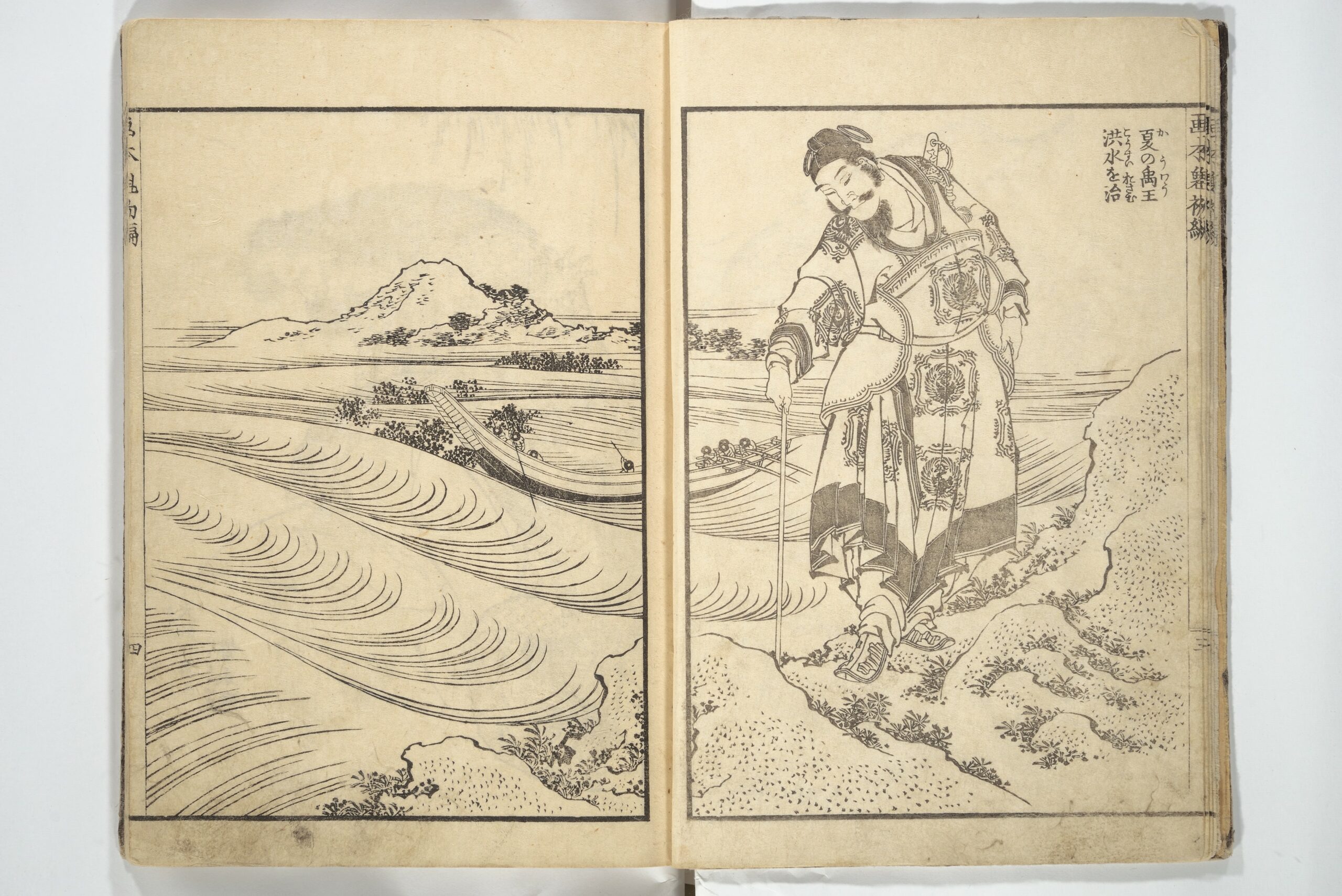
Read More...Hokusai’s Action-Packed Illustrations of Japanese & Chinese Warriors (1836)
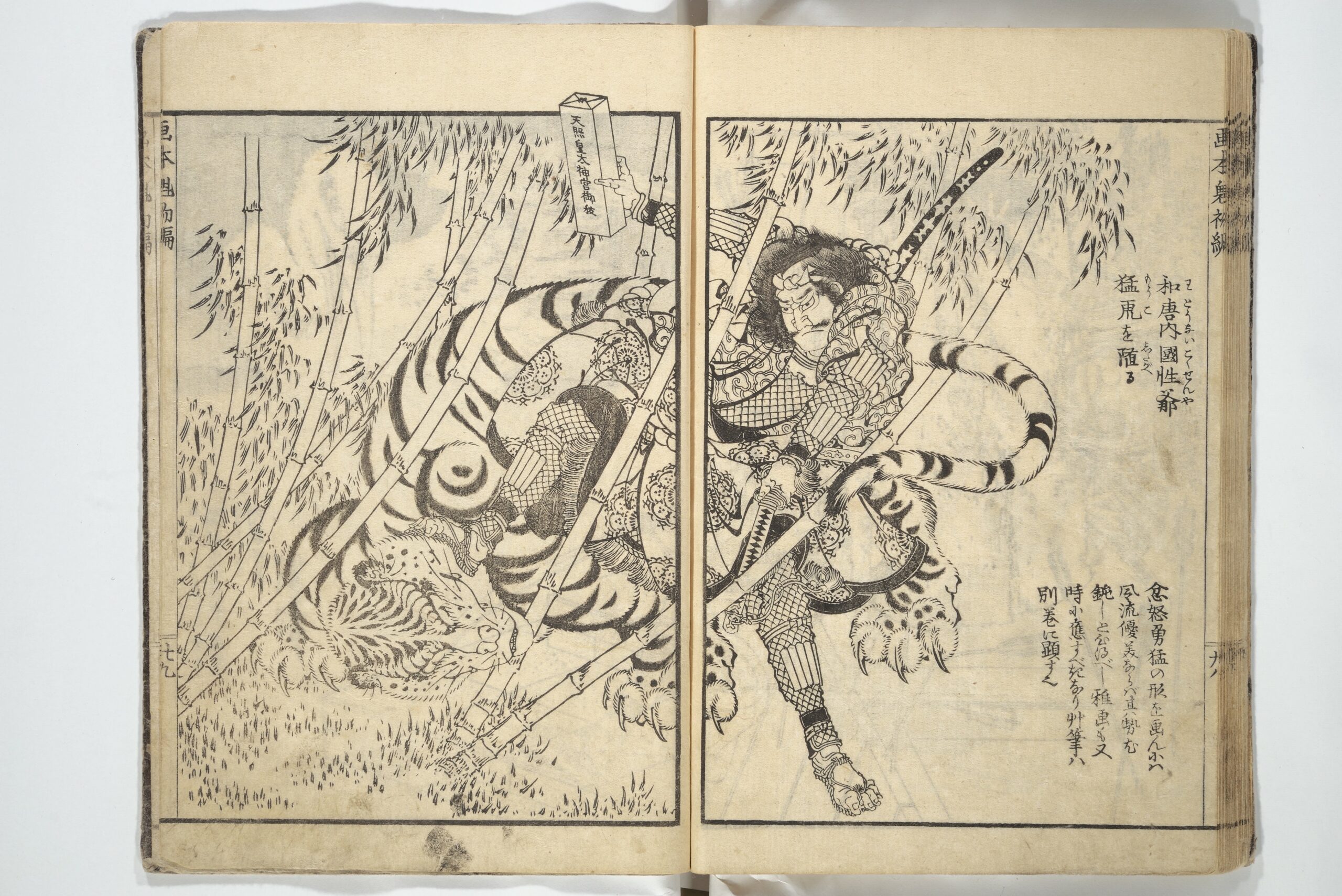
Katsushika Hokusai created his best-known woodblock print The Great Wave Off Kanagawa — or rather he finished its definitive version — when he was in his early sixties. That may sound somewhat late in the day by the standards of visual artists, but as Hokusai himself saw it, he was just getting started. At the Public Domain Review, Koto Sadamura quotes the artist’s own words, as included in the book One Hundred Views of Mt. Fuji: “Until the age of seventy, nothing I drew was worthy of notice. At seventy-three years, I was somewhat able to fathom the growth of plants and trees, and the structure of birds, animals, insects and fish.”
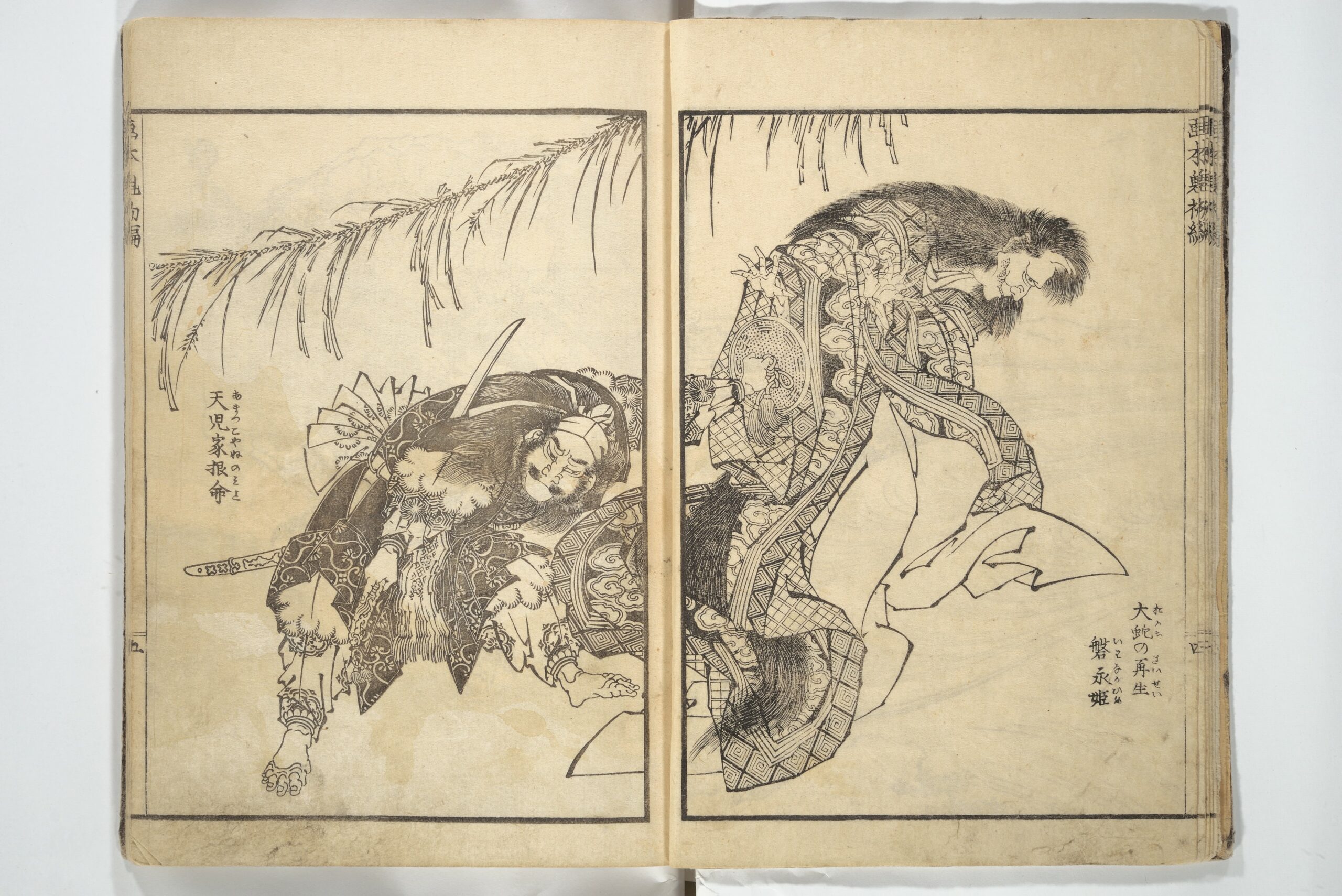
Sadamura goes on to introduce a different, lesser-known, and even later series of Hokusai’s artworks: “Wakan ehon sakigake, which assembles images of famous Japanese and Chinese warriors, both historical and legendary. The Japanese term sakigake in the title signifies outstanding figures or leaders (Wakan means Japanese and Chinese, and ehon is a picture book).”
Like many a hardworking ukiyo‑e artist, Hokusai created these images to order, his publisher having asked him to “fill three volumes with ‘wisdom’ [chi], ‘humanity’ [jin] and ‘bravery’ [yū], using examples of widely celebrated mighty heroes as reminders of military arts even in times of peace.”

The results, which you can see both at the Public Domain Review and the site of the Metropolitan Museum of Art, clearly fulfill their mandate of revivifying from a glorious past, real or imagined. But they also exude a certain aesthetic familiarity even today: in Hokusai’s depiction of the Heian-period warrior Hirai Yasumasa “subduing a monster spider,” for example, “lines in the background trace the motion of the gigantic arachnid as it tumbles and its sickle-like legs flail in the air, emphasizing the movement and force in a way that resonates with the visual effects of modern manga.”
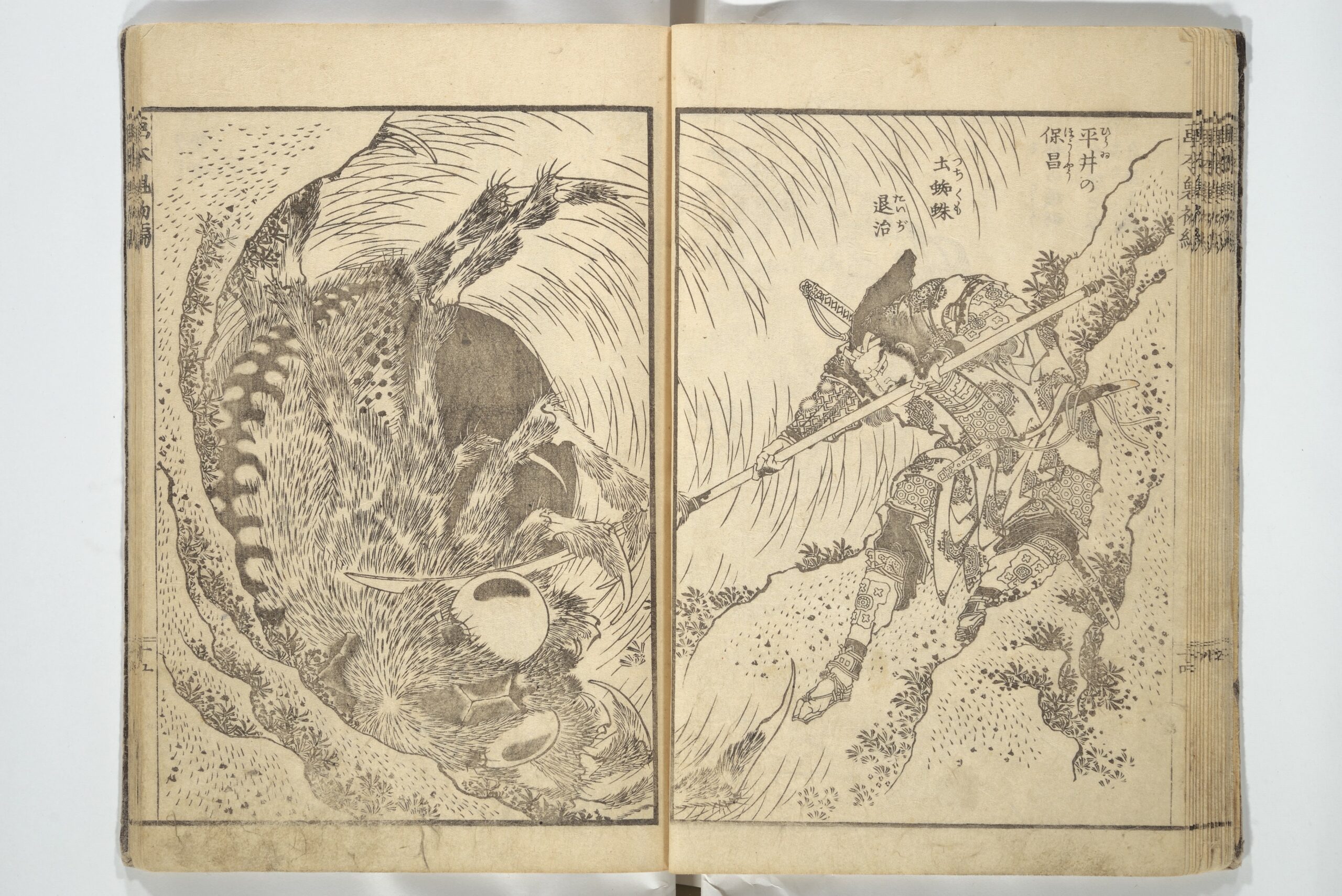
All the more surprising, then, not just that the Wakan ehon sakigake (or at least two of its planned three volumes) are now 187 years old, but also that Hokusai himself was seventy-six at the time. “Each tiny leaf growing on the rocks and each textural mark on the ragged surface is animated, filling the picture with vibrating energy,” Sadamura writes. “Every single strand of hair is charged with life.”
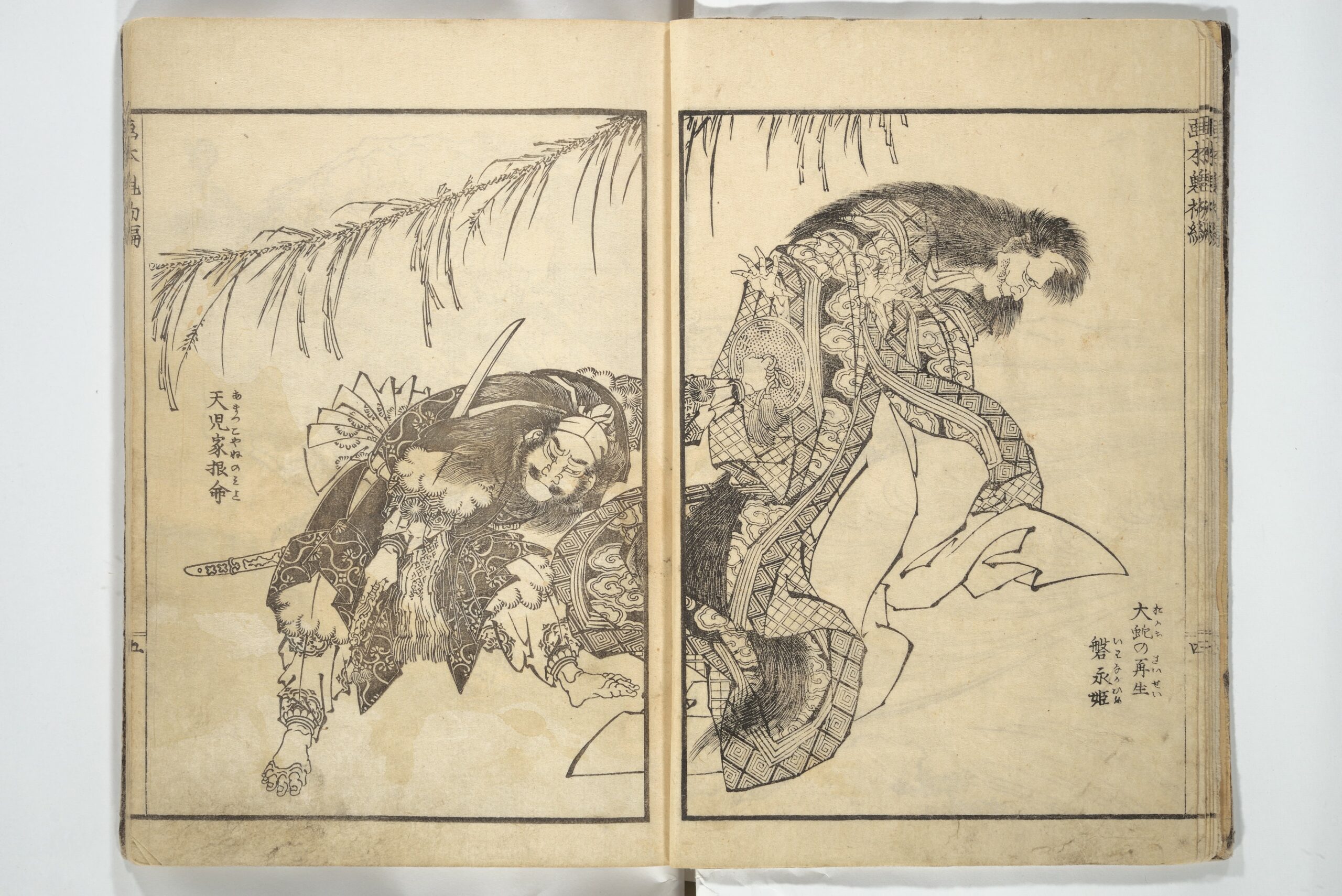
But the master foresaw greater achievements ahead, only after attaining the experience that would attend an even more advanced age: “At one hundred and ten, every dot and every stroke will be as though alive.” Alas, Hokusai died in 1849, at the tender age of 88, leaving us to imagine the level of artistry he might have attained had he reached maturity.
Related content:
View 103 Discovered Drawings by Famed Japanese Woodcut Artist Katsushika Hokusai
Hand-Colored 1860s Photographs Reveal the Last Days of Samurai Japan
Based in Seoul, Colin Marshall writes and broadcasts on cities, language, and culture. His projects include the Substack newsletter Books on Cities, the book The Stateless City: a Walk through 21st-Century Los Angeles and the video series The City in Cinema. Follow him on Twitter at @colinmarshall or on Facebook.
Read More...The Psychedelic Animated Video for Kraftwerk’s “Autobahn” (1979)
Ah, yes, “Autobahn.” From the moment the door slams and the ignition starts, prog rockers and pre-new wavers know a journey is afoot. Though the members of Kraftwerk made three albums before this, the members still looking like well meaning bookish hippies, 1974’s “Autobahn” is considered Year Zero for the denizens of the electric cafe, the four German robots who made human music with machines.
Created in 1979, but bopping around again in pop culture orbit is this cel-drawn animation by Roger Mainwood, created to promote “Autobahn” after most of the culture had caught up. By that last year of the ’70s Omni magazine was a year old, music was sifting through the shockwaves left by Bowie’s Low and Heroes, analog was flirting with digital, and the world was ready to drive on that long, electric highway.
Mainwood’s protagonist is part alien, part human, and he begins looking around in awe in his hip goggles, then setting off for a run straight out of a Muybridge loop, only to wind up floating, flying, sailing and swimming through a landscape indebted to Peter Max, PushPin Studios, underground comix, and 1930 modernism.
Mainwood had just graduated from London’s Royal College of Art Film and Television School, and was commissioned by John Halas, the Hungarian immigrant who became known as the Father of British Animation, for Kraftwerk’s record label. The label wanted to put out one of the first music Laserdiscs. (Halas, by the way, directed a very UPA-influenced short called “Automania” in 1963). According to Mainwood, he still doesn’t know if the band liked the short or even if they watched it.
Mainwood avoided any direct representation of driving or automobiles, much to his credit, which may be why the film holds its fascination. The animator continued in his field, winding up a producer of several classics of British animation, including The Snowman and the chilling When the Wind Blows. As for the meaning of “Autobahn,” we’ll let Mainwood have the last word:
Thinking back to my thought processes at that time, I remember wanting to specifically not have conventional cars in the film. I wanted a sense of a repetitive journey, and alienation, which I took to be what the music was about…hence the solitary futuristic figure, protected by large goggles, moving through and trying to connect with the journey he is taking. The automobile “monsters” are deliberately threatening (I have never been a big fan of cars or motorways!) and when our “hero” tries to make human contact (with different coloured clones of himself) he can never do it. In the end he realises he is making the repetitive and circular journey alone but strides forward purposefully at the end as he did in the beginning. All of which sounds rather pretentious…but I was a young thing in those days!
You can read more of an interview with Mainwood here.
Find more animations in our collection, 4,000+ Free Movies Online: Great Classics, Indies, Noir, Westerns, Documentaries & More.
Related Content:
Kraftwerk’s First Concert: The Beginning of the Endlessly Influential Band (1970)
Kraftwerk’s “The Robots” Performed by German 1st Graders in Cute Cardboard Robot Costumes
Ted Mills is a freelance writer on the arts who currently hosts the artist interview-based FunkZone Podcast. You can also follow him on Twitter at @tedmills, read his other arts writing at tedmills.com and/or watch his films here.
Read More...Why You Have an Accent When You Speak a Foreign Language
One occasionally hears it insisted that, outside certain culturally distinct regions of the country, Americans “don’t have an accent.” This notion is exposed as nonsense the moment one of those Americans starts speaking a foreign language, sometimes at the very first word. “Hold the palm of your hand up in front of your mouth and say ‘Paris’ in English,” advises the host of the Economist video above. “You’ll feel a little puff of air on your hand. Now, try the same thing again, but try to remove that puff of air, and you’ll get something closer to the French sound.” While this test works best for Americans, native speakers of many languages other than French should feel a difference.
No matter where they’re from, “people find themselves subconsciously adapting words of a foreign language to fit the rules of their own,” combining, emphasizing, and dropping sounds in the manner to which they’ve been accustomed since early childhood: the native Arabic speaker pronounces children as childiren, the Spaniard says he comes from espain, a Frenchman calls Texas’ biggest city yoo-STON.
It’s one thing to master a foreign language’s library of sounds, but quite another to nail its “stress patterns” that dictate which syllables are emphasized. That no syllables are emphasized in Japanese reveals the native stress patterns of its foreign speakers: listen to how clearly the distinctive American English rhythm comes through in, say, the name of the famous novelist ha-RU-ki mu-ra-KA-mi.
Some languages, like Italian and Cantonese, are “syllable timed,” which means that “every syllable has roughly the same duration.” This is quite unlike English, whose “stressed syllables come at roughly regular intervals, and the remainder are less distinctly pronounced.” Non-native English speakers who ignore that aspect of the language will always sound foreign, no matter their level of fluency. Of course, having an accent isn’t necessarily a bad thing, and indeed, we all know individuals who have played it up to great advantage in their personal and professional lives. But as an American living abroad, I do feel a certain responsibility to contradict our reputation for blithe ineptitude outside English. Such an effort must begin with taking any language, whatever its particular set of technical or cultural characteristics, one sound at a time.
Related content:
Learn 48 Languages Online for Free: Spanish, Chinese, English & More
A Tour of U.S. Accents: Bostonian, Philadelphese, Gullah Creole & Other Intriguing Dialects
Peter Sellers Presents The Complete Guide To Accents of The British Isles
The Speech Accent Archive: The English Accents of People Who Speak 341 Different Languages
A Map Showing How Much Time It Takes to Learn Foreign Languages: From Easiest to Hardest
Based in Seoul, Colin Marshall writes and broadcasts on cities, language, and culture. His projects include the Substack newsletter Books on Cities, the book The Stateless City: a Walk through 21st-Century Los Angeles and the video series The City in Cinema. Follow him on Twitter at @colinmarshall or on Facebook.
Read More...Chuck Berry & the Bee Gees Perform Together in 1973: An Unexpected Video from The Midnight Special Archive
During the 1970s, Burt Sugarman produced The Midnight Special, a late-night musical variety show that featured great rock and pop music performances. In recent months, Sugarman has started bringing the show’s archive to YouTube, allowing you to revisit vintage performances by David Bowie, Steely Dan, Tina Turner, Fleetwood Mac, Blondie, Richard Pryor and much more. Above, you can watch one such gem in the archive–that is, Chuck Berry & the Bee Gees performing Reelin’ and Rockin’ (a song originally released as a B‑side with “Sweet Little Sixteen” in 1957). As one YouTuber put it, “what an odd combination that absolutely works; one of Chuck’s most satisfying performances of this era; his guitar’s in tune, the band is hot & supportive (who’s that piano player?!), and it’s always cool to hear Maurice sing solo.” The performance took place on October 12, 1973. Enjoy.
If you would like to support the mission of Open Culture, consider making a donation to our site. It’s hard to rely 100% on ads, and your contributions will help us continue providing the best free cultural and educational materials to learners everywhere. You can contribute through PayPal, Patreon, and Venmo (@openculture). Thanks!
Related Content
Chuck Berry Takes Keith Richards to School, Shows Him How to Rock (1987)
Read More...Support Us
We're hoping to rely on loyal readers, rather than erratic ads. Please click the Donate button and support Open Culture. You can use Paypal, Venmo, Patreon, even Crypto! We thank you!

About Us

Open Culture scours the web for the best educational media. We find the free courses and audio books you need, the language lessons & educational videos you want, and plenty of enlightenment in between.
Advertise With Us
FREE UPDATES!
GET OUR DAILY EMAIL
Get the best cultural and educational resources on the web curated for you in a daily email. We never spam. Unsubscribe at any time.
FOLLOW ON SOCIAL MEDIA
Open Culture editor Dan Colman scours the web for the best educational media. He finds the free courses and audio books you need, the language lessons & movies you want, and plenty of enlightenment in between.
Advertise With Us

