Hear JG Ballard’s ‘My Dream of Flying to Wake Island,’ Read by William Boyd
Above, author William Boyd reads a JG Ballard story, ‘My Dream of Flying to Wake Island,’ which is “dominated by image and symbol rather than character and narrative.” The story was originally published in the 1978 sci-fi collection, Low-Flying Aircraft and Other Stories. The recording, which comes courtesy of The Guardian, will be added to our collection, 1,000 Free Audio Books: Download Great Books for Free.
If you would like to support the mission of Open Culture, consider making a donation to our site. It’s hard to rely 100% on ads, and your contributions will help us continue providing the best free cultural and educational materials to learners everywhere. You can contribute through PayPal, Patreon, and Venmo (@openculture). Thanks!
Read More...Hear Italo Calvino’s “The Night Driver,” Read by Jeanette Winterson
Recorded by The Guardian, Jeanette Winterson reads Italo Calvino’s 1967 story “The Night Driver,” a story of two lovers falling out in the distant era ‘b4 mobile phones.’
This reading has been added to our collection, 1,000 Free Audio Books: Download Great Books for Free.
If you would like to support the mission of Open Culture, consider making a donation to our site. It’s hard to rely 100% on ads, and your contributions will help us continue providing the best free cultural and educational materials to learners everywhere. You can contribute through PayPal, Patreon, and Venmo (@openculture). Thanks!
Read More...Donald Barthelme Reads “The Royal Treatment”
Above, Donald Barthelme reads his story “The Royal Treatment,” a satirical piece published by The New York Times on Nov. 3, 1973 under the pseudonym Lily McNeil. It was re-printed in the collection, Guilty Pleasures.
You can find this reading indexed in our collection, 1,000 Free Audio Books: Download Great Books for Free.
If you would like to support the mission of Open Culture, consider making a donation to our site. It’s hard to rely 100% on ads, and your contributions will help us continue providing the best free cultural and educational materials to learners everywhere. You can contribute through PayPal, Patreon, and Venmo (@openculture). Thanks!
Read More...David Bowie’s Mystical Appearances in David Lynch’s Twin Peaks
Younger fans might find it hard to believe, but David Bowie was not exactly at the height of coolness when he first appeared in David Lynch’s Twin Peaks: Fire Walk with Me in 1992. The overblown Glass Spider tour was five years earlier, followed by a Greatest Hits tour in 1990. He had tried to reinvent himself with Tin Machine for two albums. In fact, with Ryko rereleasing his catalog on CD, it looked mostly like Bowie would spend the rest of his career cashing in on nostalgia.
The same criticisms were hurled at Lynch after the Cannes premiere of the Twin Peaks “prequel”. Quentin Tarantino, who was at that Cannes premiere and heard the collective boos from the audience, said “David Lynch had disappeared so far up his own ass that I have no desire to see another David Lynch movie until I hear something different.”
But whaddya know? It turns out that the rest of the ‘90s were very good for both artists. Lynch went on to make some of his best work, and Fire Walk With Me is now considered a classic. Bowie wound up working with Eno again on the uncompromising and dense Outside.
Now Bowie has only one scene in Fire Walk With Me, but goddamn if it isn’t one of the best in the movie. I distinctly remember the chill that shot up my spine just before Bowie’s Philip Jeffries–an FBI field agent who escapes the Black Lodge–makes his crazed appearance in Philadelphia. Like a quantum particle, he is both there and not there, walking through a freeze frame of Agent Cooper as the FBI’s security cameras lock up.
“I’m not going to talk about Judy,” he says. “In fact we’re not gonna talk about Judy at all.”
The “Missing Pieces” version on the FWWM DVD shows the entire scene as it plays out as shot, with Jeffries breaking down in pain before being teleported back to a hotel in Buenos Aires. It’s pretty straightforward and a bit clunky.
In the official FWWM cut, Lynch and his editor Mary Sweeney work some special Black Lodge alchemy.
“Who do you think that is there?” Jeffries says, pointing at Coop as blue static fades in over the scene. Two realities then vie for power: Jeffries’ gnomic warnings versus his visions from a visit to the Black Lodge, the space above the convenience store, where all sorts of spirits live, lurk, and wait. Angelo Badalamenti’s score groans and shrieks and runs backwards. The scene is dense with clues and menace, and once things in the FBI office return to “normal,” Jeffries is gone.
“We live inside a dream,” Jeffries had warned, and 25 years later in Twin Peaks: The Return, Cooper himself would deliver a similar line inside another police station, as two realities played over each other, double-exposed.
David Bowie wouldn’t return to Lynch-world as an actor, but the director used his Outside song, “I’m Deranged,” as the opening and closing music to 1997’s Lost Highway, a track like that FWWM scene teeters on the brink of madness, filled with cut-and-paste lyrics and Mike Garson’s insane piano runs.
When Lynch announced the return of Twin Peaks, and after the passing of Bowie, fans wondered if by some miracle Jeffries would appear on the screen. Had Lynch managed to grab footage of the singer, like he had done for Catherine Coulson, so close to their exit?
Instead, when Evil Cooper finally met Jeffries again, it was as a machine–fans jokingly called it a gigantic tea kettle–that both spoke in English and puffed out numbers/clues in a cloud of steam.
Bowie reportedly never liked his 1992 performance because of his Louisiana accent, so when Lynch informed Bowie through his lawyer about his character’s return, Bowie asked for it to be redubbed by a real actor from Louisiana: Nathan Frizzell. (It may be authentic, but it ain’t no Bowie.)
Related Content:
Dave: The Best Tribute to David Bowie That You’re Going to See
Watch All of the Commercials That David Lynch Has Directed: A Big 30-Minute Compilation
Watch an Epic, 4‑Hour Video Essay on the Making & Mythology of David Lynch’s Twin Peaks
Ted Mills is a freelance writer on the arts who currently hosts the artist interview-based FunkZone Podcast and is the producer of KCRW’s Curious Coast. You can also follow him on Twitter at @tedmills, read his other arts writing at tedmills.com and/or watch his films here.
Read More...The Ten Greatest Films of All Time According to 358 Filmmakers
Every ten years, film journal Sight and Sound conducts a worldwide survey of film critics to decide which films are considered the best ever made. Started in 1952, the poll is now widely regarded as the most important and respected out there.
And the critical consensus for a long time was that the masterpiece Citizen Kane by Orson Welles is the best of the best. The film topped the list for five decades from 1962 until 2002. Then in 2012, perhaps out of Kane fatigue, Alfred Hitchcock’s Vertigo muscled its way to the top.
That’s what the critics think. But what about the filmmakers?
Beginning in 1992, Sight and Sound started to poll famed directors about their opinions. People like Martin Scorsese, Francis Ford Coppola, Mike Leigh and Michael Mann. So what is the best movie ever made according to 358 directors polled in 2012? Kane? Vertigo? Perhaps Jean Renoir’s brilliant Rules of the Game, the only movie to appear in the top ten for all seven critics polls? No.
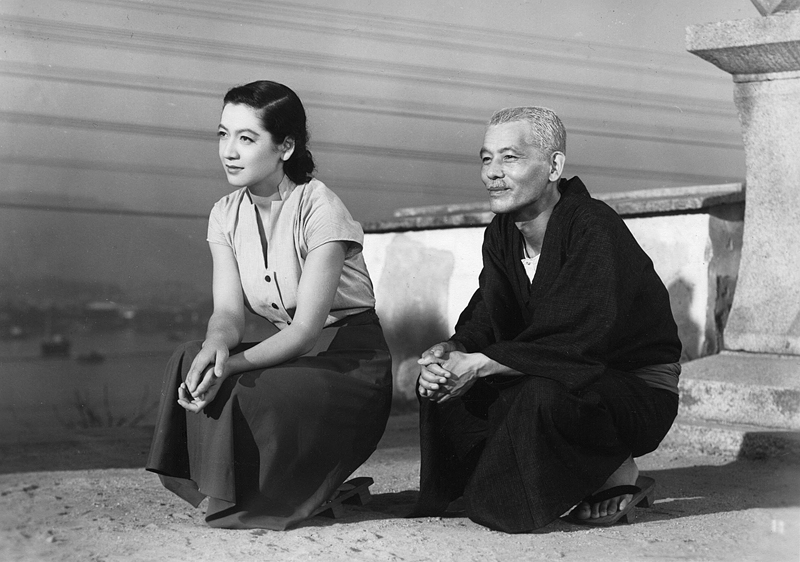
Instead, the top prize goes to Yasujiro Ozu’s Tokyo Story.
It’s a surprising, an enlightened, choice. Ozu’s work is miles away from the flash of Kane and the psychosexual weirdness of Vertigo. Tokyo Story is a gentle, nuanced portrait of a family whose bonds are slowly, inexorably being frayed by the demands of modernization. The movie’s emotional power is restrained and cumulative; by the final credits you’ll be overwhelmed both with a Buddhist sense of the impermanence of all things and a strong urge to call your mother.
But perhaps the reason filmmakers picked Tokyo Story of all the other cinematic masterpieces out there is because of Ozu’s unique approach to film. Since the days of D. W. Griffith, almost every filmmaker under the sun, even cinematic rebels like Jean-Luc Godard, followed some basic conventions of the form like continuity editing, the 180-degree rule and matching eyelines. Ozu discarded all of that. Instead, he constructed a highly idiosyncratic cinematic language revolving around match cuts and rigorously composed shots. His film form was radical but his stories were universal. That is the paradox of Ozu. You can see the trailer of the movie above.
Citizen Kane does make number two on the list but the film is tied with another formally rigorous masterpiece – Stanley Kubrick’s 2001: A Space Odyssey. Next on the list is perhaps the best movie ever about making a movie – Federico Fellini’s 8 ½. And Ozu’s film might be number one, but Francis Ford Coppola is the only filmmaker to have two movies on the list – The Godfather and Apocalypse Now. And that’s no mean feat.
You can see the full list below:
1. Tokyo Story — Yasujiro Ozu (1953)
2. 2001: A Space Odyssey – Stanley Kubrick (1968)
3. Citizen Kane – Orson Welles (1941)
4. 8 ½ — Federico Fellini (1963)
5. Taxi Driver – Martin Scorsese (1976)
6. Apocalypse Now – Francis Ford Coppola (1979)
7. The Godfather – Francis Ford Coppola (1972)
8. Vertigo – Alfred Hitchcock (1958)
9. Mirror – Andrei Tarkovsky (1974)
10. Bicycle Thieves – Vittorio De Sica (1949)
Note: An earlier version of this post appeared on our site in 2015.
Related Content:
4,000+ Free Movies Online: Great Classics, Indies, Noir, Westerns, Documentaries & More.
The 10 Greatest Books Ever, According to 125 Top Authors (Download Them for Free)
The 10 Greatest Films of All Time According to 846 Film Critics
The Top 100 American Films of All Time, According to 62 International Film Critics
Martin Scorsese Reveals His 12 Favorite Movies (and Writes a New Essay on Film Preservation)
Jonathan Crow is a Los Angeles-based writer and filmmaker whose work has appeared in Yahoo!, The Hollywood Reporter, and other publications. You can follow him at @jonccrow. And check out his blog Veeptopus, featuring lots of pictures of badgers and even more pictures of vice presidents with octopuses on their heads. The Veeptopus store is here.
Read More...Hear Isaac Asimov’s Story Award-Winning Story “Nightfall” Read by Stephen Eley
Above hear Isaac Asimov’s story “Nightfall” read by Stephen Eley. The novelette–which first appeared in Astounding Science Fiction, September 1941–tells the story about “the coming of darkness to the people of a planet ordinarily illuminated by sunlight at all times.” In 1968, The Science Fiction Writers of America voted “Nightfall” the best sci fi short story written prior to the 1965 establishment of the Nebula Awards.
The production above was created by the sci-fi podcast EscapePod. It will be added to our collection, 1,000 Free Audio Books: Download Great Books for Free.
If you would like to support the mission of Open Culture, consider making a donation to our site. It’s hard to rely 100% on ads, and your contributions will help us continue providing the best free cultural and educational materials to learners everywhere. You can contribute through PayPal, Patreon, and Venmo (@openculture). Thanks!
Read More...
Stream Free Online 200 Films from Tribeca Film Festivals
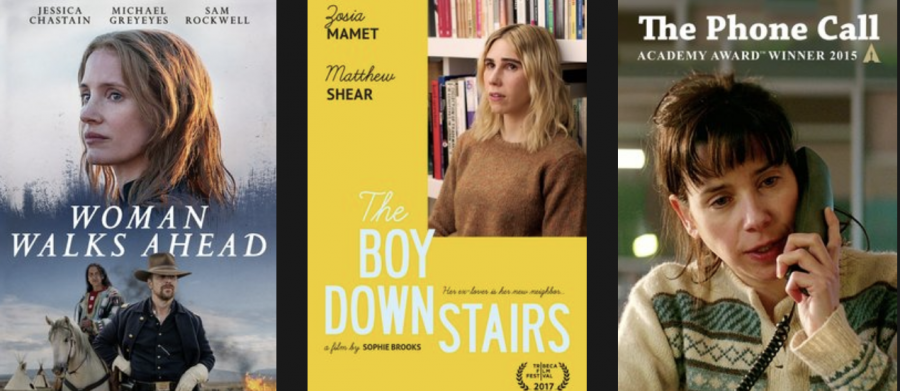
FYI: The Tribeca Film Festival is getting underway today. And to mark the occasion, Kanopy is showcasing a lineup of 200 titles from past festivals and letting you stream them free online. Kanopy writes:
Kanopy’s selection of Tribeca Film Festival titles includes recent festival favorites The Lovers, starring Debra Winger (An Officer and a Gentleman) & Tracy Letts (Who’s Afraid of Virginia Woolf?), and Back Roads starring Alex Pettyfer (Stormbreaker) and Jennifer Morrison (House). A selection of dynamic documentaries such as Dior and I and Planet of Snail is available alongside films with unforgettable female performances including Woman Walks Ahead, starring Jessica Chastain (Zero Dark Thirty) and Oscar-award winning short film The Phone Call, starring Sally Hawkins (The Shape of Water). Several Tribeca-winning films including the 2015 Best Director winner About Elly and the 2017 Audience Award for Best Narrative Film, The Divine Order are also available.
You can find a complete list of Tribeca films here. As you may know, Kanopy offers a large collection of award-winning films and documentaries that are free to members of participating libraries. To see if your library is a participating member, visit this page on the Kanopy website.
Beyond the 200 films featured in the Tribeca collection, there are currently 30,000 films on the Kanopy service. Enjoy the shows.
If you would like to support the mission of Open Culture, consider making a donation to our site. It’s hard to rely 100% on ads, and your contributions will help us continue providing the best free cultural and educational materials to learners everywhere. You can contribute through PayPal, Patreon, and Venmo (@openculture). Thanks!
Read More...
Hear J.R.R. Tolkien Read from The Lord of the Rings and The Hobbit in Vintage Recordings from the Early 1950s
J.R.R. Tolkien was not a big fan of his fandom. He had serious doubts about whether any of the millions of readers who adored The Hobbit and The Lord of the Rings trilogy understood anything about what he was trying to do. But none of them can be blamed, since he didn’t at first set out to write fiction at all—at least not when it came to The Lord of the Rings. The books, he said, were “an attempt to create a world in which a form of language agreeable to my personal aesthetic might seem real.”
The most famous fantasy series of all time began its life as a linguistic experiment, in other words. “The invention of languages is the foundation,” said Tolkien. “The ‘stories’ were made rather to provide a world for the languages than the reverse.” Of course, Tolkien fans know quite a bit about how personal his stories became, even as they incorporated more and more mythical elements. How could we possibly understand these stories the way Tolkien did?
Authors do not get to choose their readers, nor can they direct the interpretations of their work. Still Tolkien may have been more misunderstood than others, and maybe more entitled to complain. The scholarly work of philologists like himself—academics who studied the roots of languages and mythologies—had been mangled and misused by the Nazis. The fact caused Tolkien to confess to his son “a burning private grudge against that ruddy little ignoramus Adolf Hitler” for “ruining, perverting, misapplying, and making for ever accursed” the history Tolkien had made his life’s work. (He also penned a scathing reply to a German publisher who asked him for proof of his “Aryan” descent.)
He would also have been appalled that not long after his death, Middle Earth became a “merchandising juggernaut,” as one student of his effect on popular culture puts it. Tolkien had strenuously resisted efforts by Disney to buy the rights to his fiction, objecting to what he saw as vulgar, mercenary commercialism. The hundreds of millions of dollars poured into the Hobbit and Lord of the Rings films, and the empire of games, action figures, t‑shirts, etc., might have seemed to him the very image of power-mad wizard Saruman’s designs for world domination.
This isn’t to say we should hear Tolkien scolding us as we pick up our box set of special edition books, Blu-Rays, and LOTR tchotchkes. He was no stranger to marketing. And he produced the inspiration for some of the most beloved adaptations with his own cover art designs and over a hundred drawings and paintings of Middle Earth and its English referents. But perhaps it would repay fans of the many LOTR-themed consumables to attend to the creator of the now-self-existent world of Middle Earth every now and then—to get closer, if not to Tolkien’s intentions, then at least to his mind and voice, both recorded in his letters and his own readings from his work.
In the clips here, you can listen to Tolkien himself read from The Lord of the Rings and The Hobbit, including a recording at the top of him reading one of the fantasy languages he invented, then created an entire world around, the Elvish tongue Quenya in the poem “Namarie.” Some of these YouTube clips have received their own cinematic treatment, in a YouTube sort of way, like the video below with a montage of Tolkien-inspired media and a dramatic score. This may or may not be to your liking, but the origin story of the recording deserves a mention.
Shown a tape recorder by a friend, whom Tolkien had visited to pick up a manuscript of The Lord of the Rings, the author decided to sit down and record himself. Delighted with the results, he agreed to read from The Hobbit. He liked the technology enough that he continued to record himself reading from his own work. Tolkien may not have desired to see his books turned into spectacles, but as we listen to him read, it’s hard to see how anyone could resist the temptation to put his magnificent descriptions on the big screen. Hear the second part of that Hobbit reading here, and more Tolkien readings in the many links below.
Related Content:
J.R.R. Tolkien Reads From The Two Towers, the Second Book of The Lord of the Rings Trilogy
Hear J.R.R. Tolkien Read From The Lord of the Rings and The Hobbit
J.R.R. Tolkien Snubs a German Publisher Asking for Proof of His “Aryan Descent” (1938)
Josh Jones is a writer and musician based in Durham, NC. Follow him at @jdmagness
Read More...Hear Pink Floyd’s “Great Gig in the Sky” Played on the Theremin
Pink Floyd is surely the most quotable of psych-rock and progressive bands. Everyone, no matter their musical tastes, knows lines like “we don’t need no education, we don’t need no thought control,” “I have become comfortably numb,” and “we’re just two lost souls swimming in a fish bowl, year after year.”
The band’s first album with Syd Barrett was full of wordplay and whimsy. Later songwriting cut right to the heart of things, with razor-sharp observations, heartbreaking statements, sneering jibes, and strident pronouncements. In their finest iterations, they were a band with something to say.
These qualities make it all the more striking that one of their most moving compositions is a song without any words, unless we count the vocal samples at the beginning from writer Malcolm Muggeridge. Smack in the middle of Dark Side of the Moon, “The Great Gig in the Sky” showcases a soulful improvisation by guest vocalist Clare Torry (who finally, rightfully, received a writing credit in 2004). Her voice provides all the dramatic tension the song needs, communicating more, in purely emotional terms, than any lyric the band might have written.
Does the effect come through when her performance is replayed on a Theremin? You be the judge. The song made famous by its wordless intensity meets an instrument played without any touch—it’s a poetic kind of mashup, and a well-executed cover. Theremin player Charlie Draper doesn’t only play Torry’s vocal, but also David Gilmour’s pedal steel guitar parts, which are probably better suited to the instrument. As an added bonus, he plays over one of the earlier instrumental demos of the song with samples from Apollo 17 astronauts, adding a few more words that serve only as more atmosphere behind the melody.
The Theremin is often pegged as a novelty instrument, defining the sound of B‑movie sci-fi, but it has a long and distinguished history. First called the Etherphone by Russian inventor Leon Theremin, it became the passionate instrument of choice for classical player Clara Rockmore in the early 20th century. A sort of mini-Theremin revival has brought it back into prominence as a serious interpreter of classical and modern music. On his YouTube channel, Draper demonstrates his appreciation for the Theremin’s range, playing Mozart, Grieg, Gershwin, and the theme from the film First Man. Just above, Hank Green tells us all about the physics of the Theremin, in a SciShow crash course that could answer many of the questions you might have had while watching Draper play Pink Floyd on one.
Related Content:
Josh Jones is a writer and musician based in Durham, NC. Follow him
Read More...How the Vietnam War Shaped Classic Rock–And How Classic Rock Shaped the War
There are a handful of popular songs that have become cliche and shorthand for filmmakers wishing to take us back to the trauma of the Vietnam War: Jimi Hendrix’s cover of Dylan’s “All Along the Watchtower” or Edwin Starr’s “War,” to name two. Yet at the same time, while classic rock lives forever, memories or lessons of Vietnam have not. Buffalo Springfield’s “For What It’s Worth” originally was a comment on the Sunset Strip Curfew (anti-war) riots, but now its meaning is open ended enough to suit any potentially violent protest.
In Polyphonic’s two-part series, cleverly titled “How the Vietnam War Shaped Classic Rock” for the first half and “How Classic Rock Shaped the Vietnam War” for the second, Noah Lefevre performs a needed reevaluation on dozens of rock and soul songs, placing them back in their historical context and showing how the power and message of music evolved as the war descended into chaos and defeat.
The Vietnam War dragged on so long that music and culture were both vastly different by the time Saigon fell and the Americans pulled out. Polyphonic begins with the first line of protest, the American folk singers in Greenwich Village, in particular Phil Ochs and his apprentice Bob Dylan. Folk was the traditional way that protest reached the American public–it needed a singer and a guitar and nothing more–but Dylan would provide the bridge that rock music needed, as he straddled both camps for a while (and Ochs did not).
However, as Lefevre astutely points out, the troops themselves weren’t listening to folk. They were like anybody else their age at that time and listening to rock and r’n’b. Their top of their pops, circa 1965, was The Animals’ “We’ve Gotta Get Out of This Place” (originally about small town alienation, but perfect for being stuck thousands of miles from home) and Nancy Sinatra’s “These Boots Were Made for Walking.”
Things changed as the war escalated in 1966 and the first soldiers returned home, many of whom would join in the protest movement.
And while on one hand psychedelic drugs powered the Summer of Love, advancements in tech powered the images of the war that now got beamed into all our television sets. The war was dirtier, messier, and more horrific than most people imagined, and music responded in two ways. One was to bounce outside that reality and proclaim peace the answer, as John Lennon and Yoko Ono did, squaring off against the government and radicalized youth alike. The other was to create a music sound that tried to match the madness. Jimi Hendrix managed it several times, including “Machine Gun” and his infamous rendition of “The Star Spangled Banner.” But King Crimson’s “21st Century Schizoid Man” and Black Sabbath’s “War Pigs” were even darker. And then there was Marvin Gaye’s masterpiece What’s Going On, which is neither peacenik nor horrorshow. Instead it’s a sigh of melancholy and sadness, taking in man’s cycle of violence towards itself and to the earth.
Polyphonic really stepped it up in these two mini docs, gaining access to high quality archival footage. There’s plenty more to learn and hear in them, so click play.
Related Content:
Kind of Blue: How Miles Davis Changed Jazz
Ted Mills is a freelance writer on the arts who currently hosts the artist interview-based FunkZone Podcast and is the producer of KCRW’s Curious Coast. You can also follow him on Twitter at @tedmills, read his other arts writing at tedmills.com and/or watch his films here.
Read More...Support Us
We're hoping to rely on loyal readers, rather than erratic ads. Please click the Donate button and support Open Culture. You can use Paypal, Venmo, Patreon, even Crypto! We thank you!

About Us

Open Culture scours the web for the best educational media. We find the free courses and audio books you need, the language lessons & educational videos you want, and plenty of enlightenment in between.
Advertise With Us

FREE UPDATES!
GET OUR DAILY EMAIL
Get the best cultural and educational resources on the web curated for you in a daily email. We never spam. Unsubscribe at any time.
FOLLOW ON SOCIAL MEDIA

Open Culture editor Dan Colman scours the web for the best educational media. He finds the free courses and audio books you need, the language lessons & movies you want, and plenty of enlightenment in between.
Advertise With Us

