The British Library Digitizes Its Collection of Obscene Books (1658–1940)
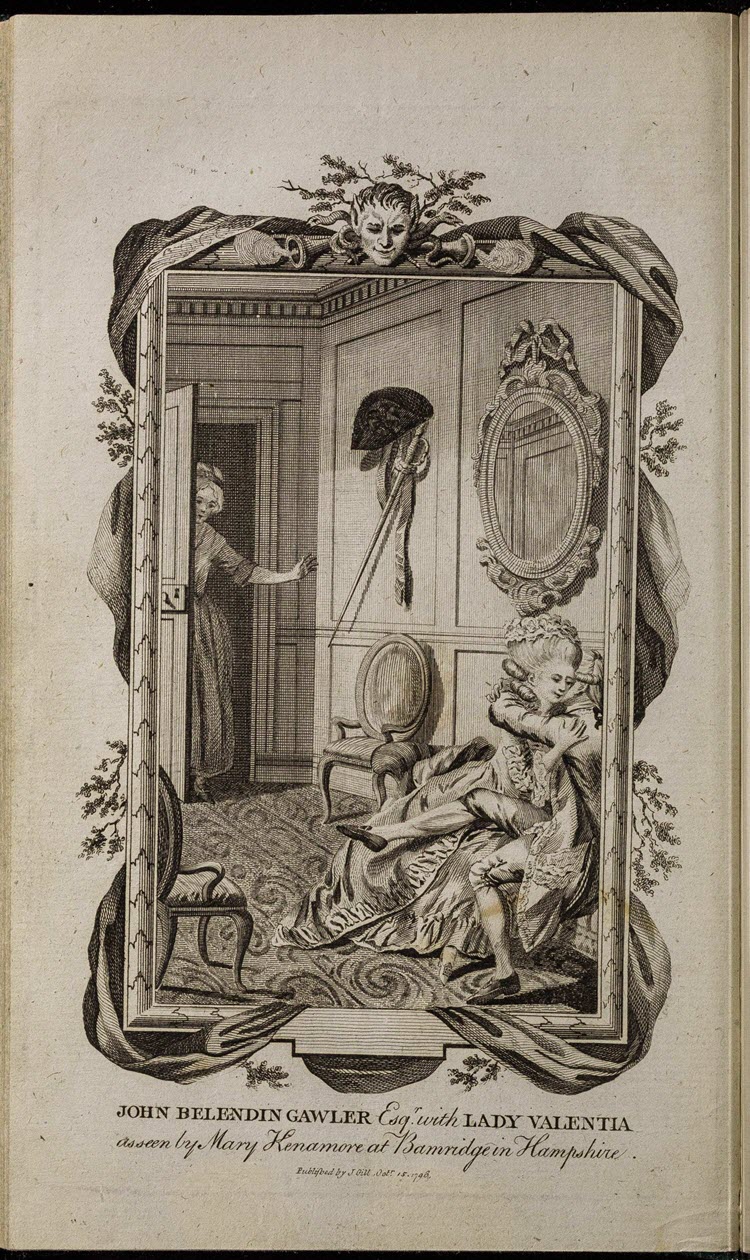
Many people are cheated out of an authentic education in English literature because of a longstanding puritanical approach to its curation. One might spend a lifetime reading the traditional canon without ever, for example, learning much about the long history of popular pornographic British writing, a genre that flourished in the 18th and 19th centuries as the popularity of the novel exploded. Everyone knows the Marquis de Sade, even if they haven’t read him, not least because he lent his name to psychoanalytic theory. Many of us have read Voltaire’s randy satire, Candide. But few know the name John Cleland, author of Fanny Hill, a bawdy British novel published in 1748, over forty years before de Sade’s Justine.
A book that serves up its own wealth of psychosexual insights, Fanny Hill does not disappoint either as pornographic writing or as entertaining fiction. Cleland wrote the book while in debtors’ prison, after he “boasted to James Boswell, himself no mean pornographer… that he could write a sexually exciting story of ‘a woman of pleasure’ without using a single ‘foul’ word,” writes John Sutherland at The Guardian. Cleland succeeded, in a narrative loaded with crudely Shakespearean puns and euphemisms. The wordplay in the title character’s name, an Anglicization of mons veneris (mound of Venus), will be immediately apparent to speakers of British English.
Upon its publication, however, Cleland was prosecuted for “corrupting the king’s subjects,” and the book was “duly buried and went on to become a centuries-long underground bestseller.” Such was the fate of many an obscene British novel. Thousands of these became property of the British Library, which “kept its dirtiest books locked away from the rest of its collections,” notes Brigit Katz at Smithsonian. “All volumes deemed to be in need of extra safeguarding so that members of the public couldn’t get their hands on the saucy stories—or try to destroy them—were placed in the library’s ‘Private Case.’” Now, they are being digitized and made available to Gale subscribers.
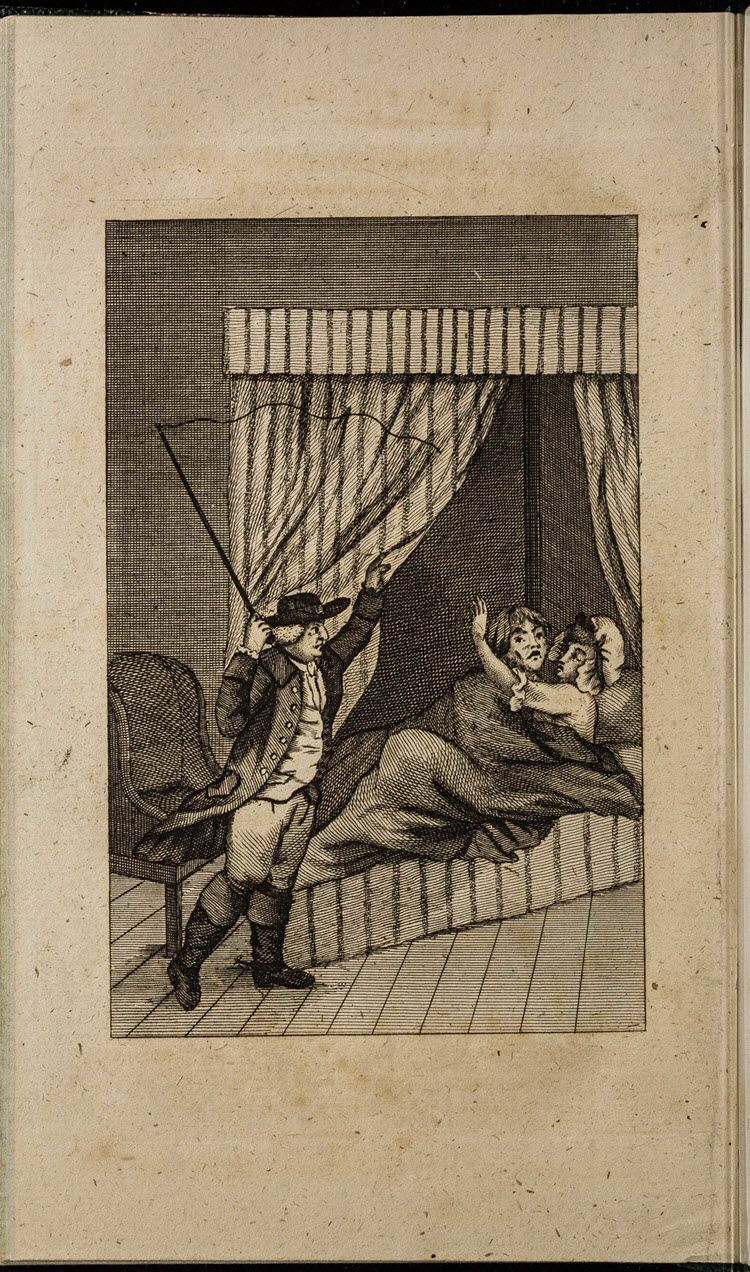
2,500 volumes from the Private Case collection have become part of Gale’s Archives of Sexuality and Gender research library, the first time much of this material has been available. “Pretty much anything to do with sex,” says British Library curator Maddy Smith, was locked away “until around 1960, when attitudes to sexuality were changing.” Librarians only began cataloguing this material in the 1970s, but most of it remained obscure and fairly inaccessible. The collection dates to 1658. It includes a series called the Merryland Books, written in the 1740s by authors who took pseudonyms like “Roger Pheuquewell” and described “the female anatomy metaphorically as land ripe for exploration.”
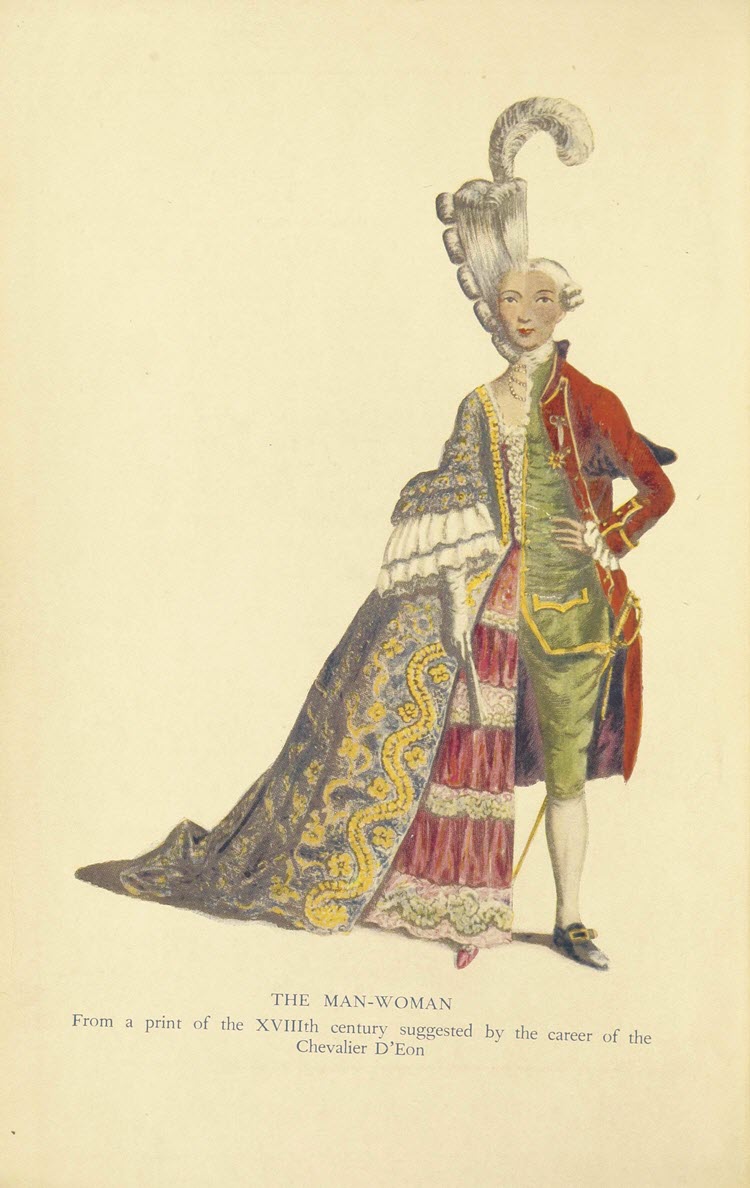
It is not overall a body of work given to subtleties. Aside from some exceptions, like Teleny or The Reverse of the Medal, a tragic gay romance attributed to Oscar Wilde, these are also largely books “written by men, for men,” about women, Smith points out. “It’s to be expected, but looking back, that’s what is shocking, how male-dominated it is, the lack of female agency.” She might have also pointed out that many women in the mid-18th century were writing and publishing popular novels, largely read by women, with frank coming-of-age descriptions of sexual education, seduction, and even rape. And both men and women wrote about homosexuality and gender fluidity in ways that might surprise us.
The response to such books tended to be moralistic correction—as in the best-selling Pamela, or Virtue Rewarded by Samuel Richardson—or lascivious satire, as in the Merryland Books, Fanny Hill, and Henry Fielding’s Shamela, a parody that turns Richardson’s chaste heroine into a scheming prostitute. These two novels were massively popular and show the form as we know it developing as a literary conversation between men about women’s supposed vices or virtues. We should read mid-18th century pornographic literature as an essential part of the formation of the British novel tradition.
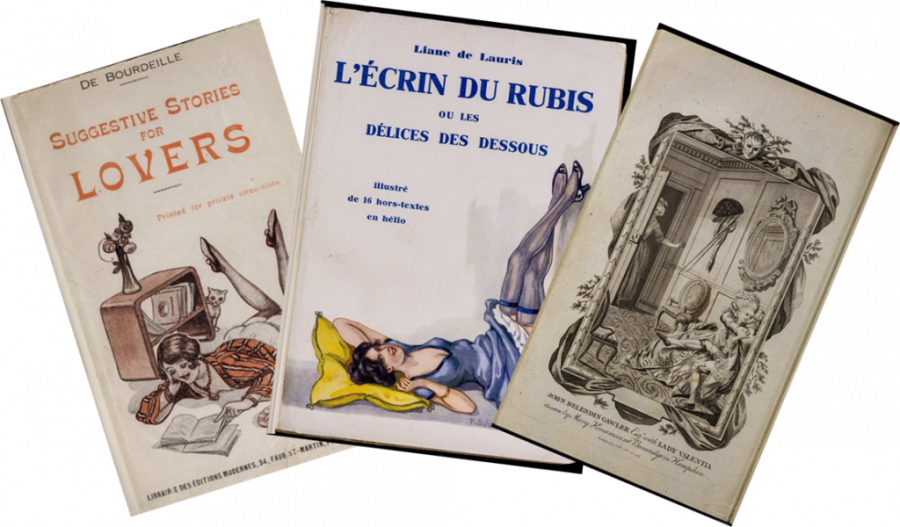
At the Gale online collection of these British Library treasures, one can do just that, then reach back a century earlier and forward 200 years to 1940, the last date in the Gale collection, which “makes available approximately one million pages of content that’s been locked away for many years, available only via restricted access.” (We must note that access is still restricted to Gale subscribers). These pages come not only from the British Library but also from The Kinsey Institute and the New York Academy of Medicine, who have both supplied a share of textbooks and scholarly monographs on sex. The “obscenity” of this material lies in the eyes of its keepers—much will seem unremarkable today, and some can still seem plenty scandalous.
Related Content:
Read 14 Great Banned & Censored Novels Free Online: For Banned Books Week 2014
John Waters Reads Steamy Scene from Lady Chatterley’s Lover for Banned Books Week (NSFW)
Josh Jones is a writer and musician based in Durham, NC. Follow him at @jdmagness
Read More...Alice in Wonderland, Hamlet, and A Christmas Carol Written in Shorthand (Circa 1919)
For hundreds of years before the regular use of dictation machines, word processors, and computers, many thousands of court records, correspondence, journalism, and so on circulated in translation. All of these texts were originally in their native language, but they were transcribed in a different writing system, then translated back into the standard orthography, by stenographers using various kinds of shorthand. In English, this meant that a mess of irregular, phonetically nonsensical spellings turned into a streamlined, orderly symbolic system, impenetrable to anyone who hadn’t studied it thoroughly.
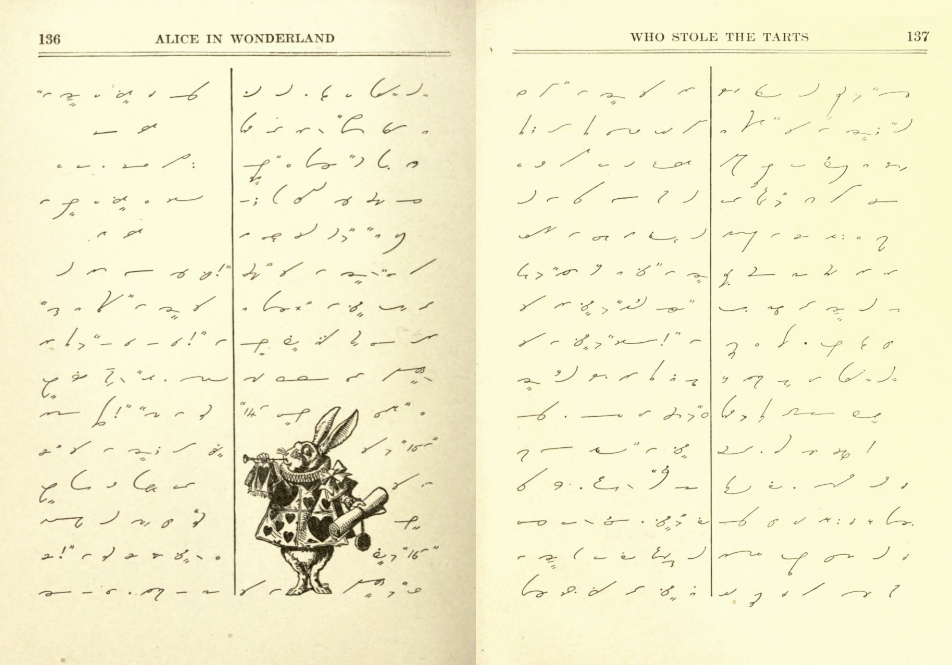
I do not know the rates of accuracy in shorthand writing or translation. Nor do I know how many original shorthand manuscripts still exist for comparison’s sake. But for centuries, shorthand systems were used to record lectures, letters, and interviews, and to write edicts, essays, articles, etc., in Imperial China, ancient Greece and Rome, and modern Europe, North America, and Japan.
The practice reached a peak in the late nineteenth and early 20th centuries, when stenography became a growth industry. Jack El-Hai at Wonders and Marvels explains.
A century ago, hundreds of thousands of people around the world regularly used shorthand. Secretaries, stenographers, court reporters, journalists and others depended on the elaborate shorthand systems that Isaac Pitman and John Robert Gregg developed in the nineteenth century, and countless schools and publishers seized the business opportunity to train them. Talented practitioners could write at speeds up to 280 words per minute.
The texts of systems like Pitman and Gregg’s “grew increasingly complex,” then increasingly simplified during latter half of the 20th century. “In 1903, the publishers of the Gregg method released the first novel entirely rendered in shorthand—an 87-page edition of Letters from a Self-Made Merchant to His Son by George Horace Latimer.”
More literature in shorthand followed, marking the Gregg system’s most baroque period. Ten years later saw the publication of Washington Irving’s The Legend of Sleepy Hollow, then, in 1918, with Alice in Wonderland, Hamlet, and A Christmas Carol, and stories like Guy de Maupassant’s “The Diamond Necklace,” Edgar Allan Poe’s “A Descent into the Maelström.” All of this literary shorthand is written in what is known as “Pre-Anniversary” Gregg, which contained the largest number of symbols and devices. In 1929, a year-late “Anniversary Edition” began a period of simplification that culminated in 1988, a century after the system’s first publication.
The literature published in Gregg shorthand joined in a history of shorthand “used by (or to preserve the work of) everyone from Cicero to Luther to Shakespeare to Pepys,” writes the Public Domain Review. And yet, the “utilitarian function of shorthand sits a little oddly perhaps with literature, given the novel or the poem is a form associated with a different realm: that of leisure.” One should not have to train in a specialized phonemic orthography to read and enjoy Alice in Wonderland, but, on the off chance that you did so train, there is at least much enjoyable and edifying material with which to practice, or show off, your skills.
It would, I maintain, be a fascinating exercise to compare translations of these well-known works from the shorthand with their originals manuscripts written in the phonetic chaos of the English we recognize. Whether or not you have the skill to undertake this experiment, you can see many of these Gregg’s shorthand editions here and at the Internet Archive. Just click on the embeds above to see larger images and view and download a variety of formats.
Related Content:
Learn 48 Languages Online for Free: Spanish, Chinese, English & More
Josh Jones is a writer and musician based in Durham, NC. Follow him at @jdmagness
Read More...When Fred Rogers and Francois Clemmons Broke Down Race Barriers on a Historic Episode of Mister Rogers’ Neighborhood (1969)
Last year’s Fred Rogers documentary, Won’t You Be My Neighbor, propelled François Clemmons—better known to generations of Mister Rogers Neighborhood viewers as Officer Clemmons—back into the international spotlight.
One of the most striking anecdotes in the doc concerns a 1969 episode in which Mister Rogers, who was white, invited Officer Clemmons, who is black, to join him in soaking his bare feet in a backyard baby pool on a hot summer’s day.
It was one of those giant leaps for mankind moments that passes itself off as a homey, fairly unremarkable step, though as Clemmons told his friend Karl Lindholm in a StoryCorps interview, Rogers understood the powerful message this gesture would send.
Likewise, his choice of Clemmons to embody a friendly cop for his television neighborhood, a part Clemmons, who played the role for 30 years, was initially hesitant to accept:
Fred came to me and said, “I have this idea, you could be a police officer.” That kind of stopped me in my tracks. I grew up in the ghetto. I did not have a positive opinion of police officers. Policemen were sicking police dogs and water hoses on people. And I really had a hard time putting myself in that role. So I was not excited about being Officer Clemmons at all.
Rogers, who had met Clemmons in a Pittsburgh area church where the trained opera singer was performing, prevailed, stressing the impact such a positive portrayal of a black authority figure could have on the community.
Officer Clemmons, the first recurring black character on a children’s series, paved the way for the multiracial casts of Sesame Street and The Electric Company, also on PBS.
If a picture is worth a thousand words, a song can also pack quite a wallop. It’s hard not to get choked up hearing Clemmons sing “There Are Many Ways to Say I Love You,” above, a tune he reprised in 1993, for his final appearance on the show.
Such sentiments are a natural fit in programs aimed at the preschool crowd, whose love of their families is reinforced at every turn, but it’s still unusual to see these feelings articulated so purely when the only people in sight are grown men.
Clemmons learned not to doubt Roger’s sincerity when he said, “I like you just the way you are.”
And Rogers grew to accept his friend’s sexual orientation, though this embrace came a bit less naturally. In an interview with Vanity Fair’s Chris Azzopardi, Clemmons was philosophical, recalling his “surrogate father’s” request to steer clear of gay clubs so as not to endanger the show’s wholesome image:
Sacrifice was a part of my destiny. In other words, I did not want to be a shame to my race. I didn’t want to be a scandal to the show. I didn’t want to hurt the man who was giving me so much, and I also knew the value as a black performer of having this show, this platform. Black actors and actresses—SAG and Equity—90 percent of them are not working. If you know that and here you are, on a national platform you’re gonna sabotage yourself?
I weighed this thing, the pros and the cons. And I thought, I not only have a national platform, I’m getting paid. I was also getting a promotion that I simply could not have afforded to pay for. Every time I did the show, and every time Fred took us across the country to do three, four, five personal appearances, my name was being written into somebody’s heart—some little kid who would grow up and say, “Oh, I remember him, I remember that he could sing, I remember that he was on Mister Rogers’ Neighborhood.” I didn’t have the money to pay for that, but I was getting it free. There were so many things that I got back for that sacrifice that I kept my big mouth shut, kept my head down, kept my shoulder to the plough.
Students at Middlebury College, where Clemmons was a long time faculty presence, were well acquainted with the self-proclaimed “Divaman’s”’ flamboyant side:
Clemmons has added color and soul to the Middlebury College scene for nearly 25 years. As Alexander Twilight Artist in Residence and director of the Martin Luther King Spiritual Choir, he is known by many names: the divo, the maestro, the reverend, doctor-madam-honey-man, sportin’ life, and even black magic. He has played the role of professor, choirmaster, resident vocal soloist, advisor, confidant, and community cheerleader. Yet his purpose is singular: to share hope through song.
Listen to StoryCorps podcast episode #462 about Mister Rogers’ and Francois Clemmons’ famous foot bath, as well as an incident that took place five years prior where protesters staged a “wade in” at the “Whites Only” pool at St. Augustine, Florida’s Monson Motor Lodge.
Related Content:
Mr. Rogers Takes Breakdancing Lessons from a 12-Year-Old (1985)
Ayun Halliday is an author, illustrator, theater maker and Chief Primatologist of the East Village Inky zine. See her onstage in New York City on March 11 as host of Theater of the Apes book-based variety show, Necromancers of the Public Domain. Follow her @AyunHalliday.
Read More...Watch the Trailers for Tolkien and Catch-22, Two New Literary Films
For decades, fans of J.R.R. Tolkien’s The Lord of the Rings wondered if the books could ever become a film. The Beatles and John Boorman both tried to get adaptations off the ground in the 1960s and 70s, and animator Ralph Bakshi came up with his own cinematic interpretation, if only a partial one, in 1978. But now we live in a world rich with Lord of the Rings and Lord of the Rings-related material on film, thanks to the efforts of director Peter Jackson and his collaborators on not just the adaptations of The Fellowship of the Ring, The Two Towers, and The Return of the King, but three whole feature films bringing the relatively brief tale The Hobbit to the screen.
What remains for the Tolkien-inspired filmmaker today? None, so far, have proven brave enough to take on the likes of The Silmarillion, the forbiddingly mythopoeic work published a few years after the writer’s death. But the Finnish director Dome Karukoski, whose last picture told the story of male-erotica illustrator Tom of Finland, has found material in the writer’s life.
Going by the trailer above, Tolkien deals not just with the writing of The Lord of the Rings, described by star Nicholas Hoult as “a story about journeys, the journeys we take to prove ourselves,” about “adventures” and “potent magic, magic beyond anything anyone has ever felt before.”
It’s also, says Hoult-as-Tolkien, a story about “what it means to love, and to be loved.” That fits with another apparent storyline of Tolkien itself, that of the man who dreamed up Middle-Earth’s relationship with Edith Bratt, the girl he met as a teenager who would become his wife — not long after which he received the letter summoning him to France to fight in the First World War, where he managed to survive the Battle of the Somme. An equally skilled writer of another temperament might have produced an enduring novel of the war, but Tolkien, as his generations of readers know, went in another direction entirely. A generation later, Joseph Heller proved to be that skilled writer of a different temperament, and sixteen years after coming back from the Second World War, he produced Catch-22.
Heller’s novel has also made it to the screen a few times: Mike Nichols directed a feature-film adaptation in 1970, the pilot for a television series aired three years later, and now we await a Catch-22 miniseries that will air on Hulu this May. Christopher Abbott stars as Captain John Yossarian, the hapless bombardier with no aim in the war but to stay out of harm’s way, and George Clooney (also one of the series’ directors) as Lieutenant Scheisskopf, one of the book’s cast of highly memorable minor characters. The series’ six episodes should accommodate more of that cast — and more of the forms Heller’s elaborate satire takes in the novel — than a movie can. If, as a result, you need to consult Heller’s large-format handwritten outline for the book, by all means do — and have a look at Tolkien’s annotated map of Middle-Earth while you’re at it.
Related Content:
110 Drawings and Paintings by J.R.R. Tolkien: Of Middle-Earth and Beyond
Discover J.R.R. Tolkien’s Personal Book Cover Designs for The Lord of the Rings Trilogy
Map of Middle-Earth Annotated by Tolkien Found in a Copy of Lord of the Rings
Hear J.R.R. Tolkien Read From The Lord of the Rings and The Hobbit
Joseph Heller’s Handwritten Outline for Catch-22, One of the Great Novels of the 20th Century
Based in Seoul, Colin Marshall writes and broadcasts on cities, language, and culture. His projects include the book The Stateless City: a Walk through 21st-Century Los Angeles and the video series The City in Cinema. Follow him on Twitter at @colinmarshall or on Facebook.
Read More...Becoming: A Short Timelapse Film Shows a Single Cell Morphing Into a Complete, Complex Living Organism
From Jan van IJken comes “Becoming,” a short timelapse film that documents “the miraculous genesis of animal life.” He writes:
In great microscopic detail, we see the ‘making of’ an Alpine Newt in its transparant egg from the first cell division to hatching. A single cell is transformed into a complete, complex living organism with a beating heart and running bloodstream.
The first stages of embryonic development are roughly the same for all animals, including humans. In the film, we can observe a universal process which normally is invisible: the very beginning of an animal’s life.
“Becoming” has been “selected at more than 20 international film festivals and won the award for Best short documentary at Innsbruck Nature Film Festival 2018, Austria.” Enjoy.
If you would like to support the mission of Open Culture, consider making a donation to our site. It’s hard to rely 100% on ads, and your contributions will help us continue providing the best free cultural and educational materials to learners everywhere. You can contribute through PayPal, Patreon, and Venmo (@openculture). Thanks!
Related Content:
Free Online Biology Courses
The Map of Biology: Animation Shows How All the Different Fields in Biology Fit Together
Biology That Makes Us Tick: Free Stanford Course by Robert Sapolsky
Read More...The Atlas of Endangered Alphabets: A Free Online Atlas That Helps Preserve Writing Systems That May Soon Disappear

The United Nations, as you may or may not know, has designated 2019 the Year of Indigenous Languages. By fortunate coincidence, this year also happens to mark the tenth anniversary of the Endangered Alphabets Project. In 2009, its founder writes, “times were dark for indigenous and minority cultures.” Television and the internet had driven “a kind of cultural imperialism into every corner of the world. Everyone had a screen or wanted a screen, and the English language and the Latin alphabet (or one of the half-dozen other major writing systems) were on every screen and every keyboard” — putting at a great disadvantage those who could only read and write, say, Mandombe, Wancho, or Hanifi Rohingya.

2019, by contrast, turns out to be “a remarkable time in the history of writing systems” when, “in spite of creeping globalization, political oppression, and economic inequalities, minority cultures are starting to revive interest in their traditional scripts.”
A variety of these scripts have found new lives as the material for works of art and design, and they’ve also received new waves of preservation-minded attention from activist groups and governments alike. But that doesn’t guarantee their survival through the 21st century, an unfortunate fact toward which the Endangered Alphabets Project’s Atlas of Endangered Alphabets exists to draw attention.
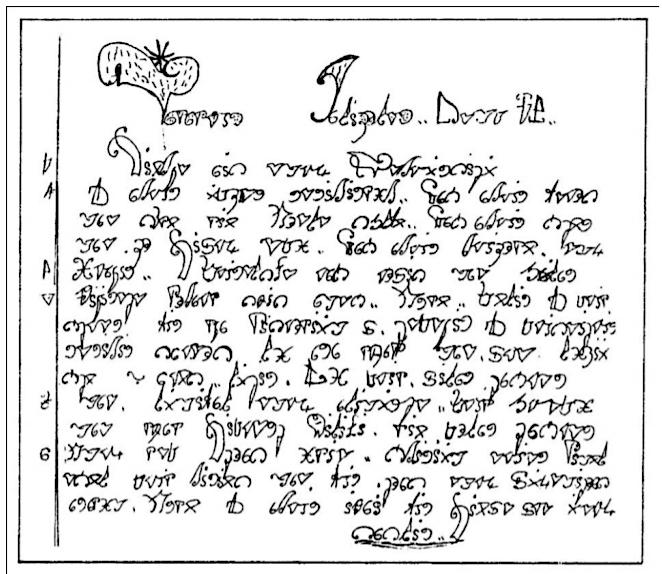
Not all the scripts included in the Atlas are alphabets — “some are abjads, or abugidas, or syllabaries. A couple are even pictographic systems” — but all lack “official status in their country, state, or province” and “are not taught in government-funded schools.” All once enjoyed “widespread acceptance and use within their cultural and linguistic community,” but none do any longer, and though none are actually extinct, all suffer from endangerment as a consequence of their declining or emerging status (as well as, often, of “being dominated, bullied, ignored, or actively persecuted by another, more powerful culture”). You can explore the endangered languages by scrolling, zooming, and clicking the world map on the atlas’ front page.

Or you can browse them all, from Adlam to Zo, on an alphabetically ordered list — ordered, of course, by the Roman alphabet, but full of examples of writing systems that differ in many and often surprising ways from it. Take, for example, the African Ditema tsa Dinoko script, which allows the writer to express with not just shape but color. Developed between 2010 and 2015 to write southern Bantu languages, it takes its forms from southern African murals of the kind painted by Esther Mahlangu, whose BMW art car appears in the Atlas of Endangered Alphabets’ gallery. BMW might consider commissioning another one emblazoned with official Ditema tsa Dinoko letters. With promotion that snazzy, what writing system could possibly go extinct?
Related Content:
You Could Soon Be Able to Text with 2,000 Ancient Egyptian Hieroglyphs
Based in Seoul, Colin Marshall writes and broadcasts on cities, language, and culture. His projects include the book The Stateless City: a Walk through 21st-Century Los Angeles and the video series The City in Cinema. Follow him on Twitter at @colinmarshall or on Facebook.
Read More...How Dorothea Lange Shot, Migrant Mother, Perhaps the Most Iconic Photo in American History

When we visualize the Great Depression, we think first of one woman: Native American migrant worker Florence Owens Thompson. Few of us know her name, though nearly all of us know her face. For that we have another woman to thank: the photographer Dorothea Lange who during the Depression was working for the United States federal government, specifically the Farm Security Administration, on “a project that would involve documenting poor rural workers in a propaganda effort to elicit political support for government aid.”
That’s how Evan Puschak, better known as the Nerdwriter, puts it in a video essay on Lange’s famous 1936 photo of Thompson, Migrant Mother. (For best results, view the video below on a phone or tablet rather than on a standard computer screen.) Reaching the migrant workers’ camp in Nipomo, California where Thompson and her children were staying toward the end of another long day of photography, Lange at first passed it by.
Only about twenty miles later did she decide to turn the car around and see what material the 2,500 to 3,500 “pea pickers” there might offer. She stayed only ten minutes, but in that time captured what Puschak calls the photograph that “came to define the Depression in the American consciousness” — it even heads the Great Depression’s Wikipedia page — and “became the archetypal image of struggling families in any era.”
Over time, Migrant Mother has also become “one of the most iconic pictures in the history of photography.” But Lange didn’t get it right away: it was actually the sixth portrait she took of Thompson, each one more powerful (and more able to “evoke sympathy from voters that would translate into political support”) than the last. Puschak takes us through each of these, marking the changes in composition that led to the photograph we can all call to mind immediately. “A lesser photographer would have milked the children’s faces for their sympathetic potential,” for instance, but having them turn away “communicates that message of family” without “taking away from the central face, or the eyes, which seem at last to let down their guard as they search the distance and worry.”
These and other actively made choices (including the removal of Thompson’s distracting left thumb in the darkroom) mean that “there is very little spontaneous in this iconic image of so-called documentary photography,” but “whether that diminishes its power is up to you. For me, being able to actually see the steps of Lange’s craft enhances her work.” Whatever Lange’s process, the product defined an era, and upon publication convinced the government to send 20,000 pounds of food to Nipomo — though by that point Thompson herself, who ultimately succeeded in providing for her family and lived to the age of 80, had moved on.
Related Content:
478 Dorothea Lange Photographs Poignantly Document the Internment of the Japanese During WWII
Yale Launches an Archive of 170,000 Photographs Documenting the Great Depression
Found: Lost Great Depression Photos Capturing Hard Times on Farms, and in Town
Edward Hopper’s Iconic Painting Nighthawks Explained in a 7‑Minute Video Introduction
Based in Seoul, Colin Marshall writes and broadcasts on cities, language, and culture. His projects include the book The Stateless City: a Walk through 21st-Century Los Angeles and the video series The City in Cinema. Follow him on Twitter at @colinmarshall or on Facebook.
Read More...Monty Python’s Best Philosophy Sketches: “The Philosophers’ Football Match,” “Philosopher’s Drinking Song” & More
From dead parrots to The Meaning of Life, Monty Python covered a lot of territory. Educated at Oxford and Cambridge, the Pythons made a habit of weaving arcane intellectual references into the silliest of sketches. A classic example is “Mrs. Premise and Mrs. Conclusion Visit Jean-Paul Sartre,” (above) from episode 27 of Monty Python’s Flying Circus.
The sketch features writing partners John Cleese as Mrs. Premise and Graham Chapman as Mrs. Conclusion, gabbing away in a launderette about how best to put down a budgie. Mrs. Premise suggests flushing it down the loo. “Ooh! No!” protests Mrs. Conclusion. “You shouldn’t do that. No that’s dangerous. Yes, they breed in the sewers, and eventually you get evil-smelling flocks of huge soiled budgies flying out of people’s lavatories infringing their personal freedom.”
From there the conversation veers straight into Jean-Paul Sartre’s The Roads to Freedom. It’s a classic sketch–vintage Python–and you can read a transcript here while watching it above.
Another classic is the “Philosopher’s Drinking Song,” shown above in a scene from Monty Python Live at the Hollywood Bowl. The song was written and sung by Eric Idle. In the sketch, members of the philosophy department at the “University of Woolloomooloo” lead the audience in singing, “Immanuel Kant was a real pissant who was very rarely stable; Heidegger, Heidegger was a boozy beggar who could think you under the table…”
And one of our favorites: “The Philosophers’ Football Match” (above), a filmed sequence from Monty Python Live at the Hollywood Bowl, pitting the Ancient Greeks against the Germans, with Confucius as referee. The sketch was originally broadcast in 1972 in a two-part West German television special, Monty Python’s Fliegender Zirkus.
When you’re done laughing, you can dive deep into philosophy here with our collection of 75 Free Philosophy Courses online.
If you would like to support the mission of Open Culture, consider making a donation to our site. It’s hard to rely 100% on ads, and your contributions will help us continue providing the best free cultural and educational materials to learners everywhere. You can contribute through PayPal, Patreon, and Venmo (@openculture). Thanks!
Note: An earlier version of this post appeared on our site in November 2011.
Related Content:
John Cleese’s Philosophy of Creativity: Creating Oases for Childlike Play
Read More...CBGB’s Heyday: Watch The Ramones, The Dead Boys, Bad Brains, Talking Heads & Blondie Perform Live (1974–1982)
There are, I guess, still many things people can do these days to tap into the legacy of CBGB, but I wouldn’t recommend going near most of them. The merchandising empire (do, however, new parents, get your tot a CBGB bib and onesie); the “thuddingly banal” 2013 film version, which… the less said about the better; yes, and CBGB, the restaurant, in the Newark Airport Terminal C—proceed at your own risk.
We must sadly also mention this past summer’s “Potemkin village from hell,” a pop-up “TRGT” shop for the grand opening of the East Village’s new Target at 14th St. and Avenue A. This abomination—which sold CBGB-styled “TRGT” shirts and proffered Target-branded Band-Aids (get it? Bands) sent “Vanishing New York” blogger Jeremiah Moss into “a state of confusion and dysphoria… to see the artifacts of my own life, my cultural and spiritual awakening, my home, displayed above the cash registers in a Target store.”
One cannot get too upset. The venue had been in a decline for a long time. The best of grassroots American culture all ends up in a Target or Starbucks eventually, gets green lit for a biopic and turned into an interactive gallery. At least the CBGB building was added to the National Register of Historic Places in 2013. Maybe a boost for the sales of John Varvatos who moved a store into the former club in 2007, the very same year CBGB’s founder Hilly Kristal died of lung cancer.
Ever-tasteful New York Post announced the takeover with the headline Hobo Goes Haute. “All of Manhattan has lost its soul to money lords,” said Dead Boys guitarist Cheetah Chrome. Twelve years later, the lament seems understated. But time moves on and so should we, the CBGB of the past was a moment in history never to be seen again, as fervid and fertile as late 19th century Symbolism or the Beats—movements that just happened to have very much influenced New York punk.
Like the life and work of Arthur Rimbaud or William S. Burroughs, the only way to commune with the legend of CBGB is through its primary sources. There is no shortage. Recordings, photographs, interviews, and much excellent live footage of the bands that made the T‑shirt famous in the years of punk rock’s glory: The Dead Boys and The Ramones in 1977, Bad Brains, inventing hardcore, in 1982, a very awkward Talking Heads and confident Blondie playing the Velvet Underground all the way back in 75….
Turning cultural moments into monuments and merchandise is shallow, of course, but it’s more than that—it’s impoverishing. It makes us think we understand something without ever having seen it. It’s not enough to know that it happened, we should know how it happened. How was the edgy electrified disco stomper “Psycho Killer” once a rickety, “tense and nervous” acoustic strummer? How did The Dead Boys’ Stiv Bators from Cleveland more or less invent the moves front men and women in punk almost universally adopted? How did Washington DC’s Bad Brains break every unspoken rule of punk—with complex breakdowns, tempo shifts, and shredding solos—yet still conquer every punk stage? How did the Ramones play entire live sets shorter than some of the single songs certain other bands played onstage at the time? How was it to witness Blondie as a killer live covers act? How was it to see The Ramones play “Judy is a Punk” in 1974?
Forget the graveyard of CBGB kitsch out there. If you’re interested in punk rock as a cultural phenomenon, you owe it to yourself to see as much of this historic footage as possible, and to listen to as many live recordings of far-too-often unsung CBGB bands like Television. And if you were there, condolences. Maybe you owe it to the rest of us to tell how it really was.
Related Content:
AC/DC Plays a Short Gig at CBGB in 1977: Hear Metal Being Played on Punk’s Hallowed Grounds
Josh Jones is a writer and musician based in Durham, NC. Follow him at @jdmagness
Read More...Artificial Intelligence Brings Salvador Dalí Back to Life: “Greetings, I Am Back”
Whatever Hippocrates meant when he said “art is long, life is short,” we usually take the saying to illustrate one indisputable medical truth and one more philosophical: everyone dies, but art lives for hundreds, thousands, of years—and may in some sense be a kind of immortality for the artist. This was probably what Salvador Dalí meant when he said, “Si muero, no muero por todo”—“If I die, I won’t completely die.” But maybe he knew he’d return one day in another form as well.
What if artists could go on living forever alongside their work? Or be called up any time we want to have a conversation. Long a staple of science fiction, hologram technology can now bring back famous pop stars, to varying degrees of uncanniness. It has not, until now, summoned a deceased famous artist. But as long as there’s an extensive audio-visual record with which to reconstruct the celebrated dead, it can be done, and now it has. You can see the results yourself in the video trailers here.
Among modern artists, only Andy Warhol left a more complete record of his public persona. The hologram Dalí—according to a press release from Dalí Museum in St. Petersburg, Florida, who will debut him in person, so to speak, this coming April—comes alive through the work of an algorithm that maps information culled from “hundreds of interviews, quotes, and existing archival footage” onto the body of an actor of similar size and build. Dalí’s conversation is not spontaneous but constructed from his own writings and reenacted. It’s not the stuff of Star Trek yet, but maybe a significant step in that direction.
“Greetings,” purrs Dalí in the trailer at the top, from the Dalí Museum in St. Petersburg, Florida. “I am Salvador Domingo Felipe Jacinto Dalí i Domènech. And I am back.” Visitors to the Dalí Museum will see the ersatz Dalí in “Dalí Lives” and “experience his bigger-than-life personality in an up close and personal way.” Will they truly “get the unique opportunity to learn more about Salvador Dalí’s life and work from the person who knew him best: Dalí himself”? Will they feel like it’s worth the price of the ticket, at least?
It certainly seems convincing. If you had told me these clips came from actual interview footage, I might have believed you. Except for the part about him returning from the dead after 30 years. If, however, it were possible to really bring Dalí’s consciousness back online, I doubt he’d be particularly surprised. Though he confesses his fear of death in the short video above, he also tells us, “I do not believe in my death.” Or as he once said elsewhere, “I believe in general death but not the death of Dalí absolutely not. I believe in my death becoming almost impossible.” Or as he might also have put it, “art is long, and so am I.”
via Boing Boing
Related Content:
Walk Inside a Surrealist Salvador Dalí Painting with This 360º Virtual Reality Video
Salvador Dalí Figurines Let You Bring the Artist’s Surreal Paintings Into Your Home
Josh Jones is a writer and musician based in Durham, NC. Follow him at @jdmagness
Read More...Support Us
We're hoping to rely on loyal readers, rather than erratic ads. Please click the Donate button and support Open Culture. You can use Paypal, Venmo, Patreon, even Crypto! We thank you!

About Us

Open Culture scours the web for the best educational media. We find the free courses and audio books you need, the language lessons & educational videos you want, and plenty of enlightenment in between.
Advertise With Us

FREE UPDATES!
GET OUR DAILY EMAIL
Get the best cultural and educational resources on the web curated for you in a daily email. We never spam. Unsubscribe at any time.
FOLLOW ON SOCIAL MEDIA

Open Culture editor Dan Colman scours the web for the best educational media. He finds the free courses and audio books you need, the language lessons & movies you want, and plenty of enlightenment in between.
Advertise With Us

