Watch Black Panther For Free in Theaters, Starting This Friday
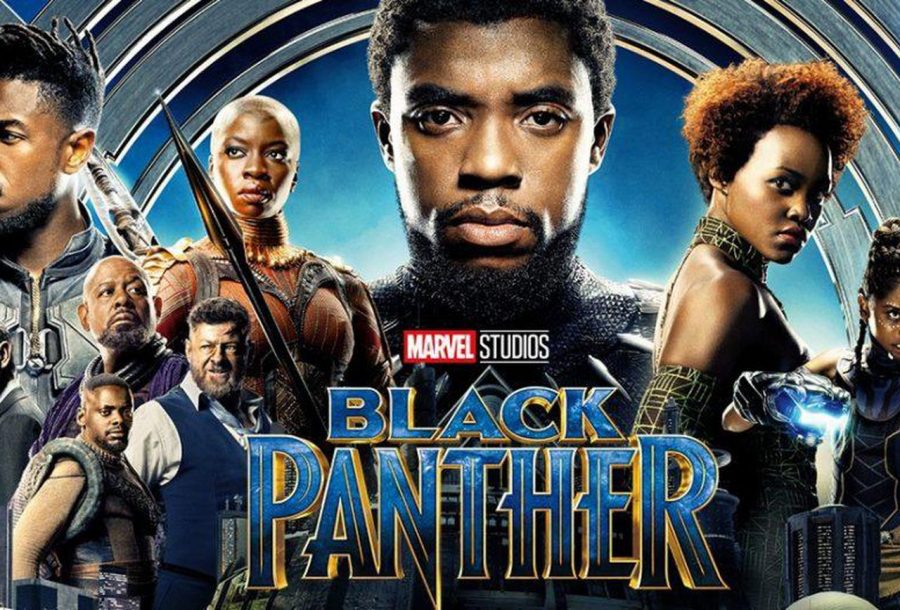
FYI. Earlier this week, Disney announced that the Academy Award-nominated film Black Panther “will return to the big screen to celebrate Black History Month for a one-week engagement, February 1–7, at 250 participating AMC Theatres locations. To ensure that the movie is accessible to all, tickets are free for everyone, and there will be two showings per day at each participating theater.” To find a list of participating theaters, just click here.
If you would like to support the mission of Open Culture, consider making a donation to our site. It’s hard to rely 100% on ads, and your contributions will help us continue providing the best free cultural and educational materials to learners everywhere. You can contribute through PayPal, Patreon, and Venmo (@openculture). Thanks!
Related Content:
Every Spider-Man Movie and TV Show Explained By Kevin Smith
Read More...Watch the Meditative Cinepoem “H20”: A Landmark Avant-Garde Art Film from 1929
We all stand to benefit from a bit of hydrotherapy, but in these hectic, trying times, it’s challenging to find the time for a bath, let alone come up with the dough for a tropical vacation or soothing spa experience.
Given the circumstances, the nearly hundred-year-old experimental film above may be your best option.
In 1929, photograher and filmmaker Ralph Steiner turned his camera on a number of watery subjects—hydrants, waterfalls, streams, raindrops disturbing placid puddled surfaces.…
The result was H20, an 11-and-a-half minute cinepoem, considered by film historians, The New York Times noted in Steiner’s obit, to be “the second American art film.”
(Have a look at James Sibley Watson and Melville Webber’s impressionistic 1928 adaptation of Poe’s The Fall of the House of Usher if you’re curious about the first.)
Photoplay magazine bestowed its first prize for amateur filmmaking upon H20, praising Steiner’s pure abstract patterns and astonishing tempo, and gushing that “the picture is bound to attract wide attention and a great deal of discussion wherever it is shown.”
He revisited the subject two years later with Surf and Seaweed, above, though his fascination with movement was not limited to the natural world, as evidenced by 1930’s Mechanical Principles.
The hubbub may have died down a bit in the 90 years since H20’s release, though Steiner’s spirit lives on in a number of young experimental filmmakers—witness Norbert Shieh’s award-winning Washes, Dave Krunal’s Waterbomb, and Jaden Chen’s A Cup of Water, below.
H2O has been preserved for posterity by the Library of Congress’ United States National Film Registry. The original piano score in the version featured on Open Culture was composed by William Pearson.
Download a free copy of H20 from the Internet archive for use in future trying times.
Steiner’s films will be added to our collection, 4,000+ Free Movies Online: Great Classics, Indies, Noir, Westerns, Documentaries & More
Related Content:
The First Avant Garde Animation: Watch Walter Ruttmann’s Lichtspiel Opus 1 (1921)
Man Ray and the Cinéma Pur: Watch Four Groundbreaking Surrealist Films From the 1920s
The Hearts of Age: Orson Welles’ Surrealist First Film (1934)
Ayun Halliday is an author, illustrator, theater maker and Chief Primatologist of the East Village Inky zine. See her onstage in New York City in February as host of Theater of the Apes book-based variety show, Necromancers of the Public Domain. Follow her @AyunHalliday.
Read More...The 1959 Project: A New Photoblog Takes a Day-By-Day Look at 1959, the Great Watershed Year in Jazz
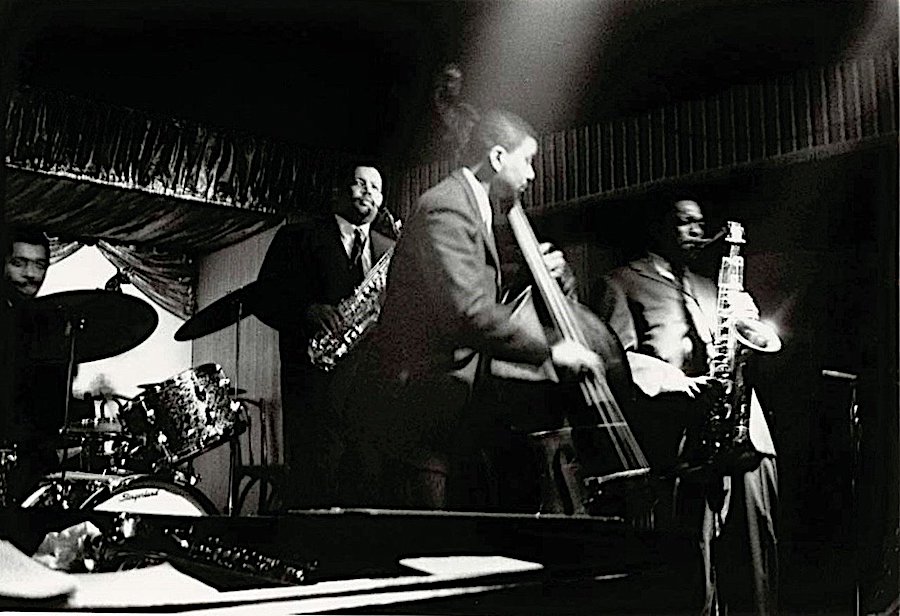
If you’ve hung around Open Culture long enough, you’ve heard said that 1959 was a watershed year for jazz—the year of modal classics Giant Steps and Kind of Blue, “harmolodic” masterpiece The Shape of Jazz to Come, and the forever cool Time Out and Mingus Ah Um. Sixty years later in 2019, these experiments and confident leaps forward continue to mark pivotal moments in modern music—moments documented heavily by the photographers who gave the albums their inimitable look.
To celebrate that year in musical breakthroughs and photographic near-perfection, sportswriter and jazz history “superfan” Natalie Weiner has launched a blog called The 1959 Project. “The premise is simple,” writes Tim Carmody at Kottke, “every day, a snapshot of the world of jazz sixty years ago.” Simple it may be, but its dive into jazz history is deep and satisfying. The project has already occasionally strayed outside the lines, posting materials from 1958 and 1960. But great moments in music history cannot be forced to fit tidily inside calendar years.
In addition to iconic photos, Weiner posts short summaries, news clippings, film and television clips, and recordings from albums like Milt Jackson and John Coltrane’s Bags & Trane (1960). Yesterday’s post focused on Max Roach’s 1959 The Many Sides of Max (see him in the studio with Booker Little at the top). January 18th brought us Jackie McLean’s Jackie’s Bag, recorded 1959, released 1960, featuring Donald Byrd, Sonny Clark, Paul Chambers, and Philly Jones, and made for Blue Note by the great Rudy Van Gelder.
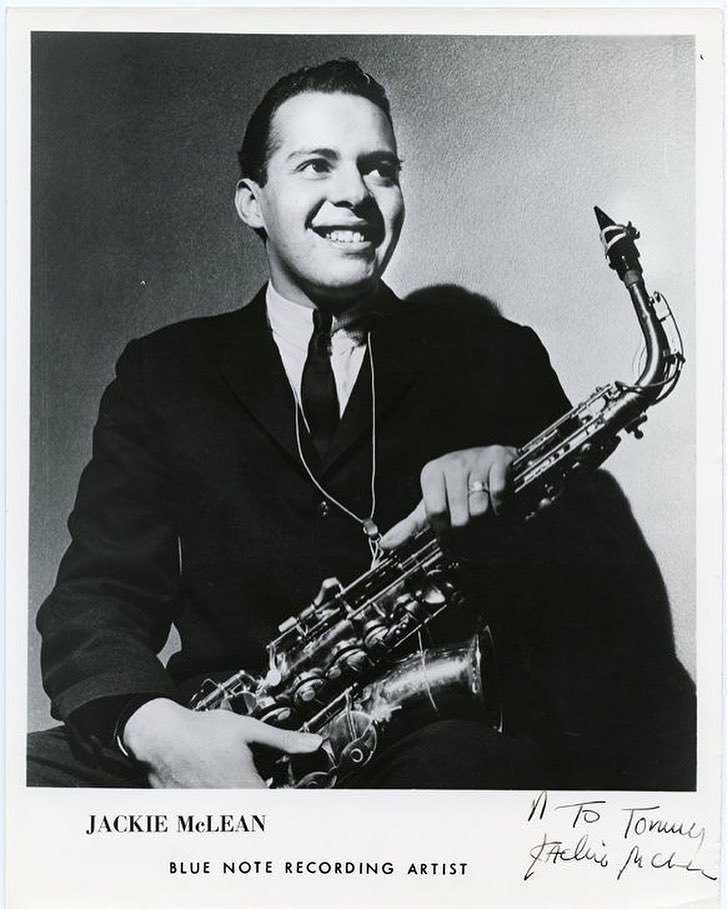
Only twenty-three days into the year and The 1959 Project has already covered Kenny Dorham and Cannonball Adderley, Bill Evans, Charles Mingus (for 1958’s live Jazz Portraits), and singer Anita O’Day, riding “a wave of critical and commercial success” after her 1958 album Anita O’Day at Mister Kelly’s. That’s only to mention a handful of the entries so far. “It only promises to get better as the year goes on,” Carmody writes—and so does the depth of your jazz knowledge and appreciation if you check in with this dedicated project even once or twice a week.
Related Content:
1959: The Year That Changed Jazz
Josh Jones is a writer and musician based in Durham, NC. Follow him at @jdmagness
Read More...Oodles of Classic Doctor Who Episodes Streaming Free Online This Month
A quick fyi: This month, Twitch is presenting a marathon streaming of classic Doctor Who episodes. Continuing through January 25th, they plan to broadcast “11 to 12 hours of new episodes per day (~27 episodes), repeating once so you can catch Doctor Who nearly 24 hours a day, every day…” Stream the episodes right above, or here on Twitch.
If you would like to support the mission of Open Culture, consider making a donation to our site. It’s hard to rely 100% on ads, and your contributions will help us continue providing the best free cultural and educational materials to learners everywhere. You can contribute through PayPal, Patreon, and Venmo (@openculture). Thanks!
Related Content:
30 Hours of Doctor Who Audio Dramas Now Free to Stream Online
The Fascinating Story of How Delia Derbyshire Created the Original Doctor Who Theme
Read More...Stephen Fry Narrates Two Animated Videos Explaining How Fear, Loathing & Misinformation Drove the Brexit Campaign
For millions watching in the UK and around the world, anticipating the looming Brexit deadline over the past two years has been like watching the slowest train wreck in history. But for those not following the coverage daily, the impending UK secession from the European Union is mystifying. Just how many trains are there, and where are they coming from, and how fast, exactly, are they going?
From the future of food and drug imports, to the status of the “currently invisible” border between Northern Ireland and the Republic of Ireland, to all of the legal minutiae no one mentioned during the campaign, the consequences of the recent failure of a Brexit deal could be disastrous. Were “leave” campaigners honest in their sale of Brexit to the voters? Did they have any idea how such a thing would work? Ample evidence shows the answer to both questions is an unqualified No.
The Vote Leave campaign director now describes the referendum as a “dumb idea.” Wealthy UK residents, including many a Brexit politician, are fast moving their assets out of the country. So how did Brexit get sold to voters if it’s such a potential catastrophe? The usual methods worked quite well, Stephen Fry explains in the video above.
By stoking xenophobic fears over migrants and refugees, Brexiteers, he says, created “false assumptions about the EU, some very dark, and some comical.” They were assisted in conjuring a “mythical EU dragon” by tabloid journalists who called migrants “cockroaches” and “feral humans.” Rhetoric indistinguishable from Nazi propaganda drove a spike in hate crimes on both sides of the Atlantic.
Despite the insistence of many voters that their choice was not driven by racial animus, the Brexit campaign, like the Trump campaign, Fry says above, undeniably was. The consequences of these votes for migrant workers and refugees speak for themselves. In the UK, Theresa May’s “hostile environment” policies have deprived British citizens from migrant families of livelihoods and safety. Some have faced threats of deportation, a situation similar to that facing the children of Vietnam War refugees in the US.
Fry calls for identifying a “new enemy” of the people: misleading information like the false claim that the NHS would save 350 million pounds a week after Brexit and the repeated lies in the U.S. about undocumented immigrants, crime, and terrorism. “Perception of crime levels,” he says, “has become completely detached from reality,” especially since the biggest security threats come from hate crimes and right-wing violence, a situation reported on, warned about, and ignored, for several years.
As in the US, so in the UK: relentlessly repeated claims about “invasions” has created a very hostile environment for millions of people. Are the facts likely to sway those voters who were carried away by excesses of hate and fear? Probably not. But those who care about the truth should pay attention to Fry’s debunking. The facts about immigration and other issues used to sell far right policies and politicians, as he outlines in these videos, are entirely different than what Brexit leaders and their counterparts in the US want the public to believe.
Related Content:
Brexit 101: The UK’s Stunning Vote Explained in 4 Minutes
Josh Jones is a writer and musician based in Durham, NC. Follow him at @jdmagness
Read More...Making Sense of White Paintings: A Short Art History Lesson on Minimalism and the All-White Painting
“I could do that” goes the refrain of philistines at modern art galleries, sometimes followed by a “Hell, my dog/cat/baby/elephant could do that!” Sophisticates smirk knowing smirks. Oh no, sir or madam, they most certainly could not. But maybe everyone, at some level, comes across Agnes Martin’s White Stone or Jo Baer’s Untitled (White Square Lavender) and thinks it looks like someone “just took a tube of white paint and spread it on a canvas.”
It’s tempting to imagine, notes Vox in the explainer video above, but “it’s not actually that easy.”
Oh, really? Enlighten us…. Why exactly did Robert Ryman’s all-white painting Bridge sell for $20.6 million dollars? This question may be answered in another video. Here, we get a little bit of art history—on the origins of the all-white painting in the minimalism of Kazimir Malevich (he preferred to call it “Suprematism”) and the development of Minimalism, capital “M.”
Elisabeth Sherman, assistant curator at the Whitney Museum in New York says that “white isn’t ever a pure thing, white is always tinted in some way.” Of course we know this, she acknowledges, because we’ve marveled at the dozens of shades of white in the paint section of the hardware store. Attend to the subtle gradations of white, from warm to cool, and the range of textures, lines, patterns, shapes, and “subtle intricacies,” and the all-white painting begins to reveal itself as an almost living, breathing thing rather than a piece of decorative drywall.
Art historically, the variety of white paintings came about principally in the 50s as a response to Abstract Expressionism’s emotional excesses and the outsized gestural personalities of De Kooning and Pollock. Artists like Bauhaus alum Josef Albers and Minimalist purist Frank Stella proposed that “the art object” should “be as far removed from the author as possible.” No greater an attack could be launched on the idea of art as personal expression than the all-white painting.
This tendency toward total abstraction—reducing art to fields of color, non-color, and simple shapes—has made a lot of people very upset. Vox includes several clips of “men getting angry” at Minimalist art. The word “pretentious” pops up a lot. The all-white painting has even inspired a play, Yasmina Reza’s Art, about “a group of lifelong friends who are torn apart when one of them buys an all-white painting for $200,000.”
As for “I could do that”… in nearly every show she’s worked on in her career as a curator, Sherman remarks, “someone has said that.” Well, she says, yes, maybe you could. “But you didn’t.” So there. If looking at an all-white painting (or an all-black painting) makes you feel angry, annoyed, or dismissive, maybe, she says, try and get beyond that first impression and engage with the subtleties of the work. And maybe don’t ask how much the museum paid for it.
Related Content:
Harvard Puts Online a Huge Collection of Bauhaus Art Objects
Watch At the Museum, MoMA’s 8‑Part Documentary on What it Takes to Run a World-Class Museum
Josh Jones is a writer and musician based in Durham, NC. Follow him at @jdmagness
Read More...An Animated History of Cats: How Over 10,000 Years the Cat Went from Wild Predator to Sofa Sidekick
Dogs sees us as their masters while cats sees us as their slaves. — Anonymous
The next time your friend’s pet cat sinks its fangs into your wrist, bear in mind that the beast is probably still laboring under the impression that it’s guarding the granaries.
Anthropologist Eva-Maria Geigl’s animated Ted-Ed Lesson, The History of the World According to Cats, above, awards special recognition to Unsinkable Sam, a black-and-white ship’s cat who survived three WWII shipwrecks (on both Axis and Allied sides).
It’s a cute story, but as far as directing the course of history, Felis silvestris lybica, a subspecies of wildcat that can be traced to the Fertile Crescent some 12,000 years ago, emerges as the true star.
In a Neolithic spin of “The Farmer in the Dell,” the troughs and urns in which ancient farmers stored surplus grain attracted mice and rats, who in turn attracted these muscular, predatory cats.
They got the job done.
Human and cats’ mutually beneficial relationship spelled bad news for the rodent population, but survival for today’s 600-million-some domestic cats, whose DNA is shockingly similar to that of its prehistoric ancestors.
Having proved their value to the human population in terms of pest control, cats quickly found themselves elevated to welcome companions of soldiers and sailors, celebrated for their ability to knock out rope-destroying vermin, as well as dangerous animals on the order of snakes and scorpions.
Thusly did cats’ influence spread.
Bastet, the Egyptian goddess of domesticity, women’s secrets, fertility, and childbirth is unmistakably feline.
Cats draw the chariot of Freya, the Norse goddess of love.
Their popularity dipped briefly in the Late Middle Ages, when humankind mistakenly credited cats as the source of the plague. In truth, that scourge was spread by rodents, who ran unchecked after men rounded up their feline predators for a gruesome slaughter.
Nowadays, a quick glimpse at Instagram is proof enough that cats are back on top.
(Yes, you can haz cheezburger with that.)
Dogs may see our service to them as proof that we are gods, buts cats surely interpret the feeding and upkeep they receive at human hands as evidence they are the ones to be worshipped.
Related Content:
Edward Gorey Talks About His Love Cats & More in the Animated Series, “Goreytelling”
What Happens When a Cat Watches Hitchcock’s Psycho
Ayun Halliday is an author, illustrator, theater maker and Chief Primatologist of the East Village Inky zine. See her onstage in New York City January 14 as host of Theater of the Apes book-based variety show, Necromancers of the Public Domain. Follow her @AyunHalliday.
Read More...Bill Gates, Book Critic, Names His Top 5 Books of 2018
Before we get too far into 2019, let’s quickly recap the five books that made it to the top of Bill Gates’ reading list in 2018. Over on his blog, Gates Notes, the Microsoft co-founder offers up these picks. He writes:
Educated, by Tara Westover. Tara never went to school or visited a doctor until she left home at 17. I never thought I’d relate to a story about growing up in a Mormon survivalist household, but she’s such a good writer that she got me to reflect on my own life while reading about her extreme childhood. Melinda and I loved this memoir of a young woman whose thirst for learning was so strong that she ended up getting a Ph.D. from Cambridge University. [More here.]
Army of None, by Paul Scharre. Autonomous weapons aren’t exactly top of mind for most around the holidays, but this thought-provoking look at A.I. in warfare is hard to put down. It’s an immensely complicated topic, but Scharre offers clear explanations and presents both the pros and cons of machine-driven warfare. His fluency with the subject should come as no surprise: he’s a veteran who helped draft the U.S. government’s policy on autonomous weapons. [More here.]
Bad Blood, by John Carreyrou. A bunch of my friends recommended this one to me. Carreyrou gives you the definitive insider’s look at the rise and fall of Theranos. The story is even crazier than I expected, and I found myself unable to put it down once I started. This book has everything: elaborate scams, corporate intrigue, magazine cover stories, ruined family relationships, and the demise of a company once valued at nearly $10 billion. [More here.]
21 Lessons for the 21st Century, by Yuval Noah Harari. I’m a big fan of everything Harari has written, and his latest is no exception. While Sapiens and Homo Deus covered the past and future respectively, this one is all about the present. If 2018 has left you overwhelmed by the state of the world, 21 Lessons offers a helpful framework for processing the news and thinking about the challenges we face. [More here.]
The Headspace Guide to Meditation and Mindfulness, by Andy Puddicombe. I’m sure 25-year-old me would scoff at this one, but Melinda and I have gotten really into meditation lately. The book starts with Puddicombe’s personal journey from a university student to a Buddhist monk and then becomes an entertaining explainer on how to meditate. If you’re thinking about trying mindfulness, this is the perfect introduction. [More here.]
Find other Gates picks from previous seasons in the Relateds below.
If you would like to support the mission of Open Culture, consider making a donation to our site. It’s hard to rely 100% on ads, and your contributions will help us continue providing the best free cultural and educational materials to learners everywhere. You can contribute through PayPal, Patreon, and Venmo (@openculture). Thanks!
Related Content:
Bill Gates Names 5 Books You Should Read This Summer
Bill Gates Recommends Five Books for Summer 2017
5 Books Bill Gates Wants You to Read This Summer (2016)
Bill Gates, Book Critic, Names His Top 5 Books of 2015
Read More...11,000 Digitized Books From 1923 Are Now Available Online at the Internet Archive
Whether your interest is in winning arguments online or considerably deepening your knowledge of world cultural and intellectual history, you will be very well-served by at least one government agency from now into the foreseeable future. Thanks to the expiration of the so-called “Micky Mouse Protection Act,” the U.S. Copyright Office will release a year’s worth of art, literature, scholarship, photography, film, etc. into the public domain, starting with 1923 this year then moving through the 20th century each subsequent year.
And thanks to the venerable online institution the Internet Archive, we already have almost 11,000 texts from 1923 in multiple digital formats, just a click or two away.
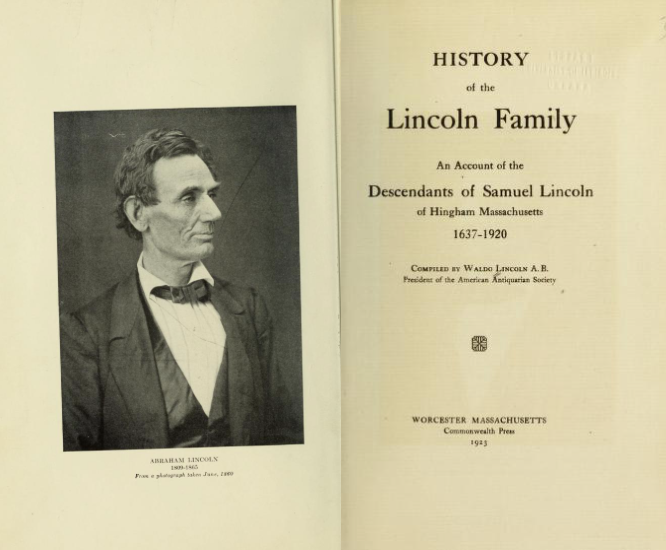
A cursory survey produced Wm. A. Haussmann’s translation of Nietzsche’s The Birth of Tragedy, Arthur Stanley Eddington’s The Mathematical Theory of Relativity, Waldo Lincoln’s History of the Lincoln Family, covering the President’s ancestors and descendants from 1637 to 1920…
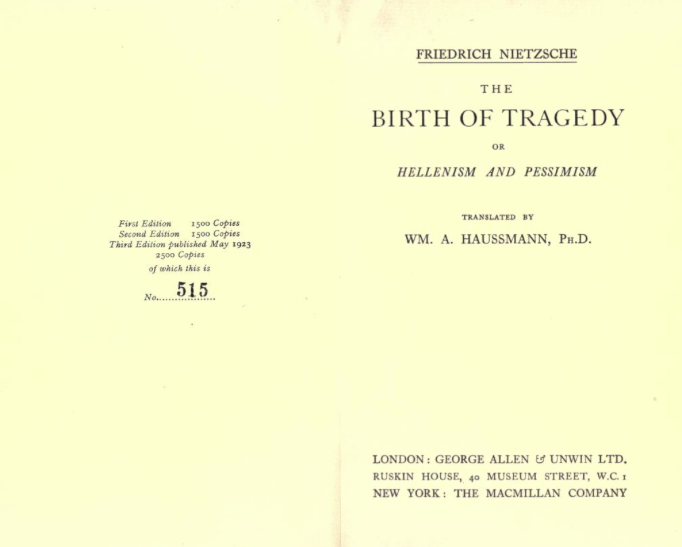
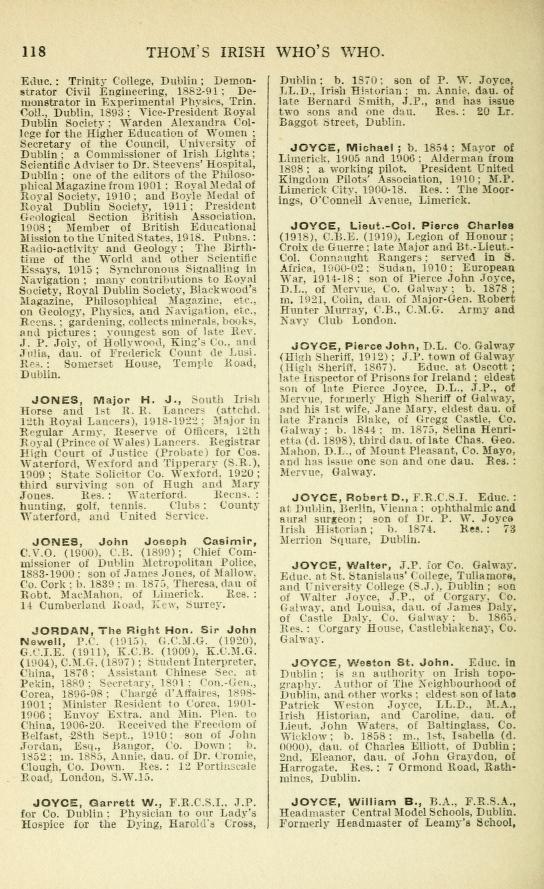
…Lynn Thorndike’s A History of Magic and Experimental Science, Volume I, Chandra Chakraberty’s An Interpretation of Ancient Hindu Medicine, Edward McCurdy’s translations of Leonardo da Vinci’s Notebooks, Nandal Sinha’s translation of The Vaisesika Sutras of Kanada, Winston Churchill’s The World Crisis, Henry Adams Bellows’ translation of The Poetic Edda, a collection of Mussolini’s political speeches from 1914–1923, and Thom’s Irish Who’s Who, which catalogues “prominent men and women in Irish life at home and abroad,” but tellingly leaves out James Joyce, who had just published Ulysses, to some infamy, the previous year. (It does include William Butler Yeats.)
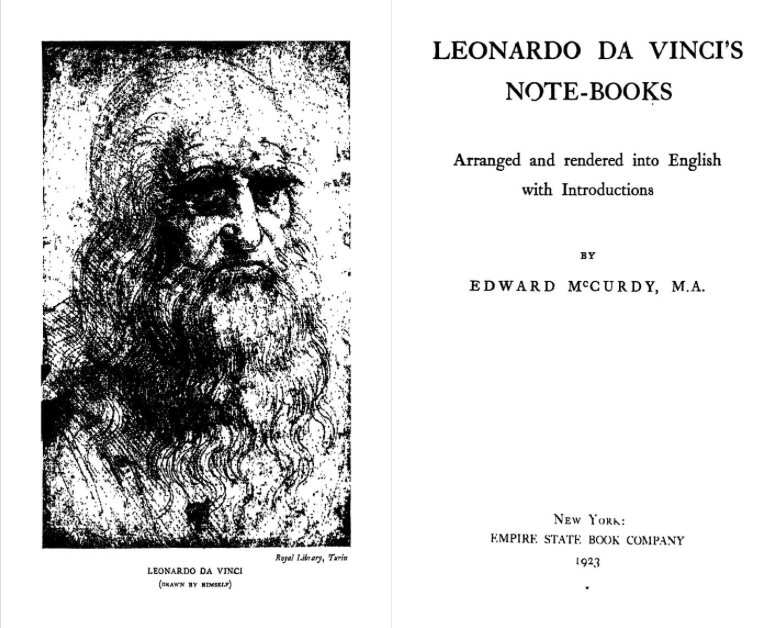
1923 turns out to have been a particularly rich literary year itself, with many of the 20th century’s finest writers publishing major and lesser-known works (see here and here, for example). Browsing and focused searching through the archive—by topic, collection, creator, and language—will net many a literary classic or overlooked gem by some famous author. But you’ll also find much in this enormous collection of digitized books that you would never think to look for, like browsing the shelves of a Borgesian university library with an entire wing devoted to the year 1923.
The Internet Archive homepage looks as modest as it does dedicated, listing all of its top collections rather than foregrounding the huge tranche of newly-available material (and counting) on the 1923 shelves. But founder Brewster Kahle does not mince words in describing its incredible importance. “We have shortchanged a generation,” he says, “The 20th century is largely missing from the internet” (in legally available form, that is). Now and in the coming years, thousands of its stories can be told by teachers, scholars, artists, and filmmakers with ever-broadening access to documentary history.
Related Content:
The Public Domain Project Makes 10,000 Film Clips, 64,000 Images & 100s of Audio Files Free to Use
Josh Jones is a writer and musician based in Durham, NC. Follow him at @jdmagness
Read More...Watch the Painstaking and Nerve-Racking Process of Restoring a Drawing by Michelangelo
We live in a disposable culture, but certain things warrant the time and effort of mending—good shoes, hearts, Michelangelo drawings…
The Metropolitan Museum of Art’s paper conservator Marjorie Shelley, above, had the nerve-wracking task of tackling the latter, in preparation for last year’s Michelangelo: Divine Draftsman and Designer exhibition.
The work in question, a two-sided sketch featuring designs for a monumental altar or facade, thought to be San Silvestro in Capite, Rome, arrived in sad condition.
The 16th-century linen and flax paper on which the precious renderings were made was stained with mold, and badly creased due to a poorly repaired tear and two long-ago attempts to mount it for easier viewing, one by the artist’s blind nephew and another by collector and biographer Filippo Baldinucci.
Like many restoration experts, Shelley exhibits extraordinary patience and nerves of steel. Identifying the damage and its cause is just the beginning. The hands-on portion of her work involves introducing solvents and moisture, both of which have the potential to further damage the delicate drawing. Even though she chooses the least invasive of tools—a tiny brush—to loosen the 500-year-old adhesive, one slip could spell disaster. It’s not just the drawing that’s of historical import. The well-intended mountings are also part of the narrative, and must be preserved as such.
As she explains above, a bedazzling Sistine Chapel-like makeover was neither possible nor preferable.
One wonders how many of the 702,516 visitors who attended the exhibition during its 3 month run noticed Shelley’s handiwork (or even the drawing itself, given the large number of other, sexier works on display).
Related Content:
The Art of Restoring a 400-Year-Old Painting: A Five-Minute Primer
Ayun Halliday is an author, illustrator, theater maker and Chief Primatologist of the East Village Inky zine. See her onstage in New York City this January as host of Theater of the Apes book-based variety show, Necromancers of the Public Domain. Follow her @AyunHalliday.
Read More...Support Us
We're hoping to rely on loyal readers, rather than erratic ads. Please click the Donate button and support Open Culture. You can use Paypal, Venmo, Patreon, even Crypto! We thank you!

About Us

Open Culture scours the web for the best educational media. We find the free courses and audio books you need, the language lessons & educational videos you want, and plenty of enlightenment in between.
Advertise With Us

FREE UPDATES!
GET OUR DAILY EMAIL
Get the best cultural and educational resources on the web curated for you in a daily email. We never spam. Unsubscribe at any time.
FOLLOW ON SOCIAL MEDIA

Open Culture editor Dan Colman scours the web for the best educational media. He finds the free courses and audio books you need, the language lessons & movies you want, and plenty of enlightenment in between.
Advertise With Us

