Make Orwell Fiction Again
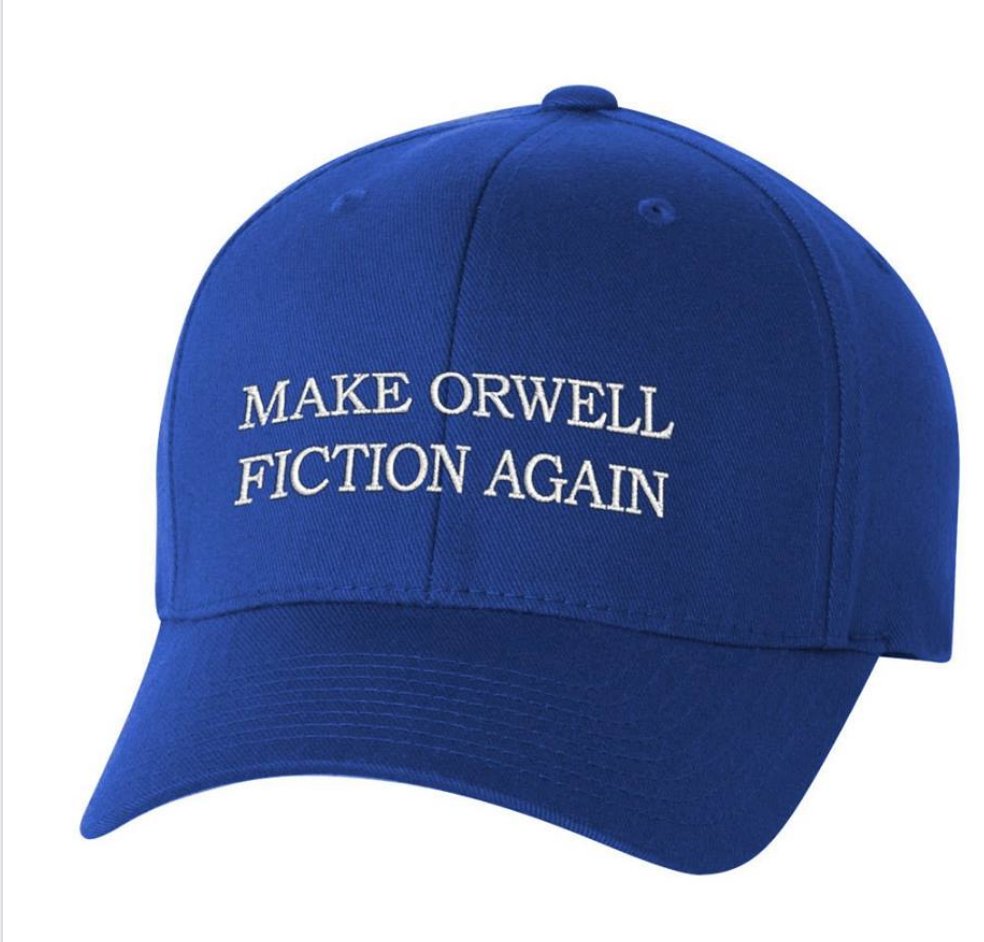
Amen to that. Get your hat or shirt here…
Related Content:
The Cover of George Orwell’s 1984 Becomes Less Censored with Wear and Tear
Read More...President Obama Names His Favorite Books, Movies & Songs of 2018
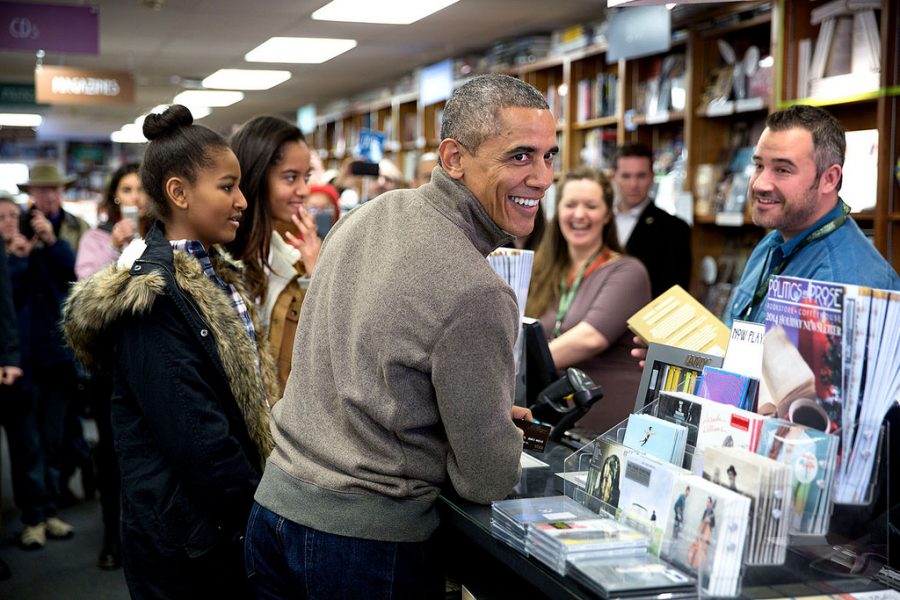
Photo by Pete Souza via obamawhitehouse.archive.gov
On Facebook this morning, President Obama wrote: “As 2018 draws to a close, I’m continuing a favorite tradition of mine and sharing my year-end lists. It gives me a moment to pause and reflect on the year through the books, movies, and music that I found most thought-provoking, inspiring, or just plain loved. It also gives me a chance to highlight talented authors, artists, and storytellers – some who are household names and others who you may not have heard of before. Here’s my best of 2018 list — I hope you enjoy reading, watching, and listening.” Note that you can hear all of the music on this Spotify playlist.
Books That Pres. Obama Read This Year:
Becoming by Michelle Obama (obviously my favorite!)
An American Marriage by Tayari Jones
Americanah by Chimamanda Ngozi Adichie
The Broken Ladder: How Inequality Affects the Way We Think, Live, and Die by Keith Payne
Educated by Tara Westover
Factfulness by Hans Rosling
Futureface: A Family Mystery, an Epic Quest, and the Secret to Belonging by Alex Wagner
A Grain of Wheat by Ngugi wa Thiong’o
A House for Mr Biswas by V.S. Naipaul
How Democracies Die by Steven Levitsky and Daniel Ziblatt
In the Shadow of Statues: A White Southerner Confronts History by Mitch Landrieu
Long Walk to Freedom by Nelson Mandela
The New Geography of Jobs by Enrico Moretti
The Return by Hisham Matar
Things Fall Apart by Chinua Achebe
Warlight by Michael Ondaatje
Why Liberalism Failed by Patrick Deneen
The World As It Is by Ben Rhodes
Favorite Books of 2018:
American Prison by Shane Bauer
Arthur Ashe: A Life by Raymond Arsenault
Asymmetry by Lisa Halliday
Feel Free by Zadie Smith
Florida by Lauren Groff
Frederick Douglass: Prophet of Freedom by David W. Blight
Immigrant, Montana by Amitava Kumar
The Largesse of the Sea Maiden by Denis Johnson
Life 3.0: Being Human in the Age of Artificial Intelligence by Max Tegmark
There There by Tommy Orange
Washington Black by Esi Edugyan
Favorite Movies of 2018:
Annihilation
Black Panther
BlacKkKlansman
Blindspotting
Burning
The Death of Stalin
Eighth Grade
If Beale Street Could Talk
Leave No Trace
Minding the Gap
The Rider
Roma
Shoplifters
Support the Girls
Won’t You Be My Neighbor
Favorite Songs of 2018
Apes••t by The Carters
Bad Bad News by Leon Bridges
Could’ve Been by H.E.R. (feat. Bryson Tiller)
Disco Yes by Tom Misch (feat. Poppy Ajudha)
Ekombe by Jupiter & Okwess
Every Time I Hear That Song by Brandi Carlile
Girl Goin’ Nowhere by Ashley McBryde
Historia De Un Amor by Tonina (feat. Javier Limón and Tali Rubinstein)
I Like It by Cardi B (feat. Bad Bunny and J Balvin)
Kevin’s Heart by J. Cole
King For A Day by Anderson East
Love Lies by Khalid & Normani
Make Me Feel by Janelle Monáe
Mary Don’t You Weep (Piano & A Microphone 1983 Version) by Prince
My Own Thing by Chance the Rapper (feat. Joey Purp)
Need a Little Time by Courtney Barnett
Nina Cried Power by Hozier (feat. Mavis Staples)
Nterini by Fatoumata Diawara
One Trick Ponies by Kurt Vile
Turnin’ Me Up by BJ the Chicago Kid
Wait by the River by Lord Huron
Wow Freestyle by Jay Rock (feat. Kendrick Lamar)
And in honor of one of the great jazz singers of all time, who died this year, a classic album: The Great American Songbook by Nancy Wilson
You can find all of these song neatly listed in a playlist here on Spotify.
If you would like to support the mission of Open Culture, consider making a donation to our site. It’s hard to rely 100% on ads, and your contributions will help us continue providing the best free cultural and educational materials to learners everywhere. You can contribute through PayPal, Patreon, and Venmo (@openculture). Thanks!
Related Content:
The Books on Barack Obama’s Summer Reading List: Naipaul, Ondaatje & More
Barack Obama Shares a List of Enlightening Books Worth Reading
The 5 Books on President Obama’s 2016 Summer Reading List
A Free POTUS Summer Playlist: Pres. Obama Curates 39 Songs for a Summer Day
Read More...Watch The Smiths Play Their Last Live Show (December 12th, 1986)
It couldn’t have lasted—a flame burning twice as bright, and so on. One of the best bands to emerge from the explosion of British new wave and post-punk in the 1980s, The Smiths built a template for thousands of mope-rock bands who followed. Longstanding animosity has meant that their brief time together contains their total legacy. No reunion shows or albums—despite rumors over the decades since they broke up in 1987; no ersatz version of the band, missing key members but limping ever on.
Live albums, compilations, and box sets may have appeared over the years, but they all contain music written, played, and recorded between 1982 and 1987, a period during which the songwriting duo of Morrissey and Marr had as much creative energy and purpose as any of the famous songwriting duos of twenty years earlier. Love them or hate them—there seem to be few people in-between—The Smiths’ importance to alternative and indie rock is inescapable.
Like many other hugely influential bands in popular music, the mythology can eclipse the complexities. Unmentioned in many a glowing account, for example, are the unsung onetime-members who played bass or guitar at points in the band’s short life—most significantly guitarist Craig Gannon, sometimes called the “fifth Smith.” Gannon played on such seminal hits as “Ask” and “Panic” before being let go from the band before they played their final concert, an Artists Against Apartheid benefit at London’s Brixton Academy on December 12th, 1986. See it above in a fan-recorded video.
Delayed after Marr was in a car accident, the concert shows them back to their core four lineup, reunited with fired, then rehired (then arrested) bass player, Andy Rourke. They play “Shoplifters of the World Unite” from their upcoming final album, 1987’s Strangeways, Here We Come; they play The Queen is Dead’s “Some Girls Are Bigger Than Others” for the first, and last, time live onstage; they end the night where they began, with their very first single, “Hand in Glove.” No one knew at the time that it would be their last gig, including the band.
They continued on for the next few months, recording, making TV appearances, and pondering a major label move. Differences personal, legal, and creative soon drove the four members apart. They have all continued to contribute significantly to the direction of alternative rock, as supporting players, superstar indie guitarists, and, well, Morrissey. We might wish for a more polished document of their last show, but so it is. Fans are extremely unlikely to ever get chance to see it happen again.
“Yes, time can heal,” wrote Morrissey in his often embittered autobiography. “But it can also disfigure. And surviving the Smiths is not something that should be attempted twice.” We should count ourselves lucky—those of us in the love-the-Smiths camp—that they survived as long as they did, producing jangly, gorgeous, snide, maudlin, and morbidly hilarious indie-pop gems from the very beginning to the very end of their maybe-perfectly-concise career.
See the full setlist below:
Ask
Bigmouth Strikes Again
London/Miserable Lie
Some Girls Are Bigger Than Others (only live performance)
The Boy With The Thorn In His Side
Shoplifters Of The World Unite
There Is A Light That Never Goes Out
Is It Really So Strange?
Cemetry Gates
This Night Has Opened My Eyes
Still Ill
Panic
/The Queen Is Dead
//William It Was Really Nothing
//Hand In Glove
Related Content:
The Fall’s Mark E. Smith’s (RIP) Creates a List of His Favorite Books, Films & Music, Circa 1981
Josh Jones is a writer and musician based in Durham, NC. Follow him at @jdmagness.
Read More...Every Spider-Man Movie and TV Show Explained By Kevin Smith
Look, I’ve never been a fan of Kevin Smith’s ooooooov-rah, per se, but I will never criticize his ability to spin a bloody good yarn. He’s funny, engaging, charming, and knows his pop culture. WIRED also knows this, so when on the eve of the (apparently very good) Spider-verse movie, they called on Smith to sit down and run through every Spider-man Movie and TV Show and opinionate all over that mess. (And because Sony’s contract with the Marvel superhero is up, this might be a nice demarcation line.)
I stepped on board the Spidey-train when he appeared as a character on PBS’ The Electric Company, the educational kids show that would screen after Sesame Street. As Smith points out, this Spidey was mute, a red and blue mime who only spoke in thought balloons, some of which others could literally read as they hung above his head.
Around the same time the ‘60s cartoon was also screening, copying the rogue’s gallery of villains well known from the Steve Ditko-Stan Lee comic book. Both this and the Electric Company Spideys had the best theme songs, and they still haven’t been topped. (If you’re a Gen‑X’er, you can drop the lyrics on request, anytime).
Now, before this, there had been a few live action attempts to bring the wall-crawler to the big screen but, well, they’re as cheesy and not-good as you might expect, so for the period during the ‘90s, Spider-man stayed an animated concern. The highlight of the ’94-’98 animated series, according to Smith, is the final meta episode, where Spider-man crosses over into “our” reality and meets Stan Lee, while Lee’s wife Joan played Madame Web.
Interestingly, Smith glosses over the three other animated series that have run since then because of the beginning of live-action Spider-man films made with the power and money of the modern blockbuster. (Interesting, I say, because critics are now declaring the new animated film the best of the bunch).
Smith isn’t wild about the first Sam Raimi film in 2002. He questions the decision to cover up emotive actor Willem Dafoe with a Green Goblin mask for the final battle. However, he not only likes the sequel, but calls it “one of the greatest superhero films ever made” because it never loses sight of the man behind the Spidey mask.
He chastises Sony for the needless 2012 reboot, just five years from the final film in the Raimi trilogy. His problem: Garfield’s Spider-man is great, his Peter Parker is not. The opposite is true with McGuire.
Finally, they got it right with Tom Holland’s version in Avengers: Civil War, that mix of geeky student by day, cocky quipster by night. Plus, as Smith points out, they gave him his Queens accent back. (Marvel comics, at least the first couple of years, was always entrenched in a real New York City as background.)
“The real charm of that character…is that he’s covered from head-to-toe,” Kevin says, paraphrasing Stan Lee. “You don’t know who he is or what he is. You don’t know if he’s a boy, a girl, you don’t know what he is, what race, creed, color, anything. So any kid reading that book can see themselves as the character.”
And that leads us to the current film, which Smith can tell you about himself. It follows that universality of the character and explodes it out to a bunch of alternative universe versions of all races, genders, and genus.
“We live in such a golden era (for comic book movies),” Smith declares and even in a world of Marvel burnout, you want to believe him. Maybe the new film is the way forward: more diversity, more fun, more talking animals.
Related Content:
Hear an Hour of the Jazzy Background Music from the Original 1967 Spider-Man Cartoon
The Mathematics of Spiderman and the Physics of Superheroes
The Religious Affiliation of Comic Book Heroes
Ted Mills is a freelance writer on the arts who currently hosts the artist interview-based FunkZone Podcast and is the producer of KCRW’s Curious Coast. You can also follow him on Twitter at @tedmills, read his other arts writing at tedmills.com and/or watch his films here.
Read More...How the CIA Helped Shape the Creative Writing Scene in America
Image by Arielle Fragassi, via Flickr Commons
In May of 1967,” writes Patrick Iber at The Awl, “a former CIA officer named Tom Braden published a confession in the Saturday Evening Post under the headline, ‘I’m glad the CIA is ‘immoral.’” With the hard-boiled tone one might expect from a spy, but the candor one may not, Braden revealed the Agency’s funding and support of all kinds of individuals and activities, including, perhaps most controversially, in the arts. Against objections that so many artists and writers were socialists, Braden writes, “in much of Europe in the 1950’s [socialists] were about the only people who gave a damn about fighting Communism.”
Whatever truth there is to the statement, its seeming wisdom has popped up again in a recent Washington Post op-ed by Sonny Bunch, editor and film critic of the conservative Washington Free Beacon. The CIA should once again fund “a culture war against communism,” Bunch argues. The export (to China) he offers as an example? Boots Riley’s hip, anti-neoliberal, satirical film Sorry to Bother You, a movie made by a self-described Communist.
Proud declarations in support of CIA funding for “socialists” may seem to take the sting out of moral outrage over covert cultural tactics. But they fail to answer the question: what is their effect on artists themselves, and on intellectual culture more generally? The answer has been ventured by writers like Joel Whitney, whose book Finks looks deeply into the relationship between dozens of famed mid-century writers and literary magazines—especially The Paris Review—and the agency best known for toppling elected governments abroad.
In an interview with The Nation, Whitney calls the CIA’s containment strategies “the inversion of influence. It’s the instrumentalization of writing.… It’s the feeling of fear dictating the rules of culture, and, of course, therefore, of journalism.” According to Eric Bennett, writing at The Chronicle of Higher Education and in his book Workshops of Empire, the Agency instrumentalized not only the literary publishing world, but also the institution that became its primary training ground, the writing program at the University of Iowa.
The Iowa Writer’s Workshop “emerged in the 1930s and powerfully influenced the creative-writing programs that followed,” Bennett explains. “More than half of the second-wave programs, about 50 of which appeared by 1970, were founded by Iowa graduates.” The program “attained national eminence by capitalizing on the fears and hopes of the Cold War”—at first through its director, self-appointed cold warrior Paul Engle, with funding from CIA front groups, the Rockefeller Foundation, and major corporations. (Kurt Vonnegut, an Iowa alum, described Engle as “a hayseed clown, a foxy grandpa, a terrific promoter, who, if you listened closely, talks like a man with a paper asshole.”)
Under Engle writers like Raymond Carver, Flannery O’Connor, Robert Lowell, and John Berryman went through the program. In the literary world, its dominance is at times lamented for the imposition of a narrow range of styles on American writing. And many a writer has felt shut out of the publishing world and its coteries of MFA program alums. When it comes to certain kinds of writing at least, some of them may be right—the system has been informally rigged in ways that date back to a time when the CIA and conservative funders approved and sponsored the high modernist fiction beloved by the New Critics, witty realism akin to F. Scott Fitzgerald’s (and later John Cheever), and magical realism (part of the agency’s attempt to control Latin American literary culture.)
These categories, it so happens, roughly correspond to those Bennett identifies as acceptable in his experience at the Iowa Writers’ Workshop, and to the writing one finds filling the pages of The Best American Short Stories annual anthologies and the fiction section of The New Yorker and The Paris Review. (Exceptions often follow the path of James Baldwin, who refused to work with the agency, and whom Paris Review co-founder and CIA agent Peter Matthiessen subsequently derided as “polemical.”)
Bennett’s personal experiences are merely anecdotal, but his history of the relationships between the Iowa Writers’ Workshop, the explosion of MFA programs in the last 40 years under its influence, and the CIA and other groups’ active sponsorship are well-researched and substantiated. What he finds, as Timothy Aubry summarizes at The New York Times, is that “writing programs during the postwar period” imposed a discipline instituted by Engle, “teaching aspiring authors certain rules of propriety.”
“Good literature, students learned, contains ‘sensations, not doctrines; experiences, not dogmas; memories, not philosophies.’” These rules have become so embedded in the aesthetic canons that govern literary fiction that they almost go without question, even if we encounter thousands of examples in history that break them and still manage to meet the bar of “good literature.” What is meant by the phrase is a kind of currency—literature that will be supported, published, marketed, and celebrated. Much of it is very good, and much happens to have sufficiently satisfied the gatekeepers’ requirements.
In a reductive, but interesting analogy, Motherboard’s Brian Merchant describes “the American MFA system, spearheaded by the infamous Iowa Writers’ Workshop” as a “content farm” first designed to optimize for “the spread of anti-Communist propaganda through highbrow literature.” Its algorithm: “More Hemingway, less Dos Passos.” As Aubry notes, quoting from Bennett’s book:
Frank Conroy, Engle’s longest-serving successor, who taught Bennett, “wanted literary craft to be a pyramid.” At the base was syntax and grammar, or “Meaning, Sense, Clarity,” and the higher levels tapered off into abstraction. “Then came character, then metaphor … everything above metaphor Conroy referred to as ‘the fancy stuff.’ At the top was symbolism, the fanciest of all. You worked from the broad and basic to the rarefied and abstract.”
The direct influence of the CIA on the country’s preeminent literary institutions may have waned, or faded entirely, who can say—and in any case, the institutions Whitney and Bennett write about have less cultural valence than they once did. But even so, we can see the effect on American creative writing, which continues to occupy a fairly narrow range and show some hostility to work deemed too abstract, argumentative, experimental, or “postmodern.” One result may be that writers who want to get funded and published have to conform to rules designed to co-opt and corral literary writing.
Related Content:
How the CIA Secretly Funded Abstract Expressionism During the Cold War
Josh Jones is a writer and musician based in Durham, NC. Follow him at @jdmagness
Read More...In Bill Gates Office, There’s a Wall with the Entire Periodic Table with Samples of Each Element
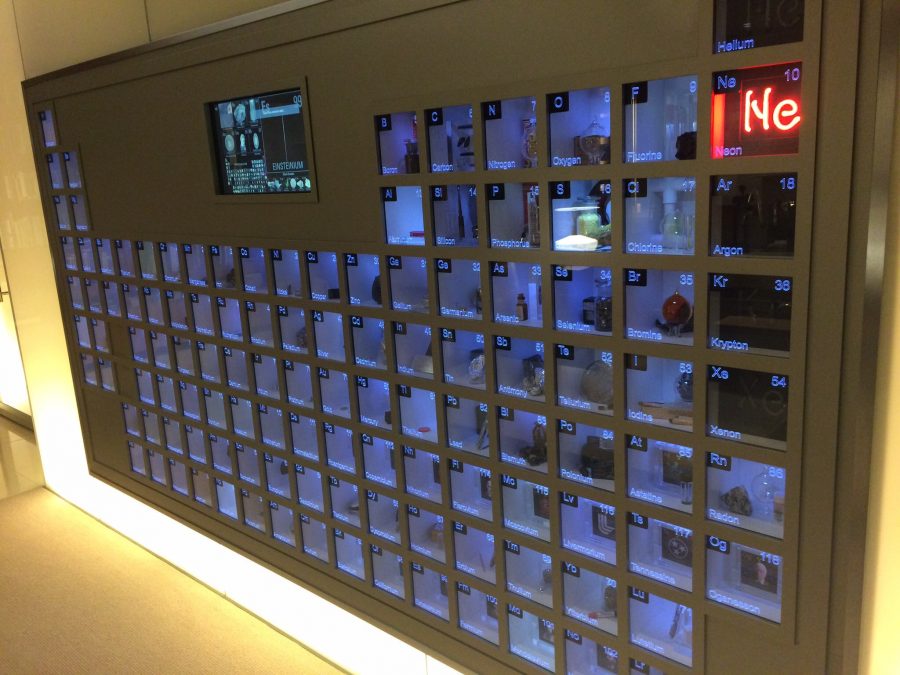
Just a fun fact…
If you would like to support the mission of Open Culture, consider making a donation to our site. It’s hard to rely 100% on ads, and your contributions will help us continue providing the best free cultural and educational materials to learners everywhere. You can contribute through PayPal, Patreon, and Venmo (@openculture). Thanks!
Related Content:
The Periodic Table of Elements Scaled to Show The Elements’ Actual Abundance on Earth
Periodic Table Battleship!: A Fun Way To Learn the Elements
“The Periodic Table Table” — All The Elements in Hand-Carved Wood
World’s Smallest Periodic Table on a Human Hair
“The Periodic Table of Storytelling” Reveals the Elements of Telling a Good Story
Chemistry on YouTube: “Periodic Table of Videos” Wins SPORE Prize
Free Online Chemistry Courses
Read More...John Lennon’s Report Card at Age 15: “He Has Too Many Wrong Ambitions and His Energy Is Too Often Misplaced”
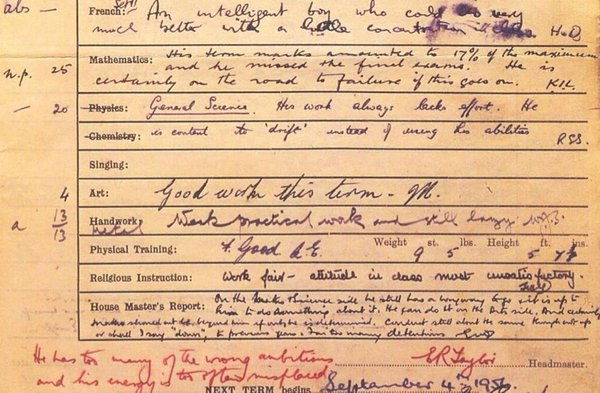
In September 1956, a young John Lennon took home a dismal report card–the kind that many smart, wayward kids can probably relate to.
French teacher: “An intelligent boy who could be very much better with a little concentration in class.”
Math teacher: “He is certainly on the road to failure if this goes on.”
Physics teacher: “His work always lacks effort. He is content to ‘drift’ instead of using his abilities.”
Religion teacher: “Attitude in class most unsatisfactory.”
Head master: “He has too many wrong ambitions and his energy is too often misplaced.”
Guess they had him all figured out…
If you would like to support the mission of Open Culture, consider making a donation to our site. It’s hard to rely 100% on ads, and your contributions will help us continue providing the best free cultural and educational materials to learners everywhere. You can contribute through PayPal, Patreon, and Venmo (@openculture). Thanks!
Related Content:
9‑Year-Old Edward Hopper Draws a Picture on the Back of His 3rd Grade Report Card
The John Lennon Sketchbook, a Short Animation Made of Lennon’s Drawings, Premieres on YouTube
John Lennon Sums Up Elvis, Yoko & Howard Cosell in One Word
Read More...
In 1964, Isaac Asimov Predicts What the World Will Look Like Today: Self-Driving Cars, Video Calls, Fake Meats & More
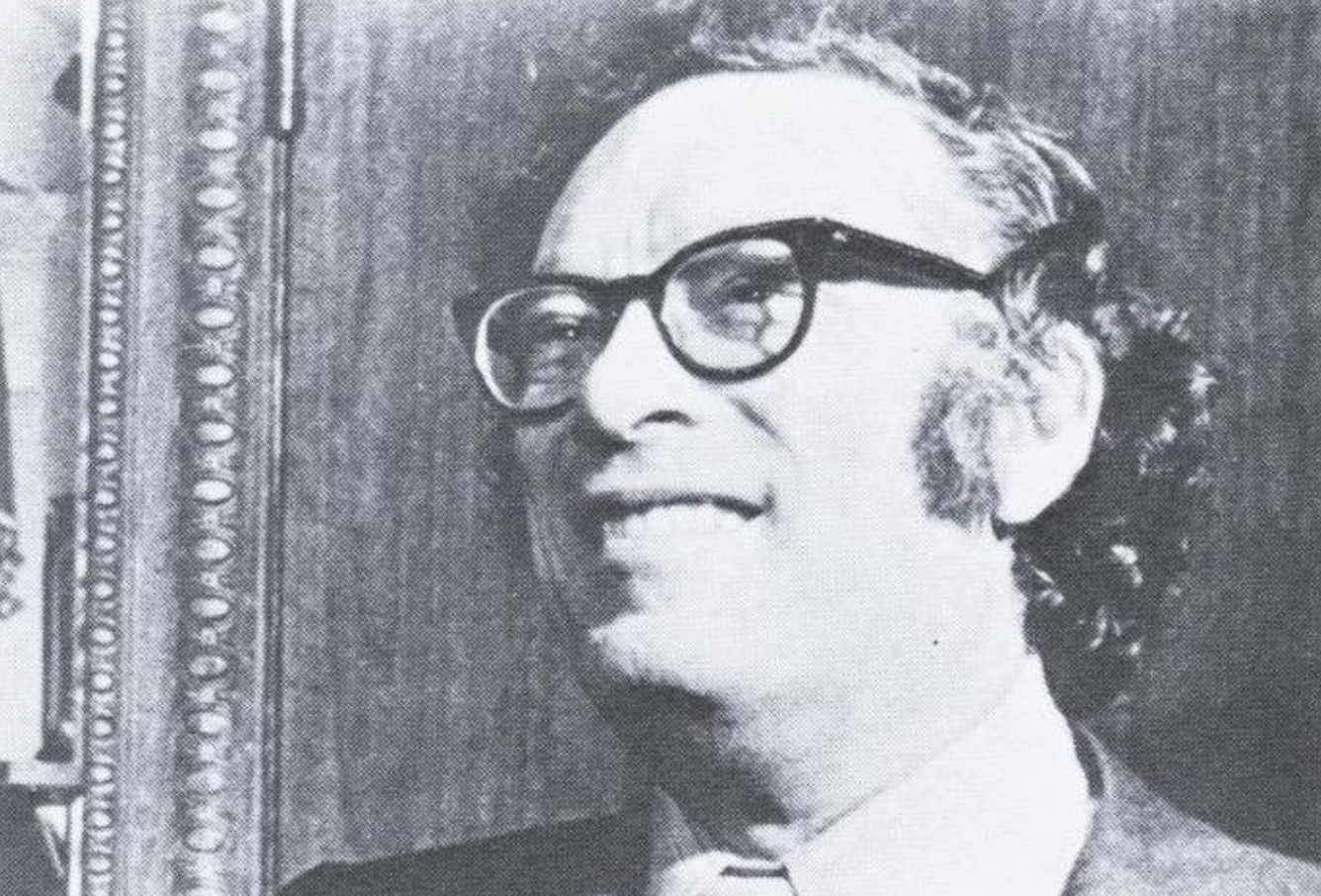
Rochester Institute of Technology, via Wikimedia Commons
Isaac Asimov’s readers have long found something prophetic in his work, but where did Asimov himself look when he wanted to catch a glimpse of the future? In 1964 he found one at the New York World’s Fair, the vast exhibition dedicated to “Man’s Achievement on a Shrinking Globe in an Expanding Universe” that history now remembers as the most elaborate expression of the industrial and technological optimism of Space Age America. Despite the fanciful nature of some of the products on display, visitors first saw things there — computers, for instance — that would become essential in a matter of decades.
“What is to come, through the fair’s eyes at least, is wonderful,” Asimov writes in a piece on his experience at the fair for the New York Times. But it all makes him wonder: “What will life be like, say, in 2014 A.D., 50 years from now? What will the World’s Fair of 2014 be like?” His speculations begin with the notion that “men will continue to withdraw from nature in order to create an environment that will suit them better,” which they certainly have, though not so much through the use of “electroluminescent panels” that will make “ceilings and walls will glow softly, and in a variety of colors that will change at the touch of a push button.” Still, all the other screens near-constantly in use seem to provide all the glow we need for the moment.
“Gadgetry will continue to relieve mankind of tedious jobs,” Asimov predicts, and so it has, though our kitchens have yet to evolve to the point of preparing “ ‘automeals,’ heating water and converting it to coffee; toasting bread; frying, poaching or scrambling eggs, grilling bacon, and so on.” He hits closer to the mark when declaring that “robots will neither be common nor very good in 2014, but they will be in existence.” He notes that IBM’s exhibit at the World’s Fair had nothing about robots to show, but plenty about computers, “which are shown in all their amazing complexity, notably in the task of translating Russian into English. If machines are that smart today, what may not be in the works 50 years hence? It will be such computers, much miniaturized, that will serve as the ‘brains’ of robots.”
“The appliances of 2014 will have no electric cords,” Asimov writes, and in the case of our all-important mobile phones, that has turned out to be at least half-true. But we still lack the “long-lived batteries running on radioisotopes” produced by “fission-power plants which, by 2014, will be supplying well over half the power needs of humanity.” The real decade of the 2010s turned out to be more attached to the old ways, not least by cords and cables, than Asimov imagined. Even the United States of America hasn’t quite mastered the art of designing highways so that “long buses move on special central lanes” along them, let alone forms of ground travel that “take to the air a foot or two off the ground.”
But one advance in transportation Asimov describes will sound familiar to those of us living in the 2010s: “Much effort will be put into the designing of vehicles with ‘Robot-brains,’ vehicles that can be set for particular destinations and that will then proceed there without interference by the slow reflexes of a human driver.” Indeed, we hear about few reportedly imminent technologies these days as much as we hear about self-driving cars and their potential to get us where we’re going while we do other things, such as engage in communications that “will become sight-sound and you will see as well as hear the person you telephone,” on a screen used “not only to see the people you call but also for studying documents and photographs and reading passages from books.”
Conversations with the moon colonies, Asimov needlessly warns us, “will be a trifle uncomfortable” because of the 2.5‑second delay. But immediately thereafter comes the much more realistic prediction that “as for television, wall screens will have replaced the ordinary set.” Still, “all is not rosy” in the world of 2014, whose population will have swelled to 6,500,000,000 — or 7,298,453,033, as it happened. This has many implications for development, housing, and even agriculture, though the “mock-turkey” and “pseudosteak” eaten today has more to do with lifestyle than necessity. (“It won’t be bad at all,” Asimov adds, “if you can dig up those premium prices.”)
Finally, and perhaps most importantly, “the world of A.D. 2014 will have few routine jobs that cannot be done better by some machine than by any human being. Mankind will therefore have become largely a race of machine tenders.” Asimov foresees the need for a change in education to accommodate that, one hinted at even in General Electric’s exhibit in 1964, which “consists of a school of the future in which such present realities as closed-circuit TV and programmed tapes aid the teaching process.” His envisioned high-school curriculum would have students master “the fundamentals of computer technology” and get them “trained to perfection in the use of the computer language.”
But even with all these developments, “mankind will suffer badly from the disease of boredom, a disease spreading more widely each year and growing in intensity.” The “serious mental, emotional and sociological consequences” of that will make psychiatry an important medical specialty, and “the lucky few who can be involved in creative work of any sort will be the true elite of mankind, for they alone will do more than serve a machine.” Though Asimov may have been surprised by what we’ve come up with in the quarter-century since his death, as well as what we haven’t come up with, he would surely have understood the sorts of anxieties that now beset us in the future-turned-present in which we live. But even given all the ways in which his predictions in 1964 have proven more or less correct, he did miss one big thing: there was no World’s Fair in 2014.
Related Content:
Arthur C. Clarke Predicts in 2001 What the World Will Look By December 31, 2100
Arthur C. Clarke Predicts the Future in 1964 … And Kind of Nails It
Walter Cronkite Imagines the Home of the 21st Century … Back in 1967
Based in Seoul, Colin Marshall writes and broadcasts on cities, language, and culture. His projects include the book The Stateless City: a Walk through 21st-Century Los Angeles and the video series The City in Cinema. Follow him on Twitter at @colinmarshall or on Facebook.
Read More...Stream 48 Classic & Contemporary German Films Free Online: From Fritz Lang’s Metropolis to Margarethe von Trotta’s Hannah Arendt

If you’re reading this, there’s a good chance you’ve seen the German Expressionist classic The Cabinet of Dr. Caligari. As soon as Robert Weine’s 1920 film came out, it was described as essential. Or as one reviewer wrote, “so-called cultured people who fail to see it are neglecting their education.” There are dozens more German films to which that sentence might apply. Films from the country’s explosive Weimar moment—which also produced Metropolis, Nosferatu, M, Faust, etc.—to those of the New German Cinema movement of the 1960s and 70s, which gave the world such enfants terribles as Wim Wenders, Margarethe von Trotta, Werner Herzog, and Rainer Maria Fassbinder. The furiously prolific Fassbinder died in 1982 at 37, but the former three directors have continued to make internationally-known films into the 21st century.
You may have seen Von Trotta’s Hannah Arendt (trailer above), which won multiple awards in 2012. Or perhaps you caught Caroline Link’s WWII-themed Nowhere in Africa, which won an Oscar that same year. The Nazi era may have laid waste to the German film industry—whose biggest talents ended up exiled in Hollywood—and the postwar years are often thought of as a “lost decade” (wrongly, it seems). But on the whole, German filmmakers have produced some of the most visually distinctive, narratively thrilling, and emotionally raw films in world cinema since its beginnings.

Germany’s cultural institute, the Goethe Institut, is honoring the legacy of German film, from its classic to its contemporary periods, with 48 films free to stream on Kanopy. (The films include subtitles in English.) The initiative is just one part of Wunderbar, a celebration that includes “Goethe Pop Ups in the US,” with film screenings, festivals, appearances by German filmmakers, and an online series of critical articles by German and American experts.
If you haven’t seen Dr. Caligari, Nosferatu, Metropolis, or Faust, you can stream them now at the Goethe Institut’s Kanopy. You can also see Hannah Arendt, Nowhere in Africa, and other acclaimed contemporary films. Herzog’s 1971 Aguirre, the Wrath of God is in the collection, as is Frank Beyer’s far more obscure Trace of Stones from 1966, a film banned for 25 years by East German officials after its release.
There are documentaries on artists like Joseph Beuys and Gerhard Richter, on Marlene Dietrich and, naturally, German beer. Films by directors Anne Birkenstock, Christian Petzold, and Tom Tykwer. Berlin International Film Festival nominee Beloved Sisters appears. There are films that “so-called cultured people” are expected to have seen, and many more unlikely to show up on the syllabus of a survey course.
Perhaps only one of these movies has been specifically credited with grimly predicting the future—as Siegfried Kracauer alleged in his book Caligari to Hitler. But all of these are films that deserve a wide audience outside their national borders. To view the Goethe Institut’s selection of 48 films, you’ll need to sign up for a free Kanopy account, which you can do with your Google or Facebook logins or with an email address. Then simply set your home library as “Goethe-Institut” and you can stream any or all of the films in the collection, from 1920’s Caligari to 2017’s Axolotl Overkill, on IOS and Android devices, Apple TV, Roku, Chromecast, or your computer.
Related Content:
10 Great German Expressionist Films: From Nosferatu to The Cabinet of Dr. Caligari
Watch Werner Herzog’s Very First Film, Herakles, Made When He Was Only 19-Years-Old (1962)
Filmmaker Wim Wenders Explains How Mobile Phones Have Killed Photography
The Top 100 Foreign-Language Films of All-Time, According to 209 Critics from 43 Countries
Josh Jones is a writer and musician based in Durham, NC. Follow him at @jdmagness
Read More...Anatomy of a Fake: Forgery Experts Reveal 5 Ways To Spot a Fake Painting by Jackson Pollock (or Any Other Artist)
In the old days, determining an art forgery was mostly a matter of narrative deduction, a la Sherlock Holmes.
Thiago Piwowarczyk and Jeffrey Taylor, founders of New York Art Forensics, employ such techniques to establish provenance, tracing the chain of ownership of any given work back to its original sale by researching catalogues, title transfers, and correspondence.
But they also bring a number of high tech tools to the table, to further prove—or in the case of the alleged Jackson Pollock drip painting above, disprove—a work’s authenticity.
In the WIRED video above, these experts, whose pedigree includes degrees in Chemistry, Forensic Science, and Comparative History, a Visual Arts Management textbook, and two Frick Collection Fellowships, break the sleuthing process down to five critical steps:
1. Establish provenance
Obsolete technology has a place in the process too, in the form of a highly unreliable fax, allegedly sent in 1997. It purports to be a photocopy of a typewritten letter from 1970, written by a gallery owner who talked one of the artist’s former girlfriends into parting with a number of works after his death.
Unfortunately for the painting’s current owner, Piwowarczyk and Taylor could find no proof that the gallery or its owner ever existed. The letter also botches Pollock’s death date and oddly, there’s a blank where the sender’s number would normally be.
Due diligence reveals nothing resembling this painting in the catalogue raisonné of Pollock’s work.
2. Close up visual analysis
This can be accomplished with tools as simple as the flashlight and plastic caliper Taylor uses to examine the staple holes found at regular intervals along the unsigned canvas’ edges. In the 1940s, artists started gravitating toward staples over tacks as a method for securing their canvases to stretcher bars, but would Pollock have done so? Likely not, to hear him tell it:
I hardly ever stretch my canvas before painting. I prefer to tack the unstretched canvas to the hard wall or the floor. I need the resistance of a hard surface.
Piwowarczyk and Taylor draw on their other senses, too, when performing this in-depth visual inspection. A deep sniff reveals that teabags were used to discolor the canvas, in hope of making it appear older than it is.
3. Photography with a multispectral imaging camera
This camera’s ability to see the Ultra-Violet spectrum allows our forensic experts to spot restorations, underdrawing, and pentimenti. Here, the camera revealed an underlying painting whose geometric layout is uncharacteristic of Pollock, as well as a suspiciously amateurish patch job on the back of the canvas, another attempt to make the painting appear older than it is.
4. Examination with an X‑ray fluorescence spectrometer
It looks like a cool Star Wars prop, and allows the examiners to identify elements in the pigment. Here, our “Pollock” gets a pass. There’s titanium (as in Titanium White) in evidence, but that’s permissible for anything painted from the 30s onward.
5. Molecular Imaging and Analysis by Raman Spectroscopy
The forger might have gotten away with it if it weren’t for those meddling kids and their Raman Spectroscope! The minuscule samples of paint Piwowarczyk harvests from the canvas reveal all sorts of organic debris that have no place in a Pollock, such as drywall dust and an acrylic that didn’t come into use ‘til the 1960s.
In conclusion, exercise caution and consult the experts before purchasing a high value drip painting this holiday season! According to Piwowarczyk, the fakes—over 100 and presumably still counting—outstrip the number of drip paintings Pollock created throughout his lifetime.
Related Content:
The Art of Restoring a 400-Year-Old Painting: A Five-Minute Primer
How a Book Thief Forged a Rare Edition of Galileo’s Scientific Work, and Almost Pulled it Off
Ayun Halliday is an author, illustrator, theater maker and Chief Primatologist of the East Village Inky zine. Join her in NYC from December 6 — 20 for the 10th anniversary production of Greg Kotis’ apocalyptic holiday tale, The Truth About Santa, and the next monthly installment of her book-based variety show, Necromancers of the Public Domain. Follow her @AyunHalliday.
Read More...Support Us
We're hoping to rely on loyal readers, rather than erratic ads. Please click the Donate button and support Open Culture. You can use Paypal, Venmo, Patreon, even Crypto! We thank you!

About Us

Open Culture scours the web for the best educational media. We find the free courses and audio books you need, the language lessons & educational videos you want, and plenty of enlightenment in between.
Advertise With Us

FREE UPDATES!
GET OUR DAILY EMAIL
Get the best cultural and educational resources on the web curated for you in a daily email. We never spam. Unsubscribe at any time.
FOLLOW ON SOCIAL MEDIA

Open Culture editor Dan Colman scours the web for the best educational media. He finds the free courses and audio books you need, the language lessons & movies you want, and plenty of enlightenment in between.
Advertise With Us


