Performance Artist Marina Abramović Describes Her “Really Good Plan” to Lose Her Virginity
Losing your virginity–it’s not a subject we’ve previously discussed much here at Open Culture. Nor is it a subject about which we’d claim to have great expertise. (After all, you lose it only once in life.)
But performance artist Marina Abramović has given the whole endeavor some serious thought. As she explains in the BBC Radio 4 video above, she waited until she was 24 years old. Having seen precocious friends make mistakes, she handled things in her own special way. A Perry Como album. A bottle of Albanian whisky. An experienced, emotionally uninvolved partner. They all figured into what she calls–now 45 years later–her “really good plan.”
If you would like to support the mission of Open Culture, consider making a donation to our site. It’s hard to rely 100% on ads, and your contributions will help us continue providing the best free cultural and educational materials to learners everywhere. You can contribute through PayPal, Patreon, and Venmo (@openculture). Thanks!
Related Content:
In Touching Video, Artist Marina Abramović & Former Lover Ulay Reunite After 22 Years Apart
Marina Abramović and Ulay’s Adventurous 1970s Performance Art Pieces
Read More...Watch Come Together, Wes Anderson’s New Short Film/Commercial Starring Adrien Brody
Why does the holiday season no longer feel complete without a Wes Anderson movie? Several of his features have opened in late fall or early winter, surely the most Andersonian time of year. Some have come out right around Christmas (The Life Aquatic with Steve Zissou on the day itself), and some, most notably The Royal Tenenbaums, take place partially in the season. While it looks as if we’ll have to do without a full-length Anderson production this Christmas, since the past year has reportedly seen him in pre-production on an as yet untitled stop-motion animated movie, the auteur of poignant and funny anachronism has nevertheless found time to direct Come Together, a brand new not-quite-commercial for “fast fashion” retailer H&M.
Anderson’s unusual niche in the world of filmmaking allows him to both work as perhaps the most meticulous cinematic visionary alive, and also to make ads with impunity. We’ve featured the pair of commercials for the Hyundai Azera he did in 2012, and more recently the less overt Castello Cavalcanti, a seven-minute short sponsored by Prada. These are in addition to spots for the likes of Stella Artois and American Express, the latter of which starred the director parodying himself.
This time regular collaborator Adrien Brody, previously seen in The Darjeeling Limited and The Grand Budapest Hotel and heard in The Fantastic Mr. Fox, takes the lead role of Conductor Ralph, the man in charge of a train that has fallen far behind its schedule as Christmas Eve becomes Christmas Day. Still, displaying the same attitude most of Anderson’s characters take toward matters of aesthetics and tradition, he takes seriously indeed the job of making Christmas special for his passengers. We glimpse these passengers one at a time through their cabin windows from outside the train, a sequence reminiscent of the cross-section shots of The Life Aquatic’s R/V Belafonte.
What will enliven the pale greens and matte grays of this slightly forlorn but still doggedly rolling conveyance? It takes less than four minutes, during which Ralph, and Anderson, summon all the resources of this unspecified, dreamlike past at their disposal, to find out. Afterward, Come Together leaves only one lingering question. The famously meticulous Anderson who appears to demand a certain vintage yet timeless solidity in everything from his settings to his devices to his cuisine to his wardrobe — he can’t possibly be into fast fashion. Can he?
Related Content:
Wes Anderson’s New Commercials Sell the Hyundai Azera
Watch Wes Anderson’s Charming New Short Film, Castello Cavalcanti, Starring Jason Schwartzman
A Complete Collection of Wes Anderson Video Essays
Based in Seoul, Colin Marshall writes and broadcasts on cities and culture. He’s at work on a book about Los Angeles, A Los Angeles Primer, the video series The City in Cinema, the crowdfunded journalism project Where Is the City of the Future?, and the Los Angeles Review of Books’ Korea Blog. Follow him on Twitter at @colinmarshall or on Facebook.
Read More...British Advertisers Predict in 1935 What the World Will Look Like in 2500: Wireless TV, Atomic Cars & More
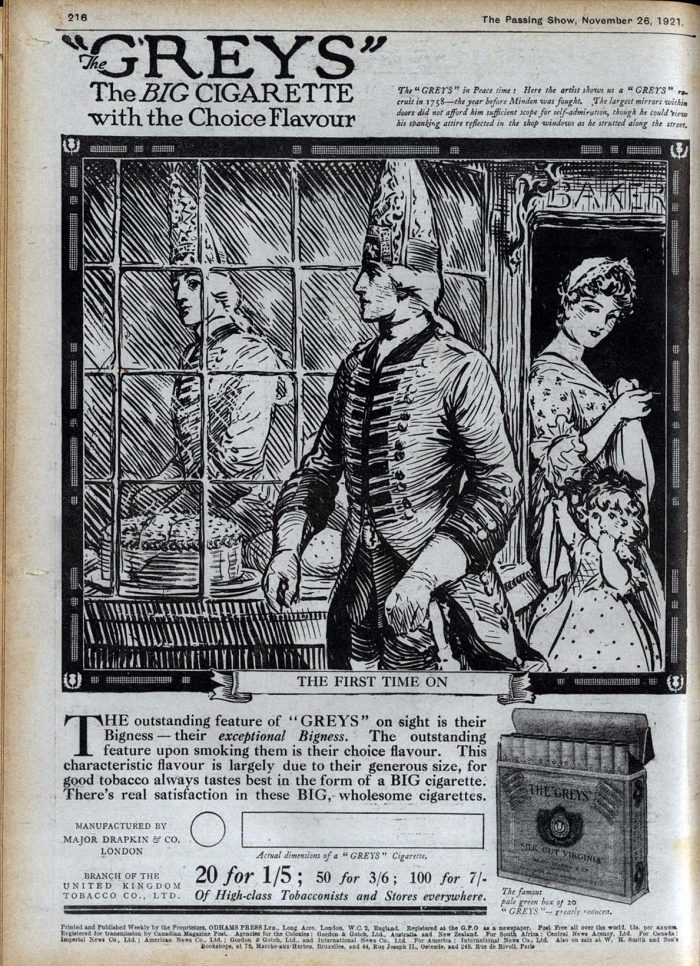
Back before the public came to terms with the grim causal relationship between cigarettes and cancer, smoking was a jolly affair, whose pleasures extended well beyond the physical act.
Smoking was sociable. Yes, there were certain situations in which three on a match could spell doom, but a far greater likelihood that lighting an attractive stranger’s coffin nail might kindle conversation, and more.
If you were at a loss for words, you might break the ice with the trading cards manufacturers slipped inside cigarette packs, such as these mid-30s beauties that came inside packs of Greys, a now-defunct British cigarette brand, and favorite of WWI vets.
The subject is unusual. Sports, cinema stars, and military scenes were common themes of the time. The “Greys Anticipations” series took creative liberties, by imagining a (cancer-free) year 2500, in which Londoners would be privy to such innovations as solar-lighting, moving sidewalks, and wireless television…
Great Scott! Were they psychic!?
Hopefully not.
Hopefully, we’ve still got 484 years to find out…
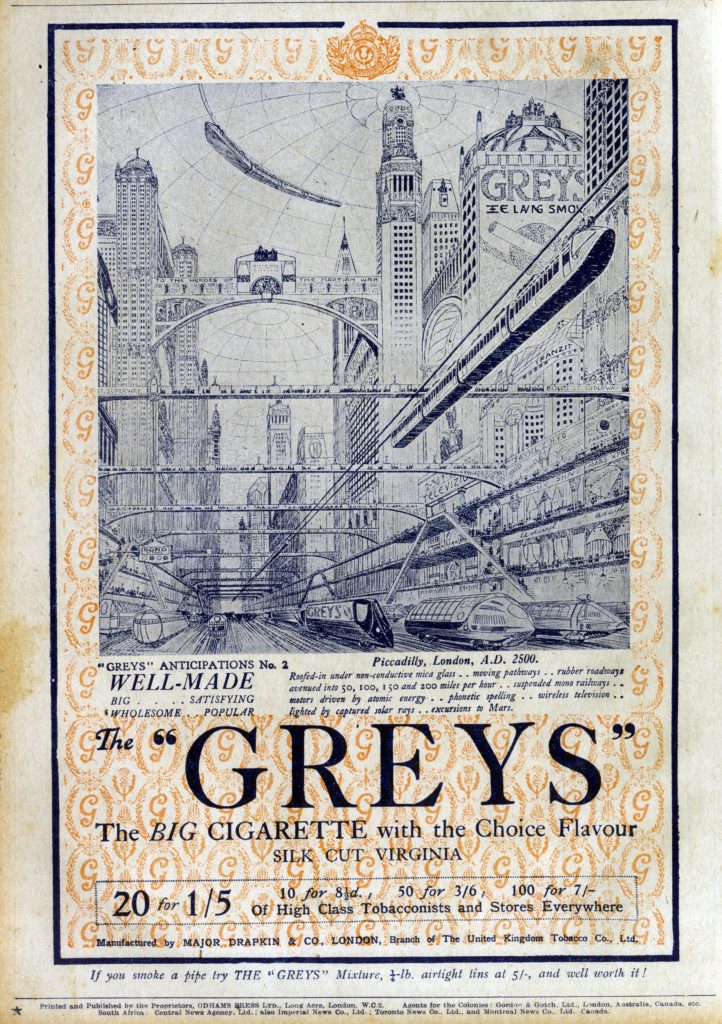
“Picadilly, London, A.D. 2500: Roofed-in under non-conductive mica glass . . moving pathways . . rubber roadways avenued into 50, 100, 150 and 200 miles per hour . . suspended mono railways . . motors driven by atomic energy . . phonetic spelling . . wireless television . . lighted by captured solar rays . . excursions to Mars.”
I’m fine with excursions to Mars and monorails but atomic energy is as problematic as the health claims once put forward by cigarette ads.
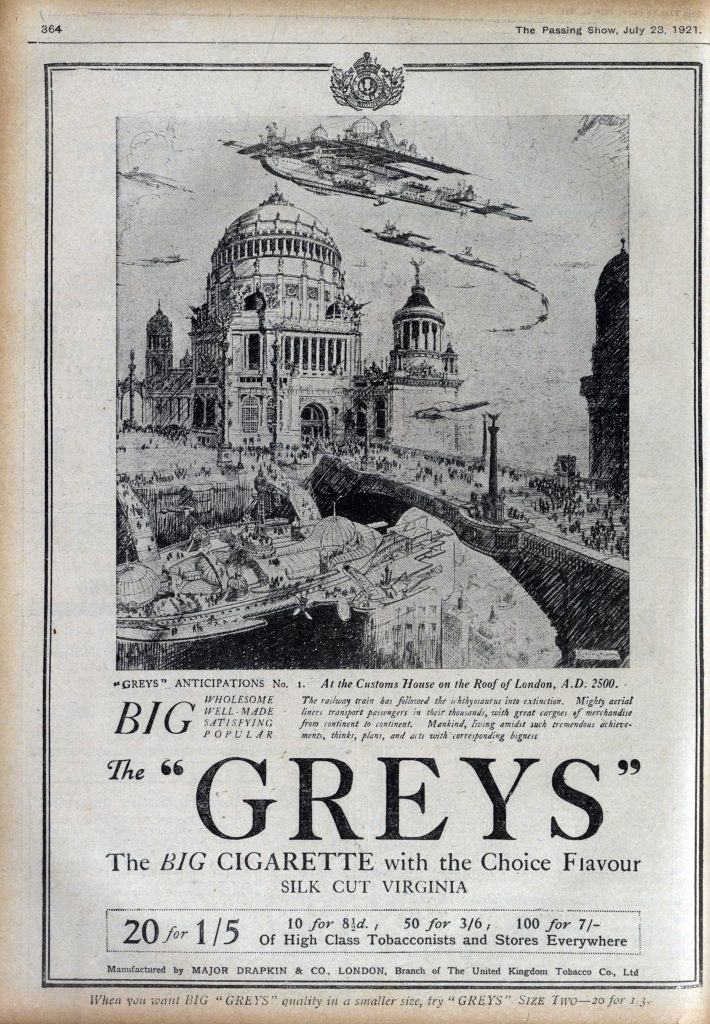
“At the Customs House on the Roof of London, A.D. 2500: The railway train has followed the ichthyosaurus into extinction. Mighty aerial liners transport passengers in their thousands, with great cargoes of merchandise from continent to continent. Mankind, living amidst such tremendous achievements, thinks, plans, and acts with corresponding bigness.”
Hmm…I was kind of rooting for train travel to make a comeback…
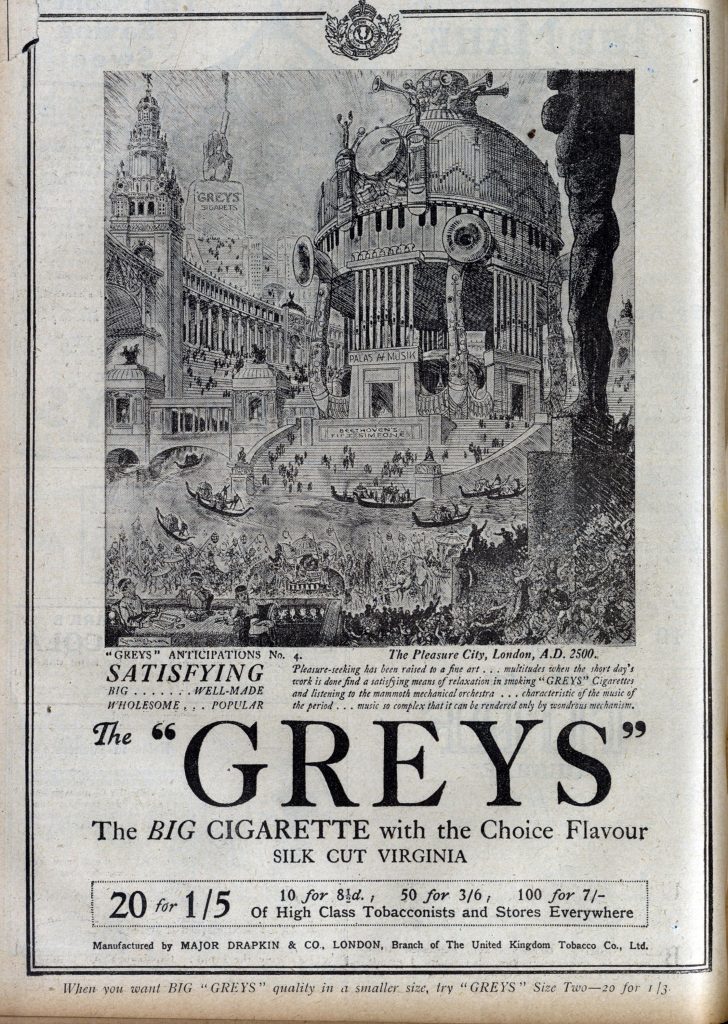
“The Pleasure City, London, A.D. 2500: Pleasure-seeking has been raised to a fine art … mutitudes when the short day’s work is done find a satisfying means of relaxation in smoking “GREYS” Cigarettes and listening to the mammoth mechanical orchestra … characteristic of the music of the period … music so complex that it can be rendered only by wonderous mechanism.”
This does sound rather fun, depending on who’s doing the programming… perhaps we should just stick with headphones and a busker on every corner.
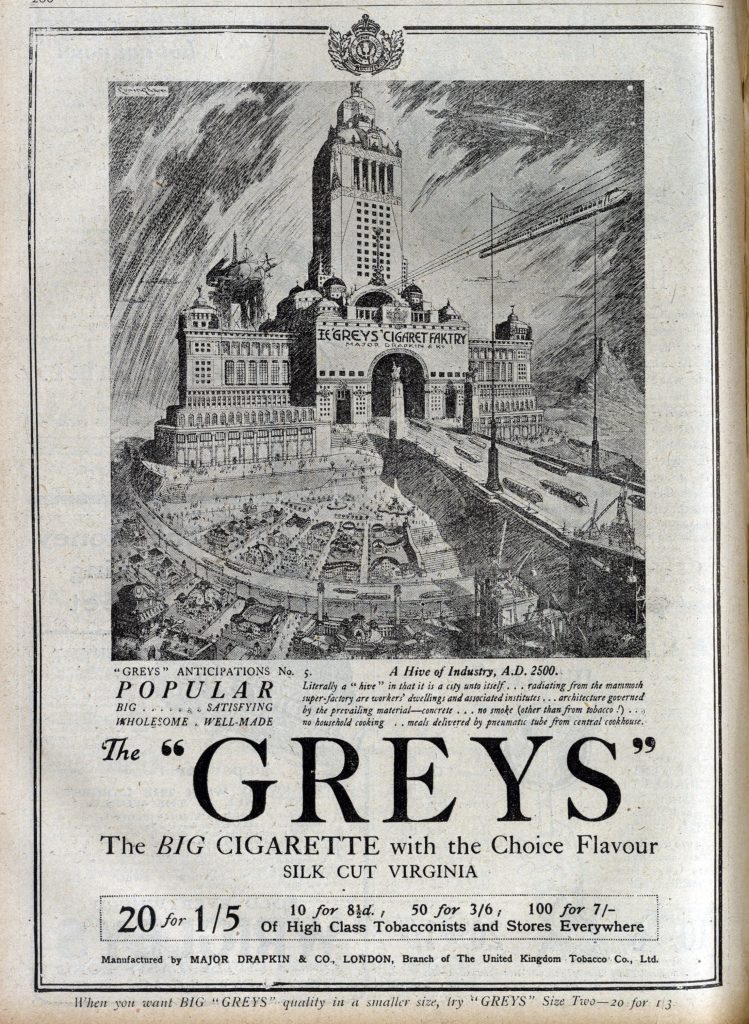
A Hive of Industry, A.D. 2500: Literally a “hive” in that it is a city unto itself … radiating from the mammoth super-factory are workers’ dwellings and associated institutes … architecture governed by the prevailing material — concrete … no smoke (other than from tobacco!) … no household cooking . . meals delivered by pneumatic tube from central cookhouse.
Um…I strongly suggest revisiting Terry Gilliam’s 1985 film, Brazil, before signing off on the whole pneumatic tube thing.
Darran Anderson, author of Imaginary Cities, took a closer look at one of the cards in the above talk about imaginary London. I share his opinion that “phonetic spelling… is the best thing that they envisaged of the future.”
He also notes that the card is about 20 years ahead of its time in promoting a mid-50s‑style vision of the future, but that it failed to predict the demise of Greys Cigarettes, by prominently advertising them on the side of a suspended monorail.
Hubris!
via Metafilter
Related Content:
In 1900, Ladies’ Home Journal Publishes 28 Predictions for the Year 2000
Cigarette Commercials from David Lynch, the Coen Brothers and Jean Luc Godard
Ayun Halliday is an author, illustrator, theater maker and Chief Primatologist of the East Village Inky zine. Her play Zamboni Godot is opening in New York City in March 2017. Follow her @AyunHalliday
Read More...Watch Animations of Two Italo Calvino Stories: “The False Grandmother” and “The Distance from the Moon”
There are those books we go to not to escape this world, but to experience the truth of a mysteriously attributed quote, “There is another world, and it is this one.” That is to say that the worlds we find in certain novels are no less filled with dread, ambiguity, and moral freight than our own. But these sorts of stories offer new maps for reality. They may at first be those of the Protestant theology and Victorian morality of C.S. Lewis, whose Narnia books (available in a free audio format here) rather literally give us another world in this one.
But we may soon find ourselves catapulted into the neurotic nightmares of Kafka, the sci-fi paranoia of Philip K. Dick, the postindustrial ennui of J.G. Ballard, the scholastic labyrinths of Borges, and.… Well, what are we to call the work of Invisible Cities and If on a Winter’s Night a Traveler author Italo Calvino? Jonathan Galassi identifies Calvino as a postmodern folklorist, drawn into the mature idiom of his best-known books by his sustained engagement in “the magisterial anthology Italian Folktales” in 1956, a task that made him into “a modern-day Grimm.”
Calvino’s facility with the light magic of folklore infuses his work with a fleet-footedness and brevity that can mask its high seriousness. Two years after compiling his anthology, he wrote that his “true direction” was “the crisis of the bourgeois intellectual seen critically from the inside.” This accounts both for the theoretical sophistication of his prose and the experimental form. Calvino bests even Borges as an experimentalist, writing large parts of If on a Winter’s Night a Traveler in the imperious second person, and pulling it off brilliantly.
However, Calvino will often break into the novel to remind us of the artifice, and at one point declare his desire “to follow the mental models through which we live our human events.” Those models, Calvino suggests, are not organized and systematic. They are as meandering and episodic as fairy tales, filled with irrelevant detail that we pick up in fascination then quickly forget. It’s a discomfiting idea for rationalists. But for those who know that life is lived in stories, it rings perfectly true.
In the two animated videos here, we see Calvino’s genius for conjuring irrational fables. At the top John Turturro reads Calvino’s “The False Grandmother” from his folklore anthology, a version of the “Little Red Riding Hood” story. And in the (subtitled) Hebrew-language animation above (perfectly scored by Erik Satie), we see an adaptation of Calvino’s “The Distance from the Moon” from Cosmicomics, a collection whose fictions, writes Ted Gioia, “are absurd and incoherent, yet the plot lines are filled with romance, drama, and conflicts that draw the readers deeper and deeper into the text.”
They are also filled with scientific ideas: “Each story in Cosmicomics begins with a scientific premise.” Like many a critical humanist before him, from Michel de Montaigne to Jonathan Swift, Calvino seems to wonder if our best intellectual efforts, even the sciences, fall subject to “the foibles and fancies of humans,” and to the askew narrative logic of folklore.
Related Content:
Italo Calvino Offers 14 Reasons We Should Read the Classics
Invisible Cities Illustrated: Three Artists Paint Every City in Italo Calvino’s Classic Novel
Josh Jones is a writer and musician based in Durham, NC. Follow him at @jdmagness
Read More...New Animation Brings to Life a Lost 1974 Interview with Leonard Cohen, and Cohen Reading His Poem “Two Slept Together”
Leonard Cohen was graced with a distinctive slow burn of a voice, a manly purr well suited to the louche mysteries of his most famous lyrics.
His death prompted a post-election outpouring from his already crestfallen fans, who sought catharsis by sharing the myriad ways in which his music had touched their lives.
As Cohen remarked in a 1995 interview with the New York Times:
Music is like bread. It is one of the fundamental nourishments that we have available, and there are many different varieties and degrees and grades. A song that is useful, that touches somebody, must be measured by that utility alone. ‘Cheap music’ is an uncharitable description. If it touches you, it’s not cheap. From a certain point of view, all our emotions are cheap, but those are the only ones we’ve got. It’s loneliness and longing and desire and celebration.
Rolling Stone dubbed Cohen the Poet Laureate Of Outrage And Romantic Despair. It’s far from his only nickname, but it manages to encompass most of the other 325 that super fan Allan Showalter collected for his Cohencentric site.
Have you used Cohen’s music to “illuminate or dignify your courting” (to borrow another phrase from that Times interview)?
If so, you deserve to know that those seductive lyrics aren’t always what they seem.
For one thing, he never got carnal with Suzanne.
Ditto the “Sisters of Mercy.” Turns out they really “weren’t lovers like that.” Cohen varied the facts a bit over the years, when called upon to recount this song’s origin story. The location of the initial meeting was a moving target, and early on, vanity, or perhaps a reputation to uphold, caused him to omit a certain critical detail regarding the night spent with two young women he bumped into in snowy Edmonton.
The 1974 radio interview with Kathleen Kendel, above—straight from the horse’s mouth, and freshly animated for PBS’ Blank on Blank series—brings to mind that pillar of young male sex comedy, the close-but-no-cigar erotic encounter.
PBS’ Blank on Blank animator, Patrick Smith, wisely employs a lightly humorous touch in depicting Cohen’s wild imagining of the delights Barbara and Lorraine had in store for him. Whether or not they looked like the Doublemint Twins is a question for the ages.
The animation kicks off with a reading of his 1964 poem, “Two Went to Sleep,” an elliptical journey into the realm of the unconscious, a setting that preoccupied Cohen the poet. (See the far less platonic-seeming “My Lady Can Sleep” and “Now of Sleeping” for starters…)
You can hear the interview Blank on Blank excerpted for the above animation in its entirety here.
Related Content:
Hear Leonard Cohen’s Final Interview: Recorded by David Remnick of The New Yorker
How Leonard Cohen’s Stint As a Buddhist Monk Can Help You Live an Enlightened Life
Animated Video: Johnny Cash Explains Why Music Became a Religious Calling
Ayun Halliday is an author, illustrator, theater maker, Leonard Cohen fan and Chief Primatologist of the East Village Inky zine. Her play Zamboni Godot is opening in New York City in March 2017. Follow her @AyunHalliday.
Read More...The 10 Favorite Films of Rainer Werner Fassbinder
Despite living for only 37 years, and within that having a career that lasted for only fifteen, the German auteur Rainer Werner Fassbinder created so prolifically that his final list of accomplishments includes directing forty feature films, three shorts, and two television series, as well as appearing in 36 different roles as an actor — to say nothing of his works in other media and his considerable influence on subsequent generations of filmmakers around the world. Sheer productivity aside, many of these works have either stood the test of time, like The Bitter Tears of Petra von Kant and Berlin Alexanderplatz or, like philosophical science fiction World on a Wire, enjoyed recent rediscoveries.
What could have inspired in Fassbinder such unrelenting creativity? His list of ten favorite films, drawn up a year before his death in 1982, provides some clues. “Fassbinder’s very favorite was Visconti’s The Damned, a visually sumptuous panorama of societal collapse and decay in Third Reich Germany and no doubt an influence on the German auteur’s own “BRD Trilogy,” in particular the bawdy, bordello-set Lola,” writes Indiewire’s Ryan Lattanzio. He also “loved Max Ophuls’ 1955 Lola Montes, the sad story of a kept woman shot in the kind of gloriously rendered color Fassbinder would later employ in his own work. As with many top 10 lists compiled by confrontational filmmakers, Pasolini’s beautifully ugly descent into hell Salò was also close to his heart.”
Fassbinder’s final favorite-films list runs, in full, as follows:
- The Damned (1969, Dir: Luchino Visconti)
- The Naked And the Dead (1958, Dir: Raoul Walsh)
- Lola Montes (1955, Dir: Max Ophuls)
- Flamingo Road (1949, Dir: Michael Curtiz)
- Salò, or the 120 Days Of Sodom (1975, Dir: Pier Paolo Pasolini)
- Gentlemen Prefer Blondes (1953, Dir: Howard Hawks)
- Dishonored (1931, Dir: Josef von Sternberg)
- The Night Of The Hunter (1955, Dir: Charles Laughton)
- Johnny Guitar (1954, Dir: Nicholas Ray)
- The Red Snowball Tree (1973, Dir: Vasili Shukshin)
If one quality unites all of Fassbinder’s motion pictures of choice, from all the aforementioned to the stark, near-Expressionist noir of Night of the Hunter to the superhumanly snappy comedy of Gentlemen Prefer Blondes to the Western genre reinvention, highly appreciated in Europe, of Johnny Guitar, it might well be vividness. All of these movies, each in their own way, allowed Fassbinder to release the vividness — and cinema history has remembered him as a master of the vivid as well as the visceral — resident in his imagination. Alas, no matter how much he managed to realize, a great deal more of it surely passed away with him.
Related Content:
Akira Kurosawa’s List of His 100 Favorite Movies
Martin Scorsese Reveals His 12 Favorite Movies (and Writes a New Essay on Film Preservation)
Stanley Kubrick’s List of Top 10 Films (The First and Only List He Ever Created)
Andrei Tarkovsky Creates a List of His 10 Favorite Films (1972)
Susan Sontag’s 50 Favorite Films (and Her Own Cinematic Creations)
Based in Seoul, Colin Marshall writes and broadcasts on cities and culture. He’s at work on a book about Los Angeles, A Los Angeles Primer, the video series The City in Cinema, the crowdfunded journalism project Where Is the City of the Future?, and the Los Angeles Review of Books’ Korea Blog. Follow him on Twitter at @colinmarshall or on Facebook.
Read More...The Cast of Hamilton Sends a Strong Message to Mike Pence (After the Crowd Jeers Him)
When Mike Pence entered the Richard Rodgers Theatre to see Hamilton Friday night, the crowd booed him.
When the play ended, the cast sent Pence off with a special message. Speaking for the cast, Brandon Victor Dixon, the actor who plays Aaron Burr, said this:
You know we have a guest in the audience this evening. Vice President-elect Pence I see you walking out but I hope you will hear us just a few more moments.
There is nothing to boo here ladies and gentlemen, we are all sharing a story of love. We have a message for you sir, and we hope you will hear us out…
Vice President-elect Mike Pence we welcome you and we truly thank you for joining us here at Hamilton, an American Musical.
We, sir, we are the diverse America who are alarmed and anxious that your new administration will not protect us, our planet, our children, our parents or defend us or uphold our inalienable rights, sir. But we truly hope this show has inspired you to uphold our American values and to work on behalf of all of us.
We truly thank you for sharing this show, this wonderful American story told by a diverse group of men and women of different colors, creeds and orientations.
Trump and Pence came to office exploiting racial, national and ethnic resentments across America. They’re now putting figures like Steve Bannon and Jeff Sessions (both tarnished by allegations of racism) in positions of power. And we’re seeing hate crimes on the rise. (701 reported cases since the election.) It’s no surprise that the new government is getting taken to task. It’s free speech in action, democracy being the sometimes raucous, in your face thing it can be.
Fortunately Pence seems to have a finer appreciation of the role dissent plays in our country: He has since told The Hollywood Reporter, “I did hear what was said from the stage, and I can tell you, I wasn’t offended by what was said.” “It was a real joy to be there. When we arrived, we heard a few boos and a few cheers, and I nudged my kids and reminded them, ‘That’s what freedom sounds like.” Kudos to him.
In other culture/education news, Donald Trump has agreed to pay $25 million to settle his Trump University fraud case.
If you would like to support the mission of Open Culture, consider making a donation to our site. It’s hard to rely 100% on ads, and your contributions will help us continue providing the best free cultural and educational materials to learners everywhere. You can contribute through PayPal, Patreon, and Venmo (@openculture). Thanks!
Related Content:
Alexander Hamilton: Hip-Hop Hero at the White House Poetry Evening
“Alexander Hamilton” Performed with American Sign Language
Read More...Hear Leonard Cohen’s Final Interview: Recorded by David Remnick of The New Yorker

Image by Rama, via Wikimedia Commons
We’ve heard very few details about Leonard Cohen’s death this week, and that is by design. The Cohen family requested privacy for his funeral and received it. While most outlets reported that he passed away on Thursday night, he actually died on Wednesday and was buried on Thursday. This collective graciousness on the part of the press comes, I’d say, at a time when little grace abounds. Grace is a word that I particularly associate with Cohen. He was a graceful man, always impeccably coiffed and dressed (his father was a tailor), his handsome, hangdog face never anything but perfectly direct.
For several days before his death, New Yorker editor David Remnick sat down with Cohen for the first interview he’d given in several years. The poet and folk singer/songwriter legend had terminal cancer, we learn, and was confined to a medical chair. Nonetheless, says Remnick, introducing the edited audio interview below, Cohen was “in an ebullient mood for a man… who knew exactly where he was going, and he was headed there in a hurry. And at the same time, he was incredibly gracious. The most gracious host this side of my mother.” Cut to Cohen offering him a few slices of cheese, and Reminick declining.
Cohen kept his illness secret (though he made allusions to it in a letter to his dying girlfriend Marianne this past summer). Remnick reveals that he recorded almost the entirety of his incredible final album You Want It Darker while confined to that chair. His voice rubbed raw with age, like Johnny Cash’s in his American Recordings sessions, Cohen’s last songs carry all the spiritual urgency and ragged vigor of the best work of his career. Where did it come from? Unsurprisingly, the first subject in Remnick’s interview is death. Cohen has been writing about death since his first album in 1967.
He begins with his father’s death when he was nine, “a kind of origin story for his career as a writer.”
The funeral was held in our house. When we came down the stairs, the coffin was in the living room. And it was open. It was winter, you know. And I was thinking, like, it must be hard to dig.
Remembering this scene, Cohen’s Montreal accent strengthens, then relaxes as he describes how, after the funeral, he went to his father’s closet, cut a bow tie in half, wrote “some kind of farewell to my father” on the wing of the tie, and buried it in the backyard. “It was just some attraction to a ritual response,” he says, “to an impossible event.”
This tragic vignette, and Cohen’s reflection on it, is, as Remnick says, like a superhero origin story. With the same measured, rhythmic voice and clear expressions as his songs, Cohen connects the mortal to the mysteriously divine act of writing, which accomplishes “some kind of farewell” whose effects are unknown to us. What possible significance the act had for Cohen, he cannot say, but it was simply the appropriate response. Cohen’s final album seemed to be the right response to his own death.
This dwelling on mortality is of course hugely significant and in the foreground of this interview-slash-tribute from Remnick, but it isn’t a morbid piece at all. In a retrospective of Cohen’s career, we learn how he went from an acclaimed but struggling poet and novelist to folk singer in 1967, and how crippling stage fright led to him drinking three bottles of wine before he performed. At a 1972 concert in Israel, Cohen apologized, left the stage partway through a song, and dropped two hits of acid in his dressing room. The audience began singing loudly, and he returned to sing “So Long, Marianne” while hallucinating wildly.
The story is hilarious, told with the same dry wit that undercuts all of Cohen’s observations about sex, death, and God. For all the deepness we associate with Leonard Cohen, says Remnick, he seemed reluctant to analyze his work in religious terms. But when he does open up about it, he gives us a backdrop against which to understand much of his spiritual philosophy: prayers, he says, “are to remind God, it was once a harmonious unity.… “ as well as his writing philosophy: “I only know,” says Cohen, “that if I write enough verses, and keep discarding the slogans, even the hip ones, even the subtle ones, that something will emerge that represents.”
You can also listen to Remnick’s New Yorker Radio Hour podcast at the WNYC site (and above) and read Remnick’s article on his last meetings with Cohen at The New Yorker.
Related Content:
Leonard Cohen Has Passed at Age 82: His New and Now Final Album Is Streaming Free Online
Leonard Cohen Plays a Spellbinding Set at the 1970 Isle of Wight Festival
Ladies and Gentlemen… Mr. Leonard Cohen: The Poet-Musician Featured in a 1965 Documentary
Josh Jones is a writer and musician based in Durham, NC. Follow him at @jdmagness
Read More...Watch the Celebrated Ballerina Anna Pavlova Perform “The Dying Swan” (1925)
Prepare my swan costume.
— alleged last words of ballerina Anna Pavlova, as reported by her husband
The Internet suggests that swans are fairly tough specimens, quick to hiss and flap at any YouTuber unwise enough to violate their personal space with a video camera.
The celebrated ballerina Anna Pavlova (1881–1931) paints a different picture in her signature piece, The Dying Swan.
Choreographer Mikhail Fokine created the four minute solo in 1905 at Pavlova’s request, drawing on her admiration for some resident swans in a Leningrad public park and Alfred, Lord Tennyson’s poem “The Dying Swan.”
It was perhaps a happy accident that he had just learned how to play Camille Saint-Saëns’ Le Cygne from Le Carnaval des Animaux on his mandolin. Performed on cello, as originally intended, it supplies a mood of gorgeous melancholy with which to observe the titular character’s en pointe death throes.
Fokine’s description of the work’s creation in Dance Magazine’s August 1931 issue speaks to the rigor of these practitioners and their art form:
It was almost an improvisation. I danced in front of her [Pavlova], she directly behind me. Then she danced and I walked alongside her, curving her arms and correcting details of poses. Prior to this composition, I was accused of barefooted tendencies and of rejecting toe dancing in general. The Dying Swan was my answer to such criticism…The dance is technically more difficult than it may appear. The dancer moves constantly using different bourrees. The feet must be beautiful, expressing a trembling. All pauses in sus-sous must show legs brought to one point. The arms and the back work independently of the feet which continue to move regularly.
The archival footage from 1925, above, conveys what Fokine’s words cannot—the deep emotion for which this particular interpreter was known. It’s a visceral experience to watch this broken animal fighting for its survival, quivering and heaving, before crumpling at last. (A pity that this version cuts off so abruptly… that final note should linger.)
Pavlova performed The Dying Swan around 4000 times over the course of her career, never sickening of it, or of the beasts who inspired it. Swans populated a small pond at her English country home. You can witness her fondness for them, below.
Related Content:
Ballet Dancers Do Their Hardest Moves in Slow Motion
Ayun Halliday is an author, illustrator, theater maker and Chief Primatologist of the East Village Inky zine. Her play Zamboni Godot is opening in New York City in March 2017. Follow her @AyunHalliday.
Read More...When Franz Kafka Invented the Answering Machine (1913)
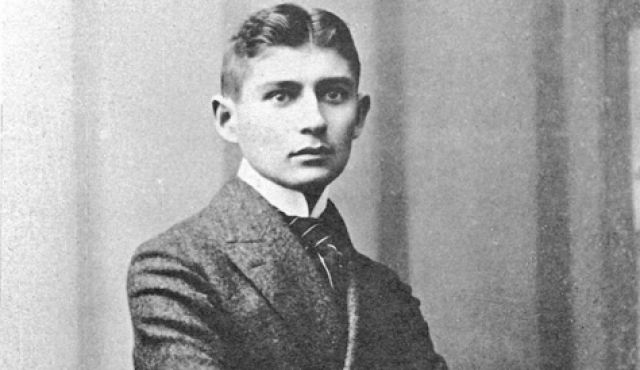
We’ve all had the experience, punctuated by interminable waiting, of circling over and over again through some enormous company’s automatic telephone answering system. Whether or not it counts as genuinely “Kafkaesque” may be up for debate, but we do have some evidence that the technology itself, or at least the idea of it, does indeed trace back to the author of The Metamorphosis and The Trial himself. This comes out in Kafka biographer Reiner Stach’s new book of photographs, letters, and other discoveries called Is that Kafka? 99 Finds.
“Although Kafka was timid and skeptical in his interactions with the latest technical gadgets—particularly when they intervened in social communication—he was always fascinated by people who knew how to handle these devices as a matter of course,” writes Stach in an excerpt at the Paris Review. “That included his fiancée Felice Bauer, who worked in the Berlin offices of Carl Lindström AG, where she was in charge of marketing for the ‘parlograph,’ a dictation machine.” It must have required no great leap of Kafka’s formidable imagination to dream up “a cross between a telephone and a parlograph,” which he described in a 1913 letter to Bauer:
The invention of a cross between a telephone and a parlograph, it really can’t be that hard. Surely by the day after tomorrow you’ll be reporting to me that the project is already a success. Of course that would have an enormous impact on editorial offices, news agencies, etc. Harder, but doubtless possible as well, would be a combination of the gramophone and the telephone. Harder because you can’t understand a gramophone at all, and a parlograph can’t ask it to speak more clearly. A combination of the gramophone and the telephone wouldn’t have such great significance in general either, but for people like me, who are afraid of the telephone, it would be a relief. But then people like me are also afraid of the gramophone, so we can’t be helped at all. By the way, it’s a nice idea that a parlograph could go to the telephone in Berlin, call up a gramophone in Prague, and the two of them could have a little conversation with each other. But my dearest the combination of the parlograph and the telephone absolutely has to be invented.
The modern answering machine took some time to develop, attaining its first commercially successful form, the Electronic Secretary, in 1949, a quarter-century after Kafka’s death. But alas, unbeknownst to him, someone had also beaten him to it when first he thought it up. “The combination of a telephone and a dictation machine had already been invented and patented — including the functions of an answering machine,” writes Stach, citing the engineer Ernest O. Kumberg’s invention of something called the “Telephonograph” in 1900. This might seem like just one more disappointment in a life full of them, but remember: just over a century on, when voicemail and even newer technologies have replaced the answering machine, nobody describes anything with the word “Kumbergian.”
You can pick up a copy of Is that Kafka? 99 Finds here.
Related Content:
Find Works by Kafka in our Free eBooks collection
Franz Kafka’s Kafkaesque Love Letters
The Art of Franz Kafka: Drawings from 1907–1917
The Animated Franz Kafka Rock Opera
What Does “Kafkaesque” Really Mean? A Short Animated Video Explains
Download Jim Rockford’s Answering Machine Messages as MP3s
Mark Twain’s Patented Inventions for Bra Straps and Other Everyday Items
Based in Seoul, Colin Marshall writes and broadcasts on cities and culture. He’s at work on a book about Los Angeles, A Los Angeles Primer, the video series The City in Cinema, the crowdfunded journalism project Where Is the City of the Future?, and the Los Angeles Review of Books’ Korea Blog. Follow him on Twitter at @colinmarshall or on Facebook.
Read More...Support Us
We're hoping to rely on loyal readers, rather than erratic ads. Please click the Donate button and support Open Culture. You can use Paypal, Venmo, Patreon, even Crypto! We thank you!

About Us

Open Culture scours the web for the best educational media. We find the free courses and audio books you need, the language lessons & educational videos you want, and plenty of enlightenment in between.
Advertise With Us

FREE UPDATES!
GET OUR DAILY EMAIL
Get the best cultural and educational resources on the web curated for you in a daily email. We never spam. Unsubscribe at any time.
FOLLOW ON SOCIAL MEDIA

Open Culture editor Dan Colman scours the web for the best educational media. He finds the free courses and audio books you need, the language lessons & movies you want, and plenty of enlightenment in between.
Advertise With Us


