New Video Essay Celebrates HBO’s Deadwood, One of the Greatest Dramas in American TV History
We live in a golden age of television, not just because technology lets us watch shows whenever we like, however we like — thus freeing shows from the tedious need to repeat past events every episode, or worse, to forego the idea of an overarching story entirely — but because technology provides us so many ways to talk about the shows as well. When else, for example, could a critic like Matt Zoller Seitz make the kind of thoughtful video essays he does for so wide an audience? He doesn’t even labor under the obligation to write only about current programs, and you can see the fruits of that freedom in his new video essay above. “A Lie Agreed Upon,” produced for the tenth anniversary of the debut of HBO’s Deadwood, examines the still-resonant neo-Western series created by television auteur David Milch, its genesis, its artistic accomplishments, and what it still has to say about society. “If you’ve read my work,” writes Zoller-Seitz on his blog at RogerEbert.com, “you know I never miss an opportunity to work Deadwood into the conversation, as a legitimate point of comparison with other shows or films or because I just love talking about it.”
Zoller-Seitz channels this critical compulsion into “a stand-alone, nearly half-hour-long piece, co-produced with HitFix, that looks at the show’s style and major themes, as well as its roots in different genres, including the Western and the gangster picture.” On that page, you can even read the essay’s annotated script, which gives you a look at the thought behind this short but rich exegesis on “one of the greatest dramas in American television history,” a show that, though originally conceived for an ancient Roman setting, flawlessly made the transition to a story of “the founding of civilization” in post-Civil War South Dakota. Going from “lewd farce” to “comedy of manners” to “political drama,” Deadwood holds fast to the theme of the basic truths, real or imagined, around which society coheres. After running down the series’ rough-and-tumble cast of characters, most of them addicted to one primitive Old West drug or another — booze, laudanum, hope — Zoller-Seitz paraphrases Milch’s own thoughts on the subject: “A community’s collective agreement on certain principles can be yet another kind of intoxicant — perhaps the most powerful one of all.”
via Metafilter
Related Content:
John Wayne: 26 Free Western Films Online
Watch 7 New Video Essays on Wes Anderson’s Films: Rushmore, The Royal Tenenbaums & More
Colin Marshall hosts and produces Notebook on Cities and Culture and writes essays on cities, language, Asia, and men’s style. He’s at work on a book about Los Angeles, A Los Angeles Primer. Follow him on Twitter at @colinmarshall or on Facebook.
Read More...Orson Welles Reads From America’s Greatest Poem, Walt Whitman’s “Song of Myself” (1953)
Walt Whitman’s Leaves of Grass often makes its way into the hands of oversized American characters of, shall we say, uncertain repute. We learned, for example, under scandalous circumstances, of Bill Clinton’s admiration for the book, and we’ll never forget the role it played in the rise and fall of similarly alliteratively named, power-mad Walter White.
Another fictional mastermind—Sideshow Bob—quotes gleefully from Leaves of Grass in a recent Simpsons episode. And perhaps the most outré character of them all—the florid speech of the rogue and pimp Al Swearengen in HBO’s Deadwood—derives in part from the “barbaric yawp” Whitman describes as his native tongue in the poem from which the book’s title comes, “Song of Myself.”
One of the many reasons this particular poem from Leaves of Grass captures the imagination of outlaw intellectuals (and narcissists) may be Whitman’s invention of a new American poetic idiom for the eloquent assertion of stridently defiant personal identities. (As Ezra Pound put it, Whitman “broke the new wood.”) The Guardian placed “Song of Myself” at the top of a 10 best American poems list for the “peerless self-performance” of the poem’s hypnotic cadences. Who better to interpret those lines than another self-invented American contrarian, Orson Welles?
During some difficult times in the fifties—in part due to Welles’ IRS trouble—the great actor/director/multi-media impresario found work on radio plays in England, including The Lives of Harry Lime (based on his character in The Third Man) and The Adventures of Sherlock Holmes (as Moriarty). In 1953, the BBC contracted with Welles to record an hour of readings from “Song of Myself.” BBC 3 broadcast the session, and it later saw release as an LP, now sadly out of print. Fortunately, however, much of this recording has been digitally preserved. At the top, hear Welles read section VI of the poem, and directly above, hear him read the heretical section XLVIII. The Mickle Street Review, an online journal of Whitman studies, hosts a small part of Side 1 and, it appears, all of Side 2 of the record, below. The text of the poem was too long for a full treatment, and Welles, it seems, abridged and adapted some of the work himself. His reading was apparently very well received by the UK press.
Side 1:
Side 2:
While the BBC commissioned the recordings—and Welles no doubt needed the money—he already had an affinity for Whitman. In the same year he completely re-invented American film with Citizen Kane, he also began broadcasting the Orson Welles Show on CBS Radio, on which he and his guests gave dramatic readings from drama, poetry, and fiction. Welles produced 19 episodes, though only 8 have survived. One of the lost episodes, from December 1, 1941, featured Welles reading from Leaves of Grass. As further evidence, we have this photograph of Welles reading Gay Wilson Allen’s The Solitary Singer, a critical biography of the poet.
What draws Welles, and restless personalities like him, to Whitman, and especially to Leaves of Grass? One answer lies in Whitman’s own life. Early on, PBS’s American Experience tells us, Whitman staked out “radical positions… putting him in near constant opposition to society’s prevailing sentiments.” He never moderated his views or his voice, though faced with charges of blasphemy, obscenity, bad writing, and various other public vices at the time. Whitman’s steadfast commitment to his political and artistic vision brought him worldwide acclaim, as well as censure, in his lifetime. A particularly scathing 1882 Atlantic review of the second printing of Leaves of Grass catalogues Whitman’s literary abuses and concludes that “the book cannot attain to any very wide influence.” Despite this terribly wrongheaded prediction, the reviewer at least recognizes Whitman’s “generous aspiration,” a quality held in common by all of Whitman’s admirers, be they heroes, villains, or just average people responding to the poet’s raw self-assertion and capacious, grandiose, and particularly American, form of longing.
Related Content:
Orson Welles Reads Coleridge’s “The Rime of the Ancient Mariner” in a 1977 Experimental Film
Hear Walt Whitman (Maybe) Reading the First Four Lines of His Poem, “America” (1890)
Josh Jones is a writer and musician based in Durham, NC. Follow him at @jdmagness
Read More...Watch Stephen Sondheim (RIP) Teach a Kid How to Sing “Send In the Clowns”
Stephen Sondeim’s “Send in the Clowns,” like the much mangled “Memory” from the much maligned musical CATS, has weathered any number of ill-advised interpretations.
The show-stopping solo from 1973’s A Little Night Music’s reference to clowns is not meant to be literal, but that didn’t stop the Muppet Show from sending a trio of them in to back Judy Collins. Frank Sinatra peeked around on every chorus, as if he’d yet to come to grips with the fact that Bozo wouldn’t be popping up on cue.
It’s misinterpretations like these that set composers spinning in their graves, but Sondheim is still very much in the game. His approach to musical theater continues to be exacting, no doubt nerve wracking, though the Guildhall School of Music and Drama student he’s fine-tuning in the video above bears up bravely.
She’s a couple of decades too young to play Desiree, whose unsuccessful attempt to woo an old lover away from his teenage bride occasions the song, but no matter. Her adjustments show the dividends a close reading of the text can pay.
See what you can do with Sondheim’s advice next time you’re singing in the shower, the only place private enough for me to believe I’m doing credit to his oeuvre. Those of us who can’t sing can take heart knowing that the original Desiree, Glynis Johns, couldn’t either, at least by the master’s usual standards. The song’s uncharacteristically short phrasing allowed her to shine as an actress, and deflected from any vocal shortcomings.
Here are the lyrics. If you need further inspiration, watch Ingmar Bergman’s Smiles of a Summer Night, on which A Little Night Music is based.
Those who are more director than diva may prefer to evaluate the performances below. In my opinion, at least one of them merits a firm rap on the knuckles from Maestro Sondheim for excessive wallowing. (Hint for those whose time is short: we’ve saved the best for last.)
Judi Dench, Desiree in the 1995 Royal National Theatre revival, performing at the BBC Proms 2010, in honor of Sondheim’s 80th birthday.
Glenn Close, another Night Music vet at Carnegie Hall.
Carol Burnett stuck close to the spirit of the original in a non-comic sketch for her 1970’s variety show, costarring the late Harvey Korman.
Bernadette Peters, the 2010 Broadway revival’s Desiree, at Southern Methodist University. Her accompanist seems pretty happy with this performance.
Dame Judi again, showing us how it’s done, in costume on the edge of a giant red bed, with Laurence Guittard as Frederik. Have a hankie ready at the 3:10 mark.
Related Content:
David Lynch Teaches Louis C.K. How to Host The David Letterman Show
What Books, Movies, Songs & Paintings Could Have Entered the Public Domain on January 1, 2014?
Ayun Halliday is the musically ungifted Bride of Urinetown. Follow her @AyunHalliday
Read More...Stephen King Creates a List of 96 Books for Aspiring Writers to Read

Image by The USO, via Flickr Commons
I first discovered Stephen King at age 11, indirectly through a babysitter who would plop me down in front of daytime soaps and disappear. Bored with One Life to Live, I read the stacks of mass-market paperbacks my absentee guardian left around—romances, mysteries, thrillers, and yes, horror. It all seemed of a piece. King’s novels sure looked like those other lurid, pulpy books, and at least his early works mostly fit a certain formula, making them perfectly adaptable to Hollywood films. Yet for many years now, as he’s ranged from horror to broader subjects, King’s cultural stock has risen far above his genre peers. He’s become a “serious” writer and even, with his 2000 book On Writing—part memoir, part “textbook”—something of a writer’s writer, moving from the supermarket rack to the pages of The Paris Review.
Few contemporary writers have challenged the somewhat arbitrary division between literary and so-called genre fiction so much as Stephen King, whose status provokes word wars like this recent debate at the Los Angeles Review of Books. Whatever adjectives critics throw at him, King plows ahead, turning out book after book, refining his craft, happily sharing his insights, and reading whatever he likes. As evidence of his disregard for academic canons, we have his reading list for writers, which he attached as an appendix to On Writing. Best-selling genre writers like Nelson DeMille, Thomas Harris, and needs-no-introduction J.K. Rowling sit comfortably next to lit-class staples like Dickens, Faulkner, and Conrad. King recommends contemporary realist writers like Richard Bausch, John Irving, and Annie Proulx alongside the occasional postmodernist or “difficult” writer like Don DeLillo or Cormac McCarthy. He includes several non-fiction books as well.
King prefaces the list with a disclaimer: “I’m not Oprah and this isn’t my book club. These are the ones that worked for me, that’s all.” Below, we’ve excerpted twenty good reads he recommends for budding writers. These are books, King writes, that directly inspired him: “In some way or other, I suspect each book in the list had an influence on the books I wrote.” To the writer, he says, “a good many of these might show you some new ways of doing your work.” And for the reader? “They’re apt to entertain you. They certainly entertained me.”
10. Richard Bausch, In the Night Season
12. Paul Bowles, The Sheltering Sky
13. T. Coraghessan Boyle, The Tortilla Curtain
17. Michael Chabon, Werewolves in Their Youth
28. Roddy Doyle, The Woman Who Walked into Doors
31. Alex Garland, The Beach
42. Peter Hoeg, Smilla’s Sense of Snow
49. Mary Karr, The Liar’s Club
53. Barbara Kingsolver, The Poisonwood Bible
54. Jon Krakauer, Into Thin Air
58. Norman Maclean, A River Runs Through It and Other Stories
62. Frank McCourt, Angela’s Ashes
66. Ian McEwan, The Cement Garden
67. Larry McMurtry, Dead Man’s Walk
70. Joyce Carol Oates, Zombie
71. Tim O’Brien, In the Lake of the Woods
73. Michael Ondaatje, The English Patient
84. Richard Russo, Mohawk
86. Vikram Seth, A Suitable Boy
93. Anne Tyler, A Patchwork Planet
Like much of King’s own work, many of these books suggest a spectrum, not a chasm, between the literary and the commercial, and many of their writers have found success with screen adaptations and Barnes & Noble displays as well as widespread critical acclaim. For the full range of King’s selections, see the entire list of 96 books at Aerogramme Writers’ Studio.
via Galleycat
Related Content:
Stephen King Turns Short Story into a Free Webcomic
Stephen King Writes A Letter to His 16-Year-Old Self: “Stay Away from Recreational Drugs”
Stephen King Reads from His Upcoming Sequel to The Shining
Stanley Kubrick’s Annotated Copy of Stephen King’s The Shining
Josh Jones is a writer and musician based in Durham, NC. Follow him at @jdmagness
Read More...Watch Alain Resnais’ Short, Evocative Film on the National Library of France (1956)
French New Wave filmmaker Alain Resnais, who died at the age of 91 last week, changed cinema forever with a string of intellectually rigorous, nonlinear masterpieces like Hiroshima Mon Amour (1959) and Last Year at Marienbad (1961). Both films are about Resnais’s two obsessions – time and memory. Hiroshima is about a doomed relationship between a French actress and a Japanese architect who are both haunted by the war. Marienbad is an enigmatic puzzle of a movie that sharply divided audiences – either you were mesmerized by the movie or you were bored and infuriated by it. For better or worse, Marienbad influenced generations of fashion photographers; Calvin Klein’s Obsession ads were directly influenced by the film.
Resnais got his start just after the war making short documentaries. His best known is Night and Fog (1955), a meditation on both the Holocaust and the memory of the Holocaust. And above you can see another one of his documentaries – his 1956 short Toute la mémoire du monde (All the World’s Memories). It was put online by Criterion.
While the movie beautifully shows off the labyrinthine expanse of the Bibliothèque nationale de France – its vast collection of books, manuscripts and documents along with herculean efforts to compile and organize all of its information – the film becomes a rumination on the lengths that humanity will go to keep from forgetting. The film features some gorgeous cinematography by Ghislain Cloquet and a soundtrack by Maurice Jarre. Check it out.
Toute la mémoire du monde will appear in our collection of 200 Free Documentaries Online, part of our larger collection, 4,000+ Free Movies Online: Great Classics, Indies, Noir, Westerns, Documentaries & More.
Related Content:
A Young Jean-Luc Godard Picks the 10 Best American Films Ever Made (1963)
Meetin’ WA: Jean-Luc Godard Meets Woody Allen in 26 Minute Film
The Filmmaking of Susan Sontag & Her 50 Favorite Films (1977)
Jonathan Crow is a Los Angeles-based writer and filmmaker whose work has appeared in Yahoo!, The Hollywood Reporter, and other publications. You can follow him at @jonccrow.
Read More...New Google-Powered Site Tracks Global Deforestation in ‘Near-Real-Time’
In September we told you about trillions of satellite images of Earth, generated by the Landsat, that are now available to the public.
Now we can share an interactive tool that is using some of those Landsat images to stop illegal deforestation.
With help from Google Earth Engine, the World Resources Institute launched Global Forest Watch, an online forest monitoring and alert system that allows individual computer users to watch forests around the world change in an almost real-time stream of imagery.
Whistle blowers are making powerful use of the Global Forest Watch tool. Using spatial data streams available on the site to observe forest changes in southeastern Peru, a number of users submitted alerts about rapidly escalating deforestation near a gold mine and river valley. In another case, observers submitted an alert about illegal logging in the Republic of the Congo.
Five years ago, NASA and the U.S. Geological Survey lifted protocols that kept Landsat images proprietary. Now, agencies like the World Resources Institute—and even tiny citizen watchdog groups around the world—have access to incredibly rich tools and data. Some of the imagery is hard to interpret. Global Forest Watch developed a number of different data layers for users to apply, making it possible to monitor forest areas for trends or illegal logging. The video at the top of this page gives a good overview of how the site works. This one gives more detail about how to use the maps on the Global Forest Watch site.
Select an area of the world and then select a data set that interests you. Choose to look at terrain, satellite, road, tree height, or composite images of a particular region. Data layers can be layered on top of one another to show trends in forest management. In Indonesia, for example, you can use the FORMA alerts button to see what has already been reported in that area of the humid tropics.
How can you tell if forest change is due to illegal logging? Turn on the Forest Use filters to see which areas are authorized for logging and mining and which are protected. In Indonesia, many areas are designated for oil palm production, but expansion of those crops are often associated with loss of natural forest.
Do your own sleuthing. The site is designed to harness data from government and academic scientists, along with observation from individuals (us). There is even information about companies that are growing oil palm trees, so it’s possible that a diligent user could catch an over-aggressive grower stepping over the forest boundary.
Related Content:
Trace Darwin’s Footsteps with Google’s New Virtual Tour of the Galapagos Islands
Reef View: Google Gives Us Stunning Underwater Shots of Great Coral Reefs
Kate Rix writes about digital media and education. Follow her on Twitter.
Read More...Wes Anderson’s Favorite Films
Wes Anderson’s latest, The Grand Budapest Hotel, opens this week and next in selected theaters, and reviews of the film seem to follow what at this point in the director’s career almost feels like a template: discuss the oddities and perfections of Anderson’s stalwart band of actors (always Bill Murray, natch, and often a standout young newcomer); dissect the use of music as a kind of mood ring for the deadpan dialogue; marvel at the intricate scenery and costuming; frost with a thesaurus’s worth of variations on the word “quirky.”
The Guardian gives us descriptors like “nostalgia-tinted” and “gently charming.” NPR writes “weird and wonderful,” “a tumble down a rabbit hole,” and “like a trio of Russian nesting dolls.” And Dave Itzkoff in The New York Times refers to the film’s “pastel color schemes, baroque costumes and delicate pastries.” Itzkoff goes further and wonders what we might find if we opened up Anderson’s head. Among other options, he imagines “a junk drawer crammed with kite string, Swiss Army knives, and remote-controlled toys” and “a well-organized tackle box.”
The Times review comes closest to evoking the tactile and hyper-specific Andersonian mise-en-scène, but few of his reviewers, it seems, dare attempt the difficult task of fitting the filmmaker into cinema history. Were we to chart the aesthetic interconnections of a few-hundred well-known auteurs, just where, exactly, would we put Wes Anderson? It’s a little hard to say—the worlds he creates feel sui generis, sprung fully formed from his “junk drawer, tackle box” of a mind. While his work has certain affinities with contemporary stylists like Spike Jonze and Michel Gondry, it also seems to emerge, like an isolated only child, from (writes Itzkoff) “a memory palace assembled ad hoc from brownstone apartments, underground caves and submarine compartments.”
But of course, like every artist, Anderson has many connections to history and tradition, and works through his influences to make them his own. And he hasn’t been shy about naming his favorite films and directors. In fact, the Texas-born filmmaker has compiled several lists of favorites in the past couple years. Below, find excerpts culled from three such lists.
From Rotten Tomatoes’ “Five Favorite Films with Wes Anderson.”
Asked about his five favorite movies, Anderson quipped, “you may have to call it ‘The five movies that I just say, for whatever reason’… the five I manage to think up right now.” Here are the “top three” of that arbitrary list:
Rosemary’s Baby (Roman Polanski, 1968): “This has always been a big influence on me, or a source of ideas; and it’s always been one of my favorites.”
A Clockwork Orange (Stanley Kubrick, 1971): “It’s a movie that’s very particularly designed and, you know, conjures up this world that you’ve never seen quite this way in a movie before.”
Trouble in Paradise (Ernst Lubitsch, 1932): “I don’t know if anybody can make a movie like that anymore—that perfect tone, like a “soufflé”-type of move. A confection, I guess.”
From the New York Daily News’ “Wes Anderson’s 10 Favorite New York Movies.”
Anderson, says the Daily News, “always fancied himself a New Yorker” even before he’d set foot in Manhattan. Below are a few of his top films set in his adopted city (Rosemary’s Baby is number 7).
4. Moonstruck (Norman Jewison, 1987): “I’ve always loved this script. It’s a very well-done Hollywood take on New York.”
6. Sweet Smell of Success (Alexander Mackendrick, 1957): “Here’s a classic staple of New York movies. The look of it is this distilled black-and-white New York and Clifford Odets writes great dialogue.”
8. Next Stop, Greenwich Village (Paul Mazursky, 1976): “I saw the movie many years ago and I don’t really remember much other than loving it. I love Paul Mazursky’s films. He’s a New Yorker who is a great writer-director.”
From the Criterion Collection’s “Wes Anderson’s Top 10.”
Anderson prefaces this list with: “I thought my take on a top-ten list might be to simply quote myself from the brief fan letters I periodically write to the Criterion Collection team.” Here are a few of his picks:
1. The Earrings of Madame de… (Max Ophuls, 1953): “Max Ophuls made a perfect film.”
4. The Taking of Power by Louis XIV (Roberto Rossellini, 1966): “The man who plays Louis cannot give a convincing line reading, even to the ears of someone who can’t speak French—and yet he is fascinating…. What does good acting actually mean? Who is this Tag Gallagher?”
7. Classe tous risques (Claude Sautet, 1960): “I am a great fan of Claude Sautet, especially Un coeur en hiver.”
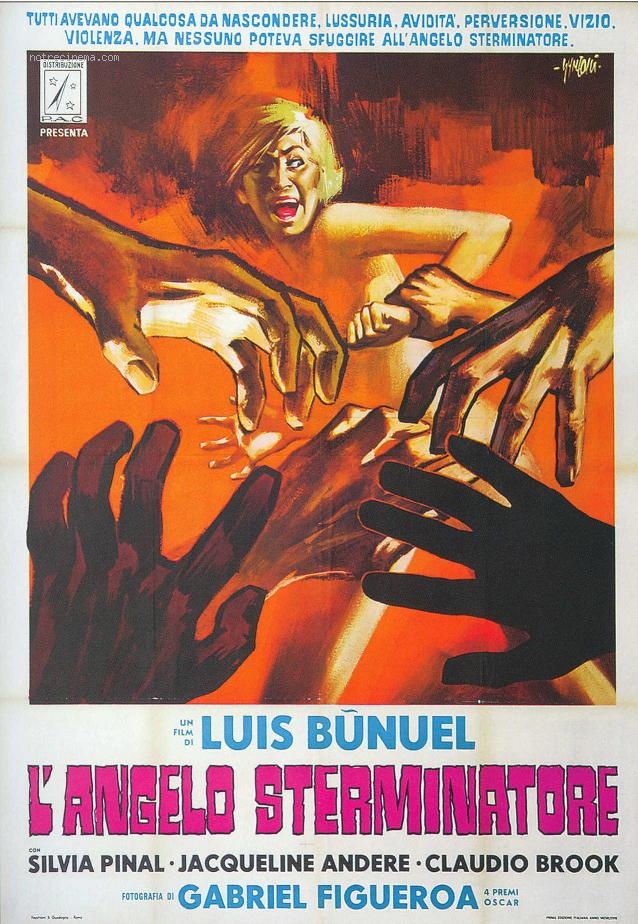
10. The Exterminating Angel (Luis Buñuel, 1962): “He is my hero. Mike Nichols said in the newspaper he thinks of Buñuel every day, which I believe I do, too, or at least every other.”
So there you have… at least some of it (I am surprised to find no Georges Méliès). Depending on your familiarity with Anderson’s choices, a perusal of his favorites’ lists may give you some special appreciation of The Grand Budapest Hotel. Then again, it may just be the case that the only real context for any Wes Anderson film is other Wes Anderson films.
Related Content:
Watch Wes Anderson’s Charming New Short Film, Castello Cavalcanti, Starring Jason Schwartzman
Bill Murray Introduces Wes Anderson’s Moonrise Kingdom (And Plays FDR In December)
Watch 7 New Video Essays on Wes Anderson’s Films: Rushmore, The Royal Tenenbaums & More
Wes Anderson’s First Short Film: The Black-and-White, Jazz-Scored Bottle Rocket (1992)
Josh Jones is a writer and musician based in Durham, NC. Follow him at @jdmagness
Read More...Download a Free Copy of Danah Boyd’s Book, It’s Complicated: The Social Lives of Networked Teens
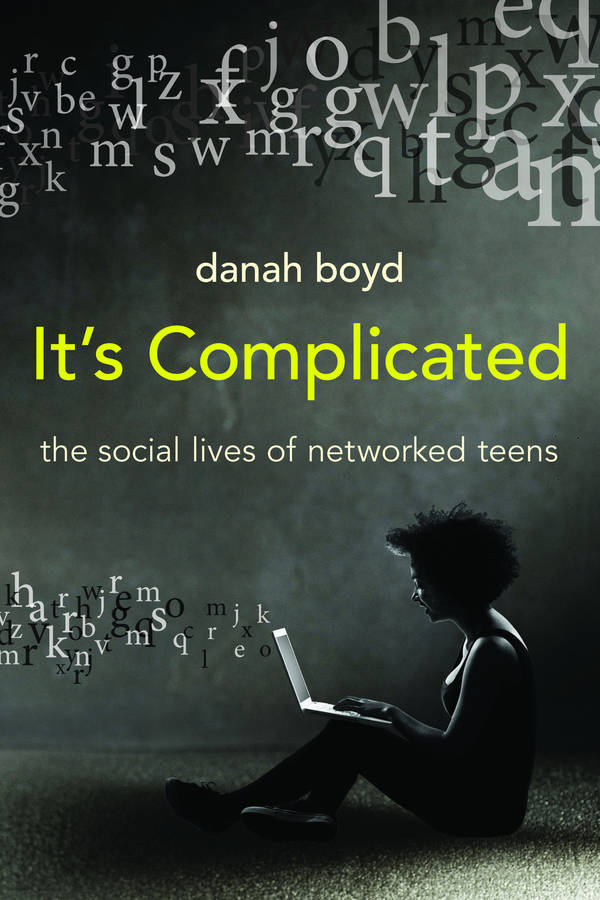
danah boyd (she doesn’t capitalize her name) is a Principal Researcher at Microsoft Research and a Fellow at Harvard’s Berkman Center, where she looks at how young people use social media as part of their everyday lives. She has a new book out called It’s Complicated: The Social Lives of Networked Teens, and she’s made it available as a free PDF. On her website she writes, “I didn’t write this book to make money. I wrote this book to reach as wide of an audience as I possibly could. This desire to get as many people as engaged as possible drove every decision I made throughout this process. One of the things that drew me to Yale [the publisher] was their willingness to let me put a freely downloadable CC-licensed copy of the book online on the day the book came out.” But she also asks that you purchase a copy of the book if you find it useful. “Your purchasing decisions help me signal to the powers that be that this book is important, that the message in the book is valuable.” Find the PDF here, or in our collection of Free eBooks. Buy the book online here.
via BoingBoing
Read More...100 Books to Read in a Lifetime
 Amazon’s Books editors set out to compile a list of 100 Books to Read in a Lifetime, with a few goals in mind:
We wanted the list to cover all stages of a life (which is why you’ll find children’s books in here), and we didn’t want the list to feel like homework. Of course, no such list can be comprehensive – our lives, we hope, are long and varied – but we talked and argued and sifted and argued some more and came up with a list, our list, of favorites. What do you think? How did we do?
Overall pretty well. That’s how I’d answer the editors’ rhetorical question. The list doesn’t pander to the lowest common denominator of reading tastes. It features substantive works by Albert Camus, Alice Munro (see our collection of free Munro stories), Ralph Ellison, Robert A. Caro, Haruki Murakami, Rebecca Skloot and many others. It’s a hearty list, so far as these lists go, offering plenty of good selections for someone seeking a new read. But let me add this one caveat. If the Amazon editors didn’t sell out, they did intend to sell. Or so it seems to skeptical me. Of the 100 books on the list, only a handful are older works in the public domain and thus free. Maybe the Amazon editors would claim that reading books written a century ago is tantamount to homework. But that seems fairly short-sighted. All of this reminds me of a post we wrote last year called The 10 Greatest Books Ever, According to 125 Top Authors. Here we looked back at a 2007 book called The Top Ten: Writers Pick Their Favorite Books where editor J. Peder Zane asked 125 top writers to name their favorite books — writers like Norman Mailer, Annie Proulx, Stephen King, Jonathan Franzen, Claire Messud, and Michael Chabon. The lists were all compiled in an edited collection, and then prefaced by one uber list, “The Top Top Ten.” All but one book in the top 10 was written before 1931 (which means they’re almost entirely free and available in our Free eBooks and Free Audio Books collections). It just goes to show, I suppose, that one person’s homework is another person’s read of a lifetime. Feel free to sift through both lists (here & here) and see which texts belong on your personal bucket list.
Related Content:
The 10 Greatest Books Ever, According to 125 Top Authors (Download Them for Free)
Nabokov Reads Lolita, Names the Great Books of the 20th Century
18 (Free) Books Ernest Hemingway Wished He Could Read Again for the First Time
Neil deGrasse Tyson Lists 8 (Free) Books Every Intelligent Person Should Read
F. Scott Fitzgerald Creates a List of 22 Essential Books, 1936
Read More...Watch Oscar-Winning Films Free Online
To warm you up for tonight’s Oscars, we “pinned” our collection of 34 Free Oscar Winning Films to the top of our homepage earlier today. If you didn’t get a chance to peruse the list, you can always find it here: 34 Free Oscar Winning Films Available on the Web. Or visit our meta collection of 635 Free Movies Online: Great Classics, Indies, Noir, Westerns, etc.
Related Content:
David Niven Presents an Oscar and Gets Interrupted by a Streaker (1974)
Spielberg Reacts to the 1975 Oscar Nominations: ‘Commercial Backlash!’
33 Free Oscar Winning Films Available on the Web
80 Years of Academy Award Winning Films in Posters
Read More...Support Us
We're hoping to rely on loyal readers, rather than erratic ads. Please click the Donate button and support Open Culture. You can use Paypal, Venmo, Patreon, even Crypto! We thank you!

About Us

Open Culture scours the web for the best educational media. We find the free courses and audio books you need, the language lessons & educational videos you want, and plenty of enlightenment in between.
Advertise With Us

FREE UPDATES!
GET OUR DAILY EMAIL
Get the best cultural and educational resources on the web curated for you in a daily email. We never spam. Unsubscribe at any time.
FOLLOW ON SOCIAL MEDIA

Open Culture editor Dan Colman scours the web for the best educational media. He finds the free courses and audio books you need, the language lessons & movies you want, and plenty of enlightenment in between.
Advertise With Us

