Listen to 21-Year-Old David Letterman’s College Radio Show (1969)
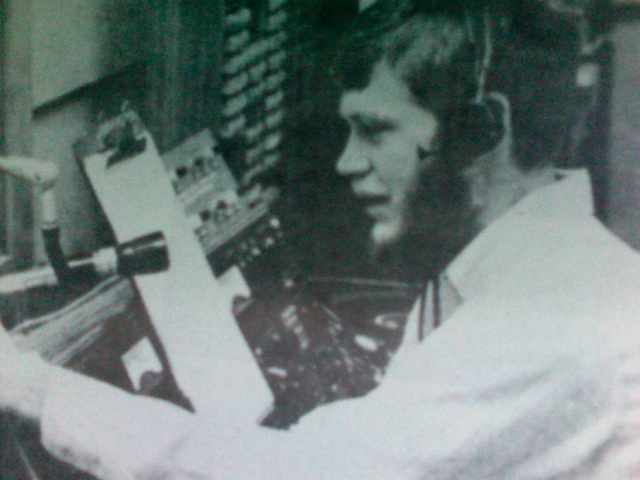
Over thirty years at the desk of his very own late-night talk show, multiple generations of fans, the respect of comedians the world over: David Letterman has had, by any measure, an awfully good run. Though they had to know it could come sooner or later, thousands of viewers, since Letterman announced last Thursday that he plans to retire in 2015, face the imminent prospect of a world without the Late Show as they know it. For the young and young-ish among them, many of whom didn’t come into the world themselves until after Letterman’s 1982 national debut (see video at bottom), this constitutes an entirely new and troublingly less absurd televisual reality. But the master comedy host didn’t simply emerge on to the scene, fully formed, those 32 years ago. Anyone who’s watched long enough to notice the frequency of Letterman’s references to Indianapolis, his hometown and the media market that granted him his first “big” chance as a weatherman, knows that he never forgot his roots.
As with many illustrious careers, Letterman’s humble early shot followed even humbler, earlier shots. Just above, you can hear the 21-year-old “Dave Letterman”’s broadcast from April Fool’s Day 1969 on WAGO-AM, the closed-circuit radio station he helped to found at his future alma mater, Ball State University. Though only a five-minute clip, this recording showcases not just Letterman’s preternatual microphone presence, but his way with the near-psychedelic walls of sound effects, seemingly free-associative speech, and pure wackiness that so came into its own in the late sixties and early seventies. (The Firesign Theater would soon perfect it.) Letterman followers who must know everything — and they certainly exist — should note that, when he calls a delirious-sounding woman in this segment, he calls none other than Michelle Cook, the very first Mrs. Letterman. Though we have yet to learn the identity of Letterman’s Late Show replacement, I feel certain, after this listening experience, that the Letterman of twenty years from now will rise from the ranks of podcasting. Listen out for him; he may not drop colorful phrases just like “horse dentures falling into a rusted howitzer artillery shell,” but you’ll know him when you hear him. Or her.
Below you can watch Bill Murray’s appearance on Letterman’s first 1982 show.
via WFMU’s Beware of the Blog
Related content:
Tom Waits and David Letterman: An American Television Tradition
Colin Marshall hosts and produces Notebook on Cities and Culture and writes essays on cities, language, Asia, and men’s style. He’s at work on a book about Los Angeles, A Los Angeles Primer. Follow him on Twitter at @colinmarshall or on Facebook.
Read More...Watch Orson Welles’ Trailer for Citizen Kane: As Innovative as the Film Itself
Over the years, the movie trailer has evolved from being a long baggy commercial for an upcoming feature to a visually striking mini-gem of filmmaking that sometimes overshadows the film it advertises. Pretty much every trailer from a movie by Zack Snyder, for instance, is exponentially better than the actual film.
Not surprisingly, one of the first filmmakers to embrace the possibilities of the movie trailer was one of cinema’s great innovators – Orson Welles. The trailer for Citizen Kane, which you can see above, has no actual footage from the movie – something of a rarity. Instead, the trailer serves as a curious four-minute long documentary featuring behind-the-scenes footage and short vignettes of characters reacting to the movie’s mysterious central character.
Displaying the same visual verve that would make Citizen Kane a cinematic landmark, the trailer opens with a gorgeous shot of a boom lowering into view. And then we hear Welles’s signature baritone voice introducing himself, “How do you do, ladies and gentlemen. This is Orson Welles.”
After informing the audience about a coming attraction — his film — Welles segues straight into a shot of pretty girls, delivered with a wry wink at the audience. “Speaking of attractions, chorus girls are certainly an attraction. Frankly, ladies and gentlemen, we’re just showing you the chorus girls for the purposes of ballyhoo.”
He goes on to introduce the cast of Citizen Kane — members of Welles’s famed Mercury Theatre like Joseph Cotten, Agnes Moorehead, and Ray Collins — on set but out of costume, looking bashfully toward the camera. The one person missing is Welles himself, who, aside from his urbane, authoritative voice over, is completely absent.
The trailer then shifts gears. “Citizen Kane is a story about a modern American called Kane, Charles Foster Kane. I don’t know how to tell you about him, there’s so much to say. I’ll turn you over to the characters in the picture.” We then see a montage of the characters of Citizen Kane. They’re all on the telephone, airing their wildly divergent opinions of the film’s central character. Kane himself never makes an appearance. Welles ends the piece by presenting Kane as an enigma, “a hero, a scoundrel, a no-account, a swell guy, a great lover, a great American citizen, and a dirty dog.”
Critic and actor Simon Callow argued in his book Orson Welles: The Road to Xanadu that the trailer for Kane was just as groundbreaking as the movie. It’s all shot with the same look as Kane — deep focus and expressionistic lighting.
Compare Kane’s trailer with one that was more typical of its time like Casablanca. Amid the overwrought copy and some comically flashy transitions, that trailer all but tells you what is going to happen in the film. There’s violence! Danger! Romance! Kane’s trailer, on the other hand, is less a sales pitch than a mystery. It shows plenty about the people behind the making of the movie but it shows nothing from the actual film. Based solely on the trailer, you don’t know what Kane is about, short of being about a shadowy, complicated character called Kane.
Welles wasn’t just being cagey for the sake of building audience interest. He was trying to head off a fight. Though Welles publicly claimed that Kane was not about media baron William Randolph Hearst, you can hardly blame the tycoon for feeling otherwise. Hearst was a newspaper magnate with a showgirl mistress who built himself a preposterously opulent castle. Citizen Kane is about a newspaper magnate with a showgirl wife who built himself a preposterously opulent castle.
Hearst did everything he could to stop the movie’s production – and he could do quite a lot. When he failed to kill the picture by pressuring the studio, he pressured theater owners. He used his media empire to slander Welles – using the director’s complicated personal life as tabloid fodder and even implying that he was a Communist. Hearst’s campaign to discredit Welles was so successful that when the director’s name came up during the 1942 Academy Awards, it elicited boos.
Welles, of course, got the last laugh. Kane was such an audacious, stunningly original work that, once rediscovered in the 1950s, it was quickly declared a masterpiece. The prestigious Sight and Sound poll of critics and filmmakers rated Kane as the best movie ever made for five decades straight before getting unseated last year by Alfred Hitchcock’s Vertigo.
Related Content:
Listen to Orson Welles’ Classic Radio Performance of 10 Shakespeare Plays
Listen to Eight Interviews of Orson Welles by Filmmaker Peter Bogdanovich (1969–1972)
Watch Orson Welles’ The Stranger Free Online, Where 1940s Film Noir Meets Real Horrors of WWII
Orson Welles Explains Why Ignorance Was His Major “Gift” to Citizen Kane
Jonathan Crow is a Los Angeles-based writer and filmmaker whose work has appeared in Yahoo!, The Hollywood Reporter, and other publications. You can follow him at @jonccrow.
Read More...
Hipsters Ordering Coffee
“Cappuccino small, low fat, extra dry.” Sorry to say, but that’s my line 2–3 times per day. That makes me almost as bad as the coffee-ordering hipsters in this new video by Nacho Punch. Let the video roll for a bit. It has its funny moments.
On a more serious note, if you live in the San Francisco Bay Area, consider spending Saturday, May 3rd at Stanford’s one-day coffee symposium. Organized by Stanford Continuing Studies, the symposium — Coffee: From Tree to Beans to Brew and Everything in Between – will feature guest speakers (historians, scientists, the CEO of Blue Bottle Coffee, etc.) talking about what goes into making this great beverage of ours. Students will also have the opportunity to participate in coffee tasting and evaluation sessions. In full disclosure, I helped put the program together. It promises to be a great day. So I had to give a plug. You can learn more and sign up here.
via HuffPo
Related Content:
The Curious Story of London’s First Coffeehouses (1650–1675)
Men In Commercials Being Jerks About Coffee: A Mashup of 1950s & 1960s TV Ads
The History of Coffee and How It Transformed Our World
Read More...George R.R. Martin Releases a Free Chapter From The Winds of Winter: Read It Online
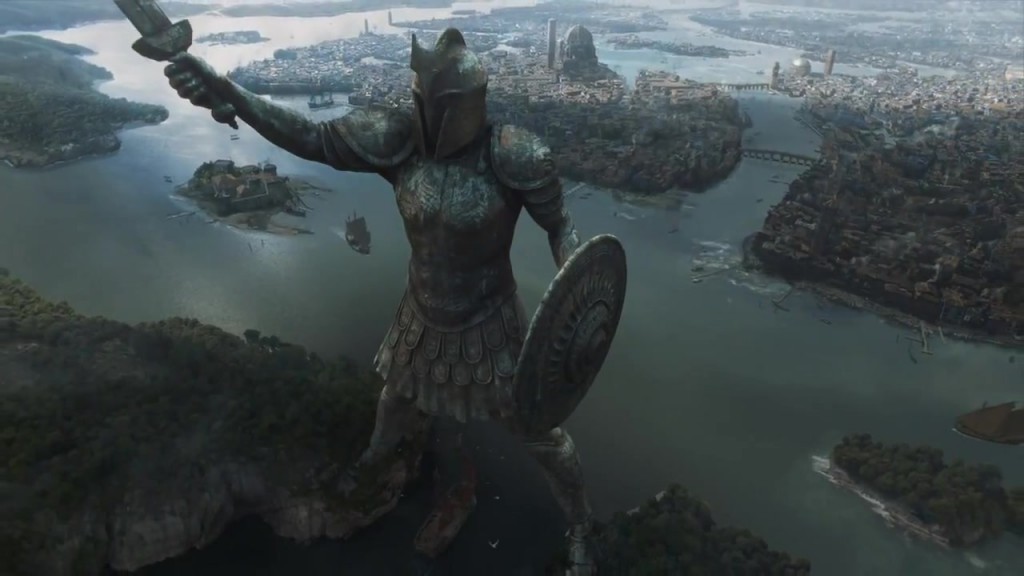
In recent days, George R.R. Martin published a blog post that begins, “Hiya kids, hiya hiya hiya. With season 4 of HBO’s GAME OF THRONES almost upon us, I thought the time was ripe for me to give my readers another taste of WINDS OF WINTER.” The new chapter, he tells us, “is actually an old chapter. But no, it’s not one I’ve published or posted before.” The chapter, called “Mercy,” opens with these words:
She woke with a gasp, not knowing who she was, or where.
The smell of blood was heavy in her nostrils… or was that her nightmare, lingering? She had dreamed of wolves again, of running through some dark pine forest with a great pack at her hells, hard on the scent of prey.
Half-light filled the room, grey and gloomy. Shivering, she sat up in bed and ran a hand across her scalp. Stubble bristled against her palm. I need to shave before Izembaro sees. Mercy, I’m Mercy, and tonight I’ll be raped and murdered. Her true name was Mercedene, but Mercy was all anyone ever called her…
Except in dreams. She took a breath to quiet the howling in her heart, trying to remember more of what she’d dreamt, but most of it had gone already. There had been blood in it, though, and a full moon overhead, and a tree that watched her as she ran.
You can read the chapter in full here. Martin notes that you can also enjoy a new Tyrion chapter, “that is live and available with the ICE & FIRE app.” It’s free on iTunes.
Related Content:
Neil Gaiman’s Free Short Stories
Download 33 Great Sci-Fi Stories by Philip K. Dick as Free Audio Books & Free eBooks
Free: Isaac Asimov’s Epic Foundation Trilogy Dramatized in Classic Audio
The Ware Tetralogy: Free SciFi Download
575 Free eBooks: Download Great Books for Free
Read More...David Bowie Talks and Sings on The Dick Cavett Show (1974)
I can think of very few tasteful phenomena to have come to prominence in the seventies, but David Bowie’s albums and Dick Cavett’s talk shows both make the short list. In the middle of that decade, Bowie certainly made the television rounds; we previously featured his 1975 appearance opposite Cher, and today we have his appearance opposite Cavett from the previous year. “David Bowie is a superstar in a category that has never actually been defined,” says the host about the rocker, to audience cheers, “because as soon as a critic tries to say what he is, he changes, like a chameleon.” It seems that Bowie, then at the height of his self-transformative tendencies, could reduce even the most eloquent man on television to that not-quite-accurate cliché. As the former host told Esquire thirty years after this broadcast, “Doesn’t a chameleon exert tremendous energy to become indistinguishable from its environment?”
Yet Cavett ultimately holds his own with Bowie, a feat I doubt many of the rest of us could pull off then or now. The appearance involves more than just music; while Bowie does perform, he also sits down to talk, something that his fans hadn’t yet seen him do in 1974. To many of them, he remained for the most part a mystery, albeit an astutely rocking one. “Who is he? What is he?” Cavett rhetorically asks the crowd. “Man? Woman? Robot?” In the event, they discuss his school days, his ride on the Trans-Siberian Railway, the unforgettable Diamond Dogs cover art, his step back from “glitter,” why other people would have feared interviewing him, and whether he pictures himself at sixty (in the far-flung year of 2007). How easy to forget, in this age when we can often converse with our idols by merely sending them an @ reply on Twitter, how much a showman like Bowie could leave to our imaginations. He remains admirably secretive by today’s standards, but back in the seventies, anything he said would have come as a revelation — especially if prompted by no less artful a conversationalist.
Related Content:
David Bowie and Cher Sing Duet of “Young Americans” and Other Songs on 1975 Variety Show
David Bowie Releases Vintage Videos of His Greatest Hits from the 1970s and 1980s
David Bowie Recalls the Strange Experience of Inventing the Character Ziggy Stardust (1977)
Colin Marshall hosts and produces Notebook on Cities and Culture and writes essays on cities, language, Asia, and men’s style. He’s at work on a book about Los Angeles, A Los Angeles Primer. Follow him on Twitter at @colinmarshall or on Facebook.
Read More...A Glimpse Into How Wes Anderson Creatively Remixes/Recycles Scenes in His Different Films
Wes Anderson’s movies always trigger a healthy buzz in the pop culture world, and his recently released Grand Budapest Hotel is no different. Already, the film has won the Silver Bear at the Berlin International Film Festival, and if IMDB ratings are anything to go by, it’s well on its way to becoming another Anderson classic.
Anderson’s cinematic style is one of the most distinctive in Hollywood today, and we’ve recently written about two video essays that highlight some of his favorite stylistic techniques. If you’ve ever seen The Royal Tenenbaums, you’ll immediately recognize his trademark visuals: the soft, surreal palette, the tightly framed centered shots, and the steady camerawork are among his favorite tools.
Above, we bring you yet another visual essay on Anderson’s filmmaking, courtesy of the Criterion Collection. This time, however, the focus is Anderson’s sole animated feature, Fantastic Mr. Fox. The clip, entitled The Fox & Mr. Anderson, is a split-screen short, which matches Mr. Fox to Anderson’s other films, shot for perfect shot. Here we see the Mr. Fox protagonists marching in step with the brothers of The Darjeeling Limited, and Steve Zissou, of The Life Aquatic With Steve Zissou fame, mirroring the scowl of Mr. Fox himself; here is Rat, Fox’s mortal enemy, lying wounded, opposite Rushmore’s injured Max Fischer. While brief, the collection is a beautiful anthology of Anderson’s work and some of the visuals that make encore performances.
via Biblioklept
Ilia Blinderman is a Montreal-based culture and science writer. Follow him at @iliablinderman, or read more of his writing at the Huffington Post.
Related Content:
Watch 7 New Video Essays on Wes Anderson’s Films: Rushmore, The Royal Tenenbaums & More
Watch Wes Anderson’s Charming New Short Film, Castello Cavalcanti, Starring Jason Schwartzman
Wes Anderson’s First Short Film: The Black-and-White, Jazz-Scored Bottle Rocket (1992)
Read More...
Hear Orson Welles’ Radio Performances of 10 Shakespeare Plays (1936–1944)
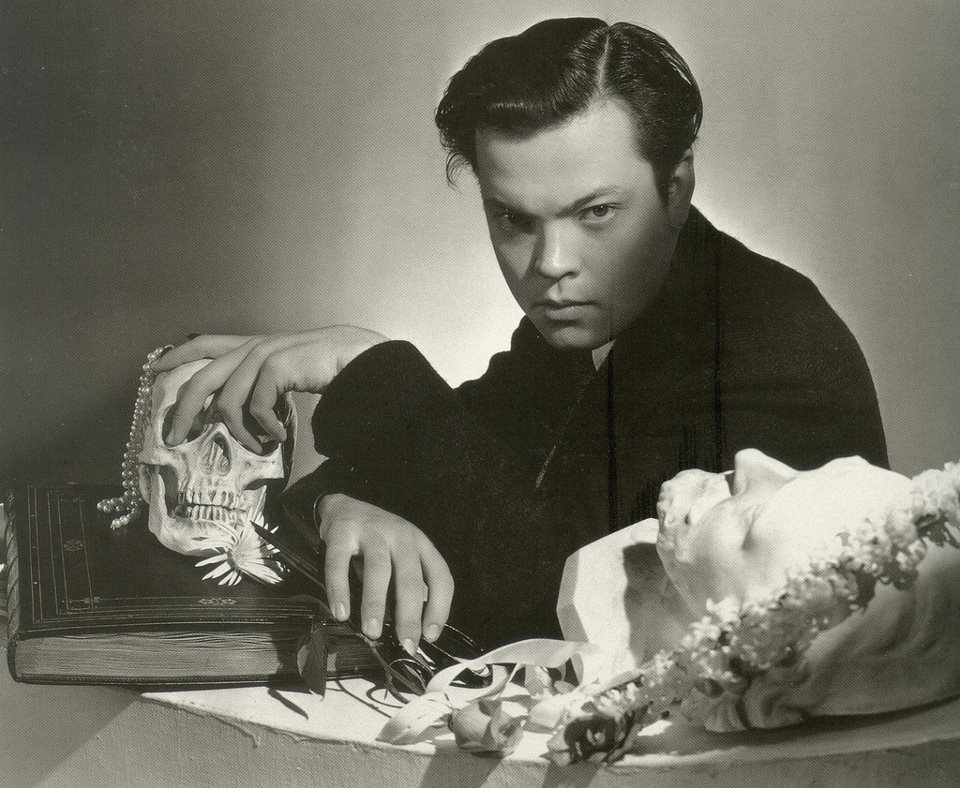
Before he directed Citizen Kane, Orson Welles was already famous. He was an enfant terrible of that new medium radio — one of his plays, an adaptation of War of the Worlds by H.G. Wells, famously terrified the nation in 1938. He was also known as a wunderkind of the stage.
During the late 1930s, Welles and his producing partner John Houseman (yes, that John Houseman) were the toast of Broadway, thanks to a string of audacious classical revivals. The most famous of these productions was a 1937 adaptation of William Shakespeare’s Julius Caesar, which gave the play an unexpected relevance. Welles dressed the cast in modern attire; soldiers were outfitted to look like Nazi black shirts. And the show was lit in a manner meant to recall a Nuremberg rally. Presented at a time when Hitler’s power was growing, the production jolted American audiences and made Welles famous. Time Magazine even put him on its cover.
Being a trailblazer in both radio and the stage, Welles adapted many of his stage productions for the wireless. The Internet Archive has posted many of these recordings online, which you can listen to for free. The selection includes performances of Hamlet, Romeo and Juliet, Richard III, Macbeth and, of course, Julius Caesar, among others. In most cases, these recordings — along with a few set photos — are the only documents left of Welles’s groundbreaking productions.
But if you want to get a sense of what Welles’s Julius Caesar actually looked like, you can check out Richard Linklater’s little-seen, critically-praised comedy Me and Orson Welles (2008). The movie stars Zac Efron as a young actor who lands a small part in the production only to find himself competing with the great director for the affections of a girl. The movie might be a trifle but experts have marveled at how close the film is to Welles’s vision. Check out the trailer below.
Related Content:
Listen to Eight Interviews of Orson Welles by Filmmaker Peter Bogdanovich (1969–1972)
Watch Orson Welles’ The Stranger Free Online, Where 1940s Film Noir Meets Real Horrors of WWII
The Hearts of Age: Orson Welles’ Surrealist First Film (1934)
Orson Welles Explains Why Ignorance Was His Major “Gift” to Citizen Kane
Jonathan Crow is a Los Angeles-based writer and filmmaker whose work has appeared in Yahoo!, The Hollywood Reporter, and other publications. You can follow him at @jonccrow.
Read More...Electric Photo of Nikola Tesla, 1899
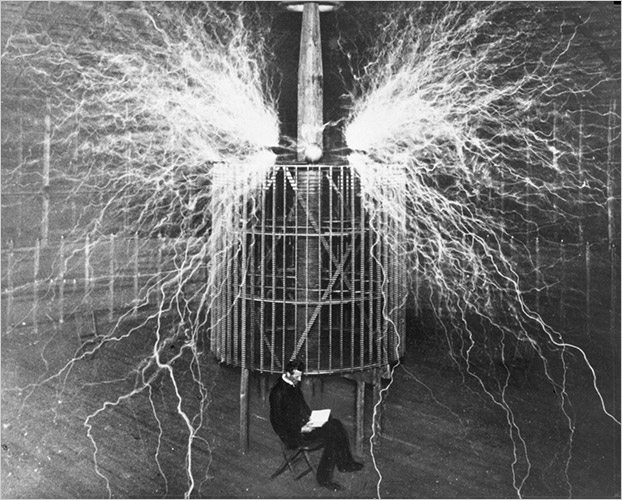
Quite the shot: Nikola Tesla appears in a multiple-exposure photo in 1899, while a Tesla coil discharges millions of volts.
Want to see more old sparks flying? Here we have an image of Mark Twain, the literary giant, tinkering in More Tesla’s laboratory in 1894.
Related Content:
Mark Twain Plays With Electricity in Nikola Tesla’s Lab (Photo, 1894)
Thomas Edison and Nikola Tesla Face Off in “Epic Rap Battles of History”
“Sweet Home Alabama” Played on Tesla Coils
How the Tesla Model S is Made: A Behind-the-Scenes Tour
Read More...The Perfect Symmetry of Wes Anderson’s Movies
Video essayist Kogonada previously made some brilliant observations about the visual obsessions of some of cinema’s greatest formalists. Stanley Kubrick, as Kogonada elegantly points out, composes most of his shots using one-point perspective. Once called out, it becomes a motif that’s really hard to ignore. Yasujiro Ozu – a director who has more cinematic eccentricities than just about any other major director – had a fascination with windows, doorways and corridors.
For his latest essay, Kogonada takes on perhaps film’s most famous formalist working today – Wes Anderson. As you can see from the video above, Anderson loves to compose his shots with perfect symmetry. From his breakout hit Rushmore, to his stop-motion animated movie The Fantastic Mr. Fox, to his most recent movie The Grand Budapest Hotel, Anderson consistently organizes the elements in his frame so that the most important thing is smack in the middle.
Directors are taught in film school to avoid symmetry as it feels stagey. An asymmetrically framed shot has a natural visual dynamism to it. It also makes for a more seamless edit to the next shot, especially if that shot is another asymmetrically framed shot. But if you’ve watched anything by Anderson, you know that seeming stagey has never been one of his concerns. Instead, Anderson has developed his own quirky, immediately identifiable visual style.
When critics complained about Ozu’s proclivity for essentially making the same movie over and over again, he famously responded by saying, “I only know how to make tofu. I can make fried tofu, boiled tofu, stuffed tofu. Cutlets and other fancy stuff, that’s for other directors.” Anderson would probably not consider himself a tofu maker, but he would most likely appreciate Ozu’s sentiment.
Check out another Kogonada essay below about Anderson’s tendency for composing shots from directly overhead.
Related Content:
Watch 7 New Video Essays on Wes Anderson’s Films: Rushmore, The Royal Tenenbaums & More
Watch Wes Anderson’s Charming New Short Film, Castello Cavalcanti, Starring Jason Schwartzman
Wes Anderson’s First Short Film: The Black-and-White, Jazz-Scored Bottle Rocket (1992)
Read More...Watch David Brenner (RIP) Make the First of His 158 Appearances on The Tonight Show in 1971
News just hit the wires that comedian David Brenner (1936–2014) died at his home today at the age of 78. Cancer was apparently the cause.
Born in Philadelphia, Brenner started out a documentary filmmaker, but eventually launched a career as a comedian. His big break came on January 8, 1971 when Johnny Carson let him do nine minutes of standup on The Tonight Show. Carson apparently liked Brenner’s observational comedy routine. In years to come, Brenner made a record-setting 157 appearances on Johnny’s show, sometimes as a comedy act, sometimes as a substitute host. Above you can watch the very first of those funny appearances.
H/T @MrCraigBierko
Related Content:
RIP: George Carlin on the Tonight Show (1966)
Ayn Rand Instructs Johnny Carson on the Virtue of Selfishness, 1967
Jim Henson’s Animated Film, Limbo, the Organized Mind, Presented by Johnny Carson (1974)
Read More...
Support Us
We're hoping to rely on loyal readers, rather than erratic ads. Please click the Donate button and support Open Culture. You can use Paypal, Venmo, Patreon, even Crypto! We thank you!

About Us

Open Culture scours the web for the best educational media. We find the free courses and audio books you need, the language lessons & educational videos you want, and plenty of enlightenment in between.
Advertise With Us

FREE UPDATES!
GET OUR DAILY EMAIL
Get the best cultural and educational resources on the web curated for you in a daily email. We never spam. Unsubscribe at any time.
FOLLOW ON SOCIAL MEDIA

Open Culture editor Dan Colman scours the web for the best educational media. He finds the free courses and audio books you need, the language lessons & movies you want, and plenty of enlightenment in between.
Advertise With Us

