How Benoit Mandelbrot Discovered Fractals: A Short Film by Errol Morris
Even if you know little of mathematics, you probably have some awareness of fractals. You’ve almost certainly heard them invoked, correctly or otherwise, to describe things that look or act the same at the large scale as they do at the small. You may even know the name Benoit Mandelbrot, the much-laureled Polish-French-American “father of fractal geometry.” Hard science-fiction titan Arthur C. Clarke called his eponymous set of mathematical points “one of the most astonishing discoveries in the entire history of mathematics.”
Nassim Nicholas Taleb, the famously discriminating author of The Black Swan, called him “the only person for whom I have had intellectual respect.” Even former French president Nicolas Sarkozy gave Mandelbrot his props, crediting his discoveries of the geometrical regularities of “rough” things, from coastlines to stock-market fluctuations, as antecedent to modern information theory. He also acknowledged Mandelbrot’s having carried on his work “entirely outside mainstream research,” and the mathematician’s reputation as an unusually insightful intellectual maverick survives him.
Who better to reveal the mind of an intellectual maverick, insightful or otherwise, than Errol Morris, the documentarian behind such head-on interview-driven feature films as A Brief History of Time, about astrophysicist Stephen Hawking; Mr. Death, about electric-chair designer and Holocaust-denial maverick Fred A. Leuchter Jr.; and The Fog of War, about former Defense Secretary and Vietnam War engineer Robert S. McNamara? His five-minute profile of Mandelbrot comes courtesy of IBM, where the father of fractals worked for 35 years — and whose then-cutting-edge computers he used to father those fractals in the first place. “A formula can be very simple,” he says, summing up one impact of the Mandelbrot set in this interview shot 19 days before his death in 2010, “and create a universe of bottomless complexity.” To find out more about just how that happens, visit to IBM’s page on Mandelbrot and fractal geometry as well as their ongoing fractal-themed Tumblr.
Related Content:
Arthur C. Clarke Narrates Film on Mandelbrot’s Fractals; David Gilmour Provides the Soundtrack
Watch A Brief History of Time, Errol Morris’ Film About the Life & Work of Stephen Hawking
“They Were There” — Errol Morris Finally Directs a Film for IBM
Colin Marshall hosts and produces Notebook on Cities and Culture and writes essays on literature, film, cities, Asia, and aesthetics. He’s at work on a book about Los Angeles, A Los Angeles Primer. Follow him on Twitter at @colinmarshall.
Read More...Christopher Hitchens, Who Mixed Drinking & Writing, Names the “Best Scotch in the History of the World”
In 2006, a profile of Christopher Hitchens in The New Yorker noted how its subject had the tendency to drink “like a Hemingway character: continually and to no apparent effect.” Although Ernest Hemingway’s approach to alcohol informed the habits of his literary personages, it differed significantly from that of the late journalist. Hemingway, counter to his image, stood firmly against mixing writing and drinking, and when asked about combining the two exclaimed:
“Jeezus Christ! Have you ever heard of anyone who drank while he worked? You’re thinking of Faulkner. He does sometimes—and I can tell right in the middle of a page when he’s had his first one. Besides, who in hell would mix more than one martini at a time, anyway?”
Whereas Hemingway’s approach to writing and imbibing was often marked by a cautious and professional wall of separation, Hitchens had no such compunctions. The contrarian willingly admitted to drinking a fortifying mixture of wine and spirit throughout the day:
“I work at home, where there is indeed a bar-room, and can suit myself.… At about half past midday, a decent slug of Mr. Walker’s amber restorative, cut with Perrier water (an ideal delivery system) and no ice. At luncheon, perhaps half a bottle of red wine: not always more but never less. Then back to the desk, and ready to repeat the treatment at the evening meal. No “after dinner drinks”—most especially nothing sweet and never, ever any brandy. “Nightcaps” depend on how well the day went, but always the mixture as before. No mixing: no messing around with a gin here and a vodka there.”
Despite this hale and hearty routine, Hitchens claimed to be invigorated rather than impaired by his consumption:
“… on average I produce at least a thousand words of printable copy every day, and sometimes more. I have never missed a deadline. I give a class or a lecture or a seminar perhaps four times a month and have never been late for an engagement or shown up the worse for wear. My boyish visage and my mellifluous tones are fairly regularly to be seen and heard on TV and radio, and nothing will amplify the slightest slur more than the studio microphone.”
As with fishing and amorous exploits, so with drinking—one should be skeptical of bold claims. Nevertheless, Graydon Carter, the longstanding editor of Vanity Fair magazine, corroborated the robustness of Hitchens’ constitution in a fond and respectful obituary following the journalist’s death in 2011.
“He was a man of insatiable appetites—for cigarettes, for scotch, for company, for great writing, and, above all, for conversation… Pre-lunch canisters of scotch were followed by a couple of glasses of wine during the meal and a similar quantity of post-meal cognac. That was just his intake. After stumbling back to the office, we set him up at a rickety table and with an old Olivetti, and in a symphony of clacking he produced a 1,000-word column of near perfection in under half an hour.”
In the clip above, Hitchens makes his well-researched pronouncements on the world’s best Scotch whisky. Below, the former Asylum.com producer Anthony Layser sits down with Hitchens for a drink following the release of his memoir, Hitch-22. Over Hitchens’ beloved spirit, the duo discusses everything from writing, to Brazilian waxes, to waterboarding. The conversation, lasting some 14 minutes, is part of an Asylum.com series titled Drinks with Writers, which includes Layser’s interviews with Gary Shteyngart, Simon Rich, and Nick Hornby.
Related Content:
Christopher Hitchens Revises the Ten Commandments
Christopher Hitchens Answers Reddit User Questions
Christopher Hitchens Creates a Reading List for Eight-Year-Old Girl
Ilia Blinderman is a Montreal-based culture and science writer. Follow him at @iliablinderman.
Read More...Watch Wes Anderson’s Charming New Short Film, Castello Cavalcanti, Starring Jason Schwartzman
Wes Anderson, it seems, has entered his European period. His next feature film, The Grand Budapest Hotel, which comes out in March, takes place in its titular location. His new short film Castello Cavalcanti, too, takes place in its titular location, a hamlet tucked away somewhere undisclosed in Italy. Then again, hasn’t Anderson, aesthetically and referentially speaking, always enjoyed something of a European period? (Maybe we can call it European by way of his native Texas, which, for me, only adds to the visual interest.) This, combined with his apparent fascination with the objects and built environment of the early- to late-middle twentieth century, has won him a great many fans sympathetic to his sensibilities. (Along with, of course, a handful of detractors less sympathetic to them.) This brief but vibrant new piece should, for them, resonate on several levels at once.
Anderson transports us to Castello Cavalcanti in the suitably midcentury year of 1955. The quiet evening scene, exuding that richly Italian feeling falling somewhere between idyll and indolence, splinters apart when a race car crashes into the center of town. Out of the wreck emerges the unscathed but enraged driver: Jed Cavalcanti, played by none other than Jason Schwartzman, star of Anderson’s 1998 breakout Rushmore. Once his anger at his brother-in-law mechanic cools — evidently, the steering wheel got screwed on backward — the Italian-American Cavalcanti realizes he may have driven not only straight into his own ancestral village, but into the company of his ancestors themselves. These charming and vividly colorful seven Andersonian minutes come brought to you by Prada, who, apart from our hero’s racing suit, don’t seem to have left many overt stamps on the finished product. Prada’s prices may still keep me away from their door, but their taste in directors sure won’t.
Castello Cavalcanti will be added to our collection of 600 Free Movies Online.
Related Content:
Watch 7 New Video Essays on Wes Anderson’s Films: Rushmore, The Royal Tenenbaums & More
Wes Anderson from Above. Quentin Tarantino From Below
Wes Anderson’s First Short Film: The Black-and-White, Jazz-Scored Bottle Rocket (1992)
Colin Marshall hosts and produces Notebook on Cities and Culture and writes essays on literature, film, cities, Asia, and aesthetics. He’s at work on a book about Los Angeles, A Los Angeles Primer. Follow him on Twitter at @colinmarshall.
Read More...The 100 Best Novels: A Literary Critic Creates a List in 1898
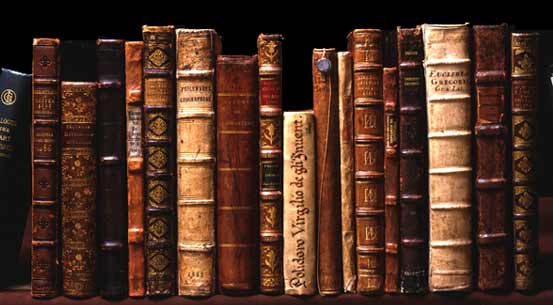 Book lists, despite what younger readers born into Buzzfeed’s ruthless listsicle monopoly may think, have always been popular. Some, like David Bowie’s Top 100 Books, give us a sense of the artist’s development. Others, like Joseph Brodsky’s List of 84 Books for Basic Conversation, provide a Nobel prize-winning benchmark for knowledge. Even though the books are within the reach of most readers, systematically digesting such lists often tries one’s patience. Despite the lack of will or interest in working through someone else’s literary education, however, glancing through such personal anthologies provides us with a glimpse into the maker’s life—be it their private tastes, or their social mores.
In late October, The Times Literary Supplement’s Michael Caines unearthed another Top 100 list; this one, however, has the distinction of hailing from 1898. At the turn of the 20th century, a journalist and author of numerous books on the Brontë sisters named Clement K. Shorter tried his hand at compiling the 100 Best Novels for a journal called The Bookman. The ground rules were simple: the list could feature only one novel per novelist, and living authors were excluded. Today, Shorter’s compendium looks somewhat hit-or-miss. There are some indisputable classics (many of which can be found in our Free eBooks and Free Audio Books collections) and some other texts that have faded into oblivion. Still—one can’t help but experience a certain historical frisson at a 19th century listsicle. Here it goes:
1. Don Quixote — 1604 — Miguel de Cervantes
2. The Holy War — 1682 — John Bunyan
3. Gil Blas — 1715 — Alain René le Sage
4. Robinson Crusoe — 1719 — Daniel Defoe
5. Gulliver’s Travels — 1726 — Jonathan Swift
6. Roderick Random — 1748 — Tobias Smollett
7. Clarissa — 1749 — Samuel Richardson
8. Tom Jones — 1749 — Henry Fielding
9. Candide — 1756 — Françoise de Voltaire
10. Rasselas — 1759 — Samuel Johnson
11. The Castle of Otranto — 1764 — Horace Walpole
12. The Vicar of Wakefield — 1766 — Oliver Goldsmith
13. The Old English Baron — 1777 — Clara Reeve
14. Evelina — 1778 — Fanny Burney
15. Vathek — 1787 — William Beckford
16. The Mysteries of Udolpho — 1794 — Ann Radcliffe
17. Caleb Williams — 1794 — William Godwin
18. The Wild Irish Girl — 1806 — Lady Morgan
19. Corinne — 1810 — Madame de Stael
20. The Scottish Chiefs — 1810 — Jane Porter
21. The Absentee — 1812 — Maria Edgeworth
22. Pride and Prejudice — 1813 — Jane Austen
23. Headlong Hall — 1816 — Thomas Love Peacock
24. Frankenstein — 1818 — Mary Shelley
25. Marriage — 1818 — Susan Ferrier
26. The Ayrshire Legatees — 1820 — John Galt
27. Valerius — 1821 — John Gibson Lockhart
28. Wilhelm Meister — 1821 — Johann Wolfgang von Goethe
29. Kenilworth — 1821 — Sir Walter Scott
30. Bracebridge Hall — 1822 — Washington Irving
31. The Epicurean — 1822 — Thomas Moore
32. The Adventures of Hajji Baba — 1824 — James Morier (“usually reckoned his best”)
33. The Betrothed — 1825 — Alessandro Manzoni
34. Lichtenstein — 1826 — Wilhelm Hauff
35. The Last of the Mohicans — 1826 — Fenimore Cooper
36. The Collegians — 1828 — Gerald Griffin
37. The Autobiography of Mansie Wauch — 1828 — David M. Moir
38. Richelieu — 1829 — G. P. R. James (the “first and best” novel by the “doyen of historical novelists”)
39. Tom Cringle’s Log — 1833 — Michael Scott
40. Mr. Midshipman Easy — 1834 — Frederick Marryat
41. Le Père Goriot — 1835 — Honoré de Balzac
42. Rory O’More — 1836 — Samuel Lover (another first novel, inspired by one of the author’s own ballads)
43. Jack Brag — 1837 — Theodore Hook
44. Fardorougha the Miser — 1839 — William Carleton (“a grim study of avarice and Catholic family life. Critics consider it the author’s finest achievement”)
45. Valentine Vox — 1840 — Henry Cockton (yet another first novel)
46. Old St. Paul’s — 1841 — Harrison Ainsworth
47. Ten Thousand a Year — 1841 — Samuel Warren (“immensely successful”)
48. Susan Hopley — 1841 — Catherine Crowe (“the story of a resourceful servant who solves a mysterious crime”)
49. Charles O’Malley — 1841 — Charles Lever
50. The Last of the Barons — 1843 — Bulwer Lytton
51. Consuelo — 1844 — George Sand
52. Amy Herbert — 1844 — Elizabeth Sewell
53. Adventures of Mr. Ledbury — 1844 — Elizabeth Sewell
54. Sybil — 1845 — Lord Beaconsfield (a. k. a. Benjamin Disraeli)
55. The Three Musketeers — 1845 — Alexandre Dumas
56. The Wandering Jew — 1845 — Eugène Sue
57. Emilia Wyndham — 1846 — Anne Marsh
58. The Romance of War — 1846 — James Grant (“the narrative of the 92nd Highlanders’ contribution from the Peninsular campaign to Waterloo”)
59. Vanity Fair — 1847 — W. M. Thackeray
60. Jane Eyre — 1847 — Charlotte Brontë
61. Wuthering Heights — 1847 — Emily Brontë
62. The Vale of Cedars — 1848 — Grace Aguilar
63. David Copperfield — 1849 — Charles Dickens
64. The Maiden and Married Life of Mary Powell — 1850 — Anne Manning (“written in a pastiche seventeenth-century style and printed with the old-fashioned typography and page layout for which there was a vogue at the period …”)
65. The Scarlet Letter — 1850 — Nathaniel Hawthorne
66. Frank Fairleigh — 1850 — Francis Smedley (“Smedley specialised in fiction that is hearty and active, with a strong line in boisterous college escapades and adventurous esquestrian exploits”)
67. Uncle Tom’s Cabin — 1851 — H. B. Stowe
68. The Wide Wide World — 1851 — Susan Warner (Elizabeth Wetherell)
69. Nathalie — 1851 — Julia Kavanagh
70. Ruth — 1853 — Elizabeth Gaskell
71. The Lamplighter — 1854 — Maria Susanna Cummins
72. Dr. Antonio — 1855 — Giovanni Ruffini
73. Westward Ho! — 1855 — Charles Kingsley
74. Debit and Credit (Soll und Haben) — 1855 — Gustav Freytag
75. Tom Brown’s School-Days — 1856 — Thomas Hughes
76. Barchester Towers — 1857 — Anthony Trollope
77. John Halifax, Gentleman — 1857 — Dinah Mulock (a. k. a. Dinah Craik; “the best-known Victorian fable of Smilesian self-improvement”)
78. Ekkehard — 1857 — Viktor von Scheffel
79. Elsie Venner — 1859 — O. W. Holmes
80. The Woman in White — 1860 — Wilkie Collins
81. The Cloister and the Hearth — 1861 — Charles Reade
82. Ravenshoe — 1861 — Henry Kingsley (“There is much confusion in the plot to do with changelings and frustrated inheritance” in this successful novel by Charles Kingsley’s younger brother, the “black sheep” of a “highly respectable” family)
83. Fathers and Sons — 1861 — Ivan Turgenieff
84. Silas Marner — 1861 — George Eliot
85. Les Misérables — 1862 — Victor Hugo
86. Salammbô — 1862 — Gustave Flaubert
87. Salem Chapel — 1862 — Margaret Oliphant
88. The Channings — 1862 — Ellen Wood (a. k. a. Mrs Henry Wood)
89. Lost and Saved — 1863 — The Hon. Mrs. Norton
90. The Schönberg-Cotta Family — 1863 — Elizabeth Charles
91. Uncle Silas — 1864 — Joseph Sheridan Le Fanu
92. Barbara’s History — 1864 — Amelia B. Edwards (“Confusingly for bibliographers, she was related to Matilda Betham-Edwards and possibly to Annie Edward(e)s …”)
93. Sweet Anne Page — 1868 — Mortimer Collins
94. Crime and Punishment — 1868 — Feodor Dostoieffsky
95. Fromont Junior — 1874 — Alphonse Daudet
96. Marmorne — 1877 — P. G. Hamerton (“written under the pseudonym Adolphus Segrave”)
97. Black but Comely — 1879 — G. J. Whyte-Melville
98. The Master of Ballantrae — 1889 — R. L. Stevenson
99. Reuben Sachs — 1889 — Amy Levy
100. News from Nowhere — 1891 — William Morris
In addition to the canon, Shorter—unable to heed his own cautious counsel and throwing the door open to the winds of literary passion—included 8 books by living novelists whom he called “writers whose reputations are too well established for their juniors to feel towards them any sentiments other than those of reverence and regard:”
An Egyptian Princess — 1864 — Georg Ebers
Rhoda Fleming — 1865 — George Meredith
Lorna Doone — 1869 — R. D. Blackmore
Anna Karenina — 1875 — Count Leo Tolstoi
The Return of the Native — 1878 — Thomas Hardy
Daisy Miller — 1878 — Henry James
Mark Rutherford — 1881 — W. Hale White
Le Rêve — 1889 — Emile Zola
via The Times Literary Supplement
Related Content:
David Bowie’s List of Top 100 Books
Christopher Hitchens Creates a Reading List for Eight-Year-Old Girl
See Nobel Laureate Joseph Brodsky’s Reading List For Having an Intelligent Conversation
Ilia Blinderman is a Montreal-based culture and science writer. Follow him at @iliablinderman
Read More...The Mother of All Domino Rallies
Domino magicians “Hevesh5” and “Millionendollarboy” teamed up to create a pretty epic domino rally. It took 3 months and 25,000 dominoes to make the video you’re watching above. Actually you’re really watching two videos in one. The first part was made by Hevesh5 in the US. Then, at the 1:35 mark, it switches to millionendollarboy’s segment created in Germany. It’s amazing to watch the domino structures come down. A little more amazing to think about them going up. Enjoy.
Related Content:
The Page Turner: A Fabulous Rube Goldberg Machine for Readers
Amazing Flipbook Animation Shows Off the Skills of Ronaldinho
Read More...Yoko Ono, Age 80, Still Has Moves, Dances with The Beastie Boys, Ira Glass, Roberta Flack & Friends
Yoko Ono, a Bad Dancer?
Pshaw! As she’s very likely aware, there’s not a thing wrong with her dancing. If there were, I doubt she’d be sporting saucy hot pants in the above video for the first single off of the Plastic Ono Band’s Take Me to the Land of Hell.
Her 80-year-old stems are in fantastic shape. Mayhaps this youthful vibe is a reflection of the company she keeps. A bunch of nifty pals from Generations X and Y showed up to shake their tail feathers on camera—the surviving Beastie Boys (who also produced), Reggie Watts, Cibo Matto’s Yuka Honda and Miho Hatori, gender-bending performer Justin Vivian Bond, and public radio star Ira Glass, to name but a few.
Apparently, she’s not quite as tight with all her dance partners as the video would imply. Glass describes his involvement thusly:
She’s gracious, has to be reminded by a handler who in the world I am. Then totally acts nice, says something along the lines of “I appreciate the work you do” which either means she’s heard my work or she hasn’t…. The song is called “Bad Dancer” so I’m the perfect participant because—though I love to dance, I have no illusions. I’m a spaz. I stand in front of the camera and 20 handlers and hipsters and publicists and crew and Yoko Ono and I think a reporter from Rolling Stone and I tell myself to pretend I can do this and I dance.
Perhaps declaring herself a Bad Dancer is Ono’s way of encouraging self-conscious wall huggers to drop their inhibitions and join in the fun. It’s an approach to life, and aging, that made a cult classic of Harold and Maude.
Place your bets
Watch your step
I’m a bad dancer
With no regrets
Related Content:
Yoko Ono’s Make-Up Tips for Men
Watch John Lennon and Yoko Ono’s Two Appearances on The Dick Cavett Show in 1971 and 72
Ayun Halliday still gets a bang out of Yoko Ono’s FLY. Follow her @AyunHalliday-
Read More...The Smithsonian Picks “101 Objects That Made America”
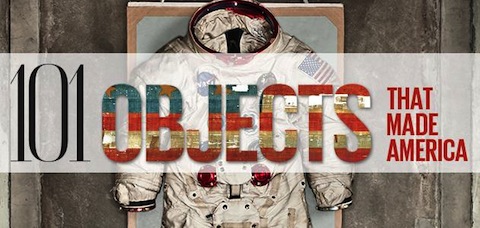
The Smithsonian’s 19 museums, 9 research centers, and 140-plus affiliates boast the world’s largest collection—137 million items, in addition to a staggering array of photos, documents, films, and recordings. Choosing which to include in The Smithsonian’s History of America in 101 Objects (published on October 29) from such a wealth of options was no easy task. (On the other hand, the Director of the British Museum Neil MacGregor did manage to encapsulate two million years of world history in one object less…)
Anthropologist Richard Kurin, the Smithsonian Institution’s Under Secretary for History, Art, and Culture, prioritized objects with vivid biographies. There may be no way for a museum to recreate the Civil War, as he notes, but a “hand-drawn battle map of the time, a bullet or gunnery shelf, a uniform bearing evidence of wounds, and broken metal shackles are all objects that, having been present at the event depicted, can speak to the larger story. The parts stand for the whole.”
Celebrity may have factored into the selection process, too. Not every entry is bespangled with a famous name, but one can’t overlook the vicarious thrill inherent in Cesar Chavez’s union jacket, Abraham Lincoln’s top hat, Helen Keller’s watch, or Marian Anderson’s mink coat. Who can say whether these resonances will lose their luster in the future. In his introduction, Kurin uses the steering wheel of the U.S.S. Maine, once an object of keen national interest due to its role in the Spanish-American War, to exemplify the descent into obscurity.
To celebrate the publication of The Smithsonian’s History of America in 101 Objects, the Smithsonian Channel will be profiling some of the items in a four-part series, Seriously Amazing™ Objects (love the trademark, guys).
In the meantime, have a browse through an online gallery featuring 50 of Kurin’s picks.
Or enjoy these three samples, selected by yours truly for their unifying roundness. (I could never accomplish anything on the order of Kurin’s feat, but encourage the Smithsonian to get in touch whenever they’re in the market for someone who could repackage their collection as board books for infants…)
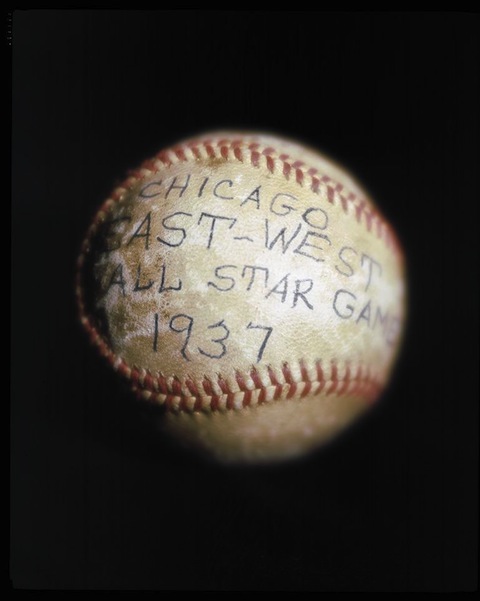
Negro League Baseball
1937, American History Museum
Sportswriter Frank Deford fulfills Kurin’s biographic requirements with an essay on the larger social implications behind this artifact, which scored a home run for Buck Leonard and the East lineup in the ’37 Comiskey All-Star game.
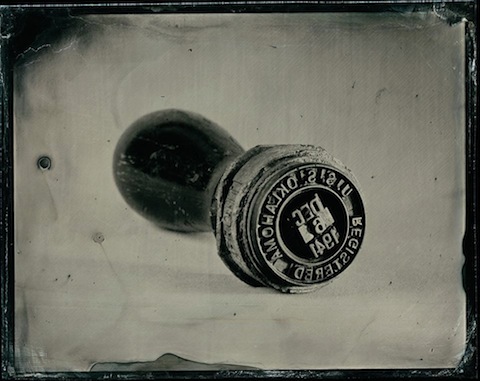
USS Oklahoma Stamp
1941, Postal Museum
“To record when a piece of mail was processed aboard ship, the Navy used wooden postmark stamps. This one bears an ominous date: Dec 6, 1941 PM. It was recovered from the battleship Oklahoma after it was hit by several torpedoes, listed to a 45-degree angle, capsized and sank in the attack on Pearl Harbor on December 7, 1941. The Oklahoma lost 429 sailors and Marines, a third of its crew.”
Wow.

The Pill
c. 1965 American History Museum
As Natalie Angier, author of Woman: An Intimate Geography pointed out in a recent article in Smithsonian magazine, “when people speak of the Pill, you know they don’t mean aspirin or Prozac but rather that mother of all blockbuster drugs, the birth control pill.” A pinnacle of both medical and feminist history, its significance extends well beyond the national borders.
How about you, readers? What item from a museum collection would you include in a book on American History?
Related Content:
Animated Version of Howard Zinn’s History of the American Empire
Pulitzer Prize Winner Picks Essential US History Books
Ayun Halliday remembers the amazement she felt seeing Archie and Edith’s chairs on an 8th grade field trip to Washington DC. Follow her @AyunHalliday
Read More...Watch Joni Mitchell’s Classic Performances of “Both Sides Now” & “The Circle Game” (1968)
Joni Mitchell turns 70 today. A child of rural western Canada, Mitchell endured a series of early hardships that might have crushed a more timid soul — polio, teen pregnancy, an unhappy marriage — but she always managed to follow her muse.
Mitchell made a lifelong habit of guarding her artistic freedom and turning adversity into advantage. When a childhood piano teacher slapped her on the wrist with a ruler for the offense of playing by ear, Mitchell decided she didn’t want any more formal music education. When she found it difficult to form guitar chords with her polio-weakened left hand, she learned to explore alternative, open-chord tunings that have given her music an extra dimension of richness and variation.
As a folk singer in the 1960s, Mitchell managed to fulfill both sides of the Bob Dylan/Joan Baez dichotomy: In one person she was both the songwriter of genius and the woman with the golden voice. And like Dylan, Mitchell didn’t remain a folk singer for long. “I looked like a folk singer,” she once said, “even though the moment I began to write, my music was not folk music. It was something else that had elements of romantic classicism to it.” She went on to explore jazz, collaborating with Charles Mingus, Jaco Pastorius, Wayne Shorter, Herbie Hancock and others. “Impossible to classify,” says her biography at the Rock and Roll Hall of Fame, “Mitchell has doggedly pursued avenues of self-expression, heedless of commercial outcomes.”
As a musician, Mitchell is mostly retired now. She continues to paint and write poetry. To celebrate today’s milestone we bring you a pair of great performances from her younger years. In the clip above, from the January 21, 1968 episode of the CBC’s The Way it Is, a 25-year-old Mitchell plays her classic early songs “Both Sides Now” and “The Circle Game.” Even after 45 years, the songs can send a shiver down your spine. And below, from the 1970 Isle of Wight Festival, Mitchell’s evolution as a writer and performer are evident in the lilting, melodically inventive “Big Yellow Taxi.” In a previous post, we have also highlighted Mitchell playing a 30-minute set on British TV in 1970.
Related Content:
The Music, Art, and Life of Joni Mitchell Presented in a Superb 2003 Documentary
Joni Mitchell: Singer, Songwriter, Artist, Smoking Grandma
James Taylor Performs Live in 1970, Thanks to a Little Help from His Friends, The Beatles
Dick Cavett’s Epic Woodstock Festival Show (August, 1969)
Read More...Steven Soderbergh Posts a List of Everything He Watched and Read in 2009
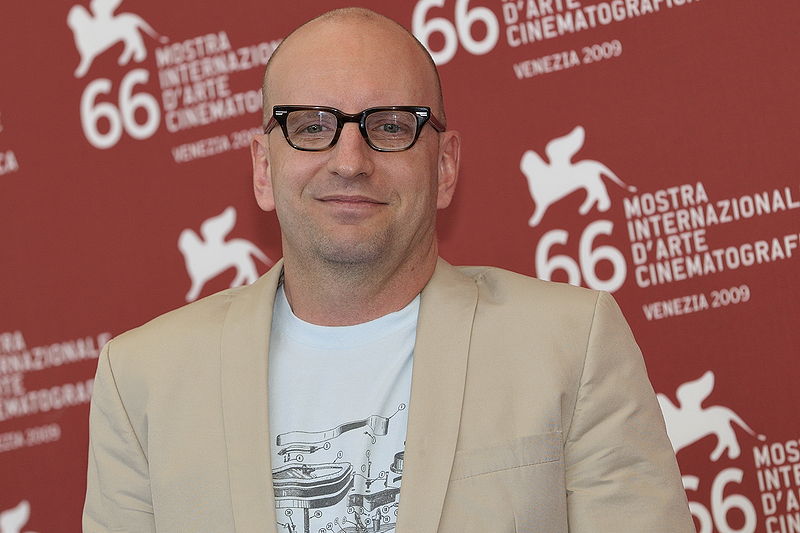
Following his retirement from filmmaking earlier this year, Steven Soderbergh has filled his time with some interesting endeavors. He tweeted an entire novella, and now he has posted a log of all the films and television shows he watched, and all the books and plays he read, in 2009.
As you will see in the log (below), Soderbergh spent much of that year in preparation for the scheduled June shoot of his adaptation of Michael Lewis’s book Moneyball, which was abruptly shut down only days before shooting was to begin, due to disagreements over revisions to Steven Zaillian’s screenplay. Soderbergh read the book for the second, third, and fourth time, as well as much of the work of baseball statistician Bill James, including every abstract James published from 1977 to 1988.
The remainder of his 2009 reading is a mix of non-fiction (Mark Harris’s Pictures at a Revolution to Mark Helprin’s Digital Barbarism: A Writer’s Manifesto) and works of fiction by Nicholson Baker, Donald Barthelme, and Thomas Pynchon.
More interesting is his film and television log, which alternates between current Hollywood and indie releases and classic Hollywood titles. The list should be no surprise coming from a filmmaker repeatedly called a stylistic chameleon. Should we be surprised he follows a Ken Russell phase with The Lone Ranger? Or that he’s just like us and binge-watches Breaking Bad?
The log also sheds light on the post-production process of two of his films released in 2009, The Girlfriend Experience and The Informant, the former viewed three times, the latter four. Was his repeated viewing of Being There inspiration? Or is it simply one of his favorite films?
This is not the first time Soderbergh revealed his viewing log. In 2011, he gave Studio 360’s Kurt Anderson his 2010 log, which included twenty viewings of his film Haywire and several Raiders of the Lost Ark, in black and white.
See the full 2009 list below.
SEEN, READ 2009
All caps: MOVIE
All caps, star: TV SERIES*
All caps, italics: BOOK
Quotation marks: “Play”
1/1/09 VALKRYIE, THE GODFATHER
1/4/09 REMAINDER, Tom McCarthy
1/7/09 BURN AFTER READING
1/10/09 MADE IN USA, STATE AND MAIN
1/13/09 BEING THERE
1/14/09 THE INFORMANT, THE GIRLFRIEND EXPERIENCE
1/15/09 ARSENALS OF FOLLY, Richard Rhodes
1/24/09 THE GRAND, JAWS
1/25/09 THE HOT ROCK
1/27/09 SOLITARY MAN
1/30/09 THE APARTMENT, MONEYBALL (2) Michael Lewis
2/3/09 THE INFORMANT
2/6/09 “The Removalists”
2/7/09 “The War of the Roses, Part One”, THE GIRLFRIEND EXPERIENCE
2/8/09 THINGS I DIDN’T KNOW, Robert Hughes, FIVE EASY PIECES
2/9/09 SOLITARY MAN
2/11/09 MONEYBALL (3)
2/11/09 “The Talking Cure”, Christopher Hampton
2/14/09 HISTORICAL BASEBALL ABSTRACT, Bill James. CORALINE, W., REBECCA.
2/15/09 FROZEN RIVER, WHATEVER HAPPENED TO COOPERSTOWN, Bill James.
2/18/09 BEING THERE
2/20/09 THE OSCAR
2/21/09 PANIC ROOM, THE PARALLAX VIEW
2/22/09 THE BRIDE WORE BLACK
2/23/09 1977, ’78, ’79 BASEBALL ABSTRACT, Bill James.
2/23/09 1980 BASEBALL ABSTRACT, Bill James.
2/26/09 1981 BASEBALL ABSTRACT, Bill James.
2/26/09 PICTURES AT A REVOLUTION, Mark Harris.
2/27/09 REDS (part one)
2/25/09 thru 2/29/09 1982, ’83, ’84, ’85 BASEBALL ABSTRACT, Bill James.
3/01/09 1986, ’87, ’88 BASEBALL ABSTRACT, Bill James.
3/02/09 EUROPA
3/04/09 FOREIGN CORRESPONDENT
3/06/09 THE MAN WHO FELL TO EARTH
3/07/09 ELECTION, THE VERDICT
3/08/09 NO WAY OUT
3/09/09 MONEYBALL (4), Michael Lewis
3/10/09 THE INFORMANT, THE MEN WHO STARE AT GOATS, THE INFORMANT
3/12/09 BREAKING BAD* (pilot)
3/15/09 BREAKING BAD* (2 episodes)
3/16/09 BREAKING BAD* (2 episodes)
3/17/09 BREAKING BAD* (2 episodes)
3/18/09 IL DIVO, MISSISSIPPI MERMAID
3/19/09 THE THOMAS CROWN AFFAIR (’68)
3/20/09 DUPLICITY, GOMORRAH
3/21/09 APPETITE FOR SELF-DESTRUCTION, Steve Knopper
3/22/09 GATTACA
3/26/09 THE CENTER CANNOT HOLD, Elyn Saks, BREAKING BAD* (1 episode)
3/27/09 AGATHA, MADEMOISELLE, BREAKING BAD* (2 episodes)
3/29/09 WAS CLARA SCHUMANN A FAG HAG?, David Watkin, POINT BLANK, BREAKING BAD* (2 episodes)
3/30/09 LET THE RIGHT ONE IN
3/31/09 FORBIDDEN PLANET
4/02/09 THE GIRLFRIEND EXPERIENCE, SWEET SMELL OF SUCCESS
4/05/09 BREAKING BAD* (1 episode), NEXT STOP GREENWICH VILLAGE
4/06/09 AMERICAN GRAFFITI
4/10/09 HOUSE OF GAMES
4/11/09 CARNAL KNOWLEDGE
4/12/09 BREAKING BAD* (1 episode)
4/15/09 ANIMAL SPIRITS; HOW HUMAN PSYCHOLOGY DRIVES THE ECONOMY, AND WHY IT MATTERS FOR GLOBAL CAPITALISM, George A. Akerlof & Robert Shiller
4/17/09 ROCKNROLLA
4/18/09 SEXY BEAST
4/19/09 THE FORTUNE, THIS IS WATER, David Foster Wallace, BREAKING BAD* (1 episode)
4/21/09 GOLDFINGER
4/23/09 2001: A SPACE ODYSSEY
4/24/09 BREAKING BAD* (1 episode)
5/01/09 THE RACE CARD, Richard Thompson Ford
5/02/09 WHERE THE DEAD LAY, David Levien, CONVERSATIONS WITH MARLON BRANDO, Lawrence Grobel.
5/03/09 STRAW; FINDING MY WAY, Darryl Strawberry, BREAKING BAD* (1 episode)
5/06/08 THE RIDICULOUS RACE, Steve Hely & Vali Chandrasekaran.
5/08/09 CONVERSATIONS WITH ROBERT EVANS, Lawrence Grobel
5/09/09 SHAMPOO, THE FRENCH LIEUTTENANT’S WOMAN
5/11/09 COLUMBINE, Dave Cullen
5/14/09 BREAKING BAD* (1 episode), JAWS
5/16/09 THE BROTHERS BLOOM
5/18/09 BREAKING BAD* (1 episode), TAKEN, ERASERHEAD
5/20/09 40 STORIES, Donald Barthelme
5/24/09 DIGITAL BARBARISM, Mark Helprin, BREAKING BAD* (1 episode), TRANSSIBERIAN
5/31/09 THREE DAYS OF THE CONDOR, DRAG ME TO HELL, BREAKING BAD* (1 episode)
6/02/09 THE CULT OF THE AMATEUR, Andrew Keen
6/04/09 3 NIGHTS IN AUGUST, Buzz Bissinger
6/06/09 THE HANGOVER, MISSION: IMPOSSIBLE
6/21/09 MOON
6/23/09 THE FORTUNE COOKIE
6/26/09 THE HURT LOCKER, BARRY LYNDON
6/27/09 THE GRADUATE
6/28/09 BEING THERE
6/29/09 2001: A SPACE ODYSSEY
7/01/09 SUNSET BOULEVARD
7/02/09 CLOSE ENCOUNTERS OF THE THIRD KIND
7/03/09 PUBLIC ENEMIES
7/04/09 THE KILLING OF SISTER GEORGE
7/07/09 TWO LOVERS
7/08/09 THE EMPEROR’S NAKED ARMY MARCHES ON, THE FAILURE, James Greer.
7/09/09 HUMAN SMOKE, Nicholson Baker
7/10/09 SLAP SHOT
7/11/09 BRUNO
7/12/09 THE PRIVATE LIFE OF SHERLOCK HOLMES, PERSONA, THE CHARGE OF THE LIGHT BRIGADE (’68), ELGAR*, THE DEBUSSY FILM*, PYGMY, Chuck Palahniuk
7/14/09 ALWAYS ON SUNDAY*, ISADORA: THE BIGGEST DANCER IN THE WORLD*
7/15/09 DANTE’S INFERNO*, ALTERED STATES
7/16/09 THE LONE RANGER
7/17/09 THE LONE RANGER AND THE CITY OF LOST GOLD
7/18/09 GET SHORTY
7/26/09 ORPHAN, REPULSION
7/27/09 THE HOSPITAL
7/30/09 THE COLLECTOR (’65)
7/31/09 ZODIAC, SONG OF SUMMER*, MUSICOPHILIA, Oliver Sacks
8/01/09 A PERFECT MURDER
8/02/09 VOX, NIcholson Baker, CACHE
8/03/09 ADVISE AND CONSENT
8/05/09 THE LONG GOODBYE
8/06/09 THE RED SHOES
8/08/09 INHERENT VICE, Thomas Pynchon, UNMAN, WITTERING, AND ZIGO, ELECTRA GLIDE IN BLUE, THE ASCENT OF MONEY*, THE SHINING
8/13/09 THIEVES LIKE US, REDS (part two)
8/15/09 CHINATOWN, CITIZEN RUTH
8/16/09 DISTRICT 9, MADE MEN* (1 episode)
Justin Alvarez is the digital director of The Paris Review. His work has appeared in Ploughshares, Guernica, and Flatmancrooked’s Slim Volume of Contemporary Poetics. Follow him at @Alvarez_Justin.
Read More...Watch The New America, a Stop Motion Animation Starring 800+ Laser Engraved Wood Blocks
A Pacific Northwest artist becomes infatuated with the process of laser engraving wood and hatches a plan for a stop motion animation featuring hundreds of engraved maple blocks that can later be mailed as rewards to his project’s Kickstarter donors.
Fans of the television show Portlandia may find themselves experiencing a false sense of deja vu. Remarkably, Nando Costa is not the invention of comedian Fred Armisen. He’s a real person, and two years ago, whilst living in Portland, he gleefully embarked on what proved to be a very ambitious and time-consuming project.
The sort of project a guy with his skills and experience could have knocked out in a couple of months had the chosen materials been magic markers or clay.
Two years and some 800 wood blocks later, The New America is finally available for viewing, all two minutes and 37 seconds of it. Costa describes the abstract storyline as “a union between concepts and experiments born during the Situationist movement and real life events experienced during the last few years in American society. Particularly the duality between the economic downturn and the shift in values and beliefs of many citizens.”
In other words, it’s unlikely to capture the public’s imagination in the same way as Worst Twerk Fail EVER — Girl Catches Fire!
Responding to well wishers—many of whom backed the project on Kickstarter—Costa is gracious…and exhausted.
“It was a lot of hard work and stress,” he tells one admirer in the comments section of his vimeo channel, adding that more planning would go into any future efforts. Despite his successful Kickstarter campaign the project went way over budget, and his wife was not thrilled to be sharing her home with all those 8 x 4.5 inch maple panels. (A few of them are available for purchase on etsy, but it’s artist’s choice. Remember what happened when Bart Simpson stole his dad’s credit card to order a genuine Itchy and Scratchy animation cel off the Impulse Buying Network.)
For now, Costa is content to focus on a new job and settling into a new house after a recent move to Seattle. After that, perhaps an animation that would involve laser-cut paper, but that, he says, would require research.
Related Content:
“The Periodic Table Table” — All The Elements in Hand-Carved Wood
Vintage Footage of Picasso and Jackson Pollock Painting … Through Glass
Watch Cabbit: A Handmade Animation by Crosshatch Artist, Soogie
Ayun Halliday dreams of animating something or other with dry erase markers one of these days. Follow her @AyunHalliday
Read More...Support Us
We're hoping to rely on loyal readers, rather than erratic ads. Please click the Donate button and support Open Culture. You can use Paypal, Venmo, Patreon, even Crypto! We thank you!

About Us

Open Culture scours the web for the best educational media. We find the free courses and audio books you need, the language lessons & educational videos you want, and plenty of enlightenment in between.
Advertise With Us

FREE UPDATES!
GET OUR DAILY EMAIL
Get the best cultural and educational resources on the web curated for you in a daily email. We never spam. Unsubscribe at any time.
FOLLOW ON SOCIAL MEDIA

Open Culture editor Dan Colman scours the web for the best educational media. He finds the free courses and audio books you need, the language lessons & movies you want, and plenty of enlightenment in between.
Advertise With Us

