Hear Homer’s Iliad Read in the Original Ancient Greek
Sure, you enjoyed hearing the way Ancient Greek music actually sounded last week, but what about the way Ancient Greek poetry actually sounded? We can find fewer finer or more recognizable examples of the stuff than Homer’s Iliad, and above you can hear a reading of a section of the Iliad (Book 23, Lines 62–107 ) in the original Ancient Greek language.
It comes from what may strike you as an unlikely source: Stanley Lombardo, a University of Kansas classicist (and also, as it happens, a Zen Buddhist) best known for his translations of the Iliad, the Odyssey, and Virgil’s Aeneid into contemporary-sounding English. “Sounding less like aristocratic warriors than like American G.I.‘s, perhaps,” writes classics-steeped critic Daniel Mendelsohn in the New York Times review of Lombardo’s Iliad, “his epic heroes ‘badmouth’ and ‘beat the daylights out of one another and witheringly call one another ‘trash’ and ‘pansy.’ ”
But Lombardo knows thoroughly the material he adapts. Even those of us who never learned Ancient Greek — if I may speak for this presumably large group of readers — can get a feel for Homer’s tale of the Trojan War and the soldiers’ long return home by listening to the professor’s delivery alone. Just above, you can see him give a reading from his English translation. It won’t surprise you to learn that he also reads the audio books. “We listened spellbound to the incantatory waves of Professor Stanley Lombardo’s voice telling the stories of Odysseus and his Odyssey and then those of the Trojan heroes of The Illiad,” writes Andrei Codrescu in an article on them for the Villager. “Professor Lombardo translated anew the immortal epics and immersed himself so deeply in their world his voice sounded as believable as the hills and valleys we crossed. His voice knows the tales and their enduring charms, and sounds for all the world like an ancient bard’s. Homer himself couldn’t have done better. In English no less, millennia later.”
Related Content:
What Ancient Greek Music Sounded Like: Hear a Reconstruction That is ‘100% Accurate’
Hear The Epic of Gilgamesh Read in the Original Akkadian, the Language of Mesopotamia
Homer’s Iliad and Odyssey: Free AudioBooks & eBooks
Colin Marshall hosts and produces Notebook on Cities and Culture and writes essays on literature, film, cities, Asia, and aesthetics. He’s at work on a book about Los Angeles, A Los Angeles Primer. Follow him on Twitter at @colinmarshall.
Read More...Dissident Poet Joseph Brodsky Gives Six Life Tips to College Grads (1988)
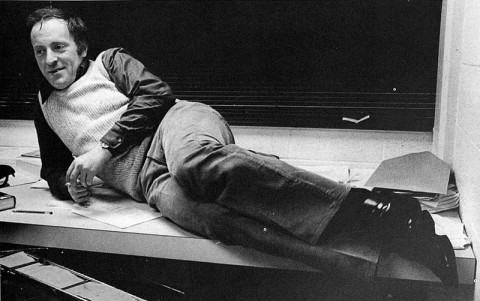
Image from the University of Michigan Yearbook, via Wikimedia Commons
Although Joseph Brodsky was one of the most celebrated Soviet dissidents of the 20th century, the Nobel Prize-winning poet had been unerringly hounded by the repressive Soviet government, which had labeled his poetry as “pornographic and anti-Soviet.” Refusing to abandon his writing, Brodsky was repeatedly brought to court, and once sentenced to 18 months of labor in the Arctic region of Arkhangelsk. During one of his courtroom appearances, the young poet displayed an admirable level of testicular fortitude when the judge asked him, “Who has recognized you as a poet? Who has enrolled you in the ranks of poets?” Brodsky, defiant, replied “No one. Who enrolled me in the ranks of the human race?”
In 1972, Brodsky left the USSR for America, where he was widely sought as a lecturer (his academic bedpost included notches from Cambridge, Columbia, the University of Massachusetts, and Mount Holyoke). On the heels of his winning the 1986 National Book Critics’ award for criticism for Less Than One and receiving the Nobel Prize for Literature in 1987 (pornographic writing, it seems, does quite well with the critics), Brodsky was invited to give the 1988 commencement address at the University of Michigan.
Brodsky’s remarks are far from the galvanizing dose of inspiration that many commencement addresses impart, and certainly not what Michigan graduates were expecting. Rather than uplift, the poet’s words soberly ground the audience; instead of wrapping them in a warm self-assuredness, the life tips are jarring, like an ice bath. Brodsky’s address is a mix of wry humour, acknowledgement of our absurdist existential dilemma, and bold, honest compassion. Reading Brodsky’s advice, one can’t help but feel that the poet valued his flawed humanity even more than his art; likely, they were inseparable.
Here’s a boiled-down version of the poet’s remarks:
1) “Treat your vocabulary the way you would your checking account.” Expression often lags behind experience, and one should learn to articulate what would otherwise get pent up psychologically. Learn to express yourself. Get a dictionary.
2) “Parents are too close a target… The range is such that you can’t miss.” Be generous with your family. Even if your convictions clash with theirs, don’t reject them—your skepticism of your infallibility can only benefit you. It will also save you a good deal of grief when they are gone.
3) “You ought to rely on your own home cooking.” Do not expect society to arrange itself to your benefit—there are too many people whose desires conflict for that to happen. Learn to rely on yourself, and help those who cannot.
4) “Try to not to stand out.” Do not covet money or fame for their own sake. It is best to be modest. There is comfort joining the ranks of those who follow their own discreet paths.
5) “A paralyzed will is no dainty for angels.” Do not indulge in victimhood. By blaming others, you undermine your determination to change your circumstances. When life confronts you with hardships, remember that they are no less an intrinsic part of existence. If you must struggle, do so with dignity.
6) “To be social is to be forgiving.” Do not let those who have hurt you live on in your complaints. Forget them.
The full text—irrevocably more pithy and eloquent—may be found here.
Related Content:
‘This Is Water’: Complete Audio of David Foster Wallace’s Kenyon Graduation Speech (2005)
George Saunders Extols the Virtues of Kindness in 2013 Speech to Syracuse University Grads
Neil Gaiman Gives Graduates 10 Essential Tips for Working in the Arts
Read More...Vintage Film Shows How the Oxford English Dictionary Was Made in 1925
There was lots of money to be made at the end of the 19th century and Dudley Docker made his share of it. He was what they called a “baron of industry” at a time when manufacturing was exploding in Britain. Docker made his fortune in paint, motorcycles, arms manufacturing, railways, and banking. He was an industrial booster, acting as one of the three major financiers behind Ernest Shackleton’s Trans-Antarctic Expedition. In 1916, he founded a major association of British industry to promote business interests.
A charming result of that work is a recently digitized film made in 1925 to demonstrate the work inside Oxford University Press. For book arts lovers, this is a fascinating peek into the early days of mechanized printing.
Above we watch a worker use a mould to make lead type, hundreds of them, by pouring the molten lead in at the top, making a quick upward motion and releasing the quickly dried type. A separate team of workers then sets up monotype composing machines, and we watch as men demonstrate their use.
The film follows the process of printing a run of Oxford English Dictionaries. Books were bound by gender-divided teams: A room of women labored in the “girls” bindery section while men bound books in their own separate room. We see the sewing, cutting and the fascinating process of gilding the page edges.
In our digital age, the old analog processes take on a new, deeper significance. This film presents a terrific 18-minute tutorial on one of the greatest achievements of the modern age: printing mass quantities of bound books.
Related Content:
The Making of a Steinway Grand Piano, From Start to Finish
How Walt Disney Cartoons Are Made (1939)
Spike Jonze Presents a Stop Motion Film for Book Lovers
The History of the English Language in Ten Animated Minutes
Kate Rix writes about education and digital media. Follow her on Twitter.
Read More...A Terrifying Reading of the Sweet Children’s Story Goodnight Moon
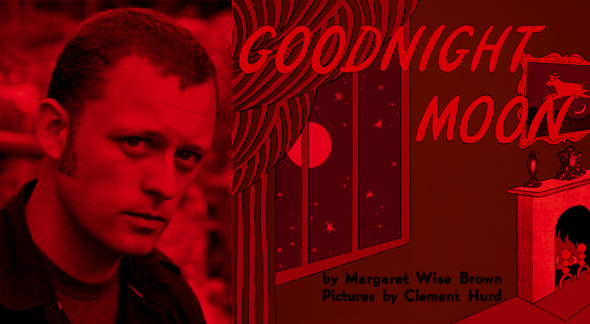
Is this wrong? Benjamin Percy (author of the werewolf thriller Red Moon) takes the sweet children’s bedtime story, Goodnight Moon by Margaret Wise Brown, and turns it into a story that will keep kids (and maybe adults) awake for days on end — perhaps leaving parents no choice but to have the real Werner Herzog read Go the F**k to Sleep. This recording comes courtesy of Graywolf Press, and don’t forget to look under your bed.
H/T Sheerly
Related Content:
Stephen Fry Reads Oscar Wilde’s Children’s Story “The Happy Prince”
Alfred Hitchcock Presents Ghost Stories for Young People (1962)
James Gandolfini Reads from Maurice Sendak’s Children’s Story “In The Night Kitchen”
Hear the Classic Winnie-the-Pooh Read by Author A.A. Milne in 1929
550 Free Audio Books: Download Great Books for Free
Read More...Hear Orson Welles’ Iconic War of the Worlds Broadcast (1938)
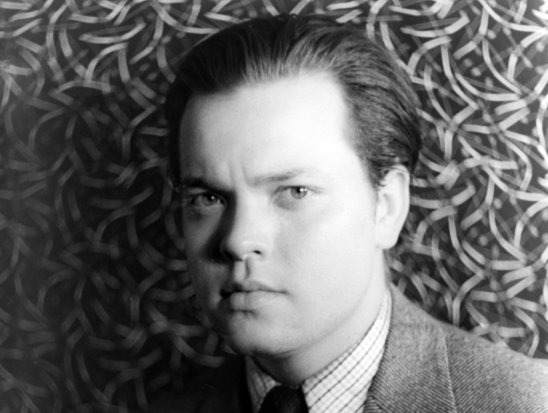
Image by Carl Van Vechten, via Wikimedia Commons
One night in October of 1938, listeners tuned into CBS radio to hear a piece of radio theater (listen below) so frightening and, for its time, realistic, that people across New England and eastern Canada fled their homes to escape danger. Or so the legend goes. With Orson Welles reading the part of an astronaut and professor, the Mercury Theatre on the Air’s broadcast of War of the Worlds hit a frayed nerve in the American public.
The show aired during the tense years leading up to World War II, when fascism was on the rise in Europe. Many took the “news” of an alien invasion for truth. It would have been easy to be fooled: the story, adapted from H.G. Wells’ early sci-fi novel, was written as a simulated news broadcast. It opened with an introduction from the novel and a note that the adaptation was set a year ahead (1939). For those who missed that disclaimer, the remainder of the show was unsettling to say the least.
A reporter read a weather report. Then came dance music played by a fictitious band (“Ramon Raquello and his Orchestra”) that was interrupted by news of bizarre explosions on the surface of Mars. Soon Orson Welles made his appearance, interviewed as an expert who denied the possibility of any life on the red planet. But then came the news of a cylindrical meteorite landing in northern New Jersey. A crowd gathered and a “reporter” came on the scene to watch the cylinder unscrew itself and reveal a rocketship inside.
Chaos ensued, followed by a Martian invasion of New York City, where people ran into the East River “like rats.”
Welles offered another disclaimer at the end of the story (when the aliens succumbed to Earth’s pathogens) to remind listeners that the broadcast was fiction.
Too little, too late? Or just great theater?
The next day, Welles held a brilliant news conference where he apologized for putting a fright into listeners. (It’s another great piece of theater.) Meanwhile the broadcast established the Mercury Theatre on the Air—already an acclaimed stage production company—as one of America’s top-rated radio programs. Until then the show had languished in relative obscurity. After sending thousands of people into a panic, the show earned advertising sponsorship from Campbell’s Soup.
Kate Rix writes about digital media and education. Follow her on Twitter.
Related Content:
Aldous Huxley Reads Dramatized Version of Brave New World
Free: Isaac Asimov’s Epic Foundation Trilogy Dramatized in Classic Audio
Read More...Watch Very First Film Adaptations of Shakespeare’s Plays: King John, The Tempest, Richard III & More (1899–1936)
Shakespeare sells: counterintuitive, but seemingly true. The film industry, which pumps out Shakespeare adaptations (of varying levels of creativity) on the regular, has known this ever since it could hardly have had much awareness of itself as a film industry. At the top, we have the only surviving scene from 1899’s King John, where Shakespeare on screen all started.
“The next three decades would see varied approaches to the challenge of filming Shakespeare in a medium denied the spoken word,” writes the British Film Institute’s Michael Brooke, “from the imaginative tableaux-style mime of Percy Stow’s The Tempest (1908) to truncated productions of the major tragedies (Richard III, 1911; Hamlet, 1913).” Excerpts from one of these last, F.R. Benson’s Richard III, you can watch just below:
Early Shakespeare adapters like Benson tended to make less Shakespeare films than, as Brooke puts it, “compilations of memorable moments” from the plays. Then again, every genre of movie attempted simple things back then, and Shakespearean productions would grow far richer in the sound era, which 1929’s The Taming of the Shrew ushered in for the Bard, and with no less a silver-screen legend than Mary Pickford in the role of Kate.
Seven years later, the not-yet-Sir Laurence Olivier, “cinema’s first great Shakespearean artist,” would make his Shakespeare debut as Orlando in Paul Czinner’s As You Like It (1936), which you can watch below. He’d almost made this debut as the lead in George Cukor’s Romeo & Juliet, but ultimately turned it down.
Related Content:
A Survey of Shakespeare’s Plays (Free Course)
Shakespeare’s Satirical Sonnet 130, As Read By Stephen Fry
Colin Marshall hosts and produces Notebook on Cities and Culture and writes essays on literature, film, cities, Asia, and aesthetics. He’s at work on a book about Los Angeles, A Los Angeles Primer. Follow him on Twitter at @colinmarshall.
Read More...Free: Listen to 298 Episodes of the Vintage Crime Radio Series, Dragnet
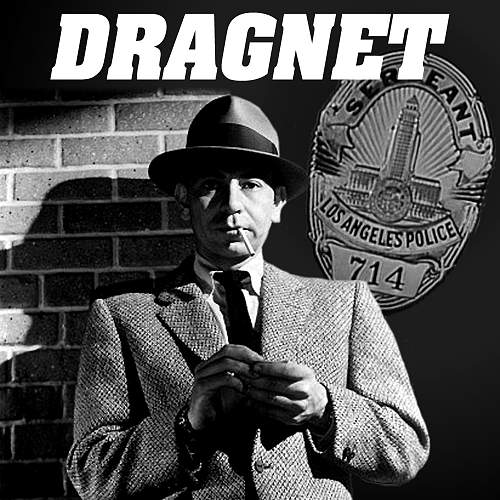
Before it was a film, and before it became a classic television series, Dragnet started out as a long-running radio show, airing from June 3, 1949, to February 26, 1957. One of the most influential crime drama shows from the 50s, Dragnet was the brainchild of Jack Webb, the actor, director and screenwriter who played the lead role of Sergeant Joe Friday. We best remember Joe Friday imploring female informants to provide “Just the facts, ma’am.” But, in actual fact, he never uttered precisely those words. “All we want are the facts” is what he really said. But I digress. Thanks to Archive.org you can now travel back to the 50s and listen to 298 episodes of the show, which was known for its realistic depiction of police work — the boredom, the drudgery, the danger, the occasional acts of heroism, and everything in between.
Note: There were 314 episodes in total. And Archive.org does not house the very first episode called “Robbery,” which first aired on June 3, 1949. That’s available here.
If you would like to support the mission of Open Culture, consider making a donation to our site. It’s hard to rely 100% on ads, and your contributions will help us continue providing the best free cultural and educational materials to learners everywhere. You can contribute through PayPal, Patreon, and Venmo (@openculture). Thanks!
Related Content:
The War of the Worlds: Orson Welles’ 1938 Radio Drama That Petrified a Nation
Raymond Chandler & Ian Fleming in Conversation (1958)
1,000 Free Audio Books: Download Great Books for Free
Read More...Download Vintage Film Posters in High-Res: From The Philadelphia Story to Attack of the Crab Monsters
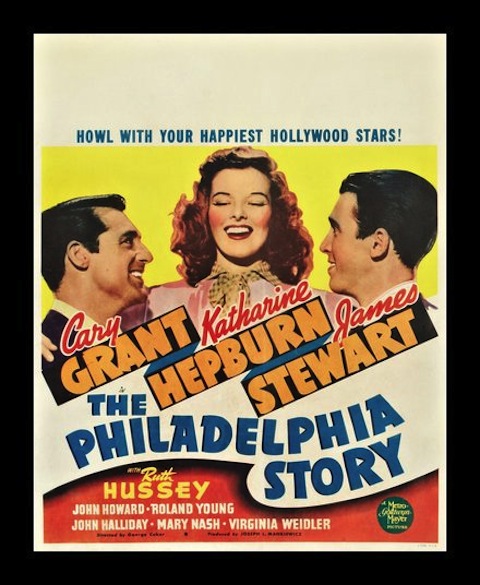
FreeVintagePosters.com offers “hundreds of high quality printable posters in advertising, travel, food/drink, art, movies, westerns, military, magic and much more.” You may have an interest in all those facets of human experience, but we imagine you’ll find especially appealing the site’s selection of high-resolution film posters, suitable for printing at home or elsewhere and hanging on walls in need of cinephilic flair.
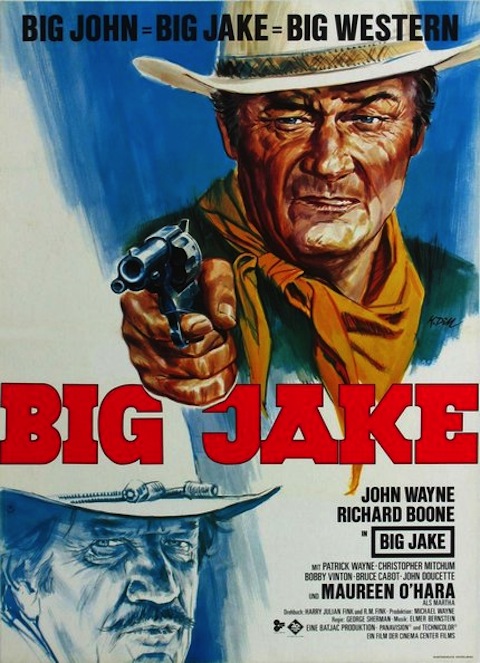
You might, for example, choose to put up the original poster for George Cukor’s The Philadelphia Story, which promises you a “Howl with Your Favorite Hollywood Stars” — Cary Grant, Katharine Hepburn, and James Stewart, in this case. Or if you prefer westerns to comedies, perhaps you’d like to print out one of the three available posters of 1971’s John Wayne-starring Big Jake, my favorite of which pitches the movie with a simple if odd equation: “Big John = Big Jake = Big Western.” (Note: you can watch 21 John Wayne westerns here.)
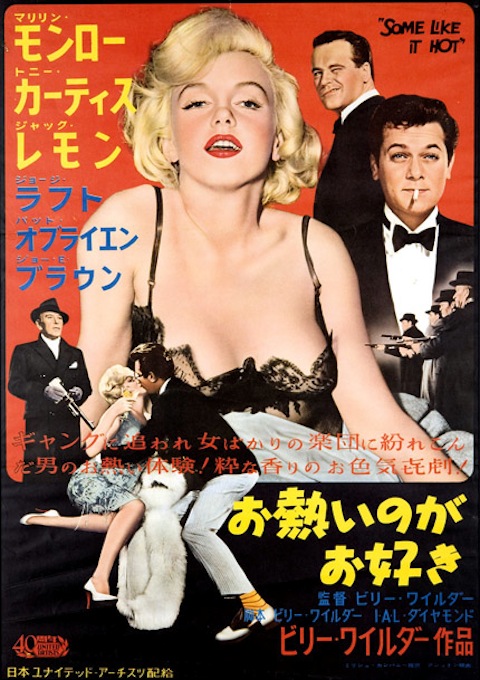
Though the site’s collection slants toward classic American films, it also has sheets used to advertise them abroad. Below you see the photocollage-like Japanese poster for Billy Wilder’s Some Like It Hot. And the lover of camp will find much to enjoy as well. Might I suggest Attack of the Crab Monsters? Whatever your taste, if you decide to head out to the print shop and commission a paper version of any of these image files in a larger size than you can print at home, do consult StandardPosterSize.net, which, true to its name, provides all manner of information on the various sizings of U.S. standard posters, metric standard posters, U.S. movie posters, and U.K. movie posters. If that sounds like a little too much hassle, you could always just download your favorite poster and set it as your desktop background. Before you sign off, make sure you check out our collection 575 Free Movies Online: Great Classics, Indies, Noir, Westerns, etc. It’s something no cinema lover should miss.
via Mental Floss
Related Content:
50 Film Posters From Poland: From The Empire Strikes Back to Raiders of the Lost Ark
Japanese Movie Posters of 10 David Lynch Films
100 Greatest Posters of Film Noir
64 Years of Posters for the Cannes Film Festival
John Wayne: 21 Free Western Films Online
Colin Marshall hosts and produces Notebook on Cities and Culture and writes essays on literature, film, cities, Asia, and aesthetics. He’s at work on a book about Los Angeles, A Los Angeles Primer. Follow him on Twitter at @colinmarshall.
Read More...David Sedaris Sings the Oscar Mayer Theme Song in the Voice of Billie Holiday
I’m going to make your Friday, right here, right now. Above, we have a clip of David Sedaris doing a dead-on Billie Holiday impression while singing the famous Oscar Mayer theme song. The clip is an outtake from a 1998 episode of This American Life where Sedaris talks about his childhood fantasy of singing commercial jingles in Holiday’s voice. You can catch the jingles around the 9:00 mark (listen here) … and again at the 17:45 mark. But I’d really encourage you to listen to the full tale from the very start (6:00). Day made?
If you would like to support the mission of Open Culture, consider making a donation to our site. It’s hard to rely 100% on ads, and your contributions will help us continue providing the best free cultural and educational materials to learners everywhere. You can contribute through PayPal, Patreon, and Venmo (@openculture). Thanks!
Related Content:
Duke Ellington’s Symphony in Black, Starring a 19-Year-old Billie Holiday
Billie Holiday Sings ‘Strange Fruit’
Billie Holiday–The Life and Artistry of Lady Day: The Complete Film
David Sedaris Reads You a Story By Miranda July
Find Stories Read by David Sedaris on our list of 800 Free AudioBooks
Read More...Mark Twain Plays With Electricity in Nikola Tesla’s Lab (Photo, 1894)
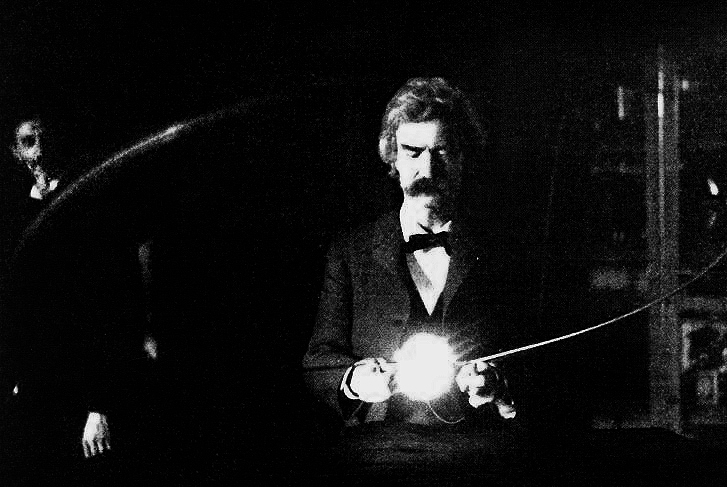
You’ll get a charge out this picture taken long ago. It captures Mark Twain, a literary giant of the 19th century, tinkering in the laboratory of the great inventor, Nikola Tesla. According to the University of Virginia, the photo was taken in the spring of 1894, when Century Magazine published an article called “Tesla’s Oscillator and other Inventions.” Still available online, the article begins:
[Mr. Tesla] invites attention to-day, whether for profound investigations into the nature of electricity, or for beautiful inventions in which is offered a concrete embodiment of the latest means for attaining the ends most sought after in the distribution of light, heat, and power, and in the distant communication of intelligence. Any one desirous of understanding the trend and scope of modern electrical advance will find many clues in the work of this inventor. The present article discloses a few of the more important results which he has attained, some of the methods and apparatus which he employs, and one or two of the theories to which he resorts for an explanation of what is accomplished.
Below, we’ve got more vintage Twain (including Twain topless), plus some choice Tesla picks:
Mark Twain Shirtless in 1883 Photo
Mark Twain Drafts the Ultimate Letter of Complaint (1905)
Mark Twain Captured on Film by Thomas Edison in 1909. It’s the Only Known Footage of the Author
Thomas Edison and Nikola Tesla Face Off in “Epic Rap Battles of History”
“Sweet Home Alabama” Played on Tesla Coils
Read More...Support Us
We're hoping to rely on loyal readers, rather than erratic ads. Please click the Donate button and support Open Culture. You can use Paypal, Venmo, Patreon, even Crypto! We thank you!

About Us

Open Culture scours the web for the best educational media. We find the free courses and audio books you need, the language lessons & educational videos you want, and plenty of enlightenment in between.
Advertise With Us

FREE UPDATES!
GET OUR DAILY EMAIL
Get the best cultural and educational resources on the web curated for you in a daily email. We never spam. Unsubscribe at any time.
FOLLOW ON SOCIAL MEDIA

Open Culture editor Dan Colman scours the web for the best educational media. He finds the free courses and audio books you need, the language lessons & movies you want, and plenty of enlightenment in between.
Advertise With Us


