René Magritte’s Early Art Deco Advertising Posters, 1924–1927
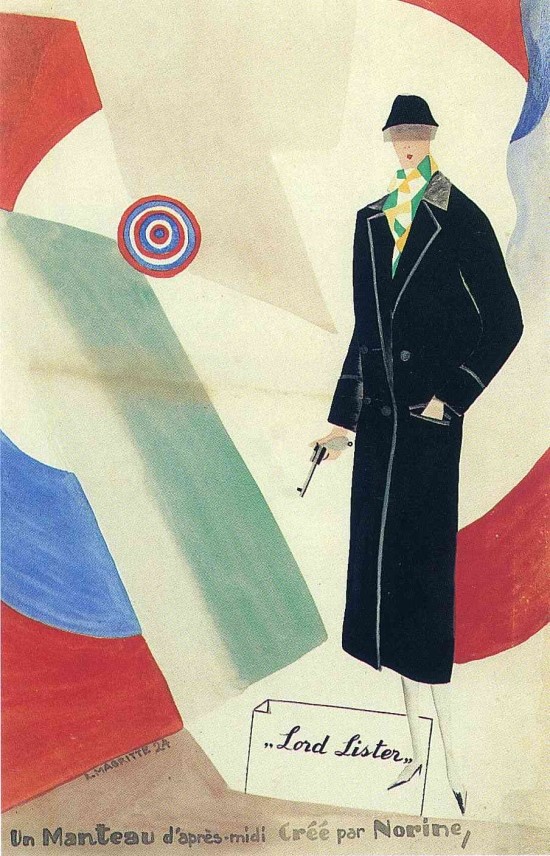 The Belgian painter René Magritte created some of the most enigmatic and iconic works in Surrealist art. But before he moved to Paris in 1927 and began forging relationships with André Breton and the Surrealists, Magritte struggled in Brussels as a freelance commercial artist, creating advertisements in the Art Deco style.
In 1924 Magritte began designing posters and advertisements for the couturier Honorine “Norine” Deschrijver and her husband Paul-Gustave Van Hecke, owners of the Belgian fashion company Norine. Van Hecke also owned art galleries, and was an early champion of surrealism. Van Hecke would eventually pay Magritte a stipend in exchange for the right to market his surrealist works. In the 1924 advertising poster above, Magritte portrays a woman in high heels pretending to be Lord Lister, the gentleman thief from German pulp fiction, wearing “an afternoon coat created by Norine.”
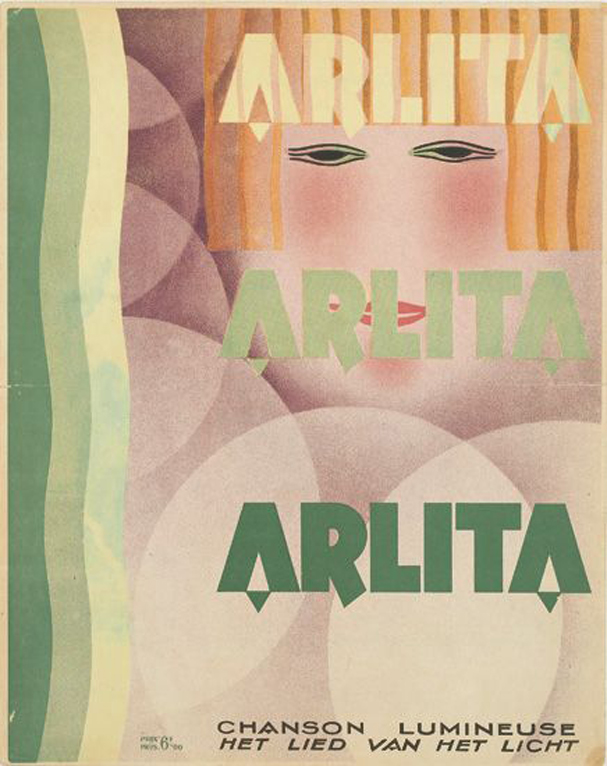
Magritte designed some 40 sheet music covers, most of them in the Art Deco style, according to Hrag Vartanian at Hyperallergic. The one above, “Arlita,” is from about 1925. The French and Dutch subtitles read “The Song of Light.”

The harlequin-themed image above is another advertisement for Norine, circa 1925. Magritte painted it in watercolor and gouache. The penciled inscription at the bottom reads “une robe du soir par Norine” — “an evening gown by Norine.”

In 1926 Magritte was commissioned to create the poster above for the popular singer Marie-Louise Van Emelen, better known as Primevère. An original print is currently up for sale at Christie’s and is expected to bring somewhere between $18,000 and $25,000.
For more of Magritte’s Art Deco sheet music covers, visit Hyperallergic.
Related Content:
Philosopher Portraits: Famous Philosophers Painted in the Style of Influential Artists
The Art of William Faulkner: Drawings from 1916–1925
Bauhaus, Modernism & Other Design Movements Explained by New Animated Video Series
Read More...Bob Dylan and George Harrison Play Tennis, 1969

Click images for larger versions
Bob Dylan’s mysterious motorcycle accident in 1966—an event that has provoked all sorts of wild speculation—gave the overworked mercurial star an opportunity to become a full-fledged recluse, which he seemed to need, whether it was warranted by his injuries or not. He skipped out on Woodstock, turned his back on the flower power rock scene, and in 1967, recorded what I consider his absolute best album, John Wesley Harding (go ahead and yell about my tastes in the comments). By 1969, he had recovered enough musically to expand his palate and record my second favorite of his albums, the full-on country Nashville Skyline. He had also recovered enough physically to play tennis with George Harrison, as you can see above.

Harrison, meanwhile, had quit The Beatles in January, then was coaxed back into the band, which more or less broke up later that year. But he had been busy—recording two mostly-instrumental solo albums and writing his Hindu gospel hit “My Sweet Lord” and the rest of his incredible 1970 triple album All Things Must Pass. Somehow amidst all the turmoil and transition, as Harrison began his most productive solo period and Dylan prepared to release what nearly everyone considers his worst record, Self Portrait, the two found time to hit some balls before Dylan’s performance at the Isle of Wight festival. Dylan was apparently a longtime tennis fan. His 1964 “I Shall be Free No. 10” contains references to the sport. The photos were released by the Harrison family for the 2011 Martin Scorsese-directed doc George Harrison: Living in the Material World (trailer below).
via Retronaut/Dangerous Minds
Related Content:
Hear the Never-Before-Released Bob Dylan Song “Pretty Saro” (1970)
The 1969 Bob Dylan-Johnny Cash Sessions: Twelve Rare Recordings
George Harrison in the Spotlight: The Dick Cavett Show (1971)
Josh Jones is a writer and musician based in Durham, NC. Follow him at @jdmagness
Read More...96-Year-Old Writes Song for Dearly Departed Wife, Becomes Oldest Artist on Billboard’s Top 100
When a 96-year-old man becomes a social media sensation, it’s usually not too hard to see why.
Fred Stobaugh, the gent featured above, ran across a call for entries for Green Shoe Studio’s Singer Songwriter Contest and used it as an excuse to write a love song for his wife, Lorraine. That’s plenty sweet, especially when one does the math—Fred and Lorraine were together for 75 years, and married for all but three. When one learns that Fred buried his bride just six weeks before hearing about the contest, the story takes on a sort of romantic urgency. We need him to win this contest.
Rather than uploading a video of his “Oh Sweet Lorraine” to YouTube as instructed, Stobaugh slipped the lyrics into a manila envelope and mailed them off along with an explanatory note. Green Shoe’s Jake Colgan was open to the transgression, as befits a record producer who made the conscious decision to set up shop in Peoria, Illinois.
It’s safe to assume most of the entrants approached the contest with their eyes on the prize, a professionally recorded demo CD and photo shoot, and laurels with which to adorn their developing careers. No disrespect to them—they were following the rules in good faith—but the purity of Strobaugh’s motives no doubt set him apart as much, if not more than his longevity.
Speaking of which, it was just announced that Stobaugh has toppled the-then-85-year-old Tony Bennett to become the oldest artist ever appearing in Billboard’s Hot 100.
With all the attention being paid to the endearingly modest Mr. Strobaugh, let’s do take a moment to acknowledge this year’s actual contest winner Graham Cowger, as well as the runners up. A class act can be a difficult act to follow. To quote Lou Reed entirely out of context, “always back to Lorraine.”
Related Content:
The Acoustic Guitar Project Gives Songwriters Worldwide a Guitar and One Week to Write a Song
Last Minutes with ODEN: A Touching Short Film
9‑Year-Old Philosopher Ponders the Meaning of Life and the Universe
Ayun Halliday is reminded of the wonderful Joe Putterlik in Miranda July’s film, The Future. Follow her @AyunHalliday
Read More...The 10 Greatest Films of All Time According to 846 Film Critics
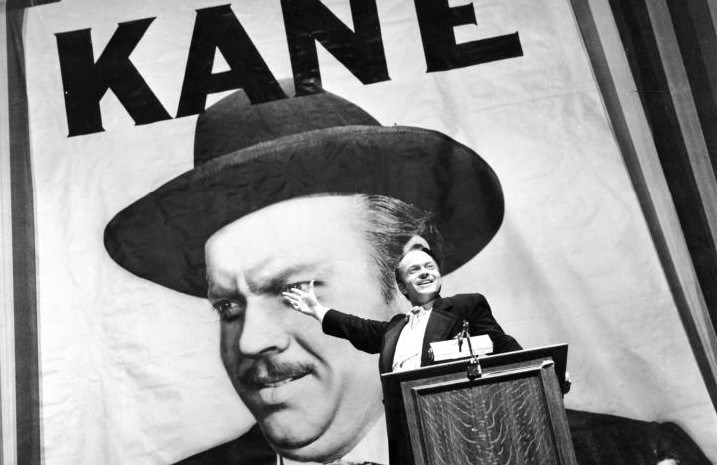
We’ve recently featured the all-time-greatest-film-selections from such celebrated directors as Stanley Kubrick, Martin Scorsese, Woody Allen, and Quentin Tarantino. Some of these lists came from the grand poll put on last year by Sight & Sound, the British Film Institute’s well-respected cinema journal. While scrutinizing the voting records in the directors’ division yields no small pleasure for the cinephile, to focus too closely on that would ignore the big picture. By that, I mean the overall standings in this most painstaking critical effort to determine “the Greatest Films of All Time”:
- Vertigo (Alfred Hitchcock, 1958)
- Citizen Kane (Orson Welles, 1941)
- Tokyo Story (Yasujirô Ozu, 1953)
- La Règle du jeu (Jean Renoir, 1939)
- Sunrise (F.W. Murnau, 1927)
- 2001: A Space Odyssey (Stanley Kubrick, 1968)
- The Searchers (John Ford, 1956)
- Man with a Movie Camera (Dziga Vertov, 1929)
- The Passion of Joan of Arc (Carl Theodor Dreyer, 1928)
- 8½ (Federico Fellini, 1963)
These results came out with a bang — the sound, of course, of Vertigo displacing Citizen Kane. How many who watched the young Orson Welles’ debut during its financially inauspicious original run could have guessed it would one day stand as a byword for the height of cinematic craftsmanship?
But Citizen Kane just flopped, drawing a good deal of critical acclaim even as it did so, whereas, seventeen years later, Hitchcock’s Vertigo not only flopped, but did so into a fog of mixed reviews, tumbling unceremoniously from there into obscurity. Prints became scarce, and the ones Hitchcock aficionados could later track down had seen better days. It would take a kind of obsession — not to mention a thorough restoration — to return Vertigo to the zeitgeist.
We ignored Vertigo at our peril, and if we now ignore Citizen Kane because of its new second-chair status, we do that at our peril as well. The 90-minute documentary, The Complete Citizen Kane, originally aired in 1991 as an episode of the BBC’s Arena. It looks at Welles’ masterpiece from every possible angle, even bringing in New Yorker critic Pauline Kael, whose essay “Raising Kane” took a controversial anti-auteurist position about this most seemingly auteur-driven of all American films.
Follow us on Facebook, Twitter, Google Plus and LinkedIn and share intelligent media with your friends. And if you want to make sure that our posts definitely appear in your Facebook newsfeed, just follow these simple steps.
Related Content:
Martin Scorsese Reveals His 12 Favorite Movies (and Writes a New Essay on Film Preservation)
Stanley Kubrick’s List of Top 10 Films (The First and Only List He Ever Created)
Orson Welles Explains Why Ignorance Was the Genius Behind Citizen Kane
Colin Marshall hosts and produces Notebook on Cities and Culture and writes essays on literature, film, cities, Asia, and aesthetics. He’s at work on a book about Los Angeles, A Los Angeles Primer. Follow him on Twitter at @colinmarshall.
Don’t miss anything from Open Culture in 2014. Sign up for our Daily Email or RSS Feed. And we’ll send cultural curiosities your way, every day.
Read More...Psychedelic Scenes of Pink Floyd’s Early Days with Syd Barrett, 1967
Roger Waters of Pink Floyd turns 70 years old today. Waters was the principal songwriter and dominant creative force during the band’s famous 1970s period, when it released a string of popular and influential concept albums such as Dark Side of the Moon, Wish You Were Here and The Wall. But today we thought it would be interesting to take you all the way back to 1967, when Waters was 23 years old and the band was led by his childhood friend Syd Barrett.
The video above is from a May 14, 1967 broadcast of the BBC program The Look of the Week. Pink Floyd hadn’t released an album yet. Only two nights earlier the band had staged its attention-getting “Games for May” concert at the Queen Elizabeth Hall. In the TV broadcast, Pink Floyd plays its early favorite “Astronomy Domine” before Waters and Barrett sit down for a rather tense interview with the classically trained musician and critic Hans Keller. It’s amusing to watch Keller’s face as he expresses his extreme irritation at the band’s loud, strange music. “My verdict is that its a little bit of a regression to childhood,” he says with a grimace. “But after all, why not?”
Waters and Barrett manage to hold their own during the interview. Barrett comes across as lucid and well-spoken, despite the fact that his heavy LSD use and mental instability would soon make him unable to function within the band. By December of 1967, Pink Floyd would add guitarist David Gilmour to the lineup to compensate for Barrett’s erratic behavior. By March of 1968 — only 10 months after the BBC broadcast — Barrett would quit the group.
We’ll close with an even earlier video of Pink Floyd onstage. Filmed on January 27, 1967 at the legendary UFO club in London, the clip is from the February 7, 1967 Granada TV documentary So Far Out It’s Straight Down. It shows the band playing another major song from its psychedelic era, “Interstellar Overdrive.”
Related Content:
Pink Floyd’s David Gilmour Sings Shakespeare’s Sonnet 18
Watch Pink Floyd Plays Live in the Ruins of Pompeii (1972)
Pink Floyd’s Roger Waters Performs The Wall at the Berlin Wall (1990)
Read More...On the 10th Anniversary of His Death, Watch Warren Zevon’s First & Last Appearances on Letterman
Singer/songwriter Warren Zevon died of lung cancer ten years ago tomorrow. I remember the day of his passing well, but at the time I was a little baffled by the enormous number of tributes to the musician, who I vaguely thought of (stupidly) as a novelty songwriter vaguely associated with the L.A. soft rock scene. How wrong I was. I arrived at the Zevon party late, but I finally showed up, and came to understand why almost every musician from the seventies and eighties that I admire deeply admires Warren Zevon and his hardbitten, witty, and unsentimental narrative style. There’s so much Zevon in so many troubadours I love: Joe Jackson, Tom Waits, Springsteen. Always on the cusp of stardom but never quite a star like peers and former roommates Lindsey Buckingham, Stevie Nicks, and Jackson Browne, Zevon was nevertheless one of the most well-regarded writers of the L.A. rock scene. Whether it was his misanthropic commitment to his cynicism—as Allmusic describes his personality—that sidelined him or his struggles with acute alcoholism isn’t entirely clear, but he always had his champions among critics and peers alike.
In addition to the aforementioned luminaries, Zevon’s career was boosted by members of R.E.M., with whom he recorded under the name Hindu Love Gods, and—most visibly and consistently—by David Letterman, who had a twenty year relationship with Zevon as his guest and sometime substitute band leader. At the top of the post, you can see Zevon’s final appearance on Letterman’s show. The two attempt light banter but lapse occasionally into awkward pauses as they discuss Zevon’s diagnosis. The talk is frank and filled with mordant wit, as was Zevon’s way, and Letterman confesses he’s astounded at his longtime friend’s ability to keep his sense of humor. When Letterman asks Zevon if he’s learned something Dave doesn’t know about life and death, Zevon responds with the endlessly quotable line, “not unless I know how much you’re supposed to enjoy every sandwich.” In the clip above, watch one of Zevon’s final performances on the same show. He plays the powerful ballad “Mutineer,” a song with a fitting epitaph for Zevon’s life: “ain’t no room on board for the insincere.”
And in the clip above, see Zevon’s first appearance on Letterman in 1982, playing “Excitable Boy” and “The Overdraft.” Watching these early and late performances, I’m baffled again—this time by why Warren Zevon wasn’t a major star. But it doesn’t matter. Those who know his work, including nearly every major singer/songwriter of the last forty years, know how amazing he was. For more of Zevon’s amazingness, check out this full 1982 concert film from an appearance in Passaic, New Jersey. And please, remember to enjoy every sandwich.
Related Content:
Tom Waits and David Letterman: An American Television Tradition
Josh Jones is a writer and musician based in Durham, NC. Follow him at @jdmagness
Read More...Synchronized, Timelapse Video Shows Train Traveling from London to Brighton in 1953, 1983 & 2013
In 1953, the BBC filmed a train journey from London to Brighton, “squeezed into just four minutes.” 30 years later, in 1983, they recorded the same journey again. And then for a third time in 2013. Above, you can watch all three journeys side by side. The videos are perfectly in sync, which makes it particularly easy to see what has changed — and what hasn’t — over the course of 60 years. You will see similarities and differences in the landmarks along the routes. But the biggest contrast? It’s the people who get off of the train at the end. Enjoy the ride.
Follow us on Facebook, Twitter and now Google Plus and share intelligent media with your friends! They’ll thank you for it. If you want a daily email digest of our posts, you can sign up here.
Disco Saves Lives: Give CPR to the The Beat of Bee Gees “Stayin’ Alive”
What to do if someone one around you goes into cardiac arrest? The American Heart Association has two simple tips. Over at their web site, they write: “If you see a teen or adult suddenly collapse, call 9–1‑1 and push hard and fast in the center of the chest to the beat of the classic disco song ‘Stayin’ Alive.’ CPR can more than double a person’s chances of survival, and ‘Stayin’ Alive’ has the right beat for Hands-Only CPR.” The song also has the right title for the job at hand.
To help spread the word, the AHA produced a series of videos available on YouTube, including this one starring Ken Jeong, an actor and comedian who is also a licensed physician in California. You may well recognize him from Judd Apatow’s film Knocked Up, where, like here, he exhorts people to “focus, pay attention.”
Behind this schtick, there’s some real science. According to NPR:
A study by the University of Illinois College of Medicine has found that the Bee Gees’ “Stayin’ Alive” has the utterly perfect beat for performing cardiopulmonary resuscitation. The 1977 disco hit contains 103 beats per minute. That’s close to the recommended chest compression rate of 100 beats every 60 seconds.
Below, you can find a very different version of the same campaign that aired in the UK. And thanks to this ad campaign, at least one life was actually saved.
Note: Another song to keep in mind in these life or death situations is Queen’s “Another One Bites the Dust.” It has the right beat. But not so much the right title.
Demos for Hands-Only CPR can be found at the AHA web site.
via Metafilter
Read More...Iconic Photographs Re-Created in Play Doh: Man Ray to Nan Goldin
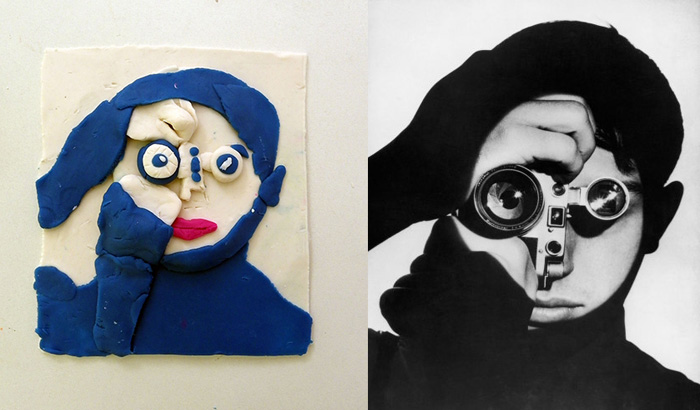 Points for creativity go to Eleanor Macnair, who recently launched the “Photographs rendered in Play-Doh” Tumblr. Given the name of the Tumblr, I probably don’t have to explain the concept. I think you get it. Above we have “Photographer Dennis Stock holds a camera in front of his face, 1955” — the original by Andreas Feininger (right), and the recreation by Ms. Macnair (left). Also on the Tumblr you’ll find, among others:
- “Nan and Brian in Bed, New York City, 1983” by Nan Goldin (original — play doh)
- “Dovima with elephants, evening dress by Dior, Cirque d’Hiver, August 1955” by Richard Avedon (original — play doh)
- “Helen Tamiris, 1929” by Man Ray (original — play doh)
Stay tuned, there’s hopefully more to come.
H/T goes to James Estrin, co-editor of The New York Times Lens Blog
Photo above via DVAfoto
Related Content:
Two Scenes from Stanley Kubrick’s Dr. Strangelove, Recreated in Lego
Henri Cartier-Bresson and the Decisive Moment
Photography of Ludwig Wittgenstein Released by Archives at Cambridge
David Lynch Talks About His 99 Favorite Photographs at Paris Photo 2012
Read More...
Albert Einstein Called Racism “A Disease of White People” in His Little-Known Fight for Civil Rights
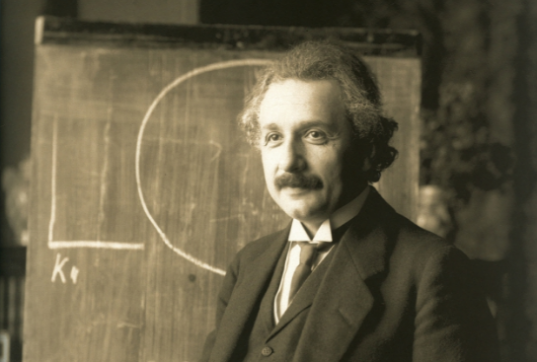
Albert Einstein’s activities as a passionate advocate for peace were well-documented during his lifetime. His celebrity as a famous physicist and one of the world’s most recognizable faces lent a great deal of weight to his pacifism, a view otherwise not given much consideration in the popular press at almost any time in history. However, according to a 2006 book titled Einstein on Race and Racism by Fred Jerome and Roger Taylor, the scientist was also as passionate about combating racism and segregation as he was about combating war. This facet of Einstein’s life was virtually ignored by the media, as was a visit he made in 1946 to Lincoln University in Pennsylvania, the first degree-granting college for African-Americans and the alma mater of Langston Hughes and Thurgood Marshall.
Invited to Lincoln to receive an honorary degree, Einstein gave a lecture on physics but also bluntly addressed the racial animus that held the country in its grip, reportedly calling racism, “a disease of white people” and saying he “did not intend to be quiet” about his opposition to segregation and racist public policy. Lest anyone think the Nobel-prize-winning physicist was pandering to his audience, the Harvard Gazette offers a comprehensive summary of Einstein’s support of progressive anti-racist causes, including his personal support of members of Princeton’s black community (he paid one man’s college tuition), a town Princeton native Paul Robeson once called “the northernmost town in the south.”
Einstein formed relationships with several prominent black leaders—inviting opera singer Marian Anderson to stay in his home after she was refused a room at the Nassau Inn and appearing as a character witness for W.E.B. Dubois when the latter stood accused of “failing to register as a foreign agent.” But it was his 20-year friendship with Robeson that seems central to his involvement in civil rights causes. The Harvard Gazette writes:
Einstein met Paul Robeson when the famous singer and actor came to perform at Princeton’s McCarter Theatre in 1935. The two found they had much in common. Both were concerned about the rise of fascism, and both gave their support to efforts to defend the democratically elected government of Spain against the fascist forces of Francisco Franco. Einstein and Robeson also worked together on the American Crusade to End Lynching, in response to an upsurge in racial murders as black soldiers returned home in the aftermath of World War II.
At the time of the Gazette article, 2007, a movie about Einstein and Robeson’s friendship was apparently in the works, with Danny Glover as Robeson and Ben Kingsley as Einstein. The project is apparently stalled, but with the upsurge in popular interest in the history of civil rights—with the overturning of the Voting Rights Act and the widespread coverage of the 50th anniversary of the March on Washington—perhaps the project will see new life soon. I certainly hope so.
via PourMeCoffee
Related Content:
Albert Einstein Expresses His Admiration for Mahatma Gandhi, in Letter and Audio
Listen as Albert Einstein Calls for Peace and Social Justice in 1945
MLK’s Last Days and Final Speech
Josh Jones is a writer and musician based in Durham, NC. Follow him at @jdmagness
Read More...Support Us
We're hoping to rely on loyal readers, rather than erratic ads. Please click the Donate button and support Open Culture. You can use Paypal, Venmo, Patreon, even Crypto! We thank you!

About Us

Open Culture scours the web for the best educational media. We find the free courses and audio books you need, the language lessons & educational videos you want, and plenty of enlightenment in between.
Advertise With Us

FREE UPDATES!
GET OUR DAILY EMAIL
Get the best cultural and educational resources on the web curated for you in a daily email. We never spam. Unsubscribe at any time.
FOLLOW ON SOCIAL MEDIA

Open Culture editor Dan Colman scours the web for the best educational media. He finds the free courses and audio books you need, the language lessons & movies you want, and plenty of enlightenment in between.
Advertise With Us

