Watch Steven Spielberg’s Rarely Seen 1968 Film, Amblin’
In 1968, Steven Spielberg was 21 years old and the hippie counterculture was swirling all around, but his mind was focused on one thing only: making movies.
Spielberg had been cranking out 8mm films since he was 12 years old, and he had been hanging around the sound stages and editing rooms of Universal Pictures as an unpaid clerk and errand boy since the summer after his junior year in high school, absorbing everything he could about the process of filmmaking. He hoped someone would give him a chance to direct a project–any project. He tried to generate interest by taking his childhood films around to producers. “I would bundle the pictures in a briefcase and literally carry my projector over to somebody’s office,” Spielberg told Entertainment Weekly last year. “It was like I was a very young Willy Loman; boxing up my wares and going from studio office to studio office. Not a lot, but maybe 10 percent of the producers that I tried to get to see my films did see my films.”
Spielberg realized he needed something more professional to show. He found a businessman to finance a 35mm short film. Denis C. Hoffman, who ran an optical effects house called Cinefx, read a script Spielberg had written and agreed to give the young man $10,000 to make the film , so long as it featured music by a band he managed, called October Country. The film was to be called Amblin’.
“It was going to be a tone poem about a boy and a girl who meet in the desert, hitchhiking their way to the Pacific Ocean,” Spielberg told EW. “Very simple story. I wrote it in a day.” Spielberg asked Richard Levin, a young man working at the Beverly Hills library, to play the male lead. He found the female lead, Pamela McMyler, in a directory of actors. The story is told in pictures and sound effects, with no dialogue. Spielberg would later dismiss Amblin’ as little more than a “Pepsi commercial,” but the film clearly shows Spielberg’s gift for visual storytelling. His early mentor at Universal Pictures, Chuck Silvers, said of his reaction to Amblin’: “I looked at what I still feel is the perfect motion picture.”
Although Spielberg would go on to name his film and television company Amblin Entertainment, he’s not all that fond of Amblin’ the film. “I can’t look at it now,” he said in 1978. “It really proved how apathetic I was during the Sixties. When I look back at that film, I can easily say, ‘No wonder I didn’t go to Kent State,’ or ‘No wonder I didn’t go to Vietnam or I wasn’t protesting when all my friends were carrying signs and getting clubbed in Century City.’ I was off making movies, and Amblin’ is the slick by-product of a kid immersed up to his nose in film.”
Related Content:
Watch Steven Spielberg’s Debut: Two Films He Directed as a Teenager
Terry Gilliam: The Difference Between Kubrick (Great Filmmaker) and Spielberg (Less So)
Steven Spielberg on the Genius of Stanley Kubrick
Read More...New York is Empty: Art Imitates Life
Talk about strange timing. On Tuesday, director Ross Ching released the third video in his “Empty America” series, and it shows New York City wiped clean of tourists and traffic. If you didn’t know any better, you’d think that the video simply captured the city as it prepared for the arrival of Hurricane Sandy. (See images of deserted NYC here, here and here.) But, this video is all artifice, not reality, and it comes on the heels of two sister videos showing San Francisco and Seattle as barren as can be.
San Francisco
Seattle
The Rolling Stones Sing the Beatles’ “Eight Days a Week” in a Hotel Room (1965)
Today we set the Wayback Machine to Ireland, 1965, where we find a young Mick Jagger and a shockingly restored Keith Richards staving off the downtime boredom of a two-day tour with a not-entirely-reverential Beatles singalong. Despite the drabness of the room in which documentarian Peter Whitehead caught the lads clowning, it’s clear that Jagger was feeling his oats. Go ahead and read those famous lips when he wraps them around the chorus of Eight Days a Week.
This priceless private moment is culled from the just released, not-entirely-finished documentary, The Rolling Stones: Charlie Is My Darling — Ireland 1965. Former Stones’ producer Andrew Loog Oldham recently chalked the near-50-year delay to the massive explosion of the band’s popularity. Padding things out to a proper feature length would have required additional filming. (I Can’t Get No) Satisfaction had shot to the top of the American charts just two months earlier, from which point on, the lads’ dance card was filled.
Lucky thing, that. What might in its day have amounted to a fun peek behind the scenes feels far more compelling as a just-cracked time capsule. The sad spectacle of Brian Jones musing about his future options is offset by the youthful larking about of rock’s most celebrated senior citizens.
See the trailer for The Rolling Stones: Charlie Is My Darling — Ireland 1965 right below.
- Ayun Halliday briefly mentioned Mick Jagger’s lips vis-à-vis Lauren Bacall in her memoir, Dirty Sugar Cookies: Culinary Observations, Questionable Taste.
Read More...Download a Free, New Halloween Story by Neil Gaiman (and Help Charities Along the Way)
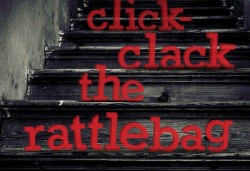 We’ve previously featured the free, downloadable stories and novels by author Neil Gaiman available online in video, audio, and text format. This is a wonderful thing, to be sure; Gaiman’s a fantastic writer of dark fantasy for children and adults alike, so who better to inaugurate this year’s Halloween celebrations with a new free story, available for download through Audible.com and read by Neil himself?
Gaiman’s new story, entitled “Click-Clack the Rattlebag,” is creepy, for sure, but that’s all I’m going say about it. You’ll need to download it yourself to find out more, and you really should because for every download of the story, Audible has agreed to donate a dollar to one of two charities that Neil has chosen—one for the U.S. and one for the U.K.. Gaiman has more information on his personal website, where he describes his negotiations with Audible in setting up the donations and the process of recording the story. He writes:
The story is unpublished (it will be published in a forthcoming anthology called Impossible Monsters, edited by Kasey Lansdale and coming out from Subterranean Press). It’s funny, a little bit, and it’s scary, just enough for Hallowe’en, I hope.
Gaiman also has a few requests: first, you need to download the story by Halloween in order to make the donation; second, please don’t give the story away—encourage people to go download it for themselves; and lastly, “wait to listen to it until after dark.” Atmosphere matters.
You do not need an Audible account to download the story, but you do need to give them your email address to prove you’re a human. U.S. readers should go to www.audible.com/ScareUs and U.K. readers to www.audible.co.uk/ScareUs. (Gaiman provides no instructions for readers in other countries; I suppose they could go to either site). So don’t wait—help Audible raise money for some worthy educational charities and get in the spirit with some great new fiction from one of the most imaginative writers working today. Finally, if you’re looking for more scary reads this Halloween, download Gaiman’s “All Hallow’s Read” book recommendations in a .pdf.
Note: Do you want to listen to other free audio books by Neil Gaiman? Just head over to Audible.com and register for a 30-day free trial. You can download any audiobook for free. Then, when the trial is over, you can continue your Audible subscription, or cancel it, and still keep the audio book. The choice is entirely yours. And, in full disclosure, let me tell you that we have a nice arrangement with Audible. Whenever someone signs up for a free trial, it helps support Open Culture.
Finally, we also suggest that you explore our collection of 450 Free Audio Books. It’s loaded with great classics.
Josh Jones is a doctoral candidate in English at Fordham University and a co-founder and former managing editor of Guernica / A Magazine of Arts and Politics.
Read More...The Physics of Coffee Rings Finally Explained
It’s Monday morning. Another work week begins; another cup of coffee to the rescue. If you’re not careful, you might spill a bit of that precious coffee and then later wonder (à la Jerry Seinfeld) — What is the deal with that coffee ring on the table? Why does it form a ring with dark, outer edges? You can imagine Seinfeld asking this, right?
Well, it turns out there’s an answer for this. And it comes straight from a laboratory at the University of Pennsylvania’s Department of Physics and Astronomy. Yes, my friends, it all comes down to the shape of the particles in the liquid. Coffee is made up of spherical particles, and they get distributed unevenly, with some pushing outward towards an edge and forming dark rings. Meanwhile, other liquids are made up of oblong particles that get distributed evenly, hence no rings. The UPenn video above breaks it all down for you.
Amazingly, this isn’t our first post on Physics and Coffee. Here’s a quick look at how they drink coffee at zero gravity in the International Space Station. Enjoy!
via Radio Lab
Related Content:
Everything You Wanted to Know About Coffee in Three Minutes
Free Online Courses Online about Physics from Great Universities
Physics from Hell: How Dante’s Inferno Inspired Galileo’s Physics
Read More...Hear Sylvia Plath Read Her Poem ‘A Birthday Present’
Sylvia Plath would have turned 81 years old today. It’s a strange thing to imagine. Plath’s reputation as a poet is so sadly bound up with her death by suicide at the age of 30, and so many of the lines in her later poetry sound like suicide notes, that it seems impossible to picture her making it to old age. In “Lady Lazarus,” Plath writes: “Dying/Is an art, like everything else./I do it exceptionally well.”
Plath is remembered mainly for the poems she wrote in the last half year of her life, when she had separated from her husband, the poet Ted Hughes. It was then that Plath found her “real voice,” as Hughes put it, in a marathon burst of creativity that resulted in the composition of some 70 poems, over half of which were collected in her posthumous book, Ariel.
But the circumstances surrounding Plath’s final days–her anger and sense of betrayal over her husband’s infidelity, her decision to kill herself by turning on the gas and placing her head in an unlighted oven while her two young children slept in another room–have complicated her literary legacy. A morbid cult has surrounded Plath, with many of her most fervent admirers glossing over the poet’s long struggle with mental illness to find in her a martyred feminist saint, a modern Ophelia.
“It has frequently been asked whether the poetry of Plath would have so aroused the attention of the world if Plath had not killed herself,” writes Janet Malcolm in The Silent Woman: Sylvia Plath and Ted Hughes. “I would agree with those who say no. The death-ridden poems move us and electrify us because of our knowledge of what happened.” It’s a shame, because Plath’s achievement should be judged on its own merits. In 2000, Joyce Carol Oates described some of the qualities she admired in Plath’s writing:
The most memorable of Sylvia Plath’s incantatory poems, many of them written during the final, turbulent weeks of her life, read as if they’ve been chiseled, with a fine surgical instrument, out of Arctic ice. Her language is taught and original; her strategy eliptical; such poems as “Lesbos,” “The Munich Mannequins,” “Paralytic,” “Daddy” (Plath’s most notorious poem), and “Edge” (Plath’s last poem, written in February, 1963), and the prescient “Death & Co.” linger long in the memory, with the power of malevolent nursery rhymes. For Plath, “The blood jet is poetry,” and readers who might know little of the poet’s private life can nonetheless feel the authenticity of Plath’s recurring emotions: hurt, bewilderment, rage, stoic calm, bitter resignation. Like the greatest of her predecessors, Emily Dickinson, Plath understood that poetic truth is best told slantwise, in as few words as possible.
Oates called Plath “our acknowledged Queen of Sorrows, the spokeswoman for our most private, most helpless nightmares.” The poem above, “A Birthday Present,” is one of the private and nightmarish poems collected in Ariel. Plath wrote it just over half a century ago as she was contemplating the approach of her 30th birthday, and something darker. The recording is from a BBC broadcast in December of 1962, only two months before Plath’s death. (You can read the text as you listen.) In his 1966 foreward to the first U.S. edition of Ariel, the poet Robert Lowell made the following assessment of Plath:
Suicide, father-hatred, self-loathing–nothing is too much for the macabre gaiety of her control. Yet it is too much; her art’s immortality is life’s disintegration. The surprise, the shimmering, unwrapped birthday present, the transcendence “into the red eye, the cauldron of morning,” and the lover, who are always waiting for her, are Death, her own abrupt and defiant death.
Related Content:
Dylan Thomas Recites ‘Do Not Go Gentle into That Good Night’ and Other Poems
Charles Bukowski Reads His Poem “The Secret of My Endurance”
Allen Ginsberg Reads His Famously Censored Beat Poem, Howl
Hear Sylvia Plath Read Fifteen Poems From Her Final Collection, Ariel, in 1962 Recording
Read More...New Animated Film Tells the Life Story of Monty Python’s Graham Chapman
John Cleese, Eric Idle, Terry Jones, Terry Gilliam, and Michael Palin have all entered their late sixties and early seventies in reasonable productivity. Graham Chapman, however, “selfishly dropped dead in 1989,” thus taking on the official title of “the dead one from Monty Python.” That comes straight from the press materials promoting A Liar’s Autobiography: The Untrue Story of Monty Python’s Graham Chapman, the highly nontraditional biopic that recently made its debut in the United Kingdom. The elaborate production commanded the visual talents of no fewer than fourteen separate animation studios and the vocal talents of no fewer than five Pythons, Chapman himself included. Shortly before his passing, Chapman recorded himself reading the text of his autobiography A Liar’s Autobiography (Volume VI), and that audio track provides the basis of the veritable kaleidoscope of aesthetic sensibilities and levels of comedic taste you can glimpse in the trailer above. Oh, and the film’s in 3D.
The notion that a tale like Chapman’s life demands a pack of tellers has a precedent in the book, which famously credits five authors: Chapman himself, his partner David Sherlock, The Hitchhiker’s Guide to the Galaxy mastermind Douglas Adams, crime writer David Yallop, and Alex Martin. Those at all familiar with Chapman should feel pleased to see represented in the trailer a seemingly appropriate mixture of harrowing formative wartime experience, sexual adventure, obvious fabrication, and sheer drunkenness — and that doesn’t yet take into account all that Monty Python business. The trailer’s final moments credit its absurdity-loving, pipe-smoking subject with calling A Liar’s Autobiography “the best movie I’ve been in since I died.” That takes it out of competition with the beloved Monty Python and the Holy Grail and Monty Python’s Life of Brian in which Chapman livingly starred, but it still looks like a formidable effort. And the surviving Pythons might tell you, it’d surely hold its own against Yellowbeard.
Related content:
Monty Python’s Best Philosophy Sketches
Monty Python Live at the Hollywood Bowl: The Comedy Classic
Alan Watts and His Zen Wisdom Animated by Creators of South Park
Colin Marshall hosts and produces Notebook on Cities and Culture. Follow him on Twitter at @colinmarshall.
Read More...Richard Linklater’s Slacker, the Classic Gen‑X Indie Film
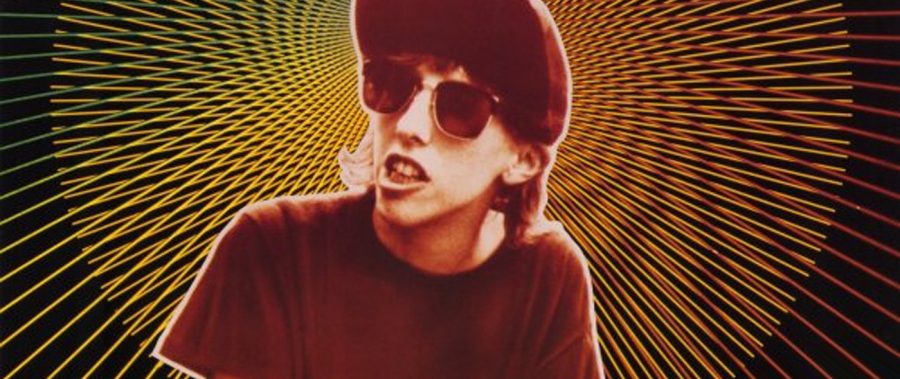
Think back to the American independent film boom (sometimes known as “indiewood”) of the nineties. Which of that time’s fresh-faced auteurs strike you as important? Which of their first features retain their impact? Quentin Tarantino’s Reservoir Dogs, certainly; Kevin Smith’s Clerks, which summoned a vast fan culture out of nowhere; Robert Rodriguez’s much-discussed “$7,000 movie” El Mariachi; Steven Soderbergh’s concept-proving Sex, Lies, and Videotape, perhaps the bellwether of the entire movement. But you may underestimate Richard Linklater’s low-key debut Slacker at your peril.
He constructed the 1991 film (available to view on YouTube) as a series of set pieces — some irreverent, some meandering, and some bizarre, but most all of them with stealthily universal resonance — taking place across the college town of Austin, Texas. Douglas Coupland having coined the term “Generation X” with his eponymous novel less than four months before, the North American zeitgeist had come to take serious, if smirking, notice of all these slouchy twentysomethings who seemed to turn up without warning, spouting endless streams of ideas, theories, wisecracks, and elaborate plans, yet drained of anything recognizable as ambition. These slackers, as we now call them without hesitation, make up the dramatis personæ of Slacker. You can see them in their own peculiar type of action by watching the picture free online.
The first slacker to appear, a deeply conflicted motormouth in the back seat of a taxi, comes played by Linklater himself. He seems normal enough, essentially an aimless late-twentysomething you still meet in coffee shops today. But as the camera drifts from block to block, from neighborhood to Austin neighborhood, picking up on any low-momentum story it can, behaviors turn stranger. A bookstore clerk who lives for JFK conspiracy theories logorrheically describes his own book-in-progress on the subject to a helpless acquaintance. A skinny student type living in a room crammed with televisions and even wearing one on back claims desperation to own yet another set. Two fellows egg a third on to throw a typewriter off a bridge and thus symbolically finalize a breakup. And let us never forget the immortal segment wherein Butthole Surfers drummer Teresa Taylor attempts to sell what she describes as a “Madonna pap smear.” Like the early films of Tarantino, Smith, and Rodriguez, Slacker remains thrillingly fun to watch, especially for the enthusiast of micro-budget cinema. But somewhere around its final passage, which begins when a slacker picks up the Pixelvision camera through which we ourselves see the next few minutes, you realize you’ve been watching something on a higher plane. Forced to bet which of the films of this movement scholars will relish enthusiastically a century from now, I’d bet on Slacker, which has now beed added to our ever-expanding list, 4,000+ Free Movies Online: Great Classics, Indies, Noir, Westerns, Documentaries & More.
Related Content:
My Best Friend’s Birthday, Quentin Tarantino’s 1987 Debut Film
Colin Marshall hosts and produces Notebook on Cities and Culture. Follow him on Twitter at @colinmarshall.
Read More...Watch German Painter Gerhard Richter Create Abstract Art
The German painter Gerhard Richter goes back and forth between photorealism and complete abstraction. In this film we see the artist in his abstract mode, using a giant squeegee to apply and scrape off successive layers of paint.
In 2008 and 2009 the reclusive Richter allowed filmmaker Corinna Belz into his studio in Cologne to document the creation of a series of large abstract paintings. Belz was initially surprised by the number of layers Richter used to create his deceptively simple-looking works. “Sometimes,” she said in an interview on her web site, “I looked at a painting and thought: It’s good like this. But then came the next step in the process, and what I had perceived as a finished picture would be destroyed before my very eyes; just painted over. It’s not easy when your ‘protagonists’ are constantly disappearing.”
Even Richter often doesn’t know when one of his abstract paintings will be finished. “It’s very surprising often,” he told Tate Modern Director Nicholas Serota in a filmed interview last year, before the opening of a major retrospective of his work. “I’m painting again and again every day and so it seems you will never come to an end, it will never become a good painting, and suddenly it’s finished: ‘Oh, good.’ ”
Belz’s film, Gerhard Richter Painting, was released in 2011 to critical acclaim. Earlier this month an abstract painting by the 80-year-old Richter set a record for the most money ever paid for a work by a living artist, bringing $34.2 million at Sotheby’s in London.
Related Content:
Vintage Footage of Picasso and Jackson Pollock Painting … Through Glass
Anselm Kiefer at Work, Creating His “World of Ruination”
Read More...John Lennon & Yoko Ono’s Two Appearances on The Dick Cavett Show in 1971 and 72
I imagine there are some pretty bizarre conspiracy theories out there about the fact that John Lennon premiered his film for the song “Imagine” on September 11th, 1971. You won’t find any of them here, but it is an odd coincidence. Lennon and his oft-maligned wife Yoko Ono made their first appearance on The Dick Cavett show on that day (above) to debut their new work. They banter about their haircuts (they donated their long hair to be auctioned at Sotheby’s—it wasn’t). They discuss Lennon’s changing music career. There’s some strange fun with people in head-to-toe burqua-like bags. Mostly they plug: screening some of their films and debuting a song from Yoko’s weird (I’d argue weirdly-brilliant) double album Fly.
Cavett looks nervous, but mostly holds his own against Lennon’s quick-witted music hall chatter, always unpredictably disarming. Lennon is the star here, of course; he had just turned thirty and only days earlier released the Imagine album in the U.S., which would go to number one worldwide. Nevertheless, he does his level best to make this a joint interview and to promote his wife’s work as much, if not more, than his own. I imagine there’s no shortage of people who hated this, and still do, but I think it’s gallant and sincere. But maybe I’m easy on them. Because I can fast forward. Viewers of the original broadcast had to wait till nearly the end to see the “Imagine” film. With the magic of digital, all you have to do is skip ahead to 58:05. It’s worth the effort.
John and Yoko returned to Cavett’s show in 1972. Lennon seems a bit jumpy here—nervous perhaps since both he and Yoko perform live in this appearance; John does his less-than-stellar anthem “Woman is the Nigger of the World” and eloquently defends the inflammatory title line; Yoko sings her, well, weird “We are Water,” both with the backing band Elephant’s Memory.
There’s a humorous reference to George Harrison’s appearance on the show the previous year, but things take a slightly more serious turn here than their previous interview. The show aired in May, just a few months before the historic 1972 election in which incumbent Nixon roundly trounced the recently departed George McGovern. Lennon and Ono discuss their possible deportation that year due to Nixon’s displeasure at their anti-war activities. This never came to pass, but it was a tense time for Lennon since he had made New York his base of operations for the past year. I imagine someone’s written an alternate history in which Lennon was deported, said the hell with it, and never returned to New York. No telling what he’d be up to now, but as these interviews make clear, he wouldn’t be selling nostalgia or mounting Beatles reunion tours.
Josh Jones is a doctoral candidate in English at Fordham University and a co-founder and former managing editor of Guernica / A Magazine of Arts and Politics.
Read More...
Support Us
We're hoping to rely on loyal readers, rather than erratic ads. Please click the Donate button and support Open Culture. You can use Paypal, Venmo, Patreon, even Crypto! We thank you!

About Us

Open Culture scours the web for the best educational media. We find the free courses and audio books you need, the language lessons & educational videos you want, and plenty of enlightenment in between.
Advertise With Us

FREE UPDATES!
GET OUR DAILY EMAIL
Get the best cultural and educational resources on the web curated for you in a daily email. We never spam. Unsubscribe at any time.
FOLLOW ON SOCIAL MEDIA

Open Culture editor Dan Colman scours the web for the best educational media. He finds the free courses and audio books you need, the language lessons & movies you want, and plenty of enlightenment in between.
Advertise With Us

