Archive of Hemingway’s Newspaper Reporting Reveals Novelist in the Making
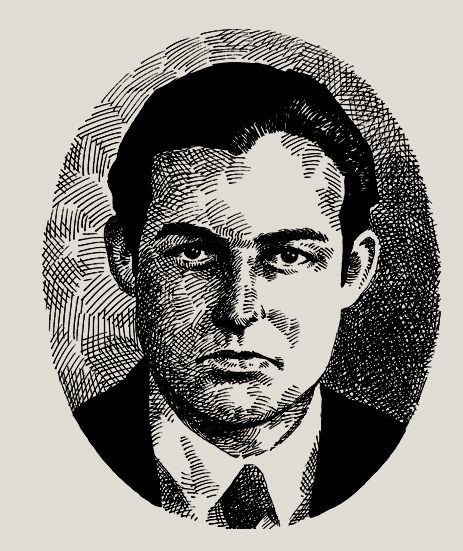 After returning from World War I, Ernest Hemingway moved to Toronto and began writing for the Toronto Star. He worked there from 1920 to 1924 and some 70 of his articles have been archived online in an attractive new website, the Hemingway Papers. At first Hemingway was a stringer and later he wrote as a staff writer, under the byline Ernest M. Hemingway. His first article bore the headline, “Taking a Chance for a Free Shave” and chronicled the young author’s visit to a barber college where straight-edge razors were wielded for free by students. He went on to write for the Star about boxing and trout fishing and organized crime in Chicago. By 1922 Hemingway had moved to Paris with his wife and sent dispatches that anticipated the themes of the novels that would make him famous. He wrote about the effects of war, bullfighting and the life of an impoverished artist in Paris. His association with the Star gave him access to post-war Europe that he wouldn’t have had otherwise and working as a reporter taught him how to get up close and personal with his subject matter.
The archive gives visitors plenty to explore, including commentary about the novelist’s early assignments and embedded annotations to help put the work in context. Hemingway developed his famously terse, hard-boiled style at the Star and reworked much of his reportage into his fiction. Readers of his short stories and novels will see seeds of Hemingway’s fiction in articles like “Tancredo is Dead,” about the death of a man whose job was to tease the bull by standing as still as a statue in the ring:
“No. He was neither an opera singer nor a five-cent cigar. He was once known as the bravest man in the world. And he died in a dingy, sordid room in Madrid, the city where he had enjoyed his greatest triumphs.”
Reading through Hemingway’s journalism is to witness a fiction writer in the making.
Kate Rix writes about k‑12 instruction and higher ed.
Read More...John Cleese Plays the Devil, Makes a Special Appeal for Hell, 1966
Hell. We tend to take it for granted. Have you ever stopped to think about the heating bills, or the stupendous overhead?
John Cleese plays a cash-strapped Prince of Darkness in this classic sketch from The Frost Report, the show that launched Cleese as a television star in Britain. He was 26 years old at the time. The program was hosted by David Frost, who is perhaps best known for his 1977 interviews of Richard Nixon. There were four other future Monty Python comedians on the writing staff of The Frost Report–Graham Chapman, Terry Jones, Michael Palin and Eric Idle–but only Cleese was a cast member. The show was broadcast in 1966 and 1967, with each weekly episode centered around a particular theme, like love, leisure, class and authority. The “Souls in Torment Appeal” is from a March 24, 1966 program about sin. It’s a funny sketch.
If you would like to support the mission of Open Culture, consider making a donation to our site. It’s hard to rely 100% on ads, and your contributions will help us continue providing the best free cultural and educational materials to learners everywhere. You can contribute through PayPal, Patreon, and Venmo (@openculture). Thanks!
Related Content:
John Cleese, Monty Python Icon, on How to Be Creative
Monty Python’s Best Philosophy Sketches
Monty Python’s Away From it All: A Twisted Travelogue with John Cleese
Read More...What Happens When a Terry Gross/Fresh Air Interview Ends: A Comic Look
If you’re a regular reader of Open Culture, and if you live in the United States, then chances are you listen to Terry Gross’ Fresh Air interviews on NPR, at least occasionally. There’s also a good chance that you’ve wondered, at some point during the past 30 years, what the host looks like and what goes on behind the scenes. Now you can find out … sort of.
Above, we’re featuring a new video by comedian Mike Birbiglia, which gives you a funny and entirely fictional look at what happens when a Fresh Air interview draws to a close. The video was originally produced for the “This American Life” live show, which was broadcast to 500 movie theaters on Thursday night. If you’re a casual or dedicated listener to Fresh Air, it’s good for a laugh. And if you’ve never listened to the show before, you can get acquainted by listening to Terry’s actual interview of Birbiglia in October 2010. Catch it right here, or listen below.
via AllThingsD
Related Content:
Ira Glass on the Art of Storytelling
Read More...The History of Rome in 179 Podcasts
What with so many open-ended internet media projects out there, I admire any that come to a close. People start plenty of things on the net that wind up petering out, but few display the conviction to work toward a decisive end. Then again, this goes for all forms of human endeavor; even the builders of the Roman Empire must have operated on the assumption that it might go on forever. We now know, of course, that it wouldn’t, and this knowledge provides formal and intellectual premises for Mike Duncan’s podcast, The History of Rome (iTunes — RSS). The Roman Empire ended by the year 476. The history of the Roman Empire in podcast form ended last Sunday, after almost five years, 179 episodes, and 1654 near-universally laudatory iTunes reviews.
I reviewed The History of Rome myself back in 2009, for the Podthoughts column I write for MaximumFun.org. Podthinking has taught me that history as a subject suits this verbal, episodic, straight-into-your-mind type of medium almost ideally. Though Duncan chooses to get straight to the point and tell the Roman Empire’s story in a clear, ascetically unadorned manner, different podcasts deliver their slices of history with styles and sensibilities all their own. If you historically inclined podcast-listeners have already been keeping up with this show, others await you: Dan Carlin’s Hardcore History, Twelve Byzantine Rulers, A History of the World in 100 Objects, and (my own current listening experience of choice) Topics in Korean History, to name but a few. But if you haven’t been, sit down and let Mike Duncan tell you about a certain Romulus and Remus, with whom the history of Rome mythically began.
More courses on the Ancient world, including the history of Rome, can be found in the History section of our collection of 1150 Free Online Courses.
Related content:
The Decline and Fall of the Roman (and American?) Empire: A Free Audiobook
Rome Reborn – An Amazing Digital Model of Ancient Rome
How Many U.S. Marines Could Bring Down the Roman Empire?
Colin Marshall hosts and produces Notebook on Cities and Culture. Follow him on Twitter at @colinmarshall.
Read More...The Making of “Tomorrow Never Knows,” The Beatles’ Song That Aired on an Historic Episode of Mad Men
https://www.youtube.com/watch?v=RkirE9uH5SE
On Sunday night, The Beatles made history again when Don Draper slipped a copy of Revolver onto his turntable and started listening to “Tomorrow Never Knows.” According to Matthew Weiner, the creator of Mad Men, this marked the first time a Beatles song appeared on a television show (excluding the band’s live TV performances during the 1960s). And the privilege of playing a Beatles tune came at a cost — a reported $250,000.
If you’re not familiar with “Tomorrow Never Knows” (listen below), we’ll tell you a few simple things about it. According to Steve Turner, author of A Hard Day’s Write, this was John Lennon’s “attempt to create in words and sounds a suitable track for the LSD experience” (John discusses his first encounter with the drug here), and it was also the “weirdest and most experimental piece of music to appear under the Beatles’ name at the time.” Without a doubt, this psychedelic tune would have fit hand-in-glove with Mad Men’s fifth episode of the season, when Roger and Jane drop acid at a psychiatrist’s dinner party. But it sits comfortably too in Episode 8. Just as the song marked a tuning point in the band’s sound, so too does it presage a turning point in Mad Men’s narrative. We begin to see individual characters moving in new personal directions and the show itself entering the later radical 60s.
Above, we’ve included a clip where Paul McCartney, George Harrison and George Martin talk about the making of “Tomorrow Never Knows.” Wikipedia actually offers some more good details on the song’s structure and recording. Below you’ll also find the original track.
See What David Lynch Can Do With a 100-Year-Old Camera and 52 Seconds of Film
In 1995, 41 respected filmmakers got a shot at using the first motion picture camera, the Lumière brothers’ cinématographe. Rather, they got more than a shot, but often not much more: each of these icons of world cinema had to make do with a single, 52-second roll of film. Whether you were Spike Lee, Costa-Gavras, Wim Wenders, Merchant & Ivory, or Peter Greenaway, the rules remained the same: no additional film, no synchronized sound, and no more than three takes. This large, indirect collaboration produced the film Lumière and Company, an anthology of all these very short pieces, each of which showcases the kind of creativity only strict limitations can release. (Brian Eno would, I imagine, approve.) David Lynch’s fans, a dedicated aesthetic faction indeed, will surely fast-forward to their man’s contribution, Lumière, which you can watch on YouTube.
Even in these 52 seconds, Lynch enthusiasts can spot many of the director’s signature aesthetic and emotional preoccupations. David Foster Wallace eloquently defined the term “Lynchian” as referring to “a particular kind of irony where the very macabre and the very mundane combine in such a way as to reveal the former’s perpetual containment within the latter,” and you might take Lumière as a bite of unadulterated Lynchianism. Taking place in vaguely but sinisterly askew small-town midcentury America — a realm now more closely associated with Lynch than anybody — the film drops into and out of a brief fugue of pure biomechanical grotesquerie. Some of the eerie dream-state quality comes from the incongruously ancient look and feel of cinématographe footage. Much more comes from the sound design, which lays the music of a warped classic film score on top of the noise of aging machinery. Critics note Lynch’s way with striking images you couldn’t forget if you wanted to, but I suspect his use of sound does just as much to lodge his movies permanently into our cinematic consciousness.
If you would like to support the mission of Open Culture, consider making a donation to our site. It’s hard to rely 100% on ads, and your contributions will help us continue providing the best free cultural and educational materials to learners everywhere. You can contribute through PayPal, Patreon, and Venmo (@openculture). Thanks!
Related content:
David Lynch’s New ‘Crazy Clown Time’ Video: Intense Psychotic Backyard Craziness (NSFW)
David Lynch’s Surreal Commercials
David Lynch and Interpol Team Up on Short Film
Colin Marshall hosts and produces Notebook on Cities and Culture. Follow him on Twitter at @colinmarshall.
Read More...TED-Ed Brings the Edginess of TED to Learning
Since it began posting videos six years ago of its now-famous talks, TED has established itself and its “ideas worth spreading” as a forum for cutting-edge thinking about everything under the sun. Pioneers in social networking, neurology, art—you name it, the pithiest speakers of our day find an audience at TED’s two annual conferences. But the real audience is online. TED’s most e‑mailed talk so far featured educator Sir Ken Robinson, whose 2006 talk argued that schools kill creativity. The E in TED may not stand for education (it stands for entertainment) but the New York-based nonprofit is responding to interest in educational topics.
This month saw the launch of TED-Ed, a dynamic new YouTube channel that features the work of content experts and professional animators in five-minute videos. Each TED-Ed video comes with supplementary quizzes, questions, quizzes and activities ideal for home instruction. (Click on “Quick Quiz,” “Think” or “Dig Deeper” here for examples.) In the spirit of “flip” teaching, a method that reverses homework and instruction time, videos on TED-Ed can be assigned for home review, freeing up classroom time for discussion, application and projects. In a flipped classroom, students would view a video about sex determination, for example, and hear educator Aaron Reedy explain how gender chromosomes vary from one species to another. The next day in class might feature a discussion about how global warming effects temperature-dependent sex determination. After watching How Folding Paper Can Get You to the Moon (above), which explores the principles revealed by folding one piece of paper, students and their teacher could discuss exponential growth patterns in microbiology and economics. All of the quizzes and resources are editable, so teachers can customize their lessons and create their own instructional archives using TED-Ed videos or any other YouTube video. All in all, a lot more fun than film strips. And, to be sure, we’ll add TED Ed to our emerging collection of Free K‑12 Resources.
Kate Rix writes about k‑12 instruction and higher ed.
Related Content:
Harvard and MIT Create EDX to Offer Free Online Courses Worldwide
Every TED Talk in a Neat Spreadsheet
Read More...Steve Jobs Plays FDR in Apple’s Rally-the-Troops Film, 1944
Shortly after Apple aired its famous Ridley Scott Super Bowl commercial in 1984, the upstart company knocked off a cheap World War II-themed internal video — a rally-the-troops film — dubbed 1944. The cause is freedom and the mission, to save the world from bad computing. The enemy isn’t the Axis (Germany, Japan, Italy.) It’s IBM and its “big blue mono-blob.” And the commander in chief? It’s Steve Jobs, of course, channeling F.D.R. at roughly the 5:30 mark (find the isolated cameo below).
To be sure, there’s an historical quality to this film. It offers a visual reminder of how Apple positioned itself against IBM before Microsoft came along. (Walter Isaacson drives home that point in his recent biography of Steve Jobs, which you can download from Audible if you sign up for a free trial.) But there’s also something more timeless about the film. It just goes to show that every company, no matter how much they think different, can revel in the same corporate gimmicks — the schwag, the fawning inside jokes and the rest. Poof, there goes my chance to work at Apple one day.
via Apple Insider
Read More...WWII Britain Revisited in 120 Short Films, Now Free on the Web
How do you fight propaganda? With propaganda, or so held the British wartime school of thought. “Over 120 films were produced as ‘cultural propaganda’ to counteract anything the Nazis might throw out and to refute the idea that ours was a country stuck in the past. These films were designed to showcase Britain to the rest of the world, at a time when Britain itself was under attack.” These words come from the about page of the British Council Film Collection, a newly opened internet archive of over 120 such pieces of cultural propaganda, free for the viewing. Above, you’ll find 1941’s City Bound, as direct an illustration of the legendary stiff upper lip as you’ll find in this digital vault. The reel trumpets, in its sober manner, the unblinking efficiency of London Transport as it ferries workers into the city center each morning and disgorges them back into the suburbs each night, even amid the falling bombs of the Blitz. And if you find these sternly proud shots of commuter trains and buses rolling bang on time from their stations a bit artificial, remember that the Council still had to produce the film itself under the very real threat from above.
These productions “provide us with a unique insight,” says the Council today, “not necessarily into how Britain actually was, but more into how Britain once wanted to be perceived by the rest of the world.” Anyone interested in national branding, vintage boosterism, and subjective history can have a field day indulging their fascinations in these meta-qualities, but many of these short documentaries offer legitimately worthwhile first-order information as well. Consider the above, Architects of England. Yes, it came into being to showcase the splendid ingenuity of English building from Stonehenge monumental to industrial modernist, but for a spirited twelve-minute grounding in British architectural traditions, you could do worse. If you remain unconvinced of the value of any of this, bear in mind that you can easily download anything in the British Council Film Collection. If you need the makings of, say, an ironic music video, look no further.
Related content:
‘Keep Calm and Carry On’: The Story of the Iconic World War II Poster
Great Movie Directors During Wartime: Hitchcock, Capra, Huston & Their WWII Films
Colin Marshall hosts and produces Notebook on Cities and Culture. Follow him on Twitter at @colinmarshall.
Read More...The Anatomical Drawings of Renaissance Man, Leonardo da Vinci
Leonardo da Vinci, the archetype of the Renaissance Man, received some formal training in the anatomy of the human body. He regularly dissected human corpses and made very detailed drawings of muscles, tendons, the heart and vascular system, internal organs and the human skeleton. A great number of these drawings can now be seen in the largest exhibition of Leonardo da Vinci’s studies of the human body, “Leonardo da Vinci: Anatomist,” at The Queen’s Gallery in Buckingham Palace, London. In this video, Senior Curator Martin Clayton explores three of these drawings and shows that Leonardo’s medical discoveries could have transformed the study of anatomy in Europe, had they not languished unpublished for centuries. Clayton has also published his findings in “Nature”. And the BBC has looked into the question of just how accurate Leonardo’s anatomical drawings really were.
Bonus links:
- The Guardian has a fascinating story about Leonardo da Vinci’s notebook, including his ‘to-do’ list.
- Here’s a wonderful 360° panoramic view of Santa Maria delle Grazia in Milan with Leonardo’s “Last Supper”.
By profession, Matthias Rascher teaches English and History at a High School in northern Bavaria, Germany. In his free time he scours the web for good links and posts the best finds on Twitter.
Read More...Support Us
We're hoping to rely on loyal readers, rather than erratic ads. Please click the Donate button and support Open Culture. You can use Paypal, Venmo, Patreon, even Crypto! We thank you!

About Us

Open Culture scours the web for the best educational media. We find the free courses and audio books you need, the language lessons & educational videos you want, and plenty of enlightenment in between.
Advertise With Us

FREE UPDATES!
GET OUR DAILY EMAIL
Get the best cultural and educational resources on the web curated for you in a daily email. We never spam. Unsubscribe at any time.
FOLLOW ON SOCIAL MEDIA

Open Culture editor Dan Colman scours the web for the best educational media. He finds the free courses and audio books you need, the language lessons & movies you want, and plenty of enlightenment in between.
Advertise With Us

