Watch Joni Mitchell Sing an Immaculate Version of Her Song “Coyote,” with Bob Dylan, Roger McGuinn & Gordon Lightfoot (1975)
Joni Mitchell doesn’t like to do interviews, but once she starts to open up, she really opens up, not only about her own struggles but about her feelings towards her fellow artists. These are often decidedly negative. Maybe she took a cue from her personal hero, Miles Davis (who, it turned out secretly owned all her albums). Mitchell matched his level of caustic commentary in 2010 when she told the L.A. Times that Bob Dylan “is not authentic at all. He’s a plagiarist, and his name and voice are fake. Everything about Bob is a deception.”
Attempts to clarify fell flat with the most backhanded of compliments. “I like a lot of Bob’s songs, though musically he’s not very gifted.” If any musician has earned the right to criticize him… In any case, whatever she thought of Dylan during her mid-seventies period, when she recorded and released her densely experimental The Hissing of Summer Lawns and Court and Spark, she was happy to join the 1975 Bob Dylan Rolling Thunder Revue.
Martin Scorsese captured the tour, which played smaller, more intimate venues than Dylan had in years. The documentary, Rolling Thunder Revue: A Bob Dylan Story by Martin Scorsese, was only released last year. Dylan may have been the headliner, but this is also a Joni Mitchell story, and a Joan Baez, Roger McGuinn, and other artists’ story. In the clip above, Mitchell plays a new song, “Coyote,” at Gordon Lightfoot’s house, with Dylan and McGuinn joining in on guitar. Her performance is immaculate, full of confidence and nuance. McGuinn leans forward before she begins to introduce the song for Joni, mansplaining into the mic, “Joni wrote this song about this tour and on this tour and for this tour.”
Mitchell says nothing, but fans will know she wrote the song about Sam Shepard and first introduced it onstage during The Hissing of Summer Lawns tour. They’ll also recognize it as the first song on Mitchell’s 1976 album Hejira. The studio version, above, is still driven by her acoustic guitar but incorporates percussion and Mitchell’s serpentine vocal line entwines with Jaco Pastorius’s bass. Lyrically, the song is full of dusty, forlorn images like the settings of Shepard’s plays. How McGuinn could have thought that it was about Dylan’s tour is beyond me. But Mitchell never needed anyone else to speak for her.
Related Content:
Joni Mitchell Publishes a Book of Her Rarely Seen Paintings & Poetry
Josh Jones is a writer and musician based in Durham, NC. Follow him at @jdmagness
Read More...Bill Gates Recommends 5 Thought-Provoking Books to Read This Summer
Have free time on your hands? Then let Bill Gates suggest five books to fill your days. Most take you deeper into thinking about our challenging times. At least one provides a mental escape. Bill writes:
Upheaval: Turning Points for Nations in Crisis, by Jared Diamond. I’m a big fan of everything Jared has written, and his latest is no exception. The book explores how societies react during moments of crisis. He uses a series of fascinating case studies to show how nations managed existential challenges like civil war, foreign threats, and general malaise. It sounds a bit depressing, but I finished the book even more optimistic about our ability to solve problems than I started. More here.
Nine Pints: A Journey Through the Mysterious, Miraculous World of Blood. If you get grossed out by blood, this one probably isn’t for you. But if you’re like me and find it fascinating, you’ll enjoy this book by a British journalist with an especially personal connection to the subject. I’m a big fan of books that go deep on one specific topic, so Nine Pints (the title refers to the volume of blood in the average adult) was right up my alley. It’s filled with super-interesting facts that will leave you with a new appreciation for blood. More here.
A Gentleman in Moscow, by Amor Towles. It seems like everyone I know has read this book. I finally joined the club after my brother-in-law sent me a copy, and I’m glad I did. Towles’s novel about a count sentenced to life under house arrest in a Moscow hotel is fun, clever, and surprisingly upbeat. Even if you don’t enjoy reading about Russia as much as I do (I’ve read every book by Dostoyevsky), A Gentleman in Moscow is an amazing story that anyone can enjoy. More here.
Presidents of War: The Epic Story, from 1807 to Modern Times, by Michael Beschloss. My interest in all aspects of the Vietnam War is the main reason I decided to pick up this book. By the time I finished it, I learned a lot not only about Vietnam but about the eight other major conflicts the U.S. entered between the turn of the 19th century and the 1970s. Beschloss’s broad scope lets you draw important cross-cutting lessons about presidential leadership. More here.
The Future of Capitalism: Facing the New Anxieties, by Paul Collier. Collier’s latest book is a thought-provoking look at a topic that’s top of mind for a lot of people right now. Although I don’t agree with him about everything—I think his analysis of the problem is better than his proposed solutions—his background as a development economist gives him a smart perspective on where capitalism is headed.
Find another additional list of books Gates considers worth reading here.
If you would like to support the mission of Open Culture, consider making a donation to our site. It’s hard to rely 100% on ads, and your contributions will help us continue providing the best free cultural and educational materials to learners everywhere. You can contribute through PayPal, Patreon, and Venmo (@openculture). Thanks!
Related Content:
Bill Gates Names 5 Books You Should Read This Summer (2018)
Bill Gates Recommends Five Books for Summer 2017
5 Books Bill Gates Wants You to Read This Summer (2016)
Read More...Studio Ghibli Producer Toshio Suzuki Teaches You How to Draw Totoro in Two Minutes
This is something you can do at home. Everyone, please draw pictures —Toshio Suzuki
There’s no shortage of online tutorials for fans who want to draw Totoro, the enigmatic title character of Studio Ghibli’s 1988 animated feature, My Neighbor Totoro:
There’s a two-minute, non-narrated, God’s-Eye-view with shading…
A detailed geometry-based step-by-step…
A ten-minute version for kids that utilizes a drinking glass and a bottle cap to get the proportions right prior to penciling, inking, and coloring…
But none has more heart than Studio Ghibli producer Toshio Suzuki’s simple demonstration, above.
The paper is oriented toward the artist, rather than the viewer.
His only instruction is that the eyes should be spaced very far apart.
His brush pen lends itself to a freer line than the tightly controlled outlines of Studio Ghibli’s carefully rendered 2‑D character designs.
This is Totoro as Zen practice, offered as a gift to cooped-up Japanese children, whose schools, like so many worldwide, were abruptly shuttered in an effort to contain the spread of the novel coronavirus.
Related Content:
A Virtual Tour Inside the Hayao Miyazaki’s Studio Ghibli Museum
Ayun Halliday is an author, illustrator, theater maker and Chief Primatologist of the East Village Inky zine. Her latest project is an animation and a series of free downloadable posters, encouraging citizens to wear masks in public and wear them properly. Follow her @AyunHalliday.
Read More...A Soul Train-Style Detroit Dance Show Gets Down to Kraftwerk’s “Numbers” in the Late 80s
Imagine Kraftwerk’s Ralf Hütter in his robot voice, saying, as he once said to his friend Boris Venzen, “Our music is good if blacks and whites can dance to it at the same time.” This statement is the essence of Kraftwerk. Despite their early 70s avant-garde phase and their famously satiric Teutonic look, the robotic German techno pioneers settled early on their “practice of fusing European electronic music with black American rhythms, forging an aesthetic that reached critical mass with the release of Trans Europe Express.”
So writes John Morrison at The Wire, in an essay that explores this fusion in some depth. Morrison also quotes former Kraftwerk percussionist Karl Bartos on the band’s debt to black music: “We were all fans of American music: soul, the Tamla/Motown thing, and of course, James Brown. We always tried to make an American rhythm feel, with a European approach to harmony and melody.” The experimental method emerges even in their earliest work, in which they begin working with the “’Bo Diddley’ beat… that dominated rock ‘n’ roll in the 50s and early 60s,” Morrison notes.
Black DJs in the states picked up on what the Germans were doing, and started playing Kraftwerk—along with Gary Numan, Yello Magic Orchestra, and New Order—in the discos. Meanwhile, Kraftwerk started incorporating early American house music with their 1981 album Computer World. The response to Kraftwerk in black clubs was huge, and they became even more famous after Afrika Bambaataa sampled “Trans Europe Express” in his 1981 track, “Planet Rock,” a song that had a seismic impact on electronic dance music around the world.
Kraftwerk’s most singular impact in the U.S. happened in the city of Detroit. As Morrison writes:
[Kraftwerk]’s influence took a particularly strong hold in Detroit with Urban radio DJs Like Electrifying Mojo introducing the European electronic sound to the generation of black youth that went on to create techno. In recent years, several clips have been uploaded of The Scene (and its spin-off The New Dance Show), a Soul Train-style dance show that aired from 1975–87 on Detroit’s WGPR TV 62. In these videos, black youth from Detroit can be seen dancing to Kraftwerk and a variety of progressive electronic dance music, giving us a glimpse into Detroit’s scene at the time.
If you ever needed to know how to dance to Kraftwerk, writes Dangerous Minds of the exuberant Soul Train-like dance line above, “this is how it’s done”—or at least, how it was done in Detroit in the late 80s on The New Dance Show. From the early 80s on, Morrison writes, “Kraftwerk became increasingly aware of the black music scene,” and legendary Detroit techno DJs like Juan Atkins, Derrick May, and Kevin Saunderson became increasingly aware of Kraftwerk, a situation cultural scholar Paul Gilroy might fold into his concept of “the Black Atlantic,” but which could also be called something like The Trans Düsseldorf-Detroit Afrofuturist Techno Express.
“All of the city latched on to” Kraftwerk’s sound, says May in a 2010 interview above. Atkins put it this way in a 2012 tribute to Kraftwerk published on Electronic Beats:
[T]he first time I heard ‘Robots’ I just froze. My jaw dropped. It just sounded so new and fresh. I mean, I had already been doing electronic music at the time, but the results weren’t so pristine—the sound of computers talking to each other. This sounded like the future, and it was fascinating, because I had just started learning about sequencers and drum programs. In my mind, Kraftwerk were, like, consultants to Roland and Korg and stuff because they had these sounds before any of the machines even appeared on the market.
I mean, there were other funky electronic bands around—Tangerine Dream and Gary Numan and all that—but none were as funky as Kraftwerk. I mean, you could actually play the stuff on black radio, and that wasn’t a small feat. You could go to an all black club in Detroit and when they put on ‘Pocket Calculator’, everybody just went totally crazy.
Related Content:
Watch Florian Schneider (RIP) in Classic Early Kraftwerk Performances
The Case for Why Kraftwerk May Be the Most Influential Band Since the Beatles
Kraftwerk’s “The Robots” Performed by German First Graders in Adorable Cardboard Robot Outfits
Josh Jones is a writer and musician based in Durham, NC. Follow him at @jdmagness
Read More...The Original Star Wars Trilogy Adapted into a 14-Hour Radio Drama by NPR (1981–1996)
When it opened in 1977, Star Wars revived the old-fashioned swashbuckling adventure film. Within a few years, National Public Radio made a bet that it could do the same for the radio drama. Though still well within living memory, the “golden age of radio” in America had ended decades earlier, and with it the shows that once filled the airwaves with stories of every kind. Radio dramas seemed extinct, but then, before George Lucas’ space opera turned blockbuster, so had movie serials like Flash Gordon and Buck Rogers. The episodic nature of such source material resonated with the similarly episodic nature of classic radio drama, and that must have brought within the realm of possibility a bold and near-scandalous proposition: to re-make Star Wars for NPR.
The idea came from a student at the University of California, who suggested it to USC School of the Performing arts dean and radio-drama enthusiast Richard Toscan. There could have been no institution better-placed to take on such a project. Since Toscan had already produced dramas on the school’s NPR-affiliated radio station KUSC, he made an ideal collaborator in the network’s effort to breathe new life into its dramatic programming. And as Lucas’ alma mater, USC inspired in him a certain generosity: Lucas sold KUSC Star Wars’ radio rights, along with use of the film’s music and sound effects, for one dollar. Founded just a decade earlier, NPR still lacked the experience and resources to handle such an ambitious project itself, and so entered into a co-production deal with the BBC, which had never let radio drama go into eclipse.
When the Star Wars radio drama was first broadcast in the spring of 1981, fans of the movie would have heard a mixture of the familiar (including the voices of Mark Hamill as Luke Skywalker and Anthony Daniels as C‑3PO) and the unfamiliar. With science-fiction novelist Brian Daley brought on to add or restore scenes to the script of the original dialogue-light feature film, the story stretches out to thirteen episodes for a total runtime of six hours. The series thus stands as an early example of the expansion of the Star Wars universe that, in all kinds of media, has continued apace ever since. An Empire Strikes Back radio drama followed in 1983, with Return of the Jedi following, after prolonged development challenges, in 1996.
You can hear all fourteen hours of these original Star Wars trilogy radio dramas at the Internet Archive (Star Wars, The Empire Strikes Back, Return of the Jedi), or on a Youtube playlist with fan edits combining the originally discrete episodes into continuous listening experiences. NPR’s gamble on adapting a Hollywood hit paid off: the first Star Wars radio drama drew 750,000 new listeners, many from the youthful demographic the network had hoped to capture. It was the biggest science-fiction event on American radio since Orson Welles scared the country with his adaptation of H.G. Welles’ The War of the Worlds more than 40 years earlier — a broadcast produced by John Houseman, who in his capacity as USC’s artistic directory in the 1970s, encouraged Toscan to bring radio drama back. In recent years, NPR’s audience has continued to age while the Star Wars franchise has in theaters, on television and elsewhere, gone from strength to strength. Has the time come for radio to use the Force once again?
Related Content:
30 Hours of Doctor Who Audio Dramas Now Free to Stream Online
Hear Five JG Ballard Stories Presented as Radio Dramas
Based in Seoul, Colin Marshall writes and broadcasts on cities, language, and culture. His projects include the book The Stateless City: a Walk through 21st-Century Los Angeles and the video series The City in Cinema. Follow him on Twitter at @colinmarshall, on Facebook, or on Instagram.
Read More...“Prince and the Revolution: Live,” the Historic 1985 Concert Is Streaming Online
A quick heads up. The Prince Estate has released Prince and the Revolution: Live, a historic concert captured at the Carrier Dome in Syracuse, NY on March 30, 1985. Streaming to support the COVID-19 Solidarity Response Fund for the World Health Organization, the video revisits the Purple Rain tour, when Prince was at the height of his powers. You can find the 20-song setlist right below. Enjoy the free fundraising stream while it lasts.
1. Let’s Go Crazy
2. Delirious
3. 1999
4. Little Red Corvette
5. Take Me With U
6. Yankee Doodle Dandy
7. Do Me Baby
8. Irresistible Bitch
9. Possessed
10. How Come You Don’t Call Me Anymore
11. Let’s Pretend We’re Married
12. International Lover
13. God
14. Computer Blue
15. Darling Nikki
16. The Beautiful Ones
17. When Dove’s Cry
18. I Would Die 4 U
19. Baby I’m A Star
20. Purple Rain
Related Content:
A New Collection of Official, Authorized Prince GIFs!
Hear Prince’s Personal Playlist of Party Music: 22 Tracks That Will Bring Any Party to Life
Read Prince’s First Interview, Printed in His High School Newspaper (1976)
The Prince Online Museum Archives 16 of Prince’s Official Web Sites, Spanning 20 Years
Read More...Does Local News Deserve More of Your Attention? Pretty Much Pop: A Culture Podcast #44 w/ Deion Broxton of Bison Meme Fame

Is news entertainment? To what extent has local news consumption decreased given the alternatives? Deion is an on-air reporter for NBC Montana who was recently memified for fleeing amusingly from some bison. He joins your hosts Mark Linsenmayer, Erica Spyres, and Brian Hirt to discuss what we might be missing out on, the uses and abuses of news coverage, reality vs. media portrayals, and the current status of “trusted news reporter” in our collective consciousness.
Here are a few relevant articles to peruse:
- “Why Does Local News Matter? Let’s Ask Our Audience” by Melody Kramer
- “Local News is the ‘Biggest Crisis’ in Journalism, but a Sustainability Campaign is Underway” by Mark Jacob
- “Newspaper Decline and the Effect of Local Government Coverage” by Jay Jennings
- “Local Newspapers Will Stand the Test of Time — Here’s Why” by Adam Signolda
- “Why Viewers Trust Local Political Coverage” by Hank Price
- “Industry Insight: Local Sports Coverage Needs to Adapt to the Modern Newsroom” by Matt DeRienzo
Read that story about the murder that Deion refers to. Deion’s bison encounter has been covered on the Today Show, Time, Huffington Post, etc. Follow him @DeionNBCMT.
This episode includes bonus discussion that you can only hear by supporting the podcast at patreon.com/prettymuchpop. This podcast is part of the Partially Examined Life podcast network.
Pretty Much Pop: A Culture Podcast is the first podcast curated by Open Culture. Browse all Pretty Much Pop posts or start with the first episode.
Read More...1930s Phonograph Doubled as an Alarm Clock, Letting People Start Their Day with Their Favorite Record
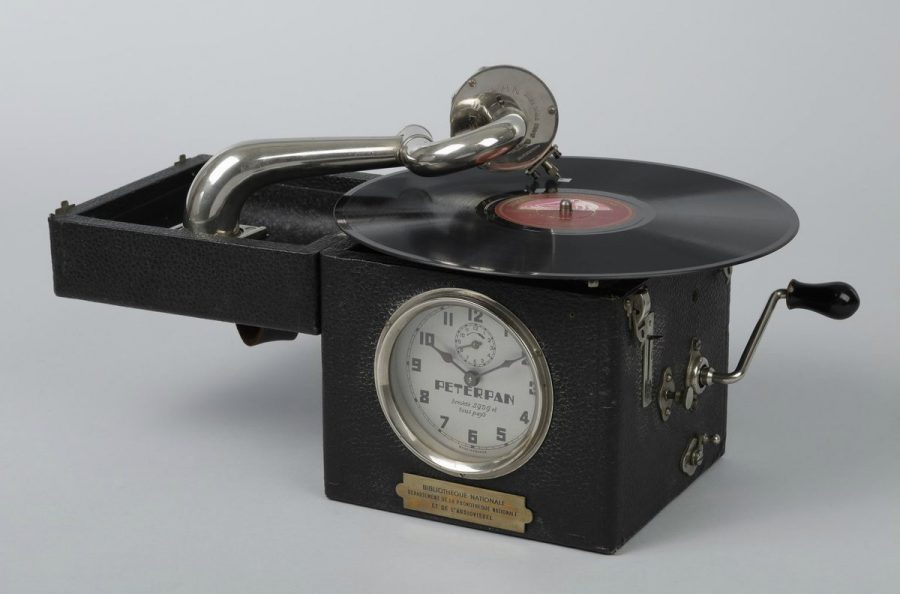
The Deutsches Uhrensmuseum introduces the French-made Peter Pan clock above as follows:
Even as early as 1930, people were trying to find a way to replace the unpleasant sound of the alarm clock. The inventor of this gramophone alarm clock had a brilliant idea. The gramophone works like the standard alarm clock of those days; however, instead of a bell, the gramophone motor switches on when the alarm goes off and your favourite record begins to play to the lively crackling sound of a typical gramophone. The motor plays this side of the record twice in succession. The opened lid of the box serves as a resonator. Even the name is what dreams are made of: Peter Pan Alarm Clock. Who would not want to be a child again and fly off to Never Never Land?
This great find comes from the always interesting Twitter feeds of jazz critic Ted Gioia and the Bibliothèque nationale de France. You can watch the clock in action below.
If you would like to support the mission of Open Culture, consider making a donation to our site. It’s hard to rely 100% on ads, and your contributions will help us continue providing the best free cultural and educational materials to learners everywhere. You can contribute through PayPal, Patreon, and Venmo (@openculture). Thanks!
Related Content:
How Clocks Changed Humanity Forever, Making Us Masters and Slaves of Time
Wake Up & Smell the Coffee: The New All-in-One Coffee-Maker/Alarm Clock is Finally Here!
Read More...Haruki Murakami Will Host a Radio Show & Help Listeners “Blow Away Some of the Corona-Related Blues”

Image by Ilana Simon
Characters in Haruki Murakami’s books see emotions in colors and hear them in sounds—the sounds, specifically, of The Beatles, Shostakovich, Sarah Vaughan, and thousands more folk, pop, rock, classical, and jazz artists in the novelist’s immense record collection. We must occasionally suspend some disbelief as readers, not only in the fantastic elements in Murakami’s work, but in characters who seem to know almost as much as the author does about music, who are always ready with references to deep cuts. Murakami “is not (quite) a musician,” writes Dre Dimura at Flypaper, “but he has a greater command of music as an art form than most musicians I know, myself included. How is that possible?”
Dimura’s explanation touches on aspects of Murakami’s life we’ve covered before at Open Culture: his longstanding passion for jazz, and time spent as the owner of a jazz bar before he became a novelist; his penchant for listening to music in his study for hours and hours on end as he undertakes his marathon writing sessions.
Murakami has not only shared his encyclopedic musical knowledge through fictional characters; he also hopes to turn his massive collection of approximately 10,000 records into a public archive, along with all his books and papers: “a place,” he says, “of open international exchanges for literature and culture.”
Four decades after his jazz club days, Murakami again became a DJ in 2018 when he took to the airwaves to play several 55-minute sets called Murakami Radio on Tokyo FM. Now, amidst the uncertainty and anxiety of COVID-19 lockdowns, he will again play records for his fans in Japan on a show this Friday called Stay Home Special. “I’m hoping that the power of music can do a little to blow away some of the corona-virus related blues that have been piling up.”
Murakami isn’t being Pollyannish about the “power of music.” The phrase may be cliché, but fans know from reading his books how music plays a significant role in even the most mundane of social interactions, the kind we’d come to take for granted before the virus spread around the world. The author offers music as a friendly overture. In a characteristic image, he wrote before his first radio broadcast in 2018:
It has been my hobby to collect records and CDs since my childhood, and thanks to that, my house is inundated with such things. However, I have often felt a sense of guilt toward the world while listening to such amazing music and having a good time alone. I thought it may be good to share such good times with other people while chatting over a glass of wine or a cup of coffee.
Though he’s been characterized as a novelist of isolation, and is “regarded as a recluse in Japan,” Murakami sees the need to make deep connections these days. And he recognizes music’s power to create shared emotional spaces, the kind of thing it seems so hard to find in our new fragmented, quarantined lives.
Related Content:
Haruki Murakami’s Passion for Jazz: Discover the Novelist’s Jazz Playlist, Jazz Essay & Jazz Bar
A 3,350-Song Playlist of Music from Haruki Murakami’s Personal Record Collection
Josh Jones is a writer and musician based in Durham, NC. Follow him at @jdmagness
Read More...Write Only 500 Words Per Day and Publish 50+ Books: Graham Greene’s Writing Method
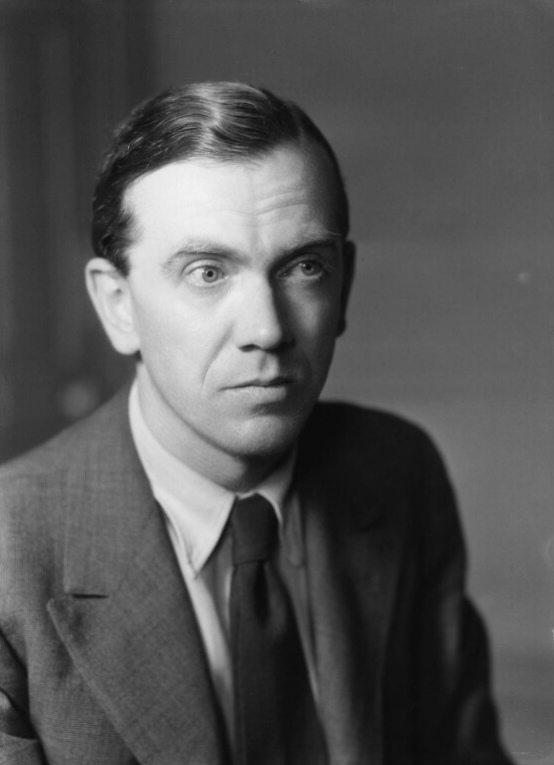
Image via Wikimedia Commons
Nobody can write a book. That is, nobody can write a book at a stroke — unless aided by aggressively mind-invigorating substances, and even then they seldom pull it off. As professional writers know all too well, composing just one passable chapter at a sitting demands a Stakhanovite fortitude (or more commonly, a threateningly close deadline). Books are written less one chapter at a time than one section at a time, less one section at a time than one paragraph at a time, less one paragraph at a time than one sentence at a time, and less one sentence at a time than one word at a time. Graham Greene wrote his formidable body of work, more than 50 books, including novels, poetry and short fiction collections, memoirs, and children’s stories, 500 words at a time.
In one of his most beloved novels, 1951’s The End of the Affair, Greene has his writer protagonist Maurice Bendrix describe a working method much like his own:
Over twenty years I have probably averaged five hundred words a day for five days a week. I can produce a novel in a year, and that allows time for revision and the correction of the typescript. I have always been very methodical, and when my quota of work is done I break off, even in the middle of a scene. Every now and then during the morning’s work I count what I have done and mark off the hundreds on my manuscript. No printer need make a careful cast-off of my work, for there on the front page is marked the figure — 83,764.
In his youth, Bendrix notes, “not even a love affair would alter my schedule,” nor could one interrupt the nightly phase of his process: “However late I might be in getting to bed — as long as I slept in my own bed — I would read the morning’s work over and sleep on it.”
Much of a novelist’s writing, he believes, “takes place in the unconscious; in those depths the last word is written before the first word appears on paper. We remember the details of our story, we do not invent them.” Greene, too, set enough store by the unconscious to keep a dream journal. A few year after The End of the Affair, writesThe New Yorker’s Maria Konnikova, “he faced a creative ‘blockage,’ as he called it, that prevented him from seeing the development of a story or even, at times, its start. The dream journal proved to be his savior.”
All of us who write, whatever we write, can learn from Greene’s methods; Michael Korda got to witness them first-hand. In the summer of 1950 he was invited by his uncle, the film producer Alexander Korda, to come along on a French-Riviera cruise with a variety of major industry figures, Greene included. By that point Greene had already written a fair few screenplays, including adaptations of his own novels Brighton Rock and The Third Man. But each morning on the yacht he worked on a more personal project, as the sixteen-year-old Korda watched:
An early riser, he appeared on deck at first light, found a seat in the shade of an awning, and took from his pocket a small black leather notebook and a black fountain pen, the top of which he unscrewed carefully. Slowly, word by word, without crossing out anything, and in neat, square handwriting, the letters so tiny and cramped that it looked as if he were attempting to write the Lord’s Prayer on the head of a pin, Graham wrote, over the next hour or so, exactly five hundred words. He counted each word according to some arcane system of his own, and then screwed the cap back onto his pen, stood up and stretched, and, turning to me, said, “That’s it, then. Shall we have breakfast?” I did not, of course, know that he was completing The End of the Affair.
This working ritual, a Korda describes it, suits the sensibilities of the writer, a convert to Catholicism who dealt with themes of religious practice in his work:
Greene’s self-discipline was such that, no matter what, he always stopped at five hundred words, even if it left him in the middle of a sentence. It was as if he brought to writing the precision of a watchmaker, or perhaps it was that in a life full of moral uncertainties and confusion he simply needed one area in which the rules, even if self-imposed, were absolute. Whatever else was going on, his daily writing, like a religious devotion, was sacred and complete. Once the daily penance of five hundred words was achieved, he put the notebook away and didn’t think about it again until the next morning.
Just as Greene’s adherence to Catholicism lost some of its rigor in his later years (he claimed to have been converted by arguments, then forgotten the arguments), his daily word count decreased. “In the old days, at the beginning of a book, I’d set myself 500 words a day, but now I’d put the mark to about 300 words,” a 66-year-old Greene told the New York Times in 1971. But such are the wages of the novelist’s art, in which Greene felt a demand to “know — even if I’m not writing it — where my character’s sitting, what his movements are. It’s this focusing, even though it’s not focusing on the page, that strains my eyes, as though I were watching something too close.”
Greene wasn’t alone in writing a certain number of words each day. According to a post at Word Counter, Ernest Hemingway got started on his own 500 daily words at first light. Ian McEwan says he aims “for about six hundred words a day and hope for at least a thousand when I’m on a roll.” For the more prolific J.G. Ballard, a thousand was the minimum, “even if I’ve got a hangover. You’ve got to discipline yourself if you’re professional. There’s no other way.” The near-inhumanly prolific Stephen King doubles that: “I like to get ten pages a day, which amounts to 2,000 words,” he says in his memoir On Writing. “On some days those ten pages come easily; I’m up and out and doing errands by eleven-thirty in the morning, perky as a rat in liverwurst. More frequently, as I grow older, I find myself eating lunch at my desk and finishing the day’s work around one-thirty in the afternoon.”
John Updike, no slouch when it came to productivity, recommended writing for a length of time rather than to a number of words. “Even though you have a busy life, try to reserve an hour, say — or more — a day to write,” he says in an interview clip previously featured here on Open Culture. “Some very good things have been written on an hour a day.” At The Guardian, novelist Neil Griffiths discusses his apostasy from the thousand-words-a-day method: “I’m writing a novel — an artistic enterprise, one hopes — but I was measuring my working day by a number.” Switching to the “finish the bit you’re working on” method, he writes, means he doesn’t have “half an eye on what is going to happen in the next bit because without it I’ll never make the day’s 1000. My sole concern is the words before me, however many or few they are, and getting them right before moving on.” And so, it seems, those of us trying to get our life’s work written have two options: do what Graham Greene did, or do the opposite.
Related Content:
John Updike’s Advice to Young Writers: ‘Reserve an Hour a Day’
Ursula K. Le Guin’s Daily Routine: The Discipline That Fueled Her Imagination
The Daily Routines of Famous Creative People, Presented in an Interactive Infographic
Stephen King’s 20 Rules for Writers
The Seven Road-Tested Habits of Effective Artists
Based in Seoul, Colin Marshall writes and broadcasts on cities, language, and culture. His projects include the book The Stateless City: a Walk through 21st-Century Los Angeles and the video series The City in Cinema. Follow him on Twitter at @colinmarshall, on Facebook, or on Instagram.
Read More...Support Us
We're hoping to rely on loyal readers, rather than erratic ads. Please click the Donate button and support Open Culture. You can use Paypal, Venmo, Patreon, even Crypto! We thank you!

About Us

Open Culture scours the web for the best educational media. We find the free courses and audio books you need, the language lessons & educational videos you want, and plenty of enlightenment in between.
Advertise With Us

FREE UPDATES!
GET OUR DAILY EMAIL
Get the best cultural and educational resources on the web curated for you in a daily email. We never spam. Unsubscribe at any time.
FOLLOW ON SOCIAL MEDIA

Open Culture editor Dan Colman scours the web for the best educational media. He finds the free courses and audio books you need, the language lessons & movies you want, and plenty of enlightenment in between.
Advertise With Us


