Nina Simone Song “Color Is a Beautiful Thing” Animated in a Gorgeous Video
Four years (or what seems like a lifetime) ago, controversy erupted over the casting of actress Zoe Saldana, with darkened skin, as iconic pianist and singer Nina Simone in the biopic Nina. Accusations of racism and colorism met the film, historical attitudes hundreds of years in the making that Simone herself fought throughout her career, especially after she joined the Civil Rights movement in the 1960s and actively made her personal struggles with racism central to her political statements.
“You cannot understand Nina Simone’s life and legacy without taking stock of her identity as a dark-skinned black woman,” says Vox’s Victoria Massie. “That fact was inextricably linked to her life’s trajectory, her art and her politics—to everything that made Nina fearlessly and unapologetically Nina.” Her daughter Simone Kelly put it this way:
We all have a story. My mother suffered. We can go all the way back to when she was a child and people told her her nose was too big, her skin was too dark, her lips were too wide. It’s very important the world acknowledges my mother was a classical musician whose dreams were not realized because of racism.
Simone carried the wounds of those experiences throughout her life, and she sought to heal them through music that affirmed the experience of other young, dark-skinned girls who faced similar obstacles.
The outstanding narrative “Four Women,” from 1966’s Wild is the Wind, articulates the different treatment its characters receive based on skin color. The Village Voice’s Thulani Davis called the song “an instantly accessible analysis of the damning legacy of slavery.” The famous “To Be Young, Gifted and Black,” written for Simone’s friend and mentor Lorraine Hansberry, became an anthem of the Civil Rights movement in the 1970s.
Years later, in “Color is a Beautiful Thing,” Simone revisited the theme in a short, repetitive one-minute piece that is instantly sing-along-able. The song comes from her 1982 album Fodder on My Wings, just re-released last month by Verve. “Color is a Beautiful Thing” is perfectly tailored for young children, who will respond with joy not only to Simone’s rollicking piano but to the beautifully animated video above.
Fodder on My Wings is an overlooked album, Sheldon Pearce writes at Pitchfork, “about personal freedom—about liberating herself from her past and finding the liberty to create as she pleased. It was Simone’s means of working through fear—of death, manipulation, discrimination.” In the liner notes, she herself writes, “What I did on this album was try to get myself deep into joy.”
The method above is mantra-like, the song’s refrain “like something she’s trying to internalize, a coda to 1969’s ‘To Be Young, Gifted and Black.” Simone never seemed to overcome her own pain, but her gift—in addition to her musical brilliance—was to freely share the lessons she learned in the struggle, the bitter and the sweet, and to teach new generations of artists.
Related Content:
How Nina Simone Became Hip Hop’s “Secret Weapon”: From Lauryn Hill to Jay Z and Kanye West
Watch a New Nina Simone Animation Based on an Interview Never Aired in the U.S. Before
Josh Jones is a writer and musician based in Durham, NC. Follow him at @jdmagness
Read More...William Blake Illustrates Mary Wollstonecraft’s Work of Children’s Literature, Original Stories from Real Life (1791)
Most of us know Mary Wollstonecraft as the author of the 1792 pamphlet A Vindication of the Rights of Women, and as the mother of Frankenstein author Mary Shelley. Fewer of us may know that two years before she published her foundational feminist text, she wrote A Vindication of the Rights of Men, a pro-French Revolution, anti-monarchy argument that first made her famous as a writer and philosopher. Perhaps far fewer know that Wollstonecraft began her career as a published author in 1787 with Thoughts on the Education of Daughters (though she had yet to raise children herself), a conduct manual for proper behavior.
A hugely popular genre during the first Industrial Revolution, conduct manuals bore a miscellaneous character, inculcating a battery of middle-class rules, beliefs, and affectations through a mix of pedagogy, allegory, domestic advice, and devotional writing. Young women were instructed in the proper way to dress, eat, pray, laugh, love, etc., etc.
It may seem from our perspective that a radical firebrand like Wollstonecraft would shun this sort of thing, but her moralizing was typical of middle-class women of her time, even of pioneering writers who supported revolutions and women’s political and social equality.
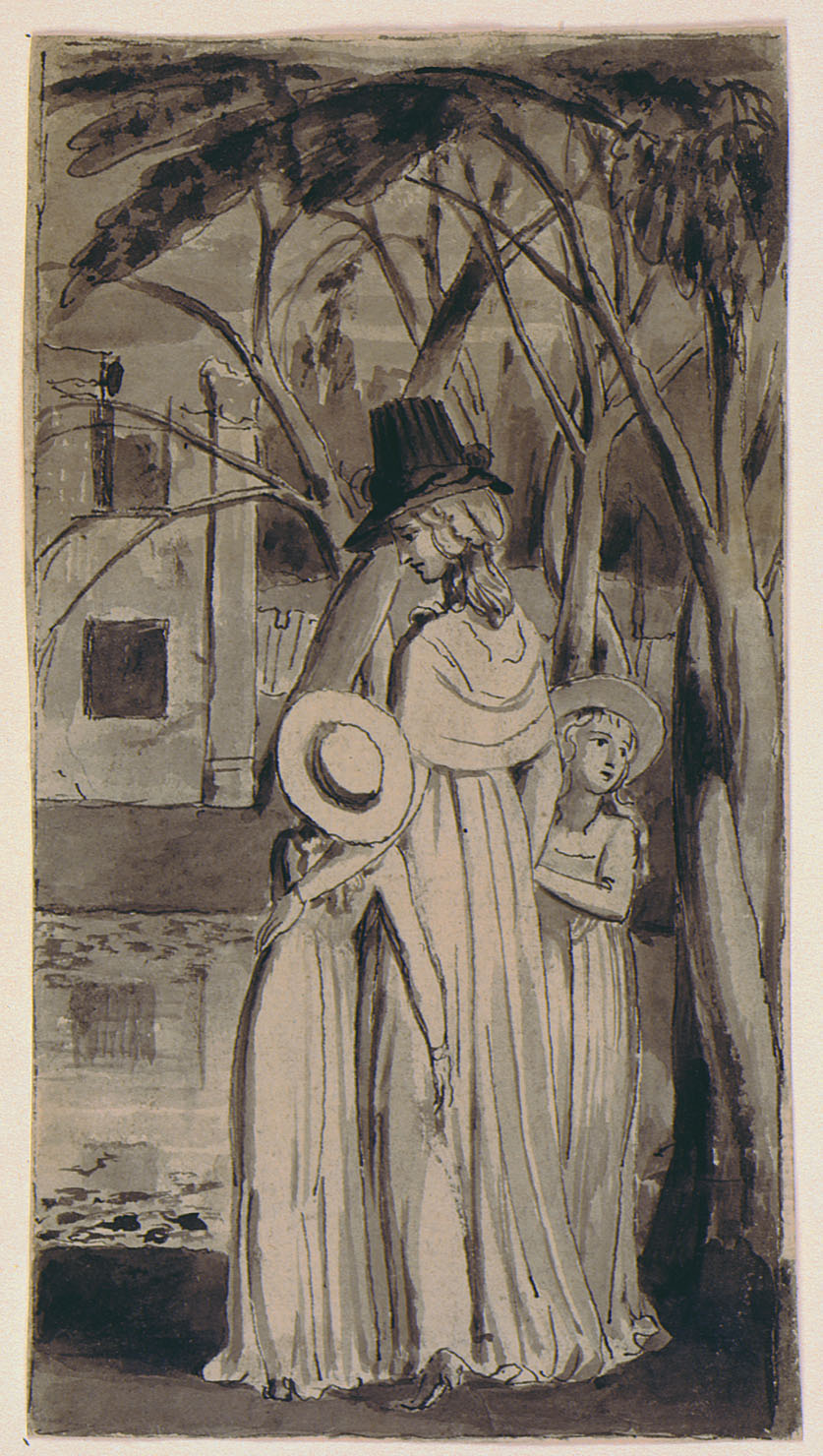
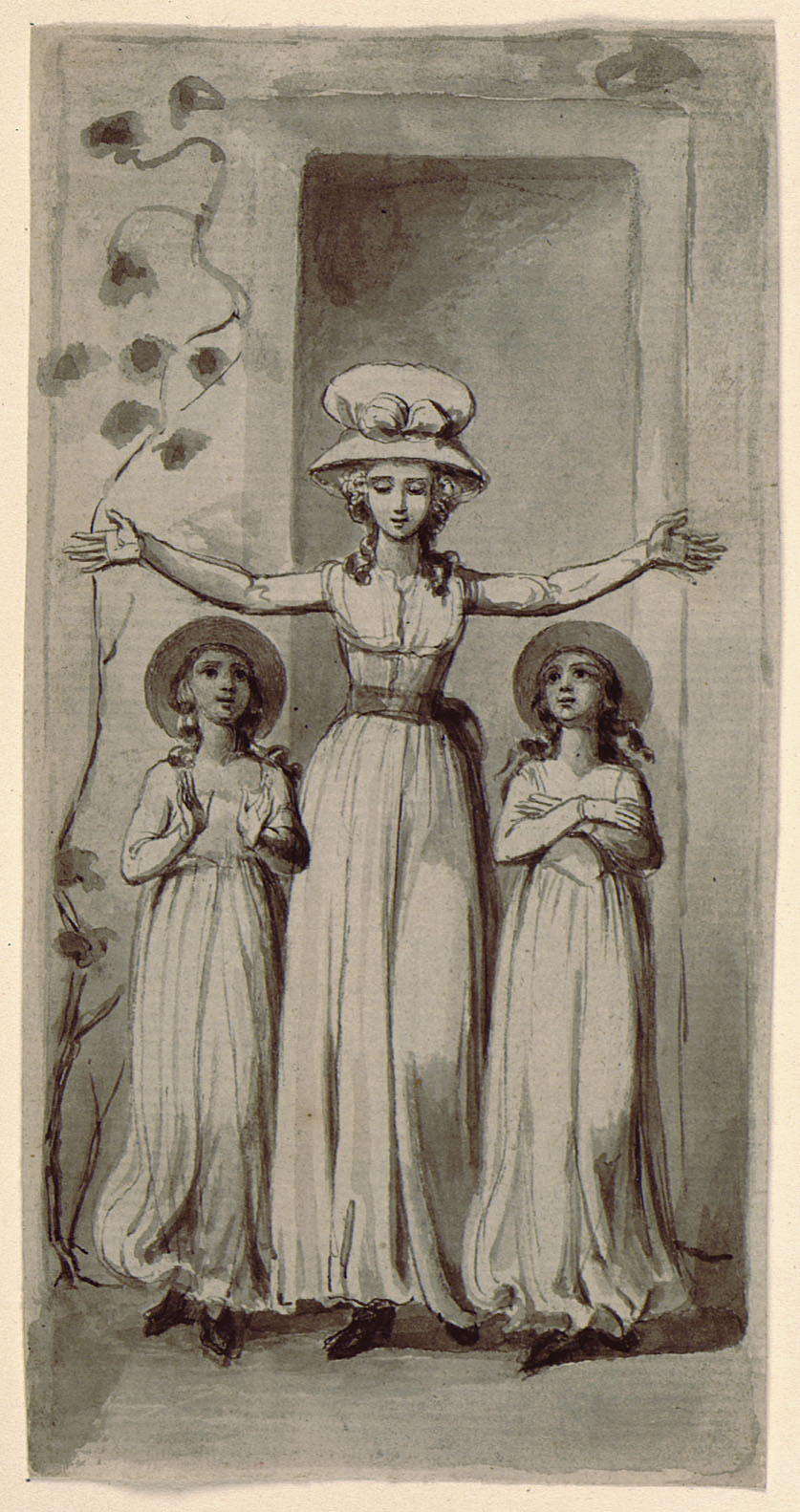
Wollstonecraft’s assumptions about class and character come into relief when placed against the views of another famous contemporary, far more radical figure, William Blake, who was then a struggling, mostly obscure poet, printer, and illustrator in London. In 1791, he received a commission to illustrate a second edition of Wollstonecraft’s third book, a follow-up of sorts to her Thoughts on the Education of Daughters. The 1788 work—Original Stories from Real Life; with Conversations, Calculated to Regulate the Affections, and Form the Mind to Truth and Goodness—is a more focused book, using a series of vignettes woven into a frame story.
The two children in the narrative, 14-year-old Mary and 12-year-old Caroline, receive lessons from their relative Mrs. Mason, who instructs them on a different virtue and moral failing in each chapter by using stories and examples from nature. The two pupils “are motherless,” notes the British Library, “and lack the good habits they should have absorbed by example. Mrs. Mason intends to rectify this by being with them constantly and answering all their questions.” She is an all-knowing governess who explains the world away with a philosophy that might have sounded particularly harsh to Blake’s ears.
For example, in the chapter on physical pain, Mary is stung by several wasps. Afterward, her guardian begins to lecture her “with more than usual gravity.”
I am sorry to see a girl of your age weep on account of bodily pain; it is a proof of a weak mind—a proof that you cannot employ yourself about things of consequence. How often must I tell you that the Most High is educating us for eternity?… Children early feel bodily pain, to habituate them to bear the conflicts of the soul, when they become reasonable creatures. This is say, is the first trial, and I like to see that proper pride which strives to conceal its sufferings…. The Almighty, who never afflicts but to produce some good end, first sends diseases to children to teach them patience and fortitude; and when by degrees they have learned to bear them, they have acquired some virtue.
Blake likely found this line of reasoning off-putting, at the least. His own poems “were not children’s literature per se,” writes Stephanie Metz at the University of Tennessee’s Romantic Politics project, “yet their simplistic language and even some of their content responds to the characteristics of didactic fiction and children’s poetry.” Blake wrote expressly to protest the ideology found in conduct manuals like Wollstonecraft’s: “He calls attention to society’s abuse of children in a number of different ways, showing how society corrupts their inherent innocence and imagination while also failing to care for their physical and emotional needs.”
For Blake, children’s big emotions and active imaginations made them superior to adults. “Several of his poems,” Metz writes, “show the ways in which children’s innate nature has already been tainted by their parents and other societal forms of authority, such as the church.” Given his attitudes, we can see why “modern interpreters of the illustrations for Original Stories have detected a pictorial critique” in Blake’s rendering of Wollstonecraft’s text, as the William Blake Archive points out. Blake “appears to have found her morality too calculating, rationalistic, and rigid. He represents Wollstonecraft’s spokesperson, Mrs. Mason, as a domineering presence.”
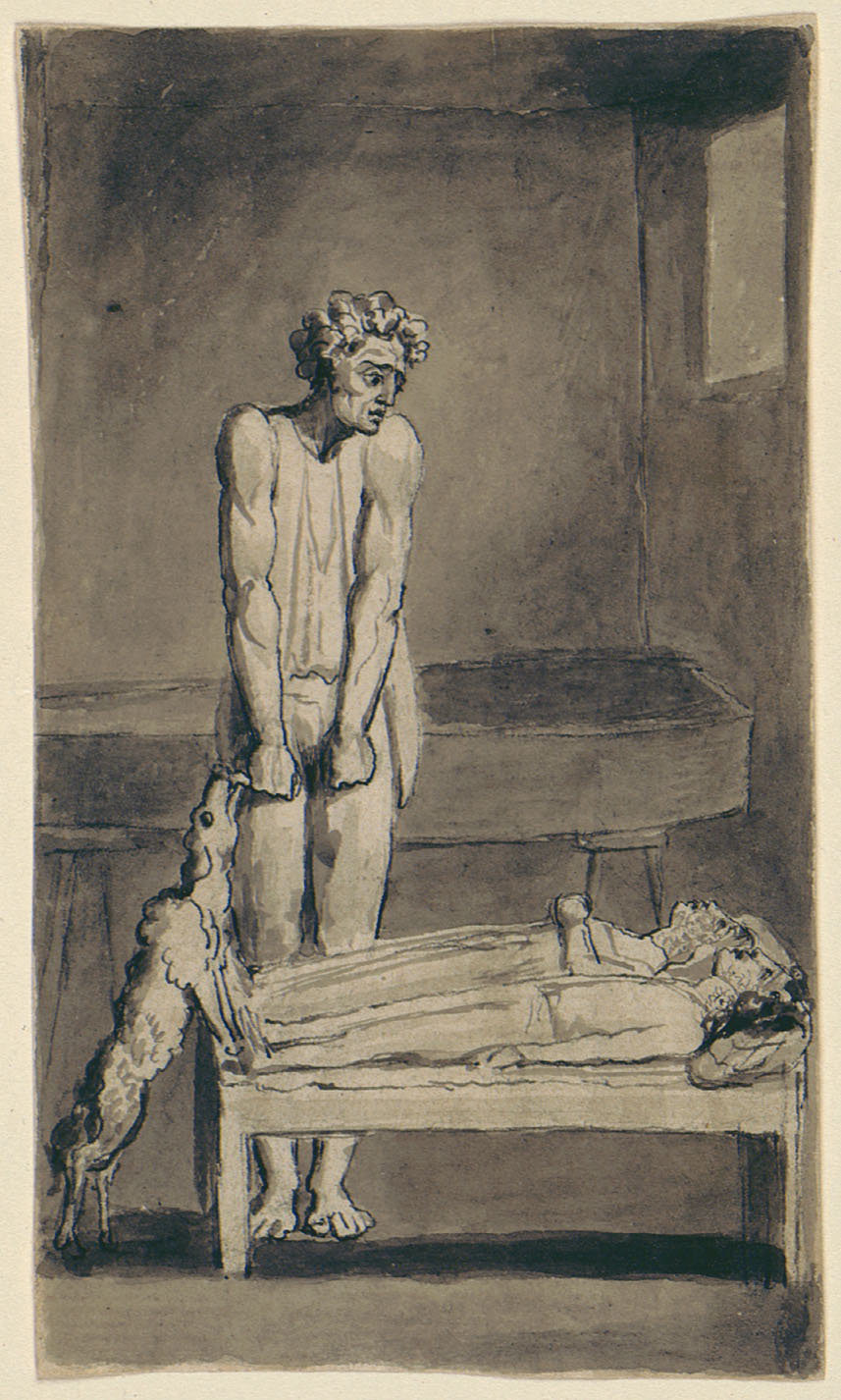
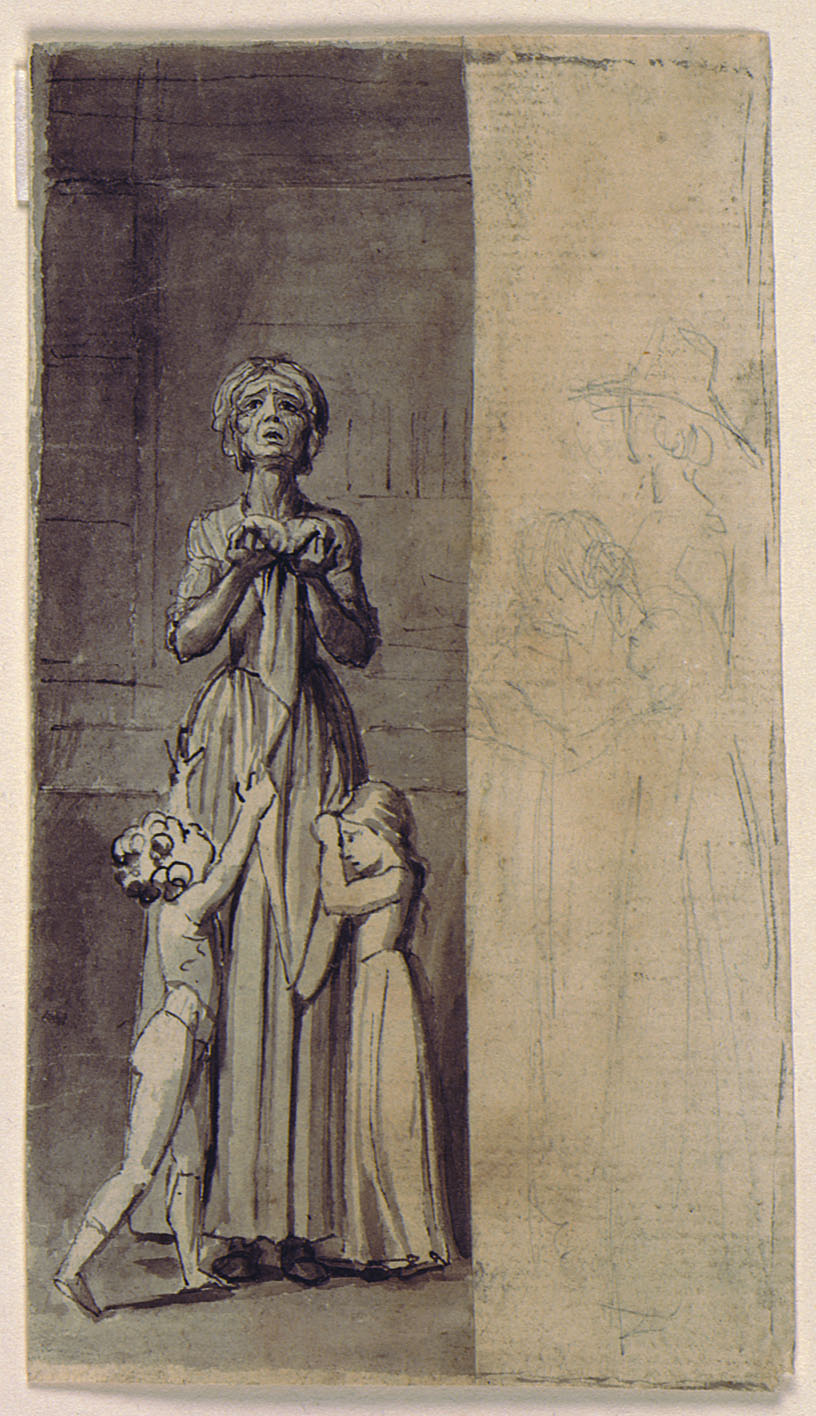
Nonetheless, as always, Blake’s work is more than competent. The style for which we know him best emerges in some of the prints. We see it, for example, in the chiseled face, bulging eyes, and well-muscled arms of the standing figure above. For the most part, however, he keeps in check his exuberant desire to celebrate the human body. “Only a year earlier,” writes Brain Pickings, “Blake had finished printing and illuminating the first few copies of his now-legendary Songs of Innocence and Experience.” Two of the songs “were inspired by Wollstonecraft’s translation of C.G. Salzmann’s Elements of Morality, for which Blake had done several engravings.”
If he had misgivings about illustrating Wollstonecraft’s Original Stories, we must infer them from his illustrations. But placing Blake’s most famous book of poetry next to Wollstonecraft’s pious, didactic works of moral instruction produces some jarring contrasts, showing how two towering literary figures from the time (though not both at the time) conceived of childhood, social class, education, and morality in vastly different ways. Learn more about Blake’s illustrations at Brain Pickings, read an edition of Wollstonecraft’s Original Stories here, and see all of Blake’s illustrations at the William Blake Archive.
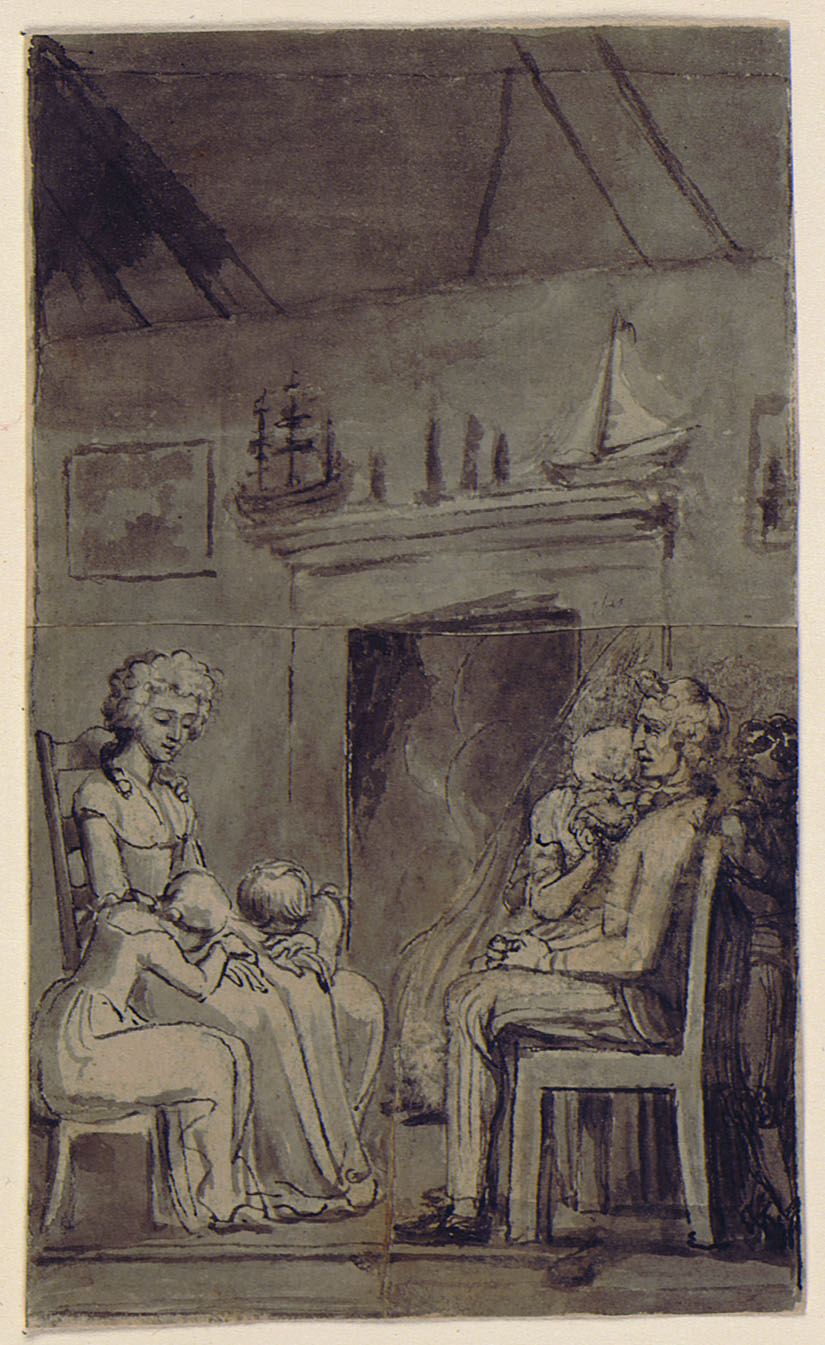
via Brain Pickings
Related Content:
William Blake’s Masterpiece Illustrations of the Book of Job (1793–1827)
William Blake’s Hallucinatory Illustrations of John Milton’s Paradise Lost
Josh Jones is a writer and musician based in Durham, NC. Follow him at @jdmagness
Read More...Decoding Korean Cinema: A Pretty Much Pop Culture Podcast (ep. 43)

We’re seeing a lot of Korean media in American popular culture nowadays, what with Parasite winning the Oscar for best picture and K‑Pop and K‑Dramas finding an increasing American cult following. This is not an accident: The Korean government has as an explicit goal the growth of “soft power” through exported cultural products. This Korean Wave (Hallyu) was aimed foremost at Asia but has reached us as well. Suzie Hyun-jung Oh joins your hosts Mark Linsenmayer, Erica Spyres, and Brian Hirt to explore the context for this spread and figure out what exactly feels foreign to American audiences about Korean media.
This is our first attempt to get at the zeitgeist of another culture to better understand its media, and the primary focus of our immersion (the part of the wave that’s not aimed at teens) was film: In addition to the work of Bong Joon-ho, we touch on The Handmaiden, A Train to Busan, The Burning, A Taxi Driver, Lucid Dreaming, Among the Gods, and others.
We also talk a little about Korean teen cultural products, family life and religion in Korea, the aesthetic of cuteness, M*A*S*H, and whether Americans will read subtitles.
Some articles and other resources that helped us:
- “Korean Media Hits The Big Time In North America” by Lauren Orsini
- “Korean Wave (Hallyu) – The Rise of Korea’s Cultural Economy & Pop Culture” by Martin Roll
- “‘Parasite’ Was a Triumph for a Film Industry Trapped Between the U.S. and China” by Aynne Kokas
- “Hulu is Not Here for your ‘Parasite’ Subtitle Complaints” by Lisa Respers France
- “Why Is K‑Pop’s Popularity Exploding in the United States?” by Jon Matsumoto
- The comedian PK on the impossibility of North Korean comedy
- The Late Capitalism of K‑Pop a video by Cuck Philosophy
- Suzie’s K‑Pop Playlist (made 10 years ago, documenting its first wave)
- Read teen media online: tapas (serialized novels) or manwha (visual novels)
- Clips from the K‑drama Cinderella and the Four Knights that convey its odd flavor.
This episode includes bonus discussion that you can only hear by supporting the podcast at patreon.com/prettymuchpop. This podcast is part of the Partially Examined Life podcast network.
Pretty Much Pop: A Culture Podcast is the first podcast curated by Open Culture. Browse all Pretty Much Pop posts or start with the first episode.
Read More...16 Ways the World Is Getting Remarkably Better: Visuals by Statistician Hans Rosling
It certainly may not feel like things are getting better behind the anxious veils of our COVID lockdowns. But some might say that optimism and pessimism are products of the gut, hidden somewhere in the bacterial stew we call the microbiome. “All prejudices come from the intestines,” proclaimed noted sufferer of indigestion, Friedrich Nietzsche. Maybe we can change our views by changing our diet. But it’s a little harder to change our emotions with facts. We turn up our noses at them, or find them impossible to digest.
Nietzsche did not consider himself a pessimist. Despite his stomach troubles, he “adopted a philosophy that said yes to life,” notes Reason and Meaning, “fully cognizant of the fact that life is mostly miserable, evil, ugly, and absurd.” Let’s grant that this is so. A great many of us, I think, are inclined to believe it. We are ideal consumers for dystopian Nietzsche-esque fantasies about supermen and “last men.” Still, it’s worth asking: is life always and equally miserable, evil, ugly, and absurd? Is the idea of human progress no more than a modern delusion?
Physician, statistician, and onetime sword swallower Hans Rosling spent several years trying to show otherwise in television documentaries for the BBC, TED Talks, and the posthumous book Factfulness: Ten Reasons We’re Wrong About the World—and Why Things Are Better Than You Think, co-written with his son and daughter-in-law, a statistician and designer, respectively. Rosling, who passed away in 2017, also worked with his two co-authors on software used to animate statistics, and in his public talks and book, he attempted to bring data to life in ways that engage gut feelings.
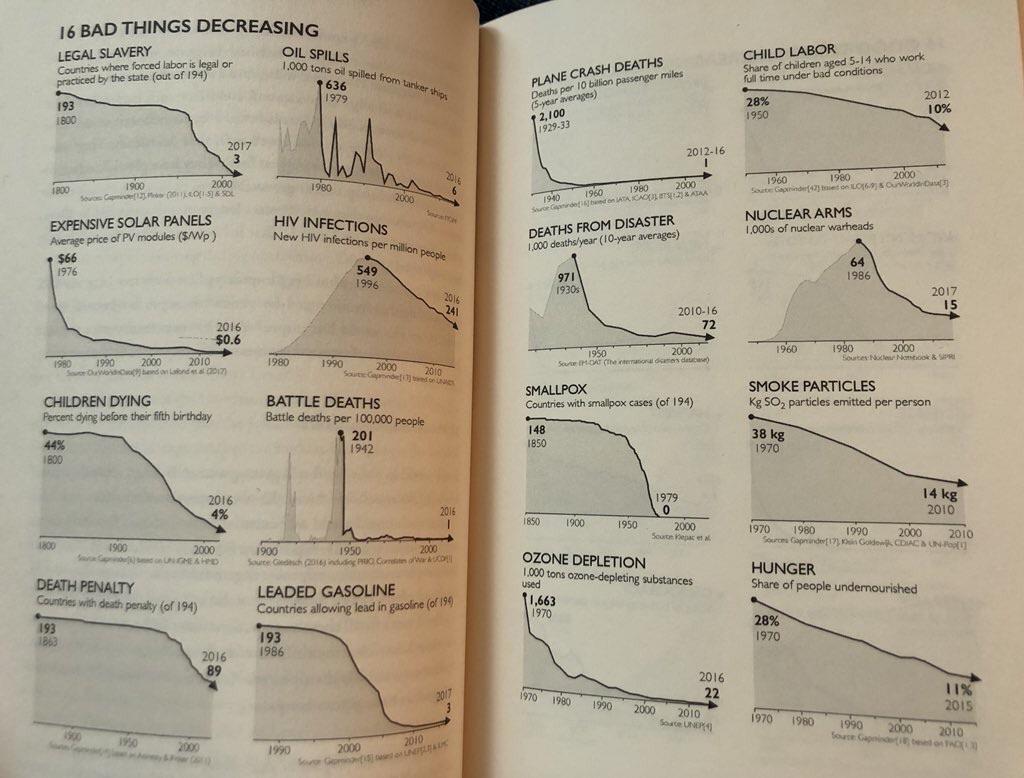
Take the set of graphs above, aka, “16 Bad Things Decreasing,” from Factfulness. (View a larger scan of the pages here.) Yes, you may look at a set of monochromatic trend lines and yawn. But if you attend to the details, you’ll can see that each arrow plummeting downward represents some profound ill, manmade or otherwise, that has killed or maimed millions. These range from legal slavery—down from 194 countries in 1800 to 3 in 2017—to smallpox: down from 148 countries with cases in 1850 to 0 in 1979. (Perhaps our current global epidemic will warrant its own triumphant graph in a revised edition some decades in the future.) Is this not progress?
What about the steadily falling rates of world hunger, child mortality, HIV infections, numbers of nuclear warheads, deaths from disaster, and ozone depletion? Hard to argue with the numbers, though as always, we should consider the source. (Nearly all these statistics come from Rosling’s own company, Gapminder.) In the video above, Dr. Rosling explains to a TED audience how he designed a course on global health in his native Sweden. In order to make sure the material measured up to his accomplished students’ abilities, he first gave them a questionnaire to test their knowledge.
Rosling found, he jokes, “that Swedish top students know statistically significantly less about the world than a chimpanzee,” who would have scored higher by chance. The problem “was not ignorance, it was preconceived ideas,” which are worse. Bad ideas are driven by many ‑isms, but also by what Rosling calls in the book an “overdramatic” worldview. Humans are nervous by nature. “Our tendency to misinterpret facts is instinctive—an evolutionary adaptation to help us make quick decisions to avoid danger,” writes Katie Law in a review of Factfulness.
“While we still need these instincts, they can also trip us up.” Magnified by global, collective anxieties, weaponized by canny mass media, the tendency to pessimism becomes reality, but it’s one that is not supported by the data. This kind of argument has become kind of a cottage industry; each presentation must be evaluated on its own merits. Presumably enlightened optimism can be just as oversimplified a view as the darkest pessimism. But Rosling insisted he wasn’t an optimist. He was just being “factful.” We probably shouldn’t get into what Nietzsche might say to that.
Related Content:
Positive Psychology: A Free Course from Harvard University
Josh Jones is a writer and musician based in Durham, NC. Follow him at @jdmagness
Read More...Radiohead’s “Spectre” Played Against the Title Sequence of the 2015 James Bond Film, Spectre
Commander James Bond, CMG, RNVR — code name 007 — is both cool and uncool. Though hardly a setter of youthful trends, he has always embodied masculine competence and unflappability of a relatively timeless and quintessentially British kind. Thanks to the long-running Bond film series’ efforts to gradually increase the character’s complexity, the Bond who first appears in Ian Fleming’s 1953 novel Casino Royale may at first look simple, even cartoonish to readers of the 21st century. But despite all the changes of the leading man and the shifts in audience expectations over the decades, one of the franchise’s tasks has remained constant: to exude this Bondian uncool cool, whose distinctive tone must be set with just the right theme song.
Scheduled for release this fall, the 25th Bond film No Time to Die features a theme song by the teenage singer Billie Eilish, whose dark-pop style may neatly suit the return performance by Daniel Craig. As soon as he made his debut as Bond in 2006’s Casino Royale, an adaptation of Fleming’ first novel, Craig immediately earned the distinction of the most troubled Bond yet.
Three Bond pictures later, the producers must have realized that a haunted secret needs a haunted theme song, and so commissioned a piece of the ghostly yet hugely popular, at once cool and uncool work of Radiohead. You can hear Radiohead’s theme song as it appears in the opening of 2015’s Spectre (a reference, every Bond fan knows, to the global crime syndicate SPECTRE, or Special Executive for Counter-intelligence, Terrorism, Revenge and Extortion) in the video above.
Or rather, the video shows how Radiohead’s “Spectre” might have appeared in the 24th Bond picture. After the band recorded the song, the film’s production team rejected it as too melancholy for the title sequence — perhaps inevitably, in retrospect, given how Radiohead’s songs lend themselves to the construction of a “gloom index” — and opted instead for a higher-flown (and ultimately Oscar-winning) number sung by Sam Smith. “There have been many rejected themes over the years by many notable artists,” writes James Bond Radio’s Jack Lugo. “Some rejected themes end up as B‑sides (such as Pulp’s “Tomorrow Never Lies”) or get re-worked with different lyrics on their albums (see Ace of Base’s “The Juvenile”).” Never hesitant to put their music online, Radiohead ultimately released “Specter” on their Soundcloud page.
“Reaction was understandably mixed,” writes Lugo. But after watching a few fan assemblies of the song and Spectre’s title sequence, he describes himself as having “discovered a newly found appreciation for the song.” Following along with the lyrics as Thom Yorke sings them made, for him, “a world of a difference.” The words “capture the darkness, paranoia, and refusal to trust that’s inherent to the Bond character (at least as he’s portrayed by Daniel Craig),” and as a whole “the song speaks to someone who wants badly to love and care for someone but is restrained and restricted by chance, circumstances, and also just by the nature of his character.” Had it been used in the film, Radiohead’s song would have cast these themes into starker relief, emphasizing the deeper thematic inquiry at the core of Spectre, a study, as it were, of human bondage.
via Kottke
Related Content:
James Bond: 50 Years in Film (and a Big Blu-Ray Release)
Autonomous Flying Robots Play the Theme From the James Bond Movies
Radiohead’s Thom Yorke Performs Songs from His New Soundtrack for the Horror Film, Suspiria
The Secret Rhythm Behind Radiohead’s “Videotape” Now Finally Revealed
Based in Seoul, Colin Marshall writes and broadcasts on cities, language, and culture. His projects include the book The Stateless City: a Walk through 21st-Century Los Angeles and the video series The City in Cinema. Follow him on Twitter at @colinmarshall, on Facebook, or on Instagram.
Read More...How Music Unites Us All: Herbie Hancock & Kamasi Washington in Conversation
For the indefinite time being, we live with fear atop anxiety, anxiously looking for order in the past and in the future. But some people with newfound leisure in their coronavirus isolation have returned to what matters to them most here and now, and started to imagine a world no policy proposal can describe. The internet has given us greater and greater access to people who have been doing this all along. Even before the current pandemic, artists like Herbie Hancock and Kamasi Washington were expanding our notions of the possible in music and in life.
After leaving Miles Davis and going solo, Hancock was sometimes unfairly derided as a popularizer. In 1974, after his first gold record Head Hunters came out, critic Lee Underwood gave him the backhanded nickname “Mr. Communicate-With-A-Wider-Audience.” But as an early adopter of synthesizer technology, he was instrumental in keeping jazz in the spotlight throughout the 70s and integral to its influence on 80s pop. Likewise, Washington has been on the vanguard of a resurgent jazz as conversant with hip hop as it is with its forebears.
Part of a “bilingual generation,” as John Lewis writes at The Guardian, fluent in the old and new, Washington built cultural bridges as the musical director for Kendrick Lamar’s groundbreaking To Pimp a Butterfly. And both Hancock and Washington have worked with producer Flying Lotus, the grand-nephew of Alice Coltrane and grandson of singer-songwriter Marilyn McLeod. In their collaborations with other artists and their career-spanning world tours, they know their subject intimately when they talk about music as a uniting force, a fact we’ve all remarked on as people in infected areas emerge from windows to serenade their neighbors.
Maybe music is even more powerful than we allow in our communally joyful appreciation of Italian opera singers on balconies. Not only does it unite generations and genres, as Washington says in his short, animated conversation with Hancock above, it shuts down bigotry. When racists hear James Brown, he jokes, they become temporarily embarrassed out of their hate. (“I’ll go back to being a bigot when the song is over.”) Hancock replies that “music has a job to do,” and it’s to keep people together. How does it do this? Not only through mutual appreciation but also mutual creation.
“Music, and the arts in general,” says Hancock, can combine cultures, religions, and other differences uniquely such that “what comes out is something that neither one can take credit for. What comes out is a third thing. So it’s like one plus one equals three. That’s a new kind of math,” he says, and laughs. Hancock and Washington both draw from sources of spiritual wisdom that inform their music and broader views. Hancock’s Buddhist practice constitutes for him, he said in his Harvard Norton Lectures in 2014, a way of “being open to the myriad opportunities that are available on the other side of the fortress.”
Washington, whom The Fader hyperbolically calls “the wisest man on earth,” casually shared his philosophy of possibility in a recent interview. Transcending prejudice requires more than digging James Brown together. Maybe we need to readjust our whole perspective, he suggests:
I’m kind of a science-fiction guy and was thinking, “One day we’re going to travel to all these places and see the universe.” So there’s a side of myself that’s really infatuated with all the amazing things that I will do and the world can do — the idea of our endless potential. And the other side sees the struggle and is always problem-solving and poking holes, because I think of myself as being able to plug those holes. I imagine the world as a place of never-ending struggle because I have endless potential.
It’s a quote that calls to mind the Bodhisattva’s vows. And what do we do? we might demand of this visionary vagueness. What do we do with the spectacles of gross negligence, corruption, and criminal mismanagement all around us? His answer involves acceptance as much as action.
We don’t live in the whole world so we have a whole lot of control — ultimate control — over our little pocket. The people who seem to have a lot of power don’t actually have a lot of power; someone like Trump only has the power people give him and at any point we can take that back.
We might imagine the larger conversation between Hancock and Washington, who began a tour together last year, elaborating on ways to act locally but think with limitless potential, to emerge from fortresses of prejudice and exercise collective power. We would do well to pay attention to artists now, especially those like Hancock and Washington who have been soundtracking the future for decades, and who seem to think that it still has a chance.
Related Content:
Josh Jones is a writer and musician based in Durham, NC. Follow him at @jdmagness
Read More...Salvador Dalí’s Tarot Cards, Cookbook & Wine Guide Re-Issued as Beautiful Art Books
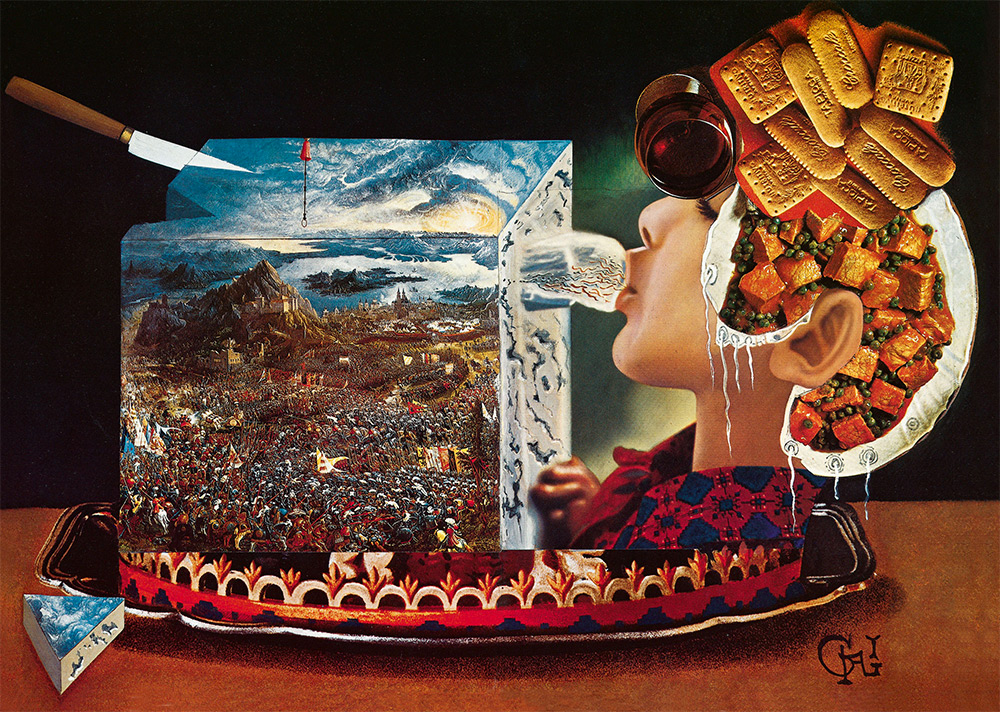
Maintaining an aggressively upward-waxed mustache; making a surrealist film with Luis Buñuel that Buñuel described as “nothing more than a desperate impassioned call for murder”; bringing an anteater on The Dick Cavett Show: Salvador Dalí can be described as a master of attention-grabbing gambits, by his admirers and detractors alike. No wonder, then, that he appears to have some serious admirers at Taschen. Known as a publisher of books that draw a great deal of press for their boundary-pushing size, content, and production values, Taschen would seem to be a natural home for Dalí’s legacy, or at least the parts of it that fit between two covers.
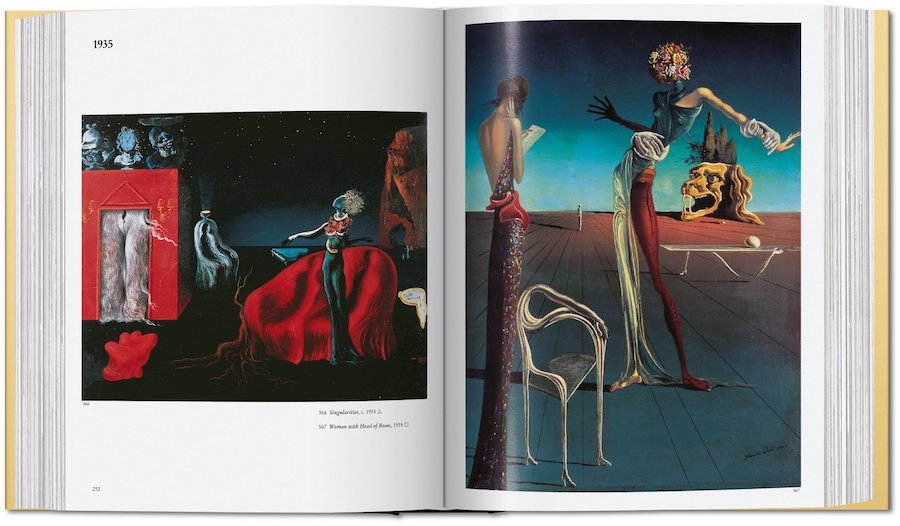
Besides his well-known and much-reprinted paintings, Dalí left behind a body of work also including not just film but sculpture, photography, architecture, and books. His first published volume, 1938’s The Tragic Myth of the Angelus of Millet, offers a “paranoiac-critical” interpretation of the titular pastoral painting by Jean-François Millet. In the 1940s he wrote, among other books, The Secret Life of Salvador Dalí, a kind of autobiography, and Hidden Faces, a novel set among aristocracy in France, Morocco, and California.
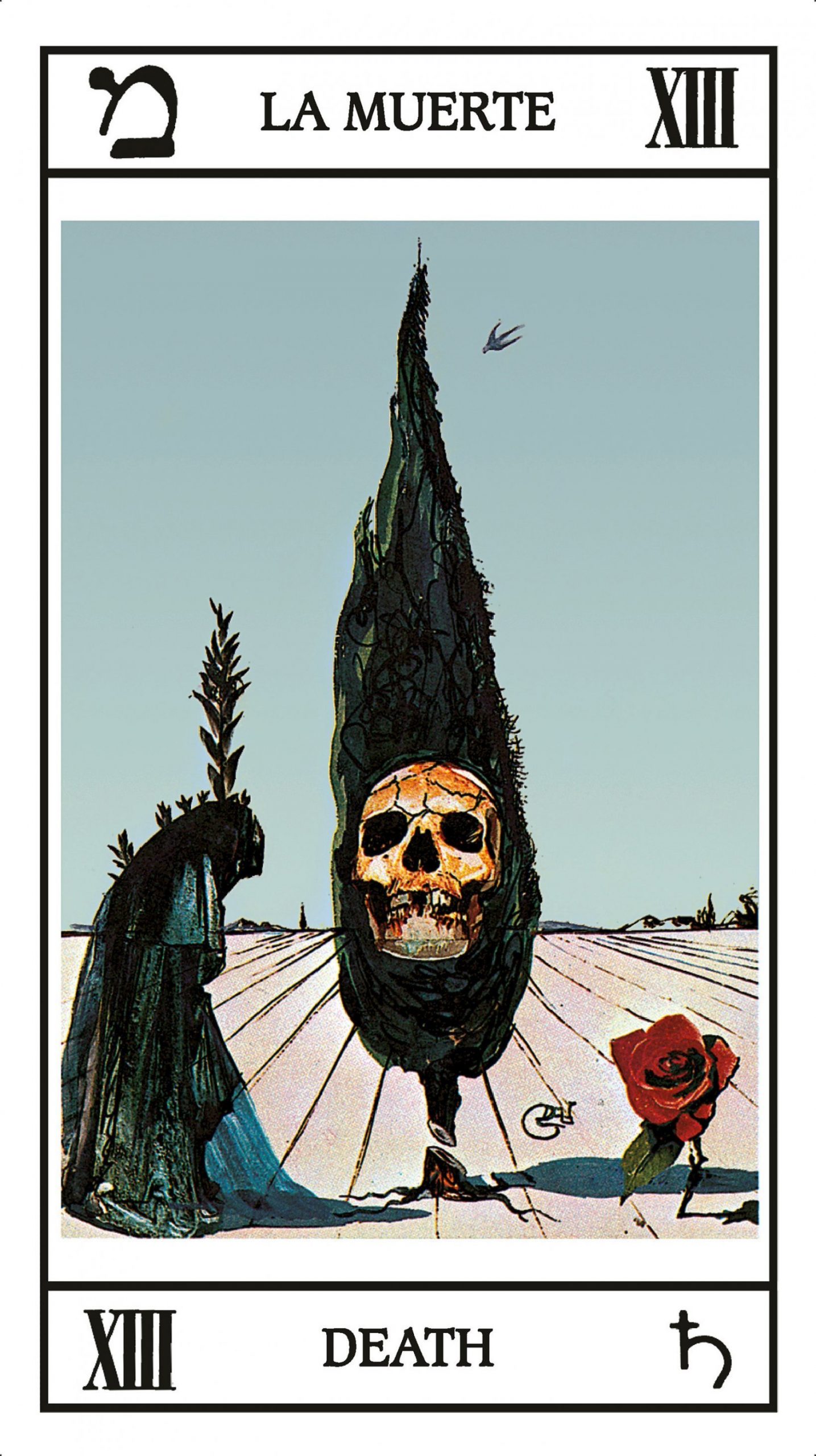
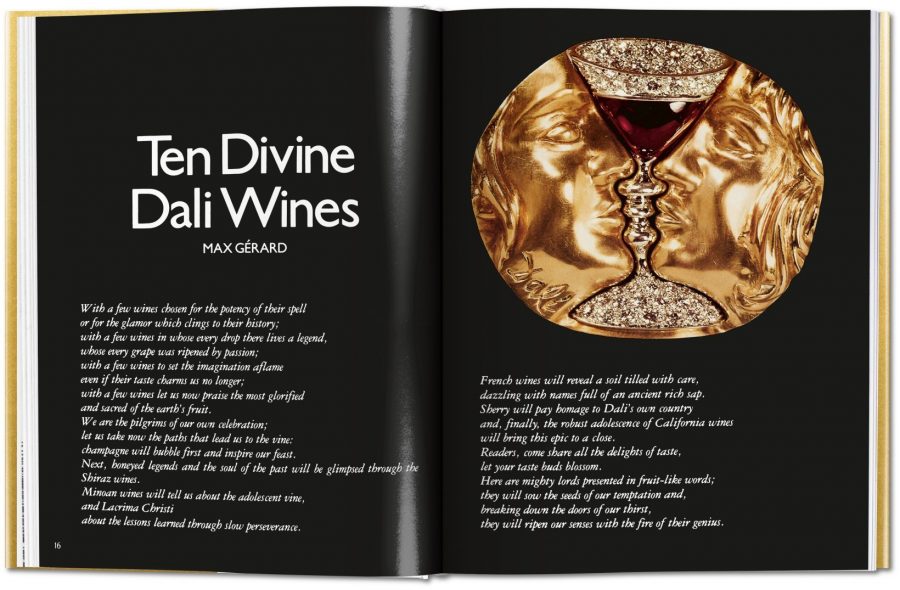
It was in the 1970s that Dalí’s literary efforts took a less predictable turn: 1973 saw the publication of his Les Diners de Gala, a cookbook featuring such recipes as “Veal Cutlets Stuffed with Snails,” “Thousand Year Old Eggs,” and “Toffee with Pine Cones.” In 1978 came The Wines of Gala, a personal guide to “Wines of Frivolity,” “Wines of Sensuality,” “Wines of Aestheticism,” and others besides. In recent years, Taschen has reprinted Dalí’s food and wine books with characteristic handsomeness. Those two now sit in the Taschen Dalí collection alongside Dalí: The Paintings, the most complete such collection ever published, and Dalí Tarot, a package that includes not just the Dalí-designed tarot deck originally published in 1984 but a companion book by tarot scholar Johannes Fiebig.
Dalí’s wife and savvy business manager Gala — she of all those dinners and wines — would surely approve of the skill and taste that Taschen has put into packaging even the artist’s minor work as a viable 21st-century product. Well-heeled Dalí enthusiasts will surely continue to pay Taschen prices for such packages, and even the less well-heeled ones can’t help but wonder what future reprints are on the table: lavish new editions of Hidden Faces, The Secret Life, or even 1948’s 50 Secrets of Magic Craftsmanship (with its endorsement of power napping)? Dare we hope for the definitive Salvador Dalí Bible?
Related Content:
Salvador Dalí’s 1973 Cookbook Gets Reissued: Surrealist Art Meets Haute Cuisine
Salvador Dalí’s Illustrations for The Bible (1963)
Based in Seoul, Colin Marshall writes and broadcasts on cities, language, and culture. His projects include the book The Stateless City: a Walk through 21st-Century Los Angeles and the video series The City in Cinema. Follow him on Twitter at @colinmarshall, on Facebook, or on Instagram.
Read More...Little Richard Burst Into the “Then-Macho World of Rock” and “Changed it Forever”
If Sister Rosetta Tharpe was the Godmother of Rock and Roll, then Little Richard, who passed away Saturday at the age of 87 from bone cancer, deserves to be its Godfather. This is no empty honorific, despite the fact that Tharpe was already touring the country as a teenage gospel prodigy in 1932 when Richard Penniman was born in Macon Georgia, and “other musicians,” including Chuck Berry, Fats Domino, Bo Diddley, and Elvis Presley, “had already been mining a similar vein by the time [Little Richard] recorded his first hit, ‘Tutti Frutti’—a raucous song about sex, its lyrics cleaned up but its meaning hard to miss,” writes Tim Weiner in a New York Times obituary.
Little Richard “raised the energy level several notches and created something not quite like any music that had been heard before—something new, thrilling and more than a little dangerous.” Taking his lessons from Tharpe, he brought the dynamism of the gospel he was raised to sing and the profane rhythms of the blues into a high-voltage synthesis. Little Richard’s reputation needs no burnishing. He has never been neglected by historians of rock and roll. Nonetheless, it is startling to recognize, as guitar great Vernon Reid wrote in a Twitter tribute: “No Jimi, No Beatles No Bowie, No Bolan. NO GLAM, No Freddie, No Prince, No Elton, No Preston No Sly, No Stevie, WITHOUT Little Richard!”
Little Richard’s life story mirrors his early hero Rosetta Tharpe’s in several significant ways. Not only were they two of the most widely influential stars to emerge from the black church and onto secular stages, but they were also the music’s first stars to live openly gay lives, for a time, before succumbing to church and social pressures and returning to the closet. For Tharpe, that meant ending a long relationship with her romantic and touring partner Marie Knight and agreeing “to participate in a spectacle of a wedding endorsed and encouraged by the record label for profit,” writes Lynnee Denise, “in front a paying crowd of 25,000 paying guests.”
Little Richard famously walked away from his explosive career in 1957 to marry, adopt a son, and become a missionary. The marriage, and re-conversion, didn’t last. After four years, he was divorced following an arrest for “approaching men in a restroom,” notes France 24. “Richard—resentful that rock ‘n’ roll was taking off without him—soon returned to music with a triumphant tour of England.” (See him in a fierce performance in France above from 1966.) Then he went back to the church and never left. “By the late 1980s he had managed to merge his religious life and his stage persona, touring as a preacher and officiating at flashy celebrity weddings.”
He became something of a caricature of himself in later years, appearing as a high-camp figure in TV and film. Throughout his life, Richard identified openly as gay or bisexual, recounting stories of orgies and telling Penthouse in 1995, “I’ve been gay my whole life.” He also preached against LGTBTQ people, calling same-sex attraction “unnatural.” The L.A. Times’ Richard Cromelin understates the case in writing, “he variously modified his story and renounced and/or denied his homosexuality.” Depending on how one saw it, he was either divinely “healed” of his lifelong sexual orientation, or he was tragically beset by ingrained religious self-hatred.
Maybe none of this should matter much in assessing Little Richard’s musical legacy, except for the fact that his sudden appearance as a gay artist in the “then-macho world of rock,” as France 24 puts it, changed that world irrevocably. Little Richard’s flamboyance and teasing ambivalence became a hallmark of pop culture; his persona informed the stage career of nearly every queer and sexually ambiguous superstar to follow. As a “sexually fluid black man coming from the US south,” he gave black artists permission to experiment with identity and defy rigid stereotypes imposed by a legacy of slavery. There’s also no getting around the fact that “Tutti Frutti,” the song that “intoxicated legions of teenage fans eager to break loose from buttoned-up mid-century America,” was originally a song about anal sex. You can read those excised lyrics at Billboard. They involve the phrases “good booty” and “grease it.”
Like one of his most talented of his many offspring, Prince, Little Richard somehow found a lifelong home in a religion that rejected his sexual desire. This has been difficult for many of his fans to understand. Perhaps he was enacting this complicated, liberating, likely tortuous struggle to reconcile the irreconcilable while onstage screaming bloody murder and generally tearing the roof off the place. In whatever way Little Richard ultimately came to terms with his presence in music he claimed to have invented (despite Sister Rosetta), and yet also called “demonic,” it’s undeniable that the past sixty years or so of pop culture would never have happened without him.
Related Content:
The Woman Who Invented Rock n’ Roll: An Introduction to Sister Rosetta Tharpe
New Web Project Immortalizes the Overlooked Women Who Helped Create Rock and Roll in the 1950s
Chuck Berry Takes Keith Richards to School, Shows Him How to Rock (1987)
Josh Jones is a writer and musician based in Durham, NC. Follow him at @jdmagness
Read More...The Case for a Universal Basic Income in the Time of COVID-19
The idea of Universal Basic Income (UBI) has been the subject of much debate in the past few years. The candidacy of Andrew Yang for U.S. President brought the issue to national prominence, where it has remained during the spread of COVID-19. What is UBI? Put simply, it proposes that the government give every citizen a certain amount of money each month to cover, at the least, basic living expenses. As the video above by YouTube channel Kurzgesagt explains, those citizens are then free to live their lives as they like.
Unlike most welfare state models, UBI usually does not involve any means testing. In most schemes, every citizen, no matter their current wealth or income, receives the benefit. (Though most studies of the program have only given it to poor or unemployed beneficiaries.) Those who do not need the money can do whatever they want with it, but so too can those who need it. UBI ensures that people do not have go homeless or hungry if they lose their livelihood, and that they can survive without paternalist state agencies breathing down their necks.
UBI is not a new idea but dates back at least to Thomas Paine, whose Common Sense inspired the American Revolution and whose Rights of Man defended the French a few years later. As Paine argued in another, little-read, pamphlet, Agrarian Justice, no one could be truly free if they had no means of subsistence. Since capitalism had placed most of those means under private ownership, he reasoned, citizens should be compensated for being deprived of resources that belonged to them by natural right as much as to anyone else.
This philosophical justification doesn’t always enter into the conversation, which is often framed in more pragmatic terms as a political and economic expedient in times of capitalist crisis: in times, for example, like the present moment. The COVID-19 crisis has intensified calls for a UBI, as millions of layoffs point toward the inevitability of a depression. Pushing people back to work during the pandemic seems to be the only thing the U.S. government plans to do, but no amount of coercion can stop the virus from forcing closures all over again.
Even the famously libertarian economist Milton Friedman once embraced a version of UBI—as an alternative to the liberal social programs he loathed. Under Richard Nixon, of all people, such a policy almost came into being in 1969. Neither Friedman nor Nixon believed in the natural right of all citizens to a share in the profits of a state’s natural resources. But they could see the wisdom of ensuring millions of U.S. citizens weren’t relegated to living in destitution.
The program required testing, so the administration set up a trial run. “Tens of millions of dollars were budgeted to provide a basic income for more than 8,500 Americans” in five states across the country, writes Rutger Bregman at The Correspondent. Researchers wanted to know: 1. if those who received a basic income would work significantly less, 2. if the program would be too expensive, and 3. if it would prove “politically unfeasible.” The findings? “No, no, and maybe.”
The chief objection, idleness, held no water. As the chief data analyst for the Denver experiment put it at the time, “The ‘laziness’ contention is just not supported by our findings.” The two groups who did cut back on hours, 20-somethings and mothers of young children, were people who most needed the money so they could go to college or devote time to their kids. Otherwise, recipients did not quit their jobs and lay around watching TV.
Yet there remains a powerful species of human busybody who cannot rest until they’re sure everyone’s working. Such people continue to object—whether in good faith or not—that “just giving people money” will turn everyone into a slacker, as though most people were only motivated by the threat of starvation. And so, trials continue decades later. Researchers at the University of Helsinki recently conducted a two-year study in Finland with a random selection of 2,000 unemployed people across the country. Each participant was given €560 (about $607) a month to ease their burden, and received the funds whether or not they sought or found a job.
“The scheme was not strictly speaking a universal basic income trial because the recipients came from a restricted group and the payments were not enough to live on,” points out Guardian correspondent Jon Henley. Nonetheless, the researchers found that recipients were significantly less stressed than a control group—and that they could make different choices than they might otherwise. “Some said the basic income allowed them to go back to the life they had before they became unemployed,” the study authors write. “While others said it gave them the power to say no to low-paid insecure jobs, and thus increased their sense of autonomy.”
Other findings also showed how UBI could radicalize our relationship to work. “Freelancers and artists and entrepreneurs had more positive views on the effects of the basic income, which some felt had created opportunities for them to start businesses.” People providing unpaid care for others felt their time was more valued. “The security of the basic income allowed them to do more meaningful things, as they felt it legitimized this kind of care work.” The findings are being taken seriously by many European governments.
In Spain, Scotland, and elsewhere, leaders are proposing or considering some form of UBI to combat massive unemployment due to the pandemic. While the idea may have little political future in the U.S. at the moment, where priorities are to use the country’s wealth to further enrich the wealthy, UBI is becoming tremendously popular elsewhere. (A recent poll found support among 71% of Europeans surveyed.) No one believes UBI is a panacea for the world’s ills, but as the Wired video above argues, there may be no better time than now to make the case for it.
Related Content:
Hear Alan Watts’s 1960s Prediction That Automation Will Necessitate a Universal Basic Income
Josh Jones is a writer and musician based in Durham, NC. Follow him at @jdmagness
Read More...Take a Virtual Tour of the Mütter Museum and Its Many Anatomically Peculiar Exhibits
A few months before Philaelphia’s Mütter Museum, exercising now familiar COVID-19 precautions, closed its doors to the public, it co-sponsored a parade to honor the victims to the previous century’s Spanish Flu pandemic, as well as “those who keep us safe today.”
The event was part of a temporary exhibition, Spit Spreads Death: The Influenza Pandemic of 1918–19 in Philadelphia.
Another temporary exhibition, Going Viral: Infection Through the Ages, opened in November, and now seems even stronger proof that the museum, whose 19th-century display cabinets are housed in the historic College of Physicians, is as concerned with the future as it is with the past.
For now, all tours must be undertaken virtually.
Above, curator Anna Dhody, a physical and forensic anthropologist and Director of the Mütter Research Institute, gives a brief introduction to some of the best known artifacts in the permanent collection.
The museum’s many antique skulls and medical oddities may invite comparisons to a ghoulish sideshow attraction, an impression Dhody corrects with her warm, matter-of-fact delivery and respectful acknowledgment of the humans whose stories have been preserved along with their remains:
Mary Ashberry, an achondroplastic dwarf, died from complications of a Cesarean section, as doctors who had yet to learn the importance of sterilizing instruments and washing hands, attempted to help her deliver a baby who proved too big for her pelvis. (The baby’s head was crushed as well. Its skull is displayed next to its mother’s skeleton.)
Madame Dimanche is represented by a wax model of her face, instantly recognizable due to the 10-inch cutaneous horn that began growing from her forehead when she was in her 70s. (It was eventually removed in an early example of successful plastic surgery.)
Albert Einstein and the conjoined twins Chang and Eng Bunker are among the household names gracing the museum’s collection.
One of the most recent additions is the skeleton of artist and disability awareness advocate Carol Orzel, who educated the public and incoming University of Pennsylvania medical students about fibrodysplasia ossificans progressiva (FOP), a rare disorder that turned her muscle and connective tissue to bone. She told her physician, Frederick Kaplan, below, that she wanted her skeleton to go to the Mütter, to join that of fellow FOP sufferer, Harry Eastlack… provided some of her prized costume jewelry could be displayed alongside. It is.
Get better acquainted with the Mütter Museum’s collection through this playlist.
The exhibit Spit Spreads Death is currently slated to stay up through 2024. While waiting to visit in person, you can watch an animation of the Spanish flu’s spread, and explore an interactive map showing the demographics of the infection.
h/t Tanya Elder
Related Content:
Take a Virtual Tour of 30 World-Class Museums & Safely Visit 2 Million Works of Fine Art
Take a Long Virtual Tour of the Louvre in Three High-Definition Videos
Ayun Halliday is an author, illustrator, theater maker and Chief Primatologist of the East Village Inky zine. Here latest project is a series of free downloadable posters, encouraging citizens to wear masks in public and wear them properly. Follow her @AyunHalliday.
Read More...Support Us
We're hoping to rely on loyal readers, rather than erratic ads. Please click the Donate button and support Open Culture. You can use Paypal, Venmo, Patreon, even Crypto! We thank you!

About Us

Open Culture scours the web for the best educational media. We find the free courses and audio books you need, the language lessons & educational videos you want, and plenty of enlightenment in between.
Advertise With Us

FREE UPDATES!
GET OUR DAILY EMAIL
Get the best cultural and educational resources on the web curated for you in a daily email. We never spam. Unsubscribe at any time.
FOLLOW ON SOCIAL MEDIA

Open Culture editor Dan Colman scours the web for the best educational media. He finds the free courses and audio books you need, the language lessons & movies you want, and plenty of enlightenment in between.
Advertise With Us