Watching Nature Documentaries Can Produce “Real Happiness,” Finds a Study from the BBC and UC-Berkeley
Hollywood science fiction films imagine future humans in worlds that are no longer green, or never were—from Soylent Green’s dying Earth to that of Interstellar. And from Soylent Green to Ad Astra, humans in the future experience plant and animal life as simulations on a screen, in hyperreal photography and video meant to pacify and comfort. Maybe we live in that world already, to some extent, with apocalyptic films and science fiction expressing a collective mourning for the extinctions brought on by climate change.
“Over the course of my lifetime—I’m 46,” writes Washington Post art critic Sebastian Smee, “the planet has lost more than half of its wildlife populations, according to the World Wildlife Fund.” Surely this brute fact explains the immense popularity of high production-value nature documentaries, the antidote to apocalyptic futurism. They have become “blockbuster events,” argues Ed Yong at The Atlantic, with fandoms as fierce as any.
Viewed “from the perspective of the future,” writes Smee, nature documentaries “are great art. Maybe the greatest of our time.” But can viewing film and photographs of nature produce in us the feelings of awe and wonder that poets, artists, and philosophers have described feeling in actual nature for centuries? BBC Earth, producer of several major blockbuster nature documentary series, undertook some psychological research to find out, partnering with researchers from the University of California, Berkeley.
The team examined the effects of watching the BBC’s Planet Earth II documentary series relative to other kinds of programs. “It is a deep human intuition that viewing nature and being in nature is good for the mind and body,” they write in the study, titled “Exploring the Emotional State of ‘Real Happiness.’” (Sociobiologist E.O. Wilson coined the term “biophilia” to describe the evolved preference for natural beauty.) Does screentime equal physical time spent outdoors? Not exactly, but nature documentaries can lower stress levels and, yes, produce feelings of “real happiness.”
There have been several previous such studies. The authors cite one in which a few minutes of the original series Planet Earth “led people, compared to control participants, to feel 45.6% more awe and 31.4% more gratitude, but no shifts in feelings of negative emotions such as fear and sadness.” The Planet Earth II study may be the largest of its kind, with almost 3,500 participants in the U.S., around a thousand in the U.K., India, and Australia, each, and around 500 in both South Africa and Singapore for a total of approximately 7,500 viewers.
Participants across a range of age groups, from 16 to 55 and over, were shown short clips of a variety of TV programs, including clips from Planet Earth II. They were surveyed on an array of emotional responses before and after each viewing. The study also measured stress levels using the Perceived Stress Scale (PSS), and used a facial mapping technology called CrowdEmotion to track physical responses. The researchers aggregated the data and controlled for population size in each country.
The findings are fascinating. Across the scale, Planet Earth II clips generated more feelings of happiness and awe, with clips from news and entertainment shows causing more fear. In most of the study’s measures, these good feelings peaked highest at the lower demographic age range of 16–24. Younger viewers showed greater positive emotional responses in facial mapping and survey data, a fact consistent with BBC ratings data showing that 16–34 year-olds make up around 41% of the audience share for Planet Earth II.
“This younger group,” note the authors, “was more likely to experience significant positive shifts in emotion.” They also started out, before viewing the clips, with significantly more environmental anxiety, scoring highly on the stress scale. 71% described themselves as “extremely worried about the state of the world’s environment and what it will mean for my future.” A smaller percentage showed the lowest level of agreement with the statement “I regularly get outside and enjoy spending time with nature.”
For nearly all of the study’s viewers, nature documentaries seemed to produce at least fleeting feelings of “real happiness.” For many, they may also be a way of countering fears of the future, and compensating in advance for a loss of the natural beauty that remains. Unfortunately, the study did not measure the number of participants who viewed Planet Earth II and other “blockbuster” nature documentaries as a call to action against environmental destruction. Maybe that’s a subject for another study. Read the full Planet Earth II study results here. And if you’re feeling stressed, watch thirty minutes of “Visual Soundscapes,” presented by Planet Earth II, above.
Related Content:
Do Octopi Dream? An Astonishing Nature Documentary Suggests They Do
Josh Jones is a writer and musician based in Durham, NC. Follow him at @jdmagness.
Read More...MIT Researchers 3D Print a Bridge Imagined by Leonardo da Vinci in 1502— and Prove That It Actually Works

Photo by Gretchen Ertl, via MIT News
Unfortunate though it may be for the dreamers of the world, we’re all judged not by what we imagine, but what we actually do. This goes double for those specifically tasked with creating things in the physical environment, from engineers and architects to inventors and artists. Leonardo da Vinci, the original “Renaissance man,” was an engineer, architect, inventor, artist, and more besides, and five centuries after his death we continue to admire him for not just the works of art and technology he realized during his lifetime, but also the ones that never made it off his drawing board (or out of his notebooks). And as we continue to discover, many of the latter weren’t just flights of fancy, but genuine innovations grounded in reality.
Take the bridge Leonardo proposed to Sultan Bayezid II, who in 1502 had “sent out the Renaissance equivalent of a government RFP (request for proposals), seeking a design for a bridge to connect Istanbul with its neighbor city Galata,” writes MIT News’ David L. Chandler. Writing to the sultan, Leonardo describes his design as “a masonry bridge as high as a building, and even tall ships will be able to sail under it.”
At the time, such bridges required the support of piers all along their spans, which prevented large ships from passing underneath. But Leonardo’s design would do the job with only “a single enormous arch.” About ten times longer than the typical bridge of the early 16th century, it took a page from the bridges of ancient Rome, designed as it was to “stand on its own under the force of gravity, without any fasteners or mortar to hold the stone together.”
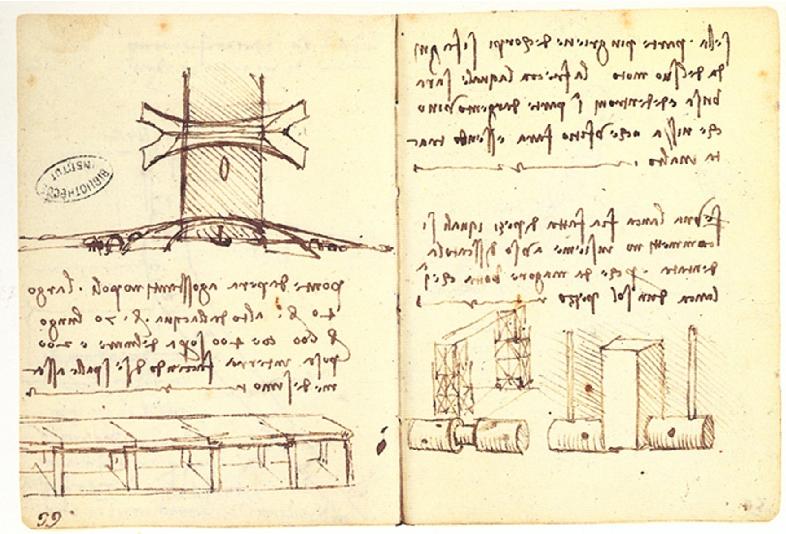
Image via Wikimedia Commons
Alas, Leonardo, who had better luck with Italian patrons, didn’t win this particular commission. His bridge design must at least have impressed the sultan with its sheer ambition, but would it have held up? A team at MIT consisting of graduate Karly Bast, professor John Ochsendorf, and undergraduate Michelle Xie recently put it to the test, scrutinizing the material Leonardo left behind, replicating the geological conditions of the proposed site, and building a 1:500 scale model out of 126 3D-printed blocks. Not only could the model bear weight using only the strength of its own geometry, the design also came with other features, such as stabilizing abutments (which Chandler compares to the legs of “a standing subway rider widening her stance to balance in a swaying car”) to keep the bridge upright in that earthquake-prone area of modern-day Turkey.
That particular location didn’t get a bridge until 1845, when Valide Sultan ordered the construction of the first, wooden, Galata Bridge. It stood for 18 years until its replacement by another wooden bridge, part of an infrastructure-building push before Napoleon III’s visit to Istanbul. The third Galata Bridge, completed in 1875 from a design by a British engineering firm, floated on pontoons. The fourth was a German-designed floating bridge in use from 1912 until a fire damaged it in 1992. Only the fifth and current Galata Bridge, with its tram tracks above, its pedestrianized deck full of shops and market spaces below, and it drawbridge section in the middle, was built by a Turkish company. In all its iterations, the Galata Bridge has become one of Istanbul’s cultural reference points and major attractions as well — not that having been designed by Leonardo would have hurt its image any.
via MIT News/Popular Mechanics
Related Content:
Leonardo da Vinci Draws Designs of Future War Machines: Tanks, Machine Guns & More
An Animated History Of Aviation: From Leonardo da Vinci’s Sketches to Apollo 11
Based in Seoul, Colin Marshall writes and broadcasts on cities, language, and culture. His projects include the book The Stateless City: a Walk through 21st-Century Los Angeles and the video series The City in Cinema. Follow him on Twitter at @colinmarshall or on Facebook.
Read More...Yo-Yo Ma Performs the First Classical Piece He Ever Learned: Take a 12-Minute Mental Health Break and Watch His Moving “Tiny Desk” Concert
For those who feel their enjoyment of J.S. Bach’s gorgeous Prelude from Cello Suite No. 1 in G major has been undercut rather than enhanced by its frequent TV and film appearances, Yo-Yo Ma’s 2018 NPR Music Tiny Desk Concert is a tonic.
As he explains above, the prelude was the first piece he learned as a beginning four-year-old cellist, adding one measure per day, an incremental approach he recommends.
He and the 300-some-year-old composition have done well by each other throughout a relationship spanning nearly six decades.
His first recording of the Suites, in 1983, resulted in his first Grammy.
Currently, he’s wrapping up the Bach Project, playing the Suites in 36 iconic locations around the world, believing that Bach has a unique ability to unite humans and inspire collaboration, especially in “a time when our civic conversation is so often focused on division.”
The legendary cellist’s unassuming, friendly demeanor is also a unifier, well suited to the informality of the Tiny Desk Concerts.
(Producer Tom Huizenga—a non-cellist—recounts how Ma passed him his bow, along with a 1712 Stradivarius, encouraging him to “play something.”)
Music is a clearly a major part of Ma’s DNA, and also the way in which he experiences the circle of life. He introduces the Sarabande as the heart of the suite, telling how he played it at two friends’ weddings and then again at their memorial services, illustrating the ways in which music is a cumulative emotional proposition.
As he told NPR’s Mary Louise Kelly immediately following his performance:
You try and transcend technique to get to what you think is there. Instead of saying, “Here are these notes and this is difficult and I’m going to try and nail it,” you try to express it.
With the sand quickly slipping through the hourglass of his 12-minute performance, he treats his audience to Bach’s tiny, populist Gigue.
Set List:
J.S. Bach: “Prelude (from Suite No. 1 for Solo Cello)”
J.S. Bach: “Sarabande (from Suite No. 6 for Solo Cello)”
J.S. Bach: “Gigue (from Suite No. 3 for Solo Cello)”
Related Content:
Yo-Yo Ma & The Goat Rodeo Sessions
Ayun Halliday is an author, illustrator, theater maker and Chief Primatologist of the East Village Inky zine. Join her in NYC on Monday, November 4 when her monthly book-based variety show, Necromancers of the Public Domain celebrates Louise Jordan Miln’s “Wooings and Weddings in Many Climes (1900). Follow her @AyunHalliday.
Read More...Why Should We Read Dante’s Divine Comedy? An Animated Video Makes the Case
Dante Alighieri’s 14th-century Divine Comedy is revered for the force of its imagery, its innovative terza rima and bold use of the vernacular, its creative interpretation of medieval Catholic doctrine, its ferocious political satire…
And the poignant autobiography the poet weaves throughout the story. The epic is animated by Dante’s own romantic longing and his bitter disillusionment with life. He paints himself in the first stanza as overcome by middle-aged bewilderment. Robert Durling’s translation renders the first lines thus:
In the middle of the journey of our life, I came to
myself in a dark wood, for the straight way was lost.
He is already adrift when Virgil turns up to guide him to the famously inscribed gates of hell—“Abandon all hope ye who enter here.”
The grim descent “sets into motion what is perhaps the greatest love story ever told,” says the TED-Ed video above, scripted by Sheila Marie Orfano and animated by Tomás Pichardo-Espaillat. Dante takes this epic journey with two muses, Virgil, then Beatrice, who guides him through Paradise, a figure drawn from an unrequited obsession the poet harbored for a woman named Beatrice Portinari.
Dante turned his crush into a muse, and transformed desire into chaste religious allegory. He turned his hatred of church and state corruption, however, into gleeful revenge fantasy, torturing a number of people still very much alive at the time of his writing. A member of the White Guelphs, a Florentine faction that pushed back against Roman influence, Dante fought fiercely opposed the Black Guelphs, a group loyal to the Pope. He was eventually exiled from Florence, but not silenced.
“Dishonored and with little hope of return,” he “freely aired his grievances” in the Divine Comedy, writing in Italian, rather than Latin, to ensure “the widest possible audience.” His readers at the time would have picked up on the references. Now, we need hundreds of notes to explain the full context. We should also know some salient facts about the poet: a life of political battle and religious devotion, an imaginative literary love affair with a woman he supposedly met twice; a thwarted desire for justice and vengeance and an obsession with integrity.
We do not need extensive notes and critical essays to feel the force of Dante’s language, just as we do not need to believe in the Divine Comedy’s religion. Like all great epic poetry, its metaphysical themes amplify profoundly human emotional journeys.
Related Content:
A Free Course on Dante’s Divine Comedy from Yale University
Gustave Doré’s Haunting Illustrations of Dante’s Divine Comedy
Josh Jones is a writer and musician based in Durham, NC. Follow him at @jdmagness.
Read More...Treasures in the Trash: A Secret Museum Inside a New York City Department of Sanitation Garage
Like many New Yorkers, retired sanitation worker Nelson Molina has a keen interest in his fellow citizens’ discards.
But whereas others risk bedbugs for the occasional curbside score or dumpster dive as an enviro-political act, Molina’s interest is couched in the curatorial.
The bulk of his collection was amassed between 1981 and 2015, while he was on active duty in Carnegie Hill and East Harlem, collecting garbage in an area bordered by 96th Street, Fifth Avenue, 106th Street, and First Avenue.
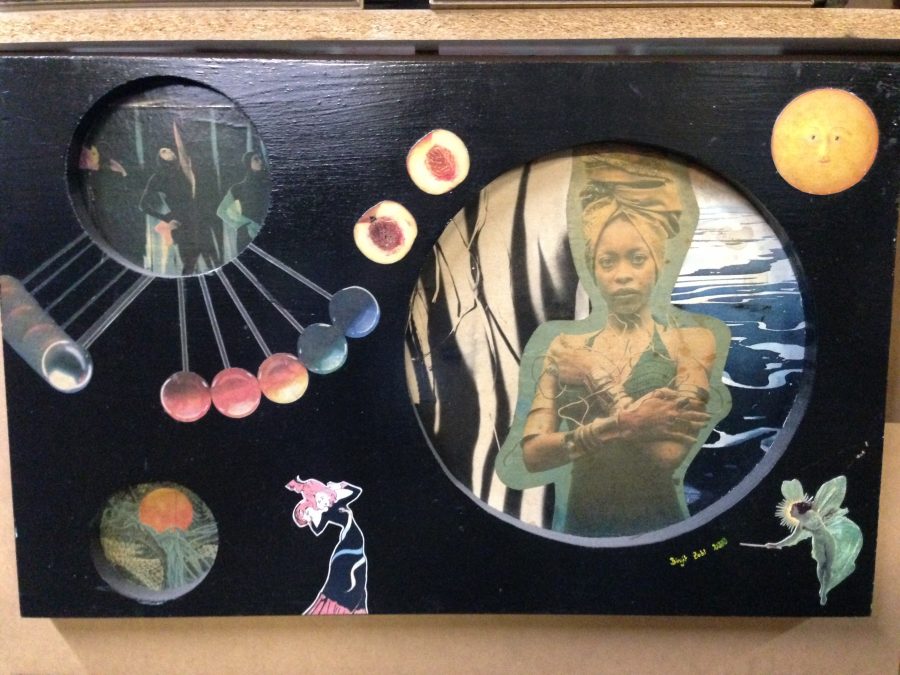
At the end of every shift, he stashed the day’s finds at the garage. With the support of his coworkers and higher ups, his hobby crept beyond the confines of his personal area, filling the locker room, and eventually expanding across the massive second floor of Manhattan East Sanitation Garage Number 11, at which point it was declared an unofficial museum with the unconventional name of Treasures in the Trash.
Because the museum is situated inside a working garage, visitors can only access the collection during infrequent, specially arranged tours. Hunter College’s East Harlem gallery and the City Reliquary have hosted traveling exhibits.
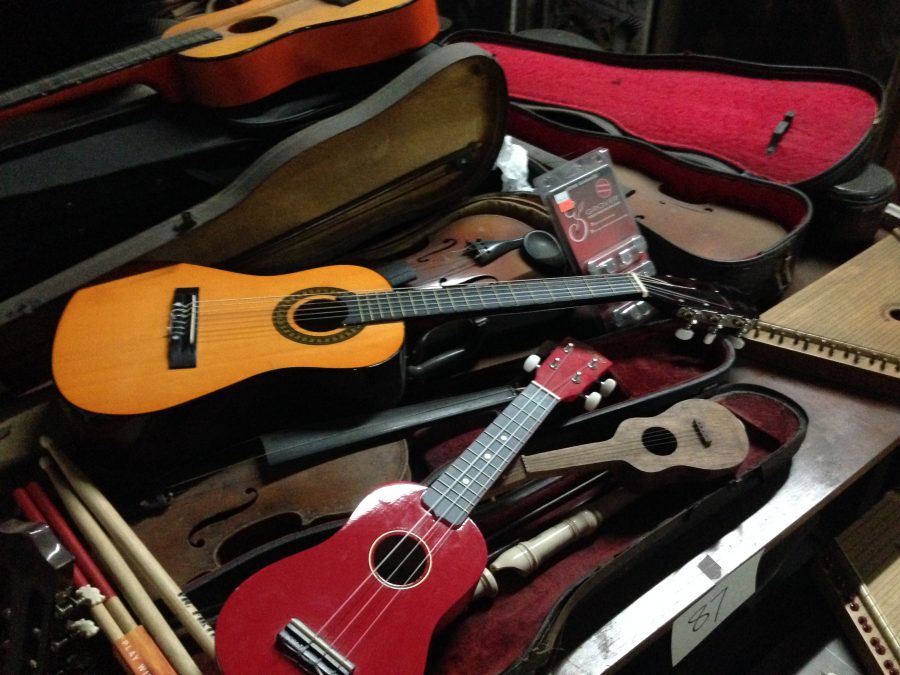
The Foundation for New York’s Strongest (a nickname originally conferred on the Department of Sanitation’s football team) is raising funds for an offsite museum to showcase Molina’s 45,000+ treasures, along with exhibits dedicated to “DSNY’s rich history.”
Molina’s former coworkers marvel at his unerring instinct for knowing when an undistinguished-looking bag of refuse contains an object worth saving, from autographed baseballs and books to keepsakes of a deeply personal nature, like photo albums, engraved watches, and wedding samplers.
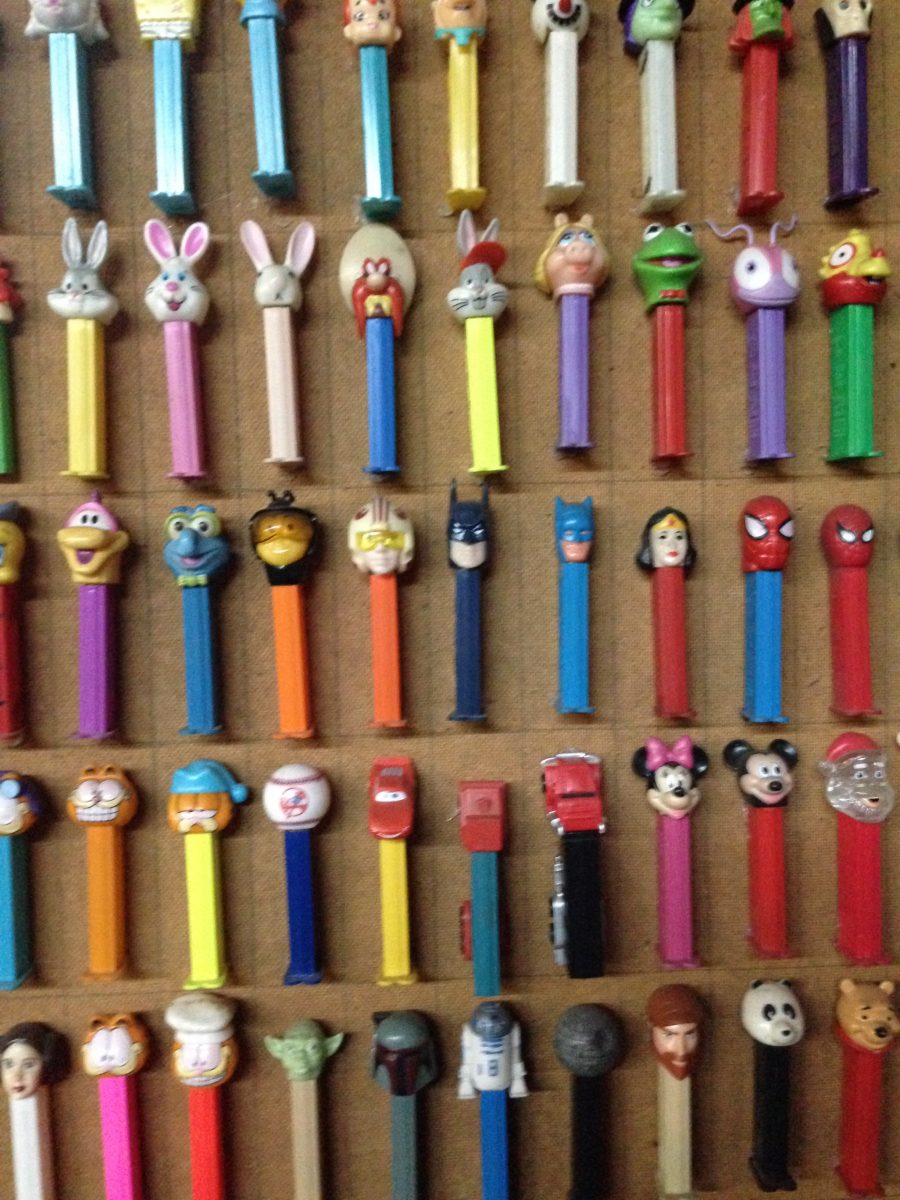
There’s also a fair amount of seemingly disposable junk—obsolete consumer technology, fast food toys, and “collectibles” that in retrospect were mere fad. Molina displays them en masse, their sheer numbers becoming a source of wonder. That’s a lot of Pez dispensers, Tamagotchis, and plastic Furbees that could be cluttering up a landfill (or Ebay).
Some of the items Molina singles out for show and tell in Nicolas Heller’s documentary short, at the top, seem like they could have considerable resell value. One man’s trash, you know…
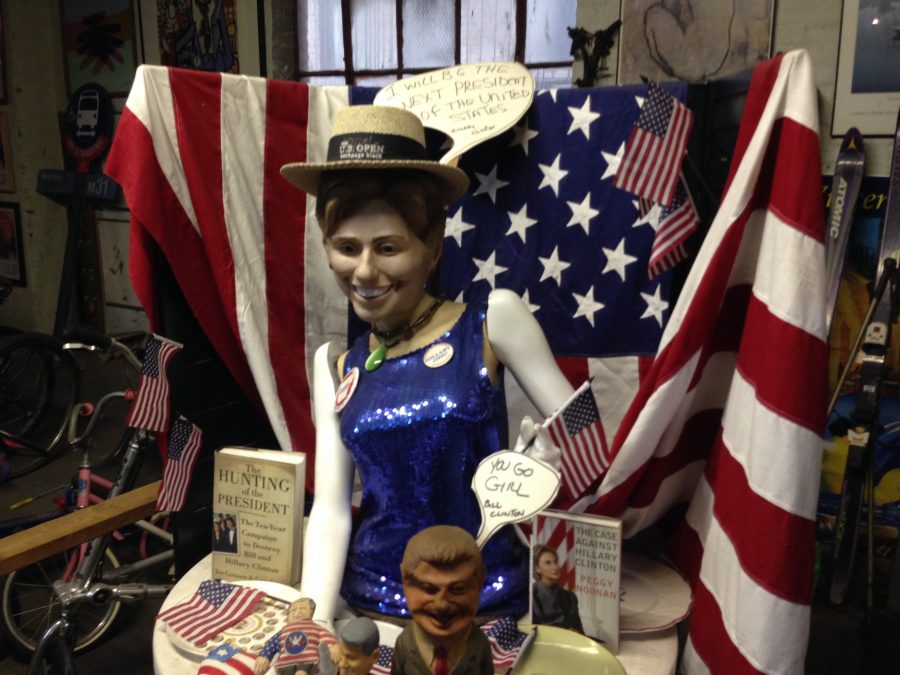
But city sanitation workers are prohibited from taking their finds home, which may explain why Department of Sanitation employees (and Molina’s wife) have embraced the museum so enthusiastically.
Even though Molina retired after raising his six kids, he continues to preside over the museum, reviewing treasures that other sanitation workers have salvaged for his approval, and deciding which merit inclusion in the collection.
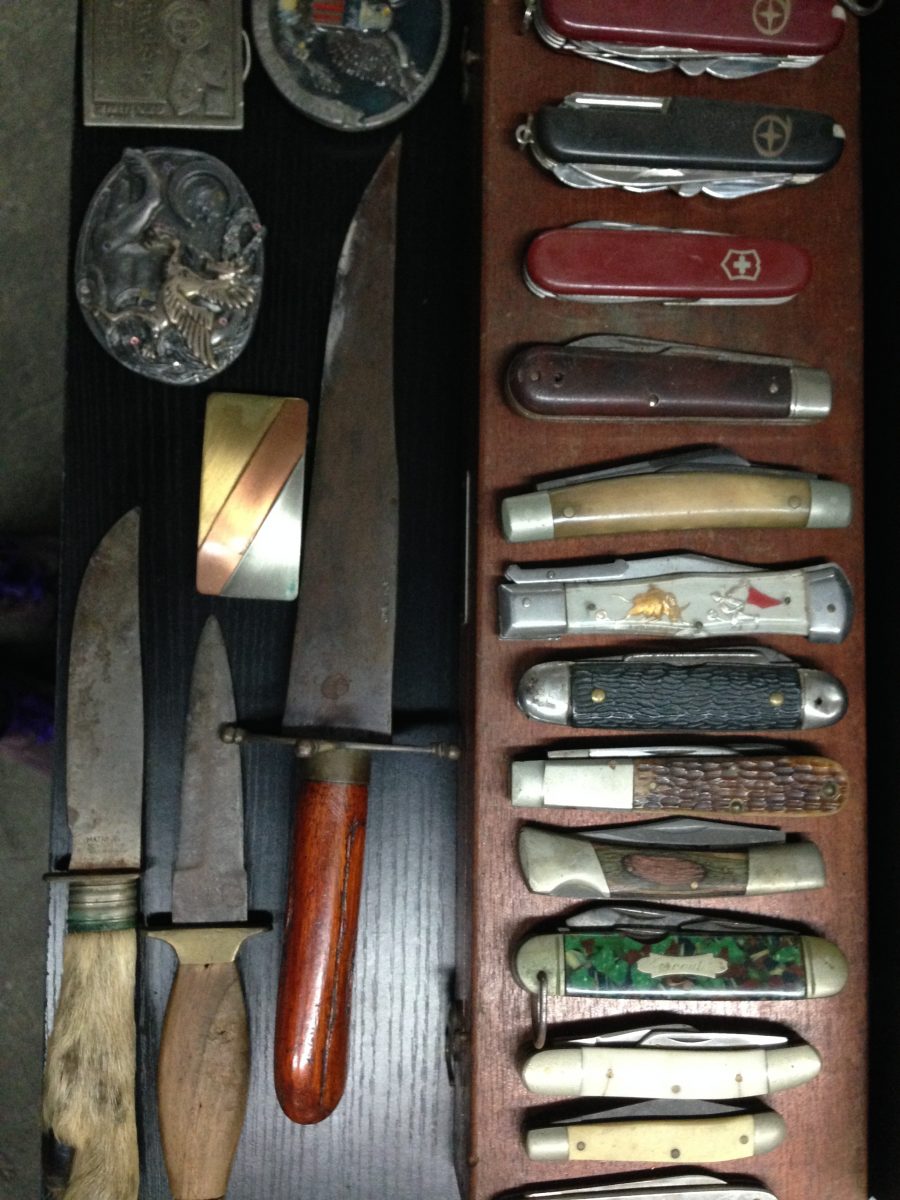
Preservation is in his blood, having been raised to repair rather than discard, a practice he used to put into play at Christmas, when he would present his siblings with toys he’d rescued and resurrected.
This thrifty ethos accounts for a large part of the pleasure he takes in his collection.
As to why or how his more sentimental or historically significant artifacts wound up bagged for curbside pickup, he leaves the speculation to visitors of a more narrative bent.
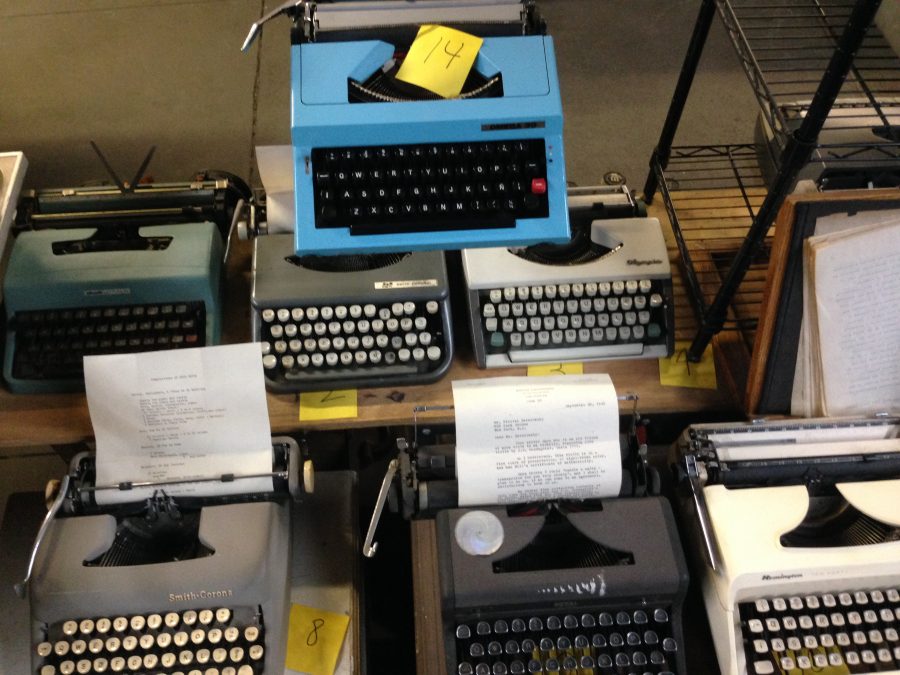
Sign up for updates or make a donation to the Foundation for New York’s Strongest’s campaign to rehouse the collection in an open-to-the-public space here.
To inquire about the possibility of upcoming tours, email the NYC Department of Sanitation at to***@******yc.gov.
Photos of Treasures in the Trash by Ayun Halliday, © 2018
Related Content:
Ayun Halliday is an author, illustrator, theater maker and Chief Primatologist of the East Village Inky zine. Although she lives and works inside Nelson Molina’s former pick up zone, she has yet to see any of her discards on display. Join her in NYC on Monday, October 7 when her monthly book-based variety show, Necromancers of the Public Domain celebrates the art of Aubrey Beardsley. Follow her @AyunHalliday.
Read More...William Burroughs Meets Francis Bacon: See Never-Broadcast Footage (1982)
The writing of William S. Burroughs and the paintings of Francis Bacon take us into often troubling but nevertheless compelling realities we couldn’t possibly glimpse any other way. Some of that effect has to do with the inimitable (if often unsuccessfully imitated) styles they developed for themselves, and some with what was going on in their unusual lives as well as the even wilder realms of their minds. And though no scholars have yet turned up a Burroughs monograph on Bacon’s art, or Bacon-painted illustrations for a Burroughs novel — just imagine Naked Lunch given that treatment — those minds did meet now and again in life, starting in Morocco six decades ago.
“The two men first met in Tangiers in the 1950s when Burroughs was technically on the run for murdering his wife after a ‘shooting accident’ during a drunken game of William Tell,” writes Dangerous Minds’ Paul Gallagher. “Bacon was then in a brutal and near fatal relationship with a violent sadist called Peter Lacey who used to beat him with a leather studded belt.” None other than Allen Ginsberg made the introduction between the two men, “as he thought Bacon painted the way Burroughs wrote.” But Burroughs saw more differences than similarities: “Bacon and I are at opposite ends of the spectrum,” he once said. “He likes middle-aged truck drivers and I like young boys. He sneers at immortality and I think it’s the one thing of importance. Of course we’re associated because of our morbid subject matter.”
Bacon and Burroughs reminisce about their first meeting — what they can remember of it, anyway — in an encounter filmed by the BBC for a 1982 documentary on the writer. “Arena followed him to the home and studio of old friend Francis Bacon, where he drops in for a cup of tea and a catch up,” says the BBC’s site. “This meeting has never been broadcast.” But you can see their conversation presented in a ten-minute edit in the video above. Gallagher notes that the camera-shy Burroughs gets into the spirit of things only when the talk turns to his favorite subjects at the time: “Jajouka” — a Moroccan village with a distinct musical tradition — “Mayans, and immortality.” Bacon, “waspish, bitchy, gleeful like a naughty schoolboy,” throws out barbs left and right about his fellow artists and Burroughs’ fellow writers.
Bacon also recalls his and Burroughs’ “mutual friendship with Jane and Paul Bowles,” the famously bohemian married couple known for their writing as well as their expat life in Morocco, “going on to discuss Jane Bowles’ mental decline and the tragedy of her last years being tended to by nuns, a situation which Bacon thought ghastly. Ironically, Bacon died just over a decade later being tended to by nuns after becoming ill in Spain (an asthma attack).” Even the most knowledgable fans of Burroughs, Bacon, and all the illustrious figures in their worldwide circles surely don’t know the half of what happened when they got together. And though this ten-minute chat adds little concrete information to the record, it still gets us imagining what all these artistic associations might have been like — firing up our imaginations being the strong suit of creators like Bacon and Burroughs, even decades after they’ve left us to our own reality.
Related Content:
The Visual Art of William S. Burroughs: Book Covers, Portraits, Collage, Shotgun Art & More
When William S. Burroughs Appeared on Saturday Night Live: His First TV Appearance (1981)
The Discipline of D.E.: Gus Van Sant Adapts a Story by William S. Burroughs (1978)
Who Was Joan Vollmer, the Wife William Burroughs Allegedly Shot While Playing William Tell?
Based in Seoul, Colin Marshall writes and broadcasts on cities, language, and culture. His projects include the book The Stateless City: a Walk through 21st-Century Los Angeles and the video series The City in Cinema. Follow him on Twitter at @colinmarshall or on Facebook.
Read More...Free: Download the Sublime Sights & Sounds of Yellowstone National Park
Moments before writing these words I was feeling a little stressed—a not uncommon experience for most everyone these days. Then I watched the 25-second video of a bighorn sheep, above, and something happened. Not an epiphany or moment of Zen. Just a momentary suspension of human woe as the animal silently munched, a creature so unlike myself and yet so motivated by the same basic needs.
How much better to observe the sheep firsthand, in its home at Yellowstone National Park? But perhaps we can, through our computers, touch into a little of the remedy Oliver Sacks suggested for our modern traumas. Nature gives us “sense of deep time,” the neurologist wrote, which “brings a deep peace with it, a detachment from the timescale, the urgencies of daily life… a profound sense of being at home, a sort of companionship with the earth.”
Research has found that watching nature documentaries can bring on real contentment, confirming what millions of National Geographic devotees already know. Now, at the National Park Service’s site, you can immerse yourself in virtual visits with not only our silent bighorn sheep friend, but the song of a mountain bluebird, or choruses of howling wolves. The audio library contains dozens more such melodious and haunting sounds from Yellowstone’s biophony.
The video library is replete with not only short clips of animals doing what animals do, but also video tours like that above, in which we learn how park rangers capture and handle bison in their conservation efforts at the park. Then there are stunning landscape videos like that below of Lower Falls viewed from Lookout Point in the spring of 2017, with soothing natural white noise from the rushing water and blowing wind.
All of this content is available for download and free for anyone to use. Remix the sounds of falling snow, geysers, and mountain lions; make as many nature gifs as you desire. As you do, bear in mind that while humans might greatly benefit—both psychologically and culturally—from the digital preservation of the natural world, the true purpose may be to help us understand why we need to step back and preserve the real thing.
Just above see a (nondownloadable) video from Yellowstone on the importance of listening to and conserving the land’s natural soundscapes—a feature of the world that best thrives in the near absence of human involvement.
Enter the sound library here, and the video library here.
via Kottke
Related Content:
10 Hours of Ambient Arctic Sounds Will Help You Relax, Meditate, Study & Sleep
Josh Jones is a writer and musician based in Durham, NC. Follow him at @jdmagness.
Read More...David Gilmour Makes His Live at Pompeii Concert Film Free to Watch Online
On a hot October day in 1971, Pink Floyd and their crew assembled their live gear in an empty ancient Pompeii amphitheater and, with a film crew along for the ride, recorded one of the first epic concerts of their career, playing “Echoes,” “Set the Controls for the Heart of the Sun,” “Careful with that Axe, Eugene,” and other prog numbers that set the stage for Dark Side of the Moon. A few years later, they’d be playing in stadiums actually filled with people, and well, you know the rest.
In 2016, guitarist David Gilmour returned to the same amphitheater with his current band in tow, and filmed another concert movie (also called “Live at Pompeii”). This time the stadium was filled (though not on the ancient seats), nighttime was exchanged for daytime, and the set list was a combination of Floyd classics, older rarities like “Fat Old Sun” and “One of the These Days”, and plenty of tracks from his then new solo album Rattle That Lock, released in 2015.
Gilmour opted not to play “Echoes,” telling Rolling Stone that it was too much a Rick Wright song and didn’t feel right to play it without him. It was the first public performance in the ancient Roman amphitheatre since AD 79. (The guitarist was also made an honorary citizen of Pompeii).
Well, Gilmour just released the full concert on YouTube after a worldwide cinema screening of the concert in 2017. The YouTube playlist contains tracks that weren’t in the film, so for fans, this is just an extra special bonus.
The band includes Chester Kamen on guitars, a session musician who has played with both Gilmour and Waters on various occasions; Guy Pratt, who’s been Pink Floyd’s touring bassist since Roger Waters split; Chuck Leavell of the Allman Brothers; Greg Phllinganes, and Steve DiStanislao.
The show begins as the last rays of sunlight disappear behind Mt. Vesuvius, a nice Floydian touch. It ends, appropriately enough, with “Comfortably Numb,” (embedded above) but not with an exact copy of its famous guitar solo.
“I just try and let the solo come out,” Gilmour said in the same Rolling Stone interview. “I couldn’t play the one off the album. I try not too think about it too much.”
Related Content:
David Gilmour Talks About the Mysteries of His Famous Guitar Tone
Ted Mills is a freelance writer on the arts who currently hosts the artist interview-based FunkZone Podcast and is the producer of KCRW’s Curious Coast. You can also follow him on Twitter at @tedmills, read his other arts writing at tedmills.com and/or watch his films here.
Read More...The Women of Rock: Discover an Oral History Project That Features Pioneering Women in Rock Music
If you’ve wondered why projects celebrating women in the history of rock are needed, maybe all you need to do is listen to women in rock. Stories of boys’ clubs in the industry, from record labels to journalists to fandoms, are ubiquitous, which is why so many voices are pushed to the margins, say rock historians like Tanya Pearson, director of the Women of Rock oral history project.
Marginalization happens not only on stages and studios but at the level of memory and preservation. “Canons influence how we remember the past,” Pearson writes. “Rock journalism, media, and scholarship perpetuates a one sided, androcentric rock narrative…. Women do not easily fit and so they continue to be underrepresented. If they are represented at all, they are not given the same level of attention or granted the same access to audience as their male counterparts.”
Women of Rock, a “collection of digital interviews and written transcripts housed at the Sophia Smith Collection at Smith college,” focuses “primarily on artists who have been left out of the popular rock narratives.”
Pearson and her volunteer collaborators hope that “by creating space for women, trans, and gender nonconforming artists to share their personal and professional histories” the project can “contribute to their personal and professional histories and accurate popular rock narratives.”
Pearson created the project while an undergraduate at Smith, finding herself “frustrated by the scant details available about her favorite musicians,” writes Sharon Hannon at Please Kill Me. “The main reason I started this project,” she tells Hannon, “was that it’s something I wish I had access to when I was 13 or 14,” a time in her life when she was “desperately searching for representation.” The problem wasn’t that women like her did not exist in rock, but that she couldn’t find out much about them.
The site’s current roster of interviewees is an interesting and impressive mix. It includes women who have been integral to punk, indie, and alternative rock—like Lydia Lunch (further up), Nina Gordon and Louise Post of Veruca Salt, Alice Bag, Shirley Manson, Julie Cafritz, Melissa Auf der Mauer, Kristin Hersh, Mary Timony, Kira Rosseler, JD Samson, Amanda Palmer, and Exene Cervanka. (Sadly, Kim Shattuck of the Muffs, who passed away recently, isn’t featured.) And there are lesser-known artists who deserve a much wider audience, like Brie (Howard) Darling, a member of the criminally underrated Fanny, and whose full interview you can see below.
All of these women have stories to tell about surviving in a “male dominated business” as Tracy Bonham says in the trailer at the top of the post. Stories about “the patriarchal system,” as Shirley Manson says in her interview further up, “that allows men to thrive” and pushes women out. All of these musicians also tell us stories about themselves—their childhoods, influences, struggles, and passions, leaving behind a record in which future women rockers and rock historians among the current generation of 13- and 14-year-old kids can see themselves.
See the project’s YouTube channel for more full interviews and interview clips and visit the Women of Rock site for more.
Related Content:
New Web Project Immortalizes the Overlooked Women Who Helped Create Rock and Roll in the 1950s
How Joan Jett Started the Runaways at 15 and Faced Down Every Barrier for Women in Rock and Roll
Josh Jones is a writer and musician based in Durham, NC. Follow him at @jdmagness.
Read More...Where Did Human Beings Come From? 7 Million Years of Human Evolution Visualized in Six Minutes
One vulgar conception of human evolution holds that we “come from monkeys.” You don’t have to be a bona fide evolutionary biologist to know that’s not quite how we currently understand it to have happened, but how clearly do you grasp the real story? The animation from the American Museum of Natural History above goes over seven million years of evolution in a mere six minutes, and it’s certainly not a straight line down from “monkeys” to us. The video does, however, start its story with apes, and specifically chimpanzees, “our closest living relatives” with whom “we share a common ancestor that lived seven million years ago.”
But we once had “much closer relatives, hominins, who are no longer living.” These we know about through the fossils they left behind in Africa, from which the first known hominin emerged those seven million years ago. Different bones from different species of hominins found elsewhere on the continent suggest small teeth, upright walking, and bipedalism, some of the qualities that distinguish humans from apes.
And though hominins may have walked upright, they also climbed trees, but eventually lost the grasping feet needed to do so. Later they compensated with the very human-like development of making and using stone tools. Two million years ago, the well-known Homo erectus, with their large brains, long legs, and dextrous hands, made the famous migration out of Africa.
We know that by 1.2 million years thereafter Homo erectus’ brains had grown larger still, fueled by new cooking techniques. Only about 200,000 years ago do we, Homo sapiens, enter the picture, but not long after, we interbreed with the various hominin species already in existence as we spread outward to fill “every geographic niche” of the Earth. Ultimately, hominins couldn’t keep up: “Climate pressures and competition with Homo sapiens may have wiped them out.” Now that we’ve seen their story and ours recapitulated, let’s pour one out for the once-mighty hominin who preceded us, lived alongside us, and influenced us in ways genetic and otherwise — at least if it hasn’t given us too much pause wondering when the evolutionarily inevitable successor to Homo sapiens will appear in our midst.
Related Content:
Watch 570 Million Years of Evolution on Earth in 60 Seconds
550 Million Years of Human Evolution in an Illustrated Flipbook
Carl Sagan Explains Evolution in an Eight-Minute Animation
New Animated Web Series Makes the Theory of Evolution Easy to Understand
Richard Dawkins Explains Why There Was Never a First Human Being
10 Million Years of Evolution Visualized in an Elegant, 5‑Foot Long Infographic from 1931
Based in Seoul, Colin Marshall writes and broadcasts on cities, language, and culture. His projects include the book The Stateless City: a Walk through 21st-Century Los Angeles and the video series The City in Cinema. Follow him on Twitter at @colinmarshall or on Facebook.
Read More...Support Us
We're hoping to rely on loyal readers, rather than erratic ads. Please click the Donate button and support Open Culture. You can use Paypal, Venmo, Patreon, even Crypto! We thank you!

About Us

Open Culture scours the web for the best educational media. We find the free courses and audio books you need, the language lessons & educational videos you want, and plenty of enlightenment in between.
Advertise With Us

FREE UPDATES!
GET OUR DAILY EMAIL
Get the best cultural and educational resources on the web curated for you in a daily email. We never spam. Unsubscribe at any time.
FOLLOW ON SOCIAL MEDIA

Open Culture editor Dan Colman scours the web for the best educational media. He finds the free courses and audio books you need, the language lessons & movies you want, and plenty of enlightenment in between.
Advertise With Us


