Martin Luther King Jr. Explains the Importance of Jazz: Hear the Speech He Gave at the First Berlin Jazz Festival (1964)
Martin Luther King Jr.’s dream of full inclusion for Black Americans still seems painfully unreal fifty years after his death. By most significant measures, the U.S. has regressed. De facto housing and school segregation are entrenched (and worsening since the 60s and 70s in many cities); voting rights erode one court ruling at a time; the racial wealth gap has widened significantly; and open displays of racist hate and violence grow more worrisome by the day.
Yet the movement was not only about winning political victories, though these were surely the concrete basis for its vision of liberation. It was also very much a cultural struggle. Black artists felt forced by circumstances to choose whether they would keep entertaining all-white audiences and pretending all was well. “There were no more sidelines,” writes Ashawnta Jackson at JSTOR Daily. This was certainly the case for that most American of art forms, jazz. “Jazz musicians, like any other American, had the duty to speak to the world around them, and to oppose the brutal conditions for Black Americans.”
Many of those musicians could not stay silent after the murder of Emmett Till, the 16th Street Baptist Church bombing in Birmingham, and a string of other highly publicized and horrific attacks. Jazz was changing. As Amiri Baraka wrote in a 1962 essay, “the musicians who played it were loudly outspoken about who they thought they were. ‘If you don’t like it, don’t listen’ was the attitude.” That attitude came to define post-Civil Rights Black American culture, a defiant turn away from appeasing white audiences and ignoring racism.
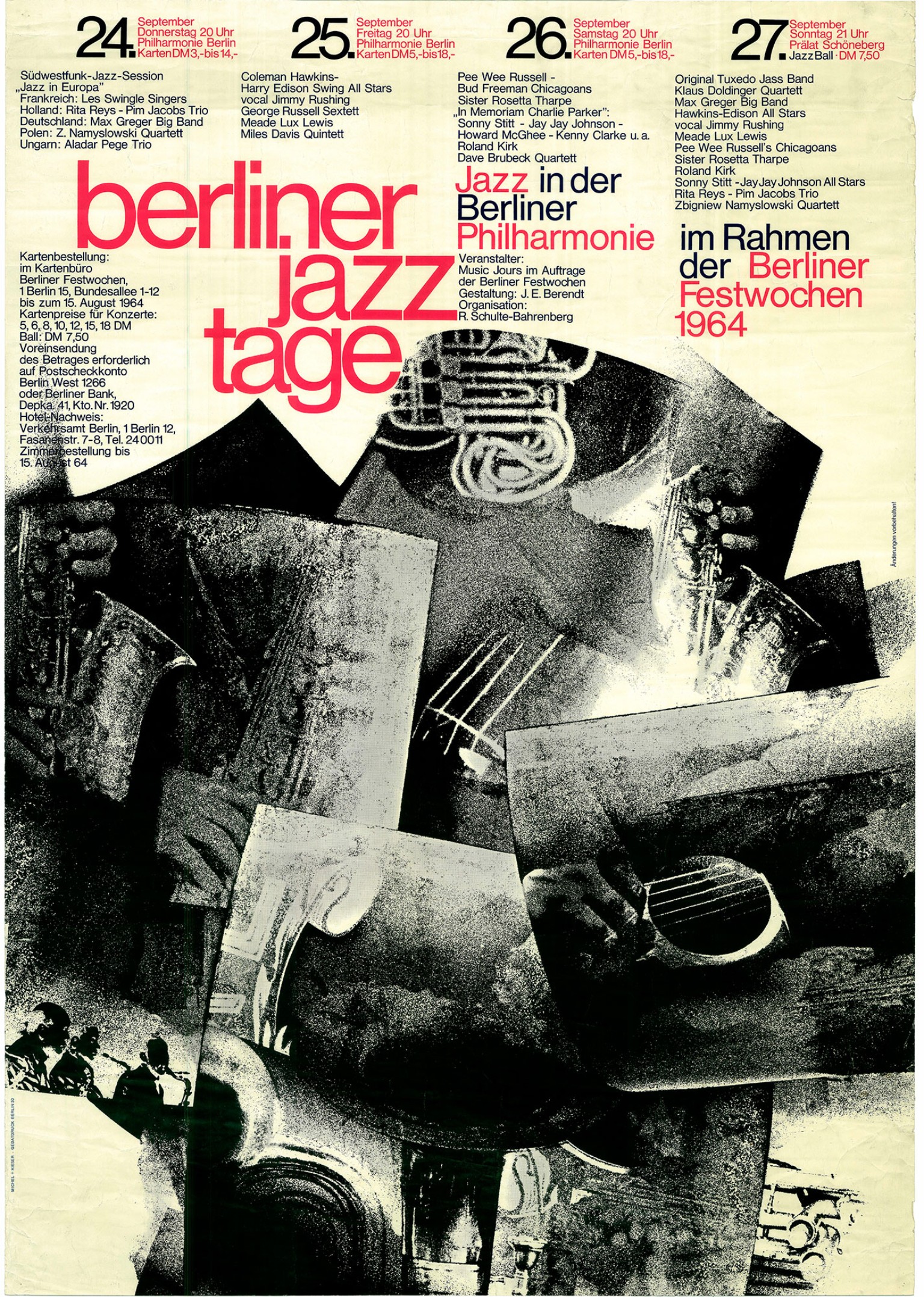
As jazz musicians embraced the movement, so the movement embraced jazz. While King himself is usually associated with the gospel singers he loved, he had a deep respect for jazz as a form that spoke of “some new hope or sense of triumph.” Jazz, wrote King in his opening address for the 1964 Berlin Jazz Festival, “is triumphant music…. When life itself offers no order and meaning, the musician creates an order and meaning from the sounds of the earth which flow through his instrument. It is no wonder that so much of the search for identity among American Negroes was championed by Jazz musicians.”
Jazz not only gave order to chaotic, “complicated urban existence,” it also provided critical emotional support for the Movement.
Much of the power of our Freedom Movement in the United States has come from this music. It has strengthened us with its sweet rhythms when courage began to fail. It has calmed us with its rich harmonies when spirits were down.
King’s take on jazz paralleled his articulations of the movement’s goals—he always understood that the particular struggles of Black Americans had specific historical roots, and required specific political remedies. But ultimately, he believed that everyone should be treated with dignity and respect, and have access to the same opportunities and the same protections under the law.
Jazz is exported to the world. For in the particular struggle of the Negro in America there is something akin to the universal struggle of modern man. Everybody has the Blues. Everybody longs for meaning. Everybody needs to love and be loved. Everybody needs to clap hands and be happy. Everybody longs for faith.
Jazz music, said King, “is a stepping stone towards all of these.” Wrought “out of oppression,” it is music, he said, that “speaks for life,” even in the midst of what could seem like death and defeat. Read King’s full address at WCLK 91.9. And at the top of the post, hear the speech read by San Francisco Bay Area artists for a 2012 celebration on King’s birthday.
The 1964 Berlin Jazz Festival (poster above) was the first in the illustrious annual event. See many other stunning posters from the series here.
via JSTOR Daily
Related Content:
Read More...The Internet Archive Makes 2,500 More Classic MS-DOS Video Games Free to Play Online: Alone in the Dark, Doom, Microsoft Adventure, and Others
Back in 2015 we let you know that the Internet Archive made 2,400 computer games from the era of MS-DOS free to play online: titles like Commander Keen, Scorched Earth, and Prince of Persia may have brought back fond 1990s gaming memories, as well as promised hours of more such enjoyment here in the 21st century. That set of games included Id Software’s Wolfenstein 3D, which created the genre of the first-person shooter as we know it, but the Internet Archive’s latest DOS-game upload — an addition of more than 2,500 titles — includes its follow-up Doom, which took computer gaming itself to, as it were, a new level.

The Internet Archive’s Jason Scott calls this “our biggest update yet, ranging from tiny recent independent productions to long-forgotten big-name releases from decades ago.” After detailing some of the technical challenges he and his team faced in getting many of the games to work properly in web browsers on modern computers — “a lot has changed under the hood and programs were sometimes only written to work on very specific hardware and a very specific setup” — he makes a few recommendations from this newest crop of games.
Scott’s picks include Microsoft Adventure, the DOS version of the very first computer adventure game; the 1960s-themed racer Street Rod; and Super Munchers, one in a line of educational titles all of us of a certain generation will remember from our classroom computers. Oddities highlighted by classic game enthusiasts around the internet include Mr. Blobby, based on the eponymous character from the BBC comedy show Noel’s House Party; the undoubtedly thrilling simulator President Elect — 1988 Edition; and Zool, the only ninja-space-alien platformer sponsored by lollipop brand Chupa Chups.
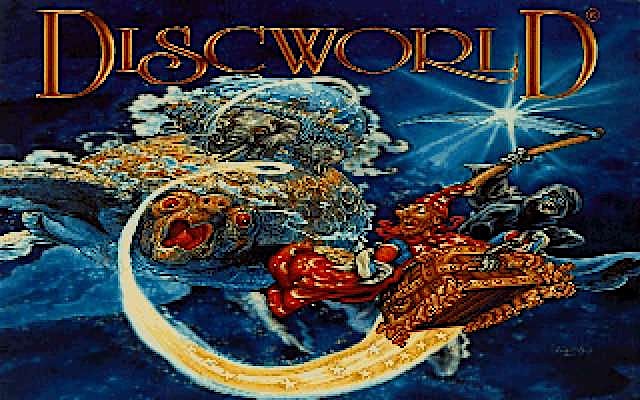
This addition of 2,500 computer games to the Internet Archive also brings in no few undisputed classics whose influence on the art and design of games is still felt today: Alone in the Dark, for example, progenitor of the entire survival-horror genre; Microsoft Flight Simulator, inspiration for a generation of pilots; and SimCity 2000, inspiration for a generation of urban planners. Among the adventure games, one of the strongest genres of the MS-DOS era, we have Discworld, based on Terry Pratchett’s comedic fantasy novels, and from the mind of Harlan Ellison the somewhat less comedic I Have No Mouth and I Must Scream. One glance at the Internet Archive’s updated computer game collection reveals that, no matter how many games you played in the 90s, you’ll never be able to play them all.
Get more information on the new batch of games at the Internet Archive.
via Boing Boing
Related Content:
The Internet Arcade Lets You Play 900 Vintage Video Games in Your Web Browser (Free)
Free: Play 2,400 Vintage Computer Games in Your Web Browser
1,100 Classic Arcade Machines Added to the Internet Arcade: Play Them Free Online
Based in Seoul, Colin Marshall writes and broadcasts on cities, language, and culture. His projects include the book The Stateless City: a Walk through 21st-Century Los Angeles and the video series The City in Cinema. Follow him on Twitter at @colinmarshall or on Facebook.
Read More...Banksy Launches a New Online Store: Make Purchases Through October 28
Has Banksy sold out? Fans and critics alike of the street-art provocateur-turned-globally recognizable brand can argue that question endlessly. But we do know, at least, that Banksy sells: earlier this month he broke his own record when his 2009 painting Devolved Parliament went for £9.88 million (about $12.20 million USD) at Sotheby’s. Not all the followers attracted by Banksy’s anti-capitalistic, anti-corporate, anti-wealth image can afford to pay quite so much for a Banksy of their own, but if they can come up with anything from £10 to £850.00, they stand as much of a chance as anyone else of making a purchase from the artist’s newly opened online store, Gross Domestic Product, the second phase of a project that began, as many of Banksy’s ventures have, on a London street.

In this case it wasn’t a mural but a shop, or rather, an installation designed to look like a shop, “opened” right in time for Frieze Week, when the art world passes through the city. “Taking up large windows facing the street, the shop, ‘where art irritates life,’ is a classic display of the artist’s ingenuity and razor-sharp sense of reason and humor,” writes Juxtapoz’s Sasha Bogojev.
Its stock included a “baby crib surveillance mobile toy, along with ‘early learning counting set’ consisting of wooden figures of refugees, welcome mats made from life vests salvaged from the shores of the Mediterranean, disco ball made from old police helmets, plates/clocks with running rats, works on canvas, cushions, and even badly done ‘Banksky’ T‑shirts, mugs and plates.” Much to the dismay of many a Frieze-goer, nothing in Banksy’s brick-and-mortar store was available for sale.

But everything in Banksy’s online store is: “GrossDomesticProduct.com offers a wide range of household products, artworks and basically a whole range of Banksy™ knick-knacks,” writes Bogojev. “From mugs for which ‘the artist got the kids to do it, then signed the result,’ sculptural edition made in collaboration with Escif, learning sets, t‑shirts” — one modeled after Girl with Balloon, shredded bottom half and all — “soft toys, clocks, all the way to two new print editions.” Such is Banksy’s popularity that you might well assume everything has already run out, but no: each hopeful buyer can register to purchase one item — but just one — until October 28th, at which point a lottery process will determine which of them will actually have the privilege of making their desired purchases. In the highly likely event of “demand outstripping supply,” Gross Domestic Product will use as a determining factor applicants’ responses, consisting of fifty words or fewer, to the question, “Why does art matter?”

One hopes that when this latest Banksy stunt has finished, the winning responses to that question will be made public; the art-world commentariat would certainly make much of an answer from Banksy himself. But Banksy-watchers know that the artist, whatever his real identity, is always on the move: no sooner have we learned of his latest piece of work, whatever form it takes, than he’s primed the next one to drop. Banksy has described Gross Domestic Product as legally motivated, prompted by a greeting card company’s attempts “to seize legal custody of the name Banksy from the artist, who has been advised the best way to prevent this is to sell his own range of branded merchandise.” If anyone makes Banksy greeting cards, it’s going to be Banksy. And if he were to announce his own Hallmark Store, lines would surely start forming right away.
Related Content:
Behind the Banksy Stunt: An In-Depth Breakdown of the Artist’s Self-Shredding Painting
Banksy Strikes Again in Venice
Banksy Creates a Tiny Replica of The Great Sphinx Of Giza In Queens
Patti Smith Presents Top Webby Award to Banksy; He Accepts with Self-Mocking Video
Based in Seoul, Colin Marshall writes and broadcasts on cities, language, and culture. His projects include the book The Stateless City: a Walk through 21st-Century Los Angeles and the video series The City in Cinema. Follow him on Twitter at @colinmarshall or on Facebook.
Read More...Watch Teenage Kurt Cobain and Friends’ Horror Movie from 1984
Because Kurt Cobain died so young (and some would say so mysteriously) his pre-Nirvana works can be over-examined as harbingers of his fate. Maybe death was always riding hard on his tail, these works can tell us, though any number of proto-grunge teens in the Pacific Northwest would have been writing about death and the devil. That’s the cool stuff, man.
A Super 8 film made by a 17-year-old Cobain, Dale Crover (future drummer of the Melvins) and Nirvana bass player Krist Novoselic popped up among bootleg collectors in 1998, and dates from 1984. Fans dubbed it “Kurt’s Bloody Suicide” to juice its value, back in the days when you actually had to buy bootlegs and then later be very disappointed. Now it’s up on YouTube as “Kurt Cobain Horror Movies.”
Crover has described it as “fucking around with a camera,” which indeed it is, but with some intent. It features Kurt in a Mr. T mask, lighting candles in a pentagram and snorting up a pile of cocaine (no doubt using a hidden vacuum cleaner). Then some odd shots of a Mr. T puppet, somebody’s mom at the window, a black labrador, very brief attempts at stop motion, somebody’s granddad, shots of downtown Aberdeen, Washington, and more goofing off (with a guitar!).
Then we get to the “money shot,” so to speak, with Cobain fake slitting his throat and stabbing himself. There’s some more knife violence, then a shot of a cat, a shot of a dog, some fake gun violence, plenty of shots of a pet turtle, and finally back to a horror movie: a bloody Virgin Mary, and some stabbings and some decent fake wounds. (However, the traveling shot of the running dog gets my vote for most skillful.)
Should we read anything into the gore and Satanism? (“This kid was a ticking time bomb,” says one YouTuber.)
I’d say no…and yes. There’s something fun about watching these bored teens making a film for their own entertainment. It’s silly, unfocused, but definitely an indication that these guys wanted out of their boring town and they’d have to create something to do that. Nirvana was right around the corner…
Related Content:
How Kurt Cobain Confronted Violence Against Women in His “Darkest Song”: Nevermind‘s “Polly”
Animated Video: Kurt Cobain on Teenage Angst, Sexuality & Finding Salvation in Punk Music
Ted Mills is a freelance writer on the arts who currently hosts the artist interview-based FunkZone Podcast and is the producer of KCRW’s Curious Coast. You can also follow him on Twitter at @tedmills, read his other arts writing at tedmills.com and/or watch his films here.
Read More...Chill Out to 70 Hours of Oceanscape Nature Videos Filmed by BBC Earth
Those who harbor a deep-seated fear of the water may want to look for other methods of stress relief than BBC Earth’s relaxing 10-hour video loops, but everyone else is encouraged to take a dip in these stunning natural worlds, presented without commentary or background music.
All seven 10-hour playlists are salt-water based: coral reefs, coastlines, deep ocean, open ocean, frozen seas, ocean surfaces, and sea forests.
As in most compelling nature documentaries, non-human creatures loom large, but unlike such BBC Earth offerings as Creepiest Insect Moments or Ants Attack Termite Mounds, there’s a benign, live-and-let-live vibe to the proceedings.
Unsurprisingly, the photography is breathtaking, and the uses of these marathon-length portraits are manifold: meditation tool, sleep aid, child soother, social media decompressor, travelogue, and—less calmingly—call to action.
Science tells us that many of these life forms, and the ocean in which they dwell, are in serious danger, thanks to decades of human disregard for the environment. This is an opportunity to immerse ourselves in what we stand to lose while it’s still possible to do something about it.
If that thought seems too depressing, there’s also strong scientific evidence that nature documentaries such as these promote increased feelings of wellbeing
What are you waiting for?
Click here to travel the oceans with polar bears, jellyfish, dolphins, seahorses, brightly colored tropical fish and other creatures of the deep, compliments of BBC’s Earth’s Oceanscapes playlists.
Related Content:
Do Octopi Dream? An Astonishing Nature Documentary Suggests They Do
Ayun Halliday is an author, illustrator, theater maker and Chief Primatologist of the East Village Inky zine. Join her in NYC on Monday, November 4 when her monthly book-based variety show, Necromancers of the Public Domain celebrates Louise Jordan Miln’s “Wooings and Weddings in Many Climes (1900). Follow her @AyunHalliday.
Read More...How to Paint Like Willem De Kooning: Watch Visual Primers from the Museum of Modern Art
Before you learn how to paint like Dutch American Abstract Expressionist Willem de Kooning, you might ask, why should you paint like Willem De Kooning? Shouldn’t every artist have his or her own inimitable personal style? We might ask, why learn to play piano like Nina Simone or write prose like William Faulkner? If you stop at mere imitation, there may be no good reason to mimic the masters.
But if you take their techniques and make them yours—steal, if you will, their best parts for your work—then, with enough talent and persistence, you might be on your way toward an inimitable personal style of your own. Or, you could simply watch these videos on how to paint like De Kooning to get a vivid, live-action demonstration of how the artist himself did it.
You need never have held a paintbrush to appreciate the Museum of Modern Art’s “How to Paint Like” series, featuring videos of MoMA educator and conservator Cory D’Augustine, who shows us how to imitate the methods of not only of De Kooning, but also Jackson Pollock, Mark Rothko, and Agnes Martin. All of these tutorials come from D’Augustine’s Coursera class “In the Studio: Postwar Abstract Painting.”
And as his other videos, here D’Augustine offers a comprehensive overview of the artist’s tools and techniques: low-viscosity oil paint held in large quantities in bowls, rather than small blobs of paint on a palette; the big powerful full-body gestures to achieve “action painting.” If you are trying this at home, be advised, D’Augustine moves fast, assuming a lot of prior experience and a serious artist’s collection of supplies. Think more Bob Vila than Bob Ross—you will need a good set of tools. But if you’re aspiring to paint like De Kooning, odds are you’ve got it covered.
D’Augustine has also been responsive to critics in the comments, releasing the follow up Part 2 video, above, to address the absurdity of actually “doing a De Kooning-esque painting in a day.” Additionally, as he notes above, De Kooning “reinvented himself again and again and again,” meaning “there certainly isn’t one way, there certainly aren’t a hundred ways, to make a De Kooning since he was relentlessly inventive.”
That is to say, we’re seeing a curated selection of De Kooning’s materials and application techniques, which still may be quite enough to influence a budding painter on the way to a unique technique of her own—or to inform De Kooning fans who do not paint, but who have stood before his fearfully, brutally energetic canvases and wondered how they came to be.
Related Content:
The MoMA Teaches You How to Paint Like Pollock, Rothko, de Kooning & Other Abstract Painters
Jackson Pollock 51: Short Film Captures the Painter Creating Abstract Expressionist Art
How the CIA Secretly Funded Abstract Expressionism During the Cold War
Josh Jones is a writer and musician based in Durham, NC. Follow him at @jdmagness
Read More...The Politics & Philosophy of the Bauhaus Design Movement: A Short Introduction
This year marks the centennial of the Bauhaus, the German art-and-design school and movement whose influence now makes itself felt all over the world. The clean lines and clarity of function exhibited by Bauhaus buildings, imagery, and objects — the very definition of what we still describe as “modern” — appeal in a way that transcends not just time and space but culture and tradition, and that’s just as the school’s founder Walter Gropius intended. A forward-looking utopian internationalist, Gropius seized the moment in the Germany left ruined by the First World War to make his ideals clear in the Bauhaus Manifesto: “Together let us call for, devise, and create the construction of the future, comprising everything in one form,” he writes: “architecture, sculpture and painting.”
In about a dozen years, however, a group with very little time for the Bauhaus project would suddenly rise to prominence in Germany: the Nazi party. “Their right-wing ideology called for a return to traditional German values,” says reporter Michael Tapp in the Quartz video above, “and their messaging carried a typeface: Fraktur.” Put forth by the nazis as the “true” German font, Fraktur was “based on Gothic script that had been synonymous with the German national identity for 800 years.” On the other end of the ideological spectrum, the Bauhaus created “a radical new kind of typography,” which Museum of Modern Art curator Barry Bergdoll describes as “politically charged”: “The Germans are probably the only users of the Roman alphabet who had given typescript a nationalist sense. To refuse it and redesign the alphabet completely in the opposite direction is to free it of these national associations.”
The culture of the Bauhaus also provoked public discomfort: “Locals railed against the strange, androgynous students, their foreign masters, their surreal parties, and the house band that played jazz and Slavic folk music,” writes Darran Anderson at Citylab. “Newspapers and right-wing political parties cynically tapped into the opposition and fueled it, intensifying its anti-Semitism and emphasizing that the school was a cosmopolitan threat to supposed national purity.” Gropius, for his part, “worked tirelessly to keep the school alive,” preventing students from attending protests and gathering up leaflets printed by fellow Bauhaus instructor Oskar Schlemmer calling the school a “rallying point for all those who, with faith in the future and willingness to storm the heavens, wish to build the cathedral of socialism.” In their zeal to purge “degenerate art,” the Nazis closed the Bauhaus’ Dessau school in 1932 and its Berlin branch the following year.
Though some of his followers may have been firebrands, Gropius himself “was typically a moderating influence,” writes Anderson, “preferring to achieve his socially conscious progressivism through design rather than politics; creating housing for workers and safe, clean workplaces filled with light and air (like the Fagus Factory) rather than agitating for them.” He also openly declared the apolitical nature of the Bauhaus early on, but historians of the movement can still debate how apolitical it remained, during its lifetime as well as in its lasting effects. A 2009 MoMA exhibition even drew attention to the Bauhaus figures who worked with the Nazis, most notably the painter and architect Franz Ehrlich. But as Anderson puts it, “there are many Bauhaus tales,” and together “they show not a simple Bauhaus-versus-the-Nazis dichotomy but rather how, to varying degrees of bravery and caprice, individuals try to survive in the face of tyranny.”
Related Content:
Bauhaus, Modernism & Other Design Movements Explained by New Animated Video Series
The Nazi’s Philistine Grudge Against Abstract Art and The “Degenerate Art Exhibition” of 1937
Based in Seoul, Colin Marshall writes and broadcasts on cities, language, and culture. His projects include the book The Stateless City: a Walk through 21st-Century Los Angeles and the video series The City in Cinema. Follow him on Twitter at @colinmarshall or on Facebook.
Read More...How Magazine Pages Were Created Before Computers: A Veteran of the London Review of Books Demonstrates the Meticulous, Manual Process
The London Review of Books is celebrating its 40th anniversary, but somehow the magazine has always felt older than that: not like the product of a stuffier age, but of a more textually and intellectually lavish one than the late 1970s. Pick up an early issue and you’ll see that, as much as it has evolved in the details, the basic project of the LRB remains the same: publishing essays of the highest quality on a variety of subjects literary, political, and otherwise, allowing their writers a length sufficient for proper engagement of both subject and reader, and — perhaps most admirably of all — refusing, in this age of internet media, to burden them with semi-relevant pictures and clickbait headlines.
“Much in those early numbers still looks fresh,” writes Susannah Clapp, who worked at the LRB during its first thirteen years. “But the apparatus and surroundings that produced them seem antique. Typewriters. Letters covered in blotches of Tipp-Ex, for which the office name was ‘eczema.’ No screens; hand-drawn maps for layout; tins of Cow Gum.” The cow gum was an essential tool of the trade for Bryony Dalefield, who since 1982 has worked “pretty near continuously” for the LRB as what’s called a “paste-up artist.” In the video above, she describes how her job — whose title remains “pleasingly still in the vocabulary in the digital age” — once involved “literally cutting up copy and pasting it onto a board so it could be sent to the printers and photographed for printing.”
Dalefield doesn’t just recount the process but performs it, summoning a presumably long-dormant but well-honed suite of skills to paste up a current page of the LRB just as she did it in the 80s. First she takes the text of an article, fresh from the print shop, and cuts it into columns with scissors. Then she spreads the Cow Gum, with its “strong petrol smell,” to fix the columns to the board, fearing all the while that she’ll stick them on out of order. Even in order, they usually require the addition or removal of words to fit just right on the page, and at the LRB, a publication to whose meticulous editing process each and every contributor can attest, another round of edits follows the first pasting. We then see why X‑ACTO knives are called that, since using one to replace individual words and phrases on paper demands no small degree of exactitude.
With the wrong bits cut out and the right ones pasted in and held down with Magic Tape, the completed page is ready to be sent back to the printer. Pasting-up, which Dalefield frames as a marrying of the work of editors and typographers, will seem astonishingly labor-intensive to most anyone under the age of 50, few of whom even know how magazines and newspapers put together their pages before the advent of desktop publishing. But the very word “desktop,” in the computer-interface sense, speaks to the metaphorical persistence of the old ways through what Dalefield calls the “falling out of trades” in the digital age. I myself have done a fair bit of “cutting,” “copying,” and “pasting” writing this very post — but I suppose I never did say, “Oh, that’s very sticky” while doing so.
Related Content:
Mark Twain Wrote the First Book Ever Written With a Typewriter
The Art of Making Old-Fashioned, Hand-Printed Books
How to Jumpstart Your Creative Process with William S. Burroughs’ Cut-Up Technique
J.G. Ballard’s Experimental Text Collages: His 1958 Foray into Avant-Garde Literature
Based in Seoul, Colin Marshall writes and broadcasts on cities, language, and culture. His projects include the book The Stateless City: a Walk through 21st-Century Los Angeles and the video series The City in Cinema. Follow him on Twitter at @colinmarshall or on Facebook.
Read More...Watch a Newly-Created “Epilogue” For Stanley Kubrick’s 2001: A Space Odyssey
If after watching Stanley Kubrick’s 2001: A Space Odyssey, you immediately want more 2001: A Space Odyssey, then you are a true fan—especially if you don’t consider the sequel, 2010: The Year We Make Contact, to be anything of the kind, Arthur C. Clarke’s imprimatur notwithstanding.
But how will true fans react to the three-and-a-half minute, “epilogue” to Kubrick’s film, above, set 203 years after 2001 and following astronaut Frank Poole’s body as it traverses Jupiter’s space and encounters a monolith?
Poole (played by Gary Lockwood), you’ll remember, was killed by the HAL 9000 computer when he became an inconvenience to the AI. In 3001, the final book of Clarke’s trilogy, his body is found, preserved, 1000 years later and brought to life. Here, things turn out a little differently. No fan of Kubrick’s film will care much about the departure from canon.
But what about the cinematic language? Is the epilogue’s creator, Steve Begg, a professional visual effects artist, able to convincingly mimic the master’s touch? I’d say he comes as close as anyone could, though the final shot does not feel particularly Kubrickian to me. This labor of love was also a labor of cinematic art, “using practical models and digital versions of the tricks used in the original,” as Begg writes on the project’s Vimeo page.
He offers his imaginative addendum “with respect to Stanley K., Wally Veevers and Doug Trumbull” (the practical visual effects masterminds of the original film). Begg also admits to “ignoring 2010 and 3001 sorry, A.C. Clarke.” You’ll recognize the music as that of Richard Strauss and Gyorgi Ligeti from Kubrick’s original score. The musical cues, silences, abrupt edits and shifts in perspective, rhythm, and tempo, and the ambitious grandeur all ring true.
If you don’t consider it a sacrilege (and if so, fair enough), you might see Begg’s epilogue as a work of art all its own, one that impressively resurrects the chilly epic feel of the 1968 classic using digital tools from fifty years later.
via Kottke
Related Content:
Watch the Opening of Kubrick’s 2001: A Space Odyssey with the Original, Unused Score
Watch Steven Soderbergh’s Re-Edited Version of Kubrick’s 2001: A Space Odyssey Free Online
Josh Jones is a writer and musician based in Durham, NC. Follow him at @jdmagness.
Read More...Fight Club Came Out 20 Years Ago Today: Watch Five Video Essays on the Film’s Philosophy and Lasting Influence
“Kipling is in the peculiar position of having been a byword for fifty years,” writes George Orwell in a 1942 essay on the author of The Jungle Book and “Mandalay.” “During five literary generations every enlightened person has despised him, and at the end of that time nine-tenths of those enlightened persons are forgotten and Kipling is in some sense still there.” A similar truth holds for Fight Club, David Fincher’s film adaptation of the Chuck Palahniuk novel, which over the past twenty years to the day since its wide release has outlasted all the serious, intelligent, and indeed enlightened critiques mounted against it. Fight Club has long been a byword, if not since its financially disappointing run in the theaters, then at least since its deluxe DVD release. But what does that byword signify?
For many, it signifies the tastes and attitudes of a certain kind of twentysomething male — and given the unabated prevalence of Fight Club posters in freshman dorm rooms and fraternity houses, hardly without cause. At first glance, its subject matter also looks geared straight toward angry young men, telling as it does of a white-collar corporate drone who breaks out of his office dystopia by getting together with similarly alienated late-20th-century men and beating one another senseless. Before long, these “fight clubs” cohere into a nationwide terrorist organization bent on destroying consumer society. For some viewers, the movie would seem to have it all: violence, of course, but also sex, special effects, and satire aplenty, particularly at the icons of so-called “late capitalism.” (Legend has it that Fincher worked a Starbucks cup into nearly every scene.)
Other viewers argue — making what Orwell, writing on Kipling, calls a “shallow and familiar charge” — that Fight Club is “fascist.” They see it as glorifying the act of raising a shaven-headed, black-clad, repetitively chanting army under a charismatic leader, in this case a Nietzschean Übermensch by the name of Tyler Durden. Portrayed by Brad Pitt in perhaps the most memorable role of his career, Durden emerges from the mind of Fight Club’s nameless narrator (an increasingly pale and wasted Edward Norton) in order to set him on his journey. “He’s tried to do everything he was taught to do, tried to fit into the world by becoming the thing he isn’t,” Fincher has said of that narrator’s journey. “He cannot find happiness, so he travels on a path to enlightenment in which he must ‘kill’ his parents, god, and teacher.”
The narrator creates Tyler, his teacher, and “kills his god by doing things they are not supposed to do. To complete the process of maturing, the narrator has to kill his teacher.” Writing at philosophical subreddit The Motte, Redditor Dormn111 sums up Tyler’s worldview as follows: “Men are suffering today because they are inherently unsuited for the social demands of modernity.” Evolved to be “violent, aggressive, and driven by their very real biological urges,” men are now “told that these aspects of themselves are barbaric, evil, and worthy of condemnation.” There is no place in Francis Fukuyama’s post-struggle “end of history” for “the gut-level desires that men feel in their bones. There is no victory, no power, no dominance. Everything the man is supposed to do builds towards some sort of higher status, but the gains are illusory.”
Participation in a fight club is “an act of self-destruction to counter the societal obsession with self-improvement,” since it “makes men ugly, injured, tired, late for work, and shifts their priorities from the feminine social hierarchy treadmill to a narcotic-like rush of masculine gratification.” It gives them “a real sense of stakes in their lives, like the sort that mortal combat would have given them in the past.” In the words of the Wisecrack video on the philosophy of Fight Club at the top of the post, which draws on thinkers like Jacques Derrida, Theodor Adorno, and Max Horkheimer, these men rebel against a system that “favors efficiency over tradition, custom, or individual desires” and produces stultifying lives in which is everything is “designed for a specific purpose, mass-produced and unrelentingly predictable.”
The same creators break down the act of interpretation, using the tools of semiotics and pragmatism, in their video on the meaning of Fight Club and why we still can’t agree on it. Fans and detractors alike come to especially different conclusions about the film’s ending in which the narrator kills his teacher, a scene The Take attempts to explain in its own video essay. And despite being idea-driven, Fight Club also offers one of the more visceral viewing experiences (and for some, an entirely too-visceral viewing experience) in all of cinema, thanks not only to visuals that struggle against containment by the very medium of film, but also to the work of foley artists revealed in Film Radar’s video on the movie’s sound design — the craftsmen tasked with making the impact of a punch sound, unlike in most Hollywood pictures, as if it actually hurts.
Fight Club continues to make an impact of its own, as examined in the Fandor video just above. It names among the film’s lovers Quentin Tarantino and among its haters Paul Thomas Anderson, so whichever side you take on it, you’ll share an opinion with one of the most respected filmmakers alive today. But then, Fincher’s own auteur status should give pause to anyone who dismisses Fight Club out of hand. As the relevant chapter of Cameron Beyl’s Directors Series video essay tells it, making the movie was itself an act of rebellion against “the system,” specifically the studio system, and even more specifically 20th Century Fox, the studio that ruined his feature debut Alien 3 with its interference. After Fincher bounced back with hits Seven and The Game, Fox wanted him back to direct an adaptation of Palahniuk’s novel. Despite describing himself as a“non-reader,” Fincher devoured the book, which shared some of his own pet themes, including nihilism and anti-commercialism.
Fox, seeing the benefit in smoothing out their relationship with a filmmaker who showed signs of becoming a box office-friendly Alfred Hitchcock crossed with Stanley Kubrick, allowed Fincher a near-carte blanche, creatively speaking. “Once Fincher knew how to play his meddlesome executives to his benefit,” Beyl says, “he became truly unstoppable.” Fincher and his collaborators, most notably screenwriter Jim Uhls, didn’t make the kind of radical changes to Palahniuk’s novel that film adaptations usually do to their source material. The CineFix video below goes point-by-point through all the differences between book and film, many of which have to to with the character of Tyler Durden: the book presents him as more of a psychotic killer, while the film presents him as a kind of an idealist: down-and-dirty yet high-minded.
But does it also make him too handsome, too cool, too quotable? No examination of Fight Club, no matter how close, conclusively determines the film’s own position on Tyler or any other character, let alone its judgment of broad economic, political, and ideological concepts like capitalism and fascism (put on screen, in one of the film’s many ironies, by a former commercial director and a Hollywood heartthrob). “I love this idea that you can have fascism without offering any direction or solution,” Fincher once said. Fascism insists on going in one particular direction, “but this movie couldn’t be further from offering any kind of solution.” Fight Club endures because it resists straightforward interpretation, ensuring that disagreements about it will never be settled. And indeed, now that its themes happen to dovetail with so many of today’s vogue terms — “patriarchy,” “bro culture,” “toxic masculinity” — the arguments have grown more heated than ever.
Related Content:
Watch Author Chuck Palahniuk Read Fight Club 4 Kids
How Ridley Scott’s Blade Runner Illuminates the Central Problem of Modernity
Based in Seoul, Colin Marshall writes and broadcasts on cities, language, and culture. His projects include the book The Stateless City: a Walk through 21st-Century Los Angeles and the video series The City in Cinema. Follow him on Twitter at @colinmarshall or on Facebook.
Read More...Support Us
We're hoping to rely on loyal readers, rather than erratic ads. Please click the Donate button and support Open Culture. You can use Paypal, Venmo, Patreon, even Crypto! We thank you!

About Us

Open Culture scours the web for the best educational media. We find the free courses and audio books you need, the language lessons & educational videos you want, and plenty of enlightenment in between.
Advertise With Us

FREE UPDATES!
GET OUR DAILY EMAIL
Get the best cultural and educational resources on the web curated for you in a daily email. We never spam. Unsubscribe at any time.
FOLLOW ON SOCIAL MEDIA

Open Culture editor Dan Colman scours the web for the best educational media. He finds the free courses and audio books you need, the language lessons & movies you want, and plenty of enlightenment in between.
Advertise With Us

