The Amazing Isolated Drums of Dennis Davis, David Bowie’s Master Drummer, Revisited by Producer Tony Visconti
“Look Back in Anger” is an underrated Bowie song on an underrated Bowie album (Lodger) but it’s always been a favorite because of the fury and thunder of the backing band. And the MVP of that six person group is drummer Dennis Davis. A member of Roy Ayers’ jazz-funk group at first, he joined Bowie’s session/touring band during the Young Americans sessions and stayed through Scary Monsters. He’s that most perfect of drummers too: endlessly inventive, yet never gets in the way of the funk.
But this track might be one of his crowning achievements. A nervous, propulsive rhythm on the drums carries the song, doubled on congas/percussion, but producer Tony Visconti buries it in the mix a bit so it doesn’t overwhelm the operatic arc of the song.
Recently, Davis’ young son Hikaru has been making a video exploring his father’s legacy, after Dennis passed away in 2016. Which means that this adorable elementary school student has been sitting down with the likes of Bowie sidemen Sterling Campbell, Carlos Alomar, Jan Michael Alejandro, Emir Ksasan, and George Murray, along with Roy Ayers and the members of his band.
In the above video, Hikaru interviews Tony Visconti about the aforementioned track (the producer’s favorite) and we get to hear for the first time ever Davis’ isolated drum and conga tracks.
“He’s playing so many things at once…and yet it never sounds busy,” Visconti says.
Davis incorporated a lot of Latin influences and loved triplets wherever he could drop them in.
Visconti doesn’t really add much more. They, like most of you will probably do, just sit there and listen, jaws hanging open.
Because Davis is on pretty much every post-Spiders Bowie album of the ‘70s he really should be mentioned in the same breath as the Bonhams and Keith Moons of the world, but in the meantime here’s a few more classic Davis moments:
Although slathered with Brian Eno’s noise-gate treatments, Davis’ beat is solid and prominent on “Sound and Vision”
This live version of “Station to Station” from 1978 showcases what an unstoppable force Davis was live. Adrian Belew (King Crimson, Talking Heads) provides searing guitar work. Transcendent.
A classic track from Roy Ayers Ubiquity, heavy in the Afro-Cuban groove, and Davis is front and center.
Related Content:
What Makes John Bonham Such a Good Drummer? A New Video Essay Breaks Down His Inimitable Style
Isolated Drum Tracks From Six of Rock’s Greatest: Bonham, Moon, Peart, Copeland, Grohl & Starr
Ted Mills is a freelance writer on the arts who currently hosts the artist interview-based FunkZone Podcast and is the producer of KCRW’s Curious Coast. You can also follow him on Twitter at @tedmills, read his other arts writing at tedmills.com and/or watch his films here.
Read More...Newly Discovered Shipwreck Proves Herodotus, the “Father of History,” Correct 2500 Years Later
The truth, they say, is stranger than fiction — or at least it is in the work of Herodotus, the ancient Greek writer and traveler often described as “the Father of History” (and a favorite writer of none other than Jorge Luis Borges). But go back far enough in history itself, and the boundary between truth and fiction grows much blurrier than it is even today: mention Herodotus in mixed company, and someone will surely bring up the phoenixes, horned serpents, winged snakes, gold-digging giant ants, and everything else for whose existence he implausibly vouches in The Histories (440 BC). And what of the baris, a boat made of “thorny acacia,” in Herodotus’ words, that “cannot sail up the river unless there be a very fresh wind blowing, but are towed from the shore?”

Images courtesy of Christoph Gerigk/Franck Goddio/Hilti Foundation
“They have a door-shaped crate made of tamarisk wood and reed mats sewn together,” Herodotus’ description of the baris continues, “and also a stone of about two talents weight bored with a hole.” Despite the detail he went into, one translation of which you can read here, no archaeological findings ever confirmed the existence of such a boat — or at least, they didn’t until very recently.
According to the Guardian’s Dalya Alberge, “a ‘fabulously preserved’ wreck in the waters around the sunken port city of Thonis-Heracleion has revealed just how accurate the historian was.” The sunken Ship 17, as it has been named, has “a vast crescent-shaped hull and a previously undocumented type of construction involving thick planks assembled with tenons – just as Herodotus observed, in describing a slightly smaller vessel.”
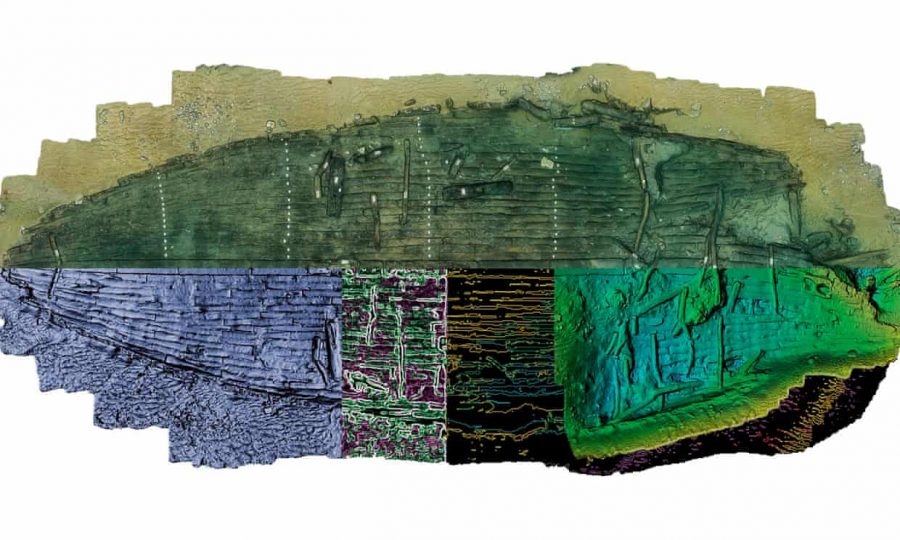
“Prior to Ship 17’s discovery,” writes Smithsonian.com’s Meilan Solly, “contemporary archaeologists had never encountered this architectural style. But upon examining the hull’s well-preserved remains, which constitute some 70 percent of the original structure, researchers found a singular feat of design.” Though Herodotus may have indulged in exaggeration now and again, Ship 17 turns out to be more impressive than the boat in The Histories: “At the peak of its maritime career, Ship 17 likely measured up to 92 feet — significantly longer than the baris described by Herodotus.” You can learn more about Ship 17 and its historical implications from the Ancient Architects video at the top, as well as from articles at Atlas Obscura, History.com, and Science Alert. All this makes the engineering skills of the ancient Egyptians, as well as the recording skills of Herodotus, look that much more impressive. But it does raise an important question: should we now start thinking about how best to hide our gold from the ants?
The images above come from
Related Content:
Try the Oldest Known Recipe For Toothpaste: From Ancient Egypt, Circa the 4th Century BC
An Ancient Egyptian Homework Assignment from 1800 Years Ago: Some Things Are Truly Timeless
Jorge Luis Borges Selects 74 Books for Your Personal Library
Based in Seoul, Colin Marshall writes and broadcasts on cities, language, and culture. His projects include the book The Stateless City: a Walk through 21st-Century Los Angeles and the video series The City in Cinema. Follow him on Twitter at @colinmarshall or on Facebook.
Read More...Steven Pinker’s 13 Rules for Good Writing

Photo by Rose Lincoln, via Wikimedia Commons
What is good writing? The question requires context. Each type of writing has its norms. Some guidelines apply across disciplines—consult your Strunk and White or any of the hundreds of handbooks recommending strong verbs and minimal use of passive voice. Still, you wouldn’t necessarily put the question to an experimental poet if your concern is informative writing (though maybe you should). Maybe better to ask a scholar who writes clear prose.
Harvard Professor of Psychology Steven Pinker could serve as such a guide, given the popularity of his books with the reading public (their debatable merits for certain critics aside). Luckily for his readers—and those generally seeking to better their writing—Pinker has offered his services free on Twitter with a 13-point list of rules. Unlikely to cause controversy among English teachers, Pinker’s guidelines enact the succinctness they recommend.
Rants about the unintelligibility of academic writing have become genre all their own, but jargon and specialized terminology have their place in certain niches, and there’s nothing inherently wrong with difficulty. Readers can argue amongst themselves about whether some kinds of writing are needlessly overcomplicated. (Fairly or not, poststructuralist French philosophers take a beating on this score, but spend some time with Kant or Hegel and see how easily you breeze through.)
Yet most of us are not professional philosophers, scientists, or theorists writing only for colleagues or coteries. When we write, we want to communicate clearly: to inform, persuade, and even entertain a general readership. In order to do that, we need to minimize abstractions, appeal to the senses, clear away clutter and make connections for our readers. Revision is key. Reading aloud gives the ear a chance to weed out clumsiness the eye can miss. All of these trusted strategies appear in Pinker’s list.
One point Pinker adds to the usual prescriptions has a suitably psychological bent, and an oddly Biblical-sounding name: the “Curse of Knowledge.” Knowing too much about a subject can make it “hard to imagine what it’s like not to know it.” For those who want to know more about clear, concise writing, or who need the inevitable refresher from which even the knowledgeable benefit, see Pinker’s 13 rules below or on Twitter.
- Reverse-engineer what you read. If it feels like good writing, what makes it good? If it’s awful, why?
- Prose is a window onto the world. Let your readers see what you are seeing by using visual, concrete language.
- Don’t go meta. Minimize concepts about concepts, like “approach, assumption, concept, condition, context, framework, issue, level, model, perspective, process, range, role, strategy, tendency,” and “variable.”
- Let verbs be verbs. “Appear,” not “make an appearance.”
- Beware of the Curse of Knowledge: when you know something, it’s hard to imagine what it’s like not to know it. Minimize acronyms & technical terms. Use “for example” liberally. Show a draft around, & prepare to learn that what’s obvious to you may not be obvious to anyone else.
- Omit needless words (Will Strunk was right about this).
- Avoid clichés like the plague (thanks, William Safire).
- Old information at the beginning of the sentence, new information at the end.
- Save the heaviest for last: a complex phrase should go at the end of the sentence.
- Prose must cohere: readers must know how each sentence is related to the preceding one. If it’s not obvious, use “that is, for example, in general, on the other hand, nevertheless, as a result, because, nonetheless,” or “despite.”
- Revise several times with the single goal of improving the prose.
- Read it aloud.
- Find the best word, which is not always the fanciest word. Consult a dictionary with usage notes, and a thesaurus.
via Big Think
Related Content:
Steven Pinker: “Dear Humanists, Science is Not Your Enemy”
7 Tips From Ernest Hemingway on How to Write Fiction
Kurt Vonnegut Explains “How to Write With Style”
Stephen King’s 20 Rules for Writers
Josh Jones is a writer and musician based in Durham, NC. Follow him at @jdmagness
Read More...New Archive Digitizes 80,000 Historic Watercolor Paintings, the Medium Through Which We Documented the World Before Photography
The watercolor painting has a reputation for lightness. It’s a casual endeavor, done in scenic outdoor surroundings on sunlit days. Watercolors are the choice of weekend hobbyists or children unready for messier materials. Watercolors, in other words, are often treated as unserious. But for a couple hundred years, they served a very serious purpose. In addition to being a portable medium with an expansive range, watercolors’ ease made them the primary means of making documentary images before photography completely took over this function by the turn of the 20th century when portable consumer cameras became a reality.
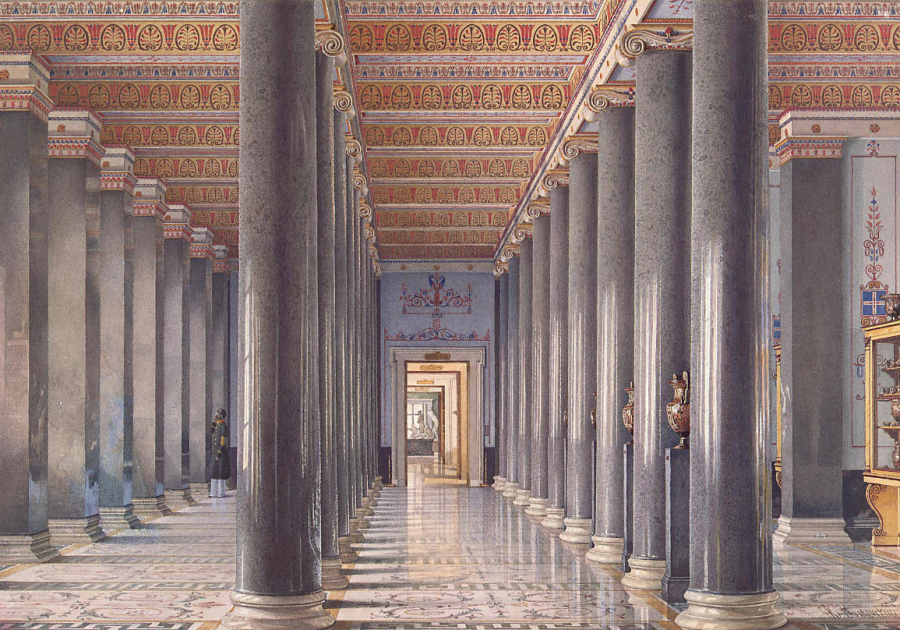
“Before the invention of the camera,” explains the Watercolour World, “people used watercolors to document the world. Over the centuries, painters—both professional and amateur—created hundreds of thousands of images recording life as they witnessed it. Every one of these paintings has a story to tell.”
The Watercolour World is a large-scale digitization of thousands of watercolors found hidden away in drawers all over the UK by former diplomat Fred Hohler, who came up with the idea for the project while on a tour of Britain’s public collections.
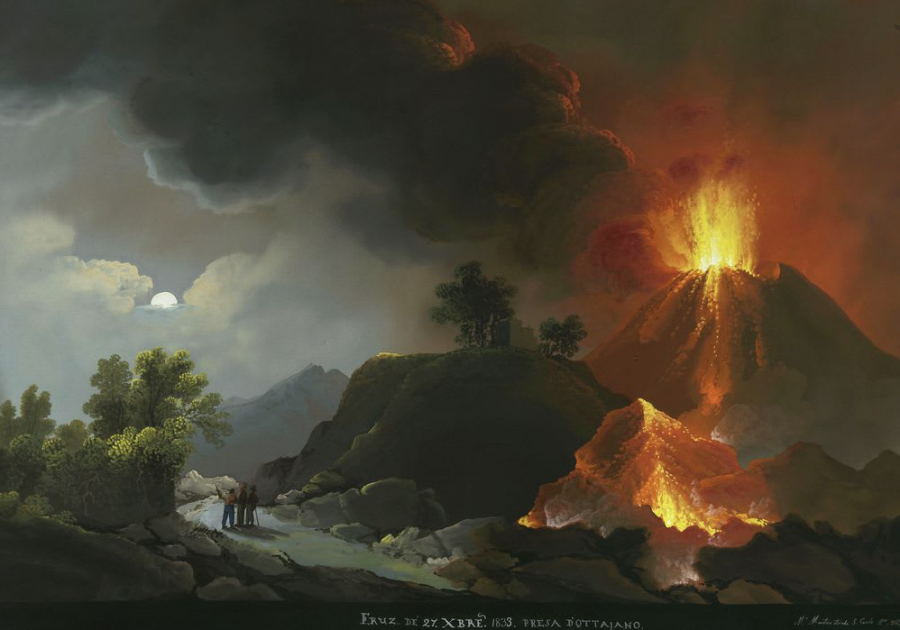
“The value—and excitement—of the Watercolour World project,” writes Dale Berning Sawa at The Guardian, “is that it views these historic paintings as documents, not aesthetic objects.” That’s not necessarily how their creators’ saw them. “A lot of the value in these images is… accidental. Often it’s the context—replete with treelines, snowlines or waterlines—the artist painted around, for example, the flower they’d set out to record.” Such accidental documentation captured one of the first known images of Mount Everest, situated in the background, in a painting from the 1840s. Of course much of the documentary purpose was intentional—in land surveys and scientific illustrations, and in the many paintings, like that above from 1833, of Mount Vesuvius erupting.
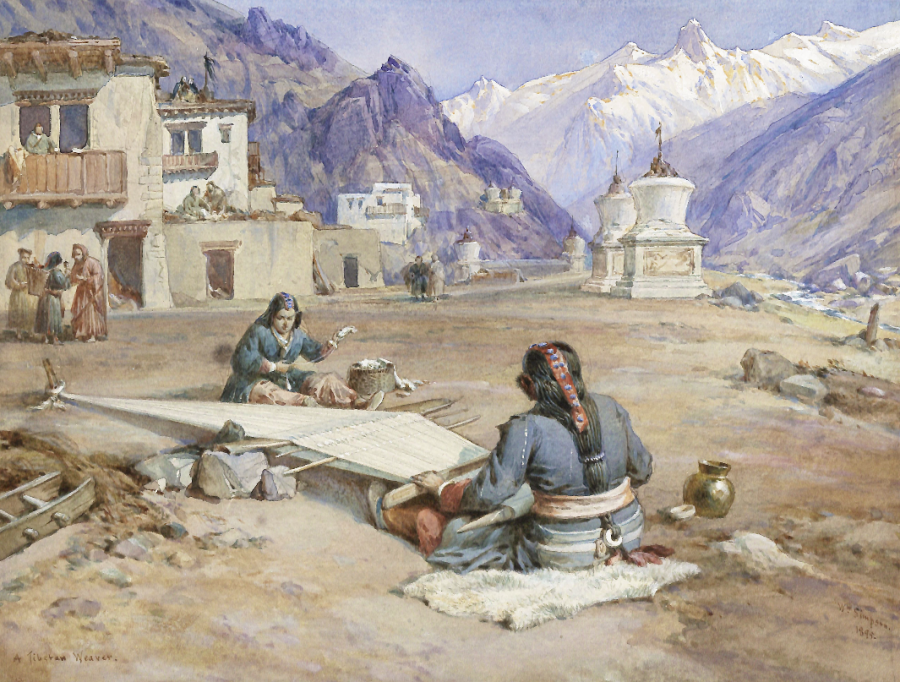
These images are becoming increasingly important to scientists and historians as ice-caps melt, historical sites are bombed or vandalized, and flora and fauna disappear. With a focus on pre-1900 images, the site launched with around 80,000 digitized watercolors, a number that could expand into over a million, Hohler estimates, at which point, it will become an “absolutely indispensable tool to help us understand today.” As for understanding the context in which these works were created—it’s complicated. Many of the paintings come with a wealth of identifying information. Some of the artists were professionals, some military draftsmen, botanists, expedition watercolorists, and surveyors.
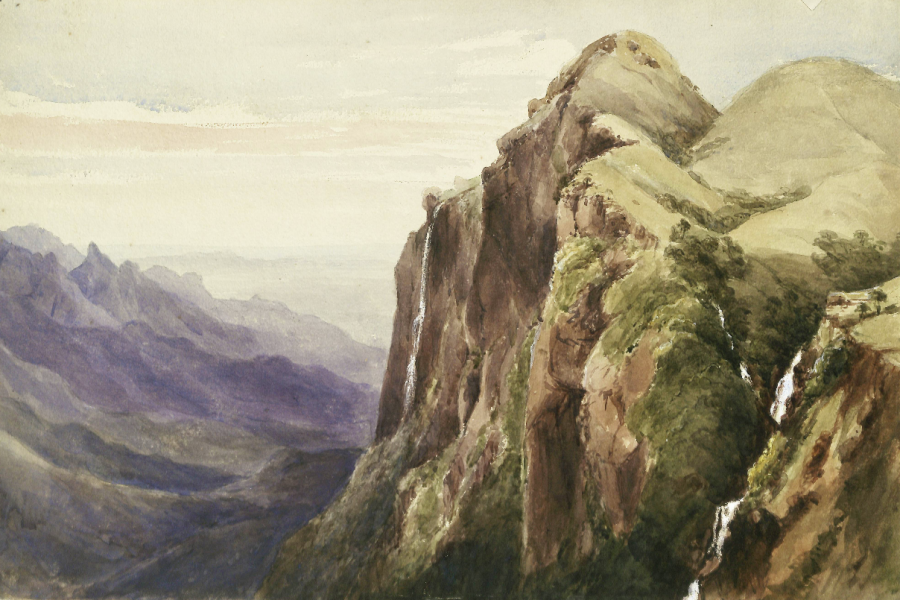
Some had long, distinguished careers taking over other countries, like colonial British General James Maurice Primrose, who painted several very impressive landscapes in India like 1860’s “In the Neilgherries,” above. And there are also “untold numbers of amateurs,” Sawa writes, “which Hohler suspects will turn out to have been mostly women, unpaid for their time and skill—who picked up a paintbrush to record the world around them.” Whoever these painters were, and whatever motivated them to make these works of art, we can be grateful that they did, and that these thousands of paintings, many of which are quite fragile, survived long enough for digitization in this impressive public project.
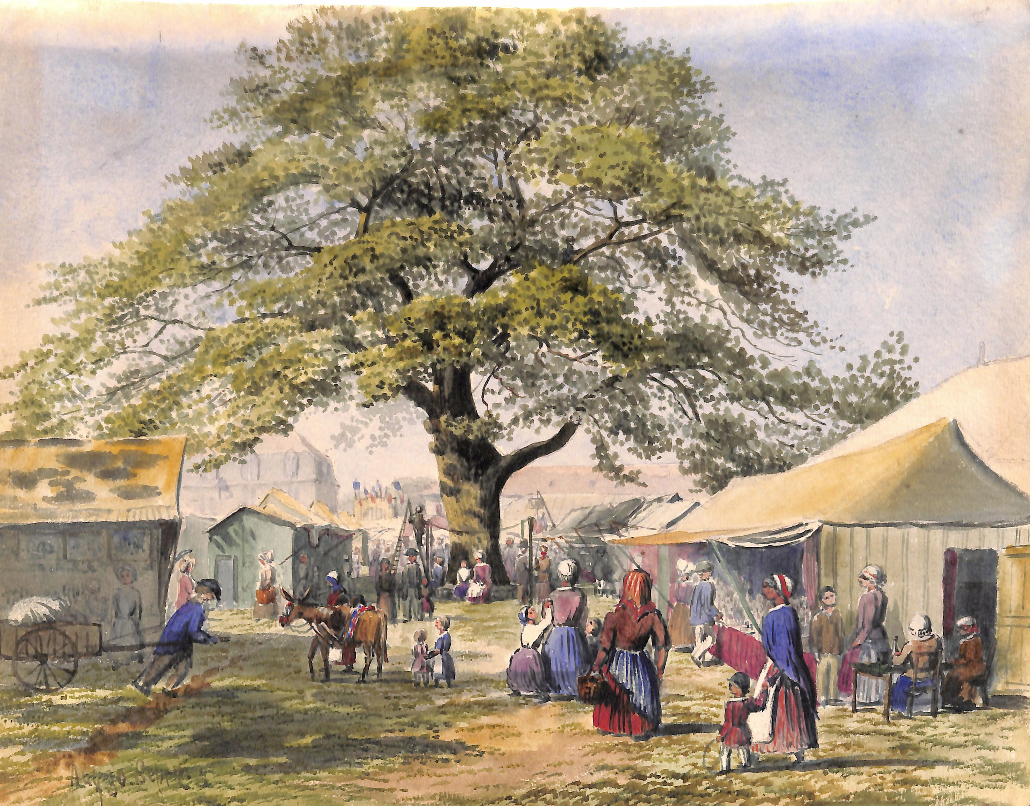
“By making history more visible to more people,” the Watercolour World puts it, “we can deepen our understanding of the world.” The UK-based organization seeks paintings from around the globe; “there are thousands of watercolours still to add.” If you have some pre-1900 works to contribute, you are encouraged to get in touch and find out if they’re suitable for inclusion. Enter the Watercolour World here.
Related Content:
Download for Free 2.6 Million Images from Books Published Over Last 500 Years on Flickr
Josh Jones is a writer and musician based in Durham, NC. Follow him at @jdmagness
Read More...A Visual Map of the World’s Major Religions (and Non-Religions)

“The nones are growing,” we hear all the time, a reference to the huge increase in people who check the “none” box in documents that ask about religious beliefs. In the U.S., at least, the response to this news seems to be fivefold: fear, denial, anger, celebration, and speculation that can seem to go beyond what the data warrants. National Geographic, for example, trumpets “The World’s Newest Major Religion: No Religion,” though it’s not exactly clear what no religion means.
Checking “none” does not signify holding specific convictions or affiliations. It can be an irritated reaction from those who find the question intrusive, an evasion from those who refuse to think about the issue, a response from those whose beliefs are not reflected in any of the choices offered, a confident statement of thoroughgoing philosophical naturalism…. One way to look at the data is that it’s inconclusive.

But it could tell some big stories as well, such as “the secularizing West and the rapidly growing rest” (a story complicated by China, the country with the largest “atheist/agnostic” population). While the internet has made it easier for atheists and agnostics to connect and organize, these labels do not name any consistent set of beliefs or non-beliefs, and they can apply to secular humanists as well as to certain adherents of forms of Buddhism, Taoism, paganism, etc., who may not explicitly identify as religious but who have some spiritual practices…
But whoever they are, the “nones” do appear to be growing, accounting for around a quarter of the population in the U.S. and Europe—where in some countries, such as the Czech Republic, closer to half the population identifies as nonreligious. The story of the nones is counterbalanced by the massive spread of religion, mostly Christianity but also Islam, among the “rest” of the world. Designer Carrie Osgood of the world travel site Carrie On Adventures has given us a handy visual reference (view in a large format here) for the global situation in the infographic above.

Drawing on data from the United Nations Population Fund—which she previously used to create a series of population and urbanization maps—and from the World Religion Database, Osgood visualizes the relative populations of each country by sizing them as proportional pie charts, with their major religions represented by different colors. (These numbers are based on 2010 figures and may have changed considerably in the past decade.) Christianity is still the world’s largest religion, at 32.8%, with Islam close behind at 22.5%.
Yet as Frank Jacobs points out at Big Think, such sweeping generalizations—like those about the “nones”—miss critical details needed in any discussion about world religions. “The map bands together various Christian and Islamic schools of thought,” writes Jacobs, “that don’t necessarily accept each other as ‘true believers,’” and may even view each other as enemies and heretics. Large, thriving religious groups like Sikhs are lumped in with “others,” a category that can include numerically marginal or disappearing belief systems.

Likewise, “there’s that whole minefield of nuance between those who practice a religion (but may do so out of social coercion rather than personally held belief), and those who believe in something (but don’t participate in the rituals of any particular faith).” Especially in countries with a majority faith—and with painful social or legal penalties for those who don’t subscribe—the question of how many people really identify out of true conviction cannot be ignored.
Which brings us back to the “nones,” a category, however fuzzy, that may be far larger than the numbers show, and could include millions more in majority-faith countries, if those people lived under a secular government, in a pluralistic society, and felt free to speak their minds. The “nones” have maybe always been around. Only now, in much of the world at least, they’re far more visible. But that’s just one possible story among the many we can tell about this data.
View and download a larger version of the infographic map at Osgood’s site and see a detailed breakdown of the data at Big Think.
Related Content:
Animated Map Shows How the Five Major Religions Spread Across the World (3000 BC – 2000 AD)
Christianity Through Its Scriptures: A Free Course from Harvard University
Introduction to the Old Testament: A Free Yale Course
Josh Jones is a writer and musician based in Durham, NC. Follow him at @jdmagness
Read More...Why Nobody Smiles in Old Photos: The Technological & Cultural Reasons Behind All those Black-and-White Frowns
We’ve all heard stories of kids who ask their parents if the world was really black-and-white in the 1950s, or maybe even been those kids ourselves. With that matter cleared up, children who’ve seen even older colorless photographs — say, from around the turn of the 20th century — may follow up with another question: hadn’t they invented smiling back then? If they ask you (or if you’ve wondered about it yourself), you can take care of it in just three minutes by pulling up this Vox explainer on why people never smiled in old photos. Why, in the words of Phil Edwards writing on the video’s accompanying page, “did people in old photos look like they’d just heard the worst news of their life?”
“We can’t know for sure, but a few theories help us guess what was behind all that black-and-white frowning.” The first, and the one you may already know, has to do with the camera technology of the day, whose “long exposure times — the time a camera needs to take a picture — made it important for the subject of a picture to stay as still as possible. That way, the picture wouldn’t look blurry.” But by the year 1900 that problem was more or less solved “with the introduction of the Brownie and other cameras,” which were “still slow by today’s standards, but not so slow that it was impossible to smile.”
Other theories explaining the smile-free photographs of old include the lingering influence of the painted portrait on the photographic portrait; the dominant idea of photography as a “passage to immortality” that “meant the medium was predisposed to seriousness over the ephemeral”; and that Victorian and Edwardian culture itself took a dim view of smiling, supported by a survey of smiling in portraits conducted by Nicholas Jeeves at the Public Domain Review that “came to the conclusion that there was a centuries-long history of viewing smiling as something only buffoons did.” Yet late 19th-century and early 20th-century photography isn’t a completely smile-free zone, as the Flickr group The Smiling Victorian proves.
Edwards includes a picture, taken circa 1904, of a man smiling not just unmistakably but hugely. He does so as he prepares to dig into a bowl of rice, that being an important part of the cuisine of China, where Asian-language scholar Berthold Laufer took an expedition to capture the everyday life of the Chinese people on film. “His rice-loving subject may have been willing to grin because he was from a different culture with its own sensibility concerning photography and public behavior,” Edwards writes. Whatever the reasons for the smile on that Chinese face or the lack of one on all those Victorians and Edwardians, we must prepare ourselves to answer an even more difficult question from posterity: one about why, exactly, we’re doing what we’re doing in the billions of photos we now take of ourselves every day.
Related Content:
The First Photograph Ever Taken (1826)
See the First Photograph of a Human Being: A Photo Taken by Louis Daguerre (1838)
See The First “Selfie” In History Taken by Robert Cornelius, a Philadelphia Chemist, in 1839
The First Known Photograph of People Sharing a Beer (1843)
The History of Photography in Five Animated Minutes: From Camera Obscura to Camera Phone
Based in Seoul, Colin Marshall writes and broadcasts on cities, language, and culture. His projects include the book The Stateless City: a Walk through 21st-Century Los Angeles and the video series The City in Cinema. Follow him on Twitter at @colinmarshall or on Facebook.
Read More...William S. Burroughs’ Manifesto for Overthrowing a Corrupt Government with Fake News and Other Prophetic Methods: It’s Now Published for the First Time
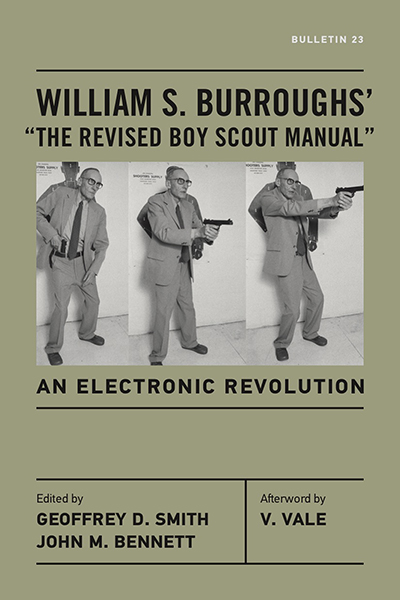
The Boy Scouts of America have faced some deserved criticism, undeserved ridicule, and have been cruelly used as props, but I think it’s safe to say that they still bear a pretty wholesome image for a majority of Americans. That was probably no less the case and perhaps a good deal more so in 1969, but the end of the sixties was not by any stretch a simpler time. It was a period, writes Scott McLemee, “when the My Lai Massacre, the Manson Family and the Weather Underground were all in the news.” The Zodiac Killer was on the loose, a general air of bleakness prevailed.
William S. Burroughs responded to this madness with a counter-madness of his own in “The Revised Boy Scout Manual,” “an impassioned yet sometimes incoherent rebuke to ossified political ideologies,” writes Kirkus. We can presume Burroughs meant his instructions for overthrowing corrupt governments to satirically comment on the outdoorsy status quo youth cult. But we can also see the manual taking as its starting point certain values the Scouts champion, at their best: obsessive attention to detail, MacGyver-like ingenuity, and good old American self-reliance.
Want to bring down the government? You can do it yourself… with fake news.
Boing Boing quotes a long passage from the book that shows Burroughs as a comprehensive, if not quite wholesome, Scout advisor, describing how one might use mass media’s methods to disrupt its message, and to transmit messages of your own. We might think he is foreseeing, even recommending, techniques we now see used to a no-longer-shocking degree.
You have an advantage which your opposing player does not have. He must conceal his manipulations. You are under no such necessity. In fact you can advertise the fact that you are writing news in advance and trying to make it happen by techniques which anybody can use.
And that makes you NEWS. And a TV personality as well, if you play it right.
You construct fake news broadcasts on video camera… And you scramble your fabricated news in with actual news broadcasts.
We might read in Burroughs’ instructions the methods of YouTube propagandists, social media manipulators, and some of the most powerful people in the world. Burroughs does not recommend taking over the media apparatus by seizing its power, but rather using technology to make “cutup video tapes” and ham radio broadcasts featuring documentary media spliced together with fabrications. These “techniques could swamp the mass media with total illusion,” he writes. “It will be seen that the falsifications in syllabic Western languages are in point of fact actual virus mechanisms.”
Burroughs is not simply writing a reference for making fearmongering propaganda. Even when it comes to the subject of fear, he sometimes sounds as if he is revising Sergei Eisenstein’s montage theory for his own similarly violent times. “Let us say the message is fear. For this we take all the past fear shots of the subject we can collect or evoke. We cut these in with fear words and pictures, with threats, etc. This is all acted out and would be upsetting enough in any case. Now let’s try it scrambled and see if we get an even stronger effect.”
What would this effect be? One “comparable to post-hypnotic suggestion”? Who is the audience, and would they be, a la Clockwork Orange, a captive one? Did Burroughs see people on street corners screening their cut-up videos, despite the fact that consumer-level video technology did not yet exist? Is this a cinematic experiment, mass media-age occult ritual, compendium of practical magic for insider media adepts?
See what you can make of Burroughs’ “The Revised Boy Scout Manual” (subtitled “an electronic revolution”). The book has been reissued by the Ohio State Press, with an afterword (read it here) by V. Vale, publisher of the legendary, radical magazine RE/Search, who excerpted a part of the “Revised Manual” in the early 1980s and planned to publish it in full before “a personal relationship blowup” put an end to the project.
McLemee titles his review of Burrough’s rediscovered manifesto “Distant Early Warning,” and much of it does indeed sound eerily prophetic. But we should also bear in mind the book is itself a countercultural pastiche, designed to scramble minds for reasons only Burroughs truly knew. He was a “practicing Scientologist at the time” of the book’s composition, “albeit not for much longer,” and he does prescribe use of the e‑meter and makes scattered references to L. Ron Hubbard. But as a practitioner of his own precepts, Burroughs would not have written a monograph uncritically promoting one belief system or another. (Well, maybe just the once.) He also quotes Hassan‑I Sabbah, discusses Mayan hieroglyphics, and talks General Semantics.
“The Revised Boy Scout Manual” “has elements of libertarian manifesto, paramilitary handbook, revenge fantasy and dark satire,” McLemee writes, “and wherever the line between fiction and nonfiction may be, it’s never clear for long.” In this, Burroughs only scrambles elements already in abundance at the end of the sixties and in the early seventies, during which he revised and recorded the work several times as he transitioned himself out of an organization that maintained total control through mass media. Like Marshall McLuhan, Noam Chomsky and others, he was beginning to see this phenomenon everywhere he looked. Burroughs’ most lasting influence may be that, like the late-60s Situationists, he devised a cunning and effective way to turn mass media in on itself, one with perhaps more sinister implications.
Related Content:
When William S. Burroughs Appeared on Saturday Night Live: His First TV Appearance (1981)
Josh Jones is a writer and musician based in Durham, NC. Follow him at @jdmagness
Read More...Does Playing Music for Cheese During the Aging Process Change Its Flavor? Researchers Find That Hip Hop Makes It Smellier, and Zeppelin’s “Stairway to Heaven” Makes It Milder
Humans began making cheese seven millennia ago: plenty of time to develop an enormous variety of textures, flavors, and smells, and certainly more than enough to get creative about the methods of generating even greater variety. But it seems to have taken all that time for us to come around to the potential of music as a flavoring agent. “Exposing cheese to round-the-clock music could give it more flavor and hip hop might be better than Mozart,” report Reuters’ Denis Balibouse and Cecile Mantovani, citing the findings of Cheese in Sound, a recent study by Swiss cheesemaker Bert Wampfler and researchers at Bern University of the Arts.
“Nine wheels of Emmental cheese weighing 10 kilos (22 pounds) each were placed in wooden crates last September to test the impact of music on flavor and aroma,” write Balibouse and Mantovani. The hip hop cheese heard A Tribe Called Quest’s “Jazz (We’ve Got),” the classical cheese Mozart’s “Magic Flute,” the rock cheese Led Zeppelin’s “Stairway to Heaven,” and so on.
Three other wheels heard simple low, medium, and high sonic frequencies, and one control cheese heard nothing at all. But perhaps “heard” is the wrong word: each maturing cheese received its music not through speakers but “mini transmitters to conduct the energy of the music into the cheese.”
That may make more plausible the results that came out when a culinary jury performed a blind taste test of all the cheeses and found that they really did come out with different flavors. According to the project’s press release, a “sensory consensus analysis carried out by food technologists from the ZHAW Zurich University of Applied Sciences” concluded that “the cheeses exposed to music had a generally mild flavor compared to the control test sample” and that “the cheese exposed to hip hop music displayed a discernibly stronger smell and stronger, fruitier taste than the other samples.”

Or, as Smithsonian.com’s Jason Daley summarizes the findings, A Tribe Called Quest “gave the cheese an especially funky flavor, while cheese that rocked out to Led Zeppelin or relaxed with Mozart had milder tests.” Cheese-lovers intrigued by the possibilities implied here would be forgiven for thinking it all still sounds a bit too much like those CD sets that claimed a baby’s intelligence could be increased by playing them Mozart in the womb. But if Cheese in Sound’s results hold up to further scrutiny, maybe those parents — at least those parents hoping for a funkier child — should have been playing them hip hop all along.
Related Content:
An Animated History of Cheese: 10,000 Years in Under Six Minutes
How to Break Open a Big Wheel of Parmesan Cheese: A Delightful, 15-Minute Primer
Leo Tolstoy’s Family Recipe for Mac ‘N’ Cheese
Based in Seoul, Colin Marshall writes and broadcasts on cities, language, and culture. His projects include the book The Stateless City: a Walk through 21st-Century Los Angeles and the video series The City in Cinema. Follow him on Twitter at @colinmarshall or on Facebook.
Read More...The Sax Solo on Gerry Rafferty’s “Baker Street” on a 10 Hour, Endless Loop
Enjoy, but the rule is once you start, you have to listen through to the very, very end. :)
Read More...Journalism Under Siege: A Free Online Course from Stanford Explores the Imperiled Freedom of the Press
This past fall, Stanford Continuing Studies and the John S. Knight Journalism Fellowships teamed up to offer an important course on the challenges facing journalism and the freedom of the press. Called Journalism Under Siege? Truth and Trust in a Time of Turmoil, the five-week course featured 28 journalists and media experts, all offering insights on the emerging challenges facing the media across the United States and the wider world. The lectures/presentations are now all online. Find them below, along with the list of guest speakers, which includes Alex Stamos who blew the whistle on Russia’s manipulation of the Facebook platform during the 2016 election. Journalism Under Siege will be added to our collection, 1,700 Free Online Courses from Top Universities.
Weekly Sessions:
- Week 1 – First Draft of History: How a Free Press Protects Freedom; Part One, Part Two
- Week 2 – Power to the People: Holding the Powerful Accountable; Part One, Part Two
- Week 3 – Picking Sides? How Journalists Cover Bias, Intolerance and Injustice; Part One, Part Two
- Week 4 – The Last Stand of Local News; Part One, Part Two
- Week 5 – The Misinformation Society; Part One, Part Two
Guest Speakers:
- Hannah Allam, national reporter, BuzzFeed News
- Roman Anin, investigations editor, Novaya Gazeta, Moscow
- Hugo Balta, president, National Association of Hispanic Journalists
- Sally Buzbee, executive editor, Associated Press (AP)
- Neil Chase, executive editor, San Jose Mercury News
- Audrey Cooper, editor-in-chief, San Francisco Chronicle
- Jenée Desmond-Harris, staff editor, NYT Opinion, New York Times
- Jiquanda Johnson, founder and publisher, Flint Beat
- Joel Konopo, managing partner, INK Centre for Investigative Journalism, Gaborone, Botswana
- Richard Lui, anchor, MSNBC and NBC News
- Geraldine Moriba, former vice president for diversity and inclusion, CNN
- Bryan Pollard, president, Native American Journalists Association
- Cecile Prieur, deputy editor, Le Monde, Paris
- Joel Simon, executive director, Committee to Protect Journalists
- Alex Stamos, former Facebook chief security officer
- Marina Walker Guevara, winner of the 2017 Pulitzer Prize for Explanatory Reporting for coordinating the Panama Papers investigation
If you would like to support the mission of Open Culture, consider making a donation to our site. It’s hard to rely 100% on ads, and your contributions will help us continue providing the best free cultural and educational materials to learners everywhere. You can contribute through PayPal, Patreon, and Venmo (@openculture). Thanks!
Read More...Support Us
We're hoping to rely on loyal readers, rather than erratic ads. Please click the Donate button and support Open Culture. You can use Paypal, Venmo, Patreon, even Crypto! We thank you!

About Us

Open Culture scours the web for the best educational media. We find the free courses and audio books you need, the language lessons & educational videos you want, and plenty of enlightenment in between.
Advertise With Us

FREE UPDATES!
GET OUR DAILY EMAIL
Get the best cultural and educational resources on the web curated for you in a daily email. We never spam. Unsubscribe at any time.
FOLLOW ON SOCIAL MEDIA

Open Culture editor Dan Colman scours the web for the best educational media. He finds the free courses and audio books you need, the language lessons & movies you want, and plenty of enlightenment in between.
Advertise With Us


