Meet Berea College, the Innovative College That Charges No Tuition & Gives Students a Chance to Graduate Debt-Free
“The looming student loan default crisis is worse than we thought,” writes Professor of Economics Judith Scott-Clayton at Brookings. I’ll leave it to you to parse the report, but to sum up… it looks bad. Subprime mortgage crisis bad. Maybe… there’s another way? Working models of fully subsidized higher ed systems in other countries—like fully subsidized healthcare systems—strongly suggest as much. Some high-end programs in the U.S., like NYU’s newly free medical school, have taken an early lead, hoping to solve the problem of doctor shortages.
But there’s an earlier, humbler, more progressive model of free college in the States, Kentucky’s little-known Berea College, founded in 1855 by an abolitionist Presbyterian minister John Gregg Fee as the first integrated, co-educational college in the American South. “It has not charged students tuition since 1892,” Adam Harris reports at The Atlantic. “Every student on campus works, and its labor program is like work-study on steroids. The work includes everyday tasks such as janitorial services, but older students are often assigned jobs aligned to their volunteer programs.”
Rather than working to pay off tuition, “students receive a physical check for their labor that can go toward housing and living expenses.” Nearly half of the school’s graduates leave with no debt, with the remaining carrying an average of less than $7,000 from room and board expenses. Compare that to a national average of $37,172 in loan debt per student for the class of 2016. How does Berea do it? It funds tuition with its large endowment of 1.2 billion dollars.
Through a perverse historical irony, as Harris describes, the same racist hatred that ran Berea’s founder out of town in 1859, and forced the school to segregate in 1904, made certain that its funding model would sustain it far into its (re)integrated future. After Kentucky’s passage of the so-called “Day Law,” barring black students from attending, money began to pour in.
The prospect of educating poor white people from Appalachia for no tuition was something that the community could get behind. And nearly 100 years ago, on October 20, 1920, the board made sure that the college would be able to do so for a long time. According to Jeff Amburgey, the school’s chief financial officer, “The board essentially said, for Berea to sustain its funding model,” any unrestricted bequests—essentially money that someone leaves the institution after they have passed away, that is not tagged for a specific purpose—could not be spent right away. Instead, he says, the money was expected to be treated as part of the endowment, and only the return on that investment could be spent.
Berea could not, as some other schools do, spend millions on football stadiums instead of investing in its students. In the 50s, the school reintegrated, but the process was very slow, as it was everywhere in the country. “The community was gone,” says Berea history professor Alicestyne Turley, referring to the Reconstruction-era community that had a student body mix of 50–50 black and white students.
The school had to relearn its founding principles, as expressed in its founder’s chosen motto, from the Book of Acts: “God has made of one blood all peoples of the earth.” Now most of the enrollees, low-income white and black students mostly from Appalachia, qualify for Pell grants. 10 percent of the budget comes from charitable gifts. But the school pays the bulk of the tuition, $39,400 per student, from its endowment.
Is this sustainable? Time will tell. Though a 1937 promotional film, above, from the college’s segregated past decries “the false glitter of easy prosperity,” its current president tells Harris “we’re not the kind of institution that holds the world of finance in disdain. We are dependent on it.” A stock market crash could bankrupt Berea, and no bailouts would be forthcoming. But for now, the college thrives, with very impressive ranking numbers in the U.S. News Best Colleges report (it comes in a #4 in Best Undergraduate Teaching and #3 in Most Innovative Schools).
The school hosts bell hooks as a professor in residence and boasts as an alumnus Carter G. Woodson, the “father of black history,” with a center named for him whose mission is “to assert the kinship of all people and provide interracial education with a particular emphasis on understanding and equality among blacks and whites as a foundation for building community among all peoples of the earth.”
Maybe if there were a way to, say, fund Berea, and colleges and universities nationwide, through some kind of, say, taxation on, say, the most profitable companies on the planet, or some such… just imagine.…
Related Content:
In Japanese Schools, Lunch Is As Much About Learning As It’s About Eating
Josh Jones is a writer and musician based in Durham, NC. Follow him at @jdmagness
Read More...A 16th Century Book That Opens Six Different Ways, Revealing Six Different Books in One
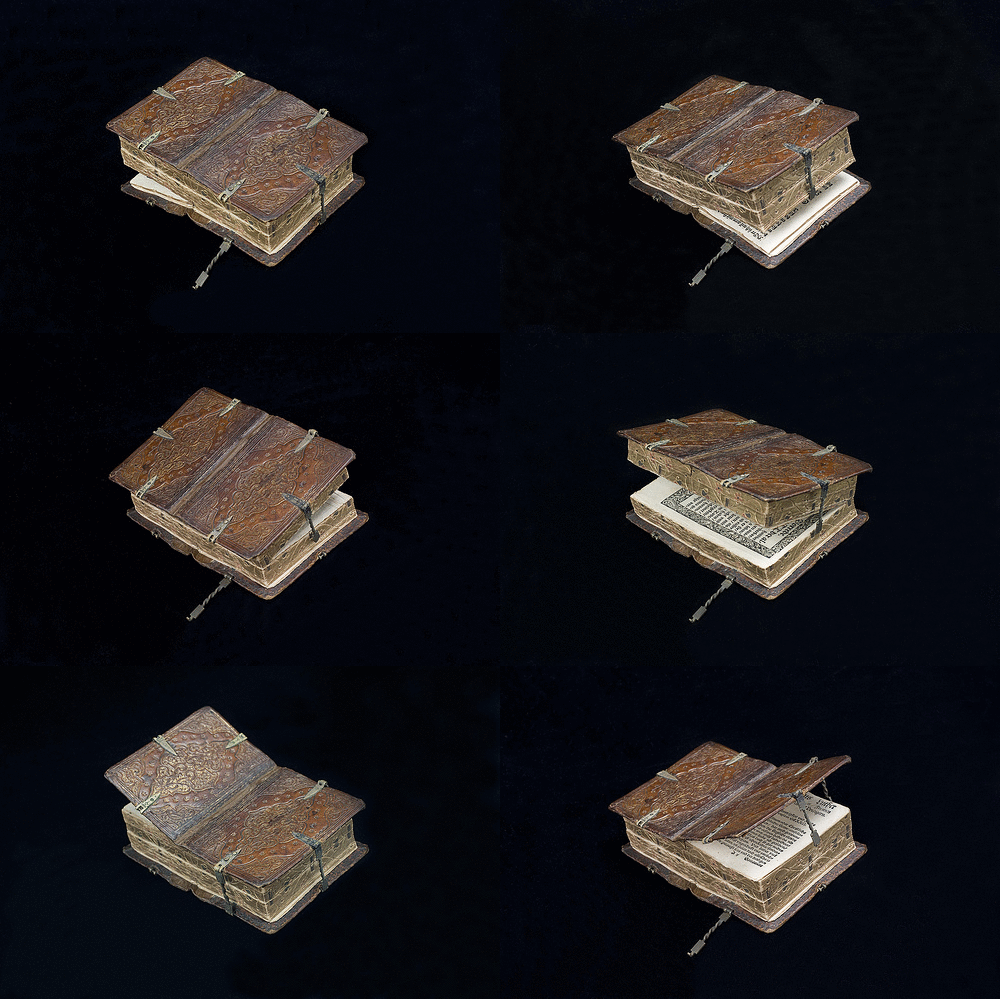
Technology has come so far that we consider it no great achievement when a device the size of a single paper book can contain hundreds, even thousands, of different texts. But 21st-century humanity didn’t come up with the idea of putting multiple books in one, nor did we first bring that idea into being — not by a long shot. Medieval book historian Erik Kwakkel points, for example, to the “dos-à-dos” (back to back) binding of the 16th and 17th centuries, which made for books “like Siamese twins in that they present two different entities joined at their backs: each part has one board for itself, while a third is shared between the two,” so “reading the one text you can flip the ‘book’ to consult the other.”
Not long thereafter, Kwakkel posted an artifact that blows the dos-à-dos out of the water: a 16th-century book that contains no fewer than six different books in a single binding. “They are all devotional texts printed in Germany during the 1550s and 1570s (including Martin Luther, Der kleine Catechismus) and each one is closed with its own tiny clasp,” he writes.
“While it may have been difficult to keep track of a particular text’s location, a book you can open in six different ways is quite the display of craftsmanship.” You can admire it — and try to figure it out — from a variety of different angles at the Flickr account of the National Library of Sweden, where it currently resides in the archives of the Royal Library.
Four or five centuries ago, a book like this would no doubt have impressed its beholders as much as or even more than the most advanced piece of handheld consumer electronics impresses us today. But when the internet discovered Kwakkel’s post, it became clear that this six-in-one devotional captivates us in much the same way as a brand-new, never-before-seen digital device. “With a literacy rate hovering around an estimated 5 to 10 percent of the population during the Middle Ages, only a select few of society’s upper echelons and religious castes had use for books,” Andrew Tarantola reminds us. “So who would have use for a sextuplet of stories bound by a single, multi-hinged cover like this? Some seriously busy scholar.” And he writes that not on a site for enthusiasts of old books, Medieval history, or religious scholarship, but at the temple of tech worship known as Gizmodo.
Related Content:
Wonderfully Weird & Ingenious Medieval Books
Napoleon’s Kindle: See the Miniaturized Traveling Library He Took on Military Campaigns
Wearable Books: In Medieval Times, They Took Old Manuscripts & Turned Them into Clothes
Europe’s Oldest Intact Book Was Preserved and Found in the Coffin of a Saint
Based in Seoul, Colin Marshall writes and broadcasts on cities, language, and culture. His projects include the book The Stateless City: a Walk through 21st-Century Los Angeles and the video series The City in Cinema. Follow him on Twitter at @colinmarshall or on Facebook.
Read More...The Library of Congress Launches the National Screening Room, Putting Online Hundreds of Historic Films
Public domain fans, pull your noses out of those musty old books on Project Gutenberg, but keep your eyes glued to the screen!
The Library of Congress just cut the ribbon on the National Screening Room, an online trove of cinematic goodies, free for the streaming.
Given that the collection spans more than 100 years of cinema history, from 1890–1999, not all of the featured films are in the public domain, but most are, and those are free to download as well as watch.
Archivist Mike Mashon, who heads the Library’s Moving Image Section, identifies the project’s goal as providing the public with a “broad range of historical and cultural audio-visual materials that will enrich education, scholarship and lifelong learning.”
Can’t argue with that. Those seeking to become better versed in the art of consensual kissing whilst mustachioed will find several valuable takeaways in the above clip.
Personal experience, however, compels me to expand upon Mashon’s stated goal: artists, theatermakers, filmmakers—use those downloadable public domain films in your creative projects! (Properly attributed, of course.)
You can educate yourself about a particular clip’s rights and the general ins and outs of motion picture copyrights by scrolling past the clip’s call number to click on “Rights & Access.”
The Library does emphasize that rights assessment is the individual’s responsibility. Few artists conceive of this as the fun part, but do it, or risk the sort of creative heartbreak animator Nina Paley set herself up for when integrating inadequately checked out vintage recordings into her feature-length Sita Sings the Blues, having “decided (she) was just going to use this music, and let the chips fall where they may.”
A hypothetical example: Liza Minnelli’s 2nd or 3rd birthday party at her godfather Ira Gershwin’s Beverly Hills estate?
It’s adorable to the point of irresistible, but alas “for educational purposes only,” a designation that applies to all the Gershwin home movies.
(Watch em, anyway! You never know when you may be called upon to throw an opulent 1940’s‑style toddler party. Forewarned is forearmed! Instagram’s gonna LOVE you.)
Copyright-wise, a good way to hedge your bets is to look for material filmed before 1922, like The Newlyweds, DW Griffith’s meet-cute silent short, starring America’s Sweetheart, Mary Pickford. Look to the leading ladies of that era, if you want to find some worthy tales (and footage) to shoehorn into your #metoo documentary.
Sounds like you’ve got a lot of research ahead of you, friend. But wait, there’s more!
Recharge your batteries with a visit to Peking’s Forbidden City circa 1903.
Wouldn’t that make a fine backdrop to your band’s next music video!
And dibs on the fabled diving horse of Coney Island, whose feats of derring-do were filmed by Thomas Edison.
I could watch that horse dive all day! And so could the audience of that 8‑hour puppet opera I may wind up writing one of these days. It’s set in Coney Island….
Readers, have a rummage and report back. What’s your favorite find in the National Screening Room? Any plans for future use, real or imaginary? Let us know.
If you’re not immediately inspired, don’t despair. Just check back. New content will be uploaded monthly. There are also plans afoot to create educator lesson plans on historical and social topics documented in the collection. Teachers, imagine what your students might create with this classroom tool.…
Begin your visit to the National Screening Room here.
Related Content:
4,000+ Free Movies Online: Great Classics, Indies, Noir, Westerns, Documentaries & More
Download 6600 Free Films from The Prelinger Archives and Use Them However You Like
The Library of Congress Makes 25 Million Records From Its Catalog Free to Download
Library of Congress Releases Audio Archive of Interviews with Rock ‘n’ Roll Icons
Ayun Halliday is an author, illustrator, theater maker and Chief Primatologist of the East Village Inky zine. Join her in NYC on Monday, October 15 for another monthly installment of her book-based variety show, Necromancers of the Public Domain. Follow her @AyunHalliday.
Read More...A 26-Hour Playlist Featuring Music from Haruki Murakami’s Latest Novel, Killing Commendatore

We know well the role music plays in the work of prolific Japanese novelist Haruki Murakami. We’ve previously featured his passion for jazz, his first love. He began as a jazz club owner in Tokyo, and he has written two collections of essays titled Portrait in Jazz and Portrait in Jazz 2. But Murakami is no less a fan of classical music and rock and roll—all three forms intertwine in his novels and stories, providing recurring motifs, soundtracks, and backdrops. Music is more than thematic; it defines his literary style, as he told listeners on “Murakami Radio,” his stint as a DJ on Tokyo FM.
“Rather than learning storytelling technique from someone,” the novelist explained, “I’ve taken a musical approach, while being very conscious about rhythms, harmony and improvisation.” Perhaps this approach explains the wonderfully evocative quality of his prose.
Reading his books, “you feel sad without knowing why,” writes Charles Finch at The Independent, in a review of Murakami’s latest, Killing Commendatore, “and yet, within that sadness glows a small ember of happiness, because to feel sad is at least to feel honestly.” We could say something similar about the feelings evoked by an aria, a blues, or a Dylan song—music helps us access emotions for which we don’t have ready words.
Murakami translates that “ineffable yearning” into writing. “The obscurely lonely domestic images that run through his novels—rain, swimming, pasta, jazz, a particular sort of warm, impersonal sex—root that yearning in the truth of everyday life.” His newest novel brings in a third art, painting; its protagonist, seeking to reinvent his life and work, comes to discover an important message through a series of magical events. It’s familiar territory for Murakami, but don’t ask him to explain any of it. As he told Sarah Lyall at The New York Times, “I cannot explain anything at all… you just have to accept the form. A book is a metaphor.”
Better to get him talking about music, which he is happy to do, moving smoothly between styles with the same imaginative leaps he makes on the page. Above, some fine soul has put together a playlist (listen to it on Spotify here) for Killing Commendatore and it is classic Murakami, a collection of music from Sheryl Crow, Puccini, the Modern Jazz Quartet, Mozart, Thelonious Monk, Verdi, Dylan, The Doors, Beethoven, Bruce Springsteen, Roberta Flack, The Beatles, The Beach Boys, and more. How do all of these artists fit together? Like the strange happenings in Murakami’s world, you have to stop trying to make sense of things and just go with it.
Related Content:
A 3,350-Song Playlist of Music from Haruki Murakami’s Personal Record Collection
Haruki Murakami’s Passion for Jazz: Discover the Novelist’s Jazz Playlist, Jazz Essay & Jazz Bar
Josh Jones is a writer and musician based in Durham, NC. Follow him at @jdmagness
Read More...How Do You Help a Grieving Friend? Acknowledge Their Pain and Skip the Platitudes & Facile Advice
“What does it mean to protest suffering, as distinct from acknowledging it?” writes Susan Sontag in Regarding the Pain of Others. Acknowledgment, the recognition of unimaginable pain and loss, is central, it turns out, to healing. Grief expert Alan Wolfelt lists “acknowledging the full reality of the loss” as the first in his “Six Needs of Mourning.” But he also notes what so many in his field are quick to point out about contemporary culture: “Normal thoughts and feelings connected to loss are typically seen as unnecessary and even shameful.”
The important work of grieving gets bypassed not only by our own internalized shame, but by the unhelpful interventions of others. Megan Devine—author of It’s OK That You’re Not OK: Meeting Grief and Loss in a Culture That Doesn’t Understand—explains the central role of acknowledgment, simply being with others in the full scope of their pain, in the short animated video above. Many of us are taught to do anything but, to throw out advice and platitudes instead. (Illustrated here by an animated bunny tossing out rainbows.)
Our motives may not be “nefarious,” she says, but—to use Sontag’s phrase—trying to fix someone’s suffering amounts to a form of protest against it. And it only makes things worse. Devine is a psychotherapist and bereaved person herself. Her book, notes Jane Brody at The New York Times, “grew out of the tragic loss of her beloved partner, who drowned at age 39 while the couple was on vacation.” She speaks not in the jargon of a clinician but in the frank language of a fellow sufferer and survivor.
“You don’t need platitudes,” she writes on her website, “You don’t need cheerleading. You don’t need to be told this all happened for a reason. You certainly don’t need to be told that you needed your pain in order to learn something about life. Some things cannot be fixed. They can only be carried.”
Being with someone in their grief is “a radical act,” says Devine. “In order to really support you, I have to acknowledge that things really are as bad as they feel to you.” Offers of cheer or advice create defensive barriers. Turning toward someone’s suffering gives them what they need the most: “Being heard helps. It’s the best medicine we have. It makes things better, even when they can’t be made right.”
Related Content:
Stephen Fry on Coping with Depression: It’s Raining, But the Sun Will Come Out Again
How Stress Can Change Your Brain: An Animated Introduction
Josh Jones is a writer and musician based in Durham, NC. Follow him at @jdmagness
Read More...130,000 Photographs by Andy Warhol Are Now Available Online, Courtesy of Stanford University
(Image credit: © The Andy Warhol Foundation for the Visual Arts, Inc.)
It’s taken for granted that every brand or rising star must establish and maintain a constant presence on various social networks. Indeed, the social media star—an entity famous solely for collecting followers and posting glamorous photos with themed commentary—may seem like a phenomenon that could only exist in the internet age, though writers like J.G. Ballard saw such things coming decades ago.
But before obsessive photography saturated the digital environment, Andy Warhol grasped the medium’s central importance in the documentation of everyday life. It just so happened that his everyday life was filled with celebrity actors, models, artists, and musicians.
Warhol, writes James D. Ellis at Light Stalking, “was the proto-hipster,” a restless moth always on the hunt for a flame. “Much like our contemporary culture, Warhol found it difficult to sit and do nothing. He had to leave his house or Factory and experience his immediate surroundings.”
(Image credit: © The Andy Warhol Foundation for the Visual Arts, Inc.)
And he had to photograph every one of those experiences. Warhol used his Polaroids and 35mm the way we use iPhones. A court case in the early nineties once took up the question of whether Warhol’s photographs could be considered fine art, but the artist himself, writes Patina Lee at Widewalls, “was obviously undecided about their value and meaning,” saying “A picture means I know where I was every minute. That’s why I take pictures. It’s a visual diary.”
Warhol, Lee writes, “took his camera with him wherever he went, documenting practically everything, the highest high class and the lowest trash (literally, he took photos of trash cans and of what they contained)…. This inclusiveness is what made his photographic undertakings border between art and mere obsessive collecting, or as people like to cynically notice, consuming the life around him.” His consumption, and photographs of trash, comes to us as treasure, an extensive record of Warhol’s New York in the seventies and eighties.
(Image credit: © The Andy Warhol Foundation for the Visual Arts, Inc.)
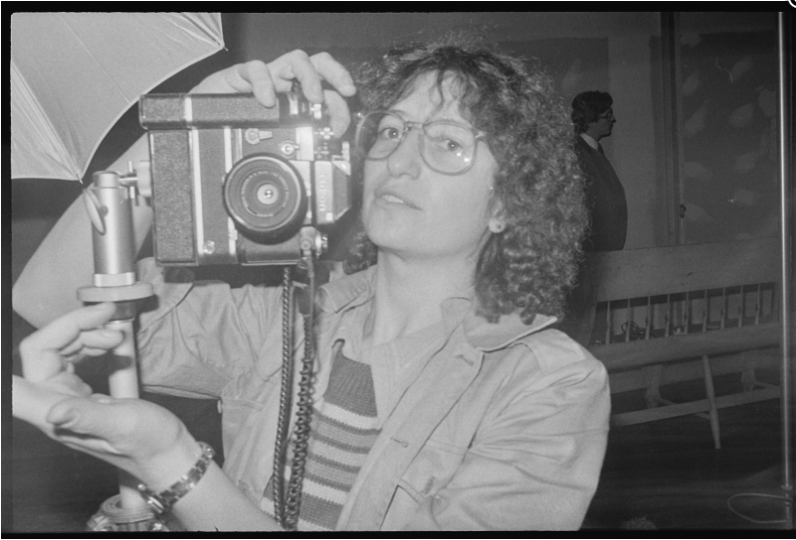
Stanford University’s Cantor Arts Center and Stanford Libraries have collaborated to make their Warhol photo archives available to the public—photos snapped “at discos, dinner parties, flea markets, and wrestling matches. Friends, boyfriends, business associates, socialites, celebrities, and passersby.” This “trove of 3,600 contact sheets featuring 130,000 photographic exposures” documents Warhol’s daily life from 1976 until his death in 1987 and includes candid photos of Jean-Michel Basquiat, Truman Capote, Bianca Jagger, Jimmy Carter, Martha Graham, Keith Haring, Debbie Harry, Grace Jones, Jackie Kennedy, Liza Minelli, Dolly Parton, Elizabeth Taylor, and more.
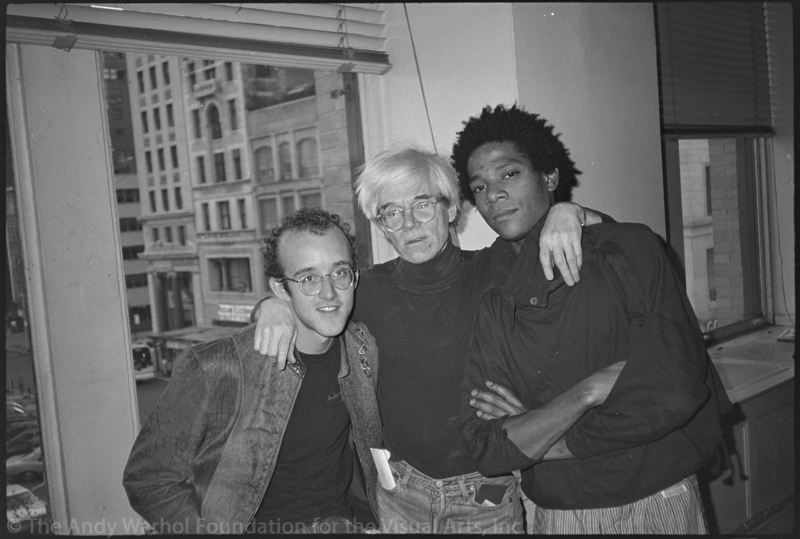
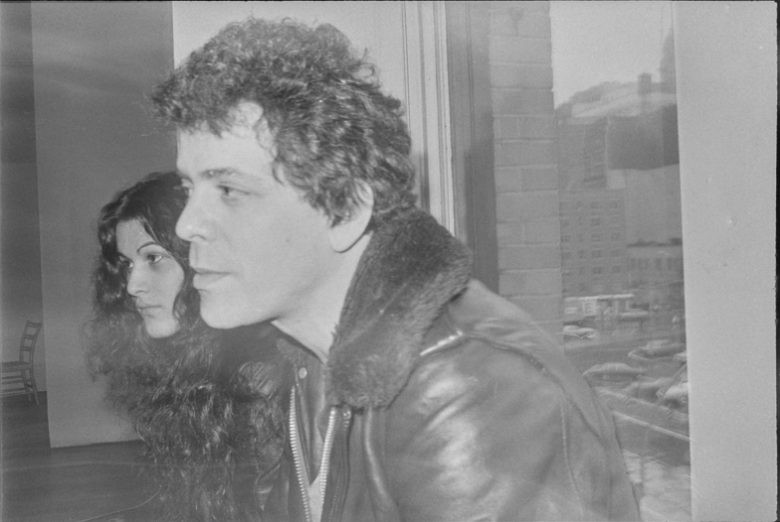
The archive, writes Sandra Feder for Stanford News, “is the most complete collection of the artist’s black-and-white photography ever made available to the public.” It was acquired by the Cantor in 2014 from the Andy Warhol Foundation for the Visual Arts. Given that these are all contact sheets, navigating the collecting can be a little bewildering. The Cantor has provided a number of tools to help. Click on Contact Sheets here to explore all 3,600+ contact sheets. Click Negatives to see individual frames, like those of Keith Haring, Warhol, and Jean-Michel Basquiat at the top, Lou Reed further up, and Annie Leibovitz above. Or start browsing through pictures organized by theme here.
(Image credit: © The Andy Warhol Foundation for the Visual Arts, Inc.)
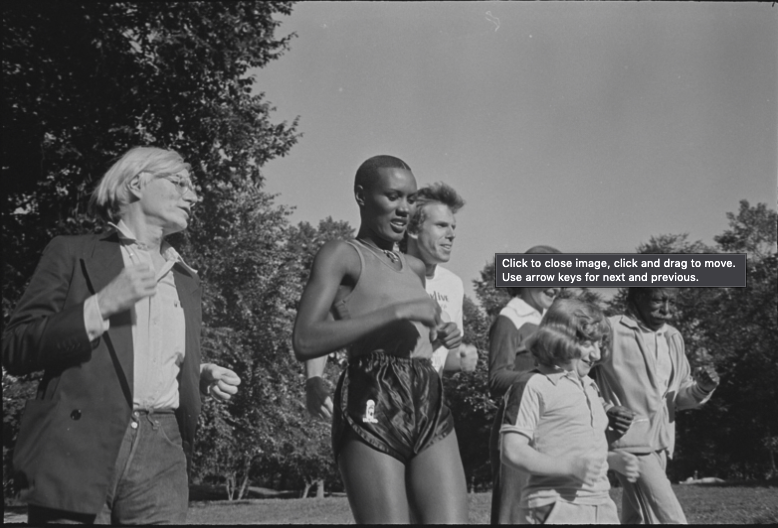
Dig deep, and you’ll find the oddest things, like Andy Warhol running in Central Park for charity with Grace Jones and photographer Gordon Parks. Whatever Andy did, whoever he happened to do it with—and a stranger cast of characters you will not find—it’s all in this huge photo archive somewhere.
If you would like to support the mission of Open Culture, consider making a donation to our site. It’s hard to rely 100% on ads, and your contributions will help us continue providing the best free cultural and educational materials to learners everywhere. You can contribute through PayPal, Patreon, and Venmo (@openculture). Thanks!
Related Content:
The Case for Andy Warhol in Three Minutes
Short Film Takes You Inside the Recovery of Andy Warhol’s Lost Computer Art
Roy Lichtenstein and Andy Warhol Demystify Their Pop Art in Vintage 1966 Film
Watch Andy Warhol’s Screen Tests of Three Female Muses: Nico, Edie Sedgwick & Mary Woronov
Josh Jones is a writer and musician based in Durham, NC. Follow him at @jdmagness
Read More...Haruki Murakami Became a DJ on a Japanese Radio Station for One Night: Hear the Music He Played for Delighted Listeners
In his native Japan, Haruki Murakami has published not just fiction but all sorts of essays dealing with a variety of subjects, from travel to music to writing itself. One collection of these pieces came out under the title Murakami Radio, a possible inspiration for a broadcast of the same name this past summer on Tokyo FM. For its 55-minute duration, Murakami took the DJ’s seat and spun records (or rather, files from several of his music-filled iPods) from his famously vast personal library, including The Beach Boys’ “Surfin’ USA,” Joey Ramone’s version of “What a Wonderful World,” Eric Burdon and The Animals’ “Sky Pilot,” and Daryl Hall and John Oates’ version of “Love Train.” You can listen to all his selections in the Youtube Playlist above.
“It has been my hobby to collect records and CDs since my childhood, and thanks to that, my house is inundated with such things,” wrote Murakami in a message posted by Tokyo FM. “However, I have often felt a sense of guilt toward the world while listening to such amazing music and having a good time alone. I thought it may be good to share such good times with other people while chatting over a glass of wine or a cup of coffee.”
He also chatted a bit himself between songs, answering listener questions and explaining the relationship between the music he loves and the books he writes. “Rather than learning storytelling technique from someone, I’ve taken a musical approach, while being very conscious about rhythms, harmony and improvisation,” he said on-air. “It’s like writing as I dance, even though I don’t actually dance.”
For many of Murakami’s fans, Murakami Radio (full recordings of which do exist on the internet) marks the first time they’ve ever heard his actual voice, and it turns out to have a thing or two in common with his authorial one: take, for instance, his use of boku, the informal personal pronoun favored by most of his narrators. With the broadcast initially announced as a one-off, it might also have seemed like the last chance to hear Murakami speak, but the official Murakami Radio site recently announced two more editions. The next one, scheduled for October 19th, will deal with not just music but another of Murakami’s passions, running. Anyone who’s read Murakami’s 1979 debut novel Hear the Wind Sing will remember the talkative Saturday-night radio DJ who makes occasional appearances in the text — and may wonder if, nearly 40 years later, Murakami channels him again when he gets behind the microphone himself.
Related Content:
David Bowie Becomes a DJ on BBC Radio in 1979, Introduces Listeners to The Velvet Underground
Talking Heads, Blondie & More
A 3,350-Song Playlist of Music from Haruki Murakami’s Personal Record Collection
Haruki Murakami’s Passion for Jazz: Discover the Novelist’s Jazz Playlist, Jazz Essay & Jazz Bar
Based in Seoul, Colin Marshall writes and broadcasts on cities, language, and culture. His projects include the book The Stateless City: a Walk through 21st-Century Los Angeles and the video series The City in Cinema. Follow him on Twitter at @colinmarshall or on Facebook.
Read More...Learn Anatomy Through a Pictorial History of James Bond 007
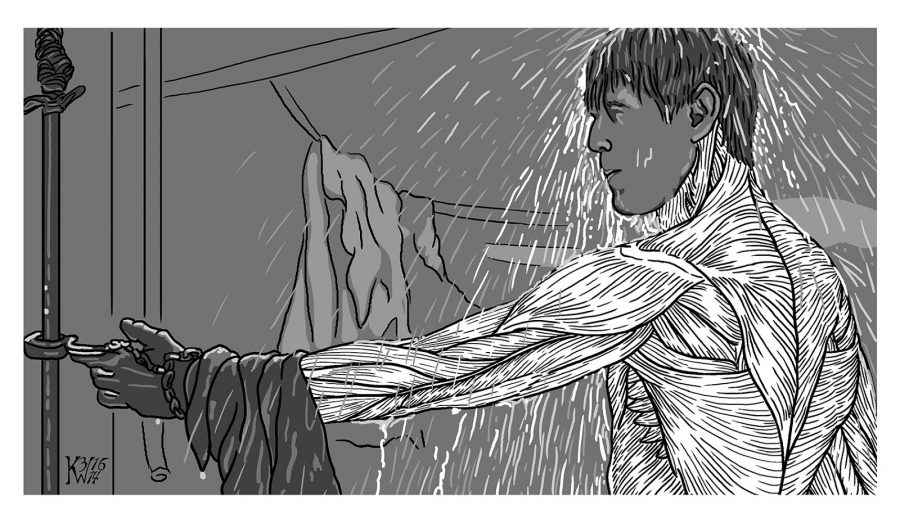
Remember the scene in Tomorrow Never Dies when sexy double agent Wai Lin handcuffs James Bond to the shower and leaves him there?
Alternately, remember “Table 9” from anatomist Bernard Siegfried Albinus’ 1749 Tabulae sceleti et musculorum corporis humani?
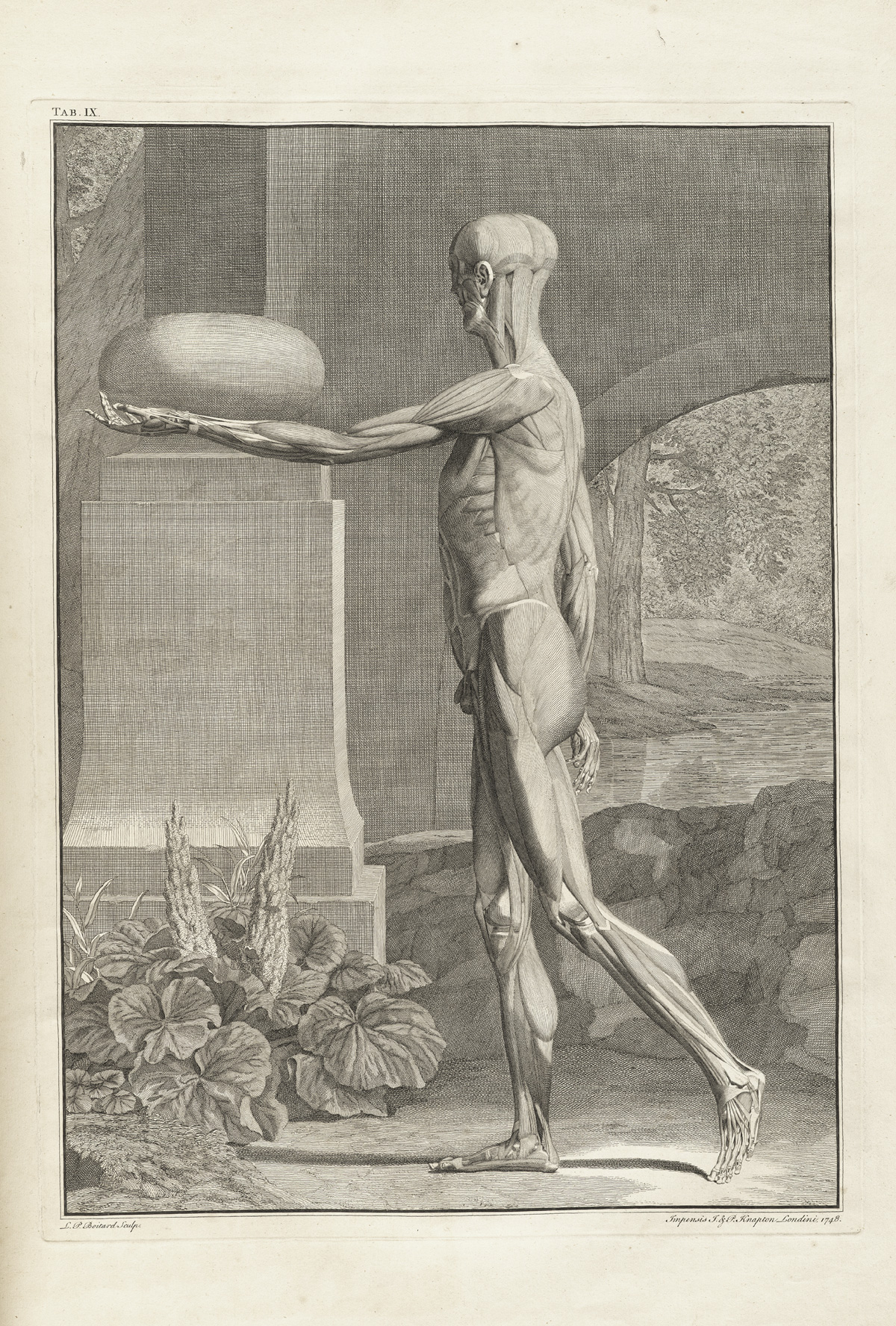
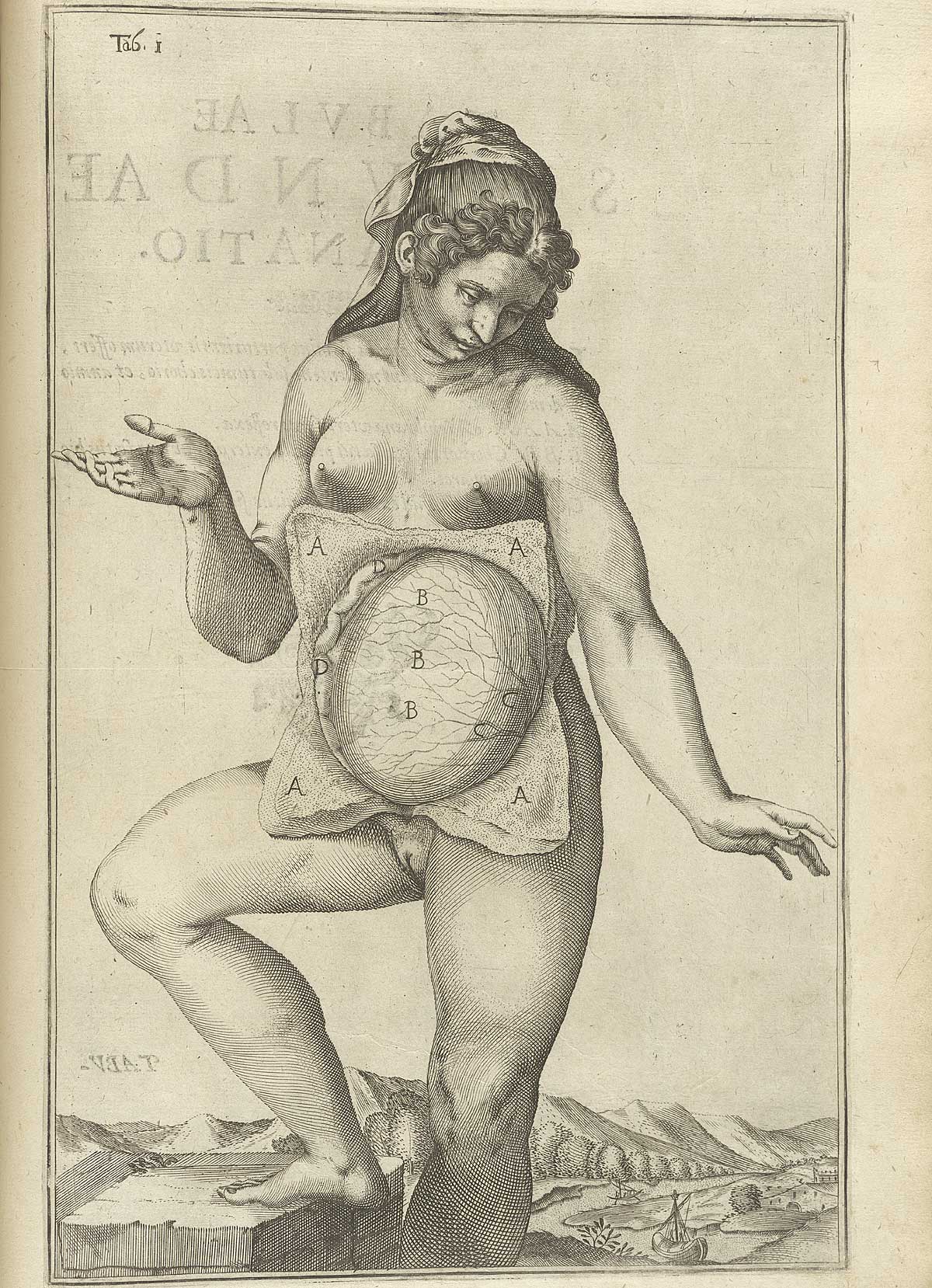
Kriota Willberg, an educator, massage therapist at Memorial Sloan Kettering Cancer Center, and author of Draw Stronger: Self-Care For Cartoonists and Other Visual Artists, is sufficiently steeped in both Bond and Albinus to identify striking visual similarities.
That shower scene is just one iconic moment that Willberg included in her mini-comic, Pictorial Anatomy of 007.
Agent Bond’s sartorial sense is a crucial aspect of his appeal, but Willberg, a Bond fan who’s seen every film in the canon at least five times, digs below that celebrated surface, peeling back skin to expose the structures that lie beneath.
Sean Connery’s Bond exhibits a veteran artist’s model’s stillness waiting for the right time to make his move against Dr. No’s “eight-legged assassin.” Even before Willberg got involved, it was an excellent showcase for his pecs, delta, and sternocleitomastoid muscles.
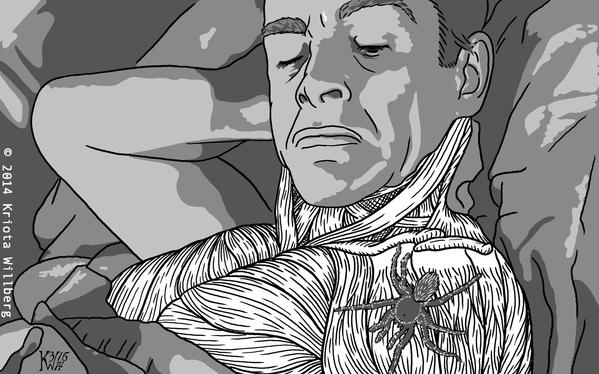
Leaving her flayed Bonds in their cinematic settings are a way of paying tribute to the antique anatomical illustrations Willberg admires for their dynamism:
…sitting in a chair, taking a stroll, holding its skin or organs out of the way so that the reader can get a better look at deeper structures. Some of the cadavers are very flirty. The pictures remind us that we are the organs we see on the page. They do stuff!
The New York Academy of Medicine selected Willberg as its first Artist in Residence, because of the way she explores the intersections between body sciences and artistic practices. (Other projects include an intricate needlepoint X‑Ray of her own root canal and Stitchin’ Time!, a fictional encounter in which Aulus Cornelius Celsus (c. 25 BCE – c. 50 CE), author of De Medicina, and surgeon Aelius Galenus (129 – c. 200 CE) team up to repair a disemboweled gladiator.
Is there a squeamish bone in this artist’s body?
All signs point to no.
Asked to pick a favorite Bond movie, she names Goldfinger for the mythology concerning the infamous scene wherein a beautiful woman is painted gold, but also 2006’s Casino Royale for keeping the torture scene from the book:
I didn’t think they’d have the balls! Sorry! Poor taste but I couldn’t resist. Although Timothy Dalton physically resembled Bond as described in the books, most of the movies make Bond out to be smarter than Fleming wrote him. I think Judy Dench called Daniel Craig, Casino Royale’s Bond, a “blunt instrument” which is pretty much how he’s written. He’s tough and lucky and that’s why he’s survived. Plus the machete fight is great.
Sometimes people get too prissy about the body. I am meat and liver and sausage and so are you. Your body is inescapable while you live. You should get to know it. Think about it in different contexts. It’s fun!
When From Russia With Love’s Rosa Klebb punches master assassin, Red Grant, in the stomach, she is squishing a living liver through living abdominal muscles.
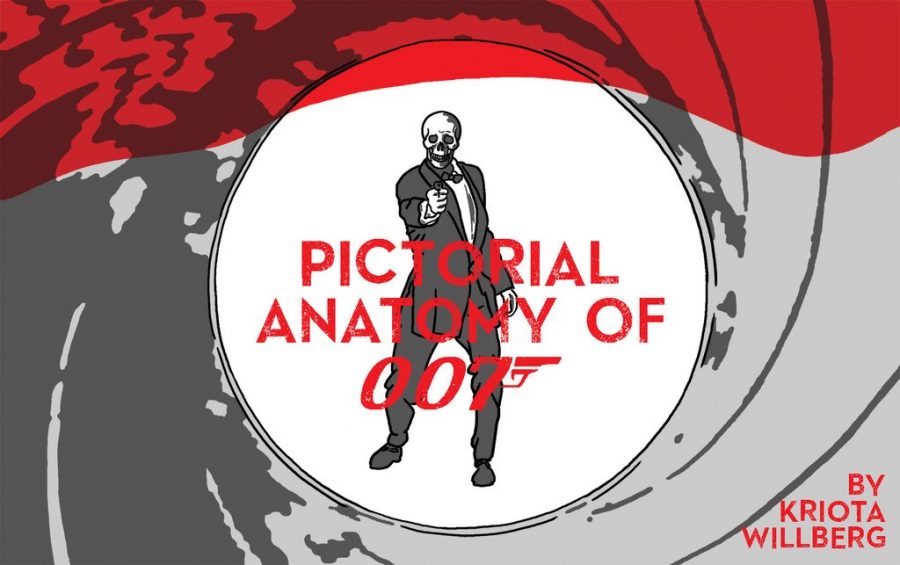
Hard copies of Kriota Willberg’s anatomy-based comics, including Pictorial Anatomy of 007, are available from Birdcage Bottom Books.
Listen to an hour-long interview with Comics Alternative in which Willberg discusses her New York Academy of Medicine residency, anatomical research, and the ways in which humor informs her approach here.
Related Content:
The Spellbinding Art of Human Anatomy: From the Renaissance to Our Modern Times
Free Online Biology Courses
Ayun Halliday is an author, illustrator, theater maker and Chief Primatologist of the East Village Inky zine. Her latest script, Fawnbook, is available in a digital edition from Indie Theater Now. Follow her @AyunHalliday.
Read More...Why Should You Read Don Quixote?: An Animated Video Makes the Case
In “one of the strangest stories in modern film,” Monty Python alumnus and critically-lauded director Terry Gilliam strove for three decades to make his take on Don Quixote, an ordeal that inspired two documentaries and that did not end in triumph even when the film premiered to acclaim at Cannes this year after its long gestation. Just a few weeks afterward, Gilliam lost the rights to the film in a lawsuit with its former producer. Nonetheless, for all of the serious setbacks on the road to its completion, Gilliam’s The Man Who Killed Don Quixote has still mostly fared better than the protagonist of Cervantes’ novel.
But the delusional knight-errant and his much-put-upon squire’s ridiculous and inevitable failures are what constitute the novel’s enduring appeal. Published in two volumes in 1605 and 1615, The Ingenious Nobleman Sir Quixote of La Mancha has become the best-selling novel of all time, and by the accounts of its most illustrious admirers, the matrix of all modern fiction. “The novelist need answer to no one but Cervantes,” says Milan Kundera. Mexican novelist Carlos Fuentes called Don Quixote “the first modern novel, perhaps the most eternal novel ever written and certainly the fountainhead of European and American fiction.”
Such effusive praise for Cervantes is near-universal, but like Gilliam’s film, and the fictional knight’s quest, the Spanish writer’s epic adventure came to him late in life, when he was almost sixty, having “spent most of his life as a struggling poet and playwright,” says Ilan Stavans in the TED-Ed video above. He succeeded after a long, undistinguished career with a book that satirized the chivalric romances which “dominated European culture” at the time.
Cervantes’ brilliant idea—conjuring a character who actually believed these stories—gave us the great parodic epic and, in its second volume, a brilliant work of pre-post-modern metafiction in which the characters Quixote meets have already read about his exploits in the first book. The mad hidalgo Don Quixote, unlike the stock figures in popular romances, actually develops and matures as a character, a unique feature of fiction at the time and one reason Cervantes’ book is called the “first modern novel.”
Other foundational features of the novel include the relationship of Quixote and Sancho Panza, a fictional study in contrasts that may be the origin of so many iconic duos since—from Sherlock Holmes and Dr. Watson to Batman and Robin and the Odd Couple. The novel’s commercial success was immediate and global—again marking it as a product of modernity. Pirated copies circulated where it had been banned in the Americas. Asserting his proprietary rights over the character while also meeting reader demand, he wrote and published volume two to preempt spurious sequels.
The TED-Ed video is part of a “Why you should read X” series trumpeting the value of great works of literature. These efforts will, hopefully, inspire many people to pick up the books of Gabriel Garcia Marquez, Edgar Allan Poe, Virginia Woolf, and more. But ultimately, great works of literature should speak for themselves. Why should you read Don Quixote? Well, yes, because it is the foundation of modern fiction. But the real answer to the question lies between the novel’s covers. Pick up Don Quixote (I like Edith Grossman’s 2003 translation), and find out for yourself.
Related Content:
Gustave Doré’s Exquisite Engravings of Cervantes’ Don Quixote
Why You Should Read One Hundred Years of Solitude: An Animated Video Makes the Case
Josh Jones is a writer and musician based in Durham, NC. Follow him at @jdmagness
Read More...Buckminster Fuller Creates Striking Posters of His Own Inventions
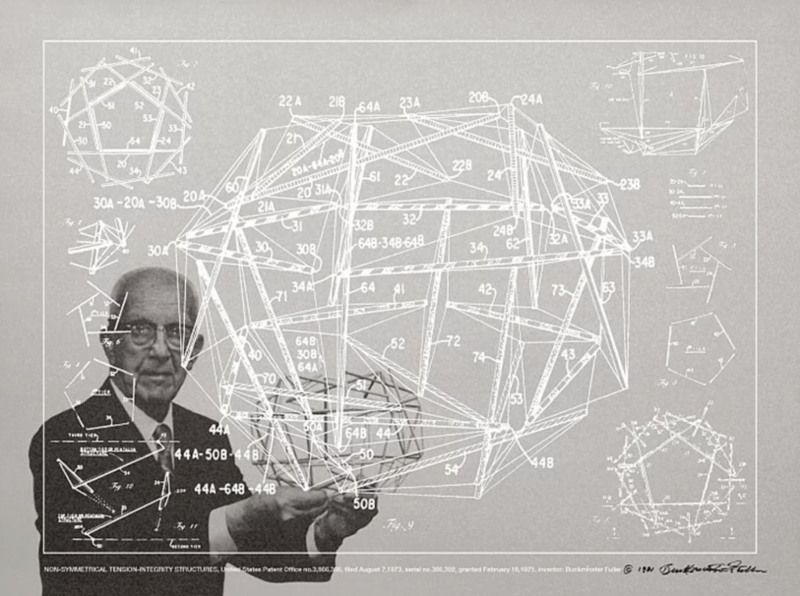
In addition to his formidable body of work in architecture, design, and theory of the kind the world had never known before, Buckminster Fuller also knew how to promote himself. Sometimes this meant appearing on late-night new-age talk shows, but at its core it meant coming up with ideas that would immediately “read” as revolutionary to anyone who saw them in action. But how to put them before the eyes of someone who hasn’t had the chance to see a geodesic dome, a Dymaxion House and Car, or even a Geodome 4 tent in real life?
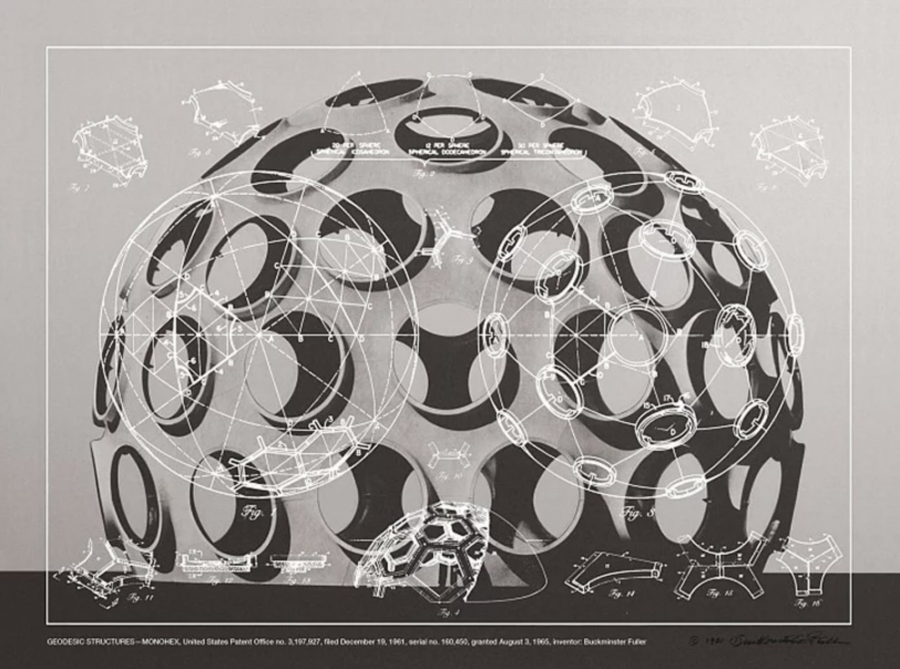
The ascent of graphic design in the 20th century, a century Fuller saw begin and lived through most of, provided one promising answer: posters. The ones you see here show off “Fuller’s most famous inventions, with line drawings from his patents superimposed over a photograph of the thing itself,” writes Fast Company’s Katharine Schwab.
“While they look like something Fuller aficionados might have created after the man’s death to celebrate his work, Fuller actually created them in partnership with the gallerist Carl Solway near the end of his career.”
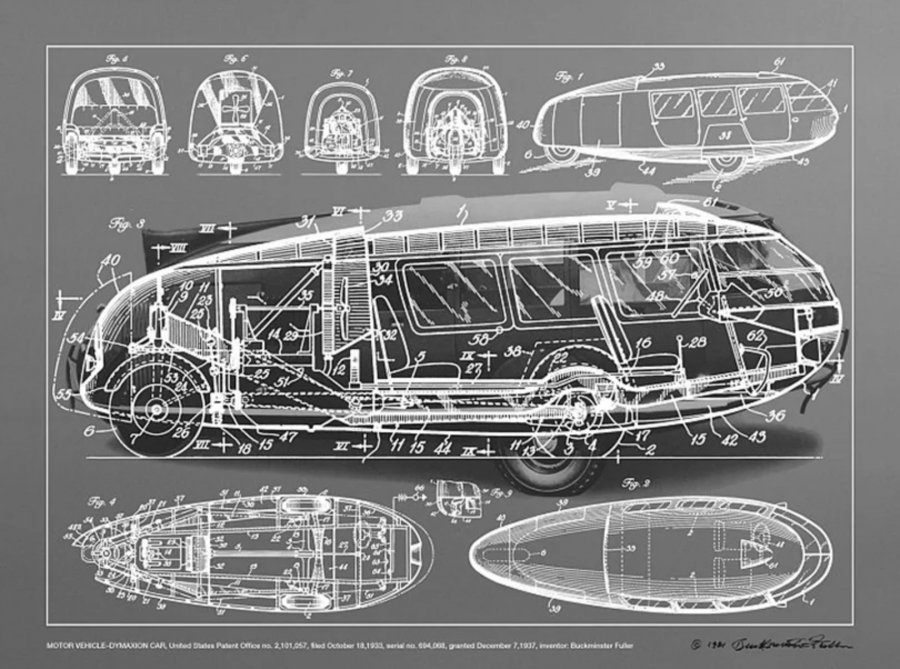
These posters, “striking with their two-layer design, are Fuller’s visual homage to his own genius — and an attempt to bring what he believed were world-changing utopian concepts to the masses.” They’re also now on display at the Edward Cella Art + Architecture in Los Angeles, whose exhibition “R. Buckminster Fuller: Inventions and Models” runs until November 2nd. “Fuller’s objects and prints function not only as models of the mathematical and geometric properties underlying their construction but also as elegant works of art,” says the gallery’s site. “As such, the works represent the hybridity of Fuller’s practice, and his legacy across the fields of art, design, science, and engineering.”
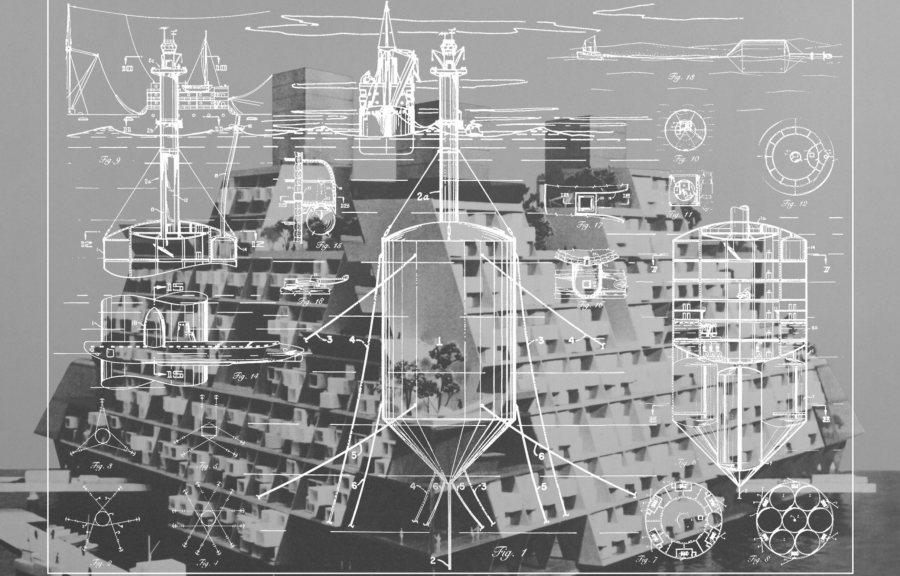
You can see more of Fuller’s posters, which depict and visually explain the structures of such inventions as the geodesic dome and Dymaxion Car, of course, but also lesser-known creations like a “Fly’s Eye” dome covered in bubble windows (individually swappable for solar panels), a submersible for offshore drilling, and a rowboat with a body reduced to two thin “needles,” at Designboom. Edward Cella Art + Architecture has also made the posters available for purchase at $7,000 apiece. That price might seem in contradiction with Fuller’s utopian ideals about universal accessibility through sheer low cost, but then, who could look at these and call them anything but works of art?
via Curbed
Related content:
Buckminster Fuller’s Map of the World: The Innovation that Revolutionized Map Design (1943)
The Life & Times of Buckminster Fuller’s Geodesic Dome: A Documentary
Based in Seoul, Colin Marshall writes and broadcasts on cities, language, and culture. His projects include the book The Stateless City: a Walk through 21st-Century Los Angeles and the video series The City in Cinema. Follow him on Twitter at @colinmarshall or on Facebook.
Read More...Support Us
We're hoping to rely on loyal readers, rather than erratic ads. Please click the Donate button and support Open Culture. You can use Paypal, Venmo, Patreon, even Crypto! We thank you!

About Us

Open Culture scours the web for the best educational media. We find the free courses and audio books you need, the language lessons & educational videos you want, and plenty of enlightenment in between.
Advertise With Us

FREE UPDATES!
GET OUR DAILY EMAIL
Get the best cultural and educational resources on the web curated for you in a daily email. We never spam. Unsubscribe at any time.
FOLLOW ON SOCIAL MEDIA

Open Culture editor Dan Colman scours the web for the best educational media. He finds the free courses and audio books you need, the language lessons & movies you want, and plenty of enlightenment in between.
Advertise With Us