Kurt Vonnegut on Bob Dylan: He “Is the Worst Poet Alive”
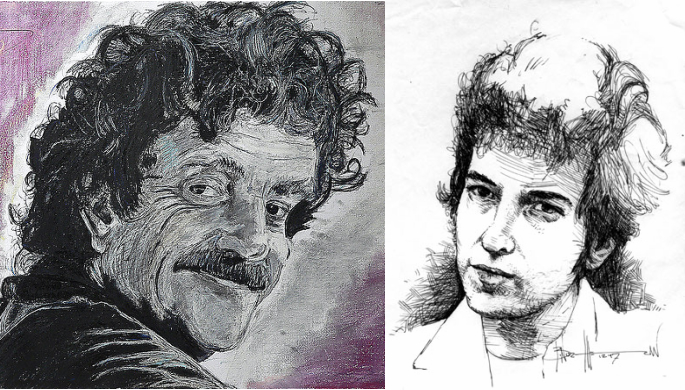
Image by Daniele Pratitand Ben Northern via Flckr Commons
As if life weren’t fraught enough, we’re barreling toward the 10th anniversary of author Kurt Vonnegut’s death.
So it goes.
Several years before he died, Vonnegut penned an essay called “Knowing What’s Nice,” in which he stated:
If I should ever die, God forbid, let this be my epitaph: ‘The only proof he needed for the existence of God was music.’
“If I should ever…God forbid…”
Bless his cranky humanist heart, if that isn’t nice, I don’t know what is.
Those outside the inner circle can only speculate as to whether his remains rest eternally beneath his preferred epitaph. Their whereabouts are not a matter of public record. As one Internet wag surmised, he “probably didn’t want some vandal sonofabitch writing Everything was Beautiful and Nothing Hurt on it.”
The widely circulated Armistice Day passage from Vonnegut’s novel Breakfast of Champions supports the notion of music as something he revered universally:
What else is sacred? Oh, Romeo and Juliet, for instance. And all music is.
In reality, the amateur clarinet player’s ear was a bit more discerning:
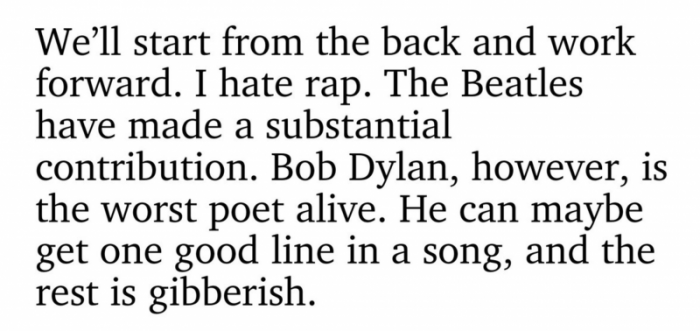
I hate rap. The Beatles have made a substantial contribution. Bob Dylan, however, is the worst poet alive. He can maybe get one good line in a song, and the rest is gibberish.
So he told Hustler in 1991, in response to a question about his musical tastes. Never did get around to telling the interviewer what he actually liked. According to his daughter, Nannette, the list would’ve included Dave Brubeck, the Statler Brothers, and The Music Man soundtrack.
Vonnegut didn’t live to see Dylan win the Nobel Prize for Literature last year, but several commentators exhumed his dismissive quote to underscore that not everyone was happy to see a singer-songwriter awarded such a prestigious literary prize.
Meanwhile, Dylan’s fans are not waiting for him to die to talk about the ways in which his music has helped them navigate through life, much as the jazzmen Vonnegut saw playing live in Depression-era Indianapolis transported him to a better place:
…what music is, I don’t know. But it helps me so.
Fans have created eleven playlists inspired by Vonnegut on the music sharing site 8tracks, including one that features Dylan’s A Hard Rain’s A‑Gonna Fall. (“Perfect for capturing Vonnegut’s vibe” enthused one innocent young commenter.)
Related Content:
Kurt Vonnegut Explains “How to Write With Style”
In 1988, Kurt Vonnegut Writes a Letter to People Living in 2088, Giving 7 Pieces of Advice
Ayun Halliday is an author, illustrator, theater maker and Chief Primatologist of the East Village Inky zine. Follow her @AyunHalliday.
Read More...Watch the Trippy Screen Projections Used by Pink Floyd During their Dark Side of the Moon Tours
Even in the early years of Pink Floyd’s career, the band was experimenting with the possibilities of the live experience. Already dazzling audiences with booming sound, colorful light shows, and bubbling translucent oil projections, the group called in Abbey Road engineers to design a quadrophonic sound system in 1967 to send Rick Wright’s keyboards around the concert hall, along with nature sounds, footsteps, or maniacal laughter.
By the time of Dark Side of the Moon, the band had even more of a budget, and began to screen short films, some animated, during their world tour concerts. Not really promotional videos, these films haven’t been seen outside their live context since. But the Internet has a way of finding these things.
Earlier this month, several YouTube users uploaded the film reels used on Pink Floyd’s 1974 North American Tour, with music from Dark Side of the Moon added back in to give an indication of how it was used in the show. (The mixes are also quite different from the album–maybe a fan can tell us from where these come?)
We get some very Kubrick-like traveling shots down both an empty hospital corridor and of Heathrow’s arrival lounge, and later a fist punching a bowl of eggs, Zabriskie Point-like exploding televisions, shots of Nixon and Idi Amin, and finally back to opening shots of the moon for the finale.
But there’s also moments of animation created then-unknown filmmaker Ian Emes.
The up-and-coming and self-taught artist had already made an animation “French Windows” set to the Floyd song “One of these Days,” filled with trippy landscapes and rotoscoped dancers. It won awards at animation festivals and was shown on British TV. According to Emes:
“Having seen my film French Windows on BBC’s The Old Grey Whistle Test, the band commissioned me to make their first-ever animated film, which they subsequently toured the world with. The Time sequence is used to this day. It was a breathtaking experience to see my film projected live at Wembley Arena before a huge crowd of tripped out fans.”
The concert films differed from country to country, sharing 75 percent of their footage, which means if you are a true fan, you’ll have to watch the British Tour version and the French Tour to know what you’re missing. The British version features more information, but it’s not clear if it’s also by Emes.
After Dark Side of the Moon, Pink Floyd continued to bring visuals into their live shows, most notably another animation for “Welcome to the Machine,” seen below. This time they used another up-and-coming illustrator and animator called Gerald Scarfe to create the harrowing graphics. Scarfe, of course, would later create many more works for Pink Floyd’s The Wall, and those animations would be used in concert and later in the Alan Parker film, The Wall.
Related Content:
Pink Floyd Performs on US Television for the First Time: American Bandstand, 1967
Pink Floyd’s “Echoes” Provides a Soundtrack for the Final Scene of Kubrick’s 2001: A Space Odyssey
Ted Mills is a freelance writer on the arts who currently hosts the artist interview-based FunkZone Podcast and is the producer of KCRW’s Curious Coast. You can also follow him on Twitter at @tedmills, read his other arts writing at tedmills.com and/or watch his films here.
Read More...The Origins of Anime: Watch Free Online 64 Animations That Launched the Japanese Anime Tradition
Japanese animation has a way of seeming perpetually new and daring, but it now goes back at least a century. Having carved out its own aesthetic and intellectual space in world culture, anime (even foreigners who’ve never watched so much as a minute of it know the Japanese term) continues to generate a distinctive kind of excitement in its viewers. That goes for relatively recent features that have already attained classic status, like the lush, simultaneously realistic and fantastical works of Hayao Miyazaki, the darker, deeper visions like Mamoru Oshii’s Ghost in the Shell, and the diversity of works in between. But how did those qualities manifest in the very earliest anime? We can now easily see for ourselves, thanks to the selection of 64 Japanese animated film classics made freely available online, as a celebration of the centenary of the form, by Japan’s National Film Archive.
“The most exciting of these are the two earliest extant anime The Dull Sword (Namakura Gatana, 1917) and Urashima Tarō (1918),” writes Nishikata Film Review’s Cathy Munroe Hotes, “films which were considered lost until copies were miraculously discovered in an antique shop in Osaka in 2008. As the vast majority of pre-war films have been lost due to natural disaster, war, and general neglect, each of these 64 films is an important glimpse into early anime history and early 20th century Japanese culture.”
You can also browse the National Film Archive’s online collection of early animation by director. Watching the works of certain especially prolific ones like Noburō Ōfuji and Yasuji Murata (whose 1929 The Old Man’s Lump Removed, not available in the collection, appears above), you might come away convinced that, even in its first decades, Japanese animation had developed its auteur culture.
The movement (which sometimes barely qualifies as such) and sound (if any) in some of these shorts could hardly impress today, at least on a technical level. Nevertheless, those of us who’ve felt the excitement of the best of anime will recognize in the presentation of the images themselves — in its dynamism, its humor, its creativity — the special animating spirit, as it were, that first sparked our interest. Whether the sometimes slapdash likes of Speed Racer, Robotech, or Kimba the White Lion, which introduced generations of Westerners to anime in the 1960s, 70s, and 80s, really marked that much of an improvement on crude production of, say, Murata’s My Ski Trip from 1930 remains open to debate, but through them all we can trace the development of the style and sensibility that, to this day, no animation but the Japanese variety has truly mastered.
Enter the National Film Archive anime collection here.
(NOTE: the National Film Archive assures us that the English version of the site “will be available in a month or two,” but you can find English-subtitled films there even now.)
Related Content:
Early Japanese Animations: The Origins of Anime (1917–1931)
How the Films of Hayao Miyazaki Work Their Animated Magic, Explained in 4 Video Essays
Based in Seoul, Colin Marshall writes and broadcasts on cities and culture. He’s at work on a book about Los Angeles, A Los Angeles Primer, the video series The City in Cinema, the crowdfunded journalism project Where Is the City of the Future?, and the Los Angeles Review of Books’ Korea Blog. Follow him on Twitter at @colinmarshall or on Facebook.
Read More...The Philosophy, Storytelling & Visual Creativity of Ghost in the Shell, the Acclaimed Anime Film, Explained in Video Essays
“Ghost in the Shell is not in any sense an animated film for children,” wrote Roger Ebert twenty years ago. “Filled with sex, violence and nudity (although all rather stylized), it’s another example of anime, animation from Japan aimed at adults.” Now, when no critic any longer needs to explain the term anime to Western readers, we look back on Ghost in the Shell (1995) as one of the true masterpieces among Japanese animated feature films, mature not just in its content but in its form. Evan Puschak, better known as the Nerdwriter, takes a look at how it expresses its philosophical themes through its still-striking cyberpunk setting in his video essay “Identity in Space.”
Puschak first highlights the presence (in the middle of this “sci-fi action thriller” about the hunt for a wanted hacker turned self-aware artificial intelligence) of an action-free interlude: a “three minute and twenty-ish second-long scene” consisting of nothing but “34 gorgeous, exquisitely detailed atmospheric shots of a future city in Japan that’s modeled after Hong Kong.”
Its plot-suspending visual exploration of the film’s Blade Runner-esque urban space of “a chaotic multicultural future city dominated by the intersections of old and new structures, connected by roads, canals, and technology,” emphasizes that “spaces, like identities, are constructed. Though space often feels neutral or given, like we could move anywhere within it, our movements, our activities, our life, is always limited by the way space is produced.”
Just as all of Ghost in the Shell’s characters exist in space, the main ones also exist in cybernetic bodies, regarding their identities as stored in their effectively transplantable brains all connected over a vast information network. The half-hour-long analysis from AnimeEveryday just above gets into the philosophical dilemma this presents to the film’s protagonist, the cyborg police officer Motoko Kusanagi, examining in depth several of the scenes that — through dialogue, imagery, symbolism, or subtle combinations of the three that viewers might not catch the first time around — illuminate the story’s central questions about the nature of man, the nature of machine, and the nature of what emerges when the two intersect.
Film Herald’s briefer explanation of Ghost in the Shell (which contains potentially NSFW images) points to three main themes: identity, Cartesian dualism, and evolution, all concepts that come into question — or at least demand a thorough revision — when the boundary between the natural and the synthetic blurs to the film’s imagined extent. “My intuition told me that this story about a futuristic world carried an immediate message for our present world,” said director Mamoru Oshii, and now, more than two decades later, Hollywood has even got around to remaking it in a live-action version starring Scarlett Johansson in the Kusanagi role. That does provides a chance to update some of the now-dated-looking technology seen in the animated original, but there’s no improving on its artistry.
Related Content:
Blade Runner Spoofed in Three Japanese Commercials (and Generally Loved in Japan)
Early Japanese Animations: The Origins of Anime (1917–1931)
How the Films of Hayao Miyazaki Work Their Animated Magic, Explained in 4 Video Essays
The Matrix: What Went Into The Mix
Based in Seoul, Colin Marshall writes and broadcasts on cities and culture. He’s at work on a book about Los Angeles, A Los Angeles Primer, the video series The City in Cinema, the crowdfunded journalism project Where Is the City of the Future?, and the Los Angeles Review of Books’ Korea Blog. Follow him on Twitter at @colinmarshall or on Facebook.
Read More...Discover Ray Bradbury & Kurt Vonnegut’s 1990s TV Shows: The Ray Bradbury Theater and Welcome to the Monkey House
There has always been good television. Even Kurt Vonnegut, wittiest of curmudgeons, had to agree in 1991 when he was interviewed in The Cable Guide for his own contribution to the medium, an adaptation of his book of stories, Welcome to the Monkey House on Showtime. Vonnegut did not like television, and compared it to thalidomide. “We don’t know what the side effects are until it’s too late.” He could only go up from there, and did, praising, Cheers, M*A*S*H, and Hill Street Blues, and then saying, “I’d rather have written Cheers than anything I’ve written.”
I never know exactly when to take Vonnegut seriously. He also calls TV everybody’s “rotten teacher” and says “I’m sorry television exists,” but he had long been a TV writer in its “so-called golden days,” as John Goudas put it in a Los Angeles Times interview with Vonnegut in 1993, when his seven-episode run of Kurt Vonnegut’s Monkey House, hosted by himself, would soon come to a close. Vonnegut found himself very pleased by the results, remarking of his stories that “TV can do them very well,” and especially praising “More Stately Mansions,” above, starring an irrepressible Madeline Kahn, whom he called “a superb actress.”
Another very direct, witty speculative writer in the same year’s issue of The Cable Guide, Ray Bradbury, appeared with Vonnegut as part of two “dueling, short features,” notes Nick Greene at Mental Floss,
“under the auspices of promoting the authors’ upcoming cable specials,” Monkey House and The Ray Bradbury Theater. Bradbury was also an old media hand, having written for radio in the 50s, and seeing adaptations of his stories made since that decade, including one on Alfred Hitchcock’s Alfred Hitchcock Presents. Like Hitchcock, when it came time for his own show, The Ray Bradbury Theater in 1985, Bradbury introduced the episodes and became a public face for thousands of viewers.
He also wrote each episode, all 65 of them, from 1985–86 on HBO and 1988–92 on USA. In his Cable Guide interview, Bradbury calls television, “mostly trash,” then adds, “I’m full of trash… I’ve watched thousands of hours of TV. I’ve seen every movie ever made… everything’s the same.” What did he like to watch? Nova, unsurprisingly, and CNN, which he called “the most revolutionary thing in years.” In his interview (which you can read in a high resolution scan at Mental Floss), Bradbury credits television for “a lot of what happened in Europe”—referring to the fall of Communism, as well as Tiananmen Square, and the Gulf War. “Finally, the message got through,” he says, “and people revolted… CNN,” he concluded, “is very powerful television.” If he could see us now. See Bradbury’s very first episode of The Ray Bradbury Theater, “Marionettes” from 1985, just above. And purchase the complete TV series online.
Related Content:
Hear Kurt Vonnegut Read Slaughterhouse-Five, Cat’s Cradle & Other Novels
Ray Bradbury Gives 12 Pieces of Writing Advice to Young Authors (2001)
How Ray Bradbury Wrote the Script for John Huston’s Moby Dick (1956)
Josh Jones is a writer and musician based in Durham, NC. Follow him at @jdmagness
Read More...School of Visual Arts Presents 99 Hours of Free Photography Lectures
FYI: Last week, photographer Dan Culberson flagged on Reddit a trove of free photography lectures available on School of Visual Arts’ rich YouTube channel. Elaborating, the photography blog Petapixel writes:
Tons of hour-long lectures can be found on the channel’s Images, Ideas, Inspiration playlist, most of them photography related and all of them fascinating.
You’ll find something for everyone on this channel—from a lecture by gallery rep Margit Erb talking about her close personal and professional relationship with the great Saul Leiter, to a talk by Dancers Among Us photographer Jordan Matter, to Jack Hollingsworth’s fascinating talk titled “Small Camera Big Results.”
There are a total of 99 videos in that playlist alone—approximately 99 hours of education, inspiration, and ideas.
Above you can watch Jack Hollingsworth’s lecture, “Small Camera Big Results.” He has “traveled to over 20 countries and shot over 400,000 images with his iPhone,” and here he discusses his iPhone photography technique, and all the apps he uses.

Find more lectures on this Images, Ideas, Inspiration playlist. Also find courses on digital photography in our collection, 1,700 Free Online Courses from Top Universities.
If you would like to support the mission of Open Culture, consider making a donation to our site. It’s hard to rely 100% on ads, and your contributions will help us continue providing the best free cultural and educational materials to learners everywhere. You can contribute through PayPal, Patreon, and Venmo (@openculture). Thanks!
via Petapixel
Related Content:
Google Makes Its $149 Photo Editing Software Now Completely Free to Download
Learn Digital Photography with Harvard University’s Free Online Course
The History of Photography in Five Animated Minutes: From Camera Obscura to Camera Phone
How to Take Photographs Like Ansel Adams: The Master Explains The Art of “Visualization”
1,700 Free Online Courses from Top Universities Read More...Stephen Hawking Auditions Celebrities to Provide His New Voice: Lin-Manuel Miranda, Liam Neeson, Anna Kendrick & Michael Caine
Stephen Hawking’s computer-synthesized voice is distinctive. You know it when you hear it. But, after so many years, it’s time for a change. That’s the premise of this short comic bit, created for Comic Relief’s Red Nose Day. Above, watch A‑list celebrities–everyone from Lin-Manuel Miranda and Liam Neeson, to Anna Kendrick and Bill Gates–audition to become the new voice of Prof. Hawking. You can see how it plays out.
Red Nose Day (just held on March 24th this year) is a fundraiser to help struggling people in countries around the world. You can donate to the cause here.
If you would like to support the mission of Open Culture, consider making a donation to our site. It’s hard to rely 100% on ads, and your contributions will help us continue providing the best free cultural and educational materials to learners everywhere. You can contribute through PayPal, Patreon, and Venmo (@openculture). Thanks!
Related Content:
Download the Software That Provides Stephen Hawking’s Voice
Stephen Hawking’s Lectures on Black Holes Now Fully Animated with Chalkboard Illustrations
Read More...Great Filmmakers Offer Advice to Young Directors: Tarantino, Herzog, Coppola, Scorsese, Anderson, Fellini & More
One-to-one relationships do not exist between the medieval European Guild system and contemporary labor unions or protectionist rackets…. Nevertheless, guilds were very much like both those things in some ways. They were also vocational schools, where young aspiring artisans could, with the right skills and connections, apprentice themselves to master craftsmen, hope to receive decent training, and look forward to becoming guild masters themselves should they persist.
Few organizations like that exist today. But there is perhaps one industry in which—with the right connections, skill, and persistence—a lucky and talented few rise through the ranks to mastery: the film industry, where a video store clerk, Quentin Tarantino, can achieve lasting fame and fortune, as can former part-time projectionist, Wes Anderson. Many directors who came of age in the sixties and seventies went the traditional route of film school, but one, Werner Herzog, took a bandit’s way into the craft, stealing a camera from the Munich Film School, feeling that he “had some sort of natural right for a camera, a tool to work with.”
Herzog has created his own guild system, of a sort, with the Rogue Film School, a rough, informal course, among other things, in “guerrilla filmmaking.” Stealing cameras is not ruled out. But you’ll have to learn the technical stuff on your own. What matters, most, Herzog says, is that filmmakers “read, read, read, read, read.” These are directors who have borrowed from other directors and films, and also from books, music, painting, etc., driven by an obsessive and persistent desire to learn. And you’ll find them all in the supercut above, in which Tarantino, Anderson, Herzog, and other “master filmmakers” like Scorsese, Coppola, Fellini, Welles, and more offer short, yet profound pieces of advice to aspirants.
We begin with Tarantino, who argues that passion is all you need to make a great film. “You don’t need to go to school” or know any of the technical stuff, but you do need to apprentice yourself, with pure devotion and tenacity, to cinema. You won’t hear this from many of the others, but Terry Gilliam also recommends a secondary trade, maybe as a plumber, another profession that involves apprentices and journeymen working their way up. It’s certainly a trade that involves great skill, but to hear these directorial guild masters tell it, no other profession asks for as much drive and passion as the movies, and apparently you don’t even need to know what you’re doing at first. See the complete list of interviewees below.
QUENTIN TARANTINO: 00:00
JERRY LEWIS: 00:40
TERRY GILLIAM: 01:15
JOHN CARPENTER: 01:40
PAUL THOMAS ANDERSON: 02:30
FRANCIS FORD COPPOLA: 03:54
FEDERICO FELLINI: 04:52
WERNER HERZOG: 05:56
WES ANDERSON: 07:22
SIDNEY LUMET: 07:50
JOHN LANDIS: 08:58
MARTIN SCORSESE: 10:15
GUILLERMO DEL TORO 11:38
ORSON WELLES 14:55
Related Content:
Werner Herzog’s Rogue Film School: Apply & Learn the Art of Guerilla Filmmaking & Lock-Picking
Werner Herzog Offers 24 Pieces of Filmmaking & Life Advice
Andrei Tarkovsky’s Advice to Young Filmmakers: Sacrifice Yourself for Cinema
Akira Kurosawa’s Advice to Aspiring Filmmakers: Write, Write, Write and Read
Josh Jones is a writer and musician based in Durham, NC. Follow him at @jdmagness
Read More...Hieronymus Bosch Figurines: Collect Surreal Characters from Bosch’s Paintings & Put Them on Your Bookshelf
Few painters have created as rich a world as Hieronymus Bosch did in The Garden of Earthly Delights. The late 15th- or early 16th-century triptych, which depicts the creation of man, the licentious frolicking of all creatures on a paradisiacal Earth, and the subsequent fall into damnation, draws a scrutiny — and causes an amusement — as intense as ever. As we’ve previously featured here on Open Culture, you can now take a virtual tour of the painting (there’s even an app for it), see it brought to life with modern animation, and hear the song tattooed on the posterior of one of the work’s many characters.
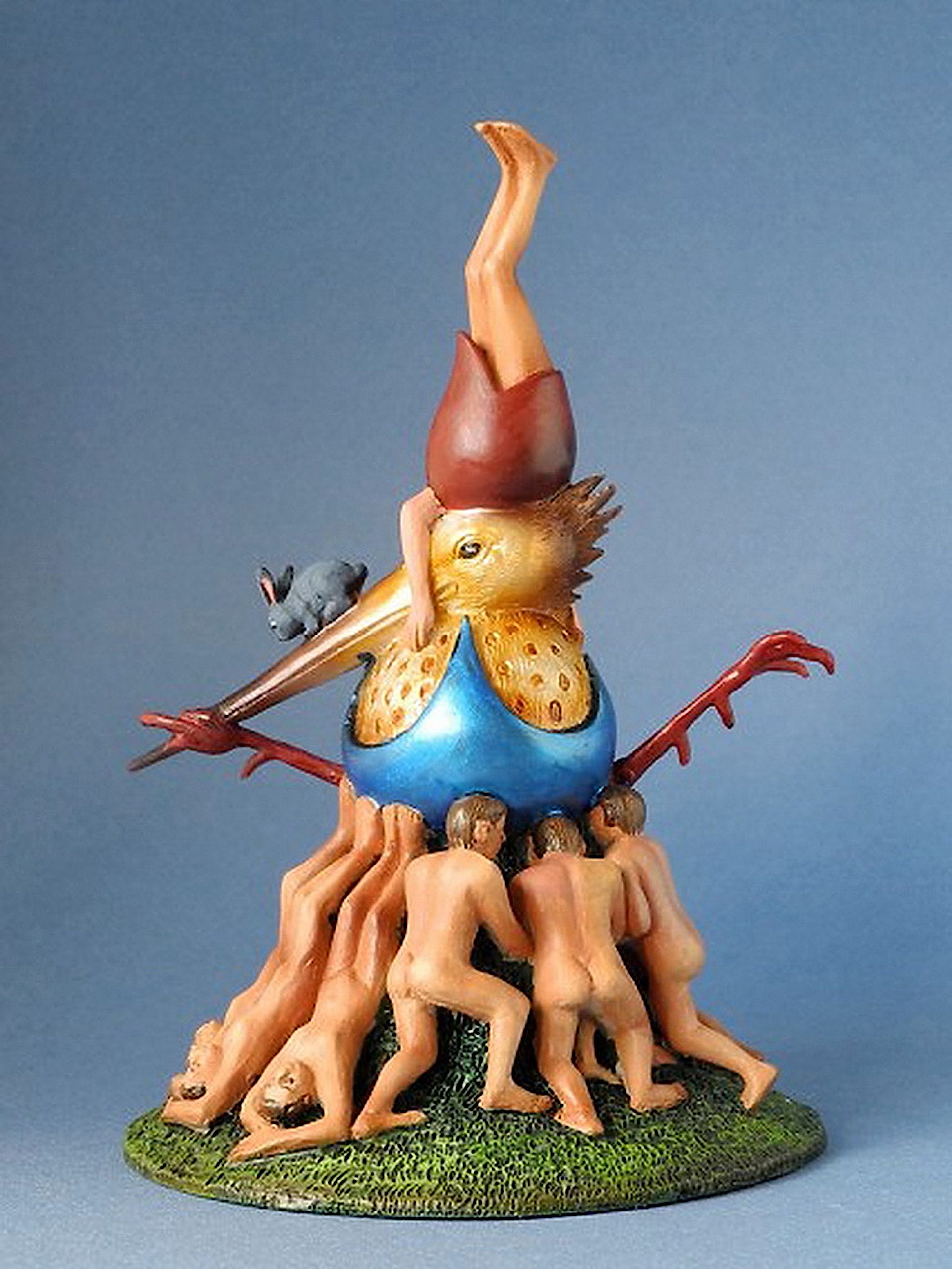
Bosch not only created a world with The Garden of Earthly Delights, he populated it thoroughly. And despite the human-centric story the work appears to take as its basis, the cast with which it retells it extends far beyond mere humanity: the panels feature not just wildlife of all shapes and sizes but a variety of mythical grotesques, from imps to chimeras to hybrids of man and animal to much more besides. He drew from the same surreal imaginative well to fill his other paintings, and you can now pull out a few of these colorful, menacing, preposterous, and darkly humorous characters yourself in collectible figurine form.
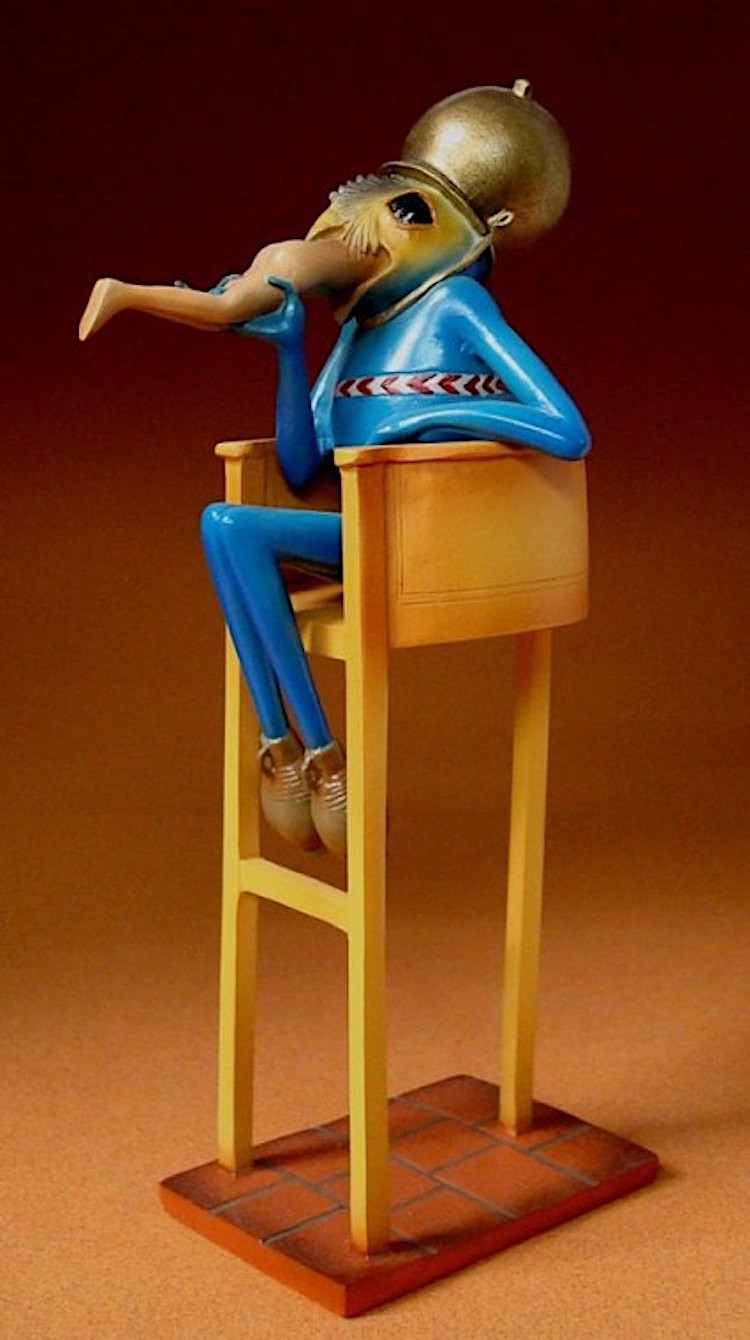
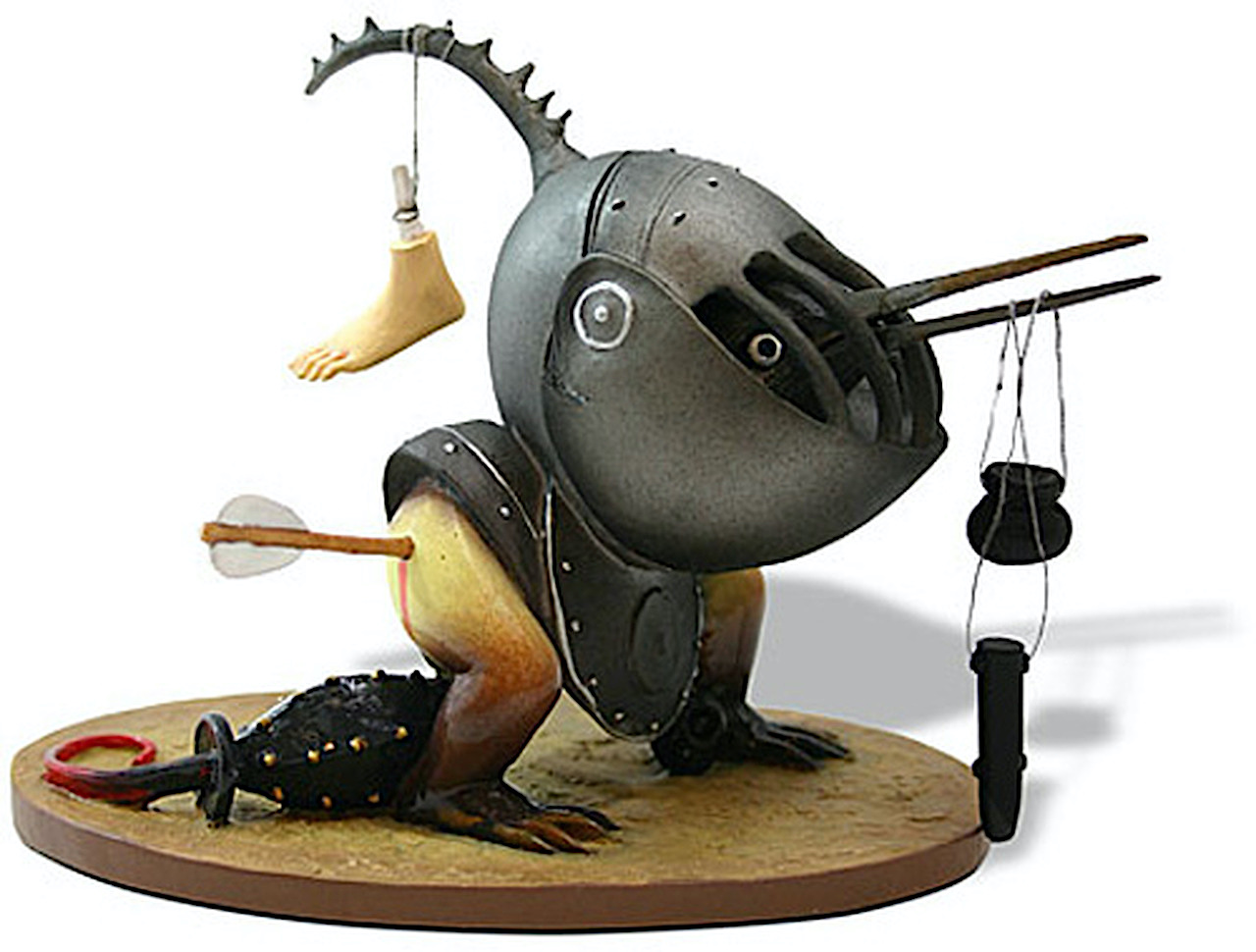
Though “not a big knickknack person,” Dangerous Minds’ Tara McGinley admits to digging this selection of “tiny objects” straight from the mind of Bosch, all “kinda cool-looking in their own obviously weird way” and none “too expensive. The figurines start at around $45, depending on quality, size and detail.” (You can find them on Amazon.) She highlights such issues as “Helmeted Bird Monster,” which according to manufacturers Parastone features a severed foot “swinging from the bird’s helmet referring to the horrible corporal punishments which could be expected in hell.”

“Devil on Night Chair,” one of the most recognizable denizens of The Garden of Earthly Delights’ third panel, comes cast in his famous position, “eating a person on a chair where he will excrete the human remains.” The considerably less satisfied “Fat Belly with Dagger” comes from the third panel of a different triptych, The Temptation of Saint Anthony, the dagger in his belly showing “the consequences of intemperance. His eyes look out at you in acknowledgment.” Its makers promise that “you will look at it in wonder as to how Bosch’s mind conceived of such an unusual little fellow.” Have a look at Dangerous Minds’ original post and Amazon’s Bosch figurine page for more information on how to obtain them, whether for yourself or as gifts for friends and family. They certainly won’t look at them the same way they do Hummel figurines.
Related Content:
Based in Seoul, Colin Marshall writes and broadcasts on cities and culture. He’s at work on a book about Los Angeles, A Los Angeles Primer, the video series The City in Cinema, the crowdfunded journalism project Where Is the City of the Future?, and the Los Angeles Review of Books’ Korea Blog. Follow him on Twitter at @colinmarshall or on Facebook.
Read More...Download 437 Issues of Soviet Photo Magazine, the Soviet Union’s Historic Photography Journal (1926–1991)
The early years of the Soviet Union roiled with internal tensions, intrigues, and ideological warfare, and the new empire’s art reflected its uneasy heterodoxy. Formalists, Futurists, Suprematists, Constructivists, and other schools mingled, published journals, critiqued and reviewed each other’s work, and like modernists elsewhere in the world, experimented with every possible medium, including those just coming into their own at the beginning of the 20th century, like film and photography.
These two mediums, along with radio, also happened to serve as the primary means of propagandizing Soviet citizens and carrying the messages of the Party in ways everyone could understand. And like much of the rest of the world, photography engendered its own consumer culture.
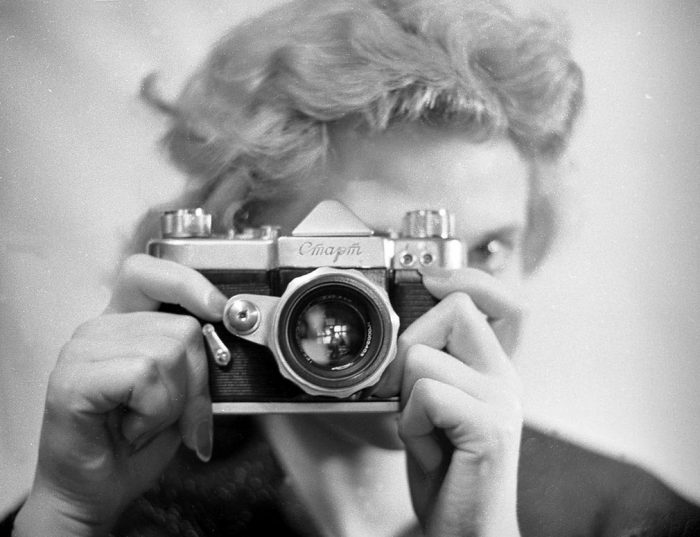
Out of these competing impulses came Soviet Photo (Sovetskoe foto), a monthly photography magazine featuring, writes Ksenia Nouril at the Museum of Modern Art’s site, “editorials, letters, articles, and photographic essays alongside advertisements for photography, photographic processes, and photographic chemicals and equipment.”
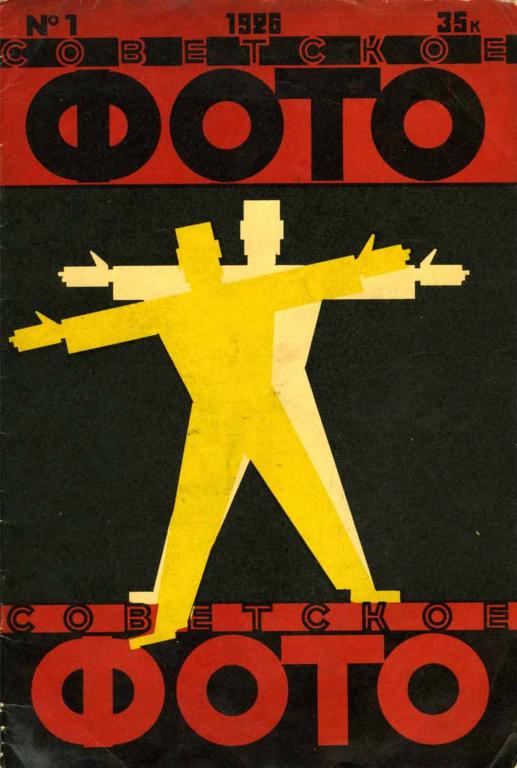
Soviet Photo was not founded by artists, but by a photojournalist, Arkady Shaikhet, in 1926 (see the first issue’s cover at the top). Though its audience primarily consisted of a “Soviet amateur photographers and photo clubs,” its early years freely mixed documentary, didacticism, and experimental art. It published the “works of international and professional photographers” and that of avant-gardists like Constructivist painter and graphic designer Aleksander Rodchenko.
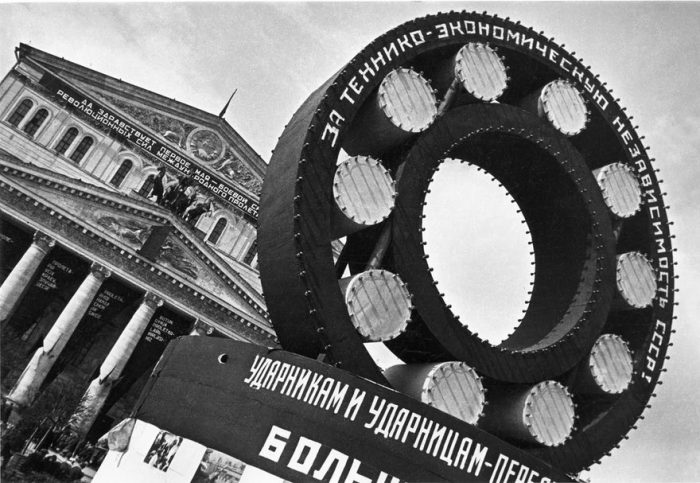
The aesthetic purges under Stalin—in which artists and writers one after another fell victim to charges of elitism and obscurantism—also played out in the pages of Soviet Photo. “Even before Socialist Realism was decreed to be the official style of the Soviet Union in 1934,” Nouril writes, “the works of avant-garde photographers,” including Rodchenko, “were denounced as formalist (implying that they reflected a foreign and elitist style).” Soviet Photo boycotted Rodchenko’s work in 1928 and “throughout the 1930s this state-sanctioned journal became increasingly conservative,” emphasizing “content over form.”
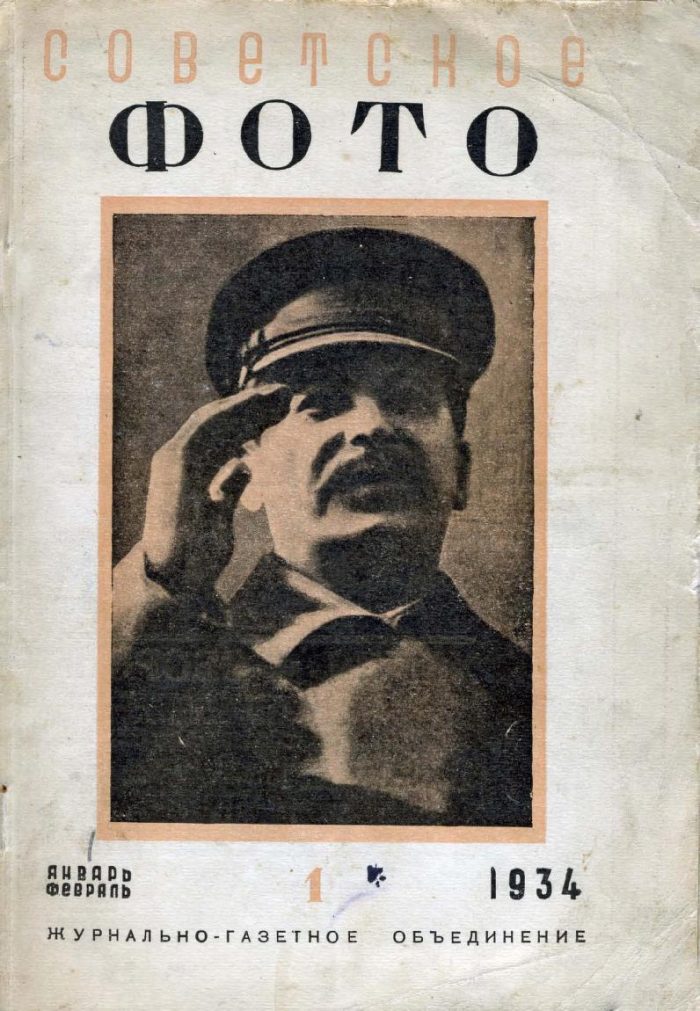
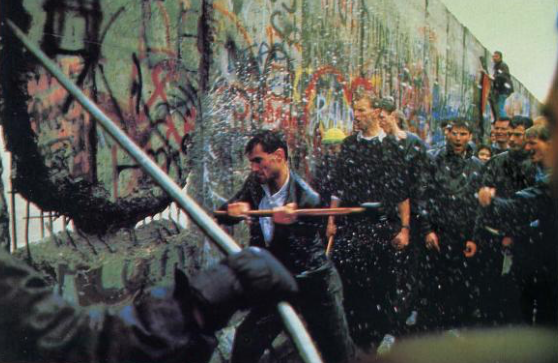
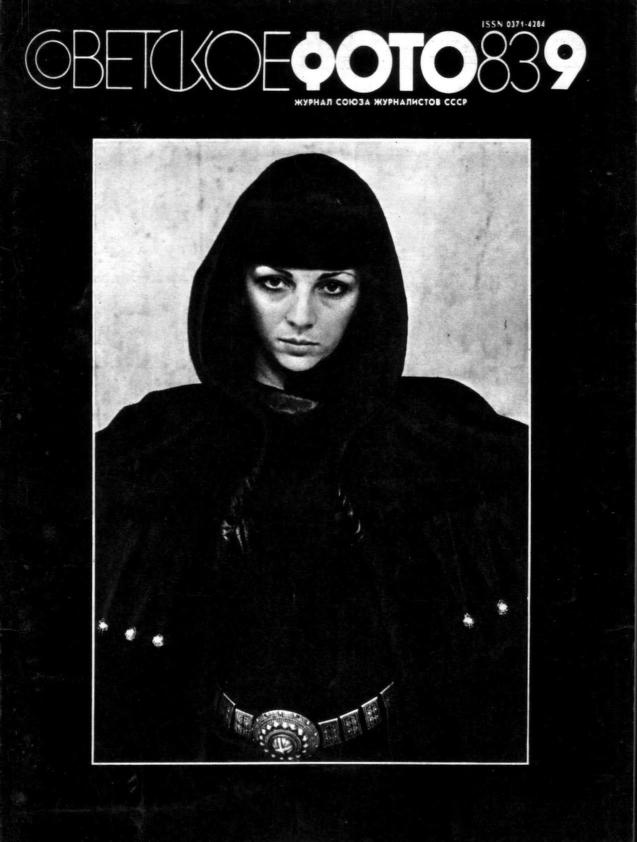
This does not mean that that the contents of the magazine were inelegant or pedestrian. Though it once briefly bore the name Proletarskoe foto (Proletariat Photography), and tended toward monumental and industrial subjects, war photography, and idealizations of Soviet life during the Stalinist years. After the 60s thaw, experimental photomontages returned, and more abstract compositions became commonplace. Soviet Photo also kept pace with many glossy magazines in the West, with stunning full-color photojournalism and, after glasnost and the fall of the Berlin wall, high fashion and advertising photography.
Fans of photography, Soviet history, or some measure of both, can follow Soviet Photo’s evolution in a huge archive featuring 437 digitized issues, published between 1926 and 1991. Expect to find a gap between 1942 and 1956, when publication ceased “due to World War II and the war’s aftereffects.” Aside from these years and a few other missing months, the archive contains nearly every issue of Soviet Photo, free to browse or download in various formats. “Dig deep enough,” writes photo blog PetaPixel, “and you’ll find some really interesting (and surprisingly familiar) things in there.” Enter the archive here.
via PetaPixel
Related Content:
Behold a Beautiful Archive of 10,000 Vintage Cameras at Collection Appareils
Josh Jones is a writer and musician based in Durham, NC. Follow him at @jdmagness
Read More...Support Us
We're hoping to rely on loyal readers, rather than erratic ads. Please click the Donate button and support Open Culture. You can use Paypal, Venmo, Patreon, even Crypto! We thank you!

About Us

Open Culture scours the web for the best educational media. We find the free courses and audio books you need, the language lessons & educational videos you want, and plenty of enlightenment in between.
Advertise With Us

FREE UPDATES!
GET OUR DAILY EMAIL
Get the best cultural and educational resources on the web curated for you in a daily email. We never spam. Unsubscribe at any time.
FOLLOW ON SOCIAL MEDIA

Open Culture editor Dan Colman scours the web for the best educational media. He finds the free courses and audio books you need, the language lessons & movies you want, and plenty of enlightenment in between.
Advertise With Us


