Can You Pass This Test Originally Given to 8th Graders Living in Kentucky in 1912?
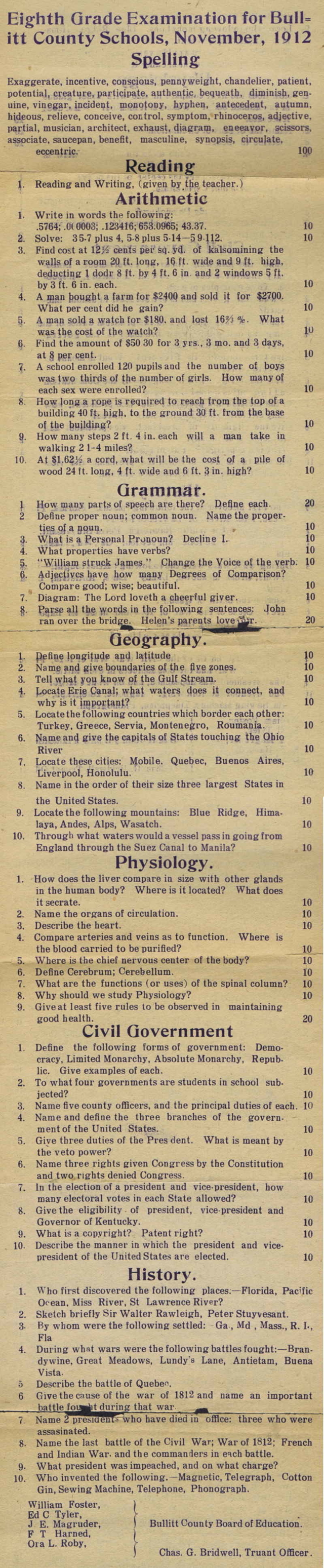
Can you spell “conceive”?
Of course you can! All it takes is a device with a built-in spelling app, an innovation of which no eighth grader in the far western reaches of bluegrass area Kentucky could have conceived back in 1912.
They were, however, expected to be able to name the waters though which an English vessel would pass en route to Manila via the Suez Canal.
Can you?
While we’re at it, how much do you really know about the human liver? Enough to locate it, identify its secretions, and discourse on its size relative to other bodily glands?
If you answered yes, congratulations. There’s a good chance you’d be promoted to high school back in 1912. Not bad for a kid attending a one-room school in rural Bullit County.
And now for some extra credit, name the last battles of the Civil War, the War of 1812, and the French and Indian War. Commanding officers, too…
That’s the sort of multipart question that awaited the eighth graders converging on the Bullit County courthouse for 1912’s common exam, above. The very same courthouse in which the modern day Bullitt County History Museum is located. A civic-minded individual donated a copy of the test to this institution, and the staff put it online, thinking it might be fun for latter-day specimens like you and me to see how we measure up.
So—just for fun—try typing the phrase “commanding officer last battle french & indian war” into your search engine of choice. Forget instant gratification. Embrace the anxiety!
Common wisdom holds that standardized tests are a lot harder than they used to be. But looking at the sort of stuff your average eighth grader had to regurgitate two years prior to the start of WW1, I’m not so sure…
Thank god the Internet was there to define “kalsomining” for me. Even with the aid of a calculator, math is not my strong suit. That said, I’m usually good enough with words to get the narrative gist of any story problem.
Usually.
I confess, I was so demoralized by my ignorance, I couldn’t have dreamed of attempting to figure out how much it would cost to “kalsomine” a 20 x 16 x 9 foot room, especially with a door and window involved.
Fortunately, the Bullit County Genealogical Society has seen fit to provide an online answer sheet, a digital luxury that would have gobsmacked their forebears.
SPOILER: $8.01. That’s the amount it would’ve cost to kalsomine your room at 1912 prices. (A steal, considering that a quart of White Wash Pickling Water Based Stain will run you $12.37 a quart at a nationally known hardware superstore today.)
Go ahead, take that test.
If you quail at the prospect of faring poorly against a rural 1912 eighth grader, just imagine how well he or she would do, teleported to 2016, and forced to contend with such mysteries as cyber bullying, gender politics, and offensive eggplant emojis…
via The Paris Review.
Related Content:
Take the 146-Question Knowledge Test Thomas Edison Gave to Prospective Employees (1921)
Take The Near Impossible Literacy Test Louisiana Used to Suppress the Black Vote (1964)
Ayun Halliday is an author, illustrator, and Chief Primatologist of the East Village Inky zine. She lives in fear that her youngest child will pen a memoir titled I Was a Homeschooled 8th Grader and Other Chillling True Life Tales. Follow her @AyunHalliday
Read More...Werner Herzog Teaches His First Online Course on Filmmaking
FYI: If you sign up for a MasterClass course by clicking on the affiliate links in this post, Open Culture will receive a small fee that helps support our operation.
One hears much, these days, about the missions of new tech companies to “disrupt” existing industries, from retail to publishing to taxi cabs to education. We’ve regarded that as primarily the domain of Silicon Valley twentysomethings, but why can’t a German filmmaker with a nearly 55-year career under his belt get in on the action? Werner Herzog, having already done much to disrupt film as we know it, has in recent years turned his attention toward disrupting film schools, which compose an industry not especially compatible with his own vision of the honest and rigorous craft of cinema.
We’ve featured Herzog’s in-person Rogue Film School workshops before, but now, according to Entertainment Weekly’s Derek Lawrence, “online education platform MasterClass announced that Herzog is teaching an online class on feature and documentary filmmaking, where the various lessons will include storytelling, cinematography, interview techniques, and how to work with actors.” The article quotes the maker of features like Fitzcarraldo and Aguirre, the Wrath of God and documentaries like Little Dieter Needs to Fly and Grizzly Man offering something like a mission statement: “Ultimately, my own goal is to be a good soldier of cinema and if I can inspire one or two of you out there, to become a good soldier, then I have done everything I should do here.”
You can learn more about Masterclass from the New York Times’ Laura M. Holson, who describes the enterprise, the brainchild of Los Angeles-raised Silicon Valley entrepreneur David Rogier, as “a series of online courses taught by people who are the best in the world at what they do,” including Annie Leibovitz on Photography, Herbie Hancock on Jazz, Jane Goodall on Conserving the Environment and Werner Herzog on filmmaking. Herzog’s course can be taken by signing up for an All Access Pass, which gives you access to every course in the Masterclass course catalogue, including courses from many other filmmakers.
“You spend way too much time in the film school, it costs way too much money,” says the self-taught filmmaker in the course’s trailer above. “You can learn the essentials of filmmaking on your own within two weeks.” Or, in the format that MasterClass has developed as they go along just like Herzog did when he first began making movies (and, given his enduring inventiveness, continues to do today), you can ostensibly learn it in five hours of online video. You may not capture any of Herzog’s beloved “ecstatic truth” immediately afterward, but you’ll surely get your fee’s worth of thrilling stories of the filmmaking life along the way. Sign up for Herzog’s class here.
You can take this class by signing up for a MasterClass’ All Access Pass. The All Access Pass will give you instant access to this course and 85 others for a 12-month period.
Related Content:
Werner Herzog Creates Required Reading & Movie Viewing Lists for Enrolling in His Film School
Werner Herzog’s Rogue Film School: Apply & Learn the Art of Guerilla Filmmaking & Lock-Picking
Werner Herzog Picks His 5 Favorite Films
Portrait Werner Herzog: The Director’s Autobiographical Short Film from 1986
Werner Herzog Gets Shot During Interview, Doesn’t Miss a Beat
Based in Seoul, Colin Marshall writes and broadcasts on cities, language, and style. He’s at work on a book about Los Angeles, A Los Angeles Primer, the video series The City in Cinema, the crowdfunded journalism project Where Is the City of the Future?, and the Los Angeles Review of Books’ Korea Blog. Follow him on Twitter at @colinmarshall or on Facebook.
Read More...5 Books Bill Gates Wants You to Read This Summer
Bill Gates — Microsoft CEO turned philanthropist and lifelong learner—has just recommended five books to put on your summer reading list. If you’re looking for a light beach read, you’ve come to the wrong place. But if you have a Gates-like mind, you might find that these books will make you “think in new ways” and perhaps keep you up past your bedtime. On his website, the video above comes accompanied by reasons for reading each work. Below we’re quoting directly from Mr. Gates:
Seveneves, by Neal Stephenson. I hadn’t read any science fiction for a decade when a friend recommended this novel. I’m glad she did. The plot gets going in the first sentence, when the moon blows up. People figure out that in two years a cataclysmic meteor shower will wipe out all life on Earth, so the world unites on a plan to keep humanity going by launching as many spacecraft as possible into orbit. You might lose patience with all the information you’ll get about space flight—Stephenson, who lives in Seattle, has clearly done his research—but I loved the technical details.Seveneves inspired me to rekindle my sci-fi habit.
How Not to be Wrong, by Jordan Ellenberg. Ellenberg, a mathematician and writer, explains how math plays into our daily lives without our even knowing it. Each chapter starts with a subject that seems fairly straightforward—electoral politics, say, or the Massachusetts lottery—and then uses it as a jumping-off point to talk about the math involved. In some places the math gets quite complicated, but he always wraps things up by making sure you’re still with him. The book’s larger point is that, as Ellenberg writes, “to do mathematics is to be, at once, touched by fire and bound by reason”—and that there are ways in which we’re all doing math, all the time.
The Vital Question, by Nick Lane. Nick is one of those original thinkers who makes you say: More people should know about this guy’s work. He is trying to right a scientific wrong by getting people to fully appreciate the role that energy plays in all living things. He argues that we can only understand how life began, and how living things got so complex, by understanding how energy works. It’s not just theoretical; mitochondria (the power plants in our cells) could play a role in fighting cancer and malnutrition. Even if the details of Nick’s work turn out to be wrong, I suspect his focus on energy will be seen as an important contribution to our understanding of where we come from.
The Power to Compete, by Ryoichi Mikitani and Hiroshi Mikitani. I have a soft spot for Japan that dates back three decades or so, when I first traveled there for Microsoft. Today, of course, Japan is intensely interesting to anyone who follows global economics. Why were its companies—the juggernauts of the 1980s—eclipsed by competitors in South Korea and China? And can they come back? Those questions are at the heart of this series of dialogues between Ryoichi, an economist who died in 2013, and his son Hiroshi, founder of the Internet company Rakuten. Although I don’t agree with everything in Hiroshi’s program, I think he has a number of good ideas. The Power to Compete is a smart look at the future of a fascinating country.
Sapiens: A Brief History of Humankind, by Noah Yuval Harari. Both Melinda and I read this one, and it has sparked lots of great conversations at our dinner table. Harari takes on a daunting challenge: to tell the entire history of the human race in just 400 pages. He also writes about our species today and how artificial intelligence, genetic engineering, and other technologies will change us in the future. Although I found things to disagree with—especially Harari’s claim that humans were better off before we started farming—I would recommend Sapiens to anyone who’s interested in the history and future of our species.
You can get more ideas from Bill Gates at Gates Notes.
If you’re looking to do some more DIY education this summer, don’t miss the following rich collections:
700 Free Audio Books: Download Great Books for Free.
800 Free eBooks for iPad, Kindle & Other Devices.
1200 Free Online Courses from Top Universities.
If you would like to support the mission of Open Culture, consider making a donation to our site. It’s hard to rely 100% on ads, and your contributions will help us continue providing the best free cultural and educational materials to learners everywhere. You can contribute through PayPal, Patreon, and Venmo (@openculture). Thanks!
Read More...245 Films by Female Directors You Can Stream Right Now on Netflix
Sadly, despite great strides since the 1970s, Hollywood (and filmmaking in general) is still a boys’ club, especially when it comes to those behind the camera. Until Kathryn Bigelow won her 2010 Oscar for The Hurt Locker, no female director had claimed the prize. And not a single woman has even been nominated for Best Cinematography.
Director Sally Potter calls it the cast-iron ceiling, and says it’s still very difficult to get a film made, even for a director with her pedigree.
But as somebody on this Metafilter thread suggests, if we want to support female directors, we need to watch more films by female directors. This Google Doc lists 245 films directed by women that are currently available on Netflix. It’s a mix of art house and popcorn fare, and all worth checking out…and no doubt many Open Culture readers have seen quite a few already. Here’s our Top Ten suggestions from that list, with four more thrown in for good measure. And yes, we know that Netflix is a paid service, but, not to worry, you can sign up for a month-long free trial.
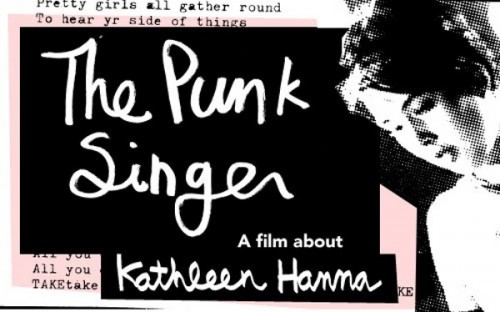
- The Punk Singer directed by Sini Anderson
- A Girl Walks Home Alone at Night directed by Ana Lily Amirpour
- Bride and Prejudice directed by Gurinder Chadha
- Fish Tank directed by Andrea Arnold
- Harry Dean Stanton: Partly Fiction directed by Sophie Huber
- Holy Smoke directed by Jane Campion
- Me and You and Everyone We Know directed by Miranda July
- Ravenous directed by Antonia Bird
- The Babadook directed by Jennifer Kent
- The Incredibly True Adventure of 2 Girls in Love directed by Maria Maggenti
- The Pervert’s Guide to Ideology directed by Sophie Fiennes
- The Queen of Versailles directed by Lauren Greenfield
- The Wolfpack directed by Crystal Moselle
- 30 for 30: The Price of Gold directed by Nanette Burstein
There’s so many more choices at the link, from documentary to drama and horror to romance.
And while we’re at it, that other streaming service, Hulu, has the full Criterion collection, where many more female directors can be found: Agnes Varda, Catherine Breillat, Chantal Ackerman, Barbara Koppel, and more. Hulu offers a one-week free trial when you sign up.
via Metafilter
Related content:
100 Overlooked Films Directed by Women: See Selections from Sight & Sound Magazine’s New List
An Ambitious List of 1400 Films Made by Female Filmmakers
Ted Mills is a freelance writer on the arts who currently hosts the artist interview-based FunkZone Podcast. You can also follow him on Twitter at @tedmills, read his other arts writing at tedmills.com and/or watch his films here.
Read More...Watch Paul McCartney Perform Live, with 10-Year-Old Leila on Bass, in Buenos Aires Yesterday
A few weeks ago, I took my kids to see Paul McCartney launch his One on One Tour in Fresno, California. The highlight? Seeing him play “Hard Day’s Night” and “Love Me Do” live for the first time since the 1960s? Not really. Watching Sir Paul wave at my kids when they held up a “Cheerio Paul” sign? Yeah, that was worth the price of the tickets alone.
But none of that compares to the scene that played out earlier this week in Buenos Aires. Above, watch little Leila sweetly ask Paul to play a little bass, get her wish granted, and rock to some “Get Back.” It’s pretty adorable.
If you would like to support the mission of Open Culture, consider making a donation to our site. It’s hard to rely 100% on ads, and your contributions will help us continue providing the best free cultural and educational materials to learners everywhere. You can contribute through PayPal, Patreon, and Venmo (@openculture). Thanks!
Read More...Behold the Sea Organ: The Massive Experimental Musical Instrument That Makes Music with the Sea
If you ever find yourself in Zadar, Croatia, pay a visit to The Sea Organ, the experimental musical instrument created by the architect Nikola Bašić. Unveiled in 2005, the organ–made of 35 polyethylene pipes tucked under white marble steps–turns the wind and the waves into a never-ending stream of avant-garde sounds. In 2006, the Sea Organ won the 2006 European Prize for Urban Public Space. Hear it make its music above.
If you would like to support the mission of Open Culture, consider making a donation to our site. It’s hard to rely 100% on ads, and your contributions will help us continue providing the best free cultural and educational materials to learners everywhere. You can contribute through PayPal, Patreon, and Venmo (@openculture). Thanks!
Read More...Crowdsourced Database Will Locate the Burial Sites of Forgotten US Slaves
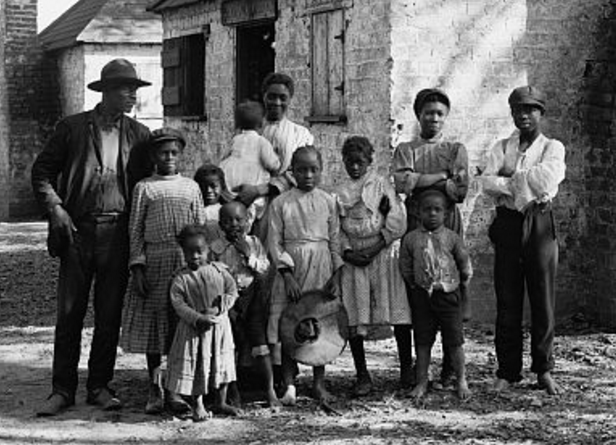
Image courtesy of National Burial Database of Enslaved Americans
The stories are infrequent but deeply compelling: one recent news item in the AP’s The Big Story describes the bones of 14 people from the 18th or early 19th century, discovered in Albany, NY, “wrapped in shrouds, buried in pine boxes and—over centuries—forgotten.” Seven adults, five infants, and two children, soon to be “publically memorialized and [re]buried in personalized boxes beside prominent families in old Albany.”
Over the 11 years since the bones’ discovery by construction workers, scientists have been able to piece together clues about what these lives were like: marked by constant toil and physical hardship. Genetic markers, and broken bones, notched and missing teeth, and arthritic joints offer the only means of identifying the remains. A granite headstone donated to the new gravesite will read, “Here lies the remains of 14 souls known only to God. Enslaved in life, they are slaves no more.”
In 1991, many miles south in lower Manhattan, a find of the remains of 419 people eventually gave rise to an even more impressive memorial and museum, the African Burial Ground National Monument, a reminder of not only the slave labor that built New York City, but also of the people bought and sold in the once bustling slave market at what is now Wall Street.
Creative Commons photo by Bruce Guthrie
Memorials like this one and the recent Albany burial site do not change the facts or right the wrongs of history, but they do make visible lives and histories long buried and forgotten. “Among the scars left by the heritage of slavery,” writes Edward Rothstein at The New York Times, “one of the greatest is an absence: where are the memorials, cemeteries, architectural structures or sturdy sanctuaries that typically provide the ground for a people’s memory?” This is precisely the question Sandra Arnold is now asking, in a very literal sense, for a project called The National Burial Database of Enslaved Americans (NBDEA).
A Graduate Fellow at Brown University, Arnold founded the Periwinkle Initiative, “a public humanities and education initiative dedicated to preserving cultural heritage associated with enslaved Americans.” The NBDEA—Periwinkle’s core project in collaboration with Fordham University, the National Endowment for the Humanities, and the 1772 Foundation—aims, writes Arnold at The New York Times, to “be the first national repository of information on the grave sites of individuals who died while enslaved or after they were emancipated.”
The grave sites The NBDEA compiles will depend in some part on the public: “Anyone who comes to the website will eventually be able to submit information about these places and conduct searches.” Currently, the site remains in development, unavailable for public searches, but users can make preliminary submissions. Arnold describes the process of sifting through the submissions she has received as “painful.”
Burial grounds that should be revered spaces… instead are covered by playgrounds and apartment complexes. I have learned that many grave sites of formerly enslaved Americans are abandoned, undocumented, desecrated by the asphalt of “development,” and lack any type of memorialization or recognition. The burial grounds are often found incidentally by developers under parks and office buildings, and for many of the sites, oral history is their only source of documentation.
Just such an oral history preserved the unmarked gravesite of one of Arnold’s ancestors in her hometown in West Tennessee. Allison Meier at Hyperallergic points to some specifically troubled sites like those Arnold describes, including “a slave cemetery… bulldozed in Houston,” another “covered with asphalt in Atlanta,” and a third “found below a Harlem bus depot.”
Arnold hopes that recording and memorializing these “sacred spaces… can contribute to healing, understanding and potentially even reconciliation.” Additionally, she cites a “pragmatic” rationale for the project, since “burial grounds are valuable resources for scholars and historians, serving as road maps for genealogical and historical research.”
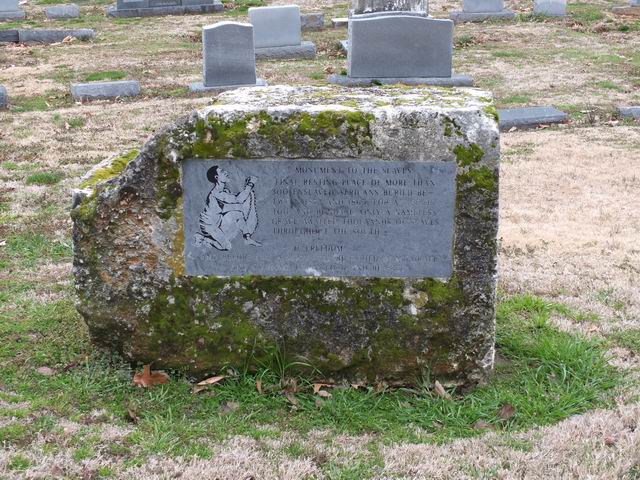
The project presents a tremendous opportunity for the many thousands of citizen historians scattered across the country to come together and fill in the absences in our historical memory; and the centralized database will also draw more attention to the few memorials that do exist, many of which, writes Meier, “are often staggeringly small in relation to the number of lives they remember.” She refers to the example of a “miniature mass grave monument” in Memphis’ Elmwood Cemetary (above), a “single stone [that] memorializes over 300 slaves who died between 1852 and 1865.”
Like The Freedman’s Bureau Project, a recent online database of 1.5 million historical documents related to slavery, The NBDEA will further historicize and humanize “overlooked lives,” writes Arnold, that “are an inextricable part of the historical narrative of our country.”
Can can visit The National Burial Database of Enslaved Americans here.
via Hyperallergic
Related Content:
The Anti-Slavery Alphabet: 1846 Book Teaches Kids the ABCs of Slavery’s Evils
Visualizing Slavery: The Map Abraham Lincoln Spent Hours Studying During the Civil War
Josh Jones is a writer and musician based in Durham, NC. Follow him at @jdmagness
Read More...The Night John Belushi Cartwheeled Onstage During a Grateful Dead Show & Sang “U.S. Blues” with the Band (1980)
Sure, I know ice truckers and snow crab fishermen have it rough, but I’ve always thought the hardest job in the world is to be a comedian. You walk out on stage, night after night, throwing yourself on the mercy of the fickle crowd, with nothing but your wits to keep you afloat. It’s never been any wonder to me that so many comedians turn to various substances to cope with the heckling, chilly silences, and disinterested, half-empty rooms. Even successful, beloved comics face tremendous performance pressures. Some of them crack. And some, like John Belushi, hop onstage during a Grateful Dead show at the Capitol Theatre, cartwheel over to a microphone before the chorus of “U.S. Blues,” and join in on backing vocals.
Belushi’s impromptu 1980 prank performance with the Dead was not, initially, welcomed. He had, reports Live for Live Music, “met with some resistance from the band” when he asked to join in during the encore, and drummer Bill Kreutzmann “had to nix Belushi’s wishes.”
So Belushi, true to form, took matters into his own anarchic hands, staging what Kreutzmann called in his 2015 autobiography a “comedic ambush.”
He had on a sport coat with small American flags stuffed into both of his breast pockets and he landed his last cartwheel just in time to grab a microphone and join in on the chorus. The audience and everyone in the band—except for Phil—ate it up. It couldn’t have been rehearsed better. Belushi had impeccable comedic timing, musicality, balls, the works. And apparently, he didn’t take no for an answer.
Belushi’s musical antics, and surprising acrobatic agility, are already well-known to fans of The Blues Brothers. His penchant for real-life musical chaos—such as his staging of an authentically riotous punk show on Saturday Night Live—have also become part of his estimable comic legend.
Sadly, no video of the stunt seems to exist, but you can see Kreutzmann tell the Belushi story in the interview at the top of the post and, just above, hear that night’s encore performance of “U.S. Blues.” Listen closely at around the 1:50 mark and you’ll hear Belushi join in on the chorus. We’ll have to imagine the cartwheels, but it probably looked something like this.
Hear the full Dead show from that night here. And if you’re craving more musical Belushi, check out his spasmodic impression of the late, great Joe Cocker.
Related Content:
Young John Belushi Imitates Truman Capote & Performs Live on Second City Stage (1972)
Stream 36 Recordings of Legendary Grateful Dead Concerts Free Online (aka Dick’s Picks)
Josh Jones is a writer and musician based in Durham, NC. Follow him at @jdmagness
Read More...Please Touch the Art: Watch a Blind Man Experience His Own Portrait for the First Time
We all know the rules of art museums: look, but don’t touch. This doesn’t bother most of us most of the time, but for art-lovers who happen to be blind and thus use feeling as a substitute for seeing, it presents a problem indeed — but it also opens up an artistic opportunity. “Cantor Fine Art, a just-launched gallery by father and son team Larry and Sam Cantor, offers a story of a different kind of physical interaction with art in their project, Please Touch the Art,” writes The Creator’s Project’s Gabrielle Bruney. “They partnered with artist Andrew Myers to create a tactile painting that is appreciable by both sighted and blind art lovers.”
In the five-minute video above, you can see — or if visually impaired, hear — Myers discussing the beginnings of his “screw pieces,” images made by driving countless screws into a piece of wood, each one ultimately acting as a kind of physical, three-dimensional pixel. Though Myers didn’t begin these works with the blind in mind, one such gallery-goer’s visit to his show, and the “huge smile on his face” when he put his hand to the screw pieces, got him thinking of the possibilities in that direction. Thanks to his art, “there was a blind man who could almost see for a second.”
We also meet the blind woodworker George Wurtzel, currently at work on “converting an old grape crushing barn into a Tactile Art Center” which combines a woodworking shop with a “tactile gallery space where the visually impaired can experience and sell artwork.” Discovering their shared passion for tactile art, Myers decides to make a surprise for Wurtzel, “the first portrait of himself he can actually feel,” the first new piece for his tactile art gallery. The video captures the big reveal, which converts Wurtzel from his skepticism about the screw-piece form. Still, even as he runs his fingers over his own metallicized features, he has his objections: “My nose is not that big. I’m sorry. I like the beard, though. The beard is good. The beard is really good.”
You can read more about the project at Cantor Fine Art’s web site. “The one thing I wish,” Myers adds, “is that George could see the piece the way I see it, but at the same time, I would like to look at things the way he sees the world.” You can get more a sense of art as seen, as Billy Joel once sang, by the eyes of the blind in our previous posts on the Prado’s 3D-printed exhibition for the visually impaired and the experience of the colorblind seeing art in color for the first time. It seems we’ve found ourselves at the dawn of a new golden age for art that doesn’t require sight. If a gallery boom follows, will they serve coffee roasted by the Unseen Bean?
Related Content:
What It’s Like to Be Color Blind and See Art in Color for the First Time
Jorge Luis Borges, After Going Blind, Draws a Self-Portrait
Wake Up and Smell the Coffee with Blind Master Roaster Gerry Leary
Based in Seoul, Colin Marshall writes and broadcasts on cities, language, and style. He’s at work on a book about Los Angeles, A Los Angeles Primer, the video series The City in Cinema, the crowdfunded journalism project Where Is the City of the Future?, and the Los Angeles Review of Books’ Korea Blog. Follow him on Twitter at @colinmarshall or on Facebook.
Read More...1,000+ Haunting & Beautiful Photos of Native American Peoples, Shot by the Ethnographer Edward S. Curtis (Circa 1905)
From the figureheads of ships to cigar store statues to the caricature mascots of various sports teams…. Unfortunate or denigrating images of Native American peoples have persisted in popular culture, folk symbols of what Elisabeth W. Russell refers to in her history of the cigar store Indian as “The Vanishing American.” The phrase comes from the title of a Zane Grey novel, which then became a 1925 silent film dealing, wrote the New York Times that year, “with the passing of the American Indian.” Although both the novel and film attempt to protest the treatment of Native people by the U.S. government, both underwrite a common, troubling assumption—that Native Americans, like the Buffalo and the wild Mustang, were a threatened (and threatening) separate species, whose “vanishing” from the picaresque West (as they had “vanished” from the East) was a lamentable, but perhaps unavoidable, side effect of the march of Euro-American progress.
Each symbolic memorializing of Native Americans in U.S. iconography, however solemn or offensively cartoonish, gestures toward some meager recognition of a tragic loss, while erasing the circumstances that occasioned it. Of course Native Americans didn’t vanish, but were slowly killed or hounded into poverty and dispossession, and out of sight of white America—their dress, religions, and cultures made to disappear through forced assimilation, only to reappear in romanticized images of tragically conquered, but admirably warlike, primitives.
Those images proliferated during the mid-to-late 19th century, the period of intense Western settlement and expansion and the so-called Indian Wars. “It is a given today,” writes historian Brian Dipple, “that the idea of the American Indian has been historically significant. It shaped the attitudes of those in the nineteenth century who shaped Indian policy. Indian policy—be it removal of the Eastern tribes in the 1830s, reservation isolationism beginning in the 1850s, or allotment of reservation lands and assimilation in the 1880s—cannot be understood without an awareness of the ideas behind it. Literature and the visual arts provide revealing guides to nineteenth century assumptions about the Indian.”
Native historian Vine Deloria describes the cultural situation with more incisive wit in his “Indian Manifesto,” Custer Died for Your Sins: “The American public feels most comfortable with the mythical Indians of stereotype-land who were always THERE. These Indians are fierce, they wear feathers and grunt. Most of us don’t fit this idealized figure since we grunt only when overeating, which is seldom.” By the early 20th century, “mythical Indians” had become firmly embedded in popular culture, thanks to art and entertainment like the presumably serious attempts of Zane Grey and Frederic Remington, and J.M. Barrie’s deeply unserious Peter Pan. It is in this cultural atmosphere that photographer Edward Sheriff Curtis’ huge, 20-volume ethnographic project, The North American Indian emerged.
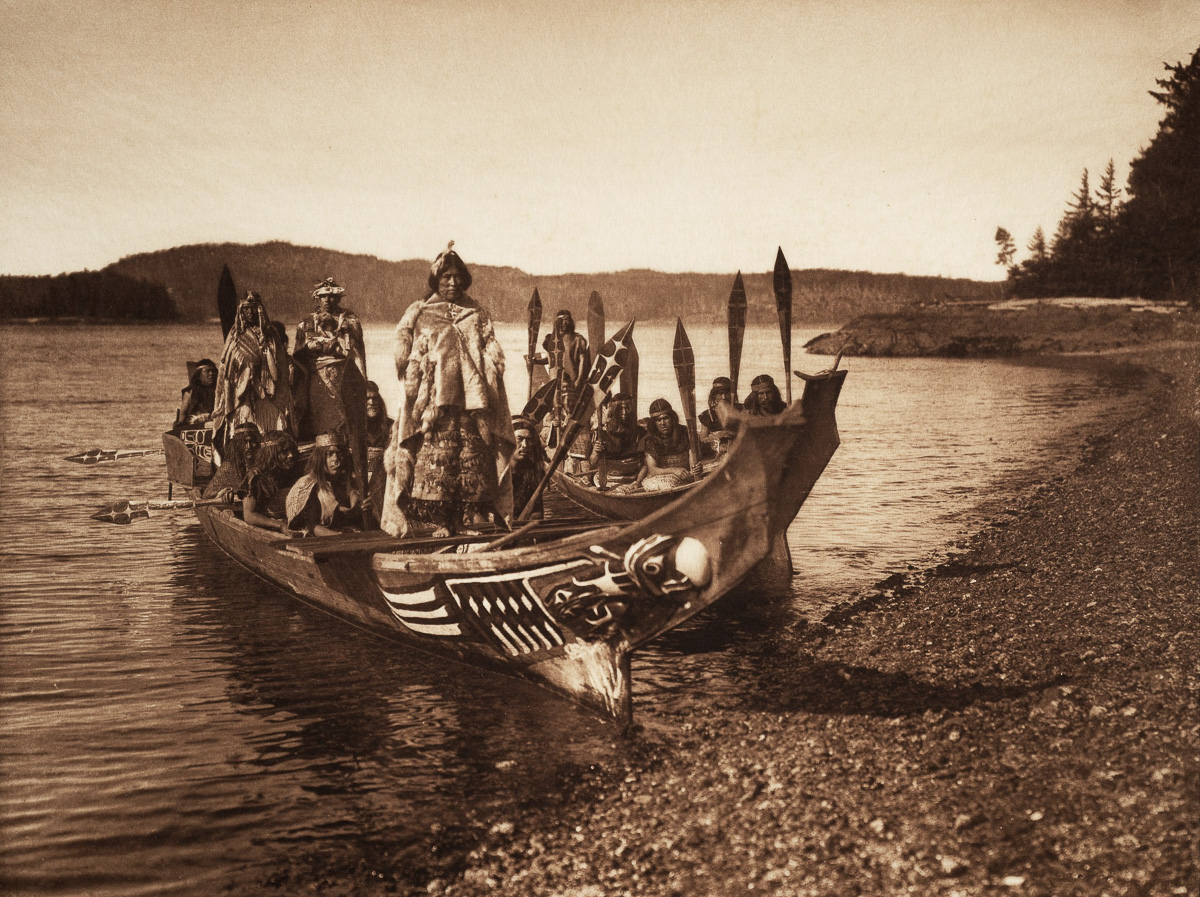
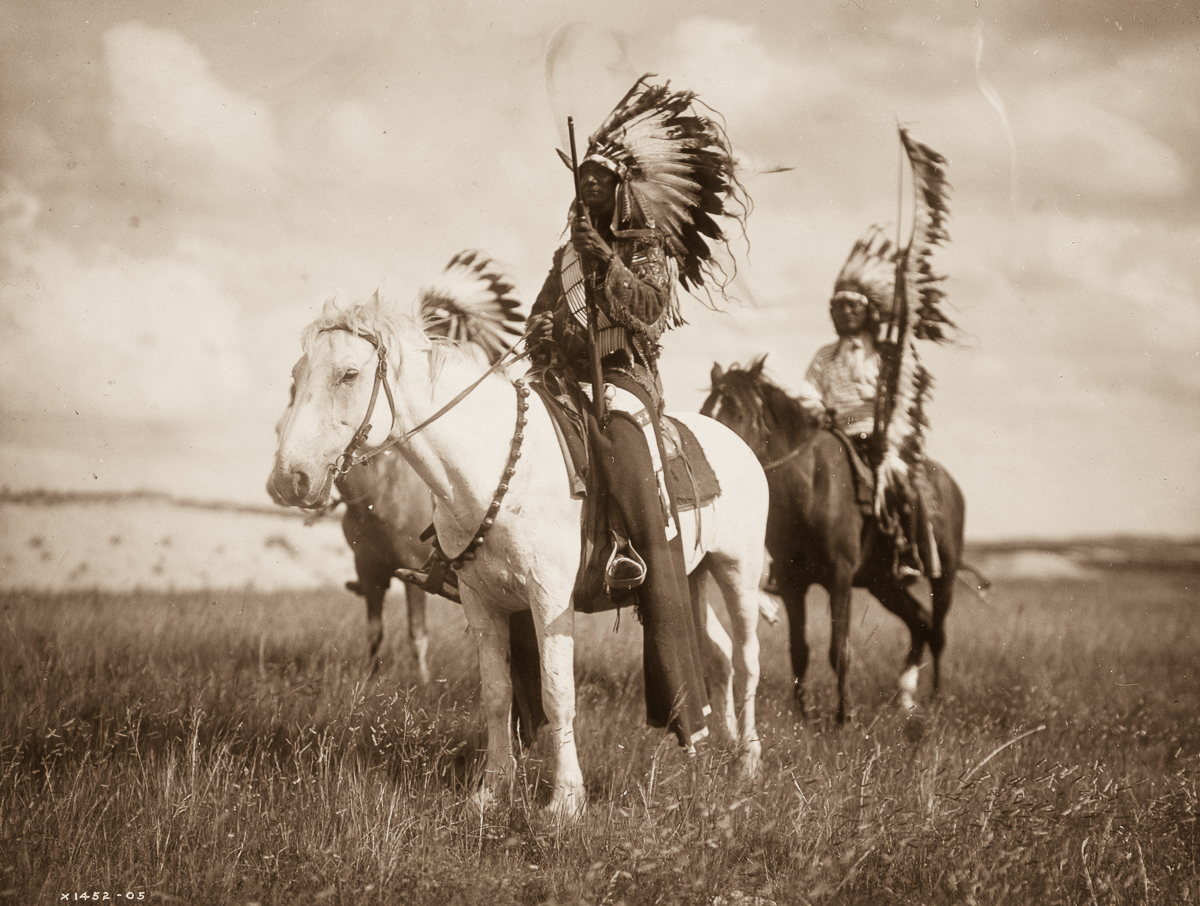
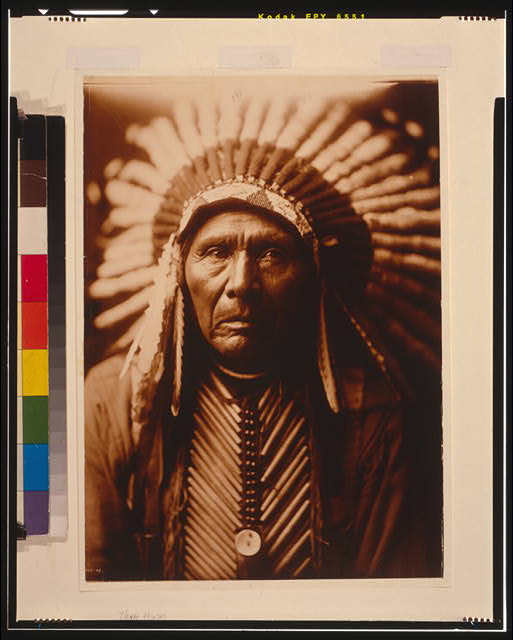
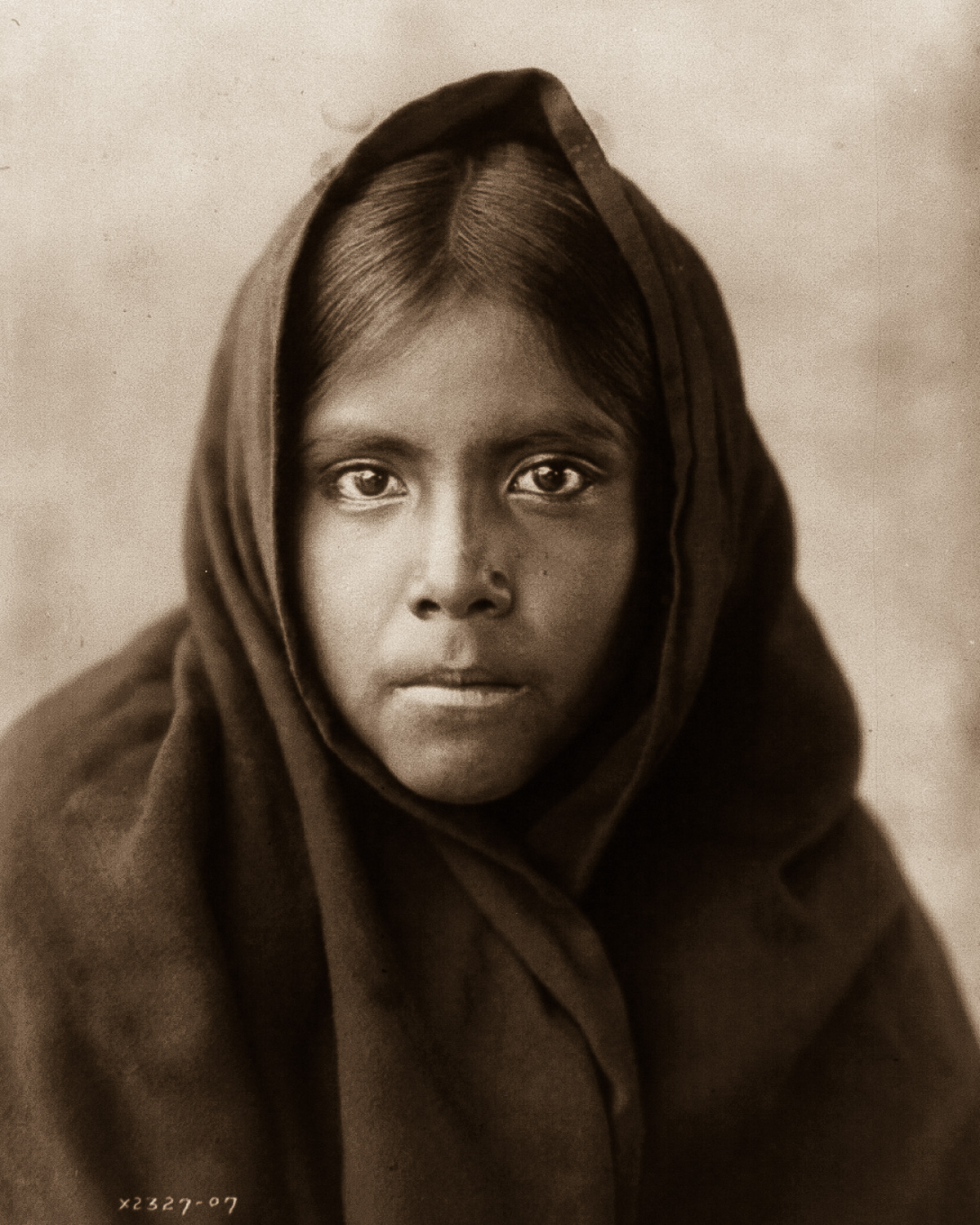
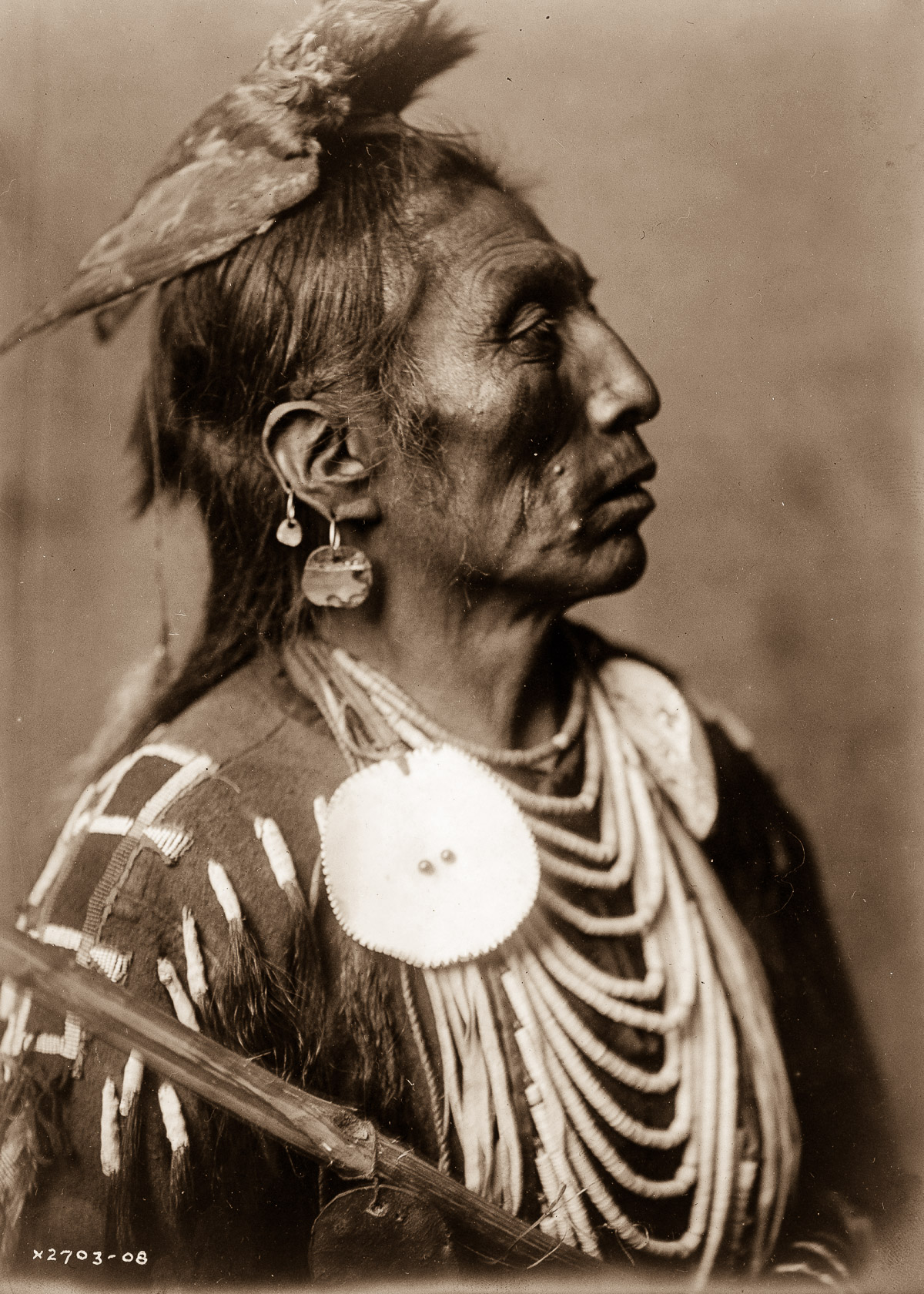
Beginning in 1904, and with the eventual backing of J.P. Morgan, writes Mashable, Curtis “spent more than 20 years crisscrossing North America, creating over 40,000 images of more than 80 different tribes. He made thousands of wax cylinder recordings of native songs and language, and wrote down oral histories, legends and biographies.” You can view and download more than 1,000 of these photographs at the Library of Congress. Curtis thought of his work as documenting “what he saw as a vanishing way of life.” Motivated by assumptions about Native people as semi-mythic remnants from the past, the photographer “sometimes meddled with the documentary authenticity of his images. He posed his subjects in romanticized settings stripped of Western civilization, more representative of an imagined pre-Colombian existence than the subjects’ actual lives in the present.”
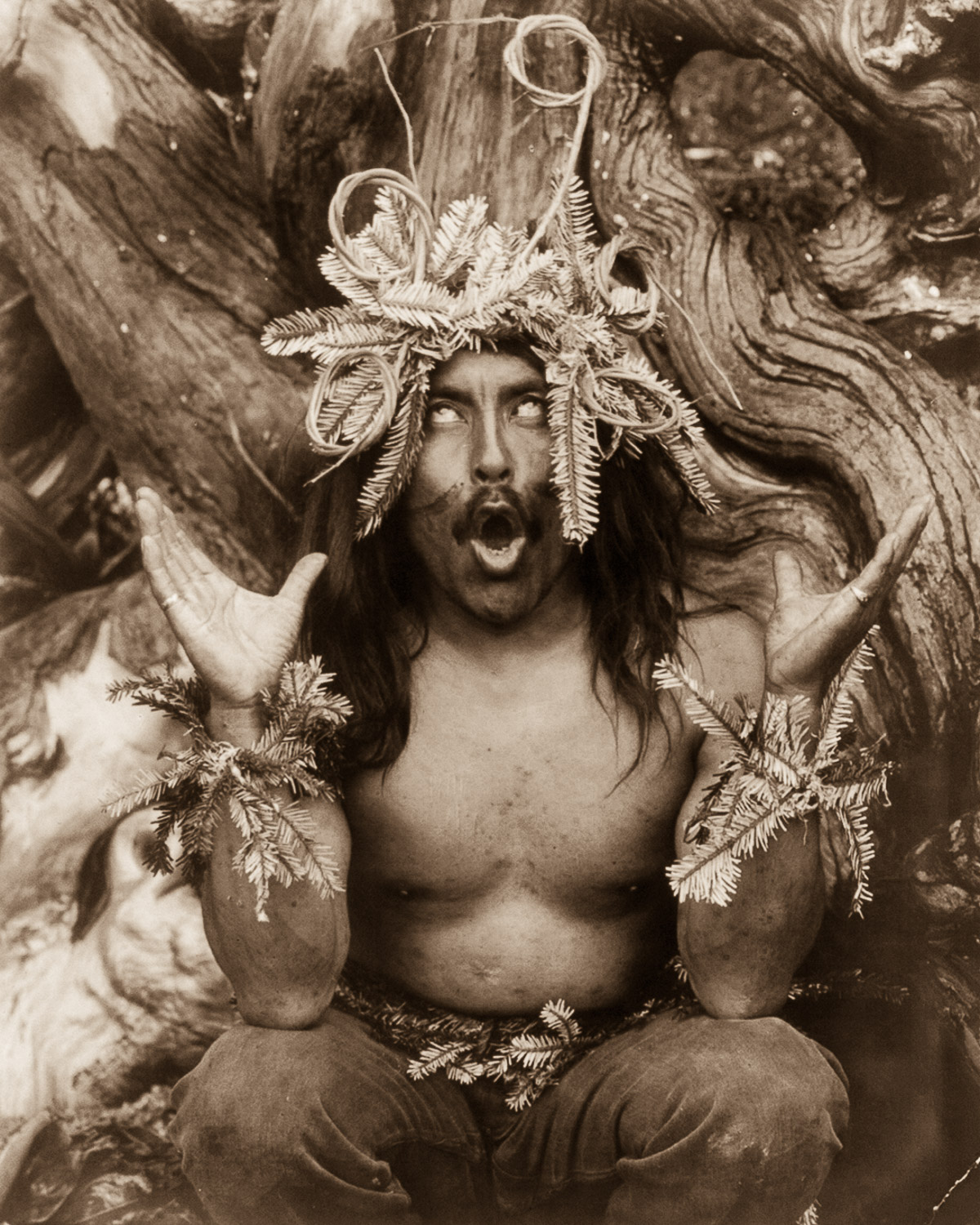
The photographs are beautiful, their subjects ennobled by the dramatic lighting and stylized poses, and the breadth and scope of the entire project is nothing less than breathtaking. It set the stage for the significant work of later photographers and ethnographers like Walker Evans, Dorothea Lange, and the Lomaxes. Curtis has even been credited with producing the first documentary film. The images, histories, traditions, and biographies Curtis preserved constitute an invaluable historical record. That said, we should bear in mind that The North American Indian comes to us framed by Curtis’ assumptions about Native American cultures, formed by a climate in which myth vied with, and usually supplanted, fact. What do we see in these staged images, and what do we not see?
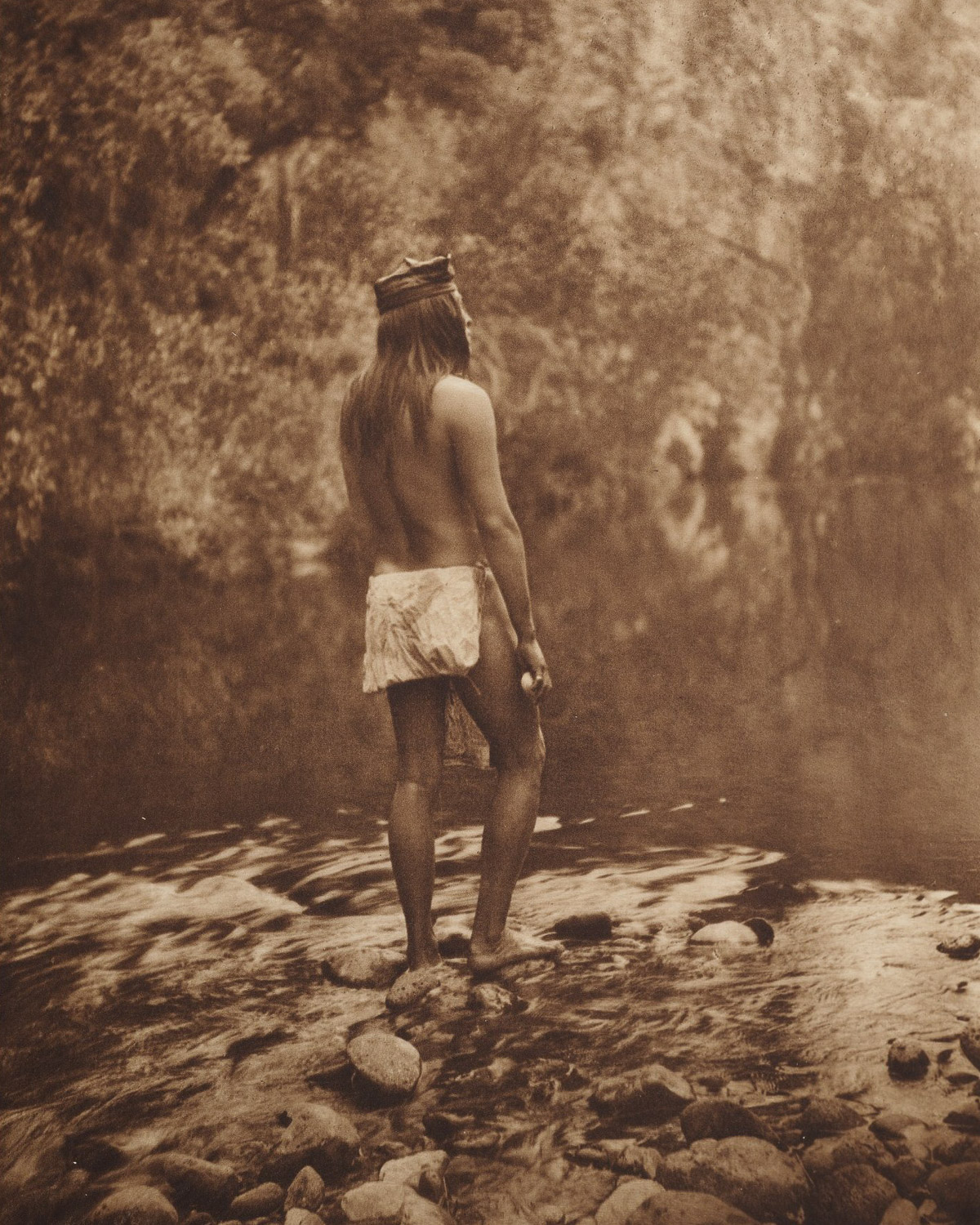
One of Curtis’ enthusiastic early backers, Theodore Roosevelt—who authored the introduction to Volume One—was, “like many of Curtis’ eventual supporters,” writes Valerie Daniels, “more interested in obtaining a record of vanishing Native American cultures as a testament to the superiority of his own civilization than out of any concern over their situation or recognition of his own role in the process.” Though Curtis did not necessarily share these views, and later became “radical in his admonition of government policies toward Native Americans,” he also had to please his financiers and his audience, most of whom would have felt the way Roosevelt did. We should bear this cultural context in mind as we take in Curtis’ work, and ask how it shaped the creation and reception of this truly impressive record of both American history and American myth. Enter the archive of images here.
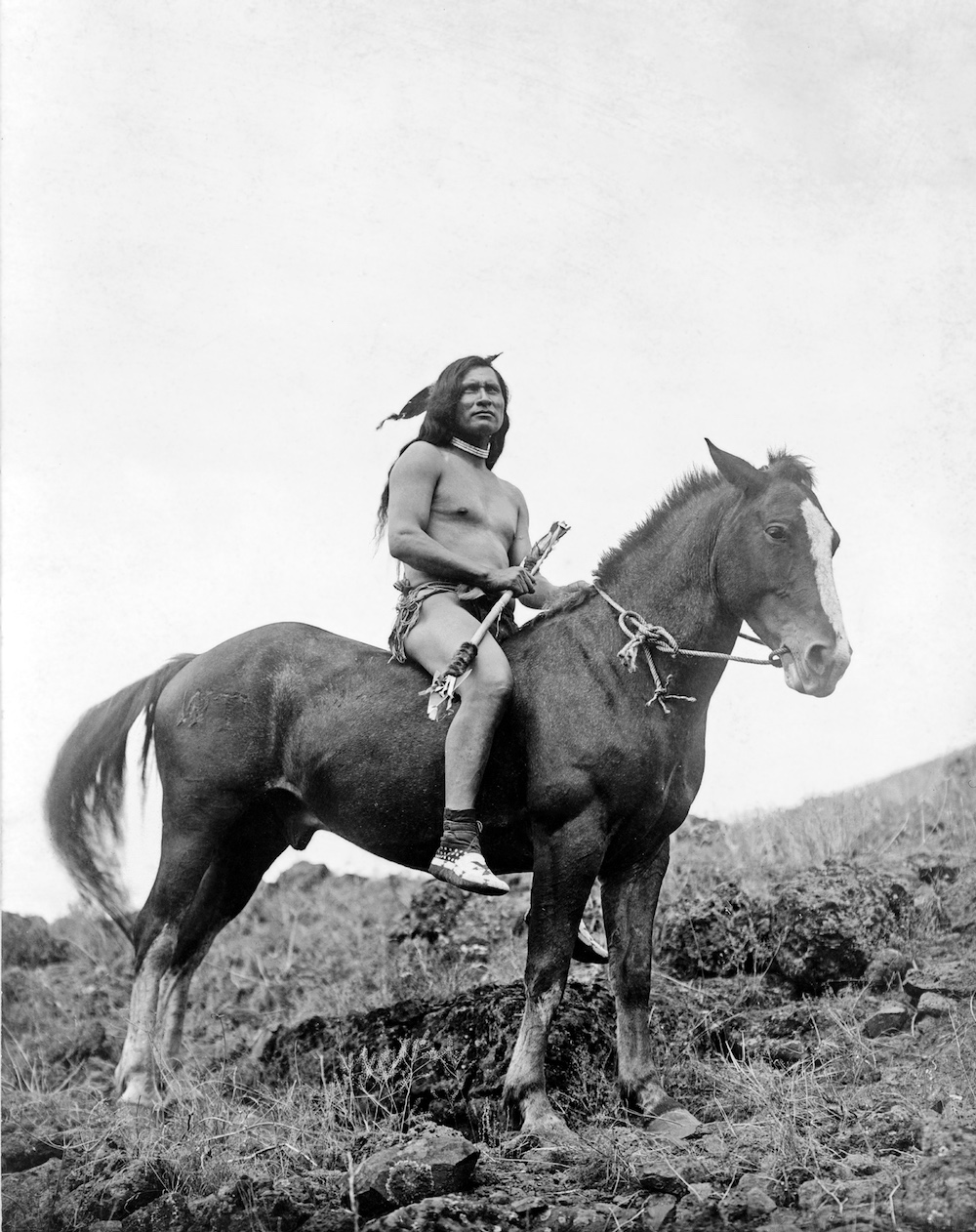
via Mashable
Related Content:
226 Ansel Adams Photographs of Great American National Parks Are Now Online
200 Ansel Adams Photographs Expose the Rigors of Life in Japanese Internment Camps During WW II
Hand-Colored 1860s Photographs Reveal the Last Days of Samurai Japan
Josh Jones is a writer and musician based in Durham, NC. Follow him at @jdmagness
Read More...Support Us
We're hoping to rely on loyal readers, rather than erratic ads. Please click the Donate button and support Open Culture. You can use Paypal, Venmo, Patreon, even Crypto! We thank you!

About Us

Open Culture scours the web for the best educational media. We find the free courses and audio books you need, the language lessons & educational videos you want, and plenty of enlightenment in between.
Advertise With Us

FREE UPDATES!
GET OUR DAILY EMAIL
Get the best cultural and educational resources on the web curated for you in a daily email. We never spam. Unsubscribe at any time.
FOLLOW ON SOCIAL MEDIA

Open Culture editor Dan Colman scours the web for the best educational media. He finds the free courses and audio books you need, the language lessons & movies you want, and plenty of enlightenment in between.
Advertise With Us

