1,000+ Haunting & Beautiful Photos of Native American Peoples, Shot by the Ethnographer Edward S. Curtis (Circa 1905)

From the figureheads of ships to cigar store statues to the caricature mascots of various sports teams…. Unfortunate or denigrating images of Native American peoples have persisted in popular culture, folk symbols of what Elisabeth W. Russell refers to in her history of the cigar store Indian as “The Vanishing American.” The phrase comes from the title of a Zane Grey novel, which then became a 1925 silent film dealing, wrote the New York Times that year, “with the passing of the American Indian.” Although both the novel and film attempt to protest the treatment of Native people by the U.S. government, both underwrite a common, troubling assumption—that Native Americans, like the Buffalo and the wild Mustang, were a threatened (and threatening) separate species, whose “vanishing” from the picaresque West (as they had “vanished” from the East) was a lamentable, but perhaps unavoidable, side effect of the march of Euro-American progress.

Each symbolic memorializing of Native Americans in U.S. iconography, however solemn or offensively cartoonish, gestures toward some meager recognition of a tragic loss, while erasing the circumstances that occasioned it. Of course Native Americans didn’t vanish, but were slowly killed or hounded into poverty and dispossession, and out of sight of white America—their dress, religions, and cultures made to disappear through forced assimilation, only to reappear in romanticized images of tragically conquered, but admirably warlike, primitives.

Those images proliferated during the mid-to-late 19th century, the period of intense Western settlement and expansion and the so-called Indian Wars. “It is a given today,” writes historian Brian Dipple, “that the idea of the American Indian has been historically significant. It shaped the attitudes of those in the nineteenth century who shaped Indian policy. Indian policy—be it removal of the Eastern tribes in the 1830s, reservation isolationism beginning in the 1850s, or allotment of reservation lands and assimilation in the 1880s—cannot be understood without an awareness of the ideas behind it. Literature and the visual arts provide revealing guides to nineteenth century assumptions about the Indian.”

Native historian Vine Deloria describes the cultural situation with more incisive wit in his “Indian Manifesto,” Custer Died for Your Sins: “The American public feels most comfortable with the mythical Indians of stereotype-land who were always THERE. These Indians are fierce, they wear feathers and grunt. Most of us don’t fit this idealized figure since we grunt only when overeating, which is seldom.” By the early 20th century, “mythical Indians” had become firmly embedded in popular culture, thanks to art and entertainment like the presumably serious attempts of Zane Grey and Frederic Remington, and J.M. Barrie’s deeply unserious Peter Pan. It is in this cultural atmosphere that photographer Edward Sheriff Curtis’ huge, 20-volume ethnographic project, The North American Indian emerged.
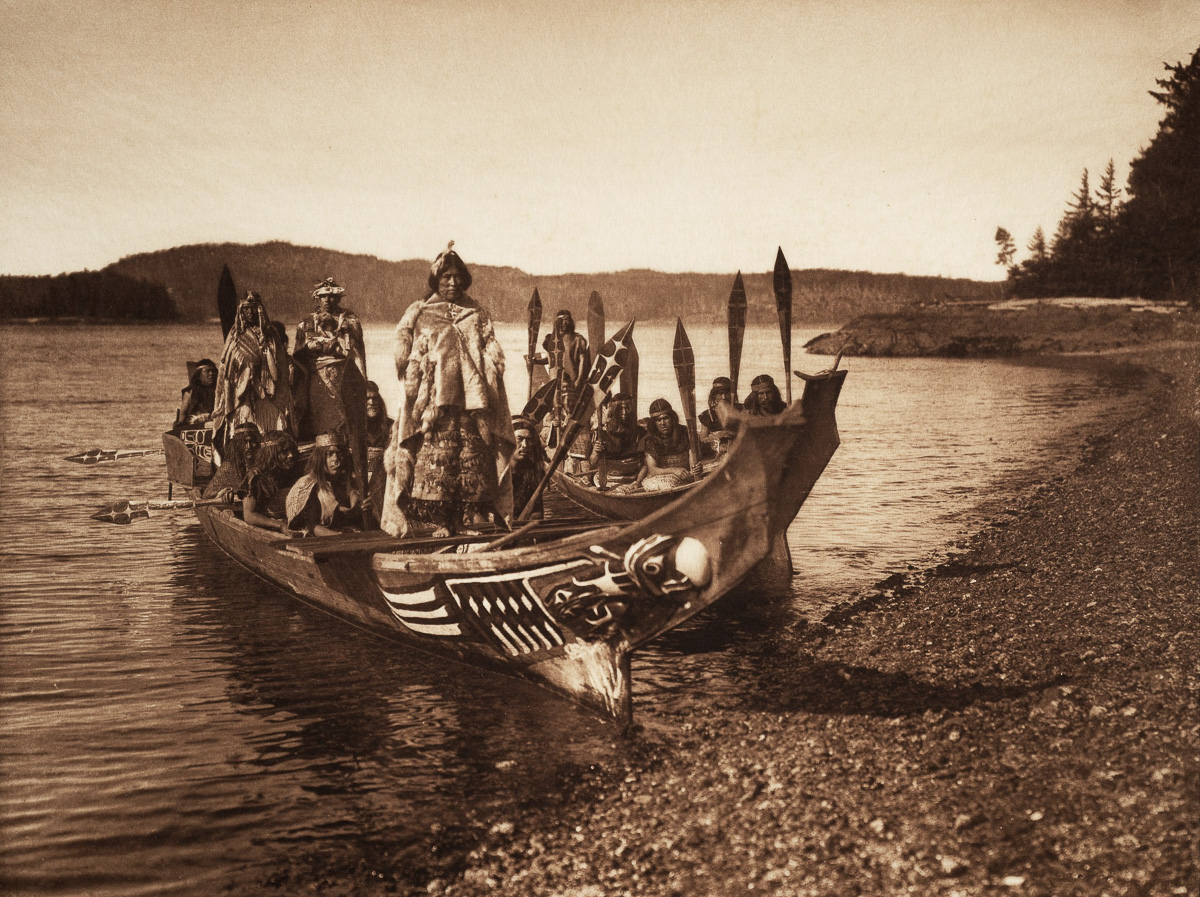
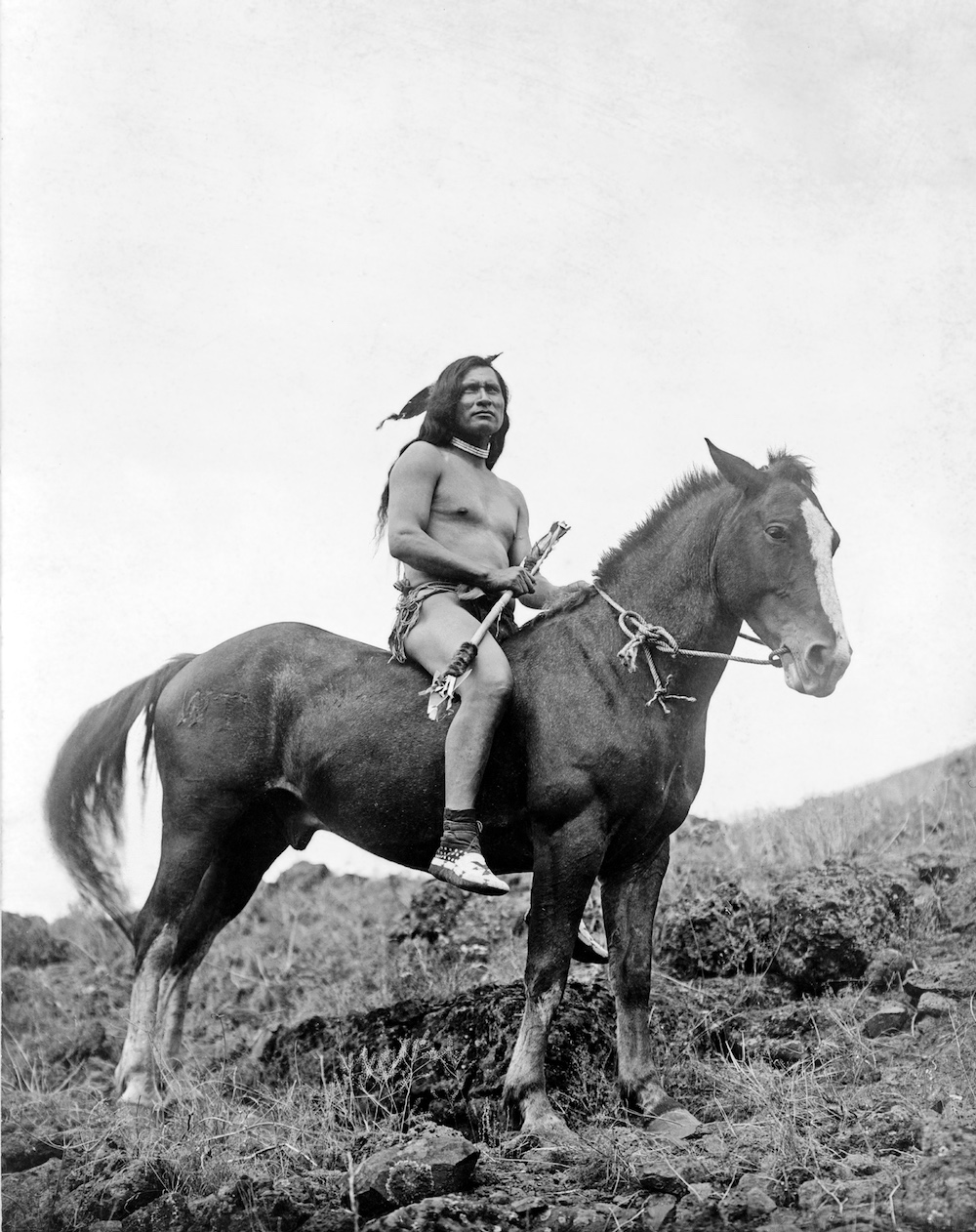
Beginning in 1904, and with the eventual backing of J.P. Morgan, writes Mashable, Curtis “spent more than 20 years crisscrossing North America, creating over 40,000 images of more than 80 different tribes. He made thousands of wax cylinder recordings of native songs and language, and wrote down oral histories, legends and biographies.” You can view and download more than 1,000 of these photographs at the Library of Congress. Curtis thought of his work as documenting “what he saw as a vanishing way of life.” Motivated by assumptions about Native people as semi-mythic remnants from the past, the photographer “sometimes meddled with the documentary authenticity of his images. He posed his subjects in romanticized settings stripped of Western civilization, more representative of an imagined pre-Colombian existence than the subjects’ actual lives in the present.”
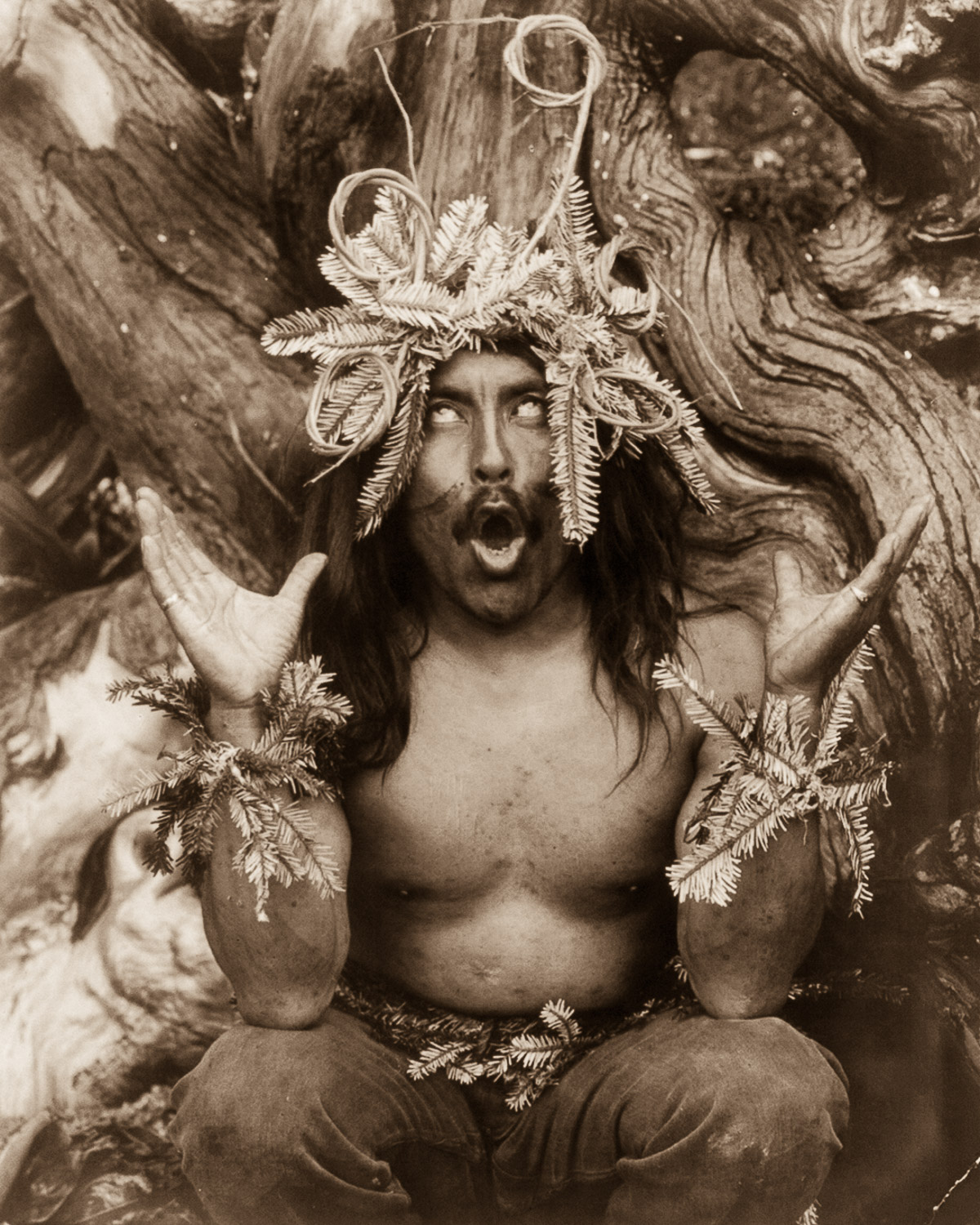
The photographs are beautiful, their subjects ennobled by the dramatic lighting and stylized poses, and the breadth and scope of the entire project is nothing less than breathtaking. It set the stage for the significant work of later photographers and ethnographers like Walker Evans, Dorothea Lange, and the Lomaxes. Curtis has even been credited with producing the first documentary film. The images, histories, traditions, and biographies Curtis preserved constitute an invaluable historical record. That said, we should bear in mind that The North American Indian comes to us framed by Curtis’ assumptions about Native American cultures, formed by a climate in which myth vied with, and usually supplanted, fact. What do we see in these staged images, and what do we not see?
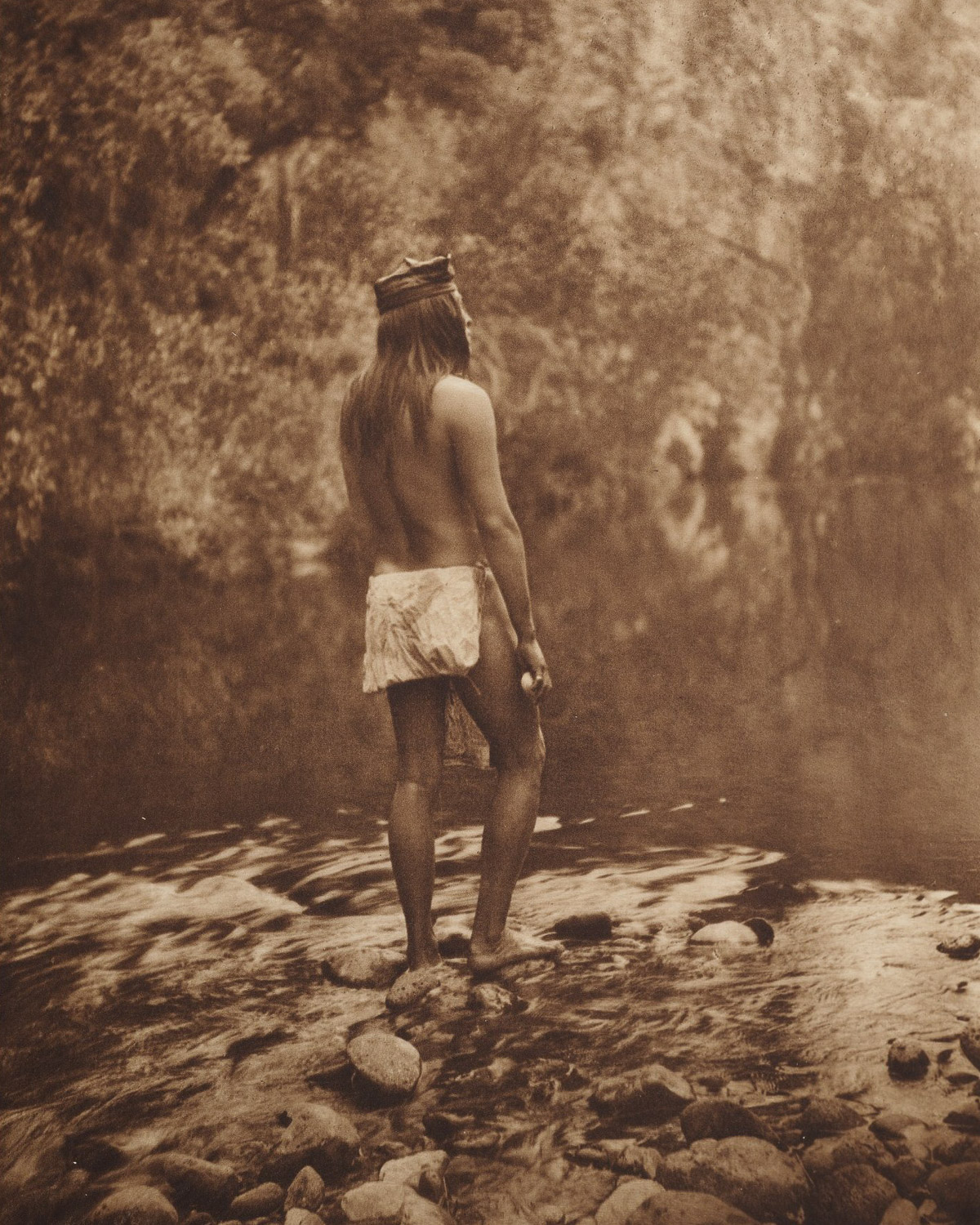
One of Curtis’ enthusiastic early backers, Theodore Roosevelt—who authored the introduction to Volume One—was, “like many of Curtis’ eventual supporters,” writes Valerie Daniels, “more interested in obtaining a record of vanishing Native American cultures as a testament to the superiority of his own civilization than out of any concern over their situation or recognition of his own role in the process.” Though Curtis did not necessarily share these views, and later became “radical in his admonition of government policies toward Native Americans,” he also had to please his financiers and his audience, most of whom would have felt the way Roosevelt did. We should bear this cultural context in mind as we take in Curtis’ work, and ask how it shaped the creation and reception of this truly impressive record of both American history and American myth. Enter the archive of images here.
via Mashable
Related Content:
226 Ansel Adams Photographs of Great American National Parks Are Now Online
200 Ansel Adams Photographs Expose the Rigors of Life in Japanese Internment Camps During WW II
Hand-Colored 1860s Photographs Reveal the Last Days of Samurai Japan
Josh Jones is a writer and musician based in Durham, NC. Follow him at @jdmagness
Read More...Hear the Music of David Lynch’s Twin Peaks Played by the Experimental Band, Xiu Xiu: A Free Stream of Their New Album
Last year, Colin Marshall highlighted for you the music of Xiu Xiu, the experimental post-punk band, which has traveled the world, playing their own interpretation of the music Angelo Badalamenti wrote for David Lynch’s early 1990s series, Twin Peaks. Our original post featured some of those live performances, and now comes a studio recording of those Twin Peaks interpretations.
We’d be remiss if we didn’t tell you that you can stream the new album–called Plays the Music of Twin Peaks– free online. Just click play above. Find a list of individual tracks below. And, if you like what you hear, consider purchasing your own copy of the album from the usual vendors. Enjoy.
1. Laura Palmer’s Theme (0:00)
2. Into The Night (5:03)
3. Audrey’s Dance (10:15)
4. Packard’s Vibration (14:41)
5. Nightsea Wind (18:31)
6. Blue Frank/Pink Room (25:37)
7. Sycamore Tree (31:28)
8. Harold’s Theme (38:16)
9. Dance of the Dream Man (42:12)
10. Falling (47:22)
11. Love Theme Farewell (54:20)
12. Josie’s Past (1:00:44)
If you would like to support the mission of Open Culture, consider making a donation to our site. It’s hard to rely 100% on ads, and your contributions will help us continue providing the best free cultural and educational materials to learners everywhere. You can contribute through PayPal, Patreon, and Venmo (@openculture). Thanks!
Related Content:
Experimental Post-Punk Band Xiu Xiu Plays the Music from David Lynch’s Twin Peaks
David Lynch’s Twin Peaks Title Sequence, Recreated in an Adorable Paper Animation
Play the Twin Peaks Video Game: Retro Fun for David Lynch Fans
David Lynch Presents the History of Surrealist Film (1987)
Read More...Hear Robert Frost Read His Most Famous Poems: “The Road Not Taken,” “Mending Wall,” “Nothing Gold Can Stay” & More
Robert Frost has the dubious honor of being known the world over as the poet of a seize-the-day cliché. His poem “The Road Not Taken” (read by Frost above) appears on coffee mugs, autumnal motivational posters, upbeat email signatures, and in advertisements and television shows, all meant to inspire confident decision-making in uncertain times: unintentionally ironic, populist appeals to diverge from the herd.
If this is Frost’s legacy in the wider culture, it’s a fate most poets wouldn’t wish on their bitterest rival. The typical interpretation of this poem is an unfortunate misrepresentation of Frost’s work in general. Indeed, “The Road Not Taken” may be “the most misread poem in America,” as David Orr argues at The Paris Review.
Frost’s poetry does not often inspire confidence or motivation, but rather doubt, uncomfortable reflection, fear, and sometimes a kind of dreadful awe. Like Faulkner was in his day, Frost was, and still is, mistaken for a quaint, colorful regionalist. But rather than a poet of New England folk simplicity, he is a poet of New England skepticism and a kind of hard-headed sublime. Anyone who reads “The Road Not Taken” closely, for example, will note the speaker’s ambiguous tone in the final stanza, and final three lines—oft-quoted as a triumphant dénouement.
I shall be telling this with a sigh
Somewhere ages and ages hence:
Two roads diverged in a wood, and I—
I took the one less traveled by,
And that has made all the difference.
The traveler does not tell us what “difference” the choice will have made, nor why he should tell of this crossroads “ages and ages hence… with a sigh.” Implied in these lines, however, is at least the suggestion of unavoidable future regret, and a reckoning with irrevocable fate. The earlier line, “Oh, I kept the first for another day!” sounds more like an exclamation of rue than the celebration of a choice well-made.
And as Orr points out, the speaker’s initial encounter presents him with two paths that “equally lay / in leaves.”; the two roads are equally travelled—or untravelled as the case may be—and the traveller chooses one arbitrarily. In these final lines, he announces his intention to tell a different, perhaps self-congratulatory story about his decision. “The poem isn’t a salute to can-do individualism,” Orr writes, “it’s a commentary on the self-deception we practice when constructing the story of our own lives.”
One can hear even darker notes in another famous poem, “Mending Wall,” in which a nameless, unfeeling “Something” goes about its work of dismantling the speaker’s best efforts, and all human work generally. It’s a theme in much of Frost’s poetry that can, if fully appreciated, inspire a dread as potent as that in the most baroque and florid of H.P. Lovecraft’s weird tales. Frost developed his theme of cosmic indifference early, in “Stars,” from his first published collection, A Boy’s Will. He introduces the poem in the table of contents with this succinct description: “There is no oversight in human affairs,” a matter-of-fact statement that scarcely prepares us for the unnerving images to follow:
How countlessly they congregate
O’er our tumultuous snow,
Which flows in shapes as tall as trees
When wintry winds do blow!—As if with keenness for our fate,
Our faltering few steps on
To white rest, and a place of rest
Invisible at dawn,—And yet with neither love nor hate,
Those stars like some snow-white
Minerva’s snow-white marble eyes
Without the gift of sight.
In three short, devastating stanzas, Frost undercuts ancient, comforting pretentions about the stars’ (or gods’) sentient benevolence, with images and diction that recall Thomas Hardy’s bleak lament “In Tenebris” and anticipate Wallace Stevens’ impersonal and chilling “The Snow Man.” The snow and ice in Frost’s poems are not part of the pretty scenery, but metonymic figures of oblivion.
In short, the kindly old Robert Frost we think we know from the trivial misreading of “The Road Not Taken” is not the poet Robert Frost at all. Frost is a prickly, challenging, even somewhat devious character whose pleasingly musical lines and quaint, pastoral images lure readers into poems that harbor much less cheerful attitudes than they expect to find, and much more complex and mature ideas. The young Frost once described himself as “not undesigning,” and in his later, 1939 essay “The Figure a Poem Makes,” he famously declared that a poem “begins in delight and ends in wisdom.”
In the two Spotify playlists above (download Spotify’s free software here), you can hear Frost read some of his most famous poems, including “The Road Not Taken,” “Mending Wall,” “Nothing Gold Can Stay,” “After Apple Picking,” “Death of a Hired Man,” and several more. Not represented here, unfortunately, are poems from the wonderful debut A Boy’s Will, but you can read that full collection online here, and you should. Get to know the real Frost, if you haven’t already, and you’ll appreciate all the more why he’s one of the most celebrated poets in the American canon.
The readings above will be added to our collection, 1,000 Free Audio Books: Download Great Books for Free.
Related Content:
Robert Frost Recites ‘Stopping by Woods on a Snowy Evening’
Josh Jones is a writer and musician based in Durham, NC. Follow him at @jdmagness
Read More...Thomas Edison’s Silent Film of the “Fartiste” Who Delighted Crowds at Le Moulin Rouge (1900)
In 1900, Thomas Edison traveled to Paris to document the many wonders of the Exposition Universelle, and the city itself. Among the sights captured with his kinetoscope cameras were the Expo’s moving sidewalks, the Champs-Élysées, and the previous Exposition Universelle’s crown jewel, the Eiffel Tower, now eleven years old.
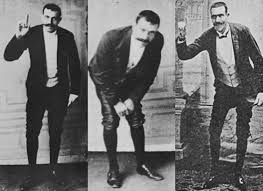
It wasn’t all so high-minded. Edison and his kinetoscope also caught a performance by former Moulin Rouge star, Joseph Pujol, aka Le Pétomane, above. This elegantly attired gentlemen achieved fame and fortune with a series of impressions, carried out by a rather eccentric orifice. He was not so much artiste as fartiste, a title he wore with pride.
Pujol claimed to have discovered his unusual talent as a child, and soon set about achieving different effects by using his abdominal muscles to expel not gas, but odorless air. By varying the pressure, he was able to play simple tunes. By the time he turned 30, his act had expanded to include impersonations of celebrities, musical instruments, birds, a thunderstorm and such stock characters as a nervous bride. His grand finale included such feats as blowing out candles, smoking cigarettes and playing an ocarina (below), all with the aid of a rubber hose inserted into his anus via a modest trouser slit.

What a tragedy that Edison’s short film is silent! No live piano accompaniment could do justice to this magical artistic fruit, and if there were other recordings of Pujol, they’ve been lost to history.
He lives on in the imaginations of artists who followed him.
Actor Ugo Tognazzi, below, assumed the title role in a 1983 Italian language feature.
Director Mel Brooks injected a bit of subtlety into Blazing Saddles’ beans-around-the-campfire humor when he appeared as a character named Governor William J. LePetomane.
Sadly, Pujol was left on the cutting room floor of director Baz Luhrmann’s Moulin Rouge, but all is not lost. Reportedly, Johnny Depp has indicated interest in bringing this historic figure back to life. (Gentlemen, start your screenplays…)
Then there is the half hour biopic, below, directed by Monty Python alum Ian McNaughton and starring Leonard Rossiter as Pujol. Prepare to hear the opening session of the Congress of Vienna, a toad, and a four-part harmony.
via Messy Nessy Chic
Related Content:
Hear Thomas Edison’s Creepy Talking Dolls: An Invention That Scared Kids & Flopped on the Market
Thomas Edison’s Boxing Cats (1894), or Where the LOLCats All Began
Thomas Edison Recites “Mary Had a Little Lamb” in Early Voice Recording
Ayun Halliday is an author, illustrator, and Chief Primatologist of the East Village Inky zine. Follow her @AyunHalliday
Read More...Sheryl Sandberg Talks About What Death Has Taught Her About Life: UC Berkeley Commencement Address, 2016
A little more than a year ago, Sheryl Sandberg’s 47-year-old husband, Dave Goldberg, died unexpectedly. The ultimate cause, heart disease. Sandberg has since endured many dark days. And now, for the first time, she’s talking publicly about the whole experience, and particularly about what death has taught her about life.
Sandberg picked the appropriate venue to speak out–the commencement ceremonies at UC-Berkeley this past weekend. Graduation speeches traditionally ask accomplished figures to give life advice to young graduates, and, painful as it might have been, that’s what Sandberg offered. One day or another, you’ll experience howling losses of your own, and what can get you through these experiences–Sandberg wants you to know–is resilience. She remarked:
And when the challenges come, I hope you remember that anchored deep within you is the ability to learn and grow. You are not born with a fixed amount of resilience. Like a muscle, you can build it up, draw on it when you need it. In that process you will figure out who you really are—and you just might become the very best version of yourself.
Class of 2016, as you leave Berkeley, build resilience.
Build resilience in yourselves. When tragedy or disappointment strikes, know that you have the ability to get through absolutely anything. I promise you do. As the saying goes, we are more vulnerable than we ever thought, but we are stronger than we ever imagined.
To increase your resilience, Sandberg would have you read the 1990 book, Learned Optimism: How to Change Your Life and Mind, where Martin Seligman, the father of Positive Psychology, outlines techniques for looking at life events in the healthiest possible way. (That’s what Sandberg is getting at when she talks about permanence, pervasiveness and personalization.) You can read a complete transcript of Sandberg’s speech here.
If you would like to support the mission of Open Culture, consider making a donation to our site. It’s hard to rely 100% on ads, and your contributions will help us continue providing the best free cultural and educational materials to learners everywhere. You can contribute through PayPal, Patreon, and Venmo (@openculture). Thanks!
Related Content:
Free Online Psychology & Neuroscience Courses, a subset of 1,700 Free Online Courses from Top Universities.
Alan Rickman Recites “If Death Is Not the End,” a Moving Poem by Robyn Hitchcock
Read More...Visit 2+ Million Free Works of Art from 20 World-Class Museums Free Online
Since the first stirrings of the internet, artists and curators have puzzled over what the fluidity of online space would do to the experience of viewing works of art. At a conference on the subject in 2001, Susan Hazan of the Israel Museum wondered whether there is “space for enchantment in a technological world?” She referred to Walter Benjamin’s ruminations on the “potentially liberating phenomenon” of technologically reproduced art, yet also noted that “what was forfeited in this process were the ‘aura’ and the authority of the object containing within it the values of cultural heritage and tradition.” Evaluating a number of online galleries of the time, Hazan found that “the speed with which we are able to access remote museums and pull them up side by side on the screen is alarmingly immediate.” Perhaps the “accelerated mobility” of the internet, she worried, “causes objects to become disposable and to decline in significance.”
Fifteen years after her essay, the number of museums that have made their collections available online whole, or in part, has grown exponentially and shows no signs of slowing. We may not need to fear losing museums and libraries—important spaces that Michel Foucault called “heterotopias,” where linear, mundane time is interrupted. These spaces will likely always exist. Yet increasingly we need never visit them in person to view most of their contents. Students and academics can conduct nearly all of their research through the internet, never having to travel to the Bodleian, the Beinecke, or the British Library. And lovers of art must no longer shell out for plane tickets and hotels to see the precious contents of the Getty, the Guggenheim, or the Rijksmuseum. For all that may be lost, online galleries have long been “making works of art widely available, introducing new forms of perception in film and photography and allowing art to move from private to public, from the elite to the masses.”
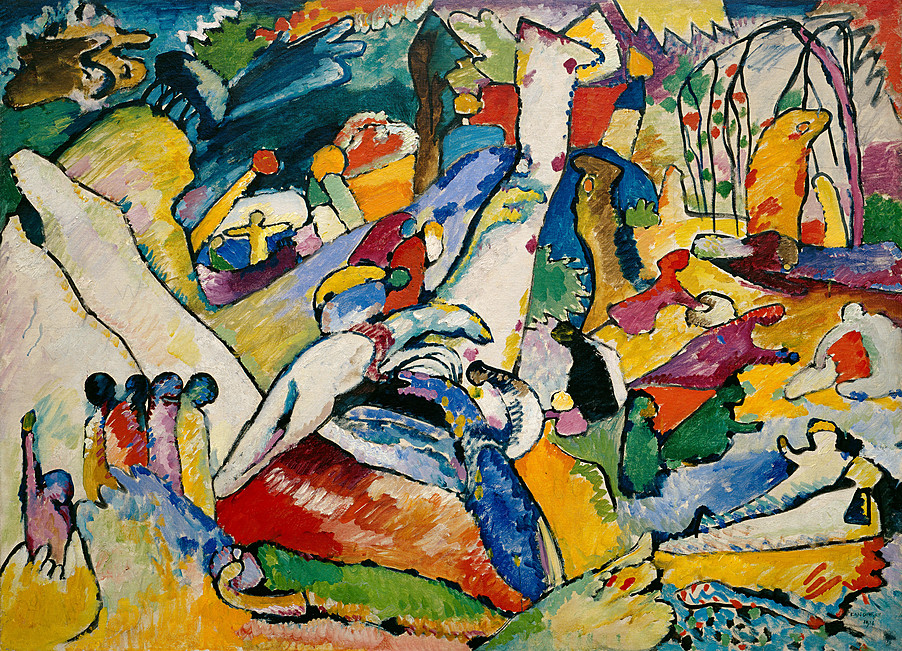
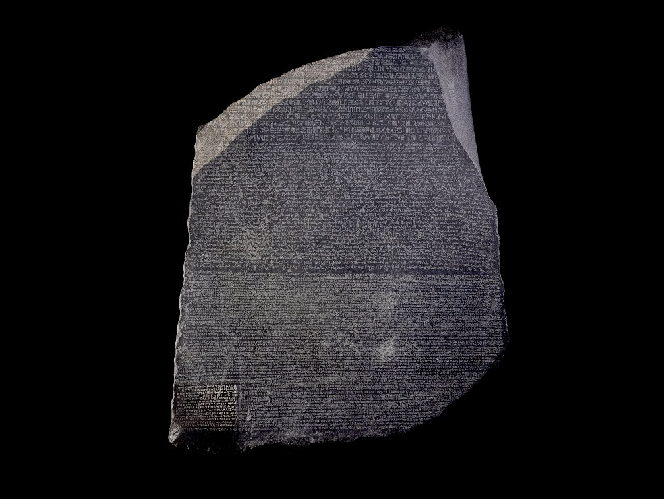
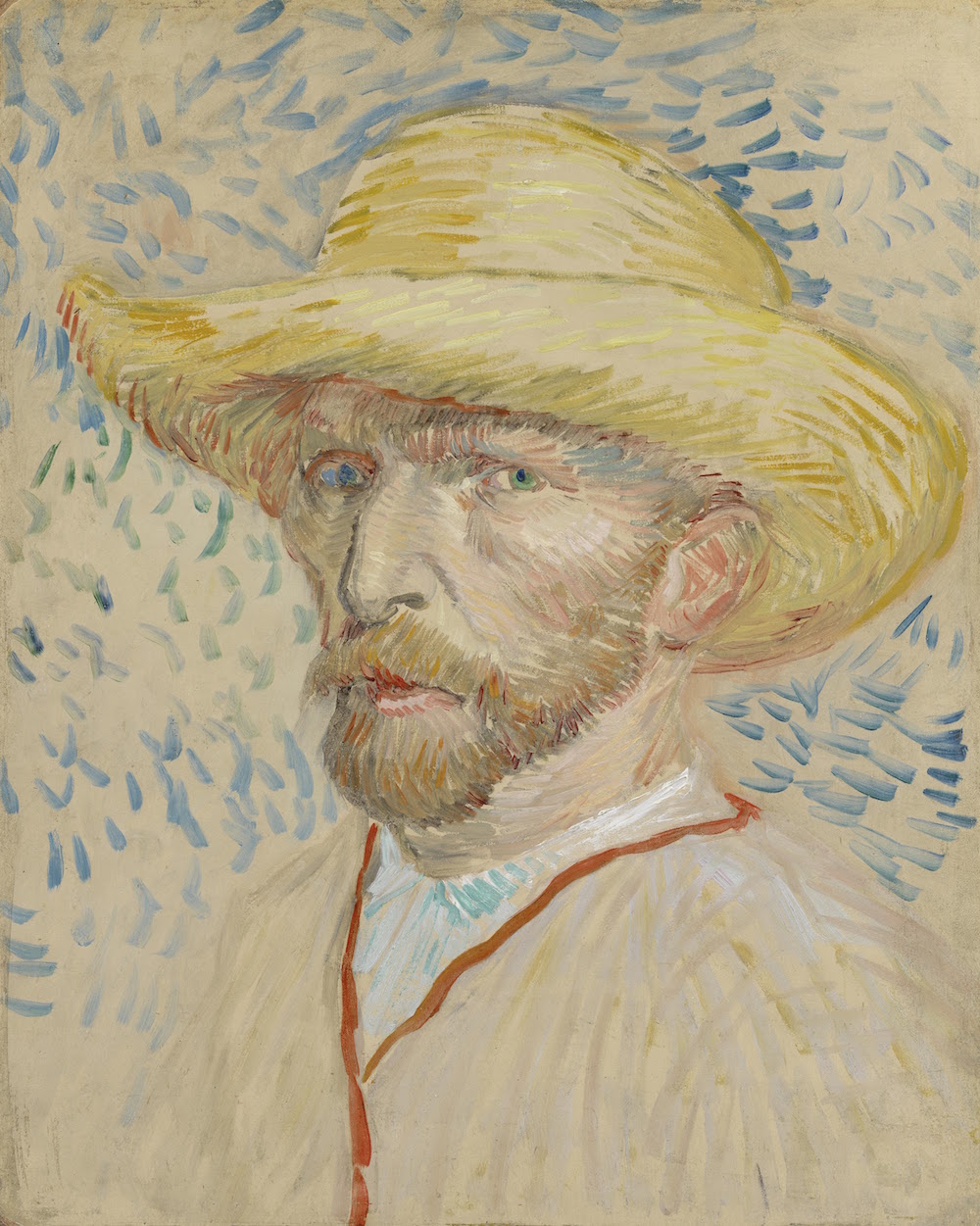
Even more so than when Hazan wrote those words, the online world offers possibilities for “the emergence of new cultural phenomena, the virtual aura.” Over the years we have featured dozens of databases, archives, and online galleries through which you might virtually experience art the world over, an experience once solely reserved for only the very wealthy. And as artists and curators adapt to a digital environment, they find new ways to make virtual galleries enchanting. The vast collections in the virtual galleries listed below await your visit, with close to 2,000,000 paintings, sculptures, photographs, books, and more. See the Rosetta Stone at the British Museum (top), courtesy of the Google Cultural Institute. See Van Gogh’s many self-portraits and vivid, swirling landscapes at The Van Gogh Museum. Visit the Asian art collection at the Smithsonian’s Freer and Sackler Galleries. Or see Vassily Kandinsky’s dazzling abstract compositions at the Guggenheim.
And below the list of galleries, find links to online collections of several hundred art books to read online or download. Continue to watch this space: We’ll add to both of these lists as more and more collections come online.
Art Images from Museums & Libraries
- Art Institute of Chicago (44,000 images)
- Google Art Project (250,000)
- Harvard Bauhaus Collection (30,000)
- L.A. County Museum (20,000)
- New York Public Library-Historic Maps (20,000)
- Norway National Museum (30,000)
- Paris Art Museums (300,000)
- SFMoMA Rauschenberg Collection
- Stanford University’s Cantor Art Center (45,000)
- Stanford University’s French Revolution Collection (14,000)
- Taipei’s National Palace Museum (70,000)
- The British Library (100,000)
- The British Museum (4,200)
- The Cleveland Museum of Art (30,000)
- The Isamu Noguchi Museum (60,000)
- The Getty (100,000)
- The Guggenheim (1,600)
- The Met (400,000)
- The Morgan Library & Museum’s Online Collection (10,000)
- The Morgan Library Rembrandt Sketches (300)
- The Museum of Modern Art/MoMA (65,000)
- The Museum of New Zealand (30,000)
- The National Gallery (35,000)
- The New York Public Library: Photos, Maps, Letters (180,000)
- The Rijksmuseum (210,00)
- The Smithsonian (40,000)
- The Tate (70,000)
- The Whitney (21,000)
- The Van Gogh Museum (3500)
- Yale Center for British Art
- Yale’s Great Depression Photo Collection (170,000)
- Vermeer (36)
Art Books
- The Getty (250 books)
- The Guggenheim (98)
- The Met (448)
- Getty Research Portal (100,000)
Related Contents:
Download 448 Free Art Books from The Metropolitan Museum of Art
The Metropolitan Museum of Art Puts 400,000 High-Res Images Online & Makes Them Free to Use
Free: The Metropolitan Museum of Art and the Guggenheim Offer 474 Free Art Books Online
Josh Jones is a writer and musician based in Durham, NC. Follow him at @jdmagness
Read More...Ursula K. Le Guin Names the Books She Likes and Wants You to Read
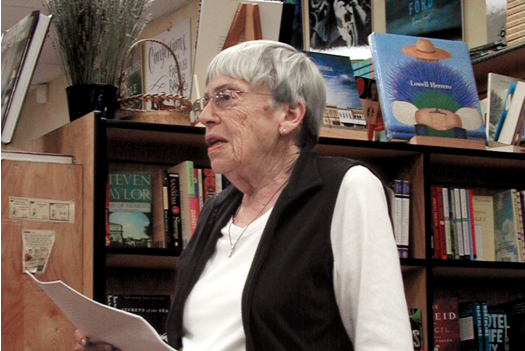
Image by Gorthian, via Wikimedia Commons
I’m sure I speak for many when I say that Ursula K. Le Guin’s novels and stories changed what I thought science fiction could be and do. Raised on H.G. Wells, Isaac Asimov, Robert Heinlein, and other mostly-white-male-centered classic sci-fi, I found Le Guin’s literary thought experiments startling and refreshing. Now it seems like almost a matter of course that science fiction and fantasy narratives come from a diversity of peoples and perspectives. But Le Guin remains the first to wake me from a dogmatic slumber about the potential of speculative fiction to imagine not only future technologies, but also expansive future identities.
Novels like The Left Hand of Darkness, The Dispossessed, and The Lathe of Heaven reflect Le Guin’s very broad range of interests in politics and the humanities and social sciences. She began her career as an academic studying Renaissance French and Italian literature, and her fiction synthesizes years of careful reading in anthropology, psychology, sociology, history, and Eastern and Western philosophy. Likewise, though she has been much influenced by traditional hard science fiction, Le Guin’s literary loves are wide and deep. All that’s to say she’s as admirable and interesting a reader as she is a writer. When she praises a book, I pay attention. Thanks to her genial, loquacious online presence for many years, her fans have had ample opportunity to find out what she’s reading and why.
Le Guin recently made a few lists of books she likes, and made sure to preface each one with a disclaimer: “This list is not ‘my favorite books.’ It’s just a list of books I’ve read or re-read, recently, that I liked and wanted to tell people about.” She leaps from genre to genre, writing mini-reviews of each book and linking each one to Powell’s, the independent bookstore in her beloved city of Portland, Oregon. Below, we’ve excerpted some of Le Guin’s “Books I’ve Liked” from each list, along with her commentary. Click on each date heading to see her complete lists of recommendations.
Seeing, by José Saramago. A sequel to his amazing novel Blindness. Saramago is not easy to read. He punctuates mostly with commas, doesn’t pararaph often, doesn’t set off conversation in quotes —; mannerisms I wouldn’t endure in a lesser writer; but Saramago is worth it. More than worth it. Transcendently worth it. Blindness scared me to death when I started it, but it rises wonderfully out of darkness into the light. Seeing goes the other way and is a very frightening book.
Changing Ones, by Will Roscoe. An examination of how gender has been constructed in Native American societies. Responsibly researched, very well written, generous in spirit, never oversimplifying a complex subject, this is a wonderfully enlightening book.
Age of Bronze: The Story of the Trojan War. I: A Thousand Ships, and II: Sacrifice by Eric Shanower. A graphic novel —; the first two volumes of a projected series. The drawing is excellent, the language lively, and the research awesome. Shanower goes back to the very origins of the war to follow the early careers of the various heroes —; Agamemnon and Menelaus, Achilles, Odysseus, Hector, Paris, Aeneas, and their families, parents, wives, lovers, children… Thus, by the end of Book Two, the actual siege of Troy, which the Iliad tells one part of, is yet to begin. I see a looming problem: the battles (of which there have been a good many already) are visually all alike, and there’s endlessly more to come —; battle scenes in Homer are brutally monotonous and interminable (as war is). But these two volumes are visually and narratively varied, and give a fascinating backgrounding and interpretation to the great stories.
The Yiddish Policemen’s Union, by Michael Chabon. Of course if you haven’t read Kavalier and Clay yet, go read it at once, what on earth have you been waiting for? Then read this. It is even a little crazier, maybe. Crazy like a genius.
Suffer the Little Children, by Donna Leon. The 16th of Leon’s Venetian mystery novels is one of the finest. I reviewed this book for the Manchester Guardian
Some young adult books I like — I had to read a lot of them this spring, and these stood out:
The Higher Power of Lucky by Susan Patron. This one has already won the Newbery Award and gone to Kiddilit Booksellers Heaven forever, so it doesn’t need my endorsement… but it’s a lovely, funny, sweet book, set in a truly godforsaken desert town in California.
Weedflower by Cynthia Kadohata. A novel that goes with its young heroine to one of the prison camps where our government sent all our citizens of Japanese ancestry in 1942 after Pearl Harbor. It’s a beautiful book, understated and strong and tender. If you read it you won’t forget it.
Charles Mann, 1491. A brilliant survey of what we know about the human populations of the Americas before the arrival of the Europeans, and a brief, often scathing history of how we’ve handled our knowledge. The author is not an archeologist or anthropologist, but he has done his homework, and is a fine reporter and summarizer, writing with clarity and flair, easy to read but never talking down. Discussing intensely controversial subjects such as dates of settlement and population sizes, he lets you know where he stands, but presents both sides fairly. A fascinating, mind-expanding book.
Michael Pollan, The Omnivore’s Dilemma. I have never eaten an Idaho potato since I read Pollan’s article about what potato fields are “treated” with, in his earlier book The Botany of Desire. This one is scary in a different way. It probably won’t stop you from eating anything, indeed it is a real celebration of (real) food; but the first section is as fine a description of the blind, incalculable power of Growth Capitalism as I ever read. (Did you know that cattle can’t digest corn, and have to be chemically poisoned in order to produce “cornfed beef”? So, there being lots and lots of grass, why feed them corn? Read the book!) There are some depressing bits in the section on “organic” food, too, but the last section, where he hunts and gathers his dinner, is funny and often touching.
Barbara Ehrenreich, Nickel and Dimed. Ehrenreich tries to get by on minimum wage, in three different towns, working as a waitress, a house cleaner, in a Wal-Mart… Yes, it came out eight years ago, and yes, it’s just as true now, if not truer. (I just read in my hometown paper that 47% of working people in Portland have to rely on food stamps. Not “welfare queens” — people with jobs, working people.) She writes her story with tremendous verve and exactness. It reads like a novel, and leaves you all shook up.
[Le Guin devoted this list to “Some Graphic Novels,” and wrote about her difficulty finding good “grown-up stuff.” Though most of it was not to her taste (“gross-out violence, or horror, or twee, or sexist, or otherwise not down my alley”), she kept “hoping, because the form seems to me such a hugely promising and adventurous one.” Below are two graphic novels she did like. Another, Age of Bronze, she mentioned above in her 2006 list.]
Marjane Satrapi’s Persepolis I and II, and her other books. (The movie of Persepolis was charming but it really didn’t add much to the book.) I admire her drawing, which is deceptively simple but very subtly designed, using the pure contrast-power of black-and-white. The drawings and the text combine so seamlessly that I’m not aware of looking back and forth between them, I’m just taking it all in at once — Which I think is pretty much my ideal for a graphic narrative?
Joann Sfar’s The Rabbi’s Cat I and II. Three connected stories in each volume. The first two stories in the first volume are pure delight. They are funny and wise and show you a world you almost certainly never knew existed. The rabbi is a dear, the rabbi’s daughter is a dear, and the rabbi’s cat is all cat, all through, all the way down. (I wondered why Sfar drew him so strangely, until I looked at the photograph of Sfar’s cat on the cover.) The second volume isn’t quite as great, but the first story in it is awfully funny and well drawn, with the most irresistible lion, and it’s all enjoyable. Sfar’s imagination and color are wonderful. His publisher should be pilloried in Times Square for printing the art in Vol II so small that you literally need a magnifying glass to read some of the continuity. — I gather that Sfar and Satrapi are friends. Are we on the way to having a great school of graphic novels by Foreigners Living in Paris?
Related Content:
Ursula Le Guin Gives Insightful Writing Advice in Her Free Online Workshop
Hear Ursula K. Le Guin’s Story, “The End” Dramatized: A Rare Audio Treat
Josh Jones is a writer and musician based in Durham, NC. Follow him at @jdmagness
Read More...Watch the First Sherlock Holmes Movie (1900), the Arrival of the Most Popular Character in Cinema
According to Guinness World Records, the human literary character who pops up most often on screens big and small is Sir Arthur Conan Doyle’s best known creation, Sherlock Holmes. (Hamlet is a distant second.)
The list of actors who’ve had a go include Benedict Cumberbatch, Robert Downey, Jr., Ian McKellen, Michael Caine, and Basil Rathbone.
John Cleese spoofed him on Comedy Playhouse.
John Gielgud’s celebrated voice brought Holmes to life opposite Ralph Richardson’s Dr. Watson in a 1954 radio series.
The fictional detective time warped onto Fantasy Island and the holodeck of the Starship Enterprise, in the respective form of Peter Lawford and Brett “Data” Spiner.
Although Holmes maintained that “the fair sex was (Watson’s) department,” the Soviet Union’s My Tenderly Loved Detective featured actress Yekaterina Vasilyeva as a female Sherlock named Shirley.
But no one has solved the mystery of 1900’s Sherlock Holmes Baffled, above, the very first filmed entertainment to feature the character. The director and cinematographer was Arthur W. Marvin, who went on to serve as cameraman for D. W. Griffith’s early silent films. The identity of his starring actor has unfortunately been lost to the ages.
The film itself was believed lost, too, until Michael Pointer, a historian specializing in Sherlock Holmesiana, unearthed a paper copy in a Library of Congress archive. A series of individual cards, it was intended to be viewed by Mutoscope, a single viewer, crank-operated peep show device, common in turn-of-the-century arcades.
No doubt audiences who paid a penny to watch this fairly plotless 30-second adventure were more impressed by the special effects than the anonymous actor playing the iconic detective.
To see how this mystery man’s performance measures up against other cinematic Sherlocks, check out these Holmes films found on the web. And find other great films in our collection, 4,000+ Free Movies Online: Great Classics, Indies, Noir, Westerns, Documentaries & More:
- • The Adventures of Sherlock Holmes – Free – The film is adapted from the 1899 play “Sherlock Holmes” by William Gillette, and stars Basil Rathbone, Nigel Bruce, Ida Lupino, George Zucco and Alan Marshal. (1939)
- • Dressed to Kill – Free – The last of 14 films starring Basil Rathbone as Sherlock Holmes and Nigel Bruce as Doctor Watson. (1941)
- • Sherlock Holmes and the Secret Weapon – Free – Sherlock Holmes rescues an inventor of a new bomb site before the Nazis can get him. (1943)
- • The Woman in Green – Free – Sherlock Holmes investigates when young women around London turn up murdered, each with a finger severed off. Scotland Yard suspects a madman, but Holmes believes the killings to be part of a diabolical plot. Stars Basil Rathbone as Holmes and Nigel Bruce as Dr. Watson. (1945)
- • Terror by Night – Free – Sherlock Holmes film, the thirteenth to star Basil Rathbone and Nigel Bruce and was directed by Roy William Neill. The story revolves around the theft of a famous diamond aboard a train. (1946)
Related Content:
Read the Lost Sherlock Holmes Story That Was Just Discovered in an Attic in Scotland
Arthur Conan Doyle Names His 19 Favorite Sherlock Holmes Stories
Download the Complete Sherlock Holmes, Arthur Conan Doyle’s Masterpiece
Ayun Halliday is an author, illustrator, and Chief Primatologist of the East Village Inky zine. Follow her @AyunHalliday.
Read More...Free: Stream Bob Dylan’s Brand New Album Fallen Angels for a Limited Time
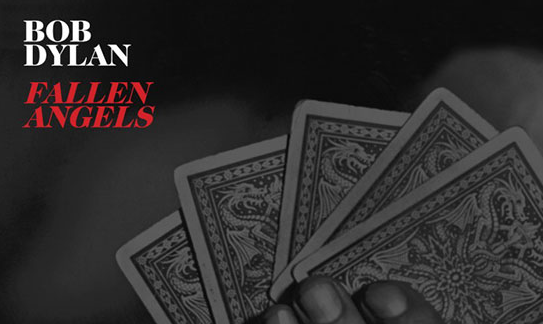
Come gather ’round people, wherever you roam. Bob Dylan is getting ready to release his 37th studio album. And before you can buy it on Amazon, iTunes, and the other usual places, you can stream it free online for a limited time, thanks to NPR. Fallen Angels–much like Shadows in the Night from 2015–features Dylan singing classic American songs, which generally have one thing in common: They were all (save one, “Skylark”) sung by Frank Sinatra back in the day. And now Dylan takes a turn with them in 2016. Enjoy giving them an early listen.
If you would like to support the mission of Open Culture, consider making a donation to our site. It’s hard to rely 100% on ads, and your contributions will help us continue providing the best free cultural and educational materials to learners everywhere. You can contribute through PayPal, Patreon, and Venmo (@openculture). Thanks!
Related Content:
Bob Dylan Reads From T.S. Eliot’s Great Modernist PoemThe Waste Land
Hear A Young Bob Dylan Sing 11 Songs and Tell Tall Tales on a 1962 Radio Show
Bob Dylan & The Grateful Dead Rehearse Together in Summer 1987: Hear 74 Tracks
Two Legends Together: A Young Bob Dylan Talks and Plays on The Studs Terkel Program, 1963
Read More...Hear the Greatest Hits of Isao Tomita (RIP), the Father of Japanese Electronic Music
During his childhood in the Japan of the 1930s, Isao Tomita would have barely had the chance to hear Western music. But when the Second World War came to an end, the introduction of local U.S. Army broadcasts must have felt like the opening of a sonic floodgate: “I thought I was listening to music from outer space,” remembered the man that child grew up to become a respected composer as well as a pioneer of electronic music known for his cutting-edge, intergalactically-minded interpretations of the work of such Western predecessors as Claude Debussy, Igor Stravinsky, and Gustav Holst.
That telling quote comes from Tomita’s New York Times obituary of this past Wednesday, which describes some of the composer’s struggles to not just master but press into a new kind of artistic service the practically experimental analog synthesizers with which he made his best-known albums, like 1974’s Snowflakes Are Dancing and The Planets. Just getting his first Moog synthesizer past Japanese customs proved a struggle (“I told them that it was an instrument, and they didn’t believe me”), let alone figuring out how to use the new device “to even generate something that’s not just noise.”
Tomita had little in the way of precedent besides Wendy Carlos’ Switched-On Bach, which had come out in 1968 (and whose cover Tomita had held up before those customs inspectors, trying in vain to provide evidence of his strange imported machine’s nature). He followed suit in 1972 with his own first album Electric Samurai: Switched on Rock, on which he electronically covered songs like “Let It Be,” “Jail House Rock,” and “Bridge Over Troubled Water.” Then came his Grammy-nominated bestselling Debussy tribute Snowflakes Are Dancing, which showed the listening world what he could do: specifically, reinterpreting the classical canon with sounds few had ever heard before.
You can discover some of his music by listening to albums available on Spotify, one Tomita’s 1978 album Kosmos and the other a greatest-hits collection. (Find both above. If you don’t have Spotify’s free software, you can download it here.) Or peruse an even wider-ranging Youtube playlist. We have, of course, now had around half a century to get used to electronic music, and the gear has made enormous evolutionary leaps since Tomita first sat down amid his unwieldy “thicket” of filters, oscillators, generators, amplifiers, controllers, modulators, recorders, mixers, echo units, and phasers. But his music still retains its fascination, especially now in our digital world where its analog sounds seem to come from the past, the future, and outer space all at once.
Related Content:
How the Moog Synthesizer Changed the Sound of Music
Hear Seven Hours of Women Making Electronic Music (1938- 2014)
The History of Electronic Music in 476 Tracks (1937–2001)
Based in Seoul, Colin Marshall writes and broadcasts on cities, language, and style. He’s at work on a book about Los Angeles, A Los Angeles Primer, the video series The City in Cinema, the crowdfunded journalism project Where Is the City of the Future?, and the Los Angeles Review of Books’ Korea Blog. Follow him on Twitter at @colinmarshall or on Facebook.
Read More...Support Us
We're hoping to rely on loyal readers, rather than erratic ads. Please click the Donate button and support Open Culture. You can use Paypal, Venmo, Patreon, even Crypto! We thank you!

About Us

Open Culture scours the web for the best educational media. We find the free courses and audio books you need, the language lessons & educational videos you want, and plenty of enlightenment in between.
Advertise With Us

FREE UPDATES!
GET OUR DAILY EMAIL
Get the best cultural and educational resources on the web curated for you in a daily email. We never spam. Unsubscribe at any time.
FOLLOW ON SOCIAL MEDIA

Open Culture editor Dan Colman scours the web for the best educational media. He finds the free courses and audio books you need, the language lessons & movies you want, and plenty of enlightenment in between.
Advertise With Us


