A Short Animated History of Zero (0): How It Started in India, Then Made Its Journey to the West
Zilch. Nada. Bupkis. Yes, I’m taking about Zero (0), a number that seems so essential to our system of numbers, and yet it hasn’t always enjoyed such a privileged place. Far from it.
In this short animation, Britain’s venerable Royal Institution traces the history of zero, a number that emerged in seventh century India, before making its way to China and Islamic countries, and finally penetrating Western cultures in the 13th century. Only later did it become the cornerstone of calculus and the language of computing.
India, we owe you thanks.
If you would like to support the mission of Open Culture, consider making a donation to our site. It’s hard to rely 100% on ads, and your contributions will help us continue providing the best free cultural and educational materials to learners everywhere. You can contribute through PayPal, Patreon, and Venmo (@openculture). Thanks!
Related Content:
The Shortest-Known Paper Published in a Serious Math Journal: Two Succinct Sentences
The Math in Good Will Hunting is Easy: How Do You Like Them Apples?
Read More...A Huge Anthology of Noise & Electronic Music (1920–2007) Featuring John Cage, Sun Ra, Captain Beefheart & More
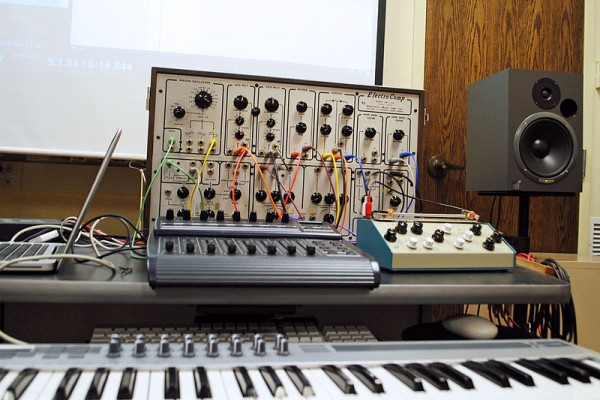
Image by Emily, via Wikimedia Commons
If you’ve taken any introductory course or even read any introductory books on music, you’ll almost certainly have heard it described as “organized sound.” Fair enough, but then what do you call disorganized sound? Why, noise of course. And all this makes perfect sense until your first encounter with the seemingly paradoxical but robust and ever-expanding tradition of noise music.
“Modern ‘noise music’ finds its roots in early electronic and industrial musics,” says Static Signals, which used to review a lot of the stuff. “Where composers began expanding their vocabulary of sound and instrumentation is where the concept of ‘noise’ begins: what sounds can produce music and which are purely static or noise? For some, music’s outer boundary is defined by western European classical instruments designed hundreds of years ago and the sounds, pitches, rhythms they can (classically) produce. For others, no sound, rhythm, tone, or pitch is off limits; music can be made by anything that can vibrate air.”
The development of electronic musical instruments — and indeed, any kind of sound-manipulating electronic device — came as a great boon to this exploration of the borderlands between organized and disorganized sound. You can hear the effects of that sort of technology and much else besides in An Anthology of Noise and Electronic Music, a seven-part anthology released by formidable Belgian experimental music label Sub Rosa, all of it available on Spotify (whose software you can download here if you need it). The first two volumes are embedded above; all seven volumes can be streamed via the links below. If you dig the collection, we’d encourage you to purchase your own copy and support Sub Rosa’s project.
- An Anthology of Noise and Electronic Music #1 (Spotify playlist) features John Cage, Iannis Xenakis, DJ Spooky, and Sonic Youth (Buy on Amazon)
- An Anthology of Noise and Electronic Music #2 (Spotify playlist) features Captain Beefheart, Percy Grainger, Sun Ra, and (Eraserhead’s sound genius) Alan R. Splet (Buy on Amazon)
- An Anthology of Noise and Electronic Music #3 (Spotify playlist) features Faust, Merzbow, and Carsten Nicolai with Alva Noto (Buy on Amazon)
- An Anthology of Noise and Electronic Music #4 (Spotify playlist) features Gyorgy Ligeti, Steve Reich, and the Loop Orchestra (Buy on Amazon)
- An Anthology of Noise and Electronic Music #5 (Spotify playlist) features Pere Ubu, Dub Taylor, and Li Chin Sung aka Dickson Dee (Buy on Amazon)
- An Anthology of Noise and Electronic Music #6 (Spotify playlist) features Sachiko M, Pain Jerk, Henry Cowell, and Ultraphonist (Buy on Amazon)
- An Anthology of Noise and Electronic Music #7 (Spotify playlist) features Tziga Vertov, Cabaret Voltaire, Novi_sad — and, to end the anthology, a piece both anonymous and untitled (Buy on Amazon)
To the noise music-uninitiated — and probably even to a few of the initiated — some of the tracks here will sound like music, and some certainly won’t. But most of them fall fascinatingly in-between the two states, ideally expanding the listener’s conception of the sonic territory music can explore. Some musical experiments, just like scientific experiments, point in more fruitful directions than others, but each one sheds a little new light on the musical enterprise itself. And “the noise,” to take the words straight from Sub Rosa themselves, “goes on…”
Related Content:
The Music of Avant-Garde Composer John Cage Now Available in a Free Online Archive
Hear the Experimental Music of the Dada Movement: Avant-Garde Sounds from a Century Ago
Hear Albums from Brian Eno’s 1970s Label, Obscure Records
The History of Electronic Music in 476 Tracks (1937–2001)
Hear Seven Hours of Women Making Electronic Music (1938- 2014)
How the Moog Synthesizer Changed the Sound of Music
Based in Seoul, Colin Marshall writes and broadcasts on cities, language, and style. He’s at work on a book about Los Angeles, A Los Angeles Primer, the video series The City in Cinema, the crowdfunded journalism project Where Is the City of the Future?, and the Los Angeles Review of Books’ Korea Blog. Follow him on Twitter at @colinmarshall or on Facebook.
Read More...Watch the Titanic Sink in Real Time in a New 2‑Hour, 40 Minute Animation
From the makers of Titanic: Honor and Glory–a PC video game that lets you sail aboard a fully detailed re-creation of the RMS Titanic–comes an animation that lets you watch the sinking of the Titanic in real time. According to the web site Titanic Facts, the ship sank in two hours and 40 minutes in 1912. And that’s precisely how long things take to unfold in the video above. The animation narrates the events in a fairly straightforward way–nothing like the dramatic scenes painted in James Cameron’s 1997 fictionalized film. But it’s still worth the watch.
In the Relateds below, you can check out two related clips — a vintage clip showing footage of the actual Titanic in 1911, and another animated reenactment of the Titanic sinking, this one created by Cameron himself.
If you would like to support the mission of Open Culture, consider making a donation to our site. It’s hard to rely 100% on ads, and your contributions will help us continue providing the best free cultural and educational materials to learners everywhere. You can contribute through PayPal, Patreon, and Venmo (@openculture). Thanks!
Related Content:
The Titanic: Rare Footage of the Ship Before Disaster Strikes
How the Titanic Sank: James Cameron’s New CGI Animation
Read More...Brian Eno Creates a List of His 13 Favorite Records: From Gospel to Afrobeat, Shoegaze to Bulgarian Folk
For most of us, making a list of our favorite albums involves no small amount of nostalgia. We remember highlights from high school and college: songs on constant rotation after breakups and during summers of bliss. More so than any other media we consume, music—from classical to the most commercial pop—feels deeply personal.
But there are many other ways to relate to music. Brian Eno’s journey through the world of recorded sound, for example, more resembles that of a 19th century explorer. He gravitates toward the culturally exotic, makes studious observations, and advances hypotheses and theories. In reading through an interview he gave to The Quietus for their “baker’s dozen” series—in which they ask famous artists to name their top 13 albums—one theme emerges in the way Eno talks about music: discovery.
And as Eno reminds us in his commentary on his first pick—a gospel record by Reverend Maceo Woods and The Christian Tabernacle Choir—one precursor to discovery is curiosity, unbounded by prejudice or preconception. It’s an approach that has enabled him to create some of the most consistently interesting records decade after decade (hear 150 Eno tracks here), and to remain relevant long after most of his ’70s peers have disappeared.
Eno first heard, or misheard, the gospel group on U.S. radio. To his ears, the refrain “surrender to His will” sounded like “surrender to the wheel,” a cryptic phrase that provoked all sorts of associations. But even after he learned the real lyric, he was hooked on the group’s sound, and wanted to know more, though he himself is entirely non-religious.
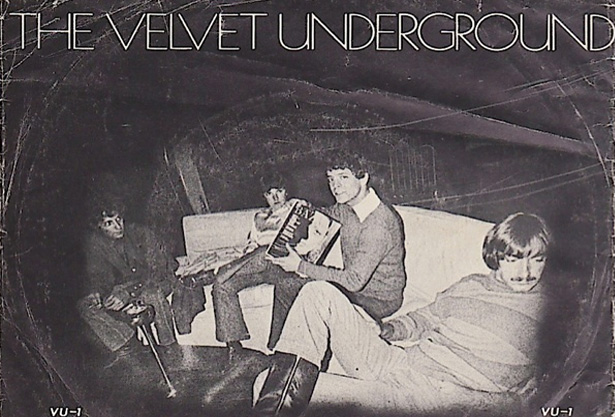
“Why am I so moved by a music based on something that I just don’t believe in?,” Eno asked himself. His response ranges into philosophical territory, then ends on an unexpectedly upbeat note. If it surprises you that one of Eno’s favorite albums is an obscure record by an amateur gospel group, take a look at the rest of his picks. We’d expect the Velvet Underground to appear—given his famous comment about their massive influence—and they do. The rest is a collection of wild cards. See the eclectic list below and stop by The Quietus to read Eno’s thoughtful, candid commentary on each album.
The Dynamic Reverend Maceo Woods and The Christian Tabernacle Choir in Concert, by Reverend Maceo Woods and The Christian Tabernacle Choir
Farid El Atrache, by Farid El Atrache
Umut, by Arif Sag
“Go Where I Send Thee,” The Golden Gate Quartet (single)
Fresh, by Sly and the Family Stone
Plantation Lullabies, Me’Shell NdegeOcello
The Velvet Underground, by The Velvet Underground
Early Works, by Steve Reich
Afrodisiac, by Fela Ransome-Kuti & The Africa ‘70
Glider, by My Bloody Valentine
Heartland, by Owen Pallett
Grande Liturgie Orthodoxe Slave, by Chœur Bulgare Svetoslav Obretenov
Court and Spark, by Joni Mitchell
via The Quietus
Related Content:
David Bowie Lists His 25 Favorite LPs in His Record Collection: Stream Most of Them Free Online
Tom Waits Makes a List of His Top 20 Favorite Albums of All Time
Kurt Cobain Lists His 50 Favorite Albums: Features LPs by David Bowie, Public Enemy & More
Josh Jones is a writer and musician based in Durham, NC. Follow him at @jdmagness
Read More...Shakespeare and His World: Free Shakespeare Course Starts Today, During the 400th Anniversary of the Bard’s Death
Coinciding with the 400th anniversary of Shakespeare’s death, the University of Warwick (located just 16 miles from Shakespeare’s hometown of Stratford-Upon-Avon) has teamed up with the Shakespeare Birthplace Trust to run a free 10-week online course starting on April 18th. The course explores not only the great writer’s work, but his world too — you might even say it’s such stuff as dreams are made on.
Sir Jonathan Bate will introduce a new play each week, examining it in relation to cultural themes and treasures from the Shakespeare Birthplace Trust’s archives. In fact this course offers unprecedented access to the famous vaults of the Trust where thousands of rare artefacts are kept.
Here’s a quick run through of what each week covers:
Week 1: An Introduction to Shakespeare and his World
Week 2: Shakespeare and Stratford — The Merry Wives of Windsor
Week 3: The Birth of Theatre — A Midsummer Night’s Dream
Week 4: The World at War — Henry V
Week 5: Money and the City — The Merchant of Venice
Week 6: Witches and Doctors — Macbeth
Week 7: The Clash of Civilisations — Othello
Week 8: The Roman Example — Antony & Cleopatra
Week 9: O Brave New World — The Tempest
Week 10: The Cult of Shakespeare
You can find the free course Shakespeare and his World on FutureLearn. The last time this course ran it attracted over 40,000 learners around the world so it might be time to brush up on your Shakespearean lingo. The course starts today.
Jess Weeks is a copywriter at FutureLearn. Her favourite Shakespearean insult is ‘you egg’ because it’s both simple and strange.
Related Content:
Free Online Shakespeare Courses: Primers on the Bard from Oxford, Harvard, Berkeley & More
Read More...
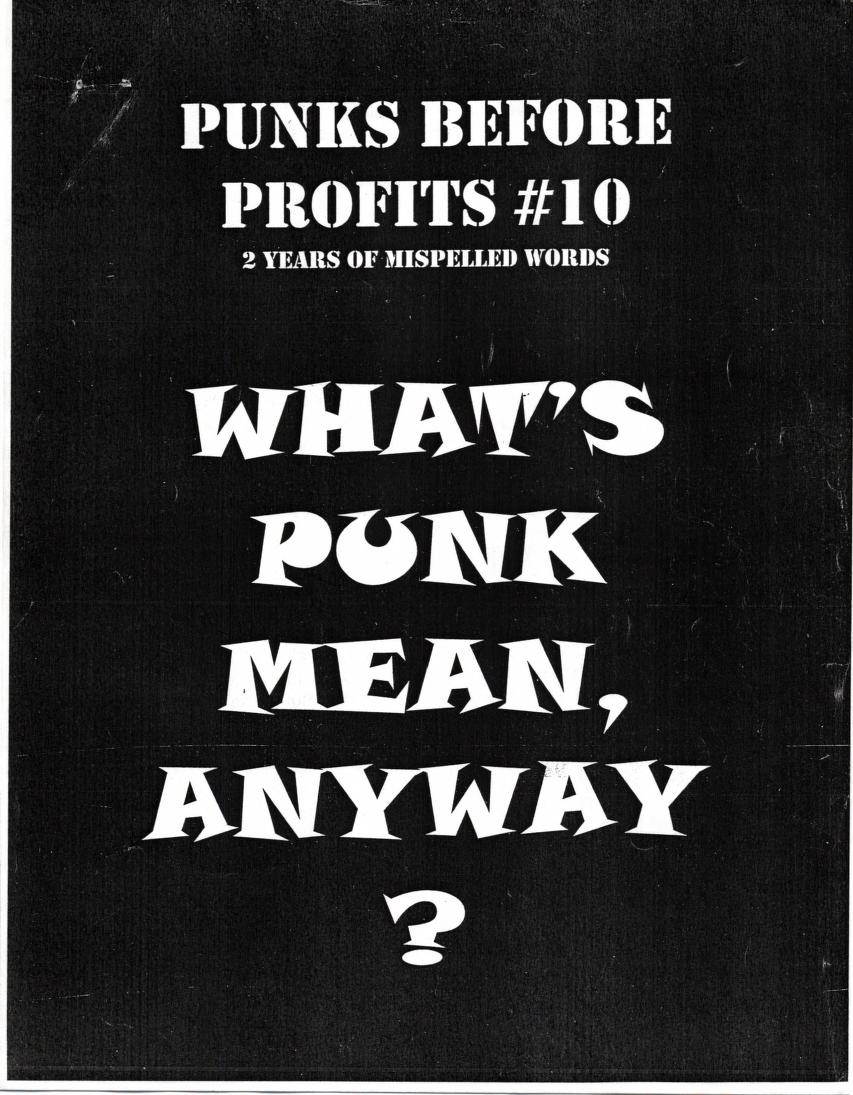
Download 834 Radical Zines From a Revolutionary Online Archive: Globalization, Punk Music, the Industrial Prison Complex & More
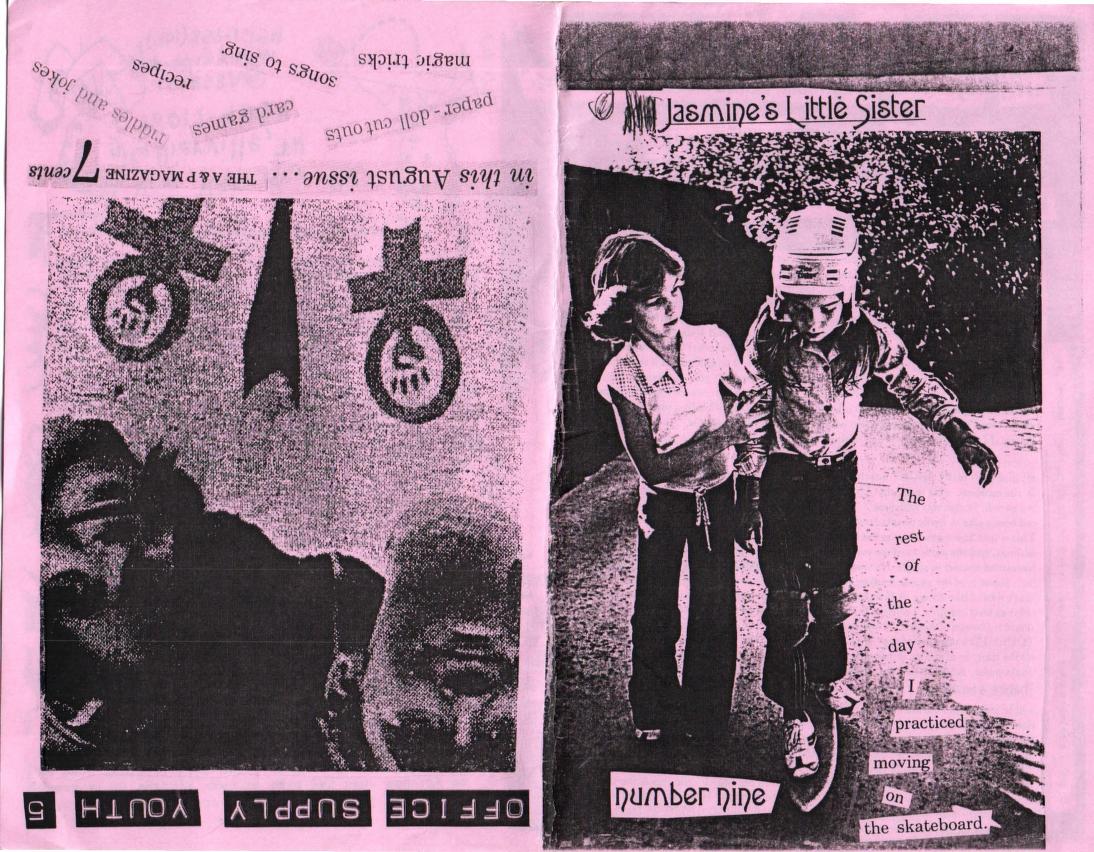
Whatcha mean, “what’s a zine”?
Some say Thomas Paine originated the concept in 1776, when he self-published the pamphlet, Common Sense… an assertion author and cultural critic Greil Marcus would likely find a “spurious” attempt to confer legitimacy on a movement that occupies the societal fringes by definition.
No matter how many readers they attract, the creators of these small-circulation labors of love take their agendas very seriously. Whether the ultimate goal is to inform, to agitate, to smear or to celebrate, their contents are as raw as the cut-and-paste aesthetic that provided their defacto look, pre-Etsy.
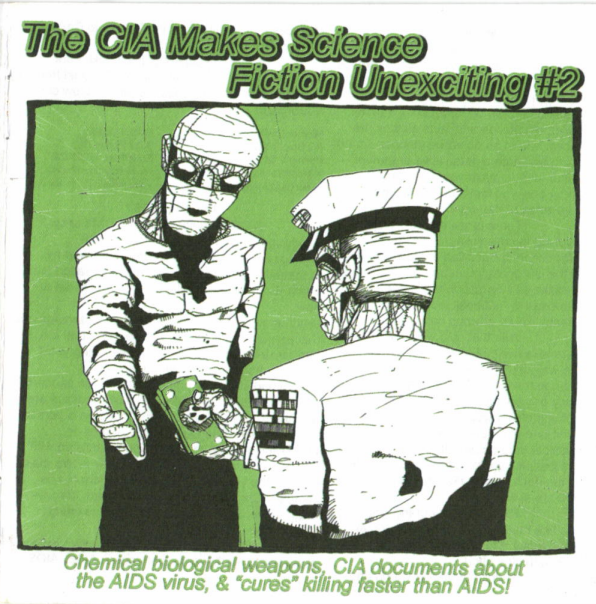
While some zinesters are good about preserving master copies and donating back issues to zine libraries, many others’ titles fall through the cracks of history, as the makers age out of the practice, or move on to other interests.
Individual zines’ best chance at survival lies in academia, where experienced archivists and fleets of interns have the time and resources to catalogue and digitize thousands of poorly photocopied, often handwritten pages.
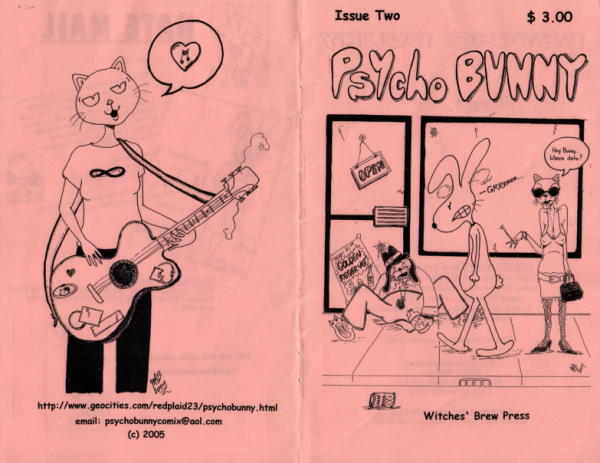
Duke University’s Sallie Bingham Center for Women’s History and Culture boasts over 4000 feminist zines.
Temple University’s Science Fiction Fanzine Collection takes up nearly 100 boxes (or 46.5 linear feet).

The most recent archive is a 1000-title-strong radical collection that landed at the University of Kansas. Donated by the Solidarity! Revolutionary Center and Radical Library, a still-active, non-hierarchical, information-sharing collective in Lawrence, these zines cover a wide spectrum of activist history and concerns. You can now find and download about 834 of these zines online.
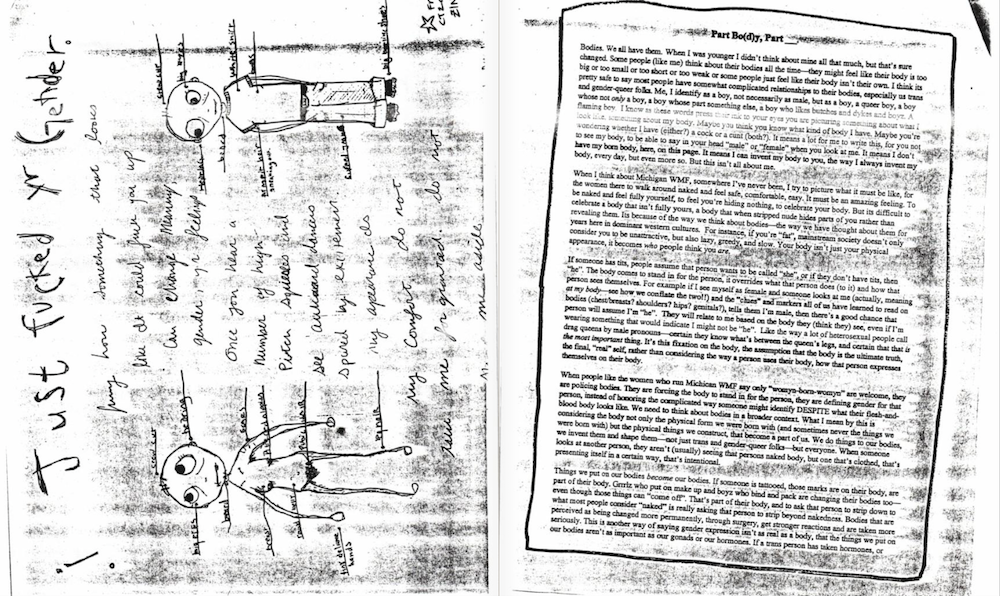
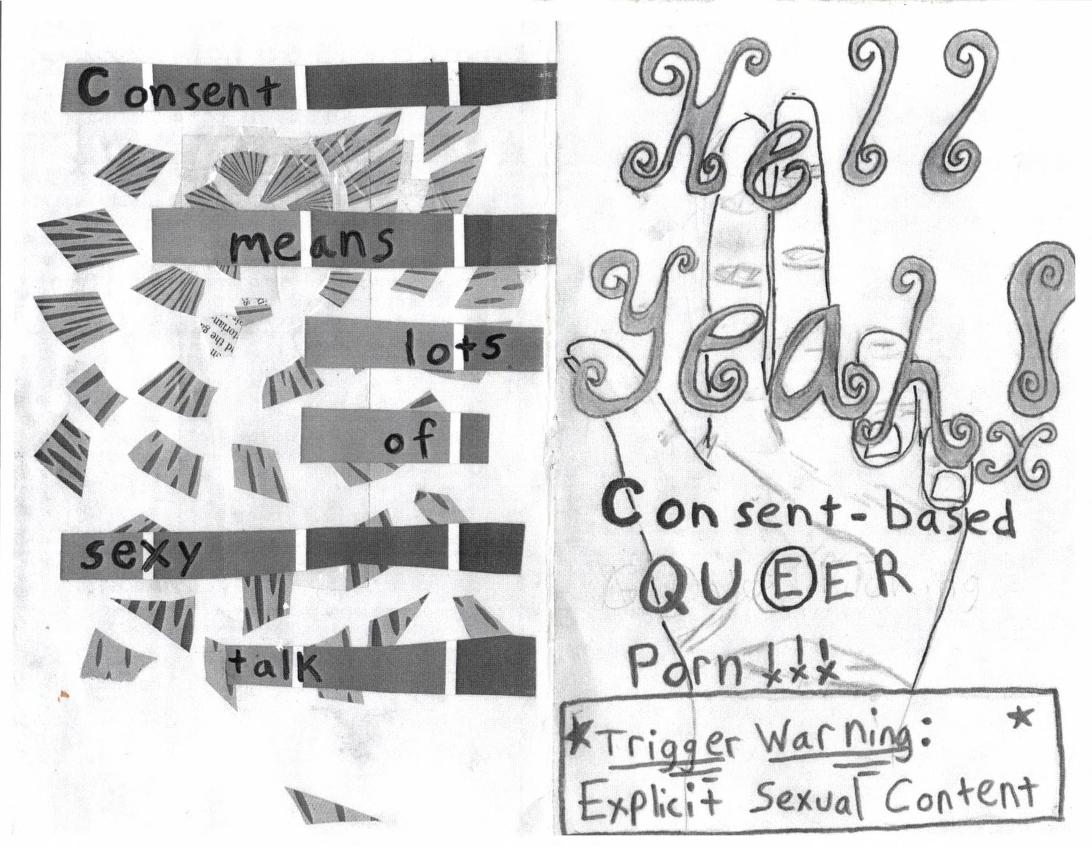
Titles such as Camp Trans: Gender Camp Zine, Hell Yeah! Consent Based Queer Porn and CoExist were providing a clear, first-person window on the LGBTQ world years before the mainstream media thought to follow suit.
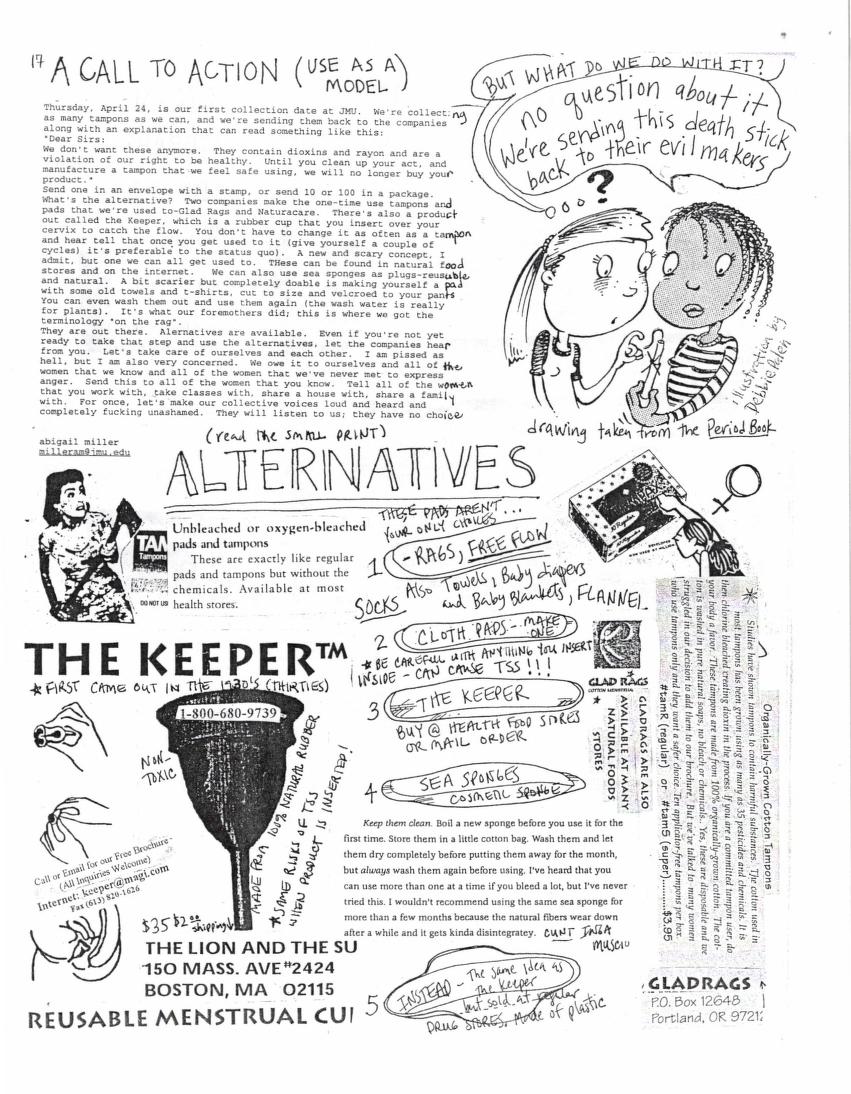
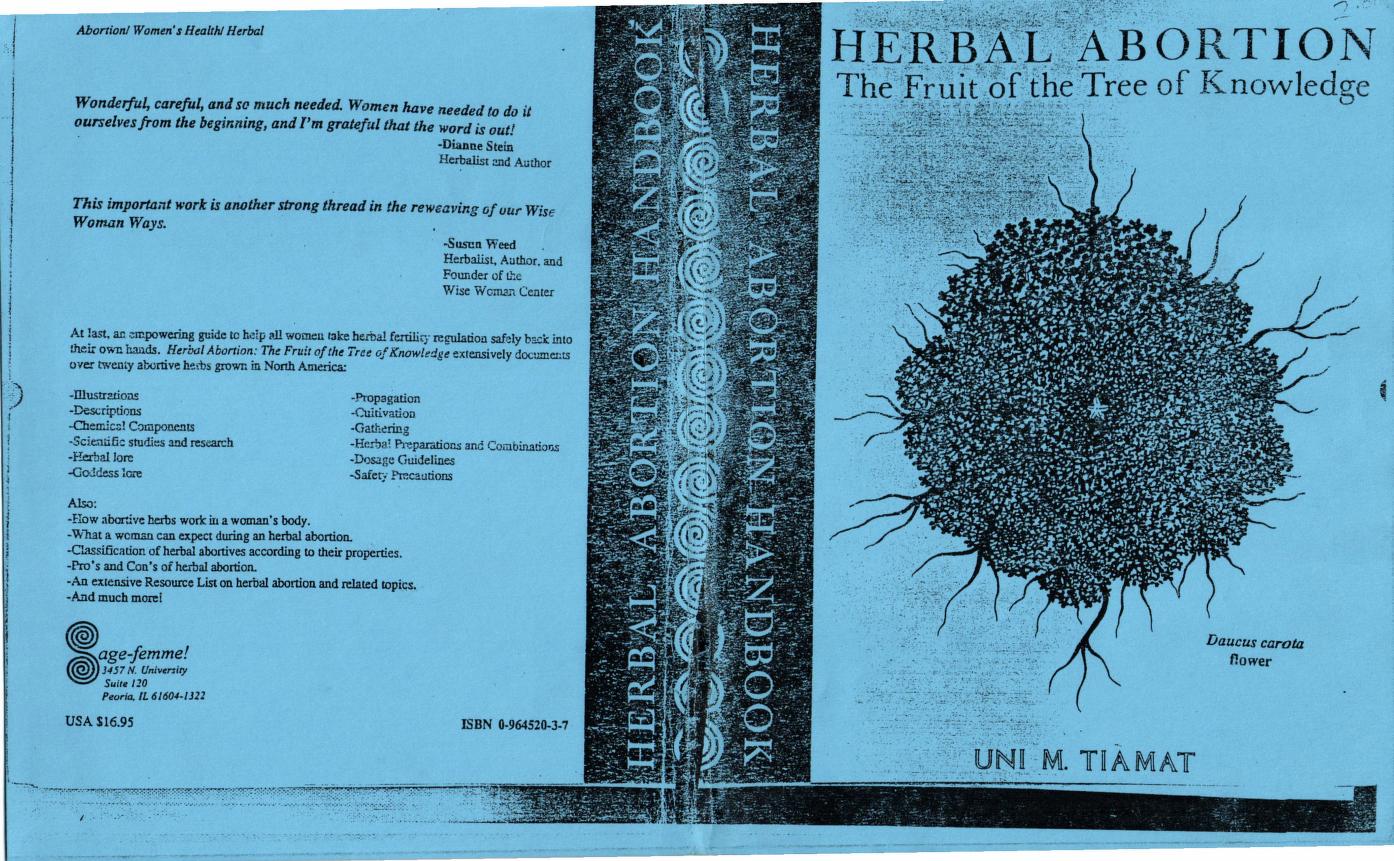
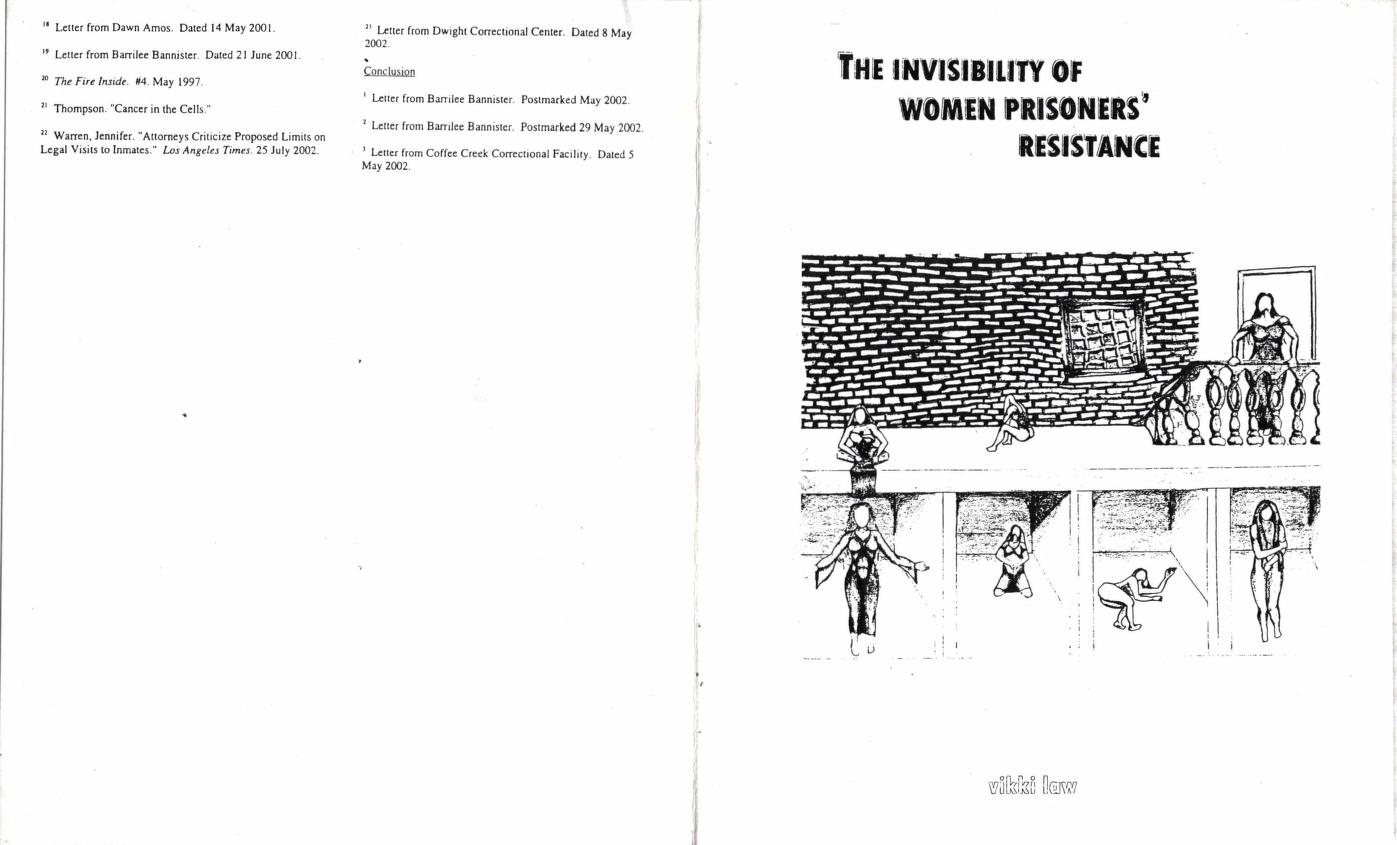
Sisterhood is not just powerful, but palpable in Femmenstruation Rites Rag, Herbal Abortion: The Fruit of the Tree of Knowledge, and The Invisibility of Women Prisoners’ Resistance.

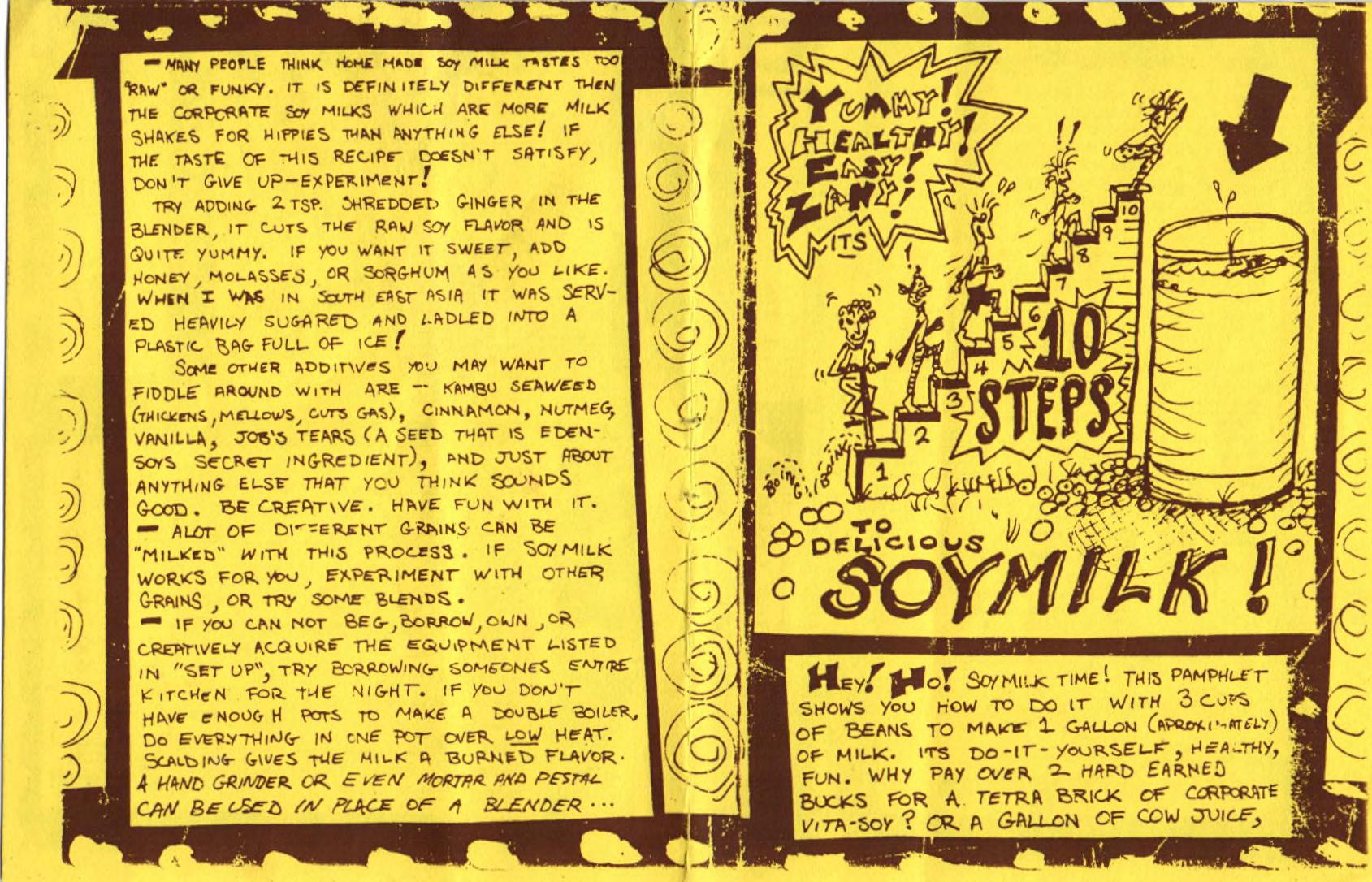
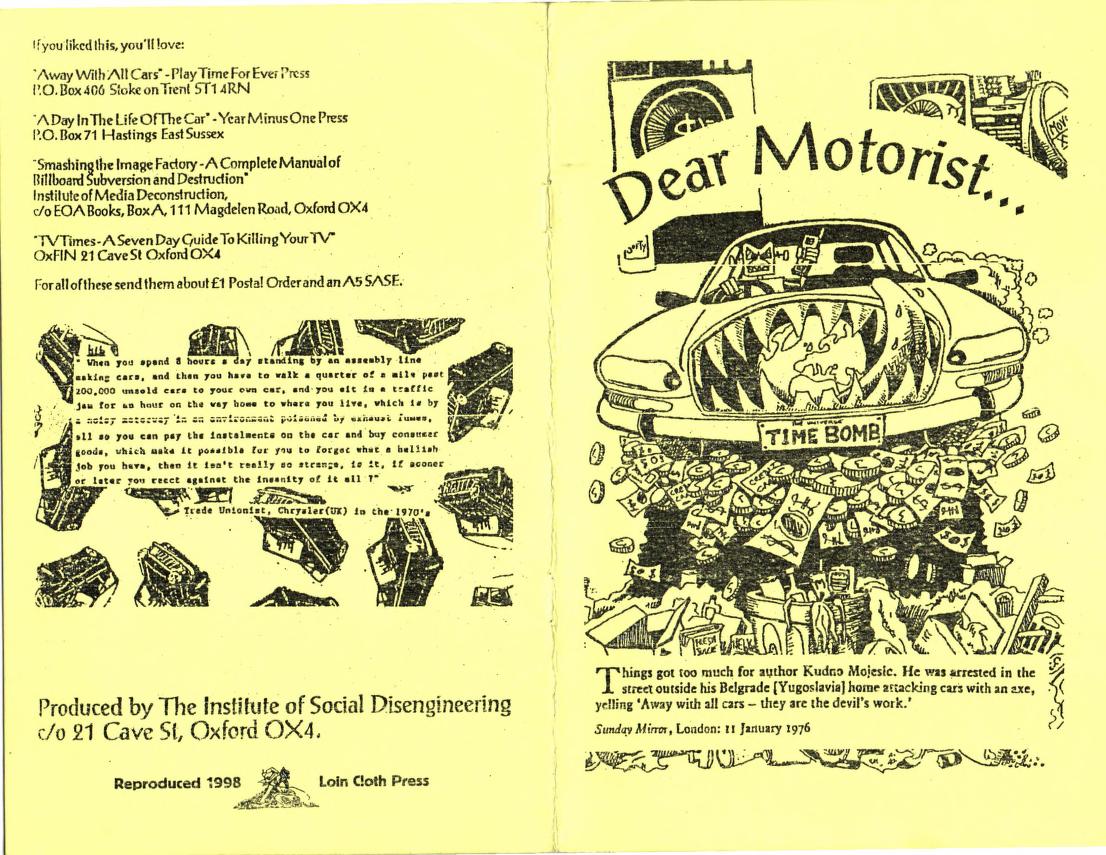
Sustainability starts at home with Urban Permaculture, Ten Steps to Delicious Soymilk! and Dear Motorist….
Other topics include race, globalization, veganism, animal rights, and anarchy.
Unsurprisingly, the largest number of titles falls into the Music category. Before the Internet, punk shows were the most reliable channel of zinely distribution, and few of these fanzines are devoid of political content.
Below, Kansas University English professor Frank Farmer (who arranged for the donation) and archivist Becky Schulte discuss the importance of “counter-public documents” and zine culture.
You can explore 830 digitized examples from the Solidarity archives online here.
Related Content:
The Whole Earth Catalog Online: Stewart Brand’s “Bible” of the 60s Generation
The Online Knitting Reference Library: Download 300 Knitting Books Published From 1849 to 2012
Extensive Archive of Avant-Garde & Modernist Magazines (1890–1939) Now Available Online
Ayun Halliday is an author, illustrator, and Chief Primatologist of the East Village Inky zine. A large portion of her zine collection and papers are being processed by the Sallie Bingham Center at Duke University and will be available for research later this year. Follow her @AyunHalliday
Read More...Spike Lee Directs, “Wake Up,” a Five-Minute Campaign Film for Bernie Sanders
Earlier this month Spike Lee and Bernie Sanders, two Brooklyn natives, sat down and talked about politics and the state of our nation. Now, with the New York primary right around the corner, Spike drew on his filmmaking talents and directed a five-minute political campaign film for Bernie. It’s called simply “Wake Up,” and it features cameos by Dr. Cornel West, Susan Sarandon, and Harry Belafonte.
I can’t recall another instance where a major filmmaker shot an ad for a presidential candidate. If we’re overlooking something obvious (or less obvious), let us know in the comments and we’ll maybe feature it during this campaign season.
If you would like to support the mission of Open Culture, consider making a donation to our site. It’s hard to rely 100% on ads, and your contributions will help us continue providing the best free cultural and educational materials to learners everywhere. You can contribute through PayPal, Patreon, and Venmo (@openculture). Thanks!
Related Content:
Bernie Sanders: I Will Be an Arts President
Spike Lee’s List of 95 Essential Movies – Now with Women Filmmakers
Allen Ginsberg’s Handwritten Poem For Bernie Sanders, “Burlington Snow” (1986)
Read More...John Cage Performs His Avant-Garde Piano Piece 4′33″ … in 1′22″ (Harvard Square, 1973)
We’ve seen various performances of John Cage’s famous silent piece 4′33″. But never during our decade digging up cultural curiosities have we encountered 4′33″ performed by Cage himself. That is, until now. Above you can watch a video outtake from Nam June Paik’s Tribute to John Cage, filmed in 1973, in Harvard Square. Boston’s WBGH describes the scene:
In the video he is seated at a piano, with spectators surrounding him. He toys with his viewer’s expectations by not playing the piano, which is what the general populace would expect from a performance involving a piano. On the piano shelf there are a pocket watch and a slip of paper. He keeps touching and looking at the pocket watch which draws the audience’s attention to the idea of time, and that they are waiting for something to happen, and he also raises and lowers the piano fallboard. There is also text that appears in this particular video that says “This is Zen for TV. Open your window and count the stars. If rainy count the raindrops on the puddle. Do you hear a cricket? …or a mouse.”
Another unconventional item to add to the list: Cage performs 4′33″ in 1′22″!
For a closer look at 4′33″ read Josh Jones’ earlier post on the Curious Score for John Cage’s “Silent” Zen Composition 4’33.” For more music by Cage, stream this free 65-hour playlist.
If you would like to support the mission of Open Culture, consider making a donation to our site. It’s hard to rely 100% on ads, and your contributions will help us continue providing the best free cultural and educational materials to learners everywhere. You can contribute through PayPal, Patreon, and Venmo (@openculture). Thanks!
Related Content:
See the Curious Score for John Cage’s “Silent” Zen Composition 4’33”
The Music of Avant-Garde Composer John Cage Now Available in a Free Online Archive
How to Get Started: John Cage’s Approach to Starting the Difficult Creative Process
Read More...The Birth of London’s 1950s Bohemian Coffee Bars Documented in a Vintage 1959 Newsreel
I live in Seoul, by some measures the most coffee shop-saturated city in the world. But modern coffee life here (which I recently wrote about for the Los Angeles Review of Books) only really developed after Starbucks came to town around the turn of the 21st century. We’ve now got more Starbucks locations per capita than anywhere else, and even so, the homegrown Korean chains well outnumber those under the green mermaid. To understand how the coffee-house culture we know across the world today took its shape, we have to look back to London in the late 1950s, specifically as captured in the Look at Life newsreel on the city’s bohemian coffee house boom just above.
“Coffee is big business,” says its narrator, over a montage of neon signs advertising places like The Coffee House, Las Vegas Coffee Bar, Heaven & HELL Coffee Lounge, and La Roca. “The coffee bar boom in Britain began in 1952, when the first espresso machine arrived from Italy and was set up here, in London’s Soho.” The city’s many entrepreneurs vigorously seized the opportunity — maybe too vigorously, since “for every three coffee bars that opened up, two closed down.” They hadn’t planned on a few different factors, including overhead high enough that “if a character sits for half an hour over one cup of coffee, his share of the rent, heat, light, and service mount to the point where the management is paying him.”
They should’ve counted themselves lucky that the likes of me and my generation weren’t alive back then to, on a similarly single coffee, spend half the day typing on our laptops. But London’s midcentury coffee houses soon learned to diversify, offering Look at Life plenty–in its vivid colors and with its broad sense of humor–of life to look at: we see coffee bars hopping with live music and those who dance to it; jukebox coffee bars geared toward pompadoured hipsters; the film industry-beloved coffee bar in which T.S. Eliot once wrote the immortal line, “I have measured out my life with coffee spoons”; an “invisible coffee house” behind whose false newsstand front “curious characters congregate”; the Moka, which William S. Burroughs once shut down with his cut-up techniques; and even the famous Le Macabre, decorated with countless skeletal mementos mori.
The newsreel also finds its way to a coffee shop established by a newspaper where “university students and other assorted eggheads meet to put the world right — or more often left,” which reminds me of Guardian Coffee, a pop-up coffee house in a shipping-container complex in London’s Shoreditch (in some sense, the Soho of the 21st century) co-run by the eponymous newspaper, which I visited on my last trip to England. The Guardian Coffee experiment has since ended, but the Guardian has retained its interest in the beverage itself, as evidenced by recent articles like Rosie Spinks’ “The Caffeine Curse: Why Coffee Shops Have Always Signaled Urban Change.”
“As the coffee shop has become a byword for what everyone hates about urban change and gentrification – first come the creatives and their coffee shops, then the young professionals, then the luxury high-rises and corporate chains that push out original residents – it’s worth asking if that charge is fair,” Spinks writes. “As the function of the coffee house in London has evolved over time, was its early iteration so radically different than the ones many of us type and sip away in today?” And whatever form they take, coffee houses remain, as Look at Life calls them, “bright — or dim — fanciful, imaginative new additions to the British scene.” Or the American scene, or the Korean scene, or indeed the global scene.
Related Content:
The Curious Story of London’s First Coffeehouses (1650–1675)
“The Vertue of the COFFEE Drink”: London’s First Cafe Creates Ad for Coffee in the 1650s
The History of Coffee and How It Transformed Our World
Based in Seoul, Colin Marshall writes and broadcasts on cities, language, and style. He’s at work on a book about Los Angeles, A Los Angeles Primer, the video series The City in Cinema, the crowdfunded journalism project Where Is the City of the Future?, and the Los Angeles Review of Books’ Korea Blog. Follow him on Twitter at @colinmarshall or on Facebook.
Read More...Hear What It Sounds Like When Philosopher Daniel Dennett’s Brain Activity Gets Turned into Music
The refinements of medical imaging technologies like fMRI have given neuroscientists, psychologists, and philosophers better tools with which to study how the brain responds to all sorts of stimuli. We’ve seen studies of the brain on Jane Austen, the brain on LSD, the brain on jazz improv…. Music, it seems, offers an especially rich field for brain research, what with its connection to language, bodily coordination, mathematics, and virtually every other area of human intelligence. Scientists at MIT have even discovered which specific regions of the brain respond to music.
And yet, though we might think of music as a discrete phenomenon that stimulates isolated parts of the brain, Brownell professor of philosophy Dan Lloyd has a much more radical hypothesis, “that brain dynamics resemble the dynamics of music.”
He restates the idea in more poetic terms in an article for Trinity College: “All brains are musical—you and I are symphonies.” Plenty of people who can barely whistle on key or clap to a beat might disagree. But Lloyd doesn’t mean to suggest that we all have musical talent, but that—as he says in his talk below—“everything that goes on in the brain can be interpreted as having musical form.”
To demonstrate his theory, Lloyd chose not a musician or composer as a test subject, but another philosopher—and one whose brain he particularly admires—Daniel Dennett. And instead of giving us yet more colorful but baffling brain images to look at, he chose to convert fMRI scans of Dennett’s brain—“12 gigabytes of 3‑d snapshots of his cranium”—into music, turning data into sound through a process called “sonification.” You can hear the result at the top of the post—the music of Dennett’s brain, which is apparently, writes Daily Nous, “a huge Eno fan.”
In his paper “Mind as Music,” Lloyd argues that the so-called “language of thought” is, in fact, music. As he puts it, “the lingua franca of cognition is not a lingua at all,” an idea that has “aftershocks for semantics, method, and more.” Several questions arise: I, for one, am wondering if all our brains sound like Dennett’s abstract ambient score, or if some play waltzes, some operas, some psychedelic blues.…
You can learn much more about Lloyd’s fascinating research in his talk, which simplifies the technical language of his paper. Lloyd’s work goes much further, as he says, than studying “the brain on music”; instead he makes a sweepingly bold case for “the brain as music.”
via Daily Nous
Related Content:
This is Your Brain on Jazz Improvisation: The Neuroscience of Creativity
The Neuroscience of Drumming: Researchers Discover the Secrets of Drumming & The Human Brain
New Research Shows How Music Lessons During Childhood Benefit the Brain for a Lifetime
Josh Jones is a writer and musician based in Durham, NC. Follow him at @jdmagness
Read More...Support Us
We're hoping to rely on loyal readers, rather than erratic ads. Please click the Donate button and support Open Culture. You can use Paypal, Venmo, Patreon, even Crypto! We thank you!

About Us

Open Culture scours the web for the best educational media. We find the free courses and audio books you need, the language lessons & educational videos you want, and plenty of enlightenment in between.
Advertise With Us

FREE UPDATES!
GET OUR DAILY EMAIL
Get the best cultural and educational resources on the web curated for you in a daily email. We never spam. Unsubscribe at any time.
FOLLOW ON SOCIAL MEDIA

Open Culture editor Dan Colman scours the web for the best educational media. He finds the free courses and audio books you need, the language lessons & movies you want, and plenty of enlightenment in between.
Advertise With Us


