A Tour of Stanley Kubrick’s Prized Lens Collection
One of the many reasons Stanley Kubrick was such a formidable filmmaker was that he came to cinema after many years as a photographer for publications like Look magazine. Not only did that give him the kind of eye that knew how to tell (and sell) visually and with maximum efficiency, it meant that he really knew his camera and by extension his lenses. He knew what each lens could do, its strengths and weaknesses, and–as in those days, all were hand-ground–their individual personalities.
Very few directors keep up with camera tech–that’s usually the job of the cinematographer–but Kubrick did. Although he wasn’t the first director to use Steadicam, he was the first (on The Shining) to get the rig modified so it could coast close to the ground.
In this video, Joe Dunton, who owned one of the major camera rental facilities in London and worked very closely with Kubrick, takes us on a tour of Kubrick’s lens collection. For those who went to the traveling Kubrick exhibit two to three years ago, a selection of these were on display, and Dunton’s interview seems to have been part of a similar show in Frankfurt.
Kubrick was a tinkerer, and many of the lenses here he modified himself, combining bodies, or changing a still camera lens so that it could mount onto his favorite film camera, the Arriflex IIc, a relatively small handheld movie camera that he often operated himself.
The director rarely rented, preferring to buy his own lenses to keep. He was also a big fan of using natural light when he could–further evidence of the influence of his photojournalism career. Natural light could be as dim as the flicker of a candle, which led to the use of a Zeiss lens designed for NASA as a way of photographing space–Kubrick used it for the evening shots in Barry Lyndon in order to capture candlelight.
Also shown, the highly coveted Angenieux 10-to‑1 zoom lens, and what would a Kubrick film be without those iconic slow zooms.
If there is an unsung hero in all this, it’s a man named George Hill, who was Kubrick’s go-to-guy when he needed a lens created. It was the only guy he trusted to clean his lenses.
Related Content:
Stanley Kubrick’s List of Top 10 Films (The First and Only List He Ever Created)
Stanley Kubrick’s Rare 1965 Interview with The New Yorker
Ted Mills is a freelance writer on the arts who currently hosts the FunkZone Podcast. You can also follow him on Twitter at @tedmills, read his other arts writing at tedmills.com and/or watch his films here.
Read More...Watch Classic Performances from Maria Callas’ Wondrous and Tragically-Short Opera Career
“Histrionic” is not a word we often hear used as a compliment, describing as it does overwrought, theatrical, melodramatic behavior we tend to frown on in everyday life. In the opera world, however, one can rightly praise a diva like the late Maria Callas for her “histrionic power.” Jason Victor Serinus uses the phrase in an article on Callas for San Francisco Classical Voice, and also writes of Callas’ “coloratura agility,” “stylistic authenticity,” “mesmerizing stage presence” and “increasingly scandalous behavior.”
That last description refers in part to a break in Callas’ life and career in 1959 when she left her husband and manager Giovanni Battista Meneghini and took up with Aristotle Onassis. That relationship ended in heartbreak, and after several attempts to reclaim her former glory in the seventies, Callas’ own heart finally gave out: in 1977, she died of what may have been a drug-induced heart attack in Paris, her last years, writes Serinus, “a real tragedy of operatic proportions.”
We also, of course, think of another break in Callas’ life—with opera itself, which she left behind as her widely-praised vocal ability diminished rather dramatically in her 40s, an effect, perhaps, of rapid weight loss early in her career or—as critic and voice teacher Conrad Osborne speculates in an NPR profile—of a “lack of proper technique to sustain her ambitious repertoire.” And yet, writes NPR, it was Callas’ “imperfections” that “set her apart,” along with “her ability to find the emotional meaning in a role.” But as much as Callas has been lauded for her “sensational voice,” she has as often been derided in proportionately unflattering terms.
Critic Terry Teachout describes Callas’ voice as one of “ugly beauty,” taking a phrase from Thelonious Monk. The contrast expresses the range of opinions critics and audiences have held about Callas. While “much of what is written about her,” Teachout observes, “is the work of adoring fans whose worshipful prose is apt to make cooler heads a bit queasy,” those cooler heads have always found subtle and not so subtle ways of insulting her distinctive voice or striking looks. (“She contrived through sheer force of will to persuade audiences that she was a great beauty,” sneers Teachout, “with an even greater voice.”) Callas, in other words, inspires devotion and vituperation—but no one sees her perform and remains unmoved.
Was Maria Callas’ rise to fame a “con job,” as Teachout provocatively alleges? Isn’t all great performance something of a con? In any case, I doubt anyone could fool so many devoted opera fans into believing in characters as wholeheartedly as millions have believed in Callas’ Rosina from Rossini’s Barber of Seville (top from 1958), or in her Norma from Bellini’s challenging bel canto opera (below it, from the same year). Were audiences unable to see through the range of her stunning performances in the two Hamburg concerts from 1959 and 1962 (further down)? Could no one discern how flawed her Covent Garden performance, above, or her bravura turn in the title role of Bizet’s Carmen, below, both from 1962?
Of course they heard the flaws. They were part of her appeal. NPR quotes University of Southern California professor Tim Page, who points to Callas’ “ferocity” and “intensity” in the role of Carmen. Before Callas, singers “would concentrate only on nice melodies, prettily sung. Callas’ Carmen was not necessarily very pretty, but it was thrilling.” At the height of her powers, Callas brought a robust strength and personality to the opera that had been missing from the form, and recovered, writes Serinus, “a host of bel canto rarities that had ceded from the stage because of a decline in vocal technique among then-living singers.”
Though Callas’ own technique comes in for much critique—deservedly or not, I can’t say—no one can ever accuse her of timidity or conservatism in an arena that demands courage and flamboyance, that demands, in a word, “histrionics.” The history of 20th century opera, Serinus writes, can rightly be divided “with the terms B.C. and A.C.—Before Callas and After Callas…. [Her] ascendance put an end to the era of birdsong coloraturas who chirped their way through florid mad-scenes with little regard for their emotional import.” If a certain rough bravado and self-conscious self-fashioning is what it took to restore to so many roles their depth and gravity, so be it. Callas paid a price for her outsized voice and life, and you can hear it in her weakened farewell performance, above, from 1973. But her adoring fans will forever be grateful to her for it.
Related Content:
All the Great Operas in 10 Minutes
85,000 Classical Music Scores (and Free MP3s) on the Web
Josh Jones is a writer and musician based in Durham, NC. Follow him at @jdmagness
Read More...Chess Grandmaster Maurice Ashley Plays Unsuspecting Trash Talker in Washington Square Park
Not more than two weeks ago, we took you inside the world of Maurice Ashley. As you might recall, he’s “the first African-American International Grandmaster in the annals of the game” and also a Fellow at the Media Lab at MIT. Today, Ashley released on his YouTube channel a video filmed in Washington Square Park, a place where, as New Yorkers know, you can watch some great chess players in action, schooling each other in how to play the game, and sometimes talking a little trash. In the clip above, Maurice sits down to play Wilson and gets jawboned for exactly four minutes, until (to mix metaphors) it’s game, set and match. Enjoy the action.
If you would like to support the mission of Open Culture, consider making a donation to our site. It’s hard to rely 100% on ads, and your contributions will help us continue providing the best free cultural and educational materials to learners everywhere. You can contribute through PayPal, Patreon, and Venmo (@openculture). Thanks!
Related Content:
Claymation Film Recreates Historic Chess Match Immortalized in Kubrick’s 2001: A Space Odyssey
The Wisdom & Advice of Maurice Ashley, the First African-American Chess Grandmaster
Vladimir Nabokov’s Hand-Drawn Sketches of Mind-Bending Chess Problems
Watch Bill Gates Lose a Chess Match in 79 Seconds to the New World Chess Champion Magnus Carlsen
Read More...
Legendary Classical Guitarist Andrés Segovia Plays Timeless Pieces by J.S. Bach
“Electric guitars are an abomination,” the great Spanish classical guitarist Andrés Segovia reportedly said, “Whoever heard of an electric violin, electric cello or, for that matter, an electric singer?” We’ve now heard all those things, more or less, and civilization has not yet collapsed around our ears. Segovia, it’s said (by his most accomplished student, no less) was a bit of a snob. Or put another way, he was a purist. And while that quality may have made him a difficult person at times, and a very exacting teacher, it also gave him such devotion to his instrument, and the classical music he interpreted with it, that we will always think of the name Segovia when we think of classical guitar.
Segovia’s “mere name,” writes Joseph Stevenson, “was enough to sell out houses worldwide.” A prodigy whose technique was “superior to that which was being taught at the time,” Segovia made his debut at the age of 15. Just a few years later, he played Madrid, the Paris Conservatory, and Barcelona, then, in 1919 made a “wildly successful” tour of South America. When he returned, the composer Albert Roussel wrote a piece specifically for him, which he performed in Paris, “the first of many works,” Stevenson writes, “written for him by distinguished composers…. There were classical guitarists before him, and distinguished ones even when he appeared, but it was not an instrument that was regarded as a serious vehicle for classical music. Segovia personally changed that.”
Being a pioneering instrumentalist in the classical world, Segovia was obliged to transcribe the music of his favorite composers for the guitar, including works by Haydn, Mozart, Chopin, Handel, and, as we feature here today, J.S. Bach. At the top of the post, see him play the Prelude to Bach’s Suite in G Major, written for the cello. Below it, he plays Bach’s Gavotte, also written for cello. Just above, hear the Suite in E Minor, written for the lute, and below, the Partita in E Major, penned for the violin.
Segovia’s contribution to classical music is inestimable, and though he may have looked down on popular musicians with electric guitars, many have adored him. Ringo Starr is a big fan (Segovia inspired him to pick up classical guitar). Punk frontman Ian Drury namechecked the classical master in a song. And Segovia has more in common with pop musicians than he would have ever liked to admit—taking up guitar against both his parents’ strong objections and becoming a self-taught superstar at an early age. He may be firmly ensconced in the classical world musically, but as far as his fame and reputation goes, Segovia was a rock star.
You can listen to Segovia’s complete Bach recordings over at Spotify.
Related Content:
All of Bach is Putting Bach’s Complete Works Online: 100 Done, 980 to Come
Download the Complete Organ Works of J.S. Bach for Free
The Story of the Guitar: The Complete Three-Part Documentary
Josh Jones is a writer and musician based in Durham, NC. Follow him at @jdmagness
Read More...An Animated Introduction to Leo Tolstoy, and How His Great Novels Can Increase Your Emotional Intelligence
Despite our fondest intuitions and most cherished of cultural notions—manifested for decades in aspirational “Great Books” courses and reading lists—there is no “compelling evidence,” wrote University of York professor of philosophy Gregory Currie at the New York Times in 2013, “that suggests that people are morally or socially better for reading Tolstoy.” Or anything else for that matter.
On the contrary, responded Annie Murphy Paul at Time, “there is such evidence,” and she cites earlier psychology studies that show a link between reading fiction and empathy. Later that same year, social psychologists David Comer Kidd and Emanuele Castano published a study in Science titled “Reading Literary Fiction Improves Theory of Mind”—or, in other words, improves empathy. The study is enthusiastically picked up by Scientific American, and picked apart by Slate. In short order, Neuroscience gets in the game, and there’s talk of children’s brains “lighting up” like Christmas in response to Harry Potter and other books. The Guardian’s “Teacher Network” column finds in this science confirmation for what educators already suspected.
Like Currie, Lee Siegel at The New Yorker casts doubt on these supposedly celebratory findings. Should we require that books prove their utility, that they make us “better” in the way that, say, dietary supplements do? Is empathy really a moral quality, or simply an ability that allows the unscrupulous to better manipulate others?
This recent tempest of social science and skepticism notwithstanding, novelists have long argued that their craft requires, and fosters, better understanding of other people—or in the famous words of Kafka, which Siegel quotes dismissively, literature is “an axe to break the frozen sea inside us.” Foremost among such artists is Leo Tolstoy, who—says Alain de Botton in his School of Life video above—“was a believer in the novel not as a source of entertainment, but as a tool for psychological education and reform. It was in his eyes the supreme medium by which we can get to know others—especially those who, from the outside, might seem unappealing—and thereby expand our humanity and tolerance.”
Were Tolstoy a lesser writer, a theory like this might have produced unreadably didactic books unlikely to find much of an audience. His great literary skill makes his books engrossingly entertaining despite these intentions. Nonetheless, De Botton shows us the ways in which novels like Anna Karenina (find it in our collection of Free eBooks and Free Audio Books) teach ethical concepts like “sympathy and forgiveness.” And whether you read Tolstoy expressly to become a better person, or find personal improvement a side-effect of reading Tolstoy, I don’t think we need social scientific arguments to read Tolstoy. Indeed, though great novels may teach us many things we did not know about human complexity, their value can reside as much in the questions they ask—and that we ask of them—as in the supposed answers they provide about humanity.
Related Content:
Leo Tolstoy Creates a List of the 50+ Books That Influenced Him Most (1891)
Leo Tolstoy’s Masochistic Diary: I Am Guilty of “Sloth,” “Cowardice” & “Sissiness” (1851)
Download 55 Free Online Literature Courses: From Dante and Milton to Kerouac and Tolkien
Josh Jones is a writer and musician based in Durham, NC. Follow him at @jdmagness
Read More...You Can Now Get a Master’s Degree in Samuel Beckett: Here’s How to Apply, and Maybe Get a Scholarship
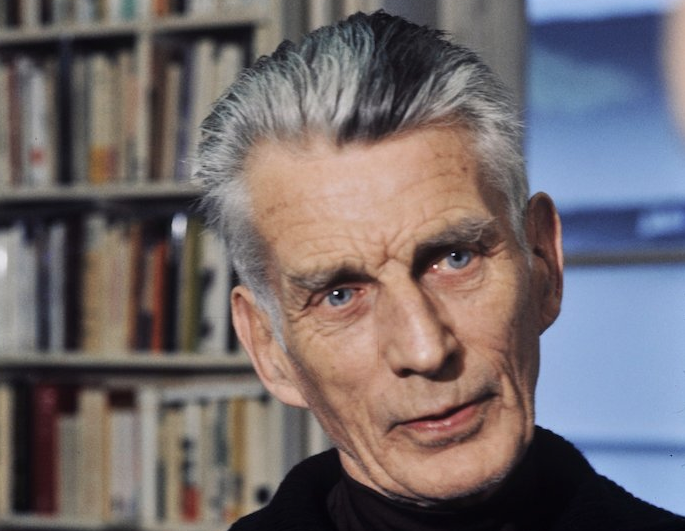
Image by Bibliothèque nationale de France, via Wikimedia Commons
FYI: The University of Reading now offers students the chance to enroll in a new Master’s degree program focusing on the work of the avant-garde novelist, playwright, theater director & poet Samuel Beckett. He’s been the subject of many past posts here on Open Culture.
Here’s what the program has to offer:
This innovative new taught MA programme on the work of Samuel Beckett is taught by world leading experts on his work: Professor Jonathan Bignell, Professor Anna McMullan, Theatre & Television and Professor Steven Matthews, Dr Mark Nixon and Dr Conor Carville in English. Here you will engage in advanced archival research techniques using the extensive holdings of the university’s world leading Samuel Beckett Collection, applying these skills to the analysis of Beckett’s writing and performance work. The MA will also provide the opportunity to explore the complex and fascinating interdisciplinary relationship Beckett demonstrated in his lifetime through his work in a variety of multimedia including film, theatre, television and radio.
You can find more information on the program here, including details on application process and the scholarship that’s being offered for the 206‑2017 academic year. If you’re looking to get better acquainted with Beckett’s work, don’t miss the items in the Relateds below.
If you would like to support the mission of Open Culture, consider making a donation to our site. It’s hard to rely 100% on ads, and your contributions will help us continue providing the best free cultural and educational materials to learners everywhere. You can contribute through PayPal, Patreon, and Venmo (@openculture). Thanks!
Related Content:
Take a “Breath” and Watch Samuel Beckett’s One-Minute Play
Hear Samuel Beckett’s Avant-Garde Radio Plays: All That Fall, Embers, and More
Samuel Beckett Directs His Absurdist Play Waiting for Godot (1985)
Monsterpiece Theater Presents Waiting for Elmo, Calls BS on Samuel Beckett
Rare Audio: Samuel Beckett Reads Two Poems From His Novel Watt
Free Online Literature Courses
Read More...Kickstart Pakistan’s First Hand-Animated Feature Film, The Glassworker, Inspired by Hayao Miyazaki
Casual animation fans have a certain mental map of where interesting animated films come from, whose highlighted places include, of course, America and Japan, as well as the Soviet republics that produced some truly strange and wonderful stuff back in the day behind the Iron Curtain. But now, a 25-year-old animator named Usman Riaz aims to put his homeland on that map as well with The Glassworker, which, should he raise its budget on Kickstarter, will become Pakistan’s very first wholly hand-animated feature film.
“Over the past five years, Riaz became known for an impressive, self-taught style of playing music that landed him the TED stage, on NPR’s Tiny Desk Concert, and an affiliation with EMI Pakistan,” writes Beckett Mufson at The Creators Project. [We featured him playing guitar here on OC 5 years ago. See the clip below.] “But rather than tumbling down the rabbit hole of a music career in Pakistan, he’s embraced his other love: animation.” Mufson quotes Riaz as remembering how, “when I was a child, I admired the way people made pictures move. I spent long hours watching films by Studio Ghibli before I could fully understand what their messages were. And they helped me see the beauty in the mundane, and the tragedy in the beautiful.”
Watch The Glassworker’s teaser at the top or its Kickstarter promo video just above, and you’ll immediately feel the influence of Studio Ghibli, makers of such already timeless movies as Nausicaä of the Valley of the Wind, My Neighbor Totoro, and Spirited Away, and its mastermind Hayao Miyazaki. Their inspiration manifests not just in the look of the film’s art, but also in its warty coming-of-age story involving a young boy, an apprentice glassworker, a young girl, and a violinist, and even in its music, which to Riaz has the utmost importance to storytelling: “The music determines the scenes for me,” he said in his Creators Project interview. “If I have a particular idea or score written down the visuals come automatically.”
If all goes according to plan and The Glassworker raises its $50,000 budget on Kickstarter within the next 45 days, Mano Animation Studios — which Riaz founded along with a group of animators, designers, and producers from not just Pakistan, but the United States, Britain, and Malaysia just for this project — will release the movie in four parts, the first of which should appear in May of next year. Now that Miyazaki has ostensibly animated his last film, his fans have kept their eyes open for a possible successor, though as Riaz himself insists, “Nothing can touch Ghibli.” But in this day and age, why shouldn’t that successor come from Pakistan?
Related Content:
The Simpsons Pay Wonderful Tribute to the Anime of Hayao Miyazaki
Watch Hayao Miyazaki Animate the Final Shot of His Final Feature Film, The Wind Rises
The Guitar Prodigy from Karachi
Based in Seoul, Colin Marshall writes and broadcasts on cities, language, and style. He’s at work on a book about Los Angeles, A Los Angeles Primer, the video series The City in Cinema, the crowdfunded journalism project Where Is the City of the Future?, and the Los Angeles Review of Books’ Korea Blog. Follow him on Twitter at @colinmarshall or on Facebook.
Read More...The Remarkable Physics of Ants: Watch Them Turn into Fluids and Solids at Will
Ants never cease to amaze us. Over the years here, we’ve watched them create a living life raft in 100 seconds flat, build surprisingly complex ant colonies, and demonstrate an uncanny kind of centralized intelligence. Now let’s add to the list the ways in which they can collectively act like a fluid or a solid, depending on the demands of a situation.
These observations were made by scientists at the Georgia Institute of Technology, who recorded the video above and presented it at a 2013 meeting of the American Physical Society. Watching the video, you can see ants wielding powers that we’ve only otherwise seen demonstrated in second tier superheroes (no offense to the Wonder Twins intended). And yet, according to The New York Times, these remarkable powers may have some practical implications, leading scientists to develop self-assembling robots and self-healing materials. By watching ants build and repair bridges for themselves, we can imagine creating bridges that automatically repair their own cracks here in the material world.
If you would like to support the mission of Open Culture, consider making a donation to our site. It’s hard to rely 100% on ads, and your contributions will help us continue providing the best free cultural and educational materials to learners everywhere. You can contribute through PayPal, Patreon, and Venmo (@openculture). Thanks!
Related Content:
Can Ants Count? Do They Have Built-In Pedometers? Animated Video Explains
Read More...Mister Rogers Turns Kids On to Jazz with Help of a Young Wynton Marsalis and Other Jazz Legends (1986)
Fred Rogers gets unfairly pegged as a square, and I can see why: the dorky sweaters, aw-shucks Jimmy Stewart demeanor, soft-spoken ethics lessons …. I mean, Mr. Rogers’ Neighborhood was no Yo Gabba Gabba, right?
Wrong. It was better. True, the man himself may not have been a style icon. And he didn’t have a hip, flashy stage show (though he does have his own amusement park ride). He knew what worked for him and didn’t try to be anything he wasn’t. But he had a very adventurous sensibility. For one thing, he gave horror auteur George Romero his first job. And when it came to music, Mr. Rogers was determined to bring his young viewers the very best, whether that meant taking breakdancing lessons from a 12-year-old or showcasing the experimental weirdness of early electronic musicians Bruce Haack and Esther Nelson.
But Rogers’ true love was jazz—his show was full of it thanks to longtime musical director Johnny Costa and an ensemble that included guitarist Joe Negri. In the episode above from 1986, Rogers meets up with jazz trumpet great Wynton Marsalis at Negri’s neighborhood music shop. They chat—in Rogers’ inimitably soothing way—about the importance of practice and the role emotions play in making music. Then they’re joined by Costa, Negri, and the rest of Rogers’ house band to play “It’s You I Like.”
The clip will surely be a treat for fans of Marsalis, then in his 20s, and only a year away from co-founding the now world-famous jazz program at Lincoln Center. And it’s of course a treat for fans of Mr. Rogers, who already know how cool he really was.
Related Content:
Mr. Rogers Goes to Congress and Saves PBS: Heartwarming Video from 1969
Mr. Rogers Takes Breakdancing Lessons from a 12-Year-Old (1985)
Josh Jones is a writer and musician based in Durham, NC. Follow him at @jdmagness.
Read More...Museum of Modern Art (MoMA) Launches Free Course on Looking at Photographs as Art
Not content with banning selfie sticks, the Museum of Modern Art (MoMA) is bringing visual literacy to the masses via its first foray into the world of MOOCs (aka “massive open online courses”).
Curator Sarah Meister will be drawing on MoMA’s expansive photography collection for the free 6‑session, self-paced Seeing Through Photographs class on Coursera.
You won’t learn how to make duck lips in a mirror, but by the course’s end, you should be able to cast a critical eye, with a new appreciation for the “diverse ideas, approaches, and technologies” that inform a photograph’s making.
The first week’s assignments include a video interview with Marvin Heiferman, author of Photography Changes Everything, below. Yes, there will be a quiz.
Expect assigned readings from John Szarkowski’s Introduction to The Photographer’s Eye, and MoMA’s Chief Curator of Photography, Quentin Bajac.
There’s a lot of ground to cover, obviously. Meister has lined up quite a hit parade: Ansel Adams, NASA’s moon photography, Dorothea Lange’s “Migrant Mother,” Susan Meiselas’ “Carnival Strippers” project, Cindy Sherman’s “Untitled Film Stills,” and Nicholas Nixon’s 40-year documentation of the Brown sisters.
Prove your knowledge at the end of the six weeks with a final 30-minute project in which you’ll select an image that would be a good addition to one of the course’s themes, below:
Seeing Through Photographs
One Subject, Many Perspectives
Documentary Photography
Pictures of People
Constructing Narratives and Challenging Histories
Ocean of Images: Photography and Contemporary Culture
Enroll in this fascinating free course here.
Related Content:
Take a Free Online Course on Making Animations from Pixar & Khan Academy
MOOCs from Great Universities (Many With Certificates)
Ayun Halliday is an author, illustrator, and Chief Primatologist of the East Village Inky zine. Follow her @AyunHalliday
Read More...Support Us
We're hoping to rely on loyal readers, rather than erratic ads. Please click the Donate button and support Open Culture. You can use Paypal, Venmo, Patreon, even Crypto! We thank you!

About Us

Open Culture scours the web for the best educational media. We find the free courses and audio books you need, the language lessons & educational videos you want, and plenty of enlightenment in between.
Advertise With Us

FREE UPDATES!
GET OUR DAILY EMAIL
Get the best cultural and educational resources on the web curated for you in a daily email. We never spam. Unsubscribe at any time.
FOLLOW ON SOCIAL MEDIA

Open Culture editor Dan Colman scours the web for the best educational media. He finds the free courses and audio books you need, the language lessons & movies you want, and plenty of enlightenment in between.
Advertise With Us


