The Artist as Artist’s Model: Au Naturel Portraits of Frida Kahlo Taken by Art Patron Julien Levy (1938)

Frida Kahlo’s legacy is definitely informed by her careful husbandry of own image. She understood its currency, and how to leverage it. Even when caught out of uniform or having a seemingly unaware laugh, she stayed true to what in modern parlance would be called her brand.
So it is with gallery owner Julien Levy’s 1938 (technically not-safe-for-work) photographs of the artist, taken the year before he hosted her first solo show, an event that caused Time magazine to rhapsodize that “the flutter of the week in Manhattan was caused by the first exhibition of paintings by famed muralist Diego Rivera’s…wife, Frida Kahlo.”
Rivera’s wife was also Levy’s lover, as these artfully posed, semi-clad photos suggest. They show a less public side of Kahlo, to be sure, but one that’s in keeping with the face she presented to the world.
Frankly, the revelation of her partially loosed hair seems more intimate than her dishabille.
Click here to see the Philadelphia Museum of Art’s collection of Levy’s Kahlo portraits, both with and without rebozo.
To learn a little more about Julien Levy (“a gallery owner who committed his charisma, connections, and personal resources to establishing photography’s importance in the field of modern art”) and the collection bequeathed to the Philadelphia Museum of Art, click here.
Related Content:
Frida Kahlo’s Colorful Clothes Revealed for the First Time & Photographed by Ishiuchi Miyako
Frida Kahlo and Diego Rivera Visit Leon Trotsky in Mexico, 1938
Ayun Halliday is an author, illustrator, and Chief Primatologist of the East Village Inky zine. Her play, Fawnbook, is now playing in New York City. Follow her @AyunHalliday
Read More...Hear Edgar Allan Poe’s “The Tell Tale Heart” Read by the Great Bela Lugosi (1946)
A couple days ago, we featured some intriguing clips from the new animated Edgar Allan Poe film, Extraordinary Tales. Directed by animator Raul Garcia, the film draws on the voice talents of several classic horror actors and directors, including the late Christopher Lee, Roger Corman, and—in an archival reading of Poe’s “The Tell Tale Heart”—the legendary Bela Lugosi. You can hear his reading above, a recording that seems to date from 1946. The Hungarian actor, who struggled to find work late in his career, and wrestled with a morphine addiction, likely “recorded it for his agent,” writes Ronald L. Smith, “who would have been deputized to make copies and send them out to anyone interested in booking Bela’s solo stage act (which included an enactment of the Poe tale).”
All of the great horror stars of the early twentieth century cut their teeth on Poe, and performed his macabre stories throughout their careers. Lugosi was no exception. After his typecasting as an exotic villain in the stage adaptation of Bram Stoker’s Dracula in the late 20s, then in Tod Browning’s famous 1931 film, Lugosi would remark, “I am definitely typed, doomed to be an exponent of evil.”
He appeared the following year as the mad scientist in Universal’s adaptation of Poe’s Murders in the Rue Morgue (watch here). Then, in 1935, Lugosi played yet another crazed doctor, who is obsessed with all things Poe, in The Raven (view here), a film that also features Universal’s other major horror star of the time, Boris Karloff. The two had teamed up the year previous in Edgar G. Ulmer’s Poe adaptation, The Black Cat, a huge hit for Universal, in which Lugosi plays yet another evil doctor.
After Lugosi’s successes with Poe-inspired films in the thirties, his career precipitously declined, and by the forties, when he made the “Tell Tale Heart” recording at the top of the post, he’d been reduced to playing parodies of his Dracula character, notably in 1948’s Abbott and Costello Meet Frankenstein. Lugosi attempted to bank on earlier successes with Poe, or Poe-like, characters. Before Ed Wood found and resurrected him in now-classic fifties B‑movies like Glen or Glenda, Bride of the Monster, and—posthumously—Plan 9 from Outer Space, Lugosi made one final appearance onscreen in a Poe adaptation. Click here and see him in an adaptation of “The Cask of Amontillado,” an episode from television series Suspense. Set in Italy during World War II, this version of “Amontillado” casts Lugosi as Nazi officer “General Fortunato,” whom one fan describes as a “ruthless, amoral roué, with equally ruthless storm troopers at his beck and call.” It’s not Lugosi’s greatest performance, but it’s “Bela doing his 1949 best,” and an important entry in his catalog of Poe performances, if only because it’s the last of them.
Happy Halloween!
Related Content:
Iggy Pop Reads Edgar Allan Poe’s Classic Horror Story, “The Tell-Tale Heart”
5 Hours of Edgar Allan Poe Stories Read by Vincent Price & Basil Rathbone
Bela Lugosi Discusses His Drug Habit as He Leaves the Hospital in 1955
Josh Jones is a writer and musician based in Durham, NC. Follow him at @jdmagness
Read More...Stephen King Creates a List of 82 Books for Aspiring Writers (to Supplement an Earlier List of 96 Recommend Books)

Image by The USO, via Flickr Commons
Stephen King has given writers a lot to think about these past few years in his numerous interviews and in his statement of craft, On Writing. He deems one of his most salient pieces of advice on writing so important that he repeats it twice in his Top 20 Rules for Writers: writers, he says, “learn best by reading a lot…. If you don’t have time to read, you don’t have the time (or the tools) to write.” To help his readers discover the right tools, King attached a list of 96 books at the end of On Writing, of which he said, “In some way or other, I suspect each book in the list had an influence on the books I wrote…. a good many of these might show you some new ways of doing your work.”
King’s original list of 96 books for aspiring writers generated a fair amount of comment on Aerogramme Writer’s Studio, who brought it to our attention last year. Later, the same web site brought us another list of 82 books, which King published in the 10th anniversary edition of On Writing. With King’s second list, as with the first, you’ll find that best-selling genre writers sit comfortably next to lit-class staples.
In this list, the spectrum of accessibility is a little narrower. We have fewer classic writers like Dickens or Conrad and fewer commercial novelists like Nelson DeMille. Instead the list is mostly twentieth century literary fiction by mostly living contemporaries, with little genre fiction save perhaps sci-fi/fantasy writer Neal Stephenson’s Quicksilver, thriller author Lee Child’s Jack Reacher series, hugely popular mystery writer Stieg Larsson’s The Girl With the Dragon Tattoo, and Patrick O’Brian’s adventure series. Below, we’ve excerpted a list of 15 books King recommends—books, he says, “which entertained and taught me.”
Kate Atkinson, One Good Turn
Margaret Atwood, Oryx and Crake
Robert Bolaño, 2666
Michael Chabon, The Yiddish Policemen’s Union
Junot Diaz, The Brief Wondrous Life of Oscar Wao
Neil Gaiman, American Gods
Denis Johnson, Tree of Smoke
Sue Monk Kid, The Secret Life of Bees
Elmore Leonard, Up in Honey’s Room
Cormac McCarthy, No Country for Old Men
Jodi Picoult, Nineteen Minutes
Philip Roth, American Pastoral
Salman Rushdie, Midnight’s Children
Donna Tartt, The Little Friend
Leo Tolstoy, War and Peace
King almost shrugs in his short introduction, writing, “you could do worse.” I expect many readers of this post might have suggestions for how they think you could also do better, especially given the five years that have passed since this list’s compilation and some of the blind spots that seem to persist in King’s reading habits. I doubt he would object much to any of us adding to, or subtracting from, his lists—or ignoring them altogether. It seems clear he thinks that like him, we should read what we like, as long as we’re always reading something. See the full list of 82 titles here.
Related Content:
Stephen King Creates a List of 96 Books for Aspiring Writers to Read
Stephen King’s Top 10 All-Time Favorite Books
Stephen King’s Top 20 Rules for Writers
7 Free Stephen King Stories: Presented in Text, Audio, Web Comic & a Graphic Novel Video
Josh Jones is a writer and musician based in Durham, NC. Follow him at @jdmagness
Read More...Fly Through 17th-Century London’s Gritty Streets with Prize-Winning Animations
Critics did not love 2004 film The Libertine, starring Johnny Depp as dissolute 17th century poet and court favorite John Wilmot, the second Earl of Rochester. The Guardian faulted its grim tone and historical inaccuracies and called it “grimy and pretentious.” I disagree with this take, but a fondness for Rochester (and for the period in general) biases me in the movie’s favor. Additionally, as some admiring critics pointed out, dour scripting aside, the film’s depiction of 17th century London is indeed most convincing. You can almost feel the muck that clings to everything, and smell the rank stench of body odor barely covered by perfume. Writer Katherine Ashenburg has called the 17th century “probably the dirtiest century in Western history” (London didn’t clean up for another couple hundred years), and The Libertine takes pains to bring the period’s filth to vivid, stinking life.
Which brings us to another authentic recreation of 17th century London, one we’ve featured here before and that you can see again at the top of the post. Designed by six plucky students from De Monfort University, the three-minute CGI tour through the city’s sooty Tudor streets before The Great Fire of 1666 resembles a video game; but it also gives us a persuasive sense of the city’s scale, layout, and, yes, it’s griminess. In our previous post, we quoted Londonist, who noted, “Although most of the buildings are conjectural, the students used a realistic street pattern [taken from historical maps] and even included the hanging signs of genuine inns and businesses.” Though its unsanitary streets are empty, one can easily imagine walking them in this prize-winning animation. Less inviting, however, are those 17-century London streets at night in another, eight-minute animation below, created by another De Montfort team called Triumphant Goat.
Braziers and lanterns glower in dank alleyways, a foreboding haze hangs in the night air, hand-drawn wanted posters adorn the walls, and pools of muddy water collect among rough cobblestones. Here, I can imagine Johnny Depp’s Rochester picking his way along a dusky side street, headed for some clandestine assignation with a stableboy or scullery maid. You can read about the making of this nighttime scene here, where team member James Teeple discusses the research methods and technical objectives of the project, in terms that make it sound as though this is one level of a video game, although it isn’t clear what the game is about. “We really pushed the idea of this being a Historical recreation,” writes Teeple, “so that meant too much creative license was a bad thing in our eyes.”
Finally, in the video below, we see a brightly-lit tour of St. Paul’s Cathedral, beautifully rendered, if overall a less polished presentation than the two tours above. This animation was presumably created by De Montfort design students as well, though there’s little information on its Vimeo page. Though the city was significantly redesigned after the 1666 fire, in these first two animations especially, we get a sense of the city Samuel Johnson described seventy years after that great conflagration as a place where “malice, rapine, accident, conspire, / And now a rabble rages, now a fire.”
Related Content:
The Curious Story of London’s First Coffeehouses (1650–1675)
A Drone’s Eye View of Los Angeles, New York, London, Bangkok & Mexico City
The Oldest Known Footage of London (1890–1920) Features the City’s Great Landmarks
Josh Jones is a writer and musician based in Durham, NC. Follow him at @jdmagness
Read More...The Big Ideas Behind Andy Warhol’s Art, and How They Can Help Us Build a Better World
Multicolored Marilyn Monroes, a can of Campbell’s soup, that silver wig, some vague but important role in the formation of the Velvet Underground — how much, apart from a scattering of cultural scraps such as these, does any of us really know about Andy Warhol, one of the definers of art in the second half of the twentieth century? Earlier this year, we featured a video from John Green and Sarah Urist Green’s The Art Assignment that made the case for Andy Warhol in three minutes. Assuming you accept its argument, where to look next to cultivate a deeper appreciation of the man who produced those Marilyns and Campbell’s soup cans, wore that silver wig, and presided over the environment in which the likes of the Velvet Underground could take shape?
Alain de Botton’s School of Life, not just an institution but a prolific maker of educational videos, has doubled down on the case for Andy Warhol with a six-minute video of their own, which comes as the first in their series of short primers on figures from art and architecture. (See a complete playlist of those videos below.) “Andy Warhol was the most glamorous figure of 20th-century American art,” de Botton unequivocally states, adding that his “great achievement was to develop a generous and helpful view of two major forces in modern society: commerce and celebrity.”
Within this framework, the lesson finds “four big ideas behind Andy Warhol’s work, which can teach us a more inspired way of looking at the world and prompt us to build a better society” — and which, in this technological age of which Warhol himself could only dream, have become more easily implementable than ever.
These ideas, on which the video elaborates verbally and visually, have to do with (1) appreciating life by examining the stuff of it — such as a humble soup can — more closely, (2) improving the workings of society by distributing glamor differently, granting higher status to maids and showing the nation the President cleaning a toilet once in a while, (3) approaching business as a particularly fascinating form of art while distributing art more widely by approaching it as a business, and (4) using an open and non-vindictive personality as a kind of “brand” to unite seemingly disparate artistic and commercial ventures into a coherent whole. Will any of this get you shopping for a Marilyn print of your own? It may or may not, but you won’t come away without a bit of inspiration for how to take your own pursuits to a new, more Warholian level.
Related Content:
The Case for Andy Warhol in Three Minutes
Watch the Uncensored Andy Warhol-Directed Video for The Cars’ Hit “Hello Again” (NSFW)
Andy Warhol Shoots “Screen Tests” of Nico, Bob Dylan & Salvador Dalí
Andy Warhol’s 1965 Film, Vinyl, Adapted from Anthony Burgess’ A Clockwork Orange
The Odd Couple: Jean-Michel Basquiat and Andy Warhol, 1986
Colin Marshall writes elsewhere on cities, language, Asia, and men’s style. He’s at work on a book about Los Angeles, A Los Angeles Primer, the video series The City in Cinema, and the crowdfunded journalism project Where Is the City of the Future? Follow him on Twitter at @colinmarshall or on Facebook.
Read More...An Animated Bill Murray on the Advantages & Disadvantages of Fame
I could watch Bill Murray in pretty much any film. And, for that matter, any animation too.
So let’s queue up the brand new animated video from Blank on Blank, and watch Murray riff on the pros and cons of being rich & famous.
Pro: You get to buy your mother a nice new car.
Con: When her car breaks down, she doesn’t just get the car towed. She whips out your Amex card and buys the tow truck too. And so it goes.
The interview from this Blank on Blank episode was recorded in 1988 by writer T.J. English, while writing a profile on Bill Murray for Irish America magazine. Find more Blank on Blank animations listed in the Relateds below.
Related Content:
Joni Mitchell Talks About Life as a Reluctant Star in a New Animated Interview
B.B. King Explains in an Animated Video Whether You Need to Endure Hardship to Play the Blues
Read More...Stream the Complete Works of Bach & Beethoven: 250 Free Hours of Music
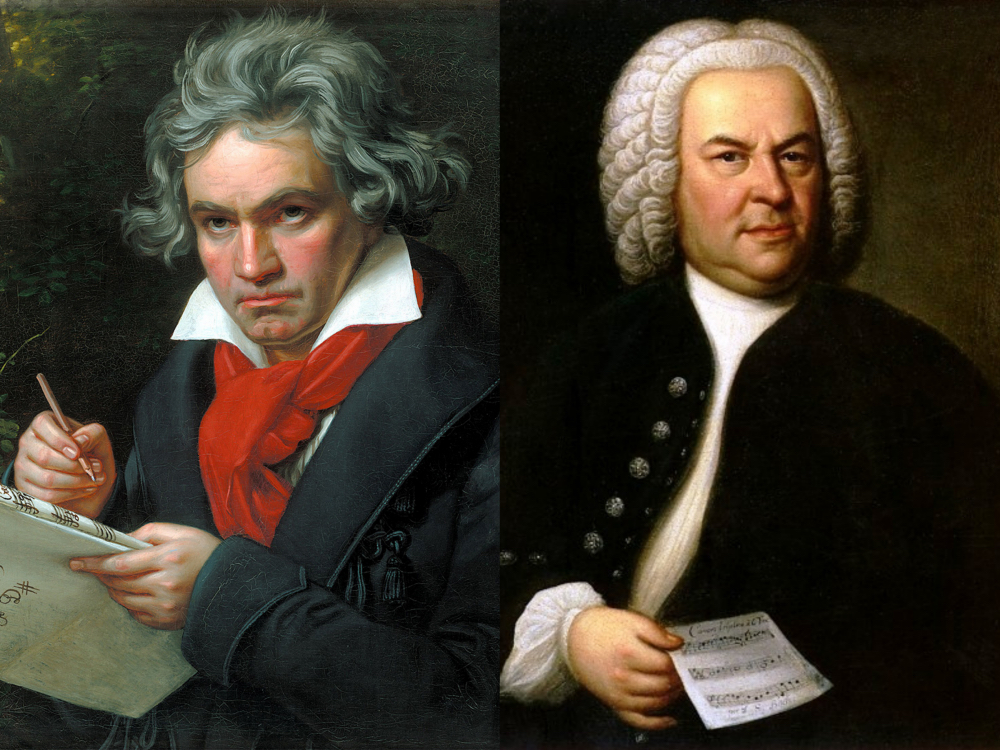
Has the endless distraction of modern life destroyed our ability to sit with the symphonies of Beethoven and Bach? Do we no longer have the attention span to read novels? These are the kinds of questions scholar Alan Jacobs asks in books like The Pleasures of Reading in an Age of Distraction, and they’re questions he admits—on his blog Text Patterns—may obtain different answers depending on the age of whom you ask. In a post from this past August, Jacobs wrote of his need to counteract social media with “the more peaceable and orderly music of Bach and Mozart and Handel,” and pondered the emotional resilience of younger people exposed pretty much daily to videos of real-life violence online. “It occurs to me,” he concludes, “maybe Twitter—maybe social media more generally—really is a young person’s thing after all. Intrinsically, not just accidentally.”
I admit, Jacobs’ post resonated with me because of the difficulty I sometimes have as I get older in disconnecting from the constant stream of horror and triviality on social media—and of getting lost in a good book or a moving piece of music after witnessing spectacle after spectacle online. Perhaps it is a function of age, as Jacobs surmises, and the young are better equipped to bounce right back. Or perhaps our daily exposure to endless conflict has all of our nervous systems frayed raw, leaving us unable to appreciate the “countervailing forces” of music and literature that demands sustained attention. The Spotify Classical Playlist blog seems to suggest as much in quoting Polish composer Witold Lutoslawski’s claim, “people whose sensibility is destroyed by music in trains, airports, lifts, cannot concentrate on a Beethoven Quartet.” Substitute “Twitter tsunami” and “24-hour cable news” for “music in trains, airports, lifts” and the point may apply to our current cultural condition.
So you may think of the Spotify Classical Playlists of all of Beethoven and all of Bach featured here as exercises in increasing your mental stamina, or as therapeutic “coping mechanisms” as Jacobs writes, to keep “emotional balance.” You may think of them as ways to connect fully with composers who lived in a world very different from ours, one that moved much more slowly and demanded much less of our overtaxed senses.
Or you can choose not to apply any kind of framework, and simply revel in the fact that thanks to the internet—be it overall a scourge or a boon to human life—you can now enjoy all of the works of Beethoven and Bach, each in chronological order; 250 hours of enthralling classical music, for free. So enjoy. And learn more about how these playlists were compiled at the the Spotify Classical blog. And if you need Spotify software, get it here.
Related Content:
Hear All of Mozart in a Free 127-Hour Playlist
All of Bach Is Putting Videos of 1,080 Bach Performances Online
Download the Complete Organ Works of J.S. Bach for Free
Josh Jones is a writer and musician based in Durham, NC. Follow him at @jdmagness
Read More...New Film Extraordinary Tales Animates Edgar Poe Stories, with Narrations by Guillermo Del Toro, Christopher Lee & More
Edgar Allan Poe created a body of work that will seemingly never go out of style, especially around Halloween time. Not only do his stories and poems still inspire dread in the 21st century, but so also do the many hundreds of Poe retellings and adaptations created in the 166 years since the author’s mysterious death. But, we might ask, after so many film adaptations from so many classic horror actors and directors, whether we need yet another one? You’ll have to make up your own mind, but if you’re anything like me, you’ll watch the trailer above for Lion King and Aladdin animator Raul Garcia’s Poe anthology Extraordinary Tales and answer “Yes!” and “More please!” And you can see more, in the clips below from Garcia’s incredible-looking film, hitting theaters on October 23rd.
One reason the new treatment of the five stories Garcia animates seems to work so well is that they draw on the talents of actors and directors who have previously delivered classic Poe retellings. For example, “The Fall of the House of Usher,” above, is narrated by the late, great Christopher Lee, who joins horror legend Vincent Price as one of the greatest readers of Poe’s “The Raven.” The voice-over is Lee’s last role, and it’s hard to think of a more fitting final act for the venerable horror maven. (Lee was also at the time recording “a heavy-metal-rock-opera based on Charlemagne’s life”—one of many metal albums he recorded.)
Garcia has created a unique look for each featurette. For “Usher,” he tells Carlos Aguilar at Indiewire, “the idea was for the characters to look as if they were carved out of wood, like if they were figures that belonged to Czech animator Jirí Trnka.” Just hearing Lee above intone the phrase “an unexpected sense of insufferable gloom” is enough to convince me I need to see the rest of this film.
Just above, we have a clip from a much less famous Poe story, “The Facts in the Case of M. Valdemar,” a chilling detective tale about a man mesmerized in articulo mortis—at the moment of death. Narrated by English actor Julian Sands, who has made his own appearances in several horror films, the animation style comes directly out of classic E.C. horror comics like Tales From the Crypt, which drew many an idea from Poe, basing one story “The Living Death!” on “M. Valdemar.” The “mauve, yellow and mossy green comic-book panels,” writes a New York Times review, “prove that you don’t need fancy technology to achieve a third dimension.”
You’ll notice the unmistakable visage of Vincent Price in the character of the mesmerist, and you’ll likely know of Price’s own turn as Poe himself in An Evening with Edgar Allan Poe. Price also starred in Roger Corman’s many Poe adaptations—beginning with House of Usher—and Garcia has tapped the legendary Corman’s voice for Extraordinary Tales, as well as contemporary horror director extraordinaire Guillermo Del Toro. And if this weren’t horror royalty enough, Garcia’s animated take on “The Tell-Tale Heart” features none other than Bela Lugosi, in an archival reading of the story the Dracula actor made sometime before his death in 1956. Read more about how Garcia found the Lugosi audio and conceived of Extraordinary Tales in his interview here.
Related Content:
Watch Vincent Price Turn Into Edgar Allan Poe & Read Four Classic Poe Stories (1970)
Download The Complete Works of Edgar Allan Poe: Macabre Stories as Free eBooks & Audio Books
Josh Jones is a writer and musician based in Durham, NC. Follow him at @jdmagness
Read More...Free Documentary View from the Overlook: Crafting The Shining Looks at How Kubrick Made “the World’s Scariest Movie”
Only three days remain until Halloween, the evening on which everyone loves a scary movie. If you watch one yourself this Halloween, why settle for a scary movie when you could watch the world’s scariest movie? Or rather, when you could watch what resulted when one of the most visionary auteurs in cinema history put his mind to crafting the world’s scariest movie: The Shining. Whether or not you think it holds that particular title, Stanley Kubrick’s adaptation — or, more accurately, total cinematic re-envisioning — of Stephen King’s novel has, since its initial release in 1980, transcended the realm of the “scary movie” and taken a place in the zeitgeist as something more complex, more iconic, and more persistently haunting.
Undead twin girls wanting to play, blood flowing from elevators, a manuscript consisting of a single phrase ceaselessly repeated, “REDRUM” scrawled on a door, a dog-costumed Jazz Age decadent, Jack Nicholson wielding an axe: how did Kubrick and company manage to lodge so permanently into our subconscious these deeply troubling images? Gary Leva’s half-hour documentary View from the Overlook: Crafting the Shining tries to answer that question, bringing in a group of interviewees including Kubrick’s biographers, his colleagues in filmmaking like Sydney Pollack and William Friedkin, and his collaborators like The Shining’s executive producer Jan Harlan, production designer Roy Walker, and screenwriter Diane Johnson. (Jack Nicholson also makes an insightful and non-scary — or at least less scary — appearance as himself.)
View from the Overlook reveals that the visceral impact of The Shining, a formless unease that transforms into sharp-edged horror as the film goes on, came as a result of (and this will surprise no fan of Kubrick’s) hard, deliberate work, from the dismantling and rebuilding of King’s original story, to the construction of the Overlook Hotel out of a mixture of real locations and elaborate sets modeled on real locations, to the use of new kinds of camera rigs (camera operator Garrett Brown having invented the Steadicam, a device this production more than put through its paces), and Kubrick’s infamous, actor-breaking take after take after take. I didn’t know about any of this, of course, when I first saw The Shining, popping in a VHS copy late at night during a junior-high Halloween party. But now I won’t forget it — or anything else about this (quite possibly) scariest movie ever made.
via Devour
Related Content:
The Shining and Other Complex Stanley Kubrick Films Recut as Simple Hollywood Movies
Stanley Kubrick’s The Shining Reimagined as Wes Anderson and David Lynch Movies
Stanley Kubrick’s Annotated Copy of Stephen King’s The Shining
Saul Bass’ Rejected Poster Concepts for The Shining (and His Pretty Excellent Signature)
The Hedge Maze from The Shining Gets Recreated by Mythbuster’s Adam Savage
Room 237: New Documentary Explores Stanley Kubrick’s The Shining and Those It Obsesses
Download & Play The Shining Board Game
Colin Marshall writes elsewhere on cities, language, Asia, and men’s style. He’s at work on a book about Los Angeles, A Los Angeles Primer, the video series The City in Cinema, and the crowdfunded journalism project Where Is the City of the Future? Follow him on Twitter at @colinmarshall or on Facebook.
Read More...See Galileo’s Famous Gravity Experiment Performed in the World’s Largest Vacuum Chamber, and on the Moon
It is one of the most famous experiments in all of science history, but there’s significant doubt about whether it actually took place. Did Galileo drop objects of differing mass from the Leaning Tower of Pisa in 1589 to demonstrate the theories proposed in his unpublished text De motu (“Of Motion”)? Rice University’s Galileo Project notes that scholars have long thought Galileo’s references to experiments he conducted “were only rhetorical devices.” As PBS’s NOVA writes, “it’s the kind of story that’s easy to imagine, easy to remember, but whether he ever performed the experiment at the tower is debatable.” That’s not to say Galileo didn’t test any of his ideas while he taught at the University of Pisa during 1589 and 1592, only that his most famous theory about the effects of gravity on free-falling objects rests mainly on a conceptual thought experiment.
In fact, it would have been impossible for Galileo to fully demonstrate his theory because of the effects of air resistance. Subtract the atmosphere, however, and we can easily confirm Galileo’s hypothesis that any two objects, regardless of weight, shape, or material of composition, will fall at exactly the same rate when dropped. One of the most memorable times this experiment did take place was not in Italy or anywhere else on earth, but on the Moon, when astronaut David Scott, commander of the Apollo 15 mission, dropped a geologic hammer and a falcon’s feather at the same time in 1971 (above).
As cool as Commander Scott’s experiment is, it’s still not as dramatic as the version of the experiment at the top of the post, conducted at NASA’s Space Power Facility in Ohio in the world’s largest vacuum chamber. A great deal of the drama comes courtesy of physicist Brian Cox, who presents the experiment for BBC Two’s Human Universe, explaining the history and construction of the vacuum chamber, which simulates the conditions of outer space. Then we’ve got the multiple camera angles and dramatic music… typical TV show stuff, effective nonetheless at setting us up for the big drop. Even though we “know how the experiment will end,” points out io9, and may have seen it performed before—on the Moon even—this demonstration is something special.
First, we get an anticlimactic drop of the objects—a bowling ball and a feather—while the chamber is still full of air. As expected, the ball plummets, the feathers gently drift. Then, in a sequence right out of a sci-fi film, engineers seal off the enormous chamber, and the three-hour removal of air is telescoped into a few second montage of pushings of buttons and mumblings into intercoms. What happens next will… well, you know the clickbait verbiage. But it certainly surprises Cox and a roomful of NASA engineers. Cox goes on to explain, using Einstein’s theory of general relativity, that the reason the objects fall at the same rate is “because they’re not falling; they’re standing still.” The science may be common knowledge, but seeing it in action is indeed pretty mind blowing.
Related Content:
Galileo’s Moon Drawings, the First Realistic Depictions of the Moon in History (1609–1610)
Bohemian Gravity: String Theory Explored With an A Cappella Version of Bohemian Rhapsody
Josh Jones is a writer and musician based in Durham, NC. Follow him at @jdmagness
Read More...Support Us
We're hoping to rely on loyal readers, rather than erratic ads. Please click the Donate button and support Open Culture. You can use Paypal, Venmo, Patreon, even Crypto! We thank you!

About Us

Open Culture scours the web for the best educational media. We find the free courses and audio books you need, the language lessons & educational videos you want, and plenty of enlightenment in between.
Advertise With Us

FREE UPDATES!
GET OUR DAILY EMAIL
Get the best cultural and educational resources on the web curated for you in a daily email. We never spam. Unsubscribe at any time.
FOLLOW ON SOCIAL MEDIA

Open Culture editor Dan Colman scours the web for the best educational media. He finds the free courses and audio books you need, the language lessons & movies you want, and plenty of enlightenment in between.
Advertise With Us


