Woody Allen Tells a Classic Joke About Hemingway, Fitzgerald & Gertrude Stein in 1965: A Precursor to Midnight in Paris
The character we know as “Woody Allen,” the persona we see in his films, the stammering neurotic weighed down by existential angst and a desperate horniness laced with intellectuality, was created not in his movies, but in his stand-up, recordings of which have been in and out of circulation since 1964. (They’re now available here.)
The director is reportedly even more embarrassed of these recordings than his films–and anyone who has seen his sit-down with critic Mark Cousins can attest, he can’t even stand to watch his films–but maybe that’s about the performance itself, and not the material.
I say that because in the clip above, a routine that Allen loved enough that he often used it to end his sets in the 60s, we can see the nascent idea for his Oscar-winning 2011 film Midnight in Paris.
Riffing on The Lost Generation, he imagines himself back in time, carousing with Hemingway, Gertrude Stein, Picasso, F. Scott and Zelda Fitzgerald, and famed Spanish bullfighter Manolete. It’s a one-two-three-and punchline joke we won’t ruin, but it’s interesting that consciously or subconsciously, this idea returned some five decades later to be fleshed out into one of Allen’s best late-period films. Was he always thinking of this routine as a someday film? In interviews from the time of the film’s release, he never mentions the stand-up bit.
Creating art is often like composting, and one never knows what might float to the top after years of influences and absorption. Listening to his stand-up, one can find the joke that he recycled for Annie Hall (“I was thrown out of NYU my freshman year, I cheated on my metaphysics final in college, I looked within the soul of the boy sitting next to me.”).
There’s also this routine about a scary subway ride:
The scene was later recreated in Bananas with a young Sylvester Stallone.
Allen’s pre-film career, when he was writing for television and his own stand-up, when his goals were to “write for Bob Hope and host the Oscars” makes for fascinating reading, and we’ll leave you with this history from WMFU. Nerdist has more thoughts on the relationship between The Lost Generation joke and Midnight in Paris here.
Related Content:
Woody Allen’s Typewriter, Scissors and Stapler: The Great Filmmaker Shows Us How He Writes
Watch an Exuberant, Young Woody Allen Do Live Stand Up on British TV (1965)
Ted Mills is a freelance writer on the arts who currently hosts the FunkZone Podcast. You can also follow him on Twitter at @tedmills, read his other arts writing at tedmills.com and/or watch his films here.
Read More...Back to Bed: A New Video Game Inspired by the Surreal Artwork of Escher, Dali & Magritte
If you’ve ever looked at a mindbending, impossible piece of architecture designed by M.C. Escher and thought, well, I would love to play that, then you just might love Back to Bed, a video game for Windows, Mac, Google Play and Playstation.
Similar to last year’s aesthetically beautiful architecture puzzle game Monument Valley, players make their way through 30 levels of increasingly difficult landscapes. You play a dog-like companion that tries to stop his sleep-walking owner Bob from falling off into space by placing objects in his path. But, as with these games, you must use logic to access some of the objects and thinking several moves ahead stretches the brain.

The giant, green apples recall Rene Magritte, melted watches are out of Dalí, and the voice that says “The stairs are not what they seem”? We have another Lynch fan in Bedtime Time Digital Games’ crew. And the whole narcolepsy theme has a bit of the ol’ Caligari going for it.
The small company consists of former students who created the game “in a freezing old warehouse on the harbor in Aalborg, Denmark,” according to their bio. They forged ahead with the game after a Kickstarter campaign and what sounds like many years later, they won the student showcase at San Francisco’s Independent Games Festival. That attracted investors and with actual funding, they’ve rewritten the game to make it really shine on HDTVs.
Despite the suspenseful gameplay, there’s much that’s relaxing in the worlds of Back to Bed, from its children book graphic design—everything looks airbrushed—to its hypnotic, hypnagogic sound, including a very Brian Eno-esque ambient soundtrack.
“Back to Bed, the game says out loud in a drone, half-awake voice when you finish a level. But this addictive game might just keep you up later than usual.
Related Content:
Metamorphose: 1999 Documentary Reveals the Life and Work of Artist M.C. Escher
Play the Twin Peaks Video Game: Retro Fun for David Lynch Fans
The Internet Arcade Lets You Play 900 Vintage Video Games in Your Web Browser (Free)
Ted Mills is a freelance writer on the arts who currently hosts the FunkZone Podcast. You can also follow him on Twitter at @tedmills, read his other arts writing at tedmills.com and/or watch his films here.
Read More...30 Minutes of Harry Potter Sung in an Avant-Garde Fashion by UbuWeb’s Kenneth Goldsmith
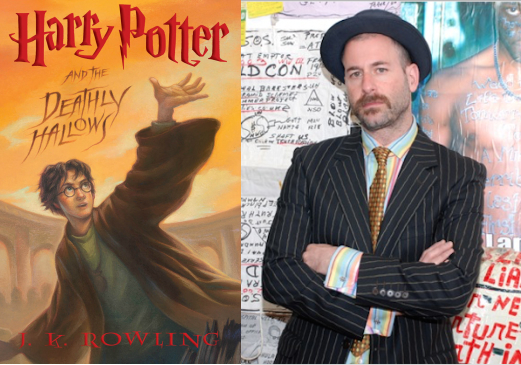
Last month, we featured poet, professor, and WFMU radio host Kenneth Goldsmith singing the theory of Theodor Adorno, Sigmund Freud, and Ludwig Wittgenstein — heavy reading, to be sure, but therein lay the appeal. How differently do we approach these formidable theoretical texts, Goldsmith’s project implicitly asks, if we receive them not just aurally rather than textually, but also in a light — not to say goofy — musical arrangement? But if it should drain you to think about questions like that, even as you absorb the thought of the likes of Adorno, Freud, and Wittgenstein, might we suggest Kenneth Goldsmith singing Harry Potter?
Perhaps the best-known modern exemplar of “light reading” we have, J.K. Rowling’s Harry Potter books present themselves as ripe for adaptation, most notably in the form of those eight big-budget films released between 2001 and 2011. On the other end of the spectrum, with evidently no budget at all, comes Goldsmith’s 30-minute adaptation, which you can hear just above, or along with his various other sung texts at Pennsound. Here he sings, with ever-shifting musical accompaniment and through some otherworldly voice processing, what sounds like the final novel in the Harry Potter series, Harry Potter and the Deathly Hallows.
“She tells a good story” — thus has every adult Harry Potter-reader I know explained the appeal of Rowling’s children’s novels even outside of the children’s demographic, especially as they awaited Deathly Hallows’ release in 2007. Having never dipped into the well myself, I couldn’t say for sure, but to my mind, if she tells a good enough story, that story will survive no matter the form into which you transpose it. The Potter faithful hold a variety of opinions about the degree of justice each movie does to their favorite novels, and even about the voice that reads them aloud in audiobook form, but what on Earth will they think of Goldsmith’s idiosyncratic rendition?
Update: Kenneth shot us an email a few minutes ago and filled out the backstory on this recording. Turns out the story is even more colorful than we first thought. He writes: “I was a DJ on WFMU from 1995–2010. In 2007, J.K. Rowling released the seventh and final Harry Potter and the Deathly Hallows. Prior to the book’s release the day I went on the air at WFMU, someone had leaked a copy to the internet, enraging Scholastic Books, who threatened anybody distributing it with a heavy lawsuit. I printed out and sang in my horrible voice the very last chapter of the book on the air, thereby spoiling the finale of the series for anyone listening. During my show, the station received an angry call from Scholastic Books. It appears that their whole office was listening to WFMU that afternoon. Nothing ever came of it.”
Related Content:
Download Two Harry Potter Audio Books for Free (and Get the Rest of the Series for Cheap)
Read Online J.K. Rowling’s New Harry Potter Story: The First Glimpse of Harry as an Adult
How J.K. Rowling Plotted Harry Potter with a Hand-Drawn Spreadsheet
Take Free Online Courses at Hogwarts: Charms, Potions, Defense Against the Dark Arts & More
The Quantum Physics of Harry Potter, Broken Down By a Physicist and a Magician
Harry Potter Prequel Now Online
Colin Marshall writes on cities, language, Asia, and men’s style. He’s at work on a book about Los Angeles, A Los Angeles Primer, and the video series The City in Cinema. Follow him on Twitter at @colinmarshall or on Facebook.
Read More...Bernie Sanders Sings “This Land is Your Land” on the Endearingly Bad Spoken Word Album, We Shall Overcome
Sooo…. Let’s talk Bernie Sanders. No, I don’t want to talk about Bernie vs. Hillary, or vs. an increasingly worrisome grandstanding demagogue whose name I need not mention. I don’t want to talk Bernie vs. a younger civil rights activist groundswell… No!
Let’s talk about Bernie Sanders the recording artist.
Yeah, that’s right, Bernie made a record in 1987, a spoken-word album of classic hippy folk songs like “This Land is Your Land,” “Where Have All the Flowers Gone,” and—fittingly given his roots as a civil rights campaigner—“We Shall Overcome,” also the title of the album. Sanders, a passionate democratic socialist and stalwart advocate for economic justice, was also so passionate about this music that he wanted to add his voice to the choir. “Apparently,” writes Dan Joseph at MRCTV, “everyone in Sanders’ inner circle thought the recording was a pretty good idea. That was until they realized that Sanders had no musical talent, whatsoever.”
This is no exaggeration. Gawker quotes Todd Lockwood, a Burlington musician who helped produce the record: “As talented of a guy as he is, he has absolutely not one musical bone in his body, and that became painfully obvious from the get-go.” Hell, it never stopped William Shatner, and Shatner is the go-to comparison for the Sanders’ awkward “singing.” (It’s “positively Shatneresque,” writes Dangerous Minds.) Hear for yourself above in the Sander-ization of Woody Guthrie’s “This Land is Your Land.”
Bernie earnestly reads the lyrics in his native Brooklyn accent over a backing track that sounds like an outtake from the frustratingly great/terrible Leonard Cohen/Phil Spector collaboration Death of a Ladies Man. The contrast between the overproduced music and Sanders’ heartfelt and completely unmusical delivery is pretty weird, to say the least. Hear several more samples above, from Todd Lockwood’s Soundcloud. And if for some reason you want to listen to the whole album, and pay for the pleasure, buy Sanders’ We Shall Overcome at Amazon.
Related Content:
Allen Ginsberg’s Handwritten Poem For Bernie Sanders, “Burlington Snow” (1986)
Neil Young’s New Album, The Monsanto Years, Now Streaming Free Online (For a Limited Time)
Josh Jones is a writer and musician based in Durham, NC. Follow him at @jdmagness
Read More...Haruki Murakami Publishes His Answers to 3,700 Questions from Fans in a New Japanese eBook

A quick follow up: Back in January, Colin Marshall took you inside Haruki Murakami’s unexpected stint as an agony uncle, writing an online advice column called Mr. Murakami’s Place. According to his publisher, readers sent the Japanese novelist 37,465 questions (see a few in translation here), and he penned responses to 3,716 of them — answering questions like: “30 is right around the corner for me, but there isn’t a single thing that I feel like I’ve accomplished.… What should I do with myself?” Or, “My wife quite frequently belches right near the back of my head when she passes behind me… Is there something I can do to stop my wife’s belching?”
Luckily, at least for Japanese readers, Murakami has now published his responses (all of them) as an ebook in Japan. And it’s been climbing Japan’s Kindle bestseller list. Currently, there are no plans to release Mr. Murakami’s Place — The Complete Edition – in English. The task of translating what amounts to an 8‑volume set of books would be formidable. And yet somehow — like most things Murakami has written — I suspect the collection will eventually see the light of day in English-speaking markets.
Thanks to @justinmegahan and @hyloupa for helping us track down this book.
Related Content:
Haruki Murakami Lists the Three Essential Qualities For All Serious Novelists (And Runners)
A Photographic Tour of Haruki Murakami’s Tokyo, Where Dream, Memory, and Reality Meet
Haruki Murakami’s Passion for Jazz: Discover the Novelist’s Jazz Playlist, Jazz Essay & Jazz Bar
Read More...The Films of Quentin Tarantino: Watch Video Essays on Pulp Fiction, Reservoir Dogs, Kill Bill & More
In the ten years between Reservoir Dogs (1992) and Kill Bill (2003), Quentin Tarantino was all some film fans could talk about, and who many up-and-coming directors idolized and copied. But it would take another ten years for his films to be intelligently discussed, and it’s a sign of these times that the best essays are not in print but in video format.
Matt Zoller Seitz and his colleagues over at Indiewire’s Press Play blog led the charge with a series of 10 ‑12 minute video essays (collectively called “On the Q.T.”) that explore individual Tarantino films and his approach to filmmaking.
The video above is part two of the series and probes what it means to be cool in Pulp Fiction, how characters create their own mythologies and what happens when reality confronts them.
If that video makes you look at Pulp Fiction in a deeper way, then you’ll enjoy the first in the series, on Reservoir Dogs. Seitz claims the film is both a collage of film quotes and references, from City on Fire to The Killing, but there’s a human heart beating beneath all of it. And that’s a lesson lost on all the imitators that came in Tarantino’s ‘90s wake, he says.
You might also want to check out this two part essay (Part 1 — Part 2) on Jackie Brown – this one crafted by Press Play’s Odie Henderson–which examines what Tarantino took from Elmore Leonard in his only adaptation to date, and what is pure QT. (Hint: It’s the casting of Pam Grier).
The final video in the series looks at the Female Archetype vs. the Goddess in Kill Bill. Created by Nelson Carvajal, who uses captions instead of narration, it’s the weakest in the series, being long on clips and short on ideas.
But with The Hateful Eight on the horizon, the entire series will get you ready for interpreting the latest in his oeuvre.
Related content:
My Best Friend’s Birthday, Quentin Tarantino’s 1987 Debut Film
Ted Mills is a freelance writer on the arts who currently hosts the FunkZone Podcast. You can also follow him on Twitter at @tedmills, read his other arts writing at tedmills.com and/or watch his films here.
Read More...The Groundbreaking Silhouette Animations of Lotte Reiniger: Cinderella, Hansel and Gretel, and More
You can’t talk about the origin of the modern animated film without talking about the work of Lotte Reiniger (1899–1981), the German creator of some 40 animated films between the 1910s and the 70s. And you can hardly talk about Reiniger’s work without talking about the enchanting art of shadow puppetry, which we mostly associate with traditional cultures like that of Indonesia, but which also inspired her early 20th-century innovations in animation.
This may sound quite obscure, especially when put up against the Disney and Pixar extravaganzas in theaters today, but all these forms of entertainment draw, in a sense, from a common well: the fairy tale.
The creators of today’s mega-budget animated films know full well the enduring value of fairy tales, and so continue to adapt their basic story material, layering on both the latest visual effects and smirking gags with up-to-the-minute references in order to keep the obvious entertainment value high. But Indonesian shadow puppet theater has been doing the same thing for centuries and centuries, converting ancient folktales into an evening’s (albeit often a long evening’s) musical entertainment for audiences of era after new era. And Reiniger, in her day, revived the oldest European stories with technology once as striking and cinematically cutting-edge as today’s most advanced CGI.
You can watch Reiniger’s 1922 adaptation of Cinderella at the top of the post. “Nobody else has defined a form of animation as authoritatively as she did,” writes Dan North of Spectacular Attractions, “and the opening section, where scissors make the first cuts into the main character, conjuring her out of simple raw materials, displays the means by which the story is fabricated and marks it out as a product of her labour.” Below that, we have a later work, 1955’s Hansel and Gretel, an example of her further developed technique, and just above you’ll find that same year’s Däumelinchen, also known as Thumbelina.
To get a clearer sense of exactly what went into these shorts (or into 1926’s The Adventures of Prince Achmed, her only feature-length film, and first fully animated feature in the history of cinema), watch the seventeen-minute documentary “The Art of Lotte Reiniger” just above. “No one else has taken a specific animation technique and made it so utterly her own,” writes the British Film Institute’s Philip Kemp, “to date she has no rivals, and for all practical purposes the history of silhouette animation begins and ends with Reiniger” — but the way she breathed life into her material lives on.
You can find Reiniger’s films added to our list of Free Animated Films, a subset of our collection, 4,000+ Free Movies Online: Great Classics, Indies, Noir, Westerns, Documentaries & More.
Related Content:
John Turturro Reads Italo Calvino’s Animated Fairy Tale, “The False Grandmother”
Watch Animations of Oscar Wilde’s Children’s Stories “The Happy Prince” and “The Selfish Giant”
Colin Marshall writes on cities, language, Asia, and men’s style. He’s at work on a book about Los Angeles, A Los Angeles Primer, and the video series The City in Cinema. Follow him on Twitter at @colinmarshall or on Facebook.
Read More...Oscar Wilde’s Play Salome Illustrated by Aubrey Beardsley in a Striking Modern Aesthetic (1894)
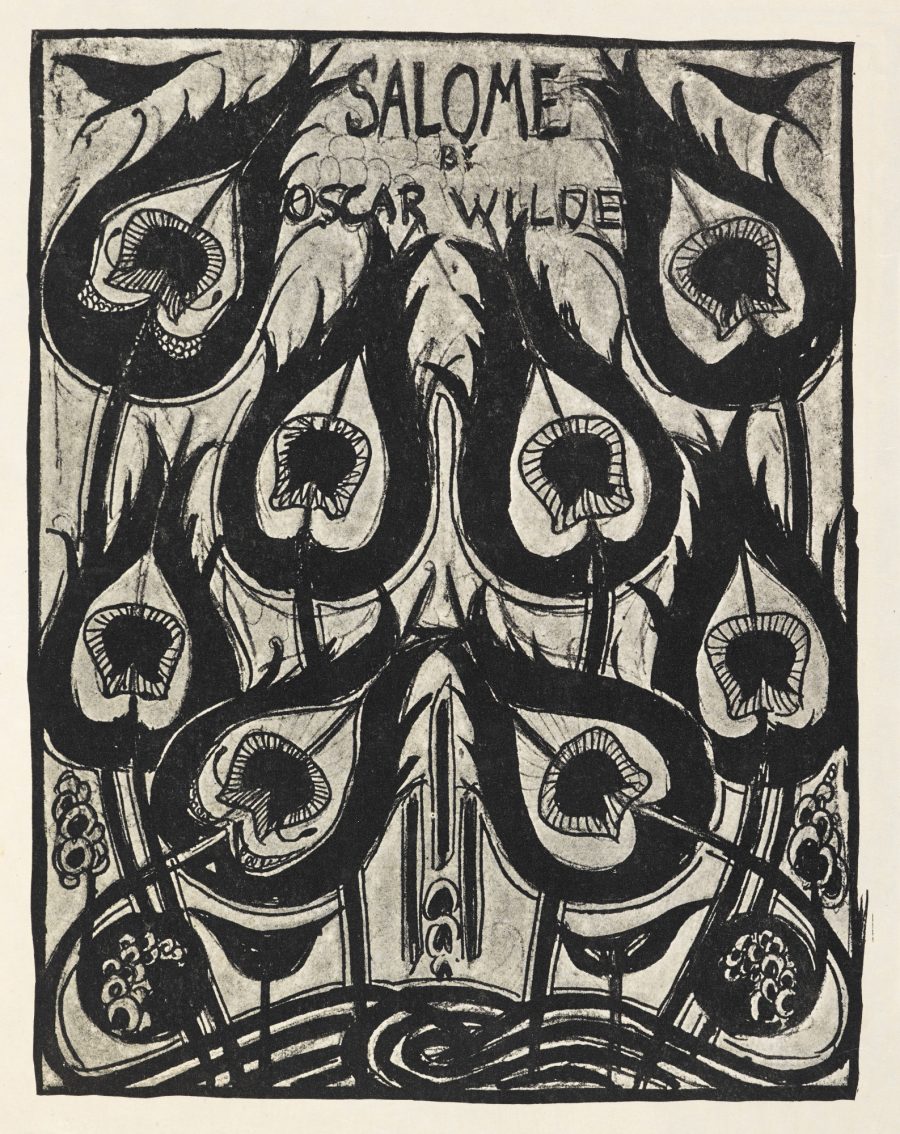
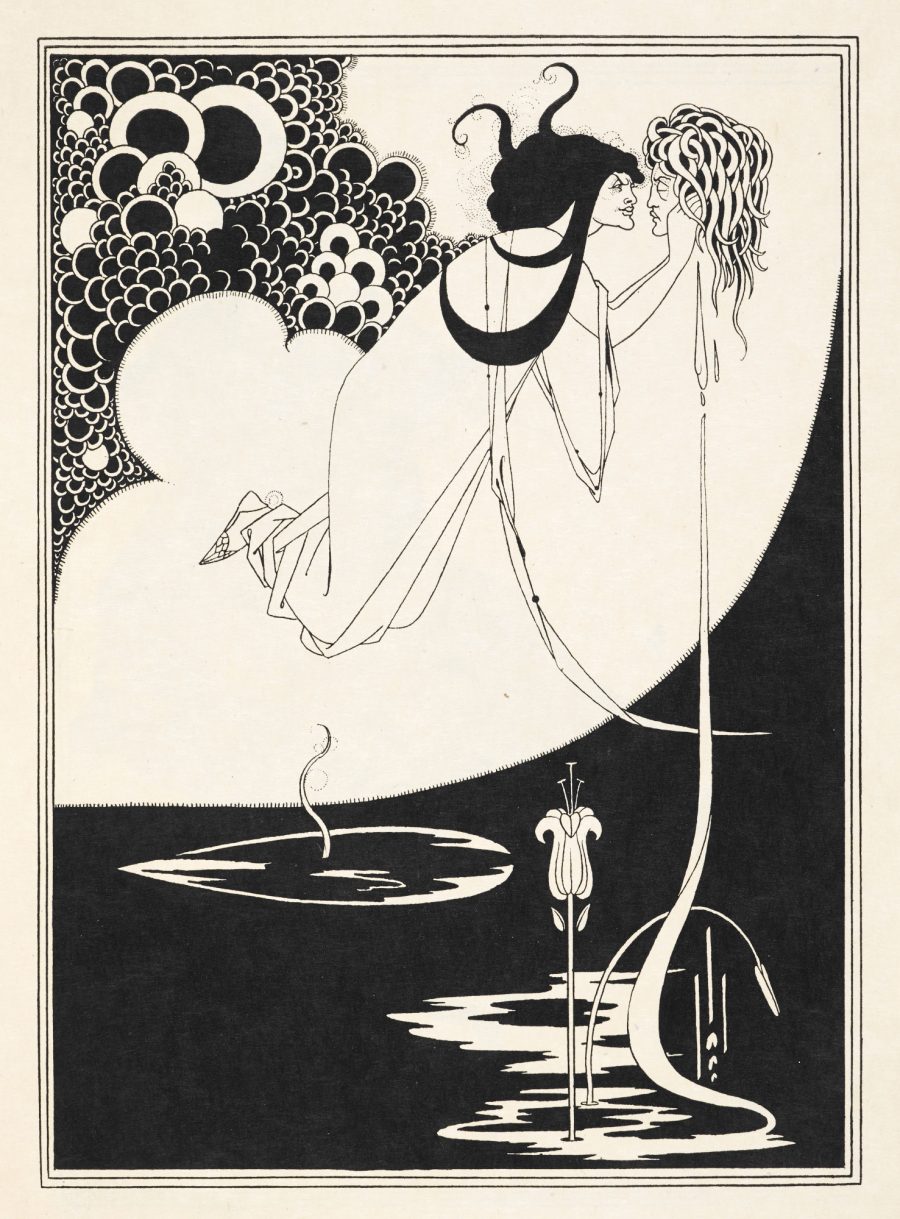
In William Faulkner’s 1936 Absalom, Absalom!, one of the novel’s most erudite characters paints a picture of a Gothic scene by comparing it to an Aubrey Beardsley drawing. References to Beardsley also appear in other Faulkner novels, and the English artist of the late nineteenth century also influenced the American novelist’s visual art. Like Faulkner, Beardsley was irresistibly drawn to “the grotesque and the erotic,” as The Paris Review writes, and his work was highly favored among French and British poets of his day. The modernist’s appreciation of Beardsley was about more than Faulkner’s own youthful romance with French Symbolist art and morbid romantic verse, however. Beardsley created a modern Gothic aesthetic that came to represent both Art Nouveau and decadent, transgressive literature for decades to come, presenting a seductive visual challenge to the repression of Victorian respectability.
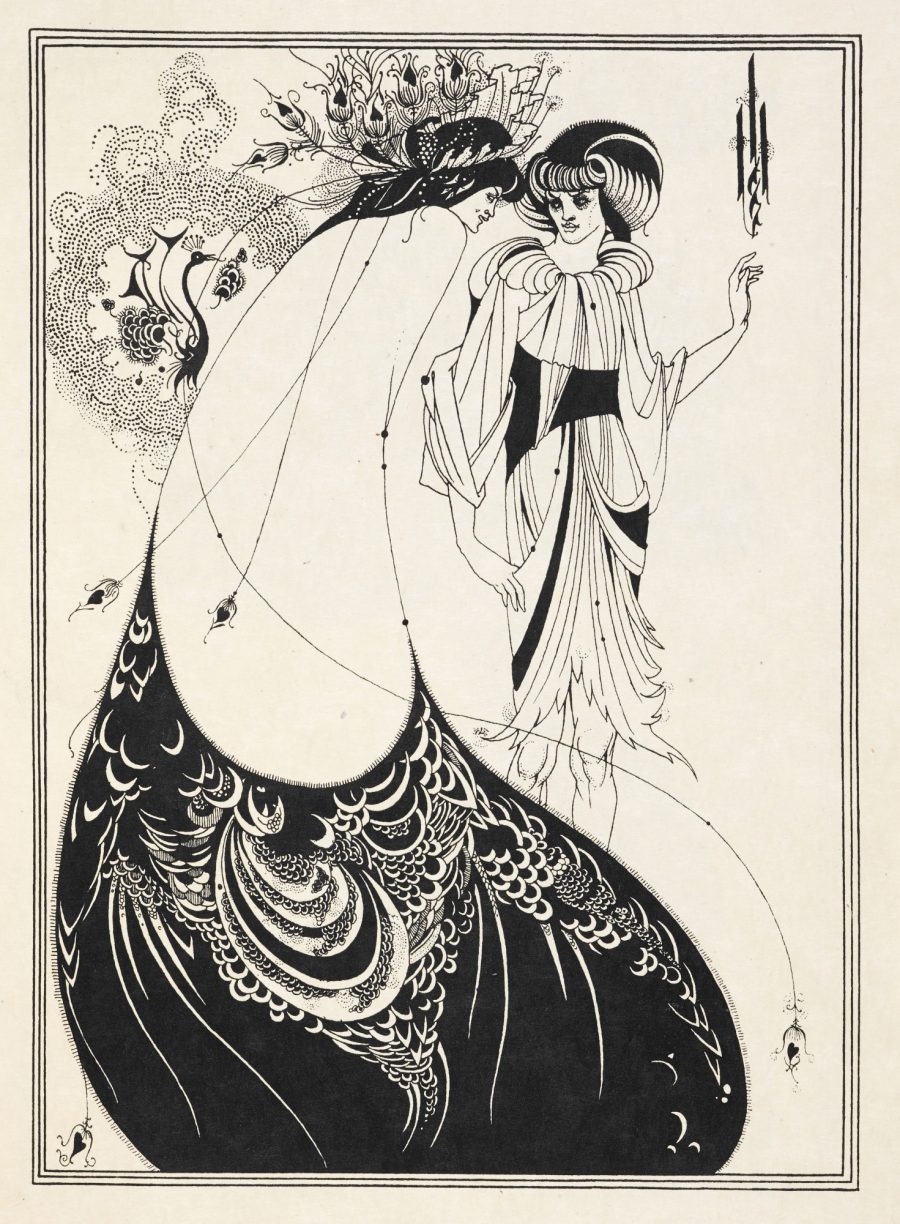
Beardsley was a young aesthete with a literary imagination. In his short career—he died at the age of 25—he illustrated many of the works of Edgar Allan Poe, forefather of the American Gothic.
Beardsley also famously illustrated Oscar Wilde’s scandalous drama, Salome in 1893, to the surprise of its author, who later inscribed an illustrated copy with the words, “For the only artist who, besides myself, knows what the Dance of the Seven Veils is, and can see that invisible dance.” Beardsley’s drawings first appeared in an art magazine called The Studio, then the following year in an English publication of the text.
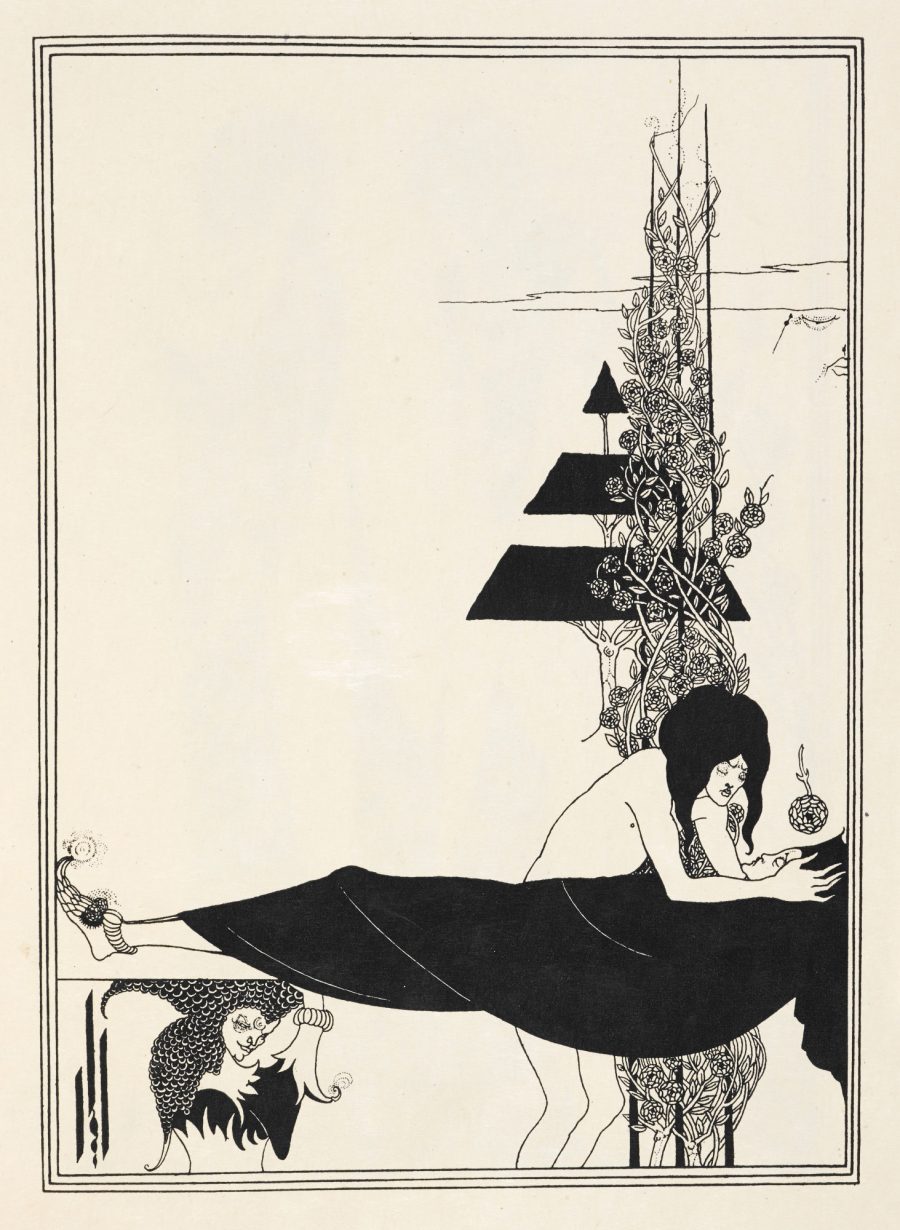
Beardsley and Wilde’s joint creation embraced the macabre and flaunted Victorian sexual norms. After an abrupt cancellation of Salome’s planned opening in England, the illustrated edition introduced British readers to the play’s unsettling themes. The British Library quotes critic Peter Raby, who argues, “Beardsley gave the text its first true public and modern performance, placing it firmly within the 1890s – a disturbing framework for the dark elements of cruelty and eroticism, and of the deliberate ambiguity and blurring of gender, which he released from Wilde’s play as though he were opening Pandora’s box.”
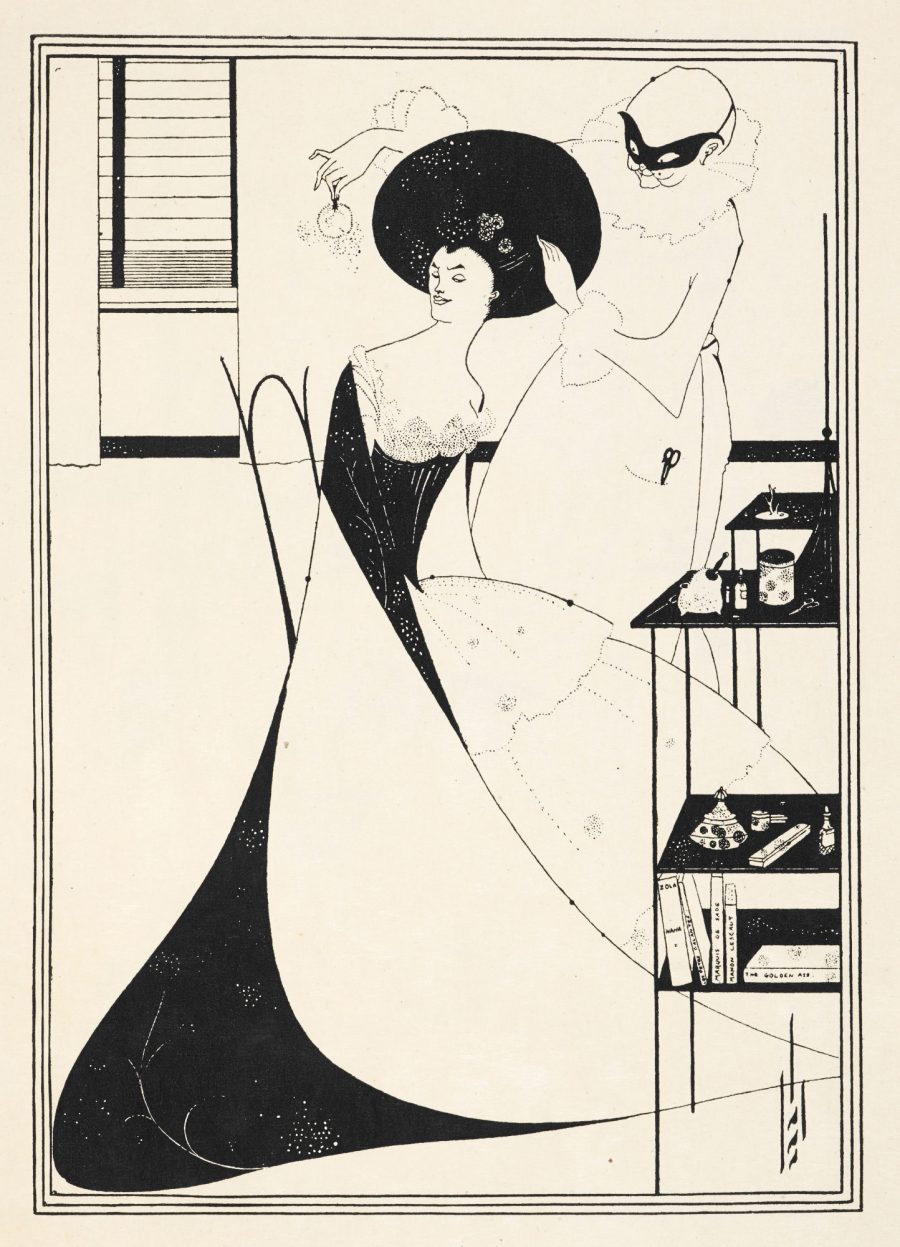
Wilde’s play was ostensibly banned for its portrayal of Biblical characters, prohibited on stage at the time. Furthermore, it “struck a nerve,” writes Yelena Primorac at Victorian Web, with its “portrayal of woman in extreme opposition to the traditional notion of virtuous, pure, clean and asexual womanhood the Victorians felt comfortable living with.” Wilde was at first concerned that the illustrations, with their suggestively posed figures and frankly sexual and violent images, would “reduce the text to the role of ‘illustrating Aubrey’s illustrations.’” (You can see some of the more suggestive images here.)
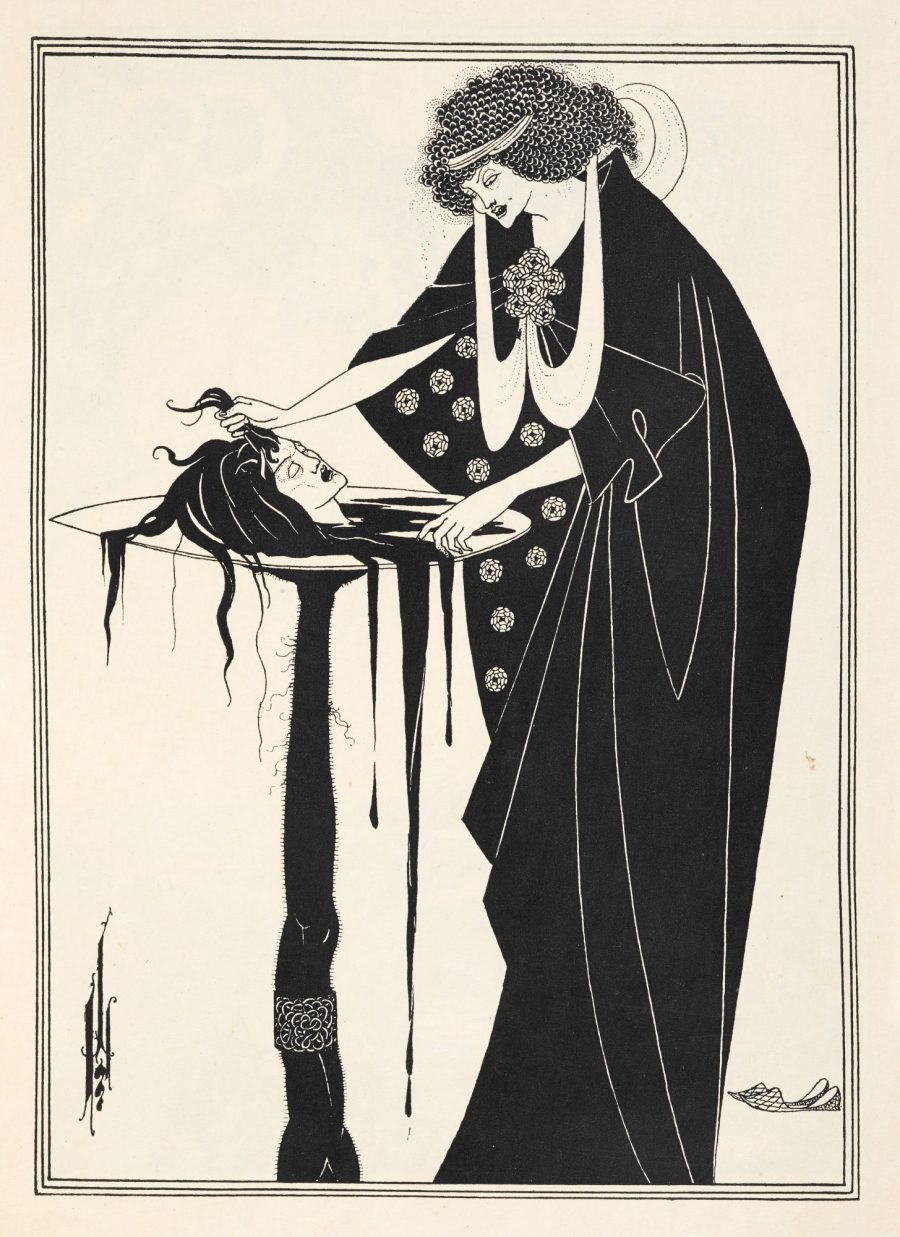
Indeed, it is hard to think of Wilde’s text and Beardsley’s images as existing independently of each other, so closely have they been identified for over a hundred years. And yet the drawings don’t always correspond to the narrative. Instead they present a kind of parallel text, itself densely woven with visual and literary allusions, many of them drawn from Symbolist preoccupations—with women’s hair, for example, as an alluring and threatening emblem of unrestrained female sexuality. Published in full in 1894, in an English translation of Wilde’s original French text, the Beardsley-illustrated Salome contained 16 plates, some of them tamed or censored by the publishers. Read the full text, with drawings, here, and see a gallery of Beardsley’s original uncensored illustrations at the British Library.
Related Content:
The Art of William Faulkner: Drawings from 1916–1925
Stephen Fry Reads Oscar Wilde’s Children’s Story “The Happy Prince”
Gustave Doré’s Splendid Illustrations of Edgar Allan Poe’s “The Raven” (1884)
Alberto Martini’s Haunting Illustrations of Dante’s Divine Comedy (1901–1944)
Pablo Picasso’s Tender Illustrations For Aristophanes’ Lysistrata (1934)
Josh Jones is a writer and musician based in Durham, NC. Follow him at @jdmagness
Read More...How Drums & Bass Make the Song: Isolated Tracks from Led Zeppelin, Rush, The Pixies, The Beatles to Royal Blood
There may be no more critical interplay between two musicians in modern music than that between bassists and drummers. As jazz bassist Christian McBride put it in a recent NPR interview, “the bass and drums should work as one instrument. It determines whether it’s funk or jazz or country or rock ‘n’ roll. It all depends on what rhythms are coming from the bass and the drums that make a particular music what it is.” In funk and jazz, these rhythm players tend to get a lot more credit. Most people—even die hard fans—would be hard pressed to name one country bassist or drummer. In rock and roll, we’re used to lauding lead singers and guitarists. And certainly classic duos from Jagger and Richards, to Page and Plant, Roth and Van Halen, Morrissey and Marr and a lengthy list of others each have earned their vaunted places in music history.
Yet as a fan, I’ve always been drawn to unsung bass and drum combos—like The Smiths’ Mike Joyce and Andy Rourke, Jane’s Addiction’s Eric Avery and Stephen Perkins, and many others in bands whose flamboyant leaders tended to overshadow their rock solid supports. This is not the case in many other groups of superstars. McBride gives us the examples of Bootsy Collins and John Starks in James Brown’s band, and bassist Sam Jones and drummer Louis Hayes from Cannonball Adderley’s ensemble. Today we look specifically at some famed rock rhythm duos, and listen in on isolated tracks from some of their bands’ most well-known tunes. We begin with the absolutely classic powerhouse rhythm section of John Paul Jones (top) and John Bonham, whose grooves anchored the riff machine that was Led Zeppelin. Just above, hear their push and pull on “Ramble On.”
As it turns out, Zeppelin were big James Brown fans, and Jones has specifically mentioned the funk influence on his playing. Jones and Bonham, in turn, have influenced thousands of rhythm players, including perhaps one of the most famous of bass and drum duos, Rush’s Geddy Lee and Neil Peart. Just above, hear Lee’s fuzzed-out bass work in tandem with Peart’s expert time changes and breakdowns in isolated tracks from “Vital Signs,” a song from their early-eighties new wave-inspired album Moving Pictures . Rush is certainly not everyone’s cup of tea, but more rock and roll drummers than not probably cite them as an influence at some point in their careers. Though it wasn’t apparent to me in their heyday, even such a minimalist band as the Pixies had a Rush influence, specifically by way of drummer David Lovering. His locked grooves with bassist Kim Deal more or less defined the sound of the 90s through their influence on Nirvana, Weezer, Radiohead, Smashing Pumpkins and countless others. Hear their isolated rhythm tracks from Doolittle’s “Wave of Mutilation” below.
It’s hardly necessary to point out that perhaps the most famed rhythm section in rock history comes from its most celebrated band. But Paul McCartney and Ringo Starr often get remembered more for their songwriting and personalities than for their rhythm playing. Ringo’s taken his share of undeserved flak for his no-frills style. I’ve always found him to be an especially tasteful player who knows when to add the perfect fill or accent, when to lay back and let the song dominate, and when to get out of the way entirely. Starr’s thoughtful drumming perfectly complements McCartney’s highly melodic walking basslines—captured as well on the George Harrison-penned “Something,” below, as on anything else the band recorded.
Again, it’s hardly necessary to cite the number of bands influenced by the Beatles, though it’s harder to name rhythm sections directly inspired by McCartney and Starr’s dynamic. Nonetheless, their DNA runs through decades of pop music in all its forms. The other three duos above have directly inspired a more specific phenomenon of bands made up solely of bass and drums. One such band, the UK’s Royal Blood, has won numerous awards (and praise from Jimmy Page). See them perform a live version of “Figure It Out” below.
Other bands like Death From Above 1979 and Om have hugely devoted followings. (See a discussion of more bass-and-drum-only combos here.) With the success of these bands—along with the rise of electronic dance music as a dominant form—it’s safe to say that killer rhythm sections, so often overshadowed in rock and pop history, have pushed past traditional lead players and, in many cases, taken their place. I’d say it’s about time.
Related Content:
Hear Isolated Tracks From Five Great Rock Bassists: McCartney, Sting, Deacon, Jones & Lee
7 Female Bass Players Who Helped Shape Modern Music: Kim Gordon, Tina Weymouth, Kim Deal & More
Isolated Drum Tracks From Six of Rock’s Greatest: Bonham, Moon, Peart, Copeland, Grohl & Starr
Josh Jones is a writer and musician based in Durham, NC. Follow him at @jdmagness
Read More...Tom Sawyer, Huck Finn & Twain Himself Meet Satan in the Zany 1985 Claymation The Adventures of Mark Twain
“But who prays for Satan?” Mark Twain asked in the autobiography left behind as he exited this mortal coil on the tail of Halley’s comet, whose 1835 appearance coincided with his birth.
It’s a good question.
Had he instead asked who claymates Satan, the answer would have been clearcut.
1985 saw the release of The Adventures of Mark Twain, the world’s first all claymation feature film, in which Satan starred alongside Tom Sawyer, Huckleberry Finn, Becky Thatcher, and Twain himself.
Director Will Vinton, father of the California Raisins and Domino Pizza’s ill-fated mascot, The Noid, drew on some of Twain’s best known work, cobbling together a story in which the fictional kids stowaway aboard an airship Twain plans to pilot into the comet.
The Satan section above comes courtesy of the author’s final, unfinished novel, The Mysterious Stranger. The animation is top notch, but hoo boy, it’s hard to imagine a vision this apocalyptic getting a G‑rating today.
Vinton himself resisted the rating, not wanting to be lumped in with more regular kiddie fare. It performed disappointingly at the box office despite great critical response from such lofty realms as The New Republic.
Is it really so surprising that families flocking to the Care Bears Movie steered clear of one featuring a shape-shifting, free-floating mask, who terrorizes the children in the film (and presumably, the audience) by conjuring an enchanting little clay kingdom only to rain misfortune upon it. We’re talking smashed coffins, grief-stricken clay mothers wailing over the bodies of their young, helpless victims being swallowed up by cracks that appear in the earth.
Where’s the Happy Meal tie-in there!?
It’s reassuring to know that the existential horror was indeed deliberate. As Vinton told James Gartler in an interview with Animation World Network:
“… it was just such a bizarre character, to start with. In fact, I haven’t seen a character quite like that in almost anything else – someone who has this power but no feeling one way or another and just sort-of tells it like it is regarding the future of humanity. We wanted it to be about metamorphosis, visually, and make that a big part of sequence. He transforms and grows up and down from the earth and appears out of nothingness. The design of the character came from an early drawing that Barry Bruce did, where a jester was holding his face on a stick. I thought it was a really interesting way to play it. I ended up doing the voice of the Stranger with a female performer. We wanted it to be almost androgynous, so she and I did it together and made a point of not trying to hide it, even.”
I’m not sure the person or persons responsible for the theatrical trailer, below, got the memo…
Related Content:
Norman Rockwell Illustrates Mark Twain’s Tom Sawyer & Huckleberry Finn (1936–1940)
Play Mark Twain’s “Memory-Builder,” His Game for Remembering Historical Facts & Dates
Ayun Halliday is an author, illustrator, and Chief Primatologist of the East Village Inky zine. Follow her @AyunHalliday
Read More...Support Us
We're hoping to rely on loyal readers, rather than erratic ads. Please click the Donate button and support Open Culture. You can use Paypal, Venmo, Patreon, even Crypto! We thank you!

About Us

Open Culture scours the web for the best educational media. We find the free courses and audio books you need, the language lessons & educational videos you want, and plenty of enlightenment in between.
Advertise With Us

FREE UPDATES!
GET OUR DAILY EMAIL
Get the best cultural and educational resources on the web curated for you in a daily email. We never spam. Unsubscribe at any time.
FOLLOW ON SOCIAL MEDIA

Open Culture editor Dan Colman scours the web for the best educational media. He finds the free courses and audio books you need, the language lessons & movies you want, and plenty of enlightenment in between.
Advertise With Us


