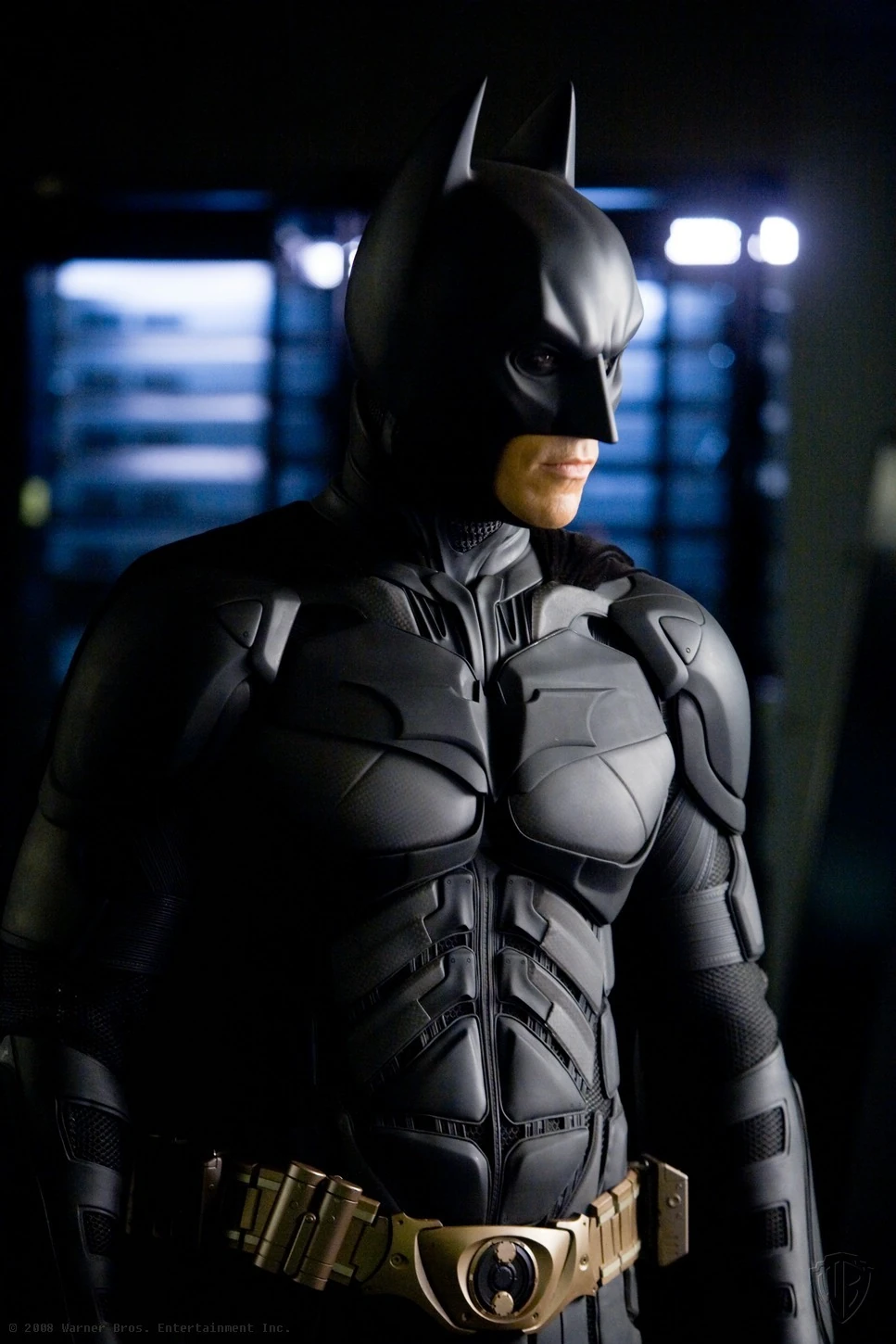
48 Hours of Joseph Campbell Lectures Free Online: The Power of Myth & Storytelling
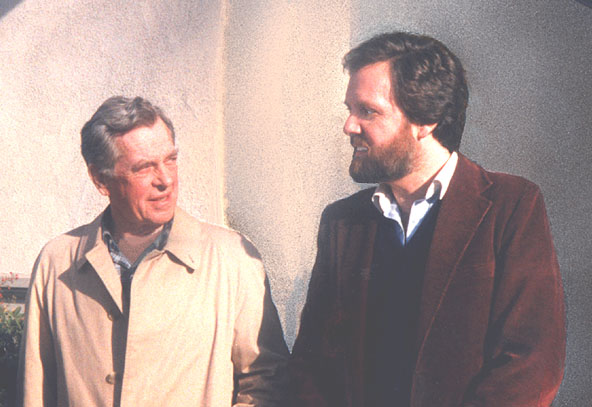
You may not be interested in politics, they say, but politics is interested in you. The same, if you believe famed mythologist Joseph Campbell, goes for myth: far from explaining only the origin of the world as believed by extinct societies, it can explain the power of stories we enjoy today — up to and including Star Wars.
The man behind PBS’ well-known series The Power of Myth left behind many words in many formats telling us precisely why, and now you can hear a fair few of them — 48 hours worth — for free on this Spotify playlist. (If you don’t have Spotify’s software already, you can download it free here.)
“From the Star Wars trilogy to the Grateful Dead,” says the Joseph Campbell Foundation, “Joseph Campbell has had a profound impact on our culture, our beliefs, and the way we view ourselves and the world.” This collection, The Lectures of Joseph Campbell, which comes from early in his career, offers “a glimpse into one of the great minds of our time, drawing together his most wide-ranging and insightful talks” in the role of both “a scholar and a master storyteller.” So not only can Campbell enrich our understanding of all the stories we love, he can spin his lifetime of mythological research into teachings that, in the telling, weave into a pretty gripping yarn in and of themselves.
If you would like to support the mission of Open Culture, consider making a donation to our site. It’s hard to rely 100% on ads, and your contributions will help us continue providing the best free cultural and educational materials to learners everywhere. You can contribute through PayPal, Patreon, and Venmo (@openculture). Thanks!
Related Content:
Joseph Campbell and Bill Moyers Break Down Star Wars as an Epic, Universal Myth
The Zen Teachings of Alan Watts: A Free Audio Archive of His Enlightening Lectures
How Star Wars Borrowed From Akira Kurosawa’s Great Samurai Films
Everything I Know: 42 Hours of Buckminster Fuller’s Visionary Lectures Free Online (1975)
Colin Marshall writes on cities, language, Asia, and men’s style. He’s at work on a book about Los Angeles, A Los Angeles Primer, and the video series The City in Cinema. Follow him on Twitter at @colinmarshall or on Facebook.
Read More...Watch a Luthier Birth a Cello in This Hypnotic Documentary
It’s always interesting to see how things are made—crayons, Fender Stratocasters, cartoon eggs…
The documentary above takes you through the creation of a cello in the Barcelona workshop of master luthier Xavier Vidal i Roca. (To watch with English subtitles, click the closed caption icon — “CC” — in the lower right corner.)
The opening shots of luthier Eduard Bosque Miñana taking measurements have the jazzy feel of a Mister Rogers’ Neighborhood segment, but once music scholar Ramón Andres gets into the act, things take a turn toward the philosophical.
His thoughts as to the ways the “king of all instruments” speaks to the human condition are commensurate with the level of craftsmanship its construction requires.
(Though seeing Miñana patiently fit a steam-shaped curve to the developing instrument’s c‑bout leads me to question Andres’ choice of anthropomorphizing pronoun. With a waistline like that, surely this cello is a deep-voiced queen.)
The master luthier himself acknowledges that there is always a bit of mystery as to how any given instrument will sound. Most modern cellos are copies of ancient instruments. With the design set, the luthier must channel his or her creative expression into the construction, working with similarly ancient tools — chisels, palette knives, and the like. If power tools come into play, director Laura Vidal keeps them offscreen.
The effect is meditative, hypnotic…I was glad to have the mystery preserved, even as I agree with cellist Lito Iglesias that musicians should make an effort to understand their instruments’ construction, and the reasons behind the selection of particular woods and shapes.
Iglesias also notes that the luthier is the unsung partner in every public performance, the one the audience never thinks to acknowledge.
The Sarabande of Bach’s Suite for Solo Cello no. 1 in G major brings things to an appropriately emotional conclusion.
Related Content:
Electric Guitars Made from the Detritus of Detroit
A Song of Our Warming Planet: Cellist Turns 130 Years of Climate Change Data into Music
Read More...Take a 360° Virtual Tour of Taliesin, Frank Lloyd Wright’s Personal Home & Studio

You can learn a lot about an architect from looking at the buildings they designed, and you can learn even more by looking at the buildings they lived in, but you can learn the most of all from Frank Lloyd Wright’s Taliesin. For that best-known of all American architects, this house stands still today not just as his home but as one of his notable works, and as the studio in which he designed other notable works (including Fallingwater). Wright’s enthusiasts make pilgrimages out to Spring Green, Wisconsin to pay their respects to this singular house on a hill, which offers tours from May through October.
For those less inclined toward architectural pilgrimages, we have this HD 360-degree “virtual visit” of Taliesin (also known as Taliesin East since 1937, when Wright built a Taliesin West in Scottsdale, Arizona). “The center of Frank Lloyd Wright’s world was Taliesin East,” write the online tour’s developers. “It was his home, workshop, architectural laboratory and inspiration for nearly all his life.” In the comfort of your web browser, you can “experience what he saw daily, surrounded by Asian art, expansive views of Wisconsin’s rolling hills, his own courtyard gardens and a space to relax before a fire watched over by a portrait of his mother.”
You can also get a view of “the actual drafting tables where Wright designed his most famous buildings” and the drawings on them, all while “staff historian Keiran Murphy shares the history, the personal stories and points out special objects in the room” (if you choose to keep the “tour guide” option turned on). And Taliesin certainly doesn’t lack history, either personal or architectural. Wright built its first iteration in 1911, and it lasted until a paranoid servant burnt it down in 1941, axe-murdering seven people there (including Wright’s live-in ladyfriend and her children) in the process. Wright, who’d been away at the time of the tragedy, recovered from the shock of it all, then set to work on Taliesin II, though he didn’t really live in it until after he returned from his work on Tokyo’s Imperial Hotel in 1922.
Three years later, another fire (this time probably due to an electrical problem) badly damaged the house again, necessitating the design of a Taliesin III, which he could begin only after digging himself out of a financial hole in 1928. It is more or less that Taliesin that you can see today, whether you visit in person or through the internet. If you feel sufficiently inspired as a result, you could even apply to study at the Frank Lloyd Wright School of Architecture located there. While the house won’t likely turn you into an architectural genius just by osmosis, at least you can rest assured that it has probably put its most dramatic disasters behind it.
Related Content:
Frank Lloyd Wright Reflects on Creativity, Nature and Religion in Rare 1957 Audio
The Modernist Gas Stations of Frank Lloyd Wright and Mies van der Rohe
Frank Lloyd Wright’s Fallingwater Animated
Colin Marshall writes on cities, language, Asia, and men’s style. He’s at work on a book about Los Angeles, A Los Angeles Primer, and the video series The City in Cinema. Follow him on Twitter at @colinmarshall or on Facebook.
Read More...How to Age Gracefully: No Matter What Your Age, You Can Get Life Advice from Your Elders
You can always learn something from your elders. 8‑year-olds can learn from 9‑year-olds, just as octogenarians can learn from nonagenarians. With age comes wisdom. That’s the premise of this touching, farewell video from the CBC’s WireTap radio show, which is about to go off the air.
It’s not the first time we’ve explored this line of thinking. For a little life perspective, we’d encourage you to watch: Stephen Fry: What I Wish I Knew When I Was 18.
Or read: Stephen King Writes A Letter to His 16-Year-Old Self: “Stay Away from Recreational Drugs,” an excerpt from the anthology, Dear Me: A Letter to My 16-Year-Old Self.
If you would like to support the mission of Open Culture, consider making a donation to our site. It’s hard to rely 100% on ads, and your contributions will help us continue providing the best free cultural and educational materials to learners everywhere. You can contribute through PayPal, Patreon, and Venmo (@openculture). Thanks!
Read More...Very Early Concert Footage of the B‑52s, When New Wave Music Was Actually New (1978)
I recall with uncharacteristic clarity the first time I heard the B‑52s. Forced on a youth-group ski trip by my parents, I arrived an angry thirteen-year-old wanna-be punk: mohawk, ripped jeans, patched leather jacket, disaffected scowl, and feigned air of adolescent cynical world-weariness. Pop music, I had already decided, was for suckers. The only sounds that spoke to me were loud, abrasive, and deliberately unlovely. Then someone in our dorm put on “Rock Lobster” and it blew my narrow mind. Though the ostensible purpose of this church-sponsored vacation was to stir up some Protestant piety, I came away converted instead to the gospel of new wave. I credit my awakening to Kate Pierson’s otherworldly wail, Cindy Wilson’s throaty harmonies, and Ricky Wilson’s bizarrely tuned guitar.
Maybe it wasn’t quite that dramatic, but it was a decisive moment in my young fandom, after which I found myself seeking out the odd, angular, jangly sounds I’d first heard on that B‑52s record—and finding them in Johnny Marr’s Smiths guitar work, every early R.E.M. album, and in more morose form, in The Cure, Psychedelic Furs, and countless mopey British post-punks. What surprised me at the time was learning how many of these bands arrived on the scene at the same time as the nastier, grittier bands that scored my angst-ridden entry into callow teenage-hood. We’re familiar with the story of new wave bands like Talking Heads and Television’s beginnings at CBGB’s. But around that same time, in 1976, Georgia’s B‑52s got their start in the college town of Athens. As one interviewee says—in the above short documentary on the Southern art-rock scene that also birthed R.E.M.—“the B‑52s started the music scene as we think of it.”
Taking their sound from surf rock, 50s doo-wop and girl group harmonies, and a weirdness that is Athens’ own, the B‑52s carved out a space for themselves within music that had something in common with the Ramones except it was hyper-colorful, thrift-store kitschy, and unapologetically campy. Their warped take on 50s and 60s dance rock—complete with Pierson and Wilson’s “B‑52” beehives—first broke out with “Rock Lobster” (a song John Lennon once credited with influencing his comeback). You can see them open with the song at the top in 1978 at Atlanta’s Downtown Cafe, just prior to the release of their debut album. (Stick around to watch the rest of the 28-minute set.) Fred Schneider, the band’s wry, flamboyant frontman, introduces each band member with a series of quirky pseudonyms. Above, they do my personal favorite, “52 Girls”—with its pounding tom-tom surf rhythms and sung-shouted lyrics about “The principal girls of the USA.” Just below catch another early gig from 1980, at New Jersey’s Capitol Theater.
The B‑52s plugged along through the 80s—suffered the loss of Ricky Wilson to AIDS—then hit it very big on the pop charts with “Love Shack” and “Roam” from 1989’s Cosmic Thing . For my money, though, nothing beats the glorious joyfulness of their debut, which sounds like the most fun any band has ever had making a record together.
Though the band has always been a highly collaborative ensemble, Kate Pierson’s huge voice came to shape their sound over the years. She would go on to record the torch song “Candy” with Iggy Pop and the ridiculous, love-it-or-hate-it “Shiny Happy People” with her hometown peers R.E.M. Now, at 67, she’s putting out her first solo album, Guitars and Microphones . Listen to the super-catchy title track above, and hear an interview with Pierson on NPR here and another on WBEZ’s Sound Opinions here. For more on the B‑52s early years, see retrospectives on Dangerous Minds and Pitchfork. You owe it to yourself to get to know this band. They may not change your life like they did mine, but they might just expand your understanding of pop music’s possibilities.
Related Content:
Watch the Talking Heads Play a Vintage Concert in Syracuse (1978)
The Ramones in Their Heyday, Filmed “Live at CBGB,” 1977
Blondie Plays CBGB in the Mid-70s in Two Vintage Clips
Josh Jones is a writer and musician based in Durham, NC. Follow him at @jdmagness
Read More...The Evolution of Batman in Cinema: From 1939 to Present
Bob Kane created Batman in 1939 as a way to fulfill the public’s need for more comic book superheroes in the wake of Superman. And, by 1943, Batman made his way from pulpy print to the screen for first time.
In this video tribute to the many looks of Batman through the ages, Jacob T. Swinney advances chronologically, but also thematically, focusing on the interplay between Batman and his sidekick Robin; the fetishization of Batman’s tool belt; and the evolution of his costume from fabric (his classic look up through the ’80s) to the BDSM-inspired rubber outfits that have lasted since Michael Keaton donned the solid black get-up through Christian Bale’s interpretation. (It does seem that Ben Affleck’s version will not deviate from this course, but add some armor. He will also continue to perch on top of spires and tall buildings and stand watch over the city.)
The other evolution worth noticing is in Batman’s voice, and what it says about America’s relationship with authority. In the early serials up through Adam West’s iconic TV version, Batman speaks in clipped but enunciated tones, somewhere in the region of newscasters and G‑men. This connects Batman to the detective part of his character and telegraphs his innate goodness. But once Keaton takes on the role, Batman speaks in a low, gravely tone to suit his vigilante ethos, designed for meetings in dark alleys. This is how we want our heroes now.
This “serious” shift takes its cue from Frank Miller’s groundbreaking The Dark Knight Returns comic book, which is ground zero for every superhero film since that wears its gritty realism on its sleeve. This affected speech reaches its fairly ridiculous apotheosis in Christopher Nolan’s The Dark Knight Rises, where both hero and villain are incomprehensible. The only thing left is parody, and that’s how we end this video, with Will Arnett’s voice animating the Lego Movie’s version of the superhero: affected, narcissistic, and believing too much in his own myth.
Related content:
Batman Stars in an Unusual Cartoon Adaptation of Dostoyevsky’s Crime and Punishment
Slavoj Žižek’s Pervert’s Guide to Ideology Decodes The Dark Knight and They Live
The Dark Knight: Anatomy of a Flawed Action Scene
Ted Mills is a freelance writer on the arts who currently hosts the FunkZone Podcast. You can also follow him on Twitter at @tedmills, read his other arts writing at tedmills.com and/or watch his films here.
Read More...The 1982 DC Comics Style Guide Is Online: A Blueprint for Superman, Batman & Your Other Favorite Superheroes
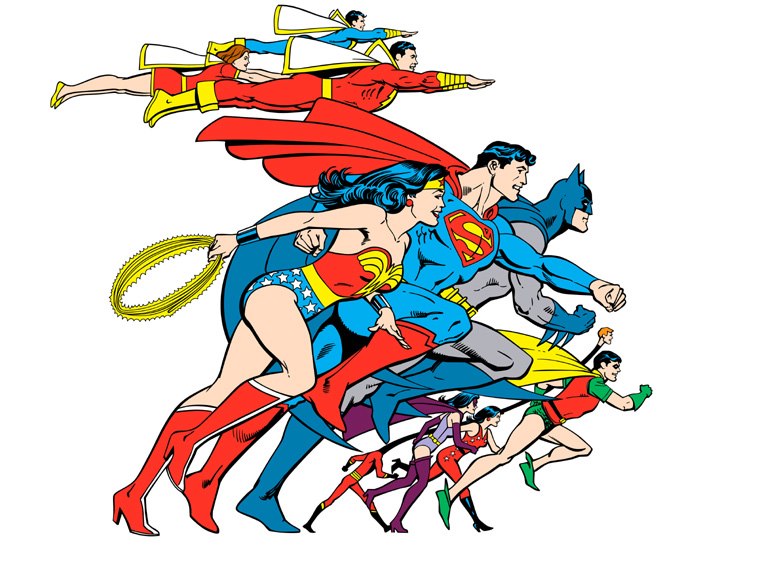
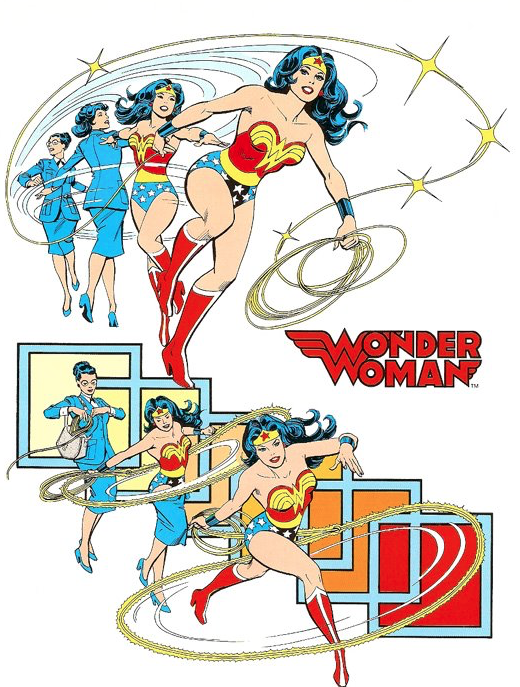
Even if you don’t like comic books, think of names like Superman, Batman, and Wonder Woman, and you get a very clear mental picture indeed. Classic superheroes live, breathe, battle supervillians, and even die and return to life across decades upon decades of storylines (and often more than one at once), but we all know them because, just like the most enduring corporate logos, they also stand as surpassingly effective works of commercial art. But given that countless different artists in various media have had to render these superheroes over those decades, how have their images remained so utterly consistent?
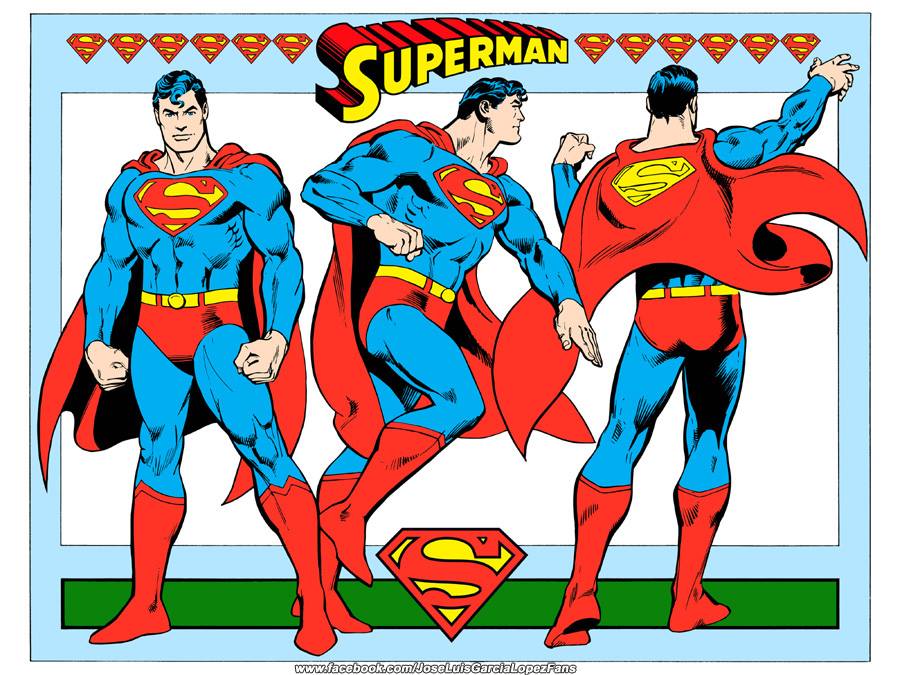
That owes to documents such as the 1982 DC Comics Style Guide, scanned and recently posted to a Facebook group for fans of comic-book artist José Luis García-López. Having spent most of his career with DC Comics, caretaker of Superman, Batman, Wonder Woman, and many other well-known and much-licensed heroes and villains besides, García-López surely knows in his very bones the sort of details of costume, physique, posture, and bearing these style guides exist to convey.
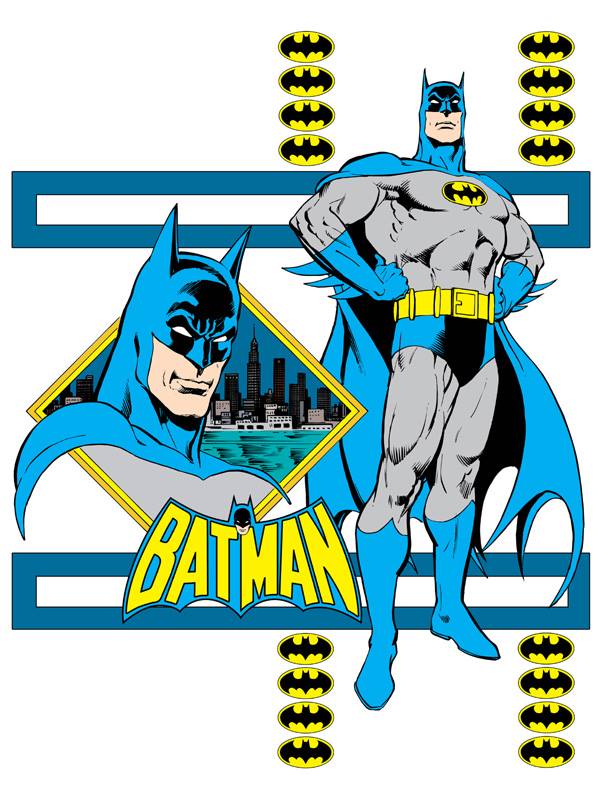
Being 33 years old, this particular style guide doesn’t perfectly reflect the way all of DC’s superheroes look today, what with the aesthetic changes made to keep them hip year on year. But you’ll notice that, while fashions tend to have their way with the more minor characters (longtime DC fans especially lament the headband and big hair this style guide inflicted upon Supergirl), the major ones still look, on the whole, pretty much the same. Sure, Superman has the strength and the flight, Batman has the wealth and the vast armory of high-tech crime-fighting tools, and Wonder Woman can do pretty much anything, but all those abilities pale in comparison to the sheer power of their design. You can flip through the rest of the Style Guide here.
(via Metafilter)
Related Content:
Download Over 22,000 Golden & Silver Age Comic Books from the Comic Book PlusArchive
Download 15,000+ Free Golden Age Comics from the Digital Comic Museum
Kapow! Stan Lee Is Co-Teaching a Free Comic Book MOOC, and You Can Enroll for Free
Batman & Other Super Friends Sit for 17th Century Flemish Style Portraits
Colin Marshall writes on cities, language, Asia, and men’s style. He’s at work on a book about Los Angeles, A Los Angeles Primer, and the video series The City in Cinema. Follow him on Twitter at @colinmarshall or on Facebook.
Read More...Watch The Half Hour Hegel: A Long, Guided Tour Through Hegel’s Phenomenology, Passage by Passage
Big books can be daunting. Big, complicated books can seem insurmountable, especially if you’re trying to read them on your own. How many of you have tried to read Joyce’s Ulysses’ and bailed out within 30 pages? Raise your hands. Well, perhaps you’ll be pleased to learn about Frank Delaney’s Re:Joyce podcast, which, since 2012, has been taking listeners on a slow walk through Joyce’s masterpiece, sometimes sentence by sentence. Episode 273 has just been posted, which features Delaney unpacking a scene in “Hades,” or what amounts to Chapter 6. By my count, Frank has only covered about 15% of the book. So it’s hardly too late to jump in.
If you’re looking to work your way through another bear of a book, give Hegel’s Phenomenology of the Spirit a try. Written in 1807, the Phenomenology had a profound effect on the development of German and Western philosophy, and it’s a notoriously difficult read. That’s where the Youtube series “Half Hour Hegel” comes in handy. Created by Gregory Sadler, a philosopher by training, the series features “25–35 minute YouTube videos leading students through the entire text of G.W.F. Hegel’s Phenomenology of Spirit, paragraph by paragraph, engaging in a close reading of the text without skipping any of the material.”
You can find 67 videos so far (watch the playlist above), covering 5 main portions of the text: the Preface (lectures 1–31), the Introduction (lectures 32–38), Sense-Certainty (lectures 39–44), Perception (lectures 45–51), and Force and the Understanding (lectures 52–65).” By the end of the project, there will be roughly 300 videos in the series. You can keep tabs on the video playlist here. And you can support Sadler’s work over on his Patreon page.
Other courses on Hegel can be found on our list of Free Online Philosophy Courses, a subset of our meta collection, 1,700 Free Online Courses from Top Universities.
If you would like to support the mission of Open Culture, consider making a donation to our site. It’s hard to rely 100% on ads, and your contributions will help us continue providing the best free cultural and educational materials to learners everywhere. You can contribute through PayPal, Patreon, and Venmo (@openculture). Thanks!
Related Content:
How Martin Luther King, Jr. Used Hegel, Kant & Nietzsche to Overturn Segregation in America
Read More...
Marilyn Monroe Recounts Her Harrowing Experience in a Psychiatric Ward in a 1961 Letter
By the end of 1960, Marilyn Monroe was coming apart.
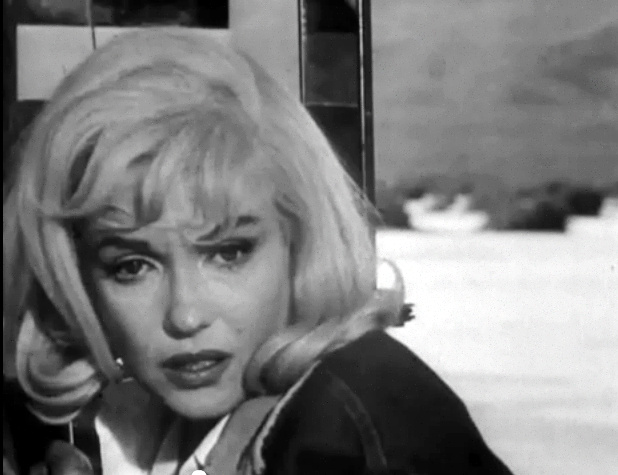
She spent much of that year shooting what would be her final completed movie – The Misfits (see a still from the trailer above). Arthur Miller penned the film, which is about a beautiful, fragile woman who falls in love with a much older man. The script was pretty clearly based on his own troubled marriage with Monroe. The production was by all accounts spectacularly punishing. Shot in the deserts of Nevada, the temperature on set would regularly climb north of 100 degrees. Director John Huston spent much of the shoot ragingly drunk. Star Clark Gable dropped dead from a heart attack less than a week after production wrapped. And Monroe watched as her husband, who was on set, fell in love with photographer Inge Morath. Never one blessed with confidence or a thick skin, Monroe retreated into a daze of prescription drugs. Monroe and Miller announced their divorce on November 11, 1960.
A few months later, the emotionally exhausted movie star was committed by her psychoanalyst Dr. Marianne Kris to the Payne Whitney Psychiatric Clinic in New York. Monroe thought she was going in for a rest cure. Instead, she was escorted to a padded cell. The four days she spent in the psych ward proved to be among the most distressing of her life.
In a riveting 6‑page letter to her other shrink, Dr. Ralph Greenson, written soon after her release, she detailed her terrifying experience.
There was no empathy at Payne-Whitney — it had a very bad effect — they asked me after putting me in a “cell” (I mean cement blocks and all) for very disturbed depressed patients (except I felt I was in some kind of prison for a crime I hadn’t committed. The inhumanity there I found archaic. They asked me why I wasn’t happy there (everything was under lock and key; things like electric lights, dresser drawers, bathrooms, closets, bars concealed on the windows — the doors have windows so patients can be visible all the time, also, the violence and markings still remain on the walls from former patients). I answered: “Well, I’d have to be nuts if I like it here.”
Monroe quickly became desperate.
I sat on the bed trying to figure if I was given this situation in an acting improvisation what would I do. So I figured, it’s a squeaky wheel that gets the grease. I admit it was a loud squeak but I got the idea from a movie I made once called “Don’t Bother to Knock”. I picked up a light-weight chair and slammed it, and it was hard to do because I had never broken anything in my life — against the glass intentionally. It took a lot of banging to get even a small piece of glass — so I went over with the glass concealed in my hand and sat quietly on the bed waiting for them to come in. They did, and I said to them “If you are going to treat me like a nut I’ll act like a nut”. I admit the next thing is corny but I really did it in the movie except it was with a razor blade. I indicated if they didn’t let me out I would harm myself — the furthest thing from my mind at that moment since you know Dr. Greenson I’m an actress and would never intentionally mark or mar myself. I’m just that vain.
During her four days there, she was subjected to forced baths and a complete loss of privacy and personal freedom. The more she sobbed and resisted, the more the doctors there thought she might actually be psychotic. Monroe’s second husband, Joe DiMaggio, rescued her by getting her released early, over the objections of the staff.
You can read the full letter (where she also talks about reading the letters of Sigmund Freud) over at Letters of Note. And while there, make sure you pick up a copy of the very elegant Letters of Note book.
Related Content:
The 430 Books in Marilyn Monroe’s Library: How Many Have You Read?
Marilyn Monroe Reads Joyce’s Ulysses at the Playground (1955)
Marilyn Monroe Reads Walt Whitman’s Leaves of Grass (1952)
Marilyn Monroe Explains Relativity to Albert Einstein (in a Nicolas Roeg Movie)
Jonathan Crow is a Los Angeles-based writer and filmmaker whose work has appeared in Yahoo!, The Hollywood Reporter, and other publications. You can follow him at @jonccrow. And check out his blog Veeptopus, featuring lots of pictures of vice presidents with octopuses on their heads. The Veeptopus store is here.
Read More...Hear Kurt Vonnegut Read Slaughterhouse-Five, Cat’s Cradle & Other Novels
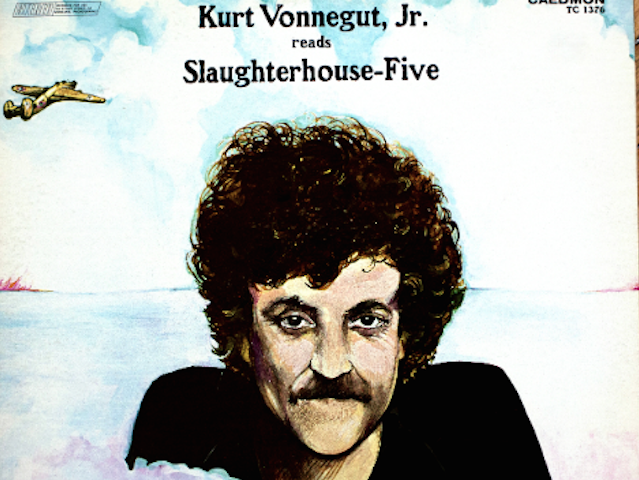
Many of us grade the books we read, but Kurt Vonnegut graded the books he wrote. Letters of Note once tweeted out a list of the thirteen grades he applied to thirteen of his novels, prefaced with his disclaimer that “the grades I hand out to myself do not place me in literary history. I am comparing myself with myself.” With that out of the way, he gives 1969’s Slaughterhouse-Five , his sixth novel and best-known work, an A‑plus, and puts his fourth novel, Cat’s Cradle
 from 1963, in the very same league.
But you don’t have to take Vonnegut’s word for it. You can, of course, read these books yourself — or you can hear them read aloud, at least in abridged versions, for free on Spotify. What’s more, you can hear Vonnegut, clearly not a man to distance himself from his finished work, read them aloud in his own voice. The recordings come from the label Caedmon, pioneers of the vinyl-album proto-audiobook beginning in the 1950s with a record of Dylan Thomas reading his poetry. Their Vonnegut-reading-Vonnegut releases came out through the 1970s.
You might as well begin by listening to the readings of Cat’s Cradle and Slaughterhouse-Five, Vonnegut’s “A‑plus” books. They also put out audio versions of Welcome to the Monkey House, which the author graded a bit more harshly with a B‑minus, and Breakfast of Champions, which, with a C, he ranked down among what he considered his lesser works. But that disdain doesn’t affect his characteristic richly weary delivery of the text, and besides, some of his fans love Breakfast of Champions best of all. Bonus: Stories from Welcome to the Monkey House is also an option.
If you don’t yet have the free software needed to play these or other recordings on Spotify, download it here, start listening to these classically satirical, inventive, and cynical midcentury American novels, and prepare to hand out some grades of your own.
Looking for free, professionally-read audio books from Audible.com? For example, John Malkovich reading Breakfast of Champions? Or James Franco reading Slaughterhouse-Five? Here’s a great, no-strings-attached deal. If you start a 30 day free trial with Audible.com, you can download two free audio books of your choice. Get more details on the offer here.
Related Content:
Kurt Vonnegut Maps Out the Universal Shapes of Our Favorite Stories
Kurt Vonnegut’s 8 Tips on How to Write a Good Short Story
Kurt Vonnegut Explains “How to Write With Style”
Kurt Vonnegut Urges Young People to Make Art and “Make Your Soul Grow”
Hear Hemingway Read Hemingway, and Faulkner Read Faulkner (90 Minutes of Classic Audio)
Colin Marshall writes on cities, language, Asia, and men’s style. He’s at work on a book about Los Angeles, A Los Angeles Primer, and the video series The City in Cinema. Follow him on Twitter at @colinmarshall or on Facebook.
Read More...Support Us
We're hoping to rely on loyal readers, rather than erratic ads. Please click the Donate button and support Open Culture. You can use Paypal, Venmo, Patreon, even Crypto! We thank you!

About Us

Open Culture scours the web for the best educational media. We find the free courses and audio books you need, the language lessons & educational videos you want, and plenty of enlightenment in between.
Advertise With Us

FREE UPDATES!
GET OUR DAILY EMAIL
Get the best cultural and educational resources on the web curated for you in a daily email. We never spam. Unsubscribe at any time.
FOLLOW ON SOCIAL MEDIA

Open Culture editor Dan Colman scours the web for the best educational media. He finds the free courses and audio books you need, the language lessons & movies you want, and plenty of enlightenment in between.
Advertise With Us