Stanley Kubrick’s Annotated Copy of Stephen King’s The Shining
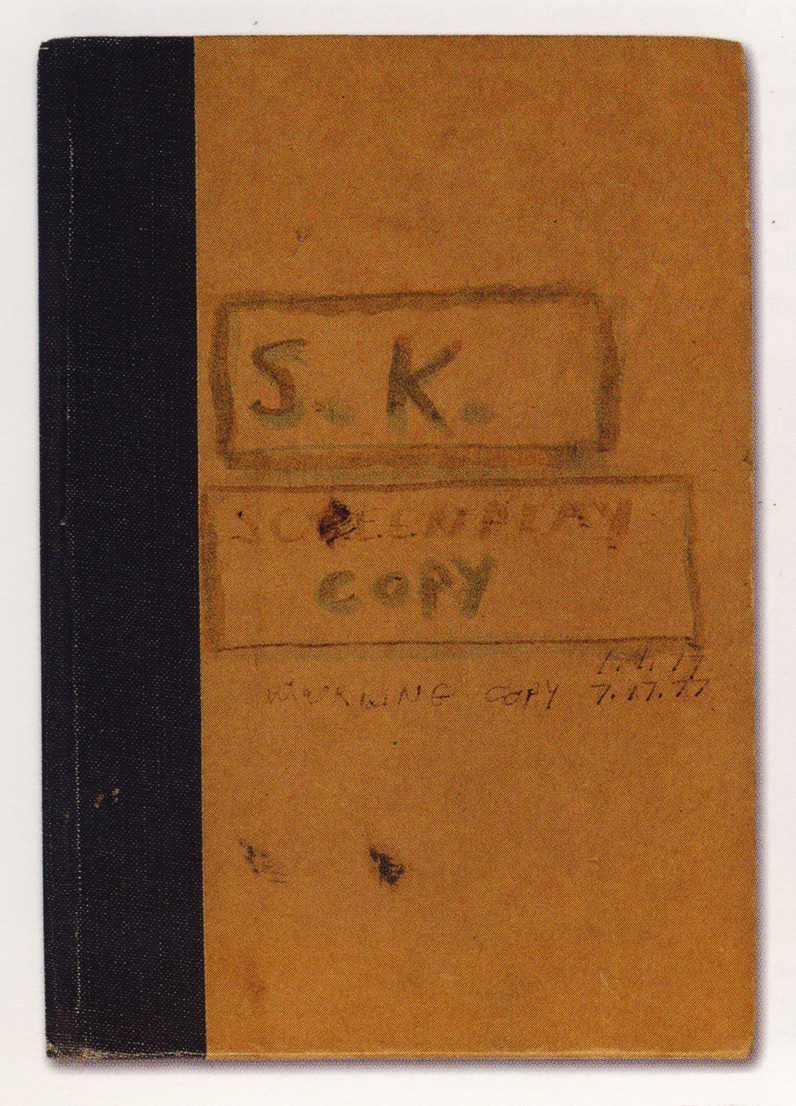
The web site Overlook Hotel has posted pictures of Stanley Kubrick’s personal copy of Stephen King’s novel The Shining. The book is filled with highlighted passages and largely illegible notes in the margin—tantalizing clues to Kubrick’s intentions for the movie.
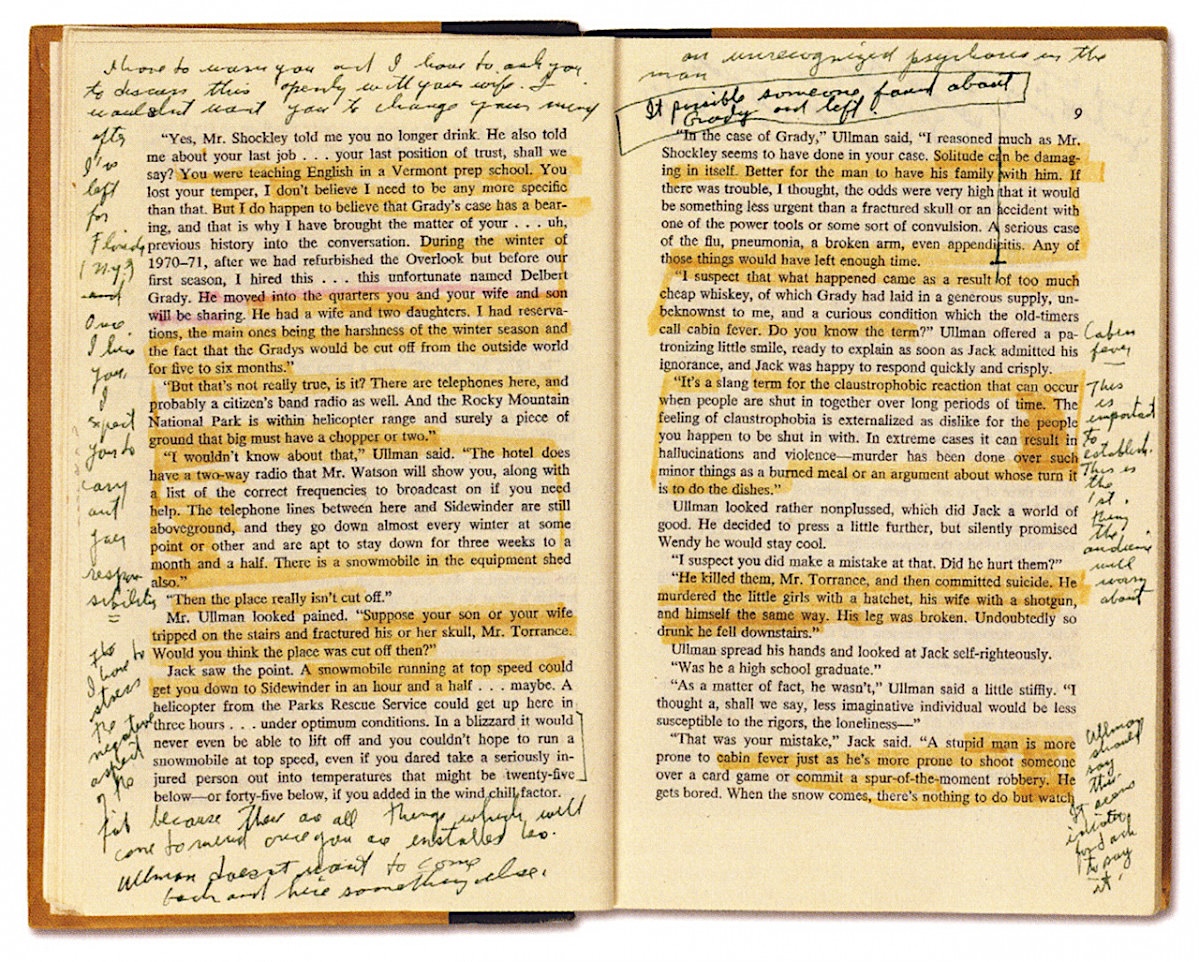
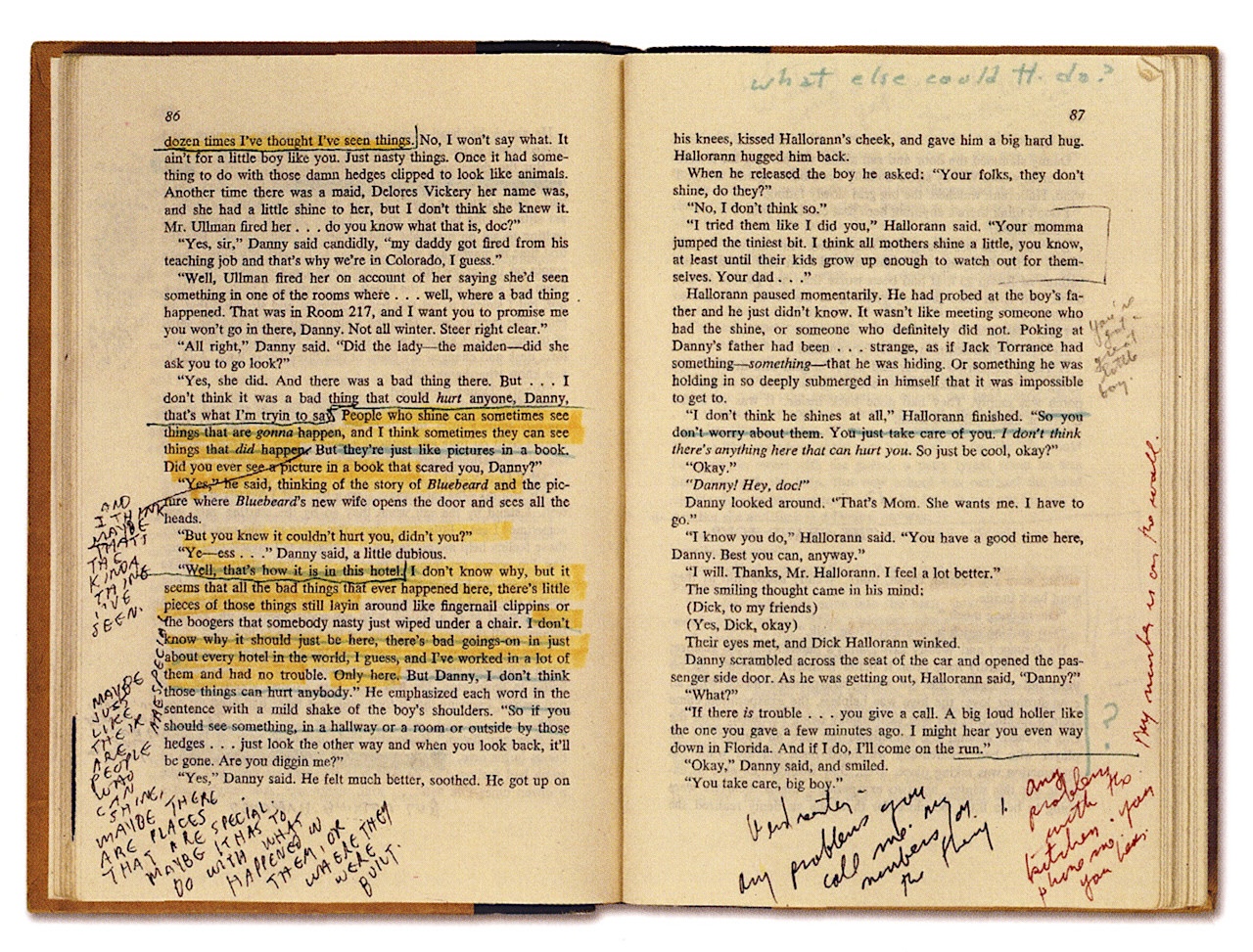
The site features a picture of the book’s careworn cover along with two spreads from the book’s interior —pages 8–9, where Jack Torrance is being interviewed by hotel manager Mr. Ullman, and pages 86–87 where hotel cook Dick Hallorann talks to Jack’s son Danny about the telepathic ability called “shining.”
Much of the marginalia is maddeningly hard to decipher. One of the notes I could make out reads:
Maybe just like their [sic] are people who can shine, maybe there are places that are special. Maybe it has to do with what happened in them or where they were built.
Kubrick is clearly working to translate King’s book into film. Other notes, however, seem wholly unrelated to the movie.
Any problems with the kitchen – you phone me.
When The Shining came out, it was greeted with tepid and nonplussed reviews. Since then, the film’s reputation has grown, and now it’s considered a horror masterpiece.
At first viewing, The Shining overwhelms the viewer with pungent images that etch themselves in the mind—those creepy twins, that rotting senior citizen in the bathtub, that deluge of blood from the elevator. Yet after the fifth or seventh viewing, the film reveals itself to be far weirder than your average horror flick. For instance, why is Jack Nicholson reading a Playgirl magazine while waiting in the lobby? What’s the deal with that guy in the bear suit at the end of the movie? Why is Danny wearing an Apollo 11 sweater?
While Stephen King has had dozens of his books adapted for the screen (many are flat-out terrible), of all the adaptations, this is one that King actively dislikes.
“I would do everything different,” complained King about the movie to American Film Magazine in 1986. “The real problem is that Kubrick set out to make a horror picture with no apparent understanding of the genre.” King later made his own screen version of his book. By all accounts, it’s nowhere as good as Kubrick’s.
Perhaps the reason King loathed Kubrick’s adaptation so much is that the famously secretive and controlling director packed the movie with so many odd signs, like Danny’s Apollo sweater, that seem to point to a meaning beyond a tale of an alcoholic writer who descends into madness and murder. The Shining is a semiotic puzzle about …what?
Critic after critic has attempted to crack the film’s hidden meaning. Journalist Bill Blakemore argued in his essay “The Family of Man” that The Shining is actually about the genocide of the Native Americans. Historian Geoffrey Cocks suggests that the movie is about the Holocaust. And conspiracy guru Jay Weidner has argued passionately that the movie is in fact Kubrick’s coded confession for his role in staging the Apollo 11 moon landing. (On a related note, see Dark Side of the Moon: A Mockumentary on Stanley Kubrick and the Moon Landing Hoax.)
Rodney Ascher’s 2012 documentary Room 237 juxtaposes all of these wildly divergent readings, brilliantly showing just how dense and multivalent The Shining is. You can see the trailer for the documentary above.
Note: Note: An earlier version of this post appeared on our site in 2014.
Related Content:
How Stanley Kubrick Adapted Stephen King’s The Shining into a Cinematic Masterpiece
Rare 1960s Audio: Stanley Kubrick’s Big Interview with The New Yorker
Jonathan Crow is a Los Angeles-based writer and filmmaker whose work has appeared in Yahoo!, The Hollywood Reporter, and other publications. You can follow him at @jonccrow.
Read More...How Designing Buildings Upside-Down Revolutionized Architecture, Making Possible St. Paul’s Cathedral, Sagrada Família & More
For 142 years now, Sagrada Família has been growing toward the sky. Or at least that’s what it seems to be doing, as its ongoing construction realizes ever more fully a host of forms that look and feel not quite of this earth. It makes a kind of sense to learn that, in designing the cathedral that would remain a work in progress nearly a century after his death, Antoni Gaudí built a model upside-down, making use of gravity in the opposite way to which we normally think of it as acting on a building. But as architecture YouTuber Stewart Hicks explains in the video above, Gaudí was hardly the first to use that technique.
Take St. Paul’s Cathedral, which Christopher Wren decided to make the tallest building in London in 1685. It included what would be the highest dome ever built, at 365 feet off the ground. “For a traditional dome design to reach this height, it would have to span an opening that’s 160 feet or 49 meters wide, but this made it much too heavy for the walls below,” says Hicks. “Existing techniques for building this just couldn’t work.” Enter scientist-engineer Robert Hooke, who’d already been figuring out ways to model forces like this by hanging chains from the ceiling.
“Hooke’s genius was that he realized that the chain in his experiments was calculating the perfect shape for it to remain in tension, since that’s all it can do.” He explained domes as, physically, “the exact opposite of the chains. His famous line was, ‘As hangs the flexile line, so but inverted will stand the rigid arch.’ ” In other words, “if you flip the shape of Hooke’s chain experiments upside down, the forces flip, and this shape is the perfect compression system.” Hence the distinctively elongated-looking shape of the dome on the completed St. Paul’s Cathedral, a departure from all architectural precedent.
The shape upon which Wren and Hooke settled turned out to be very similar to what architecture now knows as a catenary curve, a concept important indeed to Gaudí, who was “famously enamored with what some call organic forms.” He made detailed models to guide the construction of his projects, but after those he’d left behind for Sagrada Família were destroyed by anarchists in 1936, the builders had nothing to go on. Only in 1979 did the young architect Mark Burry “imagine the models upside-down,” which brought about a new understanding of the building’s complex, landscape-like forms. It was a similar physical insight that made possible such dramatic mid-century buildings as Annibale Vitellozzi and Pier Nervi’s Palazzetto dello Sport and Eero Saarinen’s TWA Flight Center: pure Space Age, but rooted in the Enlightenment.
Related content:
How This Chicago Skyscraper Barely Touches the Ground
Based in Seoul, Colin Marshall writes and broadcasts on cities, language, and culture. His projects include the Substack newsletter Books on Cities and the book The Stateless City: a Walk through 21st-Century Los Angeles. Follow him on Twitter at @colinmarshall or on Facebook.
Read More...
Bertrand Russell’s 10 Commandments for Living in a Healthy Democracy
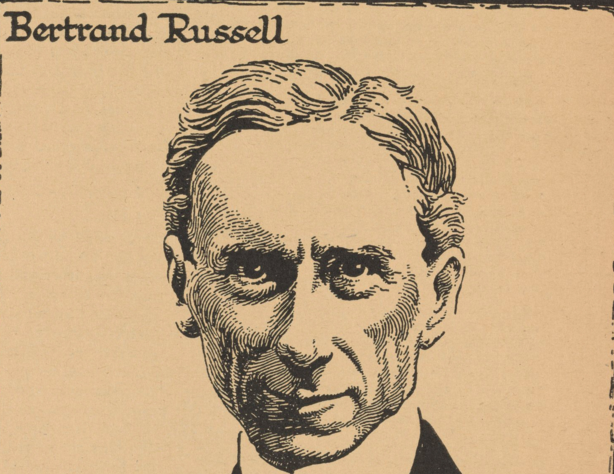
Image by J. F. Horrabin, via Wikimedia Commons
Bertrand Russell saw the history of civilization as being shaped by an unfortunate oscillation between two opposing evils: tyranny and anarchy, each of which contains the seed of the other. The best course for steering clear of either one, Russell maintained, is liberalism.
“The doctrine of liberalism is an attempt to escape from this endless oscillation,” writes Russell in A History of Western Philosophy. “The essence of liberalism is an attempt to secure a social order not based on irrational dogma [a feature of tyranny], and insuring stability [which anarchy undermines] without involving more restraints than are necessary for the preservation of the community.”
In 1951 Russell published an article in The New York Times Magazine, “The Best Answer to Fanaticism–Liberalism,” with the subtitle: “Its calm search for truth, viewed as dangerous in many places, remains the hope of humanity.” In the article, Russell writes that “Liberalism is not so much a creed as a disposition. It is, indeed, opposed to creeds.” He continues:
But the liberal attitude does not say that you should oppose authority. It says only that you should be free to oppose authority, which is quite a different thing. The essence of the liberal outlook in the intellectual sphere is a belief that unbiased discussion is a useful thing and that men should be free to question anything if they can support their questioning by solid arguments. The opposite view, which is maintained by those who cannot be called liberals, is that the truth is already known, and that to question it is necessarily subversive.
Russell criticizes the radical who would advocate change at any cost. Echoing the philosopher John Locke, who had a profound influence on the authors of the Declaration of Independence and the U.S. Constitution, Russell writes:
The teacher who urges doctrines subversive to existing authority does not, if he is a liberal, advocate the establishment of a new authority even more tyrannical than the old. He advocates certain limits to the exercise of authority, and he wishes these limits to be observed not only when the authority would support a creed with which he disagrees but also when it would support one with which he is in complete agreement. I am, for my part, a believer in democracy, but I do not like a regime which makes belief in democracy compulsory.
Russell concludes the New York Times piece by offering a “new decalogue” with advice on how to live one’s life in the spirit of liberalism. “The Ten Commandments that, as a teacher, I should wish to promulgate, might be set forth as follows,” he says:
1: Do not feel absolutely certain of anything.
2: Do not think it worthwhile to produce belief by concealing evidence, for the evidence is sure to come to light.
3: Never try to discourage thinking, for you are sure to succeed.
4: When you meet with opposition, even if it should be from your husband or your children, endeavor to overcome it by argument and not by authority, for a victory dependent upon authority is unreal and illusory.
5: Have no respect for the authority of others, for there are always contrary authorities to be found.
6: Do not use power to suppress opinions you think pernicious, for if you do the opinions will suppress you.
7: Do not fear to be eccentric in opinion, for every opinion now accepted was once eccentric.
8: Find more pleasure in intelligent dissent than in passive agreement, for, if you value intelligence as you should, the former implies a deeper agreement than the latter.
9: Be scrupulously truthful, even when truth is inconvenient, for it is more inconvenient when you try to conceal it.
10. Do not feel envious of the happiness of those who live in a fool’s paradise, for only a fool will think that it is happiness.
Wise words then. Wise words now.
Note: An earlier version of this post appeared on our site in March, 2013.
If you would like to support the mission of Open Culture, consider making a donation to our site. It’s hard to rely 100% on ads, and your contributions will help us continue providing the best free cultural and educational materials to learners everywhere. You can contribute through PayPal, Patreon, and Venmo (@openculture). Thanks!
Related Content:
Bertrand Russell & Buckminster Fuller on Why We Should Work Less, and Live and Learn More
Philosopher Bertrand Russell Talks About the Time When His Grandfather Met Napoleon
Read More...Watch the Original Nosferatu, the Classic German Expressionist Vampire Film, Before the New Remake Arrives This December
F. W. Murnau’s Nosferatu, far and away the most influential early vampire movie, came out 102 years ago. For about ten of those years, Robert Eggers has been trying to remake it. He wouldn’t be the first: Werner Herzog cast Klaus Kinski as the blood-sucking aristocrat at the center of his own version in 1979, and, though not a remake, E. Elias Merhige’s Shadow of the Vampire, from 2000, brought fresh attention to Murnau’s Nosferatu by grotesquely fictionalizing its production. In the latter picture, Willem Dafoe plays Max Schreck, the actor who took on the original role of the Dracula-inspired Count Orlok, as an actual vampire.
Dafoe changes sides in Eggers’ Nosferatu, due out this Christmas (see trailer below), by appearing as a vampire hunter. Playing Count Orlok is Bill Skarsgård, sure to be unrecognizable in full costume and makeup. “This Orlok is more of a folk vampire than any other film version,” says Eggers in a recent Vanity Fair interview. “That means he’s a dead person. And he’s not like, ‘I look great and I’m dead.’ ” What’s more, “for the first time in a Dracula or Nosferatu story, this guy looks like a dead Transylvanian nobleman. Every single thing he’s wearing down to the heels on his shoes is what he would’ve worn.” And lest any viewer with knowledge of ancient Romanian culture accuse the film of blithe inaccuracy, he also speaks a version of the extinct Dacian language.
This attention to detail will come as no surprise to fans of Eggers, who’s made his name with the historical films The Witch, The Lighthouse, and The Northman, all praised for their distinctive folkloric textures. But with Nosferatu, he pays direct homage to what’s presumably one of the major influences on his cinematic style. “The version that I watched as a kid didn’t have music,” he remembers. “It might not have had the same impact if it had had a cheesy organ score or synth score.” The video he watched was “a degraded 16-millimeter print” that had “certain frames where Max Schreck’s eyes looked like cat eyes. It’s the version that gave rise to the legends of Max Schreck actually being a vampire.”
Growing up in the rural New Hampshire of the nineties, Eggers’ interest in seeing Nosferatu meant that he “had to drive to the town that was populated and had a video store to order it, and then it came in the mail a month and a half later.” Today, we can watch it whenever we like, free online, and if you happen never to have seen it, you should certainly do so before catching the new remake. If reactions to early screenings are anything to judge by, this new interpretation of the material more than stands on its own dead, accurately heeled feet. But as Eggers surely understands better than anyone, you can’t approach the dankly seductive realm of Count Orlok without also being pulled back into cinema history.
Related content:
10 Great German Expressionist Films: Nosferatu, The Cabinet of Dr. Caligari & More
Horror Legend Christopher Lee Reads Bram Stoker’s Dracula
101 Free Silent Films: The Great Classics
Based in Seoul, Colin Marshall writes and broadcasts on cities, language, and culture. His projects include the Substack newsletter Books on Cities and the book The Stateless City: a Walk through 21st-Century Los Angeles. Follow him on Twitter at @colinmarshall or on Facebook.
Read More...Hear the Isolated Vocals of Peter Gabriel & Kate Bush in “Don’t Give Up”: The Power of Perseverance
Just by chance, could you use a song about perseverance and overcoming adversity? Something to give you a little encouragement and reassurance? Then we submit to you “Don’t Give Up,” featuring the isolated vocals of Peter Gabriel and Kate Bush.
When he released the song on his 1986 album So, Gabriel told NME: “The catalyst for ‘Don’t Give Up’ was a photograph I saw by Dorothea Lange,… which showed the dust-bowl conditions during the Great Depression in America. Without a climate of self-esteem it’s impossible to function.” Elsewhere, on his website, Gabriel explained that the song was also “informed by the high levels of unemployment under the Conservative government of Margaret Thatcher of the 1980s.” Whatever the challenges they’ve faced, listeners have sought solace in this song for the past 38 years. No doubt, for some, it will come in handy during the weeks and months ahead.
Related Content
Kate Bush Enjoys a (Long-Overdue) Revival, Sparked by Season 4 of Stranger Things
Peter Gabriel Re-Records “Biko,” His Anti-Apartheid Protest Song, with Musicians Around the World
Peter Gabriel and Genesis Live on Belgian TV in 1972: The Full Show
Read More...Carl Jung Psychoanalyzes Hitler: “He’s the Unconscious of 78 Million Germans.” “Without the German People He’d Be Nothing” (1938)
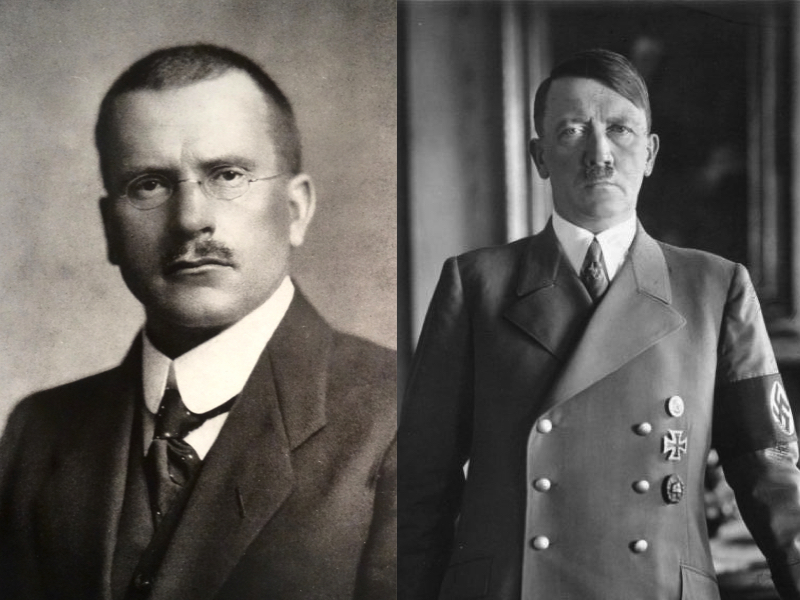
Were you to google “Carl Jung and Nazism”—and I’m not suggesting that you do—you would find yourself hip-deep in the charges that Jung was an anti-Semite and a Nazi sympathizer. Many sites condemn or exonerate him; many others celebrate him as a blood and soil Aryan hero. It can be nauseatingly difficult at times to tell these accounts apart. What to make of this controversy? What is the evidence brought against the famed Swiss psychiatrist and onetime close friend, student, and colleague of Sigmund Freud?
Truth be told, it does not look good for Jung. Unlike Nietzsche, whose work was deliberately bastardized by Nazis, beginning with his own sister, Jung need not be taken out of context to be read as anti-Semitic. There is no irony at work in his 1934 paper The State of Psychotherapy Today, in which he marvels at National Socialism as a “formidable phenomenon,” and writes, “the ‘Aryan’ unconscious has a higher potential than the Jewish.” This is only one of the least objectionable of such statements, as historian Andrew Samuels demonstrates.
One Jungian defender admits in an essay collection called Lingering Shadows that Jung had been “unconsciously infected by Nazi ideas.” In response, psychologist John Conger asks, “Why not then say that he was unconsciously infected by anti-Semitic ideas as well?”—well before the Nazis came to power. He had expressed such thoughts as far back as 1918. Like the philosopher Martin Heidegger, Jung was accused of trading on his professional associations during the 30s to maintain his status, and turning on his Jewish colleagues while they were purged.
Yet his biographer Deirdre Bair claims Jung’s name was used to endorse persecution without his consent. Jung was incensed, “not least,” Mark Vernon writes at The Guardian, “because he was actually fighting to keep German psychotherapy open to Jewish individuals.” Bair also reveals that Jung was “involved in two plots to oust Hitler, essentially by having a leading physician declare the Führer mad. Both came to nothing.” And unlike Heidegger, Jung strongly denounced anti-Semitic views during the war. He “protected Jewish analysts,” writes Conger, “and helped refugees.” He also worked for the OSS, precursor to the CIA, during the war.
His recruiter Allen Dulles wrote of Jung’s “deep antipathy to what Nazism and Fascism stood for.” Dulles also cryptically remarked, “Nobody will probably ever know how much Prof. Jung contributed to the allied cause during the war.” These contradictions in Jung’s words, character, and actions are puzzling, to say the least. I would not presume to draw any hard and fast conclusions from them. They do, however, serve as the necessary context for Jung’s observations of Adolf Hitler. Nazis of today who praise Jung most often do so for his supposed characterization of Hitler as “Wotan,” or Odin, a comparison that thrills neo-pagans who, like the Germans did, use ancient European belief systems as clothes hangers for modern racist nationalism.
In his 1936 essay, “Wotan,” Jung describes the old god as a force all its own, a “personification of psychic forces” that moved through the German people “towards the end of the Weimar Republic”—through the “thousands of unemployed,” who by 1933 “marched in their hundreds of thousands.” Wotan, Jung writes, “is the god of storm and frenzy, the unleasher of passions and the lust of battle; moreover he is a superlative magician and artist in illusion who is versed in all secrets of an occult nature.” In personifying the “German psyche” as a furious god, Jung goes so far as to write, “We who stand outside judge the Germans far too much as if they were responsible agents, but perhaps it would be nearer the truth to regard them also as victims.”
“One hopes,” writes Per Brask, “evidently against hope, that Jung did not intend” his statements “as an argument of redemption for the Germans.” Whatever his intentions, his mystical racialization of the unconscious in “Wotan” accorded perfectly well with the theories of Alfred Rosenberg, “Hitler’s chief ideologist.” Like everything about Jung, the situation is complicated. In a 1938 interview, published by Omnibook Magazine in 1942, Jung repeated many of these disturbing ideas, comparing the German worship of Hitler to the Jewish desire for a Messiah, a “characteristic of people with an inferiority complex.” He describes Hitler’s power as a form of “magic.” But that power only exists, he says, because “Hitler listens and obeys….”
His Voice is nothing other than his own unconscious, into which the German people have projected their own selves; that is, the unconscious of seventy-eight million Germans. That is what makes him powerful. Without the German people he would be nothing.
Jung’s observations are bombastic, but they are not flattering. The people may be possessed, but it is their will, he says, that the Nazi leader enacts, not his own. “The true leader,” says Jung, “is always led.” He goes on to paint an even darker picture, having closely observed Hitler and Mussolini together in Berlin:
In comparison with Mussolini, Hitler made upon me the impression of a sort of scaffolding of wood covered with cloth, an automaton with a mask, like a robot or a mask of a robot. During the whole performance he never laughed; it was as though he were in a bad humor, sulking. He showed no human sign.
His expression was that of an inhumanly single-minded purposiveness, with no sense of humor. He seemed as if he might be a double of a real person, and that Hitler the man might perhaps be hiding inside like an appendix, and deliberately so hiding in order not to disturb the mechanism.
With Hitler you do not feel that you are with a man. You are with a medicine man, a form of spiritual vessel, a demi-deity, or even better, a myth. With Hitler you are scared. You know you would never be able to talk to that man; because there is nobody there. He is not a man, but a collective. He is not an individual, but a whole nation. I take it to be literally true that he has no personal friend. How can you talk intimately with a nation?
Read the full interview here. Jung goes on to further discuss the German resurgence of the cult of Wotan, the “parallel between the Biblical triad… and the Third Reich,” and other peculiarly Jungian formulations. Of Jung’s analysis, interviewer H.R. Knickerbocker concludes, “this psychiatric explanation of the Nazi names and symbols may sound to a layman fantastic, but can anything be as fantastic as the bare facts about the Nazi Party and its Fuehrer? Be sure there is much more to be explained in them than can be explained by merely calling them gangsters.”
Note: An earlier version of this post appeared on our site in 2017.
Related Content:
George Orwell Reviews Mein Kampf: “He Envisages a Horrible Brainless Empire” (1940)
Carl Jung Offers an Introduction to His Psychological Thought in a 3‑Hour Interview (1957)
How Carl Jung Inspired the Creation of Alcoholics Anonymous
Josh Jones is a writer and musician based in Durham, NC. Follow him at @jdmagness
Read More...Watch 70+ Classic Literary Films Free Online: The Snows of Kilimanjaro, Gulliver’s Travels, Jane Eyre, and More
The term gaslight has gained so much traction in popular discourse so recently that you’d swear it was coined around 2010. In fact, that particular usage goes at least as far back as 1938, when British novelist and playwright Patrick Hamilton wrote a stage thriller about a husband who surreptitiously rearranges things in the house so as to make his wife believe that she’s gone insane. Gas Light proved enough of a hit to be adapted for the cinema two years later, with the two words of its title streamlined into one. You can watch Thorold Dickinson’s Gaslight just above, and if you enjoy it, have a look at the rest of the more than 70 literary movies collected into this playlist from the verified YouTube channel Cult Cinema Classics.
If you know your cinema history, you’ll know that Gaslight was remade in Hollywood in 1944, directed by George Cukor and starring Charles Boyer, Ingrid Bergman, Joseph Cotten, and Angela Lansbury. (That version inspired Steely Dan’s song “Gaslighting Abbie,” where I first heard the word myself.)
In those days, the American film industry looked to the British one for proven material — material the British film industry, for its part, had found in literature. Take the work of a rising young director called Alfred Hitchcock, who adapted Charles Bennett’s Blackmail in 1929, John Buchan’s The Thirty-Nine Steps in 1935, Joseph Conrad’s The Secret Agent as Sabotage in 1936, and Daphne du Maurier’s Jamaica Inn in 1939.
Today, literary adaptation seems to have become a relatively niche practice in Hollywood, but in the mid-twentieth century, it had real cachet: hence the increasing ambition of productions like The Scarlet Letter (1934), Of Mice and Men 1939, Fleischer Studios’ animated Gulliver’s Travels (1939), The Snows of Kilimanjaro (1952), and Jane Eyre (1970). Naturally, these films reflect their own eras as much as they do the authorial visions of Hawthorne, Steinbeck, Swift, Hemingway, and Charlotte Brontë. Each of these pictures offers its own way of regarding its source material. And would it seem so insane to believe that some of them may even have influence still to exert on popular culture here in the twenty-first century? Watch the playlist of 70 literary films here.
Related content:
The First-Ever Film Version of Lewis Carroll’s Tale Alice in Wonderland (1903)
Watch the Trailer for the Long-Lost First Film Adaptation of The Great Gatsby (1926)
When François Truffaut Made a Film Adaptation of Ray Bradbury’s Fahrenheit 451 (1966)
Watch the Hugely-Ambitious Soviet Film Adaptation of War and Peace Free Online (1966–67)
Watch an 8‑Part Film Adaptation of Tolstoy’s Anna Karenina Free Online
Based in Seoul, Colin Marshall writes and broadcasts on cities, language, and culture. His projects include the Substack newsletter Books on Cities and the book The Stateless City: a Walk through 21st-Century Los Angeles. Follow him on Twitter at @colinmarshall or on Facebook.
Read More...Download 1,600+ Publications from the Metropolitan Museum of Art: Books, Guides, Magazines & More
Many of us in these past few generations first heard of the Metropolitan Museum of Art while reading E. L. Konigsburg’s novel From the Mixed-Up Files of Mrs. Basil E. Frankweiler. More than a few of us also fantasized about running away to live in that vast cultural institution like the book’s young protagonists Claudia and Jamie Kincaid. Yet among other, more practical concerns, we might have wondered where we were going to secure enough reading material to get us through those long after-hours nights. Konigsburg had Claudia and Jamie visit the former Donnell Library Center, but what about in the Met itself?
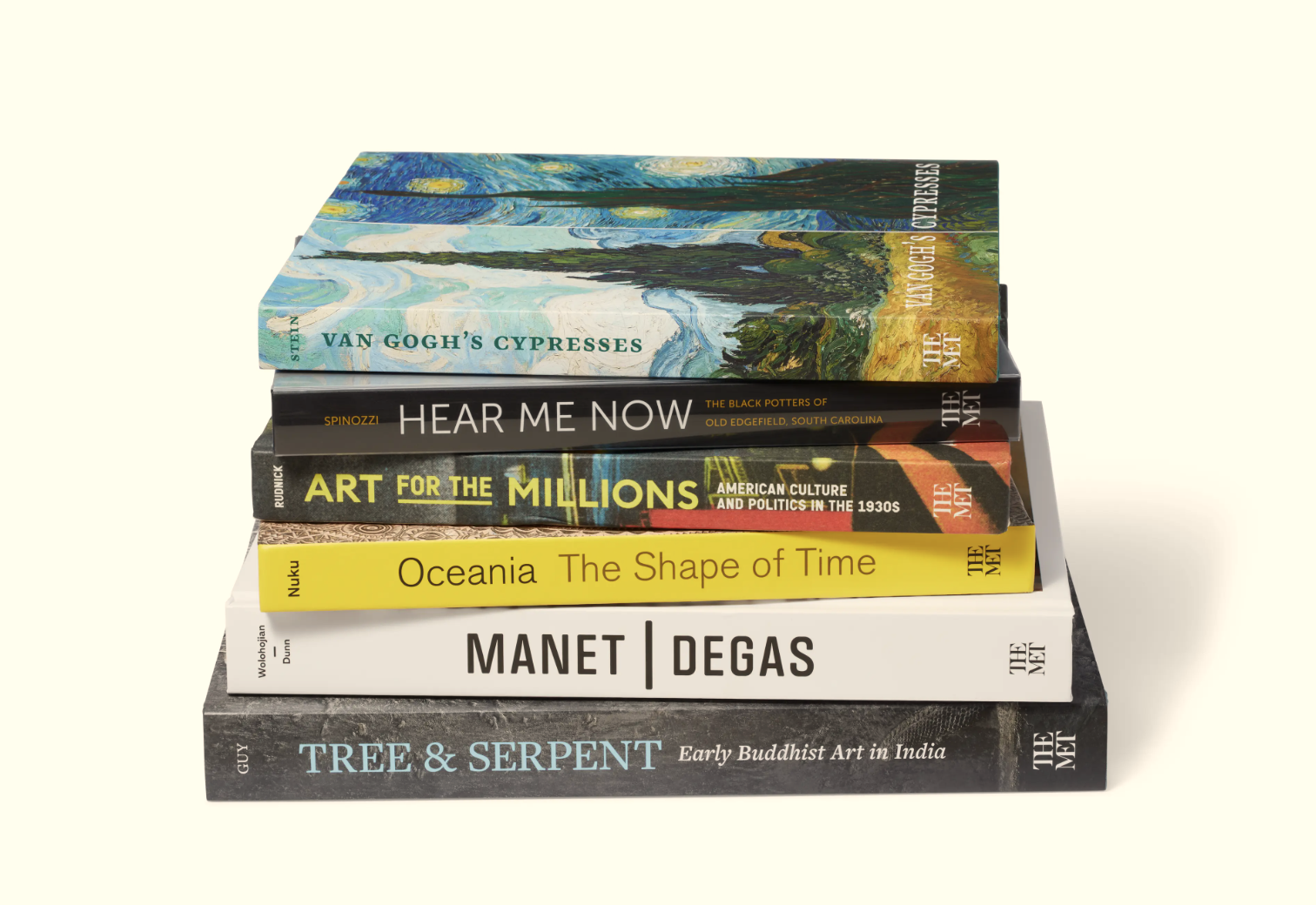
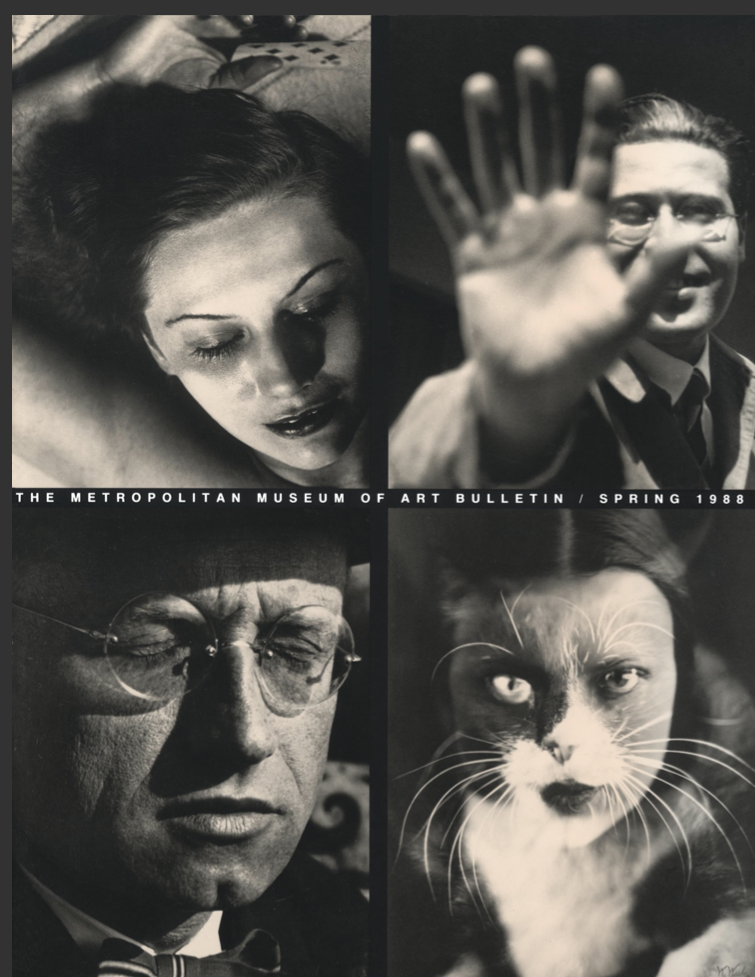
What we probably didn’t realize in our youth was that, in addition to being a museum, the Met is a publisher. Now, at the MetPublications digital archive, we can read a great variety of the books, guides, and periodicals it’s put out for more than a century–from a 1911 catalog of the museum’s collection of pottery, porcelain, and faïence (which refers to pottery of the tin-glazed variety) to — as of this writing — the latest issue of the Met’s Bulletin, on Mexican printmakers including Diego Rivera and José Clemente Orozco. They and the more than 1,600 publications that lie between them are free for you to explore, some readable online, and some downloadable in PDF form.
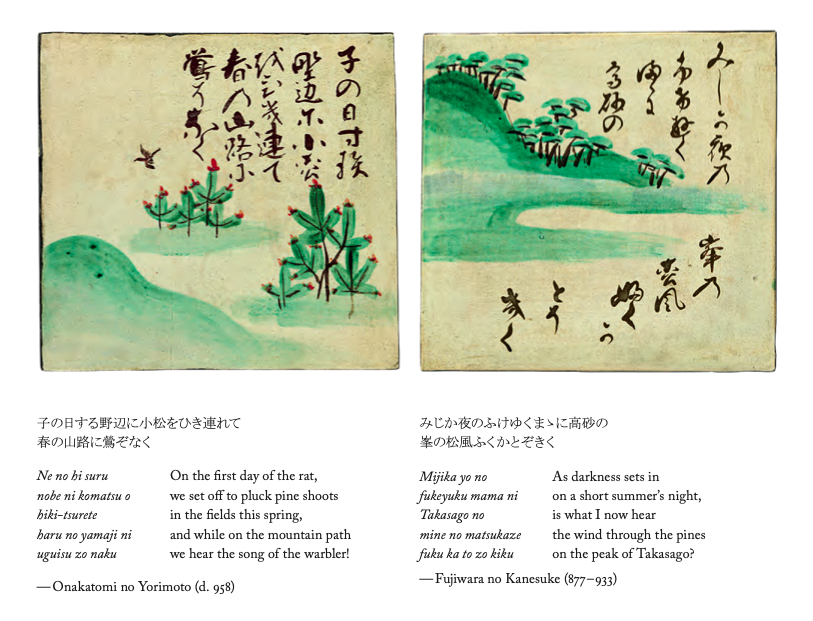
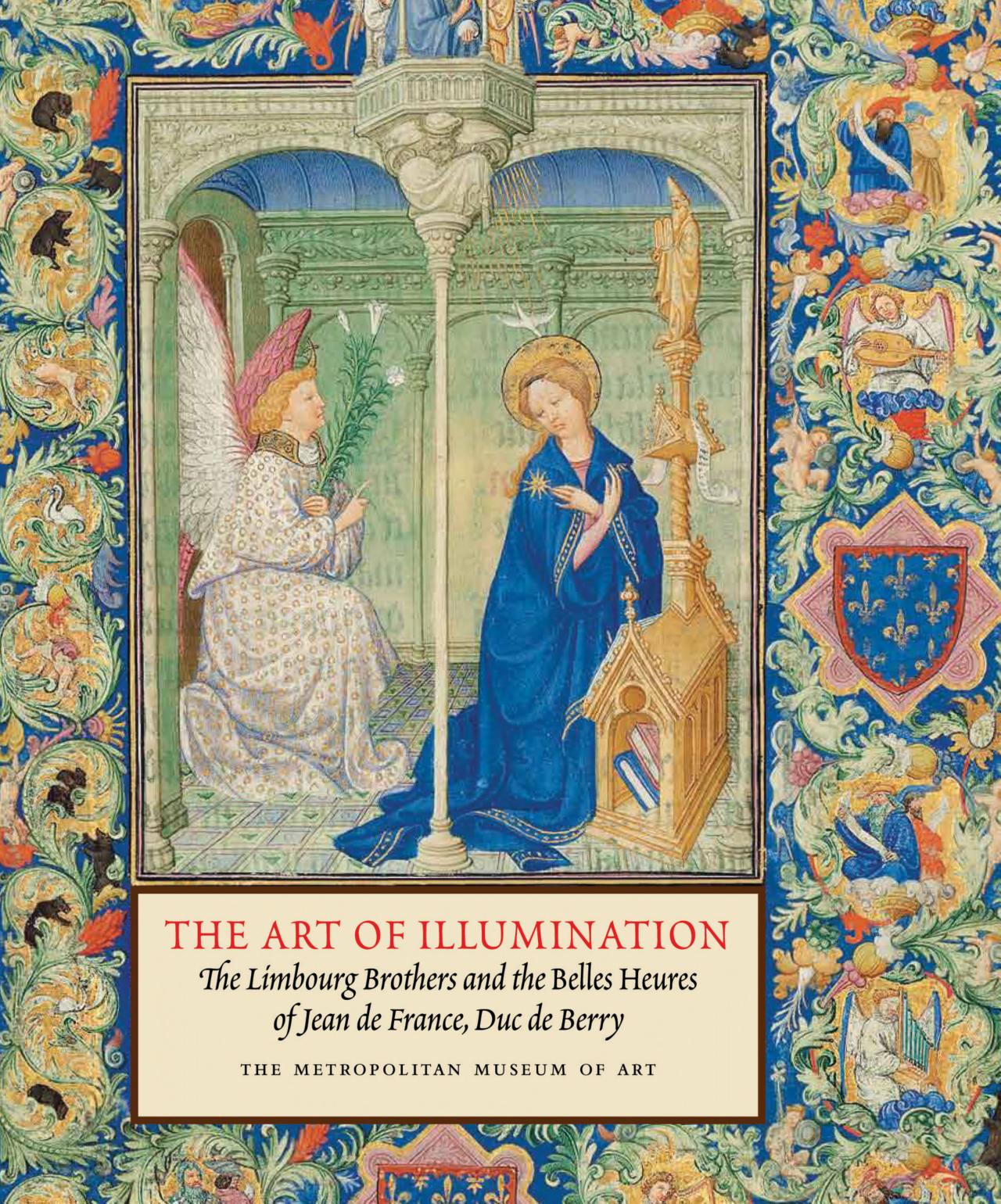
You might find issues of the Bulletin on everything from Frank Lloyd Wright to interwar photography to Korean art, as well as catalogs for exhibitions like AngloMania: Tradition and Transgression in British Fashion, The Art of Illumination: The Limbourg Brothers and the Belles Heures of Jean de France, Duc de Berry (whose central work of calendrical art was previously featured here on Open Culture), Van Gogh in Arles, The Milkmaid by Johannes Vermeer, and The Poetry of Nature: Edo Paintings from the Fishbein-Bender Collection. MetPublications offers plenty of interesting reading, but if you find you suddenly have to do some serious art-historical research, you’ll also find that it’s a far more convenient resource than Claudia and Jamie had.
Enter the MetPublications digital archive here, and, once there, particularly explore the “Free to Download” section.
Related content:
The Metropolitan Museum of Art Puts 490,000 High-Res Images Online & Makes Them Free to Use
Take a New Virtual Reality Tour of the Metropolitan Museum of Art
A World of Art: The Metropolitan Museum of Art
Based in Seoul, Colin Marshall writes and broadcasts on cities, language, and culture. His projects include the Substack newsletter Books on Cities and the book The Stateless City: a Walk through 21st-Century Los Angeles. Follow him on Twitter at @colinmarshall or on Facebook.
Read More...Watch The Cure Perform a Three-Hour Concert in London, Celebrating the Release of Their New Album
Last Friday, The Cure celebrated the release of their new album, Songs of a Lost World, with a three-hour set at the Troxy in London. The band kicked off the show by performing all eight tracks from the album, before then playing another 23 songs, mostly hits from their large catalog of music. Originally live streamed on YouTube, you can now watch the entire show online. Just click play above.
If you would like to support the mission of Open Culture, consider making a donation to our site. It’s hard to rely 100% on ads, and your contributions will help us continue providing the best free cultural and educational materials to learners everywhere. You can contribute through PayPal, Patreon, and Venmo (@openculture). Thanks!
Related Content
Watch The Cure’s First TV Appearance in 1979 … Before The Band Acquired Its Signature Goth Look
Lost Depeche Mode Documentary Is Now Online: WatchOur Hobby is Depeche Mode
Read More...
Discover Paul Éluard and Max Ernst’s Still-Bizarre Proto-Surrealist Book Les Malheurs des immortels (1922)
When the names of French poet Paul Éluard and German artist Max Ernst arise, one subject always follows: that of their years-long ménage à trois — or rather, “marriage à trois,” as a New York Times article by Annette Grant once put it. It started in 1921, Grant writes, when the Surrealist movement’s co-founder André Breton put on an exhibition for Ernst in Paris. “Éluard and his Russian wife, Gala, were fascinated by the show and arranged to meet Ernst in the Austrian Alps and later in Germany. Ernst, Éluard and Gala quickly became inseparable. The artist and the poet started a lifelong series of collaborations on books even as Ernst and Gala started an affair.”
This arrangement “eventually propelled the trio on a journey from Cologne to Paris to Saigon,” which constitutes quite a story in its own right. But on pure artistic value, no result of the encounter between Éluard and Ernst has remained as fascinating as Les Malheurs des immortels, the book on which they collaborated in 1922.
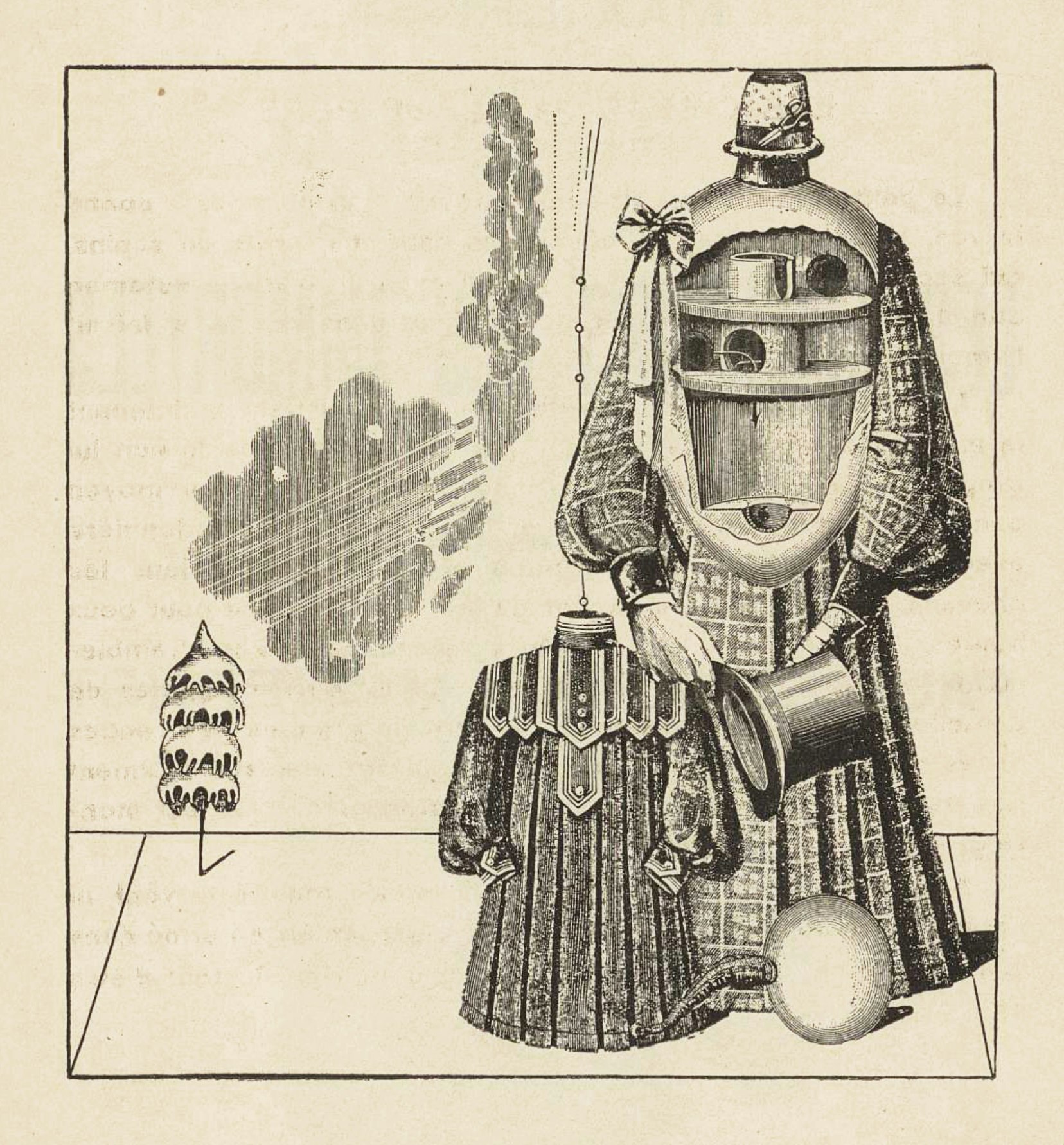
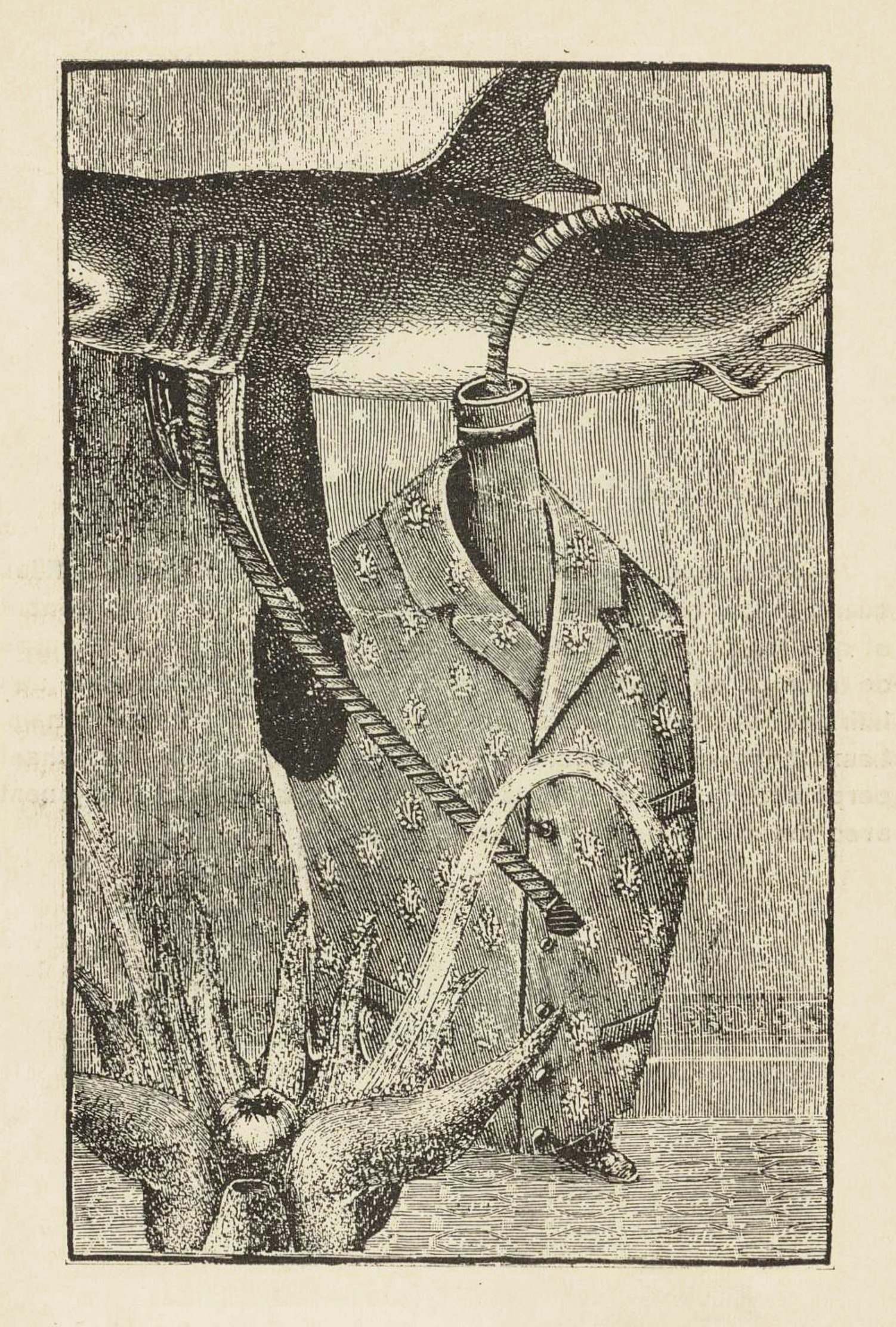
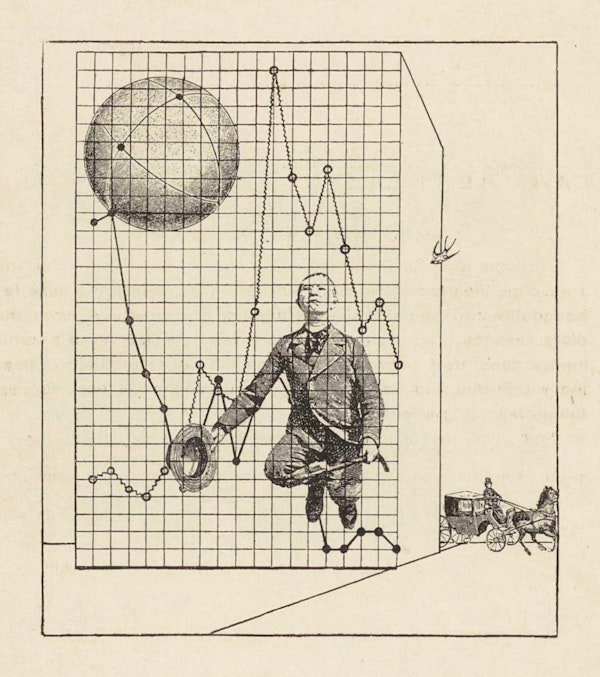
“It appears that Ernst, still in Germany at that stage, created the images first: twenty-one collages composed of engravings cut out of nineteenth-century magazines and catalogues,” writes Daisy Sainsbury at The Public Domain Review. Unlike in the Dada works known at the time, “the artist is careful to disguise the images’ composite nature. He blends each section into a seamless, coherent whole.”
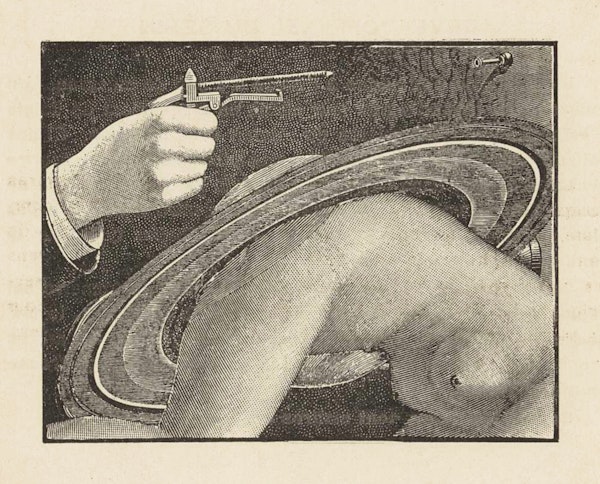
“Ernst and Éluard then worked together on twenty prose poems to accompany the illustrations, sending fragments of text to each other to revise or supplement.” The result, which predates by two years Breton’s Manifeste du surréalisme, “represents a proto-Surrealist experiment par excellence.” In the text, phrases like “Le petit est malade, le petit va mourir” recall “children’s nursery rhymes, with a sing-song quality stripped of sense”; in the images, “a caged bird, an upturned crocodile, and a webbed foot transformed through collage into the ultimate symbol of human frivolity, a fan, evoke the classification systems of modern science (and religion before that) as well as their potential misuse in human hands.”
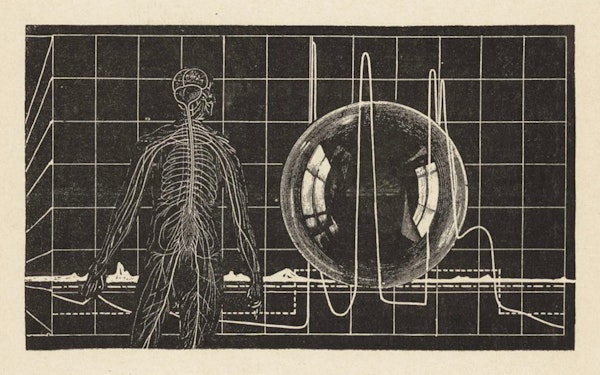
It’s worth putting all this in its historical context, a Europe after the First World War in which modern life no longer made quite as much sense as it once seemed. The often-inexplicable responses of cultural figures involved in movements like Surrealism — in their work or in their lives — were attempts at hitting the reset button, to use an anachronistic metaphor. Not that, a century later, humanity has made much progress in coming to grips with our place in a world of rapidly evolving technology and large-scale geopolitics. Or at least we might feel that way while reading Les Malheurs des immortels, available online at the Internet Archive and the University of Iowa’s digital Dada collection, and regarding these textual-visual constructions as deeply strange as anything designed by our artificial-intelligence engines today.
Related Content:
An Introduction to Surrealism: The Big Aesthetic Ideas Presented in Three Videos
A Brief, Visual Introduction to Surrealism: A Primer by Doctor Who Star Peter Capaldi
Based in Seoul, Colin Marshall writes and broadcasts on cities, language, and culture. His projects include the Substack newsletter Books on Cities and the book The Stateless City: a Walk through 21st-Century Los Angeles. Follow him on Twitter at @colinmarshall or on Facebook.
Read More...Support Us
We're hoping to rely on loyal readers, rather than erratic ads. Please click the Donate button and support Open Culture. You can use Paypal, Venmo, Patreon, even Crypto! We thank you!

About Us

Open Culture scours the web for the best educational media. We find the free courses and audio books you need, the language lessons & educational videos you want, and plenty of enlightenment in between.
Advertise With Us

FREE UPDATES!
GET OUR DAILY EMAIL
Get the best cultural and educational resources on the web curated for you in a daily email. We never spam. Unsubscribe at any time.
FOLLOW ON SOCIAL MEDIA

Open Culture editor Dan Colman scours the web for the best educational media. He finds the free courses and audio books you need, the language lessons & movies you want, and plenty of enlightenment in between.
Advertise With Us


