The Fall of the House of Usher: Poe’s Classic Tale Turned Into 1928 Avant Garde Film, Scripted by e.e. cummings
Last week, in deference to the approach of Halloween, we featured the complete works of Edgar Allan Poe as Free eBooks and Free Audio Books. If you give them a read, a listen, or both, you’ll discover that few creators, using nothing more than the written word, can disturb quite so effectively as Poe. But his written words have also provided inspiration to frightening works in other media, including the previously featured 1953 British animation of “The Tell-Tale Heart” and, today, the short-film version of “The Fall of the House of Usher.” That 1839 story perhaps most perfectly (and most viscerally) realizes such pet themes of Poe’s as illness, dread, and live burial, and as such has served as material to a great many filmmakers as defiantly lowbrow as Roger Corman and as uncompromisingly idiosyncratic as Jan Švankmajer. But here we offer you one of the most interesting cinematic “Usher“s ever made: James Sibley Watson and Melville Webber’s 13-minute avant-garde adaptation, scripted in part by poet e.e. cummings.
“Despite their importance as leading figures in the film world,” writes Tara Travisano, “Watson and Webber’s work is often overlooked and not given sufficient credit.” Though they got their shooting script from the modernist-influenced cummings, the filmmakers, “not fans of modernism,” “preferred to have their films described as amateur.” Their Fall of the House of Usher, the best-known work they ever produced, “hardly follows a narrative, but is valued for its creative use of repetition and variation and for the film’s dramatic lighting.” And don’t worry if you haven’t read the original story in a while; according to Travisano, Watson and Webber chose to film it because they themselves hadn’t read it in a while, and thus “would be free of its influence.” But after experiencing the brief but unsettling cinematic dream they managed to make out of this half-remembered Poean material, you may want to seek out its influence by going back and reading it again — or listening to it, or trying to sleep and re-dream it for yourself.
You can find Fall of the House of Usher in our collection, 285 Free Documentaries Online.
Related Content:
Download The Complete Works of Edgar Allan Poe: Macabre Stories as Free eBooks & Audio Books
Watch the 1953 Animation of Edgar Allan Poe’s “The Tell-Tale Heart,” Narrated by James Mason
James Earl Jones Reads Edgar Allan Poe’s “The Raven” and Walt Whitman’s “Song of Myself”
Christopher Walken, Iggy Pop, Debbie Harry & Other Celebs Read Tales by Edgar Allan Poe
Colin Marshall hosts and produces Notebook on Cities and Culture and writes essays on cities, language, Asia, and men’s style. He’s at work on a book about Los Angeles, A Los Angeles Primer. Follow him on Twitter at @colinmarshall or on Facebook.
Read More...A Quick Introduction to Literary Theory: Watch Animated Videos from the Open University
Just what is an author? It might seem like a silly question, and an academic dissection of the term may seem like a needlessly pedantic exercise. But the very variability of the concept means it isn’t a stable, fixed idea at all, but a shifting set of associations we have with notions about creativity, the social role of art, and that elusive quality known as “genius.” Questions raised in the Open University video above—part of a series of very short animated entrées into literary criticism called “Outside the Book”—make it hard to ignore the problems we encounter when we try to define authorship in simple, straightforward ways. Most of the questions relate to the work of French poststructuralist Michel Foucault, whose critical essay “What is an Author?”—along with structuralist thinker Roland Barthes’ “The Death of the Author”—disturbed many a literary critic’s comfortable assumptions about the creative locus behind any given work.
In the 18th century, at least in Europe, the author was a highly celebrated cultural figure, a status epitomized by Samuel Johnson’s reverential biography of John Dryden and edition of Shakespeare—and in turn Johnson’s own biography by his amanuensis Boswell. The 19th century began to see the author as a celebrity, with the hype and sometimes tawdry speculation that accompanies that designation. In the mid-twentieth century, even as the idea of the film director as auteur—a singular creative genius—gained ascendance, the inflated role of the literary author came in for a bruising. With Foucault, Barthes, and others like W.K. Wimsatt and Monroe Beardsley—whose essay “The Intentional Fallacy” more or less ruled out biography as a tool of the critic—the author receded and the “text” gained primacy as, in Foucault’s words, a “discursive unit.”
This means that questions of authorship became inseparable from questions of readership, interpretation, and influence; from questions of historical classification and social construction (i.e. how do we know anything about “Byron” except through biographies, documentaries, etc., themselves cultural productions?); from questions of translation, pseudepigraphy, and pen names. Put in much plainer terms, we once came to think of the author not simply as the writer—a role previously delegated to lowly, usually anonymous “scribes” who simply copied the words of gods, heroes, and prophets. Instead, the author became a god, a hero, and a prophet, a godlike creator with a “literary stamp of approval” that grants his or her every utterance on the page a special status; “that makes even the note on Shakespeare’s fridge a work of profound genius.” But that idea is anything but simple, and the critical discussion around it anything but trivial.
Ditto much of the above when it comes to that other seemingly indivisible unit of literature, the book. In the even shorter video guide above, Open University rapidly challenges our commonplace ideas about book-hood and raises the now-commonplace question about the future of this “reading gizmo.” For more “Outside the Book,” see the remaining videos in the series: “Comedy,” “Tragedy,” and “Two Styles of Love.” And for a much more sustained and serious study of the art of literary criticism, delve into Professor Paul Fry’s Yale course below. It’s part of Open Culture’s collection, 1,700 Free Online Courses from Top Universities.
Introduction to Theory of Literature – Free Online Video – Free iTunes Audio – Free iTunes Video – Course Materials – Paul H. Fry, Yale
h/t Catherine
Related Content:
Download 55 Free Online Literature Courses: From Dante and Milton to Kerouac and Tolkien
An Introduction to World Literature by a Cast Of Literary & Academic Stars (Free Course)
Michel Foucault: Free Lectures on Truth, Discourse & The Self
Josh Jones is a writer and musician based in Durham, NC. Follow him at @jdmagness
Read More...Behold the Blistering Bass Solos of Cream Bassist and Singer, Jack Bruce (1943–2014)
I’ve written before that every band Eric Clapton’s been involved with could rightfully be called a supergroup. But for my money, there’s only one worthy of the name, and that’s Cream. Since forming a deep attachment to the psychedelic power trio from a young age, I’ve found it especially irksome to see them sometimes billed as “Eric Clapton and Cream.” Drummer Ginger Baker and bassist/singer Jack Bruce are at least as—if not more—talented and interesting as musicians. But though Baker has long been celebrated, though mostly from a safe distance, Bruce, in my opinion, is almost criminally underrated. That may change as tributes and reappraisals pour in after his passing of liver disease this past Saturday at age 71.
We’re likely to hear more Cream than usual, at least, which is never a bad thing. What you may not hear casually is Bruce’s playing in his later years. Like many rock stars of his era, including his Cream bandmates, he never really stopped. But unlike some musicians from the 60s, he only got better with age, adapting his jazz and blues chops to modern takes on the psych rock he helped invent. Not a flashy player, Bruce’s style is characterized by emotive power and a near perfect synthesis of the rhythmic and the melodic. Key to his style is the walking bassline like that on “White Room,” from Cream’s third record, 1968’s double album Wheels of Fire. He plays ‘em literally walking around, or rather strutting. In the video above, see Bruce pull out an amazing solo during a performance of “White Room” at an event called Hippie Fest in 2008.
The festival also featured legends Eric Burdon and the Animals and the Turtles but I can only imagine Bruce left the strongest impression on audience members who’d seen him in his prime and those who hadn’t. Watch him rip through another intense solo above in “Sunshine of Your Love,” followed by a blues number recorded earlier in the day at the same concert. Although most of Cream’s lyrics were written by poet and “unofficial fourth member” Pete Brown, the music was mostly Bruce. His range of influences was wide, and his willingness to follow them wherever they led, adventurous. David Fricke at Rolling Stone has a playlist of Bruce’s top ten “Deep Tracks,” including one from early 60s outfit The Graham Bond Organization—which also featured Ginger Baker and virtuoso jazz guitarist John McLaughlin—and several of Bruce’s solo tunes. “If you only know Cream,” writes Fricke in appreciation of Bruce’s versatility,” then stray far, every way you can—as he did.” It’s good advice.
Related Content:
Paul McCartney Offers a Short Tutorial on How to Play the Bass Guitar
The Story of the Bass: New Video Gives Us 500 Years of Music History in 8 Minutes
100 Great Bass Riffs Played in One Epic Take: Covers 60 Years of Rock, Jazz and R&B
Jazz Legend Jaco Pastorius Gives a 90 Minute Bass Lesson and Plays Live in Montreal (1982)
Josh Jones is a writer and musician based in Durham, NC. Follow him at @jdmagness.
Read More...David Bowie and Lou Reed Perform Live Together for the First and Last Time: 1972 and 1997
I discovered one of my favorite pieces of rock ‘n’ roll memorabilia—a full page ad for the 1983 album from David Bowie’s Ziggy Stardust concert film—at a flea market. It’s a nice little piece of history, but a little bit misleading to consumers at the time, since it says, “featuring the single ‘White Light/White Heat.’” As everyone knows, “White Light/White Heat” is not a Bowie single, but a Lou Reed song, one of his many odes to heroin as lead singer of the Velvet Underground.
But whatever the admen had in mind in promoting this track over Bowie’s many original hits, the star himself has never been shy about acknowledging his debts. When it comes to Ziggy, “the songwriter who most influenced” the glam rock alien is certainly Reed, as Bowie himself says in this 1977 interview.
Today, on the one-year anniversary of Reed’s death, we revisit their creative and personal relationship, a mutual admiration that spanned more than four decades. Not only did Bowie cover Reed’s songs and produce his 1972 solo album Transformer, but he wrote 1971’s “Queen Bitch” as a tribute to Reed and the Velvets. In 1997, Bowie and Reed took the stage together to perform the song. The occasion was Bowie’s 50th birthday celebration at Madison Square Garden, and the all-star lineup that night included Frank Black, Dave Grohl, Sonic Youth, Robert Smith, and Billy Corgan (see the full setlist here). But Reed’s appearance was the most exciting, and in hindsight, most poignant. At the top of the post, see the two old friends play “Queen Bitch,” just above, they do “White Light/White Heat,” and below, Reed’s classic “Waiting for the Man” (they also played Reed’s 1989 “Dirty Boulevard” together).
At the time, Bowie was at “somewhat of a low point” in his career, writes Rolling Stone, though poised for a comeback with the upcoming single (and Trent Reznor-starring video) “I’m Afraid of Americans,” which he played with Sonic Youth that night. But the first time he and Reed shared the stage, in 1972, Bowie was riding high in all his Ziggy Stardust glory and regularly covering Velvet Underground songs on tour. That year, he brought Reed on stage in London for his “very, very first appearance on any stage in England.” Hear them do “White Light/White Heat” in somewhat muffled live audio below. They also played “Waiting for the Man” and “Sweet Jane” together, which you can hear at the bottom of the post.
While Bowie seems to have taken every opportunity to lavish praise on his idol, Reed was a bit more understated, though no less sincere, in his appreciation. In 2004, he told Rolling Stone, “We’re still friends after all these years. We go to the occasional art show and museum together, and I always like working with him […] I saw him play here in New York on his last tour, and it was one of the greatest rock shows I’ve ever seen. At least as far as white people go. Seriously.” Seriously, Lou Reed, you are sorely missed.
Related Content:
Rock and Roll Heart, 1998 Documentary Retraces the Remarkable Career of Lou Reed
Teenage Lou Reed Sings Doo-Wop Music (1958–1962)
David Bowie Recalls the Strange Experience of Inventing the Character Ziggy Stardust (1977)
Josh Jones is a writer and musician based in Durham, NC. Follow him at @jdmagness
Read More...Stephen Colbert Reads Ray Bradbury Classic Sci-Fi Story “The Veldt”
I rarely think back to memories from that busywork-intensive containment unit known as American elementary school, but when I do, I usually arrive at listening to a Ray Bradbury story — something about a faraway planet, something about monsoons, I can never remember which one — during read-aloud time. Even then, on some level, I understood that the author of Fahrenheit 451 and The Martian Chronicles (not that I yet had any idea at the time about books like Fahrenheit 451 and The Martian Chronicles) wrote with the human voice in mind. Not necessarily the momentarily defamiliarized voice of a teacher reading to a post-lunch classroom of ten-year-olds, and not necessarily the flawlessly pronouncing and pausing, many-takes-recorded-per-sentence voice of the professional audiobook narrator (though Bradbury’s work did provide material for a few proto-audiobooks), but, perhaps, the voice of the mind. Of all Bradbury’s tales we love to read aloud, few seem quite so effective in this way as “The Veldt.”
The story first appeared, according to the web site of public radio station WNYC, in a 1950 Saturday Evening Post “with the title ‘The World the Children Made,’ which is a good description of what goes on in this eerie tale. It imagines the ‘model home’ of the future, including a programmable nursery that becomes the site of a power struggle. [Fellow speculative writer Neil] Gaiman says that Bradbury’s tale raises complex questions: ‘Are our children our own?,’ and ‘What does technology do to them?’ ” Public Radio International commissioned no less a speaker than Colbert Report and future Late Show host Stephen Colbert — a satirist highly attuned to the ironies inherent in mankind’s visions of its own future — to read it for their “Selected Shorts” series, and you can hear the whole thing above.
Given how much progress our pursuit of total automation and virtual stimulation (and our parallel desire to escape those conditions) has made in the past 64 years, “The Veldt” has grown only more relevant. Pair it with “There Will Come Soft Rains,” Bradbury’s other famously read-aloudable story of the home of the 1950 future, for a richly funny and troubling double-feature of the mind.
For another sonic angle on the material, see also our previously-featured radio adaptations of “There Will Come Soft Rains” on Dimenson X and “The Veldt” on X Minus One — or you can hear Leonard Nimoy read both of them in the 1970s.)
Some of the readings listed above appear in our collection, 1,000 Free Audio Books: Download Great Books for Free.
Related Content:
X Minus One: More Classic 1950s Sci-Fi Radio from Asimov, Heinlein, Bradbury & Dick
Colin Marshall hosts and produces Notebook on Cities and Culture and writes essays on cities, language, Asia, and men’s style. He’s at work on a book about Los Angeles, A Los Angeles Primer. Follow him on Twitter at @colinmarshall or on Facebook.
Read More...Stephen Hawking Starts Posting on Facebook: Join His Quest to Explain What Makes the Universe Exist
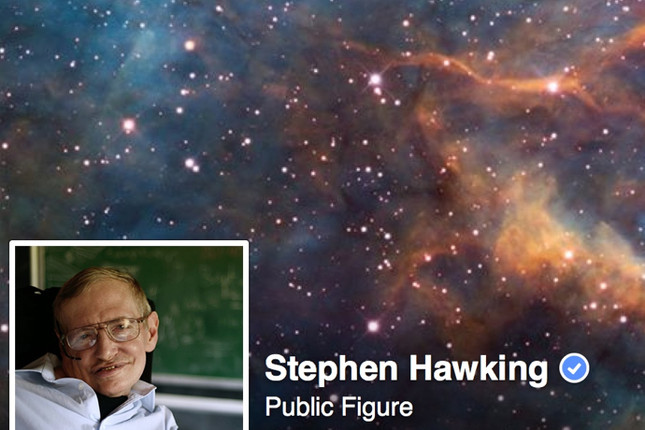
I have no idea whether there’s intelligent life out there in the universe. But we can at least confirm that there’s a little intelligent life on Facebook, seeing that Stephen Hawking, the world’s best known theoretical physicist, began posting there yesterday. His first status update reads:
I have always wondered what makes the universe exist. Time and space may forever be a mystery, but that has not stopped my pursuit. Our connections to one another have grown infinitely and now that I have the chance, I’m eager to share this journey with you. Be curious, I know I will forever be.
Welcome, and thank you for visiting my Facebook Page. ‑SH
Join his official Facebook page here. And find/like the official Open Culture page here, where we make it easy to share our daily cultural posts with your family and friends.
Related Content:
Carl Sagan, Stephen Hawking & Arthur C. Clarke Discuss God, the Universe, and Everything Else
A Brief History of Time: Errol Morris’s Film of Stephen Hawking
Stephen Hawking’s Universe: A Visualization in Stars and Sound
Free Online Astronomy Courses
Read More...Get the New 7‑Minute Workout on Your Mobile Device: A Free App from The New York Times

The New York Times writes: “Ever since [we] published the Scientific 7‑Minute Workout in May last year, readers have been writing and tweeting their requests for an updated, more advanced version. For them, the workout became too easy or humdrum, as tends to happen when exercises are repeated without variation. So here it is: a new, more technically demanding regimen, one that requires a couple of dumbbells but still takes only seven minutes.”
According to the Times, these short, intense, efficient workouts strengthen muscle groups throughout the upper body, lower body and torso. And they may well “produce greater gains than an hour or more of gentler exercise.” So if you don’t have a lot of free time.…
The Times has notably made the workout available as a free web app that you can access on your phone, tablet or other mobile devices. The app “offers a step-by-step guide to both 7‑minute workouts [the old and new ones], offering animated illustrations of the exercises, as well as a timer and audio cues to help you get the most out of your seven minutes.” Click here to access it.
Follow us on Facebook, Twitter and Google Plus and share intelligent media with your friends. Or better yet, sign up for our daily email and get a daily dose of Open Culture in your inbox.
Read More...Young Stanley Kubrick’s Noirish Pictures of Chicago, 1949
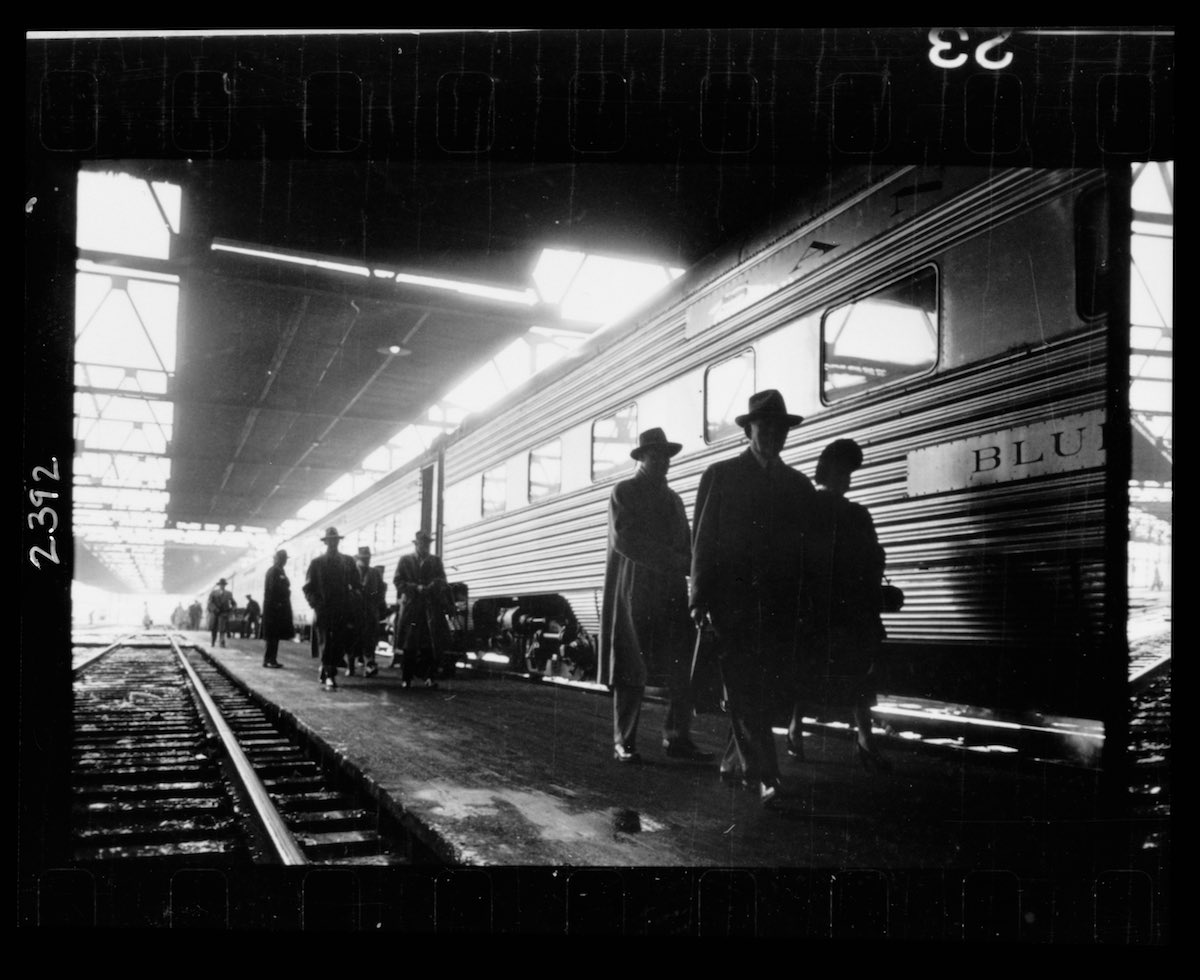
When Stanley Kubrick was a mere high school student in April 1945, just after FDR died, he snapped a picture of a news vendor framed on either side by posters announcing the president’s death. He was so excited by the picture that he skipped school to develop it and then marched right into the office of Look magazine. Photo editor Helen O’Brian offered to buy the photo for $25. Displaying his trademark cockiness, Kubrick told her that he wanted to see what price he could get from The New York Daily News. They only offered $10, so Kubrick went with Look. Within a few months, at the age of 17, Kubrick became a staff photographer for the publication.
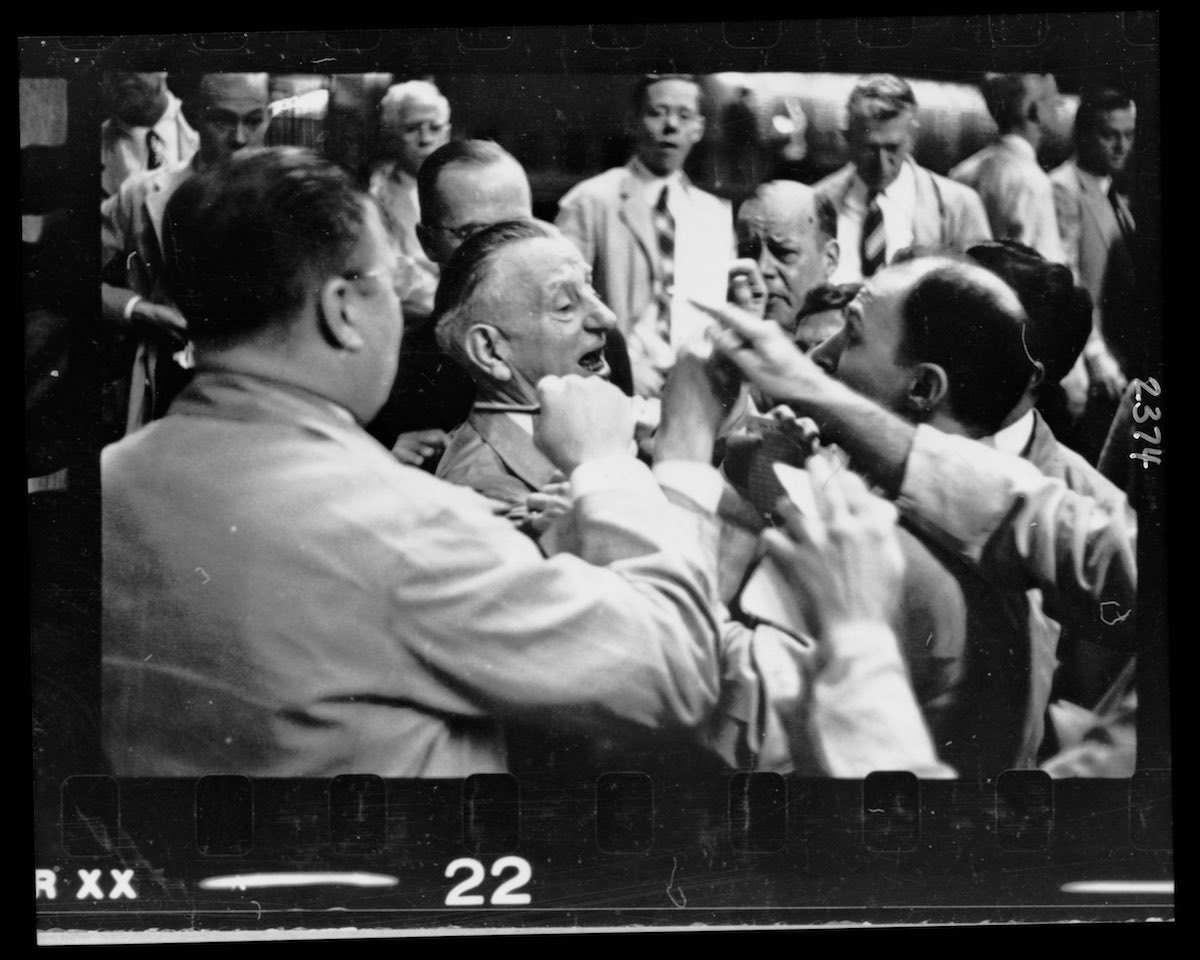
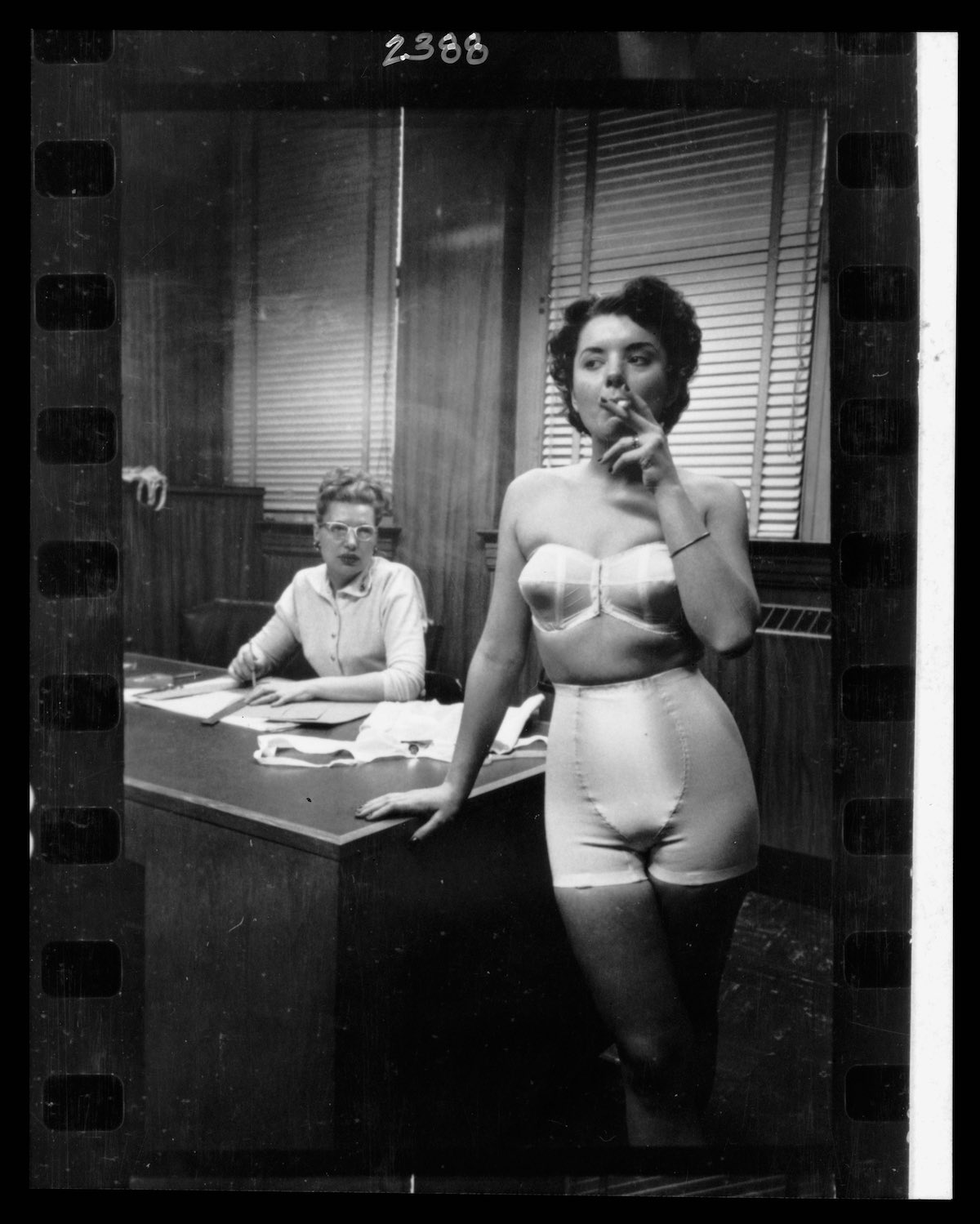
Below you can see some photographs that Kubrick took in 1949 while on assignment in Chicago. Using the same noirish high-contrast, low-light look that marked his first three movies, he documented all different strata of society from floor traders, to lingerie models, to meat packers to impoverished African-American families. Click on the images to view them in a larger format. Find a more extensive gallery of images here. To take a closer look at Kubrick’s photography, see the 2018 Taschen book Stanley Kubrick Photographs: Through a Different Lens and also Stanley Kubrick: Drama & Shadows.
Men working the floor at the Chicago Board of Trade
Lingerie model, wearing a girdle and strapless bra, smoking in an office; in the background a woman sits at a desk
Butcher holding slab of beef in a meat locker

African American mother and her four children in their tenement apartment

Overhead view of the “L” elevated railway
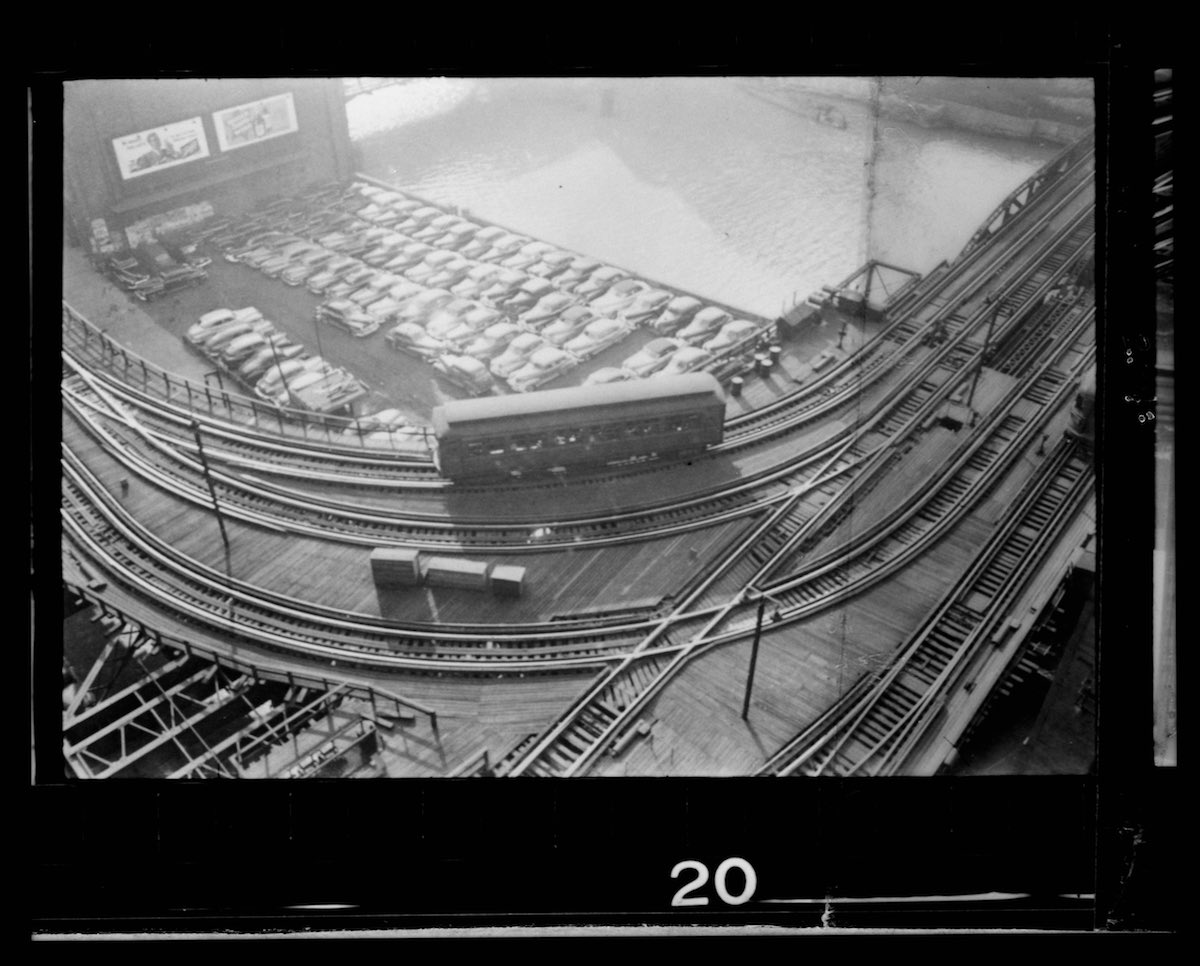
via Mashable
Related Content
Stanley Kubrick’s Very First Films: Three Short Documentaries
The Making of Stanley Kubrick’s A Clockwork Orange
James Cameron Revisits the Making of Kubrick’s 2001: A Space Odyssey
Terry Gilliam: The Difference Between Kubrick (Great Filmmaker) and Spielberg (Less So)
Jonathan Crow is a Los Angeles-based writer and filmmaker whose work has appeared in Yahoo!, The Hollywood Reporter, and other publications. You can follow him at @jonccrow. And check out his blog Veeptopus, featuring lots of pictures of vice presidents with octopuses on their heads. The Veeptopus store is here.
Read More...Hear Beowulf Read In the Original Old English: How Many Words Do You Recognize?
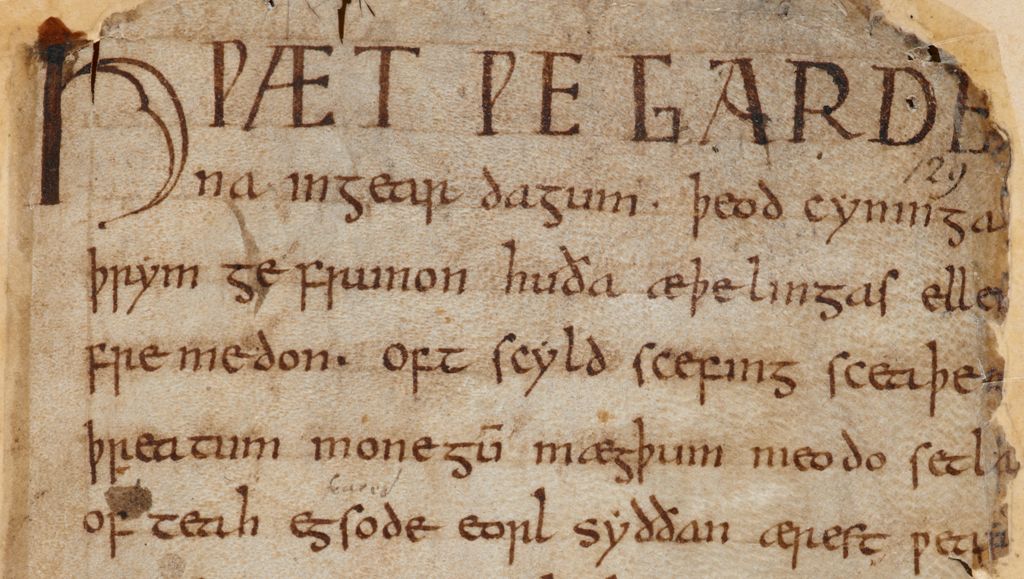
I was as surprised as most people are when I first heard the ancient language known as Old English. It’s nothing like Shakespeare, nor even Chaucer, who wrote in a late Middle English that sounds strange enough to modern ears. Old English, the English of Beowulf, is almost a foreign tongue; close kin to German, with Latin, Norse, and Celtic influence.
As you can hear in the Beowulf reading above from The Telegraph, it’s a thick, consonant-rich language that may put you in mind of J.R.R. Tolkien’s elvish. The language arrived in Briton—previously inhabited by Celtic speakers—sometime in the fifth century, though whether the Anglo-Saxon invasion was a hostile takeover by Germanic mercenaries or a slow population drift that introduced a new ethnicity is a matter of some dispute. Nevertheless it’s obvious from the reading above—and from texts in the language like this online edition of Beowulf in its original tongue—that we would no more be able to speak to the Anglo-Saxons than we would to the Picts and Scots they conquered.
So how is it that both the language we speak and its distant ancestor can both be called “English”? Well, that is what its speakers called it. As the author of this excellent Old English introductory textbook writes, speakers of “Old English,” “Middle English,” and “Modern English” are “themselves modern”; They “would have said, if asked, that the language they spoke was English.” The changes in the language “took place gradually, over the centuries, and there never was a time when people perceived their language as having broken radically with the language spoken a generation before.” And while “relatively few Modern English words come from Old English […] the words that do survive are some of the most common in the language, including almost all the ‘grammar words’ (articles, pronouns, prepositions) and a great many words for everyday concepts.” You may notice a few of those distant linguistic ancestors in the Beowulf passage accompanying the reading above.
Beowulf is, of course, the oldest epic poem in English, written sometime between the 8th and early 11th century. It draws, however, not from British sources but from Danish myth, and is in fact set in Scandinavia. The title character, a hero of the Geats—or ancient Swedes—travels to Denmark to offer his services to the king and defeat the monster Grendel (and his mother). The product of a warrior culture, the poem shares much in common with the epics of Homer with its code of honor and praise of fighting prowess. And here see vocalist, harpist, and medieval scholar Benjamin Bagby perform the opening lines of the poem as its contemporary audience would have experienced it—intoned by a bard with an Anglo-Saxon harp. The modern English subtitles are a boon, but close your eyes for a moment and just listen to the speech—see if you can pick out any words you recognize. Then, perhaps, you may wish to turn to Fordham University’s online translation and find out what all that big talk in the prologue is about.
And for a very short course on the history of English, see this concise page and this ten-minute animated video from Open University.
The image above comes from the sole surviving medieval manuscript of Beowulf, which now resides at the British Library.
Related Content:
Hear Homer’s Iliad Read in the Original Ancient Greek
What Ancient Greek Music Sounded Like: Hear a Reconstruction That is ‘100% Accurate’
Seamus Heaney Reads His Exquisite Translation of Beowulf
Hear The Epic of Gilgamesh Read in the Original Akkadian, the Language of Mesopotamia
Josh Jones is a writer and musician based in Durham, NC. Follow him at @jdmagness
Read More...Isaac Asimov Explains the Origins of Good Ideas & Creativity in Never-Before-Published Essay
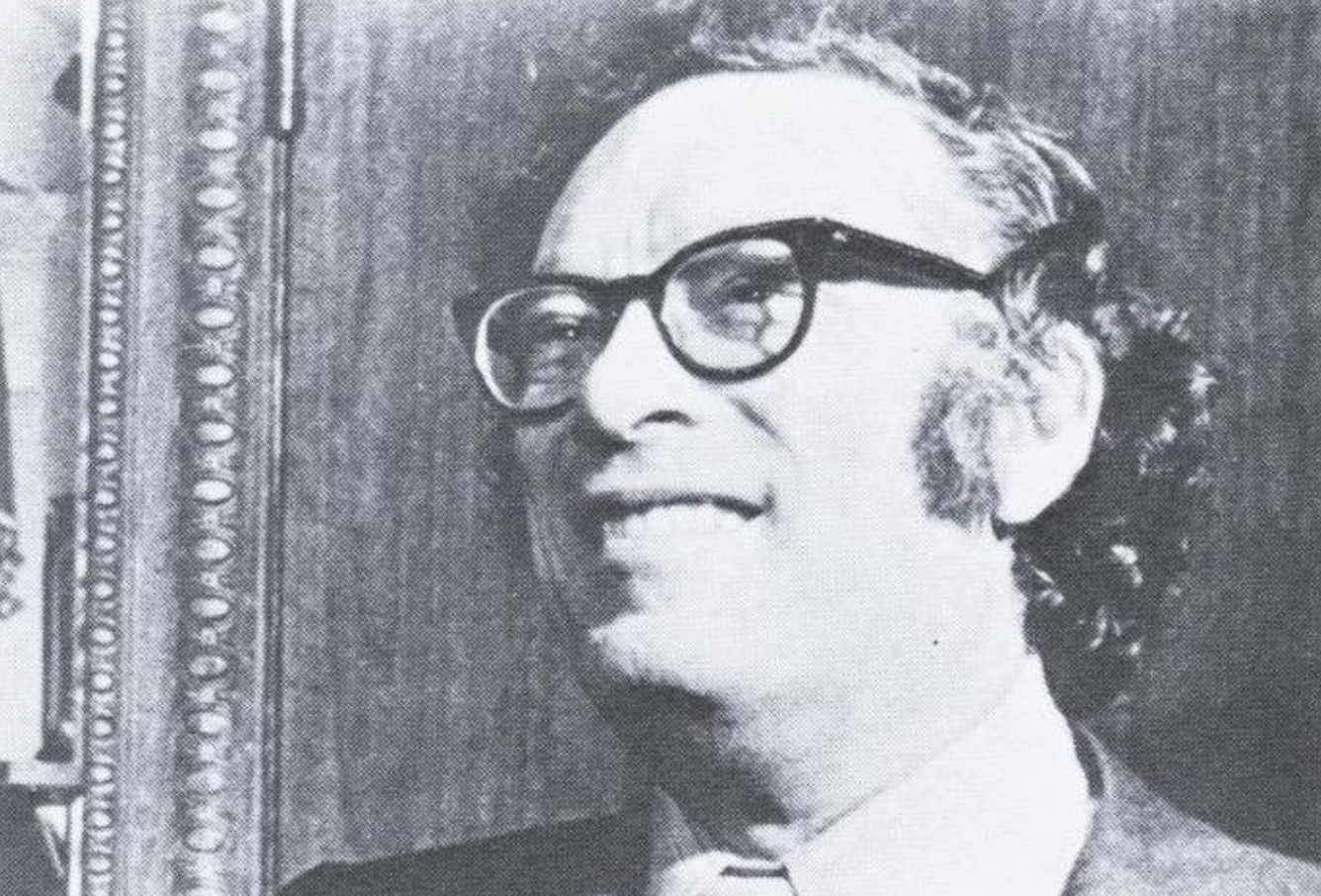
Rochester Institute of Technology, via Wikimedia Commons
Where do ideas come from? The question has always had the potential to plague anyone trying to do anything worthwhile at any time in human history. But Isaac Asimov, the massively prolific and even more massively influential writer of science fiction and science fact, had an answer. He even, in one 1959 essay, laid out a method, though we, the general public, haven’t had the chance to read it until now. The MIT Technology Review has just published his essay on creativity in full, while providing a few contextualizing remarks from the author’s friend Arthur Obermayer, a scientist who invited Asimov on board an “out of the box” missile-defense research project at an MIT spinoff called Allied Research Associates.
“He expressed his willingness and came to a few meetings,” remembers Obermayer, but “he eventually decided not to continue, because he did not want to have access to any secret classified information; it would limit his freedom of expression. Before he left, however, he wrote this essay on creativity as his single formal input.” When Obermayer found it among his old files, he “recognized that its contents are as broadly relevant today as when [Asimov] wrote it” in 1959, describing as they do “not only the creative process and the nature of creative people but also the kind of environment that promotes creativity.” Whether you write sci-fi novels or do military research, make a web series, or work on curing Ebola, you can put Asimov’s methods to use.
Asimov first investigates the origin of ideas by looking to The Origin of Species. Or rather, he looks to what you find within it, “the theory of evolution by natural selection, independently created by Charles Darwin and Alfred Wallace,” two men who “both traveled to far places, observing strange species of plants and animals and the manner in which they varied from place to place,” both “keenly interested in finding an explanation for this,” and both of whom “failed until each happened to read Malthus’s ‘Essay on Population.’ ” He finds that “what is needed is not only people with a good background in a particular field, but also people capable of making a connection between item 1 and item 2 which might not ordinarily seem connected.” Evolutionary theory seems obvious only in retrospect, he continues, as
The history of human thought would make it seem that there is difficulty in thinking of an idea even when all the facts are on the table. Making the cross-connection requires a certain daring. It must, for any cross-connection that does not require daring is performed at once by many and develops not as a “new idea,” but as a mere “corollary of an old idea.”
It is only afterward that a new idea seems reasonable. To begin with, it usually seems unreasonable. It seems the height of unreason to suppose the earth was round instead of flat, or that it moved instead of the sun, or that objects required a force to stop them when in motion, instead of a force to keep them moving, and so on.
A person willing to fly in the face of reason, authority, and common sense must be a person of considerable self-assurance. Since he occurs only rarely, he must seem eccentric (in at least that respect) to the rest of us. A person eccentric in one respect is often eccentric in others.
Consequently, the person who is most likely to get new ideas is a person of good background in the field of interest and one who is unconventional in his habits. (To be a crackpot is not, however, enough in itself.)
Once you have the people you want, the next question is: Do you want to bring them together so that they may discuss the problem mutually, or should you inform each of the problem and allow them to work in isolation?
The essay puts forth an argument for isolation (“Creation is embarrassing. For every new good idea you have, there are a hundred, ten thousand foolish ones, which you naturally do not care to display”) and a set of best practices for group idea generation, as implementable in the Allied Research Associates of the 1950s as in any organization today. If you can’t trust Asimov on this subject, I don’t know who you can trust, but consider supplementing this newfound essay with Ze Frank’s thematically related video “Brain Crack” (linguistically NSFW, though you can watch the PG version instead), which deals, in an entirely different sensibility, with the question of where ideas come from:
Related Content:
David Lynch Explains How Meditation Enhances Our Creativity
Malcolm McLaren: The Quest for Authentic Creativity
Isaac Asimov Predicts in 1964 What the World Will Look Like Today — in 2014
John Cleese’s Philosophy of Creativity: Creating Oases for Childlike Play
Free: Isaac Asimov’s Epic Foundation Trilogy Dramatized in Classic Audio
Colin Marshall hosts and produces Notebook on Cities and Culture and writes essays on cities, language, Asia, and men’s style. He’s at work on a book about Los Angeles, A Los Angeles Primer. Follow him on Twitter at @colinmarshall or on Facebook.
Read More...Support Us
We're hoping to rely on loyal readers, rather than erratic ads. Please click the Donate button and support Open Culture. You can use Paypal, Venmo, Patreon, even Crypto! We thank you!

About Us

Open Culture scours the web for the best educational media. We find the free courses and audio books you need, the language lessons & educational videos you want, and plenty of enlightenment in between.
Advertise With Us

FREE UPDATES!
GET OUR DAILY EMAIL
Get the best cultural and educational resources on the web curated for you in a daily email. We never spam. Unsubscribe at any time.
FOLLOW ON SOCIAL MEDIA

Open Culture editor Dan Colman scours the web for the best educational media. He finds the free courses and audio books you need, the language lessons & movies you want, and plenty of enlightenment in between.
Advertise With Us


