7 Free Stephen King Stories: Presented in Text, Audio, Web Comic & a Graphic Novel Video
In Stephen King’s first televised interview from way back in 1982, the horror writer revealed that he sleeps with the lights on. He may have grown out of the habit by now, but it’s no wonder if he hasn’t. A macabre imagination like his probably sees all sorts of creepy things lurking in the dark. In any case, King has certainly learned a thing or two since then about making his fears more marketable. In the past several years he’s been promoting his work on the Internet to reach new audiences.
In 2000, his novella Riding the Bullet debuted exclusively online, and in 2008 he partnered with Marvel Comics to promote his first collection of short stories in six years, releasing one short graphic video episode at a time adapted from the 56-page novella “N.” See all 25 episodes above. It’s a story, writes Time, “about a psychologist whose obsessive-compulsive patient is entranced by a mysterious plot of land.” King calls the adaptation “kind of a video comic book,” and while the “point of the exercise,” says his editor Susan Moldow,” is to stimulate book sales,” I think you’ll agree it’s a pretty nifty bit of storytelling on its own.
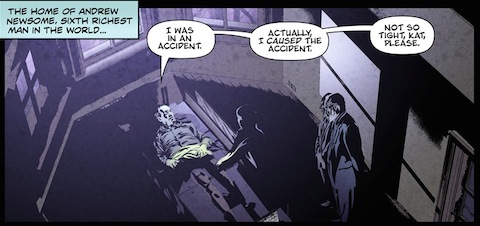
On King’s website, you’ll find links to all sorts of multimedia products, including a Lifetime original movie, Big Driver, a film titled A Good Marriage, now out on video-on-demand, and the latest from graphic novel series Dark Tower. You’ll also find a comic adaptation of the short story “Little Green God of Agony.” See the first panel above, and read the full story here.
?si=KsluCU7w9DOop4Pv
Long before Youtube and online comics, there was the audiobook. King has narrated his own work for years, and it’s also been read by such big names as Kathy Bates, Sissy Spacek, Willem Defoe, Anne Heche, Eli Wallach, and many more. Just above, hear character actor John Glover—a name you may not know, but a face you’d recognize—read “One for the Road,” a story from King’s first, 1978, collection Night Shift. It’s a vampire story, but a particularly deft one, writes Noah Charney at New Haven Review, one that “deals in archetypes that are the heart of good horror fiction.” King’s stories, Charney asserts, are “beautifully-written, highly intelligent. They happen to feature monsters of all sorts, from natural to preternatural, but that is secondary to their core as great stories, well-told.”
King has long defended popular fiction to the literati—in his acceptance speech for the National Book Award, for example—and lashed out at “the keepers of the idea of serious literature,” whom he says “have a short list of authors who are going to be allowed inside.” It may have taken a few years, but King got in, eventually publishing in such august outlets as The Atlantic and The New Yorker. Read four stories from those publications at the links below. And if you’re still in need of a good scare in the days leading up to Halloween, make sure to check out “The Man in the Black Suit,” a short film adaptation of another story published in The New Yorker in 1994.
“A Death” (The New Yorker, March 2015)
“Herman Wouk Is Still Alive” (The Atlantic, May 2011)
“Premium Harmony” (The New Yorker, November, 2009)
“Harvey’s Dream” (The New Yorker, June 2003)
Related Content:
Stephen King Reveals in His First TV Interview Whether He Sleeps With the Lights On (1982)
Stephen King’s Top 20 Rules for Writers
Stephen King Creates a List of 96 Books for Aspiring Writers to Read
Josh Jones is a writer and musician based in Durham, NC. Follow him at @jdmagness.
Read More...The Adventures of Famed Illustrator Gustave Doré Presented in a Fantasic(al) Cutout Animation
When we featured his illumination of Edgar Allen Poe’s “The Raven,” we called Gustave Doré “one of the busiest, most in-demand artists of the 19th century,” who “made his name illustrating works by such authors as Rabelais, Balzac, Milton, and Dante.” His hand may have given a visual dimension to a number of revered texts, but what of the man himself? For the deepest insight into an artist, we should look to the works of art he inspires. In the case of the cutout animated film above, Doré not only provides the inspiration but plays, in a sense, the starring role. L’imaginaire au pouvoir offers us a portrait of the artist as a two-dimensional man, stumbling into haunting drawn-and-cut-out realms straight from his own imagination.
“The film was created by Vincent Pianina and Lorenzo Papace of Le Petit Écho Malade and features music by Ödland,” writes EDW Lynch at Laughing Squid (a site that previously featured Le Petit Écho Malade’s music video for Ödland’s “Østersøen”) “It is a promo, Lynch adds, for ‘Gustave Doré (1832–1883): Master of Imagination,’ an ongoing exhibition of Doré’s work at Musée d’Orsay in Paris through May 11, 2014.” Though Doré, by all accounts, lived a fairly eventful life, he had to have spent a great deal of it slaving painstakingly away with his wood engraving tools. The same goes for any producer of such vivid artistic visions—but I suspect that all of them have to go on this kind of harrowing journey to the center of their soul now and again. Here, Pianina and Papace have, with Doré’s very materials, created a journey into the inner realm that still gives them life today. And they’ve added a healthy dose of 21st-century humor for good measure.
Related Content:
Terry Gilliam Reveals the Secrets of Monty Python Animations: A 1974 How-To Guide
Gustave Doré’s Splendid Illustrations of Edgar Allan Poe’s “The Raven” (1884)
Vintage Film: Watch Henri Matisse Sketch and Make His Famous Cut-Outs (1946)
Gustave Doré’s Dramatic Illustrations of Dante’s Divine Comedy
Gustave Doré’s Exquisite Engravings of Cervantes’ Don Quixote
Colin Marshall hosts and produces Notebook on Cities and Culture and writes essays on cities, language, Asia, and men’s style. He’s at work on a book about Los Angeles, A Los Angeles Primer. Follow him on Twitter at @colinmarshall or on Facebook.
Read More...Woman Takes LSD in 1956: “I’ve Never Seen Such Infinite Beauty in All My Life,” “I Wish I Could Talk in Technicolor”
A decade before tens of thousands turned on, tuned in, and dropped out at the Human Be-In in Golden Gate Park, psychiatrist Sidney Cohen was investigating the effects of LSD on human consciousness. If his voluntary subjects at LA’s Veteran’s Administration Hospital found themselves suddenly able to “see the music” a la Lizard Queen Lisa Simpson, they did so in a very respectable-seeming, mid-1950s setting.
Witness this session with the polite young wife of a hospital employee, above. She’s a bit nervous, but not because of any media-fueled preconceptions regarding the trip she’s about to take. It was 1956, and another of Dr. Cohen’s guinea pigs, publisher Henry Luce, had yet to regale the public with some of acid’s more colorful properties via multiple articles in both Time and Life magazines.
As such, our unidentified participant is as pure as the glass of water she’s served at the one minute mark. Purer, actually, given that the drink has been dosed with 1/10th of a milligram Lysergic acid diethylamide.
Three hours further along, she’s tripping her brains out, still seated demurely in the same chair in which her intake interview was conducted. Had it been filmed 20 years later, her revelations would seem trite, but the context renders them endearing. If she’s bummed out about anything, it’s that the nice doctor questioning her about her mind blowing journey isn’t able to see the molecules too.
I’d love to know what became of her.
Cohen continued observing LSD, with subjects as celebrated as writer Aldous Huxley, philosopher Gerald Heard and Bill Wilson, co-founder of Alcoholics Anonymous. He published his findings in The Beyond Within: the LSD Story. His ultimate takeaway was that ”beatnik microculture” destroyed LSD’s chances for achieving its potential as a psychotherapy tool.
This may be why we never hear him urging his subject to check out the drapes, which is surely what several young men of my acquaintance would have resorted to, back in the day.
David Lynch-style austerity of the setting aside, perhaps such coaching was unnecessary. Whatever this woman’s brain had her seeing, it made her want to “talk in technicolor.”
May I suggest that we’re just as delusional if we assume that someone who could be described as a 1950s “housewife” must have inhabited a world we can only perceive in black-and-white?
Related Content:
Artist Draws Nine Portraits on LSD During 1950s Research Experiment
Watch The Bicycle Trip: An Animation of The World’s First LSD Trip in 1943
Ken Kesey’s First LSD Trip Animated
Ayun Halliday is an author, homeschooler, and Chief Primatologist of the East Village Inky zine. Follow her @AyunHalliday
Read More...50% Off Criterion Films Until 2pm ET Today (October 10)

A quick heads up for film buffs. For the next 12 hours — or until 2pm ET on Friday October 10 — you can get 50% off Blu-rays and DVDs in the Criterion Collection if you use the promo code SPIKE.
Criterion specializes in selling “important classic and contemporary films” to film aficionados. If you like masterpieces by David Lynch, Andrei Tarkovsky, John Cassavetes, Truffaut, Fellini and the rest, you won’t want to miss this rare sale.
If you prefer “Free” to “50% off,” I’m sure you can find something that piques your interest in our collection, 4,000+ Free Movies Online: Great Classics, Indies, Noir, Westerns, Documentaries & More.
Sign up for our daily email and, once a day, we’ll bundle all of our daily posts and drop them in your inbox, in an easy-to-read format. You don’t have to come to us; we’ll come to you!
Read More...The Making (and Remaking) of the Beach Boys’ Pet Sounds, Arguably the Greatest Rock Album of All Time
Rock ‘n’ roll has a sad tradition of geniuses who’ve succumbed to mental illness and addiction. Some of them have, paradoxically, produced some of the best music of their careers during periods of decline. We’d have to mention Pink Floyd’s Syd Barrett, Moby Grape’s Skip Spence, Big Star’s Chris Bell… all of whom recorded strange, intimate, and heartfelt solo albums after leaving their respective bands. Then, of course, there’s Brian Wilson, whose 1966 Pet Sounds re-invented pop, and laid the groundwork for Sgt. Pepper’s Lonely Hearts Club Band. (Wilson is said to have been inspired by Rubber Soul). We may know Pet Sounds as a Beach Boys release, but it was really Wilson’s record. In the video series here, “Behind the Sounds,” we get a unique listen in to the creation of the album by way of early takes, lots of studio chatter, and pop-up video style factoids in the Pet Sounds cover’s Cooper Black font over behind-the-scenes photos.
At the top, hear behind the sounds of “Wouldn’t It Be Nice.” Just above, hear the making of “I Know There’s An Answer,” and below, hear Parts 1 and 2 of the creation of “God Only Knows,” the lush, self-effacing ballad whose harpsichord and French horn intro clearly inspired the orchestration in songs like “Penny Lane” and “Strawberry Fields Forever.” See videos for the rest of Pet Sounds’ songs at the “Behind the Sounds” Youtube channel.
Pet Sounds has been named the greatest album of all time by NME and Mojo magazines and ranks at number two in Rolling Stone’s 500 Greatest Albums of All Time, right behind Sgt. Pepper’s. Wilson wrote the songs with lyricist Tony Asher during a time when he was pulling away from his sunny surf-pop group and expanding his repertoire of studio techniques in unprecedented ways. The songs can sound superficially like breezy Beach Boys pop, but reveal themselves as complex, baroque orchestrations that hold enough instrumental surprises and lyrical subtleties for a lifetime of listening. It’s a record both thoroughly of its time and thoroughly timeless.
Unlike many a tragic rock composer, Wilson has survived and recovered (many times over) into old age, recording and touring on and off with the Beach Boys and opening up about his darker times. And unless you’re spending this week under a rock somewhere, you’ll catch the BBC’s star-studded video re-make of “God Only Knows,” just below, circulating all over the ‘net. Both a promo for the more than two dozen musicians involved and a benefit single for charitable organization BBC Children in Need, the glamorous production features Wilson behind his piano, looking stately and healthy. For more on the making of Pet Sounds, see this 2002 BBC documentary, Art That Shook The World: The Beach Boys’ Pet Sounds. And please, amidst this flurry of Pet Sounds goodies, don’t forget to listen to the album itself, best appreciated, says Wilson, with “earphones, in the dark.”
Related Content:
John Belushi and Dan Aykroyd Get Brian Wilson Out of Bed and Force Him to Go Surfing, 1976
The Strawberry Fields Forever Demos: The Making of a Beatles Classic (1966)
Watch Documentaries on the Making of Pink Floyd’s Dark Side of the Moon and Wish You Were Here
Josh Jones is a writer and musician based in Durham, NC. Follow him at @jdmagness.
Read More...1000 Frames of Hitchcock: See Each of Alfred Hitchcock’s 52 Films Reduced to 1,000 Artistic Frames

Some directors like John Cassavetes and Wong Kar-wai like to discover the movie as they are making it. Others filmmakers have a very clear conception of the movie right from the beginning. Alfred Hitchcock was very much in that latter category. “Once the screenplay is finished, I’d just as soon not make the film at all,” he once told Roger Ebert. “I have a strongly visual mind. I visualise a picture right down to the final cuts.” And that is very much evident in the final product. From the famous Psycho shower scene to a wild-eyed Jimmy Stewart dangling from a ledge in Vertigo to Cary Grant being menaced by a crop duster in North By Northwest, Hitchcock has produced some of the most memorable, arresting images of the 20th Century.
British artist Dave Pattern set out to highlight Hitch’s visual genius with his 1000 Frames of Hitchcock series, which compresses each of Hitchcock’s 52 major movies down to a mere 1000 frames. That’s about six seconds of running time.
“It all started when in 2003 I made a website that tries to gather information about Hitchcock DVD releases over the world,” Pattern told Danish movie magazine Echo. “The quality of the publications are very different from country to country. It sort of snowballed from there.”
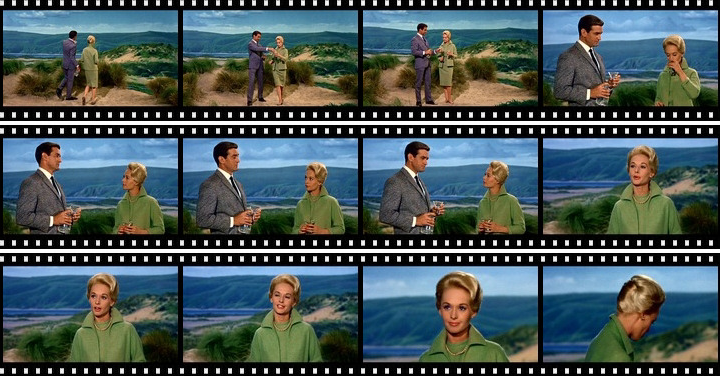
What’s amazing about this project is just how much of the movie comes through in this greatly abbreviated, soundless version. You completely understand that Tippi Hedren is getting terrorized by an implacable enemy in The Birds. You don’t even need to see that malevolent murder of crows. You can see it just in her face. At the beginning of the movie, she’s elegant, aloof and perfectly composed. At the end of the film, she’s unkempt, bloody and broken. Hitchcock’s creepy sexual politics and his famously unwholesome obsession with blondes shines through here.
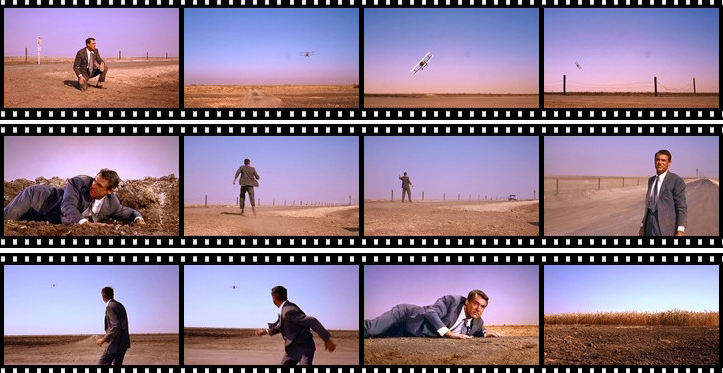
What is utterly apparent in this project – and something you might miss while watching the movie — is Hitchcock’s complete control of color. The palette of The Birds (middle image) is dominated by the color green, from Hedren’s outfit to the color of a pickup truck to the hue of the hills. North By Northwest (bottom), by contrast, is composed mostly of beige and slate blue. Click on the images to view them in a larger format.
Below, you can check out all the movies, each distilled down to 1,000 frames. And, if you’re inspired to dive deep into the works of the Master of Suspense, you can watch 23 of Alfred Hitchcock’s movies for free here.
- The Pleasure Garden (1925)
- The Lodger (1927)
- Downhill (1927)
- The Ring (1927)
- Champagne (1928)
- Easy Virtue (1928)
- The Farmer’s Wife (1928)
- The Manxman (1929)
- Blackmail (1929)
- Juno and the Paycock (1930)
- Murder! (1930)
- The Skin Game (1931)
- Rich and Strange (1931)
- Number Seventeen (1932)
- Waltzes from Vienna (1934)
- The Man Who Knew Too Much (1934)
- The 39 Steps (1935)
- Secret Agent (1936)
- Sabotage (1936)
- Young and Innocent (1937)
- The Lady Vanishes (1938)
- Jamaica Inn (1939)
- Rebecca (1940)
- Foreign Correspondent (1940)
- Mr and Mrs Smith (1941)
- Suspicion (1941)
- Saboteur (1942)
- Shadow of a Doubt (1943)
- Lifeboat (1944)
- Spellbound (1945)
- Notorious (1946)
- The Paradine Case (1947)
- Rope (1948)
- Under Capricorn (1949)
- Stage Fright (1950)
- Strangers on a Train (1951)
- I Confess (1953)
- Dial M for Murder (1954)
- Rear Window (1954)
- To Catch a Thief (1955)
- The Trouble with Harry (1955)
- The Man Who Knew Too Much (1956)
- The Wrong Man (1956)
- Vertigo (1958)
- North by Northwest (1959)
- Psycho (1960)
- The Birds (1963)
- Marnie (1964)
- Torn Curtain (1966)
- Topaz (1969)
- Frenzy (1972)
- Family Plot (1976)
Read More...
Hear ‘Louder Than Words,’ Pink Floyd’s New Song on What’s Likely Their Last Album

(If you have any problems playing this clip, please refresh the page.)
On November 10, Pink Floyd will unveil The Endless River. And, above, you can hear ‘Louder Than Words,’ the first track released from the album. It’s the only vocal track on an otherwise instrumental LP.
The Endless River can be pre-ordered on Amazon or iTunes.
via Ultimate Classic Rock/Rolling Stone
Related Content:
Pink Floyd’s David Gilmour Sings Shakespeare’s Sonnet 18
Watch Documentaries on the Making of Pink Floyd’s Dark Side of the Moon and Wish You Were Here
Watch Pink Floyd Play Live in the Ruins of Pompeii (1972)
Read More...Free Stanford Course: 18 Experts Assess What’s Ailing America in 2014
In my day job, I have the privilege of overseeing Stanford’s Continuing Studies program where we bring Stanford courses to the San Francisco Bay Area community, and increasingly the larger world. This fall, we’re presenting a pretty special course called The State of the Union 2014. Taught by Rob Reich (Political Science, Stanford), David Kennedy (History, Stanford), and James Steyer (CEO, Common Sense Media), the course examines “the abundant challenges and opportunities of major themes contributing to the health, or disease, of the United States body politic: inequality, energy and the environment, media and technology, the economy, and the 2014 midterm elections.” And to help sort through these complex questions, the professors will be joined by 18 distinguished guests, including Steven Chu (former Secretary of Energy), Reed Hastings (CEO of Netflix), Janet Napolitano (former Secretary of Homeland Security), Ruth Marcus (columnist for the Washington Post), Karl Eikenberry (former US Ambassador to Afghanistan) and Joel Benenson (chief pollster for President Barack Obama).
We’re filming the class sessions of this seven-week course and making them available on YouTube and iTunes. The first two sessions (each lasting about 90 minutes) can be viewed in the playlist above. The first session focuses on the Midterm elections; the second on the state of California. New sessions will be added each week, generally on Thursday or Friday.
Education
Technology and Social Change
If you live in the San Francisco Bay Area, make sure you check out the Continuing Studies program. It’s a tremendous resource for lifelong learners.
Related Content:
1,700 Free Online Courses from Top UniversitiesStart Your Startup with Free Stanford Courses and Lectures
The Art of Living: A Free Stanford Course Explores Timeless Questions
Stanford’s Robert Sapolsky Demystifies Depression
Peter Thiel’s Stanford Course on Startups: Read the Lecture Notes Free Online
Read More...John Lennon’s Solo Albums Now Streaming for Free on Spotify
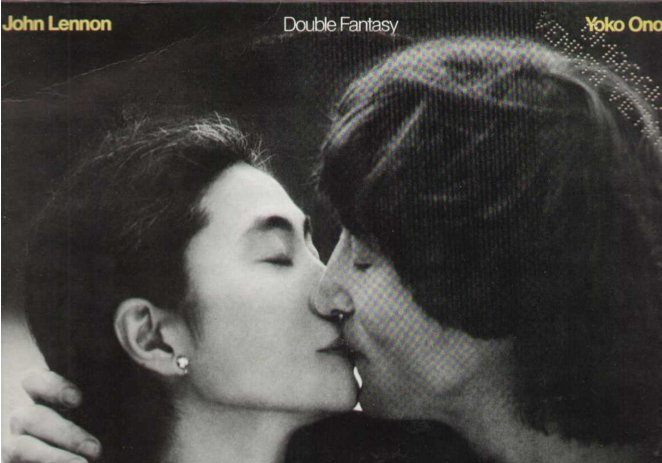
I heard the news today oh boy…
As of today, eight John Lennon solo albums (and three Lennon compilations) are streaming for free on Spotify. Here are the links to the albums: John Lennon/Plastic Ono Band (1970); Imagine (1971); Sometime in New York City (1972); Mind Games (1973); Walls and Bridges (1974) Rock N Roll (1975); Double Fantasy Stripped Down (1980) ; Milk and Honey (1984). Compilations include Gimme Some Truth, Signature Box (find below), and Power to the People. If you haven’t already, you’ll will need to download and register with Spotify to play the music.
Image above by Jack Mitchell.
Sign up for our daily email and, once a day, we’ll bundle all of our daily posts and drop them in your inbox, in an easy-to-read format. You don’t have to come to us; we’ll come to you!
Related Content:
John Lennon’s Raw, Soul-Baring Vocals From the Beatles’ ‘Don’t Let Me Down’ (1969)
Read More...Ben Franklin’s List of 200 Synonyms for “Drunk”: “Moon-Ey’d,” “Hammerish,” “Stew’d” & More (1737)
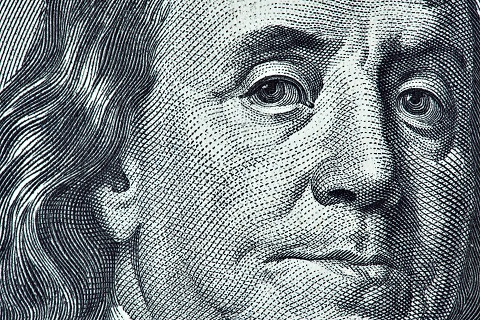
How many Americans could, off the top of their heads, tell you exactly why history remembers Benjamin Franklin? Not many, I suspect, though we all know that he did a great deal worth remembering, even by the standards of a Founding Father. (Something got him on the $100 bill, after all.) Of course, only his biographers could remember the every accomplishment of this “First American,” from helping unite the colonies, to publishing newspapers, to serving as Ambassador to France, to putting US national security at risk, to co-founding the University of Pennsylvania, to inventing bifocals and everything in between. Most Americans can, I suspect, summon to mind the image of Franklin flying a kite with a key on it as well.
It also turns out that Franklin could indulge in a vice as heartily as he could a virtue; the man who wrote Poor Richard’s Almanack knew how to have a good time. In 18th-century America, this seems often as not to have meant to know how to drink — and, in Franklin’s case, also to know how to identify the drunk. His reputation as a bon vivant and a man of letters converged in a January 13, 1737 edition of the Pennsylvania Gazette, wherein he published this “Drinkers Dictionary” consisting of 200 synonyms for wasted, blotto, half in the bag, three sheets to the wind, and others that would emerge over the following centuries. See them all below.
A
He is Addled,
He’s casting up his Accounts,
He’s Afflicted,
He’s in his Airs.B
He’s Biggy,
Bewitch’d,
Block and Block,
Boozy,
Bowz’d,
Been at Barbadoes,
Piss’d in the Brook,
Drunk as a Wheel-Barrow,
Burdock’d,
Buskey,
Buzzey,
Has Stole a Manchet out of the Brewer’s Basket,
His Head is full of Bees,
Has been in the Bibbing Plot,
Has drank more than he has bled,
He’s Bungey,
As Drunk as a Beggar,
He sees the Bears,
He’s kiss’d black Betty,
He’s had a Thump over the Head with Sampson’s Jawbone,
He’s Bridgey.C
He’s Cat,
Cagrin’d,
Capable,
Cramp’d,
Cherubimical,
Cherry Merry,
Wamble Crop’d,
Crack’d,
Concern’d,
Half Way to Concord,
Has taken a Chirriping-Glass,
Got Corns in his Head,
A Cup to much,
Coguy,
Copey,
He’s heat his Copper,
He’s Crocus,
Catch’d,
He cuts his Capers,
He’s been in the Cellar,
He’s in his Cups,
Non Compos,
Cock’d,
Curv’d,
Cut,
Chipper,
Chickery,
Loaded his Cart,
He’s been too free with the Creature,
Sir Richard has taken off his Considering Cap,
He’s Chap-fallen,D
He’s Disguiz’d,
He’s got a Dish,
Kill’d his Dog,
Took his Drops,
It is a Dark Day with him,
He’s a Dead Man,
Has Dipp’d his Bill,
He’s Dagg’d,
He’s seen the Devil,E
He’s Prince Eugene,
Enter’d,
Wet both Eyes,
Cock Ey’d,
Got the Pole Evil,
Got a brass Eye,
Made an Example,
He’s Eat a Toad & half for Breakfast.
In his Element,F
He’s Fishey,
Fox’d,
Fuddled,
Sore Footed,
Frozen,
Well in for’t,
Owes no Man a Farthing,
Fears no Man,
Crump Footed,
Been to France,
Flush’d,
Froze his Mouth,
Fetter’d,
Been to a Funeral,
His Flag is out,
Fuzl’d,
Spoke with his Friend,
Been at an Indian Feast.G
He’s Glad,
Groatable,
Gold-headed,
Glaiz’d,
Generous,
Booz’d the Gage,
As Dizzy as a Goose,
Been before George,
Got the Gout,
Had a Kick in the Guts,
Been with Sir John Goa,
Been at Geneva,
Globular,
Got the Glanders.H
Half and Half,
Hardy,
Top Heavy,
Got by the Head,
Hiddey,
Got on his little Hat,
Hammerish,
Loose in the Hilts,
Knows not the way Home,
Got the Hornson,
Haunted with Evil Spirits,
Has Taken Hippocrates grand Elixir,I
He’s Intoxicated,
Jolly,
Jagg’d,
Jambled,
Going to Jerusalem,
Jocular,
Been to Jerico,
Juicy.K
He’s a King,
Clips the King’s English,
Seen the French King,
The King is his Cousin,
Got Kib’d Heels,
Knapt,
Het his Kettle.L
He’s in Liquor,
Lordly,
He makes Indentures with his Leggs,
Well to Live,
Light,
Lappy,
Limber,M
He sees two Moons,
Merry,
Middling,
Moon-Ey’d,
Muddled,
Seen a Flock of Moons,
Maudlin,
Mountous,
Muddy,
Rais’d his Monuments,
Mellow,N
He’s eat the Cocoa Nut,
Nimptopsical,
Got the Night Mare,O
He’s Oil’d,
Eat Opium,
Smelt of an Onion,
Oxycrocium,
Overset,P
He drank till he gave up his Half-Penny,
Pidgeon Ey’d,
Pungey,
Priddy,
As good conditioned as a Puppy,
Has scalt his Head Pan,
Been among the Philistines,
In his Prosperity,
He’s been among the Philippians,
He’s contending with Pharaoh,
Wasted his Paunch,
He’s Polite,
Eat a Pudding Bagg,Q
He’s Quarrelsome,R
He’s Rocky,
Raddled,
Rich,
Religious,
Lost his Rudder,
Ragged,
Rais’d,
Been too free with Sir Richard,
Like a Rat in Trouble.S
He’s Stitch’d,
Seafaring,
In the Sudds,
Strong,
Been in the Sun,
As Drunk as David’s Sow,
Swampt,
His Skin is full,
He’s Steady,
He’s Stiff,
He’s burnt his Shoulder,
He’s got his Top Gallant Sails out,
Seen the yellow Star,
As Stiff as a Ring-bolt,
Half Seas over,
His Shoe pinches him,
Staggerish,
It is Star-light with him,
He carries too much Sail,
Stew’d
Stubb’d,
Soak’d,
Soft,
Been too free with Sir John Strawberry,
He’s right before the Wind with all his Studding Sails out,
Has Sold his Senses.T
He’s Top’d,
Tongue-ty’d,
Tann’d,
Tipium Grove,
Double Tongu’d,
Topsy Turvey,
Tipsey,
Has Swallow’d a Tavern Token,
He’s Thaw’d,
He’s in a Trance,
He’s Trammel’d,V
He makes Virginia Fence,
Valiant,
Got the Indian Vapours,W
The Malt is above the Water,
He’s Wise,
He’s Wet,
He’s been to the Salt Water,
He’s Water-soaken,
He’s very Weary,
Out of the Way.
Franklin’s glossary also appears in Lists of Note, the brand new, highly recommended book from Letters of Note’s Shaun Usher. Wherever you consult it, bear in mind Franklin’s introductory note that all these terms come “gather’d wholly from the modern Tavern-Conversation of Tiplers. [ … ] I was tempted to add a new one my self under the Letter B, to wit, Brutify’d: But upon Consideration, I fear’d being guilty of Injustice to the Brute Creation, if I represented Drunkenness as a beastly Vice, since, ’tis well-known, that the Brutes are in general a very sober sort of People.” Which brings to mind a few better-known words attributed to the man: “Beer is proof that god loves us and wants us to be happy.” He actually said it about wine, but either way, let’s give Franklin credit: he was Wise — in moderation, of course.
Related Content:
Drunk History: An Intoxicated Look at the Famous Alexander Hamilton – Aaron Burr Duel
Drunk Shakespeare: The Trendy Way to Stage the Bard’s Plays in the US & the UK
Colin Marshall hosts and produces Notebook on Cities and Culture and writes essays on cities, language, Asia, and men’s style. He’s at work on a book about Los Angeles, A Los Angeles Primer. Follow him on Twitter at @colinmarshall or on Facebook.
Read More...Support Us
We're hoping to rely on loyal readers, rather than erratic ads. Please click the Donate button and support Open Culture. You can use Paypal, Venmo, Patreon, even Crypto! We thank you!

About Us

Open Culture scours the web for the best educational media. We find the free courses and audio books you need, the language lessons & educational videos you want, and plenty of enlightenment in between.
Advertise With Us

FREE UPDATES!
GET OUR DAILY EMAIL
Get the best cultural and educational resources on the web curated for you in a daily email. We never spam. Unsubscribe at any time.
FOLLOW ON SOCIAL MEDIA

Open Culture editor Dan Colman scours the web for the best educational media. He finds the free courses and audio books you need, the language lessons & movies you want, and plenty of enlightenment in between.
Advertise With Us

