Watch William S. Burroughs’ Ah Pook is Here as an Animated Film, with Music By John Cale
The work of William S. Burroughs can be by turns hilarious, opaque and profane – filled with images of drugs, insects and other oddities. Though it might be fascinating, if difficult, on the page, his work really comes alive when read aloud, preferably in Burroughs’s signature deadpan drawl. And if it’s accompanied by some trippy visuals, then, all the better.
The above video is exactly that. In 1994, animator Peter Hunt made this appropriately grotesque stop motion animated film, Ah Pook is Here, with audio taken from Burroughs’s 1990 album Dead City Radio. (You can read along to the video below.) John Cale provides the music. The winner of 10 international film awards, the short film has been archived in the Goethe Institut.
Ah Pook is Here started in 1970 as a collaboration with artist Malcolm McNeil. Originally it was slated to be a magazine comic strip but when the publication folded, Burroughs and McNeil decided to turn it into a book. Ah Pook is Here and Other Texts was finally published in 1979, though without McNeil’s illustrations. You can see them here.
When I become Death, Death is the seed from which I grow…
Itzama, spirit of early mist and showers.
Ixtaub, goddess of ropes and snares.
Ixchel, the spider web, catcher of morning dew.
Zooheekock, virgin fire patroness of infants.
Adziz, the master of cold.
Kockupocket, who works in fire.
Ixtahdoom, she who spits out precious stones.
Ixchunchan, the dangerous one.
Ah Pook, the destroyer.Hiroshima, 1945, August 6, sixteen minutes past 8 AM.
Who really gave that order?
Answer: Control.
Answer: The Ugly American.
Answer: The instrument of Control.
Question: If Control’s control is absolute, why does Control need to control?
Answer: Control… needs time.
Question: Is Control controlled by its need to control?
Answer: Yes.
Why does Control need humans, as you call them?
Answer: Wait… wait! Time, a landing field. Death needs time like a junkie needs junk.
And what does Death need time for?
Answer: The answer is sooo simple. Death needs time for what it kills to grow in, for Ah Pook’s sake.
Death needs time for what it kills to grow in, for Ah Pook’s sweet sake, you stupid vulgar greedy ugly American death-sucker.
Death needs time for what it kills to grow in, for Ah Pook’s sweet sake, you stupid vulgar greedy ugly American death-sucker… Like this.
We have a new type of rule now. Not one man rule, or rule of aristocracy, or plutocracy, but of small groups elevated to positions of absolute power by random pressures and subject to political and economic factors that leave little room for decision. They are representatives of abstract forces who’ve reached power through surrender of self. The iron-willed dictator is a thing of the past. There will be no more Stalins, no more Hitlers. The rulers of this most insecure of all worlds are rulers by accident inept, frightened pilots at the controls of a vast machine they cannot understand, calling in experts to tell them which buttons to push.
You can find Ah Pook is Here in the Animation section of our collection, 4,000+ Free Movies Online: Great Classics, Indies, Noir, Westerns, Documentaries & More.
Related Content:
The Junky’s Christmas: William S. Burrough’s Claymation Christmas Film
William S. Burroughs on Saturday Night Live, 1981
William S. Burroughs Reads Naked Lunch, His Controversial 1959 Novel
Jonathan Crow is a Los Angeles-based writer and filmmaker whose work has appeared in Yahoo!, The Hollywood Reporter, and other publications. You can follow him at @jonccrow.
Read More...
Maya Angelou Reads “Still I Rise” and “On the Pulse of the Morning”
As we mourn Maya Angelou on the day after her death, it’s heartening to remember that she lived several more lifetimes than most in her 86 years, some filled with pain and struggle, some with great joy. While generally known as a poet, writer, teacher, actress, and activist, Angelou actually got her start in the public eye as a Calypso dancer and singer, even appearing in a film, Calypso Heat Wave and releasing an album, Miss Calypso, both in 1957. It’s said that Billie Holiday told Angelou in 1958, “you’re going to be famous but it won’t be for singing,” She was right of course, but Angelou retained the air of a performer as a reader of her work.
Above, see her deliver an animated reading of her famous poem, “Still I Rise,” which references many of her past lives, including lines that seem to allude to her Miss Calypso days: “Does my sexiness upset you? / Does it come as a surprise / That I dance like I’ve got diamonds / At the meeting of my thighs?” The stanza is indicative of another quality among the many she enumerates, “sassiness.” But she begins the reading on a more sober note, with a statement about human resilience, the ability to get up and face the day, despite the fears we all live with. “Wherever that abides in a human being,” she says, “there is the nobleness of the human spirit.”
That resilience, the transcendence of painful personal and ancestral histories, was the great theme of Angelou’s work, whether in poems like “Still I Rise” or her revealing 1969 autobiography I Know Why the Caged Bird Sings, also the title of a poem from her 1983 collection Shaker, Why Don’t You Sing?. While the caged bird is a very personal symbol for Angelou, her poem “On the Pulse of the Morning,” which you can see her read above at Bill Clinton’s 1993 inauguration, speaks to the whole human species in elemental terms. Again she twines themes of transcending painful and bloody histories with those of the “nobleness of the human spirit.” The speaker of the poem is the earth itself, who addresses each of us as “a bordered country / Delicate and strangely made proud.” “History,” she writes in much-quoted lines from the poem’s ninth stanza, “despite its wrenching pain / Cannot be unlived, but if faced / With courage, need not be lived again.” For all the pain Angelou herself endured and faced with courage, it’s a sentiment she earned the right to proclaim. Her celebration of not only the particular African-American struggle, but also its part in the universal human struggle for dignity and purpose stands as her enduring legacy. She ends the poem where she begins her reading of “Still I Rise” above, with a call for us to treat each other with care and respect, to not be “wedded forever / To fear, yoked eternally / To brutishness”:
Here, on the pulse of this new day
You may have the grace to look up and out
And into your sister’s eyes, and into
Your brother’s face, your country
And say simply
Very simply
With hope –
Good morning.
Both poems will be added to our collection, 1,000 Free Audio Books: Download Great Books for Free.
If you would like to support the mission of Open Culture, consider making a donation to our site. It’s hard to rely 100% on ads, and your contributions will help us continue providing the best free cultural and educational materials to learners everywhere. You can contribute through PayPal, Patreon, and Venmo (@openculture). Thanks!
Related Content:
Hear Dylan Thomas Recite His Classic Poem, “Do Not Go Gentle Into That Good Night”
Hear Sylvia Plath Read 50+ of Her Dark, Compelling Poems
Stream Classic Poetry Readings from Harvard’s Rich Audio Archive: From W.H. Auden to Dylan Thomas
Josh Jones is a writer and musician based in Durham, NC. Follow him at @jdmagness.
Read More...Stephen Hawking Reveals the Conditions That Could Lead to England’s Victory at The World Cup
Speaking at the Savoy Hotel in London, physicist Stephen Hawking told a crowd: “Ever since the dawn of civilisation, people have not been content to see events as unconnected and inexplicable.” “They have craved understanding of the underlying order in the world. The World Cup is no different.” Using what he calls “General Logistic Regression Modelling,” Hawking has studied the 45 World Cup matches the English soccer team has played since 1966 (the last time the team won the tournament), and he has identified the conditions that could lead England to another victory in the World Cup this summer. Wearing red uniforms, playing with a 4–3‑3 formation, and having a European referee–they’re historically a plus. So is playing in cooler temperatures, at lower altitudes, with kick off happening around 3pm. Hawking also reveals the best way to score in a penalty shootout. That’s covered, too, in the video above.
via The Guardian
Related Content:
Carl Sagan, Stephen Hawking & Arthur C. Clarke Discuss God, the Universe, and Everything Else
Video: The Day Bob Marley Played a Big Soccer Match in Brazil, 1980
Watch “The Secret Tournament” & “The Rematch,” Terry Gilliam’s Star-Studded Soccer Ads for Nike
Read More...Ernest Hemingway’s “Love Letter” to His “Dearest Kraut,” Marlene Dietrich (1955)
Click to enlarge
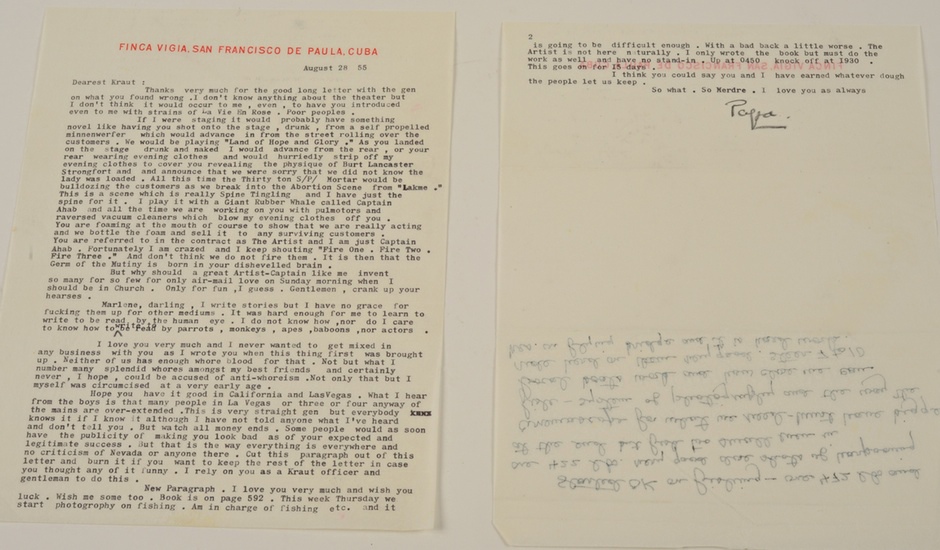
We think today of Ernest Hemingway as that most stylistically disciplined of writers, but it seems that, outside his published work and especially in his personal correspondence, he could cut pretty loose. One particularly vivid example has returned to public attention recently by appearing for sale on a site called auctionmystuff.com: a letter from Hemingway to legendary singer-actress Marlene Dietrich, dated August 28, 1955. “In the intimate, rambling and revealing letter,” writes the Wall Street Journal’s Jonathan Welsh, “Hemingway professes his love for Dietrich a number of times, though the two are said to have never consummated the relationship.” He also, Welsh notes, “talks about staging one of her performances, in which he imagines her ‘drunk and naked.’ ” The full letter, which spares no detail of this elaborate fantasy, runs as follows:
Dearest Kraut :
Thanks very much for the good long letter with the gen on what you found wrong. I don’t know anything about the theater but I don’t think it would occur to me, even, to have you introduced even to me with strains of La Vie En Rose. Poor peoples.
If I were staging it would probably have something novel like having you shot onto the stage, drunk, from a self-propelled minnenwerfer which would advance in from the street rolling over the customers. We would be playing “Land of Hope and Glory.” As you landed on the stage drunk and naked I would advance from the rear, or from your rear wearing evening clothes and would hurriedly strip off my evening clothes to cover you revealing the physique of Burt Lancaster Strongfort and announce that we were sorry that we did not know the lady was loaded. All this time the Thirty ton S/P/ Mortar would be bulldozing the customers as we break into the Abortion Scene from “Lakme.” This is a scene which is really Spine Tingling and I have just the spine for it. I play it with a Giant Rubber Whale called Captain Ahab and all the time we are working on you with pulmotors and raversed (sic) cleaners which blow my evening clothes off you. You are foaming at the mouth of course to show that we are really acting and we bottle the foam and sell it to any surviving customers. You are referred to in the contract as The Artist and I am just Captain Ahab. Fortunately I am crazed and I keep shouting “Fire One. Fire Two. Fire Three.” And don’t think we do not fire them. It is then that the Germ of the Mutiny is born in your disheveled brain.
But why should a great Artist-Captain like me invent so many for so few for only air-mail love on Sunday morning when I should be in church. Only for fun, I guess. Gentlemen, crank up your hearses.
Marlene, darling, I write stories but I have no grace for fucking them up for other mediums. It was hard enough for me to learn to write to be read by the human eye. I do not know how, nor do I care to know how to write to be read by parrots, monkeys, apes, baboons, nor actors.
I love you very much and I never wanted to get mixed in any business with you as I wrote you when this thing first was brought up. Neither of us has enough whore blood for that. Not but what I number many splendid whores amongst my best friends and certainly never, I hope, could be accused of anti-whoreism. Not only that but I was circumcised as a very early age.
Hope you have it good in California and Las Vegas. What I hear from the boys is that many people in La Vegas (sic) or three or four anyway of the mains are over-extended. This is very straightgen but everybody knows it if I know it although I have not told anyone what I’ve heard and don’t tell you. But watch all money ends. Some people would as soon have the publicity of making you look bad as of your expected and legitimate success. But that is the way everything is everywhere and no criticism of Nevada or anyone there. Cut this paragraph out of this letter and burn it if you want to keep the rest of the letter in case you thought any of it funny. I rely on you as a Kraut officer and gentlemen do this.
New Paragraph. I love you very much and wish you luck. Wish me some too. Book is on page 592. This week Thursday we start photography on fishing. Am in charge of fishing etc. and it is going to be difficult enough. With a bad back a little worse. The Artist is not here naturally. I only wrote the book but must do the work as well and have no stand-in. Up at 0450 knock off at I930. This goes on for I5 days.
I think you could say you and I have earned whatever dough the people let us keep.
So what. So Merdre. I love you as always.
Papa
“To him she was ‘my little Kraut,’ or ‘daughter,’ to her he was simply ‘Papa’ — and it was love at first sight when they met aboard a French ocean liner in 1934,” writes The Guardian’s Kate Connolly of the two icons’ unusual relationship. “Hemingway and Dietrich started writing to each other when he was 50 and she was 47, remaining in close contact until the writer’s suicide in 1961. But they never consummated their love, because of what Hemingway referred to as ‘unsynchronised passion.’ ” A fan of both Hemingway and Dietrich could presumably desire nothing more than one of the original pieces of their correspondence, but this particular letter, with a starting price of $35,000, drew not a single bid — perhaps a sale, like the physical expression of the Old Man and the Sea author and “Lili Marleen” singer’s love, fated never to happen.
Related Content:
Marlene Dietrich’s Tempermental Screen Test for The Blue Angel (and the Complete 1930 Film)
Ernest Hemingway to F. Scott Fitzgerald: “Kiss My Ass”
Ernest Hemingway’s Favorite Hamburger Recipe
Colin Marshall hosts and produces Notebook on Cities and Culture and writes essays on cities, language, Asia, and men’s style. He’s at work on a book about Los Angeles, A Los Angeles Primer. Follow him on Twitter at @colinmarshall or on Facebook.
Read More...How Star Wars Borrowed From Akira Kurosawa’s Great Samurai Films
Hollywood has a long history poaching from abroad. Ask Orson Welles, who along with cinematographer Gregg Toland, incorporated the look of German Expressionist cinema into Citizen Kane. Ask Quentin Tarantino who cribbed much of Ringo Lam’s City on Fire for his breakout debut Reservoir Dogs. And ask George Lucas who was so greatly influenced by Japanese master Akira Kurosawa that he lifted large chunks of his Hidden Fortress for Star Wars.
Above is a video that (if you can get past the bro-tastic narration and mangled Japanese pronunciation) neatly unpacks how Lucas’s seminal space opera owes a lot to Kurosawa. It doesn’t take too much imagination to connect a light saber with a samurai’s katana. Obi-Wan Kenobi’s robes look like something that Toshio Mifune might wear in one of Kurosawa’s epics. Lucas even uses Kurosawa’s trademark screen wipe. Below is an interview with Lucas where he describes how Kurosawa’s visual style influenced him.
Hollywood generally has a better track record with borrowing from foreign filmmaking geniuses than actually working with them. Fritz Lang and John Woo were seduced into coming to America only to be forced by overbearing studios into making anodyne versions of their previous works. Kurosawa himself had a deeply troubling experience in Hollywood; cultural differences, studio politics and Kurosawa’s autocratic directing style – he wasn’t nicknamed ‘The Emperor’ for nothing – got him axed after three weeks from the 20th Century Fox movie Tora! Tora! Tora!. Kurosawa took the blow very personally and, following the box office flop of his next movie Dodesukaden, attempted suicide.
Yet the spectacular success of Star Wars proved to be an unexpected boon to Kurosawa. With his newfound influence in Hollywood, Lucas managed to strong arm 20th Century Fox, the same studio that axed Kurosawa a decade before, into funding Kagemusha. The movie proved to be a commercial and critical hit, winning the Palme d’Or at Cannes. The film also gave Kurosawa the clout to raise the money for his last masterpiece Ran.
Of course, Lucas wasn’t the only filmmaker influenced by Kurosawa. Check out Kurosawa: The Last Emperor — a documentary about the director featuring a host of filmmakers who have been influenced by him, including Bernardo Bertolucci, John Woo and Francis Ford Coppola.
Related Content:
Akira Kurosawa’s List of His 100 Favorite Movies
Watch Kurosawa’s Rashomon Free Online, the Film That Introduced Japanese Cinema to the West
The Kurosawa Digital Archive
Akira Kurosawa & Francis Ford Coppola Star in Japanese Whisky Commercials (1980)
Jonathan Crow is a Los Angeles-based writer and filmmaker whose work has appeared in Yahoo!, The Hollywood Reporter, and other publications. You can follow him at @jonccrow.
Read More...In Basho’s Footsteps: Hiking the Narrow Road to the Deep North Three Centuries Later
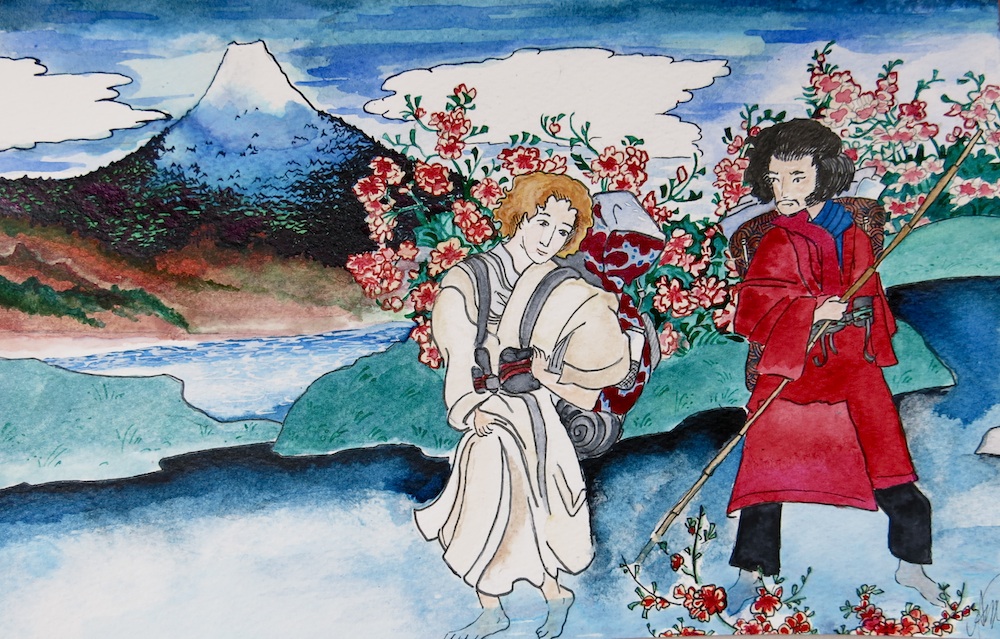
Matsuo Basho (1644–1694) lived his peculiar life on the conviction that art could create an awareness that allowed one to see into and communicate the essence of experience. Throughout his life he searched for the state of being one with the object of his poems, something he believed a poet needed to reach in order to write truthfully. This life-long search brought Basho to wandering. He thought that travelling would lead to a state of karumi (lightness), essential for art. In May 1689, when he was already a renowned poet in Japan, he sold his house and embarked on his greatest trip. Basho travelled light, always on foot and always slowly, looking carefully and deeply. He sought to leave everything behind (even himself) and have a direct experience with the nature around him, and he saw Zen Buddhism and travelling as the way to achieve this. He walked 2000 kilometers around the northern coast of Honshu (Japan’s main island), writing prose and poetry along the way, and compiling it all in a book that changed the course of Japanese literature, The Narrow Road to the Deep North.
We are Pablo Fernández (writer) and Anya Gleizer (painter), the adventurers and artists behind In Basho’s Footsteps. 325 years have passed since Basho began hiking the Narrow Road. This summer, we will retrace his trail, in an effort to come in contact with Basho’s approach to art and travelling. We will hike for three months, camping on the way, travelling as lightly and austerely as possible. We will write and paint along the route, and compile what we produce in an artist’s book. It will be hard, but art avails no compromises. Of course, apart from the physical and mental hardships, there are financial ones (flights and food for three months, and publishing costs). To make the project possible, we have used Kickstarter, a crowdfunding platform. With Kickstarter people are able to fund the projects they like, and receive a reward in exchange (we are giving our backers copies of our book, silk-screen prints and even paintings, depending on the pledge). This is a great way of creating an audience involved in the creation process. We don’t only receive financial support, but also very useful feedback, and we will be able to show our audience how the book is coming together. Because we want our art to reach as many people as possible, we are giving a digital edition of the book to everyone who backs the project with more than $5, before the book is accessible to the general public. Our Kickstarter campaign ends on June 4th. It has been a great success so far: We have already covered the travelling costs and now we are funding the publishing costs. For us, crowd-funding has opened up the traditional obstacles between creators and readers. This summer, with the help of all our supporters, we will retrace Basho’s Footsteps.
Editor’s note: This has been a guest post by Pablo Fernández and Anya Gleizer. Please consider supporting their great project here. Also find translations of Basho’s poetry in our collection, 800 Free eBooks for iPad, Kindle & Other Devices.
Read More...The Acid Test Reels: Ken Kesey & The Grateful Dead’s Soundtrack for the 1960s Famous LSD Parties
“If you remember the ‘60s, you weren’t there.” The quote was supposedly uttered by Grace Slick. Or Paul Kantner. Or Dennis Hopper. The truth is no one really remembers who said it first.
Of course, the “60s” was not simply the decade that came between the ‘50s and the ‘70s but a shorthand for a generational revolt fueled in part by one stupid war and a general disillusionment with consumer capitalism. The ground zero for the “60s,” at least in the United States, was in San Francisco and, at the center of the scene, there was Ken Kesey, the Merry Pranksters and their legendary counterculture bacchanalias called Acid Tests. These happenings featured groovy flashing lights, live music from the likes of The Grateful Dead, and copious amounts of LSD. Up top, Kesey explains the meaning of the Acid Tests for you:
Thanks to the internet, you can experience a bit of what these original hippie fests were like. Above is audio from two shows in January 1966 which had Kesey and longtime Merry Prankster Ken Babbs cracking jokes and dropping truth bombs in between songs from the Grateful Dead. Below is the set list of that show along with the audio of two more shows with Kesey and the Dead. Some of the track listings might be incomplete probably because everyone was having too much fun to take notes. So crank it up and turn on, tune in and drop out.
The Fillmore Acid Test
Fillmore Auditorium, San Francisco, CA
January 8, 1966
1. Stage Chaos/More Power Rap
2. King Bee
3. I’m A Hog For You Baby
4. Caution: Do Not Step On Tracks >
5. Death Don’t Have No Mercy
6. Star Spangled Banner / closing remarksThe Sound City Acid Test
363 6th Street, San Francisco, CA
January 29, 1966
7. Ken Kesey interviewed by Frank Fey
8. Ken Babbs and harmonica
9. Take Two: Ken Kesey
10. Bull
11. Peggy The Pistol
12. One-way Ticket
13. Bells And Fairies
14. Levitation
15. Trip X
16. The End
The Pico Acid Test
Danish Center, Los Angeles, CA
March 12, 1966
1. Viola Lee Blues
2. You See A Broken Heart
3. In The Midnight Hour
[mis-dated, according to David Lemieux, and not corresponding to the vault copy’s setlist; these are probably from 3/19/1966]The San Francisco State Acid Test
Whatever It Is Festival
San Francisco State University, San Francisco, CA
Stereo Control Room Master (rec. 4:00AM — 6:00AM)
October 2, 1966
4. The Head Has Become Fat Rap
5. A Mexican Story: 25 Bennies
6. A Tarnished Galahad
7. Get It Off The Ground Rap >
8. It’s Good To Be God Rap >
9. Nirvana Army Rap >
10. The Butcher Is Back
11. Acid Test Graduation Announcement
12. Send Me To The Moon >Closing Rap
Credits on 10/2/66:
Voices: Ken Kesey and Hugh Romney
Guitar: Ken Kesey
Violin: Dale Kesey
Organ: Jerry Garcia
Engineering: Steve Newman, Ken Kesey, Mountain Girl
The San Francisco State Acid Test
Whatever It Is Festival
San Francisco State University, San Francisco, CA
October 2, 1966
1. Ken Kesey’s dialogue (isolated remix)Merry Prankster Sound Collage Sequences
October 2, 1966
2. Prankster Music/Sound Collage #1(sequence 1)
3. Kesey Rap > Prankster Music/Sound Collage #2 (sequence 2)
4. Prankster Sound Collage #3 > Prankster Raga(sequence 3)
Prankster Recordings broadcast over the P.A.End of Whatever It Is Festival
October 2, 1966
5. Closing Jam
6. Prankster ElectronicsAcid Test Graduation Jam
Winterland, San Francisco, CA
October 31, 1966
7. Jam Session (musicians unknown)
from The World Of Acid film soundtrack
Related Content:
Ken Kesey Talks About the Meaning of the Acid Tests in a Classic Interview
UC Santa Cruz Opens a Deadhead’s Delight: The Grateful Dead Archive is Now Online
The Grateful Dead Rock the National Anthem at Candlestick Park: Opening Day, 1993
Bob Dylan and The Grateful Dead Rehearse Together in Summer 1987. Listen to 74 Tracks.
Jonathan Crow is a Los Angeles-based writer and filmmaker whose work has appeared in Yahoo!, The Hollywood Reporter, and other publications. You can follow him at @jonccrow.
Read More...Visit The Museum of Online Museums (MoOM): A Mega Collection of 220 Online Exhibitions
It is my habit, when travel looms, to case the Internet for obscure museums my destination might have to offer. Once loaded, I fixate. Chat me up about my itinerary, and you will definitely come away with the impression that these offbeat locales are the trip’s primary raison d’être.
It’s shocking how rarely I actually make it to one of these off-the-beaten path gems. Time flies and I rarely travel alone these days.
Take a recent family trip to London. Every time I brought up the Museum of Brands, my husband expressed reservations. “But what is it, exactly, other than a bunch of old labels?” he’d press.
I hemmed and hawed, realizing on the cellular level that neither he nor the kids could see the beauty in old labels. Dinosaurs, maybe. Vespas, no doubt. But old labels? This is how I found myself giving the British Museum nearly three times the Museum of Brand’s admission charge to join a mighty throng of pensioners, squinting at a handful of boring button fragments and a chunk of wood that no longer resembled a Viking Ship.
Next time, I swear…
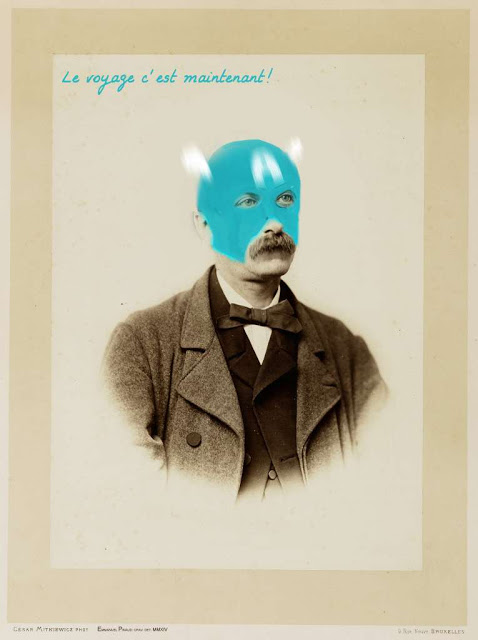
How fortunate for me and my ilk that Chicago design firm Coudal Partners is committed to laboring far outside its expected scope. In addition to championing Stanley Kubrick and poetry, they’ve taken it upon themselves to consolidate a panoply of digital collections into the Museum of Online Museums. (The preferred acronym is MoOM, FYI.)
Unlike that of certain of my traveling companions, Coudal Partners’ definition of what constitutes a museum is democratic. Generous, even. The Metropolitan Museum of Art, the Rijksmuseum, and the Musée d’Orsay share space with such non-brick-and-mortar companions as the Busy Beaver Button Museum, the Grocery List Collection, and Toaster Central.
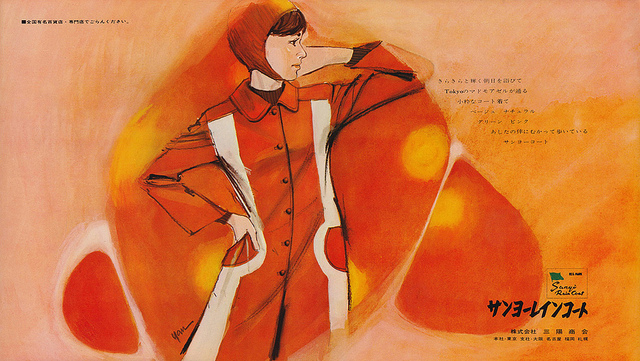
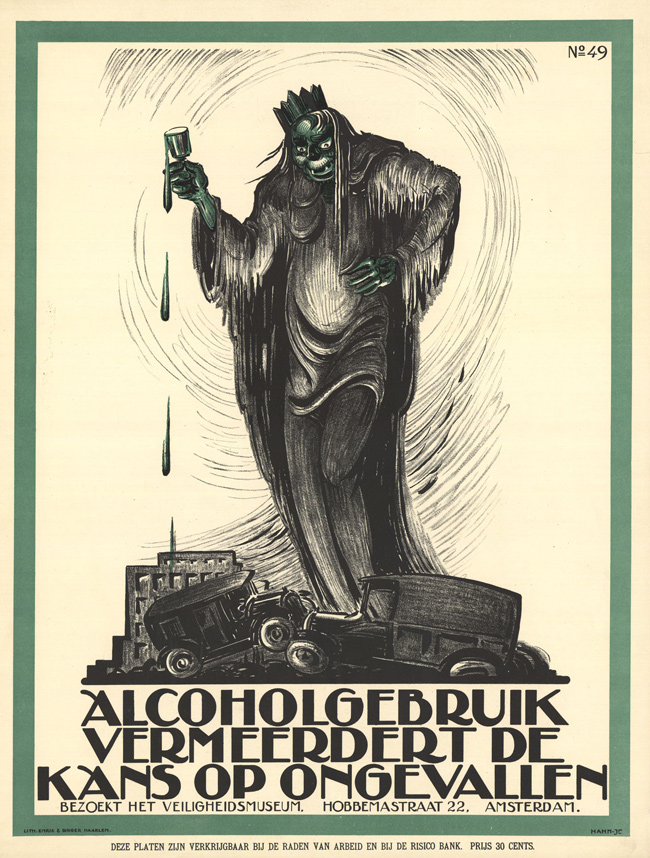
Like any major institution, MoOM touts their current exhibitions, a seasonal sampling of five. This spring brings together the Rijksmuseum’s Studio Project, NASA’s Space Food Hall of Fame, a collection of Dutch safety posters from 50 Watts, 40 retro-groovy Japanese ads compliments of Voices of East Anglia, and a photographic survey of eggnog cartons. (That last one really deserves a brick and mortar home. Location is immaterial. I’d just like to fantasize about visiting it someday.)

Meanwhile, the talk of the town here in New York City is the reappearance of Mmuseumm, an eclectic, non-profit housed in a 60-square-foot Tribeca elevator shaft. MoOM, take note.
Find more online exhibitions at the Museum of Online Museums.
Related Content:
The Metropolitan Museum of Art Puts 400,000 High-Res Images Online & Makes Them Free to Use
LA County Museum Makes 20,000 Artistic Images Available for Free Download
Download Over 250 Free Art Books From the Getty Museum
Ayun Halliday wrote about her experiences as a museum guard in her 3rd book, Job Hopper. Follow her @AyunHalliday
Read More...Ray Bradbury on Zen and the Art of Writing (1973)
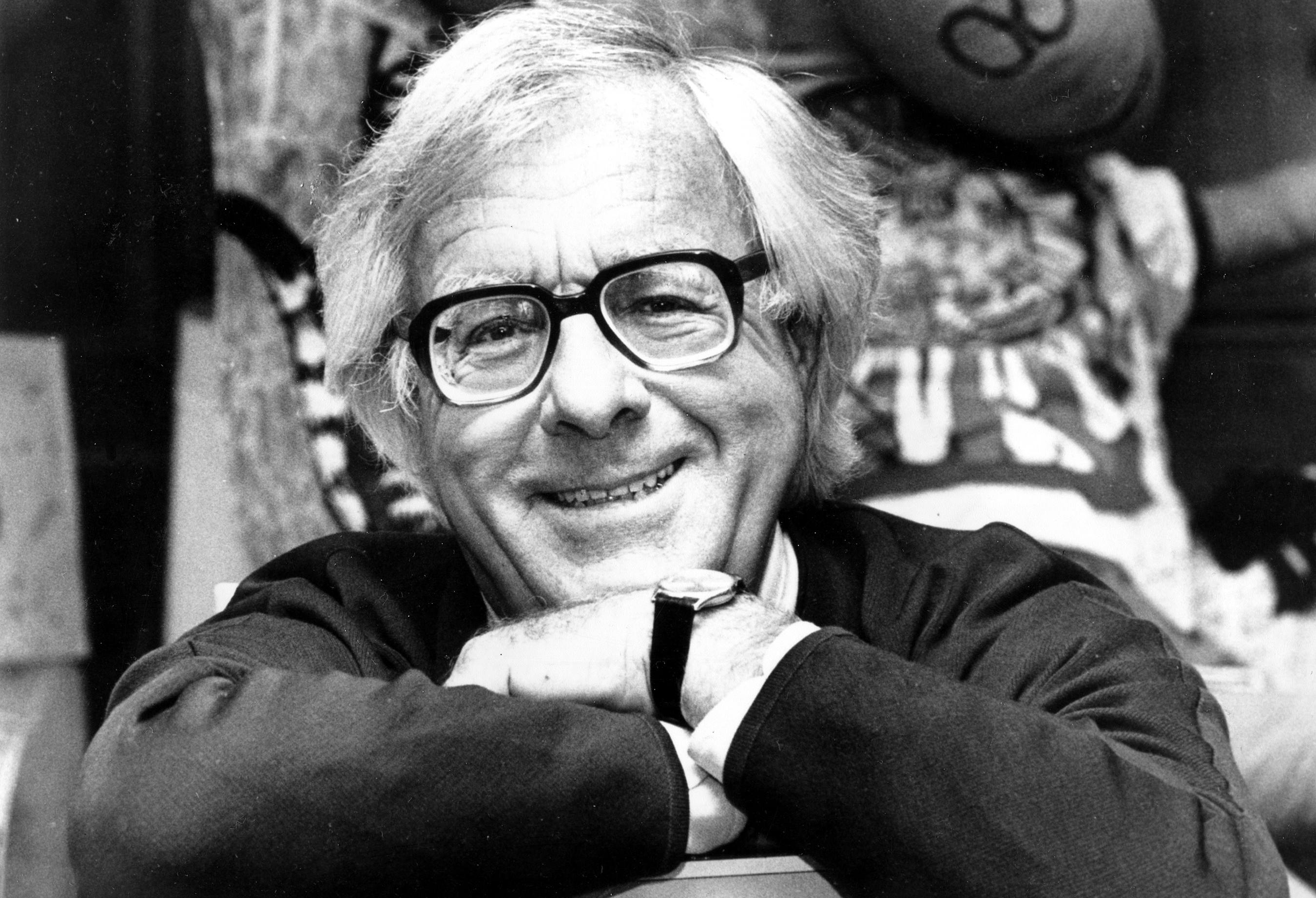
The prolific Ray Bradbury, author of Fahrenheit 451, The Martian Chronicles, and many other works both inside and outside the realm of science fiction, apparently suffered no shortage of creativity. Prolific in his fiction writing, he also proved generous in his encouragement of younger writers: we’ve previously featured not just his twelve essential pieces of writing advice but his secret to life and love. He even wrote enough on the subject of writing to constitute an entire book, the collection Zen in the Art of Writing: Essays on Creativity. In the 1973 title piece, Bradbury, hardly known as a Buddhist, explains his use of the term zen for its “shock value”: “The variety of reactions to it should guarantee me some sort of crowd, if only of curious onlookers, those who come to pity and stay to shout. The old sideshow Medicine Men who traveled about our country used calliope, drum, and Blackfoot Indian, to insure open-mouthed attention. I hope I will be forgiven for using ZEN in much the same way, at least here at the start. For, in the end, you may discover I’m not joking after all.”
He breaks down his own idea of zen in his writing process by first asking himself, “Now while I have you here before my platform, what words shall I whip forth painted in red letters ten feet tall?” He paints the following, and after each we include selections from the essay:
- WORK. “It is, above all, the word about which your career will revolve for a lifetime. Beginning now you should become not its slave, which is too mean a term, but its partner. Once you are really a co-sharer of existence with your work, that word will lose its repellent aspects. [ … ] We often indulge in made work, in false business, to keep from being bored. Or worse still we conceive the idea of working for money. The money becomes the object, the target, the end-all and be-all. Thus work, being important only as a means to that end, degenerates into boredom. Can we wonder then that we hate it so?”
- RELAXATION. “Impossible! you say. How can you work and relax? How can you create and not be a nervous wreck? [ … ] Tenseness results from not knowing or giving up trying to know. Work, giving us experience, results in new confidence and eventually in relaxation. The type of dynamic relaxation again, as in sculpting, where the sculptor does not consciously have to tell his fingers what to do. The surgeon does not tell his scalpel what to do. Nor does the athlete advise his body. Suddenly, a natural rhythm is achieved. The body thinks for itself.”
- DON’T THINK! “The writer who wants to tap the larger truth in himself must reject the temptations of Joyce or Camus or Tennessee Williams, as exhibited in the literary reviews. He must forget the money waiting for him in mass-circulation. He must ask himself, ‘What do I really think of the world, what do I love, fear, hate?’ and begin to pour this on paper. Then, through the emotions, working steadily, over a long period of time, his writing will clarify; he will relax because he thinks right and he will think even righter because he relaxes. The two will become interchangeable. At last he will begin to see himself.”
- FURTHER RELAXATION. “We should not look down on work nor look down on the forty-five out of fifty-two stories written in our first year as failures. To fail is to give up. But you are in the midst of a moving process. Nothing fails then. All goes on. Work is done. If good, you learn from it. If bad, you learn even more. Work done and behind you is a lesson to be studied. There is no failure unless one stops. Not to work is to cease, tighten up, become nervous and therefore destructive of the creative process. [ … ] Isn’t it obvious by now that the more we talk of work, the closer we come to Relaxation.”
- “Have I sounded like a cultist of some sort? A yogi feeding on kumquats, grapenuts and almonds here beneath the banyan tree? Let me assure you I speak of all these things only because they have worked for me for fifty years. And I think they might work for you. The true test is in the doing. Be pragmatic, then. If you’re not happy with the way your writing has gone, you might give my method a try. If you do, I think you might easily find a new definition for Work. And the word is LOVE.”
You can read much more about Bradbury’s method of working, relaxing, not thinking, and relaxing further still — and his thoughts on the joy of writing, keeping the muse fed, establishing a thousand-or-two-words-a-day habit, and “how to climb the tree of life, throw rocks at yourself, and get down without breaking your bones or your spirit” — in the book, Zen in the Art of Writing: Essays on Creativity.
Related Content:
Ray Bradbury Gives 12 Pieces of Writing Advice to Young Authors (2001)
The Secret of Life and Love, According to Ray Bradbury (1968)
Ray Bradbury: Literature is the Safety Valve of Civilization
Ray Bradbury: “The Things That You Love Should Be Things That You Do.” “Books Teach Us That”
Ray Bradbury: Story of a Writer 1963 Film Captures the Paradoxical Late Sci-Fi Author
Colin Marshall hosts and produces Notebook on Cities and Culture and writes essays on cities, language, Asia, and men’s style. He’s at work on a book about Los Angeles, A Los Angeles Primer. Follow him on Twitter at @colinmarshall or on Facebook.
Read More...Morgan Freeman & Fake Neil deGrasse Tyson Teach Physics While High on Helium and Grass
Viral video #1: In a new ad for the Science Channel’s series, Through the Wormhole, actor Morgan Freeman uses helium to entice viewers into thinking about how physicists are studying gravity in places where it acts quite strangely. It’s kind of a cryptic message, but it grabs your attention, doesn’t it? Through the Wormhole returns to the airwaves, with Season 5, on June 4th.
Viral Video #2 asks you to imagine what happens when you put the grass in Neil deGrasse Tyson. “Everything is star stuff. This pizza, this cheese, this pepperoni.” That’s a reboot of Cosmos that may actually get ratings.
Read More...Support Us
We're hoping to rely on loyal readers, rather than erratic ads. Please click the Donate button and support Open Culture. You can use Paypal, Venmo, Patreon, even Crypto! We thank you!

About Us

Open Culture scours the web for the best educational media. We find the free courses and audio books you need, the language lessons & educational videos you want, and plenty of enlightenment in between.
Advertise With Us

FREE UPDATES!
GET OUR DAILY EMAIL
Get the best cultural and educational resources on the web curated for you in a daily email. We never spam. Unsubscribe at any time.
FOLLOW ON SOCIAL MEDIA

Open Culture editor Dan Colman scours the web for the best educational media. He finds the free courses and audio books you need, the language lessons & movies you want, and plenty of enlightenment in between.
Advertise With Us

