Four Charles Bukowski Poems Animated
The poetry of Charles Bukowski deeply inspires many of its readers. Sometimes it just inspires them to lead the dissolute lifestyle they think they see glorified in it, but other times it leads them to create something compelling of their own. The quality and variety of the Bukowski-inspired animation now available on the internet, for instance, has certainly surprised me.
At the top of the post, we have Jonathan Hodgson’s adaptation of “The Man with the Beautiful Eyes,” which puts vivid, colorful imagery to Bukowski’s late poem that draws from his childhood memories of a mysterious, untamed young man in a run-down house whose very existence reminded him “that nobody wanted anybody to be strong and beautiful like that, that others would never allow it.” Below, you can watch Monika Umba’s even more unconventional animation of “Bluebird”:
Without any words spoken on the soundtrack and only the title seen onscreen — a challenging creative restriction for a poetry-based short — Umba depicts the narrator’s “bluebird in my heart that wants to get out.” But the narrator, “too tough for him,” beats back the bluebird’s escape with whiskey, cigarettes, and a policy of only letting him roam “at night sometimes, when everybody’s asleep.”
You’ll find Bradley Bell’s interpretation of “The Laughing Heart,” a poem that advises its readers not to let their lives “be clubbed into dank submission,” to “be on the watch,” for “there are ways out.” “You can’t beat death,” Bukowski writes, “but you can beat death in life, sometimes.” In Bell’s short, these words come from the mouth of the also famously dissolution-chronicling singer-songwriter Tom Waits, certainly Bukowski’s most suitable living reader (and one who, all told, comes second only to the man himself). Only fitting that one inspiring creator delivers the work of another — in the sort of labor of enthusiasm that, too, will inspire its audience to create.
At the bottom the post, you will find “Roll the Dice,” an animation suggested by one of our readers, Mark.
You can find readings of Bukowski poems in the poetry section of our collection of Free Audio Books.
Related Content:
The Last (Faxed) Poem of Charles Bukowski
Listen to Charles Bukowski Poems Being Read by Bukowski, Tom Waits and Bono
“Don’t Try”: Charles Bukowski’s Concise Philosophy of Art and Life
Charles Bukowski Sets His Amusing Conditions for Giving a Poetry Reading (1971)
Charles Bukowski: Depression and Three Days in Bed Can Restore Your Creative Juices (NSFW)
Colin Marshall hosts and produces Notebook on Cities and Culture and writes essays on cities, language, Asia, and men’s style. He’s at work on a book about Los Angeles, A Los Angeles Primer. Follow him on Twitter at @colinmarshall or on Facebook.
Read More...Vintage Footage of Leo Tolstoy: Video Captures the Great Novelist During His Final Days
?si=cReB-cfecM4rq3iJ
“My life came to a standstill,” wrote Leo Tolstoy in his 1882 conversion memoir A Confession, “I could not breathe, eat, drink, and sleep, and I could not help doing these things.” So Tolstoy’s described his “arrest of life,” a period of severe depression that led to a very deep, personal brand of faith in his late middle age. The towering Russian novelist renounced worldly desires and came to identify with the poor, the former serfs of his aristocratic class. Tolstoy’s radical religious anarchism in his final years spread his fame far among the peasantry just as his literary achievements had brought him worldwide renown among the reading public. So famous was Tolstoy, William Nickell tells us, that Russian critic Vasily Rozanov wrote that “to be a Russian and not have [seen] Tolstoy was like being Swiss and not having seen the Alps.”
Nickell describes the occasions that Tolstoy appeared on film, the new medium that allowed the author’s millions of adoring fans to get a glimpse of him. Just as his life was punctuated by a radical departure from his earlier attitudes, his medium was in for a shock as film forever changed the way stories were told.
In those early days, however, it was very often simply a means of recording history, and we should be glad of that. It means we too can see Tolstoy, at the top on his 80th birthday. We see him vigorously sawing logs and piously giving alms to the poor. Also included in the initial footage are Tolstoy’s wife Sofya, his daughter Aleksandra, and aide and editor Vladimir Chertkov. Then, at 1:04, the scene shifts to Tolstoy’s deathbed and scenes of his funeral. The remaining 11 minutes give us some unidentified footage of the author. (If you’re able to read the title cards in Russian, please let us know!).
Just above, see a more complete film of Tolstoy’s death and funeral procession. The author died at age 82 after he abruptly decided to leave his wife, taking only a few possessions and his doctor. Read the dramatic story of Tolstoy’s last ten days in this translated excerpt from Pavel Basinsky’s award winning Leo Tolstoy: Escape from Paradise.
Related Content:
Rare Recording: Leo Tolstoy Reads From His Last Major Work in Four Languages, 1909
Josh Jones is a writer and musician based in Durham, NC. Follow him at @jdmagness.
Read More...All of Bach for Free! New Site Will Put Performances of 1080 Bach Compositions Online
Bach wrote 1080 compositions during his lifetime. And now thanks to the new and certainly ambitious All of Bach web site, you can eventually watch the Netherlands Bach Society (founded in 1921) perform each and every one of those compositions. The site features 13 performances so far (see below), which means there’s only another 1067 to go. A new Bach recording will go live every Friday. So you mark your calendars and check in weekly for the next 20 years. Thanks to Erik for sending this our way!
First recordings:
- Nun Komm, der Heiden Heiland — Cantata, BWV 61
- Toccata and Fugue in D minor — Organ work, BWV 565
- Herr Gott, Dich loben alle wir — Cantata, BWV 130
- Herr Gott, nun schleuss den Himmel auf Herr Gott, nun schleuss den Himmel auf Organ work — BWV 617
- Organ concerto in A minor (after Vivaldi) — BWV 593
- Ich habe genung — Cantata — BWV 82
- The Well-Tempered Clavier I Prelude and Fugue in F sharp major — BWV 858
- The Well-Tempered Clavier I no. 6 in D minor Keyboard work — BWV 851
- The Well-Tempered Clavier I no. 12 in F minor Keyboard work — BWV 857
- Fantasia and Fuge in G Minor — Organ Work BWV 542
- Schwingt freudig euch empor Schwingt freudig euch empor Cantata — BWV 36
- Wir müssen durch viel Trübsal in das Reich Gottes eingehen Wir müssen durch viel Trübsal in das Reich Gottes eingehen Cantata — BWV 146
- Vater unser im Himmelreich Vater unser im Himmelreich Organ work — BWV 682
Related Content:
A Big Bach Download: All of Bach’s Organ Works for Free
The Genius of J.S. Bach’s “Crab Canon” Visualized on a Möbius Strip
Video: Glenn Gould Plays the Goldberg Variations by J.S. Bach
Read More...Watch the Talking Heads Play a Vintage Concert in Syracuse (1978)
We’ve brought you Talking Heads shows from New York’s CBGB in 1975, Dortmund, Germany in 1980, and Rome that same year. Now we’ve got one more valuable live find from that formative, busy era for the David Byrne-led, Rhode Island School of Design-forged new-wave band: their November 1978 performance in Syracuse. The exact venue? Perhaps somewhere at Syracuse University, perhaps not, though a college performance space would make sense, given how many institutions of higher education they played in 1978. The Talking Heads Concert History blog has a complete list, and the total number of shows in that year alone comes in, astonishingly, at over 130, a fair few of them at schools like NYU, Brown, Berklee, Berkeley, UCLA, and the University of Arizona. “It was really an education for us,” the page quotes drummer Chris Frantz as saying of the 1978 tour. “I’m afraid we bit off more than we could chew. We thought that we could play every night, and we found that after four months we were feeling pretty uninspired.”
Yet this Syracuse gig, which came ten months in, sounds pretty inspired to me. It looks it, too, at least from what I can discern from the lo-fi footage. What the image lacks in crispness, though, it makes up for in technological interest; it has the signature look of the Sony Portapak, one of the very early portable consumer video recording systems beloved of the 1970s’ video amateurs and video artists alike. Whoever manned the Portapak for these 92 minutes in Syracuse captured a valuable chapter in the Talking Heads story, one the band spent working as hard as possible — which, of course, meant playing as hard, and as often, as possible — and refining their inimitable sound and sensibility in concert spaces that, while often low-profile, nevertheless provided them with excited and appreciative audiences. College students and otherwise, came eager to hear something new — and given that the 70s, that decade of slick disco and smooth rock, had almost come to a close, something a bit askew. The Talking Heads, as we see them here, could gladly deliver.
Set list:
- The Big Country
- Warning Sign
- The Book I Read
- Stay Hungry
- Artists Only
- The Girls Want to Be with the Girls
- The Good Thing
- Love Goes to Buildings on Fire
- Electricity
- Found a Job
- Take Me to the River
- I’m Not in Love
- No Compassion
Related Content:
Watch the Talking Heads Play Live in Dortmund, Germany During Their Heyday (1980)
Talking Heads Play CBGB, the New York Club that Shaped Their Sound (1975)
Live in Rome, 1980: The Talking Heads Concert Film You Haven’t Seen
David Byrne: How Architecture Helped Music Evolve
Colin Marshall hosts and produces Notebook on Cities and Culture and writes essays on cities, language, Asia, and men’s style. He’s at work on a book about Los Angeles, A Los Angeles Primer. Follow him on Twitter at @colinmarshall or on Facebook.
Read More...Mr. Rogers Introduces Kids to Experimental Electronic Music by Bruce Haack & Esther Nelson (1968)
Experimental electronic musician and inventor Bruce Haack’s compositions expanded many a young consciousness, and taught kids to dance, move, meditate, and to be endlessly curious about the technology of sound. All of this makes him the perfect guest for Fred Rogers, who despite his totally square demeanor loved bringing his audience unusual artists of all kinds. In the clips above and below from the first, 1968 season of Mr. Roger’s Neighborhood, Haack introduces Rogers and a group of youngsters to the “musical computer,” a homemade analog synthesizer of his own invention—one of many he created from household items, most of which integrated human touch and movement into their controls, as you’ll see above. In both clips, Haack and longtime collaborator Esther Nelson sing and play charming songs as Nelson leads them in various movement exercises. (The remainder of the second video mostly features Mr. Roger’s cat.)
Although he’s seen a revival among electronic musicians and DJs, Haack became best known in his career as a composer of children’s music, and for good reason. His 1962 debut kid’s record Dance, Sing & Listen is an absolute classic of the genre, combining a dizzying range of musical styles—country, classical, pop, medieval, and experimental electronic—with far-out spoken word from Haack and Nelson. They followed this up with two more iterations of Dance, Sing & Listen, then The Way Out Record for Children, The Electronic Record for Children, the amazing Dance to the Music, and several more, all them weirder and more wonderful than maybe anything you’ve ever heard. (Don’t believe me? Take a listen to “Soul Transportation,” “EIO (New MacDonald),” or the absolutely enchanting “Saint Basil,” with its Doors‑y organ outro.)
A psychedelic genius, Haack also made grown-up acid rock in the form of 1970’s The Electric Lucifer, which is a bit like if Andrew Lloyd Webber and Tim Rice had written Jesus Christ Superstar on heavy doses of LSD and banks of analog synthesizers.
While Haack’s Mr. Rogers appearance may not have seemed like much at the time, in hindsight this is a fascinating document of an artist who’s been called “The King of Techno” for his forward-looking sounds meeting the cutting edge in children’s programming. It’s a testament to how much the counterculture influenced early childhood education. Many of the progressive educational experiments of the sixties have since become historical curiosities, replaced by insipid corporate merchandising. What Haack and Nelson’s musical approach tells me is that we’d do well to revisit the educational climate of that day and take a few lessons from its freeform experimentation and openness. I’ll certainly be playing these records for my daughter.
Related Content:
Mr. Rogers Takes Breakdancing Lessons from a 12-Year-Old (1985)
Mr. Rogers Goes to Washington
Josh Jones is a writer and musician based in Durham, NC. Follow him at @jdmagness.
Read More...Albert Camus Wins the Nobel Prize & Sends a Letter of Gratitude to His Elementary School Teacher (1957)
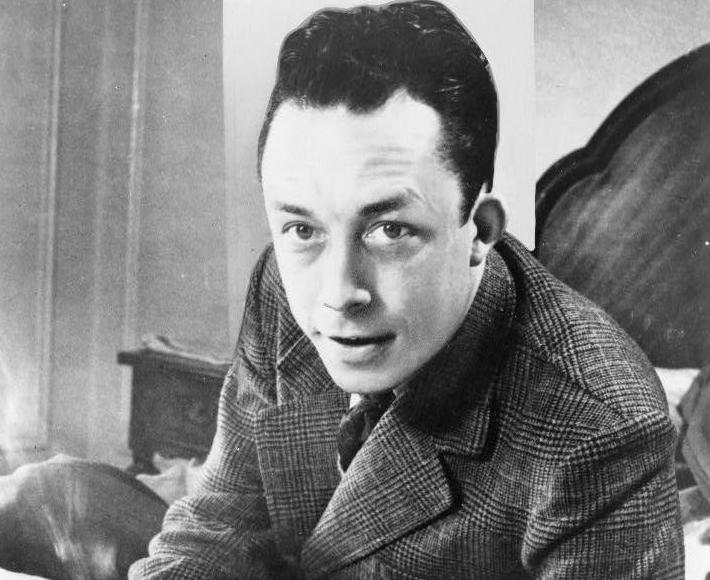
Image by United Press International, via Wikimedia Commons
What would you do if you won a Nobel Prize? Who would you thank? We’ve all wondered about it, perhaps not about the Nobel specifically, but about some potentially legacy-confirming prize or other — maybe an Oscar, maybe a MacArthur Fellowship. When Albert Camus, the short-lived French novelist-philosopher who wrote such enduring works as The Stranger and The Myth of Sisyphus, won the Nobel for Literature in 1957 “for his important literary production, which with clear-sighted earnestness illuminates the problems of the human conscience in our times,” he thanked an elementary-school teacher. “One could argue that, in the history of the field, few teacher-pupil relationships have had more dramatic impact than that of Louis Germain on his young pupil Albert Camus,” says a Chicago Tribune article published during an upswing in American interest in Camus’ work. That happened soon after the publication of his unfinished autobiographical novel The First Man, a “classic story of a poor boy who made good” whose appendix includes the author’s real-life correspondence with his former teacher.
One of these letters Camus wrote to Germain not long after winning the Nobel. (You can hear his actual acceptance speech here.) He no doubt saw the older man’s formative influence as essential to the work that brought that prestigious prize his way, since, as Letters of Note puts it, “he was just 11-months-old when his father was killed in action during The Battle of the Marne; his mother, partially deaf and illiterate, then raised her boys in extreme poverty with the help of his heavy-handed grandmother. It was in school that Camus shone, due in no small part to the encouragement offered by his beloved teacher.” Though never thrilled about public honors of this type, Camus nonetheless knew a chance to express long-felt gratitude when he saw it, and to Germain he wrote these sentences as brief and as powerful as many in his books:
19 November 1957
Dear Monsieur Germain,
I let the commotion around me these days subside a bit before speaking to you from the bottom of my heart. I have just been given far too great an honour, one I neither sought nor solicited.
But when I heard the news, my first thought, after my mother, was of you. Without you, without the affectionate hand you extended to the small poor child that I was, without your teaching and example, none of all this would have happened.
I don’t make too much of this sort of honour. But at least it gives me the opportunity to tell you what you have been and still are for me, and to assure you that your efforts, your work, and the generous heart you put into it still live in one of your little schoolboys who, despite the years, has never stopped being your grateful pupil. I embrace you with all my heart.
Albert Camus
For more such memorable correspondence, do consider having a look at Letters of Note’s newly published book, Letters of Note: An Eclectic Collection of Correspondence Deserving of a Wider Audience.
Related Content:
On His 100th Birthday, Hear Albert Camus Deliver His Nobel Prize Acceptance Speech (1957)
Albert Camus Talks About Adapting Dostoyevsky for the Theatre, 1959
The Fall by Albert Camus Animated
Colin Marshall hosts and produces Notebook on Cities and Culture and writes essays on cities, language, Asia, and men’s style. He’s at work on a book about Los Angeles, A Los Angeles Primer. Follow him on Twitter at @colinmarshall or on Facebook.
Read More...Cigarette Commercials from David Lynch, the Coen Brothers and Jean Luc Godard
Even the greatest filmmakers out there sometimes need to pay the bills.
In the 1990s, Swiss tobacco company F. J. Burrus hired name brand art house directors to make commercials for their Parisienne brand of cigarettes. The company gave free rein to the filmmakers both in terms of content and approach. And the talent they managed to attract is astonishing: David Lynch, the Coen Brothers, Emir Kusturica, Roman Polanski and, most puzzlingly, Jean-Luc Godard.
Wait a second, you might say. Wasn’t Godard an avowed Maoist at one point in his life? Wasn’t he one of the most consistently anti-bourgeois, anti-capitalist figures in filmdom? Yes. And he also did cigarette commercials. He did a few for Nike too.
You can see his ad for Parisienne above. Typical with late period Godard, the commercial is both literary, political and willfully difficult. Credited to both Godard and his long time creative and romantic partner Anne-Marie Miéville, the commercial features a skateboarder slaloming between large boxes of cigarettes, some guy in bare feet shuffling through a floor littered with Parisienne packages and a well-to-do woman reading a novel called Parisienne People. On the soundtrack, Godard reads a quote from Racine. It’s probably nothing that Don Draper would have been happy with, but Burrus was pleased.
Ads by other filmmakers similarly show off their quirks and obsessions. The Coen brothers’ commercial, for instance, looks less like an advert than a scene from one of their movies. A dandy smoking a cig from a holder is deeply moved by a sweaty vaudeville performance. When it ends, he whispers, “Again.” It’s a resolution that raises as many questions as it answers. It’s a whole short story in 30 seconds.
Emir Kusturica’s ad is packed with magicians, acrobats, Balkan pastiche and gorgeous ingénues in black. Just like his movies. Side note: Kusturica has a successful side career playing in a band called The No Smoking Orchestra.
Roman Polanski’s commercial is a jokey tale about a vampire that has an unsettlingly undercurrent of menace and sexual violence. Just like his movies.
And David Lynch’s ad plays out like a nightmare from someone who fell asleep reading a Walter Mosley novel.
Related Content:
Ingmar Bergman’s Soap Commercials Wash Away the Existential Despair
Fellini’s Fantastic TV Commercials
Wes Anderson’s New Commercials Sell the Hyundai Azera
Jonathan Crow is a Los Angeles-based writer and filmmaker whose work has appeared in Yahoo!, The Hollywood Reporter, and other publications. You can follow him at @jonccrow.
Read More...
When Neil Young & Rick James Created the 60’s Motown Band, The Mynah Birds
The legacy of Rick James, who died in 2004, may be forever entwined with Dave Chappelle’s insane impersonations and MC Hammer’s use of “Super Freak,” but there is another major star whose onetime association with James has been obscured in music history. I’m talking about Neil Young, who once played guitar in a Toronto R&B group called The Mynah Birds, the first mostly white band signed to Motown Records in the mid-60s. The band’s lead singer? A young AWOL American sailor who went by the name of Ricky James Matthews, later Rick James. Before James went full-on funk and Young invented folk-rock, the two connected in this proto-supergroup that included, writes rock historian Nick Warburton, “several notable musicians who later found fame with the likes of Buffalo Springfield and Steppenwolf.” “It would be a gross oversight,” writes Warburton, “to view the group as merely a footnote to Rick James and Neil Young’s careers.”
It would also be a mistake to consider The Mynah Birds a minor league outfit. As you can hear above in “I’ve Got You In My Soul” (top), “It’s My Time” (above—co-written by Young and James), and “I’ll Wait Forever” (below), this was serious rock and roll, with a loose, garage-rock jangle and raw, soulful vocal melodies. The Mynah Birds were also, according to Jimmy McDonough, serious showmen. McDonough describes their onstage presence in his Neil Young biography Shakey:
The Mynah Birds—in black leather jackets, yellow turtlenecks and boots—had quite a surreal scene going…. Those lucky enough to see any of the band’s few gigs say they were electrifying. ‘Neil would stop playing lead, do a harp solo, throw the harmonica way up in the air and Ricky would catch it and continue the solo.’
This is a far cry from the scruffy, earnest Young of Harvest or CSNY or even the Les Paul-wielding jam-rocker of Crazy Horse and his 90s grunge revival period (and more recent Psychedelic Pill). But the folky leads in his guitar work with James’ band hint at his later incarnations.
Is it a stretch to imagine James fronting a band of white Canadian rockers? Young remembers the driven American singer—who crossed the border to avoid his draft assignment—as “a little bit touchy, dominating—but a good guy.” He also told McDonough that James was drawn primarily to the sound of the Rolling Stones, and brought the rest of the band around: “We got more and more into how cool the Stones were. How simple they were and how cool it was.” James had them play “Get Off My Cloud” and “Satisfaction”—before the braids, cocaine, and sequins, Rick James “fancied himself the next Mick Jagger.”
Unfortunately for the band, U.S. authorities caught up with James, Motown shelved the tapes, and they were never released. Discouraged—Young told MOJO Magazine in 1995—he “moved instead towards acoustic music and immediately became very introspective and musically-inward. That’s the beginning of that whole side to my music.” Young got in his hearse and headed for the States, James did his stint in the Navy, and the rest is, well, you know…. But the sound of The Mynah Birds lived on, perhaps, in at least one Neil Young song. His 1967 “Mr. Soul” with Buffalo Springfield, below, is classic sixties rock and soul with a riff lifted right from the Stones.
Related Content:
Great Story: How Neil Young Introduced His Classic 1972 Album Harvest to Graham Nash
Neil Young Busking in Glasgow, 1976: The Story Behind the Footage
See Neil Young Perform Classic Songs in 1971 BBC Concert: “Old Man,” “Heart of Gold” & More
Josh Jones is a writer and musician based in Durham, NC. Follow him at @jdmagness.
Read More...Peter Sellers Presents The Complete Guide To Accents of The British Isles
“There was no Peter Sellers,” author Bruce Jay Friedman once wrote. “He was close to panic as himself and came alive only when he was impersonating someone else.”
While Sellers might have been a curiously detached and deeply insecure person in real life, he was a striking, memorable figure on the silver screen. His comic imagination and stunning versatility made him the stand out in just about every movie he was in. In Stanley Kubrick’s Dr. Strangelove, Sellers played three different roles using three very different accents – the upper crust plumminess of Capt. Mandrake, the Midwestern flatness of the hapless President Muffley and the shrieking Teutonic lilt of Dr. Strangelove whose voice is a bit like how one might imagine Henry Kissinger’s after fifteen Red Bulls.
Sellers, of course, got his start in the radio and throughout his career, he continued to make audio recordings of his comedy routines. In his 1979 bit, The Complete Guide To Accents of The British Isles, Sellers shows just how good a mimic he really is.
The piece is narrated by Don Shulman, an American professor of “accents and languages” who likes little more than to go to Europe to “hear the music of the other languages…Hearing French spoke, for example, is a sensual experience.” And then what follows is a minute or so of pitch-perfect gibberish that does in fact sound a lot like French. He then moves on to the sound of other languages. “The music of the German language, on the other hand, is exciting and slightly, well, slightly frightening. Like a shower of cold beer.”
As you might guess from the title, Sellers then moves on to the British Isles. We’re treated to a song about Argentina sung in a nearly incomprehensible Cockney, a meandering monologue by a hotel owner in a similarly dense Sussex accident. Shulman then talks to people in Birmingham, Yorkshire, Glasgow and Liverpool among others. And the whole thing is all done by one spectacularly talented person. It’s like the audio equivalent of a perfectly executed magic trick or dance routine. And, unlike Criss Angel, Sellers is (intentionally) funny. Check out part one up top and part two below that.
Related Content:
A Brief Tour of British Accents: 14 Ways to Speak English in 84 Seconds
Peter Sellers Gives a Quick Demonstration of British Accents
Peter Sellers Reads The Beatles’ ‘She Loves You’ in Four Voices
Sir Patrick Stewart Demonstrates How Cows Moo in Different English Accents
Jonathan Crow is a Los Angeles-based writer and filmmaker whose work has appeared in Yahoo!, The Hollywood Reporter, and other publications. You can follow him at @jonccrow.
Read More...Play “Space War!,” One of the Earliest Video Games, on Your Computer (1962)
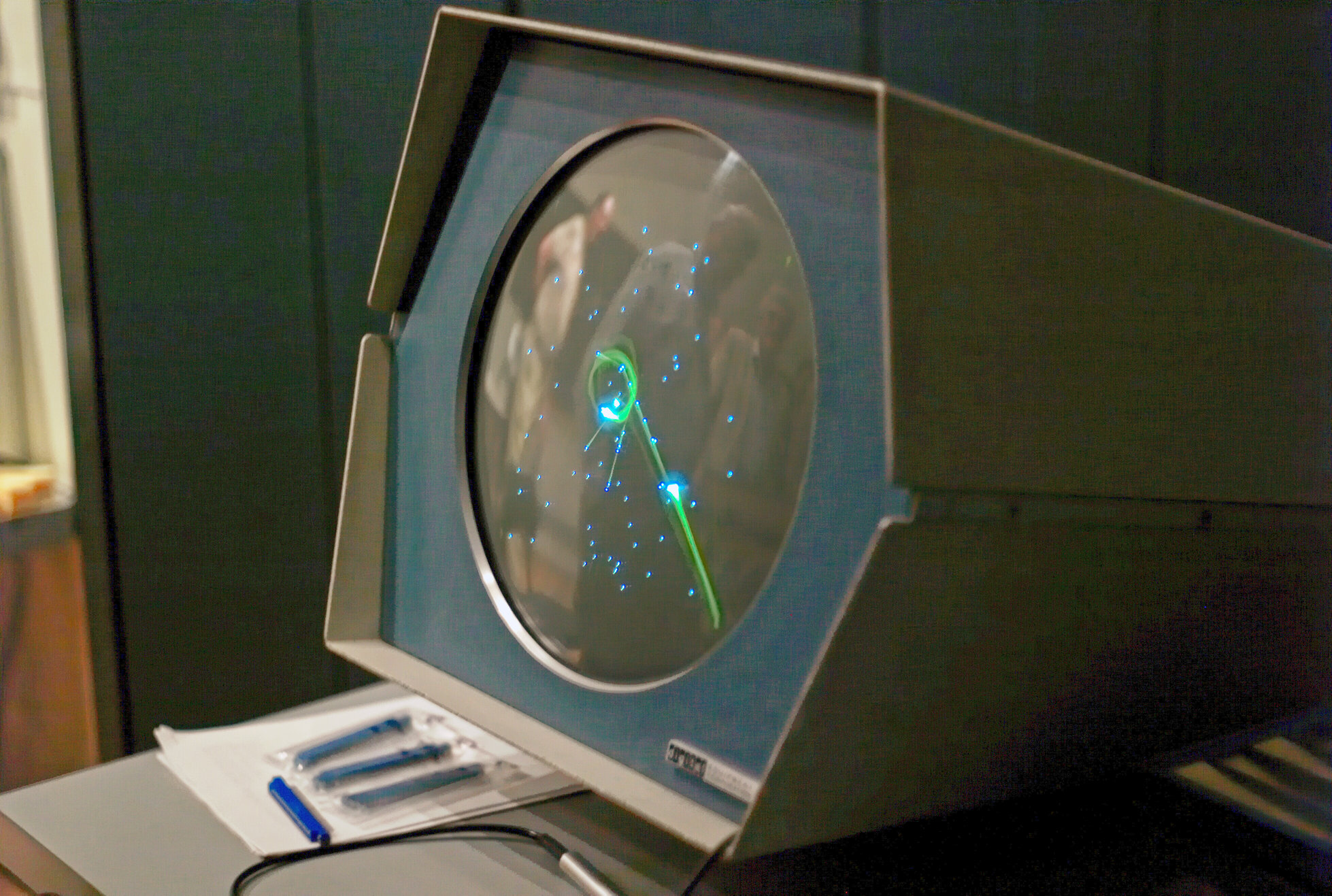
Archive.org continues adding to its Historical Software collection. Last year, they made available Donkey Kong, Pac Man, Frogger & other video games from the Golden Age, not to mention some classic software programs like WordStar and Visi-Calc. Now, they present “Space War!”, a game that came out of MIT back in 1962.
This two-player space-battle game — originally played off the cathode-ray tube of a Digital Equipment PDP‑1 — was considered a major advancement in computer gaming. Today, only one working PDP‑1 is known to exist, in the Computer History Museum in northern California. But through the miracle of a JSMESS emulator, you can play “Space War!” right in your web browser. (A fairly powerful computer and recent browser–ideally Firefox–is recommended.) If you end up playing this grandaddy of computer games, let us know how it goes. You can get more info on Space War! here.
Related Content:
Free Fun: Play Donkey Kong, Pac Man, Frogger & Other Golden Age Video Games In Your Web Browser
Read More...Support Us
We're hoping to rely on loyal readers, rather than erratic ads. Please click the Donate button and support Open Culture. You can use Paypal, Venmo, Patreon, even Crypto! We thank you!

About Us

Open Culture scours the web for the best educational media. We find the free courses and audio books you need, the language lessons & educational videos you want, and plenty of enlightenment in between.
Advertise With Us

FREE UPDATES!
GET OUR DAILY EMAIL
Get the best cultural and educational resources on the web curated for you in a daily email. We never spam. Unsubscribe at any time.
FOLLOW ON SOCIAL MEDIA

Open Culture editor Dan Colman scours the web for the best educational media. He finds the free courses and audio books you need, the language lessons & movies you want, and plenty of enlightenment in between.
Advertise With Us


