Steven Pinker: “Dear Humanists, Science is Not Your Enemy”

Humanists are feeling a bit beleaguered these days. And who can blame them? Enrollments in humanities courses are in steady decline nationwide, and everyone’s looking for a cause. Some blame the decline on the tough economy and the relentlessly vocational focus of students. Others attribute it to the “anti-intellectual moment” in which we’re now living. Still others place the blame right in the laps of humanists who have “lost faith in their own enterprise.” They’re committing their own form of career suicide. And then some fault the ever-increasing encroachment of science. For nowadays science tries to answer all questions, including what’s good, beautiful and true.
But if you listen to Steven Pinker, he’ll tell you that science is not the problem. Earlier today, the eminent Harvard psychologist published a piece in The New Republic called Science Is Not Your Enemy: An impassioned plea to neglected novelists, embattled professors, and tenure-less historians. And he offered these assurances:
[Science doesn’t have] an imperialistic drive to occupy the humanities; the promise of science is to enrich and diversify the intellectual tools of humanistic scholarship, not to obliterate them. And it is not the dogma that physical stuff is the only thing that exists. Scientists themselves are immersed in the ethereal medium of information, including the truths of mathematics, the logic of their theories, and the values that guide their enterprise. In this conception, science is of a piece with philosophy, reason, and Enlightenment humanism. It is distinguished by an explicit commitment to two ideals, and it is these that scientism seeks to export to the rest of intellectual life.
If you’re a humanist trying to figure out whether you can take comfort in Pinker’s argument, you can read the rest of his piece here.
Related Content:
Can Science Fiction Save the Liberal Arts? (Asks The New Republic)
Serial Entrepreneur Damon Horowitz Says “Quit Your Tech Job and Get a Ph.D. in the Humanities”
Read The Harvard Classics: A Free DIY Education in the Liberal Arts
Read More...1922 Photo: Claude Monet Stands on the Japanese Footbridge He Painted Through the Years
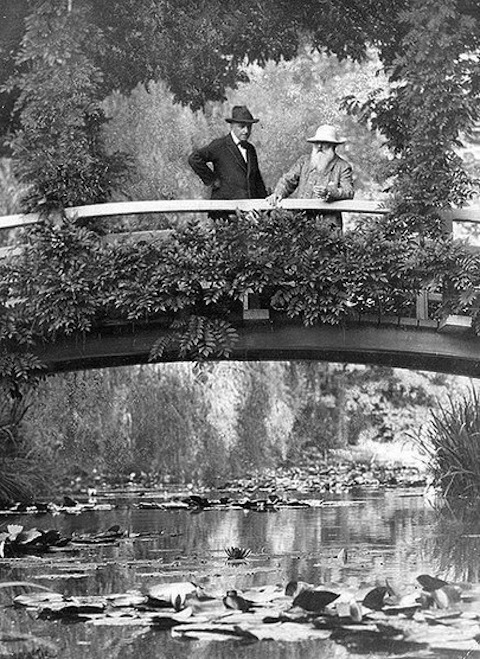
The late-1800’s European fascination with things Japanese sometimes bordered on the collection of Orientalist kitsch. At the height of French impressionism, so called Japonisme was everywhere, but rarely were Far East designs integrated into Western landscapes with such skill and sensitivity as in the work of Claude Monet. Next to his water lilies and haystacks, one of the most recognizable features in the painter’s work is a Japanese-style footbridge, which, like the lilies, was part of his garden at Giverny (see the aged Monet on the bridge in the 1922 New York Times photo above).
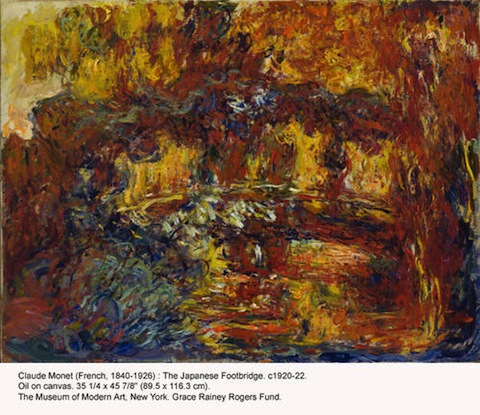
We’re familiar with the bridge as it appears in an 1899 painting Waterlily pond, green harmony, a symmetrical gray structure hovering in a lush, reflective sea of greens, lavenders, and pinks. As Monet’s eyesight further failed him, his paintings became harder to parse, turning to deep, Van Gogh-like swirls of color that are beautiful but sometimes completely abstract. Try and make out the bridge, for instance, in The Japanese Footbridge (above), painted between 1920 and 1922. Monet’s fascination with the bridge is particularly poignant when we consider that, as Australia’s National Gallery of Art says of Waterlily Pond, “not only did Monet create this painting, he made everything depicted in it,” meaning that Monet curated the landscape and supervised the footbridge’s construction.
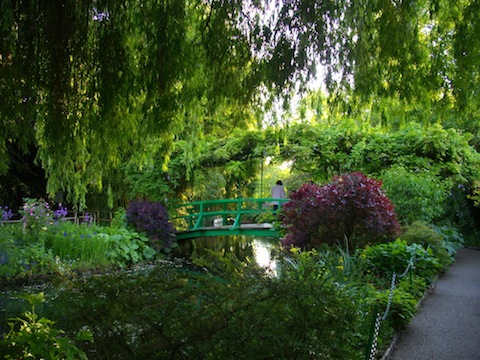
Monet had it built in 1893, deliberately choosing a Japanese style, but employing local craftsman in the construction. And while the bridge had to be rebuilt in 1970, as you can see from French Impressionist travel guide Thomas Dowson’s 2011 photo of Monet’s real Normandy landscape (above), the painter’s gardens seem little changed from their nineteenth century character as a carefully balanced synthesis of East and West aesthetics.
A special thanks goes to @stevesilberman for sharing this with us.
Related Content:
Rare Film: Claude Monet at Work in His Famous Garden at Giverny, 1915
Impressionist Painter Edgar Degas Takes a Stroll in Paris, 1915
Josh Jones is a writer and musician based in Washington, DC. Follow him at @jdmagness
Read More...Cookpad, the Largest Recipe Site in Japan, Launches New Site in English

Cookpad bills itself as having the “Best Japanese recipes from the largest cooking community in Japan.” And that’s not just your usual web site hyperbole. Established back in 1997, Cookpad houses 1.5 million recipes created by a base of 20 million users. And it’s now a publicly-traded company on the Tokyo stock exchange. This week, Cookpad did everyone in the Anglophone world a favor by releasing an English-language version of its site. Right now, you can navigate your way through 1,500 recipes and find dishes like Udon with Thick Egg Soup, Very Delicious Stir-fried Tofu with Shimeji Mushrooms, and Pan-Fried Autumn Salmon with Ginger Sauce. And if you’re patient, you’ll soon find another 30,000 recipes added to the site. It’s worth noting that all recipes are translated by humans, not computers, and the translators are apparently compensated for their efforts.
via The Next Web
Related Content:
How to Make Instant Ramen Compliments of Japanese Animation Director Hayao Miyzaki
Al Jazeera Travel Show Explores World Cities Through Their Street Food
Wim Wenders Visits, Marvels at a Japanese Fake Food Workshop
Read More...The 10-Minute, Never-Released, Experimental Demo of The Beatles’ “Revolution” (1968)
What is a “Revolution”? The question might precede a lengthy disquisition on political philosophy; it might presage a manifesto redefining an old, worn-out term; it might open up a vinyl-era flight of theoretical fancy over the qualitative dimension of Revolutions Per Minute. As an opening gambit to a discussion of The Beatles’ “Revolution” (and “Revolution 9”), perhaps the question ventures on the truth of versions, alternates, “takes,” as much a part of history as toppling regimes and mass movements.
How does all of this heaviness get into pop music? Ask John Lennon. Well, no, ask his music. Ask the history of his music, the alternates, the hidden intentions, false starts, discarded revolutionary movements. Ask, “Revolution Take 20,” the alternate take of “Revolution” that you hear above. “Revolution 20” has a lot to say. It tells us about how a noisy, upbeat shooby-doo-wop blues proclaiming the power of love over violence did not originally do so with such starry-eyed optimism and comforting pop brevity (the kind of thing that sells Nikes, for instance). “Revolution” had other intentions, which we only glimpse in the song’s severed vestigial tail “Revolution 9,” and which we may have had quite enough of, thank you, in the arty weirdness of Yoko Ono’s most experimental work.
You see, “Revolution” and non-Nike-worthy “Revolution 9” once belonged to the same animal, a creature that evolved from Lennon’s (and Ono’s) fascination with musique concrète, and with deconstructing rock music into something unrecognizable. The kind of revolution “Revolution 20” stages isn’t the dichotomous option between peace & love theatrics or reactionary violence—it’s a revolution of form, which is what Lennon seems to be after here, a new way of being that dissolves contradictions in the silly Freudian shtick of Paul McCartney and George Harrison singing “Mama… Dada…” over and over as the classical tropes of rock and roll warp and wobble around them in disintegrating pitch shifts, radio noise, and spoken word non-sequiturs.
At over ten minutes in length, “Revolution Take 20”—which appeared as a mono mix on a 2009 bootleg CD called Revolution: Take… Your Knickers Off (after a piece of Lennon humor at the intro)—is more than an alternate take. It’s an alternate history, one in which Lennon doesn’t just lay in bed for peace; he lays down on the studio floor to record his vocals, and all the while his mind actively disassembles rock and roll. As the recording engineer Brian Gibson remembers the session: “John decided he would feel more comfortable on the floor so I had to rig up a microphone which would be suspended on a boom above his mouth. It struck me as somewhat odd, a little eccentric, but they were always looking for a different sound; something new.”
That Lennon ultimately decided to divide this monster into Revolutions 1 & 9 does not mean that he’d given up on making “something new.” Perhaps it was a marketing decision; maybe he realized that he had a hit on his hands. Less, cynically, perhaps he felt that pop music could not contain the weight of his desire to move beyond, or to dissolve, the seeming false choices on offer.
Related Content:
The Beatles: Unplugged Collects Acoustic Demos of White Album Songs (1968)
Deconstructing The Master Track of The Beatles’ “Sgt. Pepper’s Lonely Hearts Club Band”
Josh Jones is a writer and musician based in Washington, DC. Follow him at @jdmagness
Read More...Jurassic Park Tells You Everything You Need to Know About the Dangers of Global Capitalism
Forget putting a bird on it. Put on a dinosaur on it for a surefire hit in our market-driven economy. Director Stephen Spielberg certainly didn’t skimp on the “terrible lizards” when adapting Michael Crichton’s Jurassic Park for the screen, and things turned out pretty well for him.
Mike Rugnetta, the fast-talking host of PBS’s Idea Channel, theorizes that the 20-year-old film is a great, possibly inadvertent commentary on the dangers of global market capitalism. His merry spoiler-packed video touches on such phenomena as risky investments, the subprime mortgage crisis, and the havoc that can be wreaked by a disgruntled employee. He hales both Richard Attenborough’s park owner character and Director Spielberg as egotistical madmen chasing monstrous profits. His kitchen sink approach inevitably leads to appearances by both Barney and Slovenian philosopher and cultural critic Slavoj Žižek.
Rugnetta is quick (of course) to point out that he could come up with similar hypotheses for such comparatively fresh releases as World War Z (wage slavery), Iron Man (glory be to the world-saving entrepreneur), and Pacific Rim (the global market will unite us all)… but why, when Jurassic Park’s got enduring, market-tested crowd-pleasers?
Related Content:
Henry Rollins: Education is the Cure to “Disaster Capitalism”
Intelligent YouTube Channels
Ayun Halliday finally got around to seeing this movie last spring. Follow her @AyunHalliday
Read More...The “Celebrity Lecture Series” From Michigan State Features Talks by Great Writers of Our Time
 The Celebrity Lecture Series was established at Michigan State University in 1988, and it has “featured some of the most illustrious scholars, critics, novelists, poets, and creative artists of our time.” Now, thanks to a special online archive, you can revisit these lectures presented by the likes of Amy Tan, Arthur Miller, Joyce Carol Oates, Kurt Vonnegut, Jr., Margaret Atwood, Maya Angelou, Norman Mailer, Paul Theroux, Philip Roth, Richard Ford, Susan Sontag, Tom Wolfe, Carlos Fuentes, August Wilson, E.L. Doctorow, Edward Albee, Isabel Allende, Garry Wills, Jane Smiley, John Irving, John Updike and Joseph Heller. Just click on any of the links above and you can stream the audio lectures for free online.
Related Content:
7 Nobel Speeches by 7 Great Writers: Hemingway, Faulkner, and More
The New Yorker’s Fiction Podcast: Where Great Writers Read Stories by Great Writers
Six Postcards From Famous Writers: Hemingway, Kafka, Kerouac & More
Jorge Luis Borges’ 1967–8 Norton Lectures On Poetry (And Everything Else Literary)
Read More...Free: The Metropolitan Museum of Art and the Guggenheim Offer 474 Free Art Books Online

If you like reading about visual art but don’t like spending the considerable sums required to build your own library of vintage exhibition catalogues, feel free to borrow from another collector. Or rather, feel free to borrow from two collectors, both based in New York, both of some repute: The Metropolitan Museum of Art and the Solomon R. Guggenheim Museum. Early last year, we announced that the Guggenheim had made 65 art catalogues [now increased to 99] available for free online, offering “an intellectual and visual introduction to the work of Alexander Calder, Edvard Munch, Francis Bacon, Gustav Klimt & Egon Schiele, and Wassily Kandinsky” as well as ” other texts (e.g., Masterpieces of Modern Art and Abstract Expressionists Imagists) that tackle meta movements and themes.” (That same post includes instructions on how to use the Guggenheim’s archive.)
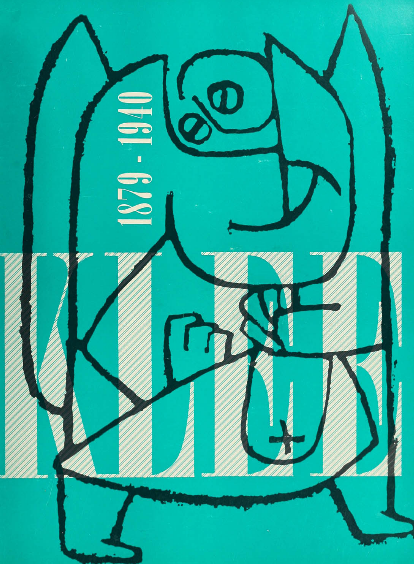
Late last year, we also announced the Metropolitan Museum of Art’s launch of MetPublications, which will “eventually offer access to nearly all books, Bulletins, and Journals” published by the Met since 1870. The collection now features a whopping 375 free art books and catalogues overall. Taken together, these collections examine in detail art from all eras of human history and all parts of the world. At the top of the post, you will see the cover for the Met’s The Art of Illumination. (Who doesn’t love illuminated Medieval manuscripts?) Below appears Sixty Years of Living Architecture: The Work of Frank Lloyd Wright, available from the Guggenheim. Given the presence of these and the other fascinating catalogues we’ve previously highlighted, word of these two museums’ online libraries certainly shouldn’t stay buried in our archives.
Related Content:
MoMA Puts Pollock, Rothko & de Kooning on Your iPad
Google “Art Project” Brings Great Paintings & Museums to You
The History of Western Architecture: From Ancient Greece to Rococo (A Free Online Course)
Colin Marshall hosts and produces Notebook on Cities and Culture and writes essays on literature, film, cities, Asia, and aesthetics. He’s at work on a book about Los Angeles, A Los Angeles Primer. Follow him on Twitter at @colinmarshall.
Read More...Photos of Toni Morrison, Haruki Murakami, J.D. Salinger, and Virginia Woolf As Youngsters
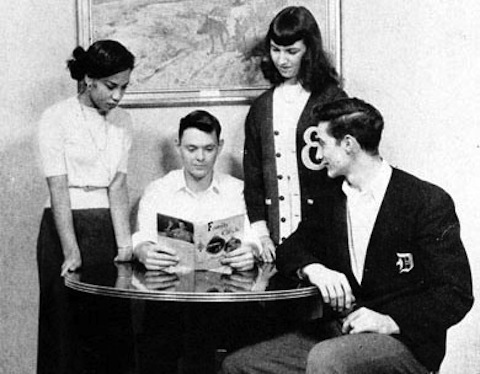
Ah, the Buzzfeed listicle. Gawker’s Tom Scocca recently described the dreaded online publishing phenom as “aggressively designed to ‘go viral’ within a specific microtargeted population and to be worthless to every other reader on the planet.” Maybe something of an exaggeration. Then again, it seems that “17 Things Bears Are Better at Than You” may reach a minor contingent of readers, and “7 Fantastic Needlepoint Fashion Magazine Covers” may indeed have limited appeal. Of course, the listicle precedes the internet, and drives content beyond Buzzfeed. A staple of Cosmo, it’s always been a narrow form, except when it comes to such irresistible clickbait as “before they were famous” lists, such as this selection of awkward photos of TV personalities.

But sometimes even Buzzfeed takes the high road. A recent spread, for instance, showcased 24 photos of famous authors as young, anonymous men and women. Take, for example, the pic at the top of a teenage Toni Morrison (then Chloe Wofford) from 1949. Taken at Ohio’s Lorraine High School, we see senior class treasurer Morrison posed with serious intent, gazing at some sort of magazine with three of her classmates. Buzzfeed pilfered this photo from another literary listicle, Flavorwire’s “20 Famous Authors’ Adorable School Photos.” Not a Morrison fan? No worries. You may be enlightened or amused by the photo above, of a young Haruki Murakami, working in his Tokyo jazz bar, the Peter Cat, before writing his first novel, Hear the Wind Sing, in 1979.
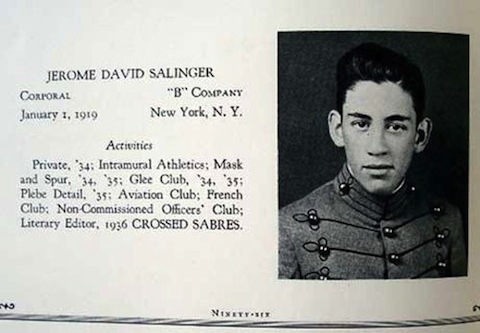
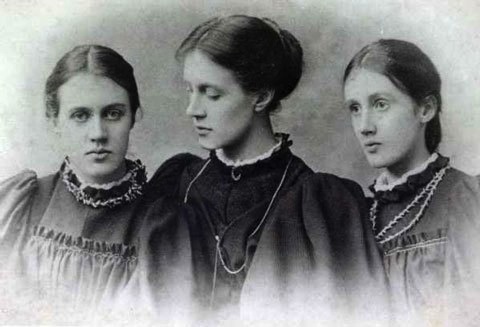
Then we have the famous recluse J.D. Salinger above, from his 1936 yearbook photo from Valley Forge Military Academy. We learn that the future Franny and Zooey author was a corporal who put in time in the glee club, the aviation and French clubs, and served as the literary editor for the yearbook (called Crossed Sabres.) A copy of the yearbook, signed by Salinger, went up for auction last year for $2,400. Also from the Buzzfeed list, below, (and also lifted from Flavorwire), we have the tender portrait of a 14-year-old Virginia Woolf (nee Stephen—on the right), circa 1896, posed with her sisters Stella and Vanessa (left and center).
There are several more photos floating around out there of famous authors as awkward or very intense young men and women. They may not give us the same thrill as seeing the latest hot young thing as an acne-plagued goofball with braces, but they provide us with visual windows on the stages of our favorite writers’ development as real people in real life.
Related Content:
Author Flannery O’Connor Captured on Film at Age 5, with Her Chickens
Writers’ Houses Gives You a Virtual Tour of Famous Authors’ Homes
Photos of Famous Writers (and Rockers) with their Dogs
Josh Jones is a writer and musician based in Washington, DC. Follow him at @jdmagness
Read More...Neil deGrasseTyson Receives Irate Mail from Kids After Pluto Gets Booted from List of Planets
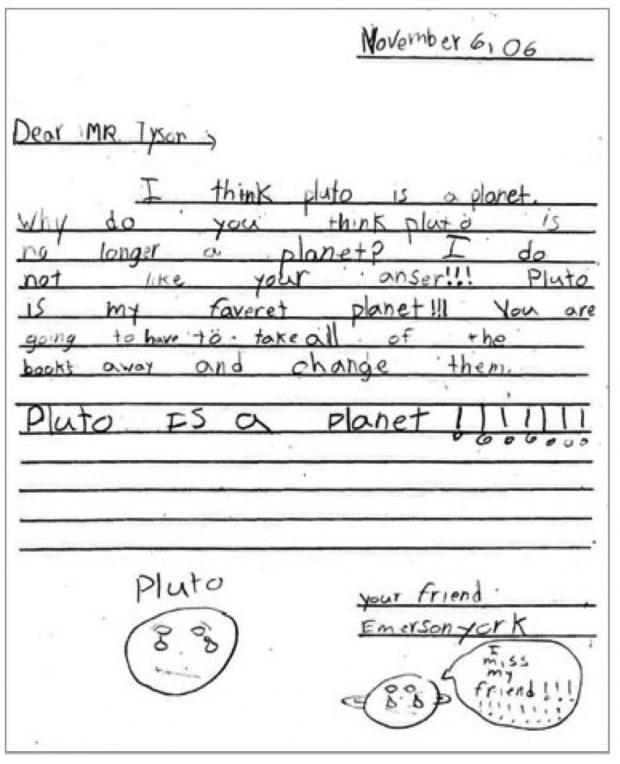 In the late 1990s, Neil deGrasse Tyson and his colleagues redesigned the Hayden Planetarium and, without much comment, they created a model of the solar system that banished Pluto from the list of planets. During the following year, no one said very much. But then The New York Times published an article (January 22, 2001) called “Pluto’s Not a Planet? Only in New York,” and all hell broke loose, particularly in the elementary schools. School kids were incensed, and the letters of complaint rolled in. You can find one such example from “Emerson” above. Five other letters can be found over at Mental Floss.
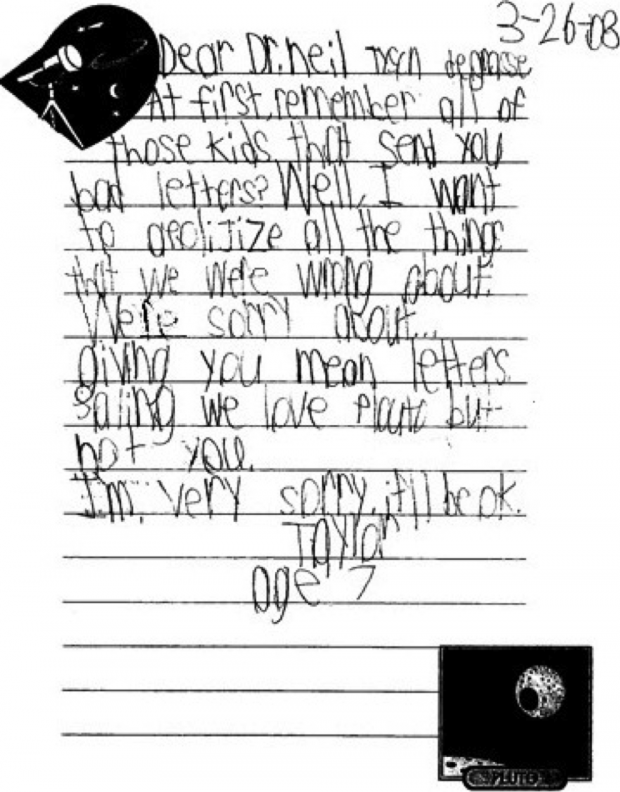
Of course, we all know how this story ends. In 2006, the International Astronomical Union officially exiled Pluto from the “pantheon of planets,” and later Tyson wrote a book recounting his role in the messy affair, The Pluto Files: The Rise and Fall of America’s Favorite Planet.
Related Content:
Neil deGrasse Tyson Delivers the Greatest Science Sermon Ever
Stephen Colbert Talks Science with Astrophysicist Neil deGrasse Tyson
Neil deGrasse Tyson Lists 8 (Free) Books Every Intelligent Person Should Read
Read More...How Climate Change Is Threatening Your Daily Cup of Coffee
Perhaps this will finally get your attention. In Ethiopia, global warming is putting the cultivation of coffee at risk, to the point where the indigenous Ethiopian coffee plant, Coffea arabica, could go extinct within 70 years. That’s no laughing matter, especially if you consider that coffee originated in Ethiopia, and the country remains an epicenter of coffee production today. That’s the depressing … and perhaps motivating … upshot of an otherwise artfully-produced film by The Royal Botanic Gardens (aka Kew Gardens) in England. If you want to dig into the research showing the impact of climate change on coffee, see the report published in November, 2012 called: The Impact of Climate Change on Indigenous Arabica Coffee (Coffea arabica): Predicting Future Trends and Identifying Priorities.
Related Content:
Global Warming: A Free Course from UChicago Explains Climate Change
132 Years of Global Warming Visualized in 26 Dramatically Animated Seconds
The History of Coffee and How It Transformed Our World
This is Coffee!: A 1961 Tribute to Our Favorite Stimulant
Newly added to our list of 750 Free Online Courses:
Introduction to Literature and the Environment — YouTube — iTunes Video — Ken Hiltner, Princeton
How Climate Works — YouTube — iTunes Video — Multiple Profs, Princeton
Read More...
Support Us
We're hoping to rely on loyal readers, rather than erratic ads. Please click the Donate button and support Open Culture. You can use Paypal, Venmo, Patreon, even Crypto! We thank you!

About Us

Open Culture scours the web for the best educational media. We find the free courses and audio books you need, the language lessons & educational videos you want, and plenty of enlightenment in between.
Advertise With Us

FREE UPDATES!
GET OUR DAILY EMAIL
Get the best cultural and educational resources on the web curated for you in a daily email. We never spam. Unsubscribe at any time.
FOLLOW ON SOCIAL MEDIA

Open Culture editor Dan Colman scours the web for the best educational media. He finds the free courses and audio books you need, the language lessons & movies you want, and plenty of enlightenment in between.
Advertise With Us


