Two Beautifully-Crafted Russian Animations of Chekhov’s Classic Children’s Story “Kashtanka”
Long before masters of the short story like Raymond Carver and Flannery O’Connor commanded the respect of creative writing teachers everywhere, Anton Chekhov’s spare, mannered stories set the standard for the form. Known for their subtlety and keen observations of human weakness and social ills, the typical Chekhov story never boils over into melodrama but simmers, slowly pushing tensions close to the surface of routine interactions without letting them break through and explode.
The story animated above, however, is something of an exception to Chekhov’s domestic human dramas. “Kashtanka” is a about a dog, and a good bit of it is told from her perspective. First published in 1884 as “In Bad Times,” the story was allegedly inspired by Chekhov’s love of the circus. Chekhov wrote the story for children, so it’s fitting that it receive this Disney-esque treatment (the opening scene reminded me of Geppetto’s workshop).
Russian poster designer and children’s book illustrator Mikhail Tsekhanovsky made the film in 1952, when cartoons were painstakingly hand-drawn cel by cel. Another Russian animator, Natalia Orlova, takes advantage of 21st century technology in her 2004 rendering of “Kashtanka” below, but she does so in a unique way that integrates hand-painted images; the flickering stop-motion resembles children’s book illustrations come to life. Along with the excellent sound design, her captivating style makes for a very different visualization of the story.
Note: You will need to click CC at the bottom of the video to launch the subtitles.
via Biblioklept
Related Content:
“The Me Bird” by Pablo Neruda: An Animated Interpretation
Three Interpretations of Charles Bukowski’s Melancholy Poem “Nirvana”
Josh Jones is a writer and musician based in Washington, DC. Follow him @jdmagness
Read More...Salvador Dalí Creates a Dream Sequence for Spellbound, Hitchcock’s Psychoanalytic Thriller
Alfred Hitchcock made so many timeless films, but Spellbound, alas, hasn’t held up quite so comfortably. Most of the problem has to do with its theme: psychoanalysis, which enjoyed a trendy moment in the mid-forties and may have attained enough relevance at the time to drive a plot, but now seems a rather weak engine. That era’s therapy craze swept up picture’s producer, old-Hollywood titan David O. Selznick, with such force that he personally asked the director to take it on as a subject. Hitchcock grudgingly agreed, setting the production gears turning on Spellbound. Selznick arranged for his own therapist to both act as the movie’s technical adviser and to cause Hitchcock a number of on-set headaches. So if Spellbound seems faintly un-Hitchcockian, we can chalk it up partly to Selznick’s psychoanalytic zeal, but some of the credit must also go to Salvador Dalí.
Hired to craft a dream sequence, the Spanish surrealist painter and filmmaker reportedly produced over twenty minutes of footage, four and a half minutes of which appear in the clip above. “I can’t make out just what sort of a place it was,” Gregory Peck mutters, reclined on the therapist’s couch, as the shot dissolves into his mind and into Dalí’s imagery. “It seemed to be a gambling house, but there weren’t any walls, just a lot of curtains with eyes painted on them. A man was walking around with a large pair of scissors, cutting all the drapes in half. And then a girl came in with hardly anything on and started walking around the gambling room, kissing everybody.” Surely those days offered no more ideal candidate for the job of realizing such a vision than Dalí. The lightly theremin-ed score comes from Miklós Rózsa, but Hitchcock didn’t like that either. Though the famously controlling auteur may have found his power compromised in its production, Spellbound does end up being a rare thing indeed in the history of cinema: dream sequences compelling enough not to put you to sleep.
Related Content:
Watch 20 Free Hitchcock Movies Online
Alfred Hitchcock Recalls Working with Salvador Dali on Spellbound
A Soft Self-Portrait of Salvador Dali, Narrated by the Great Orson Welles
A Tour Inside Salvador Dalí’s Labyrinthine Spanish Home
Colin Marshall hosts and produces Notebook on Cities and Culture and writes essays on literature, film, cities, Asia, and aesthetics. He’s at work on a book about Los Angeles, A Los Angeles Primer. Follow him on Twitter at @colinmarshall.
Read More...The Surreal Short Films of Louis C.K., 1993–1999
To some fans of his not-exactly-a-sitcom Louie, Louis C.K. simply appeared a few years ago, fully formed and acclaimed by his peers as perhaps the most skilled, dedicated comedic craftsmen working today. But he does have a past, stretching back well beyond his voice role on the animated series Home Movies and his direction of the film Pootie Tang, and he has offered up entertaining fragments of it online. Above you’ll find his earliest known short film, Ice Cream. Begin watching this black-and-white meditation on the vagaries of disaffected twentysomething love in the nineties — one which opens in a convenient store, no less — and you’ll immediately think of Kevin Smith’s Clerks. But C.K. made Ice Cream in 1993, the year before Clerks came out, and it tilts in directions even Smith wouldn’t dare predict, ultimately arriving at a mariachi band-scored finale.
Just above, we have 1998’s Hello There. In four minutes, the film follows a catatonic-looking fellow (played by comedian Ron Lynch) wearing a poorly fitting suit and a cassette recorder around his neck as he makes his way through town. “Excuse me,” his machine says when he presses its play button, “do you have the correct time?” A bystander nervously answers. “Hello there,” his speaker blares to a bum dozing in a cardboard box, “is that a new hat? You are a good guy.”
As the morning continues, we come to understand that this eccentric is not the only one of his kind. Below you can watch that same year’s Brunch, which throws the verbally NSFW comedian Rick Shapiro into a sharply observed mid-morning huddle of pontificating senior citizens. These all come from Louis C.K.s official Youtube channel, and indeed, C.K. presciently made them in a form neatly suited to the Youtube era, just as Louie has proven an ideal artistic, intellectual, and financial fit for the modern cable television landscape.
Louis C.K.‘s short films: Ice Cream (1993), The Letter V (1998), The Legend of Willie Brown (1998), Ugly Revenge, Hijacker (1998), Hello There (1998), Brunch (1998), Persona Ne’ll Aqua (1999),Searching for Nixon
(via Metafilter)
Related Content:
Seinfeld, Louis C.K., Chris Rock, and Ricky Gervais Dissect the Craft of Comedy (NSFW)
How the Great George Carlin Showed Louis CK the Way to Success (NSFW)
David Lynch Teaches Louis C.K. How to Host The David Letterman Show
Colin Marshall hosts and produces Notebook on Cities and Culture and writes essays on literature, film, cities, Asia, and aesthetics. He’s at work on a book about Los Angeles, A Los Angeles Primer. Follow him on Twitter at @colinmarshall.
Read More...Steel-Willed Hand Balancer Jaakko Tenhunen Explains Why Effort Brings the Most Satisfaction
Few of us possess the physical strength and even steelier will to follow in the handprints of professional balancer Jaakko Tenhunen, but most of us have other projects that could benefit from the sort of relentless determination he brings to his work. “Effort, not comfort, is what gives the most tangible sense of satisfaction,” he remarks in the voiceover above, as the camera captures him supporting his entire body weight on a single palm, his face intense but not at all anguished. Reduce this elegant philosophy to the far punchier “just do it,” and you stand to sell a lot of shoes.
As Tenhunen knows firsthand, this sort of effortful pursuit depends on discipline and daily practice. Patience is also key, as success is cumulative, and difficult to measure in the early stages.
The stripped down aesthetic of his performance does not necessarily make what he does look easy, so much as worthwhile. If you are a fledgling hand balancer, you may well find it discouraging, but for those of us striving to see other goals through to completion, Tehunen provides a bracing visual metaphor.
Related Content:
J.K. Rowling Tells Harvard Grads Why Success Begins with Failure
Conformity Isn’t a Recipe for Excellence: Wisdom from George Carlin & Steve Jobs (NSFW)
Meet Frank Catalfumo, the Shoemaker Who Has Been Mending Souls in Brooklyn Since 1945
Ayun Halliday will be at tabling at the Brooklyn Zinefest this Sunday. Immediately thereafter catch her performing the Complete History of her long running zine, the East Village Inky… in song, as part of Brooklyn Brain Frame.
Read More...New Documentary Brings You Inside Africa’s Little-Known Punk Rock Scene
Punk rock has died a thousand deaths in the West. Almost as soon as the mass media picked it up, punk split into several hundred subspecies and spawned other monoliths—post-punk, new wave, “alternative.” Given that history, it’s generally assumed—a couple generations of suburban mallrats aside—that the original movement flashed and failed, overtaken by keyboards and drum machines, corporate greed and narcissism. But that history is incomplete. As a recent Guardian headline proclaims, punk rock is “alive and kicking in a repressive state near you.” The cause célèbre of international punk is, of course, Russia’s Pussy Riot, three of whose members were convicted of “hooliganism” and sent to labor camps. But dissident punk scenes thrive under the radar in many other places hostile to dissent, such as Burma, Indonesia, and China.
And while the contemporary phenomenon of global punk makes for fascinating news stories, a new documentary, Punk in Africa, demonstrates that international punk rock is as old as the Western variety. It just never got the same press. In South Africa, shortly after the 1976 Soweto Uprising, multi-racial punk bands began to form, with names like Gay Marines, National Wake, and Screaming Foetus. Meeting and performing under the pall of Apartheid, these bands defied laws against racial mixing and braved constant harassment by police. As one member of National Wake says in the trailer above, “the vice squad would visit us, sometimes three times in one day.” He calls the racial territory the band had to navigate a “minefield.”
A lot of the Afropunk featured in the film is reminiscent of the meeting of black and white sounds and musicians in England, especially in bands like The Clash, The Beat and The Specials. Later African ska bands like Hog Hoggity Hog and The Rudimentals certainly carry on that tradition. But many of the bands profiled—from South Africa, Zimbabwe, and Mozambique—melded raw punk energy with African polyrhythms and distinctive local sounds and instrumentation. National Wake provides a good example of such hybridization. The live performance above even includes a drum solo—anathema to most Western punk rock.
Punk in Africa promises to add some necessary balance to the slew of punk histories that focus only on Britain and the U.S.. In the interview above, one of the documentary’s directors, Deon Maas, points out that the “punk thing in Africa” started virtually weeks after its U.K. cousin, first in imitation, then as a true movement in its own right. Like the international punk scenes burgeoning around the world today, it’s a movement that deserves to be heard.
Related Content:
Russian Punk Band, Sentenced to Two Years in Prison for Deriding Putin, Releases New Single
Josh Jones is a writer and musician based in Washington, DC. Follow him @jdmagness
Read More...Animations Revive Lost Interviews with David Foster Wallace, Jim Morrison & Dave Brubeck
David Gerlach left a comfortable job working as a TV producer to launch Blank on Blank, a multimedia nonprofit with a simple mission — to curate journalists’ forgotten interviews with cultural icons, and then bring them back to life again, sometimes as animated shorts. You can start enjoying the fruit of Blank on Blank’s labors by watching a series of web animations, recently produced in collaboration with PBS Digital Studios. Above, we’re starting you off with a four-minute animation of David Foster Wallace reflecting on his early tennis days, the perils of perfectionism, and his tendency to be a “grammar nazi” when teaching college students — something we’ve covered here before. The interview originally aired on WNYC’s Leonard Lopate Show in 1996, and you can listen to the conversation in its entirety here.
Next comes some memorable moments with Jim Morrison, the great singer-songwriter, who met with Village Voice writer Howard Smith back in November, 1969. Going into the meeting, Smith sensed that things wouldn’t be easy. He later recalled, “I had a feeling that it was going to be a tough interview. I just kinda had a feeling that … it was going to be tricky, and I said .… if things get really difficult with him, I’m gonna suggest that we arm wrestle.” As you’ll hear, Smith made his great arm-wrestling escape an inevitability when he needled Morrison, suggesting that the singer had put on too much weight. You can see how things played out above, or catch the complete interview here.
Blank on Blank has produced other animated interviews with Bono, Larry King, and surfer Kelly Slater. But we’re going to wind things down with Dave Brubeck recalling how President Eisenhower sent him to Eastern Europe to fight Communism with Jazz. Brubeck related this story at the Litchfield Jazz Festival in 2008.
If you’re looking to rummage through a big archive of lost interviews, I’d encourage you to spend time with the Blank on Blank podcast available on iTunes and rss.
Related Content:
The Nazis’ 10 Control-Freak Rules for Jazz Performers: A Strange List from World War II
Pakistani Musicians Play Amazing Version of Dave Brubeck’s Jazz Classic, “Take Five”
David Foster Wallace’s 1994 Syllabus: How to Teach Serious Literature with Lightweight Books
An Uplifting Musical Surprise for Dave Brubeck in Moscow (1997)
Read More...The Digital Public Library of America Launches Today, Opening Up Knowledge for All

A group of top American libraries and academic institutions launched a new centralized research resource today, the Digital Public Library of America (DPLA), making millions of resources (books, images, audiovisual resources, etc.) available in digital format. First hatched as an idea at Harvard’s Berkman Center for Internet & Society, the DPLA is now realizing its vision of being “an open, distributed network of comprehensive online resources that draws on the nation’s living heritage from libraries, universities, archives, and museums in order to educate, inform, and empower everyone in the current and future generations.”
The Digital Public Library of America rolls out today as a beta site with some kinks to work out. Some links to materials don’t work at the other end. And right now the offering is built around a modest number of online exhibitions that have been digitized by cultural institutions throughout the country, according to Robert Darnton, a driving force behind the DPLA. When you visit the site, a dynamic map and timeline will help you navigate the collections by year, decade or place. It will lead you to exhibitions, for example, about the Great Depression and Roosevelt’s New Deal, Boston’s storied sports temples, and Prohibition in the US. Around this core, the DPLA will grow until it truly serves as the digital public library of America.
You can read more about Robert Darnton’s vision for the Digital Public Library of America in the pages of The New York Review of Books.
via Harvard Press
Kate Rix writes about digital media and education. Visit her website, .
Related Content:
The Alan Lomax Sound Archive Now Online: Features 17,000 Recordings
Albert Einstein Archive Now Online, Bringing 80,000+ Documents to the Web
Royal Society Opens Online Archive; Puts 60,000 Papers Online
Read More...Radiohead’s Thom Yorke Gives Teenage Girls Endearing Advice About Boys (And Much More)
Since time immemorial — or, in any case, since the mid-twentieth century — adolescents have looked to rock stars for life lessons. This works out better with some rock stars than others, of course, and in bygone days kids would have to infer these lessons from song lyrics and the occasional Rolling Stone interview. Now that most of their musical idols maintain active, even garrulous presences on several forms of social media at once, internet-age youngsters in need of counsel have a great deal more material to work with. Certain rock stars have taken this responsibility seriously, as you can see in the video above featuring Radiohead mastermind Thom Yorke and producer/multi-instrumentalist Nigel Godrich (also known as the men behind the supergroup Atoms for Peace). If you find yourself confused by boys, let these two fortysomething Brits clear it right up.
You can find a little more coverage of the video at, yes, Rolling Stone. “Yorke is particularly sage about teenage love woes,” writes the magazine’s Jon Blistein. “ ‘If you have a crush on him,’ Yorke says, ‘if you’re really, really, really, really shy, which is what I was at that age — also, I was at a boys’ school so it was impossible to meet girls anyway — how about just write him a note? Or throw him against the wall some time.’ ” Yorke and Godrich’s seventeen minutes of advice comes as the latest installment in the series “Ask a Grown Man” from Rookie, just the sort of web magazine we wish we could have had back when we were teenage girls — if we were ever teenage girls, that is. We’ve previously featured Ira Glass’ segment, and you can enjoy other moments of sagacity with the likes of comedian-filmmaker Judd Apatow, talk-show host Jimmy Fallon, and actor John Hamm. You certainly wouldn’t find them in the pages of Sassy.
Related Content:
Ira Glass Makes Balloon Animals and Gives NSFW Advice to Teens — At the Same Time!!
A Glimpse of Teenage Life in Ancient Rome
This is Your Brain in Love: Scenes from the Stanford Love Competition
Colin Marshall hosts and produces Notebook on Cities and Culture and writes essays on literature, film, cities, Asia, and aesthetics. He’s at work on a book about Los Angeles, A Los Angeles Primer. Follow him on Twitter at @colinmarshall.
Read More...Flannery O’Connor Reads ‘Some Aspects of the Grotesque in Southern Fiction’ (c. 1960)
Here is a rare recording of Flannery O’Connor reading an early version of her witty and revealing essay, “Some Aspects of the Grotesque in Southern Fiction.”
O’Connor gives an eloquent outline of her vision as both a Southern and a Catholic writer. She defends her work against critics who say it is highly unrealistic. “All novelists are fundamentally seekers and describers of the real,” she says, “but the realism of each novelist will depend on his view of the ultimate reaches of reality.” In the published version of the essay, she writes:
Whenever I’m asked why Southern writers particularly have a penchant for writing about freaks, I say it is because we are still able to recognize one. To be able to recognize a freak, you have to have some conception of the whole man, and in the South the general conception of man is still, in the main, theological. That is a large statement, and it is dangerous to make it, for almost anything you say about Southern belief can be denied in the next breath with equal propriety. But approaching the subject from the standpoint of the writer, I think it is safe to say that while the South is hardly Christ-centered, it is most certainly Christ-haunted. The Southerner, who isn’t convinced of it, is very much afraid that he may have been formed in the image and likeness of God. Ghosts can be very fierce and instructive. They cast strange shadows, particularly in our literature. In any case, it is when the freak can be sensed as a figure for our essential displacement that he attains some depth in literature.
This passage can be heard, in different form, beginning at the 3:40 mark in the recording. Like many of O’Connors essays, “Some Aspects of the Grotesque in Southern Fiction” was written not for publication, but for public reading. She was known to rewrite and rearrange these pieces between readings. In this recording, O’Connor is using the piece as a preparatory statement for a reading of her classic story, “A Good Man is Hard to Find.”
We don’t know the date of the recording, but the text differs significantly from the posthumously published version, so perhaps it is an early version. The earliest extant recording of the essay that we know of was made on October 28, 1960 for the Dorothy Lamar Blount Lecture Series at Wesleyan College in Macon, Georgia. There is also known to be a recording of O’Connor reading the piece on November 16, 1962 at East Texas State University.
To compare the recorded version to the one eventually published in Mystery and Manners: Occasional Prose, you can click here to open the essay in a new window.
Related Content:
Rare 1959 Audio: Flannery O’Connor Reads ‘A Good Man is Hard to Find’
Flannery O’Connor’s “Everything That Rises Must Converge” Read by Estelle Parsons
Read More...Enrich Yourself with Free Courses, Audio Books, eBooks, Movies, Textbooks & More
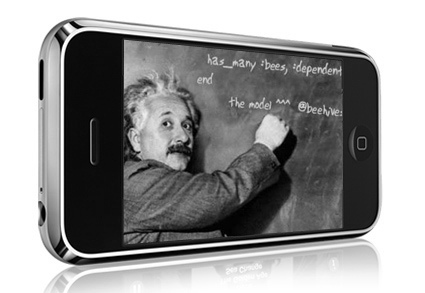
How’s that New Year’s resolution going? You know, the one where you promised to make better use of your free time and learn new things? If you’re off track, fear not. It’s only April. It’s not too late to make good on your promise. And we can help. Below, we’ll tell you how to fill your Kindle, iPad, computer, smartphone, computer, etc. with free intelligent media — great ebooks and audio books, movies, courses, and the rest:
Free eBooks: You have always wanted to read the great works. And now is your chance. When you dive into our Free eBooks collection you will find 400 great works by some classic writers (Dickens, Dostoevsky, Shakespeare and Tolstoy) and contemporary writers (F. Scott Fitzgerald, Philip K. Dick, Isaac Asimov, and Kurt Vonnegut). The collection also gives you access to the 51-volume Harvard Classics.
If you’re an iPad/iPhone user, the download process is super easy. Just click the “iPad/iPhone” links and you’re good to go. Kindle and Nook users will generally want to click the “Kindle + Other Formats links” to download ebook files, but we’d suggest watching these instructional videos (Kindle –Nook) beforehand.
Free Audio Books: What better way to spend your free time than listening to some of the greatest books ever written? This page contains a vast number of free audio books, including works by Arthur Conan Doyle, James Joyce, Jane Austen, Edgar Allan Poe, George Orwell and more recent writers — Italo Calvino, Vladimir Nabokov, Raymond Carver, etc. You can download these classic books straight to your gagdets, then listen as you go.
[Note: If you’re looking for a contemporary book, you can download one free audio book from Audible.com. Find details on Audible’s no-strings-attached deal here.]
Free Online Courses: This list brings together over 700 free online courses from leading universities, including Stanford, Yale, MIT, UC Berkeley, Oxford and beyond. These full-fledged courses range across all disciplines – history, physics, philosophy, psychology and beyond. Most all of these courses are available in audio, and roughly 75% are available in video. You can’t receive credits or certificates for these courses (click here for courses that do offer certificates). But the amount of personal enrichment you will derive is immeasurable.
Free Movies: With a click of a mouse, or a tap of your touch screen, you will have access to 525 great movies. The collection hosts many classics, westerns, indies, documentaries, silent films and film noir favorites. It features work by some of our great directors (Alfred Hitchcock, Orson Welles, Andrei Tarkovsky, Stanley Kubrick, Jean-Luc Godard and David Lynch) and performances by cinema legends: John Wayne, Jack Nicholson, Audrey Hepburn, Charlie Chaplin, and beyond. On this one page, you will find thousands of hours of cinema bliss.
Free Language Lessons: Perhaps learning a new language is one of your resolutions. Well, here is a great way to do it. Take your pick of 40 languages — Spanish, French, Italian, Mandarin, English, Russian, Dutch, even Finnish, Yiddish and Esperanto. These lessons are all free and ready to download.
Free Textbooks: And one last item for the lifelong learners among you. We have scoured the web and pulled together a list of 150 Free Textbooks. It’s a great resource particularly if you’re looking to learn math, computer science or physics on your own. There might be a diamond in the rough here for you.
Read More...Support Us
We're hoping to rely on loyal readers, rather than erratic ads. Please click the Donate button and support Open Culture. You can use Paypal, Venmo, Patreon, even Crypto! We thank you!

About Us

Open Culture scours the web for the best educational media. We find the free courses and audio books you need, the language lessons & educational videos you want, and plenty of enlightenment in between.
Advertise With Us

FREE UPDATES!
GET OUR DAILY EMAIL
Get the best cultural and educational resources on the web curated for you in a daily email. We never spam. Unsubscribe at any time.
FOLLOW ON SOCIAL MEDIA

Open Culture editor Dan Colman scours the web for the best educational media. He finds the free courses and audio books you need, the language lessons & movies you want, and plenty of enlightenment in between.
Advertise With Us

