Leonard Bernstein Demystifies the Rock Revolution for Curious (if Square) Grown-Ups in 1967
Many of today’s thirteen-year-olds surely have the Beatles on their iPods (or their iPhones or Androids, or whatever now ranks as the cutting-edge adolescent’s listening device of choice). Yet they would have been born in 2000, forty years after the dissolution of the Beatles themselves. Their parents would probably have been born in the sixties, already the height of the band’s creativity. The startling implication: these kids rock out to some of the very same songs their grandparents may well have loved. As P.J. O’Rourke once wrote upon spotting an aged hippie with a walker and a hearing aid at an Iraq War protest, sic transit generation gap. But back in 1967, when that gap yawned so chasmically wide as to render any communication across it seemingly impossible, the young Baby Boomers and their own Great Depression, Second World War-forged parents used the musical landscape to draw their battle lines. Who could broker a peace? Enter composer, pianist, and New York Philharmonic director Leonard Bernstein. Born in 1918 and hailed as one of the most accomplished and astute musical minds in American history, he could not only appreciate the techniques and innovations of the youth-driven pop-rock explosion of the sixties, he could get the ear of his middle-aged peers and explain to them just what they were missing.
The television broadcast Inside Pop: The Rock Revolution gave Bernstein a mass-communication platform on which perform this analysis, asking aloud the questions of (a) why this music so infuriates Americans over a certain age and (b) why he himself likes it so much. Decked out in a square-friendly suit and tie and appearing on the even square-friendlier CBS network, Bernstein plays clips of songs by the Beatles, Bob Dylan, the Rolling Stones, the Byrds, and the Association, breaking down the genuine musicological merits of each: their vocal expressions, their unexpected key changes, their countless sonic layers, their stripped-down melodic sense, and their lyrics’ adeptness of implication (“one of our teenager’s strongest weapons”). Bernstein also calls upon “Society’s Child” singer-songwriter Janis Ian and Beach Boys mastermind Brian Wilson to perform live. Quite a few crew-cut, cardigan-clad, martini-sipping adults must have come away from Inside Pop with a new, if grudging, appreciation for the craft of these long-haired youngsters. But now, to address the concerns of the 21st century’s bewildered grown-ups, who will go on television and explain dubstep?
If you would like to support the mission of Open Culture, consider making a donation to our site. It’s hard to rely 100% on ads, and your contributions will help us continue providing the best free cultural and educational materials to learners everywhere. You can contribute through PayPal, Patreon, and Venmo (@openculture). Thanks!
Related content:
Leonard Bernstein’s Masterful Lectures on Music (11+ Hours of Video Recorded in 1973)
Leonard Bernstein’s First “Young People’s Concert” at Carnegie Hall Asks, “What Does Music Mean?”
Colin Marshall hosts and produces Notebook on Cities and Culture and writes essays on literature, film, cities, Asia, and aesthetics. He’s at work on a book about Los Angeles, A Los Angeles Primer. Follow him on Twitter at @colinmarshall.
Read More...Enter Jeff Slatnick’s Wonderful World of New-Fangled and Resurrected Instruments
Jeff Slatnick has been the “guy in the store” over at Music Inn World Instruments for over 40 years, a landmark music store in the West Village of NYC. When you step into the Music Inn, you’re stepping into “a museum, rich with music history from around the world.” You’ll encounter instruments from far-flung countries, instruments that died out centuries ago, and new-fangled instruments designed for the hustle and bustle of today’s New York City. The short profile film above comes from NYorkers, a series of shorts dedicated to featuring “New Yorkers that you don’t read about in headlines…”
via The Atlantic
Related Content:
The Joy of Making Artistic Homemade Guitars
Read More...New Heat Map Reveals the Creation of Our Infant Universe

This map shows the oldest light in our universe, as detected by the Planck mission. Click on the map for a larger image.
By now the Big Bang theory is widely accepted scientifically. The idea is that the universe began to expand rapidly about 14 billion years ago from a dense, hot state and continues to expand to this day.
One of the most telling fingerprints left behind by the Big Bang is cosmic microwave background radiation. This thermal radiation was thought to be left over from the Big Bang itself. It fills the universe almost completely.
A new map of cosmic radiation questions some of the core concepts of the Big Bang. What if, this precise heat map suggests, the Universe experienced a long, pre-Bang phase? What if the Big Bang wasn’t the first burp of creation after all?
The European Space Agency’s Planck spacecraft measures between infra-red and radio waves, making it possible to see back in time to the first light ever produced.
Cosmologists released the new images of the early universe this week. What surprises them is that Planck detected stronger light signals on one half of the sky than the other and picked up a series of anomalies or “cold spots.” While this doesn’t challenge the Big Bang theory as a whole, it does heighten the mystery around the universe’s birth and development.
The data is still coming in. Like the Human Genome Project, Planck stands to generate double the amount of data it has produced so far.

This full-sky map from the Planck mission shows matter between Earth and the edge of the observable universe. Regions with more mass show up as lighter areas while regions with less mass are darker. The grayed-out areas are where light from our own galaxy was too bright, blocking Planck’s ability to map the more distant matter. Click the map for a larger image.
Some other surprises from the Planck spacecraft data:
• The universe is about 100 million years older and appears to be expanding much slower than previously thought
• There is less dark energy and more matter in the universe than previous research showed.
Related Content:
Leonard Nimoy Narrates Short Film About NASA’s Dawn: A Voyage to the Origins of the Solar System
Carl Sagan, Stephen Hawking & Arthur C. Clarke Discuss God, the Universe, and Everything Else
Google Presents an Interactive Visualization of 100,000 Stars
Kate Rix writes about digital media and education. Contact her and learn more about her work at .
Read More...The Grateful Dead Rock the National Anthem at Candlestick Park: Opening Day, 1993
The 2013 baseball season starts next week, and it’s a time when hope springs eternal — unless you root for the Cubs, the injury-laden Yankees, or the Pirates, Indians, or various other small market teams. But let’s not get sidetracked by all of that. Today, we’re heading into the past, 20 years deep, and we’re thinking about Baseball, Apple Pie and the Grateful Dead. You heard me right, the Grateful Dead. On April 12, 1993, Jerry Garcia, Bob Weir, and Vince Welnick (then a keyboardist with the band) did the honors on opening day at Candlestick Park, singing the national anthem before the San Francisco Giants — Florida Marlins game. If you thought the Dead could never carry a tune, you’re in for a little surprise.
A few key things to remember about this 1993 moment. 1) It was the first season of baseball for the new Marlins expansion team. 2) Barry Bonds was still skinny and lean and homered in his first at bat. And 3) it was the only time that Jerry sang the anthem at a ball game. Bob Weir and Phil Lesh made a return visit last fall.
Related Content:
8,976 Free Grateful Dead Concert Recordings in the Internet Archive
NASA & Grateful Dead Drummer Mickey Hart Record Cosmic Sounds of the Universe on New Album
Bob Dylan and The Grateful Dead Rehearse Together in Summer 1987. Listen to 74 Tracks.
A Year of Grateful Dead Tunes Up in a Mashup
Read More...Clever Animation Brings Figure Drawings to Life
The creative team of Tom Wrigglesworth & Matt Robinson went to an art class at The Book Club in London, and there created an animation that breathes life into a series of figure drawings. Every easel in the class captured a nude model from a different angle. The film then gathered them all together, producing one wonderfully animated composite figure. Pretty neat stuff. If you’re in London, you can check out the next Life Drawing class on April 6.
via Laughing Squid
Related Content:
James Joyce’s Drawing of Leopold Bloom: The Story Behind the Sketch
Wassily Kandinsky Caught in the Act of Creation, 1926
Famous Literary Characters Visualized with Police Composite Sketch Software
Oxford’s “The Elements of Drawing” in our Collection of 700 Free Online Courses
Read More...Rare Audio: Samuel Beckett Reads From His Novel Watt
Samuel Beckett was notoriously shy around recording devices. He would spend hours in a studio working with actors, but when it came to recording a piece in his own voice he was elusive. Only a handful of recordings are known to exist. So the audio above of Beckett reading a pair of his poems is extremely rare.
The recordings were made in 1965 by Lawrence Harvey, professor of comparative literature at Dartmouth College, who traveled to Paris to meet with Beckett a number of times from 1961 to 1965 while researching his 1970 book Samuel Beckett, Poet and Critic. At one point during their discussions, Beckett recited several passages from his third but second-published novel, Watt. The book was written in English in the 1940s, mostly while Beckett was hiding from the Nazis in southern France. It’s an experimental novel (Beckett called it an “exercise”) about a seeker named Watt who journeys to the house of the enigmatic Mr. Knott and works for a time as his servant. “Watt” and “Knott” are often interpreted as stand-ins for the question “what?” and unanswerable “not,” or “naught.”
The two poems recited by Beckett are from his 37 intriguing Addenda at the end of Watt. Harvey also recorded Beckett reading a prose passage from the book. The full four-minute tape is now in the collection of the Baker Library at Dartmouth. The short clip above is from the 1993 film Waiting For Beckett. The image quality is poor and there are distracting Dutch subtitles, so perhaps the best way to enjoy the reading is to scroll down and look instead at Beckett’s words while you listen to his voice. He begins with the 4th Addenda, later published as “Tailpiece” in Collected Poems, 1930–1978:
who may tell the tale
of the old man?
weigh absence in a scale?
mete want with a span?
the sum assess
of the world’s woes?
nothingness
in words enclose?
The images in the poem are, according to scholars S.E. Gontarski and Chris Ackerley in their essay “Samuel Beckett’s Watt,” a reworking by Beckett of the biblical passage Isaiah 40:12, which says, “Who hath measured the waters in the hollow of his hand, and meted out heaven with a span, and comprehended the dust of the earth in a measure, and weighed the mountains in scales, and the hills in a balance?” The next poem is the 23rd Addenda. It tells of Watt’s long and fruitless journey through barren lands:
Watt will not
abate one jot
but of what
of the coming to
of the being at
of the going from
Knott’s habitat
of the long way
of the short stay
of the going back home
the way he had come
of the empty heart
of the empty hands
of the dim mind wayfaring
through barren lands
of a flame with dark winds
hedged about
going out
gone out
of the empty heart
of the empty hands
of the dark mind stumbling
through barren lands
that is of what
Watt will not
abate one jot
If Beckett seems to mispronounce certain consonant sounds, it may have something to do with a surgery he had in November of 1964 to remove a tumor in his jaw. The surgery temporarily left Beckett with a hole in the roof of his mouth. According to a 1998 article by Peter Swaab in The Times Literary Supplement, the recordings were probably made in March of 1965, when Beckett was awaiting a follow-up surgery to fix his palate. Still, many listeners have been struck by the beauty of the recordings. As Swaab writes:
Beckett’s voice is unexpectedly soft, and seems more suited to the serenely commiserative vein of his writing than the splenetic and cynical one. He reads the poems a lot more slowly than the prose–with a pronounced chanting mellifluousness.… The overall effect of these rare and fascinating recordings is of a delivery like that which Beckett recommended to the actor David Warrilow for Ohio Impromptu, “calm, steady, designed to soothe”–or (to bring in two of the central words in Watt) a “murmur” meant to “assuage.” The tape evidently records a sort of rehearsal, and the perfectionist Beckett would surely not have been satisfied with it, but it is good to know that his voice has not altogether disappeared.
Special thanks to Dr. Mark Nixon, reader in Modern Literature at the University of Reading and director of the Beckett International Foundation, for confirming the authenticity of the recording and pointing us on the way to more information.
Related content:
Samuel Beckett Directs His Absurdist Play Waiting for Godot (1985)
Find Works by Beckett in our Free Audio Books and Free eBooks collections
Read More...Stanley Kubrick’s Jazz Photography and The Film He Almost Made About Jazz Under Nazi Rule
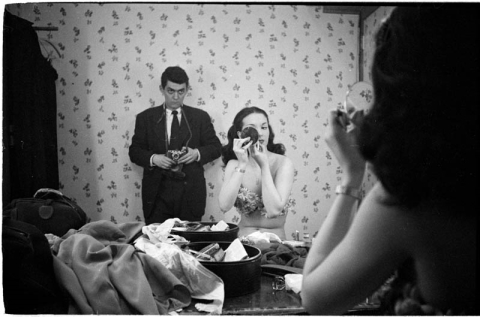
Stanley Kubrick (looking like a creepy Rowan Atkinson above) came of age as a chess-hustling photographer in the jazz-saturated New York City of the 1940s. He began taking pictures at the age of thirteen, when his father bought him a Graflex camera. During his teenage years, Kubrick flirted with a career as a jazz drummer but abandoned the pursuit, instead joining Look Magazine as its youngest staff photographer right out of high school in 1945. His regard for jazz music and culture did not abate, however, as you can see from photographs like Jazz Nights below.

Kubrick worked for Look until 1950 (when he left to begin making films); he captured a wide variety of New York scenes, but often returned to jazz clubs and showgirls, two favorite subjects. I’ve often wondered why Kubrick’s hometown plays so small a role in his films. Unlike also NYC-bred Martin Scorsese, Kubrick seemed eager to get as far away as he could from the city of his youth, but the filmmaker’s love of forties-era jazz never left him. According to longtime assistant, Tony Frewin, “Stanley was a great swing-era jazz fan,” particularly of Benny Goodman.
“He had some reservations about modern jazz. I think if he had to disappear to a desert island, it’d be a lot of swing records he’d take, the music of his childhood: Count Basie, Duke Ellington, Harry James.”
Frewin is quoted in this Atlantic piece about a film Kubrick almost made but didn’t: an exploration of jazz in Europe under the Third Reich. The project began when Kubrick encountered a book in 1985, Swing Under the Nazis, written by another jazz enthusiast, Mike Zwerin, who left music for journalism and spent years collecting stories of jazz preservationists in Germany and formerly occupied Europe. One of those stories—of Nazi officer Dietrich Schulz-Koehn—struck Kubrick as Strangelove-ian and noir-ish. Schulz-Koehn published an illegal underground newsletter reporting back from various jazz scenes in Europe under the pen name, “Dr. Jazz,” the title Kubrick chose for the film project. As Frewin claims:
“Stanley thought there was a kind of noir side to this material…. Perhaps an approach like Dr. Mabuse would have suited the story. Stanley said, ‘If only he were alive, we could have found a role for Peter Lorre.’ ”
Zwerin’s book—and presumably Kubrick’s ideas for a fictionalized take—traced clandestine connections between Nazi Germany, Paris, and the United States, between black and Jewish musicians and Nazi music-lovers. We’ll have to imagine the odd angles and warped perspectives Kubrick would have found in those stories; his fascination with Nazis led him to drop Dr. Jazz for a different project, Aryan Papers, another unmade film with its own intriguing backstory.
Related Content:
Napoleon: The Greatest Movie Stanley Kubrick Never Made
Stanley Kubrick’s Very First Films: Three Short Documentaries
Rare 1960s Audio: Stanley Kubrick’s Big Interview with The New Yorker
Josh Jones is a writer, editor, and musician based in Washington, DC. Follow him @jdmagness
Read More...A Crash Course on Creativity and Other Stanford MOOCs to Launch in April: Enroll Today
Tina Seelig serves as the Executive Director of the Stanford Technology Ventures Program, a center that teaches students entrepreneurial skills needed to solve major world problems. She is also the author of the 2012 book, inGenius: A Crash Course on Creativity, that operates on the assumption that we’re not born being creative and knowing how to solve difficult problems. It’s something that we can cultivate and learn (as John Cleese has also told us before). If you’re intrigued by this idea, and if you want to rev up your own “Innovation Engine,” you can take Seelig’s new course, also called A Crash Course on Creativity, starting on April 22. It’s one of five Stanford MOOCs (Massive Open Online Courses) that will launch in April on the Venture Lab platform. Other courses now open for enrollment include:
- Graph Partitioning and Expanders — April 15
- Finance — April 22
- Technology Entrepreneurship — April 29
- Mobile Health without Borders — April 29
- Hippocrates Challenge — May TBD
Most Venture Lab courses grant a “Statement of Accomplishment” signed by instructors to any student who successfully completes a course.
Related Content:
300 Free MOOCs from Great Universities (Many Offering Certificates)
John Cleese, Monty Python Icon, on How to Be Creative
Malcolm McLaren: The Quest for Authentic Creativity
Mihaly Czikszentmihalyi on Creativity, Flow and the Source of Happiness
Read More...The Best of Quentin Tarantino: Celebrating the Director’s 50th Birthday with our Favorite Videos
We recently featured a Vanity Fair article on the making of Quentin Tarantino’s Pulp Fiction, marking the only semi-believable fact that its making happened 20 years ago. But can you accept that the making of Tarantino himself happened 50 years ago? We think of the motormouthed, grammatically unconcerned, pop-cultural blender of a filmmaker as an eternal genius adolescent, consummately skilled and passionate but never well served by the rigid structures of traditional education and craft. His recent releases like Inglourious Basterds and Django Unchained don’t even hint at a cooling of the fire within. As the man who (for better or for worse) represents the past two decades of creativity in American cinema crosses the middle-age rubicon, seemingly untroubled, we ask this: how does Quentin Tarantino do it? To help you find the answer yourself, we’ve rounded up all of our choicest pieces of Tarantino-related material.
“Everybody, when they talk about you — you get this sense of a kid, early on, falling in love with movies,” says Charlie Rose to Tarantino in the 1994 interview up top. That love and then some comes through in the conversation, making it one of the most compelling episodes in the history of Rose’s program. By that point, Pulp Fiction, Tarantino’s second film, had already hit the zeitgeist hard, but watch him giving Jon Stewart a preview of the picture, and you can tell he’d already sensed its coming impact. You can read many more details about exactly how it came together in Vanity Fair’s oral history of the production, and might consider supplementing it with Tarantino’s (and Sam Raimi’s) advice on filmmaking. And as Tarantino himself admits, he fuels his projects with deep and direct inspiration from his favorite movies, such as the twenty he names that have come out since his own career began. More recently, he reflected in depth on his life and work, prompted by Howard Stern, in a 75-minute radio interview.
As a born storyteller, Tarantino knows that every journey, no matter how ultimately victorious, begins somewhere. Preferably, it begins somewhere humble, which brings us to My Best Friend’s Birthday (below), the very first movie Tarantino attempted to make back in 1987, five years before his “real” feature debut Reservoir Dogs. In it, the filmmaker plays a hapless young rockabilly desperately looking for a way to enliven his buddy’s birthday. Because a fire claimed all but 36 minutes of the picture, we’ll never see whether he succeeds. But Tarantino himself, an aggressive collector of film prints who owns both a reputedly astonishing home theater and Los Angeles’ respected revival house the New Beverly Cinema, should have no trouble living it up for the big 5–0. He’s no doubt planned an ambitious birthday screening: I’m thinking a quintuple-bill, all genre.
Colin Marshall hosts and produces Notebook on Cities and Culture and writes essays on literature, film, cities, Asia, and aesthetics. He’s at work on a book about Los Angeles, A Los Angeles Primer. Follow him on Twitter at @colinmarshall.
Read More...Listen to Supreme Court Arguments on Prop 8 and DOMA Online
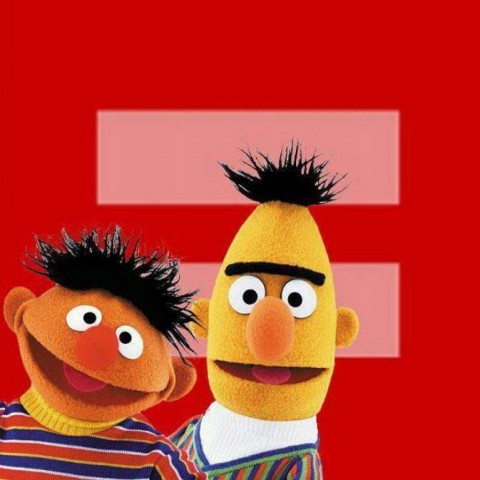 This week, the Supreme Court is hearing arguments about gay rights in America. And, no matter how the court decides, these cases will enter the history books. Will the court lead the nation in making equality available for all, as it did during the civil rights era? Or will the nation be forced to lead the court into modernity during the years ahead? That we will soon find out.
Usually the court delays the release of audio recordings of oral arguments. But, acknowledging the importance of these particular cases, SCOTUS is making this week’s arguments immediately available. You can listen to the debates over Prop. 8 here or below. DOMA arguments will appear here. And it’s also now below.
Prop 8
DOMA
“.
Read More...Support Us
We're hoping to rely on loyal readers, rather than erratic ads. Please click the Donate button and support Open Culture. You can use Paypal, Venmo, Patreon, even Crypto! We thank you!

About Us

Open Culture scours the web for the best educational media. We find the free courses and audio books you need, the language lessons & educational videos you want, and plenty of enlightenment in between.
Advertise With Us

FREE UPDATES!
GET OUR DAILY EMAIL
Get the best cultural and educational resources on the web curated for you in a daily email. We never spam. Unsubscribe at any time.
FOLLOW ON SOCIAL MEDIA

Open Culture editor Dan Colman scours the web for the best educational media. He finds the free courses and audio books you need, the language lessons & movies you want, and plenty of enlightenment in between.
Advertise With Us

