A Bird Ballet in Southern France
Look at what Neels Castillon unexpectedly captured on film while doing some shooting at a Marseille airport. Birds doing a pretty incredible ballet in the sky. If you enjoy watching murmurations, you’ll want to watch this other footage shot in Rome and especially this breathtaking (no hyperbole here) clip from Ireland. It’s all quite stunning.
Follow us on Facebook, Twitter and Google Plus and share intelligent media with your friends! They’ll thank you for it.
Read More...Read Jane Austen’s Fiction Manuscripts Free Online
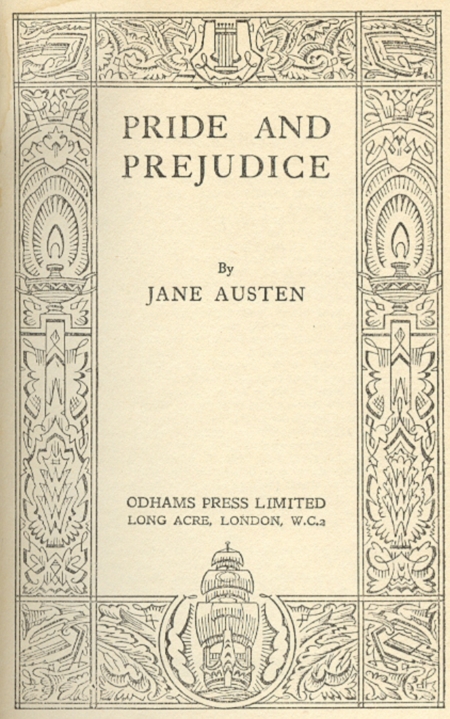
“Currently, it seems, Jane Austen is hotter than Quentin Tarantino.” Martin Amis wrote this in the New Yorker back in 1996, when Tarantino had cultural heat to spare. Even today, as the filmmaker rides high on another one of his periodic waves of pop-cultural exuberance and controversy-courting violence, Austen may still win the popularity contest. Her much-read, often-adapted second novel Pride and Prejudice has, in fact, just passed its 200th anniversary of publication, and its reputation as a reliably sharp and engaging comedy seems stronger than ever.
Especially striking for a novel of its age, this reputation appears to have also grown wider than ever. Though some have always dismissed her — and will always dismiss her — as a writer of mere romantic fiction meant solely for women, admiration for Austen knows no demographic boundaries. Just look at her high-profile living male enthusiasts, a group that ranges from Amis to venture capitalist and essayist Paul Graham, who names Austen as one of his heroes. “In her novels I can’t see the gears at work,” Graham writes. “Though I’d really like to know how she does what she does, I can’t figure it out, because she’s so good that her stories don’t seem made up.”
“When I was introduced to the novel, at the age of fourteen,” Amis writes of Pride and Prejudice, “I read twenty pages and then besieged my stepmother’s study until she told me what I needed to know. I needed to know that Darcy married Elizabeth. (I needed to know that Bingley married Jane.) I needed this information as badly as I had ever needed anything. Pride and Prejudice suckers you. Amazingly — and, I believe, uniquely — it goes on suckering you.” And if that 200-year-old novel fails to sucker you, perhaps its 202-year-old predecessor Sense and Sensibility or its 199-year-old successor Mansfield Park will. You can browse Austen’s hand-written manuscripts pertaining to these and other of her novels in Jane Austen’s Fiction Manuscripts, an online joint project from the University of Oxford and King’s College London. Austen’s fanbase, perhaps because of its broadness, seems to contain relatively few obsessive exegetes (compared to, say, acolytes of Thomas Pynchon), but you can only read her six novels so many times before feeling a need, if a vain one, to glimpse those “gears at work.” And if this contact with Austen’s creative spirit moves you to write your own adaptation of Pride and Prejudice, why not think outside the box and check on Tarantino’s availability to direct?
Copies of Pride and Prejudice can be found in our collection of Free Audio Books and Free eBooks.
You can also download free audio versions of Jane Austen novels if you take part in the free trial programs offered by Audible.com and FreeAudioBooks.com.
Related content:
Dominic West (aka Jimmy McNulty) Reads Jane Austen
Nietzsche, Melville, Jane Austen & More: The Latest Audio Book Classics Released by Librivox
Colin Marshall hosts and produces Notebook on Cities and Culture and writes essays on literature, film, cities, Asia, and aesthetics. He’s at work on a book about Los Angeles, A Los Angeles Primer. Follow him on Twitter at @colinmarshall.
Read More...Get Ready for MIT’s “Introduction to Biology: The Secret of Life” on edX
edX announced today what looks like a promising new open course — Introduction to Biology: The Secret of Life. Hosted by professor Eric Lander, one of the leaders of the Human Genome Project, this course will give students a grounding in “topics taught in the MIT introductory biology courses and many biology courses across the world.” The course will cover everything from the basics of DNA to the intricacies of genomics. And it won’t run you any money. But it will require some time — about 6–8 hours per week, across 12 weeks (March 5 — May 28). Plus here’s a nice perk: any student who earns a passing grade will receive “a certificate of mastery,” also free of charge. You can enroll in the course right here.
We have added Introduction to Biology: The Secret of Life to our ever-growing list of MOOCs/Free Certificate Courses, along with another primo edx course, a MOOC version of Michael Sandel’s Justice: What’s the Right Thing to Do?. Be sure to check it out.
Read More...W.H. Auden Recites His 1937 Poem, ‘As I Walked Out One Evening’
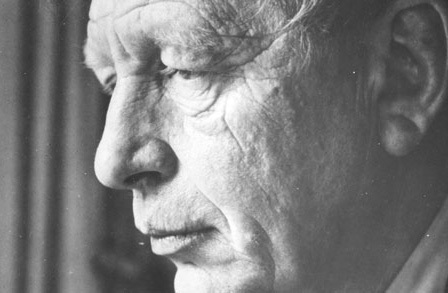
Today we bring you one of the best-loved poems of W.H. Auden, “As I Walked Out One Evening,” read (below) by the poet himself. Auden wrote the poem in 1937 and first published it in his 1940 volume, Another Time. The poem is a variant of the ballad form, made up of 15 rhymed quatrains. It’s a meditation on love and the remorselessness of time, told in three voices: the narrator, a rapturous lover, and the reproachful clocks that speak back to the lover.
‘The years shall run like rabbits,
For in my arms I hold
The Flower of the Ages,
And the first love of the world.’
But all the clocks in the city
Began to whirr and chime:
‘O let not Time deceive you,
You cannot conquer Time
Auden made a number of audio recordings over the years, and we were unable to track down the time and place of this one. It may be a 1953 recording originally released by Caedmon Records. “As I Walked Out One Evening” is included in the Random House audio collection, Voice of the Poet: W.H. Auden.
Related Content:
500 Free Audio Books: Download Great Books for Free
375 Free eBooks: Download to Kindle, iPad/iPhone & Nook
Read More...Kingsley Browne, Wayne State Law Prof, Embarrasses Himself Spectacularly on The Daily Show
Jon Stewart and company can make pretty much anyone look like an imbecile. Some nights they have to put a lot of elbow grease into it. Some nights less. And, some nights, they can just leave the elbow grease on the workroom shelf. Like Monday night, when Kingsley Browne, law professor at Wayne State, gave an interview to The Daily Show and opined on whether women should take part in frontline combat. While some conservatives have opposed widening women’s role in combat by pointing to “anatomical facts,” Kingsley pulled some pop psycho-biology out of his dusty storehouse of patrician knowledge. “Girls become women by getting older; boys become men by accomplishing something, by proving something.” Samantha Bee could have just stayed home and collected a paycheck that night. 1950s prattle just sounds increasingly foolish and funny in 2013 (even if its effects are still pernicious). But, even so, Bee did add the Andy Griffith fade-to-black & white, and that was a pretty nice touch.
Note: If Mr. Browne feels like his views weren’t adequately expressed on The Daily Show, we would welcome him to elaborate on his views in the comments section below.
Also note, if you’re looking for more musty musings from the living museum, you can catch Mr. Browne on CNN.
Read More...Asteroid Will Give Earth a Close Shave on February 15
Preppers, it’s almost the big day you’ve been waiting for — the apocalypse and armageddon all rolled into one. Almost, but not quite. According to NASA, “an asteroid about half the size of a football field will fly past Earth only 17,200 miles above our planet’s surface.” “This [will be] a record-setting close approach,” says Don Yeomans of NASA’s Near Earth Object Program at The Jet Propulsion Laboratory. “Since regular sky surveys began in the 1990s, we’ve never seen an object this big get so close to Earth.” It’ll be a close call and that’s all. So, preppers, keep your compasses, iodine pills and dehydrated lentils packed and ready for another day. You’ll get your chance.
Read More...A Look Back at Andy Kaufman: Absurd Comic Performance Artist and Endearing Weirdo
Andy Kaufman had too much personality for one person, so he split himself into several, and nobody seemed to know which one of them was Andy Kaufman. Andy Kaufman probably could have faked his death, then returned for the big ta-da twenty years later, but he didn’t (probably). Andy Kaufman, ladies and gentlemen, was a genius. I don’t mean that in the idiomatic sense of “he was really great,” no. I mean that he had a comic IQ of several hundred points. Which is why so many of his bits are so baffling and rib-crackingly funny at once: he played dolts, simpletons, and drooling, almost catatonic idiots so perfectly that you might swear that there was really something wrong with him. Except that during a performance, you might also swear you’d caught a wicked glint in his eye—for fraction of a second—as if you’d almost, maybe, but not quite seen a subliminal ad flash over the screen during a movie.
Then there were the Kaufman characters so unlikeable, so ruthlessly obnoxious and dangerously unhinged, you’d swear that there was something wrong with him, again. And maybe there was, but I’m convinced he was in full control of it. In the clip above, from The David Letterman Show in 1980, Kaufman sends Letterman into a fit of stammering “uh, oh… ums” and the audience into fits of laughter by looking like he’s just stumbled in from a psych ward and isn’t sure exactly where he is or why. When he finally opens his mouth to speak, at nearly two minutes into the interview, he seems lost, dazed, almost childlike. Which everyone thinks is hilarious, because, well, it’s Andy Kaufman. It must be performance art, right? No matter which Andy Kaufman appeared before an audience, they always had the sense there was another one, or several, underneath, whether they knew his act or not. But you could never know if you’d hit bedrock. Joaquin Phoenix—whose attempts to stunt the public a few years ago mostly provoked befuddlement and pity—never came close to this level of weird. If Charlie Sheen had been hoaxing, instead of just losing his mind… maybe.
One might say Andy Kaufman invented trolling, the art of riling people up by impersonating idiots, crazies, and abrasive jerks. And he got away with it for one simple reason; he was authentic—all of his characters had some kind of endearing vulnerability, even at their most deranged. This was certainly the case with the TV character that made him famous, Taxi’s Latka, an immigrant driver of indeterminate origin, whose naïve demeanor and unintelligible language never smacked of mere, broad parody of “the foreigner,” although in anyone else’s hands, that would have happened. But Kaufman brought to the character a subtlety that made Latka an instant individual. Watch the scene below, for example, in which Kaufman, as Latka, transforms into a swinging Playboy magazine aficionado, then back to Latka, all in under two minutes of Charlie Chaplin-worthy physical comedy.
Latka grew out of an earlier persona of Kaufman’s who claimed to be from a fictional island in the Caspian Sea called “Caspiar.” This character’s nervous ineptitude was charming enough, but the payoff, as you’ll see below, was when Kaufman broke out of character into his swaggering Elvis impersonation. It’s said that the real Elvis loved it, and it’s the bit that inspired the immortal lines in R.E.M.’s Kaufman tribute song, “Man on the Moon”: “Andy are you goofing on Elvis (hey baby) / Are you having fun?” Below, see Kaufman’s transformation into Elvis from an appearance on The Tonight Show with Johnny Carson in 1977. Tell me if you think he’s enjoying himself.
The darker side of Andy Kaufman comes out in such abusive characters as vitriolic lounge singer, Tony Clifton, sometimes played by Kaufman’s friend and partner, Bob Zmuda (watch Kaufman and Zmuda together on a kids show called Bananaz in 1979). Tony Clifton became Kaufman’s evil alter-ego, an alibi for his more destructive urges, and a character that outlived him, resurrected after his death by Zmuda, and later by comedian Ben Isaac. Below, see Kaufman’s first performance as Clifton in 1977.
Clifton, and Kaufman, got meaner and weirder over the years (or so it seemed). Anyone who’s seen Milos Forman’s biopic Man on the Moon is familiar with Kaufman’s obsessive pranking of professional wrestling: his feud with wrestler Jerry Lawler (who was in on the joke), his relentless taunting of the Southern Lawler and the mostly Southern audience as rednecks and rubes, and his turns in the ring with female wrestlers. This part of his career is truly bizarre, though surely no less a controlled demolition than anything he’d done before. And the weirder Kaufman got, the more he seemed to confirm something many people had always suspected. Whatever the stunt, the character, or impression, the joke was on everyone, and nobody knew what was happening but Andy. In 1989, five years after Kaufman’s death from cancer, his girlfriend Lynne Margulies and friend Joe Orr finished a documentary about his adventures in professional wrestling called I’m from Hollywood, after one of his sneering, faux-elitist insults of Lawler. It’s the last piece of Kaufman’s legacy, and it’s available in several parts on YouTube. Watch and try to imagine, if you can, what the wrestling fans ringside made of Andy Kaufman.
Josh Jones is a writer, editor, and musician based in Washington, DC. Follow him @jdmagness
Read More...Watch a New Music Video Shot Entirely Within an MRI Machine
It’s not as poignant as The Love Competition, a short film that used an MRI machine to visualize the human brain in love. Nor is it quite as tantalizing as another clip documenting brain activity when people experience the highs of sexual intercourse and divine revelation. We’ll give you that. But, perhaps you’ll find it fascinating to watch British singer Sivu perform his song “Better Than He” through the prism of magnetic resonance imaging. Or, if you’ve ever spent time enveloped in an MRI machine, you’ll say the operative word is “anxiety-producing.” If the reports are true, Sivu spent three hours recording the three-minute song. Just imagine the amount of Ativan and commitment that got him through…
Read More...Learn to Build iPhone & iPad Apps with Stanford’s Free Course, Coding Together
 Just a quick fyi. In the past week, Stanford has launched the latest version of Coding Together, the popular course that teaches Stanford students — and now students worldwide — how to build apps for the iPhone and iPad. Taught by Paul Hegarty, the latest version of the free course focuses on how to build apps in iOS 6, and the lectures will be gradually rolled onto iTunes from January 22 through March 28. Find the first lectures here.
This course, along with other top-flight coding courses, appears in the Computer Science section of our big collection of 650 Free Online Courses, where you’ll also find courses on Philosophy, History, Physics and other topics.
Looking for tutorials on building apps in Android? Find them here.
Read More...John Coltrane’s Naval Reserve Enlistment Mugshot (1945)
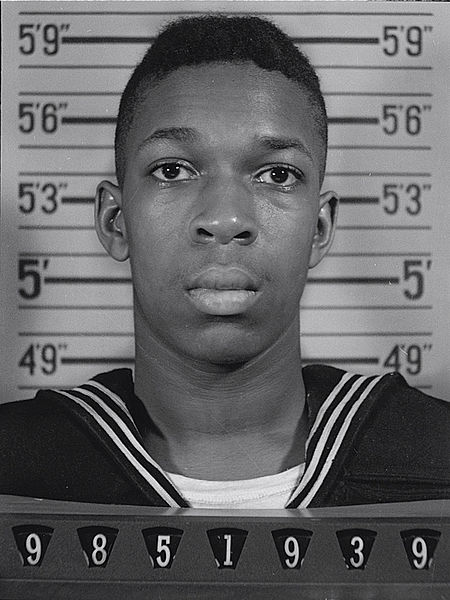
Do you ever have déjà vu? Last week we posted Jack Kerouac’s U.S. Naval Reserve enlistment mugshot from 1943 and the response was enthusiastic. Many of you were fascinated to see the great Beat writer at such a tender age and in such an atypical, unliberated context. Today we offer an eerily similar photo of another freewheeling icon of 20th century art: John Coltrane, when he was 18 years old.
Coltrane entered the Navy on the same day the United States dropped the atomic bomb on Hiroshima (August 6, 1945) and was assigned reserve status, as were many African-Americans at that time. According to Lewis Porter in John Coltrane: His Life and Music, only limited numbers of black men served as seaman after 1942. Prior to that, they were only allowed to work as kitchen help. The Navy was segregated, and Coltrane was sent to boot camp at the black section of Sampson Naval Training Center in upstate New York. By the time he finished training, World War II was over.
In late November of 1945, after a transitional month at Camp Shoemaker near San Francisco, seaman second class Coltrane was assigned to active duty in Hawaii. Stationed on the island of Oahu, Coltrane played clarinet and alto saxophone in a black Navy band called the Melody Masters. He made his first recordings with some of the musicians from the band in the summer of 1946. But all the while Coltrane was serving, the Navy was in the process of downsizing. With the war over, bands were no longer needed to boost morale. So on August 11, 1946–just over a year after his enlistment–Coltrane was discharged from the Navy and sent home.
Related content:
John Coltrane and His Great Quintet Play ‘My Favorite Things’
John Coltrane Plays Only Live Performance of A Love Supreme
John Coltrane: Three Great European Performances, 1969, 1961 and 1965
Read More...Support Us
We're hoping to rely on loyal readers, rather than erratic ads. Please click the Donate button and support Open Culture. You can use Paypal, Venmo, Patreon, even Crypto! We thank you!

About Us

Open Culture scours the web for the best educational media. We find the free courses and audio books you need, the language lessons & educational videos you want, and plenty of enlightenment in between.
Advertise With Us

FREE UPDATES!
GET OUR DAILY EMAIL
Get the best cultural and educational resources on the web curated for you in a daily email. We never spam. Unsubscribe at any time.
FOLLOW ON SOCIAL MEDIA

Open Culture editor Dan Colman scours the web for the best educational media. He finds the free courses and audio books you need, the language lessons & movies you want, and plenty of enlightenment in between.
Advertise With Us

