The Hu, a New Breakthrough Band from Mongolia, Plays Heavy Metal with Traditional Folk Instruments and Throat Singing
Maybe you’re jaded, maybe you think it’s time for heavy metal to finally hang up its spikes, maybe you think there’s nowhere else for the world’s most theatrically angry music to go but maybe bluegrass…. Or maybe Mongolia, where folk metal band The Hu have been inventing what they call “Hunnu Rock,” a style combining Western headbanging with instruments like the horsehead fiddle (morin khuur) and Mongolian guitar (tovshuur). “It also involves singing in a guttural way,” Katya Cengel points out at NPR—no, not like this, but in the manner of traditional Mongolian throat singers.
Now YouTube sensations with millions of views of its two videos for “Yuve Yuve Yu” and “Wolf Totem,” the band plans to release its first album this spring, after seven years of hard work. The Hu are not flash-in-the-pan internet fame seekers but serious musicians who didn’t quite expect this degree of attention, or so they say. “When we do this,” said guitarist Temka, “we try to spiritually express this beautiful thing about Mongolian music. We think we will talk to everyone’s soul through our music. But we didn’t expect this fast, people just popping up everywhere.”
University of Wisconsin’s Kip Hutchins, a doctoral student in cultural anthropology, has taken an interest in the band and thinks their appeal, writes Cengel, has to do with how “the story of Mongolia has been written in the West. Nomadism and horse culture has been romanticized, and the emphasis on freedom and heroes tends to appeal to the stereotypical male heavy metal fan.” The band’s themes focus on past national triumphs, the legendary rule of Genghis Khan, and the glorification of the nomadic warrior’s life.
Or so it would seem to Westerners parsing their lyrics in English. It may also be hard to read “Hey you traitor! Kneel down!” in a song about “taking our Great Mongol ancestors names in vain” and not think about metal’s role in a few violent ultra-nationalist scenes. Some suggest the songs are ironic or translate differently to Mongolian listeners. Or that the band might be a sophisticated satire, like Laibach, using nationalist themes, costumes, and dramatic settings on the steppes to critique nationalist narratives.
One observer who knows the culture suggests it’s more complicated. The Hu are not mocking traditional Mongolian culture and history, far from it. “The graphic visuals used in the video certainly evoke pride in our nomadic culture,” writes Batshandas Altansukh, “but the lyric is quite the contrary. It’s very political and highly critical of today’s Mongolian society” and what the band sees as their country’s propensity for “emptily boasting about the past” rather than actually learning about and respecting it (with motorcycle gangs riding across the plains).
The lyrics we read in translation are apparently “too westernized or simplified” to really get their point across and slogans like “taking our great Mongol ancestors names in vain,” Cengel points out, “are almost exactly what was sung in the late 1980s during the transition to democracy”—a means of fiercely asserting an independent cultural identity against the hegemonic Soviet Union. Mongolian folk rock and jazz bands picked up the sentiment and Mongolian hip hop acts promote respect for the country’s traditions with new dance moves.
But whether or not The Hu’s politics get wrongly interpreted, or ignored, by their millions of new fans, it’s clear that people get it at the universal level of metal’s communal frequencies: long hair, leather, guitars, growling, and epic medieval badassery.
via NPR
Related Content:
The Origins of the Death Growl in Metal Music
Finnish Musicians Play Bluegrass Versions of AC/DC, Iron Maiden & Ronnie James Dio
Josh Jones is a writer and musician based in Durham, NC. Follow him at @jdmagness
Read More...Introducing the Mellotron: A Groovy 1965 Demonstration of the “Musical Computer” Used by The Beatles, Moody Blues & Other Psychedelic Pop Artists
With a name like a laid back 60s robot, the Mellotron has been most closely associated with psychedelic pop like The Beatles’ “Strawberry Fields Forever,” the Moody Blues “Nights in White Satin,” and David Bowie’s “Space Oddity.” But the early sampling keyboard, an electro-acoustic device that used pre-recorded tape strips mounted inside an organ-like keyboard, was first marketed, Gordon Reid writes at Sound on Sound, to “old-time/modern/Latin dance audiences.” It was supposed to convincingly replicate an orchestra.
The Mellotron, built and sold by Mellotronics, Ltd., was based on an earlier instrument, the Chamberlin MusicMaster, which used recorded notes from members of Lawrence Welk’s band—hardly the hippest sounds on the scene when the Mellotron MK1 debuted in 1963. By the time of the MK2, however, the device developed into a powerful multitimbral machine, with a dual keyboard, “containing more than 70 3/8‑inch tape players, a reverb unit, amplifiers and speakers.”
The rock world “took the Mellotron to its heart,” Reid comments, “and it was this that ensured its success.” It could simulate other instruments, but it did so with its own distinctive flavor (providing not only the flute intro to “Strawberry Fields” but the Spanish guitar at the beginning of The White Album’s “The Continuing Story of Buffalo Bill”). Brad Allen Williams sums up the slightly more portable Mellotron M400’s limited operations succinctly at Flypaper:
Due to the rather primitive tape mechanism (and the inherent challenges of keeping 35 playback heads and pinch rollers in good condition), Mellotrons are a little unpredictable and can be quite characterful. The action of the keyboard is stiff and unusual-feeling, so virtuosic playing is not usually in the cards. All of these “bugs” somehow become “features,” however — the quirks add up to a sonic character that’s iconic and instantly recognizable!
Like so many distinctive analog instruments from pop music’s past, the Mellotron has returned in Nord’s updated Mellotron MK VI, which “uses new mechanics and state of the art technology, but original unused stock tape heads.” That’s groovy news for musicians who dig the Mellotron’s dated idiosyncrasies. In the short film above, however, from 1965, British TV personalities Eric Robinson and David Nixon introduce the instrument to viewers as a first-rate new “musical computer.”
With built in rhythms and a wide selection of sounds—including trombone and French accordion—the Mellotron was on the cutting edge of its day. Robinson and Nixon put the device through its paces, show its internal operations, and generally show off what essentially looked like a novelty organ built for living rooms and cabarets before Lennon/McCartney & Co. got their hands on it in 1967. Just above, see McCartney give a modern audience a different sort of demonstration.
Related Content:
Visit an Online Collection of 61,761 Musical Instruments from Across the World
Josh Jones is a writer and musician based in Durham, NC. Follow him at @jdmagness
Read More...A Digital Archive of Heavy Metal, the Influential “Adult Fantasy Magazine” That Featured the Art of Moebius, H.R. Giger & More
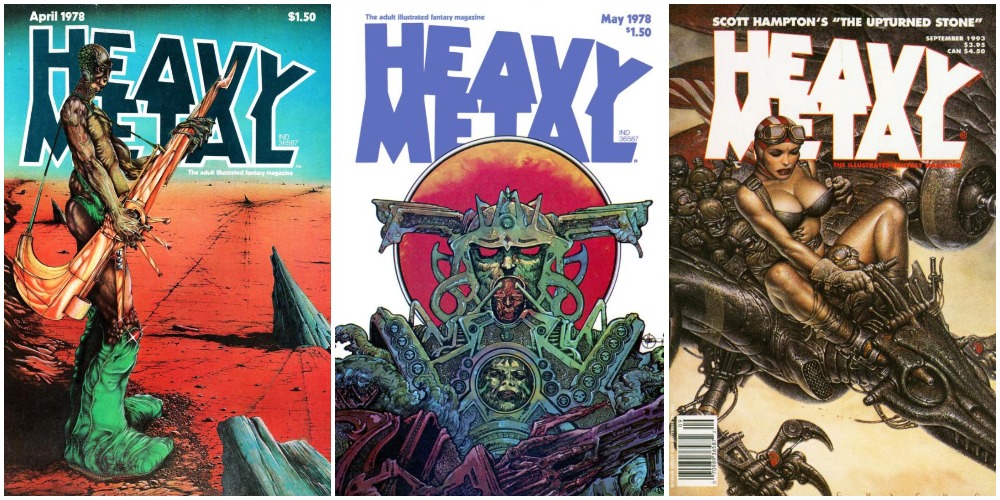
In making a time capsule of the late 20th century, one would be remiss if they did not include at least an issue or two of Heavy Metal magazine. Yes, it specialized in unapologetically turning women in metal bras into sex objects. The gleeful amount of T&A on its covers, surrounded by spaceships, swords, and sorcery, mark it as a relic of its era that appealed to a specific demographic. But Heavy Metal was much more than sexy sci-fi mascots drawn in lurid pulpy styles. Along with its share of erotica, the “adult illustrated fantasy magazine” provided a vivid showcase for some of the most interesting artists and storytellers working in the mainstream and in various subgenres of fantasy and sci-fi. (It continues to do so.)
Debuting in 1977, the year of the first Star Wars film, Heavy Metal was not named after the brand of guitar rock pioneered by Led Zeppelin and Black Sabbath, though there’s an obvious influence, but after a French magazine that started two years earlier called Métal hurlant, or literally “Howling Metal.” (We’ve featured it here on OC before.) When publisher Leonard Mogel decided to adapt the original for an American readership, he changed the name, but kept the content, republishing work by Jean Giraud—the artist better known as Moebius—and many other accomplished European illustrators.

Founded and staffed by the creators of National Lampoon, the magazine later featured original work from artists like H.R. Giger, interviews with Dennis Hopper, John Waters, Francis Ford Coppola, John Carpenter, Roger Corman, and even Federico Fellini; and with musicians like the Eurythmics and Debbie Harry. It ran popular serialized stories, showcased graphic literary adaptations (of Paradise Lost, for example), and published authors like Ray Bradbury, Stephen King, and other heavies. Rock, comics, film, and fiction all got their due in between the magazine’s extravagant pinup covers, many of which inspired the art painted on the side of many a carpeted van in the 70s.
You can see a sizable collection of scanned Heavy Metal magazines, from the first, 1977 issue to the 80s, at the Internet Archive. Part of Archive.org’s extensive “Magazine Rack,” a digital library of thousands of scanned periodicals, the Heavy Metal collection was launched in 2012 by archivist Jason Scott. Though it doesn’t contain the magazine’s complete run by any means, it offers a broad enough sampling of all of its major themes and tendencies.
Heavy Metal’s interests are very focused, one might say, but the few things the magazine does, and has done since 1977, it has done exceptionally well. Enter the archive here.
Related Content:
Josh Jones is a writer and musician based in Durham, NC. Follow him at @jdmagness
Read More...Frank Zappa Gets Surprised & Serenaded by the U.S. Navy Band at the San Francisco Airport (1980)
Who the f*@% is Frank Zappa? Do we need to answer that question? Maybe so. As commenter Kattullus remarks on a recent Zappa-related MetaFilter post, “When I was a kid… he was one of those rock stars that pretty much everyone knew. Now he’s almost vanished from popular culture.” He has also vanished from his mortal coil, as of 1993, and so it’s maybe no wonder we don’t hear that much about him. But it’s a shame all the same. Those who know and love Zappa know he was a musical genius and more—“a master showman,” says Alex Winter, director of the new crowdfunded documentary Who the F*@% is Frank Zappa.
Winter calls Zappa a “performer, orator, wit, political pundit, etc.” And in discussing the clip above, the director (best known as Bill in Bill & Ted’s Excellent Adventure) reminds us that Frank Zappa was also a regular guy with regular emotions. The footage comes from April, 1980, when Zappa was greeted at the San Francisco airport by the Navy Band playing his song “Joe’s Garage.” Winter enthuses about Zappa’s response to the surprise. The composer and guitarist, he says, “was so rarely himself in public… In this clip, Frank is genuinely and profoundly moved by the band’s performance of his music, and so we get to see him unprepared and just being himself.”
Indeed, Zappa played characters in public, though each one at the core contained his wry sardonic wit. And the fact that he always came prepared is part of what made him seem so effortlessly great at everything he did. So this moment is rare for its candor, on the part of both Zappa and the Navy Band members. Zappa, “it turns out,” writes Navy Times, “was a huge fan of the Navy Band.” That love was requited. Half the fun of the clip is watching “the joy, concern, nervousness and reverence of these musicians, doing a fantastic job of playing a difficult piece for the notoriously discerning composer.” The musicians occasionally stumble or hit a sour note, but like Patti Smith’s heartfelt tribute to Bob Dylan at the Nobel Ceremony, these mistakes make the performance all the more endearing.
Zappa, notes Rolling Stone, “liked the clip so much that he duplicated the master onto his own tapes.” The clip we have at the top was recorded from a monitor in the Zappa Vault (to the left, you can see the edge of a poster for the Zappa-directed film 200 Motels). Zappa’s dada poses and virtuoso musical theater seemed to offer the ideal response to the repression of the Nixon-era sixties, and the Reagan-era 80s, when he became a vocal critic of Tipper Gore’s PMRC. Perhaps, after all, as Kattullus says, he’s “due for a resurgence.”
If so, we can learn a good deal about not only Zappa the musician, but Zappa the person, through his family archive of artwork, photos, personal letters, etc., all of which Winter and his colleagues have raised money to help preserve. See the documentary project’s fully-funded Kickstarter page here, where the top prize, for a donation of 9 million dollars, is “Frank Zappa’s actual f*@%ing house” in the Hollywood Hills.
via MetaFilter
Related Content:
Frank Zappa Explains the Decline of the Music Business (1987)
Frank Zappa’s Amazing Final Concerts: Prague and Budapest, 1991
Josh Jones is a writer and musician based in Durham, NC. Follow him at @jdmagness
Read More...How Literature Can Improve Mental Health: Take a Free Course Featuring Stephen Fry, Ian McKellen, Melvyn Bragg & More
The great 18th century writer Dr. Samuel Johnson, who suffered from severe bouts of depression, said “the only end of writing is to enable the reader better to enjoy life or better to endure it.”
So…is it true? Can a poem help you cope with grief? Can a sonnet stir your soul to hope?
The University of Warwick have teamed up with some famous faces, and a team of doctors to tackle these questions and others like them, in a free online course on FutureLearn.
Poets, writers and actors like Stephen Fry, Ian McKellen, Melvyn Bragg, Mark Haddon (The Curious Incident of the Dog in the Night Time), Ben Okri (The Famished Road), Rachel Kelly (Black Rainbow) and others, will discuss their own work and the work of famous writers like Austen, Shakespeare and Wordsworth — exploring how they can impact mental health and why works of writing are so often turned to in times of crisis.
Here’s Stephen Fry on the pleasure of poetry:
Plus throughout the 6‑week course doctors will offer a medical perspective, giving an insight into different mental health conditions.
The course is offered through FutureLearn which means it’s broken into chunks — so you can do it step by step. FutureLearn also features lots of discussion so you can share your ideas with other learners, which often can be as beneficial as the course material (as one previous learner put it “a really wonderful experience and I’ve loved the feedback and comments from fellow course members”).
Here’s a runthrough of what’s on the syllabus. The course focuses on six themes:
- Stress: In poetry, the word “stress” refers to the emphasis of certain syllables in a poem’s metre. How might the metrical “stresses” of poetry help us to cope with the mental and emotional stresses of modern life?
- Heartbreak: Is heartbreak a medical condition? What can Sidney’s sonnets and Austen’s Sense and Sensibility teach us about suffering and recovering from a broken heart?
- Bereavement: The psychologist Elisabeth Kübler-Ross famously proposed that there are five stages of grief. How might Shakespeare’s Hamlet and poems by Wordsworth and Hardy help us to think differently about the process of grieving?
- Trauma: PTSD or “shellshock” has long been associated with the traumatic experiences of soldiers in World War 1. How is the condition depicted in war poetry of the era? Can poems and plays offer us an insight into other sources of trauma, including miscarriage and assault?
- Depression and Bipolar: The writer Rachel Kelly subtitles her memoir Black Rainbow “how words healed me – my journey through depression”. Which texts have people turned to during periods of depression, and why? What can we learn from literature about the links between bipolar disorder and creativity?
- Ageing and Dementia: One of the greatest studies of ageing in English Literature is Shakespeare’s King Lear. Is it helpful to think about this play in the context of dementia? Why are sufferers of age-related memory loss often still able to recall the poems they have learned “by heart”?
Start the course for free today.
Jess Weeks is a copywriter at FutureLearn. The one poem which helps her endure is The Orange by Wendy Cope.
Related Content:
Book Readers Live Longer Lives, According to New Study from Yale University
Read More...Watch Heavy Metal Parking Lot, the Cult Classic Film That Ranks as One of the “Great Rock Documentaries” of All Time
Growing up in the Washington, DC suburbs in the 80s and 90s among a certain subculture of disaffected youth meant that the short cult documentary Heavy Metal Parking Lot had an especially legendary status. Everybody seemed to know a friend of a friend’s older brother or sister who had been caught on camera by filmmakers John Heyn and Jeff Krulik outside that 1986 Judas Priest concert at Largo, Maryland’s Capital Centre (RIP). But geographical proximity alone to the titular parking lot does not explain the 17-minute video’s popularity.
Since its first screening at a club called DC Space, Heavy Metal Parking Lot has become one of the most beloved of rock films worldwide, a “sociological study of headbangers,” writes Rolling Stone, who rank the short at number 33 in their list of the 40 Greatest Rock Documentaries. “Decades before the internet made sharing video clips as simple as posting to Twitter or Facebook,” writes The Verge, “Heavy Metal Parking Lot caught on, not through official distribution channels, but through an underground network of fans that would dub VHS copies and pass them along.” (The movie got a big boost when the filmmakers gave a copy to DC-area native Dave Grohl, who kept it on regular rotation on the Nirvana tour bus.)
What makes this exposé of metal fans so special? Although there’s undoubtedly a segment of its viewers who laugh at the film’s collection of mostly anonymous mid-eighties metal fans, for the most part, Heavy Metal Parking Lot’s appeal has not been that of so much viral internet content—mean-spirited comedy at the expense of naïve amateurs. Thought it’s tempting, as Rolling Stone remarks, “to mock these mullet-afflicted metalheads… there’s an undeniable sweetness that permeates” the mini-doc and its subjects’ “innocent quest for rock & roll kicks.”
The sheer goofiness and joyous abandon that is 80s heavy metal contributes to the film’s character. And much of the love of Heavy Metal Parking Lot comes from the same nostalgic place as that for Dazed and Confused except that its characters are the real deal. The documentary presents an authentic record of mid-80s suburban youth in America. It’s likely costume designers of Richard Linklater’s follow-up period piece Everybody Wants Some!! studied Heavy Metal Parking Lot in detail.
Like Linklater’s testosterone-heavy films, Heavy Metal Parking Lot is largely dominated by dudes—metal bros who “may occasionally be inarticulate, sexist and obnoxious.” And yet, even fans of the film who grew up in more enlightened times and places—and who may not have had friends who looked just like these guys—have found much to love in the movie. The slice-of-life character studies and interviews create “a time capsule,” Krulik told the Verge on the documentary’s 30th anniversary screening, one surprisingly still “a little bit shocking.”
On the other hand, Heavy Metal Parking Lot remains a vital, timeless record of fandom—of the unvarnished, uncritical devotion young lovers of any pop culture phenomenon bestow upon their object. And like certain other documentaries about fandom—such as 1997’s Trekkies—Heavy Metal Parking Lot allows its subjects to fully be themselves, without judgment or condescension. Even as ordinary, mostly nameless, mostly stoned and shirtless kids in the suburbs, those selves prove to be as at least as entertaining as the flamboyant band they came to see.
Heavy Metal Parking Lot will be added to our list of Free Documentaries, a subset of our collection 4,000+ Free Movies Online: Great Classics, Indies, Noir, Westerns, Documentaries & More. Above you can also watch, “Heavy Metal Parking Lot Alumni: Where Are They Now,” the sequel to our featured film.
Related Content:
1980s Metalhead Kids Are All Right: New Study Suggests They Became Well-Adjusted Adults
Josh Jones is a writer and musician based in Durham, NC. Follow him at @jdmagness
Read More...A Hulking 1959 Chevy Bel Air Gets Obliterated by a Mid-Size 2009 Chevy Malibu in a Crash Test
The auto industry continues to take steps forward, sometimes big, sometimes small. They’re tinkering with electric and driverless cars, and they’re finding ways to improve the safety of everyday vehicles already on the road. How much incremental progress have we made? Just watch the video produced by the Insurance Institute for Highway Safety. A 2009 Chevy Malibu crashes into a colossal 1959 Chevy Bel Air at 40 miles per hour. And despite its “Safety-Girder” cruciform frame (a safety innovation Chevy developed during the 1950s) the bigger Bel Air didn’t fare well at all. The same applies to the dummy inside.
Here’s how the Institute described what happened to the Bel Air to The New York Times:
This car had no seat belts or air bags. Dummy movement wasn’t well controlled, and there was far too much upward and rearward movement of the steering wheel. The dummy’s head struck the steering wheel rim and hub and then the roof and unpadded metal instrument panel to the left of the steering wheel.
During rebound, the dummy’s head remained in contact with the roof and slid rearward and somewhat inward. The windshield was completely dislodged from the car and the driver door opened during the crash, both presenting a risk of ejection. In addition, the front bench seat was torn away from the floor on the driver side.
The Bel Air got a “Poor” rating in every safety category; the Malibu a “Good.”
Although a lot of America seems stuck in reverse, car design is one area where we’re moving forward, hopefully with even better days to come.
Related Content:
178,000 Images Documenting the History of the Car Now Available on a New Stanford Web Site
Jack Nicholson Puts His Star Power Behind “Green” Cars, 1978
Young Robert De Niro Appears in 1969 AMC Car Commercial
Read More...Punk & Heavy Metal Music Makes Listeners Happy and Calm, Not Aggressive, According to New Australian Study

Creative Commons photo by Metal Chris
In My Day, so much of the music we listened to seemed angrier, more raucous and unruly—more aggressive and plainly evil—than music today. Not that I have any hard evidence for these assertions; customarily none is required for an In My Day rant. But I submit to you this: all that musical rage, in my opinion, was a good thing.
And it seems at least in this case, I can substantiate my opinion with science. This past summer, we reported on a study done by researchers at Humboldt State, Ohio State, UC Riverside, and UT Austin showing that kids who listened to heavy metal in the 80s were “significantly happier in their youth and better adjusted currently than either middle-aged or current college-age youth comparison groups.” Despite heated debates in the 80s and 90s over objectionable lyrical content in both popular and alternative music (remember the “Cop Killer” controversy?), researchers concluded that angry rock didn’t turn people into alienated maniacs. Instead, they found, “participation in fringe style cultures may enhance identity development in troubled youth.”
Now, even more recent research into the effects of angry hardcore punk and metal on the psyches of young people seems to confirm these results and further suggest that aggressive music has a paradoxically calming effect. In a study titled “Extreme metal music and anger processing,” University of Queensland psychologists Leah Sharman and Genevieve Dingle describe how they subjected “39 extreme music listeners aged 18–34 years of age” to “anger induction,” during which time, writes Consequence of Sound, “they talked about such irritating things as relationships, money, and work.” Once the test subjects were good and stressed, Sharman and Dingle had them listen either to a “random assignment” of “extreme music from their own playlist” for ten minutes or to ten minutes of silence.
As university publication UQ News summarizes, “In contrast to previous studies linking loud and chaotic music to aggression and delinquency,” this study “showed listeners mostly became inspired and calmed” by their metal. “The music helped them explore the full gamut of emotion they felt,” says Sharman, “but also left them feeling more active and inspired.” The researchers also provide a brief history of what they call “extreme music” and define it in terms of several genres and subgenres:
Following the rise of punk and heavy metal, a range of new genres and subgenres surfaced. Hardcore, death metal, emotional/emotional-hardcore (emo), and screamo appeared throughout the 1980s, gradually becoming more a part of mainstream culture. Each of these genres and their subgenres are socio-politically charged and, as mentioned earlier, are characterized by heavy and powerful sounds with expressive vocals.
“At the forefront of [the] controversy surrounding extreme music,” they write, “is the prominence of aggressive lyrics and titles.” In additional experiments, Sharman and Dingle found that “violent lyrics” did increase “participants’ state hostility,” but the effect was fleeting. Against prevailing assumptions that angry-sounding, aggressive music causes or correlates with depression, violence, self-harm, substance abuse, or suicide, the Queensland researchers found exactly the opposite—that “extreme music” alleviated listeners’ “angst and aggression,” made them happier, calmer, and better able to cope with the anger-inducing stressors that surround us all.
Related Content:
1980s Metalhead Kids Are All Right: New Study Suggests They Became Well-Adjusted Adults
New Research Shows How Music Lessons During Childhood Benefit the Brain for a Lifetime
The Neuroscience of Drumming: Researchers Discover the Secrets of Drumming & The Human Brain
This is Your Brain on Jazz Improvisation: The Neuroscience of Creativity
Josh Jones is a writer and musician based in Durham, NC. Follow him at @jdmagness
Read More...The Artist as Artist’s Model: Au Naturel Portraits of Frida Kahlo Taken by Art Patron Julien Levy (1938)

Frida Kahlo’s legacy is definitely informed by her careful husbandry of own image. She understood its currency, and how to leverage it. Even when caught out of uniform or having a seemingly unaware laugh, she stayed true to what in modern parlance would be called her brand.
So it is with gallery owner Julien Levy’s 1938 (technically not-safe-for-work) photographs of the artist, taken the year before he hosted her first solo show, an event that caused Time magazine to rhapsodize that “the flutter of the week in Manhattan was caused by the first exhibition of paintings by famed muralist Diego Rivera’s…wife, Frida Kahlo.”
Rivera’s wife was also Levy’s lover, as these artfully posed, semi-clad photos suggest. They show a less public side of Kahlo, to be sure, but one that’s in keeping with the face she presented to the world.
Frankly, the revelation of her partially loosed hair seems more intimate than her dishabille.
Click here to see the Philadelphia Museum of Art’s collection of Levy’s Kahlo portraits, both with and without rebozo.
To learn a little more about Julien Levy (“a gallery owner who committed his charisma, connections, and personal resources to establishing photography’s importance in the field of modern art”) and the collection bequeathed to the Philadelphia Museum of Art, click here.
Related Content:
Frida Kahlo’s Colorful Clothes Revealed for the First Time & Photographed by Ishiuchi Miyako
Frida Kahlo and Diego Rivera Visit Leon Trotsky in Mexico, 1938
Ayun Halliday is an author, illustrator, and Chief Primatologist of the East Village Inky zine. Her play, Fawnbook, is now playing in New York City. Follow her @AyunHalliday
Read More...David Ogilvy’s 1982 Memo “How to Write” Offers 10 Pieces of Timeless Advice
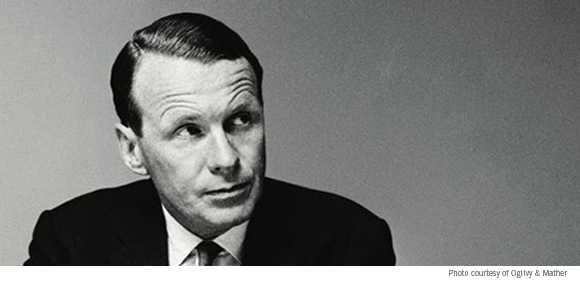
Nobody ever went broke writing a readable guide to writing in English, especially those that rise to the ranks of standard recommendations alongside Strunk and White’s The Elements of Style and William Zinsser’s On Writing Well. Both of those books endorse and exemplify the virtue of brevity, but even such short volumes take a great deal longer to read and internalize than this eminently to-the-point English style guide by the “Pope of Modern Advertising,” (and, for his part, a fan of Roman and Raphaelson’s Writing That Works) David Ogilvy, originally composed in the form of an internal memo.
Ogilvy sent it out on September 7th, 1982, directing it to everyone employed at Ogilvy & Mather, the respected ad agency he’d founded more than thirty years before. “The memo was entitled ‘How to Write,’ ” says Lists of Note, “and consisted of the following list of advice:”
1. Read the Roman-Raphaelson book on writing. Read it three times.
2. Write the way you talk. Naturally.
3. Use short words, short sentences and short paragraphs.
4. Never use jargon words like reconceptualize, demassification, attitudinally, judgmentally. They are hallmarks of a pretentious ass.
5. Never write more than two pages on any subject.
6. Check your quotations.
7. Never send a letter or a memo on the day you write it. Read it aloud the next morning—and then edit it.
8. If it is something important, get a colleague to improve it.
9. Before you send your letter or your memo, make sure it is crystal clear what you want the recipient to do.
10. If you want ACTION, don’t write. Go and tell the guy what you want.
And since we all send out more written communication today than we would have in 1982, the points on this list have only grown more advisable with time. “The better you write, the higher you go in Ogilvy & Mather,” Ogilvy adds. “People who think well, write well.” Amid all this practical advice, we’d do well not to forget that essential connection between word and thought. I like to quote a favorite Twitter aphorist of mine — and, per Ogilvy’s warning, I’ve checked my quotation first — on the subject: “People say they can’t draw when they mean they can’t see, and that they can’t write when they mean they can’t think.”
For more on the methods of Ogilvy the self-described “lousy copywriter” (but “good editor”), see also Lists of Note’s sister site Letters of Note, which has a 1955 letter wherein he lays out his work habits. A seemingly effective one involves “half a bottle of rum and a Handel oratorio on the gramophone.” Your mileage may vary.
via Lists of Note
Related Content:
Stephen King’s Top 20 Rules for Writers
Kurt Vonnegut’s 8 Tips on How to Write a Good Short Story
Writing Tips by Henry Miller, Elmore Leonard, Margaret Atwood, Neil Gaiman & George Orwell
Colin Marshall writes on cities, language, Asia, and men’s style. He’s at work on a book about Los Angeles, A Los Angeles Primer, and the video series The City in Cinema. Follow him on Twitter at @colinmarshall or on Facebook.
Read More...Support Us
We're hoping to rely on loyal readers, rather than erratic ads. Please click the Donate button and support Open Culture. You can use Paypal, Venmo, Patreon, even Crypto! We thank you!

About Us

Open Culture scours the web for the best educational media. We find the free courses and audio books you need, the language lessons & educational videos you want, and plenty of enlightenment in between.
Advertise With Us

FREE UPDATES!
GET OUR DAILY EMAIL
Get the best cultural and educational resources on the web curated for you in a daily email. We never spam. Unsubscribe at any time.
FOLLOW ON SOCIAL MEDIA

Open Culture editor Dan Colman scours the web for the best educational media. He finds the free courses and audio books you need, the language lessons & movies you want, and plenty of enlightenment in between.
Advertise With Us


