Watch the Painstaking and Nerve-Racking Process of Restoring a Drawing by Michelangelo
We live in a disposable culture, but certain things warrant the time and effort of mending—good shoes, hearts, Michelangelo drawings…
The Metropolitan Museum of Art’s paper conservator Marjorie Shelley, above, had the nerve-wracking task of tackling the latter, in preparation for last year’s Michelangelo: Divine Draftsman and Designer exhibition.
The work in question, a two-sided sketch featuring designs for a monumental altar or facade, thought to be San Silvestro in Capite, Rome, arrived in sad condition.
The 16th-century linen and flax paper on which the precious renderings were made was stained with mold, and badly creased due to a poorly repaired tear and two long-ago attempts to mount it for easier viewing, one by the artist’s blind nephew and another by collector and biographer Filippo Baldinucci.
Like many restoration experts, Shelley exhibits extraordinary patience and nerves of steel. Identifying the damage and its cause is just the beginning. The hands-on portion of her work involves introducing solvents and moisture, both of which have the potential to further damage the delicate drawing. Even though she chooses the least invasive of tools—a tiny brush—to loosen the 500-year-old adhesive, one slip could spell disaster. It’s not just the drawing that’s of historical import. The well-intended mountings are also part of the narrative, and must be preserved as such.
As she explains above, a bedazzling Sistine Chapel-like makeover was neither possible nor preferable.
One wonders how many of the 702,516 visitors who attended the exhibition during its 3 month run noticed Shelley’s handiwork (or even the drawing itself, given the large number of other, sexier works on display).
Related Content:
The Art of Restoring a 400-Year-Old Painting: A Five-Minute Primer
Ayun Halliday is an author, illustrator, theater maker and Chief Primatologist of the East Village Inky zine. See her onstage in New York City this January as host of Theater of the Apes book-based variety show, Necromancers of the Public Domain. Follow her @AyunHalliday.
Read More...Look How Young They Are!: The Beastie Boys Performing Live Their Very First Hit, “Cooky Puss” (1983)
Would you look at this video? Here we have the original line-up of the Beastie Boys (when they had a fourth, female member, Kate Schellenbach) playing a Christmas-time gig in 1983. And you just wanna scream: LOOK HOW YOUNG THEY ARE! Adam Yauch is probably 17 at the time, Michael Diamond younger, and Adam Horowitz is younger still, and they are plainly enjoying themselves while also being a bit nervous and unsure. (Ad-Rock blanches when he has to brag about the size of his member, while Adam Yauch shows he had flow very early on.) I doubt anybody in the audience was thinking these white kids would go on to be one of the greatest rap groups of all time. Some were wondering what happened to the hardcore punk music they usually played. And some were just having a blast.
The track they’re performing is “Cooky Puss,” their very first attempt at rap and, as it happens, their very first 12” single release. To their surprise the record started getting played in clubs.
For those who picked up the delightful, thorough, and very heavy Beastie Boys Book–we told you about it just recently–the origin of “Cookie Puss” is outlined in detail. A friend of a friend got the young band a chance to record in a studio usually reserved for commercial jingles for two days. The first day the band played a selection of originals and covers, but on playback “we realized they were pretty bad,” writes Ad-Rock. “They weren’t hardcore songs, they were oddly Goth-ish and just sort of, well…pretty bad.”
With a second day at their disposal they returned, and based on a beat from Schellenbach, “Cooky Puss” was born, along with another original, “Beastie Revolution.” The centerpiece of the studio version is a prank phone call between Ad-Rock, a telephone operator, and a worker at Carvel ice cream, which the adult Horowitz now cringes in memory over. (“Can I formally apologize right here and now? I’m sorry.”)
The Beastie Boys had started as a hardcore band, featuring Schellenbach on drums, and had recorded an e.p., Pollywog Stew which finally got released, along with the Cooky Puss e.p. in 1994 as Some Old Bullshit. But rap was everywhere and, as Horowitz tells it, Malcolm McLaren’s “Buffalo Gals” was the record that put hip hop on the map. “Cooky Puss” was their affectionate parody of that track. (Schellenbach, by the way, went on to form Luscious Jackson)
As for the actual Cooky Puss, it was a weird ice cream cake sold by Carvel (with its own character and backstory), and promoted on local TV with a set of ads featuring the voice of owner Tom Carvel himself. Check out the wonder of the Cooky Puss and its plush toy companion. Call now…they honor most major credit cards.
Related Content:
‘Beastie Boys on Being Stupid’: An Animated Interview From 1985
Ted Mills is a freelance writer on the arts who currently hosts the artist interview-based FunkZone Podcast and is the producer of KCRW’s Curious Coast. You can also follow him on Twitter at @tedmills, read his other arts writing at tedmills.com and/or watch his films here.
Read More...How Nirvana’s Iconic “Smells Like Teen Spirit” Came to Be: An Animated Video Narrated by T‑Bone Burnett Tells the True Story
Credited with igniting the 90s grunge craze and putting Pacific Northwest punk and indie scenes on the map, Nirvana’s “Smells Like Teen Spirit” has eclipsed hundreds of rock hits as “the most iconic song of all time”—at least according to the analytics of computer scientists from the University of London.
Whatever that designation means, it’s without a doubt the most iconic Nirvana song of all time, a tune whose influence may be impossible to measure. Kurt Cobain might have grown weary of it, but fans never stopped clamoring for the hit (his mom loved it, too). An anthem for a generation disaffected with corporate marketing and major label pandering, “Smells Like Teen Spirit” is also—like the decade it came to define—a nesting doll of irony.
Cobain played this up to a degree—the irony of an indie band announcing the second coming of charged DIY punk rock with a song that netted them a major label deal and put him on the path to superstardom. When Nirvana debuted their soon-to-be iconic hit live at Seattle’s OK Hotel on April 17th, 1991, the usually taciturn frontman introduced himself by saying, “Hello. We’re major label corporate rock sellouts.”
Given his sardonic sense of humor, fans have generally assumed some kind of anti-capitalist in-joke in the title of the song, with its reference to a popular brand of deodorant. But in a more dramatic irony, Cobain had no idea when he wrote and recorded it that “Teen Spirit was a product, aimed at teenage girls.” The song’s title, as you’ll learn in the short, animated backstory in the video above, originated with Bikini Kill singer Kathleen Hanna, who scrawled it on Cobain’s wall with a Sharpie after the two shared a night of heavy drinking and politically righteous vandalism.
Narrated by T‑Bone Burnett and animated by Drew Christie, the award-winning short “Drawn & Recorded: Teen Spirit” condenses the song’s story (which you can read about in more depth here) into two and a half minutes of pop culture history and commentary. Upon waking up and seeing Hanna’s message on the wall, Cobain was immediately flattered: “Kurt thought it meant he was a radical, a revolutionary, a feminist, a punk, an anti-authoritarian, anti-capitalist, anarchist crusader.” He got right to work on the song’s chorus.
But Hanna mainly meant to say he literally smelled like Teen Spirit, which happened to be the brand of deodorant his then-girlfriend—Bikini Kill drummer Tobi Vail—used. “I didn’t know that the deodorant spray existed until six months after the single came out,” he told Michael Azerrad in the biography Come as You Are. He didn’t intend to write an advertisement, of course. But in yet another grim twist, “after the song came out,” Burnett monotones, “sales of Teen Spirit went through the roof.”
The lesson, maybe? “Capitalism is very resilient”? Cobain understood this all too well though he may have inadvertently become the last thing he ever wanted, a product pitchman. But his creative misreading of Hanna’s joke also made music history.
Above, you can watch Hanna tell the origin story herself. The scene was recorded at Joes Pub in NYC, back in December 2010.
via Laughing Squid
Related Content:
Josh Jones is a writer and musician based in Durham, NC. Follow him at @jdmagness
Read More...The Beastie Boys Release a New Freewheeling Memoir, and a Star-Studded 13-Hour Audiobook Featuring Snoop Dogg, Elvis Costello, Bette Midler, John Stewart & Dozens More
Quick way to date yourself: name the first Beastie Boys album you bought (or heard). If you somehow got your hands on an original pressing of their first single “Cooky Puss”—released in 1981 when the then-foursome was a New York hardcore band—congratulations, you’re a legend. If you first bought 1986’s Licensed to Ill—their major label debut and coming-out as a crude rap-rock parody threesome (minus fired drummer Kate Schellenbach), precision-engineered to freak your parents out—congrats, you’re old.
In whatever era you discovered them—Paul’s Boutique, Check Your Head, Ill Communication… maybe even their last album, 2011’s Hot Sauce Committee Part Two—you discovered a different Beasties than the previous generation did. Over the course of their 30-year career, the trio evolved and matured, grew up and got down with new grooves to suit new audiences. That’s always been a very good thing.
As Mike D, Ad-Rock, and MCA—three personalities as distinctive as the three Stooges—got better at what they did, they transcended the misogynist, meatheaded mid-eighties incarnation they came to look back on with embarrassment and apology. “We got so caught up with making fun of that rock-star persona,” writes Adam Horowitz (Ad-Rock) in the huge new Beasties memoir, “that we became that persona. Became what we hated.”
Rob Harvilla calls these very genuine moments of self-reflection the best parts of the book. But with so many stories over so many years, so much brilliant writing, and so many guest appearances from celebrity Beastie Boy fans, that’s a tough call. “Part memoir, part photo-heavy zine, part fan-appreciation testimonial… and part sincere apology,” the book seems both fresh and made to order and a veritable buffet table of nostalgia. Or, as Amy Poehler puts it in her intro to a section on their videos: “These days, their music makes me feel young and old at the same time.”
Behind the silliness and sincerity there is mourning for third Beastie Adam Yauch (MCA), who died of cancer in 2012 and whose voice is conspicuously absent from the book. Yet the two remaining members choose not to dwell. “You brace for the heartbreaking account of Yauch’s diagnosis and death,” Harvilla writes, “but those details go undiscussed. ‘Too fucking sad to writing about’ is all Horovitz has to say.’” The prevailing atmosphere is celebratory, like any good Beastie Boys album—this one a party full of adult peers looking back, laughing, and wincing at their younger selves.
The voices on the page are so vivid you can squint and almost hear them (at one point Horovitz describes unwinding a cassette tape as “pulling 60 minutes of wet fettuccine out of a dog’s mouth”). But we don’t have to imagine what they sound like. Along with the 571-page hardbound cinderblock of a book, the band has released what Rolling Stone hails as the “audiobook of the year,” a “brilliant 13-hour radio play” in which Mike D and Ad-Rock are joined by a majorly star-studded cast of guest readers including Snoop Dogg, Kim Gordon, Steve Buscemi, Chloë Sevigny, Wanda Sykes, Jon Stewart, Ben Stiller, and Bette Midler (that’s just the very short list).
New York hip hop legends LL Cool J, Chuck D, and Rev Run (of Run DMC) show up, as does Brooklyn acting legend Rosie Perez and non-New Yorkers Exene Cervenka and Elvis Costello. (See the full cast list at Audible.) It’s not a memoir, it’s a mixtape. Hear excerpts from the audio book in the SoundCloud clips above and buy it online, or download it for free through Audible.com’s 30-day free trial program. Guaranteed, no matter what age you are, to make you feel young and old at the same time.
Related Content:
Hear Kim Gordon, Sonic Youth Rocker, Read From Her New Memoir, Girl in a Band
Josh Jones is a writer and musician based in Durham, NC. Follow him at @jdmagness.
Read More...How the CIA Helped Shape the Creative Writing Scene in America

Image by Arielle Fragassi, via Flickr Commons
In May of 1967,” writes Patrick Iber at The Awl, “a former CIA officer named Tom Braden published a confession in the Saturday Evening Post under the headline, ‘I’m glad the CIA is ‘immoral.’” With the hard-boiled tone one might expect from a spy, but the candor one may not, Braden revealed the Agency’s funding and support of all kinds of individuals and activities, including, perhaps most controversially, in the arts. Against objections that so many artists and writers were socialists, Braden writes, “in much of Europe in the 1950’s [socialists] were about the only people who gave a damn about fighting Communism.”
Whatever truth there is to the statement, its seeming wisdom has popped up again in a recent Washington Post op-ed by Sonny Bunch, editor and film critic of the conservative Washington Free Beacon. The CIA should once again fund “a culture war against communism,” Bunch argues. The export (to China) he offers as an example? Boots Riley’s hip, anti-neoliberal, satirical film Sorry to Bother You, a movie made by a self-described Communist.
Proud declarations in support of CIA funding for “socialists” may seem to take the sting out of moral outrage over covert cultural tactics. But they fail to answer the question: what is their effect on artists themselves, and on intellectual culture more generally? The answer has been ventured by writers like Joel Whitney, whose book Finks looks deeply into the relationship between dozens of famed mid-century writers and literary magazines—especially The Paris Review—and the agency best known for toppling elected governments abroad.
In an interview with The Nation, Whitney calls the CIA’s containment strategies “the inversion of influence. It’s the instrumentalization of writing.… It’s the feeling of fear dictating the rules of culture, and, of course, therefore, of journalism.” According to Eric Bennett, writing at The Chronicle of Higher Education and in his book Workshops of Empire, the Agency instrumentalized not only the literary publishing world, but also the institution that became its primary training ground, the writing program at the University of Iowa.
The Iowa Writer’s Workshop “emerged in the 1930s and powerfully influenced the creative-writing programs that followed,” Bennett explains. “More than half of the second-wave programs, about 50 of which appeared by 1970, were founded by Iowa graduates.” The program “attained national eminence by capitalizing on the fears and hopes of the Cold War”—at first through its director, self-appointed cold warrior Paul Engle, with funding from CIA front groups, the Rockefeller Foundation, and major corporations. (Kurt Vonnegut, an Iowa alum, described Engle as “a hayseed clown, a foxy grandpa, a terrific promoter, who, if you listened closely, talks like a man with a paper asshole.”)
Under Engle writers like Raymond Carver, Flannery O’Connor, Robert Lowell, and John Berryman went through the program. In the literary world, its dominance is at times lamented for the imposition of a narrow range of styles on American writing. And many a writer has felt shut out of the publishing world and its coteries of MFA program alums. When it comes to certain kinds of writing at least, some of them may be right—the system has been informally rigged in ways that date back to a time when the CIA and conservative funders approved and sponsored the high modernist fiction beloved by the New Critics, witty realism akin to F. Scott Fitzgerald’s (and later John Cheever), and magical realism (part of the agency’s attempt to control Latin American literary culture.)
These categories, it so happens, roughly correspond to those Bennett identifies as acceptable in his experience at the Iowa Writers’ Workshop, and to the writing one finds filling the pages of The Best American Short Stories annual anthologies and the fiction section of The New Yorker and The Paris Review. (Exceptions often follow the path of James Baldwin, who refused to work with the agency, and whom Paris Review co-founder and CIA agent Peter Matthiessen subsequently derided as “polemical.”)
Bennett’s personal experiences are merely anecdotal, but his history of the relationships between the Iowa Writers’ Workshop, the explosion of MFA programs in the last 40 years under its influence, and the CIA and other groups’ active sponsorship are well-researched and substantiated. What he finds, as Timothy Aubry summarizes at The New York Times, is that “writing programs during the postwar period” imposed a discipline instituted by Engle, “teaching aspiring authors certain rules of propriety.”
“Good literature, students learned, contains ‘sensations, not doctrines; experiences, not dogmas; memories, not philosophies.’” These rules have become so embedded in the aesthetic canons that govern literary fiction that they almost go without question, even if we encounter thousands of examples in history that break them and still manage to meet the bar of “good literature.” What is meant by the phrase is a kind of currency—literature that will be supported, published, marketed, and celebrated. Much of it is very good, and much happens to have sufficiently satisfied the gatekeepers’ requirements.
In a reductive, but interesting analogy, Motherboard’s Brian Merchant describes “the American MFA system, spearheaded by the infamous Iowa Writers’ Workshop” as a “content farm” first designed to optimize for “the spread of anti-Communist propaganda through highbrow literature.” Its algorithm: “More Hemingway, less Dos Passos.” As Aubry notes, quoting from Bennett’s book:
Frank Conroy, Engle’s longest-serving successor, who taught Bennett, “wanted literary craft to be a pyramid.” At the base was syntax and grammar, or “Meaning, Sense, Clarity,” and the higher levels tapered off into abstraction. “Then came character, then metaphor … everything above metaphor Conroy referred to as ‘the fancy stuff.’ At the top was symbolism, the fanciest of all. You worked from the broad and basic to the rarefied and abstract.”
The direct influence of the CIA on the country’s preeminent literary institutions may have waned, or faded entirely, who can say—and in any case, the institutions Whitney and Bennett write about have less cultural valence than they once did. But even so, we can see the effect on American creative writing, which continues to occupy a fairly narrow range and show some hostility to work deemed too abstract, argumentative, experimental, or “postmodern.” One result may be that writers who want to get funded and published have to conform to rules designed to co-opt and corral literary writing.
Related Content:
How the CIA Secretly Funded Abstract Expressionism During the Cold War
Josh Jones is a writer and musician based in Durham, NC. Follow him at @jdmagness
Read More...A Beautiful Short Documentary Takes You Inside New York City’s Last Great Chess Store
Chess Forum in Greenwich Village is, like Gramercy Typewriter and the Upper East Side’s Tender Buttons, the sort of shop New Yorkers feel protective of, even if they’ve never actually crossed the threshold.
“How can it still exist?” is a question left unanswered by “King of the Night,” Lonely Leap’s lovely short profile of Chess Forum’s owner, Imad Khachan, above, but no matter. We’re just glad it does.
The store, located a block and a half south of Washington Square, looks older than it is. Khachan, hung out his shingle in 1995, after five years as an employee of the now-defunct Village Chess Shop, a rift that riled the New York chess community.
Now, things are much more placid, though the film incorrectly suggests that Chess Forum is the only refuge where chess loving New Yorkers can avail themselves of an impromptu game, take lessons, and buy sets. (There are also shops in Brooklyn, Harlem, and the Upper East Side.) That said, Chess Forum might not be wrong to call itself “New York’s last great chess store.” It may well be the best of the last.
The narrow shop’s interior triggers nostalgia without seeming calculation, an organic reminder of the Village’s Bohemian past, when beret-clad folkies, artists, and students wiled away hours at battered wooden tables in its many cheap cafes and bars. (Two blocks away, sole survivor Caffé Reggio’s ambience is intact, but the prices have kept pace with the neighborhood, and the majority of its clientele are clutching guidebooks or the digital equivalent thereof.)
Khachan, born in Lebanon to Palestinian refugees, gives a warm welcome to tourists and locals alike, especially those who might make for an uneasy fit at tonier neighborhood establishments.
In an interview with the Greenwich Village Society for Historic Preservation, he recalled a “well-dressed and highly educated doctor who would come in wearing his Harvard logo sweater, and lose repeatedly to a homeless man who was a regular at Chess Forum and a chess master.”
The game also provides common ground for strangers who share no common tongue. In Jonathan Lord’s rougher New York City chess-themed doc, Passport Play, Khachan points out how diagrams in chess books speak volumes to experienced players, regardless of the language in which the book is written.
The store’s mottos also bear witness to the value its owner places on face-to-face human interaction:
Cool in the summer, warm in the winter and fuzzy all year long.
Chess Forum: An experience not a transaction
Smart people not smart phones. (You can play a game of chess on your phone, Khachan admits, but don’t fool yourself into thinking that it’s giving you a full chess experience.)
An hour of play costs about the same as a small latte in a coffeehouse chain (whose prevalence Khachan refers to as the Bostonization of NYC.) Senior citizens and children, both revered groups at Chess Forum, get an even better deal—from $1/hour to free.
Although the store’s official closing time is midnight, Khachan, single and childless, is always willing to oblige players who would stay later. His solitary musings on the neighborhood’s wee hours transformation supply the film’s title and meditative vibe, while reminding us that this gentle New York character was originally drawn to the city by the specter of a PhD in literature at nearby NYU.
Readers who would like to contribute to the health of this independently owned New York City establishment from afar can do so by purchasing a chess or backgammon set online.
Related Content:
Chess Grandmaster Garry Kasparov Relives His Four Most Memorable Games
Man Ray Designs a Supremely Elegant, Geometric Chess Set in 1920–and It Now Gets Re-Issued
A Human Chess Match Gets Played in Leningrad, 1924
A Free 700-Page Chess Manual Explains 1,000 Chess Tactics in Plain English
Claymation Film Recreates Historic Chess Match Immortalized in Kubrick’s 2001: A Space Odyssey
Play Chess Against the Ghost of Marcel Duchamp: A Free Online Chess Game
Chess Grandmaster Maurice Ashley Plays Unsuspecting Trash Talker in Washington Square Park
Ayun Halliday is an author, illustrator, theater maker and Chief Primatologist of the East Village Inky zine. See her onstage in New York City through December 20th in the 10th anniversary production of Greg Kotis’ apocalyptic holiday tale, The Truth About Santa. Follow her @AyunHalliday.
Read More...The Story of The Pogues’ “Fairytale of New York,” the Boozy Ballad That Has Become One of the Most Beloved Christmas Songs of All Time
Drugstore Cowboy, Barfly, Leaving Las Vegas, even Bonnie and Clyde… we love a good story about doomed, down-and-out lovers. Whatever emotional reservoir they tap into, when written well and honestly, such stories have broad cultural appeal. Which in part explains the overwhelming popularity of The Pogues’ 1987 classic “Fairytale of New York,” the kind of “anti-Christmas song,” writes Dorian Lynsky at The Guardian, “that ended up being, for a generation, the Christmas song.”
Many holiday stories cynically trade on the fact that, for a great many people, the holidays are filled with pain and loss. But “Fairytale of New York” doesn’t play this for laughs, nor does it pull the old trick of cheap last-minute redemption.
Sung as a duet by Shane MacGowan and Kirsty MacColl to the boozy tune of an Irish folk ballad, the song “is loved because it feels more emotionally ‘real’ than the homesick sentimentality of ‘White Christmas.’ ” Even if we can’t identify with the plight of a burned-out Irish dreamer spending Christmas in a New York drunk tank, we can feel the ache of broken dreams set in high relief against holiday lights.
The song’s history itself makes for a compelling tale, whether we believe the origin story in accordion player James Fearnley’s memoir Here Comes Everybody: The Story of the Pogues or that told by MacGowan, who maintains that Elvis Costello, the band’s producer, bet the singer that he couldn’t write a Christmas duet. (Fearnley writes that they were trying to top The Band’s 1977 “Christmas Must Be Tonight.”)
Either way, a Christmas song was a good idea. “For a band like the Pogues, very strongly rooted in all kinds of traditions rather than the present, it was a no-brainer,” says banjo-player and co-writer Jem Finer. Not to mention the fact that MacGowan was born on Christmas Day 1957.
Finer began the song as a tale about a sailor missing his wife on Christmas, but after the banjo player’s wife called it “corny” he took her suggestion to adapt the “true story of some mutual friends living in New York.” MacGowan took the title from J.P. Donleavy’s 1973 novel A Fairy Tale of New York, which happened to be lying around the recording studio. After a promising start, the song then went through two years of revisions and re-recordings before the band finally settled on the version millions know and love, produced by Steve Lillywhite and released on the 1988 album If I Should Fall From Grace with God.
Originally intended as a duet between MacGowan and bass player Cait O’Riordan, a version recorded with her was “not quite there,” guitarist Philip Chevron has said. Soon after, O’Riordan left the band, and MacGowan recorded the song again at Abbey Road in 1987, singing both the male and female vocal parts himself. Eventually Lillywhite took the track home to have his wife, English singer Kirsty MacColl, record a temporary guide vocal for the female parts. When MacGowan heard it, he knew he had found the right foil for the character he plays in the song.
“Kirsty knew exactly the right measure of viciousness and femininity and romance to put into it and she had a very strong character and it came across in a big way,” MacGowan later remarked in an interview. “In operas, if you have a double aria, it’s what the woman does that really matters. the man lies, the woman tells the truth.” As part of her character’s “viciousness”, she hurls the slur “f*ggot” at MacGowan, who calls her a “slut.” The offensive words have been censored on radio stations, then uncensored, and good cases have been made for bleeping them out (most recently by Irish DJ Eoghan McDermott on Twitter).
MacGowan himself has issued a statement defending the lyrics as in keeping with the characters. “Sometimes characters in songs and stories have to be evil or nasty in order to tell the story effectively,” he writes, adding, “If people don’t understand that I was trying to accurately portray the character as authentically as possible then I am absolutely fine with them bleeping the word but I don’t want to get into an argument.” Whatever position one takes on this, it’s hard to deny that MacGowan, co-writer Finer, and MacColl totally hit the mark when it comes to authenticity.
The genuine emotions “Fairytale of New York” taps into has made it the most beloved Christmas song of all time in TV, radio, and magazine polls in the UK and Ireland. It has become “far bigger than the people who made it,” writes Lynskey. Or, as Fearnley puts it, “It’s like ‘Fairytale of New York’ went off and inhabited its own planet.” An artist can’t ask for more. See making-of videos by the BBC and Polyphonic at the top. Watch the band sloppily mime the song with MacColl on Top of the Pops further up (MacGowan cannot actually play the piano). And just above, see the official video, starring Drugstore Cowboy’s Matt Dillon—filmed inside a real police station on the Lower East Side during a freezing Thanksgiving week in 1987, for maximum holiday vérité.
Related Content:
Stream a Playlist of 68 Punk Rock Christmas Songs: The Ramones, The Damned, Bad Religion & More
Hear Paul McCartney’s Experimental Christmas Mixtape: A Rare & Forgotten Recording from 1965
Josh Jones is a writer and musician based in Durham, NC. Follow him at @jdmagness
Read More...Take Animated Virtual Reality Tours of Ancient Rome at Its Architectural Peak (Circa 320 AD)
Maybe you, too, were a Latin geek who loved sword and sandal flicks from the golden age of the Hollywood epic? Quo Vadis, The Fall of the Roman Empire, The Robe, Demetrius and the Gladiators, and, of course, Spartacus…. Never mind all the heavy religious pretext, context, subtext, or hammer over the head that suffused these films, or any pretense toward historical accuracy. What thrilled me was seeing ancient Rome come alive, bustling with togas and tunics, centurions and chariots. The center of the ancient world for hundreds of years, the city, naturally, retains only traces of what it once was—enormous monuments that might as well be tombs.
The incredibly detailed 3D animations here don’t quite have the same rousing effect, granted, as the “I am Spartacus!” scene. They don’t star Charlton Heston, Sophia Loren, or Kirk Douglas. They appeal to different sensibilities, it’s true. But if you love the idea of visiting Rome during one of its peak periods, you might find them as satisfying, in their way, as Peter Ustinov’s Nero speeches.
Dating not from the time of Mark Antony or even Jesus, the painstakingly-rendered tours of ancient Rome depict the city as it would have looked—sans humans and their activity—during its “architectural peak,” as Realm of History notes, under Constantine, “circa 320 AD.”
The VR trailer at the top from History in 3D, developed by Danila Loginov and Lasha Tskhondia, depicts, in Loginov’s words, “the Forums area, and also Palatine and Capitolium hills.” The two additional trailers for the project show the “baths of Trajan and Titus, the statue of Colossus Solis, arches of Titus and Constantine, Ludus Magnus, the temple of Divine Claudius. Our team spent some time and recreated this area along with all minor buildings as a complex and added it to the model which has been already done.” This means, he says, “we have now almost the entire center of ancient imperial Rome already recreated!”
We glide gently over the city with a low-flying-bird’s eye view, taking in its realistic skyline, tree-lined streets, and gurgling fountains. The lack of any human presence makes the experience a little chilly, but if you’re moved by classical architecture, it also presents a refreshing lack of distraction—an impossible request in a visit to modern Rome. Another project, Rome Reborn, which we’ve previously featured here, takes a different approach to the same imperial city of 320 AD. The trailers for their VR app don’t provide the seamless flight experience, but they do contain equally epic music. (They also have a few people in them, blockily-rendered gawking tourists rather than ancient Romans.)
Instead, these clips give us fascinating glimpses of the interiors of such splendid structures as the Basilica of Maxentius—tiled floors, domed ceilings, columned walls—from a number of different perspectives. We also get to fly above the city, drone-style, or hot air balloon-style, as it were. In the clip below, we cruise over Rome in that vehicle, with Bernard Frischer, professor emeritus at the University of Virginia, serving as the app’s “virtual archaeologist” in an audio tour.
“The ambitious undertaking,” of the Rome Reborn app, writes Meilan Solly at Smithsonian, “painstakingly built by a team of 50 academics and computer experts over a 22-year period, recreates 7,000 buildings and monuments scattered across a 5.5 square mile stretch of the famed Italian city.” The three modules of the Rome Reborn app demoed here are all available at their website. Geeks—and historians of ancient Roman architecture and city planning—rejoice.
via Smithsonian
Related Content:
A Huge Scale Model Showing Ancient Rome at Its Architectural Peak (Built Between 1933 and 1937)
An Interactive Map Shows Just How Many Roads Actually Lead to Rome
Josh Jones is a writer and musician based in Durham, NC. Follow him at @jdmagness
Read More...Historic Console Used to Record “Stairway to Heaven” and Other Rock Classics Goes Up for Auction Today

The amount of money one is willing to spend—should one have amounts of money—for a vintage recording console will vary greatly depending on who one is. The average person will see an enormous, heavy, wonky, wood and metal space hog with no apparent purpose. The musician, engineer, producer, or studio owner, on the other hand, will see a finely-tuned instrument, whose preamps, EQs, compressors, meters, and circuitry promise worlds of sonic warmth and depth.
In the case of one particular recording console, the so-called “Heliocentric Helios Console,” everyone will see a piece of music history, one that rightly belongs in a museum on public view. Such a fate is unlikely for this artifact, which goes on sale today at auction house Bonhams in London. It will end up in some well-heeled private hands, fetching a hefty sum for reasons far beyond its classic engineering.
“Songs and albums recorded on this bespoke console and its original parts rank among some of the most recognizable and best-loved pieces of music in existence, and have resulted in Grammys, Brit Awards and multiple number one spots,” says Bonham’s Claire Tole-Mole. “This console is a piece of Britain’s modern cultural history.” Actually an amalgam of two different historic consoles, combined in 1996, the Island Record section of the mixing desk was used by Led Zeppelin to record IV, the album featuring their most famous song, “Stairway to Heaven.”
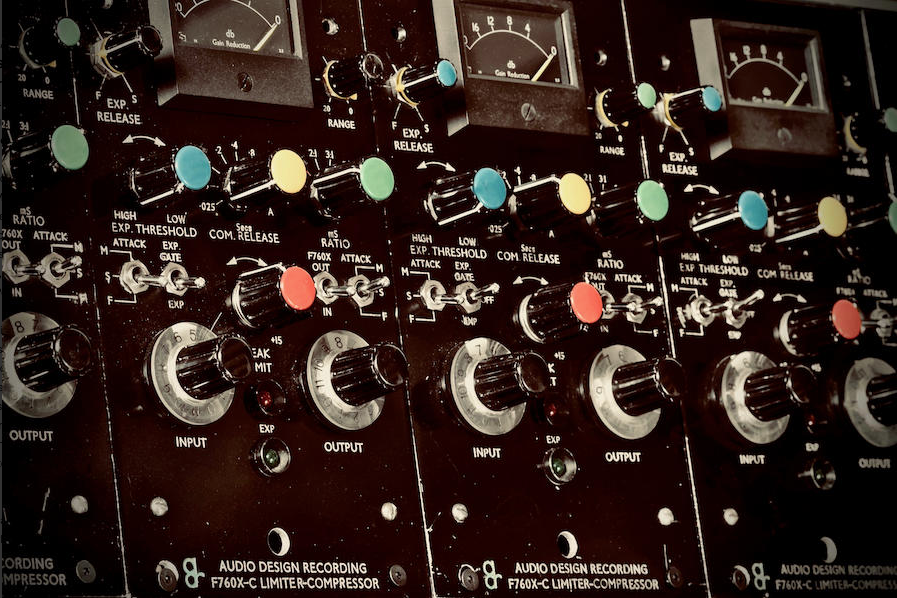
This tantalizing bit is only a taste of the HeliosCentric console’s extensive provenance. Bob Marley recorded Catch a Fire and Burnin’ on the machine, Jimmy Cliff recorded “Many Rivers to Cross”; Eric Clapton’s “After Midnight” emerged from the console, as did songs and albums made by George Harrison, Steve Winwood, Mick Fleetwood, Steven Stills, Jimi Hendrix, Ronnie Wood, David Bowie, Free, The Rolling Stones, Sly Stone, Harry Nilsson, Cat Stevens, Jeff Beck, Mott the Hoople, Humble Pie, Paul Weller, Supergrass, Sia, KT Tunstall, Squeeze, the Pet Shop Boys, Keane, and Dido… among many more.

The number of top-notch artists who have used one or both parts of the console is astonishing, and its combining also provides devotees of rock history with a great story: the founder of Helios Electronics himself, Dick Swettenham, who formerly worked at Abbey Road, personally consulted on the construction of the new console, which was put together by Elvis Costello and Squeeze’s Chris Difford. You can read the machine’s full history at Bonhams, as great a story as you’re ever likely to hear about a piece of specialized studio equipment the size of a small car. The HelioCentric Console is expected to fetch six figures, but as Rolling Stone points out, the auction house recently sold the console used to record Pink Floyd’s Dark Side of the Moon for $1.8 million. What’s another few dozen classic albums and singles worth?
Related Content:
Jimmy Page Tells the Story of “Stairway to Heaven”: How the Most Played Rock Song Came To Be
Josh Jones is a writer and musician based in Durham, NC. Follow him at @jdmagness
Read More...How J.R.R. Tolkien Influenced Classic Rock & Metal: A Video Introduction
The influence of J.R.R. Tolkien on metal is so wide and deep it has become almost cliché. There are countless Tolkien-themed songs, albums, band names, and an entire subgenre of Tolkien metal in which the fantasy master’s work has become “the foundation,” as Loudwire writes, that such bands “have built their persona upon.” After all, “the doomy hellscape of Mordor is a setting that rivals hell itself, making it the perfect fodder for lyrical brutality.”
Of course, there’s more to the fascination than doomy hellscape. Mysticism, magic, and mythology; “themes of friendship, adventure, betrayal, greed, and mortality.” The Hobbit and Lord of the Rings trilogy fold literary richness and depth into a fully realized alternate reality full of swords and sorcery, goblins, orcs, and walking trees. What metalhead can resist? Even those who might want to have a hard time getting away from Tolkien.
He’s in the source code of the genre, in its classic rock chromosomes. The most prominent precursor of Tolkien metal, Led Zeppelin, really loved Tolkien. As Robert Plant put it in a later interview, “when I read those books, they kind of dissolved into me.” In the short video above from Polyphonic, we get a survey of the number of Tolkien references not only in Zeppelin, but in Genesis, Rush, and other proto-metal prog-rock bands.
One key feature of Tolkien that makes his work such great material for epic songs is that the novels are already full of epic songs (and poems, in Elvish and other languages). “Music plays an integral role in the very founding of Middle Earth.” Tolkien references crop up in Black Sabbath, Uriah Heep, and dozens of 70s progressive rock bands whose influence exceeds their fame.
One band the Polyphonic video doesn’t mention, The Beatles, aren’t often thought of as Tolkienesque, or as having much influence on heavy metal. But they were massive Tolkien fans and even approached the author in the 60s about making a Lord of the Rings film, with John as Gollum, Paul as Frodo, Ringo as Sam, and George as Gandalf. McCartney even approached Stanley Kubrick to direct.
Reportedly, when McCartney told Peter Jackson the story, the director replied, “It’s the songs I feel badly about. You guys could have banged out a few good tunes for this.” Tolkien himself didn’t think so and turned them down immediately. We don’t have any record of his thoughts on the 70s rock bands who enthusiastically adopted him, if he even knew of their existence. But we do know that he didn’t like The Beatles.
Does this mean he wouldn’t care for any of the classic rock and metal to whom he has inadvertently given so much? Probably. But one commenter in a discussion thread on this very question imagines another reaction Tolkien might have to hearing “Ramble On,” etc.: “I believe he raised a fist into the air and extended the index and little fingers in imitation of a horned creature, while vigorously, emphatically nodding his head back and forth, tossing his hair to and fro like a fishing boat caught in a raging storm.”
Related Content:
The Lord of the Rings Mythology Explained in 10 Minutes, in Two Illustrated Videos
Map of Middle-Earth Annotated by Tolkien Found in a Copy of Lord of the Rings
The Origins of the Death Growl in Metal Music
Josh Jones is a writer and musician based in Durham, NC. Follow him at @jdmagness
Read More...Support Us
We're hoping to rely on loyal readers, rather than erratic ads. Please click the Donate button and support Open Culture. You can use Paypal, Venmo, Patreon, even Crypto! We thank you!

About Us

Open Culture scours the web for the best educational media. We find the free courses and audio books you need, the language lessons & educational videos you want, and plenty of enlightenment in between.
Advertise With Us

FREE UPDATES!
GET OUR DAILY EMAIL
Get the best cultural and educational resources on the web curated for you in a daily email. We never spam. Unsubscribe at any time.
FOLLOW ON SOCIAL MEDIA

Open Culture editor Dan Colman scours the web for the best educational media. He finds the free courses and audio books you need, the language lessons & movies you want, and plenty of enlightenment in between.
Advertise With Us

