Hear All of C.S. Lewis’ Chronicles of Narnia Novels as Free Audio Books
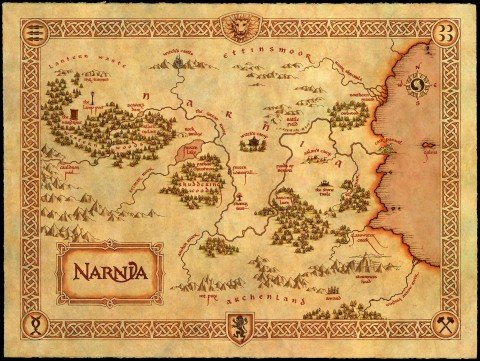
I have not seen the second two of a promised seven films based on the novels in C.S. Lewis’ The Chronicles of Narnia series. But I tend to agree with several critics of the first filmed adaptation, The Lion, the Witch and the Wardrobe: “The PG-rated movie feels safe and constricted,” Peter Travers observed, “in a way the story never does on the page.” Although Lewis “did nothing to hide his devout Christianity” in his allegorical Narnia books for young adults, nor in his grown-up sci-fi fantasy series, The Space Trilogy, Lewis on the page comes across as a rigorous writer first and a Christian apologist second. Except, I’d argue, for his work of explicitly populist, and rather facile, apologetics, Mere Christianity (originally a series of radio lectures), his fiction and popular non-fiction alike present readers—whatever their beliefs—with challenging, inventive, witty, and moving ways to think about the human condition.
Lewis’ immersion in European Medieval and Renaissance literature in his day-job role as an Oxford don—and his ecumenical, almost Jungian, approach to literature generally—gives his fiction a serious archetypal depth that most modern religious novelists lack, making him, along with fellow “Inkling” J.R.R. Tolkien, something of a literary saint in modern Christianity. Though it may offend the orthodox to say so, Lewis’ novels capture a “deep magic” at the heart of all mythological and literary traditions. And they do so in a way that makes exploring heavy, grown-up themes exciting for both children and adults. Though I’ve personally left behind the beliefs that animated my first readings of his books, I can still return to The Chronicles of Narnia and find in them deep magic and mystery.
There’s no denying the enormous influence these books have had on children’s fantasy literature, from Harry Potter to Lewis’ atheist antagonist Philip Pullman. I look forward to sharing his books with my daughter, whatever she ends up making of their religiosity. I’ve still got my tattered paperback copies, and I’ll gladly read them to her before she can tackle them herself, but I’m also grateful for the complete audio recordings of The Chronicles of Narnia, available free online and read by English child psychologist and author Chrissi Hart. In installments of two chapters at a time, Hart reads all seven of the Narnia books, The Lion, the Witch and the Wardrobe, Prince Caspian, The Voyage of the Dawn Treader, The Silver Chair, The Horse and His Boy, The Magician’s Nephew, and The Last Battle.
You can hear the first two chapters of The Lion, the Witch and the Wardrobe above, and stream or download the remaining chapters, and the remaining six books, at Ancientfaith.com. Although Hart and the Ancient Faith site who host her readings clearly approach the novels from an explicitly Orthodox perspective, I don’t think readers need to share their beliefs, or Lewis’, to enjoy and appreciate the storytelling magic of The Chronicles of Narnia.
And it should be noted that CS Lewis Pte. Ltd. granted permission to put these recordings online, according to the Ancient Faith web site. The recordings are therefore listed in our collection, 1,000 Free Audio Books: Download Great Books for Free. Enjoy.
Related Content:
C.S. Lewis’ Prescient 1937 Review of The Hobbit by J.R.R. Tolkien: It “May Well Prove a Classic”
Watch Hand-Drawn Animations of 7 Stories & Essays by C.S. LewisWatch Hand-Drawn Animations of 7 Stories & Essays by C.S. LewisWatch Hand-Drawn Animations of 7 Stories & Essays by C.S. Lewis
The Only Known Recordings of C.S. Lewis (1944–1948)
Josh Jones is a writer and musician based in Durham, NC. Follow him at @jdmagness
Read More...Stephen King Creates a List of 82 Books for Aspiring Writers (to Supplement an Earlier List of 96 Recommend Books)

Image by The USO, via Flickr Commons
Stephen King has given writers a lot to think about these past few years in his numerous interviews and in his statement of craft, On Writing. He deems one of his most salient pieces of advice on writing so important that he repeats it twice in his Top 20 Rules for Writers: writers, he says, “learn best by reading a lot…. If you don’t have time to read, you don’t have the time (or the tools) to write.” To help his readers discover the right tools, King attached a list of 96 books at the end of On Writing, of which he said, “In some way or other, I suspect each book in the list had an influence on the books I wrote…. a good many of these might show you some new ways of doing your work.”
King’s original list of 96 books for aspiring writers generated a fair amount of comment on Aerogramme Writer’s Studio, who brought it to our attention last year. Later, the same web site brought us another list of 82 books, which King published in the 10th anniversary edition of On Writing. With King’s second list, as with the first, you’ll find that best-selling genre writers sit comfortably next to lit-class staples.
In this list, the spectrum of accessibility is a little narrower. We have fewer classic writers like Dickens or Conrad and fewer commercial novelists like Nelson DeMille. Instead the list is mostly twentieth century literary fiction by mostly living contemporaries, with little genre fiction save perhaps sci-fi/fantasy writer Neal Stephenson’s Quicksilver, thriller author Lee Child’s Jack Reacher series, hugely popular mystery writer Stieg Larsson’s The Girl With the Dragon Tattoo, and Patrick O’Brian’s adventure series. Below, we’ve excerpted a list of 15 books King recommends—books, he says, “which entertained and taught me.”
Kate Atkinson, One Good Turn
Margaret Atwood, Oryx and Crake
Robert Bolaño, 2666
Michael Chabon, The Yiddish Policemen’s Union
Junot Diaz, The Brief Wondrous Life of Oscar Wao
Neil Gaiman, American Gods
Denis Johnson, Tree of Smoke
Sue Monk Kid, The Secret Life of Bees
Elmore Leonard, Up in Honey’s Room
Cormac McCarthy, No Country for Old Men
Jodi Picoult, Nineteen Minutes
Philip Roth, American Pastoral
Salman Rushdie, Midnight’s Children
Donna Tartt, The Little Friend
Leo Tolstoy, War and Peace
King almost shrugs in his short introduction, writing, “you could do worse.” I expect many readers of this post might have suggestions for how they think you could also do better, especially given the five years that have passed since this list’s compilation and some of the blind spots that seem to persist in King’s reading habits. I doubt he would object much to any of us adding to, or subtracting from, his lists—or ignoring them altogether. It seems clear he thinks that like him, we should read what we like, as long as we’re always reading something. See the full list of 82 titles here.
Related Content:
Stephen King Creates a List of 96 Books for Aspiring Writers to Read
Stephen King’s Top 10 All-Time Favorite Books
Stephen King’s Top 20 Rules for Writers
7 Free Stephen King Stories: Presented in Text, Audio, Web Comic & a Graphic Novel Video
Josh Jones is a writer and musician based in Durham, NC. Follow him at @jdmagness
Read More...New Film Extraordinary Tales Animates Edgar Poe Stories, with Narrations by Guillermo Del Toro, Christopher Lee & More
Edgar Allan Poe created a body of work that will seemingly never go out of style, especially around Halloween time. Not only do his stories and poems still inspire dread in the 21st century, but so also do the many hundreds of Poe retellings and adaptations created in the 166 years since the author’s mysterious death. But, we might ask, after so many film adaptations from so many classic horror actors and directors, whether we need yet another one? You’ll have to make up your own mind, but if you’re anything like me, you’ll watch the trailer above for Lion King and Aladdin animator Raul Garcia’s Poe anthology Extraordinary Tales and answer “Yes!” and “More please!” And you can see more, in the clips below from Garcia’s incredible-looking film, hitting theaters on October 23rd.
One reason the new treatment of the five stories Garcia animates seems to work so well is that they draw on the talents of actors and directors who have previously delivered classic Poe retellings. For example, “The Fall of the House of Usher,” above, is narrated by the late, great Christopher Lee, who joins horror legend Vincent Price as one of the greatest readers of Poe’s “The Raven.” The voice-over is Lee’s last role, and it’s hard to think of a more fitting final act for the venerable horror maven. (Lee was also at the time recording “a heavy-metal-rock-opera based on Charlemagne’s life”—one of many metal albums he recorded.)
Garcia has created a unique look for each featurette. For “Usher,” he tells Carlos Aguilar at Indiewire, “the idea was for the characters to look as if they were carved out of wood, like if they were figures that belonged to Czech animator Jirí Trnka.” Just hearing Lee above intone the phrase “an unexpected sense of insufferable gloom” is enough to convince me I need to see the rest of this film.
Just above, we have a clip from a much less famous Poe story, “The Facts in the Case of M. Valdemar,” a chilling detective tale about a man mesmerized in articulo mortis—at the moment of death. Narrated by English actor Julian Sands, who has made his own appearances in several horror films, the animation style comes directly out of classic E.C. horror comics like Tales From the Crypt, which drew many an idea from Poe, basing one story “The Living Death!” on “M. Valdemar.” The “mauve, yellow and mossy green comic-book panels,” writes a New York Times review, “prove that you don’t need fancy technology to achieve a third dimension.”
You’ll notice the unmistakable visage of Vincent Price in the character of the mesmerist, and you’ll likely know of Price’s own turn as Poe himself in An Evening with Edgar Allan Poe. Price also starred in Roger Corman’s many Poe adaptations—beginning with House of Usher—and Garcia has tapped the legendary Corman’s voice for Extraordinary Tales, as well as contemporary horror director extraordinaire Guillermo Del Toro. And if this weren’t horror royalty enough, Garcia’s animated take on “The Tell-Tale Heart” features none other than Bela Lugosi, in an archival reading of the story the Dracula actor made sometime before his death in 1956. Read more about how Garcia found the Lugosi audio and conceived of Extraordinary Tales in his interview here.
Related Content:
Watch Vincent Price Turn Into Edgar Allan Poe & Read Four Classic Poe Stories (1970)
Download The Complete Works of Edgar Allan Poe: Macabre Stories as Free eBooks & Audio Books
Josh Jones is a writer and musician based in Durham, NC. Follow him at @jdmagness
Read More...Apply to the New David Lynch Masters in Film Program, Where You’ll Meditate & Create
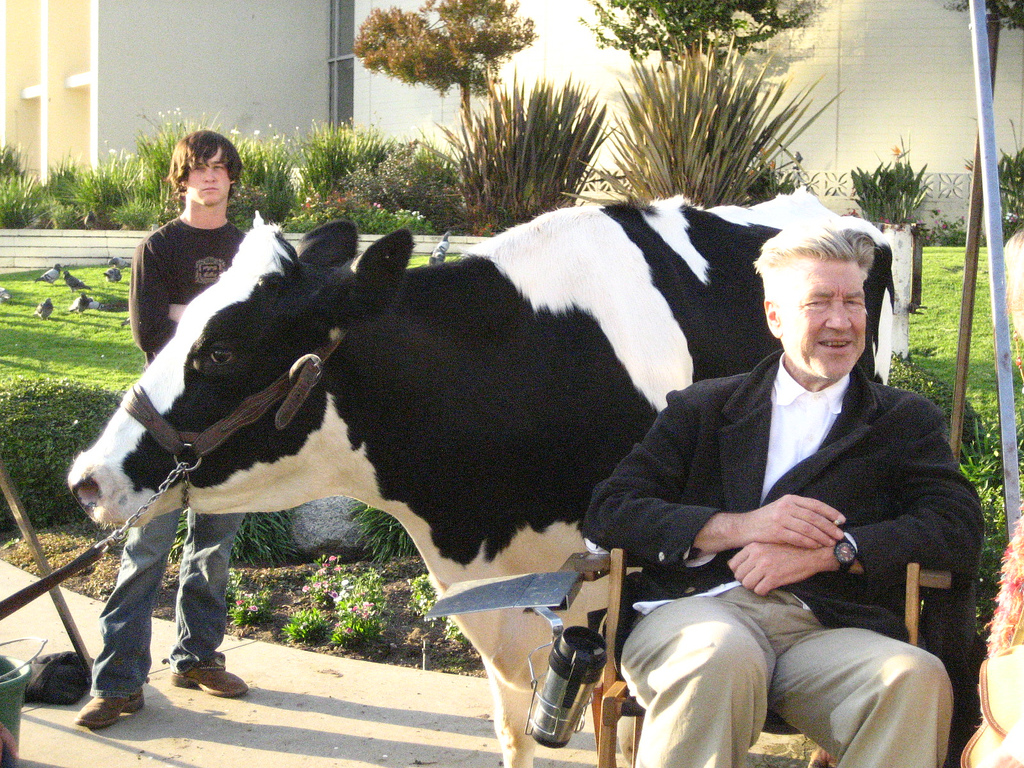
Image by amoebafinger on Flickr Commons.
When the American Film Institute set up its conservatory for Advanced Film Studies in 1969, its first round of students included Terrence Malick, Caleb Deschanel, Paul Schrader, and the Master of Absurd himself, David Lynch. (Now that’s a class reunion worth going to!) Now some 40 years on, the Maharishi University of Management, in Fairfield, Iowa, is accepting applications for its David Lynch MA in Film program.
Lynch has been practicing Transcendental Meditation for as long as he’s been a filmmaker, and in interviews and in books like Catching the Big Fish, he espouses the wonders of meditation for creativity. (See him talk more about that here.) Students enrolled in the David Lynch Film program will follow Lynch’s example by combining meditation with filmmaking. You might not create the next Eraserhead (Lynch’s AFI project that turned into his career-defining debut), but, according to Lynch, students are promised to discover
the ability to dive within—to transcend and experience that unbounded ocean of pure consciousness which is unbounded intelligence, creativity, happiness, love, energy, power, and peace.
Before one gets too excited and thinks that the director himself will be teaching every class and that you’ll get to hang out with him during office hours, that’s not the way the program works.
Classes are taught by director/cinematographer Michael W. Barnard (and once the head of the Maharishi’s film department), screenwriter Dorothy Rompalske, and David Lynch Foundation Television founder Amine Kouider. Guest speakers have included Jim Carrey, Peter Farrelly, script doctor Dara Marks, Twin Peaks alum Duwayne Dunham, and many other Hollywood insiders.
However, students do get a field trip to Los Angeles to meet Lynch and spend time with the filmmaker. The aspiring filmmakers should consider themselves lucky, seeing that the director is busy working on Twin Peaks’ new season and apparently writing an autobiography.
There are two scholarships up for grabs for applicants who have a film or script to submit, but the deadline is fast approaching on Nov. 1.
Related Content:
David Lynch Explains Where His Ideas Come From
Patti Smith and David Lynch Talk About the Source of Their Ideas & Creative Inspiration
David Lynch Explains How Meditation Enhances Our Creativity
David Lynch Creates a Very Surreal Plug for Transcendental Meditation
David Lynch Talks Meditation with Paul McCartney
Ted Mills is a freelance writer on the arts who currently hosts the artist interview-based FunkZone Podcast. You can also follow him on Twitter at @tedmills, read his other arts writing at tedmills.com and/or watch his films here.
Read More...Amazing Miniature Sculptures of New York City Landmarks: CBGB, Katz’s Deli, Vesuvio Bakery & More
If you’re near Pasadena, California, stop by the Flower Pepper Gallery and see Facade, the new exhibition featuring the work of visual artist Randy Hage. For decades now, Hage has been fascinated by the beauty of aging structures in New York City. This led him, beginning in the late 1990s, to start photographing aging storefronts in the city, “with their hand painted signs, layers of architecture, wonderful patinas and intriguing history.” Later, he decided to preserve their memory in miniaturized, hyper-realistic sculptures (like the ones now on display in Pasadena through November 18th). In the video above, see just how perfectly Hage manages to recreate New York storefronts in miniature. Here’s another famous-but-now-defunct facade you might recognize:
To take a closer look at his work, visit Hage’s Instagram page where you will see mini sculptures of fading New York institutions like Katz’s Deli, CBGB, McSorley’s Old Ale House, Vesuvio Bakery, and more.
via SuperSonic Art/BoingBoing
Follow Open Culture on Facebook and Twitter and share intelligent media with your friends. Or better yet, sign up for our daily email and get a daily dose of Open Culture in your inbox. And if you want to make sure that our posts definitely appear in your Facebook newsfeed, just follow these simple steps.
Read More...Download Original Bauhaus Books & Journals for Free: Gropius, Klee, Kandinsky, Moholy-Nagy & More
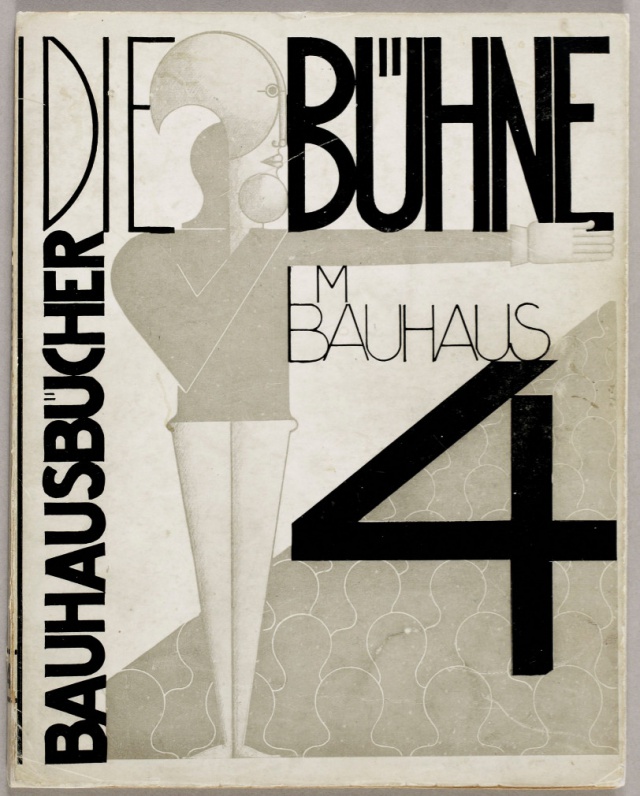
In 1919, German architect Walter Gropius founded Bauhaus, the most influential art school of the 20th century. Bauhaus defined modernist design and radically changed our relationship with everyday objects. Gropius wrote in his manifesto Programm des Staatlichen Bauhauses Weimar that “There is no essential difference between the artist and the artisan.” His new school, which featured faculty that included the likes of Paul Klee, László Moholy-Nagy, Josef Albers and Wassily Kandinsky, did indeed erase the centuries-old line between applied arts and fine arts.
Bauhaus architecture sandblasted away the ornate flourishes common with early 20th century buildings, favoring instead the clean, sleek lines of industrial factories. Designer Marcel Breuer reimagined the common chair by stripping it down to its most elemental form. Herbert Bayer reinvented and modernized graphic design by focusing on visual clarity. Gunta Stölzl, Marianne Brandt and Christian Dell radically remade such diverse objects as fabrics and tea kettles.
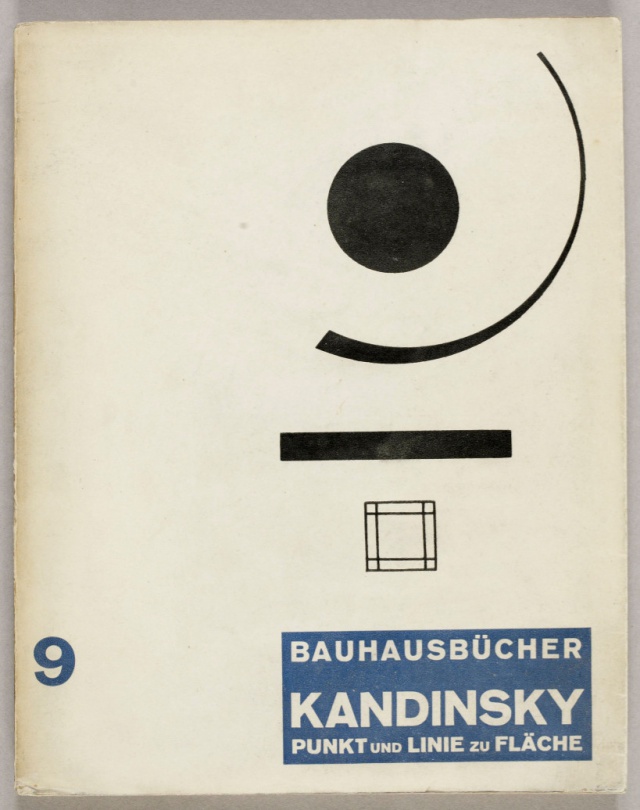
Nowadays, of course, getting one of those Bauhaus tea kettles, or even an original copy of Gropius’s manifesto, would cost a small fortune. Fortunately for design nerds, typography mavens and architecture enthusiasts everywhere, the good folks over at Monoskop have posted online a whole set of beautifully designed publications from the storied school.
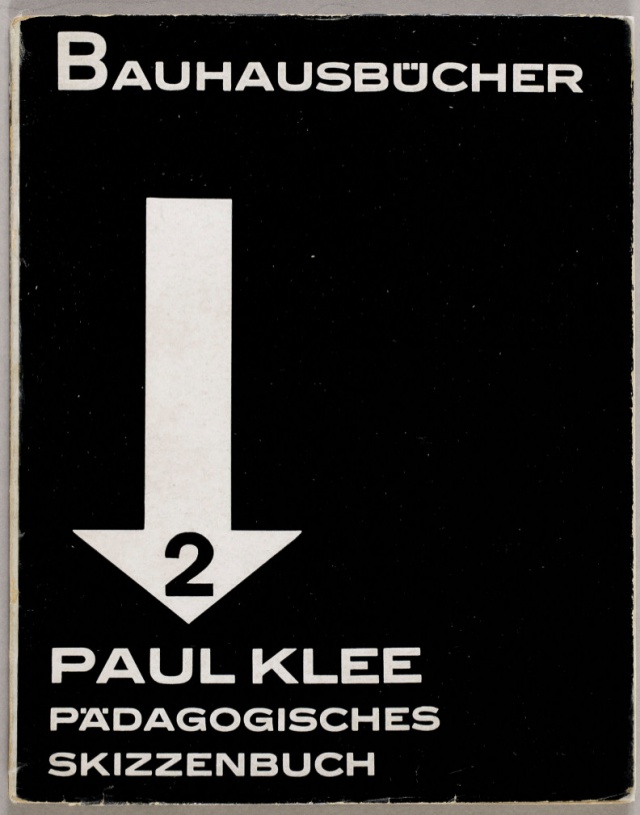
Click here to pick out individual works or here to just get all of them. Sadly, though, you can’t download a teakettle.
The list of Books in the Monoskop Bauhaus archive includes:
- 1. Walter Gropius (ed.), Internationale Architektur, Munich: Albert Langen, 1925.
- 2. Paul Klee, Pädagogisches Skizzenbuch, Munich: Albert Langen, 1925, 50 pp.
- Pedagogical Sketchbook, intro. & trans. Sibyl Moholy-Nagy, New York: Frederick A. Praeger, 1953 (in English)
- Παιδαγωγικό Σημειωματάριο, trans. Β. Λαγοπούλου, 1976. (in Greek)
- Pedagogikheskie eskizy, trans. N. Druzhkovoy, 2005. (in Russian)
- 3. Adolf Meyer (ed.), Ein Versuchshaus des Bauhauses in Weimar, Munich: Albert Langen, 1924.
- 4. Die Bühne am Bauhaus, Munich: Albert Langen, 1925.
- The Theater of the Bauhaus, trans. Arthur S. Wensinger, Middletown, Conn.: Wesleyan University Press, 1961. (in English)
- 5. Piet Mondrian, Neue Gestaltung, Neoplastizimus, Nieuwe Beelding, Munich: Albert Langen, 1925.
- 6. Theo van Doesburg, Grundbegriffe der neuen gestaltenden Kunst, Munich: Albert Langen, 1925.
- Principles of Neo-Plastic Art, London: Lund Humphries, 1969. (in English)
- 7. Walter Gropius (ed.), Neue Arbeiten der Bauhauswerkstäffen, Munich: Albert Langen, 1925.
- 8. L. Moholy-Nagy, Malerei, Fotografie, Film, Munich: Albert Langen, 1925, 115 pp; 2nd ed., 1927, 140 pp. Incl. “Dynamik der Gross-Stadt.”
- Painting Photography Film, trans. Janet Seligman, London: Lund Humphries, 1969. (in English)
- 9. Kandinsky, Punkt und Linie zu Fläche: Beitrag zur Analyse der malerischen Elemente, Munich: Albert Langen, 1926.
- Point and Line to Plane: Contribution to the Analysis of the Pictorial Elements, trans. Howard Dearstyne and Hilla Rebay, New York: Solomon R. Guggenheim Foundation, 1947, 200 pp. (in English)
- 10. J.J.P. Oud, Holländische Architektur, Munich: Albert Langen, 1929.
- 11. Kasimir Malewitsch, Die gegenstandslose Welt, Munich: Albert Langen, 1927.
- 12. Walter Gropius, Bauhausbauten Dessau, Munich: Albert Langen, 1930.
- 13. Albert Gleizes, Kubismus, Munich: Albert Langen, 1928.
- 14. László Moholy-Nagy, Von Material zur Architektur, Munich: Albert Langen, 1929, 241 pp; facsimile repr., Mainz and Berlin: Florian Kupferberg, 1968.
- The New Vision: From Material to Architecture, trans. Daphne M. Hoffman, New York: Breuer Warren and Putnam, 1930; exp.rev.ed. as The New Vision and Abstract of an Artist, New York: George Wittenborn, 1947, 92 pp. (in English)
And here are some key Bauhaus journals:
- bauhaus 1 (1926). 5 pages, 42 cm. Download (23 MB).
- bauhaus: zeitschrift für bau und gestaltung 2:1 (Feb 1928). Download (17 MB).
- bauhaus: zeitschrift für gestaltung 3:1 (Jan 1929). Download (17 MB).
- bauhaus: zeitschrift für gestaltung 3:2 (Apr-Jun 1929). Download (15 MB).
- bauhaus: zeitschrift für gestaltung 3:3 (Jul-Sep 1929). Download (16 MB).
- bauhaus: zeitschrift für gestaltung 2 (Jul 1931). Download (15 MB).
Get more in the Monoskop Bauhaus archive.
Related Content:
The Homemade Hand Puppets of Bauhaus Artist Paul Klee
Time Travel Back to 1926 and Watch Wassily Kandinsky Create an Abstract Composition
Bauhaus, Modernism & Other Design Movements Explained by New Animated Video Series
Jonathan Crow is a Los Angeles-based writer and filmmaker whose work has appeared in Yahoo!, The Hollywood Reporter, and other publications. You can follow him at @jonccrow. And check out his blog Veeptopus, featuring lots of pictures of vice presidents with octopuses on their heads. The Veeptopus store is here.
Read More...Stream 100+ Free Movies from Paramount Pictures on YouTube: Hamlet, Ironweed & More
We got a nice tip from one of our readers, and wanted to pass it along. Paramount Pictures has launched an official, verified YouTube channel — called The Paramount Vault — where you can watch full length films for free [update: if you’re based in the US]. You won’t find Paramount’s best-known films in The Vault, but nonetheless there are some quality, if not entertaining, picks among the 150 films.
The movies are grouped into the following playlists: Classics, Comedy, Action/Adventure, Drama, Horror, Westerns, Science Fiction, and Thrillers. And they include motion pictures like 1987’s Ironweed with Jack Nicholson and Meryl Streep, Hamlet (1990) with Glenn Close and Mel Gibson, Paris When It Sizzles (1964) with William Holden and Audrey Hepburn, Elvis in King Creole (1958), Charlton Heston in the 1950 noir film Dark City, Gene Wilder in Funny About Love (1990), and Margot at the Wedding (2007) with Nicole Kidman, Jack Black and Jennifer Jason Leigh.
The Paramount Vault has been verified by YouTube, so it looks like it’s the real deal. There is also an accompanying verified Facebook page.
If you stream the playlist embedded at the top, you can watch 43 dramas in a row, starting with Ironweed and Hamlet.
The selections above will be added to our list, 4,000+ Free Movies Online: Great Classics, Indies, Noir, Westerns, Documentaries & More. Enjoy!
Update: it looks like you need to be based in the US to view these films — something that wasn’t apparent to me beforehand since I’m based here. My apologies to anyone who’s geoblocked.
h/t David
Related Content:
101 Free Silent Films: The Great Classics
Columbia U. Launches a Free Multimedia Glossary for Studying Cinema & Filmmaking
Read More...Hear Ray Bradbury’s Beloved Sci-Fi Stories as Classic Radio Dramas
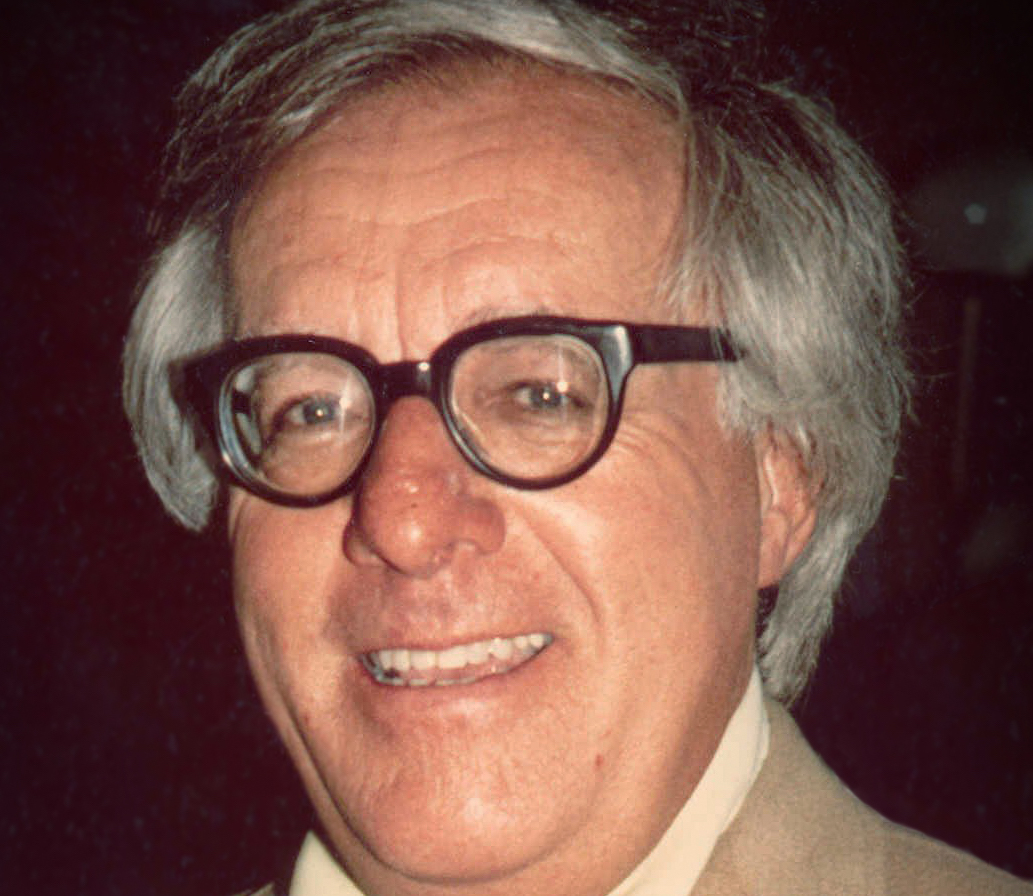
Image by Alan Light released under Creative Commons license.
When he passed away in 2012, science fiction master Ray Bradbury left us with a number of instantly quotable lines. There are aphorisms like “You don’t have to burn books to destroy a culture. Just get people to stop reading them.” There are more humorous, but no less memorable lines he delivers in his advice to writers, such as, “writing is not a serious business… I want you to envy me my joy.” A seemingly endless source of wisdom and enthusiasm, Bradbury’s creative forces seemed in no danger of waning in his later years as he gave impassioned talks and interviews well into his 70s and 80 and his work received renewed appreciation. As one writer declared in 2001, “Ray Bradbury is on fire!”
Of course Bradbury’s been hot since the fifties. That headline alludes to his classic 1953 novel of futuristic book-burning, Fahrenheit 451, which you’ve likely read if you’ve read any Bradbury at all. Or perhaps you’re familiar with Bradbury’s non-sci-fi novel of childhood lost, Dandelion Wine? Both are excellent books well-deserving of the awards and praise heaped upon them. But if they’re all you know of Ray Bradbury, you’re seriously missing out.
Bradbury began his career as a writer of short sci-fi and horror stories that excel in their richness of language and careful plotting. So imaginative is his work that it warranted adaptation into a star-studded television series, The Ray Bradbury Theater. And before that vehicle brought Bradbury’s brilliance into people’s homes, many of those same stories appeared in radio plays produced by shows like NBC’s Dimension X and X Minus One.
From the latter program, at the top, we bring you Mars is Heaven!, a disturbing 1948 tale of interstellar deception. “When the first space rocket lands on Mars,” begins the announcer, “what will we find? Only the ruins of a dead, deserted planet, or will there be life?” Pertinent questions indeed. Bradbury speculated for decades about the meaning of Mars. “The Martian Chronicles,” adapted above by Dimension X, used a story about colonization of the planet as an allegory for humanity’s avarice and folly. Hear many more Dimension X radio plays from The Martian Chronicles collection here, and also the story, “There Will Come Soft Rains.”
The year after 1950’s The Martian Chronicles came 1951’s The Illustrated Man, a collection of shorts that included the tragic, lost-in-space tale “Kaleidoscope,” dramatized above by Mind Webs, a series from Madison, Wisconsin that ran from the 70s through the mid-90s. Though produced well after the golden age of radio drama, the series nonetheless managed to perfectly capture the engrossing sound of that specialized form—with ominous music, and a baritone-voiced narrator with some serious voice-acting chops.
While regional productions like Mind Webs have kept the radio drama fires burning in the U.S., the BBC has continued to produce high-quality radio adaptations on a larger scale. In 1991, they took on eight stories from another fifties Bradbury collection, The Golden Apples of the Sun. The two hour production dramatized the title story and the tales “Hail and Farewell,” “The Flying Machine,” “The Fruit at the Bottom of the Bowl,” “A Sound of Thunder,” “The Murderer,” “The April Witch,” and “The Foghorn.” You can hear them just above. Or stream and download the complete audio at the Internet Archive.
Related Content:
1,000 Free Audio Books: Download Great Books for Free
X Minus One: More Classic 1950s Sci-Fi Radio from Asimov, Heinlein, Bradbury & Dick
Ray Bradbury Gives 12 Pieces of Writing Advice to Young Authors (2001)
Hear Radio Dramas of Isaac Asimov’s Foundation Trilogy & 7 Classic Asimov Stories
Josh Jones is a writer and musician based in Durham, NC. Follow him at @jdmagness
Read More...The New Yorker’s “Comma Queen” Mercifully Explains the Difference Between Who/Whom, Lay/Lie, Less/Fewer & Beyond
From The New Yorker comes “The Comma Queen” video series, which features Mary Norris talking about the finer points of language that come up again and again in our everyday writing. Some of it, no doubt, will come in handy.
Norris began working at The New Yorker in 1978, and has served as a copy editor/proofreader for much of that time. Suffice it to say, she can tell you some instructive things about language.
Above, we start you off with Norris explaining the difference “who” and “whom,” and then “lay” and “lie.” (Bob Dylan take note.) This other clip — focusing on “less” v. “fewer” — gets into a pet peeve of mine. By the way, did I use those dashes correctly in the previous sentence? Well, there’s a video about that too.
You can watch all of the Comma Queen videos over at The New Yorker, or via this YouTube playlist.
And it’s worth noting that Norris has a new book out called Between You and Me: Confessions of a Comma Queen.
Follow us on Facebook, Twitter, Google Plus and LinkedIn and share intelligent media with your friends. Or better yet, sign up for our daily email and get a daily dose of Open Culture in your inbox.
Read More...An Animated Introduction to Virginia Woolf
It’s a pity writer Virginia Woolf (1882–1941) drowned herself before the advent of the Internet.
Industrialization did not faze her.
It’s less clear how the great observer of “the Modern Age” would’ve responded to the proliferation of Mommy bloggers.
Their sheer numbers suggest that perhaps female writers do not need a “room of one’s own” (though presumably all of them would be in favor of such a development.)
Woolf’s name is an enduring one, inspiring both the title of a classic American play and a doggy day care facility. Its owner passed away nearly 75 years ago, yet she remains a perennial on Women’s Studies’ syllabi.
Ergo, it’s possible for the general public to know of her, without knowing much of anything about her and her work. (Find her major works on our lists of Free eBooks and Free Audio Books).
The latest animated installment in The School of Life humanities series seeks to remedy that situation in ten minutes with the video above, which offers insight into her place in both the Western canon and the ever-glamorous Bloomsbury Group, and celebrates her as a keen observer of life’s daily routine. And that by-now-familiar cut-out animation style takes full advantage of the author’s best known head shots.
Arrange whatever pieces come your way.
- Virginia Woolf
Related Content:
Download 55 Free Online Literature Courses: From Dante and Milton to Kerouac and Tolkien
Virginia Woolf’s Handwritten Suicide Note: A Painful and Poignant Farewell (1941)
Ayun Halliday is an author, illustrator, and Chief Primatologist of the East Village Inky zine. Follow her @AyunHalliday
Read More...Support Us
We're hoping to rely on loyal readers, rather than erratic ads. Please click the Donate button and support Open Culture. You can use Paypal, Venmo, Patreon, even Crypto! We thank you!

About Us

Open Culture scours the web for the best educational media. We find the free courses and audio books you need, the language lessons & educational videos you want, and plenty of enlightenment in between.
Advertise With Us

FREE UPDATES!
GET OUR DAILY EMAIL
Get the best cultural and educational resources on the web curated for you in a daily email. We never spam. Unsubscribe at any time.
FOLLOW ON SOCIAL MEDIA

Open Culture editor Dan Colman scours the web for the best educational media. He finds the free courses and audio books you need, the language lessons & movies you want, and plenty of enlightenment in between.
Advertise With Us

