Miranda July’s Quirky Film Presents Somebody, the New App That Connects Strangers in the Real World
Having owned an iPhone for all of one month, I’m still a bit leery of all it can purportedly do for me. Convenience is great, but I’m not sure I’m ready to cede control of all the little tasks, challenges, and puzzles my own imperfect brain has been handling more or less well for nearly half a century.
I don’t hate blundering. And I really like interacting with librarians, local residents, and strangers who might be willing to use my camera to take a group photo in a restaurant or scenic location.
Filmmaker Miranda July’s just released Somebody is, I suspect, something of a niche app.
If you cringe at the idea of flash mobs, Improv Everywhere, and audience interactive theater, it is most definitely not for you.
It’s absolutely perfect for me (or will be once I get up to speed on my touchscreen.)
Basically, you take a selfie, create a profile, and wait for a stranger to select you to deliver a live message as his or her proxy. In addition to trawling the area for the designated recipient, you may be called upon to weep, hug, or get on your knees to get that message across.
Will you make a new friend? Probably not, but you will definitely share a moment.
And because no good deed goes unrewarded, your performance will be open to the vagaries of customer review, a humiliation July does not shy from in the promotional video above.
Is this app for real?
Yes, especially if you live in LA, New York, or another culturally rich Somebody hotspot.
If you don’t—or if receiving a message delivered, in all likelihood, by a tech savvy hipster, makes your flesh crawl—you can still enjoy the film as a comment on our digital existence, as well as a reflection of July’s ongoing desire to connect.
Related Content:
Watch Miranda July’s Short Film on Avoiding the Pitfalls of Procrastination
Learn to Make Buttons with Filmmaker Miranda July
David Sedaris Reads You a Story By Miranda July
Ayun Halliday is an author, homeschooler, and Chief Primatologist of the East Village Inky zine. Follow her @AyunHalliday
Read More...Download for Free 2.6 Million Images from Books Published Over Last 500 Years on Flickr
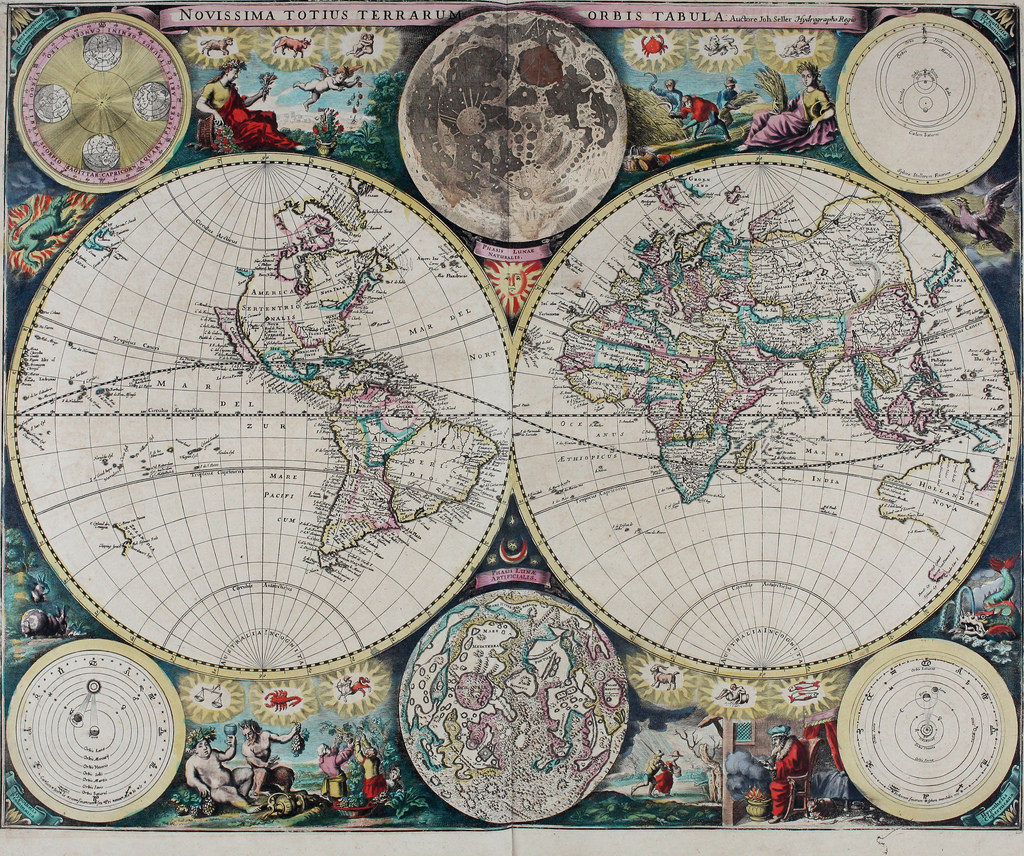
Thanks to Kalev Leetaru, a Yahoo! Fellow in Residence at Georgetown University, you can now head over to a new collection at Flickr and search through an archive of 2.6 million public domain images, all extracted from books, magazines and newspapers published over a 500 year period. Eventually this archive will grow to 14.6 million images.
This new Flickr archive accomplishes something quite important. While other projects (e.g., Google Books) have digitized books and focused on text — on printed words — this project concentrates on images. Leetaru told the BBC, “For all these years all the libraries have been digitizing their books, but they have been putting them up as PDFs or text searchable works.” “They have been focusing on the books as a collection of words. This inverts that.”
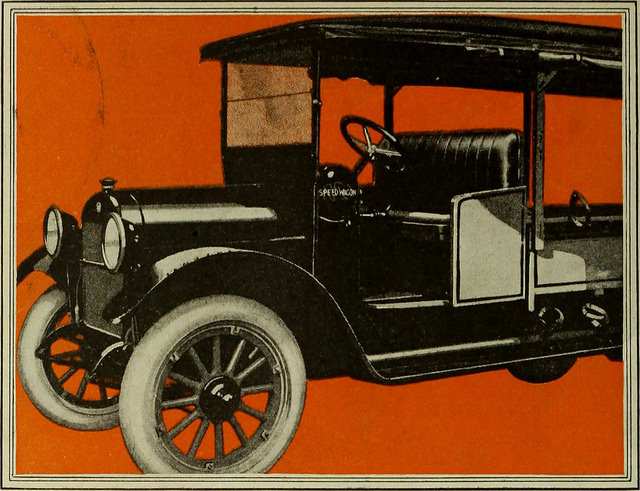
The Flickr project draws on 600 million pages that were originally scanned by the Internet Archive. And it uses special software to extract images from those pages, plus the text that surrounds the images. I arrived at the image above when I searched for “automobile.” The page associated with the image tells me that the image comes from an old edition of the iconic American newspaper, The Saturday Evening Post. A related link puts the image in context, allowing me to see that we’re dealing with a 1920 ad for an REO Speedwagon. Now you know the origin of the band’s name!
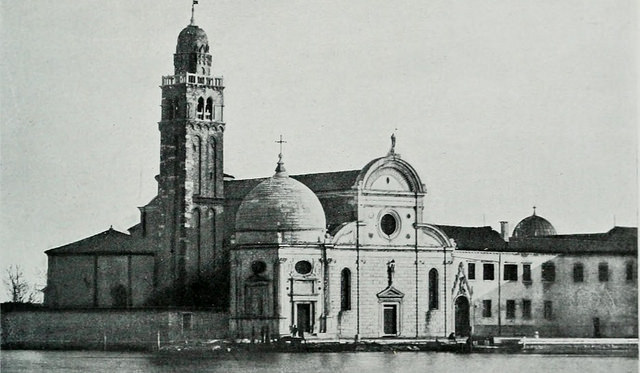
I should probably add a note about how to search through the archive, because it’s not entirely obvious. From the home page of the archive, you can do a keyword search. As you’re filling in the keyword, Flickr will autopopulate the box with the words “Internet Archive Book Images’ Photostream.” Make sure you click on those autopopulated words, or else your search results will include images from other parts of Flickr.
Or here’s an easier approach: simply go to this interior page and conduct a search. It should yield results from the book image archive, and nothing more.
In case you’re wondering, all images can be downloaded for free. They’re all public domain.
More information about the new Flickr project can be found at the Internet Archive.
In the relateds below, you can find other great image archives that recently went online.
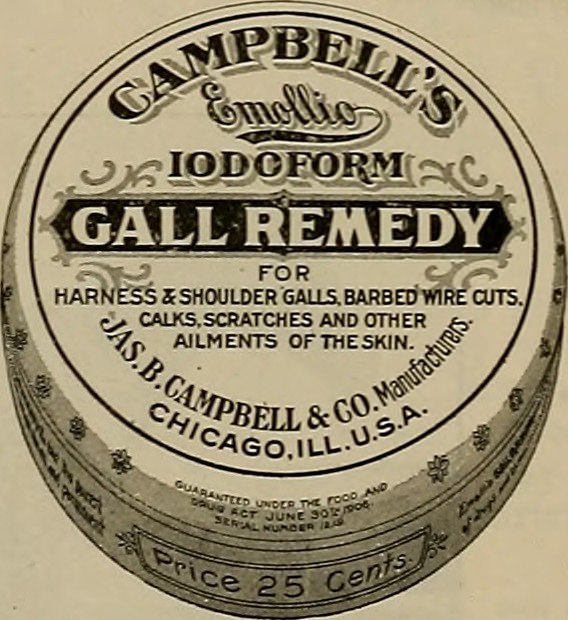
via the BBC and Peter Kaufman
Related Content:
The Metropolitan Museum of Art Puts 400,000 High-Res Images Online & Makes Them Free to Use
New York Public Library Puts 20,000 Hi-Res Maps Online & Makes Them Free to Download and Use
The Rijksmuseum Puts 125,000 Dutch Masterpieces Online, and Lets You Remix Its Art
Read More...Fans Reconstruct Authentic Version of Star Wars, As It Was Shown in Theaters in 1977
I watched Star Wars for the first time in 1977 at the tender age of four. And like a lot of people in my generation and younger, that first time was a major, formative experience in my life. I got all the toys. I fantasized about being Han Solo. And during the summer of ’83, I blew my allowance by watching Return of the Jedi every day for a week in the theater. George Lucas’ epic space opera is the reason why I spent a lifetime watching, making and writing about movies. And if you asked any movie critic, fan or filmmaker who grew up in the ‘80s, they will probably tell you a similar story.
Over the years though, Lucas succumbed to the dark side of the Force. His prequel trilogy, starting with truly god awful The Phantom Menace (1999), is as visually overstuffed as it is cinematically inert. (Somewhere, there’s a dissertation to be written about how widespread feelings of betrayal from the prequels psychically prepared America for the anxiety and disappointments of the Bush administration.)
Worse, fans who want to console themselves by watching Star Wars as they remember seeing it back in the ‘80s are out of luck. Lucas has been quietly butchering the original movies by adding CGI, sound effects and even whole characters – like (gag) Jar Jar Binks — to successive special edition updates. The problem is these updated versions feel bifurcated. It’s as if two different movies with two different aesthetics were clumsily stitched together. Lucas’ spare, muscular compositions in the original movie sit uneasily next to its cartoony, over-wrought additions. Yet this Frankenstein version is the one that Lucas insists you watch. The original cut is just plain not for sale. Lucas even refused to give the National Film Registry the 1977 cut of Star Wars for future preservation. “It’s like this is the movie I wanted it to be,” said Lucas in an interview in 2004, “and I’m sorry if you saw half a completed film and fell in love with it, but I want it to be the way I want it to be.”
Thankfully, hardcore Star Wars fans are telling Lucas, respectfully, to go cram it. As Rose Eveleth in The Atlantic reports, a dedicated online community has set out to create a “despecialized” edition of Star Wars that strips away all of Lucas’s digital nonsense and restores the movie to its original 1977 state. The de facto leader of this movement is Petr Harmy, a 25-year-old guy from the Czech Republic who with the help of a legion of technically savvy film nerds has pieced together footage from existing prints and older DVD releases to create the Despecialized Edition v. 2.5. (Directions on where you can locate it are here.) Above Harmy talks in detail about how he accomplished this feat. And below you can see some side-by-side comparisons. More can be found on Petr Harmy’s page. Finally, in the comments section below, Harmy also points us toward pages with Despecialized stills for Star Wars and The Empire Strikes Back.
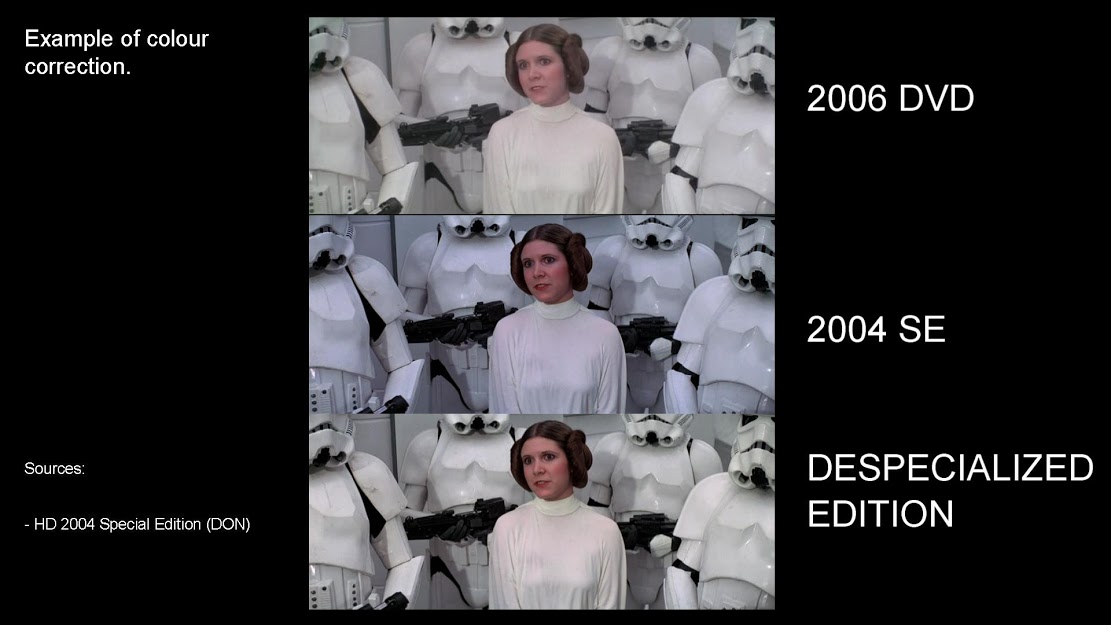
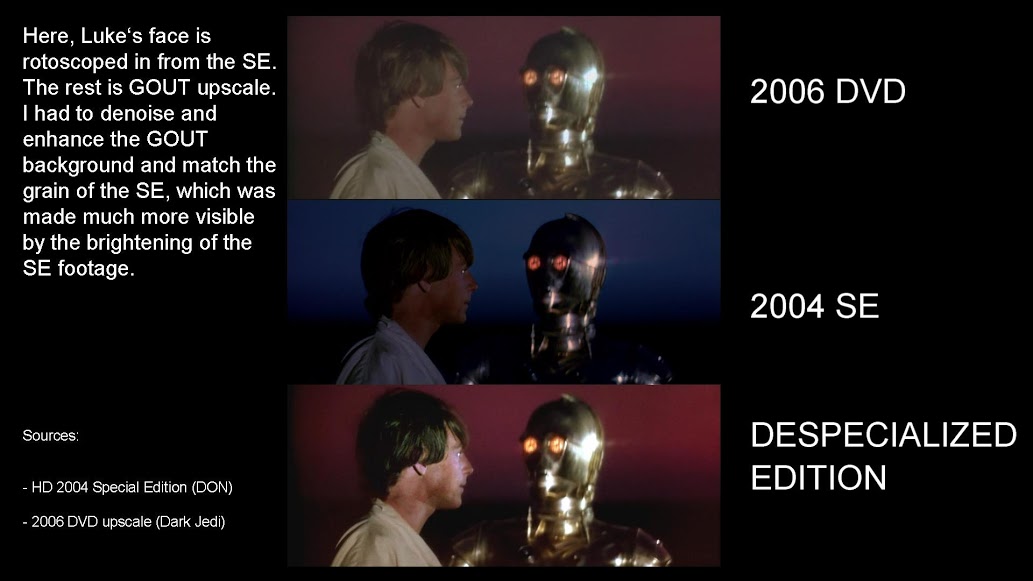
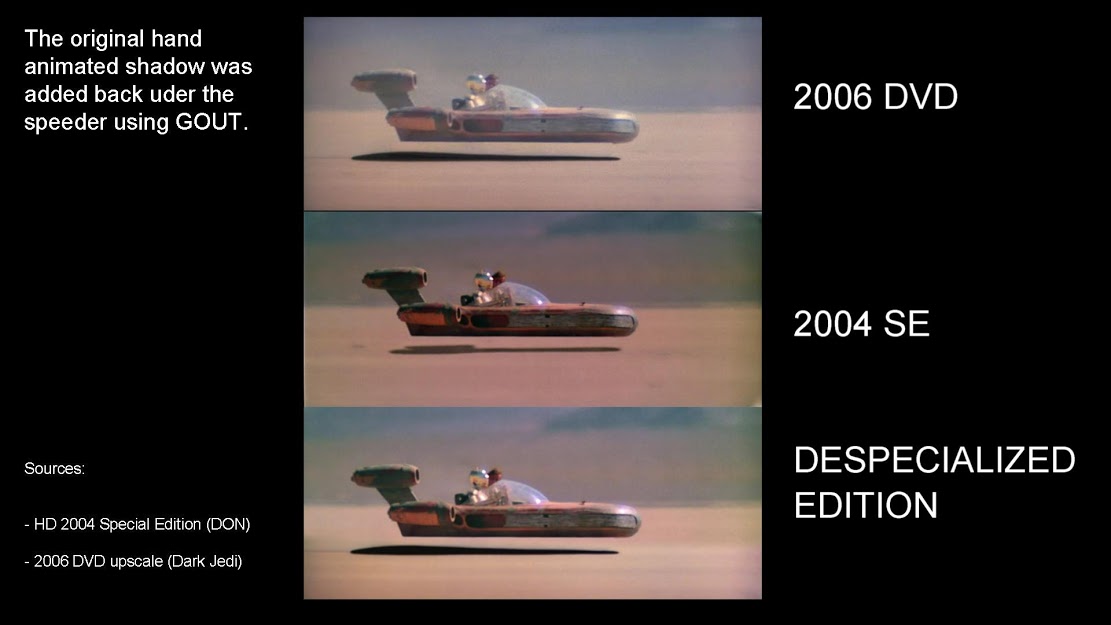
Via The Atlantic
Related Content:
How Star Wars Borrowed From Akira Kurosawa’s Great Samurai Films
Freiheit, George Lucas’ Short Student Film About a Fatal Run from Communism (1966)
Watch the Very First Trailers for Star Wars, The Empire Strikes Back & Return of the Jedi (1976–83)
Joseph Campbell and Bill Moyers Break Down Star Wars as an Epic, Universal Myth
Hundreds of Fans Collectively Remade Star Wars; Now They Remake The Empire Strikes Back
Jonathan Crow is a Los Angeles-based writer and filmmaker whose work has appeared in Yahoo!, The Hollywood Reporter, and other publications. You can follow him at @jonccrow. And check out his blog Veeptopus, featuring one new drawing of a vice president with an octopus on his head daily.
Read More...Miles Davis’ Chili Recipe Revealed
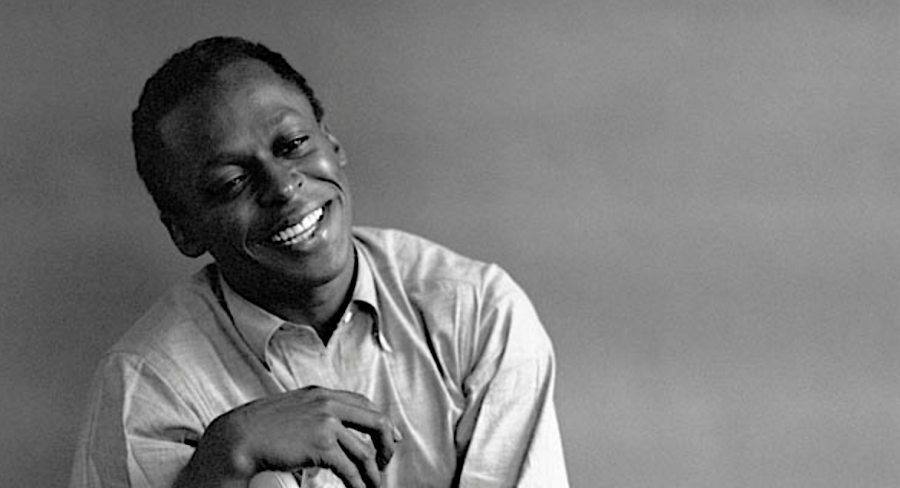
Image by Tom Palumbo, via Wikimedia Commons
No one cooked on the trumpet like Miles Davis. And, as it turns out, he was also quite good in the kitchen (see? I spared you a pun). Tired of going out to restaurants, the foodie Davis decided to learn to make his favorite dishes. “I taught myself how to cook by reading books and practicing, just like you do on an instrument,” he wrote in his autobiography, “I could cook most of the French dishes—because I really liked French cooking—and all the black American dishes.”
Davis, writes the Chicago Sun-Times, “knew how to simmer with soul […] He made chili, Italian veal chops and he fried fish in a secret batter.” Davis’ cookbook has disappeared, and he’s apparently taken his recipe secrets to the grave with him. All but one—his favorite, “a chili dish,” he writes, “I called Miles’s South Side Chicago Chili Mack. I served it with spaghetti, grated cheese, and oyster crackers.”
While Davis didn’t exactly spell out the ingredients or instructions for his beloved chili in his memoir, his first wife Frances, whom Davis trusted implicitly with the chili making, submitted the following to Best Life magazine in 2007. While you’re prepping, I recommend you put on 1956’s Cookin’ With the Miles Davis Quintet.
Miles’s South Side Chicago Chili Mack (Serves 6)
1/4 lb. suet (beef fat)
1 large onion
1 lb. ground beef
1/2 lb. ground veal
1/2 lb. ground pork salt and pepper
2 tsp. garlic powder
1 tsp. chili powder
1 tsp. cumin seed
2 cans kidney beans, drained
1 can beef consommé
1 drop red wine vinegar
3 lb. spaghetti
parmesan cheese
oyster crackers
Heineken beer1. Melt suet in large heavy pot until liquid fat is about an inch high. Remove solid pieces of suet from pot and discard.
2. In same pot, sauté onion.
3. Combine meats in bowl; season with salt, pepper, garlic powder, chili powder, and cumin.
4. In another bowl, season kidney beans with salt and pepper.
5. Add meat to onions; sauté until brown.
6. Add kidney beans, consommé, and vinegar; simmer for about an hour, stirring occasionally.
7. Add more seasonings to taste, if desired.
8. Cook spaghetti according to package directions, and then divide among six plates.
9. Spoon meat mixture over each plate of spaghetti.
10. Top with Parmesan and serve oyster crackers on the side.
11. Open a Heineken.
Mental Floss, who bring us the above, also cites another recipe Davis learned from his father, quoted by John Szwed in So What: The Life of Miles Davis. This one comes with no instructions, so “like a jazz musician, you’ll have improvise.”
bacon grease
3 large cloves of garlic
1 green, 1 red pepper
2 pounds ground lean chuck
2 teaspoons cumin
1/2 jar of mustard
1/2 shot glass of vinegar
2 teaspoons of chili powder
dashes of salt and pepper
pinto or kidney beans
1 can of tomatoes
1 can of beef brothserve over linguine
Dig it, man.
via Mental Floss
Related Content:
Leo Tolstoy’s Family Recipe for Macaroni and Cheese
1967 Cookbook Features Recipes by the Rolling Stones, Simon & Garfunkel, Barbra Streisand & More
Ernest Hemingway’s Summer Camping Recipes
Alice B. Toklas Reads Her Famous Recipe for Hashish Fudge (1963)
Josh Jones is a writer and musician based in Durham, NC. Follow him at @jdmagness
Read More...Don Pardo (1918–2014), Voice of Saturday Night Live, Suggests Using Short Words
Don Pardo voiced the introductions of Saturday Night Live for 38 seasons. He began calling out the names of the S.N.L. cast members during the first episode in October, 1975, and (except for the 1981–82 season) he kept calling out those names straight through last May. Chevy Chase, Gilda Radner, John Belushi, Bill Murray, Eddie Murphy, Tina Fey — he called them all. Thanks to an impersonator, you can hear a compilation of Pardo’s call for every cast member.
Don Pardo died yesterday at 96 years of age. Earlier in his career, he was the announcer for a number of American TV shows, including The Price Is Right, Jackpot, and Jeopardy!. But his voice became part of the fabric of America’s greatest comedy show, Saturday Night Live. And he continued voicing the intro long after his formal retirement from NBC in 2004. Not lacking energy (watch him blow out his candles on his 90th birthday), Pardo flew from Tucson to New York weekly to get S.N.L. started. Above, we have a short video that features Pardo, then 88, showing off, his sheer linguistic awesomeness.
Somehow, I’m now hoping that whenever my day comes, Don Pardo’s voice will introduce me on the other side.
Related Content:
The Stunt That Got Elvis Costello Banned From Saturday Night Live
William S. Burroughs on Saturday Night Live, 1981
Read More...The Glossary Universal Studios Gave Out to the First Audiences of David Lynch’s Dune (1984)

Next to Star Wars, David Lynch’s Dune was one of my very first introductions to great science fiction filmmaking, and my first introduction to David Lynch. My sci-fi-loving father and I watched it over and over, along with Nicolas Roeg’s The Man Who Fell to Earth, Kubrick’s 2001, and popcornier fare like the Planet of the Apes films. Now, when I call Dune “great,” I’m fully aware that many well-respected critics, especially the late Roger Ebert, hated, and continue to hate, Dune. Some fans and critics—and for the life of me I cannot understand why—have even stated a preference for the Syfy Channel’s mediocre 2000 miniseries adaptation, mostly because of issues of “faithfulness” to the source, despite it looking, as one blogger aptly put it, “like a cross between a telenovela and a youth group staging of Godspell.” This won’t stand for me. Some poor editing decisions notwithstanding, Lynch’s Dune is brilliant. Hell, even Frank Herbert himself, godlike creator of the Dune universe, loved it.
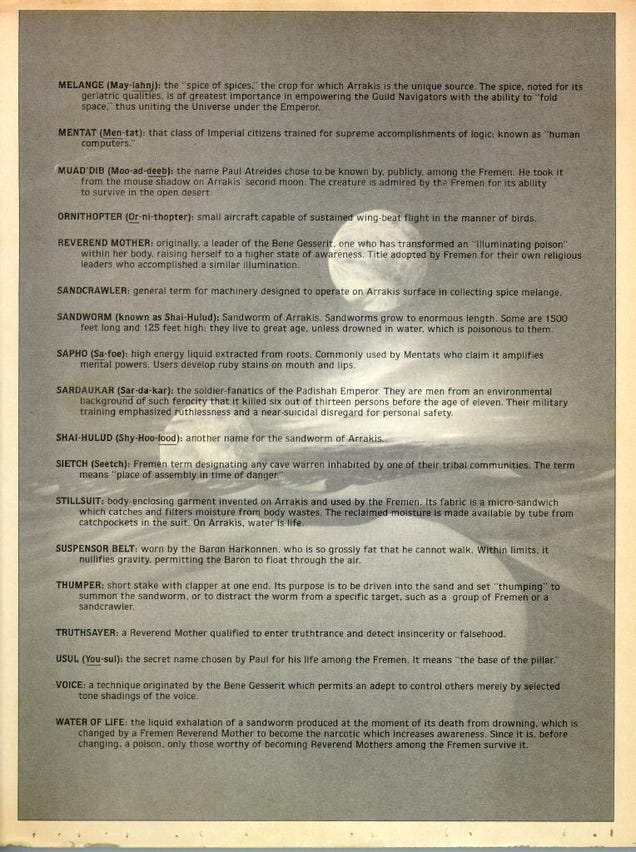
In 1984, however, the movie seemed destined for permanent obscurity, not cult fandom. Lynch disowned it—releasing it under the name “Alan Smithee,” longstanding pseudonym of embarrassed directors. For its tanking in the theaters, Dune appears on this list of “Greatest Box Office Bombs” for the years 1983–84, along with turds like Krull and the sequel to Saturday Night Fever. “If a film-viewer had no knowledge of the massively dense book,” the reviewer notes, “the bloated film made little sense.”
While I found Dune’s nigh-impenetrably alien nature alluring, film-going audiences had little patience for it. A large part of the problem, of course, is Herbert’s invented language. “Within the first 10 minutes,” writes Daniel Snyder at The Atlantic, “the film bombarded audiences with words like Kwisatz Haderach, landsraad, gom jabber, and sardaukar with little or no context.” Contrast this with Star Wars’ “blaster,” “droid,” and “force”—“words for made up things but they’re words that we know.” Although Stanley Kubrick’s A Clockwork Orange—with its heavy, untranslated nadsat slang—was a hit over a decade earlier, it seems Universal Studios felt Dune’s audiences needed preparatory materials, and so, reports io9, they circulated a glossary to filmgoers (first page at the top, obverse above—click to enlarge and then click again).
There’s little information on when, exactly, the studio decided this was necessary, or how they expected audiences to read it in the dark. But it’s perfect for home viewing. In the dark about the precise nature of a “fremkit”? Flip on the lights, pause your Amazon stream or blu-ray, scroll down, and there you have it: “desert survival kit of Fremen manufacture.” (See the previous entry for a “Fremen” explanation.) For all its uselessness in an actual theater, you have to hand it to whomever was tasked with compiling this list of terms; it’s a fairly comprehensive crash course on Herbert’s expansive space epic. It’s doubtful David Lynch had anything to do with these materials, but it’s also true that he found the world of Dune almost as baffling as those first audiences. Just above, see him in a pained interview on the “nightmare” that was the making of the film. No matter what he feels about it, I’m one fan who’s grateful he endured the torment.
via io9
Related Content:
Japanese Movie Posters of 10 David Lynch Films
David Lynch’s Perfume Ads Based on the Works of Hemingway, F. Scott Fitzgerald & D.H. Lawrence
David Lynch Explains Where His Ideas Come From
Josh Jones is a writer and musician based in Durham, NC. Follow him at @jdmagness
Read More...The 1985 Soviet TV Adaptation of The Hobbit: Cheap and Yet Strangely Charming
If you call yourself a Tolkien fanboy or fangirl, you’ve almost certainly kept up with the various film and television adaptations of not just the Lord of the Rings trilogy, but of its predecessor, The Hobbit, or There and Back Again. Tolkien’s first children’s novel (or so the literary world first received it). The story it tells of the reluctant hero Bilbo Baggins and the band of raffish compatriots who drag him out to claim some treasure from Smaug the dragon offers understandably irresistible material for adaptation: the richly detailed, often funny high-fantasy adventure has, over the decades, made for numerous productions on the stage, radio, and screen.
They’ve ranged from low- to high-profile, from Gene Deitch’s loose-as-possible 12-minute “animated” adaptation that came out in 1966 to Peter Jackson’s tripartite, high-framerate, nine-hour series of major motion pictures, two currently released with one to go. But what to make of the Soviet Hobbit above?
Known in English as The Fairytale Journey of Mr. Bilbo Baggins, The Hobbit and in Russian, in full, as Сказочное путешествие мистера Бильбо Бэггинса, Хоббита, через дикий край, чёрный лес, за туманные горы. Туда и обратно. По сказочной повести Джона Толкина “Хоббит,” the hourlong TV movie debuted on the Leningrad TV Channel’s children’s show Tale After Tale in 1985. This unlicensed adaptation frames itself with the words of a Tolkien stand-in called “the Professor,” using live actors to play the main characters like Bilbo, Thorin, Gandalf, and Gollum, portraying the more exotic ones with either puppets or, according to Tolkien Gateway, dancers from the Leningrad State Academic Opera and Ballet Theatre. The fact that this version of The Hobbit only recently became available with real English subtitles (as opposed to goofy parody ones) goes to show just how seriously the Tolkien fandom has taken it, but it does retain a kind of handcrafted charm. Plus, it gives the internet the chance to indulge in the obligatory Yakov Smirnoff gag: in Soviet Russia, ring finds you.
Related Content:
The Hobbit: The First Animation & Film Adaptation of Tolkien’s Classic (1966)
C.S. Lewis’ Prescient 1937 Review of The Hobbit by J.R.R. Tolkien: It “May Well Prove a Classic”
Listen to J.R.R. Tolkien Read a Lengthy Excerpt from The Hobbit (1952)
Soviet-Era Illustrations Of J. R. R. Tolkien’s The Hobbit (1976)
Illustrations of The Lord of the Rings in Russian Iconography Style (1993)
Download Eight Free Lectures on The Hobbit by “The Tolkien Professor,” Corey Olsen
Colin Marshall hosts and produces Notebook on Cities and Culture and writes essays on cities, language, Asia, and men’s style. He’s at work on a book about Los Angeles, A Los Angeles Primer. Follow him on Twitter at @colinmarshall or on Facebook.
Read More...Werner Herzog’s Rogue Film School: Apply & Learn the Art of Guerilla Filmmaking & Lock-Picking

Image by Erinç Salor
No Eli Roth gorefest or low-budget video nasty, no Hubert Selby or Thomas Hardy adaptation, no Michael Hanecke gutpunch nor the bleakest noir can compare with the work of Werner Herzog when it comes to existential dread. His documentaries and absurdist tragicomedies reach into the heart of human darkness and doomed obsessive weirdness. Even his turns as an actor and producer take him into shadowy, amoral places where grim, sure death awaits. Do you, dear reader, dare follow him there?
If so, you must first brave the application for Herzog’s Rogue Film School. Lessons include “the art of lock-picking, traveling on foot, the exhilaration of being shot at unsuccessfully, the athletic side of filmmaking, the creation of one’s own shooting permits, the neutralization of bureaucracy, and guerilla filmmaking.” Have technical questions? “For this purpose,” Herzog writes in his 12-point description of Rogue, “please enroll at your local film school.” This is no beginner’s workshop; it is “about a way of life. It is about a climate, the excitement that makes film possible.” This being Herzog, “excitement” likely involves death-defying danger. Prepare for the worst.
But you who are applying for the Rogue Film School know this already. You are up for the challenge. You also know that Herzog doesn’t put himself bodily and psychologically close to—and over—the edge of civilization just for the sake of a thrill. This is art—raw, confrontational, and utterly uncompromising. And so, Rogue Film School will also “be about poetry, films, music, images, literature.” There is a required, eclectic reading list: J.A. Baker’s document of hawk life, The Peregrine, Hemingway’s The Short Happy Life of Francis Macomber & Other Stories, Virgil’s Georgics. Suggested readings include The Poetic Edda, The Conquest of New Spain by Bernal Diaz del Castillo, and—somewhat unexpectedly—The Warren Report.
And of course, there is film, “which could include your submitted films,” but will also include a required viewing list: John Huston’s The Treasure of the Sierra Madre, Elia Kazan’s Viva Zapata, Gillo Pontecorvo’s The Battle of Algiers, Satyajit Ray’s The Apu Trilogy, and Abbas Kiarostami’s Where is the Friend’s Home? (if available, he writes—watch it here)—an Iranian coming-of-age movie on BFI’s “Top fifty films for children up the age of 14” list. You will discover ways to “create illumination and an ecstasy of truth.” But do not for a moment think this will involve some middlebrow New Age brand of self-discovery. “Censorship will be enforced,” Herzog warns, “There will be no talk of shamans, of yoga classes, nutritional values, herbal teas, discovering your Boundaries, and Inner Growth.” You will probably eat meat raw from a predatory beast you’ve killed with your bare hands.
Alternately, you may have canapés and drinks at a secluded bar in the UK while Herzog chats you up about your latest project and his. So began the orientation to Rogue Film School for filmmaker and sound designer Marcelo de Oliveira, who chronicled his experience as a Herzog apprentice in a two-part write up on the Scottish Documentary Institute’s Blog. On day one, Herzog advised his pupils to “be prepared to step across the borders.” De Oliveira quotes the master saying “Film school will not teach you that we have a natural right as filmmakers to steal a camera or steal certain documents.” And though Herzog does not explicitly advocate such activities, he strongly implies they may be justified, referring to his own act of stealing a camera from the Munich Film School—the same camera with which he shot the crazed and visionary Fitzcarraldo. The theft, Herzog has said, was no crime, but “a necessity.”
Herzog is not a guru, transmitting instructions for enlightenment to cross-legged disciples. He is a catalyst, encouraging his students to “go absolutely and completely wild” for the sake of their individual vision. His film school sounds like the kind of opportunity no daring filmmaker should pass up, but should you apply and get rejected, you can still learn a thing or two from the great German director. Just watch the video above, “Werner Herzog’s Masterclass.” Herzog shared his wisdom and experience with a rapt audience at last year’s Locarno Film Festival. Among the many pieces of advice were the following, compiled by Indiewire. See their post for more essential highlights from this fascinating session.
- It’s a very dangerous thing to have a video village, a video output. Avoid it. Shut it down. Throw it into the next river. You have an actor, and people that close all staring at the monitor gives a false feeling; that ‘feel good’ feeling of security. It’s always misleading. You have to avoid it.
- I always do the slate board; I want to be the last one from the actors on one side and the technical apparatus on the other side. I’m the last one and then things roll. You don’t have to be a dictator.
- Never show anyone in a documentary, rushes. They’ll become self-conscious. Never ever do that.
- Sometimes it’s good to leave your character alone so no one can predict what is going to happen next. Sometimes these moments are very telling and moving.
- Dismiss the culture of complaint you hear everywhere.
- You should always try to find a way deep into someone.
Related Content:
Werner Herzog Picks His 5 Favorite Films
Portrait Werner Herzog: The Director’s Autobiographical Short Film from 1986
Werner Herzog Gets Shot During Interview, Doesn’t Miss a Beat
Josh Jones is a writer and musician based in Durham, NC. Follow him at @jdmagness
Read More...Finnish Musicians Play Bluegrass Versions of AC/DC, Iron Maiden & Ronnie James Dio
Europeans do weird things with American folk music. Sometimes they do horrible things, like the 1994 techno rendition of traditional country song “Cotton-Eyed Joe” by a Swedish act who called themselves “Rednex” and who dressed up like cartoonish hillbillies in a parody only slightly less offensive than their music. In the video above, we have three continents colliding for another Scandinavian appropriation of Appalachian tropes, by way of a cover of “Thunderstruck” by Aussies AC/DC. The Finnish bluegrass band Steve ‘N’ Seagulls has achieved viral notoriety with their most recent release, which features banjo, mandolin, upright bass, accordion, a drummer who plays the spoons, and an anvil. Oh, and of course a wardrobe of overalls and suspenders without shirts. And the accordion player arrives on the scene on a riding mower.
Offensive? I don’t know—where Rednex was clearly minstrelsy, this has the feel of a fond tribute to a culture whose musical traditions Steve ‘N’ Seagulls clearly adores, though their wearing of Native headdress (below) would not sit well with certain music festival organizers.
As for their take on AC/DC; I almost prefer it to the original, though one Metafilter user pointed out that being able to hear the lyrics with such clarity does confirm one’s suspicion that they’re completely inane. And lest you think Steve ‘N’ Seagulls is some one-cover-hit wonder, check out their covers of Iron Maiden’s “The Trooper” above and Dio’s “Holy Diver” below.
via Metafilter
Related Content:
A Bluegrass Version of Metallica’s Heavy Metal Hit, “Enter Sandman”
Pakistani Musicians Play Amazing Version of Dave Brubeck’s Jazz Classic, “Take Five”
Watch Jimi Hendrix’s ‘Voodoo Chile’ Performed on a Gayageum, a Traditional Korean Instrument
Josh Jones is a writer and musician based in Durham, NC. Follow him at @jdmagness
Read More...Is It Always Right to Be Right?: Orson Welles Narrates a 1970 Oscar-Winning Animation That Still Resonates Today
Is it possible for a short film made during the Nixon administration to perfectly describe America’s current, completely screwed up political situation? Sure, Lee Mishkin’s Oscar-winning animated short Is It Always Right to Be Right? (1970) might date itself through oblique references to hippies, the Vietnam war and the Civil Rights movement, not to mention the movie’s groovy animation style, but the message of the movie feels surprisingly relevant today. You can watch the movie above.
The short, which is narrated by none other than Orson Welles, describes a land where everyone believed themselves to be right, and where indecisiveness and complexity were considered utterly weak. “When differences arose between the people of this land,” intones Welles at one point, “they looked not for truth but for confirmation for what they already believed.”
Wow, that sounds just like cable news. As the divisions grew and deepened, the land eventually ground to a halt. “Everyone was right, of course. And they knew it. And were proud of it. And the gap grew wider until the day came when all activity stopped. Each group stood in its solitary rightness, glaring with proud eyes at those too blind to see their truth, determined to maintain their position at all costs. This is the responsibility of being right.” Wow, that sounds like Congress.
Then someone tried to temper this stark black-and-white world by saying things like “I might be wrong,” which starts a cascade of introspection and tolerance. Ah, the 70s – that innocent time before the 24-hour news cycle. A time before network execs realized that bloviating morons preaching the rightness of their own position just plain makes good TV.
A year later, you might be interested to know, Orson Welles narrated another animated parable. Watch Freedom River here.
Is It Always Right to Be Right? will be added to the Animation section of our collection, 4,000+ Free Movies Online: Great Classics, Indies, Noir, Westerns, Documentaries & More as well as our collection of Free Oscar-Winning Films.
Related Content:
Listen to Eight Interviews of Orson Welles by Filmmaker Peter Bogdanovich (1969–1972)
Watch Orson Welles’ The Stranger Free Online, Where 1940s Film Noir Meets Real Horrors of WWII
The Hearts of Age: Orson Welles’ Surrealist First Film (1934)
Orson Welles Explains Why Ignorance Was His Major “Gift” to Citizen Kane
Jonathan Crow is a Los Angeles-based writer and filmmaker whose work has appeared in Yahoo!, The Hollywood Reporter, and other publications. You can follow him at @jonccrow. And check out his blog Veeptopus, featuring one new drawing of a vice president with an octopus on his head daily.
Read More...Support Us
We're hoping to rely on loyal readers, rather than erratic ads. Please click the Donate button and support Open Culture. You can use Paypal, Venmo, Patreon, even Crypto! We thank you!

About Us

Open Culture scours the web for the best educational media. We find the free courses and audio books you need, the language lessons & educational videos you want, and plenty of enlightenment in between.
Advertise With Us

FREE UPDATES!
GET OUR DAILY EMAIL
Get the best cultural and educational resources on the web curated for you in a daily email. We never spam. Unsubscribe at any time.
FOLLOW ON SOCIAL MEDIA

Open Culture editor Dan Colman scours the web for the best educational media. He finds the free courses and audio books you need, the language lessons & movies you want, and plenty of enlightenment in between.
Advertise With Us


