If you’ve ever listened to Radiolab, one of the most popular and enduring podcasts out there, you know how much music (and sound more generally) plays a special role in the show’s production. And that’s all largely the creation of Radiolab’s co-host, Jad Abumrad. You know those “jaggedy sounds, little plurps and things, strange staccato, percussive things” that make the show so distinctive? That’s all Abumrad, who majored in experimental music composition and production at Oberlin College.
To get inside Abumrad’s thinking about music (what is sound? what is music? why do we organize sound into music?) watch the video above. Mac Premo interviewed Jad, then turned the conversation into a short creative film. Note: If you don’t react well to seeing fast-moving images, you might want to skip this one.
If you would like to support the mission of Open Culture, consider making a donation to our site. It’s hard to rely 100% on ads, and your contributions will help us continue providing the best free cultural and educational materials to learners everywhere. You can contribute through PayPal, Patreon, and Venmo (@openculture). Thanks!
In March of 2015, The Guardian published a piece on Prince’s vault, begun by his former sound engineer Susan Rogers before his Purple Rain superstardom: “It’s an actual bank vault, with a thick door,” she said, “in the basement of Paisley Park. When I left in 87, it was nearly full.” That was 30 years ago. Composer and Prince orchestrator Brent Fischer speculated that “over 70% of the music we’ve worked on for Prince is yet to come out.” Already able to release “in a decade what most musicians couldn’t put out in a lifetime,” Prince stored in his vaults enough to reveal him as thrice the prolific genius we knew in life.
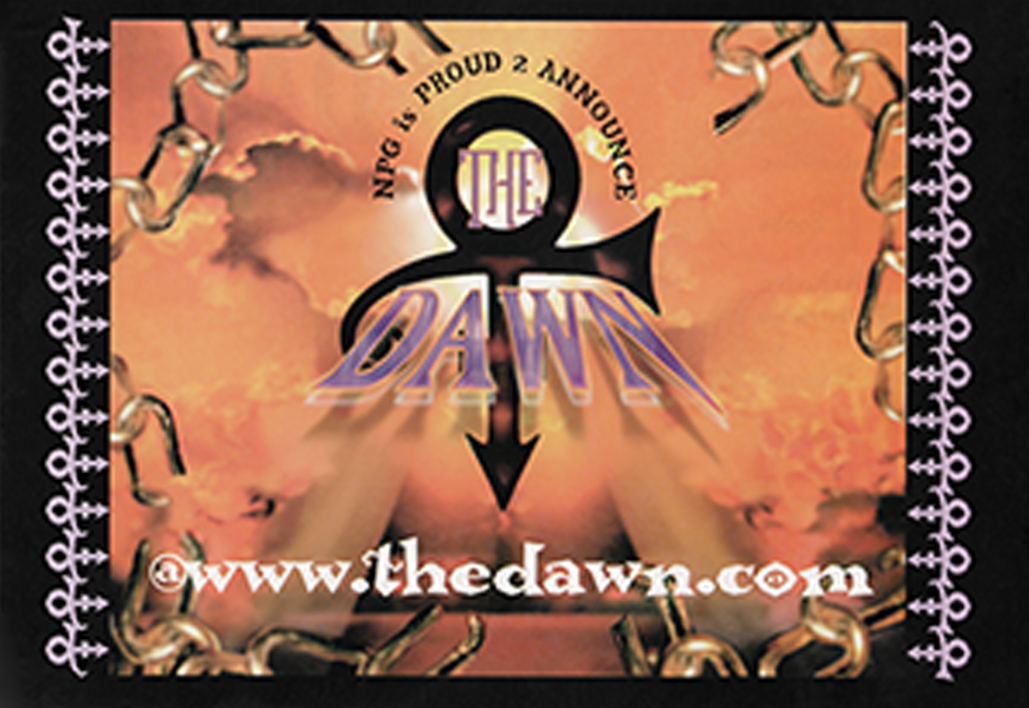
Now that Prince has departed, the vault has been finally been opened. What’s in it? Speculation, rumor, and hoaxes abound; we could see a posthumous album a year for the next century. As they trickle out we’ll likely see more conventional, less Prince-like releasing strategies, now that he is no longer personally in control of his output. This will surely make it easier on his fans, but will also strip the music of much of its curious mystique. “A streaming skeptic before it was fashionable,” writes August Brown at the L.A. Times, and “a born futurist,” Prince excelled at “creating new distribution systems under his purview.” As an early adopter of web technology, he began giving away and selling his music and merchandise online as early as 1996, when he created his first official website, “The Dawn” (above).
Prince’s web debut happened in the midst of his pitched battle with Warner Brothers, and three years after he changed his name to the “Love Symbol.” Browsing through the history of his internet strategies allows us to see how his personalized distribution approaches and online identities evolved over the next two decades as he regained full creative independence. We can easily survey that history all in one place now, thanks to the Prince Online Museum, an archive of 16 of Prince’s various websites, each one with its own profile written in Prince’s distinctive idiom, with “testimonials from the people who were involved in creating and running them for Prince,” writes The New York Times, and “links as well as screen shots and videos” of each site, none of them currently active.
There’s even a precursor to Prince’s online world, Prince Interactive, a 1994 CD-Rom “coupled with Prince’s underground film, The Beautiful Experience.” This early attempt makes clear that “Prince was fascinated and excited by the possibilities of connecting directly 2 his audience through their computers. It would be several years until that became a reality 4 him, but the idea started here.” (See a slow video walk-through of the CD-Rom above). After 1996’s “The Dawn” came the first official online retail store, “1–800-NewFunk,” and an online lyric book, “Crystal Ball Online.” Successive sites each had a distinctive focus: on Prince’s charitable foundation with “Love 4 One Another”; on various iterations of his “NPG Music Club,” an “online distribution hub”—including the “virtual estate” of the 2003 iteration (see picture further up); and on rebranding efforts like “3121.com.”
One of the most striking of all of the various sites, “Lotusflow3r” (top) contained “vibrant 3D imagery and animation connected 2 the music” and design of the 3‑CD album set of the same name from 2009. The last entry in the archive, the “3rdEyeGirl” site from 2013, was created for Prince’s new band and “was another example of choosing 2 bypass traditional channels and go his own way.” Each of these site profiles act as “snapshots in time to experience the Web sites just like when they were active,” writes Prince Online Museum director Sam Jennings. They also showcase “his fierce independence” and desire “to connect directly with his audience without any middleman.”
With each film he made, the internationally acclaimed Iranian filmmaker Abbas Kiarostami left critics grasping for superlatives, and his death this past Monday has challenged them to find ways to fully describe the distinctive nature of his cinematic mastery. In his New Yorker obituary for Kiarostami, Richard Brody calls him “simply one of the most original and influential directors in the history of cinema,” as well as “the first Iranian filmmaker who expanded the history of cinema not merely in a sociological sense but in an artistic one,” whose “tenacious, bold, restless originality” brought the world to Iranian cinema and Iranian cinema to the world.
Brody narrated video essays on two films of Kiarostami’s. He calls 1999’s The Wind Will Carry Us (above) “the greatest of Kiarostami’s Iranian films,” a showcase for his combination of “patient and loving attention to characters drawn from daily life and to their landscapes with a precise, canny, and fierce distillation of concrete phenomena into brilliant, vertiginous, and liberating abstractions.” In 2012’s Tokyo-set Like Someone in Love, Kiarostami’s final film, he “found himself freer than usual to depict such ordinary events as a woman, her hair uncovered, in a bedroom with a man. But, facing the seemingly limitless freedom of depiction, Kiarostami ingeniously reverses the equation; starting with the title and continuing with the very first shot, he questions the difference between simulation and reality, between imitation and being.”
Audiences everywhere thrilled to Kiarostami’s treatment of those concepts, potentially abstruse in the hands of other filmmakers but never in his, when he put them at the center of 2010’s Juliette Binoche-staring Certified Copy, the first film he made outside Iran. In his video essay “The Double Life of James and Juliette: Mysteries and Perceptions in Kiarostami’s Certified Copy,” cinema scholar Peter Labuza breaks down this many-layered, multifaceted, multilingual work, in one sense a no-frills relationship drama about a man and a woman who may or may not be or have been married, and in another a “complete and total enigma” deeply concerned with “the nature and role of perception.”
Graham Bollard’s “The Minimalist Cinema of Abbas Kiarostami” focuses on the director’s aesthetic choices, such as often shooting inside cars, whose space “helps define the main character’s point of view” and repeating a shot in such a way that “we, the audience, are forced to view it in different ways that take on different meanings,” drawing visual evidence from Kiarostami’s Iranian films like Taste of Cherry, Ten, and Close-Up, from which Hamid Dabashi’s book Close Up: Iranian Cinema, Past, Present, and Future takes its name. The essay ends with a quote from it, describing Kiarostami’s work as “there to filter the world and thus strip it of all its cultures, narrativities, authorities, and ideologies” — no small accomplishment for one lifetime in cinema.
Nearly every Western youth subculture in existence eventually gets its own Hollywood film. Like most such films, 1993’s Swing Kids—which tells the story of jazz-loving German youth during the rise of the Third Reich—managed to be both inaccurate and critically reviled. Roger Ebert hated the film’s celebration of “a very small footnote to a very large historical event,” and compared the Swing Kids to “Nero, who fiddled while Rome burned.” Ebert’s reaction is uncharacteristic of him; he writes critically of the film, but he also seemed to find its subject—the kids themselves—repellant.
The review prompts us to ask: Were these kids—dubbed Swingjugend by the Nazis—participating in a revolutionary act of cultural resistance, or were they no more than typical, naive teenagers who preferred to “listen to big bands than enlist in the military”? (After all, writes Ebert, “who wouldn’t?”) But the question about the Swing Kids’ political motivations may be less relevant than one about whether their pursuit of a carefree, jazz-scored lifestyle under Nazism constitutes a “small footnote” in history. Should we know and care about the Swing Kids, and if so, why?
A German site called Swingstyle compiles information about the subculture and admits that “the real Swing Kids were politically unsophisticated.” Despite being seen as a “youth problem” by Nazi authorities, they “actually cared little for contesting official policies toward Jews or other matters. They just wanted to have fun at a dark time in their country’s history, and avoid the war if possible.” Or, rather, most of them wanted to avoid joining the Hitler Youth, mandated for all young people in 1939: “We must remember the age of most swing kids was between 12 and 16 or 17.”
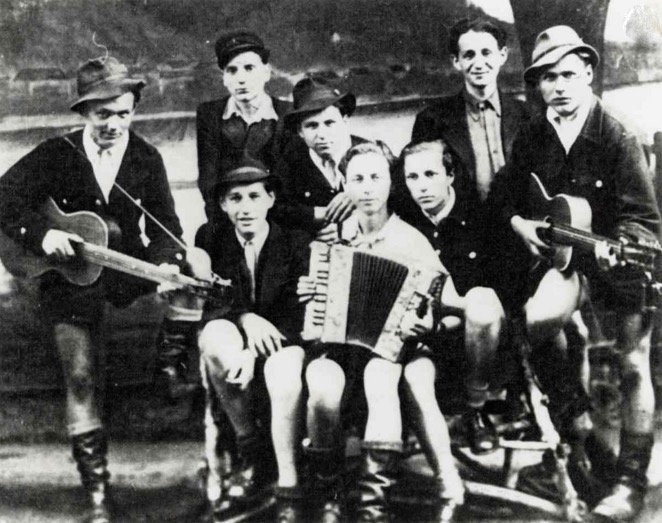
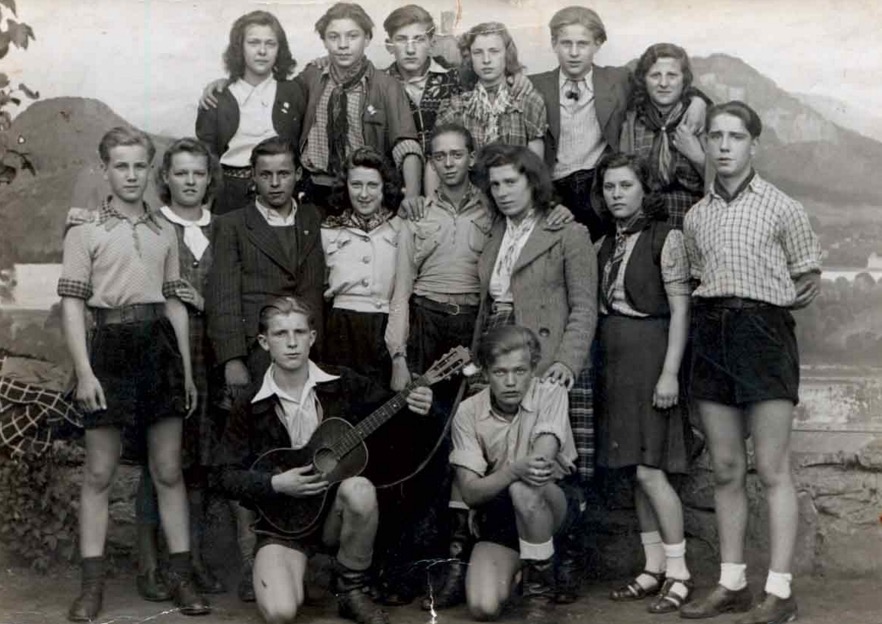
But as you can see in the short documentary clip at the top, the Swing Kids’ resistance to the by-now familiarly disturbing, paramilitary regimentation of German young people (see above), was in its way a radical act. “Their casual, fun-loving attitude made a mockery of Nazi control,” the documentary narrator says. They embraced what was “considered ‘degenerate music’ by Nazi ideology,” writes MessyNChic, “because it was often performed by black and Jewish musicians and promoted free love.”
We cannot assume the Swing Kids’ love of the music extended to a love for the people who made it. It’s more so the case that the Swing Kids “admired the British and American way of life,” and the free-spiritedness universally represented at the time by jazz in American and British films and records, to which German youth had some limited access. But in their battle for “self-determination and freedom,” informal groups like the Edelweiss Pirates, the Traveling Dudes, and the Navajos resisted subordination into a homogenized Aryan mass—the mechanism by which Hitler turned ordinary Germans into loyal abettors of mass murder.
Through fashion and music, the Swing Kid clubs—like the rockers or punks of the U.S. and U.K. in later decades—formed in conscious resistance to social and political conformity. The Navajos wrote the following song, for example:
Hitler’s dictates make us small, we’re yet bound in chains. But one day we’ll again walk tall, no chain can us restrain. For hard are our fists, Yes! And knives at our wrists, for youth to be free, Navajos lay siege.
The references to violence weren’t purely symbolic. Swing Kid gangs fought Hitler Youth in the streets. Some Swing Kids, writes MessyNChic, became known for “tagging public walls with anti-Nazi slogans like ‘Down with Hitler!’ and ‘Medals for Murder!’. Throwing bricks through windows and sabotaging cars of Nazi officials… raiding military bases… derailing trains… even planning to blow up the Gestapo HQ in Cologne.” And as the educational site Music and the Holocaust documents, the Gestapo fought back “with special cruelty” against Swing Boys and Swing Girls.
In Hamburg, Swing Kids “had to endure discriminating interrogations, torture and detention.” They landed in youth concentration camps, and adult and Jewish “swing members… were deported” to death camps in Bergen-Belson, Buchenwald, Auschwitz, and elsewhere. MessyNChic claims that “a file compiled by the Gestapo is said to have contained more than 3,000 names [of Swing Kids] already by the end of the 1930’s in Cologne alone. In terms of numbers, that would mean these youths represented a much larger resistance potential than any other opposition group in Germany made up by adults.”
Again, none of this organized resistance constituted an explicit political program. “The Swing Kids themselves never intended to have any political effects,” writes Swingstyle, “they did not understand politics” and “they turned their backs on the reality around them: the Jewish roundups, the death camps and the steady stream of manpower reserves disappearing into the cauldrons of Russia and France.” Swing was a means of escapism and identification with the more relaxed, permissive “paradises” of America and Britain.
Like teenagers living under any regime, Swing Kids were mainly motivated by sex and the search for a good time. But perhaps the anarchic strength of their most primal instincts made these young people some of the most effective resistance fighters against the Nazi obsession with purity and order. Their lives—choreographed to the tunes of Count Basie and Benny Goodman—were “in complete opposition to the perceived National Socialist concept of youth,” concludes Swingstyle: “To the extent that the Swing Kids assumed American ideals of personal freedom, relaxed living, and appreciation of the ‘lower races’… they were a grave threat to the upside-down philosophy of Nazism that sought to insulate Germany from the rest of the world.”
Their embrace of an international, racially-mixed culture—jazz—was itself a radical political act in Nazi Germany, even if they had no theoretical concepts of what that embrace meant for the future of their country. And their violent rejection of the Hitler Youth makes them even more compelling. It seems to me that the Swing Kids do indeed deserve a celebratory place in history—and maybe they deserve a better film as well.
A quick heads up on a new open educational resource (OER) initiative…
Last week, Amazon announced that it will launch Amazon Inspire, “a free service for the search, discovery, and sharing of digital educational resources.” Once up and running this fall, Inspire will help educators quickly find resources they need in the classroom–for example, free lesson plans, teaching modules, worksheets, digital texts, and more. In large part, much of the content will be provided by schools and educators themselves. Then Amazon will use its services to organize–or even curate–the content, allowing instructors to find appropriate materials in an efficient way. In a press release, Amazon enumerated some of the services the platform will provide. It reads:
Smart search — With smart search, teachers can explore resources by grade level, standard or even from a particular district. Educators can filter search results using more than 10 criteria to find great resources that best fit their needs.
Collections — Educators can group resources into collections. They can describe the collection, curate the resources in it, recommend an order for going through the resources and share the collection with other teachers.
Simple upload — Amazon Inspire offers an easy to use and intuitive upload interface. Educators can drag and drop files they want to share, add basic metadata such as title, description, grade and subject, and publish the content on the service, all in a few minutes.
Customer reviews — Teachers can rate and review resources on Amazon Inspire, helping their colleagues around the country select the best resources for their needs.
Accessibility support — Amazon Inspire has built in accessibility features. For example, educators can navigate Amazon Inspire using popular screen readers and users are also able to indicate the accessibility features of resources they upload.
If you would like to support the mission of Open Culture, consider making a donation to our site. It’s hard to rely 100% on ads, and your contributions will help us continue providing the best free cultural and educational materials to learners everywhere. You can contribute through PayPal, Patreon, and Venmo (@openculture). Thanks!
The question of what an artist is willing to give up for her art is unanswerable until the moment of sacrifice arrives, and she must make a choice—safety, comfort, family, etc, or the leap into a creative endeavor whose outcome is uncertain? Then there are those artists—often just as talented and ambitious—who make these choices for other people’s art: the pop star’s dance troupe, the Broadway chorus members, and the rock and roll back-up singers, some of whom we got to know in the 2014 documentary 20 Feet from Stardom, including the great Merry Clayton, who contributed her haunting gospel chops to the Rolling Stones’ “Gimme Shelter.”
For the working backup singers in the documentary, the choices between everyday security and creativity aren’t binary. They often present themselves instead as the kind of seemingly ordinary compromises we all make to some degree: do I go on this lucrative tour or attend my daughter’s recital? Do I turn down this job—and paycheck—or miss a birthday, a family dinner, a night’s sleep? Clayton had to make such a spur-of-the-moment decision late one night, while just getting ready for bed at her L.A. home. She got a call from producer Jack Nietzsche, she tells us in a clip from the documentary above, whom she remembers saying: “There’s a group of guys in town called… the Rolling… Somebodies… and they need somebody that will sing with them.”
Clayton had no idea who the Stones were, but at her husband’s urging, she took the gig. She was, after all, a pro. As Mike Springer wrote in a previous post on the Stones’ side of the story, Clayton “made her professional debut at age 14, recording a duet with Bobby Darin. She went on to work with The Supremes, Elvis Presley and many others, and was a member of Ray Charles’s group of backing singers, The Raelettes.” When she got to the studio, she had some reservations when Richards and Jagger asked her to sing “Rape, murder/It’s just a shot away,” but when the band explained the gist of the song, she said “Oh, okay, that’s cool,” and totally went for it, as you can hear in her isolated part above.
Determined to “blow them out of this room,” she did three increasingly intense takes, pitching it up an octave and pushing her voice till it cracked. The results give the song its chilling apocalyptic urgency, and they also came at a great personal cost to Clayton. Pregnant at the time of recording, “the physical strain of the intense duet with Mick Jagger,” notes the Los Angeles Times, “resulted in a miscarriage after the session.” As Mike Springer wrote in his post, the Stones’ song, and the entire Let It Bleed album, captured a particularly dark time for the band—as Brian Jones deteriorated into addiction and mental illness—and for the world, coming as it did after the assassinations of Martin Luther King, Jr. and the Kennedys and the escalation of the Vietnam War. “Gimme Shelter” also came to represent, Clayton told the L.A. Times, “a dark, dark period for me,” though she couldn’t have known the price she’d pay for that session when she agreed to do it.
But she “turned it around,” she says: “I took it as life, love and energy and directed it in another direction so it doesn’t really bother me to sing ‘Gimme Shelter’ now. Life is too short as it is and I can’t live on yesterday.” Watch her above take the lead in an incredibly powerful recent rendition of the song at the Gibson Amphitheatre in Universal City, CA. The performance further proves, I think, that, just as much as Richards’ guitar lines and Jagger’s lyrics, her voice played a crucial, starring role in the classic recording.
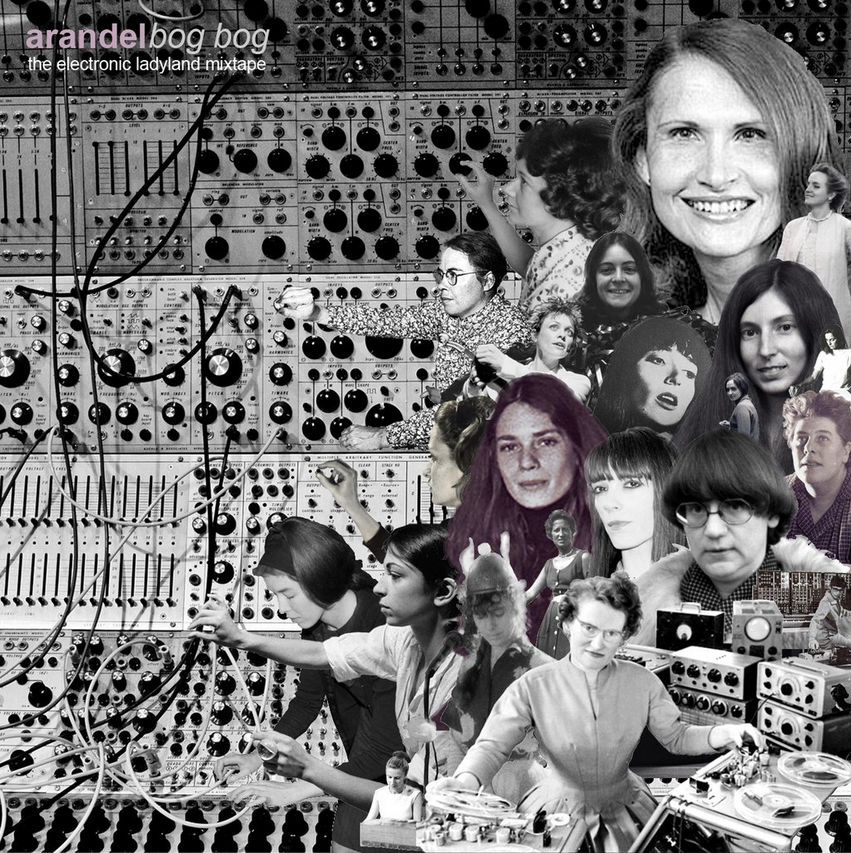
“We realized that an unconscious feminine electronic music Internationale has existed throughout the ages and we wondered whether a secret intuition might have gathered around shared research,” says Arandel in a translated interview. “Was their mutual desires achieved differently in different countries, with different tools in different timezones? The idea was to see what would happen if we gathered them in the same fictitious room for 45 minutes, and built a choir from all their productions.”
Arandel’s interviewer describes the musicians in the mix as coming from “very different musical horizons: we find academic learned musicians, research music composers and experimenters who used to do DIY works composed for advertising or television in a pop or easy listening context, some eccentric women like The Space Lady or Ruth White.” We also hear from famous names like Laurie Anderson and Wendy Carlos, and Delia Derbyshire. “What she accomplished is fascinating,” says Arandel of Derbyshire, “as is listening to her talk about her interesting work in documentaries,” and they’ve also included work from Daphne Oram, Laurie Spiegel, Eliane Radigue, and Pauline Oliveiros, subjects of the other documentaries we’ve posted here.
Electronic Ladyland drops you right into a retro-futuristic sonic landscape equally danceable and haunting, one with great variety as well as an unexpected consistency. It provides not just a kind of brief overview of what certain generations of female composers discovered with their new and then-strange electronic instruments and other devices, but one you may well want to keep in your library for frequent listening. It will also, according to Arandel, make you think: “There is an almost magic link between women and electronic music, from the 50’s / 60’s. Have you asked yourself the question of social, artistic, maybe magic reasons behind this link?” Hit the play button, and you may start. Find the list of tracks below.
1. Glynis Jones : Magic Bird Song (1976)
2. Doris Norton : Norton Rythm Soft (1986)
3. Colette Magny : « Avec » Poème (1966)
4. Daphne Oram : Just For You (Excerpt 1)
5. Laurie Spiegel : Clockworks (1974)
6. Pauline Oliveiros : Bog Bog (1966)
7. Megan Roberts — I Could Sit Here All Day (1977)
We’ve seen 1999 members of Choir! Choir! Choir! perform “When Doves Cry,” a moving, mass tribute to Prince. And they’re now back, 1500 strong, with Rufus Wainwright at the helm, singing Leonard Cohen’s beloved and oft-covered song, Hallelujah.” Performed at the Hearn Generating Station in Toronto, it must have been a wonderful thing to experience live in person.
If you would like to support the mission of Open Culture, consider making a donation to our site. It’s hard to rely 100% on ads, and your contributions will help us continue providing the best free cultural and educational materials to learners everywhere. You can contribute through PayPal, Patreon, and Venmo (@openculture). Thanks!
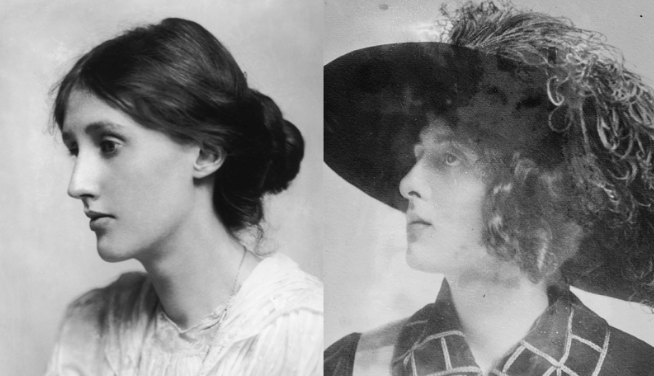
Everyone loves a love story—especially a love affair. We may think ourselves above a juicy scandal…, but who are we kidding? Tragically, however, for many famous people of the past—from Oscar Wilde to Alan Turing to Tab Hunter—affairs could not only end careers and reputations, they could end lives. People who would much rather not have to hide their love have been forced to do so by rigid social propriety, religious moralism, and repressive law.
In other famous cases, however—like that of Virginia Woolf and her friend and lover Vita Sackville-West—an affair doesn’t end in tragedy but simply in a cooling of passions into a beautiful, lasting friendship.
While prudish outsiders may have been scandalized, neither Woolf’s nor Sackville-West’s husband found the relationship shocking. Leonard Woolf, his wife reported, regarded the affair as “rather a bore… but not enough to worry him.” Vita and her aristocratic husband Harold Nicolson, writes the Virginia Woolf blog, “were both bisexual and… had an open marriage.” Furthermore, the bohemian artistic circle in which the Woolfs moved—the Bloomsbury group—hardly troubled itself about such mundane goings-on as a steamy affair between two married women. So much for social scandal and soap-operatic theatrics.
But while their love was not forbidden, what passion they had while it lasted! One need only read their letters to each other, collected in The Letters of Vita Sackville-West to Virginia Woolf. Many of those epistles document the heated period between the mid-1920s, when their affair began, and 1929, when it ended on amiable terms (in a friendship the letters document until Woolf’s suicide in 1941).
“I am reduced to a thing that wants Virginia,” writes Sackville-West in a 1926 letter to Woolf, “You have broken down my defences. And I really don’t resent it… Please forgive me for writing such a miserable letter.” The brief, agonized letter captures the exquisite pangs and pinions of romantic infatuation. Woolf, in response, is the more reserved, but also the more colorful, with playful, cryptic images that hint at who knows what:
“Always, always, always I try to say what I feel,” she writes, “I have missed you. I do miss you. I shall miss you. And if you don’t believe it, you’re a longeared owl and ass…. Open the top button of your jersey and you will see, nestling inside, a lively squirrel with the most inquisitive habits, but a dear creature all the same—”
In her diary, Woolf described Sackville-West on their first meeting in 1923 as “a pronounced sapphist…. Snob as I am, I trace her passions – 500 years back, & they become romantic to me, like old yellow wine.” Woolf was ten years older than Sackville-West, and seemed to feel inferior to her lover, comparing herself unfavorably in a sexy 1925 diary entry:
Vita shines in the grocers shop in Sevenoaks…pink glowing, grape clustered, pearl hung…There is her maturity and full-breastedness: her being so much in full sail on the high tides, where I am coasting down backwaters; her capacity I mean to take the floor in any company, to represent her country, to visit Chatsworth, to control silver, servants, chow dogs; her motherhood…her in short (what I have never been) a real woman.
The two had other lovers, and Woolf, “as the older woman in the relationship,” the Virginia Woolf blog writes, felt “unwanted and dowdy” as Sackville-West strayed. But though the love affair ended, it not only produced a close friendship, but a novel, Woolf’s Orlando, which Vita’s son Nigel called “the longest and most charming love letter in literature.”
Their love and friendship will also soon produce a film, Vita and Virginia, directed by Chanya Button and written by Dame Eileen Atkins. And, if you were wondering what Vita and Virginia’s passionate exchanges would sound like in a 21st century idiom, have a look at “The Collected Sexts of Virginia Woolf and Vita Sackville-West” at The New Yorker. The eloquence of an epistolary romance may be a thing of the past, but email and text have their own efficient charms:
Vita: Hey girl Virginia: Hey Vita: Sup? Virginia: In bed Vita: Hot Virginia: Come visit? Vita: Mmm can’t. Have a toothache.
Cute. But what could ever replace one of Woolf’s last letters to her friend and former lover, written in 1940 while Britain endured German air bombardments: “there you sit with the bombs falling around you. What can one say– except that I love you and I’ve got to live through this strange quiet evening thinking of you sitting there alone. Dearest—let me have a line…You have given me such happiness….”
Elie Wiesel not only survived the Holocaust but went on to live a full life with a prolific career, the fruits of which included 57 books, most famously 1960’s Night, a short and formally distinctive work drawn from his experience in the concentration camps. “The only role I sought was that of witness,” he wrote in 1978. “I believed that having survived by chance, I was duty-bound to give meaning to my survival, to justify each moment of my life.” And even before his death this past Saturday at age 87, the Nobel Peace Prize winner had learned much about what it means to come to life’s end.
“The body is not eternal, but the idea of the soul is,” Wiesel writes in Open Heart, the 2012 memoir he wrote after undergoing another brush with death, late in life, which necessitated emergency open-heart surgery. “The brain will be buried, but memory will survive it.” Oprah Winfrey reads those words back to him in an interview from that same year, a clip from which you can see above. “Now that you’ve had all this time to think about it,” she asks, “what do you think happens when we die?”
“Somehow,” he replies, “I will become a child. Childhood, for me, is a theme in all my work. Will I meet my parents again? I want to know that.” Winfrey expresses special interest in the visions of his own family he had in the hospital, such as that of his father who had died at Buchenwald, just weeks before the camp’s liberation, and the sight of whose face he had previously glimpsed, just for a moment, during his Nobel award ceremony in 1986. His father’s second posthumous appearance made him think death might not be so bad after all, but “that is the danger. You feel it’s so good to be with the dead, then why not join them?”
But Wiesel, who had done so much already, felt he “had more and more things to do. I haven’t even begun.” Indeed, continuing in his capacity as the “Conscience of the World,” he received four more awards and honors between 2012 and 2014, made many appearances, and surely wrote pages that will see publication in the years, or even decades, to come. But for all his accomplishments, he himself found nothing more unusual, as he said to Winfrey in a previous talk sixteen years ago, than his own normality, “that I survived the Holocaust and went on to love beautiful girls, to talk, to write, to have toast and tea and live my life — that is what is abnormal.”
Why not liberate yourself from the tyranny of the traditional by spending a portion of the day indoors, communicating affection to your clothing, as organizational expert, Marie Kondo, author of the best selling book, The Life-Changing Magic of Tidying Up, does in the instructional video, above?
Most of us who dwell in small New York City apartments are already familiar with her teachings. Hers is a take-no-prisoners approach to clutter control. Any item that doesn’t “spark joy”—be it a pair of stretched-out sweatpants, a long ago graduation present, a ream of children’s artwork, or a nearly full bottle of slightly funky-smelling conditioner—must be discarded immediately.
(Note to self: ask Mom whatever became of my Spirit of ’76 watercolor. She had it framed because it won a prize. Best Bicentennial Observance by a 4th Grader or some such. Things like that don’t just vanish into thin air, unless…)
The total makeover Kondo proposes is an arduous, oft-emotional, week-long task. Don’t blow your entire July 4th holiday trying to complete the job.
Instead, take an hour or two to refold your clothes. New Yorkers’ drawers are where Kondo’s influence is felt most deeply. Whether or not we subscribe to her practice of treating each garment like a treasured friend, our underwear definitely has more room to breathe, when not on active duty.
See below for a graphic demonstration of how to best fold shirts, pants, and several species of undies, using Kondo’s Kon-Marie method.
And don’t be tempted to decamp to the backyard barbecue when you run across challenges like overalls or baby onesies. Watch below as Kondo tackles a shirt with kimono sleeves, a pair of Edo-style mata hike pants, and a sweater with a marked resemblance to a Thneed.
We're hoping to rely on loyal readers, rather than erratic ads. Please click the Donate button and support Open Culture. You can use Paypal, Venmo, Patreon, even Crypto! We thank you!
Open Culture scours the web for the best educational media. We find the free courses and audio books you need, the language lessons & educational videos you want, and plenty of enlightenment in between.








#/media/File:Sprit_of_%2776.2.jpeg)