As you can probably tell if you’ve interacted with any of his hard-core fans, the science fiction of Philip K. Dick has a way of getting into readers’ heads. What better way to adapt it, then, than in the medium of radio drama, with its direct route into the head through the ears? Science fiction in general provided radio drama with a good deal of bread-and-butter subject matter since pretty much its inception, and suitably so: its producers didn’t have to bother designing distant worlds, alien races and elaborately futuristic technologies when, with the right sound design, the listeners would design it all themselves in their imaginations.
But does it really do justice to Dick to call his work “science fiction”? Sure, he knocked out a fair few straight-ahead (or sub-straight-ahead) sci-fi potboilers in his productive career, but many of his writings, despite their rough edges, qualify under Walter Benjamin’s definition of great works of literature, which “either dissolve a genre or invent one.”
Some of Dick’s novels and stories even seem to do both at once, creating their own particular (as well as peculiar) psychological space in the process. Can radio drama render a Dickian world of multilayered reality and rich paranoia as easily as it does so many Martian colonies, laser guns, and sentient computers? So you can judge that for yourself, we submit today for your approval six radio plays adapted from Dick’s stories.
From the series Mind Webs, which ran on Wisconsin public radio from the 1970s to the 90s, we have “Impostor,” “The Preserving Machine,” and “The Builder.”
From NBC’s venerable X Minus One, which defined sci-fi at the tail end of old time radio’s “Golden Age,” we have “Colony” and “The Defenders.”
Into the mix we also throw Sci-Fi Radio’s “Sales Pitch,” Dick’s satirical tale of a self-marketing robot. Some of this material, of course, sounds not terribly different than the whiz-bang stories of outer-space adventure children of the 1950s grew up loving.
But some of it sounds altogether more, well… Dickian. Those children of the 1950s, after all, grew into the twentysomethings of the late 1960s and 70s, who knew a thing or two about tuning in to a different headspace.
There are good reasons to find the onslaught of religious music this time of year objectionable. And yet—though I want to do my part in the War on Christmas—I don’t so much object to the content of Christmas songs. It’s the music! It’s hackneyed and tired and grossly overplayed and a lot of it was never very good to begin with. I’d make the same distinction with any kind of music, religious or otherwise. I grew up in churches full of Christian music, and a lot of it was just terrible: the worst of kind of soft rock or adult contemporary paired with lyrics so insipid they would make the gospel writers—whoever they were—cringe. Updates with the slick production of alt-rock, hip-hop, or pop-country styles have only made things worse. On the other hand, some of the most powerful and moving music I’ve ever heard comes from the church, whether Handel, The Staples Singers, the Louvin Brothers, or so many other classical and gospel artists and composers.
Anyone with a deep affection for Western classical music probably has their share of favorite Christian music, whatever their personal beliefs. So, too, do fans of American folk, blues, and country. Some artists have covered the odd religious tune as part of a broad roots repertoire, like the Byrds’ cover of Bluegrass gospel legends the Louvin Brothers’ cornball “The Christian Life,” above, from 1968’s Sweetheart of the Rodeo. Though Gram Parsons, with the band for the recording of this album, had his traditional leanings, his musical religion was more “Cosmic American” than Christian. But before Parsons joined the band and turned ‘em full country rock for a time, the Byrds recorded another religious song, one of their biggest hits—Pete Seeger’s “Turn, Turn, Turn” (below), which cribs all of its lyrics verbatim from Chapter 3 of the Book of Ecclesiastes (easily the non-religious person’s favorite book of the Bible).
Other American legends have turned to faith in dramatic conversions and have written earnest, original religious music. Most famously, we have the case of Bob Dylan, whose conversion to evangelical Christianity saw him proselytizing from the stage. He also wrote some beautiful songs like “Precious Angel,” at the top of the post, which he claimed was for the woman who brought him to Christianity (and which supposedly contains a dig at his ex-wife Sara for not converting him). Though it features some of the more disturbing lyrical turns Dylan has taken in his career, it’s one of my favorite tunes of his from this strange period, not least because of the brilliant guitar work of Mark Knopfler.
Whatever beliefs he’s claimed over the decades, Dylan’s music has always been religious in some sense, partly because of the American folk traditions he draws on. Almost all of the early R&B and rock and roll artists came from the folk gospel world, from Elvis to Little Richard to Jerry Lee Lewis. Notably, the golden-voiced Sam Cooke got his start as a gospel singer with several vocal groups, including his own The Soul Stirrers. The harmonies in their rendition of gospel classic “Farther Along” (above) give me chills every time I hear it, even though I don’t credit the song’s beliefs.
It’s a common feeling I get with American soul, blues, and country singers who moved in and out of the popular and gospel worlds. Then there are those artists who left gospel for outlaw stardom, then returned to the fold and embraced their church roots later in life. A prime example of this kind of spiritual, and musical, renewal is that of Johnny Cash. There are many sides of gospel Cash. Perhaps the most poignant of his religious recordings come from his final years. Though it suffers from some commercial overuse, Cash’s recording of blues classic “God’s Gonna Cut You Down” (often titled “Run On”), above, is equal parts menacing and haunting, a Christian-themed memento mori that caught on big with lots of secular music fans.
The list of religious music that non-religious people love could go on and on. Though the examples here are explicitly Christian, they certainly don’t have to be. There’s Yusef Islam, formerly Cat Stevens, who came back to record stirring original music after his conversion to Islam, and whose powerful “Morning has Broken” moves believers and non-believers alike. There’s Bob Marley, or any number of popular Rastafarian reggae artists. Then there are more contemporary artists making religious music for largely secular audiences. One could reference indie darling Sufjan Stevens, whose religious beliefs are central to his songwriting. And there’s a favorite of mine, Mark Lanegan, former Screaming Trees singer and current rock and roll journeyman who often works with religious themes and imagery, most notably in the glorious “Revival,” above, with the Soulsavers project.
The love many non-religious people have for some religious music often comes from a religious upbringing, something singer/songwriter Iris Dement discussed in a recent interview on NPR’s Fresh Air. Dement has recorded one of the most moving renditions of a hymn I remember fondly from childhood church days: a powerfully spare version of “Leaning on the Everlasting Arms” from the 2010 True Grit soundtrack. She’s also written what may be one of the best religious songs for secular (or non-religious, or post-religious, whatever…) people. In “Let the Mystery Be,” above, Dement’s agnostic refrain expresses a very sensible attitude, in my view: “But no one knows for certain and so it’s all the same to me / I think I’ll just let the mystery be.”
These are but a few of the religious songs that move this mostly secular person. Whether you’re religious or not, what are some of your favorite religious songs that have broad crossover appeal? Feel free to name your favorites in the comments below.
Frank Zappa was kind of a control freak. But the way he tells it in a 1968 Rolling Stone interview, if he hadn’t been, he wouldn’t have had much of a career. In the mid-sixties, he took over the merchandising and advertising of his albums. “We wouldn’t have sold any records if we had left it up to the company,” he says, “They figured we were odd-ball. One shot novelty a‑go-go. But we weren’t. We had to show them ways they could make money on the product.”
It’s that entrepreneurial attitude and ability to take over that makes Zappa one of the most successful capitalists in experimental music. In 1967, he even founded his own ad agency, called Nifty Tough & Bitchin’, and made print and radio ads for Hagstrom Guitars, Panther Combo Organs, and Remington Razor Blades. (He also recorded a bizarre radio ad for Remington’s electric razor with Linda Ronstadt—see a fan-made video below).
That same year, animator and filmmaker Ed Seeman hired Zappa to score an ad for Luden’s Cough Drops. You can see the predictably weird results up top. According to Seeman, Zappa “requested $2,000 plus a studio for a day with a wide variety of instruments plus a guy to do cough sounds.” The ad went on to win a Clio award for “Best Use of Sound.”
After the ad wrapped, Zappa tapped Seeman to shoot 14 hours of footage over two years for a film project Zappa intended to produce called Uncle Meat (not to be confused with the album of the same name). The film was never completed, and Zappa only released the footage on video in 1987 (it has yet to see a DVD release).
The growth of the award-winning ad into a rare cult film—that doesn’t really exist in any final form—goes to show how Zappa’s musical talent for free association extended to all of his creative endeavors. Everything he touched took root and grew into several other branching projects, all of them fascinating to varying degrees. He joked that he was in it for the money, but the money he made in commercial ventures seemingly gave him the freedom to pursue any idea that popped into his head.
Seeman, who became a great Zappa admirer, went on to edit footage from Uncle Meat into a “40 minute impressionistic collage” set to Zappa’s “Who are The Brain Police” that Dangerous Minds describes as melding “Zappa’s cynical world view (perhaps prophetic) with a spookily psychedelic sound that creates a perfect paranoid whole” (see an excerpt above). Zappa didn’t do much more ad work after this commercially creative burst, outside of the promotion of his own records. That is, until two years before his death from cancer. In 1991, Zappa appeared in the ironic anti-ad for Portland General Electric in which he says he told the company “I refuse to sell your product.” Four years later, we saw the release of a posthumous Zappa best-of. Its title: Strictly Commercial.
In February, Oliver Sacks announced that he was suffering from terminal cancer. And, by August, he was gone — but not before showing us (if you read his op-eds in the Times) how to die with dignity and grace. All of this I was reminded of again today when I stumbled upon a recent animation inspired by Sacks’ work. Called The Lost Mariner, the short film offers an animated interpretation of a chapter in Sacks’ 1985 book The Man Who Mistook His Wife for a Hat. The chapter (also called “The Lost Mariner”) presents a curious case study of a patient known as Jimmie G. who, suffering from Korsakoff’s syndrome, loses the ability to form new memories. To see how Tess Martin made this award-winning short, you can watch the making-of video below.
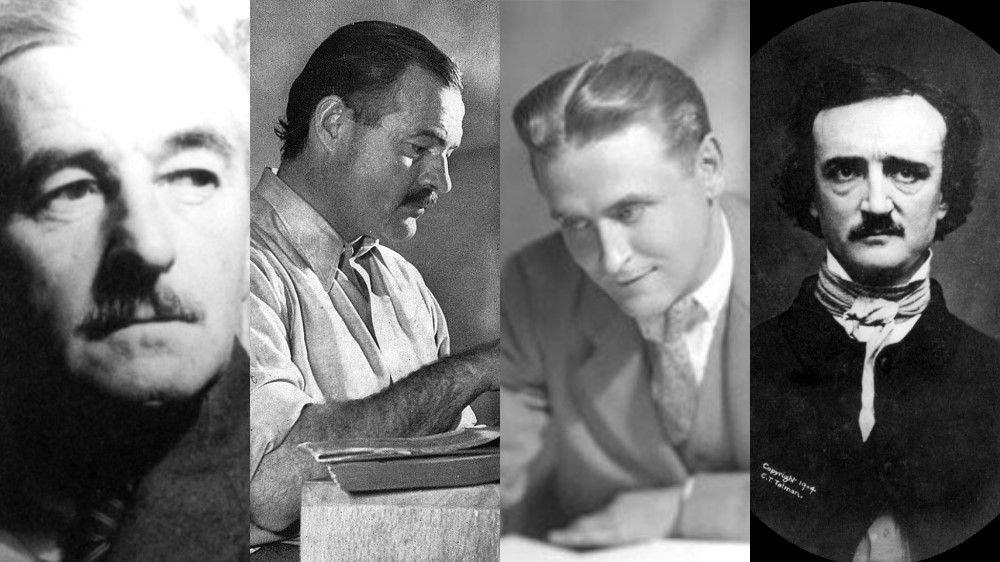
Most writers find their individual voice only after they sojourn through periods of imitation. Though it’s an excellent way to appropriate experimental techniques and move out of comfortable ruts, imitation can only take us so far. But more prescriptive guidelines from famous authors can offer ways to refine our individual styles and visions. Advice, for example, from such a clear and succinct theorist as Kurt Vonnegut can go a very long way indeed for aspiring fiction writers.
Another reason for appreciating great writers’ how-to guidelines accords with the injunction we often hear: to read, read, read as much as possible. Learning how William Faulkner conceived of his craft can give us useful insights into his novels. What did Faulkner think of the writing enterprise and the social role of the writer? How did he come to formulate his impressively dense style? What was his view of learning from other writers?
We can answer the last question by reference to seven writing tips we previously compiled from lectures and Q&A sessions Faulkner conducted while serving as writer-in-residence at the University of Virginia from 1957 to ’58. The first tip? Take what you need from other writers. To that end, we offer seven writing tips each from four American greats (or 28 tips in total). As writers, we’re free to take or leave their guidelines; as readers we may always find their philosophies of keen interest.
William Faulkner:
Take What You Need From Other Writers
During a writing class on February 25, 1957, Faulkner said the following:
I think the writer, as I’ve said before, is completely amoral. He takes whatever he needs, wherever he needs, and he does that openly and honestly because he himself hopes that what he does will be good enough so that after him people will take from him, and they are welcome to take from him, as he feels that he would be welcome by the best of his predecessors to take what they had done.
Faulkner’s advice can help tremendously–at least in a psychological sense–those writers who might have qualms about “stealing” from others. You have permission to do so from none other than perhaps the greatest American modernist writer of them all.
Faulkner also said “the young writer would be a fool to follow a theory,” a piece of advice we might bear in mind as we peruse famous writing theories. “The good artist,” he said, “believes that nobody is good enough to give him advice.”
Faulkner’s modernist foil and sometime rival Ernest Hemingway had some characteristically pragmatic advice for budding writers. Like many writers’ tips, some of his advice may do little but help you write more like Hemingway. And some of it, like “use a pencil,” is perfectly useless if you’ve already found your preferred method of working. One guideline, however, is intriguingly counter-intuitive. Hemingway counsels us to
Never Think about the Story When You’re Not Working
This is one thing Faulkner and Hemingway might agree on. In an Esquire article, Hemingway describes his experience during the composition of A Moveable Feast, one Faulkner characterizes in his writing advice as “never exhaust your imagination.”
When I was writing, it was necessary for me to read after I had written. If you kept thinking about it, you would lose the thing you were writing before you could go on with it the next day. It was necessary to get exercise, to be tired in the body, and it was very good to make love with whom you loved. That was better than anything. But afterwards, when you were empty, it was necessary to read in order not to think or worry about your work until you could do it again. I had learned already never to empty the well of my writing, but always to stop when there was still something there in the deep part of the well, and let it refill at night from the springs that fed it.
Despite his reputation as an undisciplined and messy writer, Fitzgerald has some of the most practical tips of all for organizing your ideas. One of his more philosophical prescriptions takes a similar tone as Hemingway’s in regard to the private world of the imagination:
Don’t Describe Your Work-in-Progress to Anyone
Fitzgerald offered this piece of advice in a 1940 letter to his daughter, Scottie, writing,
I think it’s a pretty good rule not to tell what a thing is about until it’s finished. If you do you always seem to lose some of it. It never quite belongs to you so much again.
This seems to me a good piece of advice for holding on to the magic of a creatively imagined world. Trying to summarize a good story in brief—like trying to explain a joke—generally has the effect of taking all the fun out of it.
Finally, we reach back to the 19th century, to the father of the American gothic and the detective story, Edgar Allan Poe, who had some very specific, very Poe things to say about the art of fiction. In his essay “The Philosophy of Composition,” Poe focuses on how to achieve what he vaguely called a “unity of effect,” the quality he desired most to produce in his narrative poem “The Raven.” Perhaps the clearest piece of advice Poe offers in his treatise is:
Know the Ending in Advance, Before You Begin to Write
You will likely find other authors who advise against this and tell you to write your way to the end. Bearing in mind Faulkner’s disclaimer—that we would be “fool to follow a theory”—we might at least try this practice and see if it works for us as it did for Poe. As he described it, “nothing is more clear than that every plot, worth the name, must be elaborated to its dénouement before any thing be attempted with the pen.”
Keeping the end “constantly in view,” wrote Poe, gives “a plot its indispensable air of consequence.” Poe’s advice applies to short works that can be read in a single sitting, the only ones he generally allows can achieve “unity of effect.” Novel-writing is different. I don’t know if it’s necessary to fully know the ending of a short story before one begins, but Vonnegut counsels writers to “start as close to the end as possible” when writing one.
Should you desire more writing advice, you’ll find no shortage here at Open Culture, from writers as diverse as Stephen King, Toni Morrison, Roberto Bolaño, H.P. Lovecraft, Haruki Murakami, Ray Bradbury, and many more. Whether or not we decide to take any of their advice, it always opens a window onto their art of creating fictional worlds, which can seem to many of us a creative act akin to magic.
Diageo, the distiller of single malt whiskies including Lagavulin and Oban, has teamed up with Nick Offerman (actor, author, woodworker and scotch enthusiast) to create a new video series called “My Tales of Whisky.” Apparently the video series will be made in different styles, with different kinds of story lines. This one is pretty straightforward–just Nick sitting in front of a fire drinking single malt scotch (Lagavulin) for 45 minutes straight, simply staring and saying nary a word. Tonight, maybe you can grab your own favorite libation, stare right back, and try not to blink.
“Read, read, read, read, read, read, read, read, read… read, read… read,” Werner Herzog once said. “If you don’t read, you will never be a filmmaker.” The director of Aguirre, the Wrath of God, Fitzcarraldo, and Bad Lieutenant: Port of Call New Orleans hasn’t distanced himself from that pronouncement in assembling the curriculum for his Rogue Film School, which we first featured last year. Herzog’s unconventional crash-course in auteurship may promise to cover “the art of lock-picking, traveling on foot, the exhilaration of being shot at unsuccessfully, the athletic side of filmmaking, the creation of one’s own shooting permits, the neutralization of bureaucracy, and guerilla filmmaking,” but it also demands that its students hit the books.
Like a more standard film school, Herzog’s program also has a required film-viewing list, which includes a few of my own favorite directors (though with nothing by Herzog himself, not that any student ignorant of the man’s work would want to enroll in the first place):
Where is the Friend’s Home? (1987, dir. Abbas Kiarostami)
Once these materials have filled your head with visions of big-game hunting, rebellion and counter-rebellion, Roman agriculture, ventures into terra incognita, coming of age in the third world, and the Texas School Book Depository, will you then find yourself able to make a film? Only if you take these lists as but a starting point, and keep on reading, reading, reading, reading, and reading, as well as watching, watching, watching, watching, and watching. And what about other trivial matters, like financing? In more of Herzog’s own, direct words (though surely said in jest): “Rob a bank, for god’s sake!”
Note: The image used to highlight this post on Twitter and Facebook was taken by Erinc Salor, and it’s available by Wikimedia Commons.
If you would like to support the mission of Open Culture, consider making a donation to our site. It’s hard to rely 100% on ads, and your contributions will help us continue providing the best free cultural and educational materials to learners everywhere. You can contribute through PayPal, Patreon, and Venmo (@openculture). Thanks!
However stiff they may seem on the show, the cast of Downton Abbey can let down its hair and have some fun. Last Christmas, they put together a fun parody episode, where, borrowing from It’s a Wonderful Life, they asked us to imagine what daily life at the Abbey would look like if Lady Grantham spent her days cavorting with George Clooney rather than Lord Grantham.
Now, right before the show’s final season starts airing in the US on January 3, several cast members are giving us another scenario to consider: What would it look if Downton Abbey was performed only with American accents? Appearing on The Late Show with Stephen Colbert, Michelle Dockery (Lady Mary Crawley), Hugh Bonneville (Lord Grantham) and Allen Leech (Tom Bransom) performed an actual scene in their best American accents, and it’s a sight to behold. Particularly Allen, he’s a trip.
Follow Open Culture on Facebook and Twitter and share intelligent media with your friends. Or better yet, sign up for our daily email and get a daily dose of Open Culture in your inbox. And if you want to make sure that our posts definitely appear in your Facebook newsfeed, just follow these simple steps.
In English-speaking countries where Christmas is celebrated, A Christmas Carol, Charles Dickens’ secular Victorian tale of a Grinch restored to holiday cheer, usually plays some part.
How many children have been traumatized by Marley’s Ghost in the annual rebroadcast of the half hour, 1971 animated version, featuring the voices of Alistair Sim and Michael Redgrave as Scrooge and Bob Cratchit?
Personally, I lived in mortal fear of the cowled Ghost of Christmas Yet to Come from Scrooge, a movie musical version starring Albert Finney.
And in some lucky families, an older relative with a flair for the theatrical reads the story aloud, preferably on the actual day.
It’s a tradition that Charles Dickens himself observed. It must’ve been a very picturesque scene, with his wife and all ten of their children gathered around. (Presumably his mistress was not included in the festivities).
Eventually, the torch was passed to the next generation, who mimicked and preserved the cadences favored by the master.
Dickens great-granddaughter, novelist Monica Dickens, who narrated a condensed version of the classic tale in 1984, above, was schooled in the family interpretation by her grandfather, Henry Fielding Dickens, who said of his famous father:
I remember him as being at his best either at Christmas time or at other times when Gad’s Hill was full of guests, for he loved social intercourse and was a perfect host. At such times he rose to the very height of the occasion, and it is quite impossible to express in words his geniality and brilliancy amid a brilliant circle.
Before the reading, Ms. Dickens shares some charming anecdotes about the original publication, but those with limited time and/or a Scrooge-like aversion to jolly intros can skip ahead to 7:59, when Big Ben chimes to signal the start of the story proper.
An interesting thing happens when you read certain of George Saunders’ stories. At first, you see the satirist at work, skewering American meanness and banality with the same unsparing knife’s edge as earlier postmodernists like John Barth or Donald Barthelme. Then you begin to notice something else taking shape… something perhaps unexpected: compassion. Rather than serving as paper targets of Saunders’ dark humor, his misguided characters come to seem like real people, people he cares about; and the real target of his satire becomes a culture that alienates and devalues those people.
Take the oft-anthologized “Sea Oak,” a farcical melodrama about a dead aunt who returns reanimated to annoy and depress her downwardly mobile family members. The stage is set for a series of buffoonish episodes that, in the hands of a less mature writer, might play out to emphasize just how ridiculous these characters’ lives are, and how justifiably we—author and reader—might mock them from our perches. Saunders does not do this at all. Rather than distancing, he draws us closer, so that the characters in the story become more sympathetic and three-dimensional even as events become increasingly outlandish.
All of this humanizing is by design, or rather, we might say that empathy is baked into Saunders’ ethos—one he has articulated many times in essays, interviews, and a moving 2013 Syracuse University commencement speech. Now we can see him in a candid filmed appearance above, in a documentary titled “George Saunders: On Story” by Redglass Pictures (executive produced by Ken Burns). Created from a two-hour interview with Saunders, the short video at the top offers “a direct look at the process by which he is able to take a single mundane sentence and infuse it with the distinct blend of depth, compassion, and outright magic that are the trademarks of his most powerful work.”
In Saunders’ own words, “a good story is one that says, at many different levels, ‘we’re both human beings, we’re in this crazy situation called life, that we don’t really understand. Can we put our heads together and confer about it a little bit at a very high, non-bullshitty level?’ Then, all kinds of magic can happen.” The rest of Saunders’ fascinating monologue on story gets an animated treatment that illustrates the magic he describes. If you haven’t read Saunders, this is almost as good an introduction to him as, say, “Sea Oak.” His thoughts on the role fiction plays in our lives and the ways good stories work are always lucid, his examples vividly inventive. The effect of listening to him mirrors that of sitting in a seminar with one of the best teachers of creative writing, which Saunders happens to be as well.
I would love to take a class with him, but barring that, I’m very happy for the chance to hear him discuss writing techniques and philosophy in the short film at the top and in the interview extras below it: “On the relationship between reader and writer,” “On the tricks of the writing process,” and “In defense of darkness.” Praised by no less a postmodernist luminary than Thomas Pynchon, Saunders’ story collections like CivilWArLand in Bad Decline, Pastoralia, and In Persuasion Nation get at much of what ails us in these United States, but they do so always with an underlying hopefulness and a “non-bullshitty” conviction of shared humanity.
In the mid 1960s, when the Batman TV show was in full swing, a New Jersey toy company released a children’s record of Batman & Robin songs. Called The Sensational Guitars Of Dan & Dale, Batman & Robin, the album featured, as WFMU’s Beware of the Blog notes, “one of the greatest uncredited session combos of all time, including the core of Sun Ra’s Arkestra and Al Kooper’s Blues Project.” Anonymously, Sun Ra played on organ, Jimmy Owens on trumpet, Tom McIntosh on trombone & Danny Kalb on guitar.
Follow Open Culture on Facebook and Twitter and share intelligent media with your friends. Or better yet, sign up for our daily email and get a daily dose of Open Culture in your inbox. And if you want to make sure that our posts definitely appear in your Facebook newsfeed, just follow these simple steps.
We're hoping to rely on loyal readers, rather than erratic ads. Please click the Donate button and support Open Culture. You can use Paypal, Venmo, Patreon, even Crypto! We thank you!
Open Culture scours the web for the best educational media. We find the free courses and audio books you need, the language lessons & educational videos you want, and plenty of enlightenment in between.