Above, Scott Galloway and Kara Swisher explain how everyday Americans can push back against government overreach—by focusing on the economic decisions they make each day. “Trump does not respond to outrage. He responds to markets,” says Galloway. Ergo, it’s time for an “economic strike,” a “short-term coordinated withdrawal from spending.” He continues: “if wealthy households took their spending down 10% and middle class and lower income households … took it down 5%, you would take GDP negative almost overnight.”
But he also gets more specific than that: “If you wanted the fastest blue line path … I believe if you could convince America, the entire economy now is built on AI… if you could convince a bunch of Americans to cancel their ChatGPT or OpenAI accounts and all of a sudden OpenAI had to announce that their subscriptions had fallen off a cliff, that would ripple into Nvidia. That would ripple into Microsoft. And these are the people that Trump cares about.”
He goes on to add: “If you could figure out a way to basically kick a small number of companies related to the tech economy that account for 40% of the S&P right now … if all of a sudden, if you took all of your money out of any JP Morgan–affiliated bank and transferred it to a local regional bank, if you cancelled all of your streaming media platforms, if you cancelled OpenAI and Anthropic and you said “I am not upgrading my Apple phone,” and there was a real movement that registered and they had to disclose it in their earnings calls — this would come to an end pronto.” CEOs would stop bending their knees and suddenly find their voice.
Every dollar we spend—or withhold—sends a signal to the market and to Trump. When enough people hold back, the power of the purse can do what courts and elected officials cannot. Trump reversed many tariffs after markets freaked out on ‘Liberation Day.’ What’s to say it wouldn’t work again?
Over the centuries, a variety of places have laid credible claim to being the world’s art center: Constantinople, Florence, Paris, New York. But on the scale of, say, ten millennia, the hot spots become rather less recognizable. Up until about 20,000 years ago, it seems that creators and viewers of art alike spent a good deal in one particular cave: Liang Metanduno, located on Muna Island in Indonesia’s Southeast Sulawesi province. The many paintings on its walls of recognizable humans, animals, and boats have brought it fame in our times as a kind of ancient art gallery. But in recent years, a much older piece of work has been discovered there, one whose creation occurred at least 67,800 years ago.
The creation in question is a handprint, faint but detectable, probably made by blowing a mixture of ochre and water over an actual human hand. To determine its age, researchers performed what’s called uranium-series analysis on the deposits of calcium carbonate that had built up on and around it.
The number of 67,800 years is, of course, not exact, but it’s also just a minimum: in fact, the handprint could well be much older. In a paper published last week in Nature, the researchers point out that its age exceeds both that of the oldest similar rock art found elsewhere in Indonesia and that of a hand stencil in Spain attributed to Neanderthals, “which until now represented the oldest demonstrated minimum-age constraint for cave art worldwide.”
It isn’t impossible that this at least 67,800-year-old handprint could also have been made by Neanderthals. The obvious modification of the hand’s shape, however, an extension and tapering of the fingers that brings to mind animal claws (or the clutches of Nosferatu), suggests to certain scientific eyes the kind of cognition attributable specifically to Homo sapiens. This discovery has great potential relevance not just to art history, but even more so to other fields concerned with the development of our species. While it had previously been thought, for instance, that the first human settlers of Australia made their way there through Indonesia (in a time of much lower sea levels) between 50,000 and 65,000 years ago, the handprint’s existence in Liang Metanduno suggests that the migration took place even earlier. All these millennia later, Australia remains a favored destination for a variety of immigrants — some of whom do their part to keep Sydney’s art scene interesting.
Based in Seoul, Colin Marshall writes and broadcasts on cities, language, and culture. He’s the author of the newsletterBooks on Cities as well as the books 한국 요약 금지 (No Summarizing Korea) and Korean Newtro.Follow him on the social network formerly known as Twitter at @colinmarshall.

At least when I was in grade school, we learned the very basics of how the Third Reich came to power in the early 1930s. Paramilitary gangs terrorizing the opposition, the incompetence and opportunism of German conservatives, the Reichstag Fire. And we learned about the critical importance of propaganda, the deliberate misinforming of the public in order to sway opinions en masse and achieve popular support (or at least the appearance of it). While Minister of Propaganda Joseph Goebbels purged Jewish and leftist artists and writers, he built a massive media infrastructure that played, writes PBS, “probably the most important role in creating an atmosphere in Germany that made it possible for the Nazis to commit terrible atrocities against Jews, homosexuals, and other minorities.”
How did the minority party of Hitler and Goebbels take over and break the will of the German people so thoroughly that they would allow and participate in mass murder? Post-war scholars of totalitarianism like Theodor Adorno and Hannah Arendt asked that question over and over, for several decades afterward. Their earliest studies on the subject looked at two sides of the equation. Adorno contributed to a massive volume of social psychology called The Authoritarian Personality, which studied individuals predisposed to the appeals of totalitarianism. He invented what he called the F‑Scale (“F” for “fascism”), one of several measures he used to theorize the Authoritarian Personality Type.
Arendt, on the other hand, looked closely at the regimes of Hitler and Stalin and their functionaries, at the ideology of scientific racism, and at the mechanism of propaganda in fostering “a curiously varying mixture of gullibility and cynicism with which each member… is expected to react to the changing lying statements of the leaders.” So she wrote in her 1951 Origins of Totalitarianism, going on to elaborate that this “mixture of gullibility and cynicism… is prevalent in all ranks of totalitarian movements”:
In an ever-changing, incomprehensible world the masses had reached the point where they would, at the same time, believe everything and nothing, think that everything was possible and nothing was true… The totalitarian mass leaders based their propaganda on the correct psychological assumption that, under such conditions, one could make people believe the most fantastic statements one day, and trust that if the next day they were given irrefutable proof of their falsehood, they would take refuge in cynicism; instead of deserting the leaders who had lied to them, they would protest that they had known all along that the statement was a lie and would admire the leaders for their superior tactical cleverness.
Why the constant, often blatant lying? For one thing, it functioned as a means of fully dominating subordinates, who would have to cast aside all their integrity to repeat outrageous falsehoods and would then be bound to the leader by shame and complicity. “The great analysts of truth and language in politics”—writes McGill University political philosophy professor Jacob T. Levy—including “George Orwell, Hannah Arendt, Vaclav Havel—can help us recognize this kind of lie for what it is.… Saying something obviously untrue, and making your subordinates repeat it with a straight face in their own voice, is a particularly startling display of power over them. It’s something that was endemic to totalitarianism.”
Arendt and others recognized, writes Levy, that “being made to repeat an obvious lie makes it clear that you’re powerless.” She also recognized the function of an avalanche of lies to render a populace powerless to resist, the phenomenon we now refer to as “gaslighting”:
The result of a consistent and total substitution of lies for factual truth is not that the lie will now be accepted as truth and truth be defamed as a lie, but that the sense by which we take our bearings in the real world—and the category of truth versus falsehood is among the mental means to this end—is being destroyed.
The epistemological ground thus pulled out from under them, most would depend on whatever the leader said, no matter its relation to truth. “The essential conviction shared by all ranks,” Arendt concluded, “from fellow traveler to leader, is that politics is a game of cheating and that the ‘first commandment’ of the movement: ‘The Fuehrer is always right,’ is as necessary for the purposes of world politics, i.e., world-wide cheating, as the rules of military discipline are for the purposes of war.”
Arendt wrote Origins of Totalitarianism from research and observations gathered during the 1940s, a very specific historical period. Nonetheless the book, Jeffrey Isaacs remarks at The Washington Post, “raises a set of fundamental questions about how tyranny can arise and the dangerous forms of inhumanity to which it can lead.” Arendt’s analysis of propaganda and the function of lies seems particularly relevant at this moment. The kinds of blatant lies she wrote of might become so commonplace as to become banal. We might begin to think they are an irrelevant sideshow. This, she suggests, would be a mistake.
Note: An earlier version of this post appeared on our site in 2017.
The Renaissance did not, strictly speaking, occur in China. Yet it seems that the Middle Kingdom did have its Renaissance men, so to speak, and in much earlier times at that. We find one such illustrious figure in the Han dynasty of the first and second centuries: a statesman named Zhang Heng (78–139 AD), who managed to distinguish himself across a range of fields from mathematics to astronomy to philosophy to poetry. His accomplishments in science and technology include inventing the first hydraulic armillary sphere for observing the heavens, improving water clocks with a secondary tank, calculating pi further than it had been in China to date, and making discoveries about the nature of the moon. He also, so records show, put together the first-ever seismoscope, a device for detecting earthquakes.
A visual explanation of Zhang’s design appears in the ScienceWorld video above. His seismoscope, its narrator says, “was called hòufēng dìdòngyí, which means ‘instrument for measuring seasonal winds and movements of the earth,’ ” and it could “determine roughly the direction in which an earthquake occurred.”
Each of its eight dragon heads (a combination of number and creature that, in China, could hardly be more auspicious) holds a ball; when the ground shook, the dragon pointing toward the epicenter of the quake drops its ball into the mouth of one of the decorative toads waiting below. At one time, as history has recorded, it “detected an earthquake 650 kilometers, or 400 miles away, that wasn’t felt at the location of the seismoscope.”
Not bad, considering that neither Zhang nor anyone else had yet heard of tectonic plates. But as all engineers know, practical devices often work just fine even in the absence of completely sound theory. Though no contemporary examples of hòufēng dìdòngyí survive from Zhang’s time, “researchers believe that inside the seismoscope were a pendulum, a bronze ball under the pendulum, eight channels, and eight levers that activated the dragons’ mouths.” Moving in response to a shock wave, the pendulum would release the ball in the opposite direction, which would roll down a channel and release the mouth at the end of it. However innovative it was for its time, this scheme could, of course, provide no information about exactly how far away the earthquake happened, to say nothing of prediction. Fortunately, centuries of Renaissance men still lay ahead to figure all that out.
Based in Seoul, Colin Marshall writes and broadcasts on cities, language, and culture. He’s the author of the newsletterBooks on Cities as well as the books 한국 요약 금지 (No Summarizing Korea) and Korean Newtro.Follow him on the social network formerly known as Twitter at @colinmarshall.
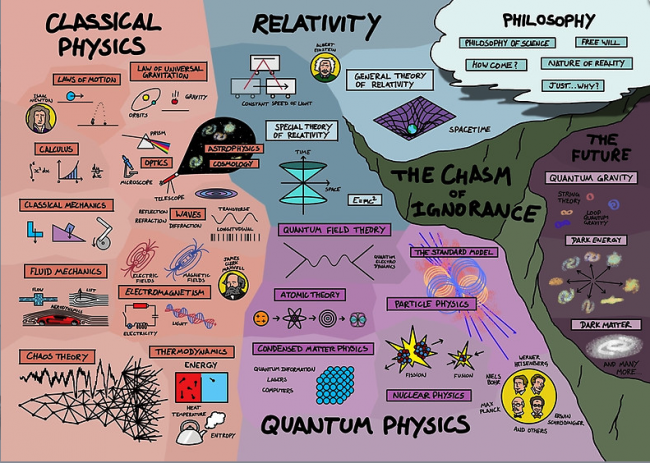
Un Chien Andalou means “an Andalusian dog,” though the much-studied 1929 short film of that title contains no dogs at all, from Andalusia or anywhere else. In fact, it alludes to a Spanish expression about how the howling of an Andalusian signals that someone has died. And indeed, there is death in Un Chien Andalou, as well as sex, albeit death and sex as processed through the unconscious minds of the young filmmaker Luis Buñuel and artist Salvador Dalí, whose collaboration on this enduringly strange movie did much to make their names. Two of its memorable images — among sixteen straight minutes of memorable images — came straight from their dreams: a hand crawling with ants, and a razor blade slicing the moon as if it were an eye.
“Less than two minutes into the picture, a man — played by the stocky, unmissable figure of Buñuel himself — stands on a balcony, gazing wolfishly at the moon,” writes New Yorker film critic Anthony Lane. “Cut to the face of a woman. Cut back to the moon; a thin slice of cloud drifts across its face. Cut to an eye; a razor blade knifes neatly and without hesitation across the eyeball, whose contents well and spill like an outsized tear. Cut. At this point, if you are of a nervous disposition, you faint.”
Buñuel himself told Dalí that the sequence made him sick, though he also publicly described Un Chien Andalou as “a desperate and passionate appeal to murder.” Allergic to the direct incorporation of politics into art, he preferred to use the techniques of Surrealism to advocate for the destruction of society itself.
Yet as their careers went on, Buñuel and Dalí eventually occupied respected positions in society. Curious! Though Buñuel would keep recommitting to the power of absurdity throughout his filmography (not least in the seventies with his final trilogy, The Discreet Charm of the Bourgeoisie, The Phantom of Liberty, and That Obscure Object of Desire), it is Un Chien Andalou that holds the title of one of the most important works in the history of cinema, recognized even by those who’ve never seen it, some of whom no doubt suspect they couldn’t bear to. But if they can summon the will, they’ll find the film’s parade of unsettlingly coherent incoherence is more accessible than ever, since it has now fallen into the public domain, according to the Internet Archive. Its sense of humor may surprise them, but so too may the undiminished vividness of its flashes of sex and death, which have always been standbys of cinema — and of dreams.
Based in Seoul, Colin Marshall writes and broadcasts on cities, language, and culture. He’s the author of the newsletterBooks on Cities as well as the books 한국 요약 금지 (No Summarizing Korea) and Korean Newtro.Follow him on the social network formerly known as Twitter at @colinmarshall.
In 2004, the Brazilian musician Seu Jorge recorded a series of Portuguese covers of David Bowie songs for Wes Anderson’s film The Life Aquatic with Steve Zissou. The next year, he released a full album of 13 Bowie classics, and in 2016–2017, he even took the songs on tour. Now, in 2026, to mark the 10th anniversary of Bowie’s passing, Jorge returns with the performance above. Set against a beautiful Brazilian coastline, he sings some of Bowie’s most beloved tracks, all while in character as Pelé dos Santos, the role he played in Anderson’s film. See the full track list below and enjoy.
Lady Stardust
Rock ’n’ Roll Suicide
Queen Bitch
Oh! You Pretty Things
Suffragette City
Changes
Rebel Rebel
Quicksand
Five Years
Team Zissou
Ziggy Stardust
Space Oddity
When I Live My Dream
Life on Mars?
Starman
Buckminster Fuller was, in many ways, a twenty-first century man: an achievement in itself, considering he was born in the nineteenth century and died in the twentieth. In fact, it may actually count as his defining achievement. For all the inventions presented as revolutionary that never really caught on — the Dymaxion house and car, the geodesic dome — as well as the countless pages of eccentrically theoretical writing and even more countless hours of talk, it can be difficult for us now, here in the actual twenty-first century, to pin down the civilizational impact he so earnestly longed to make. But to the extent that he embodied the faith, born of the combination of industrial might and existential dread that colored the postwar American zeitgeist, that technology can rationally re-shape the world, we’re all his intellectual children.
In the video above, Joe Scott provides an introduction to Fuller and his world in about ten minutes. After a much-referenced Damascene conversion, the once-dissolute Fuller spent most of his life “trying to solve the world’s problems,” Scott says, “specifically in finding ways to save resources and provide for everybody on the planet: to do more with less, as we would say.”
The title he gave himself of “comprehensive anticipatory design scientist” neatly represents both his globally, even universally scaled ambitions, as well as his compulsive knack for self-promotion. If the designs he came up with to achieve his utopian ends never took root in society (even geodesic domes ended up as something like “the hula hoop of twentieth-century architecture,” James Gleick writes, in that they were “everywhere, and then they were a bit silly”), the problem had in part to do with the tendency of his grand visions to outpace the functional technology of his day.
In his sensibility, too, “Bucky” Fuller can come off as a familiar type in our own time, even to those who’ve never heard of him. “There is no doubt whatever in Fuller’s mind that the whole development of modern science and technology has resulted from a willingness on the part of a very few men to sail into the wind of tradition, to trust in their own intellect, and to take advantage of their natural mobility,” wrote the New Yorker’s Calvin Tompkins in a 1966 profile. No wonder he appealed to the Whole Earth Catalog counterculture of that decade, which eventually evolved into the culture of what we now call Silicon Valley, where no declared intention to reinvent the way humans live and work is too ridiculously ambitious. Though few figures could have seemed more likely to turn permanently passé, Buckminster Fuller continues to inspire fascination — and in a way, as a patron saint of techno-optimism, he lives on today.
Based in Seoul, Colin Marshall writes and broadcasts on cities, language, and culture. He’s the author of the newsletterBooks on Cities as well as the books 한국 요약 금지 (No Summarizing Korea) and Korean Newtro.Follow him on the social network formerly known as Twitter at @colinmarshall.
If you would like to support the mission of Open Culture, consider making a donation to our site. It’s hard to rely 100% on ads, and your contributions will help us continue providing the best free cultural and educational materials to learners everywhere. You can contribute through PayPal, Patreon, and Venmo (@openculture). Thanks!
Though it’s easily forgotten in our age of air travel and instantaneous global communication, many a great city is located where it is because of a river. That holds true everywhere from London to Buenos Aires to Tokyo to New York — and even to Los Angeles, despite its own once-uncontrollable river having long since been turned into a much-ridiculed concrete drainage channel. But no urban waterway has been quite so romanticized for quite so long as the Seine, which runs through the middle of Paris. And it was in the middle of the Seine, on the now-aptly named Île de la Cité, that Paris began. In the 3D time-lapse video above, you can witness the nearly two-and-a-half-millennium evolution of that tiny settlement into the capital we know today in just three minutes.
Paris didn’t take its shape in a simple process of outward growth. As is visible from high above through the video’s animation, the city has grown differently in each era of its existence, whether it be that of the Parisii, the tribe from whom it takes its name; of the Roman Empire, which constructed the standard Cardo Maximus (now known as the Rue Saint-Jacques) and Decumanus Maximus, among much other infrastructure; the Middle Ages, amid whose great (and haphazard) densification rose Notre-Dame de Paris; or the time of Baron Haussmann, whose radical urban renovations laid waste to great swathes of medieval Paris and replaced them with the broad avenues, stately residential buildings, and grand monuments recognized around the world today.
At first glance, the built environment of modern Paris can seem to have been frozen in Haussmann’s mid-nineteenth century — and no doubt, that’s just the way its countless many tourists might want it. But as shown in the video, the Ville Lumière has kept changing throughout the industrial era, and hasn’t stopped in the succeeding “globalization era.” More growth and transformation has lately taken place outside central Paris, beyond the encircling Boulevard Périphérique, but it would hardly do justice to history to ignore such more relatively recent, more divisive additions as the Tour Montparnasse, the Centre Pompidou, or the Louvre Pyramid. (When it was built in the eighteen-eighties, even the beloved Eiffel Tower drew a great deal of ire and disdain.) And though the venerable Notre-Dame may have stood on Île de la Cité since the fourteenth century, the thoroughgoing reconstruction that followed its 2019 fire has made it belong just as much to the twenty-first.
Based in Seoul, Colin Marshall writes and broadcasts on cities, language, and culture. He’s the author of the newsletterBooks on Cities as well as the books 한국 요약 금지 (No Summarizing Korea) and Korean Newtro.Follow him on the social network formerly known as Twitter at @colinmarshall.

The story, the many stories, of Miles Davis as an opening act for several rock bands in the 1970s makes for fascinating reading. Before he blew the Grateful Dead’s minds as their opening act at the Fillmore West in April 1970 (hear both bands’ sets here), Davis and his all-star Quintet—billed as an “Extra Added Attraction”—did a couple nights at the Fillmore East, opening for Neil Young and Crazy Horse and The Steve Miller Band in March of 1970. The combination of Young and Davis actually seems to have been rather unremarkable, but there is a lot to say about where the two artists were individually.
Nate Chinen in At Length describes their meeting as a “minimum orbit intersection distance”—the “closest point of contact between the paths of two orbiting systems.” Both artists were “in the thrall of reinvention,” Young moving away from the smoothness of CSNY and into free-form anti-virtuosity with Crazy Horse; Davis toward virtuosity turned back into the blues.
Miles, suggested jazz writer Greg Tate, was “bored fiddling with quantum mechanics and just wanted to play the blues again.” The story of Davis and Young at the Fillmore East is best told by listening to the music both were making at the time. Hear “Cinnamon Girl” below and the rest of Neil Young and Crazy Horse’s incredible set here. The band had just released their beautifully ragged Everybody Knows this is Nowhere.
When it comes to the meeting of Davis and Steve Miller, the story gets juicier, and much more Miles: the difficult performer, not the impossibly cool musician. (It sometimes seems like the word “difficult” was invented to describe Miles Davis.) The trumpeter’s well-earned egotism lends his legacy a kind of rakish charm, but I don’t relish the positions of those record company executives and promoters who had to wrangle him, though many of them were less than charming individuals themselves. Columbia Records’ Clive Davis, who does not have a reputation as a pushover, sounds alarmed in his recollection of Miles’ reaction after he forced the trumpeter to play the Fillmore dates to market psychedelic jazz-funk masterpiece Bitches Brew to white audiences.
According to John Glatt, Davis remembers that Miles “went nuts. He told me he had no interest in playing for ‘those fu*king long-haired kids.’” Particularly offended by The Steve Miller Band, Davis refused to arrive on time to open for an artist he deemed “a sorry-ass cat,” forcing Miller to go on before him. “Steve Miller didn’t have his shit going for him,” remembers Davis in his expletive-filled autobiography, “so I’m pissed because I got to open for this non-playing motherfu*ker just because he had one or two sorry-ass records out. So I would come late and he would have to go on first and then when we got there, we smoked the motherfu*king place, and everybody dug it.” There is no doubt Davis and Quintet smoked. Hear them do “Directions” above from an Early Show on March 6, 1970.
“Directions,” from unreleased tapes, is as raw as they come, “the intensity,” writes music blog Willard’s Wormholes, “of a band that sounds like they were playing at The Fillmore to prove something to somebody… and did.” The next night’s performances were released in 2001 as It’s About That Time. Hear the title track above from March 7th. You can also stream more on YouTube. As for The Steve Miller Blues Band? We have audio of their performance from that night as well. Hear it below. It’s inherently an unfair comparison between the two bands, not least because of the vast difference in audio quality. But as for whether or not they sound like “sorry-ass cats”… well, you decide.
Note: An earlier version of this post appeared on our site in 2015.
When Netflix launched around the turn of the millennium, it was received as a godsend by many American cinephiles, especially those who lived nowhere near diversely programmed revival houses or well-curated video stores. A quarter-century later, it’s safe to say that those days have come to an end. Not only does the streaming-only Netflix of the twenty-twenties no longer transmit movies on DVD through the mail (a service its younger users have trouble even imagining), it ranks approximately nowhere as a preferred cinephile destination. That has to do with a selection much diminished since the DVD days — especially as regards movies more than a decade or so old — but also with a brand debased by too many bland, formulaic original productions.
Unlike the platform’s various acclaimed multi-episode dramatic series, the “Netflix movie” commands no critical respect. But it can, at least if you trust the company’s own viewership data, command a large audience, if not an especially attentive one. The general semi-engagement of Netflix viewers, as argued in the Nerdstalgic video at the top of the post, is reflected in the quality of the “movie-shaped product” now served to them.
Far from the slapped-together approximations of Hollywood we once expected from films made for TV, the stream-chart-topping likes of Red Notice and The Electric State are mega-budgeted productions brimming with big stars and large-scale visual effects. They’re also tissues of algorithm-approved narrative elements, borrowed imagery, and third-hand quips, all of them forgotten as soon as the next piece of content begins auto-playing.
On the latest Joe Rogan Experience podcast, Ben Affleck and Matt Damon turned up to promote their own Netflix movie, The Rip. They don’t take long to open up about the distinctive challenges of working for that platform in this era. Damon mentions that, whereas action movies once saved their explosion-intensive set pieces for after the story gets in motion, Netflix asks, “Can we get a big one in the first five minutes? We want people to stay tuned in. And it wouldn’t be terrible if you reiterated the plot three or four times in the dialogue because people are on their phones while they’re watching.” According to the filmmakers who speak about it, the needs of these so-called “second screen” viewers have assumed great importance in the studio notes offered by Netflix — which has, at this point, become a major studio in itself.
Satisfying the apparent demands of Netflix’s metrics results in what Nerdstalgic calls “visual muzak,” geared to hold out just enough familiarity and prestige to get users to press play, without ever calling so much attention to itself that they press stop. This makes the studio pictures of the nineties, when Affleck and Damon broke out, look like the stuff of a golden age. “There were a lot of really good independent movies that were being made,” Damon remembers. “They were making daring movies, and everyone just got way more conservative.” On one level, streaming platforms have greatly widened access to film in general; on another, they’ve stifled artistic individuality and risk-taking on the part of actual films. As Quentin Tarantino has pointed out, technology and economics put mainstream cinema into periods of creative retrenchment every so often: the fifties, for example, or the eighties. Whether another seventies or nineties lies ahead, today’s cinephiles can only hope.
Based in Seoul, Colin Marshall writes and broadcasts on cities, language, and culture. He’s the author of the newsletterBooks on Cities as well as the books 한국 요약 금지 (No Summarizing Korea) and Korean Newtro.Follow him on the social network formerly known as Twitter at @colinmarshall.

We're hoping to rely on loyal readers, rather than erratic ads. Please click the Donate button and support Open Culture. You can use Paypal, Venmo, Patreon, even Crypto! We thank you!
Open Culture scours the web for the best educational media. We find the free courses and audio books you need, the language lessons & educational videos you want, and plenty of enlightenment in between.