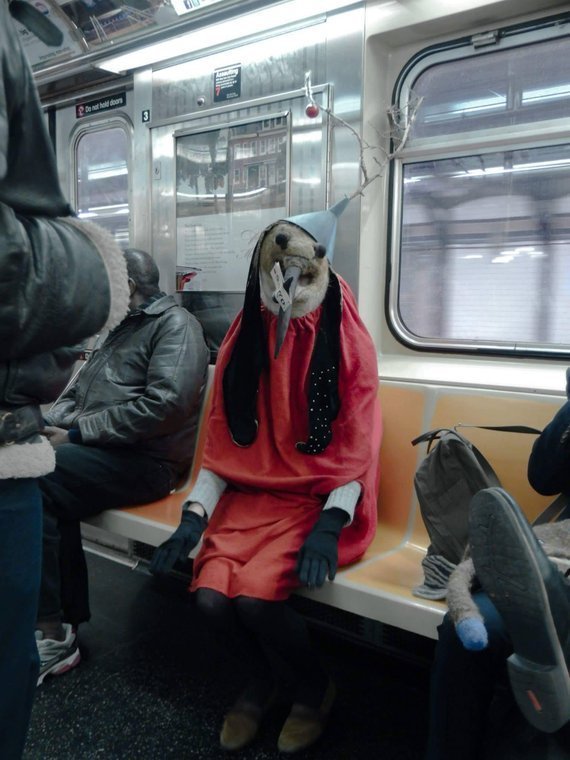
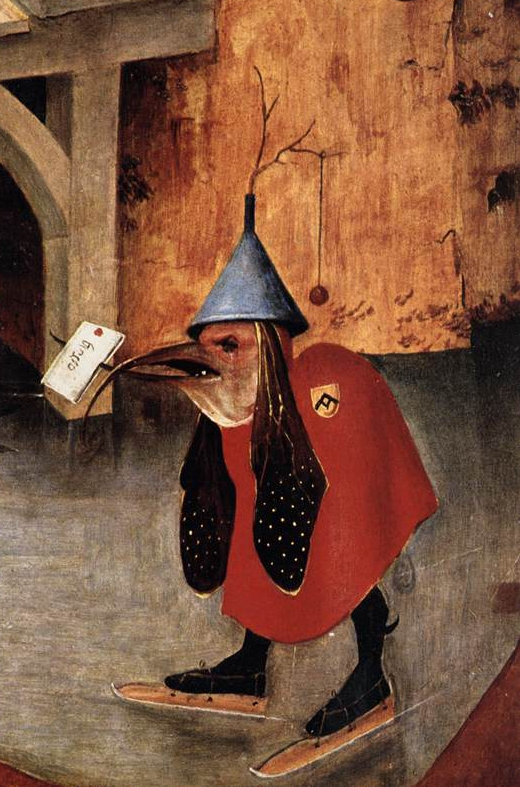
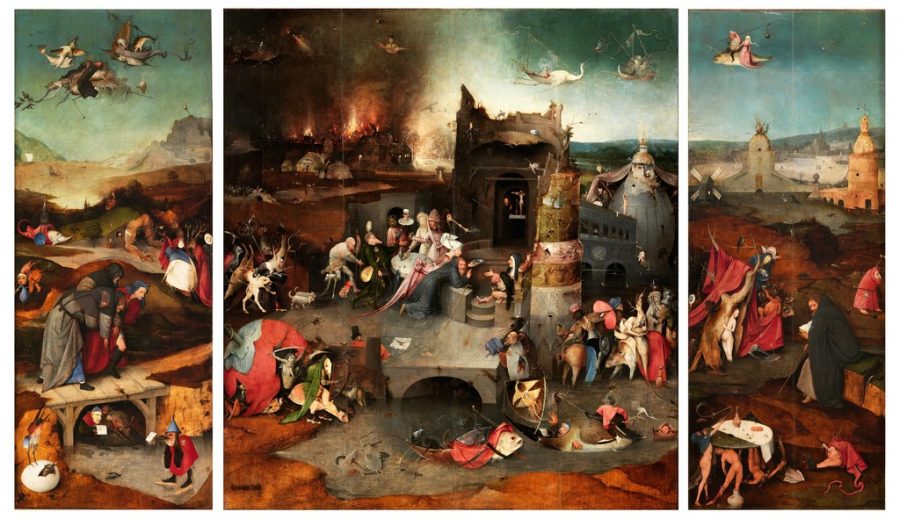
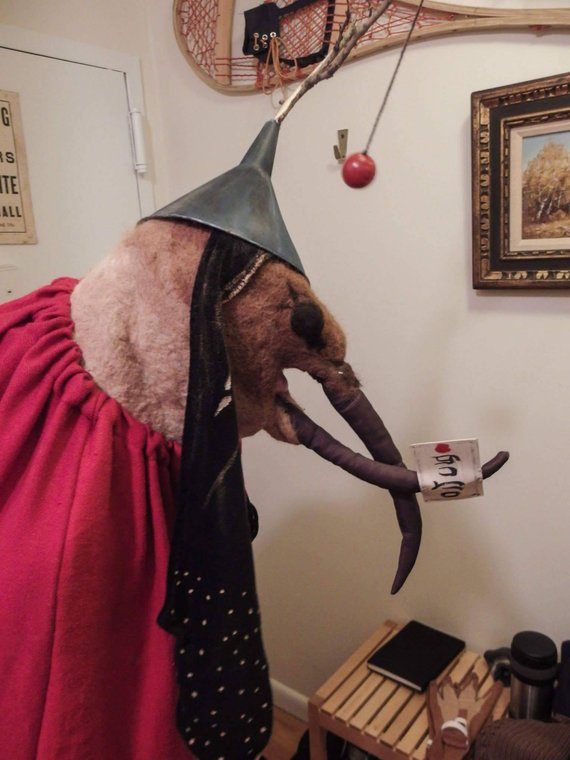
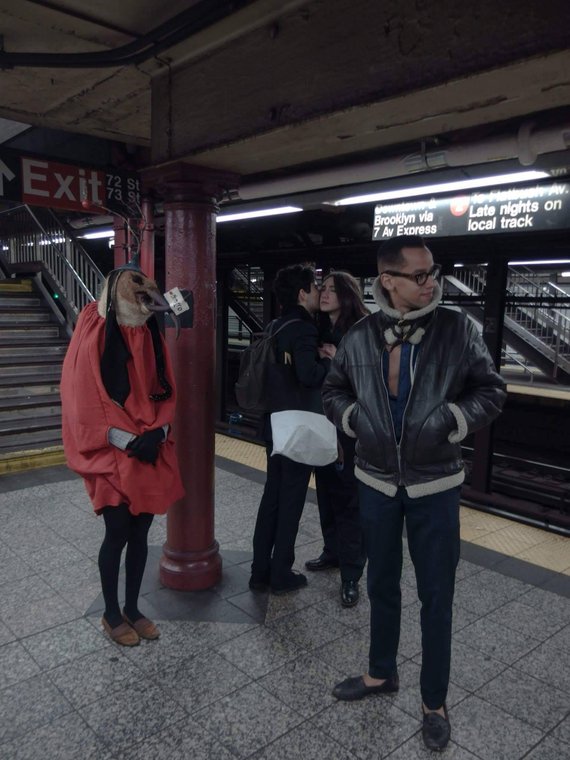
In recent months, we’ve highlighted how Dr. Martens, the iconic boot maker, has tried to reinvent itself by creating more artistically inspired boots, some actually adorning the artwork of William Blake, Hieronymus Bosch, and traditional Japanese artists. These aren’t your grandfather’s Doc Martens, to be sure.
But however different Docs may now look on the outside, they haven’t changed much on the inside. Just watch the video above, which takes you on a tour of “Dr. Martens’ only UK factory on Cobbs Lane in Wollaston, Northamptonshire.” The factory “employs 50 workers that make about 100,000 pairs of boots per year,” all in the company’s tried and true way.…
If you would like to sign up for Open Culture’s free email newsletter, please find it here. It’s a great way to see our new posts, all bundled in one email, each day.
If you would like to support the mission of Open Culture, consider making a donation to our site. It’s hard to rely 100% on ads, and your contributions will help us continue providing the best free cultural and educational materials to learners everywhere. You can contribute through PayPal, Patreon, and Venmo (@openculture). Thanks!
In an 1878 North American Review description of his new invention, the phonograph, which transcribed sound on wax-covered metal cylinders, Thomas Edison suggested a number of possible uses: “Letter writing and all kinds of dictation without the aid of a stenographer,” “Phonographic books” for the blind, “the teaching of elocution,” and, of course, “Reproduction of music.” He did not, visionary though he was, conceive of one extraordinary use to which wax cylinders might be put—the recovery or reconstruction of extinct and endangered indigenous languages and cultures in California.
And yet, 140 years after Edison’s invention, this may be the most culturally significant use of the wax cylinder to date. “Among the thousands of wax cylinders” at UC Berkeley’s Phoebe A. Hearst Museum of Anthropology, writes Hyperallergic’s Allison Meier, “are songs and spoken-word recordings in 78 indigenous languages of California. Some of these languages, recorded between 1900 and 1938, no longer have living speakers.”
Such is the case with Yahi, a language spoken by a man called “Ishi,” who was supposedly the last surviving member of his culture when anthropologist Alfred Kroeber met him in 1911. Kroeber recorded nearly 6 hours of Ishi’s speech on 148 wax cylinders, many of which are now badly degraded.
“The existing versions” of these artifacts “sound terrible,” says Berkeley linguist Andrew Garrett in the National Science Foundation video at the top, but through digital reconstruction much of this rare audio can be restored. Garrett describes the project—supported jointly by the NSF and NEH—as a “digital repatriation of cultural heritage.” Using an optical scanning technique, scientists can recover data from these fragile materials without further damaging them. You can see audio preservationist Carl Haber describe the advanced methods above.
The project represents a scientific breakthrough and also a stark reminder of the genocide and humiliation of indigenous people in the American west. When he was found, “starving, disoriented and separated from his tribe,” writes Jessica Jimenez at The Daily Californian, Ishi was “believed to be the last Yahi man in existence because of the Three Knolls Massacre in 1866, in which the entire Yahi tribe was thought to have been slaughtered.” (According to another Berkeley scholar his story may be more complicated.) He was “put on display at the museum, where outsiders could watch him make arrows and describe aspects of Yahi culture.” He never revealed his name (“Ishi” means “man”) and died of tuberculosis in 1916.
The wax cylinders will allow scholars to recover other languages, stories, and songs from peoples destroyed or decimated by the 19th century “Indian Wars.” Between 1900 and 1940, Kroeber and his colleagues recorded “Native Californians from many regions and cultures,” the Berkeley project page explains, “speaking and singing; reciting histories, narratives and prayers, listing names for places and objects among many other things, all in a wide variety of languages. Many of the languages recorded on the cylinders have transformed, fallen out of use, or are no longer spoken at all, making this collection a unique and invaluable resource for linguists and contemporary community members hoping to learn about or revitalize languages, or retrieve important piece of cultural heritage.”
The light was departing. The brown air drew down all the earth’s creatures, calling them to rest from their day-roving, as I, one man alone,
prepared myself to face the double war of the journey and the pity, which memory shall here set down, nor hesitate, nor err.
Reading Dante’s Inferno, and Divine Comedygenerally, can seem a daunting task, what with the book’s wealth of allusion to 14th century Florentine politics and medieval Catholic theology. Much depends upon a good translation. Maybe it’s fitting that the proverb about translators as traitors comes from Italian. The first Dante that came my way—the unabridged Carlyle-Okey-Wicksteed English translation—renders the poet’s terza rimain leaden prose, which may well be a literary betrayal.
Gone is the rhyme scheme, self-contained stanzas, and poetic compression, replaced by wordiness, antiquated diction, and needless density. I labored through the text and did not much enjoy it. I’m far from an expert by any stretch, but was much relieved to later discover John Ciardi’s more faithful English rendering, which immediately impresses upon the senses and the memory, as in the description above in the first stanzas of Canto II.
The sole advantage, perhaps, of the translation I first encountered lies in its use of illustrations, maps, and diagrams. While readers can follow the poem’s vivid action without visual aids, these lend to the text a kind of imaginative materiality: saying yes, of course, this is a real place—see, it’s right here! We can suspend our disbelief, perhaps, in Catholic doctrine and, doubly, in Dante’s weirdly officious, comically bureaucratic, scheme of hell.
Indeed, readers of Dante have been inspired to map his Inferno for almost as long as they have been inspired to translate it into other languages—and we might consider these maps more-or-less-faithful visual translations of the Inferno’s descriptions. One of the first maps of Dante’s hell (top) appeared in Sandro Botticelli’s series of ninety illustrations, which the Renaissance great and fellow Florentine made on commission for Lorenzo de’Medici in the 1480s and 90s.
Botticelli’s “Chart of Hell,” writes Deborah Parker, “has long been lauded as one of the most compelling visual representations… a panoptic display of the descent made by Dante and Virgil through the ‘abysmal valley of pain.’” Below it, we see one of Antonio Manetti’s 1506 woodcut illustrations, a series of cross-sections and detailed views. Maps continued to proliferate: see printmaker Antonio Maretti’s 1529 diagram further up, Joannes Stradanus’ 1587 version, above, and, below, a 1612 illustration below by Jacques Callot.
Dante’s hell lends itself to any number of visual treatments, from the purely schematic to the broadly imaginative and interpretive. Michelangelo Caetani’s 1855 cross-section chart, below, lacks the illustrative detail of other maps, but its use of color and highly organized labeling system makes it far more legible that Callot’s beautiful but busy drawing above.
Though we are within our rights as readers to see Dante’s hell as purely metaphorical, there are historical reasons beyond religious belief for why more literal maps became popular in the 15th century, “including,” writes Atlas Obscura, “the general popularity of cartography at the time and the Renaissance obsession with proportions and measurement.”
Even after hundreds of years of cultural shifts and upheavals, the Inferno and its humorous and horrific scenes of torture still retain a fascination for modern readers and for illustrators like Daniel Heald, whose 1994 map, above, while lacking Botticelli’s gilded brilliance, presents us with a clear visual guide through that perplexing valley of pain, which remains—in the right translation or, doubtless, in its original language—a pleasure for readers who are willing to descend into its circular depths. Or, short of that, we can take a digital train and escalators into an 8‑bit video game version.
See more maps of Dante’s Inferno here, here, and here.
James Hill, an award-winning ukulele player and songwriter from Canada, has been called a “ukulele wunderkind,” and an artist who “gives the ukulele its dignity back without ever taking himself too seriously.” The video above puts Hill’s lighter side and wunderkind talents on full display.
Performing live for a crowd in California, Hill and his “imaginary band” perform an enchanting version of Michael Jackson’s “Billie Jean.” With just a uke, Hill plays the bass line, percussion, and piano parts. Put it all together, and you have a fascinating one-man ukulele performance. But wait until you see what he can do with a uke, chopsticks and comb…
If you would like to sign up for Open Culture’s free email newsletter, please find it here. It’s a great way to see our new posts, all bundled in one email, each day.
If you would like to support the mission of Open Culture, consider making a donation to our site. It’s hard to rely 100% on ads, and your contributions will help us continue providing the best free cultural and educational materials to learners everywhere. You can contribute through PayPal, Patreon, and Venmo (@openculture). Thanks!
Name any classic rock band — or maybe any band, period — and you can rest assured that their biggest, most obsessive fan lives in Japan. Though it possesses a native musical culture of its own, with a rich history and a distinctive set of aesthetic sensibilities, that country has also cultivated great enthusiasm for the music of other lands. Just as 21st-century Japan continues to produce masters of such traditional instruments as the stringed koto, the bamboo shakuhachi flute, and the taiko drum, it also continues to produce increasingly all-knowing, all-collecting followers of bands like AC/DC, Guns N’ Roses, and Led Zeppelin.
Seldom have those currents of Japan’s music world had a venue to reliably meet — or at least it hadn’t before the advent of NHK Blends. Produced by NHK World, the international channel of Japanese national broadcaster NHK, the show offers performances of well-known Western songs, usually rock and pop hits, interpreted with traditional Japanese instruments played in traditional settings by musicians in traditional dress.
Those all rank among NHK Blends’ most popular videos, having racked up hundreds of thousands and even millions of views. This suggests that, no matter how many countless times we hear these songs on the car radio, at the gym, or while grocery-shopping, a sufficiently radical re-interpretation can still breathe new life into them. Some performances pull off extra dimensions of cultural transposition: the NHK Blends version of “Misirlou,” for instance, takes a traditional piece of music from the Eastern Mediterranean and interprets it for the kokyo, a stringed instrument that originally came to Japan from China. Or rather, it interprets French guitarist Jean-Pierre Danel’s interpretation of “surf guitar” king Dick Dale’s famous version from 1961. Close your eyes and you can very nearly imagine the samurai picture Quentin Tarantino somehow hasn’t yet made.
Based in Seoul, Colin Marshall writes and broadcasts on cities and culture. His projects include the book The Stateless City: a Walk through 21st-Century Los Angeles and the video series The City in Cinema. Follow him on Twitter at @colinmarshall or on Facebook.
Why has food become such an object of interest in recent years? One possible explanation is that it represents one of the last pursuits still essentially untouchable by digital culture: for all you can write about and photograph food for the internet, you can’t actually experience it there. Food, in other words, means physicality, dexterity, sensibility, and hand-craftsmanship in a concrete, visceral way that, in the 21st, century, has come to seem increasingly scarce. But another, shorter explanation sums the phenomenon up, just as plausibly, in two words: Anthony Bourdain.
Ever since he first entered the public eye at the end of the 1990s, late chef-writer-traveler-television host taught a reading, and later viewing public to appreciate not just food but all that goes into food: the ingredients, sure, the intense training and labor, of course, but most of all the many and varied cultural factors that converge on a meal. Bourdain found robust cultures everywhere, those that developed cart-filled streets of cities across the world to the kitchens of the most unassuming-looking restaurants and everywhere in between. He deeply respected not just those dedicated to the making and serving of food, but those dedicated to crafts of all kinds.
Bourdain’s natural kinship with all craftsmen and craftswomen made him a natural choice to carry Raw Craft, a web series sponsored by the Balvenie, a popular-premium brand of Scotch whisky. In its fourteen episodes (each of which finds a way to feature a bottle of the Balvenie), Bourdain goes characteristically far and wide to visit the studios and workshops of real people making real suits, shoes, saxophones, drums, guitars, handprinted books, furniture, motorcycles, and “traditionally feminine objects.” That last may break somewhat from Bourdain’s swaggering, masculine-if-not-macho image, but as the series’ host he displays a good deal of enthusiasm for the subject of each episode, including the trip to the sponsor’s own distillery in Dufftown, Scotland.
Naturally, Bourdain can engage on a whole other level in the episodes about food and food-related objects, such as pastries and hot chocolate, kitchen knives, and, in the video at the top of the post, cast-iron skillets. Ever the participatory observer, he finishes that last by preparing steak au poivre with one of the workshop’s own skillets on the flame of its own skillet-forging furnace. He takes it a step further, or several, in the episode with Japanese tattoo artist Takashi where, despite “running out of room” on his own much-tattooed skin, he commissions one more: a magnificent blue chrysanthemum on his shoulder, drawn and inked with only the most time-honored tools and techniques.
We even, during one of Bourdain’s ink-receiving sessions with Takashi, glimpse a true craftsman-to-craftsman conversational exchange. Bourdain asks Takashi about something he’s seen all of the many times he’s been on the tattooing table: a junior artist will approach to watch and learn from the way a senior one works. Takashi, who had to go through a minor ordeal just to convince his own master to take him on as an apprentice, confirms both the universality and the importance of the practice: “If you stop learning, you are pretty much done, you know?” Bourdain, who could only have agreed with the sentiment, lived it to the very end. “I’d like it to last as long as I do,” he says of his Takashi tattoo — “Which ain’t that long,” he adds, “but long enough, I hope.” But surely no amount of time could ever satisfy a culinary, cultural, and intellectual appetite as prodigious as his.
Based in Seoul, Colin Marshall writes and broadcasts on cities and culture. His projects include the book The Stateless City: a Walk through 21st-Century Los Angeles and the video series The City in Cinema. Follow him on Twitter at @colinmarshall or on Facebook.
Christopher R. Scotese, a geologist affiliated with Northwestern University, has created an animation showing “the plate tectonic evolution of the Earth from the time of Pangea, 240 million years ago, to the formation of Pangea Proxima, 250 million years in the future.” The blurb accompanying the video on Youtube adds:
The animation starts with the modern world then winds it way back to 240 million years ago (Triassic). The animation then reverses direction, allowing us to see how Pangea rifted apart to form the modern continents and ocean basins. When the animation arrives back at the present-day, it continues for another 250 million years until the formation of the next Pangea, “Pangea Proxima”.
According to an article published by NASA back in 2000, Scotese’s visualization of the future is something of an educated “guesstimate.” “We don’t really know the future, obviously,” he says. “All we can do is make predictions of how plate motions will continue, what new things might happen, and where it will all end up.” You can see his predictions play out above.
If you would like to sign up for Open Culture’s free email newsletter, please find it here. It’s a great way to see our new posts, all bundled in one email, each day.
If you would like to support the mission of Open Culture, consider making a donation to our site. It’s hard to rely 100% on ads, and your contributions will help us continue providing the best free cultural and educational materials to learners everywhere. You can contribute through PayPal, Patreon, and Venmo (@openculture). Thanks!
The summer solstice draws nigh, and many of us will spend it bemoaning the fact that we have yet again failed to make it to Stonehenge to view the sun rising over its massive Heel Stone.
Don’t beat yourself up too badly.
According to Vox’s Senior Editorial Producer Joss Fong, above, it’s likely that the winter solstice was actually a far bigger deal to the Neolithic builders who engineered the site.
While much of it is now in ruins, archeologists, historians, astronomers, and other experts have been able to reconstruct what the ancient monument would have looked like in its heyday. The placement of the massive stones in carefully arranged concentric circles suggest that its feats of astronomy were no accident.
As Fong points out, the builders would not have known that the earth travels around the sun, nor that it tilts on its vertical axis, thus effecting where the sun’s rays will strike throughout the year.
They would, however, have had good cause to monitor any natural phenomena as it related to their agricultural practices.
The summer solstice would have come at the height of their growing season, but if this year’s sunrise celebrants spin 180 degrees, they will be facing in the same direction as those ancient builders would have when they arrived to celebrate the winter solstice with a sunset feast.
These days, the winter solstice attracts a sizable number of tourists, along with neo-druids, neo-pagans, and Wiccans.
Ayun Halliday is an author, illustrator, theater maker and Chief Primatologist of the East Village Inky zine. Her solo show Nurse!, in which one of Shakespeare’s best loved female characters hits the lecture circuit to set the record straight opens June 12 at The Tank in New York City. Follow her @AyunHalliday.
“Anger is an energy,” shouts John Lydon, aka Johnny Rotten, on Public Image Limited’s “Rise,” the 1986 single written in reaction to Apartheid South African and Northern Irish interrogation techniques. In typical fashion, Lydon succinctly sums up the motive force of punk, in a song, as he told MTV’s Kevin Seal, about “all kinds of torture,” which “doesn’t really achieve anything. Violence doesn’t really achieve anything.”
Some angry energy creates, and some does nothing but destroy. A few years later, Nirvana brought the angry energy of punk back into mainstream consciousness, with a frontman who spoke out frequently against sexism and sexist violence. In 1992, the band—already a global phenomenon after the release of Nevermind and the explosive success of “Smells Like Teen Spirit”—performed a particularly pissed-off-yet-creative live set. They did so in reaction to a wave of abuse hurled at their opening act by a crowd of 50,000 in Buenos Aires.
“We brought this all-girl band over from Portland called Calamity Jane,” Kurt Cobain later remembered. “During their entire set, the whole audience… was throwing money and everything out of their pockets, mud and rocks, just pelting them. Eventually the girls stormed off crying. It was terrible, one of the worst things I’ve ever seen, such a mass of sexism all at once.”
Enraged, Cobain threatened to cancel, but was talked out of it by bassist Krist Novaselic. Instead, the band took the stage and “openly mocked the audience,” writes Alex Young at Consequence of Sound, “by playing mostly rarities and the backend of Nevermind.” Cobain at least managed to turn the ugly moment into a positive experience for his band.
We ended up having fun, laughing at them (the audience). Before every song, I’d play the intro to ‘Smells Like Teen Spirit’ and then stop. They didn’t realize that we were protesting against what they’d done. We played for about forty minutes, and most of the songs were off Incesticide, so they didn’t recognize anything. We wound up playing the secret noise song (‘Endless, Nameless’) that’s at the end of Nevermind, and because we were so in a rage and were just so pissed off about this whole situation, that song and whole set were one of the greatest experiences I’ve ever had.
The whole show was captured on film by a professional crew, and you can watch it above to see what the experience was like for the audience. The opening track, “Nobody Knows I’m New Wave,” is “one of only a handful of Nirvana songs,” notes Young, “never to be released. Nirvana archivists theorize the impromptu jam was made up on the spot.”
You’ll also see from the tracklist below that Cobain “was misremembering or embellishing a bit here and there,” writes Dangerous Minds. “While they did unearth a handful of rarities from their odds-n-ends collection Insesticide… as well as ‘All Apologies’ (it later turned up on In Utero)… they also played most of Nevermind.” Nonetheless, we can see the show, with its abrasive opening jam (“I promise to shit on your head”) as an attempt to both alienate obnoxious fans and turn rage into a creative force.
Setlist: Nobody Knows I’m New Wave Aneurysm Breed Drain You Beeswax Spank Thru School Come as You Are Lithium Lounge Act Sliver About a Girl Polly Jam In Bloom Territorial Pissings Been a Son On a Plain Negative Creep Blew
The East beckons me — Japan — but I’m a bit worried that I’ll get too Zen there and my writing will dry up. — David Bowie, 1980
David Bowie’s longstanding fascination with Japan pervaded his work, becoming the gateway through which many of his fans began to explore that country’s cultural traditions and aesthetics.
The recent release of two modern ukiyo‑e woodblock prints featuring the rocker has caused such mass swooning among legions of Japanophile Bowie fans, the reverberations may well be powerful enough to ring temple bells in Kyoto.
For each print, artist Masumi Ishikawa casts Bowie as both himself and an iconic Japanese figure.
The prints were ordered by the Ukiyo‑e Project, whose mission is to portray today’s artists and pop icons on traditional woodblock prints. (Bowie follows previous honorees Kiss and Iron Maiden.)
The prints and the blocks from which the impressions were made will be on display at BOOKMARC in Tokyo’s Omotesando neighborhood from June 23 to July 1.
Ayun Halliday is an author, illustrator, theater maker, Chief Primatologist of the East Village Inky zine and Bowie fan. Her solo show Nurse!, in which one of Shakespeare’s best loved female characters hits the lecture circuit to set the record straight opens June 12 at The Tank in New York City. Follow her @AyunHalliday.
Back in 2002, Stanford University mathematics professor Robert Osserman chatted with comedian and banjo player extraordinaire Steve Martin in San Francisco’s Herbst Theatre. The event was called “Funny Numbers” and it was intended to deliver an off-kilter discussion on math. Boy did it deliver.
The first half of the discussion was loose and relaxed. Martin talked about his writing, banjos and his childhood interest in math. “In high school, I used to be able to make magic squares,” said Martin. “I like anything kind of ‘jumbly.’ I like anagrams. What else do I like? I like sex.”
Then Robin Williams, that manic ball of energy, showed up. As you can see from the five videos throughout this post, the night quickly spiraled into comic madness.
They riffed on the Osbournes, Henry Kissinger, number theory, and physics. “Schrödinger, pick up your cat,” barks Williams at the end of a particularly inspired tear. “He’s alive. He’s dead. What a pet!”
When Martin and Williams read passages from Martin’s hit play, Picasso at the Lapin AgileWilliams read his part at different points as if he were Marlon Brando, Peter Lorre and Elmer Fudd. At another time, Williams and Martin riffed on the number zero. Williams, for once acting as the straight man, asked Osserman, “I have one quick question, up to the Crusades, the number zero didn’t exist, right? In Western civilization.” To which Martin bellowed, “That is a lie! How dare you imply that the number zero…oh, I think he’s right.”
The videos are weirdly glitchy, though the audio is just fine. And the comedy is completely hilarious and surprisingly thought provoking.
Note: An earlier version of this post appeared on our site in September, 2015.
Jonathan Crow is a Los Angeles-based writer and filmmaker whose work has appeared in Yahoo!, The Hollywood Reporter, and other publications. You can follow him at @jonccrow. And check out his blog Veeptopus, featuring lots of pictures of vice presidents with octopuses on their heads. The Veeptopus store is here.
We're hoping to rely on loyal readers, rather than erratic ads. Please click the Donate button and support Open Culture. You can use Paypal, Venmo, Patreon, even Crypto! We thank you!
Open Culture scours the web for the best educational media. We find the free courses and audio books you need, the language lessons & educational videos you want, and plenty of enlightenment in between.