Here’s the latest video release from NASA, and it’s another wondrous time-lapse film from the Internal Space Station. It’s called “Earth Illuminated.” If you could sit back and enjoy these videos for hours, you’re in luck. NASA has created a website — The Gateway to Astronaut Photography of Earth — that brings together all of its images, still and moving. You can find photographs here and time-lapse videos like “Earth Illuminated” here. Or you can skip to the Weekly Top Ten section, where NASA lists the ten most downloaded images from the Gateway within the past week. Enjoy.
When you hear the guitar playing of Django Reinhardt, with its fluid phrasing and lightning-fast arpeggios, it’s incredible to think that he had only two good fingers on his left hand.
When Reinhardt was 18 years old he was badly burned in a fire. It was late on the night of November 2, 1928. The young guitarist was at home with his common-law wife, Bella, in their gypsy caravan on the edge of Paris. To scrape together a little money, Bella had been making artificial flowers out of paper and highly flammable celluloid. When Django accidently knocked over a candle, the material from the flowers ignited and the trailer was quickly engulfed in flames.
They both survived, but Django would spend the next 18 months recovering from terrible injuries. When a doctor expressed interest in amputating his right leg, Reinhardt left the hospital and moved into a nursing home, where he eventually got better. The two smallest fingers on his left hand–crucial to a guitarist for articulating notes on the fretboard–were paralyzed. A lesser musician would have given up, but Reinhardt overcame the limitation by inventing his own method of playing. With his two good fingers he moved rapidly up and down the guitar neck while making very limited use of his two shriveled fingers on chords, double-stops and triple-stops. He rose above his handicap to create one of the most distinctive instrumental styles in 20th century music.
For a rare look at Reinhardt’s amazing technique, watch the excerpt above from the 1938 short film, Jazz “Hot.”It features Reinhardt with violinist Stéphane Grappelli and their band, Quintette du Hot Club de France, playing a swing version of the popular song “J’attendrai.” (It means “I will wait.”)
If you would like to support the mission of Open Culture, consider making a donation to our site. It’s hard to rely 100% on ads, and your contributions will help us continue providing the best free cultural and educational materials to learners everywhere. You can contribute through PayPal, Patreon, and Venmo (@openculture). Thanks!
“It’s been four years, maybe five,” mutters artist Ralph Steadman as his flight descends into Colorado. “I don’t know what the man has done since then. He may have terrible brain damage.” He speaks of a famous collaborator, a writer whose verbal style the culture has linked forever with Steadman’s own visual style. “He has these mace guns and CO2 fire extinguishers, which he usually just aims at people,” Steadman’s voiceover continues, and we know this collaborator could be none other than Hunter S. Thompson, the impulsive, drug- and firearm-loving chronicler of an American Dream gone sour. Many of Steadman’s fans no doubt found their way into his blotchy and grotesque but nevertheless precisely observed artistic world in the pages of Thompson’s best-known book, 1971’s Fear and Loathing in Las Vegas — or in those of its follow-up Fear and Loathing on the Campaign Trail ’72, or alongside his “gonzo” ground-breaking article “The Kentucky Derby is Decadent and Depraved.” Fear and Loathing on the Road to Hollywood, the BBC Omnibus documentary above, finds the men reuniting in 1978 to take a journey into the heart of, if not the American Dream, then at least the ostensible American “Dream Factory.”
As Steadman’s British, middle-aged stolidness may seem surprising given the out-and-out insanity some see in his imagery, so Thompson’s famously erratic behavior belies his words’ sober (as it were) indictment of America. He wrote of Thomas Jefferson’s belief in America as “a chance to start again [ .. ] a fantastic monument to all the best instincts of the human race.” But alas, “instead, we just moved in here and destroyed the place from coast to coast like killer snails.” We see him cruise the Vegas strip, suffer a fit of paranoia by Grauman’s Chinese Theater (though I myself react similarly to Hollywood Boulevard), and take a meeting about the film that may or may not have become Where the Buffalo Roam, which featured Bill Murray in the Thompsonian persona. We see archival footage of Murray helping Thompson out with his sardonic “Re-elect Nixon in 1980” campaign. We even see Thompson have a hotel-room sit-down with Nixon’s White House Counsel John Dean, who testified against the President in the Watergate trial. Between these segments, Thompson reflects on the wild, substance-fueled persona he created, and how it had gotten away from him even then: “I’m really in the way, as a person. The myth has taken over.” But he always had an eye on the next phase: at the documentary’s end, he draws up plans for the memorial mount and cannon that would, 27 years later, fire his ashes high into the air.
[NOTE:Fear and Loathing on the Road to Hollywood’s narrator refers to Thompson as a former Hell’s Angel. In fact, he only rode alongside the Hell’s Angels, collecting material for the book Hell’s Angels: The Strange and Terrible Saga of the Outlaw Motorcycle Gangs. Remaining a non-member all the while, he even bought a British bike to distinguish himself from the Harley-Davidson-dedicated gang.]
In 2010, when The New Yorker released its iPad app, Jason Schwartzman made the comic pitch. Now comes the new iPhone app, and it’s Jon Hamm (Mad Men) and Lena Dunham (Tiny Furniture filmmaker and Girls creator) doing the honors. As The New Yorker will tell you, the new app has “every story, every cartoon, every em dash, every illustration” found in the magazine, plus extra audio and video features. Anyone with an iPhone can download this week’s issue for free. In the future, readers subscribing to the magazine in print, iPad, and Kindle Fire formats will receive full access to the mobile app. Android users, don’t despair. It looks like the magazine will take care of your digital needs down the line.…
It started back in the 1950s. Bill Haley and Elvis burst onto the scene. Rock ‘n’ roll was born. The guitar took center stage, and it never left. How the guitar came to “dominate the soundtrack of our lives” is the subject of The Story of the Guitar, a three part documentarynarrated by the BBC’s creative director Alan Yentob.
The story of the guitar is, of course, a big one. The instrument, and its stringed precursors, goes way back — all the way to the Greeks. And the influence of the guitar can be felt far and wide. It plays a lead role in classical music in Spain (and China); jazz in France (think Django); the blues in the Mississippi Delta, and beyond. Yentob paints the bigger picture for you in the first segment, “In the Beginning” (above). Part II (Out of the Frying Pan) focuses on the big moment when the guitar went electric. And Part III gets you up close and personal with the masters of the electric guitar. The documentary features interviews with Pink Floyd’s David Gilmour, The Who’s Pete Townshend, Iggy Pop, and The Edge from U2 (Part 1, Part 2 and Part 3), to name a few. We’ve got more great guitar-related resources listed below. H/T Mental Floss
E.M. Forster’s later years are something of a riddle. After publishing five novels, including the classics A Passage to India and Howards End, Forster stopped writing fiction at the age of 45. He lived quietly for another 46 years and continued to write essays, short biographies and literary journalism — but no more novels.
The issues behind it are complicated, says Forster in this excerpt from a 1958 BBC interview. “But I think one of the reasons why I stopped writing novels,” he says, “is that the social aspect of the world changed so very much. I’d been accustomed to write about the old vanished world with its homes and its family life and its comparative peace. All of that went. And though I can think about it I cannot put it into fiction form.”
At the time of the interview Forster was an honorary fellow at King’s College, Cambridge, where he lived the final 24 years of his life. He speaks of his life at Cambridge, and of his own limitations as a writer, with a sincerity and humanity that readers will recognize from his books.
In 1980, Jim Jarmusch made his first feature, Permanent Vacation, an urban walkabout that’s equal parts stark, alienated, and funny. Four years later came Stranger Than Paradise, a film often compared to both Yasujiro Ozu and The Honeymooners, and the one that made his name in the cinephilic consciousness. Faced with the job of following up this surprisingly (some would say shockingly) low-key hit, Jarmusch came up with 1986’s Down By Law. His productions have always taken pains to assemble distinctive casts, and this one stars the trio of Tom Waits, Stranger Than Paradise’s John Lurie, and Roberto Benigni. When the three find themselves locked up together in the same prison cell, they devise an escape plan that takes them straight out into the surrounding Louisiana swamps. The film therefore represents Jarmusch’s entry into the genre of the jailbreak movie, albeit in the same convention-skewing, tradition-dismissing, tangential way that his Dead Man was a western, his Ghost Dog was a samurai movie, and his The Limits of Control was a spy thriller.
Above you’ll find unseen scenes Jarmusch shot for Down by Law (here’s part two) showing a few characteristically intriguing moments of performance from Waits, Lurie, and others in jail and out on the streets of New Orleans. All of it comes shot in a rich, dreamlike black-and-white by famed cinematographer Robby Müller, a look Jarmusch tried out in Stranger Than Paradise and would later perfect in Dead Man. Though these scenes didn’t ultimately make it into the movie, they nonetheless come off as clearly Jarmuschian in their appearance and tone. Critics have long considered Jarmusch one of the least, if not the least compromising independent filmmaker to come out of the eighties. You can, of course, see that in the way an entire personality comes through in each of his films. But listen closely to these outtakes, and you’ll find that even the way he says “action” and “cut” bears the stamp of his cinematic attitude.
Most people know Dr. Seuss (Theodor Seuss Geisel) as a writer and illustrator of some of the world’s most-beloved children’s books. And while it’s true that some of his characters have not fared well since his death in 1991, his legacy as a playful moralist is secure with parents and teachers everywhere. But few people know that Geisel got his start as a satirist and illustrator for adults, publishing articles and illustrations in Judge, Life, Vanity Fair, and the Saturday Evening Post. He went on to prominence as an advertising illustrator during the Depression, most famously with a 17-year campaign for a bug-repellant called Flit—made by Standard Oil—whose slogan, “Quick, Henry, the Flit!” became a popular catch phrase in the 30s.
The University of California, San Diego, has a special collection of Geisel’s advertising work from the 30s and 40s (such as the image above) for clients like Standard, NBC, and Ford. The images show Geisel the illustrator developing visual themes that characterize his children’s books—the circus imagery, elephants, dazzling physical stunts, wide-eyed, furry creatures, complex Rube Goldberg machines, and the signature disembodied pointing gloves. During World War II, Geisel shifted his focus from advertising to politics and contributed weekly cartoons to PM magazine, a liberal publication. UCSD also has an online catalog of Geisel’s political cartoons, such as the 1941 ad for U.S. Savings Bonds below.
Here’s a rare gem from the video vault: Tom Waits on the Australian TV program, The Don Lane Show, in 1979.
Don Lane was an American nightclub performer who somehow managed to become the Johnny Carson of Australia. The Don Lane Show ran from 1975 to 1983, and featured comedy, interviews and musical performances by a variety of international stars who were touring Australia, including Elton John, Stevie Wonder, Jerry Lee Lewis and, on more than one occasion, Tom Waits.
On his first appearance in 1979, the 29-year-old Waits gave a disjointed, comic interview (above), before going to the piano (below) to perform “On the Nickel,” which he wrote for the soundtrack of the 1980 film of the same name. “The Nickel” refers to the skid row area of Los Angeles, along 5th Street. The song was included on Waits’s 1980 album, Heartattack and Vine. Australian TV viewers apparently didn’t know what to think about the mumbling, chain-smoking singer. When Waits returned in 1981, Lane said, “The last time Tom Waits appeared with us, his unusual style and sense of humor lit up our switchboard for about an hour after the show. And not all with compliments, either.”
Astronaut Don Pettit is a chemical engineer by training, and he is a man who loves his work. The video above, produced as part of a series called “Science off the Sphere,” shows an experiment conducted aboard the International Space Station. In it, Pettit demonstrates the way a water bubble reacts to puffs of air in microgravity. The results are fascinating to watch, made more so by Pettit’s total absorption in the experiment.
During his first six-month stay on the ISS in 2002–3, Pettit also experimented on how fluids react in zero-gravity. He dubbed these sessions “Saturday Morning Science.” Pettit returned to the ISS in December of 2011 and is still there, orbiting over 240 miles above the earth, conducting experiments in his free time and producing “Science off the Sphere.” Episode 5 of the series (below) is mesmerizing, and again, Pettit’s wonder as he narrates the experiment is palpable.
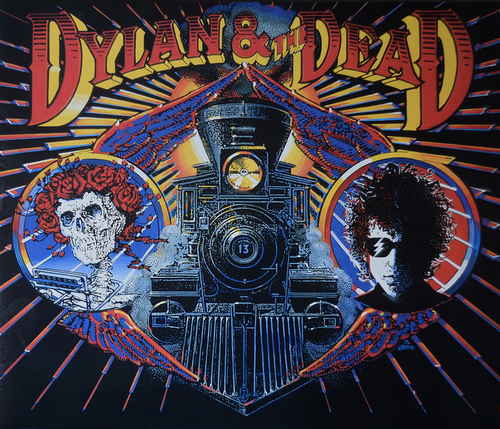
In the mid 1980s, Bob Dylan found his career hitting an unmistakable low point. In his autobiography, he recalls “Everything was smashed. My own songs had become strangers to me, I didn’t have the skill to touch the right nerves, couldn’t penetrate the surfaces. It wasn’t my moment of history anymore.”
For a while, Dylan toured with Tom Petty and The Heartbreakers, and it only led him to one conclusion: “Tom was at the top of his game and I was at the bottom of mine.” It was time to pack things in, to exit music altogether.
Before he could retire, Dylan agreed to do some shows with The Grateful Dead. In the summer of 1987, the singer-songwriter traveled to San Rafael, California to rehearse with the band. But it turned out to be trying, more than he could have ever imagined. In Chronicles, Volume 1 he writes:
After an hour or so, it became clear to me that the band wanted to rehearse more and different songs than I had been used to doing with Petty. They wanted to run over all the songs, the ones they liked, the seldom seen ones. I found myself in a peculiar position and I could hear the brakes screech. If I had known this to begin with, I might not have taken the dates.… There were so many [songs] that I couldn’t tell which was which‑I might even get the words to some mixed up with others.
Dylan eventually excused himself from the studios, intending never to return. But an encounter with a local jazz band — call it a simple twist of fate — brought him back. Dylan and The Dead started playing through his big repertoire. It was tough sledding at first. “But then miraculously,” he adds, “something internal came unhinged.” “I played these shows with The Dead and never had to think twice about it. Maybe they just dropped something in my drink, I can’t say, but anything they wanted to do was fine with me.”
It’s a great little story. Even better, the rehearsal is recorded for posterity. Thanks to the Internet Archive, you can sit back and listen to 74 tracks, which includes some classics — “It’s All Over Now, Baby Blue,” “Gotta Serve Somebody,” “Maggie’s Farm,” “Tangled Up in Blue,” “Simple Twist of Fate,” and more.
You can stream all of the tracks right below, from start to end. Or find individual recordings here.
We're hoping to rely on loyal readers, rather than erratic ads. Please click the Donate button and support Open Culture. You can use Paypal, Venmo, Patreon, even Crypto! We thank you!
Open Culture scours the web for the best educational media. We find the free courses and audio books you need, the language lessons & educational videos you want, and plenty of enlightenment in between.