After recently publishing its list of 100 Notable Books of 2007, The New York Times has narrowed things down and selected The 10 Best Books of 2007 — five fiction, and five nonfiction. Have a look.

Predictions for the World in 2008
The Economist has issued its predictions for the world in 2008, and here’s what they’re banking on: The Democrats, and particularly Hillary Clinton, narrowly win the upcoming presidential election. Meanwhile the United States, which has never met a bubble it doesn’t like, will get mired down with housing and credit problems. And looking for a new economic engine, the world will turn to China and India. Even better for China, it will host the Olympics in Beijing, win many medals, and feel like it has arrived (or rather re-arrived) as a nation. But perhaps feeling a bit too proud, it might ratchet up tensions with Taiwan, while the U.S. surprises everyone, even itself, by possibly striking a “grand bargain” with Iran. Other than that, George Bush will accomplish little during the last year of his administration, and politicians will talk lots about climate change. But whether they actually do anything is anyone’s guess.
For more predictions, check out The Economist’s full write-up, and keep an eye on The Economist podcast (iTunes — Feed — Web Site) where I’m sure these issues will get fuller coverage in the coming days.

The MIT Lecture Browser & A Beautiful Mind
 MIT has released a new search engine that draws on speech recognition technology and lets users search MIT audio & video lectures by keyword. For example, if you type “NASA” into the search box, the search results will include all of the instances where a speaker utters the word NASA in a recorded lecture. (You can get more background information on the new search engine here.)
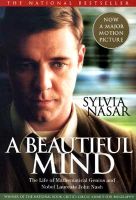
Now, what’s nice about using this example is that a “NASA” search will bring you to an intriguing presentation by Sylvia Nasar. (Click here and type “NASA” or “Sylvia.”) She’s the author of the bestelling book, A Beautiful Mind, which offers a biographical account of the Nobel Prize-winning mathematician John Nash and his struggles with paranoid schizophrenia. The book was turned into an Academy Award-winning film, and here you can find Nasar delivering a lecture at MIT called “A Beautiful Mind: Genius, Madness, Reawakening.” She’s a very able speaker and tells a good story. Have a look. (You can also access Nasar’s talk here.)
 Subscribe to Our Feed and check out our collection of Science Podcasts
Stephen King on Britney, Lindsay, Jenna & Waterboarding
Below, you’ll find excerpts from TIME Magazine’s conversation with Stephen King. You can access the full interview here. King turns up the heat after the jump.
STEPHEN KING: So who’s going to be TIME Person of the Year?
TIME: I really don’t know, there’s a very small group of people who make that decision.
STEPHEN KING: I was thinking, I think it should be Britney Spears and Lindsay Lohan.
TIME: Really?
STEPHEN KING: Yeah. You know, I just filmed a segment for Nightline, about [the movie version of his novella] The Mist, and one of the things I said to them was, you know, “You guys are just covering — what do they call it — the scream of the peacock, and you’re missing the whole fox hunt.” Like waterboarding [or] where all the money went that we poured into Iraq. It just seems to disappear. And yet you get this coverage of who’s gonna get custody of Britney’s kids? Whether or not Lindsay drank at her twenty-first birthday party, and all this other shit. You know, this morning, the two big stories on CNN are Kanye West’s mother, who died, apparently, after having some plastic surgery. The other big thing that’s going on is whether or not this cop [Drew Peterson] killed his… wife. And meanwhile, you’ve got Pakistan in the midst of a real crisis, where these people have nuclear weapons that we helped them develop. You’ve got a guy in charge, who’s basically declared himself the military strongman and is being supported by the Bush administration, whose raison d’etre for going into Iraq was to spread democracy in the world.
(more…)
How to Watch DVDs on Your iPod?
The answer is simple: Handbrake. This free, open source software (which works on MacOS X, Linux and Windows) makes it simple to load and watch DVDs on your video iPod. Here are some helpful instructions to get you started.

The Graduate at 40
The film that spoke to a generation of alienated youth during the 1960s is now 40 years old (and actually looking much tamer than it first did). To mark the occasion, a 40th anniversary collector’s edition DVD has been released, filled with a good amount of extra materials. Also, Fresh Air broadcasted a show last week (iTunes — Feed — Web Site) that brought together interviews with various members of the film’s cast and crew. As Larry David would say, it’s pretty, pretty, pretty good. And, by the way, have a look back at our earlier post: Meet Larry David (in Video)

The Future of Print
WNYC’s latest On The Media (iTunes — Feed — Site) covers the crisis of traditional book publishing in a new media age. While Amazon rolls out the Kindle and more and more content comes out in pure digital form, we’re still publishing more books than ever before. One interesting note from the program is that publishers have discovered that offering more free content online (i.e. not just excerpts but whole chapters of new books) serves to increase sales even more. The show was great–worth a listen.
WIRED SCIENCE: What’s Inside Rainn Wilson?
Funny and yet it counts as science.
Chris Hardwick and Rainn Wilson, star of The Office, “dive deep into the chemical guts of a common household product” to discover “What’s Inside.” For more information, visit https://www.pbs.org/wiredscience (Source: BoingBoing)
Guest on FORA.tv This Week
Here’s a quick fyi: I’m making a small guest appearance on FORA.tv this week.
In case you’re not familiar with it, FORA.tv hosts a large and constantly growing collection of videos that feature important thinkers grappling with contemporary cultural, social and political questions. Or, put simply, it’s YouTube made intelligent. As you’ll see, their mission is rather similar to our own. So I was pleased when they asked me to be “a guest” for the week and highlight some of my favorite videos from their video trove. Here is what I selected:
- The 20th Century on Trial: Norman Mailer
- Einstein: His Life and Universe
- Francis Fukuyama: The End Of History Revisited
- Jimmy Wales on Wikipedia
Segments of FORA’s talks are also available by audio and video podcast. (Get more info here.) Also, on a related note, Princeton University spearheads a somewhat similar video service, except that it is more specifically dedicated to public affairs. It’s called UChannel. (Have a look here.) Finally, if you like what FORA and UChannel have to offer, you may also want to spend some time with our Ideas & Culture Podcast Collection. Our full podcast library is here.

When Bob Dylan Went Electric: Newport, 1965
First there was the folk Bob Dylan. Then came the electric Bob Dylan. And it all happened one night at the Newport Folk Festival. The date was July 25, 1965.
In the clip below, you can see how the transition was received. In a word, not well. Appearing in front of a folk audience that lamented the rise of rock, Dylan hit the stage with his electric band and played three songs, including “Like a Rolling Stone.” Much of the crowd reacted violently (you can hear it at the end of the clip), and Pete Seeger, the folk legend, raged backstage: “Get that distortion out of his voice … It’s terrible. If I had an axe, I’d chop the microphone cable right now.” After his short set, Dylan tried to exit the stage. But, as you’ll see, he was coaxed back, with acoustic guitar in hand, to give the people what they wanted — an excellent version of It’s All Over Now, Baby Blue. For more on this controversy (which the music world eventually got over), check out Martin Scorsese’s documentary “No Direction Home” as well as this Wikipedia entry.

A World in Your Ear
Times Online (the large UK-based news website) has posted today a feature that offers an introduction to podcasting. It explains the whos, hows, whats, etc. and provides some helpful links, including one to our collection of Foreign Language Lesson Podcasts.
Podcasting offers an amazing way to access free, high-quality media, across many topics, wherever and whenever you want it. And it’s something that even technophobes can easily figure out. For more information on how to work with podcasts, see our our Podcast Primer. We take you through podcasting step-by-step. Also check out our extensive Podcast Library, which gives you access to audiobooks, cultural programming, science podcasts, university courses and more.

Support Us
We're hoping to rely on loyal readers, rather than erratic ads. Please click the Donate button and support Open Culture. You can use Paypal, Venmo, Patreon, even Crypto! We thank you!

Receive our Daily Email
About Us

Open Culture scours the web for the best educational media. We find the free courses and audio books you need, the language lessons & educational videos you want, and plenty of enlightenment in between.
Advertise With Us

