“Jam” Handy (1886–1983) was known for two things: 1.) participating in the 1904 and 1924 Olympics (quite a feat if you think about the gap in time), and 2.) making thousands of educational training films for American corporations, schools and the US armed forces. A guru of cinematic advertising, he shot films for General Motors, DuPont, Chevrolet, Coca-Cola and U.S. Steel, from the 1930s through the 1960s.
Above you can watch Back of the Mike, a film shot for Chevrolet in 1938. Like other films in this genre, this piece of cinematic advertising offers us an entertaining, if not educational, look at how old-time radio shows created their sound effects–all while helping market a product, the Chevrolet that helps the good guys win in the end. If the film makes you want to buy a Chevy, we can’t help you there. But if Back of the Mikegives you a hankering to listen to old time radio plays, then you’ve come to the right place. We’ve got a few good items listed for you in the Relateds below.
If you would like to support the mission of Open Culture, consider making a donation to our site. It’s hard to rely 100% on ads, and your contributions will help us continue providing the best free cultural and educational materials to learners everywhere. You can contribute through PayPal, Patreon, and Venmo (@openculture). Thanks!
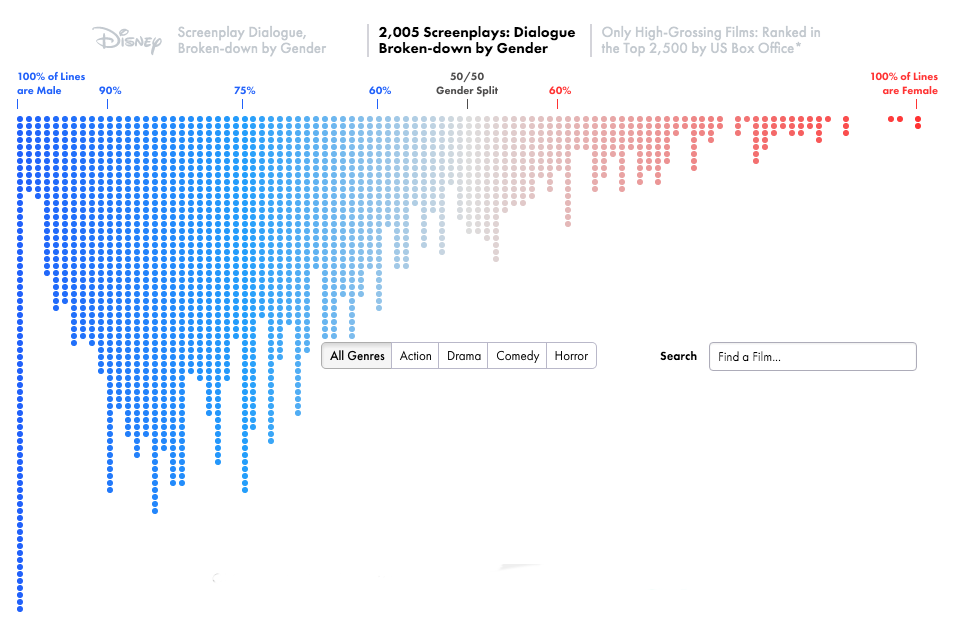
By their color palettes, by their dramatic structures, by their shot lengths, by the frequency and variety of their characters’ swearing: film enthusiasts have found ways to analyze just about every aspect of film. But only recently has the world of film analysis seen a large-scale study of dialogue by gender and age — in fact, the largest-scale study of dialogue by gender and age yet — undertaken by a new site called Polygraph, “a publication that explores popular culture with data and visual storytelling.” They wanted to put to the data test part of the notion, widely expressed in opinion pieces, that “white men dominate movie roles.”
“We Googled our way to 8,000 screenplays and matched each character’s lines to an actor,” write Polygraph’s Hannah Anderson and Matt Daniels. “From there, we compiled the number of words spoken by male and female characters across roughly 2,000 films, arguably the largest undertaking of script analysis, ever.” They present their quantitative results with great visual clarity, and you can view them for three distinct areas of cinema territory: just the 2,000 screenplays the study focused on; only high-grossing films at the American box office; and only Disney movies (known, of course, for their abundance of princesses, with or without many lines).
“Across thousands of films in our dataset,” they write, “it was hard to find a subset that didn’t over-index male. Even romantic comedies have dialogue that is, on average, 58% male. For example, Pretty Woman and 10 Things I Hate About You both have lead women (i.e., characters with the most amount of dialogue). But the overall dialogue for both films is 52% male, due to the number of male supporting characters.” And as far as age, “dialogue available to women who are over 40 years old decrease substantially. For men, it’s the exact opposite: there are more roles available to older actors.”
Depending on what kind of films you watch, this may well jibe with your viewing experience: mainstream stories have long tended to favor macho and often mature protagonists, and the antagonists they defeat in man-to-man combat have sometimes reached advanced ages indeed (all the more time, presumably, in which to have mastered the art of villainy, especially of the one-last-grand-speech-before-I-destroy-the-world variety). The women, and usually young women, featured in such pictures, when they appear at all, have to do much of their communication nonverbally.
This all supports a complaint I’ve long had about the movies, mainstream or otherwise: over a century in existence, and they’ve hardly touched the vast creative space available to them. The all-female Ghostbusters coming this summer will surely do its small part to rectify the lack of woman-delivered dialogue on the silver screen, but the depth of the deficiency, as revealed by Polygraph, suggests we could do with a few all-female Glengarry Glen Rosses as well.
On an ordinary afternoon, a group of friends sit around listening to records. Someone puts on a Willie Nelson album, and there is a knock at the door. It’s an older man, making a delivery. He pauses behind his clipboard, hearing the music from inside the house. “Is that Red Headed Stranger,” he asks? Yes. He asks if he can come in and listen. And for the next thirty minutes, no one says a word as the album tells its mournful tale of betrayal and bloody revenge, a story, writes Allmusic “about a preacher on the run after murdering his departed wife and her new lover.” It’s an album that remains—with its “brief song-poems and utterly minimal backing”—perhaps “the strangest blockbuster country produced.”
That 1975 album of tear-jerkers and murder ballads, which established Nelson as a “superstar recording artist,” is so “old-fashioned” it sounds “like a tale told around a cowboy campfire.” And it is for that reason millions of fans can’t tear themselves away from its compelling narrative and achingly sad, homespun laments—including myself, a few friends, and a stranger on a schedule who came to the door. And if Red Headed Stranger is an unlikely blockbuster, Nelson is an unlikely superstar, full of contradictions. He’s a gentle outlaw; an old-fashioned country troubadour who has remained on the progressive activist edge; and an unassuming, traditional artist who happens to be loved across the spectrum of generations, political persuasions, and musical styles.
But before Nelson became an international superstar he appeared on the country music circuit clean-shaven, short-haired, and in the natty suit and tie you see him wear in the clip above from a televised 1962 Grand Ole Opry performance. Close your eyes and you’ll hear that it’s undoubtedly Nelson’s familiar warble—though not so weathered with age as we’ve grown used to. But when you look, it’s hard to see the grizzled tax-evading, pot-smoking outlaw hippie hero we know and love in this fresh-faced gent. Nelson had only just moved to Nashville two years prior, and he struggled to make an impression at first. But when country singer Faron Young heard him sing his “Hello Walls” at a bar next to the Opry, his fortunes changed. Young sent the song into the top 40, and Nelson became, as the host above calls him, “the Mickey Mantle of country music,” writing hit after hit.
By ’62, he had recorded his first LP, And Then I Wrote, singing many songs he’d given to other artists. He opens above with “Hello Walls,” and he closes with his other massive hit from the period, “Crazy,” Patsy Cline’s signature tune. In-between, Nelson sings another song from his debut album, Billy Walker’s “Funny How Time Slips Away,” and works in “Night Life,” a blues song he wrote for Ray Price. Only eight years after this TV appearance, Nelson decided to retire from music and pack it in, feeling like his career had run its course. It wasn’t until a couple years later—after he’d become part of Austin’s eclectic music scene and re-invented himself musically with 1973’s Shotgun Willie—that the outlaw balladeer we know and love was born.
Heavy Metal has always had its baroque non-metal elements. It seems that no matter how hard and fast a metal band rocks, they’re eventually going to slip into some form of medieval Scandinavian folk music, Teutonic opera, Tolkienesque fantasy concept album song cycle, or at least—on the bubblegum end of the spectrum—soft rock ballad…. (You’re probably already picturing tiny Stonehenge on the Spinal Tap stage.) Such references have been in the genre’s DNA since the days of metal forefathers Led Zeppelin and Deep Purple.
Metallica, and the other three of the big four founders of thrash metal—Anthrax, Megadeath, and Slayer—emerged as an antidote to metal’s occasional pretentiousness and grandiosity. Much closer to punk and hardcore (they once covered campy horror punks The Misfits) than to the bombastic spandex and hairspray industry metal became, early Metallica prided themselves on violently aggressive music and imagery, and a complete absence of subtlety. (See the original title and cover for their debut album Kill ‘em All.)
But they softened in time, as we know, and eventually introduced some some non-metal into their songwriting—most notably in the grim acoustic balladry of megahit “One.” Now, thanks to new (-ish) bassist Robert Trujillo, the metal legends can add a completely different acoustic style to their repertoire—“flamingo,” as lead singer James Hetfield describes Trujillo’s flamenco guitar chops in the video above. And, as if to prove his bona fides in the flamenco world, Trujillo got to jam with the reigning king and queen of Nuevo Flamenco guitarists, Mexican duo Rodrigo y Gabriela—two players whose speed and virtuosity match those of the best metal shredders, but whose roots come from a much older tradition. (See them rip through “Tamacun” below.)
In the video at the top of the post, Trujillo and his low-slung bass join the acoustic duo on stage during their encore at a Red Rocks concert in 2014 for a flamenco-style medley of Metallica classics, including “Orion,” “For Whom The Bell Tolls,” “The Frayed Ends of Sanity,” and “Battery.” It somehow seems like a perfect fit for the versatile Trujillo, who grew up as inspired by jazz fusion bassist Jaco Pastorius and funk and Motown players (he opens his guest spot above with the “Jungle Boogie” bass riff) as he was by Black Sabbath. He brought many of these influences to previous bands like Suicidal Tendencies and Infectious Grooves. And now—in addition to “flamingo”—he’s brought to Metallica something else previously unheard-of in metal: slap bass solos.
We all have our favorite film critics. Maybe we gravitated to them because they write well or because they share our tastes, but the very best of them — the critics we read even on genres and directors we otherwise wouldn’t care about — make us see movies in a new way. Specifically, they make us see them the way they do, and the point of view of a professional critic steeped in cinema history and theory (not to mention the thousands and thousands of hours of actual film they’ve watched) will always have a richness that the casual moviegoer can’t hope to enjoy on his/her own.
Unless, of course, you take The Film Experience, a 23-lecture course from the Massachusetts Institute of Technology. And you don’t need to enroll at MIT — or even show up and surreptitiously audit — to take it, since the school has made those lectures, their accompanying materials, and even supplemental media (just like the DVD extras that have inspired a generation of cinephiles) free on their OpenCourseWare site. They’ve also assembled the videos, starring MIT’s Film and Media Studies program founding professor David Thorburn, into a single Youtube playlist.
If you would like to support the mission of Open Culture, consider making a donation to our site. It’s hard to rely 100% on ads, and your contributions will help us continue providing the best free cultural and educational materials to learners everywhere. You can contribute through PayPal, Patreon, and Venmo (@openculture). Thanks!
No need to scramble to the fallout shelter, friends.
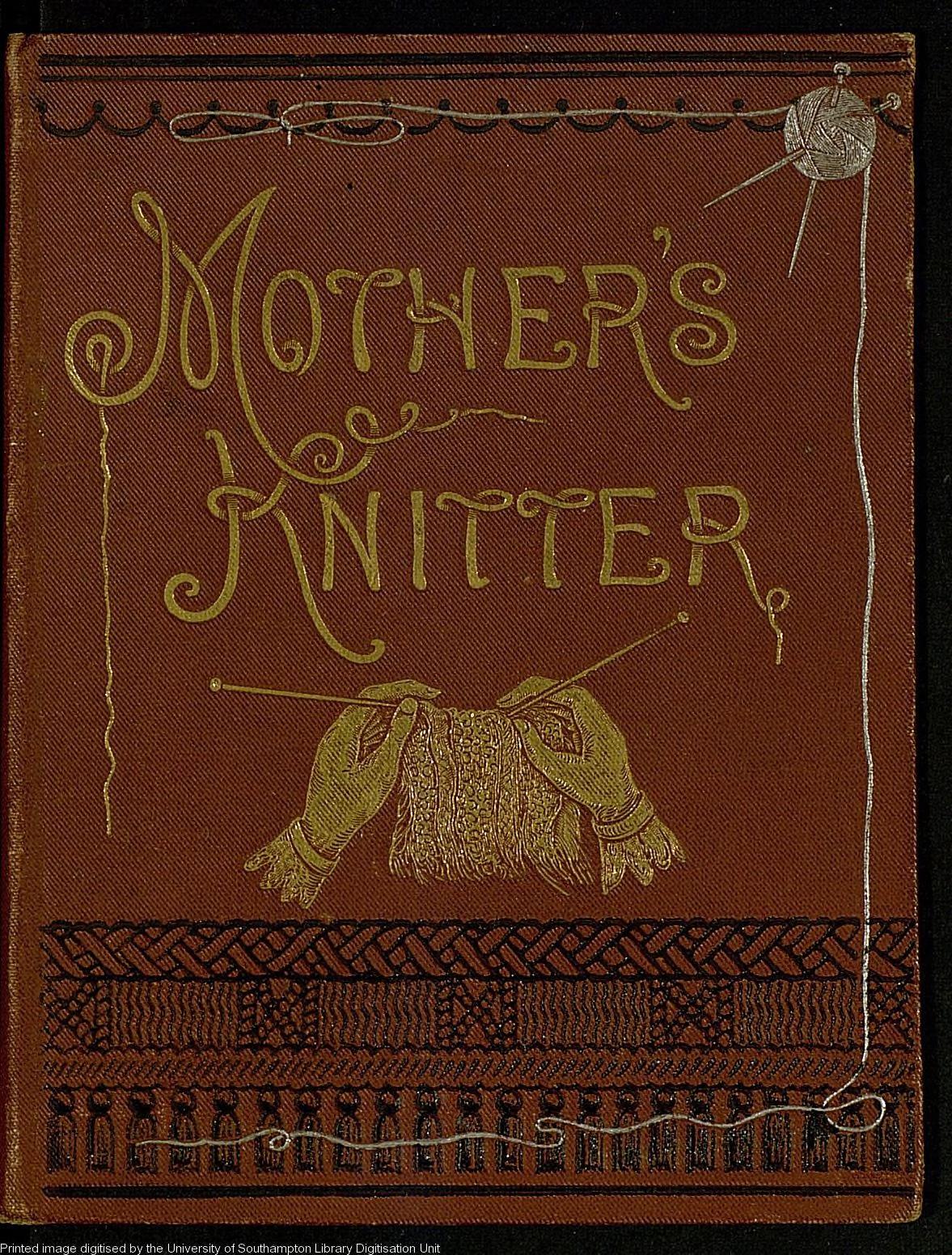
That massive boom you just heard is merely the sound of thousands of crafters’ minds being blown en masse by the University of Southhampton’s Knitting Reference Library, an extensive resource of books, catalogues, patterns, journals and magazines—over seventeen decades worth.
Viva la Handmade Revolution!
The basics of the form—knitting, purling, increasing, decreasing, casting on and off—have remained remarkably consistent throughout the generations. No wonder there’s an enduring tradition of learning to knit at grandma’s knee…
What has evolved is the nature of the finished products.
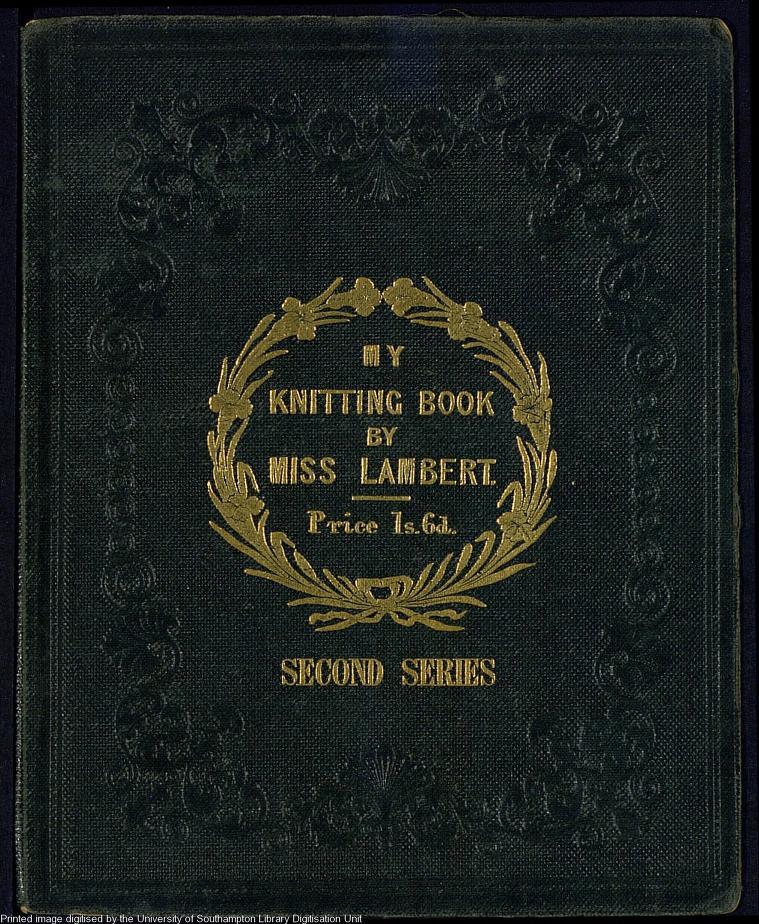
Miss Lambert’s “Baby Quilt in Stripes of Alternate Colors” from her 1847 Knitting Book could still hold its own against any other handcrafted shower gift, but even the most hardcore modern crafter would find it challenging to find takers for her “Carriage Sock,” which is meant to be worn over the shoe.
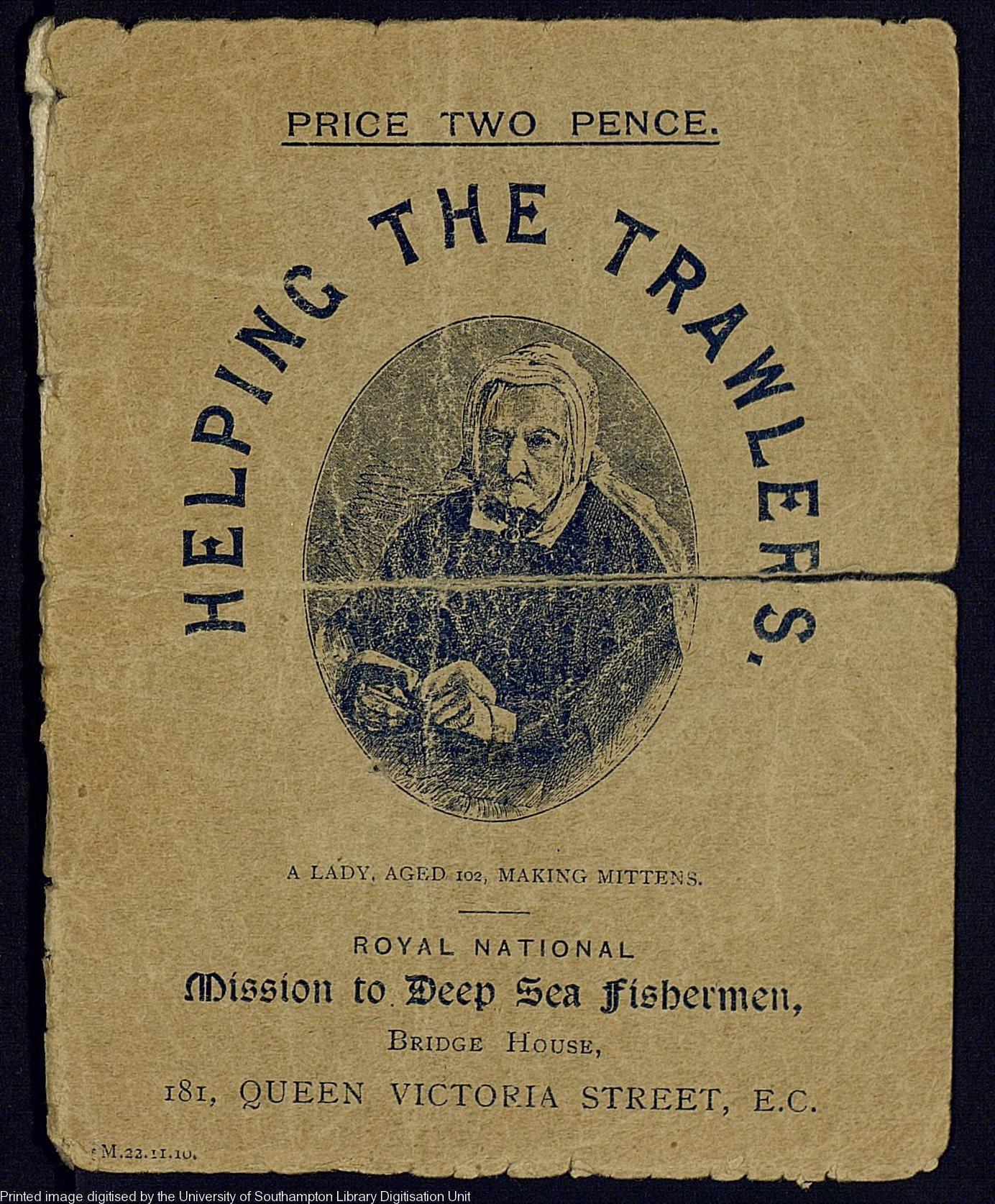
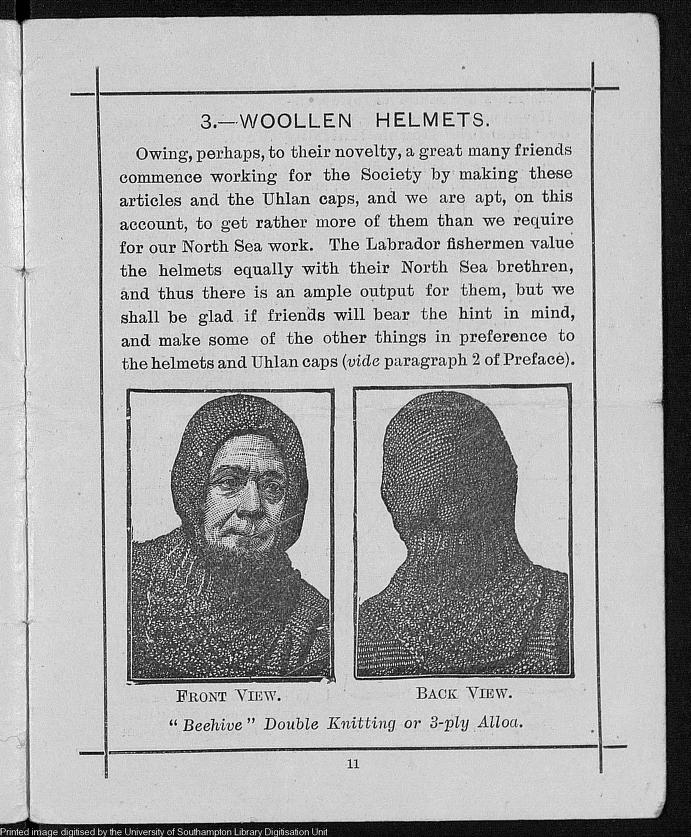
Ditto the “Woolen Helmets” in Helping the Trawlers, a 32-page pamphlet published by the Royal National Mission to Deep Sea Fishermen. The hope was that civic-minded knitters might be moved to donate handmade socks, mittens, and other items to combat the chill faced by poor working men facing the elements on freezing decks.
Not surprisingly, the eager volunteer knitting force gravitated toward the pamphlet’s most baroque item, putting the publisher in a delicate position:
Owing, perhaps, to their novelty, a great many friends commence working for the Society by making these articles and the Uhlan caps, and we are apt, on this account, to get rather more of them than we require for our North Sea work. The Labrador fishermen value the helmets equally with their North Sea breathren, and thus there is an ample output for them, but we shall be glad if friends will bear the hint in mind, and make some of the other things in preference to the helmets and Uhlan caps.
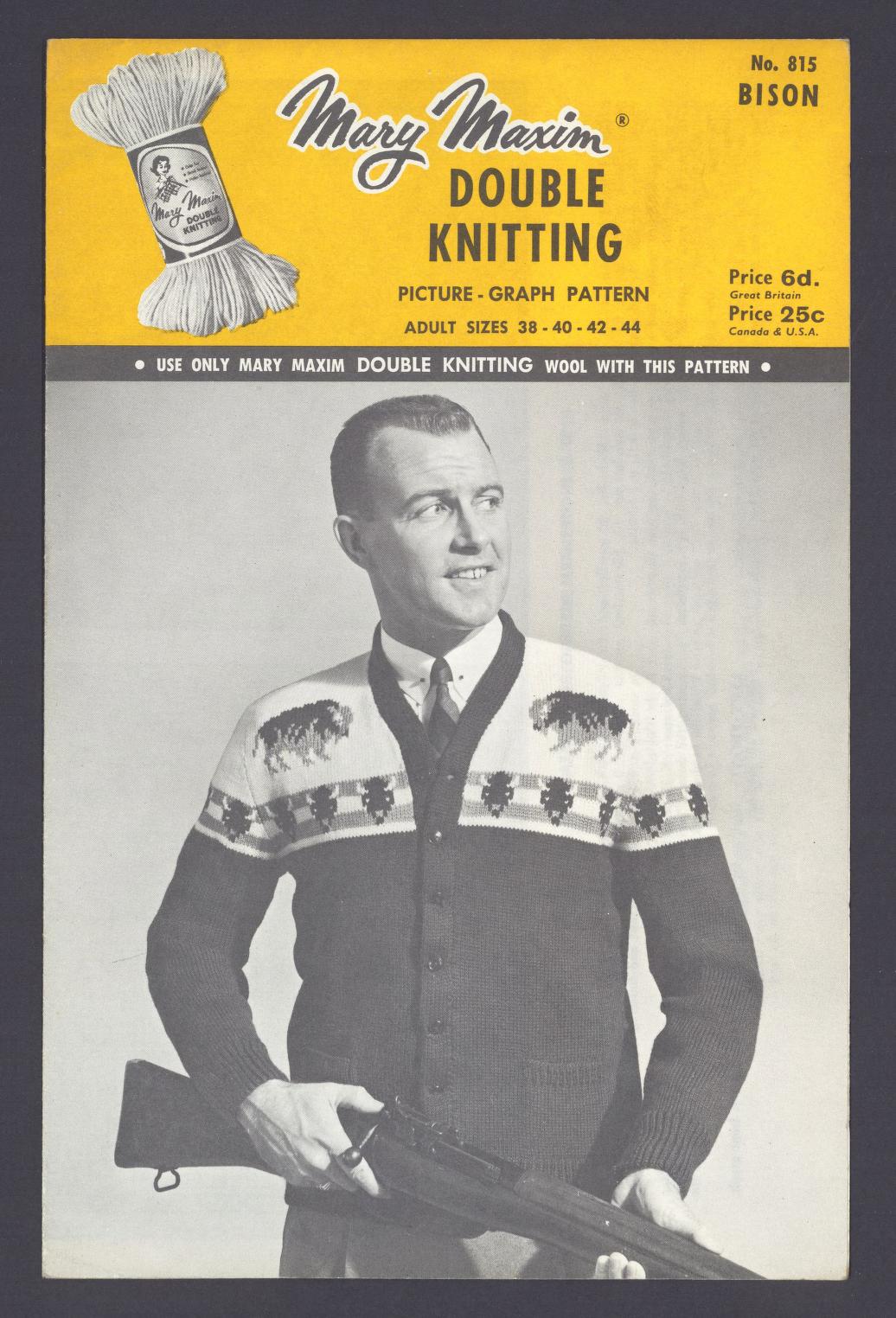
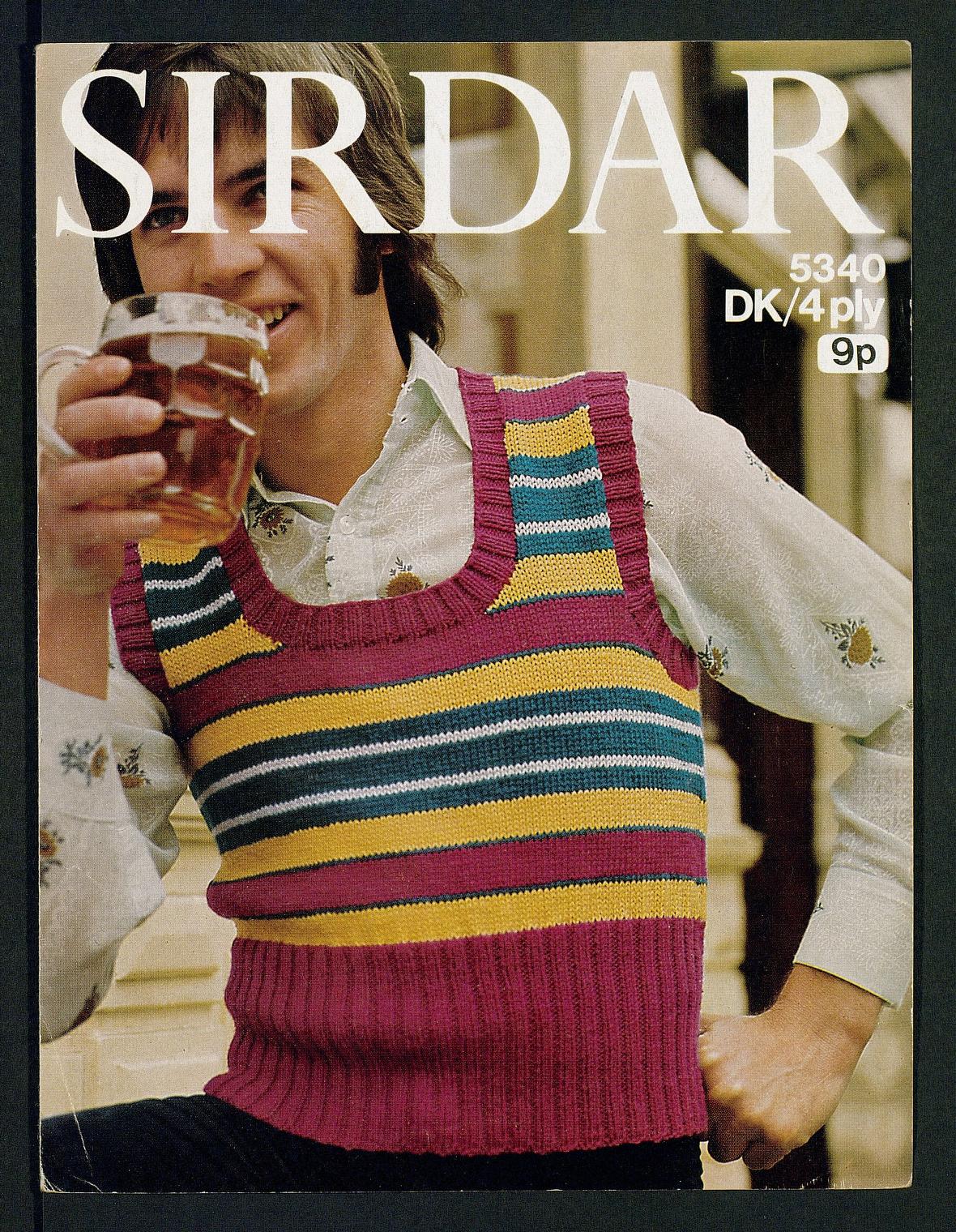
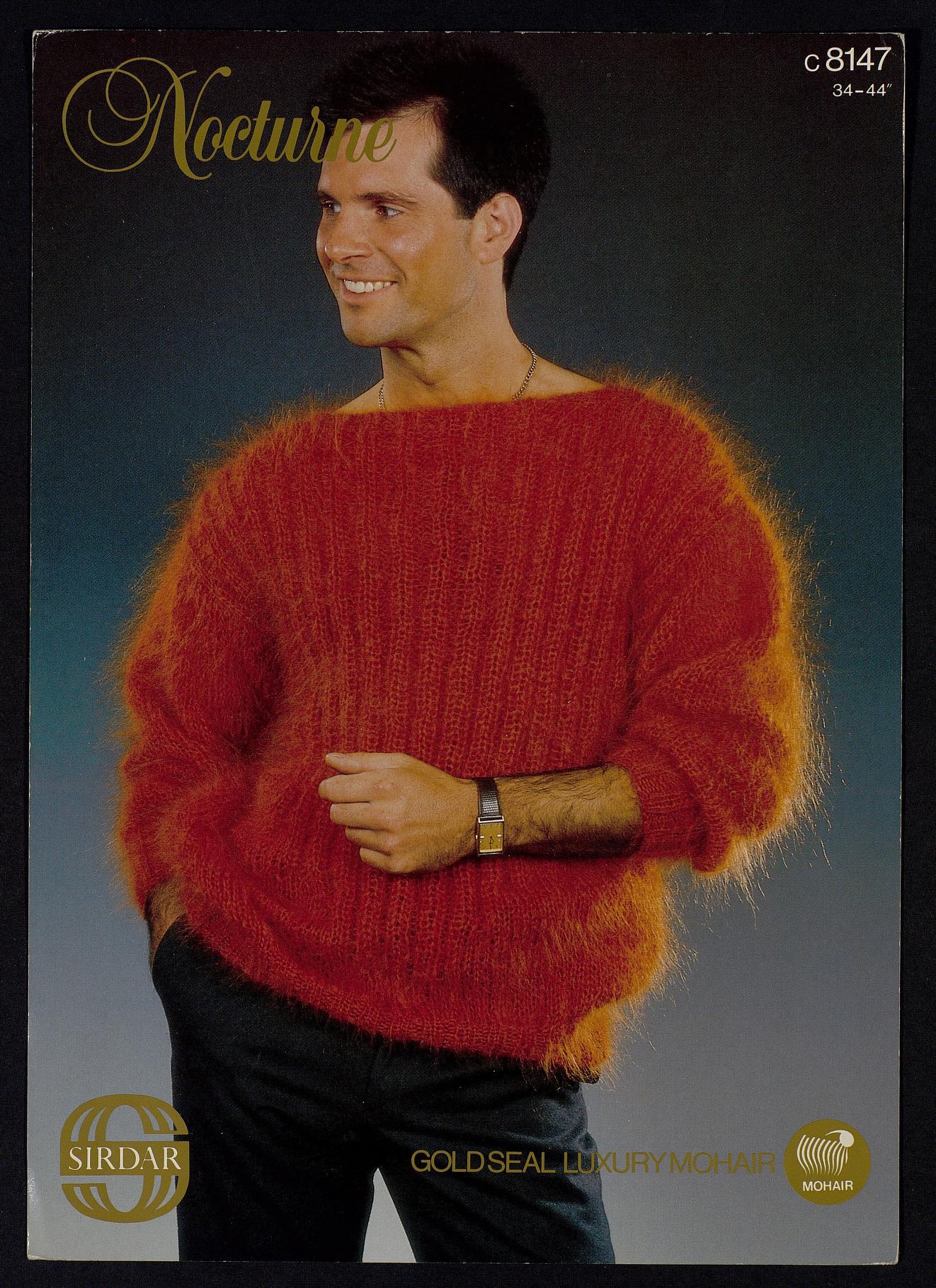
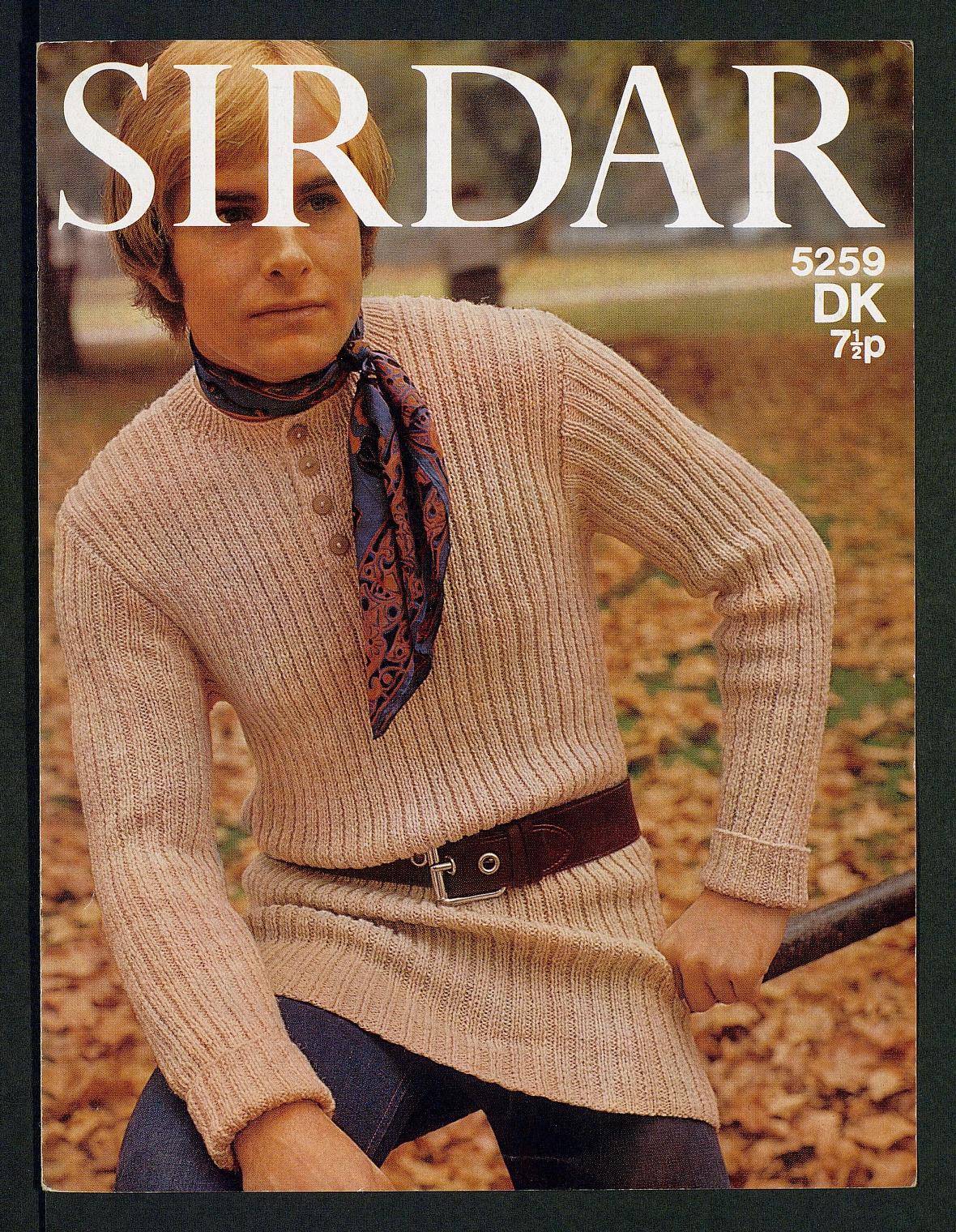
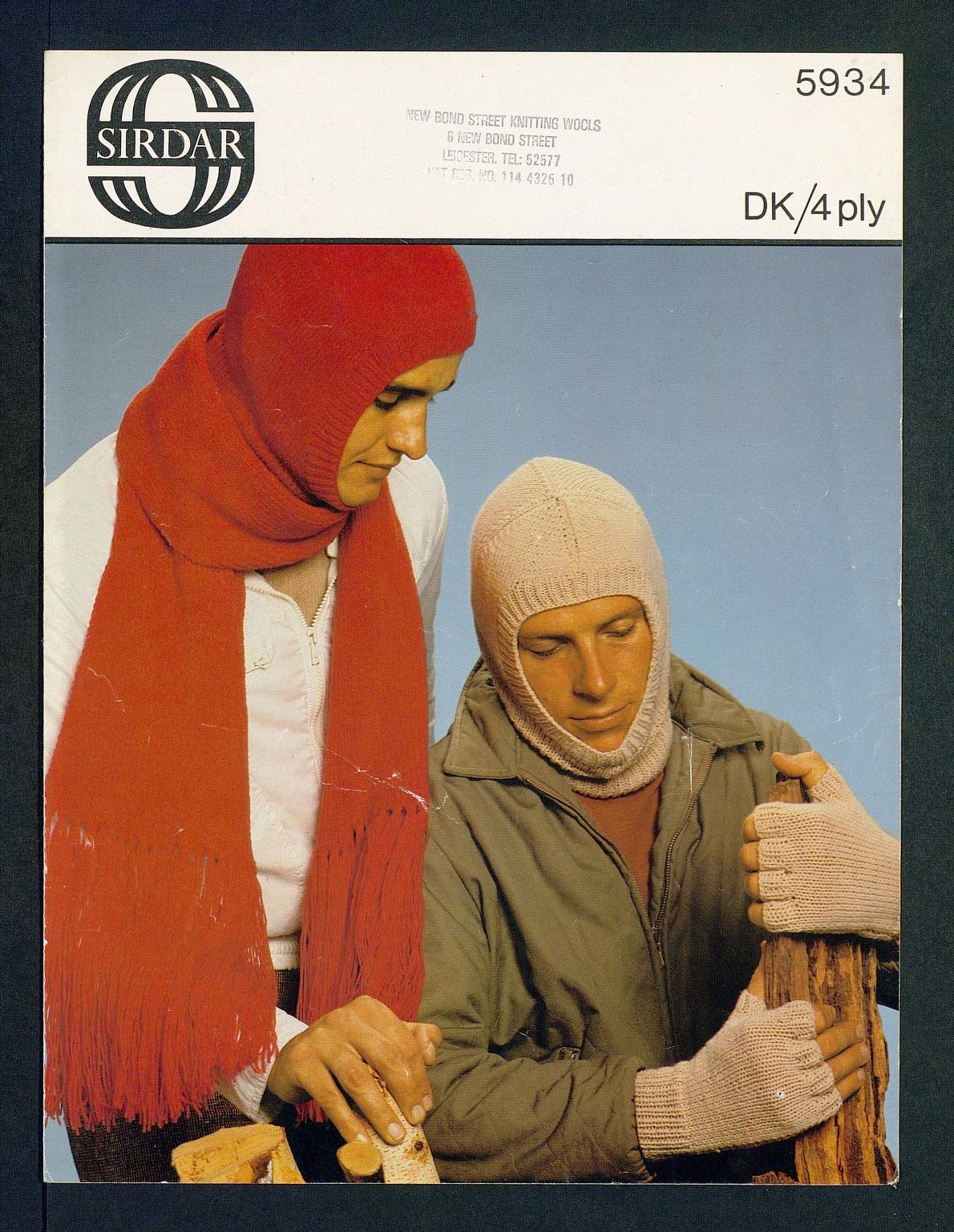
Even without step-by-step instructions, the pattern envelopes’ cover images can still provide inspiration…and no small degree of amusement. Some enterprising librarian should get cracking on a sub-collection, Fashion Crimes Against Male Knitwear Models, 1960–1980:
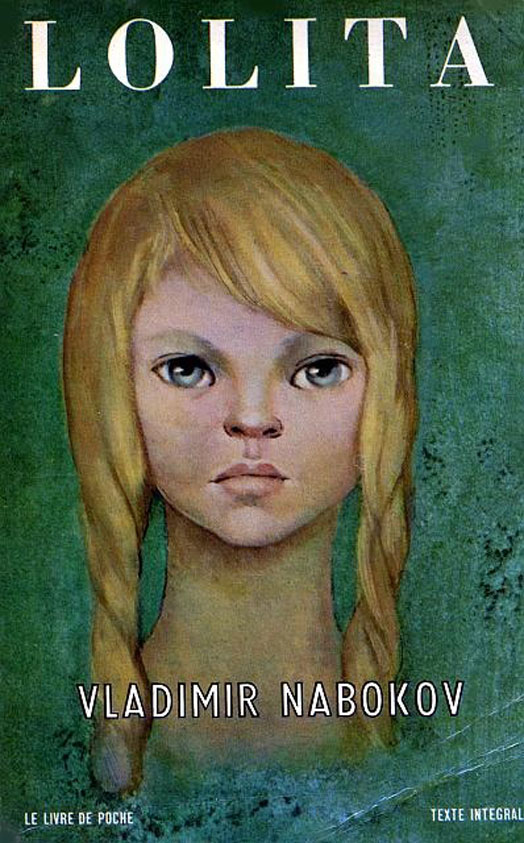
How to market a book like Lolita, which, upon its publication in 1955, promptly found itself banned in France, Britain, New Zealand, Argentina and other countries? Carefully. At least at first.
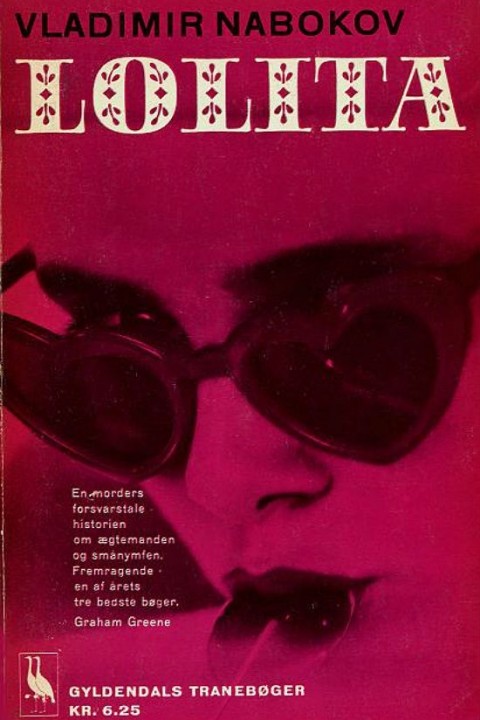
By the 1960s, publishers got a little less gun shy, and the covers, more risqué. See this 1964 Turkish version as an example. Or the second image above, a Danish cover from 1963.
This just a small sampling of what you will find in the Covering Lolita Archive, a gallery that currently contains 210 book and media covers from 40 countries, spanning 58 years.
The archive brings you right up to 2014. (2015 and 2016 will likely be accounted for pretty soon.) If you have a favorite design, please let us know in the comments section below.
If you would like to support the mission of Open Culture, consider making a donation to our site. It’s hard to rely 100% on ads, and your contributions will help us continue providing the best free cultural and educational materials to learners everywhere. You can contribute through PayPal, Patreon, and Venmo (@openculture). Thanks!
Who knows what evil lurks in the hearts of men? Every fan of old-time radio, the fruit of a “golden age” on the American airwaves which lasted from the 1920s until television took hold, can tell you the answer: The Shadow knows. Though he’s appeared in pulp-era magazines and novels as well as comics, movies, and even video games, the mysterious crimefighter, known by day as “wealthy young man about town” Lamont Cranston, made his biggest mark on the good old wireless, around which listeners gathered to hear him dispense his own brand of psychologically delivered justice from 1937 to 1954.
The Shadow became, in many ways, the prototype of the superhero, especially Batman and others who do their job not with fantastical superpowers but with their wits, their wealth, and the host of advanced devices and obscure techniques at their disposal. (Assuming, of course, you don’t consider the Shadow’s never-fully-explained ability to “cloud men’s minds” fantastical.) This also makes him something of a proto-James Bond, the technically human but seemingly invincible British Secret Service agent who debuted on the page the year before The Shadow ended his run on the radio. Like James Bond, The Shadow exists independently of the many actors who have portrayed him, but just as most acknowledge Sean Connery as the definitive Bond, Orson Welles stands as The Shadow to beat.
In fact, the New Yorker’s Alex Ross titled his profile of Welles’ career, looking back from the 100th anniversary of the radio-theater-film auteur’s birth, “The Shadow,” acknowledging aspects of the man’s creative persona as well as the program on which he, at the tender age of 22, “achieved radio stardom as a hypnosis-inducing vigilante” — and also found a source of money to funnel straight into his own higher-brow and more socially conscious productions under the New Deal’s Federal Theatre Project. (Ross quotes Franklin Delano Roosevelt jokingly calling Welles the “only operator in history who ever illegally siphoned money into a Washington project.”)
Now you can listen to more than 30 Welles-starring episodes of The Shadow free at the Internet Archive. When the show made its debut, it ran for 26 episodes sponsored by Blue Coal, a name fans will know as well as they know Lamont Cranston’s. Then came a summer series sponsored by Goodrich Safety Silver-Town Tires. “For many years it was believed that the syndicated Goodrich series had run for 15 episodes,” say the accompanying notes, “until a complete collection of recordings surfaced in the estate of a former Goodrich executive and it was realized that the summer season had been a full 26 episodes — and that 11 full episodes starring Welles had been discovered that had not been heard since they originally aired 70 years ago.” A sudden, dramatic appearance by The Shadow just when we least expected it — how very like him.
It is sometimes said that science and philosophy have grown so far apart that they no longer recognize each other. Perhaps they no longer need each other. And yet some of the most thoughtful scientists of modernity—those who most dedicated their lives not only to discovering nature’s mysteries, but to communicating those discoveries with the rest of us—have been fully steeped in a philosophical tradition. This especially goes for Carl Sagan, perhaps the greatest science communicator of the past century or so.
Sagan wrote a number of popular books for layfolk in which he indulged not only his tendencies as a “hopeless romantic,” writes Maria Popova, but also as a “brilliant philosopher.” He did not fear to venture into the realms of spiritual desire, and did not mock those who did likewise; and yet Sagan also did not hesitate to defend reason against “society’s most shameless untruths and outrageous propaganda.” These undertakings best come together in Sagan’s The Demon-Haunted World, a book in which he very patiently explains how and why to think scientifically, against the very human compulsion to do anything but.
In one chapter of his book, “The Fine Art of Baloney Detection,” Sagan laid out his method, proposing what he called “A Baloney Detection Kit,” a set of intellectual tools that scientists use to separate wishful thinking from genuine probability. Sagan presents the contents of his kit as “tools for skeptical thinking,” which he defines as “the means to construct, and to understand, a reasoned argument and—especially important—to recognize a fallacious or fraudulent argument.” You can see his list of all eight tools, slightly abridged, below. These are all in Sagan’s words:
Wherever possible there must be independent confirmation of the “facts.”
Encourage substantive debate on the evidence by knowledgeable proponents of all points of view.
Arguments from authority carry little weight — “authorities” have made mistakes in the past. They will do so again in the future. Perhaps a better way to say it is that in science there are no authorities; at most, there are experts.
Spin more than one hypothesis. If there’s something to be explained, think of all the different ways in which it could be explained. Then think of tests by which you might systematically disprove each of the alternatives.
Try not to get overly attached to a hypothesis just because it’s yours. It’s only a way station in the pursuit of knowledge. Ask yourself why you like the idea. Compare it fairly with the alternatives. See if you can find reasons for rejecting it. If you don’t, others will.
If whatever it is you’re explaining has some measure, some numerical quantity attached to it, you’ll be much better able to discriminate among competing hypotheses. What is vague and qualitative is open to many explanations.
If there’s a chain of argument, every link in the chain must work (including the premise) — not just most of them.
Occam’s Razor. This convenient rule-of-thumb urges us when faced with two hypotheses that explain the data equally well to choose the simpler. Always ask whether the hypothesis can be, at least in principle, falsified…. You must be able to check assertions out. Inveterate skeptics must be given the chance to follow your reasoning, to duplicate your experiments and see if they get the same result.
See the unabridged list at Brain Pickings, or read Sagan’s full chapter, ideally by getting a copy of The Demon-Haunted World. As Popova notes, Sagan not only gives us succinct instructions for critical thinking, but he also makes a thorough list, with definitions, of the ways reason fails us through “the most common and perilous fallacies of logic and rhetoric.” Sagan’s chapter on “Baloney Detection” is, like the rest of the book, a highly literary, personal, engagement with the most pressing scientific considerations in our everyday life. And it is also an informal yet rigorous restatement of Aristotle’s classical logic and rhetoric and Francis Bacon’s natural philosophy.
If you would like to support the mission of Open Culture, consider making a donation to our site. It’s hard to rely 100% on ads, and your contributions will help us continue providing the best free cultural and educational materials to learners everywhere. You can contribute through PayPal, Patreon, and Venmo (@openculture). Thanks!
A quick note: HBO recently premiered Vinyl, which takes a Goodfellas-style look at the seedy 1970s rock music and record-making scene. Here’s a quick snapshot of what the show’s all about:
Created by Mick Jagger & Martin Scorsese & Rich Cohen and Terence Winter, this new drama series is set in 1970s New York. A ride through the sex- and drug-addled music business at the dawn of punk, disco, and hip-hop, the show is seen through the eyes of a record label president, Richie Finestra, played by Bobby Cannavale, who is trying to save his company and his soul without destroying everyone in his path. Additional series regulars include Olivia Wilde, Ray Romano, Ato Essandoh, Max Casella, P.J. Byrne, J.C. MacKenzie, Birgitte Hjort Sørensen, Juno Temple, Jack Quaid, James Jagger and Paul Ben-Victor. Scorsese, Jagger and Winter executive produce along with Victoria Pearman, Rick Yorn, Emma Tillinger Koskoff, John Melfi, Allen Coulter and George Mastras. Winter serves as showrunner. The 10-episode first season debuts February 14th.
The first pilot episode–directly by Scorsese himself–is currently streaming free on HBO’s website. It runs two good hours. And if you want to watch the remaining episodes on the cheap, you can start a monthlong free trial of HBO NOW. Just look for the “Start Your Free Month” button at the top of HBO’s site.
Note: The video up top is only a trailer for Episode 1. To watch the complete episode, click here.
If you would like to support the mission of Open Culture, consider making a donation to our site. It’s hard to rely 100% on ads, and your contributions will help us continue providing the best free cultural and educational materials to learners everywhere. You can contribute through PayPal, Patreon, and Venmo (@openculture). Thanks!
We're hoping to rely on loyal readers, rather than erratic ads. Please click the Donate button and support Open Culture. You can use Paypal, Venmo, Patreon, even Crypto! We thank you!
Open Culture scours the web for the best educational media. We find the free courses and audio books you need, the language lessons & educational videos you want, and plenty of enlightenment in between.