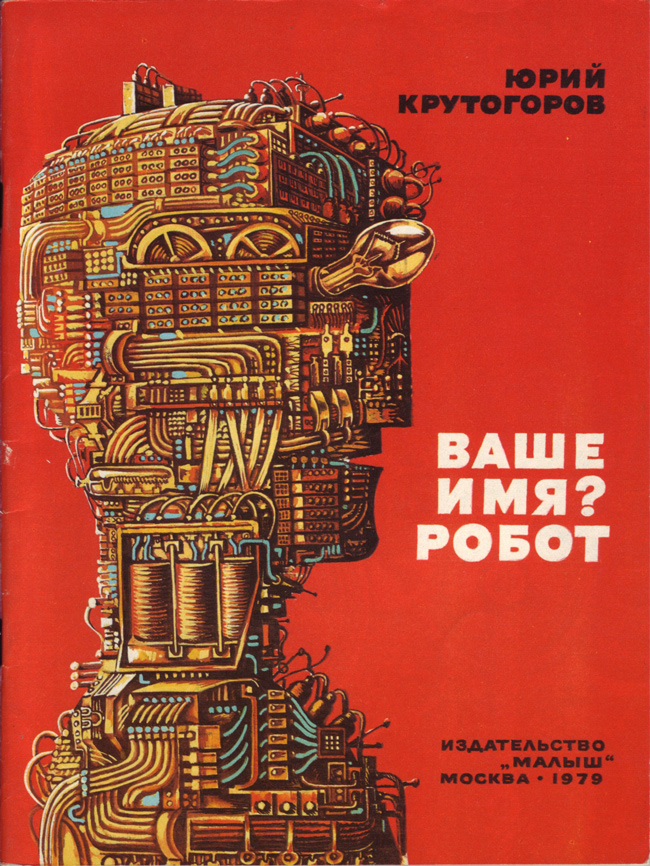
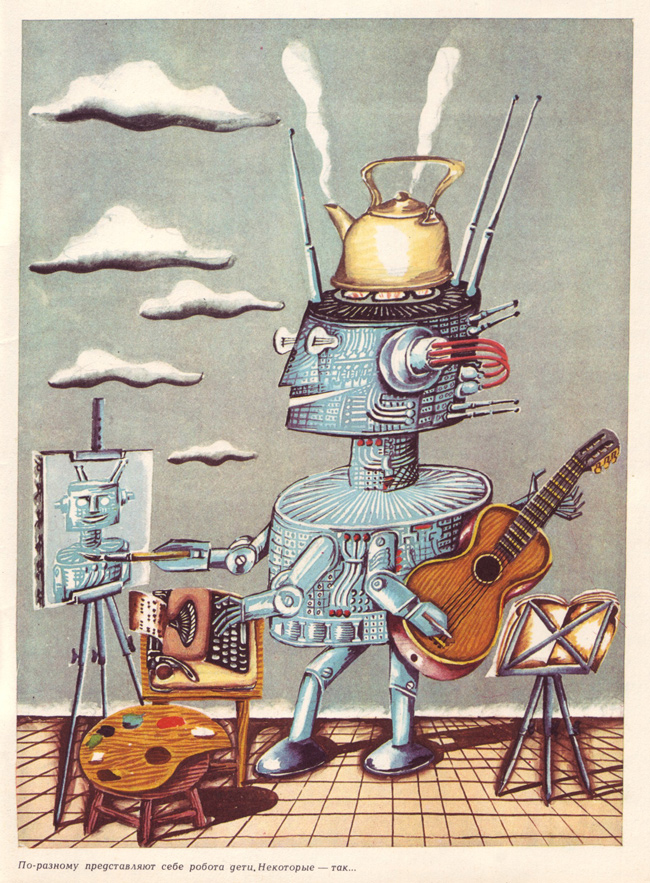
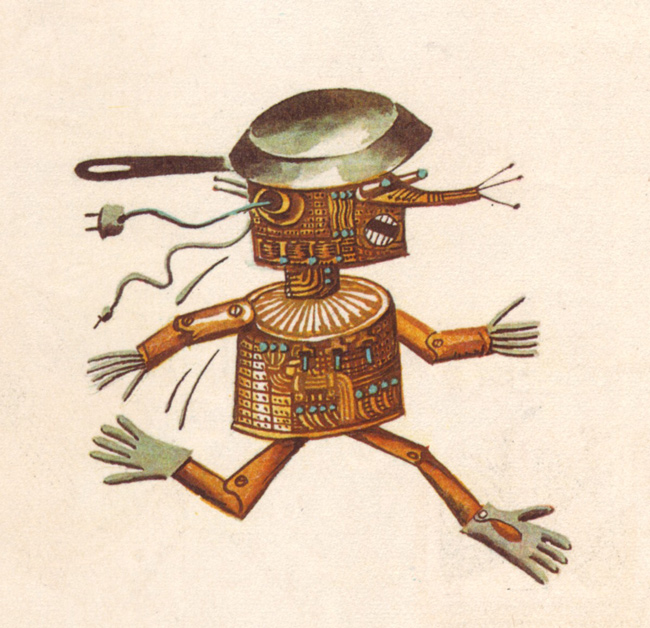
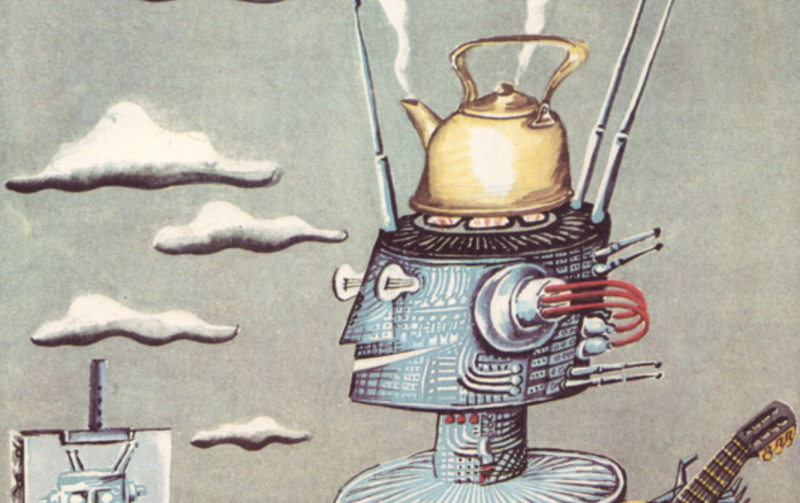
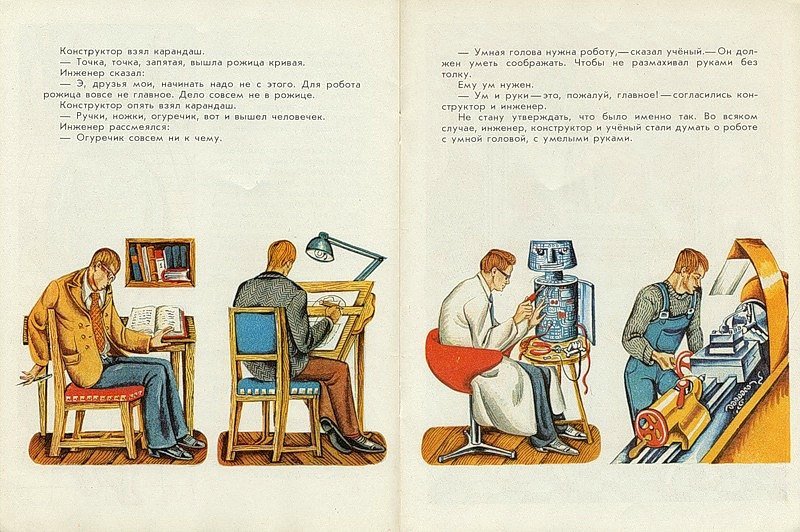
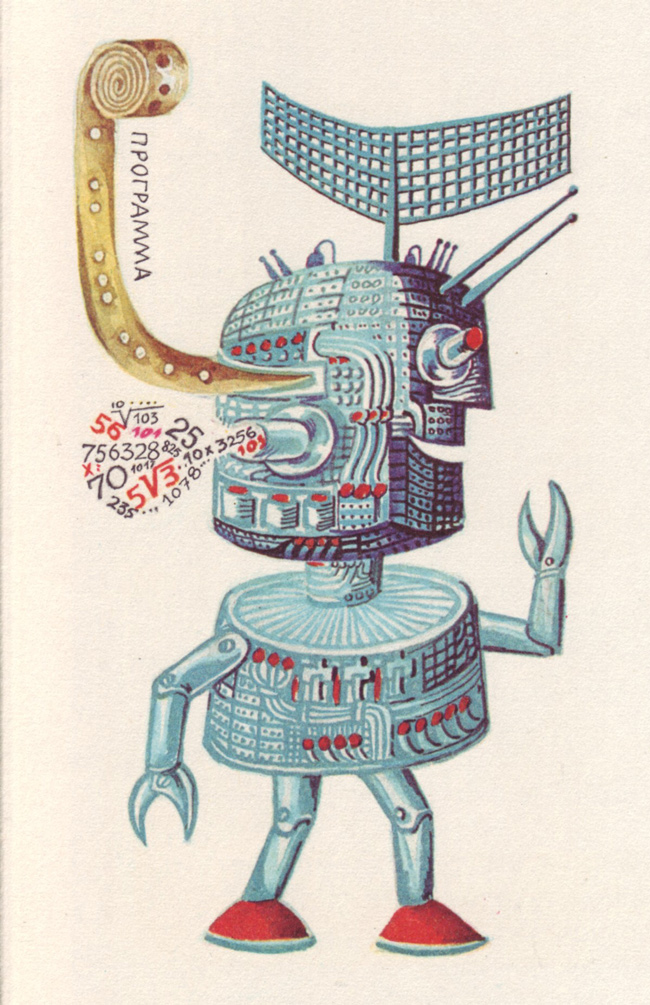
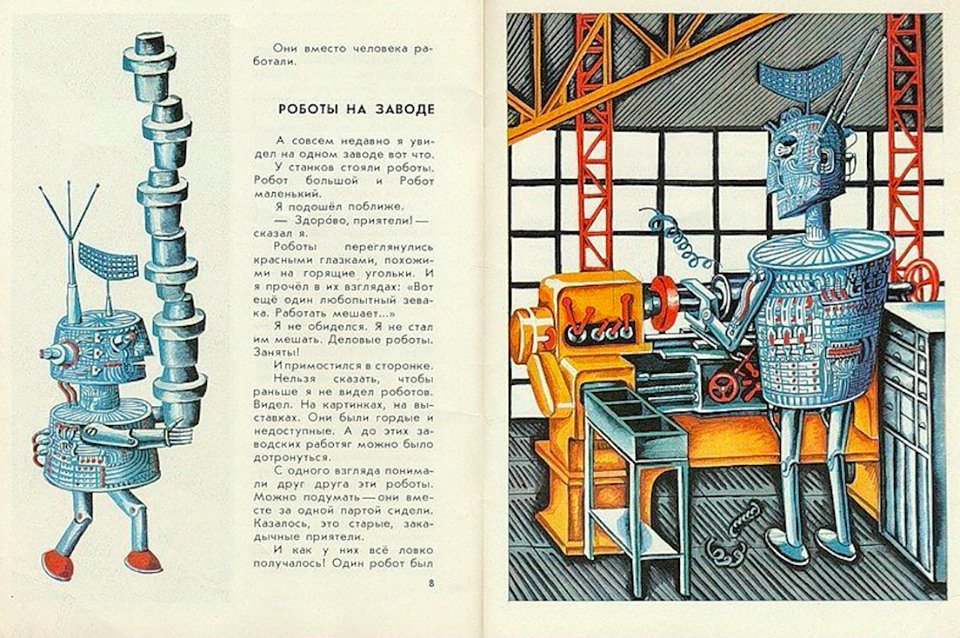
Illustrations from the Soviet Children’s Book Your Name? Robot, Created by Tarkovsky Art Director Mikhail Romadin (1979)

As we approach three full decades of a world with­out the Sovi­et Union, cer­tain details about life in the soci­eties that con­sti­tut­ed it inevitably begin to fade from liv­ing mem­o­ry. But nobody who grew up Sovi­et could ever for­get the chil­dren’s books they grew up read­ing, and recent efforts to dig­i­tal­ly archive them — such as Play­ing Sovi­et at the Cot­sen Col­lec­tion at Princeton’s Fire­stone Library, pre­vi­ous­ly fea­tured here on Open Cul­ture — have ensured that future gen­er­a­tions will be able to enjoy them too, no mat­ter the regime under which they come of age, or even what lan­guage they speak.

Most Sovi­et chil­dren’s books have such cap­ti­vat­ing illus­tra­tions that one need not read them to enjoy them. Take, for instance, Your Name? Robot, a 1979 Sovi­et pic­ture book fea­tured on book and design blog 50 Watts.

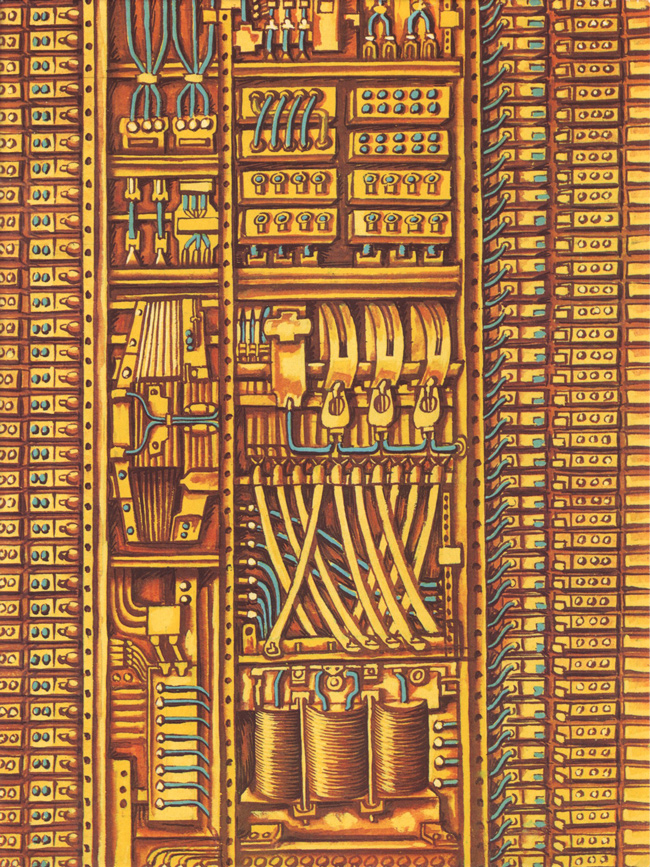
Who could resist the charm of these mechan­i­cal crea­tures dis­play­ing their many abil­i­ties: pick­ing up sig­nals, play­ing music, paint­ing pic­tures, spout­ing com­pli­cat­ed fig­ures, boil­ing water? With their hyp­not­i­cal­ly detailed pat­terns of cir­cuits and wires, the inner work­ings of these robots also look quite unlike any­thing else — and cer­tain­ly unlike the also-pop­u­lar robot char­ac­ters who have long fig­ured into sto­ries for Amer­i­can chil­dren.

In the mid-20th cen­tu­ry, Amer­i­ca and the Sovi­et Union were rac­ing each oth­er to the future: though vision­ar­ies in both lands may have dis­agreed about what exact form that future would take, many saw some kind of utopia made real through high tech­nol­o­gy dead ahead. And whether work­er’s par­adise or con­sumer’s par­adise, the rest of the mil­len­ni­um would sure­ly see the devel­op­ment of intel­li­gent robots to assist, edu­cate, and enter­tain us.

But by the late 1970s, some of these visions had turned dystopi­an: to bor­row the tagline from Zardoz, they’d seen the future, and it did­n’t work — itself a grim rever­sal of Amer­i­can jour­nal­ist Lin­coln Stef­fens’ opti­mistic ear­ly-20th-cen­tu­ry dec­la­ra­tion about Sovi­et Rus­sia.

From Sovi­et cin­e­ma, one less-than-opti­mistic treat­ment of the future endures above all: 1972’s Solaris, adapt­ed by Andrei Tarkovsky from the nov­el by Stanis­law Lem. The pro­duc­tion design­er who gave that film’s future its look and feel was none oth­er than Mikhail Romadin, the artist who would go on to illus­trate Your Name? Robot just a few years lat­er (in an illus­tra­tion career involv­ing hun­dreds of books, includ­ing vol­umes by Leo Tol­stoy and Ray Brad­bury).

“Romad­in’s char­ac­ter is hid­den, forced deep inside,” said Tarkovsky of his col­lab­o­ra­tor and friend since film school. “In his best works what often hap­pens is that the out­ward char­ac­ter­is­tics of bare­ly ordered dynamism and chaos that one per­ceives ini­tial­ly, melt imper­cep­ti­bly into the appre­ci­a­tion of calm and noble form, silent and sim­ple” — an appre­ci­a­tion Your Name? Robot must have done its part to instill in a gen­er­a­tion of young read­ers.

Relat­ed Con­tent:

A Dig­i­tal Archive of Sovi­et Children’s Books Goes Online: Browse the Artis­tic, Ide­o­log­i­cal Col­lec­tion (1917–1953)

Read Vladimir Mayakovsky’s Children’s Book Whom Should I Be?: A Clas­sic from the “Gold­en Age” in Sovi­et Children’s Lit­er­a­ture

Two Beau­ti­ful­ly-Craft­ed Russ­ian Ani­ma­tions of Chekhov’s Clas­sic Children’s Sto­ry “Kash­tan­ka”

Watch Sovi­et Ani­ma­tions of Win­nie the Pooh, Cre­at­ed by the Inno­v­a­tive Ani­ma­tor Fyo­dor Khitruk

Sovi­et-Era Illus­tra­tions Of J. R. R. Tolkien’s The Hob­bit (1976)

Enter an Archive of 6,000 His­tor­i­cal Children’s Books, All Dig­i­tized and Free to Read Online

Based in Seoul, Col­in Mar­shall writes and broad­casts on cities, lan­guage, and cul­ture. His projects include the book The State­less City: a Walk through 21st-Cen­tu­ry Los Ange­les and the video series The City in Cin­e­ma. Fol­low him on Twit­ter at @colinmarshall or on Face­book.

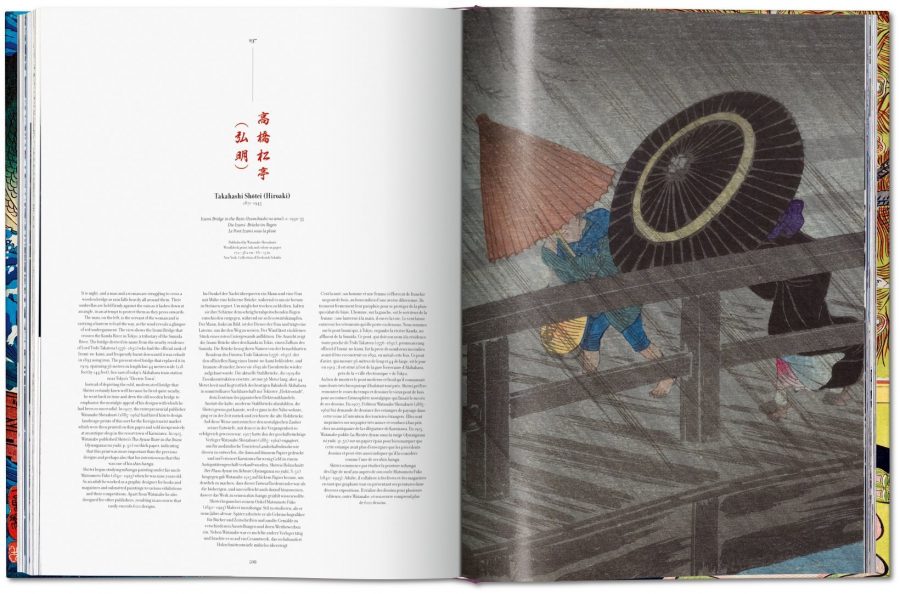
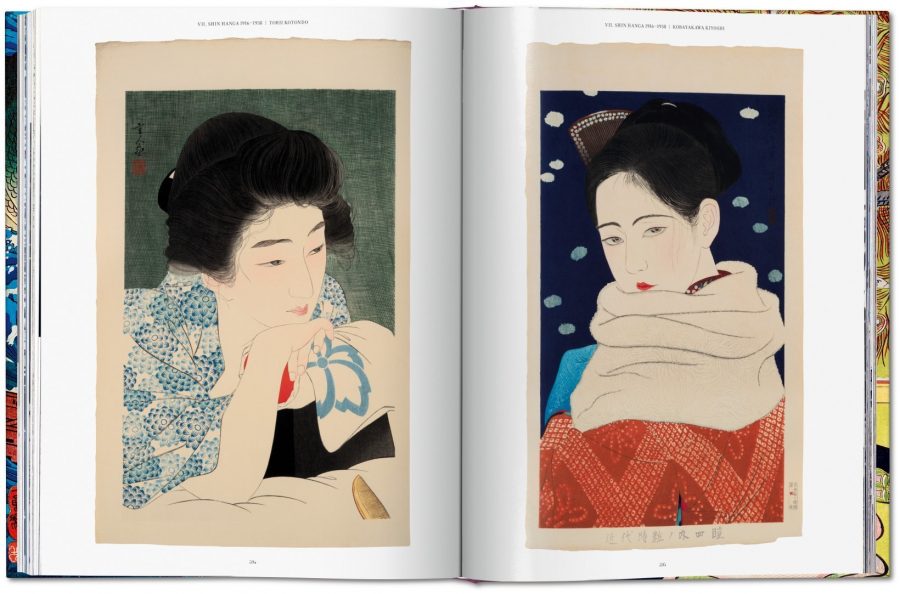
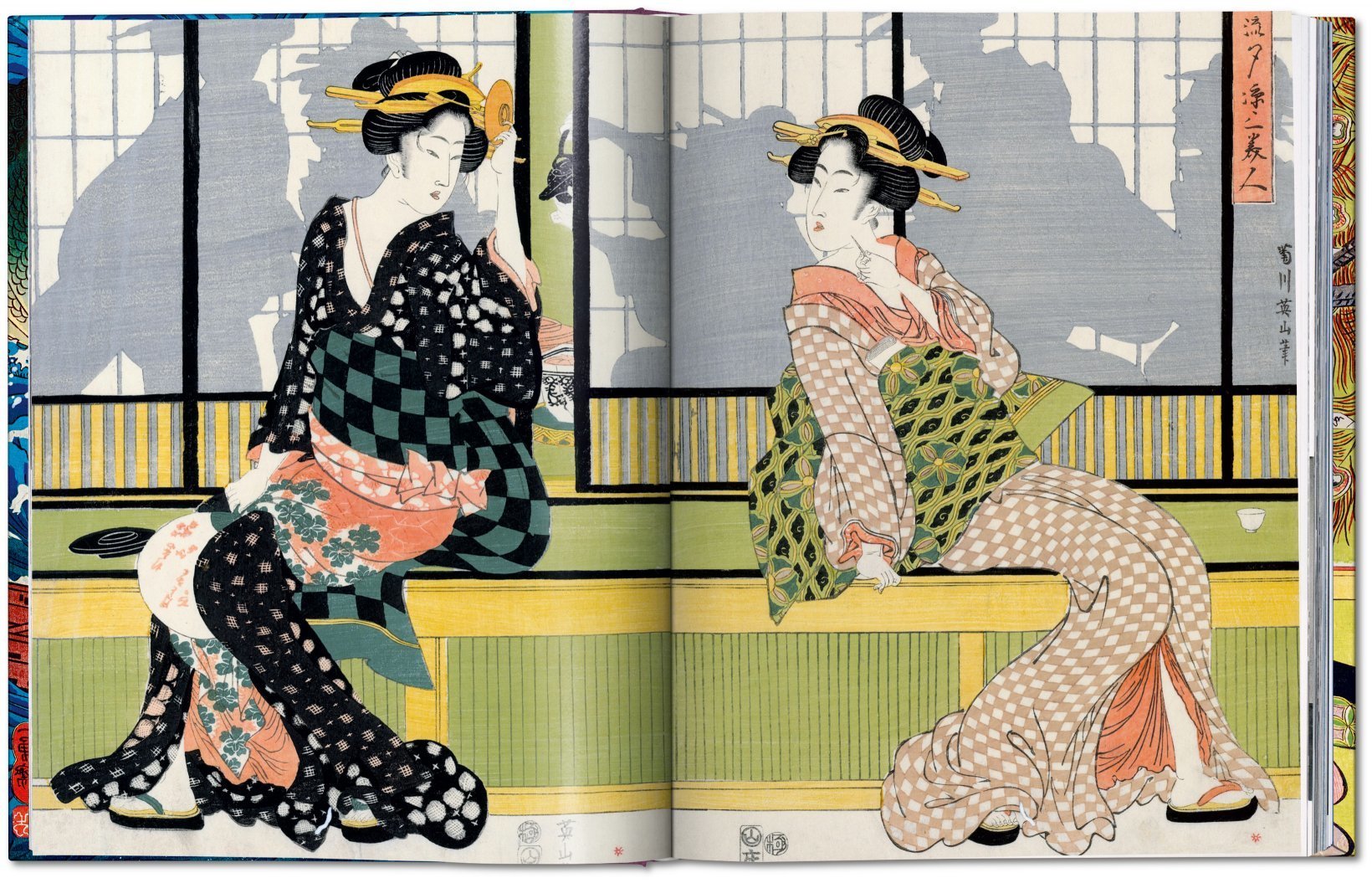
A Beautiful New Book of Japanese Woodblock Prints: A Visual History of 200 Japanese Masterpieces Created Between 1680 and 1938

Japan­ese wood­block prints, espe­cial­ly in the style known in Japan­ese as ukiyo‑e, or “pic­tures of the float­ing world,” por­tray the social, nat­ur­al, and super­nat­ur­al realms in a way no oth­er art form ever has. They also repay the atten­tion you give them, one rea­son we here on Open Cul­ture have tried to share with you every oppor­tu­ni­ty to down­load them — from the archive at Ukiyo‑e.org, for exam­ple, or at the Library of Con­gress — and build your own dig­i­tal col­lec­tion.

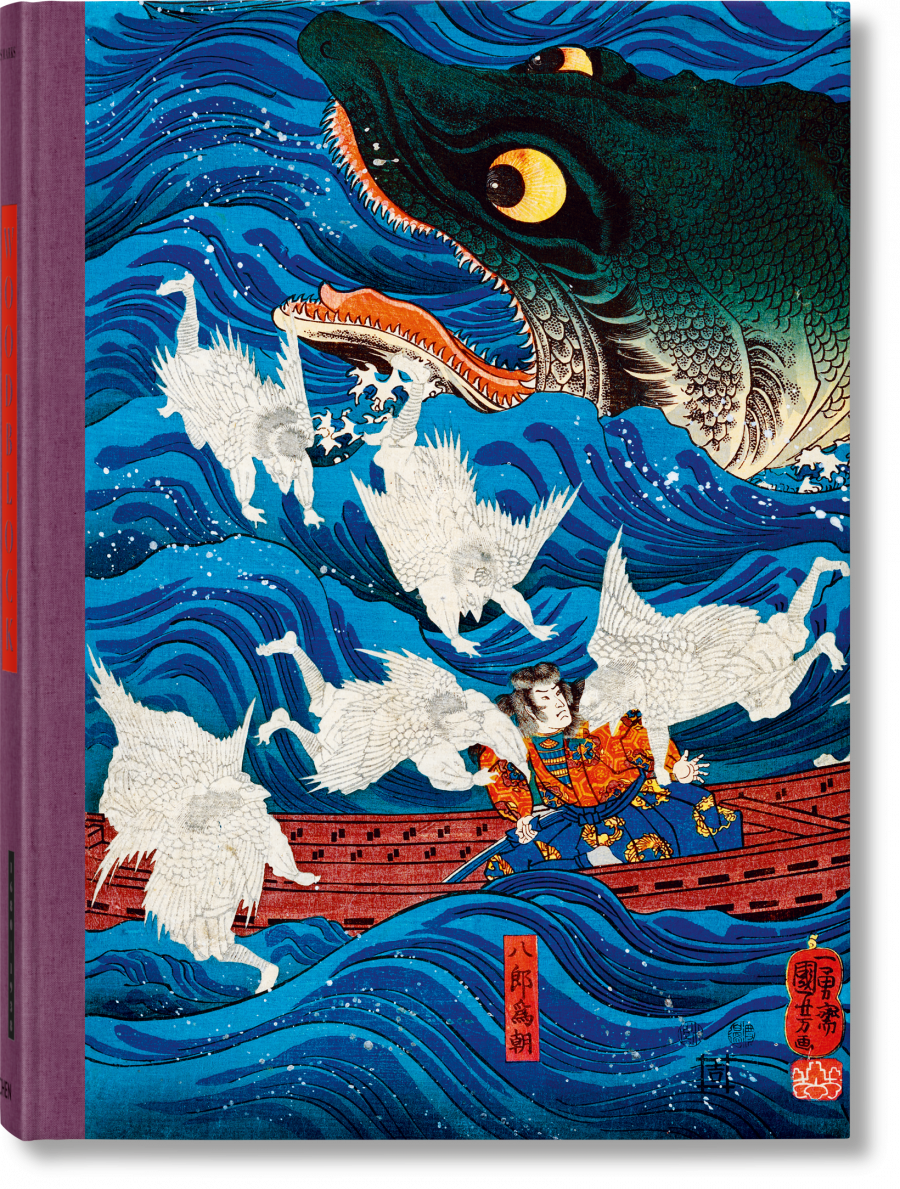
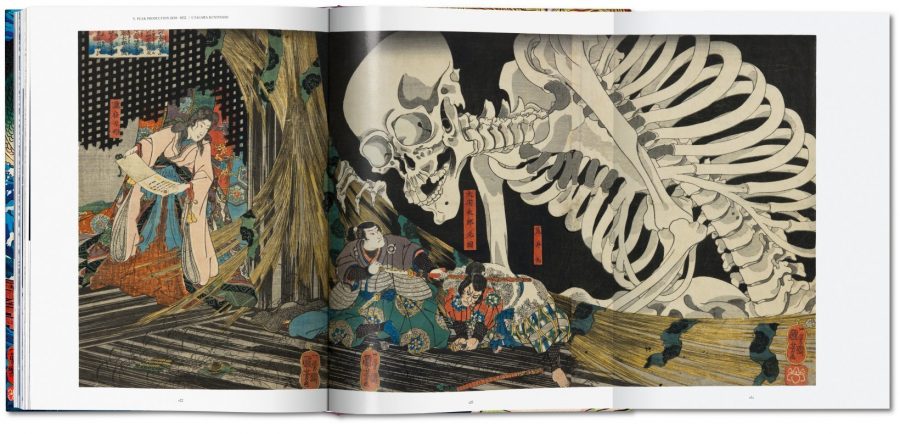
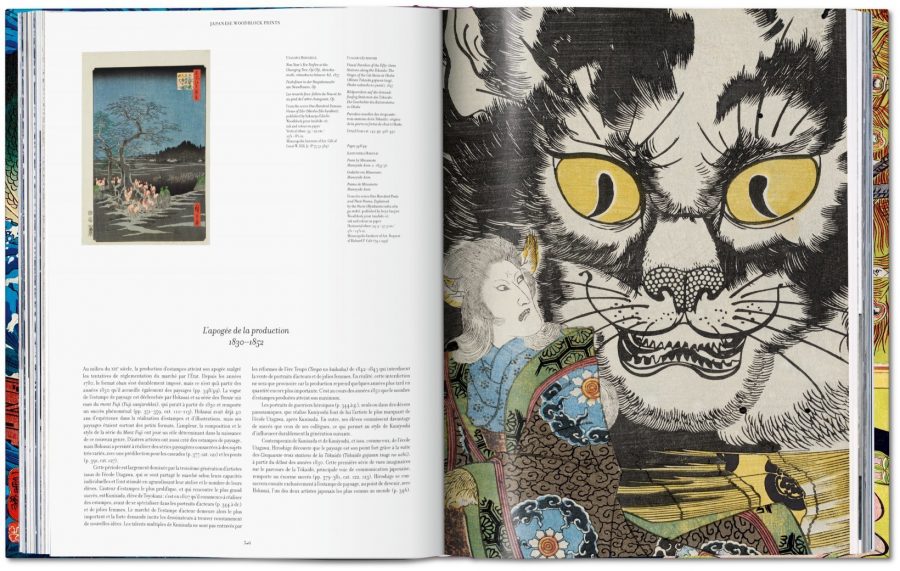
But appre­ci­at­ing Japan­ese wood­block prints on a screen is one thing, and appre­ci­at­ing them in large-scale repro­duc­tions on paper is quite anoth­er. At least that’s one implic­it premise of the book Japan­ese Wood­block Prints (1680–1938), new­ly pub­lished by Taschen.

As a pub­lish­er, Taschen has made its for­mi­da­ble name in part by col­lect­ing between two cov­ers the less­er-known work of famous artists of the recent past: Andy Warhol’s hand-illus­trat­ed books, for exam­ple, or Sal­vador Dalí’s cook­book and tarot deck.

Nev­er an out­fit to fear accu­sa­tions of immod­esty, Taschen’s projects also include “XXL books” like a 500-page, 14-pound vol­ume on Jean-Michel Basquiat. Sur­pass­ing even that book in length by more than 200 pages, Japan­ese Wood­block Prints con­tains, accord­ing to Taschen’s offi­cial site, an artis­tic real­i­ty where “breath­tak­ing land­scapes exist along­side blush-induc­ing erot­i­ca; where demons and oth­er­world­ly crea­tures tor­ment the liv­ing; and where sumo wrestlers, kabu­ki actors, and cour­te­sans are rock stars.”

“For this tome, Taschen spent three years repro­duc­ing wood­block prints from muse­ums and pri­vate col­lec­tions from around the world,” writes Colos­sal’s Andrew Lasane. “Writ­ten by Andreas Marks, head of the Japan­ese and Kore­an Art Depart­ment at the Min­neapo­lis Insti­tute of Art, the book is divid­ed chrono­log­i­cal­ly into sev­en chap­ters begin­ning with the 17th cen­tu­ry ear­ly mas­ters and con­clud­ing with the Shin-hanga move­ment.” (That last is a late 19th- and ear­ly 20th-cen­tu­ry wood­block style, in which we once fea­tured ren­der­ings of Hayao Miyaza­k­i’s char­ac­ters.)

No mat­ter our tem­po­ral and cul­tur­al dis­tance from the Japan­ese mas­ters of ukiyo‑e, we’ve near­ly all been cap­ti­vat­ed by their work at one time or anoth­er, most often when we run across pieces of it online. With Japan­ese Wood­block Prints, Taschen means to get those of us who pre­fer print even more cap­ti­vat­ed — and at the same time, to teach us more than a lit­tle about the cul­tur­al and his­tor­i­cal con­text of all these land­scapes, cityscapes, mon­sters, beau­ties, and his­tor­i­cal fig­ures at which we mar­vel.

If you want to pick up a copy of this artis­tic work, you can make a pur­chas on Ama­zon.

via Colos­sal

Relat­ed Con­tent:

Enter a Dig­i­tal Archive of 213,000+ Beau­ti­ful Japan­ese Wood­block Prints

Down­load 2,500 Beau­ti­ful Wood­block Prints and Draw­ings by Japan­ese Mas­ters (1600–1915)

Down­load Hun­dreds of 19th-Cen­tu­ry Japan­ese Wood­block Prints by Mas­ters of the Tra­di­tion

Behold the Mas­ter­piece by Japan’s Last Great Wood­block Artist: View Online Tsukio­ka Yoshitoshi’s One Hun­dred Aspects of the Moon (1885)

Japan­ese Kabu­ki Actors Cap­tured in 18th-Cen­tu­ry Wood­block Prints by the Mys­te­ri­ous & Mas­ter­ful Artist Sharaku

19th Cen­tu­ry Japan­ese Wood­block Prints Cre­ative­ly Illus­trate the Inner Work­ings of the Human Body

Based in Seoul, Col­in Mar­shall writes and broad­casts on cities, lan­guage, and cul­ture. His projects include the book The State­less City: a Walk through 21st-Cen­tu­ry Los Ange­les and the video series The City in Cin­e­ma. Fol­low him on Twit­ter at @colinmarshall or on Face­book.

Bill Gates Recommends Books for the Holidays

For the hol­i­day sea­son, Bill Gates has select­ed five book titles that you’ll hope­ful­ly enjoy read­ing. Here they are, list­ed in his own words:

An Amer­i­can Mar­riage, by Tayari Jones. My daugh­ter Jenn rec­om­mend­ed that I read this nov­el, which tells the sto­ry of a black cou­ple in the South whose mar­riage gets torn apart by a hor­ri­ble inci­dent of injus­tice. Jones is such a good writer that she man­ages to make you empathize with both of her main char­ac­ters, even after one makes a dif­fi­cult deci­sion. The sub­ject mat­ter is heavy but thought-pro­vok­ing, and I got sucked into Roy and Celestial’s trag­ic love sto­ry.

These Truths, by Jill Lep­ore. Lep­ore has pulled off the seem­ing­ly impos­si­ble in her lat­est book: cov­er­ing the entire his­to­ry of the Unit­ed States in just 800 pages. She’s made a delib­er­ate choice to make diverse points of view cen­tral to the nar­ra­tive, and the result is the most hon­est and unflinch­ing account of the Amer­i­can sto­ry I’ve ever read. Even if you’ve read a lot about U.S. his­to­ry, I’m con­fi­dent you will learn some­thing new from These Truths.

Growth, by Vaclav Smil. When I first heard that one of my favorite authors was work­ing on a new book about growth, I couldn’t wait to get my hands on it. (Two years ago, I wrote that I wait for new Smil books the way some peo­ple wait for the next Star Wars movie. I stand by that state­ment.) His lat­est doesn’t dis­ap­point. As always, I don’t agree with every­thing Smil says, but he remains one of the best thinkers out there at doc­u­ment­ing the past and see­ing the big pic­ture.

Pre­pared, by Diane Taven­ner. As any par­ent knows, prepar­ing your kids for life after high school is a long and some­times dif­fi­cult jour­ney. Tavenner—who cre­at­ed a net­work of some of the best per­form­ing schools in the nation—has put togeth­er a help­ful guide­book about how to make that process as smooth and fruit­ful as pos­si­ble. Along the way, she shares what she’s learned about teach­ing kids not just what they need to get into col­lege, but how to live a good life.

Why We Sleep, by Matthew Walk­er. I read a cou­ple of great books this year about human behav­ior, and this was one of the most inter­est­ing and pro­found. Both Jenn and John Doerr urged me to read it, and I’m glad I did. Every­one knows that a good night’s sleep is important—but what exact­ly counts as a good night’s sleep? And how do you make one hap­pen? Walk­er has per­suad­ed me to change my bed­time habits to up my chances. If your New Year’s res­o­lu­tion is to be health­i­er in 2020, his advice is a good place to start.

Pre­vi­ous books rec­om­mend­ed by Gates can be found in the relat­eds below.

Relat­ed Con­tent:

How Bill Gates Reads Books

Bill Gates Names 5 Books You Should Read This Sum­mer

Bill Gates Rec­om­mends Five Books for Sum­mer 2017

5 Books Bill Gates Wants You to Read This Sum­mer (2016)

Bill Gates, Book Crit­ic, Names His Top 5 Books of 2015

Sum­mer 2014

Sum­mer 2013

by | Permalink | Make a Comment ( 1 ) |

Malcolm Gladwell Admits His Insatiable Love for Thriller Novels and Recommends His Favorites

When Mal­colm Glad­well appeared on The Joe Rogan Expe­ri­ence last month, he admit­ted some­thing about him­self that may sur­prise many of his read­ers. “I read so many thrillers,” he says to Rogan toward the end of the con­ver­sa­tion. “How many do I read a year? Fifty, six­ty, sev­en­ty? You know when you go in the air­port, into the Hud­son News, and you see there’s a whole wall of thrillers? I have read every sin­gle one.” But it will sur­prise exact­ly none of his read­ers that he’s also come up with a cat­e­go­riza­tion sys­tem of thrillers: we all know what a “West­ern” is, but the Glad­well the­o­ry of thrillers also encom­pass­es the dis­tinct sen­si­bil­i­ties of the “East­ern,” the “North­ern,” and the “South­ern.”

A West­ern takes place in “a world in which there is no law and order, and a man shows up and impos­es, per­son­al­ly, law and order on the ter­ri­to­ry, the com­mu­ni­ty.” An East­ern is “a sto­ry where there is law and order, so there are insti­tu­tions of jus­tice, but they have been sub­vert­ed by peo­ple from with­in.” In a North­ern, “law and order exists, and law and order is moral­ly right­eous, the sys­tem works.” (A prime exam­ple is, of course, Law and Order.) A South­ern is “where the entire appa­ra­tus is cor­rupt, and where the reformer is not an insid­er but an out­sider.” Glad­well describes each and every John Grisham nov­el as a South­ern, then has­tens to add, “I love John Grisham.” But he seems to have an even greater love for the mod­ern-day West­ern in the form of Lee Child’s Jack Reach­er nov­els.

“The Reach­er books are West­erns,” Glad­well writes in a 2015 New York­er piece. “The tra­di­tion­al West­ern was a fan­ta­sy about law­ful­ness: it was based on a long­ing for order among those who had been liv­ing with­out it for too long.” But in today’s world, where “we have too much order,” our “con­tem­po­rary fan­ta­sy is about law­less­ness: about what would hap­pen if the insti­tu­tions of civil­i­ty melt­ed away and all we were left with was a hard-mus­cled, rangy guy who could do all the nec­es­sary cal­cu­la­tions in his head to insure that the bad guy got what he had com­ing.” Glad­well had already men­tioned the Reach­er books in the mag­a­zine once before: “Child’s B‑pluses are every­one else’s A‑pluses,” he writes in a 2010 year-in-read­ing piece in which he describes him­self as “first and fore­most, a fan of thrillers and air­port lit­er­a­ture.”

Glad­well also vouch­es for Stephen Hunter and his sniper hero Bob Lee Swag­ger (“They’re fan­tas­ti­cal­ly well writ­ten,” he says to Rogan of Hunter’s work, also not­ing that “any­thing with the word ‘sniper’ in it is gen­er­al­ly one of his books”) as well as Olen Stein­hauer and his “con­flict­ed and neu­rot­ic and hope­less­ly sen­ti­men­tal” Milo Weaver. “I have — by con­ser­v­a­tive esti­mate — sev­er­al hun­dred nov­els with the word ‘spy’ in the title,” Glad­well tells the New York Times in a 2013 inter­view. That must owe in part to his sta­tus as a long­time fan of John le Car­ré’s nov­els star­ring unas­sum­ing British intel­li­gence office George Smi­ley. “I’d like to go for a long walk on the Hamp­stead Heath with George Smi­ley,” Glad­well says. “It would be driz­zling. We would end up hav­ing a tepid cup of tea some­where, with slight­ly stale bis­cuits. I would ask him lots of ques­tions about Con­trol, and he would evade them, grace­ful­ly.”

Glad­well dis­cuss­es le Car­ré’s The Spy Who Came In from the Cold, the 1963 nov­el in which Smi­ley first appears, in an appear­ance this year on the pod­cast 3 Books. “It’s simul­ta­ne­ous­ly a spy thriller, a kind of cri­tique of post­war Eng­land, a kind of cri­tique of the world of espi­onage and the busi­ness of espi­onage, and an extra­or­di­nary and bril­liant­ly bleak pic­ture of human nature,” he says, nam­ing as one of the nov­el­’s inno­va­tions its por­tray­al of West­ern and Com­mu­nist spy oper­a­tions as “essen­tial­ly equiv­a­lent,” where­as “pre­vi­ous­ly these kinds of books had good guys and bad guys.” But what­ev­er its par­tic­u­lar strengths, “for those of us who tell sto­ries for a liv­ing, a good thriller is incred­i­bly instruc­tive.” Being “over­whelm­ing­ly about plot,” the thriller genre holds each plot to a high stan­dard, and “when some­body man­ages to pull it off suc­cess­ful­ly, that’s intel­lec­tu­al­ly of enor­mous inter­est to a sto­ry­teller.”

Asked recent­ly by the Guardian to name a book that changed his life, Glad­well came up with Agatha Christie’s The Mur­der of Roger Ack­royd. “I was 12 or so when I read it,” he says. “I will nev­er for­get the sheer deli­cious shock of that end­ing, and real­iz­ing – maybe for the first time – that it was pos­si­ble to tell a sto­ry in a way that made the read­er gasp. I’ve been chas­ing that same result (not near­ly as suc­cess­ful­ly) ever since.” And like any addict, he’s sure­ly been chas­ing that Christie-induced first gasp as a read­er ever since. Hence his seem­ing­ly com­pre­hen­sive knowl­edge of the work of le Car­ré, Stein­hauer, Hunter, Child, and all the oth­er thriller and mys­tery writ­ers he tends to brings up when asked, a group includ­ing names like Iain Pears and David Ignatius. To Glad­well’s mind, they all have much to teach us — even if the sto­ries we tell involve mus­cu­lar vig­i­lan­tism and inter­na­tion­al espi­onage less than they do mer­i­toc­ra­cy and spaghet­ti sauce.

Relat­ed Con­tent:

Mal­colm Glad­well Explains Where His Ideas Come From

The Case for Writ­ing in Cof­fee Shops: Why Mal­colm Glad­well Does It, and You Should Too

Mal­colm Glad­well on Why Genius Takes Time: A Look at the Mak­ing of Elvis Costello’s “Depor­tee” & Leonard Cohen’s “Hal­lelu­jah”

Mal­colm Glad­well Teach­ing His First Online Course: A Mas­ter Class on How to Turn Big Ideas into Pow­er­ful Sto­ries

Based in Seoul, Col­in Mar­shall writes and broad­casts on cities, lan­guage, and cul­ture. His projects include the book The State­less City: a Walk through 21st-Cen­tu­ry Los Ange­les and the video series The City in Cin­e­ma. Fol­low him on Twit­ter at @colinmarshall or on Face­book.

160,000 Pages of Glorious Medieval Manuscripts Digitized: Visit the Bibliotheca Philadelphiensis

We might think we have a gen­er­al grasp of the peri­od in Euro­pean his­to­ry immor­tal­ized in theme restau­rant form as “Medieval Times.” After all, writes Amy White at Medievalists.net, “from tat­toos to video games to Game of Thrones, medieval iconog­ra­phy has long inspired fas­ci­na­tion, imi­ta­tion and ven­er­a­tion.” The mar­ket for sword­play, armor, quests, and sor­cery has nev­er been so crowd­ed.

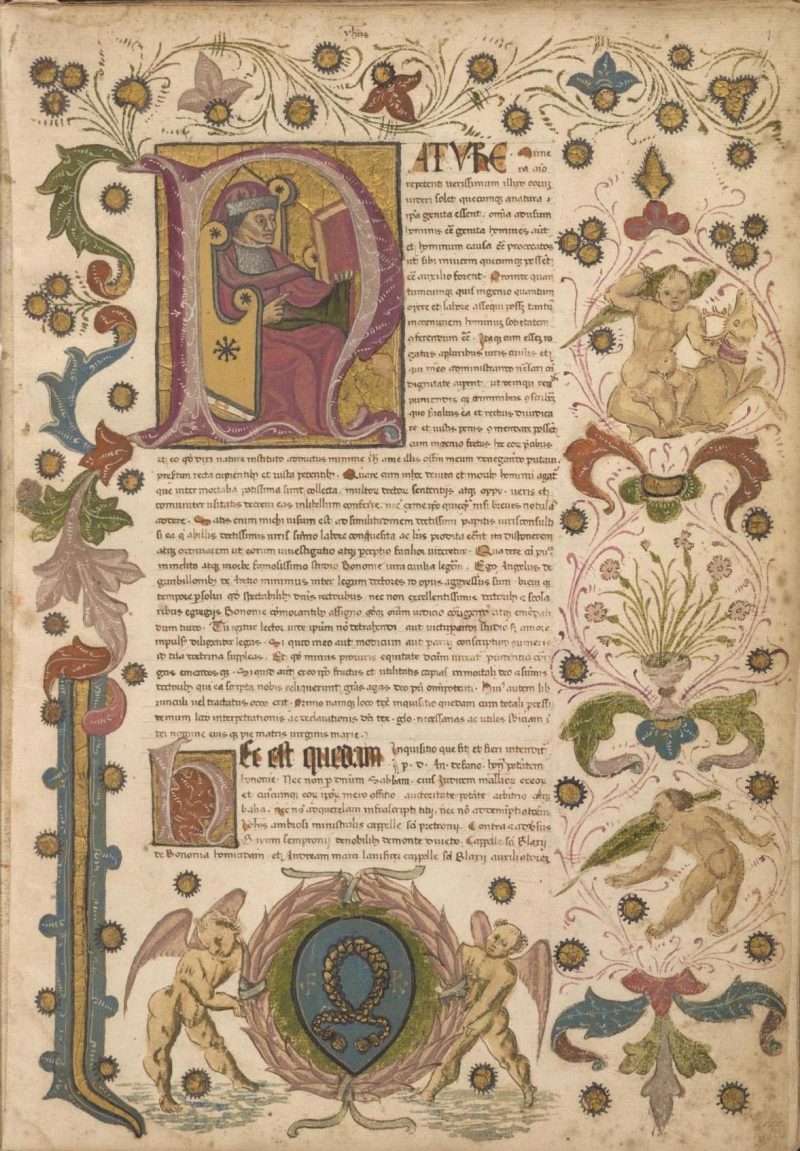
But whether the his­tor­i­cal peri­od we call medieval (a word derived from medi­um aevum, or “mid­dle age”) resem­bled the mod­ern inter­pre­ta­tions it inspired presents us with anoth­er ques­tion entirely—a ques­tion inde­pen­dent and pro­fes­sion­al schol­ars can now answer with free, easy ref­er­ence to “high-res­o­lu­tion images of more than 160,000 pages of Euro­pean medieval and ear­ly mod­ern codices”: rich­ly illu­mi­nat­ed (and ama­teur­ish­ly illus­trat­ed) man­u­scripts, musi­cal scores, cook­books, and much more.

The online project, called Bib­lio­the­ca Philadel­phien­sis, hous­es its dig­i­tal col­lec­tion at the Inter­net Archive and rep­re­sents “vir­tu­al­ly all of the hold­ings of PACSCL [Philadel­phia Area Con­sor­tium of Spe­cial Col­lec­tions Libraries],” a wealth of doc­u­ments from Prince­ton, Bryn Mawr, Vil­lano­va, Swarth­more, and many more col­lege and uni­ver­si­ty libraries, as well as the Amer­i­can Philo­soph­i­cal Soci­ety, Nation­al Archives at Philadel­phia, and oth­er august insti­tu­tions of high­er learn­ing and con­ser­va­tion.

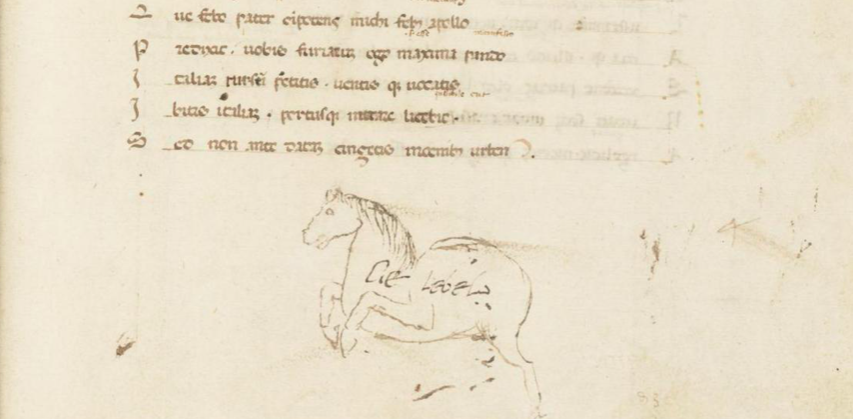
Lehigh Uni­ver­si­ty “con­tributed 27 man­u­scripts amount­ing to about 5,000 pages,” writes White, includ­ing “a 1462 hand­writ­ten copy of Virgil’s Aeneid with pen­ciled sketch­es in the mar­gins” (see above). There are man­u­scripts from that peri­od like the Ital­ian Trac­ta­tus de mal­efici­is (Trea­tise on evil deeds), a legal com­pendi­um from 1460 with “thir­ty-one mar­gin­al draw­ings in ink” show­ing “var­i­ous crimes (both delib­er­ate and acci­den­tal) being com­mit­ted, from sword-fights and mur­ders to hunt­ing acci­dents and a hang­ing.”

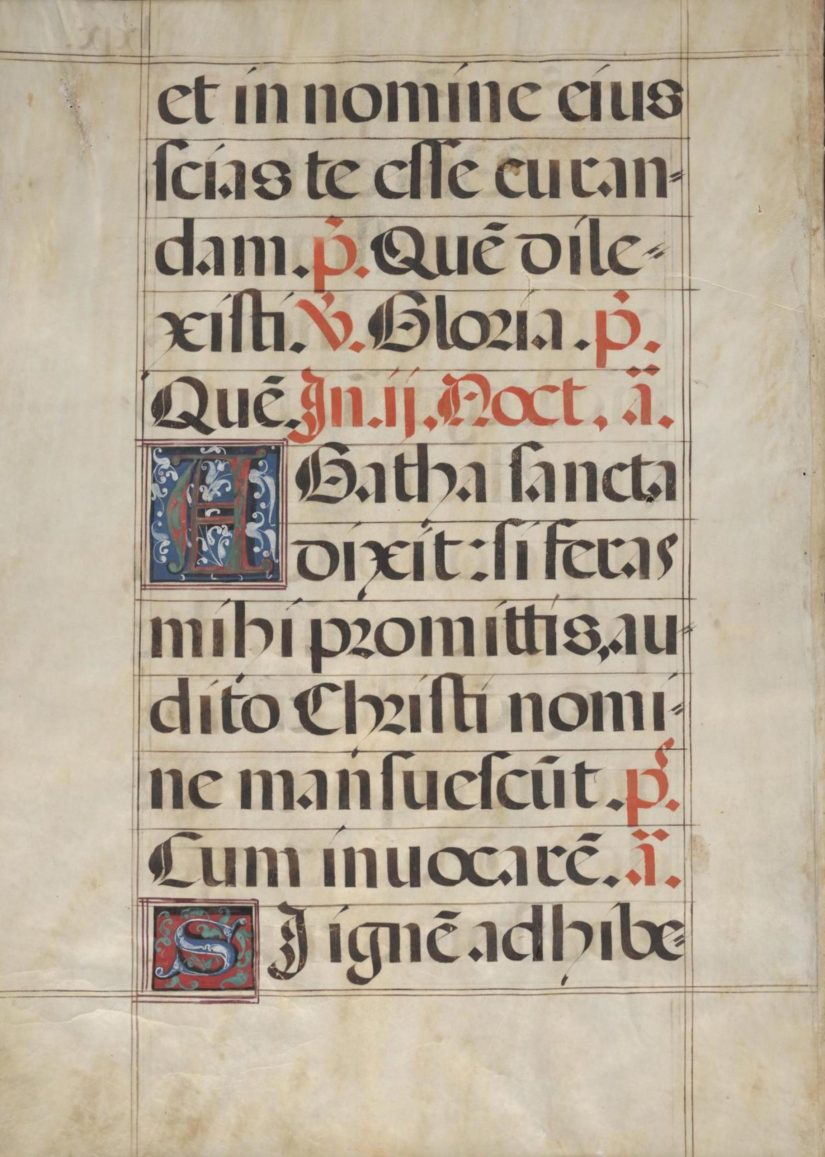
The Trac­ta­tus’ draw­ings “do not appear to be the work of a pro­fes­sion­al artist,” the notes point out, though it also con­tains pages, like the image at the top, show­ing a trained illu­mi­na­tor’s hand. The Bib­lio­the­ca Philadel­phien­sis archive includes 15th and 16th-cen­tu­ry recipes and extracts on alche­my, med­ical texts, and copi­ous Bibles and books of prayer and devo­tion. There is a 1425 edi­tion of Chaucer’s Can­ter­bury Tales in Mid­dle Eng­lish (lack­ing the pro­logue and sev­er­al tales).

These may all seem of recent vin­tage, rel­a­tive­ly speak­ing, for a medieval archive, but the col­lec­tion reach­es back to the 9th cen­tu­ry, with hun­dreds of doc­u­ments, like the 1000 AD music man­u­script above, from a far ear­li­er time. “Users can view, down­load and com­pare man­u­scripts in near­ly micro­scop­ic detail,” notes White. “It is the nation’s largest region­al online col­lec­tion of medieval man­u­scripts,” a col­lec­tion schol­ars can draw on for cen­turies to come to learn what life was real­ly like—at least for the few who could read and write—in Medieval Times.

via Medievalists.net

Relat­ed Con­tent: 

Why Knights Fought Snails in Illu­mi­nat­ed Medieval Man­u­scripts

800 Illu­mi­nat­ed Medieval Man­u­scripts Are Now Online: Browse & Down­load Them Cour­tesy of the British Library and Bib­lio­thèque Nationale de France

The Medieval Mas­ter­piece, the Book of Kells, Is Now Dig­i­tized & Put Online

A Free Yale Course on Medieval His­to­ry: 700 Years in 22 Lec­tures

Josh Jones is a writer and musi­cian based in Durham, NC. Fol­low him at @jdmagness

Prisons Around the U.S. Are Banning and Restricting Access to Books

“We live,” wrote philoso­pher Alain Badiou, “in a con­tra­dic­tion.” Dehu­man­iza­tion must be nor­mal­ized in order to keep the econ­o­my going. “A bru­tal state of affairs… where all exis­tence is eval­u­at­ed in terms of mon­ey alone—is pre­sent­ed to us as ide­al.” Yet the mar­ket that promis­es free­dom just as often strips it away, in pub­lic-pri­vate part­ner­ships that bring cen­sor­ship and rent-seek­ing into hap­py sym­bio­sis.

In recent years, free mar­ket oppor­tunism has tak­en hold in the most unfree places in the U.S., the country’s pris­ons, which hold more peo­ple pro­por­tion­al­ly than in any oth­er nation in the world: a huge, pre­vi­ous­ly untapped mar­ket for sales of hygiene prod­ucts and vis­its with fam­i­ly. “Like the mil­i­tary,” writes Adam Bluestein at Inc., “the cor­rec­tions sys­tem is a big, well-cap­i­tal­ized cus­tomer.”

One recent com­mer­cial encroach­ment on pris­on­ers’ free­doms arrived this year when the West Vir­ginia Divi­sion of Cor­rec­tions issued inmates tablets, under a con­tract with a com­pa­ny called Glob­al Tel Link, who charge them by the minute to read books online. One might make the argu­ment that forc­ing inmates to pay for basic needs sat­is­fies some ide­al of pun­ish­ment. But to restrict access to books seems to dis­pense with the pre­tense that prison might also be a place of reha­bil­i­ta­tion.

“Any inmates look­ing to read Moby Dick,” reports Rea­son, “may find that it will cost them far more than it would have if they’d sim­ply got­ten a mass mar­ket paper­back.” Katy Ryan of the Appalachi­an Prison Book Project, which donates free books and mate­ri­als to pris­ons, points out how lim­it­ing the scheme is: “If you pause to think or reflect, that will cost you. If you want to reread a book, you will pay the entire cost again.”

West Vir­ginia is not ban­ning print books, pur­chased or donat­ed. It is, how­ev­er, charg­ing inmates for already free mate­r­i­al. The books they pay per minute to read online are all on Project Guten­berg, the open plat­form for thou­sands of free eBooks. That the pro­gram amounts to a kind of eco­nom­ic-based cen­sor­ship may hard­ly be coin­ci­dence. Oth­er states around the coun­try have begun lim­it­ing, or out­right ban­ning, books in pris­ons.

The Wash­ing­ton State Depart­ment of Cor­rec­tions has pro­hib­it­ed all books donat­ed by non­prof­its, pre­sum­ably because they might be used to smug­gle con­tra­band. Prison offi­cials at the Danville Cor­rec­tion­al Cen­ter in Illi­nois made clear what they con­sid­ered con­tra­band—books about black his­to­ry, 200 of which were removed from the prison library—including W.E.B. Du Bois The Souls of Black Folk and Har­ri­et Beech­er Stowe’s Uncle Tom’s Cab­in—after they were deemed “too racial.”

These are only a few exam­ples of a wide­spread phe­nom­e­non PEN Amer­i­ca details in a new report, “Lit­er­a­ture Locked Up: How Prison Book Restric­tion Poli­cies Con­sti­tute the Nation’s Largest Book Ban.” Para­dox­i­cal­ly, some restric­tions can seem at odds with mar­ket demands—such as lim­its on inmates’ abil­i­ty to order books from online retail­ers. But like many con­tra­dic­tions in the sys­tem, per­haps these also serve a larg­er goal—preventing pris­on­ers from edu­cat­ing them­selves may ensure a steady stream of repeat cus­tomers in the huge­ly prof­itable carcer­al indus­try.

Relat­ed Con­tent:  

Inmates in New York Prison Defeat Harvard’s Debate Team: A Look Inside the Bard Prison Ini­tia­tive

On the Pow­er of Teach­ing Phi­los­o­phy in Pris­ons

Artist is Cre­at­ing a Parthenon Made of 100,000 Banned Books: A Mon­u­ment to Democ­ra­cy & Intel­lec­tu­al Free­dom

Josh Jones is a writer and musi­cian based in Durham, NC. Fol­low him at @jdmagness.

Lynda Barry’s New Book Offers a Master Class in Making Comics

In the same way you don’t have to like the way your liv­er looks for it to be able to func­tion, you don’t have to like the way your draw­ings look for them to start to work.  —Lyn­da Bar­ry

Want to feel more alive in the world?

Get back in touch with your inner four-year-old artist, using meth­ods put for­ward by artist, edu­ca­tor, and g*ddamn nation­al trea­sure Lyn­da Bar­ry.

Mak­ing Comics, the lat­est book from the Uni­ver­si­ty of Wis­con­sin asso­ciate pro­fes­sor, MacArthur Genius, and Omega Insti­tute fac­ul­ty mem­ber, bypass­es stan­dard­ized pro­fes­sion­al skills such as ink­ing, sto­ry­board­ing, and let­ter­ing, in order to foment a deep­er emo­tion­al con­nec­tion between car­toon­ist and com­ic.

First things first, you can draw. Stop say­ing you can’t. You can.

Stop say­ing your draw­ings look like they were made by a four-year-old.

In Barry’s expe­ri­ence, the unfet­tered draw­ings of four-year-old artists are some­thing to aim for.

As author and comics his­to­ri­an Chris Gavaler notes in his Pop Mat­ters review:

Mak­ing Comics is a love let­ter to every child who ever picked up a cray­on and start­ed mak­ing marks with unself­con­scious inten­si­ty. Those chil­dren include her col­lege stu­dents. Like her read­ers, some arrive at class with artis­tic train­ing and some arrive with none at all. The lat­ter arrive hav­ing long for­got­ten the unin­hib­it­ed style of image-mak­ing they under­stood instinc­tive­ly as chil­dren. Find­ing each of those chil­dren is Bar­ry’s mis­sion, and she is very very good at it.

Bar­ry, who is child­less, is keen­ly attuned to the sort of play­ful assign­ments that hold imme­di­ate appeal for chil­dren of all ages.

And she doles out instruc­tions on a need to know basis, dis­arm­ing the self-doubt and excuse-mak­ing that plague adult stu­dents who are pre­sent­ed with the big pic­ture too ear­ly in the process.

In Mak­ing Comics, exer­cis­es include draw­ing with eyes closed, draw­ing with the non-dom­i­nant hand, two-hand­ed draw­ing, simul­ta­ne­ous part­ner draw­ing, Exquis­ite Corpse, and trans­form­ing scrib­bles and cof­fee stains by teas­ing out what­ev­er image they may sug­gest.

Bar­ry also con­veys pre­cise instruc­tions with regard to speed and mate­ri­als, know­ing that those can close as many win­dows as they open.

She’s bat­tling the sti­fling impulse toward per­fec­tion, the impos­si­ble stan­dards that cause so many to turn away from mak­ing pic­tures and sto­ries as they mature.

Don’t sweat it! More rock, less talk! Unleash the mon­sters of your id! Invite unfore­seen ghosts into the frame!

As Bar­ry says:

….there are two work­ing lan­guages in human life. One is sort of top of the mind, what we’re con­scious of. The oth­er is this uncon­scious stuff that we might not know about or have access to. The way we access it is usu­al­ly through this thing we call ‘the arts.’ Unfor­tu­nate­ly, that has got­ten removed from the reg­u­lar dai­ly expe­ri­ence of human life. What I’m try­ing to do is to show that there is a way that they can come togeth­er, and that you can make things in a way that makes you actu­al­ly feel alive and present.

Read an excerpt of Lyn­da Barry’s Mak­ing Comics. Or pur­chase your own copy of Mak­ing Comics here.

Video at the top of the page cour­tesy of Art Book Walk-throughs & Reviews.

Relat­ed Con­tent:

Fol­low Car­toon­ist Lyn­da Barry’s 2017 “Mak­ing Comics” Class Online, Pre­sent­ed at UW-Wis­con­sin

Lyn­da Bar­ry on How the Smart­phone Is Endan­ger­ing Three Ingre­di­ents of Cre­ativ­i­ty: Lone­li­ness, Uncer­tain­ty & Bore­dom

Car­toon­ist Lyn­da Bar­ry Teach­es You How to Draw

Ayun Hal­l­i­day is an author, illus­tra­tor, the­ater mak­er and Chief Pri­ma­tol­o­gist of the East Vil­lage Inky zine.  Join her in NYC on Mon­day, Decem­ber 9 when her month­ly book-based vari­ety show, Necro­mancers of the Pub­lic Domain cel­e­brates Dennison’s Christ­mas Book (1921). Fol­low her @AyunHalliday.

Alice B. Toklas Reads Her Famous Recipe for Hashish Fudge (1963)

toklas cookbook

Alice Babette Tok­las met Gertrude Stein in 1907, the day she arrived in Paris. They remained togeth­er for 39 years until Stein’s death in 1946. While Stein became the cen­ter of the avant-garde art world, host­ing an exclu­sive salon that wel­comed the likes of Ernest Hem­ing­way, Pablo Picas­so, James Joyce, Ezra Pound and F. Scott Fitzger­ald, Tok­las large­ly pre­ferred to stay in Stein’s shad­ow, serv­ing as her sec­re­tary, edi­tor and assis­tant.

That changed in 1933 when Stein wrote The Auto­bi­og­ra­phy of Alice B. Tok­las – a retelling of the couple’s life togeth­er with Tok­las serv­ing as nar­ra­tor. The book is Stein’s most acces­si­ble and best-sell­ing work. It also turned the shy, self-effac­ing Tok­las into a lit­er­ary fig­ure.

After Stein’s death, Tok­las pub­lished The Alice B. Tok­las Cook­book in 1954, which com­bined per­son­al rec­ol­lec­tions of her time with Stein along with recipes and mus­ings about French cui­sine. Yet it wasn’t her sto­ries about tend­ing to the wound­ed dur­ing WWI or her opin­ions on mus­sels that made the book famous. Instead, it was the inclu­sion of a recipe giv­en to her by Moroc­can-based artist Brion Gysin called “Hashish Fudge.”

In this 1963 record­ing from Paci­fi­ca Radio, Tok­las reads her noto­ri­ous recipe. The snack “might pro­vide an enter­tain­ing refresh­ment for a Ladies’ Bridge Club or a chap­ter meet­ing of the DAR,” Tok­las notes in her reedy, dig­ni­fied voice. Then she gets on to the recipe itself:

Take one tea­spoon black pep­per­corns, one whole nut­meg, four aver­age sticks of cin­na­mon, one tea­spoon corian­der. These should all be pul­ver­ized in a mor­tar. About a hand­ful each of stoned dates, dried figs, shelled almonds and peanuts: chop these and mix them togeth­er. A bunch of Cannabis sati­va can be pul­ver­ized. This along with the spices should be dust­ed over the mixed fruit and nuts, knead­ed togeth­er. About a cup of sug­ar dis­solved in a big pat of but­ter. Rolled into a cake and cut into pieces or made into balls about the size of a wal­nut, it should be eat­en with care. Two pieces are quite suf­fi­cient.

Tok­las con­cedes that get­ting the key ingre­di­ent “can present cer­tain dif­fi­cul­ties” and rec­om­mends find­ing the stuff in the wild, which might have been pos­si­ble to do in the ear­ly 1960s. Nowa­days, the best course of action is to move to Wash­ing­ton, Col­orado or Uruguay.

In the record­ing, Tok­las then goes on to recall how hashish fudge came to be includ­ed into her book.

“The recipe was inno­cent­ly includ­ed with­out my real­iz­ing that the hashish was the accent­ed part of the recipe,” she says with­out a trace of face­tious­ness. “I was shocked to find that Amer­i­ca wouldn’t accept it because it was too dan­ger­ous.”

“It nev­er went into the Amer­i­can edi­tion,” she says. “The Eng­lish are braver. We’re not coura­geous about that sort of thing.”

Note: An ear­li­er ver­sion of this post appeared on our site in Jan­u­ary 2014.

Jonathan Crow is a Los Ange­les-based writer and film­mak­er whose work has appeared in Yahoo!, The Hol­ly­wood Reporter, and oth­er pub­li­ca­tions. You can fol­low him at @jonccrow.

Relat­ed Con­tent:

Gertrude Stein Gets a Snarky Rejec­tion Let­ter from Pub­lish­er (1912)

Hear Gertrude Stein Read Works Inspired by Matisse, Picas­so, and T.S. Eliot (1934)

Gertrude Stein Recites ‘If I Told Him: A Com­plet­ed Por­trait of Picas­so’

« Go BackMore in this category... »
Quantcast