How Stanley Kubrick Adapted Stephen King’s The Shining into a Cinematic Masterpiece

For most of us, the title The Shin­ing first calls to mind the Stan­ley Kubrick film, not the Stephen King nov­el from which it was adapt­ed. Though it would be an exag­ger­a­tion to say that the for­mer has entire­ly eclipsed the lat­ter, the enor­mous dif­fer­ence between the works’ rel­a­tive cul­tur­al impact speaks for itself — as does the resent­ment King occa­sion­al­ly airs about Kubrick­’s exten­sive rework­ing of his orig­i­nal sto­ry. At the cen­ter of both ver­sions of The Shin­ing is a win­ter care­tak­er at a moun­tain resort who goes insane and tries to mur­der his own fam­i­ly, but in most oth­er respects, the expe­ri­ence of the two works could hard­ly be more dif­fer­ent.

How King’s The Shin­ing became Kubrick­’s The Shin­ing is the sub­ject of the video essay above from Tyler Knud­sen, bet­ter known as Cin­e­maTyler, pre­vi­ous­ly fea­tured here on Open Cul­ture for his videos on such auteurs as Robert Wiene, Jean Renoir, and Andrei Tarkovsky (as well as a sev­en-part series on Kubrick­’s own 2001: A Space Odyssey). It begins with Kubrick­’s search for a new idea after com­plet­ing Bar­ry Lyn­don, which involved open­ing book after book at ran­dom and toss­ing against the wall any and all that proved unable to hold his atten­tion. When it became clear that The Shin­ing, the young King’s third nov­el, would­n’t go fly­ing, Kubrick enlist­ed the more expe­ri­enced nov­el­ist Diane John­son to col­lab­o­rate with him on an adap­ta­tion for the screen.

Almost all of Kubrick­’s films are based on books. As Knud­sen explains it, “Kubrick felt that there aren’t many orig­i­nal screen­writ­ers who are a high enough cal­iber as some of the great­est nov­el­ists,” and that start­ing with an already-writ­ten work “allowed him to see the sto­ry more objec­tive­ly.” In deter­min­ing the qual­i­ties that res­onat­ed with him, per­son­al­ly, “he could get at the core of what was good about the sto­ry, strip away the clut­ter, and enhance the most bril­liant aspects with a pro­found sense of hind­sight.” In no case do the trans­for­ma­tive effects of this process come through more clear­ly than The Shin­ing: Kubrick and John­son reduced King’s almost 450 dia­logue- and flash­back-filled pages to a res­o­nant­ly stark two and a half hours of film that has haunt­ed view­ers for four decades now.

“I don’t think the audi­ence is like­ly to miss the many and self-con­scious­ly ‘heavy’ pages King devotes to things like Jack­’s father’s drink­ing prob­lem or Wendy’s moth­er,” Kubrick once said. Still, any­one can hack a sto­ry down: the hard part is know­ing what to keep, and even more so what to inten­si­fy for max­i­mum effect. Knud­sen lists off a host of choic­es Kubrick and John­son con­sid­ered (includ­ing show­ing more Native Amer­i­can imagery, which should please fans of Bill Blake­more’s analy­sis in “The Fam­i­ly of Man”) but ulti­mate­ly reject­ed. The result is a film with an abun­dance of visu­al detail, but only enough nar­ra­tive and char­ac­ter detail to facil­i­tate Kubrick­’s aim of “using the audi­ence’s own imag­i­na­tion against them,” let­ting them fill in the gaps with fears of their own. While his ver­sion of The Shin­ing evades near­ly all clichés, it does demon­strate the truth of one: less is more.

Relat­ed con­tent:

Decod­ing the Screen­plays of The Shin­ing, Moon­rise King­dom & The Dark Knight: Watch Lessons from the Screen­play

How Stan­ley Kubrick Made 2001: A Space Odyssey: A Sev­en-Part Video Essay

Stan­ley Kubrick’s The Shin­ing Reimag­ined as Wes Ander­son and David Lynch Movies

The Shin­ing and Oth­er Com­plex Stan­ley Kubrick Films Recut as Sim­ple Hol­ly­wood Movies

A Kubrick Schol­ar Dis­cov­ers an Eerie Detail in The Shin­ing That’s Gone Unno­ticed for More Than 40 Years

Based in Seoul, Col­in Marshall writes and broad­casts on cities, lan­guage, and cul­ture. His projects include the Sub­stack newslet­ter Books on Cities, the book The State­less City: a Walk through 21st-Cen­tu­ry Los Ange­les and the video series The City in Cin­e­ma. Fol­low him on Twit­ter at @colinmarshall or on Face­book.

Watch Footage from New York City’s First Gay Pride March (1970)

The fore­cast­ed rain held off, the poor air qual­i­ty caused by Cana­di­an wild­fires had abat­ed, and the world’s largest Pride parade stepped off with­out inci­dent in New York City on the final Sun­day in June.

It’s grown quite a bit since the last Sun­day of June 1970, when Christo­pher Street Lib­er­a­tion Day March par­tic­i­pants parad­ed from Sheri­dan Square to Cen­tral Park’s Sheep Mead­ow.

Seek­ing to com­mem­o­rate the one year anniver­sary of the Stonewall Upris­ing, when a police raid touched off a riot at the Green­wich Vil­lage gay bar, the even­t’s plan­ners took inspi­ra­tion from the orga­nized resis­tance to the Viet­nam War and Annu­al Reminders, a year­ly call for equal­i­ty from the Philadel­phia-based East­ern Region­al Con­fer­ence of Homophile Orga­ni­za­tions.

Parade co-orga­niz­er Craig Rod­well imag­ined a more free­wheel­ing pub­lic event involv­ing larg­er num­bers than Annu­al Reminders, some­thing that could  “encom­pass the ideas and ideals of the larg­er strug­gle in which we are engaged—that of our fun­da­men­tal human rights.”

In the lead up to the parade, Gay Lib­er­a­tion Front News report­ed that soci­ety stacked the deck against open­ly gay indi­vid­u­als, an obser­va­tion echoed by a marcher in les­bian activist Lil­li M. Vin­cenz’s doc­u­men­tary footage, above:

At first I was very guilty, and then I real­ized that all the things that are taught you, not only by soci­ety but by psy­chi­a­trists are just to fit you in a mold and I’ve just reject­ed the mold. And when I reject­ed the mold, I was hap­pi­er.

Look care­ful­ly for plac­ards from var­i­ous par­tic­i­pat­ing groups, includ­ing the Mat­ta­chine Soci­eties of Wash­ing­ton and New York, Laven­der Men­ace, the Gay Activists Alliance, a church, and gay stu­dent groups at Rut­gers and Yale.

Esti­mates place the crowd at any­where from 3,000 to 20,000. In addi­tion to marchers, the parade drew plen­ty of onlook­ers, some voic­ing sup­port like a uni­formed sol­dier sta­tioned at Fort Dix who says “Great, man, do your thing!”. Oth­ers came pre­pared to voice their vig­or­ous oppo­si­tion.

“He’s a clos­et queen and you can find him in Howard Johnson’s any night,” a marcher cracks when asked his opin­ion of a counter demon­stra­tor bran­dish­ing a sign invok­ing Sodom and Gomor­rah.

Pre­sum­ably the sec­ond part of this marcher’s com­ment was not intend­ed to sig­ni­fy that the gent in ques­tion had a pow­er­ful attrac­tion to the ven­er­a­ble Times Square diner’s fried clams, but rather its upstairs neigh­bor, the all-male Gai­ety strip club.

Com­pared to the flashy fes­tive cos­tumes and boom­ing club music that have become a sta­ple of this millennia’s Pride March­es, 1970’s pro­ceed­ings were a com­par­a­tive­ly mod­est affair. Marchers chant­ed in uni­son, pro­cess­ing uptown in street clothes — hip­pie-style duds of the peri­od with a cou­ple of square suits and fedo­ras in the mix.

A clean cut young man in a wind­break­er and nat­ty star-span­gled tie expressed frank dis­ap­point­ment that May­or John Lind­say and oth­er polit­i­cal fig­ures had kept their dis­tance.

Younger read­ers may be tak­en aback to hear Vin­cenz ask­ing him how long he had been gay, but grat­i­fied when he responds, “I was born homo­sex­u­al, it’s beau­ti­ful.”

By the time the marchers reached the Sheep Mead­ow, a num­ber of men had shed their shirts. The parade mor­phed into a pas­toral cel­e­bra­tion in which rev­el­ers can be seen play­ing Ring Around the Rosie, pluck­ing weeds to dec­o­rate each other’s hair, and attempt­ing to break the record for longest kiss.

A man whose bib over­alls have been cus­tomized with iron-on let­ters arranged to spell out Stud Farm express­es regret that he spent so many years in the clos­et.

Co-orga­niz­er Fos­ter Gun­ni­son Jr.’s wish was for every queer par­tic­i­pant to leave the parade with “a new feel­ing of pride and self-con­fi­dence … to raise the con­sciences of par­tic­i­pat­ing homo­sex­u­als-to devel­op courage, and feel­ings of dig­ni­ty and self-worth.”

That first parade’s mar­shal, Mark Segal, cofounder of Gay Lib­er­a­tion Front, summed it up on the 50th anniver­sary of the orig­i­nal event:

The march was a reflec­tion of us: out, loud and proud.

Enjoy a glimpse of 2023’s New York City Pride March here.

Via Kot­tke

Relat­ed Con­tent 

The Untold Sto­ry of Dis­co and Its Black, Lati­no & LGBTQ Roots

Dif­fer­ent From the Oth­ers (1919): The First Gay Rights Movie Ever … Lat­er Destroyed by the Nazis

Sig­mund Freud Writes to Con­cerned Moth­er: “Homo­sex­u­al­i­ty is Noth­ing to Be Ashamed Of” (1935)

– Ayun Hal­l­i­day is the Chief Pri­ma­tol­o­gist of the East Vil­lage Inky zine and author, most recent­ly, of Cre­ative, Not Famous: The Small Pota­to Man­i­festo and Cre­ative, Not Famous Activ­i­ty Book. Fol­low her @AyunHalliday.

How Wes Anderson Uses Miniatures to Create His Aesthetic: A Primer from His Model Maker & Prop Painter

If you haven’t yet seen Wes Ander­son­’s new movie Aster­oid City, I rec­om­mend doing so not just in the the­ater, but in a seat as close to the screen as you can han­dle. You’ll feel more enveloped by the desert land­scapes (the Span­ish desert, stand­ing in for Ari­zona), but you’ll also be bet­ter placed to appre­ci­ate the detail of all the minia­tures that fill it. Over his past two and a half decades of fea­ture films, Ander­son­’s sig­na­ture aes­thet­ic has become ever more Ander­son­ian. This has many aspects, one of them being an inten­sive use of mod­els: real, phys­i­cal mod­els, as opposed to dig­i­tal visu­als cre­at­ed entire­ly by com­put­er. In the new Vox video above, mod­el mak­er and prop painter Simon Weisse, vet­er­an also of Isle of Dogs and The French Dis­patch, explains the how and the why behind it

Aster­oid City opens with a train cross­ing a vast, parched expanse, pass­ing along­side (or through) the occa­sion­al rock for­ma­tion. Any view­er would assume the train is a minia­ture, though not every view­er would imme­di­ate­ly think — as revealed in this video’s behind-the-scenes shots — that the same is true of the rocks.

In both cas­es, the “minia­tures” are only so minia­ture: the rel­a­tive­ly large scale offers a can­vas for an abun­dance of paint­ed detail, which as Weisse explains goes a long way to mak­ing them believ­able onscreen. And even if they don’t quite look “real,” per se, they con­jure up a real­i­ty of their own, an increas­ing­ly cen­tral task of Ander­son­’s cin­e­mat­ic project, in a way that pure CGI — which once seemed to have dis­placed the art of minia­tures entire­ly — so often fails to do.

The video quotes Ander­son as say­ing that audi­ences pick up on arti­fi­cial­i­ty in all its forms, whether dig­i­tal or phys­i­cal; the film­mak­er must com­mit to his own arti­fi­cial­i­ty, accept­ing its short­com­ings and exploit­ing its strengths. “The par­tic­u­lar brand of arti­fi­cial­i­ty that I like to use is an old-fash­ioned one,” he adds (but needs not, giv­en his undis­put­ed rep­u­ta­tion as the auteur of the retro). Christo­pher Nolan, a direc­tor of the same gen­er­a­tion who has an entire­ly dif­fer­ent sen­si­bil­i­ty from Ander­son, also goes in for large, detailed minia­tures: most­ly build­ings that blow up, it seems, but his choic­es still show an under­stand­ing of the kind of phys­i­cal­i­ty that even the most advanced dig­i­tal effects have nev­er repli­cat­ed. If he’s seen the alien space­ship that descends on Aster­oid City (the men­tion of which no longer seems to count as a spoil­er), he must have felt at least a touch of envy.

Relat­ed con­tent:

Wes Ander­son Movie Sets Recre­at­ed in Cute, Minia­ture Dio­ra­mas

How the Aston­ish­ing Sushi Scene in Wes Anderson’s Isle of Dogs Was Ani­mat­ed: A Time-Lapse of the Month-Long Shoot

An Archi­tect Breaks Down the Design Details of Wes Anderson’s The Grand Budapest Hotel

Why Do Wes Ander­son Movies Look Like That?

Wes Ander­son Explains How He Writes and Directs Movies, and What Goes Into His Dis­tinc­tive Film­mak­ing Style

Blade Run­ner’s Minia­ture Props Revealed in 142 Behind-the-Scenes Pho­tos

Based in Seoul, Col­in Marshall writes and broad­casts on cities, lan­guage, and cul­ture. His projects include the Sub­stack newslet­ter Books on Cities, the book The State­less City: a Walk through 21st-Cen­tu­ry Los Ange­les and the video series The City in Cin­e­ma. Fol­low him on Twit­ter at @colinmarshall or on Face­book.

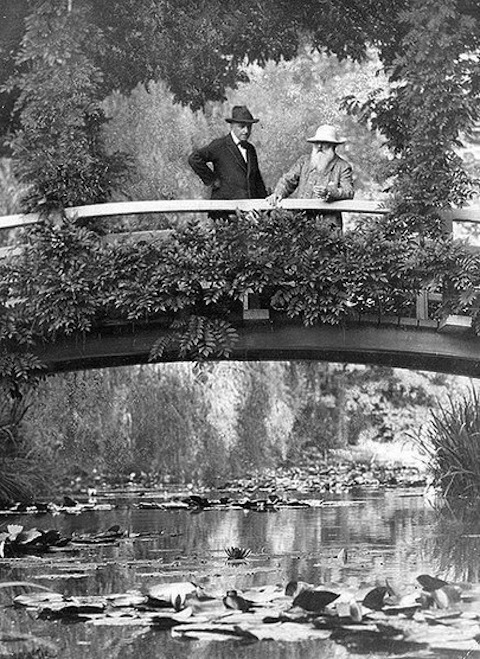
Watch Footage of Claude Monet Painting in His Famous Garden at Giverny (1915)

What could be more charm­ing­ly idyl­lic than a glimpse of snowy-beard­ed Impres­sion­ist Claude Mon­et calm­ly paint­ing en plein-air in his gar­den at Giverny?

A wide-brimmed hat and two lux­u­ri­ous­ly large patio-type umbrel­las pro­vide shade, while the artist stays cool in a pris­tine white suit.

His can­vas is off cam­era for the most part, but giv­en the coor­di­nates, it seems safe to assume the subject’s got some­thing to do with the famous Japan­ese foot­bridge span­ning Monet’s equal­ly famous lily pond.

The sun’s still high when he puts down his cat’s tongue brush and heads back to the house with his lit­tle dog at his heels, no doubt antic­i­pat­ing a deli­cious, relaxed lun­cheon.

Even in black-and-white, it’s an irre­sistible pas­toral vision!

And quite a con­trast to the recent scene some 300 km away in Ypres, where Ger­man troops weaponized chlo­rine gas for the first time, releas­ing it in the Allied trench­es the same year the above footage of Mon­et was shot.

Lendon Payne, a British sap­per, was an eye­wit­ness to some of the may­hem:

When the gas attack was over and the all clear was sound­ed I decid­ed to go out for a breath of fresh air and see what was hap­pen­ing. But I could hard­ly believe my eyes when I looked along the bank. The bank was absolute­ly cov­ered with bod­ies of gassed men. Must have been over 1,000 of them. And down in the stream, a lit­tle bit fur­ther along the canal bank, the stream there was also full of bod­ies as well. They were grad­u­al­ly gath­ered up and all put in a huge pile after being iden­ti­fied in a place called Hos­pi­tal Farm on the left of Ypres.  And whilst they were in there the ADMS came along to make his report and whilst he was siz­ing up the sit­u­a­tion a shell burst and killed him.

The ear­ly days of the Great War are what spurred direc­tor Sacha Gui­try, seen chat­ting with Mon­et above, to vis­it the 82-year-old artist as part of his 22-minute silent doc­u­men­tary, Ceux de Chez Nous (Those of Our Land).

The entire project was an act of resis­tance.

With Ger­man intel­lec­tu­als trum­pet­ing the supe­ri­or­i­ty of Ger­man­ic cul­ture, the Russ­ian-born Gui­t­ry, a suc­cess­ful actor and play­wright, sought out audi­ences with aging French lumi­nar­ies, to pre­serve for future gen­er­a­tions.

In addi­tion to Mon­et, these include appear­ances by painters Pierre-Auguste Renoir and Edgar Degas, sculp­tor Auguste Rodin, writer Ana­tole France, com­pos­er Camille Saint-Saens, and actor Sarah Bern­hardt.

Although Ceux de Chez Nous was silent, Gui­t­ry care­ful­ly doc­u­ment­ed the con­tent of each inter­view, revis­it­ing them in 1952 for the expand­ed ver­sion with com­men­tary, below.

Beneath his placid exte­ri­or, Mon­et, too, was quite con­sumed by the hor­rors unfold­ing near­by.

James Payne, cre­ator of the web series Great Art Explained, views Monet’s final eight water lily paint­ings as a “direct response to the most sav­age and apoc­a­lyp­tic peri­od of mod­ern history…a war memo­r­i­al to the mil­lions of lives trag­i­cal­ly lost in the First World War.”


In 1914, Mon­et wrote that while paint­ing helped take his mind off “these sad times” he also felt “ashamed to think about my lit­tle research­es into form and colour while so many peo­ple are suf­fer­ing and dying for us.”

As cura­tor Ann Dumas notes in RA Mag­a­zine:

The peace of his gar­den was some­times shat­tered by the sound of gun­fire from the bat­tle­fields only 50 kilo­me­tres away. His step­son was fight­ing at the front and his own son Michel was called up in 1915. Many of the inhab­i­tants of Giverny fled to safe­ty but Mon­et stayed behind: “…if those sav­ages must kill me, it will be in the mid­dle of my can­vas­es, in front of all my life’s work.” Paint­ing was what he did and he saw it, in a way, as his patri­ot­ic con­tri­bu­tion. A group of paint­ings of the weep­ing wil­low, a tra­di­tion­al sym­bol of mourn­ing, was Monet’s most imme­di­ate response to the war, the tree’s long, sweep­ing branch­es hang­ing over the water, an elo­quent expres­sion of grief and loss.

Relat­ed Con­tent 

1540 Mon­et Paint­ings in a Two Hour Video

Why Mon­et Paint­ed The Same Haystacks 25 Times

Monet’s Water Lilies: How World War I Inspired Mon­et to Paint His Final Mas­ter­pieces & Cre­ate “the World’s First Art Instal­la­tion”

– Ayun Hal­l­i­day is the Chief Pri­ma­tol­o­gist of the East Vil­lage Inky zine and author, most recent­ly, of Cre­ative, Not Famous: The Small Pota­to Man­i­festo and Cre­ative, Not Famous Activ­i­ty Book. Fol­low her @AyunHalliday.

Watch Mall City, the Original Gonzo Documentary That Captures the Height of Shopping-Mall Culture (1983)

No Amer­i­can who came of age in the nine­teen-eight­ies — or in most of the sev­en­ties or nineties, for that mat­ter — could pre­tend not to under­stand the impor­tance of the mall. Edi­na, Min­neso­ta’s South­dale Cen­ter, which defined the mod­ern shop­ping mal­l’s enclosed, depart­ment store-anchored form, opened in 1956. Over the decades that fol­lowed, liv­ing pat­terns sub­ur­ban­ized and devel­op­ers respond­ed by plung­ing into a long and prof­itable orgy of mall-build­ing, with the result that gen­er­a­tions of ado­les­cents lived in rea­son­ably easy reach of such a com­mer­cial insti­tu­tion. Some came to shop and oth­ers came to work, but if Hugh Kin­niburgh’s doc­u­men­tary Mall City is to be believed, most came just to “hang out.”

Intro­duced as “A SAFARI TO STUDY MALL CULTURE,” Mall City con­sists of inter­views con­duct­ed by Kin­niburgh and his NYU Film School col­lab­o­ra­tors dur­ing one day in 1983 at the Roo­sevelt Field Mall on Long Island. Unsur­pris­ing­ly, their inter­vie­wees tend to be young, stren­u­ous­ly coiffed, and dressed with stud­ied non­cha­lance in striped T‑shirts and Mem­bers Only-style wind­break­ers.

A trip to the mall could offer them a chance to expand their wardrobe, or at the very least to cal­i­brate their fash­ion sense. You go to the mall, says one styl­ish young lady, “to see what’s in, what’s out,” and thus to devel­op your own style. “You look for ideas,” as the inter­view­er sum­ma­rizes it, “and then recom­bine them in your own way, try to be orig­i­nal.”

One part of the val­ue propo­si­tion of the mall was its shops; anoth­er, larg­er part was the pres­ence of so many oth­er mem­bers of your demo­graph­ic. In explain­ing why they come to the mall, some teenagers dis­sim­u­late less than oth­ers: “It’s like, where the cool peo­ple are at,” says one girl, with notable forth­right­ness. “You’re fakin’ this all. I mean, you’re just tryin’ to meet peo­ple.” Kin­niburgh and his crew chat with a group of bare­ly ado­les­cent-look­ing boys — each and every one smok­ing a cig­a­rette — about what encoun­ter­ing girls has to do with the time they spend hang­ing out at the mall. One answers with­out hes­i­ta­tion: “That’s the main rea­son.” (Yet these labors seem often to have borne bit­ter fruit: as one for­mer employ­ee and cur­rent hang­er-out puts it, “Mall rela­tion­ships don’t last.”)

Opened just two months after South­dale Cen­ter, Roo­sevelt Field is actu­al­ly one of Amer­i­ca’s most ven­er­a­ble shop­ping malls. (It also pos­sess­es unusu­al archi­tec­tur­al cred­i­bil­i­ty, hav­ing been designed by none oth­er than I. M. Pei.) By all appear­ances, it also man­aged to recon­sti­tute cer­tain func­tions of a gen­uine urban social space — or at least it did forty years ago, at the height of “mall cul­ture.” Asked for his thoughts on that phe­nom­e­non, one post-hip­pie type describes it as “prob­a­bly the wave of the future. Maybe the end of the future, the way things are going.” Here in that future, we speak of shop­ping malls as decrepit, even van­ish­ing relics of a lost era, one with its own pri­or­i­ties, its own folk­ways, even its own accents. Could such a vari­ety of pro­nun­ci­a­tions of the very word “mall” still be heard on Long Island? Clear­ly, fur­ther field­work is required.

Relat­ed con­tent:

Col­or Footage of America’s First Shop­ping Mall Open­ing in 1956: The Birth of a Beloved and Reviled Insti­tu­tion

Feel Strange­ly Nos­tal­gic as You Hear Clas­sic Songs Reworked to Sound as If They’re Play­ing in an Emp­ty Shop­ping Mall: David Bowie, Toto, Ah-ha & More

Watch Heavy Met­al Park­ing Lot, the Cult Clas­sic Film That Ranks as One of the “Great Rock Doc­u­men­taries” of All Time

Punks, Goths, and Mods on TV (1983)

Atten­tion K‑Mart Shop­pers: Hear 90 Hours of Back­ground Music & Ads from the Retail Giant’s 1980s and 90s Hey­day

The Walk­man Turns 40: See Every Gen­er­a­tion of Sony’s Icon­ic Per­son­al Stereo in One Minute

Based in Seoul, Col­in Marshall writes and broad­casts on cities, lan­guage, and cul­ture. His projects include the Sub­stack newslet­ter Books on Cities, the book The State­less City: a Walk through 21st-Cen­tu­ry Los Ange­les and the video series The City in Cin­e­ma. Fol­low him on Twit­ter at @colinmarshall or on Face­book.

Watch the Oldest Japanese Anime Film, Jun’ichi Kōuchi’s The Dull Sword (1917)

In 1981, the philoso­pher Mary Midg­ley argued against cul­tur­al rel­a­tivism in an arti­cle titled “Try­ing Out One’s New Sword.” In it, she makes ref­er­ence to “a verb in clas­si­cal Japan­ese which means ‘to try out one’s new sword on a chance way­far­er.’ (The word is tsu­ji­giri, lit­er­al­ly ‘cross­roads-cut.’) A samu­rai sword had to be tried out because, if it was to work prop­er­ly, it had to slice through some­one at a sin­gle blow, from the shoul­der to the oppo­site flank. Oth­er­wise, the war­rior bun­gled his stroke. This could injure his hon­or, offend his ances­tors, and even let down his emper­or.” Those of us who feel unable to con­demn this prac­tice due to cul­tur­al dis­tance have fall­en vic­tim, in Midg­ley’s view, to “moral iso­la­tion­ism.”

One could object to Midg­ley’s use of this par­tic­u­lar exam­ple: the his­tor­i­cal record does­n’t sug­gest that tsu­ji­giri was ever com­mon prac­tice, and cer­tain­ly not that it was approved of by the wider soci­ety of feu­dal Japan. About half a cen­tu­ry after the abo­li­tion of the samu­rai class in the eigh­teen-sev­en­ties, how­ev­er, it does seem to have become the stuff of com­e­dy.

This is evi­denced by The Dull Sword (なまくら刀), a 1917 short film by Japan­ese ani­ma­tor Jun’ichi Kōuchi. When its luck­less ronin pro­tag­o­nist buys the tit­u­lar weapon and attempts to try it out, he ends up defeat­ed by his unsus­pect­ing would-be vic­tim, a blind flute-play­ing beg­gar. (He has no bet­ter luck after night­fall, as shown in a final sequence in sil­hou­ette rem­i­nis­cent of the work of Lotte Reiniger.)

Upon its redis­cov­ery in an Osa­ka antique shop fif­teen years ago, The Dull Sword became the old­est sur­viv­ing exam­ple of what we now know as ani­me. Aes­thet­i­cal­ly, it resem­bles a news­pa­per com­ic strip come to life, much as, after the advent of tele­vi­sion, more ambi­tious pro­duc­tions would adapt the look and feel of full-scale man­ga books. Ani­me has devel­oped and expand­ed immense­ly over the past cen­tu­ry, but it still — at least in cer­tain of its sub­gen­res — retains a pen­chant for tak­ing acts of vio­lence and thor­ough­ly styl­iz­ing them, in the process often ren­der­ing them com­ic or even iron­ic. You could say The Dull Sword, despite its mod­est scale, does all of that at once. And how­ev­er dif­fer­ent its time and place are from ours, we can nev­er­the­less laugh at the fate that befalls its bungling anti­hero.

via Messy Nessy

Relat­ed con­tent:

Ear­ly Japan­ese Ani­ma­tions: The Ori­gins of Ani­me (1917 to 1931)

How to Be a Samu­rai: A 17th Cen­tu­ry Code for Life & War

The Aes­thet­ic of Ani­me: A New Video Essay Explores a Rich Tra­di­tion of Japan­ese Ani­ma­tion

Hand-Col­ored 1860s Pho­tographs Reveal the Last Days of Samu­rai Japan

Watch the First Chi­nese Ani­mat­ed Fea­ture Film, Princess Iron Fan, Made Under the Strains of WWII (1941)

A Vin­tage Short Film about the Samu­rai Sword, Nar­rat­ed by George Takei (1969)

Based in Seoul, Col­in Marshall writes and broad­casts on cities, lan­guage, and cul­ture. His projects include the Sub­stack newslet­ter Books on Cities, the book The State­less City: a Walk through 21st-Cen­tu­ry Los Ange­les and the video series The City in Cin­e­ma. Fol­low him on Twit­ter at @colinmarshall or on Face­book.


Charlie Chaplin’s Final Speech in The Great Dictator: A Statement Against Greed, Hate, Intolerance & Fascism (1940)

The nar­row “tooth­brush mus­tache” caught on in the late nine­teenth cen­tu­ry, first in the Unit­ed States and soon there­after across the Atlantic. When Char­lie Chap­lin put one on for a film in 1914, he became its most famous wear­er — at least until Adolf Hitler rose to promi­nence a cou­ple of decades lat­er. By that point Chap­lin had become the most famous com­e­dy star in the world, which may have inspired the Nazi Par­ty leader, a known fan of Chap­lin’s work, to adopt the same mus­tache as a kind of tool of self-advance­ment. Chap­lin him­self could hard­ly have approved of his new dop­pel­gänger, and it trou­bled him to dis­cov­er their oth­er shared qual­i­ties: their births in April of 1889, their poor child­hoods, their love of Wag­n­er.

Still, as an invet­er­ate enter­tain­er, Chap­lin grasped the comedic poten­tial of his and Hitler’s par­al­lel icon­ic sta­tus. The result, released in 1940, was The Great Dic­ta­tor, his first gen­uine sound film. Chap­lin had con­tin­ued mak­ing silent pic­tures, and refin­ing his sig­na­ture visu­al humor, well into the era of “talkies.”

But he could only have done so much to ridicule Hitler, who had come to pow­er in large part through speech­es broad­cast over the radio, with­out being able to use his voice as well. Yet he deliv­ers his most mem­o­rable lines not in the role of Hitler sur­ro­gate Ade­noid Hynkel, but that of the unnamed Jew­ish bar­ber who — through, of course, sev­er­al absurd turns of events — ends up mis­tak­en for Hynkel and made to address the nation.

“I’m sor­ry, but I don’t want to be an emper­or,” says Chap­lin-as-the-Bar­ber-as-Hynkel. “That’s not my busi­ness. I don’t want to rule or con­quer any­one. I should like to help every­one — if pos­si­ble — Jew, Gen­tile, black man, white. We all want to help one anoth­er. Human beings are like that. We want to live by each other’s hap­pi­ness, not by each other’s mis­ery.” Through­out the three-and-a-half-minute mono­logue, he speaks against “greed,” “clev­er­ness,” “nation­al bar­ri­ers,” and “the hate of men”; he advo­cates for “kind­ness and gen­tle­ness,” “uni­ver­sal broth­er­hood,” “a world of rea­son,” and “the love of human­i­ty.” These may not be espe­cial­ly pre­cise terms, but, know­ing his pub­lic well — much bet­ter, indeed, than Hitler ever knew his — Chap­lin also knew just when to go broad.

Relat­ed con­tent:

How Did Hitler Rise to Pow­er? : New TED-ED Ani­ma­tion Pro­vides a Case Study in How Fas­cists Get Demo­c­ra­t­i­cal­ly Elect­ed

When Mahat­ma Gand­hi Met Char­lie Chap­lin (1931)

Carl Jung Psy­cho­an­a­lyzes Hitler: “He’s the Uncon­scious of 78 Mil­lion Ger­mans.” “With­out the Ger­man Peo­ple He’d Be Noth­ing” (1938)

When Char­lie Chap­lin Entered a Chap­lin Look-Alike Con­test & Came in 20th Place

The Famous Down­fall Scene Explained: What Real­ly Hap­pened in Hitler’s Bunker at the End?

Based in Seoul, Col­in Marshall writes and broad­casts on cities, lan­guage, and cul­ture. His projects include the Sub­stack newslet­ter Books on Cities, the book The State­less City: a Walk through 21st-Cen­tu­ry Los Ange­les and the video series The City in Cin­e­ma. Fol­low him on Twit­ter at @colinmarshall or on Face­book.


A Kubrick Scholar Discovers an Eerie Detail in The Shining That’s Gone Unnoticed for More Than 40 Years

Stan­ley Kubrick­’s The Shin­ing pulls off the uncom­mon feat of inhab­it­ing a genre with­out falling vic­tim to its vices. But exact­ly which genre does it inhab­it? Hor­ror? Meta-hor­ror? Super­nat­ur­al thriller? Psy­cho­log­i­cal dra­ma? Most of the pic­tures made for these broad fields of cin­e­ma share a dispir­it­ing lack of re-watch­a­bil­i­ty, espe­cial­ly those reliant on the device of the twist end­ing: M. Night Shya­malan’s The Sixth Sense, for exam­ple, which now, 24 years after its release, is enjoyed pri­mar­i­ly as an arti­fact of its cul­tur­al era. But over the past four decades The Shin­ing has only become a rich­er view­ing expe­ri­ence, and one that con­tin­ues to yield hereto­fore unseen details.

In the new video above (and an asso­ci­at­ed Twit­ter thread), Kubrick schol­ar Fil­ip­po Ulivieri expos­es one such detail — or rather, a whole series of them. Through­out his per­for­mance as the Over­look Hotel’s increas­ing­ly trou­bled care­tak­er Jack Tor­rance, Jack Nichol­son keeps look­ing direct­ly at the cam­era. “I’m not talk­ing about when he looks at the cam­era because he’s talk­ing to some­one else,” says Uliv­eri. “I’m talk­ing about all the times in which Jack Tor­rance looks at the cam­era, but there’s no one to look at.”

All are “very brief moments, cap­tured by a few frames of film,” or even just one. But giv­en how many times it hap­pens (much more often than the one fourth-wall-break­ing glance already acknowl­edged by Shin­ing exegetes), as well as Kubrick­’s well-known per­fec­tion­ist atten­tion to detail, all this can hard­ly be an acci­dent.

Despite the exis­tence of doc­u­men­tary footage that shows Kubrick explic­it­ly telling Nichol­son to look down at the cam­era in one shot, this choice has remained, as it were, over­looked. But what to make of it? It could mean that “we are not safe from Jack­’s fury. He knows where we are; he may come for us next.” Yet he also looks at the cam­era well before descend­ing into insan­i­ty. “Who is look­ing at Jack? Ghosts. The ghosts of the Over­look Hotel.” Per­haps “Jack felt their pres­ence from the very begin­ning. So the cam­era in The Shin­ing must be… well, a ghost itself.” But if the sub­jec­tive cam­era rep­re­sents the ghost­ly point of view, “does that mean that I am a ghost, too?” And more impor­tant­ly for fans, does that mean Kubrick out­did Shya­malan near­ly twen­ty years before The Sixth Sense came out?

via Metafil­ter

Relat­ed con­tent:

Watch Jack Nichol­son Get Mani­a­cal­ly Into Char­ac­ter for The Shin­ing’s Icon­ic Axe Scene

Room 237: New Doc­u­men­tary Explores Stan­ley Kubrick’s The Shin­ing and Those It Obsess­es

Decod­ing the Screen­plays of The Shin­ing, Moon­rise King­dom & The Dark Knight: Watch Lessons from the Screen­play

Go Inside the First 30 Min­utes of Kubrick’s The Shin­ing with This 360º Vir­tu­al Real­i­ty Video

Stan­ley Kubrick’s The Shin­ing Reimag­ined as Wes Ander­son and David Lynch Movies

Based in Seoul, Col­in Marshall writes and broad­casts on cities, lan­guage, and cul­ture. His projects include the Sub­stack newslet­ter Books on Cities, the book The State­less City: a Walk through 21st-Cen­tu­ry Los Ange­les and the video series The City in Cin­e­ma. Fol­low him on Twit­ter at @colinmarshall or on Face­book.

« Go BackMore in this category... »
Quantcast