Watch the New Trailer for Electric Dreams, the Philip K. Dick TV Series, Starring Bryan Cranston, Steve Buscemi & More

If you had told crit­ics and film exec­u­tives thir­ty-five years ago that Rid­ley Scott’s Blade Run­ner would be one of the most beloved sci-fi films of all time—that it would tran­scend cult sta­tus to become a near-reli­gious object in sci­ence fic­tion and ani­me filmmaking—you would like­ly have been laughed out of the room. If you had pre­dict­ed that, thir­ty-five years lat­er, it would spawn one of the most spec­tac­u­lar sequels imag­in­able, you might have been met with con­cern for your san­i­ty. The world was just not ready for Blade Run­ner in 1982, just as it was not ready for Philip K. Dick in the 50s when he began his writ­ing career and “couldn’t even pay the late fees on a library book.”

In the fol­low­ing decade, how­ev­er, Dick’s work came into its own. Many years before it pro­vid­ed a near-infal­li­ble source for tech­no­log­i­cal pre­science and exis­ten­tial futur­ism in cin­e­ma, Do Androids Dream of Elec­tric Sheep?, the novel­la from which Blade Run­ner adapt­ed its sto­ry, got a Neb­u­la award nom­i­na­tion, one of three Dick received in the 60s. Five years ear­li­er, he won a Hugo award for The Man in the High Cas­tle.

Now, after the suc­cess of that spec­u­la­tive his­tor­i­cal novel’s grim Ama­zon adap­ta­tion, the com­pa­ny has part­nered with Chan­nel 4 and Sony for anoth­er small-screen Dick project—Elec­tric Dreams, co-pro­duced by Bryan Cranston, a long­time fan of the author.

An anthol­o­gy series based on Dick’s sto­ries, Elec­tric Dreams first airs on Chan­nel 4 in the U.K., and will soon move to Ama­zon, where Prime users will be able to stream the whole 10-episode sea­son for free. (If you aren’t a Prime user, you can get a 30-day free tri­al to watch the series, then keep or can­cel the mem­ber­ship.) Elec­tric Dreams reminds us that a cou­ple of phe­nom­e­na from Dick’s hey­day have made a sig­nif­i­cant come­back in recent years. First, imag­i­na­tive, high-con­cept anthol­o­gy shows like Char­lie Brooker’s Black Mir­ror and the Duplass broth­ers’ Room 104 hear­ken back to the suc­cess of The Twi­light Zone and less­er-known shows like Roald Dahl’s Way Out.

Sec­ond­ly, we’ve made a return to the para­noia, social unrest, author­i­tar­i­an­ism, and threats of nuclear war that formed the back­drops of Dick’s vision­ary fables. These are indeed “anx­ious times,” as Cranston says, but he and the show’s oth­er pro­duc­ers instruct­ed the writ­ers to “use the orig­i­nal mate­r­i­al as a spring­board to your own re-imag­in­ing of the story—keep the core… or idea behind it and enhance that and see how that affects not a Cold War peri­od when it was writ­ten, but now. How does it affect the mod­ern-day audi­ence?”

Giv­en the all-star cast and high-dol­lar pro­duc­tion val­ues evi­dent in the trail­er above, we can like­ly expect the same kind of qual­i­ty from Elec­tric Dreams as we have seen in near­ly every Dick adap­ta­tion thus far. And if it doesn’t catch on right away, well, that may be everyone’s loss but those view­ers who rec­og­nize, as Dick him­self rec­og­nized when he saw Blade Run­ner in 1982, that they have expe­ri­enced some­thing tru­ly unique.

Relat­ed Con­tent:

Blade Run­ner: The Pil­lar of Sci-Fi Cin­e­ma that Siskel, Ebert, and Stu­dio Execs Orig­i­nal­ly Hat­ed

Philip K. Dick Pre­views Blade Run­ner: “The Impact of the Film is Going to be Over­whelm­ing” (1981)

When Roald Dahl Host­ed His Own Creepy TV Show Way Out, a Com­pan­ion to Rod Serling’s Twi­light Zone (1961)

Josh Jones is a writer and musi­cian based in Durham, NC. Fol­low him at @jdmagness

The Famously Controversial “Monty Hall Problem” Explained: A Classic Brain Teaser

When the news broke last week of the death of game-show host Mon­ty Hall, even those of us who could­n’t quite put a face to the name felt the ring of recog­ni­tion from the name itself. Hall became famous on the long-run­ning game show Let’s Make a Deal, whose best-known seg­ment “Big Deal of the Day” had him com­mand­ing his play­ers to choose one of three num­bered doors, each of which con­cealed a prize of unknown desir­abil­i­ty. It put not just phras­es like “door num­ber three” into the Eng­lish lex­i­con but con­tributed to the world of stumpers the Mon­ty Hall Prob­lem, the brain-teas­er based on the much-con­test­ed prob­a­bil­i­ty behind which door a con­tes­tant should choose.

Let’s Make a Deal pre­miered in 1963, but only in 1990, when Mar­i­lyn vos Savant wrote one of her Q&A columns about it in Parade mag­a­zine, did the Mon­ty Hall Prob­lem draw seri­ous, frus­trat­ed pub­lic atten­tion.

“Behind one door is a car; behind the oth­ers, goats,” went the ques­tion, set­ting up a Let’s Make a Deal-like sce­nario. “You pick a door, say No. 1, and the host, who knows what’s behind the doors, opens anoth­er door, say No. 3, which has a goat. He then says to you, ‘Do you want to pick door No. 2?’ Is it to your advan­tage to switch your choice?” Yes, replied the unhesi­tat­ing Savant and her Guin­ness World Record-set­ting IQ, you should switch. “The first door has a 1/3 chance of win­ning, but the sec­ond door has a 2/3 chance.”

This log­ic, which you can see bro­ken down by Uni­ver­si­ty of Cal­i­for­nia, Berke­ley sta­tis­tics pro­fes­sor Lisa Gold­berg in the Num­ber­phile video at the top of the post, drew about 10,000 let­ters of dis­agree­ment in total, many from aca­d­e­mics at respectable insti­tu­tions. Michael Sher­mer received a sim­i­lar­ly vehe­ment response when he addressed the issue in Sci­en­tif­ic Amer­i­can eigh­teen years lat­er. “At the begin­ning of the game you have a 1/3rd chance of pick­ing the car and a 2/3rds chance of pick­ing a goat,” he explained. “Switch­ing doors is bad only if you ini­tial­ly chose the car, which hap­pens only 1/3rd of the time. Switch­ing doors is good if you ini­tial­ly chose a goat, which hap­pens 2/3rds of the time.” Thus the odds of win­ning by switch­ing becomes two out of three, dou­ble those of not switch­ing.

Use­ful advice, pre­sum­ing you’d pre­fer a Brick­lin SV‑1 or an Opel Man­ta to a goat, and that the host opens one of the uns­e­lect­ed doors every time with­out fail, which Hall did­n’t actu­al­ly do. When he did open it, he lat­er explained, the con­tes­tants made the same assump­tion many of Savant and Sher­mer’s com­plainants did: “They’d think the odds on their door had now gone up to 1 in 2, so they hat­ed to give up the door no mat­ter how much mon­ey I offered. By open­ing that door we were apply­ing pres­sure.” Ulti­mate­ly, “if the host is required to open a door all the time and offer you a switch, then you should take the switch. But if he has the choice whether to allow a switch or not, beware. Caveat emp­tor. It all depends on his mood” — a rare con­sid­er­a­tion in any­thing relat­ed to math­e­mat­ics, but when deal­ing with the Mon­ty Hall prob­lem, one ignores at one’s per­il the words of Mon­ty Hall.

Relat­ed Con­tent:

Are You One of the 2% Who Can Solve “Einstein’s Rid­dle”?

Can You Solve These Ani­mat­ed Brain Teasers from TED-Ed?

John Cage Per­forms Water Walk on US Game Show I’ve Got a Secret (1960)

A Young Hunter S. Thomp­son Appears on the Clas­sic TV Game Show, To Tell the Truth (1967)

Based in Seoul, Col­in Mar­shall writes and broad­casts on cities and cul­ture. His projects include the book The State­less City: a Walk through 21st-Cen­tu­ry Los Ange­les and the video series The City in Cin­e­ma. Fol­low him on Twit­ter at @colinmarshall or on Face­book.

Hugh Hefner (RIP) Defends “the Playboy Philosophy” to William F. Buckley, 1966

“Mr. Hefn­er’s mag­a­zine is most wide­ly known for its total expo­sure of the human female,” says William F. Buck­ley, intro­duc­ing the guest on this 1966 broad­cast of his talk show Fir­ing Line. “Though of course oth­er things hap­pen in its pages.” Not long before, pub­lish­er and plea­sure empire-builder Hugh Hefn­er’s Play­boy mag­a­zine ran a series of arti­cles on “the Play­boy phi­los­o­phy,” a set of obser­va­tions of and propo­si­tions about human sex­u­al­i­ty that pro­vid­ed these men fod­der for their tele­vised debate. Hefn­er stands against reli­gious­ly man­dat­ed, chasti­ty-cen­tered codes of sex­u­al moral­i­ty; Buck­ley demands to know how Hefn­er earned the qual­i­fi­ca­tions to issue new codes of his own. Describ­ing the Play­boy phi­los­o­phy as “sort of a hedo­nis­tic util­i­tar­i­an­ism,” Buck­ley tries simul­ta­ne­ous­ly to under­stand and demol­ish these 20th-cen­tu­ry revi­sions of the rules of sex.

“The Play­boy founder is no match for the Catholic who snipes him at will with ‘moral’ bul­lets,” writes the poster of the video. “The acer­bic, dry Buck­ley is on attack mode with a con­ser­v­a­tive audi­ence, in moral pan­ic, behind him. The Catholic had the era of con­ser­vatism behind him. [ … ] In the 21st cen­tu­ry though, Buck­ley would have a hard­er time defend­ing moral­i­ty with Hefn­er.” One won­ders how Buck­ley and Hefn­er, were they still alive today, might revis­it this debate in 2017. (Buck­ley died in 2008, and Hefn­er passed away yes­ter­day at the age of 91.) Times have cer­tain­ly changed, but I sus­pect Buck­ley would raise the same core objec­tion to Hefn­er’s argu­ment that loos­en­ing the old stric­tures on sex leads, per­haps coun­ter­in­tu­itive­ly, to more sat­is­fied, more monog­a­mous pair­ings: “How in the hell do you know?” Though this and cer­tain oth­er of Buck­ley’s ques­tions occa­sion­al­ly wrong-foot Hefn­er, the faith­ful can rest assured that he keeps enough cool to fire up his sig­na­ture pipe on cam­era.

Note: This post first appeared on our site back in 2012. We brought it back today for obvi­ous rea­sons, and updat­ed it to reflect Hefn­er’s pass­ing. Since 2012, a huge archive of “Fir­ing Line” episodes have been put online. Get more on that here.

Relat­ed Con­tent:

375+ Episodes of William F. Buckley’s Fir­ing Line Now Online: Fea­tures Talks with Chom­sky, Borges, Ker­ouac, Gins­berg & More

Yeah, Baby! Deep Pur­ple Gets Sha­gadel­ic on Play­boy After Dark

James Bald­win Bests William F. Buck­ley in 1965 Debate at Cam­bridge Uni­ver­si­ty

Jack Ker­ouac Meets William F. Buck­ley (1968)

Col­in Mar­shall hosts and pro­duces Note­book on Cities and Cul­ture. Fol­low him on Twit­ter at @colinmarshall.

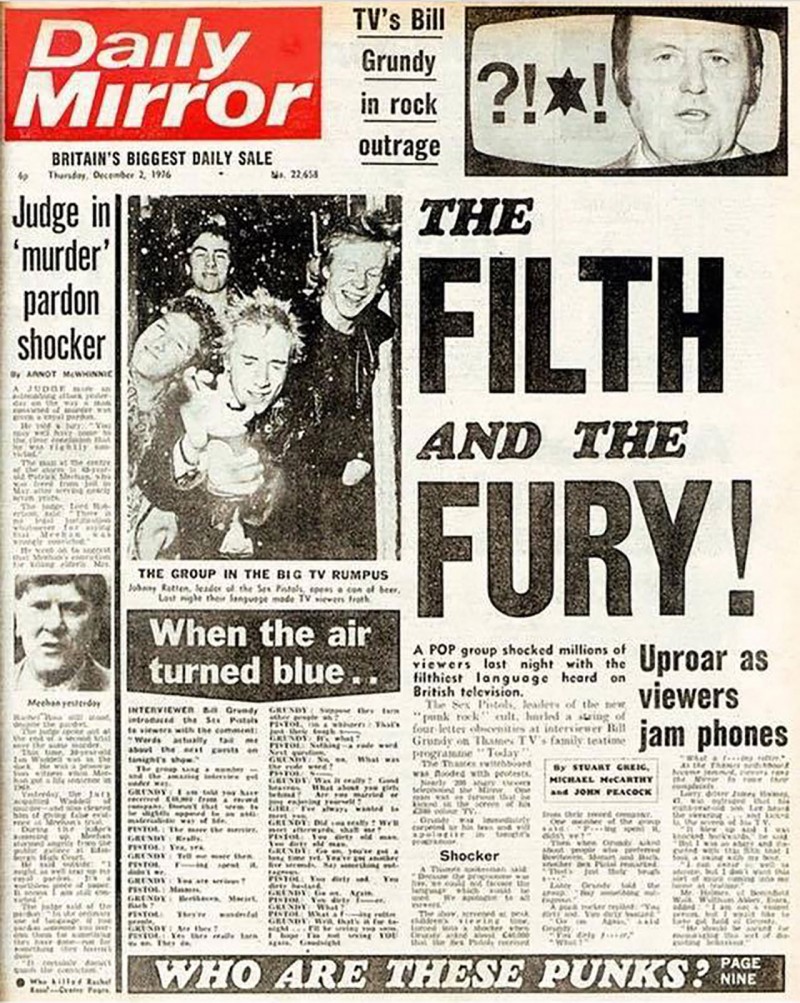
The Sex Pistols Make a Scandalous Appearance on the Bill Grundy Show & Introduce Punk Rock to the Startled Masses (1976)

The brain­less­ness and hypocrisy of tele­vi­sion has long been a source of fun and social com­men­tary in punk rock—from Black Flag’s “TV Par­ty” (“I don’t even both­er to use my brain any­more”) to the Dead Kennedys’ “M.T.V. –Get Off the Air” (“… feed­ing you end­less dos­es / of sug­ar-coat­ed mind­less garbage”). It’s fit­ting then that one of the sem­i­nal moments in punk his­to­ry hap­pened on tele­vi­sion, orches­trat­ed by Sex Pis­tols man­ag­er and arch provo­ca­teur Mal­colm McLaren, who knew as well as any­one how to manip­u­late the media. The noto­ri­ous Bill Grundy inter­view, which you can watch—likely not for the first or even sec­ond time—above, rock­et­ed the Sex Pis­tols to nation­al infamy overnight, sim­ply because of a few swear words and some slight­ly rude behav­ior.

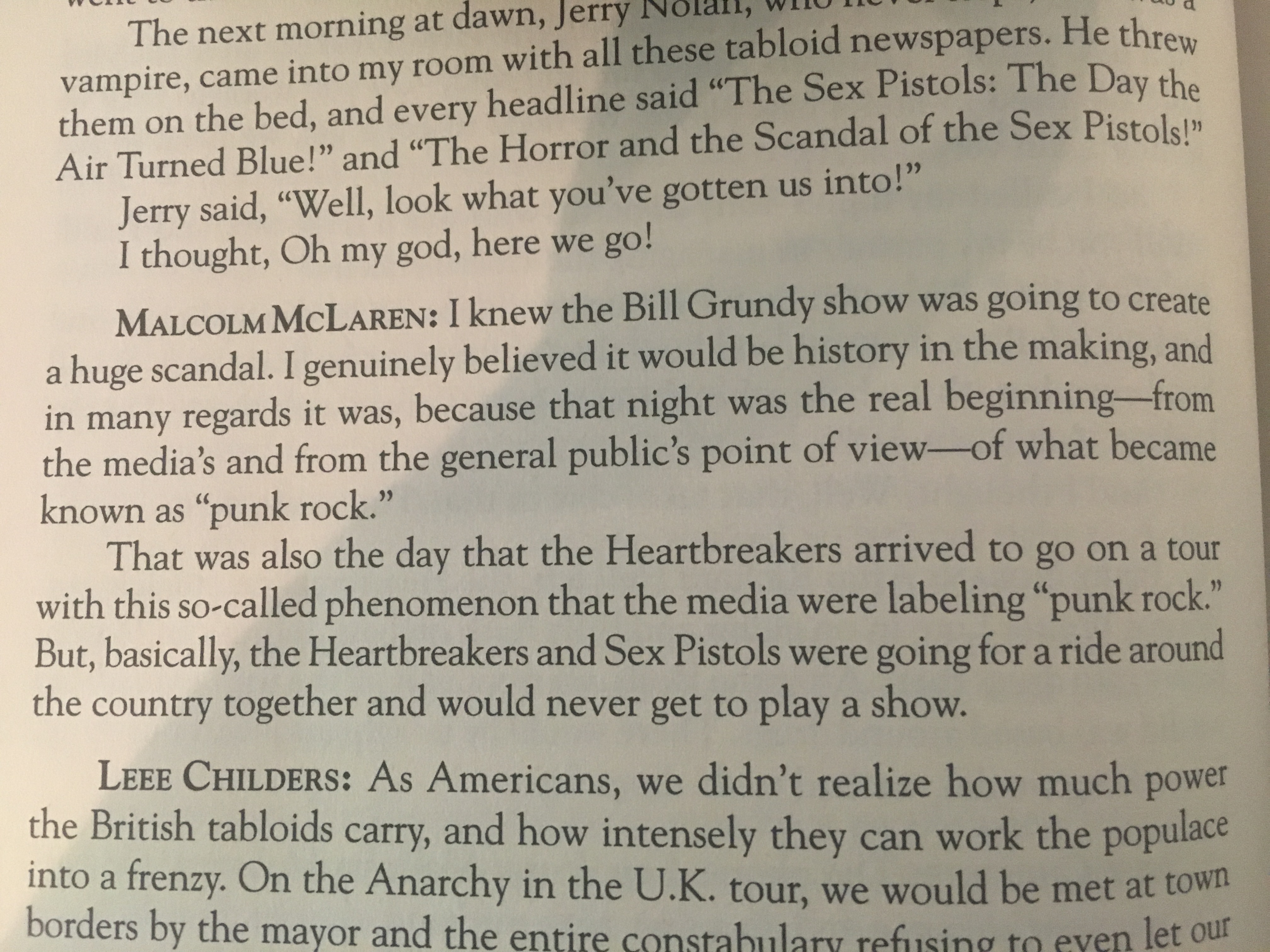
Though the U.S. does its damn­d­est to keep up these days, no one in 1976 could match the out­rage machin­ery of the UK press. As rock pho­tog­ra­ph­er and man­ag­er Leee Black Childers put it in the oral his­to­ry of punk, Please Kill Me, the tabloids “can work the pop­u­lace into a fren­zy.” McLaren goes on record to say, “I knew the Bill Grundy show was going to cre­ate a huge scan­dal. I gen­uine­ly believed it would be his­to­ry in the mak­ing.” We might expect him to take cred­it after the fact, but in any case, it worked: the day after the band’s appear­ance on the Grundy-host­ed Today show on Thames Tele­vi­sion, every tabloid paper fea­tured them on the front page. The Dai­ly Mir­ror pro­vid­ed the title of Julien Temple’s 2000 doc­u­men­tary with their clever head­line, “The Filth and the Fury.”

Even in 2008, a sur­vey showed the Grundy inter­view as the most request­ed clip in UK tele­vi­sion his­to­ry. With all this hype, you might be dis­ap­point­ed if you’re one of the few who hasn’t seen it. Though f‑bombs on TV can still cause a minor stir, a few mum­bled curse words will hard­ly gar­ner the kind of pub­lic­i­ty they did forty years ago. McLaren claims punk rock began that day on the Today show, and that’s true, at least, for the view­ing pub­lic who would have been treat­ed to an appear­ance from Queen if Fred­die Mer­cury hadn’t devel­oped a crip­pling toothache. Instead, they were intro­duced to Paul Cook in a Vivi­enne West­wood naked breasts t‑shirt, and Glen Mat­lock, Steve Jones, and John­ny Rot­ten toss­ing insults at Grundy, who egged them on, hit on the teenage Siouxsie Sioux, part of the band’s entourage, and may have been drunk, though he denied it.

It may be one of the least wit­ty exchanges in tele­vi­sion his­to­ry, and that’s say­ing a lot. But for all the pearl-clutch­ing over the band’s cru­di­ty, it’s maybe Grundy who comes off look­ing the worse. More inter­est­ing than the inter­view itself is the hyper­bol­ic fall­out, as well as what hap­pened imme­di­ate­ly after­ward. The sta­tion was flood­ed with com­plaints, and for some rea­son, its tele­phone sys­tem rerout­ed unan­swered calls to the green room, where the band and their fol­low­ers had decamped. “A pro­duc­er on the pro­gramme ignored instruc­tions to remain in the room,” notes Jon Ben­nett at Team Rock. “The result? The group start­ed answer­ing the phones and dish­ing out even more abuse. How this evad­ed the press at the time remains a mys­tery.” Indeed. It’s doubt­ful McLaren could have planned it, but the image evokes the sneer of every punk who has ever spit on the pious insis­tence that TV spoon­feed its view­ers mid­dle-class deco­rum with their adver­tis­ing, sports, wish-ful­fill­ing fan­tasies, and info­tain­ment.

Relat­ed Con­tent:

Watch the Sex Pis­tols’ Very Last Con­cert (San Fran­cis­co, 1978)

The Sex Pis­tols’ 1976 Man­ches­ter “Gig That Changed the World,” and the Day the Punk Era Began

The Sex Pis­tols Play in Dal­las’ Long­horn Ball­room; Next Show Is Mer­le Hag­gard (1978)

Josh Jones is a writer and musi­cian based in Durham, NC. Fol­low him at @jdmagness

When Roald Dahl Hosted His Own Creepy TV Show Way Out, a Companion to Rod Serling’s Twilight Zone (1961)

In an odd twist of his­to­ry, two of the wis­est and weird­est children’s writ­ers of their gen­er­a­tion also hap­pened to have both been fight­er pilots dur­ing World War II. Antoine de Saint-Exupéry, author of The Lit­tle Prince, flew recon­nais­sance mis­sions for the French Air Force before the 1940 armistice with Nazi Ger­many. Roald Dahl, author of—among many oth­ers—Char­lie and the Choco­late Fac­to­ry, James and the Giant Peach, and The BFG, flew with the Roy­al Air Force. Both wrote about their fly­ing exploits and both writ­ers, it so hap­pened, were once shot down over Libya, which also hap­pens to be the title of Dahl’s first pub­lished sto­ry, writ­ten for grown-ups and pub­lished in the Sat­ur­day Evening Post in 1946.

There are maybe oth­er uncan­ny sim­i­lar­i­ties, but one thing Saint-Exupéry nev­er turned his hand to is tele­vi­sion. Dahl, on the oth­er hand, had the oppor­tu­ni­ty to host two TV shows dur­ing his life­time: Way Out in 1961 and Tales of the Unex­pect­ed, which aired from 1979 to 1988 and fea­tured sev­er­al episodes based on Dahl’s own sto­ries. Although he has become renowned for his high-con­cept kid’s books, at the time of Dahl’s entrée onto the tube, he had main­ly achieved fame as a writer of macabre tales pub­lished in the New York­er as well as a script writ­ten for Alfred Hitch­cock Presents called “Lamb to the Slaugh­ter.”

Dahl seems a nat­ur­al fit for the medi­um, not only as a writer but as a pre­sen­ter, with his dry wit and suave per­son­al­i­ty. But his first show, Way Outeight episodes of which you can now watch on YouTube—came about entire­ly by acci­dent, or rather, as the serendip­i­tous result of anoth­er program’s spec­tac­u­lar fail­ure. This is no exag­ger­a­tion. Jack­ie Glea­son, per­haps the most famous come­di­an of his day, had decid­ed in 1961 to attempt a celebri­ty game show on CBS called You’re in the Pic­ture. The show was such a bomb that it only aired once, and the fol­low­ing week, Glea­son appeared on a bare stage for half an hour, the authors of a Film­fax Mag­a­zine arti­cle write, and “apol­o­gized to the Amer­i­can pub­lic for the insult to their intel­li­gence that had been per­pe­trat­ed the week before.”

This went on for sev­er­al more weeks, then Glea­son invit­ed celebri­ty friends on for impromp­tu inter­views and “when things start­ed get­ting des­per­ate,” had a chimp on as a guest star. One CBS net­work head at the time remem­bered the show lat­er as the great­est dis­as­ter of his decades-long career in tele­vi­sion. Enter pro­duc­er David Susskind, “a man who could deliv­er a pro­gram quick­ly and under pres­sure,” and a great fan of Roald Dahl. Cook­ing up the idea of “an eerie, chill­ing creepy dra­ma,” Susskind says, with “a nether world sense to it,” he approached Dahl with an offer to replace Gleason’s trav­es­ty with adap­ta­tions of his sto­ries and the oppor­tu­ni­ty to host.

Only one of Dahl’s sto­ries made it into the show, the first episode “William & Mary” (above), about a man plan­ning to become a brain in a jar. But the show was an instant hit with crit­ics, espe­cial­ly Dahl’s brief, dark­ly humor­ous open­ing and clos­ing mono­logues. One crit­ic described him as “a thin Alfred Hitch­cock, an East Coast Rod Ser­ling.” And like Serling’s show, Way Out—which was spelled in a title card after the first episode with an inex­plic­a­ble sin­gle apos­tro­phe as ’Way Out—traf­ficked in sci-fi and psy­cho­log­i­cal hor­ror. But the two shows were not in com­pe­ti­tion. Twi­light Zone and Way Out both aired on the same net­work, CBS, and the time slot of Gleason’s failed show hap­pened to direct­ly pre­cede The Twi­light Zone, just then end­ing its sec­ond sea­son. Dahl’s show was billed as a “com­pan­ion pro­gram” to Serling’s.

Sad­ly for all the praise show­ered upon Way Out, it did not attract a large enough audi­ence to get renewed for a sec­ond sea­son, and it would be anoth­er 18 years before Dahl returned to tele­vi­sion. But even had he nev­er returned, or nev­er even made his first pro­gram, Dahl’s sig­nif­i­cant con­tri­bu­tion to TV his­to­ry would be secure. His first chil­dren’s book, The Grem­lins, orig­i­nal­ly writ­ten in 1943 for a failed Dis­ney project, inspired what is per­haps the most well-known Twi­light Zone episode of them all, the William Shat­ner-star­ring “Night­mare at 20,000 Feet,” which involves a cer­tain ter­ri­fy­ing shock on an air­plane and was so effec­tive, it was remade for Twi­light Zone, the film. The episode adapt­ed a sto­ry by Richard Math­e­son, but it was Dahl who first came up with the idea.

Relat­ed Con­tent:

Read a Nev­er Pub­lished, “Sub­ver­sive” Chap­ter from Roald Dahl’s Char­lie and the Choco­late Fac­to­ry

Roald Dahl, Who Lost His Daugh­ter to Measles, Writes a Heart­break­ing Let­ter about Vac­ci­na­tions

Alfred Hitch­cock Presents Ghost Sto­ries for Kids (1962)

Josh Jones is a writer and musi­cian based in Durham, NC. Fol­low him at @jdmagness

Watch Steve Martin Make His First TV Appearance: The Smothers Brothers Comedy Hour (1968)

“What if there were no punch lines?” asks Steve Mar­tin in his auto­bi­og­ra­phy Born Stand­ing Up. “What if there were no indi­ca­tors? What if I cre­at­ed ten­sion and nev­er released it? What if I head­ed for a cli­max, but all I deliv­ered was an anti­cli­max?” These ques­tions moti­vat­ed him to devel­op the dis­tinc­tive style of stand-up com­e­dy — in a sense, an anti-stand-up com­e­dy — that rock­et­ed him to super­star­dom in the 1970s. But before the world knew him as a ban­jo-play­ing fun­ny­man, Mar­tin worked for a cou­ple of his espe­cial­ly notable come­di­an-musi­cian elders: Tom and Dick Smoth­ers, bet­ter known as the Smoth­ers Broth­ers.

“We hap­pened to be walk­ing through the writer area of the show, and there he was, sit­ting at one of our writ­ers’ desks,” Tom says of Mar­tin on the 1968 broad­cast of The Smoth­ers Broth­ers Com­e­dy Hour above. “Lat­er we found out that he actu­al­ly was one of our writ­ers. Since he has­n’t been paid for his work, we thought we’d let him come out tonight and make a few dol­lars.”

So intro­duced, the 22-year-old Mar­tin begins his tele­vi­sion debut by re-intro­duc­ing him­self: “As Tom just said, I’m Steve Mar­tin, and I’ll be out here in a minute. While I’m wait­ing for me, I’d like to jump into kind of a socko-bof­fo com­e­dy rou­tine.” With his prop table ready, he then launch­es into “the fab­u­lous glove-into-dove trick.”

Though the stu­dio audi­ence may look pret­ty square by today’s stan­dards (or even those of the late 1960s), The Smoth­ers Broth­ers Com­e­dy Hour had already built a rep­u­ta­tion for push­ing the enve­lope of main­stream tele­vi­sion com­e­dy. Still, it’s safe to say that its audi­ence had nev­er seen any per­former – and cer­tain­ly not any prop com­ic — quite like Mar­tin before. In this short set, he per­forms a num­ber of delib­er­ate­ly botched or oth­er­wise askew mag­ic tricks, using his tone to gen­er­ate the humor. “If I kept deny­ing them the for­mal­i­ty of a punch line,” as he writes more than 40 years lat­er in Born Stand­ing Up, “the audi­ence would even­tu­al­ly pick their own place to laugh, essen­tial­ly out of des­per­a­tion. This type of laugh seemed stronger to me, as they would be laugh­ing at some­thing they chose, rather than being told exact­ly when to laugh.”

Watch­ing today, Mar­t­in’s fans will rec­og­nize his trade­mark sen­si­bil­i­ty more quick­ly than his appear­ance, since the clip pre­dates both the white suit and the white hair. Even then, he want­ed to per­form in a way that, in the words of The Guardian’s Rafael Behr, “would unnerve and alien­ate the audi­ence, but also, through self-dep­re­ca­tion, engage them in con­spir­a­cy against him­self.” Mar­tin seems to take a dim view of his own ear­ly tele­vi­sion work, hav­ing described him­self in a 1971 Vir­ginia Gra­ham Show appear­ance as “man­nered, slow and self-aware. I had absolute­ly no author­i­ty,” a qual­i­ty that he has since devel­oped in abun­dance, and of which “the art of hav­ing an act so bad it was good,” as Behr puts it, demands a sur­pris­ing amount.

Relat­ed Con­tent:

Steve Mar­tin Will Teach His First Online Course on Com­e­dy

Steve Mar­tin & Robin Williams Riff on Math, Physics, Ein­stein & Picas­so in a Heady Com­e­dy Rou­tine (2002)

Steve Mar­tin on the Leg­endary Blue­grass Musi­cian Earl Scrug­gs

Steve Mar­tin Writes a Hymn for Hymn-Less Athe­ists

Steve Mar­tin, “Home Crafts Expert,” Explains the Art of Paper Wadding, Endors­es Bob Ker­rey

Steve Mar­tin Releas­es Blue­grass Album/Animated Video

Based in Seoul, Col­in Mar­shall writes and broad­casts on cities and cul­ture. He’s at work on the book The State­less City: a Walk through 21st-Cen­tu­ry Los Ange­les, the video series The City in Cin­e­ma, the crowd­fund­ed jour­nal­ism project Where Is the City of the Future?, and the Los Ange­les Review of Books’ Korea Blog. Fol­low him on Twit­ter at @colinmarshall or on Face­book.

How TV Addles Kids’ Brains: A Short Film Directed by Godfrey Reggio (Maker of Koyaanisqatsi) & Scored by Philip Glass

On Octo­ber 4, 1982, “more than 5,000 peo­ple filled the Radio City Music Hall to expe­ri­ence a remark­able event. That event was the world pre­miere of Koy­aanisqat­si.” So says the poster for the wide release of that film, an exper­i­men­tal doc­u­men­tary with­out spo­ken words on the nat­ur­al and man­made envi­ron­ment that nei­ther looked nor sound­ed — nor felt — like any­thing many of its view­ers had ever expe­ri­enced in a movie the­ater before.

Unable to muster any of their stan­dard reac­tions, they had no choice but to sit and observe as, in slow motion and fast motion and every speed in between, water­falls thun­dered, chasms yawned, sky­scrap­ers soared, com­muters scur­ried, and rock­ets launched before their eyes — all to the music of Philip Glass. You might say that Koy­aanisqat­si (see trail­er below), as well as its for­mal­ly sim­i­lar sequels Powaqqat­si and Naqoyqat­si, puts its view­ers in an altered state of mind.

The tril­o­gy’s direc­tor, a for­mer monk-in-train­ing named God­frey Reg­gio, might say the same thing about tele­vi­sion, whose flick­er­ing blueish pres­ence emerges from time to time in his work, but he would­n’t mean it in a good way. In 1995, between Powaqqat­si and Naqoyqat­si, he made a short called Evi­dence which, in the words of koyaanisqatsi.org, “looks into the eyes of chil­dren watch­ing tele­vi­sion — in this case Walt Disney’s Dum­bo. Though engaged in a dai­ly rou­tine, they appear drugged, retard­ed, like the patients of a men­tal hos­pi­tal.”

Accom­pa­ny­ing and in a sense com­ment­ing on their glazed, often slack-jawed expres­sions, we once again, as in Reg­gio’s trans­fix­ing fea­ture doc­u­men­taries, have a Glass-com­posed score. Unlike movie­go­ers in a the­ater, “tele­vi­sion view­ers become prey to the television’s own light impuls­es, they go into an altered state — a trans­fixed con­di­tion where the eyes, the mind, the breath­ing of the sub­ject is clear­ly under the con­trol of an out­side force. In a poet­ic sense and with­out exag­ger­at­ing one might say that the tele­vi­sion tech­nol­o­gy is eat­ing the sub­jects who sit before its gaze.”

In the more than two decades since, this kind of crit­i­cism of tele­vi­sion has giv­en way to a more gen­er­al crit­i­cism of elec­tron­ic media, most of whose cur­rent­ly pop­u­lar forms did­n’t exist in 1995; Reg­gio and Glass’ most recent col­lab­o­ra­tion, 2013’s Vis­i­tors, deals with “human­i­ty’s trance­like rela­tion­ship with tech­nol­o­gy.” You and your chil­dren may have escaped the “trac­tor beam that holds its sub­jects in total con­trol” as Evi­dence depicts it, but in the 21st cen­tu­ry the num­ber of trac­tor beams has great­ly mul­ti­plied. And so the ques­tion remains worth ask­ing: which ones have you under their con­trol?

Relat­ed Con­tent:

Koy­aanisqat­si at 1552% Speed

Ray Brad­bury Reveals the True Mean­ing of Fahren­heit 451: It’s Not About Cen­sor­ship, But Peo­ple “Being Turned Into Morons by TV”

Mar­shall McLuhan Explains Why We’re Blind to How Tech­nol­o­gy Changes Us, Rais­ing the Ques­tion: What Have the Inter­net & Social Media Done to Us?

The Case for Delet­ing Your Social Media Accounts & Doing Valu­able “Deep Work” Instead, Accord­ing to Prof. Cal New­port

Based in Seoul, Col­in Mar­shall writes and broad­casts on cities and cul­ture. He’s at work on the book The State­less City: a Walk through 21st-Cen­tu­ry Los Ange­les, the video series The City in Cin­e­ma, the crowd­fund­ed jour­nal­ism project Where Is the City of the Future?, and the Los Ange­les Review of Books’ Korea Blog. Fol­low him on Twit­ter at @colinmarshall or on Face­book.

The Last Surviving Witness of the Lincoln Assassination Appears on the TV Game Show “I’ve Got a Secret” (1956)


Let’s rewind the video­tape to 1956, to Samuel James Sey­mour’s appear­ance on the CBS tele­vi­sion show, “I’ve Got a Secret.” At 96 years of age, Sey­mour was the last sur­viv­ing per­son present at Ford’s The­ater the night Abra­ham Lin­coln was assas­si­nat­ed by John Wilkes Booth (April 14, 1865).

Only five years old at the time, Mr. Sey­mour trav­eled with his father to Wash­ing­ton D.C. on a busi­ness trip, where they attend­ed a per­for­mance of Our Amer­i­can Cousin. The young­ster caught a quick glimpse of the pres­i­dent, the play began, and the rest is, well, his­to­ry.

A quick foot­note: Samuel Sey­mour died two months after his TV appear­ance. His longevi­ty had some­thing to do, I imag­ine, with declin­ing those Win­stons over the years.

Find cours­es on the Civ­il War in our list of Free His­to­ry Cours­es, a sub­set of our col­lec­tion, 1,700 Free Online Cours­es from Top Uni­ver­si­ties.

If you would like to sign up for Open Culture’s free email newslet­ter, please find it here. It’s a great way to see our new posts, all bun­dled in one email, each day.

If you would like to sup­port the mis­sion of Open Cul­ture, con­sid­er mak­ing a dona­tion to our site. It’s hard to rely 100% on ads, and your con­tri­bu­tions will help us con­tin­ue pro­vid­ing the best free cul­tur­al and edu­ca­tion­al mate­ri­als to learn­ers every­where. You can con­tribute through Pay­Pal, Patre­on, and Ven­mo (@openculture). Thanks!

Note: This post orig­i­nal­ly appeared on our site in August, 2011.

Relat­ed Con­tent:

Errol Mor­ris Med­i­tates on the Mean­ing and His­to­ry of Abra­ham Lincoln’s Last Pho­to­graph

The Poet­ry of Abra­ham Lin­coln

Visu­al­iz­ing Slav­ery: The Map Abra­ham Lin­coln Spent Hours Study­ing Dur­ing the Civ­il War

by | Permalink | Make a Comment ( 1 ) |

« Go BackMore in this category... »
Quantcast